Archive for November, 2010

Pakistan Looks Ahead to End of Afghan War

By Olivia Ward for The Toronto Star
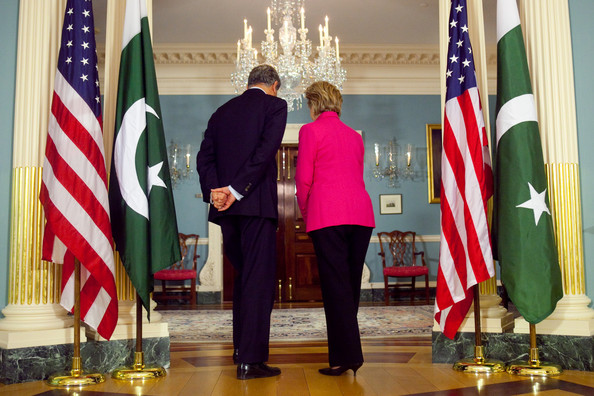
As NATO forces prepare to pull out of Afghanistan, worries about the country falling back to Taliban control are paramount. But in neighbouring Pakistan, where suicide bombings and brazen attacks on security forces have become regular occurrences, the stakes are also high.

“What happens in Afghanistan affects us and vice-versa,” says Akbar Zeb, Pakistan’s High Commissioner to Canada. “We have four million Afghan refugees still living in Pakistan, and it’s in our interest to have a stable country where we can send them back. A Taliban takeover won’t be just detrimental to Afghanistan. It would harm Pakistan and the whole region.”

Zeb said that under the civilian government of President Asif Ali Zardari, relations have improved with Afghanistan, and contrary to reports of friction, there are “frequent contacts” between the two countries that would be helpful in creating stability.

But he added that Canada, and other Western countries, should not repeat the mistakes of the post-Soviet era, when the West lost interest in Afghanistan and Pakistan as soon as the Soviet troops withdrew.

During the rule of Pakistan’s military leader, President Pervez Musharraf, groups of Taliban-linked militants got a foothold in Pakistan, but were not seen as a danger to the country until internal attacks began to spread. Former prime minister Benazir Bhutto was assassinated, and suicide bombings took the lives of hundreds of civilians. Under pressure from the U.S., the Pakistani military began a massive campaign against the Taliban along the Afghan border.

“We have managed to clear a lot of areas from the Taliban,” said Zeb. “Military campaigns are the only language they understand. But they alone won’t help to win the war. We have border regions with a lot of poverty, and backward elements that have been ignored for a long time.”

Canada has announced support for road and rail projects linking Afghanistan and Pakistan to speed trade between the two countries.

“It’s a very good initiative, but scope is limited,” said Zeb.”We wish the projects were larger and not just (confined to) those that involve both Afghanistan and Pakistan.”

Talks with Islamabad are also ongoing on the use of ports in Karachi for shipping out Canadian troops and military supplies from Afghanistan.

But as the war continues, Pakistan has also been urged to be tougher on the Taliban. In the past two years it has carried out attacks against the militants in its border regions with some success, while American-launched drone strikes have killed high-ranking Taliban. The catastrophic floods that wiped out some of the most important agricultural areas of Pakistan brought a temporary truce, but militant attacks have resumed since the waters receded.

Last week, talk of a peace deal between the notorious Taliban-linked Haqqani network, and an opposing tribe in the remote northwest raised fears that it could open the way for Taliban access to strategic border areas. But the U.S. has also urged a Pakistani offensive against the network in North Waziristan, a volatile region where 400,000 civilians are vulnerable to displacement.

According to Pakistani officials, the country has lost some 7,000 security forces in a decade of fighting the militants — more than three times the coalition deaths in Afghanistan. Meanwhile 30,000 Pakistani civilians have died. The border region, a tangle of mutually hostile tribes, remains a haven for militants.

“It’s a difficult balance for Pakistan,” said Zeb. “Foreign troops may leave, and for them Afghanistan is a distant land. We’re Afghanistan’s neighbours. We helped with the fighting in the decade-long war against the Soviets. And we have to live with the outcome of this war.”
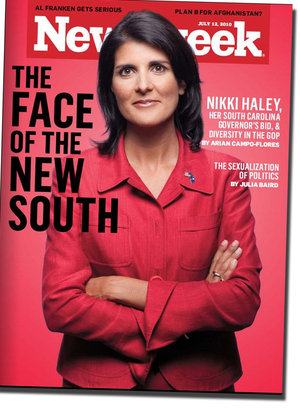
India Link in US: Nikki Haley Creates History as First Woman Governor

As Reported by The Hindustan Times

Parents of both Nikki Randhawa Haley, who on Tuesday won the governor’s election in South Carolina, and Bobby Jindal, the other Indian American governor of Lousiana, were born to immigrants from Punjab. Nikki Haley is the first woman and the second person of Indian origin after Bobby Jindal to become governor in the US. Jindal won the top job in Louisiana state in 2007.

While Nikki’s father Ajit Singh came to the US from Amritsar, Bobby Jindal’s (who name before his conversion to Christianity was Piyush Amrit Jindal) father Amar Jindal came from Malerkotla, not far from Amritsar.

Nikki’s victory is another sweet moment for Amritsar because the first Indian American Congressman Dalip Singh Saund, who served three terms (1957-1963) in the US Congress from California, also came from that city, the home of the Golden Temple, Sikhism’s most famous shrine.

Nikki, whose family is running a garment showroom called Exotica International in West Columbia since 1976, has been serving as a legislator in the South Carolina state assembly since 2004.

“I don’t do anything halfway – I’m in this race to win,” Nikki had told IANS in July taking time off her busy campaign for raising money.

“I am confident that come November, the people of South Carolina will send me to the Governor’s Mansion.

“When they (voters) do, I will immediately get to work to give them progress that makes them proud.”

Asked whether her Sikh background will matter in the race, she had said,”What matters most in South Carolina – and I imagine elsewhere in the country – is not the personalities of the candidates but the message they carry.

“Our message of bringing good government back to the people of this state, creating jobs by reforming our tax code so it’s flatter and fairer, and reminding government of the value of a dollar resonates with all the people of this state.

“I am very proud of my background and how I was raised. Just as in 2004 (when her opponents had raised the issue of background) I will hold my head up high and focus on what I can do for the people of this state.”

Nikki beat Democrat Vincent Sheheen who tried to steal her conservative agenda by projecting himself as “pro-life, pro-gun rights and pro-jobs”.

Pakistanis for Peace Editor’s  Note 11/03/2010– We at Pakistanis for Peace want to congratulate Nikki Haley for winning the governorship of South Carolina in a very tough and hard fought race. Both as an American as well as ethnically being a person from the Indian subcontinent aka Desi, we are proud to see her elected to serve as governor, despite disagreeing with her party on many issues.

Her rise as well as that of Governor Bobby Jindal of Louisiana to the top of American politics is a source of pride for all Desis, be they Indian, Pakistani, Bengali, etc. We invite people of all races, ethnicities, and backgrounds to join our Facebook group at Pakistanis for Peace and strengthen those who support peace between India and Pakistan and around the world. To join, clik  http://www.facebook.com/group.php?gid=37793413510&v=wall

Righteous Among the Nations: Muslims Who Saved Jews from Holocaust

By Tim Townsend for The St. Louis Dispatch

In 2003, Norman Gershman was looking for some of the righteous.

What he found astonished the investment banker-turned-photographer, and led him toward a project now on display in a St. Louis synagogue.

The Righteous Among Nations are gentile rescuers who make up “a small minority who mustered extraordinary courage to uphold human values,” according to Yad Vashem, Israel’s Holocaust memorial museum.

They are, the museum says, “the few who helped Jews in the darkest time in their history.”

Gershman’s story begins during the Holocaust and involves Albanian Muslims — villagers, peasants and farmers — who risked their lives and the lives of their families to shelter Jews fleeing Nazi Germany.

Italy invaded Albania in 1939 and occupied the country until the overthrow of Benito Mussolini in 1943. Germany then took over the Albanian occupation. Before the war, Gershman estimates from his research, only about 200 Jews lived in Albania, a country that is about 70 percent Muslim.

During the years of occupation, 10 times as many Jews streamed into Albania to escape persecution from Poland, Yugoslavia, Czechoslovakia, Greece and Italy. Gershman says it was the only country in Europe where the Jewish population grew by the end of the war.

Most of the hidden Jews either fled to Israel or back to their native countries after the war. Albania’s postwar communist regime made it impossible for the Jews who had been hidden to stay in touch with the Albanian Muslims who had provided shelter.

In 2003, New Jersey native Gershman heard hints of the story and began doing research, eventually traveling to Albania to begin interviewing those Muslims who took part and who were still alive. Gershman said it wasn’t just Muslim families who shielded Jews from the Nazis, but also Orthodox and Catholic families.

All of them were motivated by an Albanian code of honor called “besa,” a concept that can be translated into “keeping the promise,” Gershman says. The Albanian villagers were motivated to risk their lives by the simple concept of helping one’s neighbor.

“We chose to focus on the Muslims because, who ever heard of Muslims saving Jews?” Gershman said in a telephone interview from Israel, where he is at work on his next project.

Gershman’s research eventually led to an exhibit of his photographs, “Besa: A Code to Live By,” which opened recently at Congregation Temple Emanuel, and a book, Besa: Muslims Who Saved Jews in World War II.

The exhibit makes the case that the Muslim Albanian villagers who sheltered Jews from deportation to concentration camps did so from a sense of religious obligation.

“Besa is a cultural idea, but for the Muslims in Albania it was ingrained in their faith as well,” Gershman said.

Ahmet Karamustafa, professor of history and religious studies at Washington University, said saving a life is a universally acknowledged Muslim value.

Protecting a life, Karamustafa said, “has always ranked at the very top of moral and legal categories articulated by legal and theological scholars in Islam.”

The exhibit has been traveling the world since 2006, opening in Yad Vashem in Israel, the United Nations in New York, and synagogues, mosques, college campuses and Holocaust museums from Turkey to El Paso, Texas.

The exhibit of 30 photographs includes one of Lime Balla, born in 1910, who told Gershman that a group of 17 Jews came from the capital city of Tirana to her village of Gjergi in 1943 during the holy month of Ramadan.

“We divided them amongst the villagers,” Balla said, according to Gershman. “We were poor. We had no dining table, but we didn’t allow them to pay for food or shelter. We grew vegetables for all to eat. For 15 months, we dressed them as farmers like us. Even the local police knew.”

David Sherman, president of Temple Emanuel, said the synagogue “decided it could be an opportunity to educate the public about this piece of history that was a model of dialogue and tolerance.”

The synagogue’s rabbi, Justin Kerber, said one of the Reform congregation’s goals with the exhibit is to combat a common depiction of the modern relationship between Jews and Muslims.

“There’s so much coverage about Muslim-Jewish strife and conflict,” Kerber said. “It’s important to tell people that’s not the whole story, and these are examples of Muslim-Jewish respect, tolerance and love. This was a good opportunity for us to be part of that conversation.”

Staying Nimble to Fight Al-Qaeda’s Shifting Threat

By David Ignatius for The Washington Post

Behind the latest terrorism plots is an al-Qaeda leadership that is getting battered in Pakistan but that is determined to strike back wherever it can – using a dispersed network and new tactics that are harder to detect.

The package bombs sent last week from Yemen are one face of al-Qaeda’s continuing campaign. The Yemeni operatives are nimble, adaptive and “frustratingly clever,” says a U.S. counterterrorism official. “They have one main goal, which is to mess with us.”

The Yemen-based operations came as intelligence officials were struggling to disrupt another al-Qaeda plot to launch Mumbai-style attacks in European cities. Officials say that plan involved roughly 25 al-Qaeda terrorists, organized into cells of perhaps three to five members who would stage roving assaults in one or more European cities. Of the 25, about 10 have been captured or killed, according to a second U.S. official.

While these operations are tactically separate, officials say they both reflect a secret mid-2009 directive from an embattled Osama bin Laden to his followers to demonstrate that al-Qaeda could still do damage.

For U.S. officials, these latest terror plots have been a grim reminder that there’s a long fight ahead against al-Qaeda, with no “quick fixes” available. Defense isn’t enough: The explosives sent from Yemen can’t be detected by conventional X-ray screening or sniffer dogs, so stopping these plots requires good intelligence, as was the case last week when Saudi Arabia tipped the United States about the package bombs.

Nobody wants to say so publicly, but the lesson of the past few weeks, for me at least, is that one of these days the terrorists will succeed – and people should be prepared for that likelihood. The greatest damage won’t be the attack itself but the public response. The Yemeni plotters saw the frenzy produced by their failed Christmas Day bombing attempt on a flight to Detroit. They must be hoping now, with the package bombs, to disrupt cargo-handling around the world and damage a fragile global economy.

As the CIA has stalked al-Qaeda over the past two years, this has been a story of punch and counterpunch, of escalating U.S. drone attacks over Pakistan’s tribal areas and defiant al-Qaeda responses. As the senior U.S. official says, this is a “learning enemy” that adapts its tools and tactics as the West alters its defenses.

To understand the latest news, it helps to scroll back to early 2008. The CIA gathered intelligence that al-Qaeda leaders were regrouping, forming new alliances and planning new operations in the West. At that time, the CIA’s attacks from Predator drones were sporadic, and Pakistan was consulted before each attack.

So the Bush administration escalated the drone attacks in mid-2008. Now, Pakistan was given only “concurrent” notification, which in practice meant it was informed after the drone had launched its missile. Moreover, the CIA was authorized to strike targets that had a “signature” of terrorist activity, rather than a precise identification. President Obama has increased the tempo of Predator attacks even more.

The drone attacks have pounded al-Qaeda and killed key members of its leadership. Bin Laden reacted with his mid-2009 directive, which the U.S. official summarizes this way: “Undertake operations however and wherever you can. We need to prove ourselves again.” Specifically, bin Laden directed operatives to plan assaults in Europe similar to the November 2008 attacks that killed about 175 people and terrified Mumbai.

The United States and its European allies have been working hard to disrupt the Mumbai copycat operations. Since the third week of August, the CIA has conducted more than 40 drone attacks on the tribal areas, more than in all of 2008. A British national was killed in Pakistan in September, and two Germans in October. Other plotters have been arrested in Europe and Pakistan. Officials say they can’t be sure yet whether the terror plans have been shelved.

A similar escalation is likely in Yemen, with soldiers from the U.S. Joint Special Operations Command working with Yemeni government forces. The JSOC sums up its lethal approach with the phrase “find, fix, finish,” but a U.S. official says it has been hard to keep track of al-Qaeda targets in Yemen’s tribal villages and cities.

The reality is that the adversary that declared war on the United States in 1996 is still active – morphing and mobilizing even as it is hunted by America and its allies. It’s a nasty fight, and it’s far from over.

‘Islam in a Nutshell’ Explained at Episcopal Church

By Mitchell Landsberg for The Los Angeles Times

The Rev. J. Edwin Bacon, rector of All Saints Church in Pasadena, had just returned from vacation when he heard about a Florida pastor who was threatening to burn copies of the Koran, Islam’s holy book.

“I was disgusted,” said Bacon, whose Episcopal church is known for its progressive stance on many issues, interfaith relations among them. He said he thought: “Rather than burning Korans, we should be studying them.”

The Koran burning never took place. But from Bacon’s reaction was born “Islam 101,” a speaker series that ended Saturday with a lecture by Dr. Maher Hathout, senior advisor to the Muslim Public Affairs Council and a leading voice of Muslims in Southern California.

About 75 people went to the church to hear Hathout give a brief overview of “Islam in a nutshell,” then answer questions from a friendly audience that seemed concerned about both Muslim extremism and American hostility toward Islam.

Hathout told the audience that as the “new kid on the block” among the three Abrahamic faiths, which include Judaism and Christianity, Islam has had two options: “to be accepted by other religions or to fight with them.”

He continued: “We are now discovering 
 that we can be different without fighting, or it will be a miserable life. And it is a miserable life right now, if you ask me.”

Hathout expressed horror at the discovery of explosives bound from Yemen to the United States, part of a suspected Al Qaeda terrorist plot. He said terrorism violates Islamic theology and could ultimately destroy Islam. By using it “to defend Islam, you sacrifice Islam,” he said.

At the same time, Hathout complained about the use of the term “Muslim terrorist.” No one ever says a “Christian terrorist” bombed an abortion clinic, he said, adding, “They will not give the religious adjective to that person.”

And he said he is angered by people who say that moderate Muslims have been too reluctant to denounce extremism.

“If I shout and you don’t hear me, it means you are deaf,” he said. “It doesn’t mean I didn’t shout.”

All Saints is not alone in reaching out to the Muslim community in an attempt to better understand Islam. In the years since Sept. 11, 2001, numerous churches and synagogues, generally those associated with the progressive or liberal wings of their faiths, have invited Muslim speakers or partnered with Islamic organizations on interfaith events.

During the question-and-answer session, one member of the audience observed that if Hathout were to attend a “Christianity 101” lecture at All Saints, it would be different than a similar lecture at an evangelical church. She wondered if the same were true of Islam. Hathout said there is diversity within Islam, but also boundaries that cannot be crossed.

The question also spoke to another point: To a large degree, Saturday’s event was a meeting of like-minded sensibilities. There probably weren’t any prospective Koran burners in the audience. Hathout wasn’t changing minds so much as informing them.

Bacon acknowledged as much afterward. “I’ve always thought that preaching to the choir is a very important thing,” he said, “because the choir needs to be radicalized. On one level, you want to get the message taught. But on another level, you want them to be equipped and empowered to go out and courageously act.”

Those who attended the three-lecture series, he said, will be better able to explain to others that “most of the 1.6 billion Muslims in the world view their religion as a religion of peace, not as a religion of terrorism.”

“This is the real Islam,” he said.