Archive for December, 2010

Pakistan Consider Pitching up in China

As Reported by Reuters

The Pakistan Cricket Board (PCB) is considering using China as a neutral venue for its international cricket events, Chinese state media said today. The official Xinhua news agency cited sources as saying that the board’s director Javed Miandad had submitted a report to the PCB suggesting its management “take special steps to finalise China as a neutral venue.”

“We should take immediate and solid steps to decide this issue soon before the time passes away,” Miandad was quoted as saying.

Pakistan became a no-go area for cricket’s leading nations after an armed attack on the Sri Lanka team bus in Lahore in March last year killed eight people, and injured seven Sri Lankan players and their assistant coach.

Pakistan was due to host matches in next year’s World Cup. But the attack on the Sri Lanka bus saw the tournament restricted to the three remaining Asian Test nations of India, Bangladesh and Sri Lanka.

Even before the Lahore incident, countries such as Australia had refused to tour Pakistan, where thousands have died in a decade of conflict.

The security situation led Pakistan to play its “home” series against Australia in England this year. In the last two years, the nation’s “home” games have also been staged in the United Arab Emirates and New Zealand.

According to Xinhua, Pakistan will support China in its bid to host the 2012 Asia Cup in the southern city of Guangzhou, where the Asian Games recently concluded successfully with their first-ever cricket tournament.

Pakistani authorities say China’s hosting of its first major international cricket event would pave the way for making it a neutral venue.

‘Bhutto’: For Pakistan’s Heroine, A Hagiography

By Ella Taylor for National Public Radio

A new documentary about Benazir Bhutto lets a full hour go by before entertaining the mildest doubts about its subject, the hugely popular prime minister of Pakistan who was assassinated on her triumphant return to Karachi from exile in 2007.

Bhutto is smart and thorough on the inflamed history of Pakistan. But as a portrait of the first woman elected head of state in an Islamic nation, it comes closer to hero-worship than to considered biography. Front-loaded with glowing testimonials from family and FOB’s East and West, the movie gives a startling degree of face time to its own co-producer, Mark Siegel, a political consultant and close friend of Bhutto who co-authored a book with her.

The director, Duane Baughman, also a political consultant, helped get Michael Bloomberg and Hillary Clinton elected, so he knows how to brand a public figure, dead or alive.

Not that this particular public figure needs much enlarging. Bhutto’s sense of mission and her personal courage, as she returned again and again to try and democratize a nation whose military leaders blithely murdered their opposition, are beyond dispute. Like her adored father Zulfikar Ali Bhutto, Pakistan’s first democratically elected head of state (and the creator of its nuclear program), she struggled to bring basic services to a country mired in poverty, illiteracy and chronic conflict across its volatile borders with India, Afghanistan and Iran — to say nothing of its ambivalent dependency on a United States worried to death by the Taliban, al-Qaida and the enriched uranium in Pakistan’s nuclear arsenals.

About Bhutto’s failings and mistakes, however, the film is discreet to the point of squeamishness. Luckily, this magnificently complicated woman’s contradictions tumble out anyway. Almost despite itself, the movie offers a riveting melodrama about a daddy’s girl born into a close but feuding Western-educated dynasty known both for its populist politics and its champagne tastes. (The Bhuttos were thought of — admiringly, Baughman implies, though given the straits in which most Pakistanis live, one wonders — as the Kennedys of Pakistan.)

From grieving family and friends (inevitably, Arianna Huffington was a pal at Oxford), we learn of a serious-minded young woman freed from her burqa by Dad while still in her teens. At Harvard, where she roomed with Kathleen Kennedy, she absorbed feminism and leftist politics.

After Bhutto’s murder, her husband, Asif Ali Zardari, became co-chairman of the Pakistan People’s Party — and the nation’s new president. After Bhutto’s murder, her husband, Asif Ali Zardari, became co-chairman of the Pakistan People’s Party — and the nation’s new president.
Yet later she willingly submitted to an arranged marriage with a Karachi playboy-entrepreneur, Asif Ali Zardari, who has been Pakistan’s president since the fall of Pervez Musharraf in 2008. She prayed to Allah in public, yet worked hard to bring schooling to girls in an Islamic state vehemently opposed to rights for women.

Bhutto inherited her father’s charm, charisma and elegant tailoring, as well as his preference for backroom wheeler-dealing. Remarkably, her father chose Benazir over her two brothers as his successor, and her political career eerily echoed his, zigzagging between triumph, prison, exile and return to repeated rapturous welcomes from adoring masses.

Bookended by footage of the sniper fire and suicide bombing that killed her, Bhutto faithfully follows the hectic arcs of her life and death. Yet the movie glides smoothly past the corruption charges — never proved or disproved — that led to Bhutto’s exile and her husband’s imprisonment, effectively dismissing them as trumped up by her enemies. Much time is spent, meanwhile, on the moving but sentimental memories of her tearful family, topped up with new but unedifying audiotapes of Bhutto herself outlining her ideals, the harshness of her incarceration in a Pakistani prison and the loneliness of exile in Dubai.

Bhutto could stand a less adulatory tone — and more reliable skeptics than her clearly disgruntled niece, for instance, when it comes to topics such as Bhutto’s role in the mysterious plane crash that killed the military dictator responsible for her father’s murder. Despite herself, and for all her efforts toward reconciliation, Bhutto proved an enormously polarizing figure.

Perhaps she had no choice, in a country so riven by internal strife and external threat. At its best, Bhutto is a fascinating study in the difficulties of bringing democracy to a radically unstable nation plagued by its colonial legacy, by the cowboy politics of a dictatorial military, by daily terrorism and the sporadic interventions of world powers arguably less interested in rural voting rights than in pushing their own interests on the global stage.

Bhutto’s untimely death at 54 years old was a private tragedy and a tremendous loss for a country desperate for moderate leadership. But she was a heroine, not a saint. Eliding this distinction, Bhutto unwittingly diminishes her.

India Denies Visa to Former Pakistan President Musharraf

By Anjana Pasricha for The Voice of America

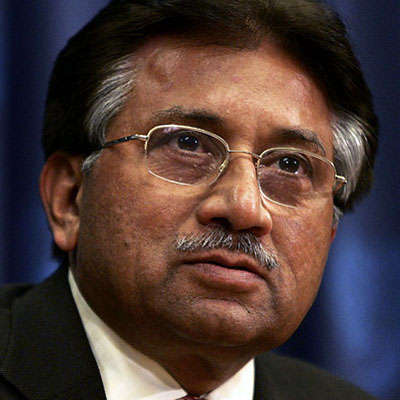
Indian officials have confirmed that former Pakistani President Pervez Musharraf has been denied a visa. They did not give a reason.

Mr. Musharraf had been invited to speak at a seminar organized by business professionals in New Delhi.

Several of Mr. Musharraf’s supporters, who were planning to visit India with him, were also denied a visa. The former Pakistani military ruler, who lives in Britain, is attempting a political comeback and launched a political party in October.

Foreign affairs observers say that India wants to avoid providing a platform for Mr. Musharraf’s political ambitions, which they believe would be sending a wrong message to the civilian government in Islamabad.

“With Mr. Musharraf threatening to go back to Pakistan to start a political career, the Indian government is not very comfortable with helping him enlarge his political portfolio or image,” said Bharat Karnad, a strategic affairs analyst with the independent Center for Policy Research in New Delhi.

New Delhi has also been irked by Mr. Musharraf’s recent comments that India is responsible for creating unrest in Pakistan’s south-western Balochistan province, and that India is trying to create an anti-Pakistan Afghanistan.

Mr. Musharraf was army chief when India and Pakistan came close to a fourth war in 1999. Later, when he became Pakistan’s military ruler, the South Asian rivals embarked on a peace process which lowered tensions and led to a ceasefire along their tense Kashmir border.

That ceasefire is still holding. But the peace process remains stalled since the November 2008 terror attacks in Mumbai, which India says were planned by the Pakistan-based Lashkar-e-Taiba.

Karnad says New Delhi is unlikely to resume a full-fledged peace dialogue with its rival until its repeated calls to clamp down on groups directing terror at India are heeded.

“There has to be something on the ground is what Delhi wants by way of reassurance before it gets into thinking of resuming the composite dialogue,” added Karnad. “There is no give on Pakistan’s part, so there is unlikely to be any movement in Delhi.”

The top Indian demand is that Islamabad speed up the trial of the Lashkar-e-Taiba operatives it accuses of planning the Mumbai attacks.

A Silver Lining in Pakistan’s Floods

By Maha Hosain Aziz for Bloomberg Businessweek

With the devastating floods that began in July, Mother Nature has left an indelible imprint on Pakistan—its geography, its people, its national psyche. But it has also created an opportunity to change the destiny of millions of flood victims who traumatically lost their loved ones, homes, and livelihoods in mere days. This natural disaster may have given the country an opportunity to tackle a recurring point of contention in Pakistan—feudalism.

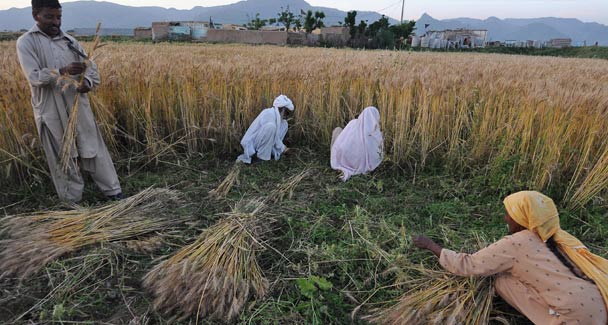
Academics, journalists, and analysts have frequently pointed to feudalism as a reason for the huge inequalities in Pakistan, claiming that many landlords treat their tenants and peasants like slaves. According to a 2009 estimate by campaigner Anti-Slavery International, debt has forced more than 1.8 million people to work for their landlords with no pay. If there is truth to this today, in even a few cases, perhaps the floods have delivered Pakistan an opportunity to empower those trapped in decades of feudalism and poverty.

The question is how to capitalize on this potential opportunity. Land reforms in 1959, 1972, and 1977 failed to redistribute land more equitably and are not expected ever to be legitimately carried out by any government, due to political constraints. What is possible today, in a post-flood scenario, is a collaborative effort among the private sector, entrepreneurs, NGOs, and foreign donors to be creative about job creation, even if only on a small scale. If successful, at least some of these landless flood victims could be given an opportunity to rebuild their lives outside the feudal context.

Laboring for the Owners

As many flood victims return to their homes to figure out how to rehabilitate their lives, others have already declared they will never go back. They appear to feel the floods have given them an opportunity to break away from the hold of their landlords. They did not own the land they were tilling and had to give large portions of their produce to their landlords while never coming close to paying off their debts.

Recent media coverage has captured the anger of many flood victims, particularly in rural Sindh. Some residents of Dari, near Kandhkhot, for instance, reportedly said they were literally left on the side of the road and abandoned by their landlords when the floods began. Unable to find shelter, they took refuge under some trees for a few weeks before making their way to overpopulated relief camps. Others with health problems made their way to camps but were turned away for medical treatment because they were not registered and have yet to be contacted by their landlords. Those who had small plots of land fear they will never retrieve what they owned because all the paperwork has been washed away.

There have also been reports of some influential landlords having had floodwaters diverted to save their own lands and instead engulf the villages of the poor. Others have said food rations and other forms of aid given to these landlords have only been passed on to their relatives and voters, while some apparently have kept the aid in storage for their own use in the coming months. While this has been difficult to prove, the perception of such acts has likely added to the resentment of some tenants and peasants toward their landlords that could derail feudal relations in the long term. As flood relief efforts increasingly focus on rehabilitation, we have to consider what these flood victims will do now. If they are not in a position to return to work on the land of their feudal lords, how will they make a living?

Earning Money in Aid Projects

Beyond finding housing for these landless flood victims, there is a real need to focus on job-creation strategies. Some aid agencies, such as Oxfam and the UNDP, have already teamed up with local NGOs to offer cash-for-work programs. In the Charsada and Nowshera districts of Khyber Pakhtunkhwa province, for instance, 1,500 flood victims from relief camps are being paid to pick up and dispose of rubble from the streets and build drains and roads,
working five days per week and receiving 400 to 600 Pakistani rupees ($4.7 to $7) for six hours of labor in a UNDP-sponsored project.

So while they earn money, these flood victims are rebuilding their homes.

But these jobs are short-term and do not cater to those who feel they cannot return home to work for their landlords. It would thus be prudent to think about long-term employment strategies, such as bottom-up programs, specifically for this cadre of flood victims. Perhaps foreign aid and NGO workers could work together with a local microfinance bank to introduce a combination of vocational training and loans for these flood victims so they can create their own employment and gain self-sufficiency. Or maybe social entrepreneurs can ally with the private sector to consider training flood victims for rural outsourcing in a particular area. There should also be a psychological component to any rehabilitation efforts, not only to help the flood-afflicted cope with the ongoing trauma of the floods, but also to introduce them to the idea of economic independence through these job creation projects.

This is the time to be creative for those flood victims who are not in a position to go home and work for their landlords anymore. It would be worthwhile for a local university, such as Lahore University of Management Sciences or Karachi’s Institute of Business Administration, to organize a job-creation conference, drawing on the perspectives of local businessmen, entrepreneurs, academics, NGO workers, and the flood victims themselves. These participants could start by “adopting” one flood-afflicted community of landless tenants and peasants, and brainstorming creative strategies specifically for their long-term employment and self-sufficiency.

We have already witnessed how quickly Pakistanis all over the world and in the country have rallied together to raise money aggressively for flood relief in the past few months. As the floods recede and recovery effects have turned to rehabilitation, perhaps these individuals would now be willing to offer “patient capital” to invest in their own job-creation project targeting those flood victims who will no longer go back to their feudal setup. It may not turn a profit for investors immediately, but if this works, it could provide at least one landless tenant or peasant with economic freedom—for the first time in his life

Maha Hosain Aziz is the senior teaching fellow in South Asian Politics at London’s School of Oriental & African Studies.