Archive for December, 2011

Pakistani Taliban Splintering Into Factions

By Kathy Gannon for The Associated Press
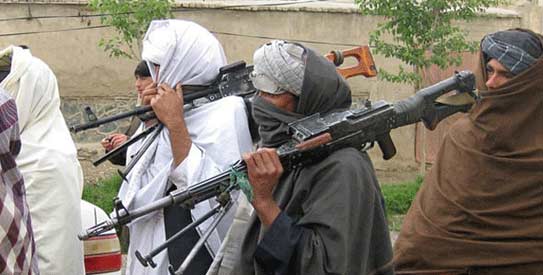
Battered by Pakistani military operations and U.S. drone strikes, the once-formidable Pakistani Taliban has splintered into more than 100 smaller factions, weakened and running short of cash, according to security officials, analysts and tribesmen from the insurgent heartland.

The group, allied with al Qaeda and based in northwest Pakistan close to the Afghan border, has been behind much of the violence tearing apart Pakistan over the last 4½ years. Known as the Tehrik-e-Taliban, or TTP, the Taliban want to oust the U.S.-backed government and install a hard-line Islamist regime. They also have international ambitions and trained the Pakistani-American who tried to detonate a car bomb in New York’s Times Square in 2010.

“Today, the command structure of the TTP is splintered, weak and divided, and they are running out of money,” said Mansur Mahsud, a senior researcher at the FATA (Federally Administered Tribal Area) Research Center. “In the bigger picture, this helps the army and the government because the Taliban are now divided.”

The first signs of cracks within the Pakistani Taliban appeared after its leader, Baitullah Mehsud, was killed in a drone strike in August 2009, Mr. Mahsud said. Since then, the group has deteriorated steadily.

Set up in 2007, the Pakistani Taliban is an umbrella organization created to represent roughly 40 insurgent groups in the tribal belt plus al-Qaeda-linked groups headquartered in Pakistan‘s eastern Punjab province.

“In the different areas, leaders are making their own peace talks with the government,” Mr. Mahsud added. “It could help the Pakistani government and military separate more leaders from the TTP and more foot soldiers from their commanders.”

The two biggest factors hammering away at the Taliban’s unity are U.S. drone strikes and Pakistani army operations in the tribal region.

Turf wars have flared as militants fleeing the Pakistani military operations have moved into territory controlled by other militants, sometimes sparking clashes between groups. And as leaders have been killed either by drones or the Pakistani army, lieutenants have fought among themselves over who will replace them.

“The disintegration … has accelerated with the Pakistan military operation in South Waziristan and the drone attacks by the United States in North Waziristan,” Mr. Mahsud said, referring to the two tribal agencies that are the heartland of the Pakistani Taliban.

Another factor is the divide-and-conquer strategy that Pakistan‘s military long has employed in its dealings with militants. Commanders have broken away from the TTP and set up their own factions, weakening the organization. Battles have broken out among the breakaway factions, and in one particularly remote tribal region the TTP was thrown out. These growing signs of fissures among the disparate groups that make up the Pakistani Taliban indicate the military’s strategy could be paying off.

That would explain the mixed signals this month coming out of the tribal belt, where some militants are mulling the idea of peace talks with the government, others are offering to stop fighting, and still others are disavowing both peace and a cease-fire. It might also explain a steady decline in suicide attacks in Pakistan, according to the privately run Pak Institute for Peace Studies.

The U.S. is eager to see some benefits in neighboring Afghanistan, where its troops have come under attack from militants based across the border in Pakistan. NATO forces in Afghanistan are trying to break the back of the Afghan insurgency before the end of the U.S.-led coalition’s combat mission in 2014.

There is no evidence so far that fissures within the militant structure in Pakistan are helping NATO and U.S. forces.

The deadly Haqqani network, which has bases both in Pakistan and Afghanistan and is affiliated with al Qaeda, is one of the most lethal threats to coalition troops. It long has found safe haven in Pakistan‘s tribal belt and has used the Pakistani Taliban as a source of recruits. Senior U.S. officials say the Haqqanis also receive support from Pakistan‘s army and intelligence agency, a charge Islamabad denies.

Analysts predict that over time, however, the internecine feuding in the Pakistani Taliban will take a toll on militants fighting in Afghanistan, making it increasingly difficult for them to find recruits and restricting territory available to them.

Pakistan‘s military has rebuffed appeals from Washington to take on all of the insurgent groups in the tribal region, saying it has neither the men nor the weapons to do so. Instead, Islamabad has pushed its divide-and-conquer approach, which is gaining some traction in the United States, according to two Western officials in the region.

The officials say the success of this approach will be measured in Washington by its ability to curb Haqqani network attacks in Afghanistan. The officials requested to remain anonymous in order to speak candidly.

Cooperation between the U.S. and Pakistan suffered a serious setback a week ago when NATO aircraft killed 24 Pakistani soldiers at two border posts. The Nov. 26 incident seems certain to blunt any prospect of Pakistan taking direct steps to curb the Haqqani network, analysts say.

In the wake of the attack, intelligence sharing has stopped, military-to-military contact has been suspended, routes supplying nonlethal goods to NATO in Afghanistan have been shut, and Pakistan has withdrawn its offer to bring Taliban and representatives of the Haqqani network to the negotiating table.

Pakistan also announced it will boycott next month’s conference in Bonn, Germany, to find ways to stabilize Afghanistan.

There is no independent figure on how many Taliban fighters operate in the tribal regions, but it is estimated to be in the thousands. Upward of 130 groups are in the area, Mr. Mahsud said, some of them small, violent offshoots of larger groups.

They have varying loyalties to a handful of key commanders such as Hakimullah Mehsud, the current leader of the Pakistani Taliban.

Popular support dwindled for Mr. Mehsud after his group was driven out of South Waziristan by the military and relocated to North Waziristan, according to tribesmen in the area. They spoke to the Associated Press on condition of anonymity because they feared reprisals from militants.

The Pakistani army has brokered agreements with some Taliban factions, according to a senior Pakistani security official who spoke to the Associated Press on condition of anonymity to discuss the sensitive topic. But there are no peace talks under way with Mr. Mehsud, who has declared war on Pakistan, the official said.

A brash and heavy-handed insurgent, Mr. Mehsud has killed former allies, defied orders from the Haqqani network’s chief and developed close links with criminal gangs who kidnap, extort and exploit the local population.

He also has made enemies of former lieutenants in other parts of the tribal region, such as neighboring Kurram Agency, where a deputy, Fazl Saeed Haqqani, split with Mr. Mehsud three months ago and formed his own Islami-Tehrik-e-Taliban group.

In yet another tribal region of Orakzai, where Mr. Mehsud once held sway, members of feuding groups are now killing one another.
We Are Free to Choose Peace

By Ethan Casey for Dawn.com

I was planning to devote this column to Memogate and Ambassador Husain Haqqani’s resignation, then I woke up one morning to learn that the topic had been rendered quaint by a Nato cross-border attack killing two dozen Pakistani soldiers and bringing the already fragile (not to say ostensible or notional) alliance between Pakistan and the United States very close to the breaking point. Then I realised that the two topics are aspects of a larger one, indeed of the twin elephants in both societies’ living rooms: the damage done when a military establishment becomes too powerful and unaccountable.

The only time I’ve ever met Husain Haqqani was at a seminar at Harvard University in 2006, organised by the journalist and activist Beena Sarwar. He wasn’t yet Ambassador to the US; Musharraf was still president. Most of the discussion was, I felt, preaching to the converted among elite-class Pakistani liberals about how the military was the problem and the solution was democracy in the form of elections and civilian rule. I’m not Pakistani, but I was an invited panelist at the seminar, so I took the liberty of challenging that consensus. Recall, I said, the sorry tit-for-tat excuse for democracy that Benazir Bhutto and Nawaz Sharif and their undemocratic parties inflicted on the country throughout the 1990s. That rivalry’s personal vindictiveness and pettiness, I asserted, did a lot of damage to the credibility of civilian leadership. Was it really clear that civilian rule was preferable to military rule under Musharraf?

For my pains I was, as I remember it, ganged up on by Husain Haqqani, the stern and formidable historian Ayesha Jalal, and Ayesha Siddiqa, whose book Military Inc. was about to be published. Haqqani in particular accused me of being “merely anecdotal,” meaning that the foibles of civilian politicians were incidental, whereas the military was a problem institutionally and structurally.

I still believe that my point was well taken, because there’s much that elected leaders can and should do to claim political space and assert their own authority, even – especially – if they’re being besieged or undermined by the military. If you’re elected to lead, you must accept the responsibility to do just that, and you must demonstrate courage and personal character in disdaining consequences to yourself when necessary. And I’m a reporter; merely anecdotal is what I do. But Haqqani was all too right – wasn’t he?

I’m aware that conspiracy theories have been flying about the notorious memo’s provenance. Like most conspiracy theories, they’re beside the point. It doesn’t matter whether Haqqani wrote the memo himself or was framed by the ISI; the result is the same. And the question to ask is Lenin’s: Who benefits?

A.J.P. Taylor (among many others) was right to point out that the armed forces are a fundamental institution of any state. But if the state is going to serve the interests of anyone else, the armed forces must be subject – and obedient – to civilian authority. This is what the authors of the US constitution understood in the 18th century, when they made the president the commander-in-chief of the armed forces. And it’s what President Truman understood when he fired the insubordinate General Douglas MacArthur in 1951, even though MacArthur was more popular with the American public at the time than Truman himself.

But Americans should be anything but self-congratulatory about such things. President Eisenhower, himself a retired general, was not only prescient but brave and patriotic when he took the occasion of his leaving office in 1961 to warn, in a rightly famous nationally televised speech, that a “military-industrial complex” (he coined the phrase) was poised to dominate America’s public life and economy. Half a century later America is hip-deep in the muck of Afghanistan, and – in addition to the death and destruction in Afghanistan itself and in Pakistan – the only Americans who are benefiting are the military itself and the shareholders of the companies that supply the war effort with everything from “contractors” (mercenaries) to drones to cheeseburgers for the troops. Military Inc., indeed.

Which brings us to the cross-border attack. Maybe Nato mistakenly or aggressively attacked over the border; maybe Pakistani troops fired first. Who knows? The New York Times has published a de rigueur, pro forma editorial urging an inquiry. Whatever the truth, it doesn’t matter, because the only people who gain from such an incident are the people who gain from war, and that’s not you or me. It’s also not the soldiers on all sides who are being killed. If I were Pakistani I would be furious, as I know many Pakistanis are, at the contempt for sovereignty that the attack shows. At the same time, we know that the Pakistani establishment is duplicitous. So where does that leave you and me? Does it help anyone if I claim your establishment is more duplicitous than mine, and vice versa?

Our two countries have arrived at a depressing and discouraging pass, both in relation to each other and internally. The exigencies of “defense,” which is a euphemism for war, have brought us here. As individuals, we feel (because we are) largely powerless to affect the course of events. As human communities there’s more we can do, as the Occupy Wall Street movement has been showing in America, and as the lawyers’ movement showed in Pakistan.

We’re in this together – and by “we” I mean Americans and Pakistanis. We’re not on opposing sides; we’re on the same side, against the warmongers of both states. And we are free to choose both our actions and our attitudes. As an American, Ken Williams, commented just this week on my Facebook page: “We can live with generosity and trust OR greed and fear. Each choice has outcomes.”

-Pakistanis for Peace group member Ethan Casey is the author of Alive and Well in Pakistan and Overtaken By Events: A Pakistan Road Trip. He can be reached at www.facebook.com/ethancaseyfansand www.ethancasey.com

Jacksonville Jaguars- Allah’s NFL Team?

By Manzer Munir for Pakistanis for Peace

The last few days have not been easy ones for me. I have had to watch as my adopted homeland, the United States, is accused by Pakistan, the nation of my forefathers, for being responsible for the deaths of 24 Pakistani soldiers by “friendly” fire.

So it wasn’t hard to imagine that once again I would be hurting for being both American and Muslim as I was on 9/11, and now I am once again feeling the pinch of being both Pakistani and American as well. Believe it or not, you can love two countries; just ask Italian or Irish Americans. I am sure you know that this is not the first time and certainly will not be the last time that as a Pakistani American I will be reeling from news concerning Pakistan. Yet the covert attack and neutralization of Osama Bin Laden in May of this year in Pakistan, a country long suspected to be his hiding place, have all but shattered any remaining doubts to the American public regarding which side of the fence Pakistan finds itself. As President Bush so famously said “You’re either with us, or against us” to President Pervez Musharraf immediately following the attacks of September 11, 2011.

At least since Bin Laden’s killing on May 2, 2011, as far as the average American, John Q Public is concerned, it appears that Pakistan was against us all along, and merely only was paying lip service the last 10 years. However staffers at the US State Department, all the way up to Secretary Hillary Clinton and President Obama will rightly admit, that this simply is not the case. Pakistan has been a difficult ally to be sure, but the country has been an ally nonetheless and has proven time and time again to be invaluable not just in this current fight for the strategic direction of Afghanistan, but also was critical in the last great fight involving this land against the former USSR in the ‘80’s.

One can go even further back and talk about the historically strong US and Pakistan relations that go all the way back to at least President Eisenhower and the Southeast Asia Treaty Organization (SEATO), a security pact similar to NATO, but for Asia and parts of the Pacific, it was an organization of which Pakistan and the US comprised membership, along with six other nations namely Australia, France, Great Britain, New Zealand, the Philippines, and Thailand. This was an eclectic bunch of nations to be sure, but a defense pact tying Pakistan and the US, this once brought the two together in a treaty of mutual defense and cooperation going back as early as 1954.

One would also be remiss if we forget that the famous US Air force pilot Gary Powers flew on a U-2 secret mission from Pakistan’s Peshawar airbase at the request of Eisenhower and at Pakistan’s acquiescence. He had been doing a reconnaissance mission against the Soviets at the height of the Cold War when his plane was shot down causing the then famous 1960 U-2 incident. Amazingly, it was less than just a couple generations ago when President Dwight D. Eisenhower famously called Pakistan America’s “most allied ally in Asia. Wow, as the old Virginia Slim’s cigarette ad tagline used to go “ You’ve come a long way baby!” Haven’t you, Pakistan?

I suppose before we get lost on another few paragraphs on US-Pakistan alliances of old and their longstanding history of cooperation and friendship, whether from the days of the Cold War or the far more recent war on terror, let me get back to the original purpose of this article. So, there I was, in my now seemingly regular funk, on account of all the rapidly downward spiraling US-Pak relations, and then, there it was, a glimmer of hope for a bit of positive news. Maybe a chance for something unrelated to terror, bombs, Taliban, Shiite-Sunni violence, blasphemy laws, honor killings or anyone of the myriad of utterly negative topics that so easily and regularly grace the top of the headline news on any cable news channel on any given day regarding Pakistan.

So here finally was some positive news regarding this nation. Initially I wondered if perhaps this feel good story would be along the lines of the usual sports filled beacons of hope for the otherwise unfortunate Pakistani masses such as in the form of when an Amir Khan gains world boxing glory or when an Imran Khan led cricket team of old wins a Cricket World Cup or maybe it was similar to the legend of the Khan boys, Jahanghir and Jansher Khan who were busy conquering the world of squash (racquetball) for decades. Perhaps this news I so eagerly awaited to get me out of this rut was related to a scientific or professional endeavor that highlighted Pakistani achievements and success stories such as that of Pakistani born neurologist Dr Malik M Hasan, the man who single-handedly helped change the medical industry in the US for the better, when over the course of a few years through a process of mergers and acquisitions, he helped eventually form HSI, a multi-billion dollar healthcare provider that in 1993, which was an organization with about 1.4 million members, 40,000 doctors, and nearly 400 member hospitals! His innovative and entrepreneurial management style led to the very first modern Health Management Organization (HMO) in the United States, and thereby brought more affordable healthcare to the vast majority of Americans in the 1980’s. Dr Hasan eventually grew the business to be worth more than $10 billion dollars and countless thousands jobs for professionals through many midwestern and western states.

Maybe a boldly similar idea or solution in today’s rapidly increasing costs of healthcare and lack of insurance for over 40 million Americans can come, if not from a Pakistani American like Dr Hasan, then perhaps from another of the world’s brightest who still yearn to come to these shores with their dreams and aspirations for success and achieving a piece of the American Dream that millions of their countryman from Europe had done years before them. Along the way, people like Dr Hasan employed hundreds and thousands of Americans and become a mega job creator, kind of like the ones that Republicans say they love.

It could be that the Pakistani American feel good story bringing much needed good news to the Pakistani global diaspora, and indeed by that realization, at the very least, to a Pakistani American like myself was going to be similar to a fellow Lahore born compatriot like Tariq Farid, the founder of the wildly popular Edible Arrangements, a US based international franchise that specializes in fresh fruit arrangements for special occasions and gifts. With nearly a 1000 locations in the US and a few countries abroad, I am sure many a Congressman from both Red and Blue states would love to attract job creators like him to their state and lure his growing and profitable company, during these economically depressed times, to their state from their Headquarters in Connecticut.

I suppose I could go on and on at the long list of distinguished Pakistani Americans from the renowned NASA physicist, Dr Bashir A Syed, to Gibran Latif Hamdan, the first person of Pakistani descent to play in the NFL. Other major contributions not in the field of science, sports or business, yet still as inspirational to Pakistani Americans could have been the story of the American hero of Pakistani descent, Sgt. Wasim Khan, the first Purple Heart winner from that nation who won the award for valor during Operation Iraqi Freedom, costing him numerous injuries while fighting for our freedoms.

Certainly no one to date has better demonstrated a greater sacrifice to this nation than the story of Cpl. Kareem R Khan, another Pakistani American, one who gave the ultimate sacrifice for his beloved country, the United States, when he gave his life for American freedom, liberty and ideals dying on Iraqi soil during combat there. He also earned the Purple Heart and has the honor of being buried at the resting place of fallen American heroes, the venerated Arlington National Cemetery. One can do their own Google search for a list of Pakistani Americans to find out that this list comprises far more accomplished and good citizens of Pakistani descent than the occasional delusional individual like Faisal Shahzad, of the Times Square bomb fame.

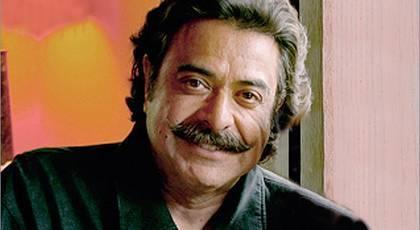
So you bet it was good news for me to hear a few days ago that a successful and hard working American businessman and multi-millionaire from the midwest, Shahid Khan, a Pakistani American owner of a large automobile parts manufacturer, Flex-N-Gate, had just bought an NFL team, the Jacksonville Jaguars! My rare good optimism however seems to perhaps been ill placed though because it seems that even a positive and notable news story like this can quickly turn into something far more twisted and sinister as witnessed by the scores of Islamophobic and racial comments being left on the Jacksonville Jaguars Facebook page and other sports blogs and boards, hours since the sale and the origins and national background of the new owner became public. The deal which still has to go to an NFL owner’s vote would only then be complete and final. Whether the NFL owner’s vote affirmatively on the deal or not, the rancid and clearly Un-American comments on the team’s fan page demonstrate that a majority of the local fans of this NFL team seem only to care about his Pakistani background and not of the fact that he is committed to staying and keeping the team in the small Jacksonville market and that he is a genuine fan of football and by all accounts would make a great manager/owner of the franchise.

The sad fact remains that there is a possibility that despite all the countless contributions to this great nation made by Pakistani Americans, many of these die hard football fans have no problem with risking losing their team to a different owner who would take the team out possibly west to the vacant Los Angeles market than to have a “Paki” keep the team in Florida’s small Jacksonville market and try and build a contender there.

Maybe its his IRS troubles that Shahid had a few years ago that prevented him from buying the St Louis Ram’s majority ownership stake last year or maybe it really is his very interesting moustache that scares people away. Regardless, I will gladly take either reason for his bid not being approved than anything that points to his national origin or racial makeup. Afterall, us Americans should never forget the words of the late great Rev. Dr. Martin Luther King, Jr when he said that we should ”not judge a man by the color of his skin, but rather by the content of his character.” All I know is that this Pakistani American still keeps alive Dr King’s dream. So no amount of paranoia should let the die-hard Jaguar fans fear that Muslims and Allah are on their way to taking over their beloved NFL franchise. Now gentlemen, let’s play ball!

–Manzer Munir, a proud American of Pakistani descent, is a former US State Department Foreign Service Officer Management Selectee, and the founder of Pakistanis for Peace. He is also an often tormented fan of the Kansas City Chiefs of the NFL as well as having the good fortune of being a lifelong fan of Kansas Jayhawk Basketball.