Archive for March, 2012

Islam & the NYPD

By Dr Qanta A Ahmed for NY Post

The relentless campaign to paint the NYPD as Islamophobic is itself an offense to Islam. In fact, our faith compels American Muslims to stand with the NYPD — both to protect the faith, and by its direct dictates.

Let me be clear: By investigating Islamist sympathizers who seek to curtail the freedoms of all Americans, the NYPD is aggressively protecting the freedoms and privileges that Muslims enjoy in America (freedoms that aren’t available even in the birthplace of Islam).

Islamism is distinct from the beliefs the majority of Islam’s 1.6 billion followers hold dear. The cry of “Islamophobia” is often merely an effort to silence those of us who seek to communicate this distinction, or to express concerns about Islamism. Most Muslims are spiritually private, committed persons active in their societies without a subversive political agenda. Think of them as pluralistic Muslims.

Because America’s religious freedom is protected by constitutional ideals, Muslims can pursue this pluralistic life — an American life that makes private space for faith, in parallel to public roles. Indeed, Muslims in America are freer to do this than Muslims in Pakistan (where my family is from), Saudi Arabia (where I have lived) or even Indonesia, because each of these Muslim-majority countries imposes laws restricting the practice of religion.

In many ways, Muslims are best able to follow their Islam — to become Muslim in the fullest sense — here in America, because of this nation’s astonishing, constitutionally guaranteed freedoms.

Political Islamism — variously called radical Islam, jihadism or Islamic fundamentalism — is completely different. In contrast to our centuries-old faith, it’s a modern political project that seeks to return any society to a supposed “scriptural foundation” of the Muslim community, removing existing forms of government and laws.

Sound like a war? Well, in the wider world and here in America, there is indeed a war afoot — a war of ideas, a “Battle for the Soul of Islam,” as my colleague, American Islamic Forum for Democracy president Zudhi Jasser, has termed it.

In this battle, the Islamist thrives — citing freedom of speech, claiming disadvantaged civil rights, exploiting the privileges that a liberal democracy accords him. Often operating via advocacy groups or “Islamic societies” that purport to represent mainstream Muslims, he or she truly serves a political agenda centered on replacing liberal democracy with fundamentalist theocracy.

In fact, the Koran is explicit on the loyalties a Muslim must accord his host nation, mandating a Muslim’s duty to be an unwavering and loyal patriot:
O ye who believe! Obey Allah, and obey His Messenger and those who are in authority from among you. (Ch.4: V.60).

That verse demands the Muslim express loyalty to any ruling authority. This isn’t a suggestion, this is mandated Islamic duty.
The Koran does not state leadership specified as Muslim. Leadership is whomsoever is empowered in the society where the Muslim finds himself. For us here, that includes loyalty to the NYPD, the FBI and their work to safeguard our highest authority — the principles of our liberal democracy.
Can any one group speak for the entire American Muslim community? Islam is diverse — especially in America. Islamism isn’t. The sooner we understand this, the better — because at stake are America’s ideals.

America’s extraordinary freedoms afford us an ability to define our own expressions of Islam as Muslims in a way that no Muslim-majority nation secures for any Muslim anywhere today. We must preserve these values, and join the NYPD, in understanding the Islamist threat to these values.
This means we must support, not vilify, our policemen and -women, our federal agents and our police commissioner — especially when they gather and interpret information they need to preserve us and our values.

How many devout Muslims were among the thousands killed on 9/11? Let us never forget that Islamists — moving among the broader Muslim and secular communities — have wrought atrocities in this city and around the world, and seek to do so again.
If you choose to smear the NYPD for its work to protect us and our society, so too you choose to smear me, a pluralistic patriotic Muslim in America, for demanding an honest discourse.

Dr. Qanta Ahmed practices medicine in New York. She is the author of “In the Land of Invisible Women.”
Twitter: @MissDiagnosis
Pakistan’s Hindu Girls Forced into Muslim Marriages

As Reported by IRIN

Sixteen-year-old Ameena Ahmed*, now living in the town of Rahim Yar Khan in Pakistan’s Punjab Province, does not always respond when her mother-in-law calls out to her. 


“Even after a year of `marriage’ I am not used to my new name. I was called Radha before,” she told IRIN on a rare occasion when she was allowed to go to the corner shop on her own to buy vegetables. 


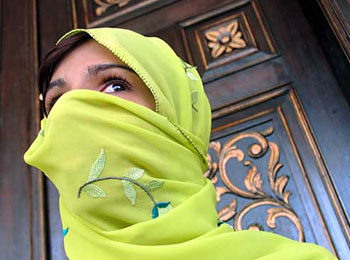
Ameena, or Radha as she still calls herself, was abducted from Karachi about 13 months ago by a group of young men who offered her ice-cream and a ride in their car. Before she knew what was happening, she was dragged into a larger van, and driven to an area she did not know. 


She was then pressured into signing forms which she later found meant she was married to Ahmed Salim, 25; she was converted to a Muslim after being asked to recite some verses in front of a cleric. She was obliged to wear a veil. Seven months ago, Ameena, who has not seen her parents or three siblings since then and “misses them a lot”, moved with her new family to southern Punjab. 


“The abduction and kidnapping of Hindu girls is becoming more and more common,” Amarnath Motumal, a lawyer and leader of Karachi’s Hindu community, told IRIN. “This trend has been growing over the past four or five years, and it is getting worse day by day.

Pakistan is one of several nations across Asia suffering from a shortage of females as sex-selective abortion has played growing role in the deficit. Portable ultrasound machines have made gender selection much easier. A 2005 study quoted by Wiki estimated that more than 90 million females were “missing” from the expected populations in Afghanistan, Bangladesh, China, India, Pakistan, South Korea and Taiwan alone.

He said there were at least 15-20 forced abductions and conversions of young girls from Karachi each month, mainly from the multi-ethnic Lyari area. The fact that more and more people were moving to Karachi from the interior of Sindh Province added to the dangers, as there were now more Hindus in Karachi, he said. 


“They come to search for better schooling, for work and to escape growing extremism,” said Motumal who believes Muslim religious schools are involved in the conversion business. 


“Hindus are non-believers. They believe in many gods, not one, and are heretics. So they should be converted,” said Abdul Mannan, 20, a Muslim student. He said he would be willing to marry a Hindu girl, if asked to by his teachers, “because conversions brought big rewards from Allah [God]. But later I will marry a `real’ Muslim girl as my second wife,” he said. 


According to local law, a Muslim man can take more than one wife, but rights activists argue that the law infringes the rights of women and needs to be altered. 


Motumal says Hindu organizations are concerned only with the “forced conversion” of girls under 18. “Adult women are of course free to choose,” he said. 


“Lured away”

Sunil Sushmt, 40, who lives in a village close to the city of Mirpurkhas in central Sindh Province, said his 14-year-old daughter was “lured away” by an older neighbour and, her parents believe, forcibly converted after marriage to a Muslim. “She was a child. What choice did she have?” her father asked. He said her mother still cries for her “almost daily” a year after the event. 


Sushmat is also concerned about how his daughter is being treated. “We know many converts are treated like slaves, not wives,” he said. 


According to official figures, Hindus based mainly in Sindh make up 2 percent of Pakistan’s total population of 165 million. “We believe this figure could be higher,” Motumal said. 


According to media reports, a growing number of Hindus have been fleeing Pakistan, mainly for neighbouring India. The kidnapping of girls and other forms of persecution is a factor in this, according to those who have decided not to stay in the country any longer. 


“My family has lived in Sindh for generations,” Parvati Devi, 70, told IRIN. “But now I worry for the future of my granddaughters and their children. Maybe we too should leave,” she said. “The entire family is seriously considering this.” 


Pakistanis for Peace Editor’s Note– This is an absolutely despicable practice that the Pakistani government needs to put an end to just like the blasphemy laws of the nation. The religious minorities of Pakistan deserve equal rights, protections and freedoms.

Pakistan Builds Web Wall Out in the Open

By Eric Pfannier for The New York Times

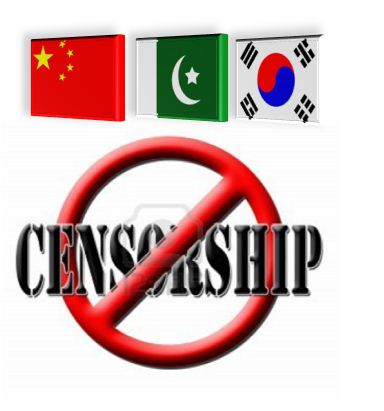
Many countries censor the Internet, but few spell out their intentions as explicitly as Pakistan.

In an effort to tighten its control over the Internet, the government recently published a public tender for the “development, deployment and operation of a national-level URL filtering and blocking system.”

Technology companies, academic institutions and other interested parties have until March 16 to submit proposals for the $10 million project, but anger about it has been growing both inside and outside Pakistan.

Censorship of the Web is nothing new in Pakistan, which, like other countries in the region, says it wants to uphold public morality, protect national security or prevent blasphemy. The government has blocked access to pornographic sites, as well as, from time to time, mainstream services like Facebook and YouTube.

Until now, however, Pakistan has done so in a makeshift way, demanding that Internet service providers cut off access to specific sites upon request. With Internet use growing rapidly, the censors are struggling to keep up, so the government wants to build an automatic blocking and filtering system, like the so-called Great Firewall of China.

While China and other governments that sanitize the Internet generally do so with little public disclosure, Pakistan is being surprisingly forthcoming about its censorship needs. It published its request for proposals on the Web site of the Information and Communications Technology Ministry’s Research and Development Fund and even took out newspaper advertisements to publicize the project.

“The system would have a central database of undesirable URL’s that would be loaded on the distributed hardware boxes at each POP and updated on daily basis,” the request for proposals says, referring to uniform resource locators, the unique addresses for specific Web pages, and points of presence, or access points.

“The database would be regularly updated through subscription to an international reputed company maintaining and updating such databases,” according to the request, which was published last month.

The tender details a number of technical specifications, including the fact that the technology “should be able to handle a block list of up to 50 million URL’s (concurrent unidirectional filtering capacity) with processing delay of not more than 1 milliseconds.”

Following the Arab Spring, which demonstrated the power of the Internet to help spread political and social change, Pakistan’s move to clamp down has set off a storm of protest among free-speech groups in the country and beyond.

Opponents of censorship say they are doubly appalled because they associated this kind of heavy-handed approach more with the previous regime of Gen. Pervez Musharraf than with the current government of President Asif Ali Zardari.

“The authorities here are big fans of China and how it filters the Internet,” said Sana Saleem, chief executive of Bolo Bhi, a group that campaigns against restrictions on the Internet. “They overlook the fact that China is an autocratic regime and we are a democracy.”

“What makes this kind of censorship so insidious is that they always use national security, pornography or blasphemy as an explanation for blocking other kinds of speech,” Ms. Saleem said, adding that her site had been blocked for several months in 2010 when it made reference to a ban on Facebook. Access to the social networking service had been restricted because of a page featuring a competition to draw the prophet Mohammed — something that is considered blasphemous by Muslims.

The Technology Ministry’s Research and Development Fund says in its tender that the Internet filtering and blocking system will be “indigenously developed,” but campaigners like Ms. Saleem say they think it is likely the agency will try to adapt Western technology for the purpose.

To try to prevent this from happening, Ms. Saleem wrote to the chief executives of eight international companies that make Net filtering technology, asking them to make a public commitment not to apply for the Pakistani grant.

On Friday, one of them, Websense, which is based in San Diego, responded, declaring in a statement on its Web site that it would not seek the contract.

“Broad government censorship of citizen access to the Internet is morally wrong,” Websense said. “We further believe that any company whose products are currently being used for government-imposed censorship should remove their technology so that it is not used in this way by oppressive governments.”

Websense had previously withdrawn the use of its technology from Yemen after facing accusations from the OpenNet Initiative, a U.S.-Canadian academic group, and other organizations that it had been used by the government of that country to stifle political expression on the Internet.

Governments around the world buy filtering and blocking technology to root out illegal content like child pornography. Some private companies employ it to restrict access to social networks and other distractions on company computers.

But the use of Western technology to rein in political speech in countries with repressive regimes has come under increasing scrutiny since the Arab Spring. The OpenNet Initiative said in a report last year that at least nine governments in the Middle East or North Africa had used such products, with the Western companies maintaining lists of sites to be blocked, including sites featuring skeptical views of Islam and even dating services.

Even before implementing its new system, Pakistan has been an active censor. The country was 151st, out of 179, on a ranking of media freedom by the Paris-based group Reporters Without Borders in 2011.

“Reporters Without Borders urges you to abandon this project, which would reinforce the arsenal of measures for communications surveillance and Internet censorship that have already been put in place by your government,” the group wrote in a letter Friday to Prime Minister Yousaf Raza Gilani.

To free-speech advocates in Pakistan, the government’s seeming insouciance about censorship is a particular cause for alarm.

“This is a case study,” said Ms. Saleem of Bolo Bhi, which is based in Karachi and whose name means “speak up.” “No government has ever done this so publicly.”

Pakistan’s Move on Trade With India Can Help in Wider Normalization of Ties

As Reported by The Economic Times

The reported move by the Pakistan government to phase out major restrictions on trade with India by switching to the negative list, and doing away with that too by the end of the year, is wholly welcome. Normalising trade relations with India will help establish a template of wider normalization of mutual ties.

An indication of deep-rooted animosities and suspicions which have stymied that goal can be seen in the opposition from quarters within Pakistan to Islamabad’s declared – and logical – aim of granting India the World Trade Organization-compliant Most Favoured Nation status next year.

But the arrangement to separate commerce from thornier issues like Kashmir and Pakistan’s actions against those accused of terror attacks against India can lay a foundation for minimising mutual distrust. For New Delhi, this would be in keeping with the idea of engaging various power centres in Pakistan, given the fractured power structure in that country.

While being perfectly aware that policy on India, like in other areas deemed to be ‘strategic’ by the military, is mostly determined by the latter, the aim should be to defang and isolate hardline elements by positing the real and tangible benefits enhanced mutual trade can offer Pakistan.

And there certainly is ample scope to do that: direct Indo-Pak trade is less than 1% of their global trade; annual mutual trade was around $2.7 billion through March 2011, which, despite being up 50% from the previous year is still measly compared to, say, India’s $60 billion annual trade with China or the potential.

But a beginning has been made with Pakistani industry backing the new move, which, in turn, can help allay fears that Indian goods will swamp Pakistani markets. What will happen is the ending of trade routed through third countries (mostly Dubai).

Legitimate mutual trade can lead to both countries envisaging cooperation in a wider trading entity comprising Afghanistan and Central Asia, with obvious benefits for regional stability. This might sound utopian for now, but mutually-beneficial commerce does have a way of tempering hostilities.