Archive for May, 2012

15,000 Muslims To Attend Memorial-Day Weekend Islamic Convention Targeting Anti-Shariah Movement

As Reported by The Associated Press

HARTFORD, Conn. (AP) — Some 15,000 Muslims are expected to attend a weekend convention in Hartford dedicated to religious freedom.

The theme of the campaign by the Islamic Circle of North America was chosen in response to a wave of bills introduced in statehouses around the country to ban the use of Shariah law and other foreign legal codes

A vice president of the group, Naeem (NY-eem) Baig, says such proposals are motivated by deep-rooted hatred toward Muslims. He says the convention is part of a nationwide campaign that also aims to educate Muslim-Americans about Shariah laws that were rarely discussed here even two or three years ago.

The gathering will take place from Saturday through Monday at a Hartford convention center. Connecticut’s capital is hosting the annual convention for the seventh consecutive year.

Pakistanis for Peace Editor’s Note– My fellow Americans, Happy Memorial Day to all of you across this great land as we think of our fallen those who defended it and the US constitution, which we Americans all pledge allegiance to. It contains perhaps the greatest words man penned to paper and within its words lie in our freedoms that the men and women of the United States Armed Forces died to provide us. May their sacrifice never be in vain and may we continue to be free, all of us~ Manzer Munir

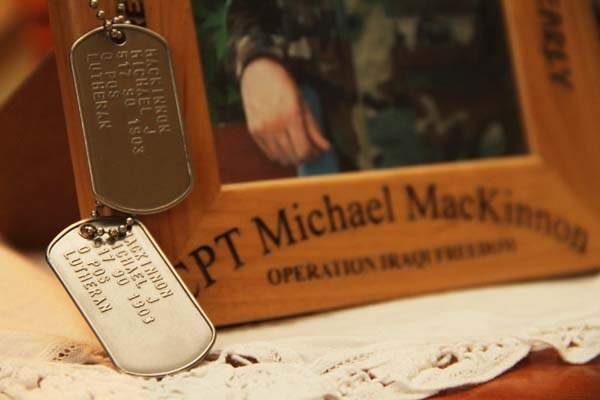
Memorial Day Personal For All Generations

As Reported by Michael Beall for The Great Falls Tribune

It arrives when spring begins its slow transition to summer, as high school seniors prepare their next steps and, when the fickle Montana weather cooperates, it’s a day for barbecues, parades, picnics and remembrance — surrounded by loved ones, bouquets of flowers and American flags.

Memorial Day is a national holiday with a personal connotation that dates back to 1868 and the wake of the Civil War. It stems from contentious roots in a time when the North and South honored their dead on separate days, until the country united the holiday after World War I to remember all American soldiers from every war.

It was known as Decoration Day in the 19th century, when Americans from both battlefronts carried flowers to graves or makeshift monuments honoring the approximately 620,000 soldiers who died on American soil.

“The procession went on, and stopped here and there at the little graveyards on the farms, leaving their bright flags to flutter through summer and winter rains and snow. They sent flags to all the distant graves and proud were those households who claimed kinship with valor,” wrote Sarah Orne Jewett on Decoration Day 1892, remembered in the book “Race and Reunion: the Civil War in American Memory.”

Jewett’s words ring true today in the graveyards and cemeteries, memorial parks and main streets, and in homes and backyards. Memorial Day is as personal as an individual’s relationship with a war, a veteran, a living or fallen soldier.

Maureen Blake, a third-grader at Morningside Elementary, planned to celebrate the holiday with an annual barbecue to spend time with her mom, dad and sister.

“Memorial Day means to me and my family to celebrate soldiers and their hard work in the military, army, marines or whatever they do,” Blake said in a shy but excited voice. “I think it’s a day for remembering the soldiers.”

She said she remembers her dad, Ferrel, who is an Air Force sergeant, and her uncle, who passed away in a car wreck. When she grows up, she wants to follow her father into the military so she can help people.

Pakistan: Between a Rock and A Hard Place

By Yekaterina Kudashkina for The Voice of Russia

Interview with Dr. Theodore Karasik – the Director of Research and Development at the Institute for Near East and Gulf Military Analysis (INEGMA) in Dubai.

Particularly you have to first understand that the situation in Pakistan is rather icy politically, as well as on the religious scale. Pakistan now finds itself between a rock and a hard place when it comes to how it fits into the US and Western plans to halt fighting in Afghanistan as well as to get rid of terrorist events in the northwest frontier province. So, the Pakistani press is going to be very inflamed though, not only because of the NATO Summit, but also because of the sentencing of the doctor who outed Bin Laden for a sentence of 33 years.

Apparently what happened was that the US had managed to find a Pakistani physician who was able to pinpoint the location of Bin Laden’s compound and as a result of the leakage of this information in the US and foreign press this doctor was arrested and tried very quickly in Pakistan and sentenced to 33 years in jail for giving up Bin Laden’s position. This is a political trial where Pakistanis want to make an example of this individual by arguing that he managed to fail the state by giving up the secret of where Bin Laden was hiding.

Do you think that this case is going to further deteriorate the relations between the US and Pakistan or is it just a root in development?

I think it is a bit of both. I think that will embarrass the US-Pakistani relations. I think that will be pressuring the United States of why did the US revealed the identity of this doctor. There is also a discussion about how this relationship with Pakistan and the United States will continue in terms of transport of nonlethal goods to Afghanistan.

Now, talking about that issue. Do I get it right that the negotiations are still under way in Islamabad regarding the transportation routes agreement, the new one?

Yes, the negotiations are still ongoing in Islamabad about transferring nonlethal goods into the Afghan theatre. And Pakistanis are using this episode to put political pressure on US to make concessions, particularly when it comes to military aid or paying of very high prices for use of this supply lines.

Are we talking about concessions in terms of money or in some other aspects?

It’s a combination of both money and political support for the Zardari Government.

Is the US prepared to offer a political support for Zardari Government in the present circumstances?

At this time I would say that the United States is going to play quite tough with Pakistan. Let’s face it – Pakistan is just barely above a failed state. And the US needs to make sure that Pakistan does not descend in the total chaos while at the same time applying pressure on Pakistan to guarantee that the state remains somewhat coherent together.

The signals of the resumption of negotiations in Islamabad were generally seen as a sign that perhaps they could be ameliorating. And then came Zardari’s visit to Chicago. By the way, why would the Pakistanis be so disappointed with the results of his visit? What were their expectations?

I think that they were expecting to be treated more as an equal and key to solving the Afghan problem as well as to part of trying to help with the withdrawal of troops from Afghanistan. But instead you had this political issues popup and then you had Zardari acting in a very strange way by missing the key events like the group of progress of all the leaders and so on. I think that they left Chicago messed.

Does the United States want to ameliorate them and what needs to be done if there is a certain desire to make them better?

Clearly a lot of problems need to be discussed and we need to find the right remedies that would help both countries work together in this difficult time. I think it is going to get more difficult as tensions build over what to do with Afghanistan and the withdrawal from Afghanistan of NATO forces. Pakistan has an important role to play in all this because of the supply routes as we talked about previously. So, I think we are going to be entering a period of more jostling for position, negotiation that could get quite ugly at some points.

Afridi Sentence Pushes U.S.-Pakistan Relations From Bad to Worse

As Compiled by Araminta Wordsworth for The National Post

Full Comment’s Araminta Wordsworth brings you a daily round-up of quality punditry from across the globe. Today: One country’s freedom fighter is another nation’s traitor, from Benedict Arnold on down.

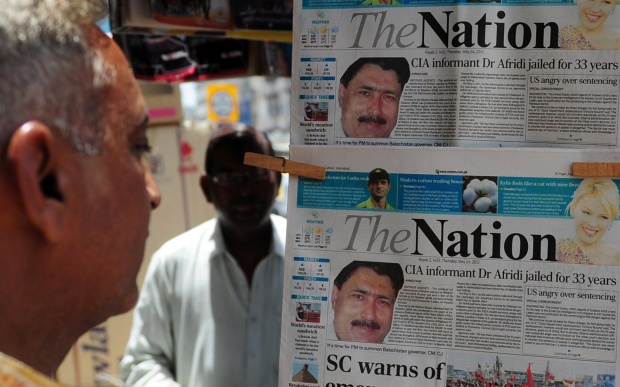
That’s the fate of Shakil Afridi. The Pakistani doctor is now behind bars, serving a 33-year sentence for treason and excoriated by fellow citizens.

His crime: helping the Americans track down the world’s most wanted terrorist, Osama bin Laden.

The physician organized a fake vaccination drive in Abbottabad, a leafy town about an hour north of Islamabad where the al-Qaeda chief had been bunked down, apparently for years. Nurses went from house to house, taking DNA samples. Among the doors they knocked on was that of bin Laden.

The sentence has been greeted by outrage in Washington, where relations with Islamabad are going from bad to worse. Americans believe they should at least get co-operation for the $1-billion in aid they dish out to Pakistan each year.

Pakistanis meanwhile are affronted by perceived infringements of their sovereignty — chiefly the US Navy SEALs’ raid that killed bin Laden, which was carried out without notifying Islamabad; but also U.S. drone attacks, a friendly fire accident that killed about 30 government troops, and the CIA’s continuing clandestine operations.

Reporting from Islamabad for The Guardian, Jon Boone explains the Pakistani position.

For some Americans the Pakistani doctor who worked on a clandestine operation to track down one of the U.S.’s greatest enemies is a hero who should be given citizenship. But for Pakistan’s security agencies Dr. Shakil Afridi, a 48-year-old physician who once led campaigns to vaccinate children against polio on the Afghan frontier, is a villain.

On Wednesday a representative of the country’s main spy agency said Afridi had got what he deserved when he was sentenced to 33 years in prison for conspiring against the state, for his role in trying to help the CIA track Osama bin Laden to his hideout in the garrison town of Abbottabad.
American lawmakers quickly responded, hitting Pakistan in the pocketbook, writes David Rogers at Politico.

Angered by the prosecution of a Pakistani doctor for helping the CIA locate Osama bin Laden, the Senate Appropriations Committee voted Thursday to cut another $33-million from an already much-reduced military aid package: $1-million for each of the physician’s 33-year prison sentence.
The 30-0 roll call followed a brief but often bitter discussion that underscored the deteriorating relationship between Washington and the Islamabad government, which remains an important ally in the war in Afghanistan.

“We need Pakistan. Pakistan needs us,” said Senator Lindsey Graham, who helped to craft the amendment. “But we don’t need a Pakistan that is just double dealing.” Judson Berger at Fox News believes the Obama administration was caught flat-footed by Afridi’s conviction.

Former U.S. intelligence officers accused the Obama administration of dropping the ball … — with one openly challenging the State Department’s claim that it pressed his case “regularly” with Islamabad.

Officials are now raising a slew of concerns with how the U.S. government has handled the case.
Peter Brookes, a former analyst and adviser with several intelligence agencies who is now a senior fellow with the Heritage Foundation, told Fox News on Thursday that the U.S. should have had a plan to get him out of Pakistan immediately following the raid.

But CNN’s national security contributor Fran Townsend told the program Starting Point Afridi probably thought he was “safe enough” in Pakistan and didn’t want to leave, especially without his extended family.

The United States is working to secure Afridi’s release, and Townsend confirms that [U.S. Secretary of ] State Hillary Clinton has intervened on the doctor’s behalf. Although she believes that Afridi may face some jail time, Townsend says that she ultimately thinks he’ll be released through negations between the U.S. and Pakistan.

“Pakistan will use it as a leverage point,” Townsend explains. “They’re going to want some concession, some commitment from the United States that there will be no use of Pakistani citizens inside their own territory by American intelligence.”

Her view of Afridi as a bargaining chip is confirmed by the BBC’s M. Ilyas Khan, who explains the significance of trying Afridi under Khyber Pakhtunkhwa tribal law .

A trial by a regular court could have gone on for months, involving a proper indictment, witnesses and lawyers, all under the glare of television cameras.

But the political officer in Khyber has made sure that it stays secret and swift … Analysts say the Pakistani establishment has done this not only to defy the Americans but also to send a message to all Pakistani contacts of American diplomatic missions to desist from repeating Dr Afridi’s “mistake.”

They also point to an enduring feeling in Pakistan that at some point it has to mend fences with its Western allies, in which case the release of r Afridi could be one of the bargaining chips.

As and when that happens, the governor of Khyber Pakhtunkhwa province can legally order his release.

Pakistanis for Peace Editor’s Note- The jailing of Dr Afridi is not only another stain in the US-Pakistani relations, such as the hiding of OBL, but rather it is another carriage of injustice in a nation that is guilty of it daily with its population. From the lack of providing rights and freedoms to many of its citizens to the downright shameful behavior towards its religious minorities and women, it regularly is guilty of miscarriage of justice.

Please don’t even get us started on failing miserably to provide basics such as power, clean water, security from home grown terrorists or even a remotely functioning democracy. This action, as well as others in the last thirteen months illustrate, in our view, simply no reason other than, we are sad to say, that Pakistan has essentially told the Americans that we are not with you.

US-Pakistan Tensions Deepen as Obama Snubs Zardari at Nato Summit

As Reported By Ewen MacAskill for The Guardian

The rift between the US and Pakistan deepened on Monday as the Nato summit in Chicago broke up without a deal on Afghanistan supply routes.

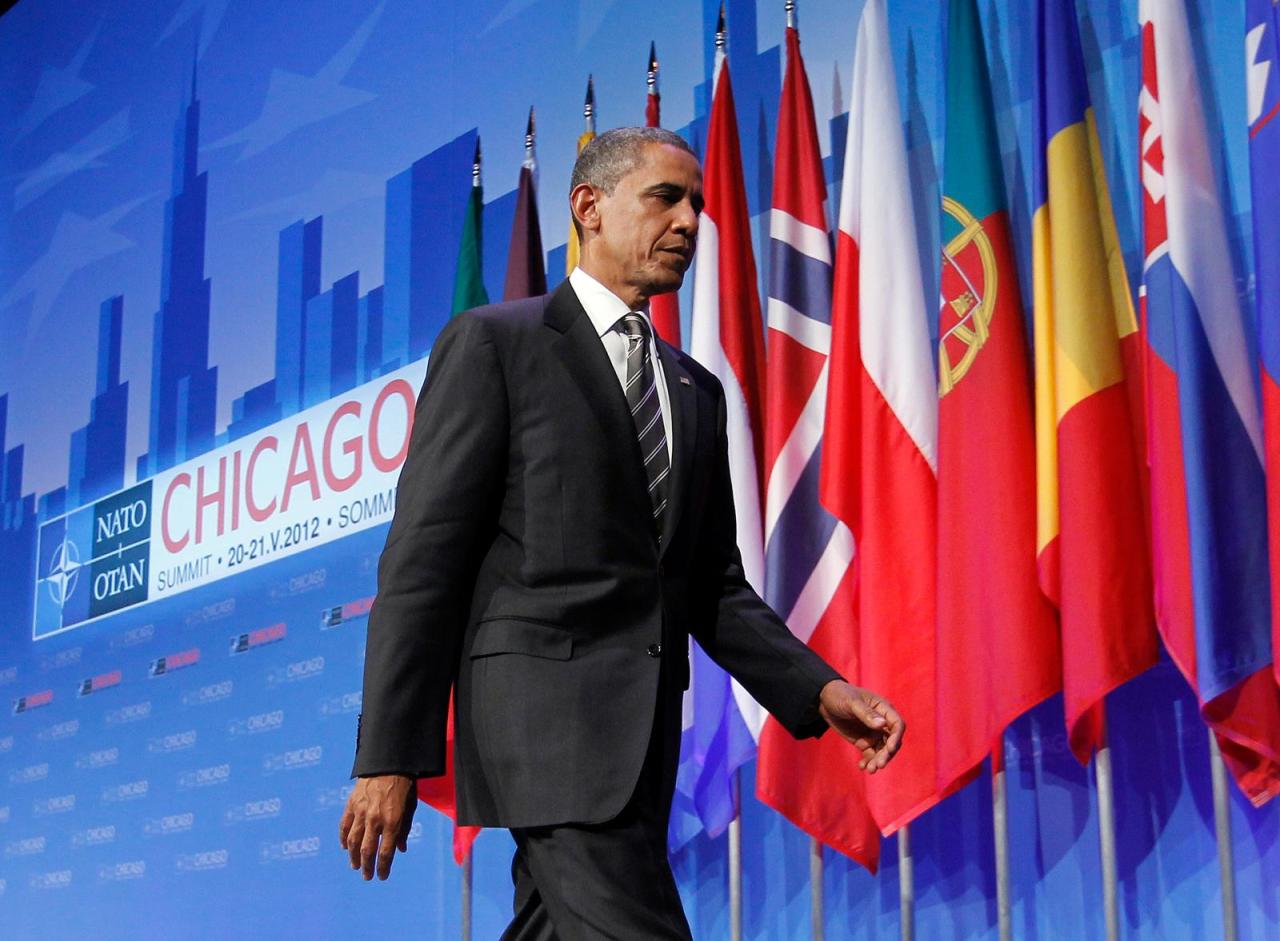
Barack Obama, at a press conference to wind up the summit, made no attempt to conceal his exasperation, issuing a pointed warning to Pakistan it was in its wider interest to work with the US to avoid being “consumed” by extremists.

Seldom in recent years have the tensions between Washington and Islamabad been on public show to the extent as at the Chicago, overshadowing the two-day Nato summit.

The main point of friction is Pakistan’s closure of Nato supply routes to Afghanistan in protest over drone attacks and a US air strike in November that killed two dozen Pakistani troops.

Obama refused to make time during the two-day summit to see the Pakistan president Asif Ali Zardari for a face-to-face bilateral meeting. In a press conference, Obama made a point of stressing that the only exchange he had with his Pakistani counterpart was short. “Very brief, as we were walking into the summit,” Obama said.

The US president said he “did not want to paper over the cracks” and that there has been tension between the US-led international force in Afghanistan and Pakistan over the last few months.

But ultimately, it was in the US interest to have a stable, democratic and prosperous Pakistan, Obama said, adding it was in the interest of Pakistan to work with the US to ensure it is not consumed by extremists.

There are fears in the US that the Pakistan government is unstable and that the government could fall, to be replaced by hardliners. The risk for Obama is displaying his annoyance with Pakistan at the Chicago summit is that Zardari could leave the summit feeling humiliated and even less willing to play a positive role over Afghanistan.

Obama declined to meet Zadari one-to-one because Pakistan is refusing to re-open its Afghanistan border to Nato, which means the US and others are having to resupply their military forces through the slower and more expensive routes from the north and Russia.

The president claimed that he never anticipated the Pakistan supply line issue being resolved at the summit and, taking a more optimistic view of the stand-off, he said they were making “diligent progress”.

“We think that Pakistan has to be part of the solution in Afghanistan. Neither country is going to have the kind of security, stability and prosperity that it needs unless they can resolve some of these outstanding issues,” Obama said.

The British prime minister, David Cameron, at a press conference in Chicago, reflected the irritation with Pakistan, describing the blocked routes as “frustrating”. Cameron said he expected a deal eventually but not at the summit.

In its final communique, Nato formally committed to its withdrawal of the 130,000-strong force from Afghanistan based on a timetable agreed earlier by Obama and Karzai. All international combat troops would be withdrawn by the end of 2014. But the communique said a smaller force would remain to help “train, advise and assist” the Afghan army.

The communique does not say how many troops will be left but US commanders in Kabul are looking at a Nato force of around 15,000-20,000. Reflecting the public mood in Nato countries tired of the war, the comminque said the withdrawal timetable is “irreversible”.

Obama, at the opening of the second day of the Nato summit on Monday morning, showed his displeasure with the Pakistan government by singling out for mention the Central Asia countries and Russia that have stepped in to replace the Pakistan supply route and made no mention of Pakistan. Zardari was in the room at the time.

To ram home the point, the US defence secretary, Leon Panetta, also held a meeting at the Nato summit with senior ministers from Kazakhstan, the Kyrgyz Republic, Tajikistan, Turkmenistan, and Uzbekistan. Panetta expressed his “deep appreciation” for their support.

Zardari has demanded an apology from the US for the killing of the 24 Pakistani troops in November in return for reopening supply lines. He is also proposing that the tariff for each vehicle be raised from $250 to $5,000. The US is bitter about this, noting the amount of American military and other aid that goes to Pakistan annually.

In his wrap-up press conference, Obama stood praised the Chicago police for their handling of the demonstrations but also defended the rights of the protesters. “This is part of what Nato defends: free speech and freedom of assembly,” Obama said.

Pakistan Blocks Twitter Over Cartoon Contest

By Salman Masood for The New York Times

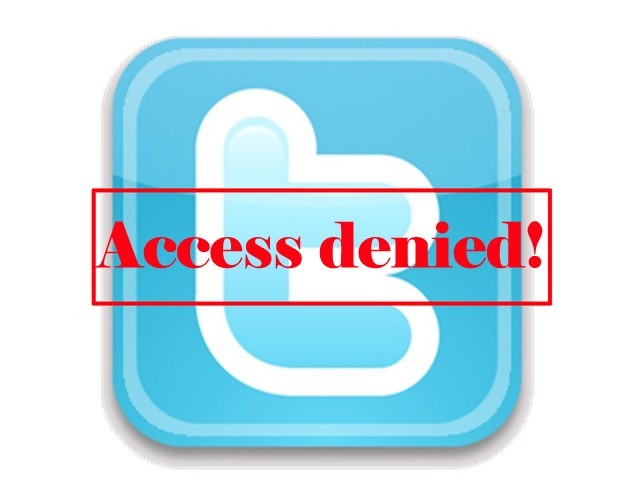
The Pakistani government blocked access to the social networking service Twitter on Sunday, after publicly holding Twitter responsible for promoting a blasphemous cartoon contest taking place on Facebook, officials said.

A government spokesman was quoted by local news media as saying that the government had been in talks with Twitter to remove “objectionable” material but that there had been no results.

“The material was promoting a competition on Facebook to post images of Islam’s Prophet Muhammad,” said Mohammad Yaseen, chairman of the Pakistan Telecommunication’s Authority, was quoted as saying. He was also quoted as saying that Facebook had agreed to allay the concerns of the Pakistani government.

Blasphemy is an issue that roils sentiment easily in Pakistan. Blasphemy allegations have often resulted in violent riots, and religious minorities in Pakistan have long maintained that the country’s blasphemy laws are used to settle personal scores.

Facebook was banned for two weeks in 2010 after protests erupted in the country over a similar cartoon contest on Facebook to draw the Prophet Muhammad. After a high court ordered the government to ban Facebook, the government was quick to ban YouTube and hundreds of other Web sites and services.

Speculation that the government intended to suspended Facebook and Twitter again had been swirling around for the past couple of days. However, this time around there have been no major public protests over the contest that Pakistani officials have expressed concerns about.

The ban has caught Twitter users by surprise.

“I never heard of any caricatures on Twitter,” said Arif Rafiq, an adjunct scholar at Middle East Institute and a commentator on Pakistani politics, who has a Twitter following of more than 10,000 users. “Now this ban will be promoting whatever caricatures were posted on it.”

Responding to a question last night, Rehman Malik, the country’s interior minister, had denied that ban on social networking sites was in the offing.

“The government of Pakistan’s ban on Twitter is ill advised, counterproductive and will ultimately prove to be futile as all such attempts at censorship have proved to be,” said Ali Dayan Hasan, Pakistan director at Human Rights Watch, in a press statement. “The right to free speech is nonnegotiable, and if Pakistan is the rights-respecting democracy it claims to be, this ban must be lifted forthwith. Free speech can and should only be countered with free speech.”

Critics said that the blocking of the micro-blogging site could actually be a part of longstanding government plan to muzzle media freedom and could be related to the vociferous opposition and criticism that is heaped on the country’s security apparatus in Twitter debates.

“Twitter is a place where fierce opposition to Pakistan’s security agencies is expressed,” said Raza Rumi, a widely read columnist and an adviser at the Jinnah Institute, a public policy center based in Islamabad.

“There is a clear trend,” Mr. Rumi said, “that the Pakistani military and spy agency get a strong critique from Pakistanis themselves, something that does not happen in mainstream media where people are generally shy to express such views.”

Activists supporting minority rights have established a strong voice on Twitter, and advocates for the Baluch people, who are demanding greater rights and a share of the natural-resources wealth in the southwestern province of Baluchistan, have also used it to spread their message.

Panetta to Confront Pakistan at NATO Summit on Transport Costs

By David Cloud for New York Daily News

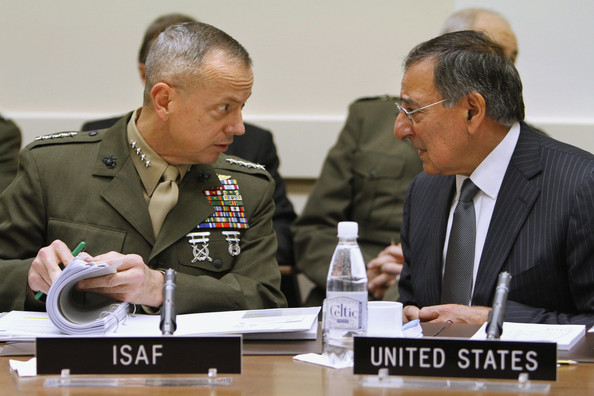
Defense Secretary Leon E. Panetta heads to this weekend’s NATO summit prepared to confront Pakistan over what he considers price-gouging for transport of supplies to Afghanistan and hoping for a “consensus” among allies over the war effort.

In an interview before his arrival in Chicago, where the summit is scheduled to begin Sunday, Panetta all but ruled out paying Pakistan $5,000 for each truck carrying supplies across its territory for NATO troops waging the Afghanistan war. Pakistani officials have demanded that amount as a condition for reopening supply routes that have been closed to the alliance since fall.

“Considering the financial challenges that we’re facing, that’s not likely,” Panetta said of the demand.

Before the supply routes were closed in November after a mistaken U.S. attack on two remote Pakistani border posts that killed two dozen Pakistani troops, NATO convoys were paying an average of about $250 a truck, a senior U.S. official said.

U.S. officials say they remain hopeful they can resolve the dispute, perhaps at the summit. Pakistani President Asif Ali Zardari accepted a last-minute invitation to attend the meetings, although he is not expected to meet one-on-one with President Obama, officials said.

Thousands of trucks a day carrying supplies would go through multiple border crossings from Pakistan to Afghanistan, making the fees a potentially massive source of revenue for the cash-strapped government in Islamabad.

The U.S. has shifted deliveries to different routes through Russia and other countries to Afghanistan’s north. But the massive withdrawals of equipment due to unfold over the next 21/2 years as troops leave the country will be “significantly” more difficult if routes in Pakistan aren’t used, the Pentagon acknowledged in a report last month.

The Obama administration hopes the two-day summit will highlight what Panetta called a “consensus” within NATO about how to disengage militarily by the end of 2014. Exhausted after more than a decade of war, the U.S. and its allies want to hand off responsibility for fighting the Taliban to Afghan President Hamid Karzai’s government, even though its army and police remain well short of being able to stand on their own.

“Everybody in the alliance recognizes that for this to work, we can’t pick up and leave. We’ve got to remain there to provide support and to assist them in that effort with training, with assistance, with advice,” Panetta said.

But he acknowledged that there would be difficulties, both on the battlefield and within the alliance. Those splits are exemplified by the new French president, Francois Hollande, the Socialist Party leader who campaigned on a vow to withdraw all 3,300 French troops by the end of this year. Hollande met with Obama at the White House on Friday.

Panetta, who plans to meet the new French defense minister, Jean-Yves Le Drian, in Chicago, indicated that the U.S. hopes France will agree to keep some forces in a noncombat role in Afghanistan for the next 2 1/2 years, even if they withdraw all combat troops early.

Yet a more rapid exit by France than planned could lead other allies to speed up their own troop withdrawals.

“There are some countries — Canada, France — that want to bring their combat operations to an end on a faster time track, but that doesn’t have to mean they won’t accept the responsibility to continue to provide the needed support,” Panetta said.

Panetta acknowledged that U.S. efforts to persuade other countries to make long-term financial pledges to fund Afghanistan’s army and police, a key objective of the two-day Chicago summit, is running into difficulties.

“Of course, it’s not easy considering the financial difficulties that a lot of these countries are going through,” he said. “Many of them have come forward and said they would be willing to make a commitment, and I really do think we will be able to achieve the support levels we need.”

In an effort to secure more pledges, the U.S. is asking other countries to commit to providing aid for only three years, though Afghanistan’s armed forces are expected to need foreign assistance for at least a decade, a Western diplomat in Washington said.

A year ago, the Obama administration was hopeful it could draw the Taliban into peace negotiations with Karzai’s government, but Panetta acknowledged that he didn’t see a deal to end the conflict happening “any time soon.”

India, Pakistan Ties Hinge on Hope

By Mir Ayoob Ali Khan for The Times of India

When hope is lost, everything seems to be lost. But when we hear the adage, Ummid pe dunya khayam hai (the world stands on hope), we visualize a ray of light at the end of a tunnel.

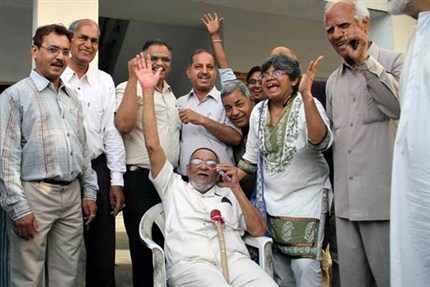
The rollercoaster ties between India and Pakistan are an unending reading in despair. It is hope that makes people believe that one day, some day, we will live like good neighbours. That someday becomes believably close when we hear that Indian and Pakistani politicians, officials and members of the civil society are ‘seriously’ talking about the benefits of developing stronger economic and commercial links between the two nations. Or, when the Supreme Court of India allows aging Pakistani virologist Mohammed Khalil Chishti, a murder convict, to visit his hometown Karachi.

It is an unprecedented move by the Supreme Court which took a humane approach in a murder case. The apex court spoke of Chishti’s age (82), his global reputation as an accomplished microbiologist and his previous clean record to say that he is free to go to his country but on certain conditions. He should be back in India in November to face trial in court. Though the Supreme Court’s order is solely based on the prudence of the judges, there is hope that Islamabad would show some reciprocation with regard to Indians stranded in Pakistan prisons. For instance, many are waiting to see if they would free Sarabjit Singh, an Indian convicted of life imprisonment in a case of mistaken identity.

Chishti and Singh have been in the public eye owing to the extensive coverage of their plight in the media. However, there are numerous Indians languishing in Pakistani prisons and vice versa who have hardly been covered by any media agency or their cases taken up by any human rights organization seriously. They too deserve attention as their loved ones are waiting to see them. In the meantime, the air over India and Pakistan is thick with hope that the two countries are about to enter into a new era of trade and commercial cooperation. Activity in this direction gained momentum ever since Pakistan decided to give the MFN-the Most Favoured Nation-status to India last year.

The two sides have realised that the trade volume was a paltry $2.6 billion in the year ending 2011. Officials and members of the trading community believe that this could be taken to $10 billion to $12 billion in the next three to five years. In the forefront of trade with Pakistan which is expected to grow in the coming weeks, not years, are tomatoes from Maharashtra. About 4,000 trucks carrying tomatoes have crossed over to Pakistan in the past three months. Lorries containing soya beans followed. Not to lag behind, Pakistan has started exporting cement and other construction material to India. Talks are on to allow 8,000 items from Pakistan to enter India in the next couple of years.

Hope is now fuelled by the foundation laying of an oil refinery in Bathinda, a town in Punjab which is160 km from Lahore, by billionaire Lakshmi Mittal and Indian Oil Company Ltd costing $4 billion. Pakistan that is already importing kerosene and diesel from India is hungry for petroleum products. The refinery in Punjab and another one owned by the Reliance Group in Gujarat which is close to Karachi could meet the fuel needs of Pakistan, at least to some extent. There are also talks to dismantle hurdles in matters pertaining to education and IT sectors, visa regimes, especially for the business community and tourists, opening of more land and air trade routes.

In India-Pakistan relations, hope is the key word. Let’s hope that it becomes a reality extending benefits to the people of the two neighbouring nations.

NATO Summit May Pose Few Political Risks For Obama

By Lynn Sweet for The Chicago Sun Times
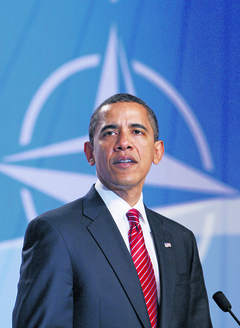
With the American public — and presumptive GOP nominee Mitt Romney — focused on the economy, President Barack Obama may not have much at stake politically if there are diplomatic flaps at the NATO Summit in Chicago.

And since Obama already signed a “Strategic Partnership Agreement” with Afghanistan to have most U.S. troops out in 2014 — he flew to Kabul for the May 1 signing — there may not be much of a price to pay domestically if pressure comes from the new president of France and other NATO partners in Afghanistan to shorten the timetable.

And if all heck breaks loose in Obama’s hometown from protesters? Well, a riot in a president’s hometown at a global summit is obviously not good. But the ramifications may not be far reaching. As political time goes, the presidential election is light-years away.

“Nobody in November will remember what happened,” an Obama team source told me. It will be a short news cycle on the cable outlets “and a month in the [Chicago] papers.”

Romney’s team headquartered in Boston is hardly paying attention to the NATO gathering and was not, when I visited on Friday, sizing it up as an obvious political opportunity for them because they want an almost exclusive focus on the economy.

The rapidly expanding Romney operation (overlooking the Charles River) on Friday was ramping up the “message of the week” theme for this week — on government spending. Romney hits the Chicago area on Tuesday for a fund-raiser at the Winnetka home of Pat Ryan — the insurance mogul and civic activist — and his wife, Shirley.

The Romney campaign could mull commenting on some policy difference that emerges — but that would depend on the specifics and if strategically it paid for them to go off message. Same goes if protests get ugly or it there is some serious security incident. It all depends on the situation, I’m told.

Obama’s biggest diplomatic stake

The biggest diplomatic stakes for Obama are the package of issues surrounding Afghanistan, made more complex because of the election of a new French president.

Three announcements are expected at the Chicago NATO Summit: When in 2013 the combat mission in Afghanistan shifts to supporting the Afghan National Security Forces; how much support, financial and otherwise the “ANSF” will get from NATO partners; and agreement on a “roadmap” for NATO’s post-2014 role in Afghanistan.

France’s new president, Francois Hollande — a Socialist — will be sworn in on Monday. He campaigned on a platform to pull out French combat troops by the end of 2012.

During a Senate Foreign Relations Committee hearing on the Chicago NATO Summit on Thursday, Assistant Secretary of State Philip Gordon was asked by committee chair Sen. John Kerry (D-Mass.) about Hollande.

Obama at the last NATO Summit — in Lisbon, Portugal, in 2010 — got the Afghanistan partners to agree to the 2014 timetable, Gordon noted.

“The French assure us that they are committed to our common success in Afghanistan, and I’m sure we’ll find a way forward that ensures that common success. All I can do is speak to our own view, which is that this principle of ‘in together, out together’ remains critical,” Gordon said.

Mayor Rahm Emanuel has much more at stake in the summit — as Obama’s former chief of staff, he grabbed the Summit, seeing it as a terrific opportunity to showcase Chicago. But he neglected to get buy-in from rank-and-file Chicagoans who see the inconveniences more than the advantages.

Emanuel has just one portfolio for the NATO Summit as host mayor. Though he once did while in the White House, Emanuel this week doesn’t have to worry about the future of NATO, transatlantic security, ballistic missiles, Russia, free and fair elections in Afghanistan and how to make NATO allies take on their fair share of financial responsibilities and spend two percent of their gross domestic product on defense.

Obama wanted the summit to be in Chicago in part because he wanted to show off for foreign leaders a city that relishes it diversity — with almost every ethnic group that is part of NATO and its partners.

The last U.S. NATO Summit was in 1999; this is the first outside of Washington.

“In addition to the opportunity to showcase one of our nation’s great cities, our hosting of the summit in Chicago is a tangible symbol of the importance of NATO to the United States. It is also an opportunity to underscore to the American people the continued value of this alliance to security challenges we face today,” Gordon said at the Senate hearing.

Emanuel, on the other hand, wanted the summit to drum up business for Chicago.

My thought is Emanuel far more than Obama owns the summit if things go wrong — and will likely bear the brunt even though the Secret Service is taking the lead coordinating security.

Emanuel will find it harder to change the subject if there are horrible demonstrations. Obama, working off a national and global stage — will be able to move on if all that goes wrong are protests.

“Foreign policy in the minds of the American people right now is not nearly as important as it has been in past elections,” Brookings Institution scholar William Galston told me. “… They are focused almost exclusively on the economy.”

Former White House Chief of Staff Bill Daley noted when we talked that demonstrations at world summits “are not unique to Barack Obama or to America today.

“Demonstrations happen every time there is a big gathering now of any leaders of the world anywhere,” Daley said.

I asked Daley if the fact the summit is in hometown Chicago raises the stakes for Obama.

He said no. “Just cause it was his hometown people would say, ‘boy, he could not control his home therefore we are not going to vote for him as president.’ … I don’t see it. … Obviously, it wouldn’t help. But I don’t see the American people holding him responsible for what may or may not happen by demonstrators who come from all over the country and all over the world to the city.”
Lamont Peterson to Lose Titles and Chance of Rematch with Amir Khan

By Kevin Mitchell for The Guardian

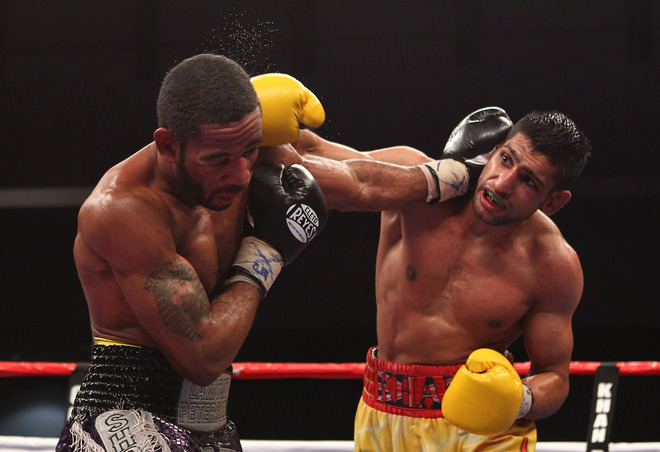
Amir Khan’s rematch with Lamont Peterson was officially cancelled last night and the American will almost certainly be stripped of his world titles over a failed drug test when he goes before the Nevada State Athletic Commission on Tuesday.

Khan is likely to fight on 30 June for the World Boxing Association and International Boxing Federation light-welterweight titles he lost to Peterson in Washington last December. The former champion will return to Bolton on Saturday and await the announcement of his new opponent.

It is an anticlimactic turn of events for Khan, who confirmed on Twitter: “The fight is off! sorry everyone the only person to blame is [Peterson].” He was desperate for revenge over the American, who rose from living on the streets of Washington with his brother as an abandoned waif to being warmly embraced as one of the sport’s most heart-warming heroes. That fairytale now lies in tatters.

When Peterson’s team flew from Washington to Las Vegas on Tuesday it was to argue that the presence of a banned synthetic substance resulted from the “inadvertent” use of pellets designed to counter low testosterone levels.

The Nevada commission’s executive director, Keith Kizer, said beforehand it would take some “really enlightening” new evidence to persuade the commission that Peterson should be granted a licence to box in Nevada. Nobody thought that was going to happen and last night the promoters called it off.

Even before their plane had landed, sentiment had swung away from the likable Peterson. He had left his supporters disappointed – and Khan without a credible opponent.

The drama of the past couple of days reached another high point on Wednesday when the commission released details that Peterson tested positive before challenging Khan before Christmas in his home town. It was a fight of rolling controversy but recent developments have overridden even those rows about questionable refereeing and the mysterious appearance at ringside of the man who came to be known as “The Cat In The Hat”, Mustafa Ameen.

Referring to Peterson’s positive test for excessive levels of testosterone, Kizer said: “He and his team say it was inadvertent. We consider it dishonest. We have to go through the proper procedures, not least with reference to the chairman [of the commission, who has the final say on granting a licence], but we can see no alternative to refusing him a licence.”

Asked about Peterson’s pre-fight declarations in support of stringent drugs-testing, Kizer replied: “Isn’t it always the way with athletes who [test positive for] drugs? We would have loved to have Mr Khan fight here on the 19th but clearly that is not possible. The Peterson team left it too late to inform everybody, ourselves included.

“I feel sorry for Mr Khan and all the undercard fighters who will not now be paid, as well as all the fans who bought tickets and made travel plans.”

It is estimated as many as 4,000 British fans have already booked flights, hotels and tickets – Khan’s biggest ever contingent of support since he moved to the US to fight under the tutelage of Freddie Roach. He has grown in popularity, with local fans and with the powerbrokers of the game, from Golden Boy Promotions, to the commissioners.

“Hopefully we will have Mr Khan back here in June,” Kizer said. “He is always welcome here. We have informed the Washington commission and I suppose they will invalidate the result [of the fight in December]. It’s certain we would have been doing so had it taken place in Las Vegas. I suspect the World Boxing Association and the International Boxing Federation will strip Mr Peterson of his titles.”

Khan tweeted: “Let’s hope the right thing will be done.” He added: “Boxing is a dangerous sport a toe to toe battle someone can seriously get hurt especially with an unfair disadvantage, we need to put a stop to this, I still believe they are my belts.”

The options for Khan are many and varied. He may contemplate another go with a fellow Golden Boy client, Marcos Maidana, whom he beat in a belting affair at the Mandalay Bay. Zab Judah, whom he beat at the same venue, is likely out of the picture as he is trying to negotiate a fight with Juan Manuel Márquez, but the unbeaten Philadelphian star Danny García would fancy his chances.

Whoever it is, it will not be the opponent Khan was desperate to fight.

Is Parcham Ke Saye Talay by Hadiqa Kiani

Song By Hadiqa Kiani

India, Pakistan Try ‘Trade Diplomacy’

As Reported by AFP

India and Pakistan, still at loggerheads on Kashmir and no closer to a full peace deal, are channeling their efforts into increasing trade in the hope that business can bring them together.

31-year-old Karachi food trader Kashif Gul Memom is among those eager to seize the opportunities offered by easier links between the estranged neighbours, which have fought three wars since independence in 1947.

“This is a change for the good. It’s an exciting time,” said Memom, one of the generation born after the painful partition of the subcontinent that gave birth to India and the Islamic republic of Pakistan.

“My generation of business people is putting the past behind us. We’re looking to the future, India is such a huge market for us,” Memom told AFP while at the largest ever Pakistani trade fair held in India.

The improved relations between the nuclear-armed rivals stem from Pakistan’s decision to grant India “Most Favoured Nation (MFN)” status by year end, meaning Indian exports will be treated the same as those from other nations.

In further progress, the neighbours opened a second trading gate in April along their heavily militarised border, boosting the number of trucks able to cross daily to 600 from 150.

India now also says it is ready to end a ban on investment from Pakistan and the countries are planning to allow multiple-entry business visas to spur exchanges — a key demand by company executives.

The warming commercial ties underline the new relevance of the private sector in the peace process, with prospects still low for any swift settlement of the “core issue” of the nations’ competing claims to Kashmir. The divided Himalayan territory has been the trigger of two of their three wars since independence.

Indian and Pakistani officials have been looking at the so-called “China option” as a model, with deepening economic engagement seen by experts as crucial to establishing lasting peace in the troubled region.

Beijing and New Delhi have been pursuing stronger economic ties while resolving outstanding political issues, such as a festering border dispute that erupted into a brief, bloody war in the 1960s.

“There is no other option but economic partnership between India and Pakistan — this leads on to other partnerships,” Indian Commerce Minister Anand Sharma said at the April trade fair in Delhi, a follow-on to a similar venture in Lahore earlier in the year.

“We have to recognise our true trade potential and leave our children with a legacy that ensures prosperity, harmony and peace.”
Some Pakistani businesses have protested against the trade opening, fearing they may be swamped by cheaper Indian goods, especially in drugs, auto parts and consumer goods. But others eye the possibilities India’s market offers.

“India with 1.2 billion people gives us great potential,” Mian Ahad, one of Pakistan’s leading furniture designers, told AFP.
Indian businessmen are equally enthusiastic, saying there is an opportunity for trade in areas from agriculture, information technology, pharmaceuticals, and engineering to chemicals.

Official bilateral trade between India and Pakistan is just $2.7 billion and heavily tilted in New Delhi’s favour.
But Indian business chamber Assocham estimates up to $10 billion worth of goods are routed illicitly — carried by donkeys through Afghanistan or shipped by container from Singapore and the Gulf.

Indian commerce secretary Rahul Khullar told AFP that Pakistan’s decision to grant India MFN status by the end of the year was “the game-changer.”
MFN status will mean India can export 6,800 items to Pakistan, up from around 2,000 at present, and the countries aim to boost bilateral trade to $6 billion within three years.

“I’m cautiously optimistic. Commerce is an excellent way to bring countries together,” Indian strategic analyst Uday Bhaskar told AFP.
“Once you institutionalise trade, it becomes hard to slow the momentum for cross-border exchanges. People say if there are onions or cement or sugar available next door, why can’t I have them? And why can’t I travel there too?”

Pakistan Cricketer Mohammad Asif Freed After Fixing Scam Sentence

As Reported by The BBC

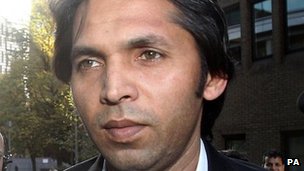
Pakistan cricketer Mohammad Asif, one of three jailed for a fixing scam, has been released after serving half of a 12-month sentence, his lawyer says.

Asif, 29, the former world number two Test bowler, was freed from Canterbury Prison in Kent on Thursday morning.

In November, Asif and team-mates Salman Butt and Mohammad Amir were jailed for a plot to bowl deliberate no balls in a Test match against England in 2010.

All three players were also given five-year playing bans.

A Ministry of Justice spokesman said it did not comment on individuals.

“Foreign national offenders released from prison on licence will be supervised by probation for as long as they remain in this country,” he said.

Undercover reporter
The fixing scandal came to light when an undercover News of the World reporter approached sports agent Mazhar Majeed, who was also jailed for his role, pretending to be a wealthy Indian businessman seeking players for a tournament.

Majeed promised him that Asif and Amir would deliver three no-balls at specific points during the Test between Pakistan and England at Lord’s on 26-29 August 2010, and claimed to have been fixing games for over two years, with seven Pakistan players working for him.

At Southwark Crown Court in November, ex-Test captain Salman Butt, 27, was jailed for two-and-a-half years for his role as the “orchestrator” of the plot.

Explaining why he had bowled a no-ball when Majeed said he would, Asif alleged that Butt had told him to “run faster” moments before his delivery.

The trial judge, Mr Justice Cooke, said there was no evidence that Asif had taken part in fixing before the Lord’s match but added: “It is hard to see how this could be an isolated occurrence for you.”

Asif took his 100th Test wicket during Pakistan’s 2010 series in England.

He had run into controversy before. He twice tested positive for the performance-enhancing drug nandrolone and was held in Dubai for 19 days in 2008 after opium was found in his wallet.

Mohammad Amir was released from jail in February.

Pakistan Offers Mega Projects

By Muzaffar Rizvi for Khaleej Times

Pakistan is confident to secure UAE and Gulf investments in mega projects especially in the energy- and agro-based industries, its delegates at the Annual Investment Meeting, or AIM, said.

Top officials from the Trade Development and Authority of Pakistan, or TDAP, Abu Dhabi Group and Sindh Board of Investment on Wednesday gave presentations on key investment projects in renewable energy, power generation, agriculture, coal mining and infrastructure developments.

“Pakistan offers various investment opportunities in energy and power sectors as well as in agro-based industries to international and Gulf investors at AIM,” Tariq Puri, chief executive of TDAP, told on the sidelines of the conference.

He said discussions and meetings with government and private levels are being held on the sidelines of AIM and the Pakistan delegation is expected positive results in coming days.

Pakistan’s 80-member trade delegation, led by Federal Minister Makhdoom Amin Fahim, participated in the second-day activities of investment forum and gave presentations on various key projects especially in Sindh province.

Amin Fahim said Pakistan has huge potential for investment in key sectors and the government will go all-out to facilitate the foreign investors especially from the Gulf countries.

Sindh chief minister Syed Qaim Ali Shah said the agricultural economy of Sindh province contributes about 23 per cent to Pakistan’s gross domestic production.

“Keeping in view global food security concerns, the province vast agriculture expanse has capacity to become region’s food basket,” he said.

Shah said agro-related investment projects are ready for investment and introduction to value-addition through use of technology, efficient irrigation system and modern implements can help attain true potential of province agriculture. The Sindh Board of Investment, the primary investment promotion agency of the province, invited Gulf investors and UAE companies in particular to avail the benefits of conducive-investment policies.

“We are offering investment opportunities in agriculture farming, livestock, grain-storage project as well as in infrastructure development projects,” Muhammed Zubair Motiwala, chairman of the Sindh Board of Investment, told

Elaborating, he said the government of Sindh is looking to offer land for establishment of Meat Park in Sukkur and Thatta near Karachi. He said the Rs500 million project will pay back the cost in three to five years and offers a 20-22 per cent IRR to investors.

Motiwala said the provincial government has strived to facilitate and create investor-friendly environment to attract more investment especially in Thar Coalfield, which is declared as a special economic zone. Investors can avail 30-year tax holiday, zero per cent customs duties on import of coal mining equipment and machinery. “We are offering up to 22 per cent IRR to investors on the their investment in Sindh along with other benefits which include repatriation of 100 per cent capital, profits, royalty and zero import duties on capital goods, plant and machinery and equipment not manufactured locally,” he said.

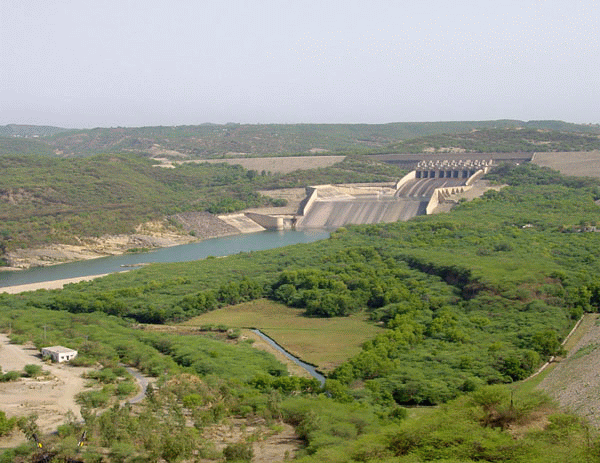
He said that the province has also an estimated hydropower potential of 153 megawatts based on various sites identified along the Sindh canal network.

He said the UAE has showed interest in Thar coal mining and power plant projects. “Al Manhal has shown interest in developing block 2 of the Thar Coalfield. We may discuss the project this weekend and if talks go positively, the UAE firm may invest up to $6 billion in the Thar coal project,” he said.

Motiwala said Thar coal reserves have an estimated potential of generating 100,000 megawatts of electricity for a period of 300 years. “It provides an opportunity for large-scale mining and power-generation over a longer period of time,” he said.

He said Pakistan has been facing an acute shortage of electricity and direly need investments in power-generation projects. According to a delegate, about 700 main industries in Punjab and Sindh are directly affected by electricity shortages in the country.

“About 400 industries in Punjab and 300 factories in Sindh have shut down their operations due to load-shedding and shortage of electricity,” he said.

Motiwala further said Sindh government also offers investment opportunities in renewable energy like solar street light initiative and wind power projects worth around $5.3 billion.

“International investors are in queue to invest in wind power projects because the province has potential to generate 50,000 megawatts electricity through wind turbines across its coastal belt,” he said.

To a question about potential investors in wind energy, he said Hydro China, China Three and NBT/Malakoff, among others, showed interest in 26 projects in the province with installed capacity of 1,800 megawatts.

“We also have offered some renewable energy projects to Masdar. We will discuss some investment opportunities with Masdar officials in Abu Dhabi and expect positive results,” he said.

“The annual radiation of 3,000 hours in Sindh has an endless potential for solar energy,” he said adding that the government is keen to encourage public-private partnerships in energy, power, agriculture and infrastructure development projects.”

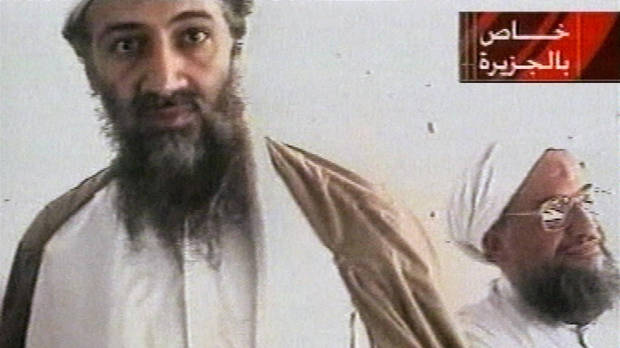
It’s Too Early to Consider Al-Qaeda a Dwindling Force

By Paul Koring for The Globe and Mail


Amid an uneasy anniversary of the killing of al-Qaeda leader Osama bin Laden in a daring U.S. special forces raid, there’s a temptation to consider the war won.

Al-Qaeda’s infamous leader is dead; the cunning mastermind of the Sept. 11, 2001, suicide hijackings, Khalid Sheikh Mohammed, goes on trial this week in Guantanamo; while missile-firing Predator drones have grimly decimated al-Qaeda’s commanders in Pakistan, Yemen and Somalia

More than a decade later, wars in Afghanistan and Iraq, $1.2-trillion in spent bullion, 6,000-plus lost American lives – and perhaps 50 times that many other lives – the “war on terror” is, at least, a defunct term, banned by President Barack Obama’s administration as it shifted rhetorical focus in the struggle against violent, extremist Islam.

But the broader conflict remains unresolved and may have become far more complicated.

No significant terrorist strike has hit an American target since 2001. The Madrid and London bombings of 2004 and 2005 were the last major attacks on Western cities. Al-Qaeda has been battered and decapitated. Yet the threat still looms.

“It’s wishful thinking to say al-Qaeda is on the brink of defeat,” warns Rand analyst Seth Jones. Yet even in the Muslim world, support for al-Qaeda is way down. Only in Egypt does its approval rating top 20 per cent, according to a recent Pew Research poll. In Pakistan, where bin Laden was killed in a violation of Pakistani sovereignty and anti-U.S. fervor runs high, barely 13 per cent hold a positive view of al-Qaeda, and in much of the Arab world support is mired in single digits.

The violent fringes of radical Islam seem to have lost traction among even disenfranchised and repressed Muslims. At the same time, political Islam is emerging as a key force in the change sweeping aside repressive regimes in the Middle East.

As the terror threat and fear of another spectacular attack like the catastrophic destruction of New York’s twin towers diminishes, the nature of the struggle against radical, repressive Islam remains unfinished and the West’s role is increasingly unclear.

The U.S.-led war in Afghanistan is winding down. The coalition of Western nations that sent combat troops – including Canada – is falling apart as nations head for the exits. The dream of transforming Afghanistan from a haven for terrorists run by Taliban brutes into a modern democracy where girls go to school in an oasis of central Asian stability has been eclipsed by harsher realities.

The war’s aims have been reduced to propping up the Karzai regime, talking to the Taliban and hoping Afghanistan doesn’t slide back into a narco-state run by warlords or return to a Taliban fiefdom.

Neighbouring Pakistan, once the supposedly key ally in former president George W. Bush “war on terror” may pose an even greater threat than Afghanistan should it collapse.

Meanwhile, as popular uprisings topple repressive regime across the Arab world, the inherent contradictions in Western policy are being exposed. Backing dictators and monarchs as long as they repressed radical Islamists, kept cold peace with Israel and the oil flowing, was the pragmatic, successful, strategic policy for decades.

In its place is a rapidly evolving effort to stay on the right side of history. So Washington jettisoned longtime loyal ally, Egyptian dictator Hosni Mubarak and then sent warplanes to back the Libyan rebels who ousted and killed Col. Moammar Gadhafi. Still backing pro-democracy forces isn’t a one-size-fits-all shift in policy. Mr. Obama’s support for the Saudi royal family remains unflinching while the unfolding violence in Syria seems to have hamstrung the West.

Al-Qaeda’s new leader, Ayman al-Zawahri, continues to issue calls to arms, urging jihadists to seize the moment. That rallying cry seems, so far, to have had little resonance among the tens of millions of Muslims seeking – and in some nations tasting – freedom across the Arab world. But there has been a spate of suicide bombings – hallmarks of extremist jihadists – in Syria.

If moderate, democratic, freely-elected governments – likely including Islamists – fail to deliver in Egypt and elsewhere, the unfulfilled expectations of tens of millions may provide new recruiting grounds for the extremists.

“Al-Qaeda franchises are still a major factor,” former White House counter-terrorism chief Richard Clarke told ABC. “Groups calling themselves al-Qaeda or claiming affiliation … have large, armed formations in Yemen, Iraq, Pakistan, Somalia, Nigeria, and in the Magreb and the Sahel regions of Africa. They are conducting military-styled attacks in some countries and waves of bombings in others. They are participating in the ‘Arab Spring’ fighting in Libya and Syria.”