Archive for the ‘ British Muslims ’ Category

Official Admits Militancy’s Deep Roots in Pakistan

By Jane Perlez and Waqar Gillani for The New York Times
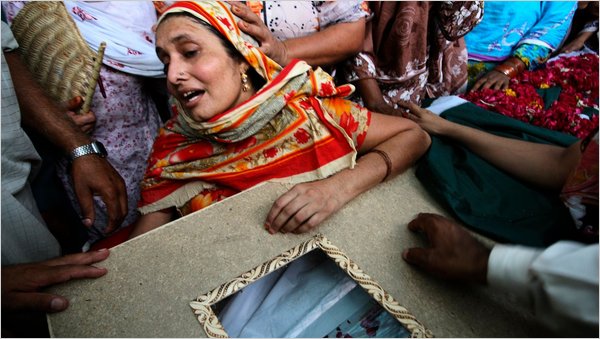
LAHORE, Pakistan — Days after one of the worst terrorist attacks in Pakistan, a senior Pakistani official declared in a surprising public admission that extremist groups were entrenched in the southern portion of the nation’s most populous province, underscoring the growing threats to the state.

 The statements by the interior minister, Rehman Malik, after the killing of more than 80 people at two mosques last week here in Lahore, were exceptional because few Pakistani politicians have acknowledged so explicitly the deep roots of militancy in Pakistan. They also highlighted the seeming impotence of the civilian government to root out the militant groups, even in Punjab Province, providing a troubling recognition that decades of state policy to nurture extremism had come home to roost in the very heart of the country.

 The extent of the problem has become an increasing concern for the United States, which has pressed the government to deal with the issue with renewed urgency since the failed attempt by a Pakistani-American to explode a car bomb in Times Square.

 “We’re dealing with a problem that is so deeply burrowed into the bosom of the society,” said a senior Western official about the difficulty of loosening the grip of the militant groups. “And we’re dealing with a government that is unhappy within itself.”

The problem for Pakistan, Western officials and some Pakistani politicians said, is not only the specific acts of terrorism by these groups, but the far more pervasive jihadi mentality that has been nurtured in the society by an extensive network of extremist madrasas and mosques.

Mr. Malik’s remarks — in which he rattled off a host of extremist groups once supported by the state — were a nod to these larger problems. In contrast to the tribal areas at the nation’s periphery, where the military is battling the Pakistani Taliban on several fronts, militants were “now active” in the southern part of Punjab and were trying to “destabilize the country,” he said.

Though Mr. Malik seemed to hint at possible military action in Punjab, the civilian government, led by the Pakistan Peoples Party, the more secular of the political parties in Pakistan, has little leverage to make it happen.

The Pakistani military, which still holds most power, has shown little interest in taking on extremist groups in Punjab. The province is a major recruiting area for the army, and many of the militant groups there were created by the state decades ago and have been fostered since as arms of Pakistan’s enduring anti-India strategy.

To a large degree, they have slipped from the control of their handlers in the military and intelligence services, according to Western diplomats and Pakistani security experts, and have linked up with Taliban fighters and other militant groups that are now striking deeper into Pakistan in an effort to overthrow the state.

Today these militants move back and forth easily between the tribal areas for training and Punjab, where they carry out a rising number of spectacular attacks.

“They — Lashkar-e-Janghvi, the Sipah-e-Sohaba Pakistan and Jaish-e-Mohammad — are allies of the Taliban and Al Qaeda,” Mr. Malik told reporters in Lahore after the mosque attacks. 

The loose conglomerate of militants that Mr. Malik listed is now being grouped by officials and others under the name of the Punjabi Taliban, a designation that itself highlights the expanding nature of the threat in Pakistan’s most important province and the militants’ shifting ambitions. Under that rubric also falls Lashkar-e-Taiba, an anti-India militant group. Like the others listed by Mr. Malik, Lashkar-e-Taiba has been banned by the state, but continues to operate under a different name and apparently with the blessing of the military.

The Punjabi Taliban took credit for the assaults on the two Ahmadi mosques last Friday. At least one of the men arrested by the Pakistani authorities in connection with the Times Square bombing case is connected to Jaish-e-Mohammed, according to law enforcement officials in Karachi.  Adding to the difficulty of clamping down on the groups, the Punjabi government, led by Shahbaz Sharif, a leader of the more conservative Pakistan Muslim League-N and a chief political rival of President Asif Ali Zardari, has stopped short of condemning the militants. In some respects, he has treated them as allies.

Two months ago, Mr. Sharif asked the Taliban to stay away from Punjab, arguing that his party and the Taliban had a common enemy in the United States. The Punjab government is “in a state of denial,” said Arif Nizami, a columnist with the newspaper The News. Mr. Sharif played down the attack on the two mosques in Lahore, Punjab’s capital. Instead, he visited the wounded survivors in a hospital quietly at night without the usual television coverage.

The groups hold such sway that Pakistani politicians frequently pander to some, like the pro-Taliban Sipah-e-Sohaba Pakistan, during elections.  In a bold illustration of the power of one of the militant groups in southern Punjab, the provincial law minister, Rana Sanaullah, campaigned alongside the leader of Sipah-e-Sohaba, Maulana Muhammad Ahmed Ludhianvi, during a March by-election for the provincial assembly in the city of Jhang.

In an interview, Mr. Sanaullah, said he saw nothing wrong with campaigning with Mr. Ludhianvi. It was a good thing, he said, because it helped bring groups that he described as no longer militant into the democratic mainstream. “If they want to be law-abiding citizens, we should allow them to be,” Mr. Sanaullah said.  Mr. Sanaullah was not alone in seeking votes from Sipah-e-Sohaba. A candidate for the National Assembly running for the Pakistan Peoples Party also won with its support earlier this year. Though security is a paramount concern, government officials and others acknowledge that the problem of militancy will not be solved by military force alone. Having been nurtured through generations, it will also not be undone quickly.

A program announced by Mr. Zardari two years ago to rein in the madrasas has yet to get off the ground, blocked by bureaucratic inertia and fears of a backlash from powerful conservative religious groups, Pakistani officials say. As state-sponsored education becomes too expensive for poor parents, the number of madrasas has actually increased in the past three years, to more than 17,000 in 2010 from 13,000 in 2007. At least several thousand of the madrasas churn out militant students, experts say.
Facebook in Pakistan: Islamists vs. Liberals

By Adam B Ellick and Ahmad Ziadi for The New York Times

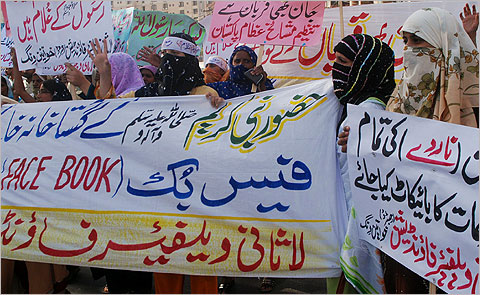
When Facebook was recently banned in Pakistan for hosting a “Draw Muhammad Day” fan page, one thing became very clear: Islamists here operate with organized precision, able to mobilize the masses in an instant, while the liberal voice remains paralyzed by fear and passivity.

Some media experts predicted that the ban – which a Pakistani court has now ordered the government to lift – might motivate the nation’s deeply disconnected liberal elite to take on the Islamists. After all, while members of the urban elite have been largely immune to the recent rise of violent militant attacks, the Facebook ban presented them with a personal vendetta.

In a nation without bars, and where entertainment options such as music concerts are rare, Facebook serves as a precious tool for the elite to organize discreet private events with music, drugs and alcohol. It has also helped mobilize social movements, including the lawyers’ march in 2009.

But the fervor that has followed the Facebook ban has been entirely one-sided in favor of the Islamists.

As the rest of Muslim world remains largely indifferent, tens of thousands of anti-Facebook Pakistanis protested in urban centers by burning American flags. A poll conducted by an IT portal called ProPakistani showed 73 percent out of about 8,000 voters favor a permanent ban on Facebook.

How did it get to this? There has been a widespread SMS campaign perpetuating a false narrative that Pakistan’s ban has brought a behemoth anti-Muslim company to its knees. One SMS attributes the recent fall in the Euro to the ban. Here’s another SMS I received:

THE BOYCOTT MADE BY MUSLIMS AGAINST FACEBOOK SINCE LAST 2 DAYS

CHARGE DEM A LOSS OF 2 BILLION EUROS..AND IF ITS CONTINUED AFTER 7 DAYS IT WOULD

REACH AROUND 40 BILLION EURO…. PLZ SPREAD AS MUCH AS U CAN.

Facts suggest otherwise. Facebook is not a publicly traded company, therefore, its earnings are not published. Still, some venture capitalists have valued Facebook at about $8 billion. Its annual revenue is estimated between $500 to $800 million.

In addition to the SMS campaign, this week, two new Muslim-friendly alternatives to Facebook have been launched. One of them, www.millatfacebook.com, was inaugurated by the bar association of the same Lahore court that banned Facebook. Millat means “Nation” in Urdu.

The site wooed more than 20,000 users with its slogan: “A site for Muslims by Muslims where sweet people of other religions are also welcome!!” Members are asked to specify if they drink alcohol. The founders are enraged at Facebook for curtailing Nazi-related hate speech while refusing to curb the Muhammad cartoons.

Their website says “Let’s prove to the world that if we can generate revenue for Facebook.com then we can also run our own website. Prove to the world that we are independent Muslims…” The other alternative site, www.Buddyflick.com , aims to “create/build/run our own network.” But where are Pakistan’s liberal and moderate voices?

Speaking out against the ban can be as hazardous as the forbidden cartoons. When those against the ban held a small news conference, the press mostly ignored it. After the press conference, several anti-ban activists were aggressively confronted by a large crowd of opposing activists as they left the venue. As tensions escalated, the anti-ban activists retreated into the building and waited for the crowd to dissipate.

One friend who is especially furious about the ban wouldn’t dare to speak out. “Nobody has the guts to go out and do something about it. The issue of Muhammad is so sensitive that you just never know.”

Instead, liberals are hashing out their frustrations in the low-traffic comment sections of liberal blogs and leftist newspapers, and, ironically enough, on their actual Facebook pages. Some have hacked into the banned site from the confines of their gated homes. Among the comment section in one newspaper is the latest joke: What’s the difference between Facebook and Lashkar  e Taiba? Answer: Facebook is banned!

Amir Khan the Ambassador

By Lem Satterfield for Boxing Fanhouse

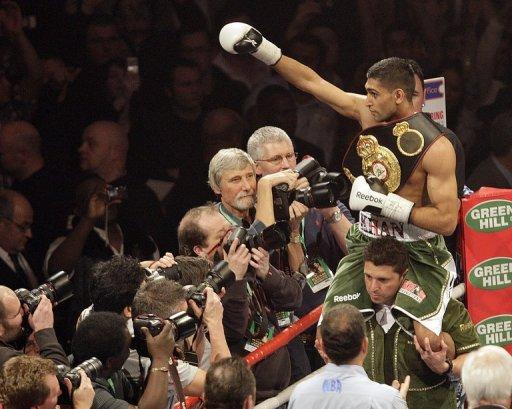
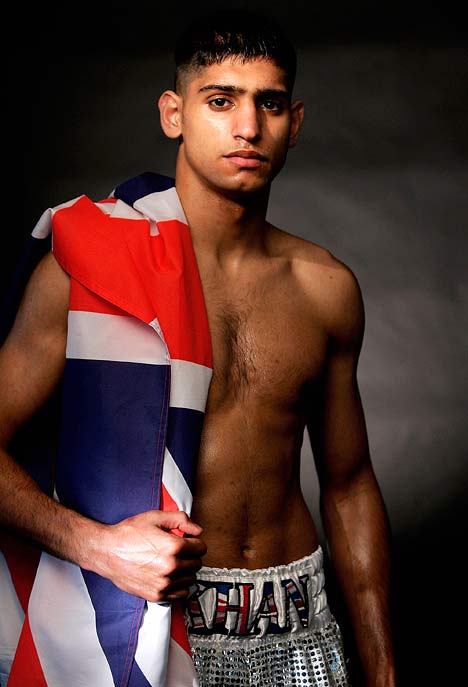
NEW YORK — WBA junior welterweight (140 pounds) champion Amir Khan had just scored Saturday night’s 11th-round knockout over Brooklyn’s Paulie Malignaggi in the biggest victory of his career.

In doing so, the 23-year-old, 2004 Olympic silver medalist not only out-boxed a pure boxer, but he mixed in an assortment of power shots — namely crisp, counter and over hand rights behind double- and triple-jabs — with a compliment of damaging left hooks and uppercuts.

When the fight was over, the English-born titlist had won the approval of the roaring crowd of more than 4,412 that filled Madison Square Garden’s 5,000 capacity WaMu Theater, and left the trash-talking Malignaggi beaten, battered and bloodied in his own hometown.

Khan had Malignaggi pinned on the ropes and was nailing him with several unanswered blows when referee Steve Smoger came to the rescue, calling a halt to the bout at 1:25 of the round.

“I was nervous, this being my first time in America. And I was walking into the theater, I could hear a lot of boos. But at the end of the fight, they started cheering for Amir Khan because I won them over with my style. I want to make all of my fights like this one,” said Khan, who rose to 23-1, with his 17th knockout and his fourth, consecutive victory.

“It’s my style. I’m explosive. I’m entertaining to watch. I’ve got speed, and I think I made a statement. I think that now there are a lot of American people who are interested in Amir Khan,” said Khan, who was coming off of a December’s first-round knockout of another Brooklyn resident, Dmitry Salita (30-1-1, 16 KOs).

“I’d love to fight some more over here. I want to save some big fights for the United Kingdom,” said Khan. “But I’ve had my American debut, and it’s the best feeling fighting in America. It’s a dream come true. I’d love to go to Las Vegas and have a big fight over there too.”

But as admirable as Khan’s in-the-ring efforts had been against Malignaggi, it is the maturity, poise and grace with which he handled the out-of-the ring distractions that may yet make Khan even more of a cross-cultural, crossover icon.

There was an irony surrounding Khan’s visa issues, which overlapped with the recent actions of alleged Times Square bombing attempt suspect Faisal Shahzad. Together, the two situations caused concern heading into Khan-Malignaggi.

Khan is a practicing Muslim who was born in England, but who is of Pakistani descent, while Shahzad is a native of Pakistan who became a U.S. citizen a year ago.

In early March, long before Shahzad’s actions on May 1, which resulted in a failed attack after he left an SUV rigged with a homemade bombing device in Times Square, Khan and his promoter, Golden Boy Promotions, became aware of the fighter’s issues concerning the obtaining of a work visa.

David Itskowitch, chief operating officer of Golden Boy Promotions, said that Khan entered America under the country’s visa waivers program “which, for all intents and purposes,” allows its holder, “a tourist visa, which is good for ‘X’-amount of days.”

“Khan’s status while he was here training was one of a tourist while not earning money,” said Itskowitch. “In order to change your status to someone who is working, you have to leave the country, get a visa, and, then, come back.”

Khan had been holding workouts at Wild Card Boxing Club, in Hollywood, Calif., owned by his trainer, Freddie Roach, a three-time Trainer Of The Year.

But Khan was forced to leave the United States, and has been preparing for his American debut against Malignaggi (27-4, five KOs), while training under Roach in Vancouver, Canada.

“I was in training camp. Then I had to go to Vancouver to get my visa. And my visa took a long time. We had to move the whole training camp there. My head was all over the place, so I had to stay mentally strong,” said Khan, who was not granted the work visa until nine days prior to the fight.

“When I finally got my visa, I had to go back to Los Angeles again, and the, fly to New York. So I was flying a lot. I was traveling all over country, and I got a visa for 23 days that it took me three weeks to get. That could have gotten to me, but I had to work very hard not to let it bother me,” said Khan.

“I have to thank Freddie for flying all over with me,” said Khan. “One thing about Freddie, he looks at his fighters like they’re his kids. He was standing beside me all of the way through, so I have to thank him for that.”

Although Khan laments the notion that suspicion may have been heightened due to the comparisons between himself and Shahzad, he also embraces the opportunity to perhaps be an ambassador.

Khan wants to use his boxing skills to influence American opinion.

“What I want to do in this game is that, you know, I know that a lot of the Pakistani people and the Muslims are getting a bad name in the United States with the bombings and the terrorism and stuff, but not all of us are like that. Look at Amir Khan. I’m an English boxer. I’m one of the faces of boxing,” said Khan.

“And I want to do the same thing that I’ve done in the United Kingdom. I want to put a new face into boxing. I want to bring the Muslim community into boxing. Whenever you’re at an Amir Khan fight, if you come to the United Kingdom and watch me fight, you look into the crowd, and you see all different colors,” said Khan.

“You see the Asian, Chinese, Pakistanis, Muslims — you see everyone. I want to do the same in the United States,” said Khan. “As more people get to know Amir Khan, you’ll see more of that. Hopefully the Americans will love my style and I can do the same here. I want to fill out the stadiums and the arenas like I do in the United Kingdom.”

Pakistani Makes History as Nation’s First Winter Olympian

By Manzer Munir

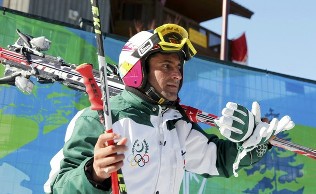
Vancouver, Canada- On Tuesday February 23, 2010, Pakistan will field its very first entry into its very first Winter Olympics. While the nation has won three gold, three silver and four bronze medals in its history at the Olympics since becoming a nation in 1947, this is the first time Pakistan will field an athlete for the Vancouver Olympics in Canada. The sole member of Pakistan’s Winter Olympics team is a 24 year old Pakistani skier by the name of Mohammad Abbas. He was the first Pakistani to qualify for a Winter Olympic event and will participate in the Alpine Skiing in the Giant Slalom category.

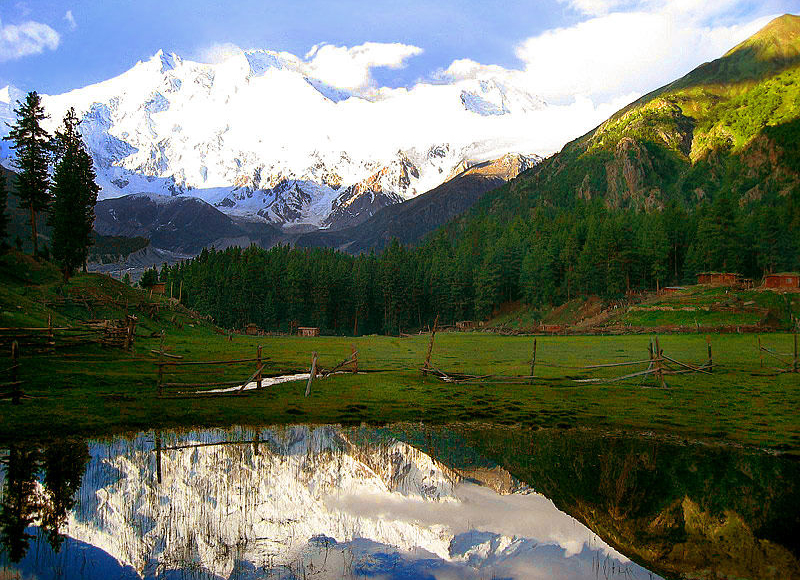
Mohammad Abbas hails from Pakistan’s northern Nalthar valley near Gilgit, Balistan and the now troubled beautiful Swat valley of Pakistan. For years very popular with the British and since with affluent Pakistanis, this picturesque and scenic area of Pakistan is nestled at the foothills of the Himalayas and receives a good amount of snow fall in the winter months. There are not many ski hills in hot weather Pakistan, but there is one in the Nalthar valley where Abbas grew up as one of the local boys. He grew up in a small village near the ski slopes.

When the idea of creating a ski team first developed, all the candidates were local children. Unfortunately out of the original 9 hopefuls, only Abbas qualified for the Vancouver games. “I started skating in 1995 using homemade wooden skates, which is how all the children in our village used to learn. We didn’t have ski boots so we tied our feet to the skis with traditional woolen foot bindings. It was pretty precarious so we had to get our balance right,” he said.

For Abbas, it has been a long and at times arduous 15 year journey since 1995 when he first took interest in skiing at the age of 9 in his village near the ski slopes of Pakistan’s Nalthar valley watching Pakistani and foreign tourists skiing spurned young Abbas and many of his cousins to take up the sport. In a cricket mad country, not very many people pick up skiing. Very few people in Pakistan can afford ski equipment and also only a very small portion of the country gets snow, so it is a surprise that the nation is even fielding an athlete at the Winter Olympics.

Sitting in the Olympics athletes village in Vancouver, Abbas admits that he does not have the camaraderie or the support of Olympic teammates that most other nations participants share, and he was concerned that he may feel a bit lonely representing his country by himself at such a big stage. But the boy from Nalthar valley was greeted with great enthusiasm and support by the rather large Pakistani Canadian community of British Columbia. “The support from my fellow countrymen has really helped me deal with the lack of teammates,” said Abbas.

Abbas said that he “achieved his ambition through hard work” and hopes he has inspired other Pakistani athletes to take up the challenge and aim for future Winter Olympic games. He also realized that his chances of bringing home Pakistan’s first Winter Olympic gold are very small but he said he wants to finish the race in an “honorable manner and make his country proud.”

Although not expected to medal, he is considered the fastest of the first time entrants to compete in the Giant Slalom that is scheduled to take place at Tuesday. It is perhaps an accomplishment to have finally fielded a Winter Olympics team, but for Pakistan it is also a moral victory to have a young man represent the country from the same troubled yet beautiful valley that has been now for months fighting for its life from Taliban insurgents. He represents not just Pakistan’s Olympic hopes, but the spirit of the people of the area to make the best of their situation and rise above the adversity of their daily struggles in a very beautiful part of the world that has also long been known as the “Switzerland of Pakistan.”