Archive for the ‘ Iran ’ Category

World To Valentine’s Day: I Love You, I Love You Not

By Kristin Deasy for Radio Free Europe Radio Liberty
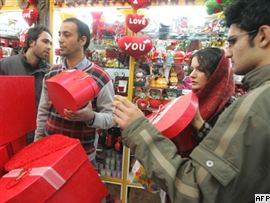
The East is coy when it comes to celebrating Valentine’s Day, with some countries banning it as a Western imposition, while activists in other countries use the traditional day of love to play politics.

In Iraq, three youth groups have called for a Valentine’s Day rally in Baghdad’s Tahrir (Liberation) Square, which like many regional capitals bears the same name as the Egyptian square that made headlines recently during the country’s uprising.

Following the lead of countries like Egypt and Tunisia, where protesters took to the streets demanding political reform, these young Iraqis are using Facebook to call for an end to the political deadlock and rampant corruption in the country. The corruption watchdog Transparency International lists Iraq as the fourth-most corrupt country in the world.

“We chose February 14, Valentine’s Day, to prove to the world that we have made the Valentine’s Day of Iraq. We are here today to express our love for Iraq. Iraqi protester Nawf al-Falahi told Reuters today.

“Our demand is not a difficult one, we demand reform of the situation,” Falahi added. “There has been no tangible change since 2003 and until now, there is no development. We want [the government] to fulfill the promises they made before the election, their promises were rosy. We want them on the ground. This is the only thing we want.”

For these protesters, any thought of celebration is cut short by the condition in the country. “We are so upset. We can’t celebrate Valentine’s Day, because we have a lot of problems,” one woman tells RFE/RL’s Radio Free Iraq, “like the shortage of items on our monthly ration card, a lack of electricity, and poverty.”

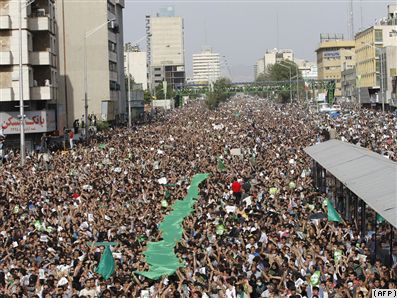
Iraq’s protests come as an opposition demonstration is set for today in neighboring Iran, where the opposition Green Movement has defied a government ban to call for a march in solidarity with protesters in Egypt and Tunisia.

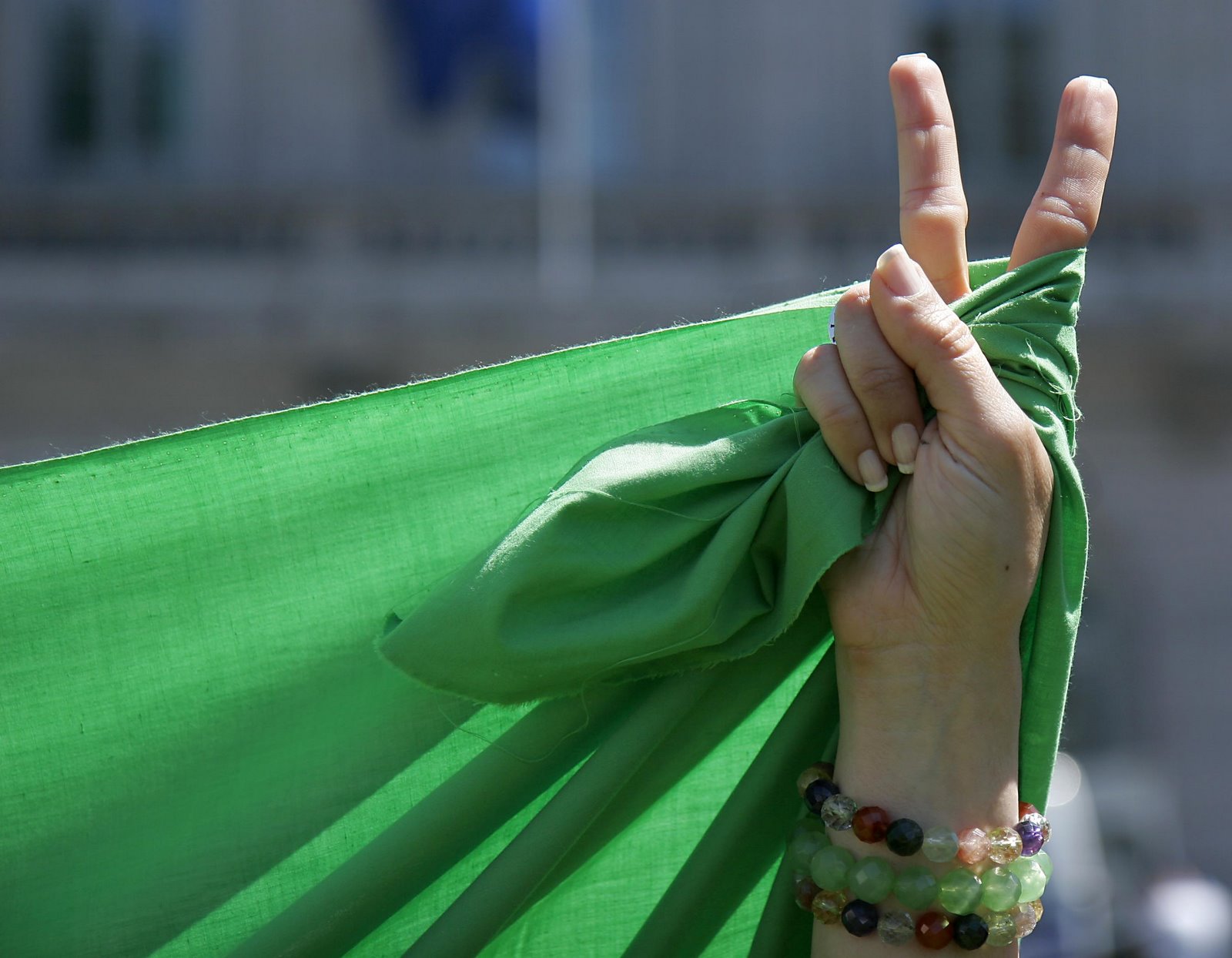
Supporters of the Iranian rally have been posting a “V” on their personal Facebook profile pages in a nod to the “V for victory” sign used by the opposition during the country’s 2009 antigovernment protests and, perhaps, also in recognition of the coinciding holiday.

Valentine’s Day is generally seen as a Christian holiday, but it is actually pagan in origin, arising out of the ancient Roman Lupercalia festival. Early efforts by Christian leaders to “Christianize” the pagan feast led to its observance as a feast day honoring a legendary third-century Roman priest allegedly named Valentine.

Over time, however, the celebration of St. Valentine’s Day moved from a day of Christian piety to a more all-embracing celebration of love, particularly the love between couples.

This is a point of concern for authorities in many Islamic countries, who cleave to traditional moral values not typically associated with the modern celebration of Valentine’s Day.

The Uzbek newspaper “Turkiston” wrote on February 12 that “forces with evil goals” were behind “making the ‘lovers’ day popular,” while in Kazakhstan last week a youth group symbolically destroyed Valentine’s Day cards for local media to protest the attempt to introduce a “foreign” holiday.

Over in Russia’s Belgorod region, officials banned St. Valentine’s festivities for the sake of the people’s “spiritual safety,” with one local government spokesman telling reporters that “we could just as well have introduced a Vodka Day.”

Updating The Language Of Love

Iran, meanwhile, forbids unmarried couples from socializing publicly, a policy that tends to have a chilling effect on most Valentine’s Day plans.

But the policy is difficult to enforce on the country’s swelling — and often defiant — younger generation. For example, a Tehran-based author who wishes to remain anonymous is currently at work on a book, “The Persian Dating Glossary,” which includes the explanation of various Persian slang words used to circumvent Iran’s dating restrictions, including “doostmamooli,” a word that roughly translates to “regular friend” and is used to refer to someone with whom there is absolutely no romantic involvement.

The word evolved from the more ambiguous “doost,” which literally means friend but also serves as the basis of weightier words like boyfriend, girlfriend, and best friend.

So this year, Iranian authorities issued a particularly strict warning against “producing any products related to Valentine’s Day, including posters, brochures, advertising cards, boxes with the symbols of hearts, half-hearts, or red roses.”

The Islamic authorities’ worst fear is being realized in Thailand, where 14 couples from around the world are set to compete in a marathon kissing contest to see who can keep their lips locked the longest.

The event is to challenge a German couple, who last year set the world record of the longest continuous kiss, which lasted over one full day.

“We successfully broke the world’s record with seven couples still kissing after 32 hours, 7 minutes, 14 seconds,” contest organizer Somporn Naksuetrong told Reuters. “Anyhow, the contest is still continuing, as only one couple will be named as the new record holder. We still don’t know how long the contest will last.”

A Pakistani Take

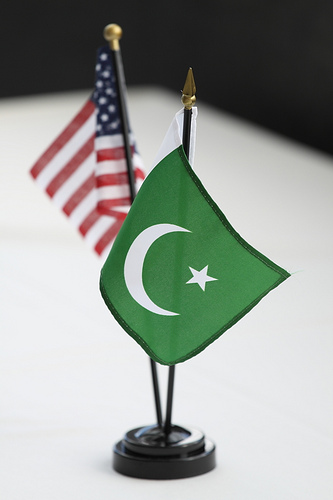
Meanwhile, in Pakistan, Valentine’s Day draws a mixed reaction. Young women browse in a shop decorated with Valentine’s Day gifts in Peshawar.
“If we look at it from the religious point of view, then it should not be celebrated because this is based on a Christian celebration,” says Ajab Khan, a young student at Peshawar’s Institute of Management Sciences. “But if you look at it from a different perspective, then I think there is no harm in it because people are happy to go out and give each other presents.

Khan points out that in the English city of Southall, commonly known as “Little India, where many South Asian festivals are held, whether its Eid, the Hindu festival of Holi, or a Christian celebration, “the whole Asian community is happy with it. So why shouldn’t we be a part of it as well in Pakistan? I don’t think it can harm anyone or will affect our religion.

“In my opinion, it’s good to celebrate it and it’s not only for couples. You can give presents to your friends, or even give a rose to your mother.”

The holiday brings back memories for Maskeen Aka, who lives in the Pakistani city of Karachi. He associates it with an ancient Pashtun custom called “rebaar,” in which a messenger would be sent — usually a child — with affectionate greetings or to share news between loved ones.

The practice has slowly disappeared in Pakistan thanks to the growing availability of telephones and Internet technology, but Aka sees a hint of it in the observance of Valentine’s Day.

“I am almost 50 years old now,” he says. “I have also done [rebaar] for some time. Rebaar means to ask about one’s health. In old times, life was very simple and there were no letters or telephones. So it was used to find information, and there would occasionally be messages sent back from the other side, and that was how it came into being.”

‘No Life Without Love’

In Central Asia, Valentine’s Day is a new holiday there because it was not observed under the former Soviet Union.

These countries tend to take a more pragmatic approach, with flower shops and candy stores upping their prices today in Kyrgyzstan and Tajikistan.

A Kyrgyz student, Ermek, explains his reasons for observing the holiday while buying flowers for his girlfriend at a Bishkek market, saying, “We need such a holiday, a day of love.”

“If people don’t love each other, how will they get married? There is no life without love,” Ermek says. “I know my girlfriend loves roses, and that’s why I’m buying them.”

It seems that regardless of what countries celebrate the controversial Valentine’s Day, love is what makes the world go ’round.
Global Sufi Fest Attracts Thousands

As Reported by the Times of India

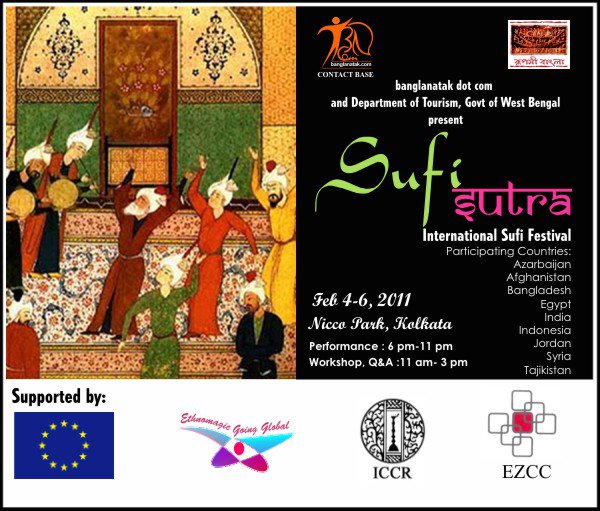
Soulful renderings of Sufi music by wandering minstrels from different parts of the world left the listeners spellbound here at the three-day ‘Sufi Sutra’ which ended on Sunday.

Besides Indians, Sufi singers and musicians from Afghanistan, Bangladesh, Egypt, Iran, Syria and Tajikistan presented mystic Islam through songs, dance and poetry.

Notwithstanding the current political turmoil back home, an eight-member Egyptian Mawlawyiah troupe enthralled the audience by an audio-visual of music and circular dervish dance whirling around singers in a circle.

A Bangladeshi team, led by Anusheh Anadil, sang the household songs of the famous 18th century poet-philosopher Fakir Lalon Shah, on whom based the recent Golden Peacock winning Bengali film ‘Moner Manush’.

The ‘bauls’ and ‘fakirs’ of West Bengal’s Nadia and Murshidabad districts were huge hits by their spontaneous, simple and meaningful lyrics.

Another Bengal team led by Armaan Fakir presented the little-known ‘Bangla Qawwali’. Traditionally performed at the Dargahs, the devotional songs had ‘Dhol’ and ‘Khol’ as percussions replacing Tabla.

The first Sufi ensemble also included the ‘Warsi Brothers’ from Hyderabad, Delhi’s ‘Druv Sangari’ and team, ‘Mirs’ from Bikaner and ‘Haji Md Ahmed Khan Warsi’s team from Uttar Pradesh.

“It is a peace concert in times of violence. We want to bring a convergence of ideas about truth, harmony, self-belief and peace through music. It is a celebration of the quest for the divine through love,” organiser Amitava Bhattacharya said.

Besides musical performances, the festival included workshops and exhibitions to showcase the traditional culture, beliefs and music of the Sufi mystics.

“We had more than 10,000 people at the open-air concert, while more than 700 people, including young students, learnt about Sufism at the pre-concert workshops,” Bhattacharya said.

The event would also help the poor musicians, most of whom were from the rural areas, to earn a livelihood, he said.  The festival was organised by Banglanatak.com in collaboration.

Pakistanis for Peace Editor’s Note– It’s a sad reality that singers from a  country rich in Sufi history and traditions like Pakistan, are  unable to attend this festival due to the 60+ year friction between the two brothers India and Pakistan. They are two halves of one nation.

Cultural exchanges like these, billions in cross border trade, Bollywood and Lollywood collaborations, sports matches, etc are just some of the things the two are missing out on due to their relations. We hope one day peace can finally come to this ancient and holy land that is the subcontinent.

Thou Shalt not Mock or It May Cost You Your Life!

By Manzer Munir for Pakistanis for Peace

In the wake of the murder of Salmaan Taseer, the Governor of Punjab a couple weeks back, I did a great deal of contemplation about the situation in Pakistan and the current state of affairs of Pakistan and indeed in much of the Muslim world.

The current situation, especially in Pakistan and when it concerns the rights of the non-Muslims, is apparently the worst of anywhere in the Muslim world. Indeed, the plight of Asia Bibi, (also known as Aasia, Ayesa Noreen) Islam and Islamic Blasphemy laws have come under rightful scrutiny as of late.

One question that tugs at the heart of the debate for me is why is it that Muslims seem to get so very offended to the point they want to KILL you over a remark or something that comes out of your mouth? As Americans, we wonder to ourselves, “Haven’t they ever heard of sticks and stones may break my bones, but words don’t hurt me?!

Sadly, what the fundamentalist preachers at all the podiums of their Friday sermon or khutbah, nor any of their brethren on the run and in caves like the Taliban and Al Qaeda fail to realize that we are all God’s children. And God, Allah, Yahweh, Jesus, or whatever name you assign him, he is One and the same God of all religions. He is too big to fit into just one religion, concept, version or story of him.

And we all are his creations. Not one of us is superior over the other in his eyes and he judges us all equally. To him, the children of these three religions and its offspring’s are all related to each other. Adam being the first man, then Eve, and then all the Biblical figures and names such as Noah, Abraham, Moses, Jesus, yes especially Jesus. He is their Messiah too!

Jesus, in fact is mentioned some 28 times in the Muslim holy book, Qu’ran whereas their own prophet Muhammad is mentioned only 4 times. And the fact that Jesus is also considered by Muslims to be the Messiah, it is sad that his followers should get such abject treatment in Pakistan and sadly, many Muslim countries.

If only the bad guys realized the connections between Christians and Jesus only then would a Pakistani Christian woman, suffering needlessly in a cell tonight going on 2 years away from her children in solitude, and constantly fearful for her life, would see her horrific ordeal come to an end.

These people are incapable of understanding basic rights, freedoms and even the unhindered concept of free will. No, they are primitive minded in their their spiritual and daily lives. They fail to see that a Christian’s God and a Muslim’s God are the one and the same. And he never would agree to laws like Pakistan’s Blasphemy laws at all. Why? Well because the Muslim God is known first and foremost as a Gracious, Merciful, Compassionate God.

In fact, the Arabic phrase Bismillah ir-Rahman ir-Rahim is a beautifully poetic phrase which offers both deep insight and brilliant inspiration to the average Muslim who says it countless times as he or she starts each day and till they rest their head to sleep. “ It has often been said that the phrase Bismillah ir-Rahman ir-Rahim contains the true essence of the entire Qur’an, as well as the true essence of all religions. Muslims often say this phrase when embarking on any significant endeavor and the phrase is considered by some to be a major pillar of Islam. This expression is so magnificent and so concise that all except one chapter of the Qur’an begins with the words Bismillah ir-Rahman ir-Rahim.”

The common translation:”In the name of God, most Gracious, most Compassionate” essentially is saying that God is compassionate, and full of grace. So how would this God punish Asia Bibi? What would he do if he is so full of compassion and mercy? Would he even punish her? And if he is such a gracious and a compassionate God, then wouldn’t he feel that nearly a two year jail sentence in solitary is already far more than her crime not to mention being away from husband and children and being worried about mob vengeance on her or the death penalty?

That God may act in a multitude of ways and we cannot ever know till said Judgment Day. That is what Judgment Day is all about after all. In fact, this is probably one day when the man upstairs works overtime judging all of us mankind, from the beginning with Adam to the last standing comes till Tribulation and the End of Days. It is only he, the Creator who will do the judging and this is something that the men with the loudspeakers who climb to the top of the minaret five times a day to call the faithful to prayers, just do not really understand, in my opinion. They apparently constantly seem to forget and pass judgment from the pulpit and this in turn helps set the “popular” opinion amongst the ultra-religious faithful of Pakistan’s society.

My only prayer to this Creator is that may he keep Asia Bibi safe tonight and continue to give her strength. And if God should call her home and have her die a death at the hands of the real savages those that not only kill but shockingly, in your name, then please Allah grant her heaven just as you should governor Salmaan Taseer, a man who was only defending the rights of all your children, including those of other faiths. He was being compassionate and gracious towards a fellow human being God, as he was only trying to emulate his creator, You Lord. Ameen.

And while you are at it Lord, will you also please let the imam at the microphone know that “Thou shall not mock, should not cost you your life.” Afterall, “Thou shall not kill is one of your top 10 commandments, whereas mocking prophets or religious figures does not make the list!

Manzer Munir, a proud Pakistani American and peace activist, is a Sufi Muslim who is also the founder of Pakistanis for Peace and blogs at www.PakistanisforPeace.com and at other websites such as www.DigitalJournal.com, www.Allvoices.com, www.Examiner.com and www.open.salon.com as a freelance journalist and writer. He asks that you like the Official Facebook Page of Pakistanis for Peace to get the latest articles as they publish here: http://www.facebook.com/home.php#!/pages/Pakistanis-for-Peace/141071882613054

China’s Wen, India’s Singh Make Little Progress at Summit

By Mark Magnier, Los Angeles Times

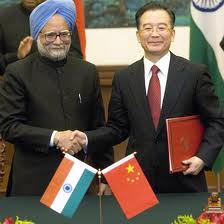
Chinese Premier Wen Jiabao and Indian Prime Minister Manmohan Singh met Thursday in New Delhi, the main event of a three-day summit aimed at building trust and reducing long-standing irritants. But they announced no substantive breakthrough and little progress on border disputes, access to shared water resources or security issues.

Nor was there any apparent progress on India’s bid to open Chinese markets to its software, pharmaceuticals and farm products. New Delhi also remains wary of Beijing’s regional ambitions and its ties with Pakistan, India’s nuclear adversary.
The two rising Asian superpowers made some modest progress on the economic front, pledging to expand trade to $100 billion by 2015 from $60 billion at present and try to reduce the trade gap. China is India’s largest trading partner, but trade flows are heavily weighted in Beijing’s favor.

The two leaders also agreed to set up a hotline, and both sides spoke about the need for improved ties.

“I hope that my visit will help increase our cooperation in a wide range of fields and raise our friendship and cooperation to an even higher level,” Wen told reporters on leaving a welcoming ceremony at the presidential palace.

“A strong partnership between India and China will contribute to long-term peace, stability, prosperity and development in Asia and the world,” Singh added.

But any move to turn the regional cooperation rhetoric into reality will quickly run into roadblocks, analysts said, given the nations’ differences over Iran’s nuclear ambitions, North Korea’s long-standing conflict with the international community and continued warfare in Afghanistan.

China appeared keen to outdo the recent visit to India by President Obama. Chinese officials brought a contingent of 400 business executives, compared with the 250 American business men and women who accompanied the U.S. leader. And they signed $16 billion worth of business deals, compared with America’s $10 billion.

Singh and Wen reportedly discussed many of their nations’ core differences, including Pakistan; divided Kashmir; and the Dalai Lama, the exiled Tibetan spiritual leader based in northern India and considered by Beijing to be a “splittist” enemy of a unified China. But neither side made any significant concessions.

The two nations agreed to keep working on peacefully resolving their lingering border disputes, the focus of a brief war in 1962. Talks have languished for years.

China claims much of the Indian state of Arunachal Pradesh, whereas India wants China to back away from a slice of territory it controls in Kashmir, the disputed region largely divided between India and Pakistan.

“It will not be easy to completely resolve this question,” Wen said in a speech. “It requires patience and will take a fairly long period of time. Only with sincerity, mutual trust and perseverance can we eventually find a fair, reasonable and a mutually acceptable solution.”

In other words, said analysts: Don’t hold your breath. Add it up, they said, and this meeting — the 11th between the two leaders in five years — accomplished relatively little.

“Issues that fuel mutual mistrust, such as Kashmir for the Indians and Tibet for the Chinese, were addressed, but not substantially,” said Srikanth Kondapalli, a professor of Chinese studies at New Delhi’s Jawaharlal Nehru University. “The boundary dispute has not been resolved. There’s no road map.”


The West is Being ‘Outmanoeuvred’ by Violent Islamist Extremists: Tony Blair

By John Swaine for The Telegraph

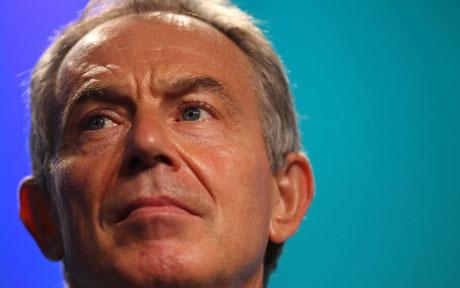
In a speech in New York, the former prime minister said that warnings over the past week of new terrorist plots against Europe should remind people that they remain under threat.

Mr Blair said a “narrative” that Muslims were under attack from the US and its allies, who act out of support for Israel, had been allowed to take hold, aided by “websites and blogs”.

A fresh confrontation is needed because it will be impossible to defeat extremism “without defeating the narrative that nurtures it”, he said.

“The practitioners of extremism are small in number. The adherents of the narrative stretch far broader into parts of mainstream thinking,” Mr Blair told the Washington Institute for Near East Policy.

“It is a narrative that now has vast numbers of assembled websites, blogs and organizations.” Mr Blair said it was “absurd” that some people were surprised at how powerful Islamist extremist groups were, given the amount of funding they received and indoctrination they spread.

“Measure, over the years, the paucity of our counter-attack in the name of peaceful coexistence,” he said. “We have been outspent, outmaneuvered and out-strategized.”

Mr Blair said a tendency to “sympathize” with extremism was not only dangerous but also disempowering for moderate Muslims, because it made people resent them as much as extremists.

He said he was “intrigued” by the fact that western leaders, including Barack Obama, the US President, felt the need to condemn Terry Jones, a pastor who threatened to burn a Koran.

“Suppose an Imam, with thirty followers, in Karachi was to burn a bible,” he said. “I can barely imagine a murmur of protest. It wouldn’t be necessary for the President of Pakistan to condemn it because no one here would remotely consider he supported it.”

The former prime minister also called on the west to make it “crystal clear” to Iran that their acquisition of a nuclear bomb would be unacceptable to the entire “civilized world”.

“Go and read the speech of Iran’s President to the United Nations just days ago here in New York, and tell me that is someone you want with a nuclear bomb,” he told those who disagree.

He stressed that the achievement of a peace settlement between Israel and Palestine would remove “much of the poison which the extremists use”.

And he defended his decision to invade Iraq and Afghanistan, saying: “whatever you think of the original action, we enabled the people to choose their Government”.

Mr. Blair last night appeared on the Late Show with David Letterman on American television. He said that satirists like Letterman had been wrong to paint George W. Bush as unintelligent. “You don’t get to this position by being a fool,” he said.

U.S. Walks Out as Iran Leader Speaks

By Neil MacFarquhar for The New York Times

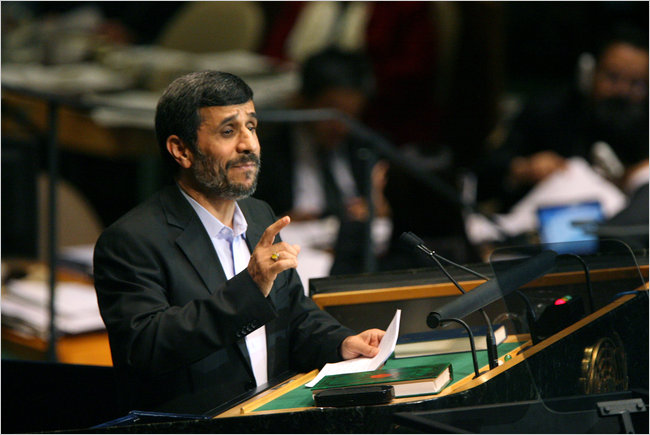
UNITED NATIONS — President Mahmoud Ahmadinejad of Iran made a series of incendiary remarks in his speech to the United Nations General Assembly on Thursday, notably the claim that the United States orchestrated the Sept. 11 attacks to rescue its declining economy, to reassert its weakening grip on the Middle East and to save Israel.

Those comments prompted at least 33 delegations to walk out, including the United States, Canada, Australia, New Zealand, Costa Rica, all 27 members of the European Union and the union’s representative, diplomats said.

The annual General Assembly started formally on Thursday, with scores of presidents, kings and ministers expected to address the gathering over the coming week. The speeches often fail to break new ground or lack electricity, so the occasional theatrics inevitably attract considerable attention.

Mr. Ahmadinejad rarely disappoints on that scale, although he seemed to go out of his way to sabotage any comments he made previously this week about Iran’s readiness for dialogue with the United States. The theme of his often flowery speech was that the capitalist world order was collapsing and he cited three examples: the attacks of Sept. 11, 2001, the Israeli occupation of Palestinian lands, and the pressure on Iran over its nuclear program.

He said there were three theories about the origins of the Sept. 11 attacks, including “that some segments within the U.S. government orchestrated the attack to reverse the declining American economy and its grips on the Middle East in order also to save the Zionist regime.”

The United States Mission to the United Nations swiftly issued a terse response. “Rather than representing the aspirations and goodwill of the Iranian people, Mr. Ahmadinejad has yet again chosen to spout vile conspiracy theories and anti-Semitic slurs that are as abhorrent and delusional as they are predictable,” it said in a statement.

It was not the first time Mr. Ahmadinejad espoused the theory, but never before so publicly. “The majority of the American people as well as other nations and politicians agree with this view,” he said.

Mr. Ahmadinejad obviously delights in being provocative during his annual visit to the United Nations. He framed his comments about Sept. 11 as an examination of opinions, an approach he has used repeatedly in questioning the Holocaust.

But his assertion that the majority of Americans agree with him surely lacked any factual basis. As did his claim that reviving the American economy was the motive behind the devastating attacks on the World Trade Center and the Pentagon; the United States economy declined significantly after the attacks. In his interviews with journalists, much like during his debates with opponents in the disputed Iranian presidential election last year, Mr. Ahmadinejad has often been accused of making up statements wholesale.

But analysts noted that his remarks should be viewed through the prism of domestic politics in Iran, where conservatives try to outflank him. They said that during a recent Friday prayer sermon, Ayatollah Ahmad Jannati said that 84 percent of Americans believed their own government was behind the attacks.

Iran also cultivates an image as the voice of all Muslims in confronting the United States, and the idea that Americans rather than Islamic extremists carried out the 2001 attacks has long resonated among Arabs. “This is very helpful to Ahmadinejad’s desire for greatness in the Arab world,” said Ali Mirsepassi, a professor of Middle Eastern studies and sociology at New York University.

The other two theories on the attacks presented by Mr. Ahmadinejad were that terrorists who penetrated American security were responsible, and that terrorists carried out the attacks but then the American government took advantage of the situation. He even suggested that the United Nations create a fact-finding panel to study the theories.

Farideh Farhi, an Iran expert at the University of Hawaii, said, “Apparently now he has decided that by going to the core of American sensitivities — in the same way he did with Israel by questioning the legitimacy of that country’s existence — he can continue to keep himself at the center of global attention while deflecting attention away from his dismal domestic record.”

Mr. Ahmadinejad also lambasted those Americans who had threatened to burn the Koran. “The truth could not be burned,” he said, hefting a green Koran aloft with his one hand and a black Bible with another, saying he respected both of them. “We should wisely avoid playing into the hands of Satan.”

The other speeches Thursday followed more traditional lines, although not without moments of passion.

Prime Minister Wen Jiabao of China focused his speech exclusively on China’s domestic accomplishments, with a brief global reference at the end when he suggested a vital, peaceful China was good for the world’s peace and prosperity.

The speech, entitled “Getting to Know the Real China,” lauded the country’s economic progress while recognizing that it had a way to go with 150 million people still living in poverty. Mr. Wen said China was determined to forge even greater progress through education, science and technology.

The Turkish president, Abdullah Gul, endorsed American efforts to negotiate peace in the Middle East, but criticized Israel both for its presumed nuclear arsenal and for attacking a Turkish-organized humanitarian convoy at sea in May during which nine people were killed.

“We hope that this new engagement can take us closer to a viable and fair settlement,” Mr. Gul said. “On the other hand, it would be very difficult to make progress toward permanent peace unless we put an end to the humanitarian tragedy in Gaza.”

Mr. Gul called the attack a violation of international law, and he welcomed a report released Wednesday by United Nations Human Rights Council, which endorsed that viewpoint.President Bingu wa Mutharika of Malawi, speaking on behalf of the African Union, urged the General Assembly to defer for one year the war crimes charges brought by the International Criminal Court against President Omar Hassan al-Bashir of Sudan. He said that would avoid jeopardizing the outcome of a referendum scheduled for January on independence for southern Sudan.

‘Abducted’ Nuclear Scientist Returns to Iran

By Nasser Karimi and Brian Murphy for The Associated Press

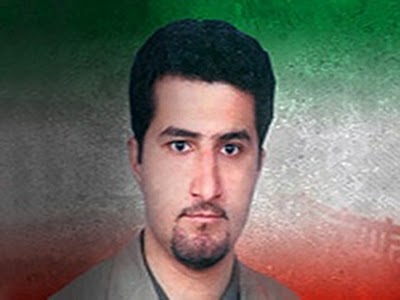
TEHRAN, Iran – Flashing a victory sign, an Iranian nuclear scientist who claims he was abducted and abused by U.S. agents a year ago returned Thursday to his homeland and into the heart of the latest crossfire between Washington and Tehran.

The conflicting accounts about Shahram Amiri — captive or defector who got cold feet — are unlikely to alter the Western-led pressure on Iran over its nuclear program.

But Iran’s leaders are expected to use Amiri to ring up as many propaganda points as possible against Washington — showing that relations remain in a deep freeze and hopes of breakthrough talks appear as distant as ever.

It also gives the ruling clerics a welcome distraction at a time when domestic protests are growing over Iran’s stumbling economy and worries about the fallout from international sanctions.

Amiri’s return “shows the strength of the Islamic republic,” boasted lawmaker Amir Taherkhani. Another prominent parliament member, Alaeddin Boroujerdi, called the alleged kidnapping a “terrorist act.”

But the Washington Post reported that the CIA paid Amiri $5 million to provide intelligence on Iran’s nuclear program. The Post in its online edition late Wednesday said the money came from a secret program aimed at inducing scientists and others with information on Iran’s nuclear program to defect.

U.S. officials also told the Post that Amiri should be unable to get to that money now that he’s returned to Iran, which is under financial sanctions.

It remains unclear how Iranian authorities will ultimately deal with Amiri — and the U.S. claims he cooperated with American authorities — despite his hero-style welcome.

Foreign Minister Manouchehr Mottaki called Amiri a “dear compatriot” and said Iran was keenly interested in learning more about the reasons for his alleged abduction.

Journalists were allowed to cover Amiri’s first steps back in Iran in a rare relaxation of media restrictions. The last such press gathering permitted at Tehran’s international airport was linked to another tussle with Washington: the May visit by the mothers of three jailed Americans arrested last year on the Iran-Iraq border.

Amiri’s pre-dawn arrival capped a stunning tumble of events over the past month that included leaked videos with mixed messages, Amiri surfacing at a diplomatic compound in Washington and the White House finally acknowledging his presence in the country.

The U.S. says he was a willing defector who changed his mind and decided to board a plane home from Washington. Amiri has told a very different tale, claiming he was snatched while on a pilgrimage in Saudi Arabia and bundled off to the United States to be harshly interrogated and offered millions of dollars by the CIA to speak against Iran.

Amiri was embraced by his family — including his tearful 7-year-old son — and greeted by a top envoy from Iran’s Foreign Ministry. The 32-year-old Amiri smiled and gave the V-for-victory sign.

Speaking to journalists after a flight via Qatar, Amiri repeated his earlier claims that he was snatched while in the Saudi holy city of Medina and carried off to the United States.

The first months were full of intense pressures, he alleged. “I was under the harshest mental and physical torture,” he said at the Tehran airport, with his young son sitting on his lap.

He also alleged that Israeli agents were present during the interrogations and that CIA officers offered him $50 million to remain in America. He gave no further details to back up the claims or shed any new light on his time in the United States, but promised to reveal more later.

“I have some documents proving that I’ve not been free in the United States and have always been under the control of armed agents of U.S. intelligence services,” Amiri told reporters.

Previously he claimed that CIA agents “pressured me to help with their propaganda against Iran,” he said, including offering him up to $10 million to talk to U.S. media and claim to have documents on a laptop against Iran. He said he refused to take the money.

Amiri refused to say how — if under guard — he could have escaped U.S. agents to release videos in which he alleges that he had been snatched by American and Saudi kidnap teams while on a pilgrimage in Saudi Arabia. He said that to disclose such information now could harm national security, and said he would explain everything later.

On Thursday, Amiri sought to play down his role in Iran’s nuclear program — which Washington and allies fear could be used to create atomic weapons. Iran says it only seeks energy-producing reactors.

“I am a simple researcher who was working in the university,” he said. “I’m not involved in any confidential jobs. I had no classified information.”

His case was often raised by Iranian officials in the past year, but Washington offered no public response. It took a higher profile after Iranian authorities decided to pursue charges against the three Americans arrested along the border with Iraq in July 2009.

Iran’s deputy foreign minister, Hassan Qashqavi, said there would be “no link” between Amiri’s return and the case of the three Americans, whose families say they were hiking in northern Iraq and that if they crossed the border, they did so inadvertently.

U.S. officials also have repeatedly asked Iran for information about Robert Levinson, a former FBI agent who disappeared in Iran in 2007.

Amiri was generally a footnote in the international showdown over Iran’s nuclear ambitions until last month. Iranian state TV aired a video he purportedly made from an Internet cafe in Tucson, Arizona, to claim he was taken captive by U.S. and Saudi “terror and kidnap teams.”

The video was shortly followed by another, professionally produced clip in which he said he was happily studying for a doctorate in the United States. In a third, shaky piece of video, Amiri claimed to have escaped from U.S. agents in Virginia and insisted the second video was “a complete lie” that the Americans put out.

U.S. officials never acknowledged he was on American soil until Tuesday, hours after he turned up at the Iranian interests section at the Pakistani Embassy in Washington asking to be sent home. Secretary of State Hillary Rodham Clinton said Amiri had been in the United States “of his own free will and he is free to go.”

On Thursday in Tehran, he asked American authorities to explain their secrecy.

“Why didn’t they allow me to have an open interview with the media in the United States?” he said. “Why didn’t they ever announce my presence?”

U.S. officials would say little about the circumstances of what they assert was a willing defection by Amiri and what went wrong. But there were suggestions that threats to his family in Iran pushed Amiri to first make the claims he was kidnapped. Amiri, however, claimed his family faced no problems. “My family was completely free and they were under financial support of the Iranian government,” he said.

“This Passport is valid for all the countries of the World, except Israel”

By Junaid Ghumman for Mideast Youth

The world Zionist movement should not be neglectful of the dangers of Pakistan to it. And Pakistan now should be its first target, for this ideological State is a threat to our existence. And Pakistan, the whole of it, hates the Jews and loves the Arabs. This lover of the Arabs is more dangerous to us than the Arabs themselves. For that matter, it is most essential for the world Zionism that it should now take immediate steps against Pakistan.” Ben-Gurion, the Prime Minister of Israel.

This speech was first published in Jewish Chronicles on 9th August 1967. This statement risen many controversies bloggers like me have quoted it many times; various explanations were also given to disprove this statement, but still we read it on every article related to Pakistan and Israel.

Pakistan and Israel do share some history and ideology. These are only two countries in the world created in the name of Religion; Pakistan for Islam, Israel for Judaism and both countries have taken independence from same British Empire after World War II.

Then why my passport still says, “This Passport is valid for all the countries of the World, except Israel”?

Pakistan claimed its independence from foreign invaders after two centuries of struggle. In 1757 after Battle of Plessey, East India Company started ruling Indian Sub-continent. The first armed resistance was Battle of Independence in 1857 after which the power was transferred to British government. In 1885 the political movement of independence started as Indian National Congress. Some of the Muslim leaders soon separated and launched new movement in 1906 as All India Muslim League for separate Muslim state which led to the creation of independent Islamic state Pakistan on 14th August 1947, which then became Islamic Republic of Pakistan in 1973.

For Israel the timings was same and the rulers were also same as of Indian sub-continents, but events and circumstances were totally different. Israel declared its independence on 14th May 1948 from British Mandate of Palestine. But Israel independence movement was not against British Occupation; rather it was a movement of creating a Jewish State by silently invading the markets, trades and areas to make Jewish settlements. Hovevei Zion or Hibbat Zion refers to organizations that are considered the foundations of the modern Zionist movement. These movements led to creation of Rishon LeZion in 1882 which is the first Jewish settlement in Palestine; which was at that time under Ottoman Empire. First Zionist Congress held in 1897 started the unified Zionist Movement which was converted to World Zionist Organization in 1960. This movement was successful in legalizing its demand of separate Jewish state in Palestine after Balfour Declaration 1917, in which British Mandate of Palestine’s (1917 – 1948) foreign Secretary Arthur James Balfour wrote letter to the leader of British Jewish Community Baron Rothschild, pledging British Empire support of creation of Jewish State in Palestinian Land.

So what kind of relationship does Pakistan and Israel has over period of 60 years?

While writing this blog I also tried to ask couple Pakistanis; their view points about Pakistan-Israel Relationship. Yousaf is Pakistani Engineer living and working in Saudi Arabia. Being in the region, Pakistanis here are emotionally and regionally attached to Middle East crisis. I asked him what kind of relationship both countries have. “Relationship between Pakistan and Israel are tied to the fact that how Israel government treats the Palestinians. In general, as Jerusalem is considered as one of the holiest places in Islam; this fact serves as a thorn in the eyes of Pakistanis.” Yousaf said.

Pakistan is among those 20 UN member nations which do not recognize Israel as an independent state. These 20 countries also include Afghanistan, Algeria, Bahrain, Bangladesh, Chad, Cuba, Indonesia, Iran, Iraq, Kuwait, Lebanon, Libya, Malaysia, North Korea, Saudi Arabia, Sudan, Syria, United Arab Emirates and Yemen. Unofficial media reports say that first Prime Minister of Israel David Ben-Gurion send secret message to Muhammad Ali Jinnah to formally accept its existence, but no response was given back to him. At the time of independence of Pakistan, it was reported that some 2,000 Jews remained in Pakistan, mostly Bene Yisrale Jews. Many left to Israel after its declaration of independence. Jews from Karachi, Pakistan, now live in Ramla, Israel, and they also built a synagogue they named Magen Shalome after the Pakistani Synagogue which was demolished in 1980.

60s, 70s and beginning of 80s were the decades when for the first time both countries came face to face when Arab-Israel war started. In “Six-day Arab Israeli War” of 1967; Royal Jordanian Air Force (RJAF) and Pakistan Air Force (PAF) were flying under a joint command. PAF pilot Flt. Lt. Saiful Azam became the only pilot from the Arab side to have shot down 3 IDF/AF aircraft within 72 hours.

In 1973 Arab-Israeli Yom Kippur War, 16 PAF pilots volunteered to support Syria and Egypt. On 23 October 1973 Flt. Lt. M. Hatif shot down the Israeli Phantom. On 26 April 1974, PAF pilot Flt. Lt. A. Sattar Alvi became the first Pakistani pilot, during the Yom Kippur War; to shoot down an Israeli Mirage in air combat. He was honoured by the Syrian government. Nur Khan, who was the Wing Commander received praised from Israeli President Ezer Weizman who wrote in his autobiography that: “He was a formidable fellow and I was glad that he was Pakistani and not Egyptian”. Pakistan also sent medical ambulances to Egypt and Syria.

After the Israeli attack on Iraq’s under-construction French-built nuclear Osirak-type reactor, Tammuz-I, south of Baghdad on 7 June 1981, Pakistan’s then President President Zia-ul-Haq directed PAF Air Headquarters (AHQ) to make contingency plans for a possible Israeli attack on Kahuta. Kahuta is noted for its nuclear research studies and nuclear development technologies in Kahuta Research Laboratories. On 10 July 1982, a special contingency plan was issued. In the event of an Israeli attack on Pakistan’s strategic installations, plans were drawn up for a retaliatory Pakistani strike on Negev Nuclear Research Centre. The Negev Nuclear Research Centre is an Israeli nuclear installation located in the Negev desert, about thirteen kilometres to the south-east of the city of Dimona.

On political level many statements were given. As chair of the Second Islamic Summit in 1974, then Pakistan’s Prime Minister Zulfiqar Ali Bhutto said: “To Jews as Jews we bear no malice; to Jews as Zionists, intoxicated with their militarism and reeking with technological arrogance, we refuse to be hospitable.”

In of his speeches in National Assembly of Pakistan, before Zulfiqar Ali Bhutto was hanged in 1979, he said, “Mr. Speaker Sir! This is not Desi (local) conspiracy, it’s an international conspiracy. Let me make it quite clear for the history, whatever the future and fate of this individual will be; that doesn’t matter, but let me tell you again this is not a desi (local) conspiracy, this is not PNA conspiracy, this is massive, huge and colossal international conspiracy against the Islamic State of Pakistan.” (PNA was Pakistan National Alliance against the ruling Pakistan Peoples Party). Nowadays people like to refer this international controversy as Zionist or Israeli Conspiracy.

A controversial book was published in 2003, named Charlie’s Wilson war which conspire about use of Israeli weapons supplied to General Zia ul Haq to fight Soviets in Afghanistan (1979 – 1989). Famous Hollywood movie Charlie’s Wilson War was also released in 2007. After that the back door politics started between Pakistan and Israel.

The President of Pakistan General Zia ul Haq was assassinated in plane crash on 17 August 1988. Among the conspiracy theories; Mossad (Israeli Intelligence Agency) involvement is also believed to exist. In the fall 2005 World Policy Journal, John Gunther Dean, a former US ambassador to India, blamed the Mossad for orchestrating Zia’s assassination in retaliation for Pakistan developing a nuclear weapon to counteract India and Israel.

Ali is my friend living in Middle East. I asked him, can there ever be any friendship or peace between Pakistan and Israel, to which he replied, “Yes there can be, Israel is a small country with a group of people belonging to a group of faith. And also it is in its interest that it should be at peace with every country, and especially those countries that it feels can threaten its existence.”

It is believed that, at the time of Benazir Bhutto’s Government both countries had very strong relationship especially in countering terrorism. In 1993 Benazir Bhutto, along with her then-Director-General of Military Operations, Pervez Musharraf, intensified the ISI’s liaison with Mossad in 1993, and she too began to cultivate the American Jewish lobby. Bhutto is said to have had a secret meeting in New York with a senior Israeli diplomat, who flew to the U.S. during her visit to Washington, D.C. in 1995.

In 1996, Pakistan’s Intelligence Agency, FIA, started a secret war against Extremist in Pakistan under Rehman Malik. According to sources, FIA also contacted Israeli intelligence agency Mossad to help and send its officers to investigate the extremism. Even after these strong ties, controversies never left the scenario. Benazir Bhutto was assassinated on 27 December 2007 in one political rally. This was considered to be typical Mossad Assassination style. It is believed that she was the one knowing the reality of 9/11 being inside job and death of Osama Bin Laden, which she also publicly stated in David Frost TV program. That program was edited before telecasting. But Jewish Journals and Media still believed in the opposite way. According to Jewish media, Miss Bhutto asked for Mossad help to protect her on her return to Pakistan as she was afraid she will be killed.

In 1998 Pakistan and Israel were again on the verge of war. On 27 May 1998, day before Pakistan conducted its nuclear test in Chaghi, Southern Province of Baluchistan, Pakistan; unidentified F-16 was found hovering around skies on border areas of Pakistan. Pakistan Air Force; taking is as repetition of Israeli Conspiracy similar to 1981, Air Bourne its fighters to foil any attack. But Pakistan and Israeli UN delegation met in UN soon after Pakistan Nuclear tests in 1998 to give assurance that Pakistan will not transfer its technologies to Iran, the arch enemy of Israel.

Musharraf’s nine years of rule was also golden times for both countries. In 2003, General Pervaiz Musharraf said on television interview, “Mainly Muslim Pakistan must seriously take up the issue of recognizing Israel and avoid dealing with it on emotional grounds”. This statement gave birth to local opposition, esp. among Religious Parties in Pakistan. “Jerusalem is not just an Arab issue, it is linked to the faith of every Muslim” said Qazi Hussain Ahmed, chief of Jamaat-i-Islami Pakistan, the largest and oldest religious political party. “Presenting Palestine as a sole Arab issue is a heinous conspiracy of the imperialists and colonists aimed at disintegrating the Muslims and shattering the concept of Muslim unity. It is for the same reason the colonist forces are trying to portray every Muslim issue as regional or bilateral” said Qazi.

In 2005 Pakistani Foreign Minister Khurshid Kasuri and his Israeli counterpart Silvan Shalom met in Istanbul after Israel withdrew its forces from Gaza, Palestine hoping to start peace talks. However, following the meeting Musharraf said, “Pakistan will not recognize the state of Israel until an independent Palestinian state is established”.

An unofficial Pakistan-Israel Peace Forum was created the next day of the meeting. It was created by 3 friends Waleed Ziad (Pakistan), Dror Topf (Israel), and Michael Berenhaus (US), all currently based in Washington, DC. This forum was an unsuccessful attempt to lobby in UN, US, Israel and Pakistani political establishments, hoping that Pakistani might accept Israel as independent legal state.

Pakistan and Israel are also secretly involved in Weapons and Arms Development Race. Close ties between India and Israel, and arms business between them forces Pakistan to keep an eye on Israel’s weapons industry. Like for example; Pakistan Ordinance Factory (POF) developed POF Eye Gun and exhibited in 2008 to counter the Israeli made Cornershot Rifle which is also known as Jews Gun in Arab World.

Shall Pakistan recognize Israel as an independent state to which Yousaf and Ali shared the same answer, “Pakistan should only consider recognizing Israel if it gives an independent state to the Palestinians with Jerusalem at its capital. And completely cut off itself from the internal affairs of that state, only then Pakistan should even start to consider recognizing them.”

I thought why not to ask some of Palestinians who have been living in exile for almost six decades. Abdul-Rahman is originally from Nabulus, West Bank and Qasim is from Gaza. I asked them what role Pakistan can play any role in solving Middle East Crisis, to which Abdul Rahman replied, “May be or may be not. Pakistan has its own problems with India, in Kashmir and in Afghanistan.” And Qasim said, “Pakistan cannot play any role especially with the current government which is only thinking of business but not Islam or Muslims.” Which actually hit me hard but truth is truth. On inquiring the Pakistan’s nuclear threat to Israel, Abdul Rahman said, “Israelis are even scared of stones so obviously Israel want end to Pakistan’s Nuclear technology, the Islamic Bomb.” But Qasim stuck to his same point, “If Pakistani government wants it can use nuclear technology against Israel, not in war or something but also to play politics.” Then in the end I asked, shall Pakistan Recognize Israel as independent country. Both of them came up with different and interesting answers. Abdul Rahman said, “There is should be a procedure of acceptance. Israel should balance the power and control of every city between themselves and Palestinians, then Pakistan can recognize Israel.” Whereas Qasim said, “Pakistan should recognize Israel. Sitting outside and ending any communication will not resolve the Middle East problem. We need to enter the region to solve the problem and if Pakistan wants it can do that by taking first step of recognizing Israel.”

It was interesting journey going through all the historic events which Pakistan and Israel share and knowing different ideas and opinions. All these events which I have mentioned above, cannot be confirmed from any credible or authentic source as all this happened back stage, behind the camera. But whatever governments’ relationship may be it is true that people of Pakistan still want to call every conspiracy as Zionist conspiracy and this will keep on going until some peaceful solution is devised to Middle East crisis between Muslim Palestinians and Jewish Israelis

Son Pleads for Help as Mother Awaits Stoning in Iran

By Gena Somra for CNN

Sajjad Mohammedie Ashtiani travels to a Tabriz jail in Iran every Monday to see his mother. And for 15 minutes each week, he speaks to his mother, Sakine Mohammedie Ashtiani, through the prison glass that divides them. Neither mother nor son ever know if the visit will be their last

Convicted of adultery in 2006, Ashtiani has been sentenced to be stoned to death for her alleged crime. Originally sentenced to 99 lashes for her alleged “illicit relationship outside of marriage,” Ashtiani endured that punishment in front of her then 17-year-old son. “The authorities asked if I wanted to wait outside. I said no. I could not leave my mother alone.”

Sajjad says it is a day he will never forget. But, he says, that day he thought the worst was over. “I was thinking, OK, they hit her, now it’s finished. They told me this process was finished. She’s done. She’s free to go. “But then a judges’ panel in Tabriz suspected Ashtiani of being involved in her husband’s murder and re-opened her case. She was cleared of the murder charges, but the panel re-examined Ashtiani’s adultery sentence, and based on unspecified “judges’ knowledge,” decided she should be put to death for the alleged affair.

“At that time it should have been finished. They should have punished her only once,” says her son. “Her documents say she is innocent. She paid for the crime five years ago.” Human rights activist Mina Ahadi, herself forced to flee a death sentence in Iran almost 30 years ago, has also taken up Ashtiani’s cause, working with Sajjad and his sister Farideh to get their message out. She says pressure from outside Iran can make a difference.

“Legally, it’s all over, and we have no chance. It’s a done deal. Sakine can be stoned at any minute. But we have experienced again and again that when we organize events world-wide, when we protest world-wide, and in particular when we contact European governments and these governments put pressure on the Islamic regime in Iran, sometimes we have a chance.” So far, there has been no response from Iranian officials about the Ashtiani case.

And with all legal appeals virtually exhausted, Sajjad says the Tabriz court has told him there is only one thing that can stop his mother’s imminent execution. “They told me if supreme leader Ayatollah Khamenei … or Judiciary Chairman Sadegh Larijani grant my mother a letter of pardon, she will go free.”

Sajjad says he traveled to Tehran six times to obtain that letter, but has been unable to gain an audience with either man.  But he refuses to give up. He is turning to the international community in hopes the Iranian government will hear his voice. “It is crucial I tell these men what I have to say. “Dear Mr. Khamenei, Mister Ahmadinejad, and Mister Larijani:

“All I ask for is a letter. I want a letter for my dear mother. Please write this letter of pardon because she is innocent, 100 percent innocent. If you do not have respect for what I am saying, just take look at her file. You will see she is innocent.

“To the people of the world, I want to say, for this situation we are in: Help us. Whoever can tell the government to stop this, please do. If you can pressure Ayatollah Khamenei or Sadegh Larijani to give my family a letter, please get them to send it to us.” Sajjad knows he is taking a risk by speaking out so publicly, but says he is not afraid for his own safety.  “I am just fighting for what is right,” he says. “My mother is a housewife, a good person, a caring mother,” Sajjad says. And she has grown weary of what seems to be a punishment without end. On his last visit with her she told him, “I can’t stay in this prison any longer.”

And so Sajjad and his sister Farideh are reaching out in any way they can to try and save their mother’s life. In their open letter to the international community circulated on websites, Facebook pages and through human rights organizations late last week their anguish is clear. “Today we stretch out our hands to the people of the whole world,” the letter reads. “It is now five years that we have lived in fear and in horror, deprived of motherly love. Is the world so cruel that it can watch this catastrophe and do nothing about it? “We resort to the people of the world, no matter who you are and where in the world you live. Help to prevent this nightmare from becoming reality. Save our mother.”We are unable to explain the anguish of every moment, every second of our lives. Words are unable to articulate our fear.”

Analysis: Turkey Looks East, Snarling Key US Goals

By Steven R Hurst for The Associated Press                                                                                                                                                                                                                                                    President Barack Obama scored two key foreign policy victories this week _ a new round of U.N. sanctions on Iran even as he kept Israeli-Palestinian talks on life support after the Israeli attack on Turkish ship carrying aid to Gaza.  The unintended costs may be heavy.

Both issues threaten key alliances with Muslim Turkey. And both test the ability of the U.S. and Israeli to cope with Ankara’s move out of the Western and NATO orbit toward largely Islamic regions of the Middle East and Central Asia. That matters because the United States is losing sway with its longtime NATO anchor, a democracy that bridges Europe to Asia and the Middle East.

Israel too is struggling to avoid Turkey’s threatened estrangement _ a break that would cost the Jewish state its only Muslim military ally. Turkey was one of the first countries to recognize Israel after its establishment more than six decades ago. The widening fissures in both alliances likely carry heavier psychological than strategic implications for the time being, particularly for Israel.

Here’s why. Turkish Prime Minister Recep Tayyip Erdogan “suddenly is the most popular politician in the Arab world and he doesn’t speak a word of Arabic,” asserts Henri Barkey of the Carnegie Endowment for International Peace.

Erdogan’s popularity grew exponentially after the Israeli commando raid on a Turkish-sanction flotilla of aid ships bound for Gaza. Muslims across the Middle East are holding him up as a hero for his tough talk against the Jewish state in their midst. That’s a stunning reversal. Turks, who migrated into modern day Turkey from Central Asia centuries ago, had always been seen in the Arab world as heirs to the Ottoman empire that had oppressed Arabs for 400 years.

Erdogan received a thunderous reception from fellow Muslim leaders Thursday at the Turkish-Arab Economic Forum that opened with calls for an international investigation of the May 31 Israeli raid that killed eight Turkish activists and a Turkish-American teenager. Erdogan’s Islamic-rooted Justice and Development Party came to power in 2002 in a landslide victory, a clear shift away from Turkey’s secular traditions that were established in the modern state, the post World War I and shrunken remnant of the Ottoman Empire.

The political shift was a clear precursor of Turkey’s move toward a more comfortable and powerful place in the Muslim world, despite continued efforts for membership in the European Union. Erdogan has since taken to championing the Palestinians’ cause, often more loudly than their fellow Arabs. That had badly strained Israeli-Turkish relations even before the crisis that blew up around the Gaza aid flotilla.

Then there was Turkey’s insertion of itself into the effort to move Iran away from uranium enrichment and its alleged program to build a nuclear weapon. After Iran rejected a deal to swap nuclear fuel last fall, the United States was determined to impose a fourth round of U.N. sanctions on Tehran. Washington had the backing of fellow U.N. Security Council members France and Britain all along and was on the verge of announcing that Russia and China also were on board.

Turkey, with help from Brazil, suddenly announced that it had revived the swap deal and that Iran had agreed. That agreement, more than a half year after initially rejected by Iran, was deeply flawed.

And the next day the United States said a new sanctions package had unanimous support from all five permanent Security Council members. It thanked Turkey for its efforts but said the train had already left the station. When the council voted earlier this week, only Turkey and Brazil cast no votes. Those did little but register protest since neither country holds a veto.

In spite of its rhetoric and obstructionism, Turkey does not appear ready any time soon the break fully from the West. It has vast interests intricately woven into NATO and the European Union. Turkey has a customs union agreement with its top trading partner, Europe, and wants to become part of the EU. But there is no doubt that the tone in Turkey’s foreign policy is changing.

Although the United States has been its chief ally since the Cold War, Turkey opposed the U.S. invasion of Iraq through Turkish soil, triggering tensions with Washington. Until the late 1990s, Turkish relations with Iran were tense, with its secular, westernized government accusing Tehran of trying to export its radical Islamic regime to this predominantly Muslim but secular country. Today, Turkey wants to build deeper trade ties with Iran.

Erdogan also is building support for next year’s election by playing the Islam card _ one that appeals heavily to traditionalist, rural and Muslim voters who make up the vast majority of the electorate. “This is not being driven by foreign affairs,” said Jonathan Adelman, professor at the University of Denver. “Erdogan is winning points at home _ going back to the country’s Muslim roots.”

Facebook in Pakistan: Islamists vs. Liberals

By Adam B Ellick and Ahmad Ziadi for The New York Times

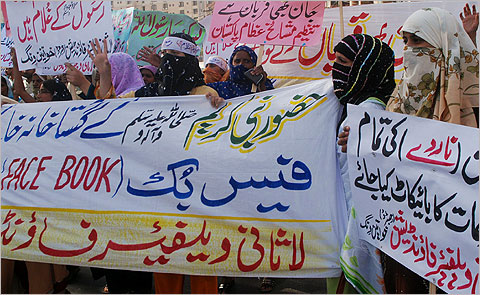
When Facebook was recently banned in Pakistan for hosting a “Draw Muhammad Day” fan page, one thing became very clear: Islamists here operate with organized precision, able to mobilize the masses in an instant, while the liberal voice remains paralyzed by fear and passivity.

Some media experts predicted that the ban – which a Pakistani court has now ordered the government to lift – might motivate the nation’s deeply disconnected liberal elite to take on the Islamists. After all, while members of the urban elite have been largely immune to the recent rise of violent militant attacks, the Facebook ban presented them with a personal vendetta.

In a nation without bars, and where entertainment options such as music concerts are rare, Facebook serves as a precious tool for the elite to organize discreet private events with music, drugs and alcohol. It has also helped mobilize social movements, including the lawyers’ march in 2009.

But the fervor that has followed the Facebook ban has been entirely one-sided in favor of the Islamists.

As the rest of Muslim world remains largely indifferent, tens of thousands of anti-Facebook Pakistanis protested in urban centers by burning American flags. A poll conducted by an IT portal called ProPakistani showed 73 percent out of about 8,000 voters favor a permanent ban on Facebook.

How did it get to this? There has been a widespread SMS campaign perpetuating a false narrative that Pakistan’s ban has brought a behemoth anti-Muslim company to its knees. One SMS attributes the recent fall in the Euro to the ban. Here’s another SMS I received:

THE BOYCOTT MADE BY MUSLIMS AGAINST FACEBOOK SINCE LAST 2 DAYS

CHARGE DEM A LOSS OF 2 BILLION EUROS..AND IF ITS CONTINUED AFTER 7 DAYS IT WOULD

REACH AROUND 40 BILLION EURO…. PLZ SPREAD AS MUCH AS U CAN.

Facts suggest otherwise. Facebook is not a publicly traded company, therefore, its earnings are not published. Still, some venture capitalists have valued Facebook at about $8 billion. Its annual revenue is estimated between $500 to $800 million.

In addition to the SMS campaign, this week, two new Muslim-friendly alternatives to Facebook have been launched. One of them, www.millatfacebook.com, was inaugurated by the bar association of the same Lahore court that banned Facebook. Millat means “Nation” in Urdu.

The site wooed more than 20,000 users with its slogan: “A site for Muslims by Muslims where sweet people of other religions are also welcome!!” Members are asked to specify if they drink alcohol. The founders are enraged at Facebook for curtailing Nazi-related hate speech while refusing to curb the Muhammad cartoons.

Their website says “Let’s prove to the world that if we can generate revenue for Facebook.com then we can also run our own website. Prove to the world that we are independent Muslims…” The other alternative site, www.Buddyflick.com , aims to “create/build/run our own network.” But where are Pakistan’s liberal and moderate voices?

Speaking out against the ban can be as hazardous as the forbidden cartoons. When those against the ban held a small news conference, the press mostly ignored it. After the press conference, several anti-ban activists were aggressively confronted by a large crowd of opposing activists as they left the venue. As tensions escalated, the anti-ban activists retreated into the building and waited for the crowd to dissipate.

One friend who is especially furious about the ban wouldn’t dare to speak out. “Nobody has the guts to go out and do something about it. The issue of Muhammad is so sensitive that you just never know.”

Instead, liberals are hashing out their frustrations in the low-traffic comment sections of liberal blogs and leftist newspapers, and, ironically enough, on their actual Facebook pages. Some have hacked into the banned site from the confines of their gated homes. Among the comment section in one newspaper is the latest joke: What’s the difference between Facebook and Lashkar  e Taiba? Answer: Facebook is banned!

Progress, For a Price, in Pakistan

By Doyle McManus for The Los Angeles Times

In 2001, on the eve of the U.S. invasion of Afghanistan, President George W. Bush gave Pakistan’s then-leader, Gen. Pervez Musharraf, a choice: He was either with us or against us. Musharraf chose to become an ally, but the question ever since has been whether that shotgun marriage can mature into a healthy adult relationship. At times, the prospect has seemed far from reach.

The world’s second-most-populous Muslim country is caught in a brutal internal struggle between extremism and moderation. Most of its people tell pollsters they don’t like the United States and wish we’d go away. The tribesmen of its western frontier shelter Osama bin Laden and the leaders of Afghanistan’s Taliban. And the United States can’t forget how, in the 1980s, Pakistan built nuclear weapons — and then later exported nuclear technology to North Korea and Iran.

But in recent months, there has been progress in the relationship. Military and intelligence cooperation between the United States and Pakistan has increased significantly. Pakistan has allowed the CIA to increase its missile strikes against Al Qaeda and Taliban targets in Pakistani territory. Pakistani authorities have arrested several Taliban leaders and allowed U.S. intelligence officers to question them. And now Pakistan is offering to increase its own military operations in North Waziristan, the presumed lair of Bin Laden. All that cooperation came at a price, of course: a flood of U.S. military and economic aid.

And last week, the Pakistanis came to Washington to press for more. The academic criticism of the U.S.-Pakistani relationship is that it is “transactional” — nothing more than a series of bargains between buyers and sellers who don’t trust each other much. That’s still mostly true. Pakistan’s delegation arrived with a 56-page shopping list covering everything from military equipment to education and cultural exchanges. And one Pakistani official, asked during the visit whether his government was truly willing to act against the havens that allow the Taliban to maintain bases in Pakistan, replied frankly: “Yes — but at a price.”

After a series of meetings with Secretary of State Hillary Rodham Clinton, Pakistan’s ebullient foreign minister, Shah Mehmood Qureshi, declared: “I think we are going to move from a relationship to a partnership.” But he used the future tense. In the meantime, there are things to work out. Pakistan is clearly worried about what happens when the United States begins pulling troops out of Afghanistan in 2011.

Although Obama administration officials have tried to reassure Pakistan that Washington’s commitment to the region is for the long haul, uncertainty remains. “Our fear is . . . that we get into a fight with these guys [the Taliban], and you walk away, and we’re still there,” a Pakistani official said. Pakistan’s powerful army chief of staff, Gen. Ashfaq Kayani, spent part of his time in Washington visiting Congress with PowerPoint slides to show that Pakistan has committed more troops to its fight against insurgents than the United States has on the ground in Afghanistan, and that it has suffered almost 30,000 killed and wounded in the process.

According to U.S. officials, Kayani made a strong case that Pakistan can do more if it gets more modern military equipment from the United States, especially helicopters to ferry troops into the rugged badlands where Al Qaeda and the Taliban hide. The United States has helped Pakistan acquire some helicopters, but not as many and not as quickly as the Pakistanis would like. U.S. officials said they would try to speed the delivery of more. In the past, U.S. officials complained that Pakistan used much of its U.S. military aid to bolster its eastern front with India instead of its fight with internal insurgents; but since Pakistan’s 2009 offensive in the Swat Valley, that criticism has been stilled.

The delegation also added a new item to Islamabad’s wish list: a nuclear agreement under which the United States would help Pakistan develop its civilian nuclear energy industry — to mirror a similar U.S. agreement with India, Pakistan’s longtime enemy. The United States told the Pakistanis that would have to wait. The memory of having to clamp sanctions on Pakistan for its nuclear weapons program is still too fresh. But it was a sign of improving relations that the idea wasn’t rejected completely.

 In 2001, the United States sought a new relationship with Pakistan mostly because it was next to Afghanistan — and thus a country we would need for moving military supplies and basing drones. But that thinking has slowly evolved. In the long run, with its population of 170 million people — not to mention its cache of nuclear weapons — Pakistan is more important than Afghanistan.

“We’re engaging with Pakistan because we’re afraid of it,” says Christine Fair, a Pakistan expert at Georgetown University. “It’s the scariest country in the region. Because of Afghanistan, it’s been treated as if it were a subsidiary issue. But Pakistan should be the primary issue.” The Americans are working hard to convince the Pakistanis that they are interested in Pakistan’s stability for its own sake, not just because it’s next door to Afghanistan. The Pakistanis are working hard to convince the Americans that they are committed to defeating the extremists in their midst. It’s not a strategic relationship yet. If it’s a partnership, it’s still a wary one. But that’s progress.

Iran Presses Ahead with Nuclear Enrichment Despite Warning from the US and Others

By Manzer Munir

Tehran, Iran- France, Russia and the United States on Tuesday voiced their displeasure with Iran’s escalation of its uranium enrichment and saw this as a great a concern for its neighbors and other countries around the globe. The three countries, nuclear club members themselves, sent a letter to the International Atomic Energy Agency (IAEA) expressing worry about Iran’s actions and demonstrating renewed pressure on the regime of President Ahmadinejad.

This alarm by the US and other countries comes after February 7 when Iran announced it intended to start producing 20 percent enriched uranium for a medical research reactor, defying ultimatums by members of the UN security council that it faces strict UN sanctions unless it halts its nuclear weapons ambitions. The concern is that Iran is enriching uranium not for a medical research reactor but rather for making atomic weapons since enriched uranium in high purity form can be used in the fissile core of a nuclear bomb. “If Iran goes forward with this escalation, it would raise concerns about Iran’s nuclear intentions,” said the joint letter, which was obtained by AFP. “Iran’s enrichment of its LEU (low-enriched uranium) stockpile to higher levels is not only unnecessary, but would serve to further undermine the confidence of the international community in Iran’s actions,” it said.

The US and other powers are trying to convince Iran to accept an IAEA backed deal where Iran is supplied with nuclear fuel for the research reactor in exchange for its low enriched uranium. This is a deal that is not acceptable to the regime in Iran. Iran’s announcement that it would enrich on its own and its “subsequent formal notification to the IAEA are wholly unjustified,” the three countries wrote in the letter to IAEA chief Yukiya Amano. The moves “represent a further step toward a capability to produce highly enriched uranium.” The countries “recognize the need in Iran for medical radioisotopes,” the letter continued. “If Iran does not wish to accept the IAEA offer, we note that these are available on the world market and could be obtained as a responsible, timely and cost effective alternative to the IAEA’s proposal.

The pressure on Iran to not acquire nuclear weapons in the troubled neighborhood of the Middle East is justified. The area has long been very unstable and Iran and Israel have already for several years been fighting a proxy war with each other through Hezbollah in Lebanon and allegedly through arming Hamas in the West Bank and Gaza. But one must also realize that as long as Israel maintains nuclear weapons and there remains no peace in the Middle East, its enemies in the region, namely Syria, Iran, and until recently Iraq would stop at nothing to acquire nuclear weapons technology also. Therefore, the core of this issue as with many other problems involving regional security and even global terrorism have their roots in the situation in the Middle East between Israel, Palestine and its neighbors.

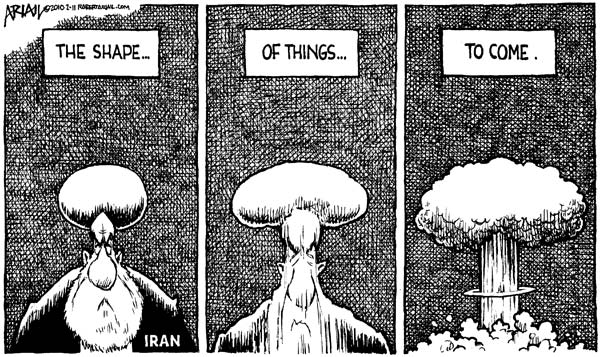
Al-Qaeda itself gives Israel and the United States backing of it as a reason to attack America and its interests. So as long as there is not a resolution to the problem of the Palestinian state, there will be friction and a charged atmosphere in the region. Believe me, it has not calmed down much in the last 62 years. One can continue to expect countries like Iran, Libya, Syria, Egypt, Saudi Arabia and others to continue to desire nuclear weapons in order to feel less threatened by Israel’s arsenal and military supremacy. The real solution to Iran’s nuclear ambitions and other regional security threats to Israel and American interests in the region is the need to get back to the table and return to the difficult task of making peace between the Israelis and its neighbors. Only a lasting and durable peace between the Israelis and the Arabs will encourage nuclear disarmament and make the neighborhood safe from a looming nuclear mushroom cloud.

Iranian Protests for Democracy is a Cry for Freedom Across the Muslim World

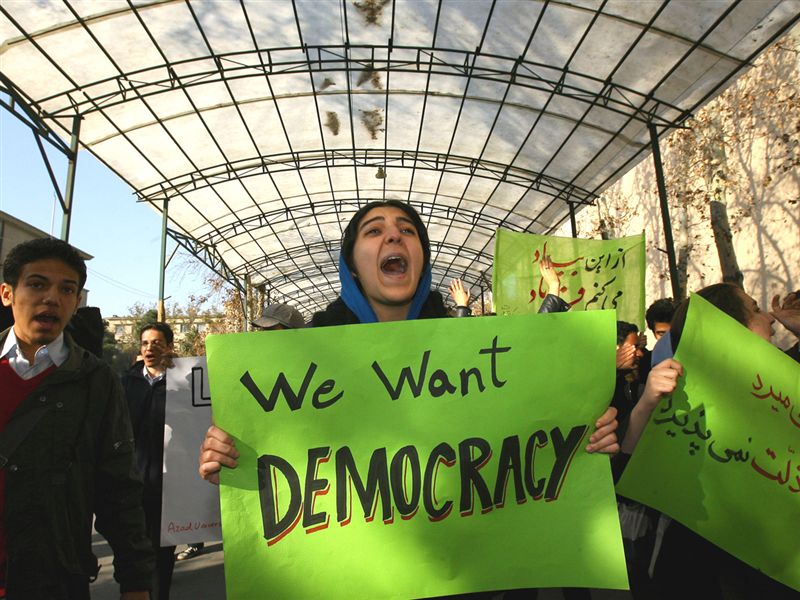
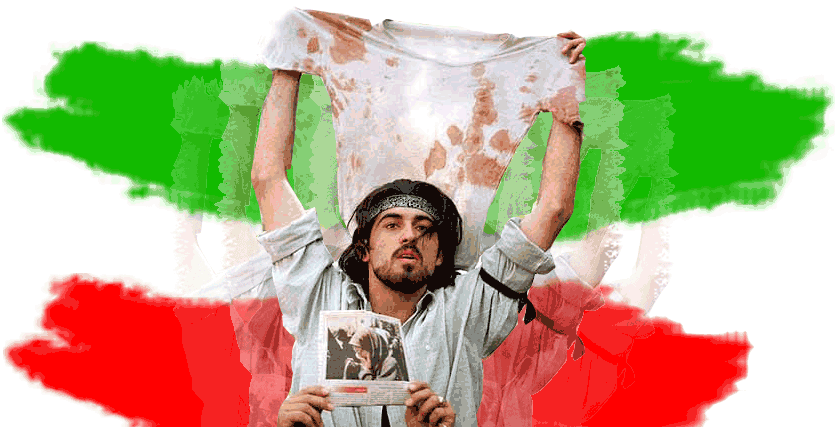
Tehran, Iran- Demonstrations in Iran continue a little over a week after the mass protests the occurred throughout Iran on the Shiite festival of Ashura as protestors defy the government’s crackdown on dissent. It appears that for the first time since the Iranian Revolution of 1979, the regime of Iran is appearing weakened. Despite the brutal violence used by government soldiers and militiamen, the Iranian people are brazenly standing up and are demanding the end of the supreme rule of Ayatollah Ali Khamenei and establishment of a democratic nation where freedom and rights of the Iranian people are respected.

For far too long the current regime has used violence and intimidation to quell revolt. However since the disputed election of last year, the majority of Iranian citizens want an end to theocratic rule. The government must sense the tide turning against them as the popular revolt is gathering steam and gaining strength. Overseas, the Iranian communities around the world are standing in support with their brothers and sisters in Iran and demanding an end to suppression and tyranny also and asking governments around the world for support of this movement by instituting embargos and sanctions on the Iranian government.

The situation is bleak in many Muslim countries around the world when it comes to prudent and competent government. If one takes a look at the Arabian Gulf region we have kingdoms such as Saudi Arabia and Jordan, Bahrain, UAE, etc. There is not a great deal of individual and civil liberties as they are normally afforded in the western world. Freedom of speech, religion and right to protest is simply outlawed in most of these countries. If one takes a look at countries like Egypt, Libya, Syria, and until recently Iraq, are all countries where there are dictatorships akin to monarchies where power is held for generations as is the case with Muammar Al-Gaddafi or it is passed on to a family member as was the case with Bashar Al-Assad of Syria. Pakistan too is a country that of its 62 years of modern history, over half have been ruled by dictatorships robbing the people of a robust democratic system as is one that flourishes in neighboring India.

Far too often, in many Muslim countries around the world, governments and individuals in power are robbing the coffers of their national treasuries for their own greed and simultaneously either brutally cracking down on human rights and dissent or neglecting their responsibilities all together and therefore not providing basic services, infrastructure, and security.

It is not as if democracy is in theory in any ways in conflict with Islam, rather, Islam’s set of norms and ideals that emphasize the equality of people, the accountability of leaders to community, and the respect of diversity and other faiths, is fully compatible with democracy. Yet time after time, Muslim countries are finding themselves under repressive, corrupt and  inept leadership that has no problem using  vote rigging, violence, brutality and intimidation to remain in power.

The Iranian uprising and protests currently underway in Iran should inspire Muslims in other countries to demand better governance, more accountability, and freedoms from their leaders. A country that does not have the participation of all it citizens in all fields of endeavor is not going to advance aggressively as it should. Many citizens of Iran and Iranians around the world are hoping that the repressive regime in Tehran is overthrown by the brave protesters there. One would hope that eventually this starts a chain reaction throughout the Muslim world where repressive, authoritarian and harmful governments are holding back the progress of nations. Thomas Jefferson said it best  when he stated that “A bill of rights is what the people are entitled to against every government on earth, general or particular, and what no just government should refuse, or rest on inferences.”

Reported by Manzer Munir for http://www.PakistanisforPeace.com

Iran paying for freedom with Blood

Iran Protest Tehran, Iran- Iranians are protesting the results of the recent election they believe was unfairly rigged for the incumbent candidate in President Ahmadinejad and paying for it in blood. At least 17 people have died at the hands of the government forces who are cracking down on the protesters with increasing violence.

A particularly chilling death of a protester happened on Saturday in Tehran when a young girl was shot in the chest by a single sniper shot from a member of the government militia. Her last few seconds of her life were captured on a mobile phone video and then posted on the internet where it has gone viral getting millions of hits on various websites around the world. Her name was Neda, meaning Voice in Farsi, and she has indeed become the voice of this movement of the Iranian people as a symbol for Iran’s pro-democracy movement.

We at Pakistanis for Peace support the men and women of Iran in their quest for real democracy and freedom in their country from the oppresive regime of Ahmadinejad and the ruling Supreme Council and Ayatollah Ali Khameni. The government should realize that Iran will prosper and become stronger only with a more open and fair society that is a real democracy rather than a front for an authoritarian regime. Iran and virtually the rest of the Muslim world needs to realize that although democracy is not the only form of government, it is the best form and one that needs to be embraced across the Muslim world as only it will lead these countries out of the political darkness that they are in with their monarchies, dictatorships, and theocracies.

The citizens of the Muslim world from Morocco to Malaysia are yearning for a true democratic form of government that gives them more rights to participate in their government without fear of reprecussions and real freedom of speech that is missing in far too many of these countries. For the brave people of Iran to stand up and speak out against one of the most oppressive and authoritative regimes in the world is a great sign of hopefully more things to come across the Muslim world!

Reporting by Manzer Munir for www.PakistanisforPeace.com