Archive for the ‘ Mumbai Attacks ’ Category

Two Die in Gunfire at India-Pakistan Border

By Augustine Anthony for Reuters

An exchange of fire at the Indian-Pakistan border near Pakistan’s Punjab province has killed two Indian troops and wounded a Pakistani soldier and several villagers, officials said Wednesday.

The neighbours have in the past exchanged almost daily fire across what is known as the Line of Control separating the two armies in Kashmir, but the latest incident occurred in the Sialkot sector of Pakistan which rarely experiences trouble.

A spokesman for the Pakistan Rangers said Indian border security forces fired automatic weapons and mortars at a village along the Sialkot working boundary, north of the Pakistani city of Lahore.

“First they fired yesterday morning and then again in the evening and the firing continued sporadically throughout the night until Wednesday morning,” said Nadeem Raza.

“One of our soldiers and several villagers have been wounded in the Indian firing.” A senior Indian border official confirmed the incident but said Indian forces retaliated for “unprovoked firing” from the Pakistani side.

“We were facing unprovoked firing from the Pakistani side for the last two days, resulting in the death of two of our men. We were forced to retaliate,” said K. Srinivasan. “The firing was precise, but at this stage we cannot say for sure who fired at us.”

The flare-up comes ahead of Indian Foreign Minister S.M. Krishna’s trip to Pakistan next week to meet with his counterpart in a renewed bid to normalise ties.

Relations between the nuclear-armed neighbours, who have fought three wars since 1947, were frozen when Pakistan-based militants attacked the Indian city of Mumbai in 2008, killing 166 people.

A late 2003 cease-fire between the two sides across the cease-fire line in Kashmir has largely held although there have been several exchanges of fire over the past year. Raza said Pakistani forces returned fire after Indian forces “did not respond to the call for a flag-meeting” and continued firing.

The Director General of Pakistan Rangers in Punjab, Major General Yaqub Khan, said a protest had been lodged with Indian forces. “In future, a strong reply will be given by Rangers and loss of civilian lives and property will not be tolerated at any cost,” he was quoted as saying in a statement issued after visiting the area.

This was the third violation of a cease-fire in that area in the last two weeks, according to the statement. India has long accused Pakistan of backing militants fighting Indian security forces in the Himalayan region of Kashmir.

Pakistan supports what it calls a freedom struggle by the people of Kashmir against what it sees as the brutal and illegitimate Indian occupation of the region. But it denies arming the guerrillas, who have been fighting Indian forces since 1989.

Vengeful New Militant Group Emerges in Pakistan

By Kathy Gannon for The Associated Press
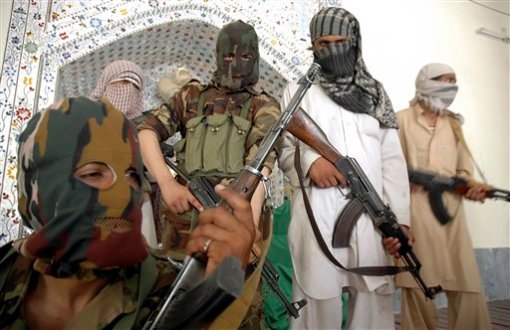
Pakistani authorities now believe a dangerous new militant group, out to avenge a deadly army assault on a mosque in Islamabad three years ago, has carried out several major bombings in the capital previously blamed on the Taliban.

The emergence of the Ghazi Force was part of the outrage among many deeply religious Pakistani Muslims over the July 2007 attack by security forces against the Lal Masjid, or Red Mosque, a stronghold of Islamic militants.

The fierce attack, in which scores of young, heavily armed religious students died, inspired a new generation of militants. These Pakistanis have turned against a government they felt has betrayed them and, to their dismay, backed the U.S. role in neighboring Afghanistan.

The brief but bloody history of the Ghazi Force illustrates the unintended results of Pakistan’s policy of promoting Islamic extremists to fight India in the disputed area of Kashmir. That policy — which Pakistan denies it pursues — now threatens regional stability as the U.S. and Pakistan’s other Western partners pour billions of dollars into the country to stop the rise of Islamic militancy.

The new group is made up of relatives of students who died in the Red Mosque assault. It is named after the students’ leader, Maulana Abdul Rashid Ghazi, who was also killed. The mosque’s religious school, or madrassa, had been a sanctuary for militants opposed to Pakistan’s support of the U.S.-run war in Afghanistan.

Private television stations broadcast vivid scenes of the assault — commandos in black fatigues rapelling down ropes, the crackle of gunfire, bodies of black-shrouded girls carried out through the smoldering gates. Those images stunned the nation, especially families of the students and Pakistanis with deep religious feelings.

“Before the Lal Masjid, militants hadn’t yet declared war on the state of Pakistan. That changed with Lal Masjid,” said Zahid Hussain, author and terrorism expert who has written extensively about Pakistan.

Islamabad’s inspector general of police, Kalim Imam, told The Associated Press that the Ghazi Force was behind most of the deadliest attacks in the capital during the last three years. The attacks targeted the military, the Inter-Services Intelligence agency or ISI — which had ties to a number of militants — and a five-star hotel frequented by foreigners and the Pakistani elite.

The Ghazi Force helped recruit a security official who blew himself up inside the office of the World Food Program last October, killing five people, according to Imam. The force also sent a suicide bomber in September 2007 into the mess hall of the commando unit that attacked the Red Mosque, killing 22 people, he said.

Ghazi Force members may also have been involved in the audacious June 9 attack north of the capital that killed seven people and destroyed 60 vehicles ferrying supplies to NATO and U.S. soldiers next door in Afghanistan, Imam said.

Many of those attacks had been attributed to the Pakistani Taliban, which operates in the remote tribal areas of the northwest along the border with Afghanistan. There is evidence of close ties between the Ghazi Force and the Pakistani Taliban, which the government has vowed to crush.

The Ghazi Force is believed to be headquartered in the Orakzai region of the border area, where the leader of the Pakistan Taliban, Hakimullah Mehsud, held sway for years. The leader of the Ghazi Force is believed to be Maulana Niaz Raheem, a former student at the Red Mosque.

Anger over the bloodshed at the mosque was all the greater because many of the militants and their supporters felt betrayed by a government that had once supported them. Both Ghazi and his brother Maulana Abdul Aziz Ghazi, who was freed on bail this year after two years in jail, were widely believed to have been on the payrolls of both the government and the ISI intelligence service.

Their father, Maulana Mohammed Abdullah, enjoyed a close relationship with the late President Mohammad Zia ul-Haq, and the mosque was a center for recruiting volunteers to fight against the Soviets in Afghanistan in the 1980s.

As opposition grew to Pakistan’s support of the U.S. role in Afghanistan, the mosque became a center of religious agitation against the government, with armed students taking over the complex and police laying siege.

A former senior official in the Interior Ministry told The Associated Press that the police wanted to storm the mosque and end the siege at its outset, send the students home and shut down the religious school and a neighboring library until tempers cooled.

President Gen. Pervez Musharraf refused, the official said, even though police knew that members of al-Qaida’s affiliate organization Jaish-e-Mohammed, which is banned in Pakistan, were bringing in weapons for the students.

Musharraf relented and ordered the assault after militants kidnapped several Chinese nationals running a massage parlor in Islamabad, accusing them of prostitution. The death toll remains in dispute. Red Mosque officials say hundreds died. The government says fewer than 100 were killed.

In a rare interview, Abdul Aziz Ghazi told AP he warned the government that an assault on the mosque would unleash forces that no one could control.

“I have been in jail. I did not form this force and I don’t condone the violence but they are angry at the injustices done,” he said this week.

Although the assault turned many Islamic hard-liners against the government, Pakistan remains unwilling to break all ties to the militants, instead following a high-risk strategy of coddling “good militants” while fighting those deemed “bad militants,” analysts say.

“The military and the ISI have given importance to these militants as assets. But those who have openly declared war, and there is no chance of them returning back to the state, the army is going after them,” said Manzar Jameel, a terrorism expert and researcher on the growth of extremism in Pakistan. “Yet they still believe that some are still assets and that they can keep control of the assets. It’s a failure of strategy.”

Army spokesman Maj. Gen. Athar Abbas denies any assistance to militant groups, saying past ties have long since been severed. He says the Ghazi Force is among the groups the 120,000 Pakistani soldiers waging war in the tribal regions are fighting.

Yet Anatol Lieven, a terrorism expert with the Department of War Studies at London’s King College, said it’s clear that the ISI continues to protect some militant groups, even if it has broken with others.

In a June report, the Rand Corporation think tank also alleged that Pakistan’s military and intelligence still support some militant groups “as a tool of its foreign and domestic policy.”

“A key objective of U.S. policy must be to alter Pakistan’s strategic calculus and end its support to militant groups,” the report said.

Christine Fair, a co-author of that report and an assistant professor at Georgetown University’s Center for Peace and Security Studies, said the battle against extremists in Pakistan is mired in layers of subterfuge by Pakistani intelligence and a “mystifying” acceptance by the CIA of Pakistan’s “good-militant, bad-militant” policy.

She said U.S. intelligence knows Pakistan protects one group — Lashkar-e-Taiba, which India blames for the 2008 Mumbai assault and Afghanistan accuses of masterminding deadly attacks against the Indian Embassy in Kabul.

“Lashkar-e-Taiba remains intact. I have had conversations with … officials in Washington. It is not their priority. Lashkar-e-Taiba is not an issue,” she said in an interview. “Yet Lashkar-e-Taiba has been attacking us in Afghanistan since 2004.”

At Talks, Pakistan, India Close the Gap

By Anita Joshua for The Hindu

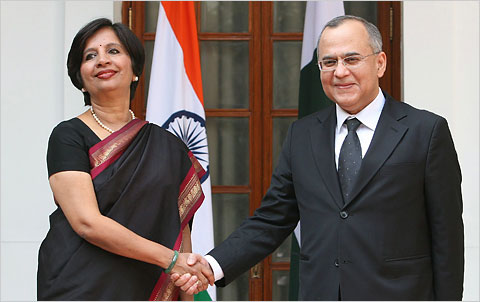
Conscious of the historical baggage, but unwilling to be burdened by it, India and Pakistan on Thursday inched closer to each other during the Foreign Secretary-level talks here and both sides held out the possibility of some tangible outcome after the July 15 ministerial engagement.

However, both Foreign Secretaries refused to be drawn into chalking out a road map or identifying goal posts. “There is a constituency for peace in both countries, and we should avoid stock phrases like road map,” Foreign Secretary Nirupama Rao said at a “joint press stakeout” here, shortly after spending a greater part of the morning with her Pakistan counterpart Salman Bashir.

The talks, according to Mr. Bashir, began as an exploratory venture, but “after this round, we are much more optimistic of good prospects at the Foreign Ministers meeting.” He summed up the talks as a “good essay in mutual comprehension,” a phrase he admitted to have borrowed from Ms. Rao.

Optimism apart, both conceded that this would be a protracted process that may not yield quick results, but decided to work on the doables in the interim. As to how they proposed to insulate the process from another freeze in relations in the eventuality of a flashpoint, Ms. Rao said this would also be a subject of discussion.

The first indication of some forward movement came with the announcement of the “joint press stakeout” soon after the talks had wound up, and the Foreign Secretaries were breaking bread in the Foreign Office.

In his opening remarks, Mr. Bashir said the two sides decided to work towards restoring confidence and building trust to make it possible for a comprehensive, sustained and substantial dialogue.

Speaking in a similar vein, Ms. Rao described the talks as forward-looking with both sides trying to understand each other’s position. “We reflected on the modalities for restoring trust and confidence to pave the way for a comprehensive, sustained and meaningful dialogue in all areas. We have agreed that dialogue is the best way forward.”

Asked whether terrorism was discussed, she said both sides agreed that terrorists must be denied the opportunity to derail the process of dialogue while pointing out that Pakistan Prime Minister Yusuf Raza Gilani had made an important commitment when he told his counterpart that efforts would be made to ensure that the Pakistani soil was not used for attacks on India.

Unlike in the past, when the two countries appeared to be speaking at cross purposes, this time the Foreign Secretaries seemed to complement each other.

If Ms. Rao deftly side-stepped a leading question on India’s reluctance to continue with composite dialogue by saying there was no issue over nomenclature, Mr. Bashir returned the favour by echoing this remark and refusing to be drawn into commenting on why Pakistan was not raising the issue of Indian-sponsored terrorism in Balochistan.

Instead, he broad-brushed the issue, stating that terrorism impacted Pakistan and was a concern to the region and the world. “Essentially, we have agreed to move from the rhetoric to the ways and means of addressing these concerns,” he said.

Indian and Pakistani Players Join Forces to Promote Peace Through Wimbledon

Valerie Amant for Peace-Support.org

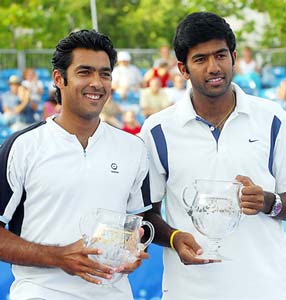
Lotto spokesmen Rohan Bopanna and Aisam-Ul-Haq Qureshi, Indian and Pakistani respectively, have decided to join forces as a doubles team at Wimbledon to help promote peace.

The two players, along with Peace and Sport, the Monaco-based and neutral international organization that works towards bringing together divided communities worldwide by encouraging dialogue and reconciliation through sport, have decided to team up at this prestigious sporting event, in order to help maintain and promote peace in their neighbouring countries.

Together with their technical supplier, Lotto Sport Italia, Bopanna and Qureshi have decided to promote this initiative by designing specially made t-shirts and sweatshirts with the high impact slogan “Stop War, Start Tennis”. The t-shirt will be worn during training sessions, whilst the sweatshirt will be used when entering the court before play.

Rohan, currently ranked 54th doubles player in the world, and Aisam, currently ranked 46th, have been friends for over ten years and have teamed up successfully for the last three years. Their respective countries have lived in a situation of unease and tension in the region of Kashmir since it won its independence from the British Empire in 1947. Peace and Sport would like to emphasise how much sport unites, as highlighted by the two players’ partnership.

The two tennis stars took the initiative to promote peace through sport after having noticed that communities from both countries forget hostility when they support them in international competitions. Indeed, during the first ATP tournament in Mumbai in 2007, Pakistani flags were waved inside the stadium during the final.

With the message “Stop War! Start Tennis!” Rohan Bopanna and Aisam-Ul-Haq Qureshi remind us that sport is a universal language that facilitates dialogue, going beyond political, racial, religious, ethnical and social differences.

Joël Bouzou, President and Founder of Peace and Sport, said: « Rohan and Aisam are big stars in their respective countries. Their story of friendship through sport is a real inspiration for youngsters. By transmitting a message of peace, they hope to change the mentalities and attitudes in India and Pakistan as well as other areas of the world destabilized by conflict. We are extremely proud to support this message that will benefit from the extensive publicity that Wimbledon attracts.

Alberto Fraticelli Marketing & Communications Director, from Lotto Sport Italia adds : « It is with great pleasure and good will that we decided to develop this initiative, in fact we already support “FreeFromLaces”, the movement that through blogs, forums, social networks, music and video, collects and proposes to the entire web community content and ideas that invite the user to reflect and ponder on “laces” that limit our daily routine: those personal, mental, virtual, social, cultural and physical ties that often seem impossible to untie. Through their initiative and personal backgrounds, Aisam et Rohan are perfect incarnations of this philosophy; thanks to sport we can rise above the hate and prejudice that condemns mankind to perpetual conflict, and we are extremely proud to have international representation of our brand, through players like Rohan and Aisam.”

India, Pakistan And U.S. Strategic Dialogue

By Apoorva Shah for The American Enterprise Institute

At this week’s first U.S.-India Strategic Dialogue in Washington, D.C., talks between the two countries will cover the spectrum of bilateral and multilateral issues, from trade and economic cooperation to terrorism and regional security. 

American participants may even feel the need to bring up India’s strained relationship with Pakistan. But it would serve them well to first consider a Times of India story from earlier this year, which went almost unreported in the United States.

According to an interview in the Indian newspaper with former Pakistani foreign minister Khurshid Mahmud Kasuri, India and Pakistan in 2007 were days away from reaching a comprehensive accord on their territorial dispute over Kashmir, the axis of the countries’ six-decade-long rivalry and casus belli of three wars between the two nations.

Kasuri, Pakistani leader General Pervez Musharraf’s chief diplomat from 2002 to 2007, said in April that the secret deal had been in progress for more than three years and would have led to a full demilitarization of both Indian- and Pakistani-occupied areas of Kashmir and would have awarded the region a package of loose sovereignty at a point “between complete independence and autonomy.” Not only were Indian and Pakistani leaders on board (including, most importantly, the Pakistani military), so was every Kashmiri leader except for one hard-line separatist, Syed Ali Shah Gilani.

The accord was slated to be signed during Indian Prime Minister Manmohan Singh’s scheduled visit to Islamabad in February and March of 2007, but before the trip ever occurred, a country-wide lawyers’ protest in Pakistan had turned into a broader opposition campaign against General Musharraf. The rest of the year would be one of the most tumultuous in Pakistan’s history, marked by the siege of the Red Mosque in July, the return of former Prime Minister Benazir Bhutto in October and her subsequent assassination in December, and the return of popular leader Nawaz Sharif from exile in September.

By August of the following year, public opposition had peaked, and Musharraf was forced to resign his post as president, ending his decade-long tenure as leader of Pakistan. After Musharraf’s ouster, it appears that the deal had lost much of its momentum.

Then in November, the accord suffered another setback as ten Lashkar-e-Taiba terrorists took India’s largest city, Mumbai, hostage for almost 72 hours, killing more than 160 people and injuring scores more. The attack was quickly coined “India’s 9/11,” and the evidence pointed directly to Pakistan, where the gunmen had been trained and equipped.

In protest, India cut off all diplomatic talks with Pakistan almost immediately; there were even rumors that the country was preparing military action against its northern neighbor. Within a span of less than two years, the India-Pakistan relationship had traveled the spectrum from apparent rapprochement and compromise to mutual suspicion and renewed hostility.

Since then, the signs have only appeared to worsen: for example, in 2009, when Indian Army chief General Deepak Kapoor publicly introduced revisions to his country’s “cold start” military strategy.

This military modernization and training program, which was developed in response to the army’s sluggish mobilization to the Pakistani border following the December 2001 terrorist attacks on the Indian parliament, remained mostly under the radar for most of the early 2000s, relegated to defense journals and the occasional news article.

It was only following the 2008 attacks that “cold start” began to receive renewed attention from the media on both sides of the border and was more publicly discussed by Indian military officials like General Kapoor. Indeed, it appeared as if the next breakthrough in Indo-Pak relations would occur through hard rather than soft power.

Concomitantly, India and Pakistan’s post-Mumbai attempts to return to diplomatic talks also appeared fraught with danger and seemed to only fuel more discord rather than reconciliation.

In February this year, Indian Foreign Secretary Nirupama Rao and her Pakistani counterpart Salman Bashir resumed high-level talks for the first time since November 2008, but both sides appeared unprepared (they could not even agree on the specific subject of the talks prior to sitting down) and spent more time bickering through separate press conferences.

For example, while Bashir accused India of covertly supplying weapons to militants in Pakistan’s Balochistan province, Rao complained that Pakistan had “not gone far enough” in the 2008 Mumbai attack investigation. As India presented a dossier of evidence against one of the Mumbai attack perpetrators, Pakistan responded by calling it a “piece of literature not a dossier.”

It’s hard to see how any progress could be made on improving Indo-Pakistani relations in the midst of this hostility. But does Kasuri’s revelation provide hope that a resolution on Kashmir could be revived? First, excepting Musharraf and Kasuri, many of the supporters of the failed 2007 accord—including Pakistani Army Chief of Staff Ashfaq Kayani, Pakistan’s current track II special negotiator Riaz Mohammed Khan, and, on the Indian side, Prime Minister Singh—still hold high-level positions in their respective governments.

And second, the secrecy of the original deal shows that outward indifference, or even enmity, between the two countries can belie an internal desire for change. In a relationship where hostility is status quo and where amicable relations seem aberrant if not bizarre, a furtive accord lets ruling elites make slow, institutional changes in the relationship while preserving outward form and precedent. It also allows deal-makers to keep tempestuous domestic politicians and party leaders at arms length while deliberating sensitive issues.

Even India’s traditionally hyperactive media seems to understand: A subsequent editorial in the Times of India noted, “the fact that such a deal exists emphasizes the importance of maintaining contact with Islamabad.”

So what can we expect in the months ahead? Indian officials will undoubtedly continue to pressure Pakistan to confront Lashkar-e-Taiba and other terrorist groups that plan to attack India, and another attack could indeed result in Indian military action. There will also be more bickering between the sides—on water rights, “most-favored-nation” clauses, and even cricket.

Yet the revelation of the secret deal should be both a lesson and a sign of hope. It is a lesson because it proves that progress on an entrenched conflict like Kashmir can occur without the United States’ public mediation.

American officials at the U.S.-India Strategic Dialogue this week should keep in mind that the accord was pursued during the final years of the Bush administration, in which the United States made it a point to separate the U.S.-India relationship from the more sensitive Indo-Pak relationship.

It is a sign of hope because, despite the outward appearance of discord between the countries, internally, leaders on both sides have—at least at some point in recent memory—wanted to move forward on a resolution.

As Pakistan continues its domestic offensive against terrorists and India pursues closer economic engagement with its northern neighbor, wanting change may be the best sign that change is on the way.

Official Admits Militancy’s Deep Roots in Pakistan

By Jane Perlez and Waqar Gillani for The New York Times

LAHORE, Pakistan — Days after one of the worst terrorist attacks in Pakistan, a senior Pakistani official declared in a surprising public admission that extremist groups were entrenched in the southern portion of the nation’s most populous province, underscoring the growing threats to the state.

 The statements by the interior minister, Rehman Malik, after the killing of more than 80 people at two mosques last week here in Lahore, were exceptional because few Pakistani politicians have acknowledged so explicitly the deep roots of militancy in Pakistan. They also highlighted the seeming impotence of the civilian government to root out the militant groups, even in Punjab Province, providing a troubling recognition that decades of state policy to nurture extremism had come home to roost in the very heart of the country.

 The extent of the problem has become an increasing concern for the United States, which has pressed the government to deal with the issue with renewed urgency since the failed attempt by a Pakistani-American to explode a car bomb in Times Square.

 “We’re dealing with a problem that is so deeply burrowed into the bosom of the society,” said a senior Western official about the difficulty of loosening the grip of the militant groups. “And we’re dealing with a government that is unhappy within itself.”

The problem for Pakistan, Western officials and some Pakistani politicians said, is not only the specific acts of terrorism by these groups, but the far more pervasive jihadi mentality that has been nurtured in the society by an extensive network of extremist madrasas and mosques.

Mr. Malik’s remarks — in which he rattled off a host of extremist groups once supported by the state — were a nod to these larger problems. In contrast to the tribal areas at the nation’s periphery, where the military is battling the Pakistani Taliban on several fronts, militants were “now active” in the southern part of Punjab and were trying to “destabilize the country,” he said.

Though Mr. Malik seemed to hint at possible military action in Punjab, the civilian government, led by the Pakistan Peoples Party, the more secular of the political parties in Pakistan, has little leverage to make it happen.

The Pakistani military, which still holds most power, has shown little interest in taking on extremist groups in Punjab. The province is a major recruiting area for the army, and many of the militant groups there were created by the state decades ago and have been fostered since as arms of Pakistan’s enduring anti-India strategy.

To a large degree, they have slipped from the control of their handlers in the military and intelligence services, according to Western diplomats and Pakistani security experts, and have linked up with Taliban fighters and other militant groups that are now striking deeper into Pakistan in an effort to overthrow the state.

Today these militants move back and forth easily between the tribal areas for training and Punjab, where they carry out a rising number of spectacular attacks.

“They — Lashkar-e-Janghvi, the Sipah-e-Sohaba Pakistan and Jaish-e-Mohammad — are allies of the Taliban and Al Qaeda,” Mr. Malik told reporters in Lahore after the mosque attacks. 

The loose conglomerate of militants that Mr. Malik listed is now being grouped by officials and others under the name of the Punjabi Taliban, a designation that itself highlights the expanding nature of the threat in Pakistan’s most important province and the militants’ shifting ambitions. Under that rubric also falls Lashkar-e-Taiba, an anti-India militant group. Like the others listed by Mr. Malik, Lashkar-e-Taiba has been banned by the state, but continues to operate under a different name and apparently with the blessing of the military.

The Punjabi Taliban took credit for the assaults on the two Ahmadi mosques last Friday. At least one of the men arrested by the Pakistani authorities in connection with the Times Square bombing case is connected to Jaish-e-Mohammed, according to law enforcement officials in Karachi.  Adding to the difficulty of clamping down on the groups, the Punjabi government, led by Shahbaz Sharif, a leader of the more conservative Pakistan Muslim League-N and a chief political rival of President Asif Ali Zardari, has stopped short of condemning the militants. In some respects, he has treated them as allies.

Two months ago, Mr. Sharif asked the Taliban to stay away from Punjab, arguing that his party and the Taliban had a common enemy in the United States. The Punjab government is “in a state of denial,” said Arif Nizami, a columnist with the newspaper The News. Mr. Sharif played down the attack on the two mosques in Lahore, Punjab’s capital. Instead, he visited the wounded survivors in a hospital quietly at night without the usual television coverage.

The groups hold such sway that Pakistani politicians frequently pander to some, like the pro-Taliban Sipah-e-Sohaba Pakistan, during elections.  In a bold illustration of the power of one of the militant groups in southern Punjab, the provincial law minister, Rana Sanaullah, campaigned alongside the leader of Sipah-e-Sohaba, Maulana Muhammad Ahmed Ludhianvi, during a March by-election for the provincial assembly in the city of Jhang.

In an interview, Mr. Sanaullah, said he saw nothing wrong with campaigning with Mr. Ludhianvi. It was a good thing, he said, because it helped bring groups that he described as no longer militant into the democratic mainstream. “If they want to be law-abiding citizens, we should allow them to be,” Mr. Sanaullah said.  Mr. Sanaullah was not alone in seeking votes from Sipah-e-Sohaba. A candidate for the National Assembly running for the Pakistan Peoples Party also won with its support earlier this year. Though security is a paramount concern, government officials and others acknowledge that the problem of militancy will not be solved by military force alone. Having been nurtured through generations, it will also not be undone quickly.

A program announced by Mr. Zardari two years ago to rein in the madrasas has yet to get off the ground, blocked by bureaucratic inertia and fears of a backlash from powerful conservative religious groups, Pakistani officials say. As state-sponsored education becomes too expensive for poor parents, the number of madrasas has actually increased in the past three years, to more than 17,000 in 2010 from 13,000 in 2007. At least several thousand of the madrasas churn out militant students, experts say.

Outrage in India As Mumbai Attacks Terrorist Leader Set to Be Freed By Pakistani Courts

By Manzer Munir for Pakistanis for Peace

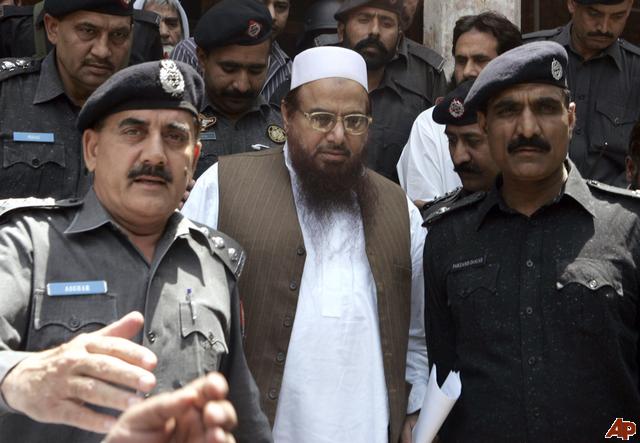
Pakistan’s Supreme Court on Tuesday upheld a lower court’s decision to free the leader of Lashkar e Taiba (LeT), a militant group that is blamed by India for masterminding  and orchestrating the November 2008 Mumbai attacks in India that killed 166 people.

Hafiz Mohammad Saeed, the leader of the terrorist group had been placed under house arrest. However, he was released a year ago by the provincial Lahore High Court due to the fact that there was insufficient evidence against Hafiz and other members of the group. The only evidence against him and the group was the confession of Mohammed Ajmal Amir Kassab, the lone person charged with attacks in India, who was given a death sentence earlier this month. Pakistan’s government appealed the decision of the Lahore High cCourt to the Supreme Court which upheld the lower court’s decision.

Lawyers for the government of Pakistan had requested that India extradite Kassab so that he could give testimony in Pakistani courts against Saeed and the militant group. However, India understandably did not hand over Kassab for fear that the sole surviving perpetrator of the Mumbai attacks could end up in a Pakistani court that sets him free. Sadly, this now happens to be the case as the masterminds of the attacks and leader of an already banned terrorist group, Hafiz Saeed, is set to be freed soon.

This obviously is very disappointing news to India to say the least. It would be the equivalent of letting the mastermind of the September 11 attacks, Khalid Sheikh Mohammed, have a long and high profile trial in New York, only to be set free for lack of evidence and or a weak case by the prosecution. The families of the victims would not stomach such a travesty and neither would the American people. In this same manner, the families of the Mumbai attacks are very upset by this decision by Pakistan the Supreme Court to release Saeed will now surelyonly serve to stall peace talks between India and Pakistan that were slowly progressing at the sidelines of the South Asian Association for Regional Cooperation (SAARC) meeting in Bhutan in April of this year.

At a time when the world’s attention is on Pakistan and Pakistanis for being associated with terrorism due to the attempt to bomb Times Square by Faisal Shahzad, the country and its courts have shot themselves in the foot by allowing to set free a known terrorist leader of a group that is not only attacking India and trying to provoke a war between the two countries, but is believed to be behind many attacks inside Pakistan also killing many innocent people.

If the shoe was on the other foot and the attackers came from India and killed 166 Pakistanis in a busy shopping area, while simultaneously attacking a major hotel, railway station and other locations throughout any of Pakistan’s major cities, then trust me, there would be demand for blood by Pakistani citizens and militias would have formed with or without the government’s blessings, and theywould have retaliated against the Indians. The Indian government and the Indian people are showing great resolve and patience with Pakistan and all along hoping that it truly becomes 100 percent committed to fighting and rooting out terrorism and terrorist groups within its borders as it is touted to be.

But as Tuesday’s decision by the Supreme Court illustrates, Pakistan’s government has a mixed record when fighting extremist groups within the country. As mentioned in previous articles on this site, the government of Pakistan and the army have supported and helped organize some of these militant groups like Lashkar e Taiba in order for the Pakistan army to have a guerrilla outfit as an ally in the event of a war with India. That is why there is reluctance by some inside the military and ISI to fully disband Saeed’s group, believed to be one of the largest and well funded militant groups in Pakistan. The government of Pakistan needs to realize that it cannot talk out of both sides of its mouth. It cannot present itself as one of the biggest allies of the US in the War on Terror, while at the same time not deal effectively with militant groups that are hostile to India.

We at Pakistanis for Peace are outraged that Hafiz Saeed, a known terrorist leader is set to be free from Pakistani courts. Our group and website Pakistanis for Peace was founded immediately after the Mumbai attacks in 2008 by concerned Pakistani Americans in response to the cowardly terrorist attacks by individuals who snuck in from Pakistan to cause one of the biggest terrorist incidents to ever hit India. These attacks certainly became their 9-11. 

To now have the leader of this terrorist group be set free by Pakistani courts only serves to strengthen the claims of opponents of Pakistan that it is not doing enough in the fight against terrorism. Certainly the families of the 166 dead Indian nationals deserve justice and better outcome than what transpired in Pakistan’s Supreme Court this week. One should make no mistake, only a just and lasting peace with India will ever lead to a prosperous Pakistan and the sooner there is an earnest effort to stop ALL militant and terrorist groups operating within inside the country by Pakistan, the sooner the two sides can sit across from each other at the peace table.

Pakistan Seeks Resolution of India Water Dispute

By Tom Wright for The Wall Street Journal

Pakistan told India it wants to begin formal arbitration proceedings over an Indian dam project in Kashmir, threatening to heighten tensions ahead of high-level bilateral talks. Pakistan says India’s planned hydropower dam on the Kishanganga River would violate a 50-year-old water-sharing treaty between the two neighbors by diverting water Pakistan needs for agriculture and power generation.

India denies its project would violate the 1960 Indus Waters Treaty. It has received Pakistan’s request for arbitration and is examining it, an Indian official said. Water disputes have become a growing point of controversy between the rivals in recent months, and could become an impediment as they seek to re-establish diplomatic ties. India cut off dialogue with Pakistan after the November 2008 Mumbai terrorist attacks, but has shown an interest in restarting talks if Pakistan cracks down on terrorists on its soil.

Indian Prime Minister Manmohan Singh and Pakistani Prime Minister Yousuf Raza Gilani met last month at a regional summit and agreed to move forward with dialogue. The countries’ chief foreign-policy bureaucrats will meet in late June to prepare an agenda for mid-July, when their external affairs ministers are expected to meet in Islamabad. In previous rounds of diplomacy, India and Pakistan have discussed issues ranging from trade to the fate of Kashmir, the disputed territory that is two-thirds controlled by India and over which the countries have fought two of their three wars. India has said it is open to discussing all issues in the current talks, though shutting down terrorist groups and getting Pakistan to more aggressively prosecute Mumbai suspects are its core objectives.

 India has said river-sharing disputes should be settled through the 1960 treaty, rather than in the bilateral talks. The accord split six Himalayan rivers between the countries, with the three Western ones going to Pakistan, the three Eastern ones to India, and each side retaining the right to the other side’s resources for uses such as run-of-river hydropower and irrigation. Under the treaty, the countries nominate commissioners who share data and try to resolve problems as they arise. If the commissioners can’t agree, they can seek a World Bank-appointed expert to intervene, which happened in 2005 when Pakistan objected to another big dam.

India was told to make minor changes to its design. Jamaat Ali Shah, Pakistan’s Indus waters commissioner, said the country is now seeking formal arbitration proceedings—a treaty mechanism that neither side has used before—because it feels India is stalling on the Kishanganga dispute. Pakistan on Wednesday named two members that would sit on a seven-person arbitration panel. Under the treaty, India has 30 days to name its own two members, and the countries are supposed to jointly name the three other participants. If they can’t agree, the World Bank would step in to name them.

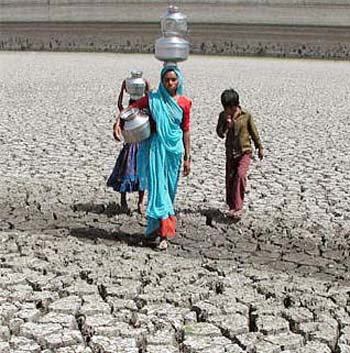
Pakistani farmers and Islamist groups have staged protests against India’s 330-megawatt hydroelectric project on the Kishanganga, which is a tributary to one of the rivers Pakistan was allotted under the treaty. Water availability in Pakistan has fallen 70% since the early 1950s to 1,500 cubic meters per capita, according to a report last year by the Woodrow Wilson International Center for Scholars. India says Pakistan’s poor water management is responsible for the water shortages it is experiencing in some regions.

Time to end the impasse with Pakistan

By Siggharth Varadarajan for The Hindu.com

Forget Kashmir and terrorism or even Afghanistan and water, the current stalemate between India and Pakistan is all down to one word. Both countries publicly say that Dialogue is the only way forward. Yet each is paralysed by the name Composite’. New Delhi is so allergic to it that it will not accept its use, while Islamabad has become so attached to the C word that it insists there can be nothing else.

This Indian allergy and Pakistani attachment is paradoxical, since the composite dialogue approach has suited India more than it has Pakistan. Under the guise of moving ahead simultaneously on all issues, the framework has allowed progress on trade and other subjects considered important by New Delhi, even as the status quo on major disputes like Kashmir and Siachen key concerns for Islamabad has held. Of course, the dialogue did not end cross-border terrorism or extinguish the links between the Pakistani security agencies and violent extremism as some on the Indian side might have hoped. But that was always an improbable shot given the DNA of the Pakistani establishment. Over time, India has realised the best way to deal with the threat of terror is by strengthening its internal capabilities while utilising engagement as a lever for influencing Pakistan’s behaviour over the long run.

The two most important issues for the Pakistani side today going by its public statements are Kashmir and water. But here’s the paradox: the composite dialogue, from its point of view, has produced no forward movement whatsoever on these two fronts. In four and a half rounds of talks within that framework, the total amount of time spent by the two foreign secretaries in discussing the Kashmir dispute has perhaps been 10 hours. During which neither side did anything beyond restating its national positions. As for water, it does not even figure as a separate head under this format. The only water-related dispute covered by the composite dialogue is the Tulbul navigation project, also known as the Wullar barrage. There, too, progress has been insignificant.

In contrast to the composite dialogue framework, the back channel between Satinder Lambah and Tariq Aziz was far more effective and productive. Between 2004 and 2007, the two special envoys, who reported directly to Prime Minister Manmohan Singh and General Pervez Musharraf respectively, discussed Kashmir for hundreds of hours. More significantly, their exertions produced a framework solution that was cleared on the Indian side by the Cabinet Committee on Security and on the Pakistani side by the Corps Commanders conference, before domestic political difficulties triggered by his dismissal of the chief justice forced Musharraf to back off. As for water, the Indus Water Commissioners have been meeting continuously for more than 40 years and their forum represents the best platform for Pakistan because all the Indian projects it opposes on the Indus, Chenab and Jhelum rivers can be referred to an outside arbitrator whose decisions are final and binding. Compared to such a powerful dispute resolution mechanism, the existing dialogue framework is surely inferior. And yet, even though Islamabad’s best shot at making progress on water and Kashmir lies outside the composite dialogue, it has got locked into a situation where it is refusing any form of engagement or talks other than that.

Now let’s consider India. The Indian position has been in a state of flux since it suspended the composite dialogue following the terrorist attacks on Mumbai in November 2008. Broadly speaking, however, India has maintained that there can be no resumption of the composite dialogue till Pakistan moves to punish the Mumbai conspirators and dismantles the infrastructure of terror on its soil. In September last year, Prime Minister Manmohan Singh made a distinction between meaningful dialogue on disputes, which would have to await Pakistani action on terrorism, and talks on humanitarian and other issues. Since then, the Indian position has evolved further. When Pakistan’s Foreign Secretary, Salman Bashir, was invited to Delhi in February 2010, India clarified that while its own priority was terrorism, it was ready to discuss all issues with Pakistan. That is still the official Indian position. At a press conference on April 22, Foreign Secretary Nirupama Rao said dialogue represents a concrete method to move forward in our relationship It is always useful. It helps clear the atmosphere and especially between neighbors, such as India and Pakistan. Dialogue is really the only way forward.

But if India believes dialogue is really the way forward, why is it unable to accept Pakistan’s call for the composite dialogue to be resumed? The paradox here is that from the traditional Indian perspective, the composite dialogue has worked pretty well. Discussions on Kashmir have not led to any change in the territorial status quo but have provided a cover for India to move ahead with other parts of the bilateral agenda that suit it more, like trade and cross-border confidence-building measures. And if the Indian side is opposed to talks on the water issue’, the composite framework of dialogue is ideal because water does not figure as a standalone topic under any of the subject heads. Despite this, India is the one saying no to composite’ dialogue.

India suspended the composite dialogue in order to get Pakistan to take action against terrorism. Some action has been taken but the Manmohan Singh government rightly believes that Pakistan can and must do more. It also knows the continued absence of dialogue is unlikely to produce greater action on the terrorism front and might even be counter-productive. Yet it fears the resumption of the suspended dialogue will be seen as a sign of weakness by the Opposition.

India’s options have been further complicated by the hardening of the Pakistani position on cooperation and dialogue since November 2009, when Barack Obama’s new AfPak policy dealt the military establishment in Rawalpindi a stronger hand in the Afghan endgame. Even as the Pakistan army has stepped up its offensive against the Tehreek-e-Taliban and, to a lesser extent, anti-American extremists on its border with Afghanistan, it has played up the India threat’ card to balance the perception that it is too subservient to the U.S. The rhetoric on water, the Azm-e-Nau III exercises, the loosening of the leash on Lashkar-e-Taiba chief Hafiz Saeed and the increase in infiltration across the Line of Control are all evidence of the hardening of the Pakistani military’s attitude. At the same time, the domestic political situation in Pakistan is fluid. The 18th amendment to the constitution has opened up the possibility of the civilian government and the provinces strengthening themselves vis-a-vis the military. The revival of the Benazir Bhutto assassination case in the wake of the recent U.N. report could also provide political ammunition against the establishment.

In the run up to this week’s Saarc summit in Bhutan, where Prime Minister Manmohan Singh will meet Yusuf Raza Gilani on the sidelines, Indian officials are resigned to keeping the bilateral relationship in a holding pattern.’ Their logic is that if relations cannot improve, then they should not be allowed to deteriorate either. As a short-term strategy, the holding pattern strategy works fine. There are always small things that can be done at that level too. But an aeroplane cannot circle the runway endlessly. The longer it is up in the air, the greater is the likelihood of a disastrous descent. That is why planning for an orderly landing is a much better strategy.

In Thimphu, Dr. Singh must try and find a way of doing that. One possibility is for the two prime ministers to task their foreign secretaries with reviewing what has been accomplished on the terrorism front as well as in the last few rounds of the composite dialogue, with a view to expediting the resolution of existing problems and disputes. Such a mandate would foreground the necessity of a dialogue addressing all outstanding issues while sidestepping, for the moment, any nomenclatural disagreement. It would accomplish the stated Indian objective while allowing Mr. Gilani to return without having surrendered Islamabad’s stand on the resumption of the composite dialogue.

Parallel to this process, the Prime Minister should meet with the leaders of all major political parties in order to explain the reasons why India and Pakistan need to end the current stalemate. Finally, a strict moratorium on grandstanding and posturing, finger-pointing and name-calling is necessary. When the Prime Minister is directly crafting India’s approach to Pakistan, ministers, officials and anonymous sources’ must not confuse the public with contradictory messages and statements.

India and Pakistan’s Leaders Meet

As reported by BBC.com

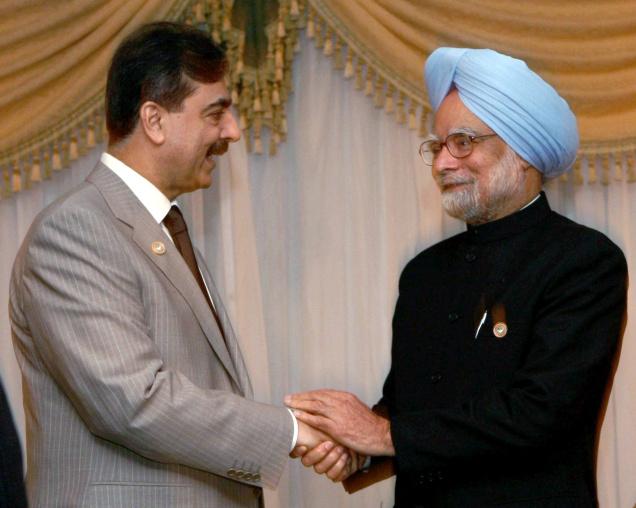
Pakistan PM Yousuf Raza Gilani spoke to his Indian counterpart Manmohan Singh at a reception hosted by the US President Barack Obama, reports said. The prime ministers of India and Pakistan met briefly during a nuclear summit attended by 47 world leaders in Washington DC.

A Pakistani embassy spokesman said it was “not a formal meeting”. cIt comes a day after Mr Singh told Mr Obama that Pakistan’s government lacked the will to punish those responsible for the Mumbai attacks. The November 2008 attacks left 174 people dead, including nine gunmen, and soured ties between India and Pakistan. Late last year, Pakistan charged seven people in connection with the attacks.

They include the suspected mastermind Zaki-ur-Rehman Lakhvi, who is allegedly the leader of the Pakistan-based militant group Lashkar-e-Taiba. Mr Singh and Mr Gilani spoke to each other at a reception hosted by Mr Obama, Pakistani embassy spokesman Nadeem Kiani said.

“Both leaders were present at the same place and so they shook hands and talked,” he said. A spokesman for India’s foreign ministry, Vishnu Prakash, told The Hindu newspaper that the two leaders “exchanged pleasantries”.
‘State elements’

India put peace talks on hold after the attacks, blaming them on Pakistan-based militants. Pakistan admitted they had been partly planned on its soil. India has also suggested what it calls “state elements” were involved. Both Pakistan and Lashkar-e-Taiba have denied any involvement.

In February, the two sides held their first formal talks since the 2008 attacks and agreed to “remain in touch”. Leaders from 40 states are attending the meeting in Washington which is expected to focus on how to secure nuclear material.

U.S. Aims to Ease India-Pakistan Tension

By Peter Spiegel and Matthew Rosenberg for The Wall Street Journal

President Barack Obama issued a secret directive in December to intensify American diplomacy aimed at easing tensions between India and Pakistan, asserting that without détente between the two rivals, the administration’s efforts to win Pakistani cooperation in Afghanistan would suffer.

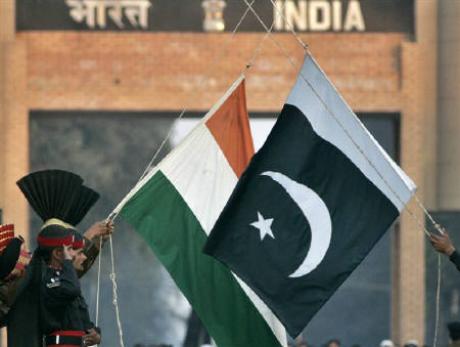
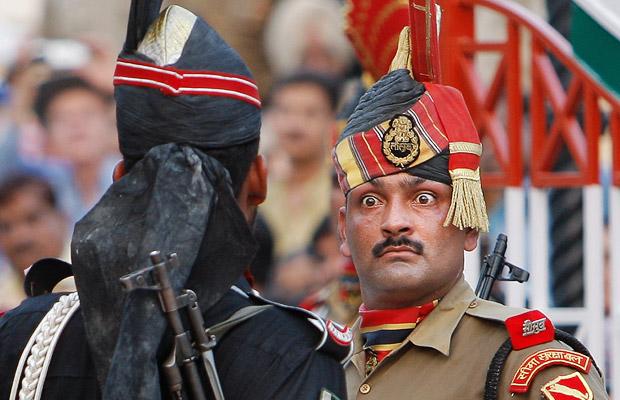
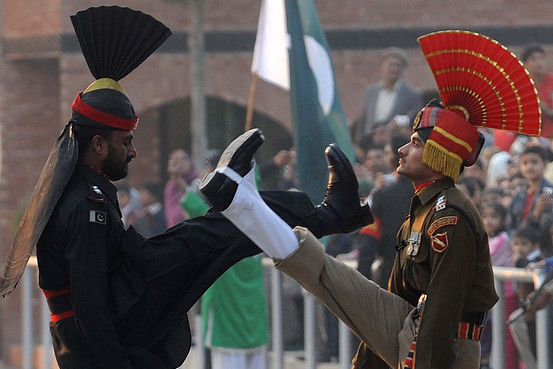
Pakistani Rangers (L) and Indian Border Security Force (BSF) personnel perform the daily retreat ceremony at the India-Pakistan Border at Wagah on December 26, 2009. The directive concluded that India must make resolving its tensions with Pakistan a priority for progress to be made on U.S. goals in the region, according to people familiar with its contents.

The U.S. has invested heavily in its own relations with Pakistan in recent months, agreeing to a $7.5 billion aid package and sending top military and diplomatic officials to Islamabad on repeated visits. The public embrace, which reached a high point last month in high-profile talks in Washington, reflects the Obama administration’s belief that Pakistan must be convinced to change its strategic calculus and take a more assertive stance against militants based in its western tribal regions over the course of the next year in order to turn the tide in Afghanistan.

A debate continues within the administration over how hard to push India, which has long resisted outside intervention in the conflict with its neighbor. The Pentagon, in particular, has sought more pressure on New Delhi, according to U.S. and Indian officials. Current and former U.S. officials said the discussion in Washington over how to approach India has intensified as Pakistan ratchets up requests that the U.S. intercede in a series of continuing disputes.

Pakistan has long regarded Afghanistan as providing “strategic depth”—essentially, a buffer zone—in a potential conflict with India. Some U.S. officials believe Islamabad will remain reluctant to wholeheartedly fight the Islamic militants based on its Afghan border unless the sense of threat from India is reduced.

Indian Prime Minister Manmohan Singh has already taken the political risk of pursuing peace talks with Pakistan, but faces significant domestic opposition to any additional outreach without Pakistani moves to further clamp down on Islamic militants who have targeted India.

U.S. and Indian officials say the Obama administration has so far made few concrete demands of New Delhi. According to U.S. officials, the only specific request has been to discourage India from getting more involved in training the Afghan military, to ease Pakistani concerns about getting squeezed by India on two borders.

“This is an administration that’s deeply divided about the wisdom of leaning on India to solve U.S. problems with Pakistan,” said Ashley Tellis, an analyst at the Carnegie Endowment for International Peace who has discussed the issue with senior officials in the U.S. and India. “There are still important constituencies within the administration that have not given up hope that India represents the answer.”

India has long resisted outside involvement in its differences with Pakistan, particularly over the disputed region of Kashmir. But, according to a U.S. government official, a 56-page dossier presented by the Pakistani government to the Obama administration ahead of high-level talks in Washington last month contained a litany of accusations against the Indian government, and suggestions the U.S. intercede on Pakistan’s behalf.

The official said the document alleges that India has never accepted Pakistan’s sovereignty as an independent state, and accuses India of diverting water from the Indus River and fomenting separatism in the southwestern Pakistani province of Baluchistan.

Secretary of State Hillary Clinton has signaled that Washington isn’t interested in mediating on water issues, which are covered by a bilateral treaty.

The White House declined to comment on Mr. Obama’s directive or on the debate within the administration over India policy. The directive to top foreign-policy and national-security officials was summarized in a memo written by National Security Adviser James Jones at the end of the White House’s three-month review of Afghan war policy in December.

An Indian government official said the U.S.’s increasing attention to Pakistani concerns hasn’t hurt bilateral relations overall. “Our relationship is mature—of course we have disagreements, but we’re trying not to have knee-jerk reactions,” the Indian official said.

According to U.S. and Indian officials, the Pentagon has emerged in internal Obama administration debates as an active lobbyist for more pressure on India, with some officials already informally pressing Indian officials to take Pakistan’s concerns more seriously. Adm. Mike Mullen, chairman of the Joint Chiefs of Staff and the U.S. government’s prime interlocutor with the powerful head of the Pakistani army, Gen. Ashfaq Kayani, has been among the more vocal advocates of a greater Indian role, according to a U.S. military official, encouraging New Delhi to be more “transparent” about its activities along the countries’ shared border and to cooperate more with Pakistan.

In interviews, U.S. military officials were circumspect about what specific moves they would like to see from New Delhi. But according to people who have discussed India policy with Pentagon officials, the ideas discussed in internal debates include reducing the number of Indian troops in Kashmir or pulling back forces along the border.

“They say, ‘The Pakistanis have this perception and you have to deal with the perception’,” said one foreign diplomat who has discussed India’s role with Pentagon officials. An Indian defense ministry spokesman said his country’s army has already moved about 30,000 troops out of Kashmir in recent years.

The State Department has resisted such moves to pressure India, according to current and former U.S. officials, insisting they could backfire. These officials have argued that the most recent promising peace effort—secret reconciliation talks several years ago between Indian Prime Minster Singh and then-Pakistani President Pervez Musharraf—occurred without U.S. involvement.

Pakistan and India Are Back At the Peace Table

By Manzer Munir

Islamabad, Pakistan- India’s Foreign Secretary Nirupama Rao is scheduled to visit Islamabad later this month as both India and Pakistan are back on track to resume their high level diplomatic talks. The discussions between the two so far are considered “preliminary” and are a “first step” in the words of Secretary Rao. She had earlier restated India’s concerns about terrorist groups operating in Pakistan and provided additional information related to the Mumbai attacks. Her counterpart in Pakistan, Foreign Secretary Salman Bashir, stated that “Pakistan is doing all that it can to fight terrorism”. Expressing his sympathy with the victims of the Mumbai attacks, he focused on Pakistan’s core concern that “terrorism should be looked at more broadly”. He believes that the two countries should address the root causes of the terror campaign and, from that perspective; Kashmir is the “core issue.” Pakistani officials believe that if India was a bit more flexible on Kashmir, then all the outstanding issues between the two countries can be resolved.

India’s Prime Minister Manmohan Singh is believed to sincerely desire to make a “breakthrough” in relations with Pakistan and has been vocal about it too in recent interviews. During the elections last year, he had highlighted his efforts to promote back-channel diplomacy for conflict resolution during the rule of former Pakistani President Pervez Musharraf. He also met last year with the current Pakistani Prime Minister to pledge to resume peace talks.

In Pakistan there also appears to be a significant shift in foreign policy. The American and Pakistani militaries and intelligence agencies are working closely and have had some recent successes together to stop the al Qaeda-sponsored terrorism in Pakistan and Afghanistan. The US commanders have been full of praise of the Pakistan army and its recent offensives against the Taliban. The Pakistani army has disrupted the al Qaeda and Taliban network over most of the Federally Administered Tribal Areas. This has come at a steep price as more than 2,500 soldiers have been killed.

This sacrifice by the Pakistan army has not gone unnoticed as the United States has increased both military and economic aid to Pakistan. The US is nudging both India and Pakistan to the peace table since a peaceful border with India will allow Pakistan to focus entirely on its western border at the Taliban and Al-Qaeda in Afghanistan. This will facilitate the Obama administration’s ability to eradicate the Taliban and Al-Qaeda once and for all from the region with Pakistan army’s help.

For far too long since Pakistan’s independence, the army has always felt India to be the biggest threat to the nation’s sovereignty and freedom. But for the first time in its history, an enemy has surfaced and proven to be much more detrimental to Pakistan’s survival as a nation and security for its citizens. And that enemy and threat is the radicalized groups such as the Taliban both from Afghanistan and inside Pakistan as well as the largely Arab Al-Qaeda network that operates in the area. Also militant groups like Lashkar-e-Taiba, Jaish-e-Mohammed and others also pose the biggest threat to the nuclear armed nation. The danger from the extremists has allowed elements inside Pakistan’s army leadership to reconsider the threats to Pakistan.

The dialogue between India and Pakistan has been off again and on again for over 63 years. But in the current climate of mistrust and hatred coupled with tensions still simmering from the Mumbai attacks, there is little room for error on both sides. It is hoped that the upcoming talks prove to be a step in the right direction of normalizing relations between these two nuclear armed neighbors who share almost an 1800 mile long border known in this part of the world as the Berlin Wall of Asia.

The Snub of Pakistani Cricketers by the Indian Premier League Should Come As No Surprise

By Manzer Munir

New Delhi, India- Events at an auction held earlier this month by India’s wildly popular Indian Premier League (IPL), consisting of professional cricket teams and franchises, has caused outrage amongst the cricket crazed Pakistani population. Up to seventeen top Pakistani cricketers were anticipated to be selected as top picks in the auction between the teams that saw none of the Pakistani players being selected.

Indian Union Home Minister P. Chidambaram on Monday said that the “decision of the franchisees not to select any of the 17 Pakistani cricketers, who had been given Indian visas for participation in the third edition of the Indian Premier League (IPL), was a disservice to the game of cricket.” Speaking in an interview to a television channel, Chidambaram said that the “IPL issue could have been handled in a better way” and expressed disappointment over the non-selection of the Pakistani cricketers as individuals.

He said these players were 20-20 World Champions and did not deserve to be treated this way. He said that any suggestion that the Indian Government had “nudged” the IPL not to select Pakistani players was not true and had no foundation.

The Pakistani press also had a field day with this turn of events calling for a boycott by the hockey team that is scheduled to visit India next month for Hockey’s World Cup being held in India where Pakistan is scheduled to participate.

Pakistan’s sports minister has demanded the Indian government carry out an inquiry into the snubbing of Pakistan cricketers in the Indian Premier League player auction. “We want the government of India to intervene in this issue and let us know who were responsible in keeping Pakistan cricketers away from the IPL,” Ijaz Jhakrani said Tuesday. “From day one our stance is that the IPL decision was an influenced one.”

The sports ministry has also put on hold its granting its permission for the Pakistan golf team to tour India next month. In addition, Speaker of Pakistan parliament’s lower house, Dr. Fehmida Mirza, stopped a parliamentary delegation’s proposed tour of India in protest. “We have asked both our foreign and interior ministries to let us know about the golf team’s tour to India,” sports ministry spokesman Faik Ali told the Associated Press. “We will decide on golf team’s tour to India after receiving inputs from both ministries”, she said.

Even Bollywood superstar actor Shah Rukh Khan, an owner of one of the IPL teams, the Kolkata Knight Riders, weighed on the issue saying it was “humiliating” to see none of the Pakistani players being picked and that the issue could have been handled better.

The tensions between India and Pakistan are seen as the main reason why the teams stayed away from picking the top Pakistani cricketers. There is a fear amongst the owners of the teams that should the animosities between India and Pakistan escalate, then the teams would suffer as their Pakistani players would be unable to travel or participate in games due to conflict between the two long time enemies. So in a sense it is a business reason that may have precipitated the action by the IPL. There is also a belief by many in Pakistan that perhaps the Indian government influenced the IPL into not accepting Pakistani cricketers as a way to reprimand Pakistan and punish it and its citizens for the Mumbai attacks of 2008, which is still fresh in everyone’s minds. India feels Pakistan has not done enough to rein the terrorist groups blamed for the attacks.

Nonetheless, the upset Pakistani cricket fans should also realize that there is a persistent uneasiness and suspicion on the part of India as Pakistan continues to be seen as the major threat to India’s sovereignty and security. To many in India, allowing Pakistani cricketers to play in India’s IPL would be seen as a way of rewarding a country and its citizens whom you detest and view with deep suspicion and enmity. So in a region of the world where so much tension and conflict already exists between the two neighbors and has simmered for over 60 years, one must not assume everything is peachy and just play ball!

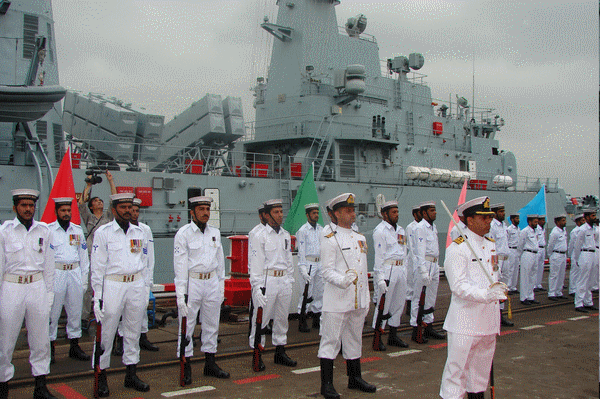
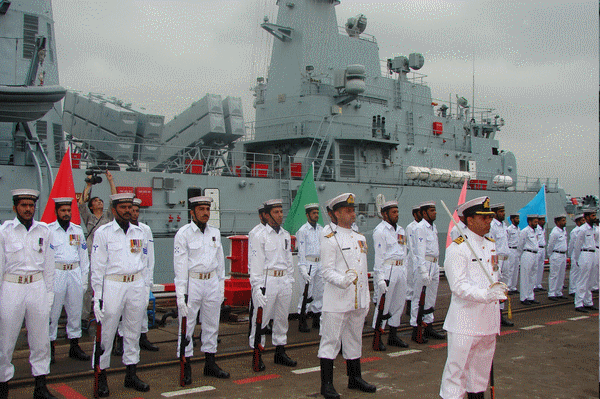
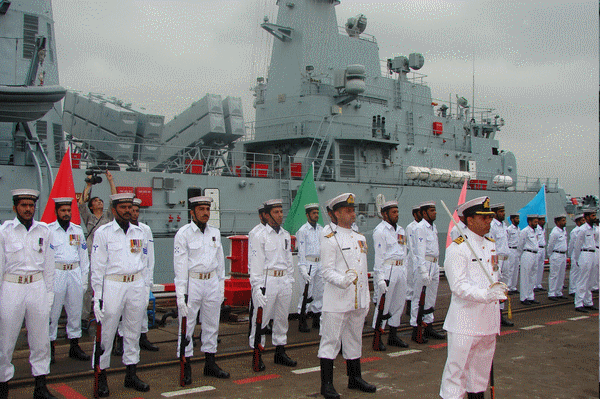
Pakistan and China increase military spending and cooperation as India shows concern

Beijing, China- A senior Chinese defense official has justified Chinese sales of warships and submarines to Pakistan on the grounds that Russia and the United States were selling similar systems to India.

The defense official also indicated that China was aware of the fact that India may not be happy with its deal with Pakistan. “The initiative may invite concerns from its neighboring countries. But the doubts are unnecessary,” Zhai Dequan, deputy director of China Arms Control and Disarmament Association , was quoted as saying by the official media.

Pakistan’s chief of naval staff, Norman Bashir, also made a push to persuade China to sell higher capacity ships compared to the F22P frigates that China began delivering in June.  Chinese official Zhai said that Pakistan’s   desire for higher capacity ships is normal for an independent nation seeking to bolster its security. “India has also entered into deals for military hardware from the Unites States and Russia. India’s aircraft carrier has already cost it billions of dollars”, said Zhai.

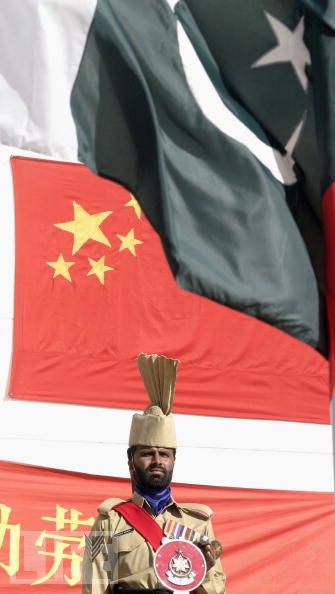
Bashir also met with the Chinese defense minister, Liang Guanglie, and discussed with him Pakistan’s needs in terms of modernizing their armed forces to try and keep up with the torrid pace of rival India’s defense spending. “The Chinese armed forces would like to improve friendly and cooperative relations with the Pakistani armed forces,” defense minister Liang Guangile said, according to China’s state-run Xinhua press agency.” China attached great importance to its traditional friendship with Pakistan, Liang said, adding that the two countries had conducted comprehensive and multi-level military exchanges and cooperation in various areas.”

“The Pakistani armed forces and people cherished their friendship with the Chinese armed forces and people”, Noman Bashir said, noting that “Pakistan would like to work with China to promote the comprehensive and cooperative partnership.” Bashir also stated that Pakistan was keen on buying bigger ships and more JF-17 fighter planes from China in addition to submarines and that Pakistan will be buying more weapons from China, including missiles. 

“These growing military ties between China and Pakistan are a serious concern to India,” stated Defense Minister A K Antony. India worries about China’s rising influence in South Asia and the Indian Ocean region, a neighborhood traditionally considered as its sphere of influence.

India’s relations with Pakistan, never easy after three wars since 1947, went downhill fast after last November’s Mumbai attacks blamed on Pakistani originated militants. Meanwhile, Chinese and Pakistani cooperation on military and economic projects has increased in the last few years. “The increasing nexus between China and Pakistan in military sphere remains an area of serious concern,” Antony said in a speech. “We have to carry out continuous appraisals of Chinese military capabilities and shape our responses accordingly. At the same time, we need to be vigilant at all times.” Tensions between India and China, who fought a brief war in 1962, flared again in recent months, especially with the re-emergence of a long-standing border dispute made worse by a visit by the Dalai Lama, the Tibetan spiritual leader, to Indian territory claimed by Beijing.

India increased defense spending by 24% for this year’s budget to $28.4 billion a year dwarfing Pakistan’s budget of $4.2 billion for the same period. Meanwhile, China and India are together set to make Asia the highest regional spender on defense in the next seven years replacing North America as their economies continue to fund their weapons appetite.

Pakistan cannot compete with the likes of India and China militarily. Just as Taiwan could not compete with China militarily, but went on to become an economic powerhouse and used its influence economically,  so too must Pakistan focus on growing its economy rather than growing militarily. Even though Pakistan possesses the nuclear bomb, and that very well may end up being a strong deterrent against India in the likelihood of a war, it still is loathe to use it, for the consequences from India would be similar and far worse due to their increased warheads and military might.

Also, although Pakistan’s military and previous leadership have articulated the right to a preemptive nuclear strike or a nuclear first use option in the event of hostilities with India, this choice is often seen as a losing option by the military due to the aftermath of a nuclear exchange between the two countries. India’s budget and its technological advancements make it impossible for Pakistan to ever win a conventional war with India. And a nuclear exchange between these two neighbors will leave neither side feeling as the winner.  

Pakistan’s most beneficial strategy must consist of directing its full armed forces against the Taliban and militant groups within its territory and re-engaging India back to the peace table in hopes of resolving the long disputed Kashmir region because war with India will certainly not leave Pakistan the victor. However a peace treaty can open the long border between India and Pakistan for trade, goods, ideas, money and people to move freely across the border and allowing much needed investments and flow of technology to Pakistan that will go a long ways in helping the country and its people catch up with the rest of the world.

Reported by Manzer Munir for www.PakistanisforPeace.com

Pakistani court suspends deportation as another case of homegrown terror troubles US authorities

Karachi, Pakistan- Pakistani police on Monday seized a luggage and a cell phone from a hotel where three of the five Americans who were arrested on suspicion of terrorism planning and militant links stayed. A court has ruled that the men cannot be deported to the United States until the judges review their case.  Pakistani police has alleged that the five young Americans intended to join militant and extremist groups in the northwest tribal areas of Pakistan and Afghanistan. This case is troubling as it would appear that Americans and Western raised men are traveling to Pakistan to link up with Al-Qaeda and other militant groups like the Taliban.

Pakistani police had searched their hotel, aptly named Saddam Hotel in the southern city of Karachi.  The detainees have been accused of using the internet and such sites as Facebook and Youtube to reach out and connect to extremist groups and have been said to have been in contacts with a Taliban recruiter also.  The Pakistani court actions are intended to prevent the deportation of the accused to the United States until the courts in Pakistan can ascertain the facts and review the case.

The men, who are from the Washington DC area were picked up last week by Pakistani authorities after their worried families in the US contacted the FBI about their missing sons and enlisted their help in tracking the men down. The authorities were given a farewell video found by one of the family members that showed scenes of war and called for Muslims to be defended. FBI agents, who have had some access to the men, are trying to see if there is enough evidence to charge the men with conspiracy to provide material support to a terrorist group.

A US government official was satisfied with the Pakistani government’s assistance stating that “We’ve had excellent cooperation with the Pakistani authorities, both on the diplomatic side and on the law enforcement side,” said State Department spokesman Ian Kelly, “And the Pakistani authorities granted us access to the individuals within 24 hours of our request, which is a very speedy response.”

The threat posed by homegrown terrorists in the United States and in European countries is a growing concern for the FBI and US agencies. The incidents such as the Fort Hood shooting where Major Nidal Hasan allegedly shot and killed 13 fellow soldiers at the Texas base last month do nothing but further raise those concerns. Then there’s David Headley, an American born Muslim to mixed ancestry who is indicted in the Mumbai blasts of November 2008. And now comes the story of the five Muslim American men arrested in Pakistan who were interested in waging  jihad against the US.

It is too early to call it a growing trend, but the incidents and their frequency does suggest that there is certainly a minority segment of very young Muslim males who somehow are being radicalized not in strict Afghanistan or Pakistan or somewhere in Iran. Rather, in the streets of Virginia, New York, Chicago and other cities, certain young Muslim males are becoming radicalized and becoming extremists. This phenomenon can be best described as a catch 22. You see, these radicalized and misguided men feel that because the United States is waging wars in Muslin countries such as Iraq and Afghanistan, it is being an oppressor. To these men, defending Muslim lands from an outsider and an oppressor is an obligation and a duty and is a call for every Muslim. On the other side, there is the American policy of engagement of the enemy on its turf, as is seen in the Bush doctrine. “Take the war to the terrorists” as President Bush so famously put it in 2001.  These wars that were initiated to be pre-emptive in the case of Iraq and retribution in the case of Afghanistan, have inadvertently become the cause célèbre of these jihadists and young extremists.

In essence, there is a vicious cycle of violence at work here. We have American troops in Afghanistan who are there to defeat the Taliban and Al-Qaeda in Afghanistan so that the US is safe from a terrorist attack hatched overseas. Yet, the next threat may actually be coming from an American born Muslim who is being alienated and radicalized due to the “unjust” war against his “brothers” constant 24 hour cable news coverage, satellite TV and foreign news channels, the internet websites and other sources.

As instances of homegrown Muslim radicalization grow or come into the limelight, it is imperative that the vast majority of peaceful, law abiding and patriotic American Muslims keep vigilant and mindful of the few in their midst who may be becoming radicalized in front of their eyes. It is vital that the Muslim community speak up as the parents of these young men did and alerted the authorities when they became concerned that they may have some sinister designs after discovering their farewell video. It is together with our cooperation with the authorities that we can sniff out these lost individuals before they do any harm to anyone or to an entire religion. The mosques and Islamic centers must do more to ensure that there is no radicalization or fiery sermons. There needs to be a conscientious effort on the part of the American Muslim community of progressives and moderates to speak up and chastise those that are becoming extremists within their midst in order to prevent the next Fort Hood massacare or the next Mumbai.

 Reported by Manzer Munir for www.PakistanisforPeace.com