Archive for the ‘ Pakistan Army ’ Category

Latest U.S. Drone Operation in Pakistan Should Be Judged a Success

An Editorial By The Globe and Mail

The use of a drone to kill al-Qaeda’s second-in-command in Pakistan, confirmed on Tuesday by U.S. officials, is good news that has nonetheless provoked a diplomatic protest by Pakistan. The country’s position is understandable, and doubtless its posturing is necessary for domestic consumption. But it does not alter the fact that Pakistan is either unable or unwilling to act against terrorists in its lawless tribal lands and, though they occur in a foreign country, that Washington’s actions are defensive in nature.

Abu Yahya al-Libi was a global jihadi figure who incited attacks on Western targets and served a critical propaganda role for al-Qaeda. His apparent death follows several similar drone strikes against senior al-Qaeda leaders, including Atiyah Abd al-Rahman, that have seriously diminished the terrorist group’s capability and, frankly, have made the world a safer place. What is more, the use of the unmanned stealth weapons has both preserved the lives of U.S. servicemen and women and resulted in limited civilian casualties.

Louise Arbour, the former war crimes prosecutor and Supreme Court of Canada justice, wrote recently in Foreign Policy that the use of drones “stretches legal boundaries to the breaking point and alienates people in Pakistan.” In calling for the rules for use of strike drones to be “clarified,” Ms. Arbour expressed concerns over the “very real risks to civilians.” There is indeed a need for a clarification of the rules. It would be folly to believe that the proliferation of the technology is without implications for international law and policy.

But any such debate must be built upon some pertinent facts. Strike drones are surgically targeted, and those killed are generally not good people (there is always the unfortunate risk of exceptions when terrorists hide among civilians).

In the case of the latest attack, American officials say Mr. Libi was the only person who died. Local tribesmen dispute this, saying others died, but they confirm no civilians were harmed. The same can hardly be said of the consequences of U.S. inaction in the face of al-Qaeda’s threat. This operation was then, by any reasonable measure, a success. Ms. Arbour and others concerned about drone wars need to reflect on the question of proportionality.

Pakistanis for Peace Editor’s Note– Until and unless Pakistan goes after the terrorists in its borders earnestly, the drone strikes and their often effectiveness in killing top wanted members of Al-Qaeda and the Taliban will most likely continue, despite the collateral damage to Pakistan’s sovereignty and loss of civilian lives.

Pakistan: Between a Rock and A Hard Place

By Yekaterina Kudashkina for The Voice of Russia

Interview with Dr. Theodore Karasik – the Director of Research and Development at the Institute for Near East and Gulf Military Analysis (INEGMA) in Dubai.

Particularly you have to first understand that the situation in Pakistan is rather icy politically, as well as on the religious scale. Pakistan now finds itself between a rock and a hard place when it comes to how it fits into the US and Western plans to halt fighting in Afghanistan as well as to get rid of terrorist events in the northwest frontier province. So, the Pakistani press is going to be very inflamed though, not only because of the NATO Summit, but also because of the sentencing of the doctor who outed Bin Laden for a sentence of 33 years.

Apparently what happened was that the US had managed to find a Pakistani physician who was able to pinpoint the location of Bin Laden’s compound and as a result of the leakage of this information in the US and foreign press this doctor was arrested and tried very quickly in Pakistan and sentenced to 33 years in jail for giving up Bin Laden’s position. This is a political trial where Pakistanis want to make an example of this individual by arguing that he managed to fail the state by giving up the secret of where Bin Laden was hiding.

Do you think that this case is going to further deteriorate the relations between the US and Pakistan or is it just a root in development?

I think it is a bit of both. I think that will embarrass the US-Pakistani relations. I think that will be pressuring the United States of why did the US revealed the identity of this doctor. There is also a discussion about how this relationship with Pakistan and the United States will continue in terms of transport of nonlethal goods to Afghanistan.

Now, talking about that issue. Do I get it right that the negotiations are still under way in Islamabad regarding the transportation routes agreement, the new one?

Yes, the negotiations are still ongoing in Islamabad about transferring nonlethal goods into the Afghan theatre. And Pakistanis are using this episode to put political pressure on US to make concessions, particularly when it comes to military aid or paying of very high prices for use of this supply lines.

Are we talking about concessions in terms of money or in some other aspects?

It’s a combination of both money and political support for the Zardari Government.

Is the US prepared to offer a political support for Zardari Government in the present circumstances?

At this time I would say that the United States is going to play quite tough with Pakistan. Let’s face it – Pakistan is just barely above a failed state. And the US needs to make sure that Pakistan does not descend in the total chaos while at the same time applying pressure on Pakistan to guarantee that the state remains somewhat coherent together.

The signals of the resumption of negotiations in Islamabad were generally seen as a sign that perhaps they could be ameliorating. And then came Zardari’s visit to Chicago. By the way, why would the Pakistanis be so disappointed with the results of his visit? What were their expectations?

I think that they were expecting to be treated more as an equal and key to solving the Afghan problem as well as to part of trying to help with the withdrawal of troops from Afghanistan. But instead you had this political issues popup and then you had Zardari acting in a very strange way by missing the key events like the group of progress of all the leaders and so on. I think that they left Chicago messed.

Does the United States want to ameliorate them and what needs to be done if there is a certain desire to make them better?

Clearly a lot of problems need to be discussed and we need to find the right remedies that would help both countries work together in this difficult time. I think it is going to get more difficult as tensions build over what to do with Afghanistan and the withdrawal from Afghanistan of NATO forces. Pakistan has an important role to play in all this because of the supply routes as we talked about previously. So, I think we are going to be entering a period of more jostling for position, negotiation that could get quite ugly at some points.

Afridi Sentence Pushes U.S.-Pakistan Relations From Bad to Worse

As Compiled by Araminta Wordsworth for The National Post

Full Comment’s Araminta Wordsworth brings you a daily round-up of quality punditry from across the globe. Today: One country’s freedom fighter is another nation’s traitor, from Benedict Arnold on down.

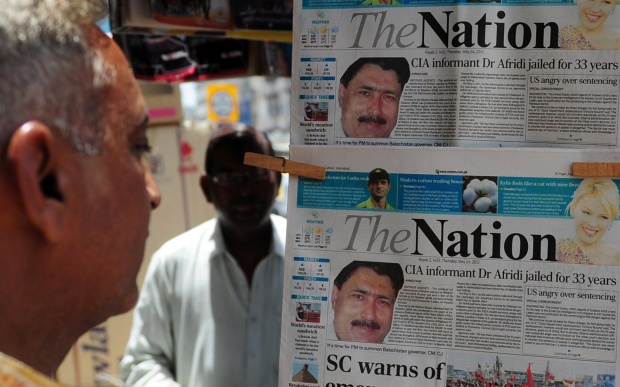
That’s the fate of Shakil Afridi. The Pakistani doctor is now behind bars, serving a 33-year sentence for treason and excoriated by fellow citizens.

His crime: helping the Americans track down the world’s most wanted terrorist, Osama bin Laden.

The physician organized a fake vaccination drive in Abbottabad, a leafy town about an hour north of Islamabad where the al-Qaeda chief had been bunked down, apparently for years. Nurses went from house to house, taking DNA samples. Among the doors they knocked on was that of bin Laden.

The sentence has been greeted by outrage in Washington, where relations with Islamabad are going from bad to worse. Americans believe they should at least get co-operation for the $1-billion in aid they dish out to Pakistan each year.

Pakistanis meanwhile are affronted by perceived infringements of their sovereignty — chiefly the US Navy SEALs’ raid that killed bin Laden, which was carried out without notifying Islamabad; but also U.S. drone attacks, a friendly fire accident that killed about 30 government troops, and the CIA’s continuing clandestine operations.

Reporting from Islamabad for The Guardian, Jon Boone explains the Pakistani position.

For some Americans the Pakistani doctor who worked on a clandestine operation to track down one of the U.S.’s greatest enemies is a hero who should be given citizenship. But for Pakistan’s security agencies Dr. Shakil Afridi, a 48-year-old physician who once led campaigns to vaccinate children against polio on the Afghan frontier, is a villain.

On Wednesday a representative of the country’s main spy agency said Afridi had got what he deserved when he was sentenced to 33 years in prison for conspiring against the state, for his role in trying to help the CIA track Osama bin Laden to his hideout in the garrison town of Abbottabad.
American lawmakers quickly responded, hitting Pakistan in the pocketbook, writes David Rogers at Politico.

Angered by the prosecution of a Pakistani doctor for helping the CIA locate Osama bin Laden, the Senate Appropriations Committee voted Thursday to cut another $33-million from an already much-reduced military aid package: $1-million for each of the physician’s 33-year prison sentence.
The 30-0 roll call followed a brief but often bitter discussion that underscored the deteriorating relationship between Washington and the Islamabad government, which remains an important ally in the war in Afghanistan.

“We need Pakistan. Pakistan needs us,” said Senator Lindsey Graham, who helped to craft the amendment. “But we don’t need a Pakistan that is just double dealing.” Judson Berger at Fox News believes the Obama administration was caught flat-footed by Afridi’s conviction.

Former U.S. intelligence officers accused the Obama administration of dropping the ball … — with one openly challenging the State Department’s claim that it pressed his case “regularly” with Islamabad.

Officials are now raising a slew of concerns with how the U.S. government has handled the case.
Peter Brookes, a former analyst and adviser with several intelligence agencies who is now a senior fellow with the Heritage Foundation, told Fox News on Thursday that the U.S. should have had a plan to get him out of Pakistan immediately following the raid.

But CNN’s national security contributor Fran Townsend told the program Starting Point Afridi probably thought he was “safe enough” in Pakistan and didn’t want to leave, especially without his extended family.

The United States is working to secure Afridi’s release, and Townsend confirms that [U.S. Secretary of ] State Hillary Clinton has intervened on the doctor’s behalf. Although she believes that Afridi may face some jail time, Townsend says that she ultimately thinks he’ll be released through negations between the U.S. and Pakistan.

“Pakistan will use it as a leverage point,” Townsend explains. “They’re going to want some concession, some commitment from the United States that there will be no use of Pakistani citizens inside their own territory by American intelligence.”

Her view of Afridi as a bargaining chip is confirmed by the BBC’s M. Ilyas Khan, who explains the significance of trying Afridi under Khyber Pakhtunkhwa tribal law .

A trial by a regular court could have gone on for months, involving a proper indictment, witnesses and lawyers, all under the glare of television cameras.

But the political officer in Khyber has made sure that it stays secret and swift … Analysts say the Pakistani establishment has done this not only to defy the Americans but also to send a message to all Pakistani contacts of American diplomatic missions to desist from repeating Dr Afridi’s “mistake.”

They also point to an enduring feeling in Pakistan that at some point it has to mend fences with its Western allies, in which case the release of r Afridi could be one of the bargaining chips.

As and when that happens, the governor of Khyber Pakhtunkhwa province can legally order his release.

Pakistanis for Peace Editor’s Note- The jailing of Dr Afridi is not only another stain in the US-Pakistani relations, such as the hiding of OBL, but rather it is another carriage of injustice in a nation that is guilty of it daily with its population. From the lack of providing rights and freedoms to many of its citizens to the downright shameful behavior towards its religious minorities and women, it regularly is guilty of miscarriage of justice.

Please don’t even get us started on failing miserably to provide basics such as power, clean water, security from home grown terrorists or even a remotely functioning democracy. This action, as well as others in the last thirteen months illustrate, in our view, simply no reason other than, we are sad to say, that Pakistan has essentially told the Americans that we are not with you.

US-Pakistan Tensions Deepen as Obama Snubs Zardari at Nato Summit

As Reported By Ewen MacAskill for The Guardian

The rift between the US and Pakistan deepened on Monday as the Nato summit in Chicago broke up without a deal on Afghanistan supply routes.

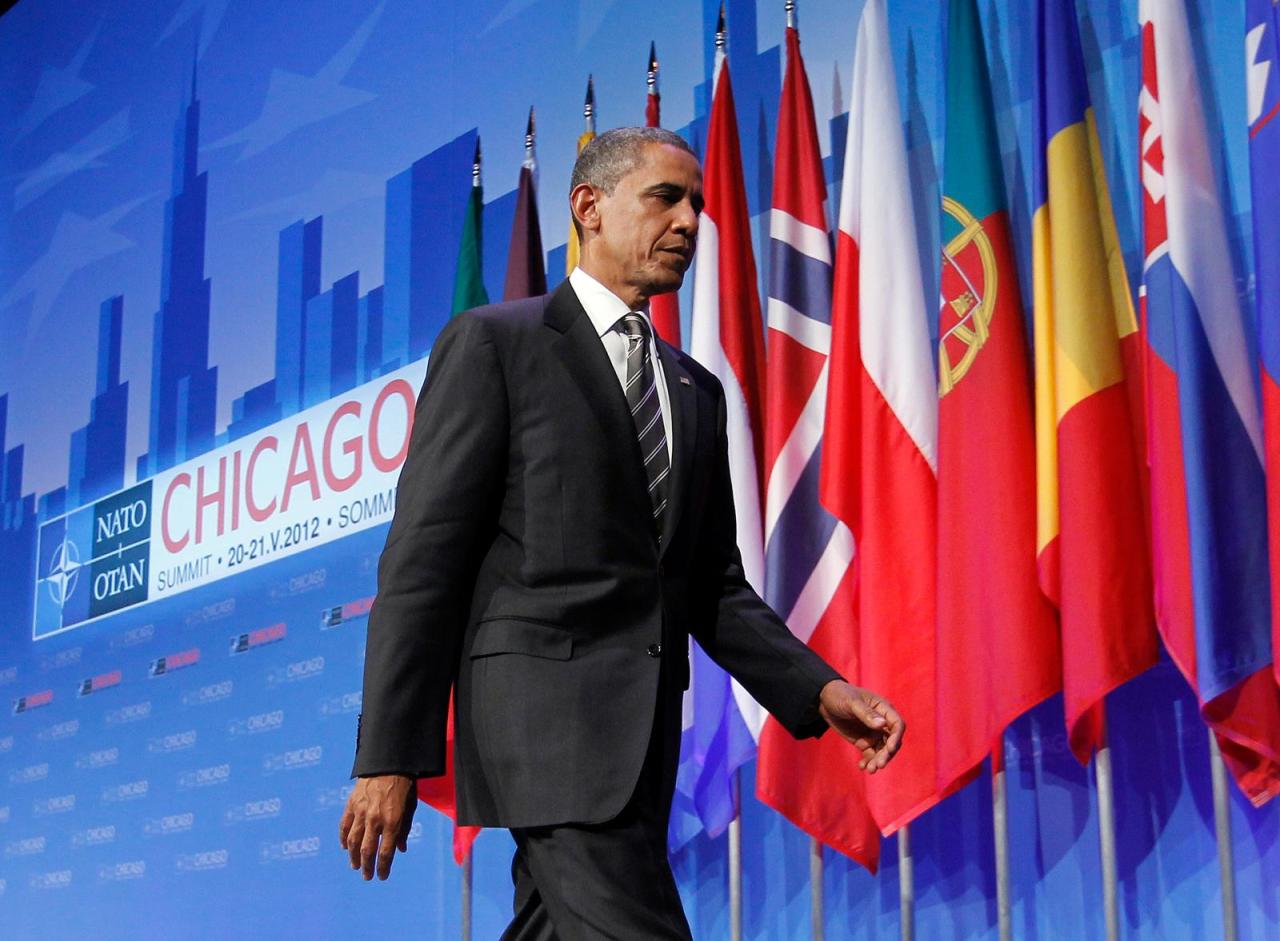
Barack Obama, at a press conference to wind up the summit, made no attempt to conceal his exasperation, issuing a pointed warning to Pakistan it was in its wider interest to work with the US to avoid being “consumed” by extremists.

Seldom in recent years have the tensions between Washington and Islamabad been on public show to the extent as at the Chicago, overshadowing the two-day Nato summit.

The main point of friction is Pakistan’s closure of Nato supply routes to Afghanistan in protest over drone attacks and a US air strike in November that killed two dozen Pakistani troops.

Obama refused to make time during the two-day summit to see the Pakistan president Asif Ali Zardari for a face-to-face bilateral meeting. In a press conference, Obama made a point of stressing that the only exchange he had with his Pakistani counterpart was short. “Very brief, as we were walking into the summit,” Obama said.

The US president said he “did not want to paper over the cracks” and that there has been tension between the US-led international force in Afghanistan and Pakistan over the last few months.

But ultimately, it was in the US interest to have a stable, democratic and prosperous Pakistan, Obama said, adding it was in the interest of Pakistan to work with the US to ensure it is not consumed by extremists.

There are fears in the US that the Pakistan government is unstable and that the government could fall, to be replaced by hardliners. The risk for Obama is displaying his annoyance with Pakistan at the Chicago summit is that Zardari could leave the summit feeling humiliated and even less willing to play a positive role over Afghanistan.

Obama declined to meet Zadari one-to-one because Pakistan is refusing to re-open its Afghanistan border to Nato, which means the US and others are having to resupply their military forces through the slower and more expensive routes from the north and Russia.

The president claimed that he never anticipated the Pakistan supply line issue being resolved at the summit and, taking a more optimistic view of the stand-off, he said they were making “diligent progress”.

“We think that Pakistan has to be part of the solution in Afghanistan. Neither country is going to have the kind of security, stability and prosperity that it needs unless they can resolve some of these outstanding issues,” Obama said.

The British prime minister, David Cameron, at a press conference in Chicago, reflected the irritation with Pakistan, describing the blocked routes as “frustrating”. Cameron said he expected a deal eventually but not at the summit.

In its final communique, Nato formally committed to its withdrawal of the 130,000-strong force from Afghanistan based on a timetable agreed earlier by Obama and Karzai. All international combat troops would be withdrawn by the end of 2014. But the communique said a smaller force would remain to help “train, advise and assist” the Afghan army.

The communique does not say how many troops will be left but US commanders in Kabul are looking at a Nato force of around 15,000-20,000. Reflecting the public mood in Nato countries tired of the war, the comminque said the withdrawal timetable is “irreversible”.

Obama, at the opening of the second day of the Nato summit on Monday morning, showed his displeasure with the Pakistan government by singling out for mention the Central Asia countries and Russia that have stepped in to replace the Pakistan supply route and made no mention of Pakistan. Zardari was in the room at the time.

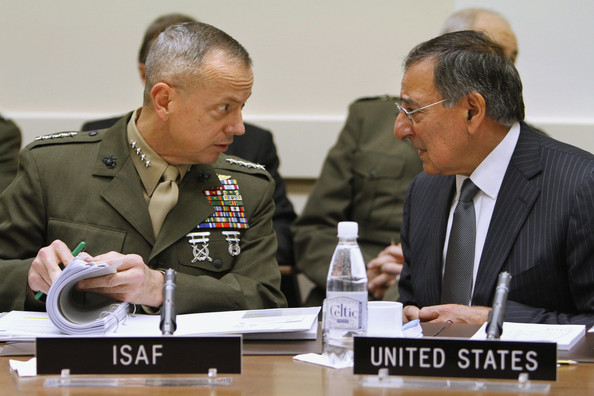
To ram home the point, the US defence secretary, Leon Panetta, also held a meeting at the Nato summit with senior ministers from Kazakhstan, the Kyrgyz Republic, Tajikistan, Turkmenistan, and Uzbekistan. Panetta expressed his “deep appreciation” for their support.

Zardari has demanded an apology from the US for the killing of the 24 Pakistani troops in November in return for reopening supply lines. He is also proposing that the tariff for each vehicle be raised from $250 to $5,000. The US is bitter about this, noting the amount of American military and other aid that goes to Pakistan annually.

In his wrap-up press conference, Obama stood praised the Chicago police for their handling of the demonstrations but also defended the rights of the protesters. “This is part of what Nato defends: free speech and freedom of assembly,” Obama said.

Panetta to Confront Pakistan at NATO Summit on Transport Costs

By David Cloud for New York Daily News

Defense Secretary Leon E. Panetta heads to this weekend’s NATO summit prepared to confront Pakistan over what he considers price-gouging for transport of supplies to Afghanistan and hoping for a “consensus” among allies over the war effort.

In an interview before his arrival in Chicago, where the summit is scheduled to begin Sunday, Panetta all but ruled out paying Pakistan $5,000 for each truck carrying supplies across its territory for NATO troops waging the Afghanistan war. Pakistani officials have demanded that amount as a condition for reopening supply routes that have been closed to the alliance since fall.

“Considering the financial challenges that we’re facing, that’s not likely,” Panetta said of the demand.

Before the supply routes were closed in November after a mistaken U.S. attack on two remote Pakistani border posts that killed two dozen Pakistani troops, NATO convoys were paying an average of about $250 a truck, a senior U.S. official said.

U.S. officials say they remain hopeful they can resolve the dispute, perhaps at the summit. Pakistani President Asif Ali Zardari accepted a last-minute invitation to attend the meetings, although he is not expected to meet one-on-one with President Obama, officials said.

Thousands of trucks a day carrying supplies would go through multiple border crossings from Pakistan to Afghanistan, making the fees a potentially massive source of revenue for the cash-strapped government in Islamabad.

The U.S. has shifted deliveries to different routes through Russia and other countries to Afghanistan’s north. But the massive withdrawals of equipment due to unfold over the next 21/2 years as troops leave the country will be “significantly” more difficult if routes in Pakistan aren’t used, the Pentagon acknowledged in a report last month.

The Obama administration hopes the two-day summit will highlight what Panetta called a “consensus” within NATO about how to disengage militarily by the end of 2014. Exhausted after more than a decade of war, the U.S. and its allies want to hand off responsibility for fighting the Taliban to Afghan President Hamid Karzai’s government, even though its army and police remain well short of being able to stand on their own.

“Everybody in the alliance recognizes that for this to work, we can’t pick up and leave. We’ve got to remain there to provide support and to assist them in that effort with training, with assistance, with advice,” Panetta said.

But he acknowledged that there would be difficulties, both on the battlefield and within the alliance. Those splits are exemplified by the new French president, Francois Hollande, the Socialist Party leader who campaigned on a vow to withdraw all 3,300 French troops by the end of this year. Hollande met with Obama at the White House on Friday.

Panetta, who plans to meet the new French defense minister, Jean-Yves Le Drian, in Chicago, indicated that the U.S. hopes France will agree to keep some forces in a noncombat role in Afghanistan for the next 2 1/2 years, even if they withdraw all combat troops early.

Yet a more rapid exit by France than planned could lead other allies to speed up their own troop withdrawals.

“There are some countries — Canada, France — that want to bring their combat operations to an end on a faster time track, but that doesn’t have to mean they won’t accept the responsibility to continue to provide the needed support,” Panetta said.

Panetta acknowledged that U.S. efforts to persuade other countries to make long-term financial pledges to fund Afghanistan’s army and police, a key objective of the two-day Chicago summit, is running into difficulties.

“Of course, it’s not easy considering the financial difficulties that a lot of these countries are going through,” he said. “Many of them have come forward and said they would be willing to make a commitment, and I really do think we will be able to achieve the support levels we need.”

In an effort to secure more pledges, the U.S. is asking other countries to commit to providing aid for only three years, though Afghanistan’s armed forces are expected to need foreign assistance for at least a decade, a Western diplomat in Washington said.

A year ago, the Obama administration was hopeful it could draw the Taliban into peace negotiations with Karzai’s government, but Panetta acknowledged that he didn’t see a deal to end the conflict happening “any time soon.”

Is Parcham Ke Saye Talay by Hadiqa Kiani

Song By Hadiqa Kiani

Pakistan Reveals Efforts to Hunt Down Osama Bin Laden

Jon Boone and Jason Burke for The Guardian
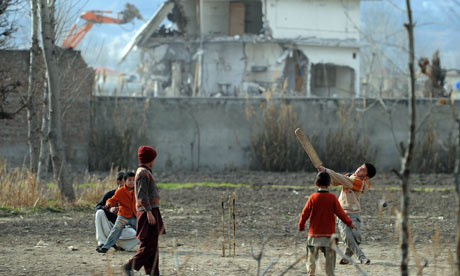
For almost a year, Pakistan‘s security establishment has been in a state of deep fury and embarrassment over the killing of Osama bin Laden. But its annoyance, US diplomats note, has not been directed at how the world’s most wanted man could have lived inside the country for so long, but rather at how a US team could have got in and out of its territory undetected.

So far, there have been no arrests of sympathisers who might have helped Bin Laden move around Pakistan undetected before settling in the town of Abbottabad. Authorities appear more concerned with investigating what they see as a gross violation of sovereignty that badly damaged the prestige and reputation of the powerful Pakistani military.

The only known arrest has been of Shakil Afridi, a Pakistani doctor who worked in Abbottabad as part of the CIA effort to try to pinpoint the al-Qaida chief. A Pakistani commission investigating Bin Laden’s death recommended Afridi be charged with “conspiracy against the state of Pakistan and high treason”.

But amid efforts on both sides to improve the terrible state of US-Pakistani relations, bitter recriminations are starting to give way to a modest effort by Pakistan’s intelligence service to put itself a little nearer the centre of events that led to Bin Laden’s killing.

Last week, a security official in Islamabad gave the Guardian details of three hitherto unknown ground missions conducted by joint CIA-Pakistani teams to capture Bin Laden.

One was in the north-western mountainous area of Chitral in 2005, though the target turned out to be a “near identical lookalike”. Two were in 2006, including one in a village called Barabcha on the border between Afghanistan and Pakistan’s Baluchistan province.

A former US official confirmed there had been some joint operations in the past, particularly in Chitral, but was unaware of the specific incidents.

“The big picture is there have been cases where [the Pakistanis] have moved on information we have given them,” said the former US official in Washington.

According to the Pakistani security official, efforts by Inter-Services Intelligence (ISI) to capture Bin Laden continued even after “the intelligence chief of a western country came to us and gave us a written report Bin Laden was dead” – in 2008.

He also said the al-Qaida operative who eventually led the CIA to Bin Laden was identified as the terrorist leader’s personal courier by Khalid Sheikh Mohammed, a senior detained militant in 2003, during interrogation by ISI. That information was passed to US agencies, he said.

This claim contradicts statements by US officials who say that Mohammed, the chief organiser of the 9/11 attacks, downplayed the importance of the courier, then known as Abu Ahmed al-Kuwaiti, and that it took several more years for his true importance to be recognised.

Shaukat Qadir, a retired brigadier who has launched a personal investigation into the Bin Laden case, has also been boosting the perception of Pakistan’s efforts as he prepares to publish a book on the subject. Based on briefings from intelligence officials, he said ISI had also been interested in Abbottabad in the months before the raid, and had even begun watching the man who would turn out to be al-Kuwaiti.

The agency became suspicious of the man, also known as Arshad Khan, when they ran a check on him after he told locals he had business interests in Peshawar, something that turned out to be false.

Their investigations became urgent when he was seen bulk-buying medicines in Peshawar useful for treating ailments Bin Laden was thought to suffer from.

“When they learned about the medicine, their suspicions were aroused and the passed those suspicions on to the CIA, probably around December 2010,” he said.

Bruce Riedel, a former senior CIA analyst and expert on Islamist militancy, said ISI’s three previous attempts to net Bin Laden “probably looked like wild goose chases from Washington’s perspective”.

“This is an effort by the Pakistanis to try to rebut the very widespread notion in the US that they must have been somehow willing accomplices of Bin Laden’s presence in their country,” he said.

Underlying the distrust between the two ostensible allies is the decision by the US not to share any of the material which the US Navy Seals took away from the house, including huge amounts of data on computer hard drives.

For its part, Pakistan is holding on to tens of thousands of documents taken from the Abbottabad house, although the Pakistani security official described these as mere “scraps” compared with the vast amount of information held by the US.

Some of the Pakistani-held documents are believed to have been seen by European and US intelligence services.

The Pakistani official said close counter-terror co-operation between the two sides was wrecked by the killing on the streets of Lahore of two Pakistani civilians by a CIA contractor, Raymond Davis, in January 2011.

“In 2009, there were 150 joint operations between us and the Americans, one every two days,” he said. “Raymond Davis put a stop to everything.”

But Riedel said Washington’s suspicions of Pakistan ran far deeper. There was “near total consensus” within the administration not to share any intelligence on Bin Laden, despite the damage they knew it would do to US-Pakistani relations.

“My judgment is that if we had told the Pakistanis in anything but the last five minutes, Osama would be alive today,” he said. “He would have escaped.”

Muhammad Amir Rana, director of a thinktank that tracks security trends, said it is much too late for Pakistan to try to take credit for tracking Bin Laden. He said the time to “reconcile and share responsibility” was in the immediate aftermath, when Barack Obama publicly thanked Pakistan for its support. “Unfortunately, they badly miscalculated – they thought Osama was a big figure, they were worried about the reaction of al-Qaida and the public in Pakistan,” he said.

But the wave of retaliatory attacks feared by some in Pakistan never happened, underling al-Qaida’s enfeebled state.
India and Pakistan: The Truth of the One Nation Theory

By Aakar Patel for FirstPost

The first time I came to Pakistan, I was taken aback at how good some of the infrastructure was. The airports at Karachi and Lahore were small, but they were efficient and well designed. I think my host told me the Japanese had built one or both of them, and those airports were a very different thing from the ones I had just taken off from in India.

This was when the government made the airports and as with all things the Indian government takes up, our airports were clumsy and barely functional. But a few years later this changed. Today the airports at Mumbai, Delhi and Bangalore are pretty good. They’re not world class (nothing in India can ever be), but they are not embarrassing as the earlier ones were.

The differences that I had thought were significant turned out not to be so.

This led me to think of how similar we were as nations. Not in the sense that Mohd Ali Jinnah meant. I think it is fairly obvious that the character of India and of Pakistan is different when we observe their constitutions. India’s secularism is fundamentally Hindu in its nature. Pakistans constitution is Islamic by design and in appearance.

Though this is an important aspect of nationhood, however, it is only one aspect.

What I mean is how we are one nation in all the negative aspects. Our neighbourhoods and streets are among the most shameful in the world, because we are selfish and blind to the concern of others. Delhi’s drivers are as terrible as those in Lahore (and the women of Delhi and Lahore would concur on the behaviour of the loutish men of those cities). Half of us are illiterate and the half who are literate don’t really read much. The comments sections of Indian and Pakistani websites are the most dreadful in the world, without qualification. Hateful and pedantic, the product of minds who are only functionally literate. We think time will bring some big change in our society but it isn’t easy to see where this change is going to come from.

I know of few other nations where people would not be embarrassed at the thought of keeping servants. Few cultures would be so unaffected, so uncaring of privacy to not mind the constant presence of the servant in the house. I am not even talking about the bestial manner in which we treat them, because every reader of this piece, whether Indian or Pakistani already knows what I mean.

We divide ourselves into nations based on things like which animal the other eats or does not eat. The outsider probably sees no difference between us, and rightly.

We produce very little of meaning to the outside world, and it is tough to think of what our contribution is to the nations from whom we take so much. In science and technology we have nothing to offer the West, despite the boasts of Indians that we gave the world Arabic numerals and zero (I agree with that; we have given the world zero).

Pakistanis stake claim to Islams golden age. Daily Jang columnist Hassan Nisar often takes up this point. He says that the Arabs laugh when Pakistanis owns Islams achievements. What aspect of the conquest of Spain or the scientific revolution in Baghdad did Punjabis and Sindhis participate in?
To the world we are one people in that sense.

My friend Col Iftikhar, from Musharrafs batch in the Pakistan Military Academy, said he discovered this horrifying fact when he went to Mecca a few decades ago for Haj. He met some Saudis, one of whom asked him where he was from. Lahore, said Ifti. Where’s that, the Saudi asked (this was in the 70s). Pakistan, said Ifti proudly. Where’s that, the puzzled Saudi asked. Ifti took out a map and pointed. Ah, said the Saudi to his friends, he’s Hindi.

Our problems are so primitive that they should make us stop and repair ourselves immediately. But they don’t seem to affect us at all. Our media carry on like we are normal people. Reading the militant bombast of the strategic affairs experts in the newspapers of these two nations, the outsider would never suspect that these were two nations unable to even keep their public toilets clean.

Taliban Storm Pakistani Prison: Nearly 400 Freed

By Zulfiqar Ali and Alex Rodriguez for The Los Angeles Times

Pakistani Taliban militants stormed a prison in northwest Pakistan early Sunday and freed 390 prisoners, including 20 militants, local officials said.

The attack occurred about 2:30 a.m. at a prison in Bannu. The town is considered the gateway to North Waziristan, a tribal region along the Afghan border that has long been a stronghold for Taliban insurgents and several other militant groups.

Local police officials said as many as 200 Taliban militants drove up in pickups, lobbing hand grenades to break through the jail’s main gate.

Once inside, a two-hour firefight broke out between the attackers and roughly 30 jail guards. The militants began freeing prisoners after the guards ran out of ammunition, officials said. No one was seriously injured or killed in the attack.

One of the prisoners freed was Adnan Rashid, on death row for an assassination attempt on former Pakistani leader Pervez Musharraf when the general was president, police said.

Officials said the jail’s 944 prisoners, including some militant commanders, recently had been moved to the Bannu jail after authorities received intelligence that Taliban militants might be planning major raids on detention centers holding insurgents.

In recent years, Pakistan has sent more than 140,000 troops to battle the Pakistani Taliban across much of the tribal region along the Afghan border. The army has retaken large stretches of territory, but the militants still cling to pockets of resistance throughout the tribal belt and continue to carry out periodic attacks on a variety of targets, including military checkpoints, mosques and markets.

Like the Afghan Taliban, the Pakistani movement is made up of factions united by the goal of toppling the government and imposing Sharia, or Islamic law. It maintains links with Al Qaeda, the Afghan Taliban and other Pakistani militant groups ensconced in Pakistan’s tribal belt.

Authorities in Islamabad, the capital, have blamed the Pakistani Taliban for some of the country’s worst terrorist attacks, including the assassination of former Prime Minister Benazir Bhutto in December 2007.

Pakistani Parliament Approves Proposals on US Ties

As Reported By The Associated Press

Pakistan’s parliament on Thursday unanimously approved new guidelines for the country in its troubled relationship with the United States, a decision that could pave the way for the reopening of supply lines to NATO troops in neighboring Afghanistan.

The guidelines allow for the blockade on U.S. and NATO supplies to be lifted, but also call for an immediate end to American drone strikes against militants on Pakistani soil.

However, the lawmakers did not make a halt in the CIA-led missile attacks a prerequisite to reopening the supply lines, as some lawmakers had been demanding. The government and the army will use the recommendations as the basis for re-engaging with Washington.

Ties between the U.S. and Pakistan all but collapsed in November after U.S. airstrikes inadvertently killed 24 Pakistani soldiers on the Afghan border, after which Islamabad blocked the supply lines in protest. Washington wants the relationship back on track.

The U.S. State Department expressed respect for the Pakistani parliament’s decision. “We respect the seriousness with which parliament’s review of U.S.-Pakistan relations has been conducted,” said State Department spokeswoman Victoria Nuland. “We seek a relationship with Pakistan that is enduring, strategic, and more clearly defined. We look forward to discussing these policy recommendations with the Government of Pakistan and continuing to engage with it on our shared interests.”

About 30 percent of supplies used by NATO and U.S. troops in landlocked Afghanistan are transported through Pakistan. Washington also needs Islamabad’s cooperation to negotiate an end to the Afghan war because many insurgent leaders are based on Pakistani soil.

The drones are a source of popular outrage in the country and have fueled anti-U.S. sentiment, although Pakistan’s powerful army has tacitly aided the missile attacks in the past, weakening Islamabad’s official stance that they are a violation of sovereignty.

Washington has ignored previous entreaties by the parliament to end the strikes, and is seen as unlikely to change its policy now.

Despite calls by Islamists for a permanent supply line blockade, few inside the Pakistani government or the army believed this was desirable, given that Pakistan relies on the U.S. and other NATO countries for its economic survival and diplomatic and military support.

Soon after the deadly airstrikes on the border, the Pakistani government called on parliament to draw up new guidelines for Islamabad’s relations with the U.S. The government’s move was widely seen as way to give it political cover for reopening the routes.

The national security committee presented a first set of proposals last month but opposition parties riding a wave of anti-American sentiment rejected them, seemingly unwilling to share any fallout ahead of elections this year or early next.

But on Thursday the opposition voted with government lawmakers to approve a revised set of guidelines, which differed little from the original ones. Opposition lawmakers didn’t explain why they had dropped earlier objections, but they could have come under pressure from the army or extracted other, unrelated concessions from the government.

The guidelines call for NATO and the U.S. to pay Pakistan more for the right to ship supplies across its soil and stipulate that no arms or ammunitions be transported. Western forces have only ever trucked fuel and other nonfatal supplies across Pakistan because of the risk they could fall into the hands of insurgents.

“We believe that the world has heard the voice of the people of Pakistan,” Prime Minister Yousuf Raza Gilani told parliament. “I would like to assure the house that our government will implement the recommendations that have been made in both letter and spirit.” Gilani did not say when the supply lines would reopen.

Western officials have said Pakistan would come under intense criticism if routes remained blocked during a NATO conference in Chicago on May 20-21 where more than 50 heads of state will discuss progress on ending the war.

Washington’s public line has been that it is waiting for the parliament to finish its review before calling for Pakistan to reopen the routes. It has refused to apologize for the border incident in November, and last week put a $10 million bounty on the head of a militant leader believed close to Pakistan’s security forces.

Behind the scenes, however, negotiations have been going on between the U.S. and Pakistan over the supply line issue and drone strikes. It was unclear whether there has been any new agreement on the strikes, which Washington believes are key to keeping al-Qaida on its back foot.

U.S. officials had said they had offered Pakistan notice about impending strikes and new limits on which militants are being targeted. For most of the Afghan war, 90 percent of the supplies came through Pakistan, but NATO has increased its reliance on an alternate, so-called “northern” route, through Central Asia in recent years.

Increased use of the northern route has removed some of the leverage Islamabad had over the West, but at a cost to the coalition.

Pentagon officials now say it costs about $17,000 per container to go through the north, compared with about $7,000 per container to go through Pakistan.

More than 120 Pakistani Soldiers Lie Dead in the Snow for Nothing

By Mohammed Hanif for The Guardian

Two months before President Asif Zardari’s unexpected visit to India, a newly formed political alliance, the Council to Defend Pakistan, unveiled its slogan. “What is our relationship with India?” it asked. And then in a rickety Urdu rhyme it answered: of hatred, of revenge.

The council is an alliance between recovering jihadists, some one-person political parties and the kind of sectarian organisations whose declared aim is that Pakistan cannot fulfil its destiny until every single Shia has been killed or expelled from the country.

The council is not likely to have much impact on Pakistan’s electoral politics, but it is a clear reminder that there are strong forces within the country, which want a return to the days when India was Pakistan’s enemy No 1. Back then all you had to do to malign a Pakistani politician was to somehow prove that they were soft on India. Things have changed. When President Zardari went to India, his bitter political enemy and the opposition leader Nawaz Sharif welcomed the visit.

President Zardari’s visit on the one hand was a reminder that India is right next door. If you plan carefully, you can do a day trip, have lunch, visit a shrine and make the correct, polite noises that visitors make about their future intentions.

But the president’s visit was also set against a reminder that India and Pakistan have raised their animosity to a brutal art form. As the president’s plane landed in Delhi, rescue workers were trying to reach the Siachen glacier, where more than 120 Pakistani soldiers had been buried after an avalanche obliterated their military post. Siachen is often proclaimed the world’s highest battlefront – as if it’s a Guinness world record and not a monument to our mutual stupidity. As I write this, not a single survivor or body has been found. India offered help in rescue efforts. Pakistan politely declined, because that would compromise its military posts.

President Zardari’s visit was billed as a private one, but the pageantry surrounding it was state-visit like, complete with dozens of cameras broadcasting empty skies where the presidential plane was about to appear. And, of course, the media had scooped the menu for the state lunch a day in advance.

Did the visit achieve anything? An 80-year-old Pakistani prisoner in an Indian jail was released on bail. The leaders’ sons and probable heirs – Bilawal Bhutto Zardari and Rahul Gandhi – got to hang out.

There are peaceniks on both sides who have held endless candlelit vigils on the borders. They would like the borders to melt away, for all of us to come together in a giant hug and live happily ever after just like we did in a mythical past when we were all either little Gandhis or sufis and got along fine. There is another minority on both sides that would like us to live permanently in the nightmare that was partition. There are Pakistani groups who want to raise the green flag over the Red Fort in Delhi, and there are Indian hawks who go to sleep thinking of new ways to teach this pesky little country a lesson. But the vast majority – and given the size of population and ethnic diversity, that majority is really vast – would just be happy with cheaper onions from across the border.

There is another kind of coming together: Pakistani writers and artists can attend both Indian and Pakistani literary festivals and art expos, and although it’s great that they can peddle their wares to a curious audience, the rest of the population are denied that privilege. A Punjabi farmer, for example, can’t sell his often perishable produce in India, a couple of hours away, but is forced to transport it a thousand miles to southern Pakistan. If India and Pakistan could take tiny steps which weren’t just meant for the rulers and cultural tourists, it might make some difference. For instance, if there were only a couple of thousand Pakistani and Indian students studying in each others’ countries, the appetite for a war rhetoric might wane. At the moment it can’t happen because the security establishment fear infiltration. The same establishment forget that infiltrators usually don’t apply for a visa, and no suspects so far have been to an IT school in Bangalore or an arts college in Lahore.

I mention education because one in 10 children who doesn’t go to school lives in Pakistan. One in three children in the world who is malnourished lives in India. And these countries insist on sending young men to a frontline where there is no war, where there is nothing to fight over, and where 4,000 soldiers have died, mostly because it’s just too cold. Tens of thousands return with serious mental ailments because it’s so lonely and depressing. Twenty three years ago a withdrawal agreement had been agreed upon, but according to Indian defence analyst Srikant Rao, the then Indian prime minister Rajiv Gandhi backed out because withdrawing troops wouldn’t look very good in pictures. Well, troops buried under miles of snow don’t look very good either.

If India and Pakistan can’t leave each other alone, they should at least leave those mountains alone.

Pakistan Leader’s India Visit Hailed For Its Symbolism

By Mark Magnier for The Los Angeles Times

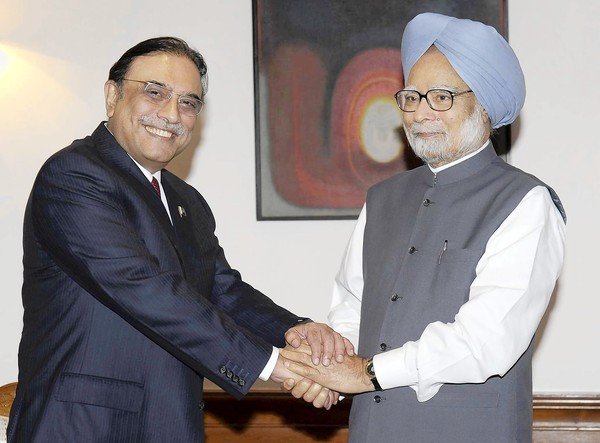
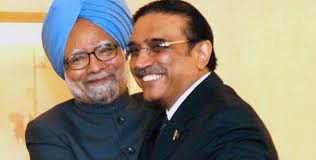
Pakistan’s president arrived in India on Sunday, the first official visit one leader of the wary neighbors has paid to the other nation in seven years. No breakthroughs were announced, but both sides hailed the meeting as a sign of easing tensions along one of the world’s most dangerous borders.

Spinmeisters on both sides worked overtime to lower public expectations of the “private” trip that saw Pakistani President Asif Ali Zardari and Indian Prime Minister Manmohan Singh discuss the 2008 terrorist attack on the Indian city of Mumbai, modest if expanding trade links, the disputed territory of Kashmir and efforts to bring various militants to justice.

The Pakistani president then visited a famous Muslim shrine for Sufi saint Moinuddin Chishti, offering a $1-million contribution.

“I am very satisfied with the outcome of this visit,” Singh said. “The relations between India and Pakistan should become normal — that is our common desire.”

The rapid-fire luncheon and shrine visit weren’t enough to overturn long-standing distrust between the nuclear neighbors, however, as summed up in a headline in India’s Mail Today tabloid newspaper: “Eat, Pray, No Love.”

The meeting is part of an apparent effort to follow the diplomatic model in place between India and China, which fought a war in 1962 over their disputed border: Put aside the most nettlesome issues for the time being and focus on building investment and trade links that benefit both sides.

This year, India and Pakistan approved a most-favored-nation agreement, lowering taxes that impede trade. Although India had offered this benefit to Pakistan in 1996, it wasn’t reciprocated until recently. Official two-way trade of about $2.6 billion is heavily weighted in India’s favor.

Sunday’s one-day visit was heavy on symbolism if not on substance. Zardari invited Singh for a reciprocal visit to Pakistan, which the Indian leader accepted, although no date was set. Zardari’s 23-year-old son, Bilawal, invited ruling Congress Party General Secretary Rahul Gandhi to Pakistan, which was also accepted, again with no date set.

On other fronts, both sides agreed in principle to ease visa restrictions. India offered its assistance in the wake of this weekend’s massive avalanche in the Siachen Glacier area, which buried about 130 people on the Pakistani-controlled side of the border in disputed Kashmir. And both sides did lots of glad-handing for the cameras.

“We had fruitful bilateral talks,” Zardari said. We “hope to meet on Pakistani soil very soon.”

But any bid to bring to justice those who planned the 2008 Mumbai attack that killed at least 166 people was sidestepped. India has long blamed Pakistani-based groups for plotting the attack.

Last week, Washington offered a $10-million reward for information leading to the capture of one Pakistani militant leader, Hafiz Muhammad Saeed, who enjoys widespread support in Pakistan.

Analysts on both sides of the divide welcomed the gradual thaw even as they acknowledged its slow pace. That no date was set for a return visit, and that Congress Party head Sonia Gandhi — characterized by some as India’s real leader behind the scenes — didn’t meet Zardari or attend the lunch, suggests the Indian government is wary of getting too far ahead of public opinion, some observers said.

“There have been some useful steps forward,” said B. Raman, director of Chennai’s Institute for Topical Studies and a former Indian intelligence officer on the Pakistan desk. “But the government has taken a cautious line.”

The fact that Zardari, 56, made the trip at all suggests that Pakistan’s military realizes improved relations are in its interest, added Talat Masood, an analyst and retired Pakistani general.

“They’re overstretched, realize the economy’s in a shambles and that you can’t have a genuine defense without a good economy,” Masood said. “It’s very sad in a way, that the process has been held hostage to jihadi groups and hard-rightists on both sides.”

Singh, 79, heading a weak government beset by corruption scandals, has pushed for improved ties with Pakistan in a bid to secure a legacy, analysts on both sides said. “Prime Minister Singh realizes he’s only going to be there a few more months,” said Masood. “He wants to do something positive so he’s remembered.”

Pakistani Troops Dig for 135 Missing in Avalanche

By Chris Brummitt for The Associated Press

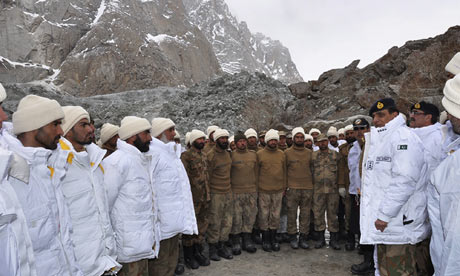
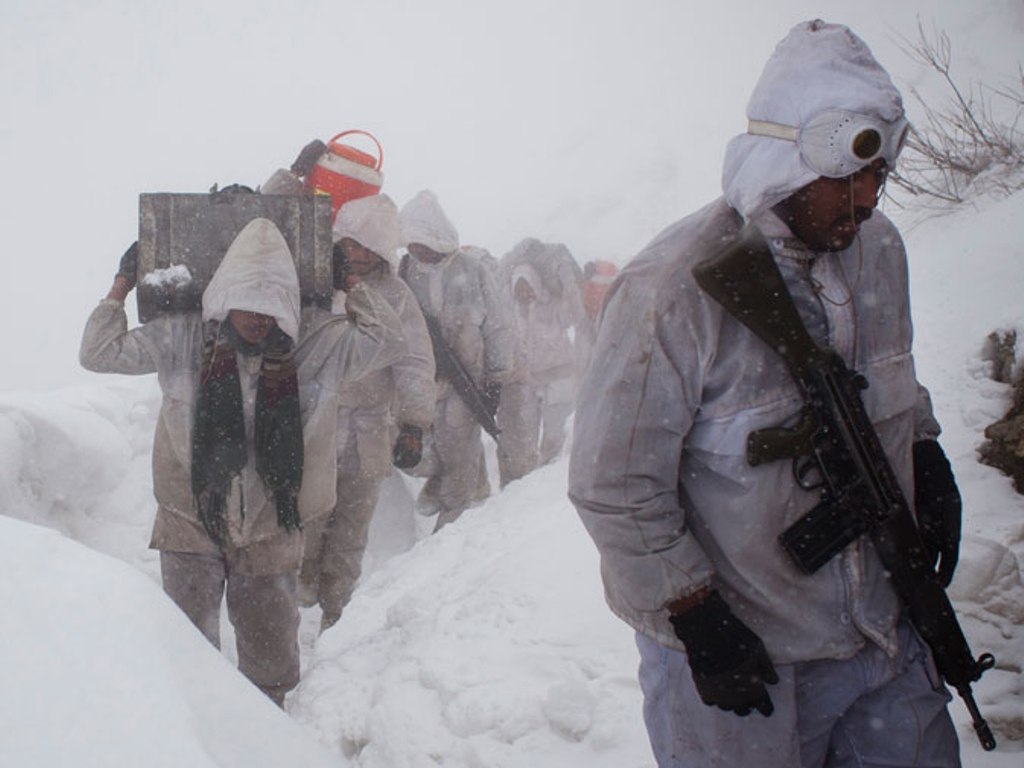
Pakistani soldiers dug into a massive avalanche in a mountain battleground close to the Indian border on Saturday, searching for at least 135 people buried when the wall of snow engulfed a military complex.

More than 12 hours after the disaster at the entrance to the Siachen Glacier, no survivors had been found.

“We are waiting for news and keeping our fingers crossed,” said army spokesman Maj. Gen. Athar Abbas.

Hundreds of troops, sniffer dogs and mechanical equipment were at the scene, but were struggling to make much headway into the avalanche, which crashed down onto the rear headquarters building in the Gayari sector early in the morning, burying it under some 21 meters (70 feet) of snow, Abbas said.

“It’s on a massive scale,” he added. “Everything is completely covered.”

The military said in a statement that at least 124 soldiers and 11 civilian contractors were missing.

Siachen is on the northern tip of the divided Kashmir region claimed by both India and Pakistan.

The accident highlighted the risks of deploying troops to one of the most inhospitable places on earth.

The thousands of troops from both nations stationed there brave viciously cold temperatures, altitude sickness, high winds and isolation for months at a time. Troops have been deployed at elevations of up to 6,700 meters (22,000 feet) and have skirmished intermittently since 1984, though the area has been quiet since a cease-fire in 2003. The glacier is known as the world’s highest battlefield.

Prime Minister Yousuf Raza Gilani expressed his shock at the incident, which he said “would in no way would undermine the high morale of soldiers and officers.”

The headquarters in Gayari, situated at around 4,572 meters (15,000 feet) is the main gateway through which troops and supplies pass on their to other more remote outposts in the sector. It is situated in a valley between two high mountains, close to a military hospital, according to an officer who was stationed there in 2003.

“I can’t comprehend how an avalanche can reach that place,” said the officer, who didn’t give his name because he is not authorized to speak to the media. “It was supposed to be safe.”

More soldiers have died from the weather than combat on the glacier, which was uninhabited before troops moved there.

Conflict there began in 1984 when India occupied the heights of the 78-kilometer (49-mile)-long glacier, fearing Pakistan wanted to claim the territory. Pakistan also deployed its troops. Both armies remain entrenched despite the cease-fire, costing the poverty-stricken countries many millions of dollars each year.

Pakistan and India have fought three wars since the partition of the subcontinent on independence from Britain in 1947. Two of the wars have been over Kashmir, which both claim in its entirety.

Pakistanis for Peace Editor’s Note– The death of these 135 and allegedly more soldiers should prove to be a defining moment for Pakistan in regards to the urgency of peace with India just as the death of the 24 killed by “friendly” NATO attack that killed so many near the Afghanistan border last November.  It is high time India and Pakistan find a way to make peace and end this 60+ year battle and hatred with ourselves as we are one people.  This may not completely apply for India, but the ONLY way to fix EVERYTHING that ails Pakistan is a peace treaty with India~ RIP to the patriots of my sacred land~ MM

Why President Zardari’s Visit Is A Small Bonus

By Soutik Biswas for The BBC

Hope is not a policy, but neither is despair, as South Asia expert Stephen Cohen says in a recent essay on Pakistan.

So it is with relations between India and Pakistan.

The past few days have shown how fragile the relationship can be – even as India welcomed President Asif Ali Zardari’s private trip to India on Sunday – the first by a Pakistani head of state for seven years – and PM Manmohan Singh invited him for lunch, the $10m US bounty for Hafiz Saeed, the founder of Pakistan-based militant group Lashkar-e-Taiba, provoked the cleric to openly launch a fresh attack against India (and the US).

But people live in hope, so Indian media is gung-ho about Mr Zardari’s visit.

They say the Pakistani president must be applauded for trying to end trade discrimination against India, easing petroleum imports from across the border, and moving towards a liberal visa deal.

“Under Mr Zardari’s watch, India and Pakistan are considering a sweeping agenda for economic co-operation for the first time in decades. The prime minister has every reason to welcome Mr Zardari warmly and consider the next steps in consolidating the unexpected movement in bilateral relations,” the Indian Express wrote.

Analyst C Raja Mohan believes Mr Singh must make an official trip to Pakistan after his meeting with Mr Zardari. “For his part,” he wrote, “Mr Singh should convey to Mr Zardari his readiness to move as fast and as far as the Pakistan president is willing to go.” Others like Jyoti Malhotra actually find Mr Zardari’s visit to the shrine of a famous Sufi Muslim saint in Rajasthan loaded with symbolism in these troubled times. “Clearly, Mr Zardari has stolen an imaginative moment from the bitter-sullen history of India-Pakistan, by asking to come to pay his respects to a cherished and much-beloved saint across the Indian subcontinent,” she wrote.

The relations between two neighbours remain complex. A 2010 Pew survey found 53% of the respondents in Pakistan chose India as the greater threat to their country, and only 26% chose the Taliban and al-Qaeda. At the same time 72% said it was important to improve relations with India, and about 75% wanted more trade relations and talks with India.

Pundits like Mr Cohen believe that it will “take the [Pakistan] army’s compliance, strong political leadership, and resolutely independent-minded foreign ministers to secure any significant shift of approach towards India”.

None of this appears to be in much evidence at the moment.

Both countries have seriously weakened governments that makes them unable to move towards any radical confidence building measures. In the current circumstances, President Zardari’s visit can only be a small bonus. And as scholars like Kanti Bajpai suggest, India must remain patient (even if faced with another Mumbai-style attack), continue to engage with Islamabad, help the civilian government in Pakistan politically, try to resolve a few outstanding disputes like Siachen and Sir Creek, build a relationship with the army and explore the possibility of cooperating with Islamabad on the future of Afghanistan. Despair does not help mend a stormy relationship.

Pakistani militant taunts US: ‘I will be in Lahore tomorrow’

By Sebastian Abbot for The Associated Press

One of Pakistan’s most notorious extremists mocked the United States during a defiant media conference close to the country’s military headquarters Wednesday, a day after the US slapped a $10 million bounty on him.

“I am here, I am visible. America should give that reward money to me,” said Hafiz Mohammad Saeed, referring to the fact that the bounty was given to a man whose whereabouts are not a mystery. “I will be in Lahore tomorrow. America can contact me whenever it wants to.”

Analysts have said Pakistan is unlikely to arrest Saeed, founder of the militant group Lashkar-e-Taiba, because of his alleged links with the country’s intelligence agency and the political danger of doing Washington’s bidding in a country where anti-American sentiment is rampant.

Saeed, 61, has been accused of orchestrating the 2008 attacks in the Indian city of Mumbai that killed 166 people, including six American citizens. But he operates openly in Pakistan, giving public speeches and appearing on TV talk shows.

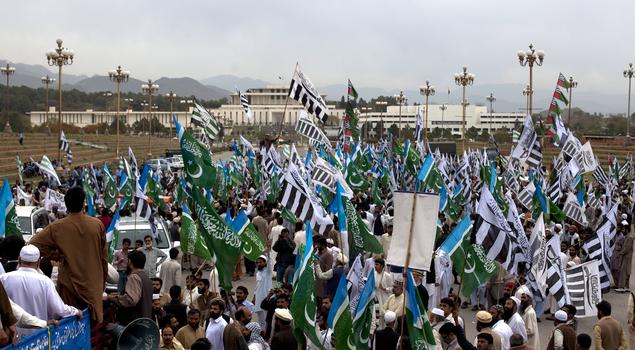
He has used his high-profile status in recent months to lead a protest movement against US drone strikes and the resumption of NATO supplies for troops in Afghanistan sent through Pakistan. The supplies were suspended in November in retaliation for American airstrikes that accidentally killed 24 Pakistani soldiers.

Hours before Saeed spoke, US Deputy Secretary of State Thomas Nides met Pakistani Foreign Minister Hina Rabbani Khar in the nearby capital, Islamabad, for talks about rebuilding the two nation’s relationship. In a brief statement, Nides did not mention the bounty offer but reaffirmed America’s commitment to “work through” the challenges bedeviling ties.

Increasingly ‘brazen’ appearances
The US said Tuesday it issued the bounty for information leading to Saeed’s arrest and conviction in response to his increasingly “brazen” appearances. It also offered up to $2 million for Lashkar-e-Taiba’s deputy leader, Hafiz Abdul Rahman Makki, who is Saeed’s brother-in-law.

The rewards marked a shift in the long-standing US calculation that going after the leadership of an organization used as a proxy by the Pakistani military against archenemy India would cause too much friction with the Pakistani government.

This shift has occurred as the US-Pakistani relationship steadily deteriorated over the last year, and as the perception of Lashkar-e-Taiba’s potential threat to the West increased.

Bounty backfire?
The US may be hoping the bounty will force Pakistan to curb Saeed’s activities, even if it isn’t willing to arrest him. But the press conference he called at a hotel in the garrison city of Rawalpindi on Wednesday was an indication that is unlikely, and the bounty may even help him by boosting his visibility.

At the hotel, located near the Pakistani army’s main base and only a half hour drive from the US Embassy in Islamabad, Saeed was flanked by more than a dozen right-wing politicians and hardline Islamists who make up the leadership of the Difa-e-Pakistan, or Defense of Pakistan, Council. The group has held a series of large demonstrations against the US and India in recent months.

Some in the media have speculated the movement has the tacit support of the Pakistani military, possibly to put pressure on Washington.

“I want to tell America we will continue our peaceful struggle,” said Saeed. “Life and death is in the hands of God, not in the hands of America.”

Denies involvement in Mumbai massacre
He denied involvement in the Mumbai attacks and said he had been exonerated by Pakistani courts.

Pakistan kept Saeed under house arrest for several months after the attacks but released him after he challenged his detention in court. It has also resisted Indian demands to do more, saying there isn’t sufficient evidence.

The bounty offers could complicate US efforts to get the NATO supply line reopened. Pakistan’s parliament is currently debating a revised framework for ties with the US that Washington hopes will get supplies moving again. But the bounties could be seen by lawmakers and the country’s powerful army as a provocation and an attempt to gain favor with India.

Origins in the Kashmir dispute
Saeed founded Lashkar-e-Taiba in the 1980s allegedly with ISI support to pressure India over the disputed territory of Kashmir. The two countries have fought three major wars since they were carved out of the British empire in 1947, two of them over Kashmir.

Pakistan banned the group in 2002 under US pressure, but it operates with relative freedom under the name of its social welfare wing Jamaat-ud-Dawwa — even doing charity work using government money.

The US has designated both groups foreign terrorist organizations. Intelligence officials and terrorism experts say Lashkar-e-Taiba has expanded its focus beyond India in recent years and has plotted attacks in Europe and Australia. Some have called it “the next Al Qaeda” and fear it could set its sights on the US

* Associated Press writer Asif Shahzad contributed to this report from Islamabad.