Archive for the ‘ Pakistan ’ Category

US-Pakistan Talks Mark ‘Intensification’ of Partnership

By Suzanne Presto for Voice of America News

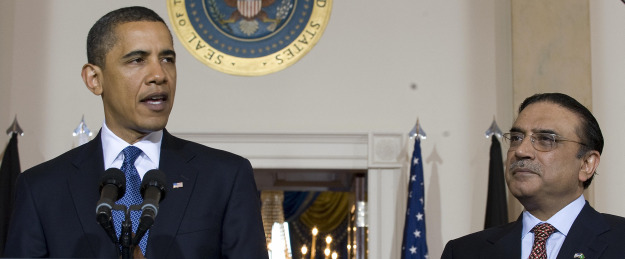
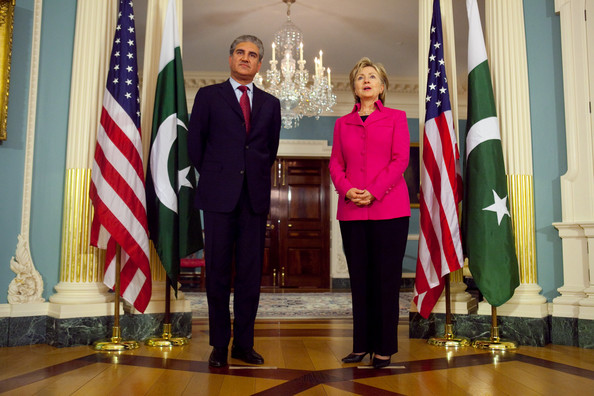
The United States and Pakistan will hold their first strategic dialogue at the ministerial level in Washington next Wednesday (March 24). U.S. Special Representative for Afghanistan and Pakistan Richard Holbrooke told reporters at the State Department Friday that these talks mark a “major intensification” of the U.S.-Pakistan partnership. Wednesday’s talks will be co-chaired by Secretary of State Hillary Clinton and Pakistani Foreign Minister Shah Mehmood Qureshi.

Holbrooke says delegations from both sides will include senior officials of their nation’s defense, diplomacy, finance and agriculture departments. The U.S. delegation will also include aid and trade officials, and Pakistan’s will include officials who handle water, power and social issues.
“This is a partnership that goes far beyond security, but security is an important part of it,” he said. Holbrooke told reporters Friday that U.S. officials want to see aid money for Pakistan distributed more quickly.

“We are doing more. We will announce more. We want to do as much as the Congress will support,” Holbrooke said. The Obama administration has made improving and broadening relations with Pakistan a top priority, but U.S. policies and drone strikes targeting militants in the region remain unpopular. Holbrooke said the U.S. supports Pakistan as it seeks to strengthen democratic institutions and economic development, handle energy and water problems, as well as defeat extremists. “Everyone is aware of the popular public-opinion polls, and we think that our support for Pakistan deserves more recognition among the people,” he added.

Speaking to reporters in Islamabad Thursday, Foreign Minister Qureshi said Pakistani and U.S. officials have been talking a lot, and in his words, “the time has come to walk the talk.” Holbrooke responded to Qureshi’s statement that next week’s talks would be a good opportunity to rebuild confidence and trust on both sides. “The first time I went to Pakistan, Foreign Minister Qureshi introduced me to the phrase “trust deficit,” and so I have heard it many times,” he said. “The last time I was there, we both said in a press conference that we thought we had made huge advances in that,” Holbrooke added. Secretary of State Clinton last visited Pakistan in October, where she spoke with officials and students alike.

Holbrooke said there are plans to hold the next set of strategic talks in Pakistan, likely within the next six months. He underscored that these bilateral talks do not replace the trilateral talks among the U.S., Pakistan and Afghanistan which he said are expected to resume later this year.

A Victory For Obama, From An Unlikely Quarter-Pakistan

By Fareed Zakaria for Newsweek

President Obama gets much credit for changing America’s image in the world—he was probably awarded the Nobel Prize for doing so. But if you asked even devoted fans to cite a specific foreign-policy achievement, they would probably hesitate. “It’s too soon for that,” they would say. But in fact, there is a place where Barack Obama’s foreign policy is working, and one that is crucial to U.S. national security—Pakistan.

There has been a spate of good news coming out of that complicated country, which has long promised to take action against Islamic militants but rarely done so. (The reason: Pakistan has used many of these same militants to destabilize its traditional foe, India, and to gain influence in Afghanistan.) Over the past few months, the Pakistani military has engaged in serious and successful operations in the militant havens of Swat, Malakand, South Waziristan, and Bajaur. Some of these areas are badlands where no Pakistani government has been able to establish its writ, so the achievement is all the more important. The Pakistanis have also ramped up their intelligence sharing with the U.S. This latter process led to the arrest a month ago of Mullah Abdul Ghani Baradar, the deputy leader of the Afghan Taliban, among other Taliban figures.

Some caveats: most of the Taliban who have been captured are small fish, and the Pakistani military has a history of “catching and releasing” terrorists so that they can impress Americans but still maintain their ties with the militants. But there does seem to be a shift in Pakistani behavior. Why it’s taken place and how it might continue is a case study in the nature and limits of foreign-policy successes.

First, the Obama administration de-fined the problem correctly. Senior ad-ministration officials stopped referring to America’s efforts in Afghanistan and instead spoke constantly of “AfPak,” to emphasize the notion that success in Afghanistan depended on actions taken in Pakistan. This dismayed the Pakistanis but they got the message. They were on notice to show they were part of the solution, not the problem.

Second, the administration used both sticks and carrots. For his first state dinner, Obama pointedly invited Indian Prime Minister Manmohan Singh—clearly not Pakistan’s first choice. Obama made clear that America would continue to pursue the special relationship forged with India under the Bush administration, including a far-reaching deal on nuclear cooperation. But at the same time, the White House insisted it wanted a deep, long-term, and positive relationship with Pakistan. Sens. John Kerry and Dick Lugar put together the largest nonmilitary package of U.S. assistance for the country ever. Aid to the Pakistani military is also growing rapidly.

Third, it put in time and effort. The administration has adopted what Central Command’s Gen. David Petraeus calls a “whole of government” approach to Pakistan. All elements of U.S. power and diplomacy have been deployed. Pakistan has received more than 25 visits by senior administration officials in the past year, all pushing the Pakistani military to deliver on commitments to fight the militants.

Finally, as always, luck and timing have played a key role. The militants in Pakistan, like those associated with Al Qaeda almost everywhere, went too far, brutally killing civilians, shutting down girls’ schools, and creating an atmosphere of medievalism. Pakistan’s public, which had tended to downplay the problem of terrorism, now saw it as “Pakistan’s war.” The Army, reading the street, felt it had to show results.

These results are still tentative. Pakistan’s military retains its obsession with India—how else to justify a vast budget in a small, poor nation? It has still not acted seriously against any of the major militant groups active against Afghanistan, India, or the United States. The Afghan Taliban, the Haqqani group, Gulbuddin Hekmatyar, Lashkar-e-Taiba, and many smaller groups all operate with impunity within Pakistan. But the Pakistani military is doing more than it has before, and that counts as success in the world of foreign policy.

Such success will endure only if the Obama administration keeps at it. There are some who believe that Pakistan has changed its basic strategy and now understands that it should cut its ties to these groups altogether. Strangely this naive view is held by the U.S. military, whose top brass have spent so many hours with their counterparts in Islamabad that they’ve gone native. It’s up to Obama and his team to remind the generals that pressing Pakistan is a lot like running on a treadmill. If you stop, you move backward, and, most likely, you fall down.

Lahore bombing is Pakistan’s bloodiest this year

By Saeed Shah for The Guardian

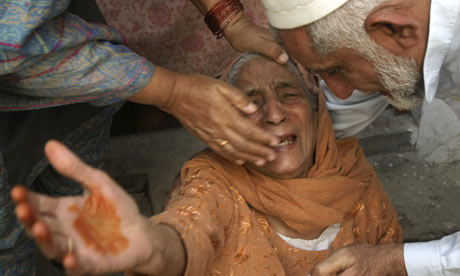
A bombing in the eastern city of Lahore has killed at least 43 people – the fifth terrorist attack this week as extremists in Pakistan demonstrate their continued ability to strike.

The bloodiest terrorist strike in Pakistan this year was carried out by two attackers wearing suicide jackets who walked into a busy market in a high security military district and blew themselves up. The target appeared to be passing military vehicles but most of the victims were civilians. Shops in the market were ripped apart, with children crossing the road and people waiting at a bus stop among the victims. About 10 soldiers were killed and 100 injured, said the Lahore police chief, Parvaiz Rathore.

“There were about 10 to 15 seconds between the blasts. Both were suicide attacks,” a senior local government official, Sajjad Bhutta, said at the site. “The maximum preventative measures were being taken but these people find support from somewhere.” The bombers struck at 1pm, around the time of Friday prayers, in the cantonment area, home to the local army garrison and one of Lahore’s most upmarket residential districts.

Lahore is the bustling cultural hub of Pakistan and had enjoyed several weeks of relative peace. It is the capital of the eastern Punjab province, Pakistan’s most densely populated area and its political heartland. The suicide bombings were followed in the evening by three smaller blasts in a residential area across town. They caused panic but damage was reported to be minor. The authorities repeated their regular assertion that the Taliban and other extremist groups have been defeated. The provincial law minister, Rana Sanaullah , said: “We broke their networks. That’s why they have not been able to strike for a considerable time.”

But it was the second bombing this week in Lahore. A car bombing on Monday at a police interrogation centre killed 14 people. Other attacks this week included a gun and grenade assault on a US Christian aid agency’s office in the north-west, killing six of its staff, all Pakistani nationals. “They (the extremists) are trying to project their power, telling the government that they are still alive,” said analyst Imtiaz Gul, author of The al-Qaida Connection. “They are still far from broken. It’s going to be a long haul.”

In 2009 that Lahore was dragged into the bloody insurgency in Pakistan, which claimed around 3,000 lives last year, with a series of spectacular attacks including a gun assault on the visiting Sri Lankan cricket team. The last major attack in Lahore was in December when a market was bombed, killing at least 49 people. The launch of a military offensive in South Waziristan, on the Afghan border, the base of the Pakistani Taliban, in October last year was accompanied by a vicious spate of terrorist reprisals but the country had been relatively peaceful this year.

Pakistan and India Are Back At the Peace Table

By Manzer Munir

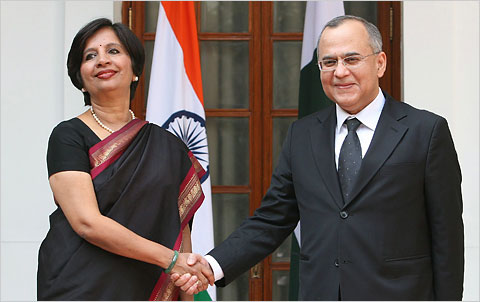
Islamabad, Pakistan- India’s Foreign Secretary Nirupama Rao is scheduled to visit Islamabad later this month as both India and Pakistan are back on track to resume their high level diplomatic talks. The discussions between the two so far are considered “preliminary” and are a “first step” in the words of Secretary Rao. She had earlier restated India’s concerns about terrorist groups operating in Pakistan and provided additional information related to the Mumbai attacks. Her counterpart in Pakistan, Foreign Secretary Salman Bashir, stated that “Pakistan is doing all that it can to fight terrorism”. Expressing his sympathy with the victims of the Mumbai attacks, he focused on Pakistan’s core concern that “terrorism should be looked at more broadly”. He believes that the two countries should address the root causes of the terror campaign and, from that perspective; Kashmir is the “core issue.” Pakistani officials believe that if India was a bit more flexible on Kashmir, then all the outstanding issues between the two countries can be resolved.

India’s Prime Minister Manmohan Singh is believed to sincerely desire to make a “breakthrough” in relations with Pakistan and has been vocal about it too in recent interviews. During the elections last year, he had highlighted his efforts to promote back-channel diplomacy for conflict resolution during the rule of former Pakistani President Pervez Musharraf. He also met last year with the current Pakistani Prime Minister to pledge to resume peace talks.

In Pakistan there also appears to be a significant shift in foreign policy. The American and Pakistani militaries and intelligence agencies are working closely and have had some recent successes together to stop the al Qaeda-sponsored terrorism in Pakistan and Afghanistan. The US commanders have been full of praise of the Pakistan army and its recent offensives against the Taliban. The Pakistani army has disrupted the al Qaeda and Taliban network over most of the Federally Administered Tribal Areas. This has come at a steep price as more than 2,500 soldiers have been killed.

This sacrifice by the Pakistan army has not gone unnoticed as the United States has increased both military and economic aid to Pakistan. The US is nudging both India and Pakistan to the peace table since a peaceful border with India will allow Pakistan to focus entirely on its western border at the Taliban and Al-Qaeda in Afghanistan. This will facilitate the Obama administration’s ability to eradicate the Taliban and Al-Qaeda once and for all from the region with Pakistan army’s help.

For far too long since Pakistan’s independence, the army has always felt India to be the biggest threat to the nation’s sovereignty and freedom. But for the first time in its history, an enemy has surfaced and proven to be much more detrimental to Pakistan’s survival as a nation and security for its citizens. And that enemy and threat is the radicalized groups such as the Taliban both from Afghanistan and inside Pakistan as well as the largely Arab Al-Qaeda network that operates in the area. Also militant groups like Lashkar-e-Taiba, Jaish-e-Mohammed and others also pose the biggest threat to the nuclear armed nation. The danger from the extremists has allowed elements inside Pakistan’s army leadership to reconsider the threats to Pakistan.

The dialogue between India and Pakistan has been off again and on again for over 63 years. But in the current climate of mistrust and hatred coupled with tensions still simmering from the Mumbai attacks, there is little room for error on both sides. It is hoped that the upcoming talks prove to be a step in the right direction of normalizing relations between these two nuclear armed neighbors who share almost an 1800 mile long border known in this part of the world as the Berlin Wall of Asia.

Pakistani Makes History as Nation’s First Winter Olympian

By Manzer Munir

Vancouver, Canada- On Tuesday February 23, 2010, Pakistan will field its very first entry into its very first Winter Olympics. While the nation has won three gold, three silver and four bronze medals in its history at the Olympics since becoming a nation in 1947, this is the first time Pakistan will field an athlete for the Vancouver Olympics in Canada. The sole member of Pakistan’s Winter Olympics team is a 24 year old Pakistani skier by the name of Mohammad Abbas. He was the first Pakistani to qualify for a Winter Olympic event and will participate in the Alpine Skiing in the Giant Slalom category.

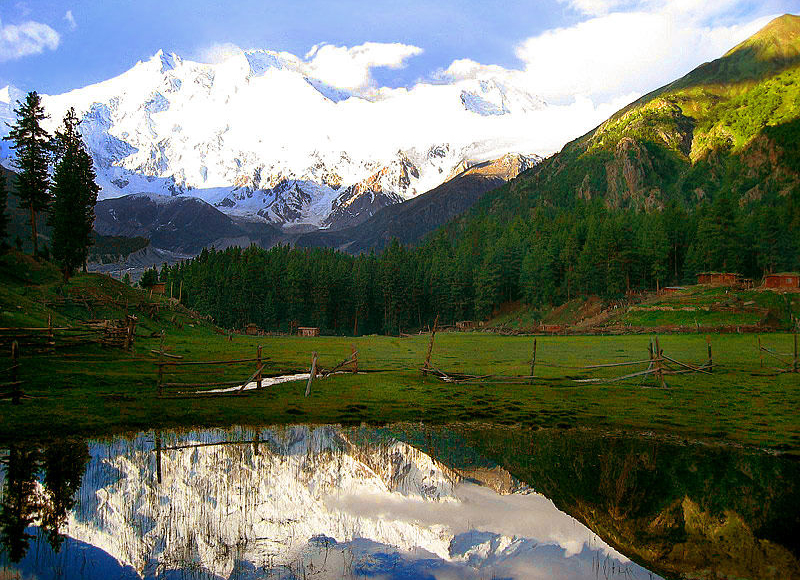
Mohammad Abbas hails from Pakistan’s northern Nalthar valley near Gilgit, Balistan and the now troubled beautiful Swat valley of Pakistan. For years very popular with the British and since with affluent Pakistanis, this picturesque and scenic area of Pakistan is nestled at the foothills of the Himalayas and receives a good amount of snow fall in the winter months. There are not many ski hills in hot weather Pakistan, but there is one in the Nalthar valley where Abbas grew up as one of the local boys. He grew up in a small village near the ski slopes.

When the idea of creating a ski team first developed, all the candidates were local children. Unfortunately out of the original 9 hopefuls, only Abbas qualified for the Vancouver games. “I started skating in 1995 using homemade wooden skates, which is how all the children in our village used to learn. We didn’t have ski boots so we tied our feet to the skis with traditional woolen foot bindings. It was pretty precarious so we had to get our balance right,” he said.

For Abbas, it has been a long and at times arduous 15 year journey since 1995 when he first took interest in skiing at the age of 9 in his village near the ski slopes of Pakistan’s Nalthar valley watching Pakistani and foreign tourists skiing spurned young Abbas and many of his cousins to take up the sport. In a cricket mad country, not very many people pick up skiing. Very few people in Pakistan can afford ski equipment and also only a very small portion of the country gets snow, so it is a surprise that the nation is even fielding an athlete at the Winter Olympics.

Sitting in the Olympics athletes village in Vancouver, Abbas admits that he does not have the camaraderie or the support of Olympic teammates that most other nations participants share, and he was concerned that he may feel a bit lonely representing his country by himself at such a big stage. But the boy from Nalthar valley was greeted with great enthusiasm and support by the rather large Pakistani Canadian community of British Columbia. “The support from my fellow countrymen has really helped me deal with the lack of teammates,” said Abbas.

Abbas said that he “achieved his ambition through hard work” and hopes he has inspired other Pakistani athletes to take up the challenge and aim for future Winter Olympic games. He also realized that his chances of bringing home Pakistan’s first Winter Olympic gold are very small but he said he wants to finish the race in an “honorable manner and make his country proud.”

Although not expected to medal, he is considered the fastest of the first time entrants to compete in the Giant Slalom that is scheduled to take place at Tuesday. It is perhaps an accomplishment to have finally fielded a Winter Olympics team, but for Pakistan it is also a moral victory to have a young man represent the country from the same troubled yet beautiful valley that has been now for months fighting for its life from Taliban insurgents. He represents not just Pakistan’s Olympic hopes, but the spirit of the people of the area to make the best of their situation and rise above the adversity of their daily struggles in a very beautiful part of the world that has also long been known as the “Switzerland of Pakistan.”

The Snub of Pakistani Cricketers by the Indian Premier League Should Come As No Surprise

By Manzer Munir

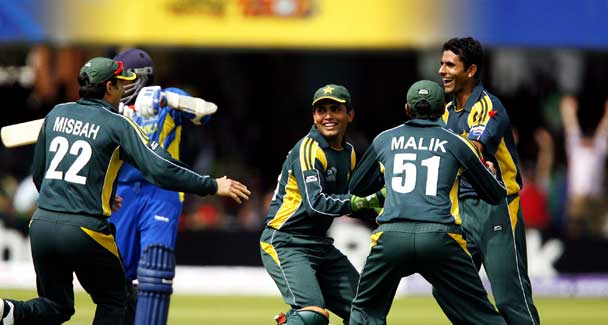
New Delhi, India- Events at an auction held earlier this month by India’s wildly popular Indian Premier League (IPL), consisting of professional cricket teams and franchises, has caused outrage amongst the cricket crazed Pakistani population. Up to seventeen top Pakistani cricketers were anticipated to be selected as top picks in the auction between the teams that saw none of the Pakistani players being selected.

Indian Union Home Minister P. Chidambaram on Monday said that the “decision of the franchisees not to select any of the 17 Pakistani cricketers, who had been given Indian visas for participation in the third edition of the Indian Premier League (IPL), was a disservice to the game of cricket.” Speaking in an interview to a television channel, Chidambaram said that the “IPL issue could have been handled in a better way” and expressed disappointment over the non-selection of the Pakistani cricketers as individuals.

He said these players were 20-20 World Champions and did not deserve to be treated this way. He said that any suggestion that the Indian Government had “nudged” the IPL not to select Pakistani players was not true and had no foundation.

The Pakistani press also had a field day with this turn of events calling for a boycott by the hockey team that is scheduled to visit India next month for Hockey’s World Cup being held in India where Pakistan is scheduled to participate.

Pakistan’s sports minister has demanded the Indian government carry out an inquiry into the snubbing of Pakistan cricketers in the Indian Premier League player auction. “We want the government of India to intervene in this issue and let us know who were responsible in keeping Pakistan cricketers away from the IPL,” Ijaz Jhakrani said Tuesday. “From day one our stance is that the IPL decision was an influenced one.”

The sports ministry has also put on hold its granting its permission for the Pakistan golf team to tour India next month. In addition, Speaker of Pakistan parliament’s lower house, Dr. Fehmida Mirza, stopped a parliamentary delegation’s proposed tour of India in protest. “We have asked both our foreign and interior ministries to let us know about the golf team’s tour to India,” sports ministry spokesman Faik Ali told the Associated Press. “We will decide on golf team’s tour to India after receiving inputs from both ministries”, she said.

Even Bollywood superstar actor Shah Rukh Khan, an owner of one of the IPL teams, the Kolkata Knight Riders, weighed on the issue saying it was “humiliating” to see none of the Pakistani players being picked and that the issue could have been handled better.

The tensions between India and Pakistan are seen as the main reason why the teams stayed away from picking the top Pakistani cricketers. There is a fear amongst the owners of the teams that should the animosities between India and Pakistan escalate, then the teams would suffer as their Pakistani players would be unable to travel or participate in games due to conflict between the two long time enemies. So in a sense it is a business reason that may have precipitated the action by the IPL. There is also a belief by many in Pakistan that perhaps the Indian government influenced the IPL into not accepting Pakistani cricketers as a way to reprimand Pakistan and punish it and its citizens for the Mumbai attacks of 2008, which is still fresh in everyone’s minds. India feels Pakistan has not done enough to rein the terrorist groups blamed for the attacks.

Nonetheless, the upset Pakistani cricket fans should also realize that there is a persistent uneasiness and suspicion on the part of India as Pakistan continues to be seen as the major threat to India’s sovereignty and security. To many in India, allowing Pakistani cricketers to play in India’s IPL would be seen as a way of rewarding a country and its citizens whom you detest and view with deep suspicion and enmity. So in a region of the world where so much tension and conflict already exists between the two neighbors and has simmered for over 60 years, one must not assume everything is peachy and just play ball!

Gandhi and King- Two Martyrs Who Will Never Die

By Manzer Munir

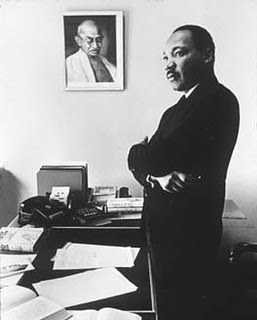
Martin Luther King Jr, who would have been 81 years old January 15, was a great believer of Mohandas K Gandhi, the leader of India’s independence movement from Brittan. King saw that Gandhi’s peaceful civil disobedience and non-violent methods of protest were very effective in bringing down the British Empire in India and as a result Pakistan after some 300 years of direct and indirect rule. Gandhi had believed that people could resist immoral government action by simply refusing to cooperate. Gandhi adopted many peaceful resistance techniques in developing his concept of Satyagraha, which was a philosophy and practice of passive nonviolent resistance.

Gandhi had earlier used this resistance technique in his struggles for freedom and equality for blacks and Indians in South Africa where both minorities were subjected to second and third class citizenry. His methods and refusal to bow down to the injustices that Indians faced in colonial South Africa inspired Nelson Mandela several years later to start his own peaceful struggle that eventually led to the end of Apartheid in South Africa in 1990.

While at Morehouse College, King learned about Gandhi and became very excited about his ideas. He wanted to further educate himself and read many books on Gandhi and his life and beliefs. In his book, Stride Toward Freedom, King states that “Gandhi was probably the first person in history to lift the love ethic of Jesus above mere interaction between individuals to a powerful and effective social force on a large scale. He further writes in his book that “It was in this Gandhian emphasis on love and nonviolence that I discovered the method for social reform that I had been seeking. I came to feel that this was the only morally and practically sound method open to oppressed people in their struggle for freedom.”

King felt that he had finally found a way to where oppressed people could successfully unlock social protest through Jesus’ teachings of love. In fact Gandhi himself had said “What does Jesus mean to me? To me, he was one of the greatest teachers humanity has ever had.” He also once mentioned Jesus as the “most active resister known perhaps to history. His was non-violence par excellence” Therefore to the Christian minister living in the pre-civil rights era in the South in America, Gandhi appeared to King as a follower of Christ, someone who preached peace and love even at the expense of suffering. Martin Luther King once said of Gandhi “It is ironic yet inescapably true that the greatest Christian of the modern world was a man who never embraced Christianity.”

In 1959, King visited India and became fully convinced that Satyagraha could be effectively applied to the struggle by blacks in the United States for racial integration. He came back to the United States where he continued the struggle for freedom and equality for all Americans. Like Gandhi, King also talked about suffering as a path to self purification and spiritual growth. He not only experienced this suffering by being jailed, beaten and harassed by the authorities of the day, but he eventually ended up paying for this cause for freedom for all with his life.

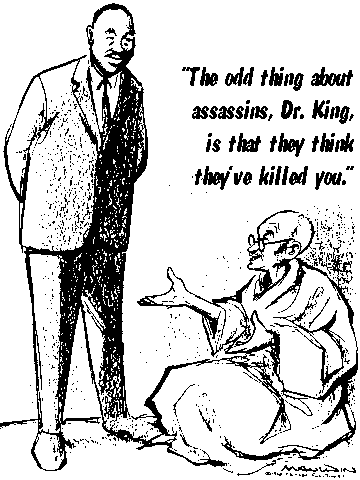
 Mohandas K Gandhi and Martin Luther King Jr arguably were two of the greatest men of the last century.  Both men believed that “injustice anywhere was a threat to justice everywhere.” They both led their people and millions of others out of slavery and servitude against seemingly insurmountable odds to freedom and salvation. On what would have been his 81st birthday, let us recognize that despite an assassin’s bullet and in the greatest democracy in the history of the world, the spirit and dream of a King still live on.

Attacks By the Taliban Illustrate their Growing Strength in the Region

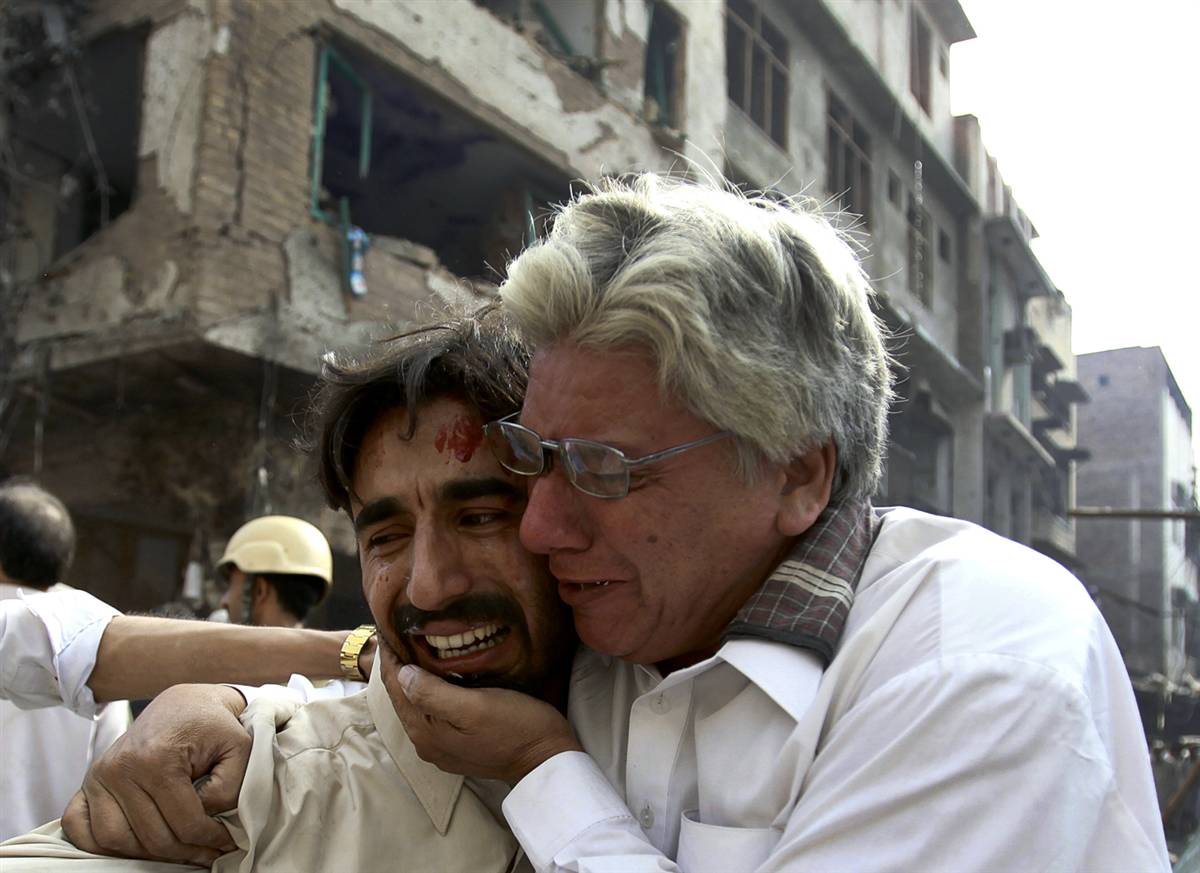
Peshawar, Pakistan- A suicide bomber detonated his vehicle packed with explosives on New Year’s Day in a crowd of people watching a volleyball tournament killing at least 75 people, wounding another 60, of which 13 are in critical condition. Police stated that they believed that the attack was directed towards anti-Taliban leaders of local groups made up of ordinary residents of the area who had recently formed armed local militias to help the government fight the Taliban. The blasts demonstrate the capabilities of the Taliban who also were responsible for the killing of seven American CIA employees at an agency base in Khost, Afghanistan the same day.

The targeting and the killing of both the anti-Taliban civilians as well as the CIA employees is an alarming start to a new year in the region as the Taliban have stepped up their efforts against American troops, Pakistani security forces, civilians and anyone else that challenges them.

Analysts believe that the Afghani Taliban has agreed to bury its differences with the Pakistani Taliban and join forces after President Obama announced plans to increase troop levels in Afghanistan and hunker down for the foreseeable future in a protracted conflict with the armed group. The Pakistani Taliban is an offshoot of the Afghani Taliban and is led by veterans of the fighting in Afghanistan who come from the border regions with Pakistan. Although they have always supported the fight against foreign forces in Afghanistan by supplying fighters, training and logistical aid, they have concentrated on battling the Pakistani government. Many believe that the Pakistani Taliban provides an essential rear base to for the Taliban insurgency in Afghanistan.

This new Taliban alliance has raised concerns for the US and NATO forces where generals are forecasting that the conflict will only worsen this year as Friday’s attacks are proving the grave assessment correct. The attack was not far from South Waziristan, where the Pakistan army is waging an offensive against the Pakistan Taliban. Western intelligence agencies believe that time is running out in the fight to eradicate the Taliban from Afghanistan as they are evolving, adapting and getting better organized and resilient as the nearly decade long conflict rages on.

The insurgency is organized, increasingly effective and growing more cohesive, said a senior intelligence officer with NATO’s International Security Assistance Force (ISAF). “The insurgent strength is enabled by the weakness of the Afghan government,” the officer told reporters on condition of anonymity.

The Taliban is funding its operations, which he estimated to cost between 100 million to 200 million dollars a year, through “Al-Qaeda, drugs and taxing the people. “Its goal is to “establish Al-Qaeda as a global entity”, ridding the region of foreign forces and establishing a caliphate, or Islamic state, and the Taliban in Afghanistan and Pakistan work together to those ends stated the officer.

It is apparent that the stepped up offensive on the security forces and civilians by both the Pakistani and the Afghani Taliban on both sides of the border is an illustration of both their strength and resolve in the fighting the government forces. Pakistan, Afghanistan, the US and NATO forces must redouble their efforts and provide increased financial, military and logistical support if this formidable enemy is to be defeated, let alone eradicated from the region.

 Reported by Manzer Munir for www.PakistanisforPeace.com

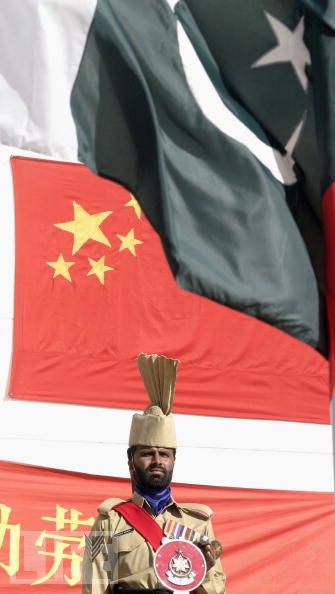
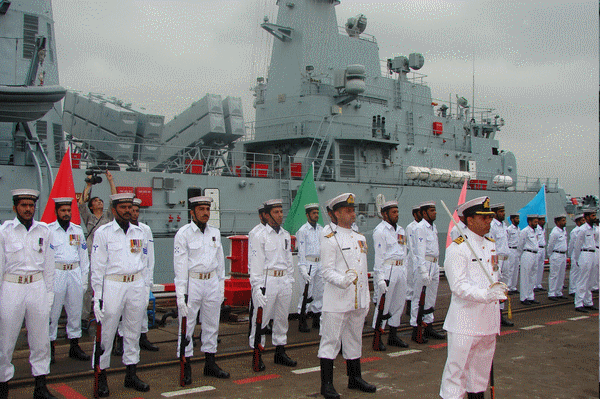
Pakistan and China increase military spending and cooperation as India shows concern

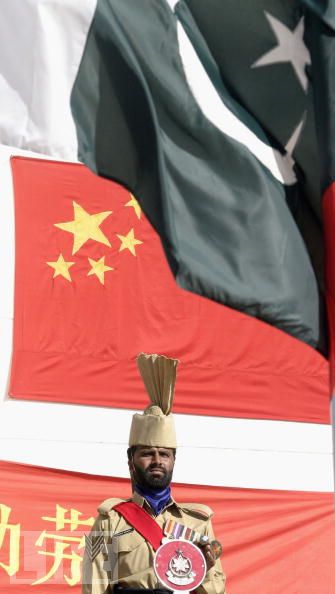
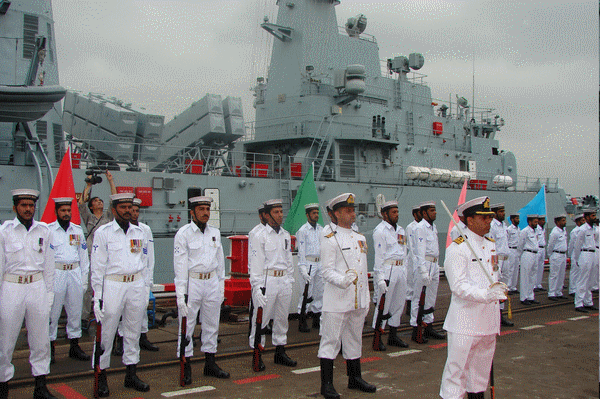
Beijing, China- A senior Chinese defense official has justified Chinese sales of warships and submarines to Pakistan on the grounds that Russia and the United States were selling similar systems to India.

The defense official also indicated that China was aware of the fact that India may not be happy with its deal with Pakistan. “The initiative may invite concerns from its neighboring countries. But the doubts are unnecessary,” Zhai Dequan, deputy director of China Arms Control and Disarmament Association , was quoted as saying by the official media.

Pakistan’s chief of naval staff, Norman Bashir, also made a push to persuade China to sell higher capacity ships compared to the F22P frigates that China began delivering in June.  Chinese official Zhai said that Pakistan’s   desire for higher capacity ships is normal for an independent nation seeking to bolster its security. “India has also entered into deals for military hardware from the Unites States and Russia. India’s aircraft carrier has already cost it billions of dollars”, said Zhai.

Bashir also met with the Chinese defense minister, Liang Guanglie, and discussed with him Pakistan’s needs in terms of modernizing their armed forces to try and keep up with the torrid pace of rival India’s defense spending. “The Chinese armed forces would like to improve friendly and cooperative relations with the Pakistani armed forces,” defense minister Liang Guangile said, according to China’s state-run Xinhua press agency.” China attached great importance to its traditional friendship with Pakistan, Liang said, adding that the two countries had conducted comprehensive and multi-level military exchanges and cooperation in various areas.”

“The Pakistani armed forces and people cherished their friendship with the Chinese armed forces and people”, Noman Bashir said, noting that “Pakistan would like to work with China to promote the comprehensive and cooperative partnership.” Bashir also stated that Pakistan was keen on buying bigger ships and more JF-17 fighter planes from China in addition to submarines and that Pakistan will be buying more weapons from China, including missiles. 

“These growing military ties between China and Pakistan are a serious concern to India,” stated Defense Minister A K Antony. India worries about China’s rising influence in South Asia and the Indian Ocean region, a neighborhood traditionally considered as its sphere of influence.

India’s relations with Pakistan, never easy after three wars since 1947, went downhill fast after last November’s Mumbai attacks blamed on Pakistani originated militants. Meanwhile, Chinese and Pakistani cooperation on military and economic projects has increased in the last few years. “The increasing nexus between China and Pakistan in military sphere remains an area of serious concern,” Antony said in a speech. “We have to carry out continuous appraisals of Chinese military capabilities and shape our responses accordingly. At the same time, we need to be vigilant at all times.” Tensions between India and China, who fought a brief war in 1962, flared again in recent months, especially with the re-emergence of a long-standing border dispute made worse by a visit by the Dalai Lama, the Tibetan spiritual leader, to Indian territory claimed by Beijing.

India increased defense spending by 24% for this year’s budget to $28.4 billion a year dwarfing Pakistan’s budget of $4.2 billion for the same period. Meanwhile, China and India are together set to make Asia the highest regional spender on defense in the next seven years replacing North America as their economies continue to fund their weapons appetite.

Pakistan cannot compete with the likes of India and China militarily. Just as Taiwan could not compete with China militarily, but went on to become an economic powerhouse and used its influence economically,  so too must Pakistan focus on growing its economy rather than growing militarily. Even though Pakistan possesses the nuclear bomb, and that very well may end up being a strong deterrent against India in the likelihood of a war, it still is loathe to use it, for the consequences from India would be similar and far worse due to their increased warheads and military might.

Also, although Pakistan’s military and previous leadership have articulated the right to a preemptive nuclear strike or a nuclear first use option in the event of hostilities with India, this choice is often seen as a losing option by the military due to the aftermath of a nuclear exchange between the two countries. India’s budget and its technological advancements make it impossible for Pakistan to ever win a conventional war with India. And a nuclear exchange between these two neighbors will leave neither side feeling as the winner.  

Pakistan’s most beneficial strategy must consist of directing its full armed forces against the Taliban and militant groups within its territory and re-engaging India back to the peace table in hopes of resolving the long disputed Kashmir region because war with India will certainly not leave Pakistan the victor. However a peace treaty can open the long border between India and Pakistan for trade, goods, ideas, money and people to move freely across the border and allowing much needed investments and flow of technology to Pakistan that will go a long ways in helping the country and its people catch up with the rest of the world.

Reported by Manzer Munir for www.PakistanisforPeace.com

Pakistani court suspends deportation as another case of homegrown terror troubles US authorities

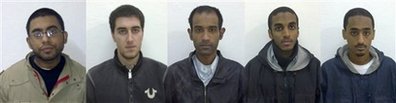
Karachi, Pakistan- Pakistani police on Monday seized a luggage and a cell phone from a hotel where three of the five Americans who were arrested on suspicion of terrorism planning and militant links stayed. A court has ruled that the men cannot be deported to the United States until the judges review their case.  Pakistani police has alleged that the five young Americans intended to join militant and extremist groups in the northwest tribal areas of Pakistan and Afghanistan. This case is troubling as it would appear that Americans and Western raised men are traveling to Pakistan to link up with Al-Qaeda and other militant groups like the Taliban.

Pakistani police had searched their hotel, aptly named Saddam Hotel in the southern city of Karachi.  The detainees have been accused of using the internet and such sites as Facebook and Youtube to reach out and connect to extremist groups and have been said to have been in contacts with a Taliban recruiter also.  The Pakistani court actions are intended to prevent the deportation of the accused to the United States until the courts in Pakistan can ascertain the facts and review the case.

The men, who are from the Washington DC area were picked up last week by Pakistani authorities after their worried families in the US contacted the FBI about their missing sons and enlisted their help in tracking the men down. The authorities were given a farewell video found by one of the family members that showed scenes of war and called for Muslims to be defended. FBI agents, who have had some access to the men, are trying to see if there is enough evidence to charge the men with conspiracy to provide material support to a terrorist group.

A US government official was satisfied with the Pakistani government’s assistance stating that “We’ve had excellent cooperation with the Pakistani authorities, both on the diplomatic side and on the law enforcement side,” said State Department spokesman Ian Kelly, “And the Pakistani authorities granted us access to the individuals within 24 hours of our request, which is a very speedy response.”

The threat posed by homegrown terrorists in the United States and in European countries is a growing concern for the FBI and US agencies. The incidents such as the Fort Hood shooting where Major Nidal Hasan allegedly shot and killed 13 fellow soldiers at the Texas base last month do nothing but further raise those concerns. Then there’s David Headley, an American born Muslim to mixed ancestry who is indicted in the Mumbai blasts of November 2008. And now comes the story of the five Muslim American men arrested in Pakistan who were interested in waging  jihad against the US.

It is too early to call it a growing trend, but the incidents and their frequency does suggest that there is certainly a minority segment of very young Muslim males who somehow are being radicalized not in strict Afghanistan or Pakistan or somewhere in Iran. Rather, in the streets of Virginia, New York, Chicago and other cities, certain young Muslim males are becoming radicalized and becoming extremists. This phenomenon can be best described as a catch 22. You see, these radicalized and misguided men feel that because the United States is waging wars in Muslin countries such as Iraq and Afghanistan, it is being an oppressor. To these men, defending Muslim lands from an outsider and an oppressor is an obligation and a duty and is a call for every Muslim. On the other side, there is the American policy of engagement of the enemy on its turf, as is seen in the Bush doctrine. “Take the war to the terrorists” as President Bush so famously put it in 2001.  These wars that were initiated to be pre-emptive in the case of Iraq and retribution in the case of Afghanistan, have inadvertently become the cause célèbre of these jihadists and young extremists.

In essence, there is a vicious cycle of violence at work here. We have American troops in Afghanistan who are there to defeat the Taliban and Al-Qaeda in Afghanistan so that the US is safe from a terrorist attack hatched overseas. Yet, the next threat may actually be coming from an American born Muslim who is being alienated and radicalized due to the “unjust” war against his “brothers” constant 24 hour cable news coverage, satellite TV and foreign news channels, the internet websites and other sources.

As instances of homegrown Muslim radicalization grow or come into the limelight, it is imperative that the vast majority of peaceful, law abiding and patriotic American Muslims keep vigilant and mindful of the few in their midst who may be becoming radicalized in front of their eyes. It is vital that the Muslim community speak up as the parents of these young men did and alerted the authorities when they became concerned that they may have some sinister designs after discovering their farewell video. It is together with our cooperation with the authorities that we can sniff out these lost individuals before they do any harm to anyone or to an entire religion. The mosques and Islamic centers must do more to ensure that there is no radicalization or fiery sermons. There needs to be a conscientious effort on the part of the American Muslim community of progressives and moderates to speak up and chastise those that are becoming extremists within their midst in order to prevent the next Fort Hood massacare or the next Mumbai.

 Reported by Manzer Munir for www.PakistanisforPeace.com

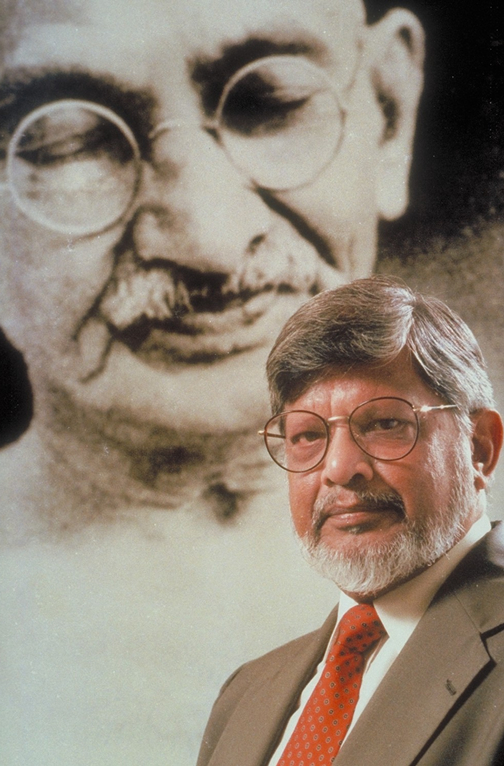
The Power of Forgiveness by Gandhi’s Grandson, Dr. Arun Gandhi

Dr. Arun Gandhi, grandson of Mahatma Gandhi and founder of the M.K. Gandhi Institute for Nonviolence, in his June 9 lecture at the University of Puerto Rico, shared the following story as an example of nonviolence in parenting:

“I was 16 years old and living with my parents at the institute my grandfather had founded 18 miles outside of Durban, South Africa, in the middle of the sugar plantations. We were deep in the country and had no neighbors, so my two sisters and I would always look forward to going to town to visit friends or go to the movies. One day, my father asked me to drive him to town for an all-day conference, and I jumped at the chance.

Since I was going to town, my mother gave me a list of groceries she needed and, since I had all day in town, my father asked me to take care of several pending chores, such as getting the car serviced. When I dropped my father off that morning, he said, ‘I will meet you here at 5:00 p.m., and we will go home together.’

 After hurriedly completing my chores, I went straight to the nearest movie theater. I got so engrossed in a John Wayne double-feature that I forgot the time. It was 5:30 before I remembered. By the time I ran to the garage and got the car and hurried to where my father was waiting for me, it was almost 6:00.

He anxiously asked me, ‘Why are you late?’ I was so ashamed of telling him I was watching a John Wayne western movie that I said, ‘The car wasn’t ready, so I had to wait,’ not realizing that he had already called the garage.

When he caught me in the lie, he said: ‘There’s something wrong in the way I brought you up that didn’t give you the confidence to tell me the truth. In order to figure out where I went wrong with you, I’m going to walk the walk home 18 miles and think about it.’ So, dressed in his suit and dress shoes, he began to walk home in the dark on mostly unpaved, unlit roads. I couldn’t leave him, so for five-and-a-half hours I drove behind him, watching my father go through this agony for a stupid lie that I uttered. I decided then and there that I was never going to lie again.

 I often think about that episode and wonder, if he had punished me the way we punish our children, whether I would have learned a lesson at all. I don’t think so. I would have suffered the punishment and gone on doing the same thing. But this single nonviolent action was so powerful that it is still as if it happened yesterday. That is the power of nonviolence.

Originally posted by Dr.Arun Gandhi at PSY On Saturday, December 5, 2009

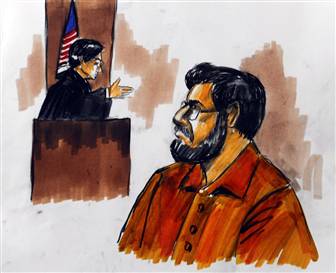
Chicago Man Is Charged in 2008 Attack on Mumbai

December 7, 2009 WASHINGTON — The Chicago man with roots in Pakistan who was arrested two months ago for planning to attack a Danish newspaper now faces the much more serious charge that he was deeply involved in planning the 2008 massacre in India that killed more than 150 people, according to court documents filed by the Justice Department.  

Court documents charge that David Coleman Headley, 49, an American citizen who is the son of a former Pakistani diplomat and a Philadelphia socialite, conducted extensive surveillance of targets in Mumbai, India, for more than two years prior to the attacks by the terrorist group called Lakshar-e-Taiba, which is based in Pakistan.  

Six Americans were among the dead in the attacks on a Mumbai train station, the Oberoi and Taj Mahal hotels and other sites.

He has been charged with conspiracy to murder and maim in a foreign country, and material support of terrorism. Federal officials said the most serious charges, conspiring to carry out bombings that resulted in deaths, carry possible sentences of death or life in prison.

The Justice Department said that Mr. Headley, who is cooperating with the government’s investigation, spent several years and considerable effort on behalf of the plotters, attended training by the group in Pakistan, videotaped targets and briefed the other conspirators on how to carry out the attack on India’s largest city.

 Mr. Headley took boat trips in and around Mumbai harbor in the spring of 2008, videotaping potential landing sites for the attackers, who would arrive by sea, the court documents charge. The attackers traveled from Karachi, Pakistan, hijacked an Indian fishing trawler, killed its captain, and then used a small boat to go ashore. The masked men used assault rifles and grenades in their deadly onslaught.

 Mr. Headley also scouted out other potential targets in Mumbai and elsewhere in India that were not attacked, including the National Defense College in Delhi.

 Mr. Headley, a resident of Chicago with a criminal record for smuggling drugs to the United States from Pakistan, was arrested in October with a Pakistani-born businessman, Tahawwur Rana, 45, who runs several businesses in Chicago and Toronto. Mr. Rana and Mr. Headley, who have known each other since attending an elite Pakistani military high school, were charged with plotting an attack against Jyllands-Posten, a Danish newspaper that published a series of cartoons depicting the Prophet Muhammad.

 Mr. Rana, a citizen of Canada, was not charged in the Mumbai attacks. But officials said the two men appeared to consult closely, and Mr. Headley posed as a representative of a company owned by Mr. Rana. In a bail hearing last week, Mr. Rana argued that he was duped by Mr. Headley.

 The Justice Department also announced Monday it had filed charges against Abdur Rehman Hashim Syed, a retired major in the Pakistani army, with collaborating in the plot against the Danish newspaper.

“This investigation remains active and ongoing,” said Patrick J. Fitzgerald, the United States Attorney for the northern district of Illinois.

 David Kris, the Assistant Attorney General for National Security, said, “This case serves as a reminder that the terrorist threat is global in nature and requires constant vigilance at home and abroad.”

Arrested on Oct. 3 at O’Hare airport in Chicago as he was boarding a plane on the first leg of a trip to Pakistan, Mr. Headley was officially charged a few weeks later with plotting to attack employees of a Danish newspaper that in 2005 published cartoons of the Prophet Muhammad that offended many Muslims.

Federal authorities said at the time that Mr. Headley told F.B.I. agents that he had initially targeted a building occupied by the Danish newspaper, Morgenavisen Jyllands-Posten in Copenhagen, but later proposed killing the paper’s cartoonist and cultural editor instead.

Officials said they regarded the case as significant because Mr. Headley traveled to Pakistan and consulted closely with three Pakistani men who belonged to Harakat-ul Jihad Islami, a terrorist group affiliated with Al Qaeda. The officials said Mr. Headley reported to Ilya Kashmiri, the operational leader of the terrorist group, who is based in a tribal region of northwest Pakistan.

When he was arrested, Mr. Headley was carrying about a dozen videotapes of the Danish newspaper office and surrounding areas that he was going to deliver to other conspirators in Pakistan, federal officials said. They said he had made the videotapes during several visits to Copenhagen in 2009.

Mr. Headley (or Daood Gilani, the name he was given at birth) is a man who has been pulled in different directions almost from the moment he was born. Even his eyes — one brown, one green — seem to symbolize the contradictions in his life.

Mr. Headley was born in Washington, where his Pakistani father and American mother worked at the Pakistani Embassy, he as a diplomat and she as a secretary. Mr. Headley’s mother, Serrill, grew up in a fashionable suburb of Philadelphia, and the cultural differences between her and her husband were too vast for the marriage to survive after the family went to Pakistan.

Serrill Headley left her husband and her children and moved back to Philadelphia sometime in the early 1970s. She worked at various office jobs and borrowed enough money from a suitor to buy an old bar, which she named the Khyber Pass.

In the late 1970s, she brought her adolescent son to Philadelphia to live with her. “Daood was not immune to the pleasures of American adolescence,” a former Khyber Pass employee once recalled.

Nor, to judge from his own words, was he immune to the lure of Islamic fundamentalism. “Courage is, by and large, exclusive to the Muslim nation,” he told high school classmates in an e-mail message last February. More chilling was an e-mail message he wrote defending the beheading of a Polish engineer by the Taliban in Pakistan: “The best way for a man to die is with the sword.”

By Ginger Thompson and David Stout for The New York Times originally published Dec 7, 2009
The Mumbai Attacks, 1 Year Later

Mumbai (Bombay), India- It has been a year since November 26, 2008, when 10 Pakistani militants of the group Lakshar-e-Taiba coordinated and carried out simultaneous and deadly bombings and shootings in the heart of several important Mumbai buildings and institutions. The lone surviving gunman from that rampage, Mohammed Ajmal Amir Kasab, admitted to his role in the attacks during his trial in Mumbai and he could be executed if found guilty. No other individuals have been charged in India with the killings of over 170 people and injuries to scores of others.

In his visit to the United States this week, Prime Minister Manmohan Singh has expressed India’s concern over Pakistan’s efforts in bringing the perpetrators of the Mumbai attacks to justice. “No they haven’t done enough,” he told CNN television in an interview telecast as he landed in Washington for a four-day state visit Sunday. Manmohan Singh said when he met Pakistan Prime Minister Yousuf Raza Gilani in Sharm-el-Sheikh, Egypt, in July this year, he (Gilani) had assured that his government would do all that’s possible to bring the perpetrators to justice. “That’s not happening.”  

Then three days after that statement by Singh, seven people were indicted in a Pakistani anti-terrorism court Wednesday in connection with the attacks of last year. All have denied the charges and are planning to plead not guilty. This is the first indictment in Pakistan in a case that is closely being followed in India and in the United States. The seven men charged in Pakistan allegedly belong to the militant group Lashkar-e-Taiba which is believed to be behind the coordinated attacks carried out simultaneously at numerous locations in Mumbai that lasted up to three days when all except Ajmal Kasab were killed.

Earlier in the week Prime Minister Manmohan Singh called on world powers to put pressure on Pakistan to rein in militants amid the rise in Taliban linked violence inside Pakistan and also in neighboring Afghanistan. Britain “will work shoulder to shoulder with India and our international partners to confront this common threat”, Prime Minister Gordon Brown said Thursday, while French Foreign Minister Bernard Kouchner pledged “unreserved support” for India in the fight against terrorism.

India’s minister for external affairs, Shashi Tharoor told a vigil at the Chabad House Jewish center, where six people died, including the rabbi who ran it and his pregnant wife, that the gunmen had killed “in cold blood”.”The terrorists demonstrated that their brand of fanaticism was anchored less in the absolutism of pure faith than in the geopolitics of pure hatred,” he told the congregation, including the slain couple’s parents.

The Mumbai attacks ended the peace dialogue between India and Pakistan that has been off and on over the last 60 years, remaining unresolved over the disputed Kashmir region. The militants groups in Pakistan that were left unchecked through the 80’s and the 90’s have now gotten out of control as the level of violence and attacks inside Pakistan has reached an unprecedented level. All cities of Pakistan have been touched by attacks and violence either blamed on religious zealots like the Taliban or militant groups like Lashkar-e-Taiba, which was allegedly formed with the help of the Pakistani intelligence agency ISI to infiltrate and fight Indians in Kashmir.

Bringing the perpetrators of the Mumbai attacks to justice is not only needed for the victims of these attacks in India, but finding and punishing these individuals and prosecuting them to the full extent of the law is also in Pakistan’s best interests. With a crime and violence rate currently in Pakistan that is off the charts, the average Pakistani citizen has no sense of security inside their own country. Near daily news of attacks inside some part of the country or another has also given many civilians a siege mentality.

Pakistan’s biggest neighbor is India. It is also considered by many inside the country to be its biggest enemy. The two share a border of approximately 1800 miles. They also share over 5,000 years of common history, language, culture, and customs. India is not the biggest threat facing Pakistan as India is too big and complex to focus on just Pakistan. India is fast approaching world power status as it now competes with the likes of China, Russia and the Unites States in various fields due to its robust economy, fast growing middle class, and ever increasing influence around the world.

Pakistan’s biggest enemies are the Taliban and the various militant and extremist groups that are now causing havoc within the country and also are attempting to incite a war between India and Pakistan with attacks such as the attacks of November 26 of last year. Bringing these seven individuals to justice in front of the country and the whole world will go along ways to show its neighbor and the United States that it is serious in confronting these groups and putting an end to terror both within and outside its borders.


Reported by Manzer Munir for www.PakistanisforPeace.com, a group and website started by Pakistanis dedicated to peace between India and Pakistan and outraged by the Mumbai attacks of Nov 26, 2008.

Pakistan Invites Rebels from Gas-Rich Baluchistan for Talks

Islamabad, Pakistan- Pakistan’s Prime Minister Yousuf Raza Gilani invited insurgents in the country’s oil- and gas- rich southwest Baluchistan province for talks as he announced in Parliament a new package to end the fighting.

“The government hopes the proposed economic, political and constitutional reforms package will end deprivation of the people of the province,” Gilani said in the capital, Islamabad. He asked lawmakers to debate and approve the proposals soon.

Pakistan’s government says the insurgency in Baluchistan, which accounts for 44 percent of the country’s area, is backed and fueled by neighboring India and groups in Afghanistan. India denies the charge. The province produces a quarter of Pakistan’s natural gas output.

The Baluch group of Nawab Akbar Khan Bugti, a tribal leader killed in an operation by security forces in 2006, says it’s fighting for rights for local people, including royalties from the minerals and fuels discovered in the province.

Insurgents have attacked and bombed key oil and gas installations, pipelines and government buildings in the province. They have also attacked security forces.

The proposed package includes inviting exiled leaders to return to Pakistan, and withdrawing politically motivated court cases, Raza Rabbani, a senior leader of Gilani’s ruling Pakistan People’s Party, told lawmakers. He said royalties for oil, gas and minerals extracted from the province would be rationalized.

The deal will “assuage the hurt feelings of the people of Baluchistan,” according to an earlier statement by the office of President Asif Ali Zardari.

Pakistan’s top opposition leader and twice former Prime Minister Nawaz Sharif this month sought a public debate on the package.

As reported by Khalid Qayum in Islamabad for Bloomberg.com

Law and Order in Pakistan Gets Worse as Schools are Shut across the country after Attacks

PakistanIslamabad, Pakistan- Millions of children and university students across the country stayed home Wednesday and are expected to for the rest of the week following fresh bomb attacks a university in Islamabad. Children as little as first graders all the way through Phd candidates in both government as well as private schools across the country got an unexpected holiday from their studies as the law and order situation in Pakistan continues to get worse by the day.

Many schools had shut down earlier in the week and the rest of the country followed suit after two suicide bombers Tuesday blew themselves up at Islamabad’s International Islamic University, killing five people.

“All educational institutions are shut across the country,” said an education ministry spokesman.

“The closure has been ordered because of security threats received in recent days… We will assess the situation and hopefully they will reopen on Monday,” the spokesman, Atiqur Rehman, told reporters.

“We are under constant threat. Our children’s education is suffering. If they can attack an Islamic university, they can do it anywhere,” said Muhammad Irfan, whose five-year-old had to stay away from one of Islamabad’s top private schools.

“We don’t know what to do. We can’t sacrifice our children but neither can we keep them at home.”

Tuesday’s university bombing was the seventh major militant attack in just over two weeks, and the first since the military launched what officials vowed would be a knock-out blow against the Taliban in South Waziristan.

The attacks came after a raid on army headquarters left 23 people dead and five UN World Food Programme workers were killed when a suicide bomber dressed in military uniform detonated his explosives in their Islamabad office.

Authorities believe that many of the bombings in Pakistan, as well as attacks in the West, are being planned by Al-Qaeda and Taliban militants who are fiercely fighting the Pakistan army in the border regions with Afghanistan.

Law and order inside Pakistan is getting grimmer by the day as the general public does not feel secure in their daily lives knowing that many government institutions, army and police barracks, and now educational institutions are now targets. The population is becoming shell shocked as live round the clock news coverage by over a dozen Pakistani media outlets broadcasts the carnage and destruction live from the scene of the attacks. The average Pakistani who is desperately poor and trying to survive economically is now also fighting for survival of their lives by avoiding becoming targets of the Taliban and the militants by not becoming unwitting victims during the fight between the government forces and the Taliban.

It used to be that people inside the country for years cried out with pride the slogan “Pakistan Zindabad” (Long Live Pakistan). That slogan has now popularly been replaced by the younger generation as “Pakistan say Zinda Bhaag” (Run from Pakistan with your Life)

The situation inside Pakistan has gotten worse by the day and there are fears by many in the country that it is headed towards becoming a lawless and failed state like its neighbor Afghanistan, if it hasn’t already started on that path.

Reporting by Manzer Munir for www.PakistanisforPeace.com