Archive for the ‘ Israel ’ Category

Give White House Credit for Mideast Peace Efforts

By Peter A Joseph for The Huffington Post

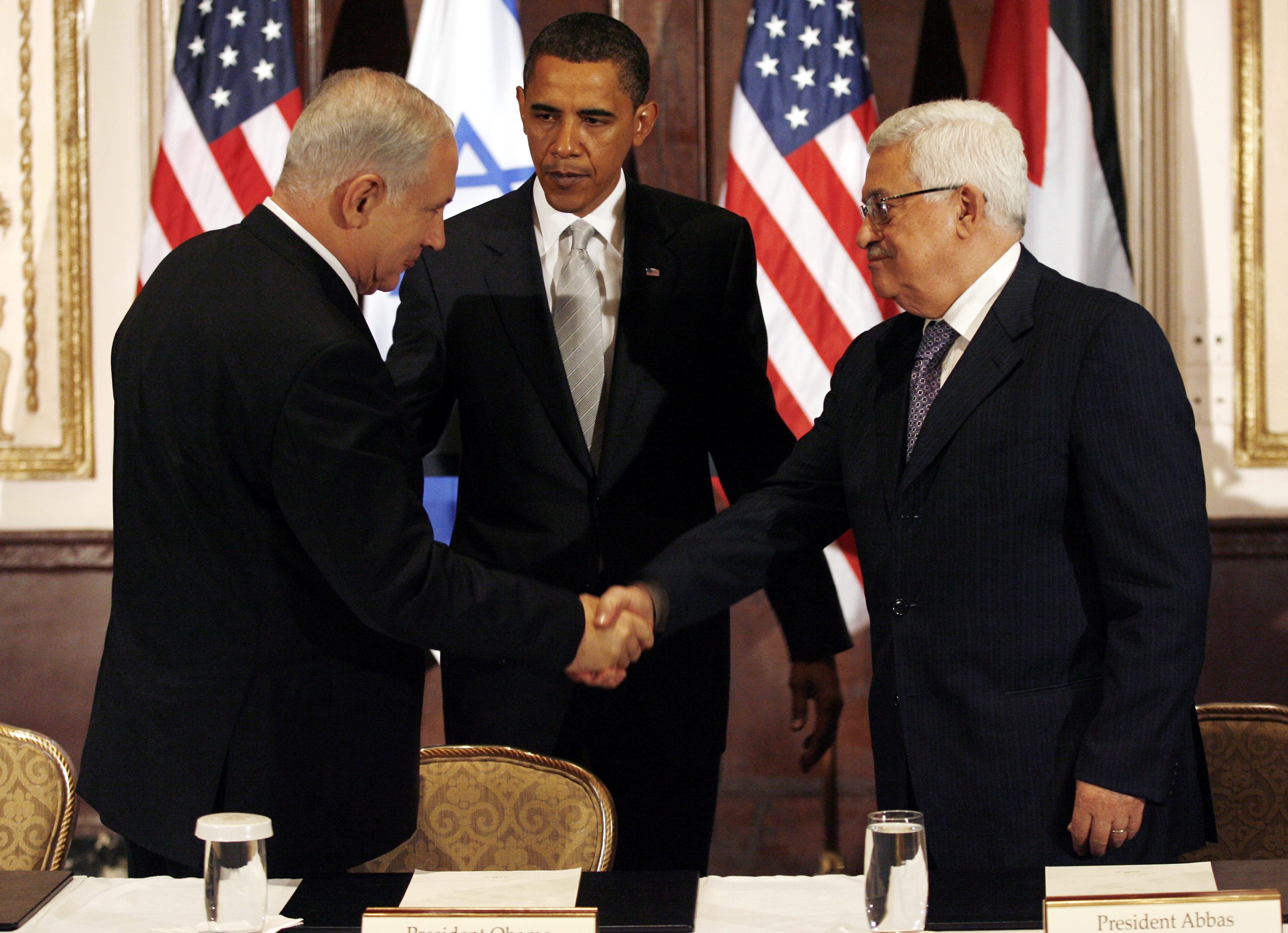
Skeptics have had a field day criticizing the direct negotiations between Israelis and Palestinians to be launched this week in Washington. To be sure, the obstacles to concluding an agreement are significant, the stakes are high and expectations are low.

But it is time to give the Obama Administration some credit. The White House is launching direct talks on Thursday with tools that previous administrations did not have or were unwilling to employ in past negotiation efforts. Despite the rampant skepticism, there are indeed reasons to be hopeful without being naïve.

The Obama Administration has come a long way to get to this point. The year-long tussle with Israel over West Bank settlement construction, a botched photo-op between the Israeli and Palestinian leadership in New York one year ago, and painstaking attempts to bring the parties to direct talks in recent months have eroded the optimism and expectations that came with the election of President Obama.

However, there are a number of essential ingredients that the Administration has got right as it launches direct talks. Martin Indyk mentioned four of them last week in the New York Times: 1) there is very little violence between the parties today; 2) settlement activity has been limited; 3) the majority on both sides support a two-state solution; and 4) the contours of an agreement are largely already known. Here are four more:

First, violence is down because security cooperation between Israel and the Palestinians is at an all-time high. Palestinian security forces trained with the direct support and supervision of the United States, Israel and Jordan have significantly secured the West Bank and created an atmosphere conducive to economic growth. The success of the burgeoning Palestinian security force is providing Israelis with much needed confidence. Security is – and always has been – Israel’s number one concern. With such cooperation already in place, these talks will have a distinct advantage over all other previous efforts.

Second, the Arab states have endorsed President Mahmoud Abbas’ negotiating with Israel and pledged to be part of the effort. The inclusion of Egypt and Jordan in the launch next week is vital. As co-chairs of the Arab League’s Arab Peace Initiative follow-up committee, Egypt and Jordan bring with them the promise of normal relations for Israel with 22 Arab states following a successfully negotiated agreement on the final status issues.

Regardless of whether Yasser Arafat truly intended to achieve peace with Israel, he never enjoyed the mobilized support of the Arab states, let alone the United States and Israel. Mahmoud Abbas does. The Arab states are providing Abbas with the kind of backing and legitimacy to negotiate with Israel on all of the sensitive final status issues that he will need in order to conclude a historic agreement. This is particularly significant given the political split of the Palestinians between the West Bank and Gaza.

Third, the Palestinians are invested in building the foundation for a Palestinian state. The Palestinians have been plagued in previous negotiation efforts by poor governance and widespread corruption. While concerning issues remain, the progress of Prime Minister Salaam Fayyad to establish the infrastructure for a future state – like the aforementioned security advancements – distinguishes these negotiations from previous ones. The success of the state-building effort to this point and the growth of the West Bank economy lends credibility to the moderate leadership of Abbas and Fayyad and their ability to govern a viable, contiguous state, should the political process enable one to be established. Their efforts should also give Israelis added confidence that they would be establishing a conflict-ending agreement with a responsible neighbor.

Fourth, the Netanyahu government has been calling for negotiations for months, repeatedly stating that an agreement could be reached quickly if negotiated in good faith. The Administration now has a chance to test them on their word.

The make-up of the Israeli government presents both a challenge and an advantage to the renewed talks. The fact that this is a largely right-wing government intended to provide Israel with essential guarantees on security could bolster confidence among the Israeli public for an agreement, should one be achieved. This would remain true even if the government were at some point to replace Avigdor Lieberman’s Yisrael Beiteinu party with Tzipi Livni’s Kadima party. Just as the Likud Prime Minister Menachem Begin secured a peace agreement with Egypt, so too might the current Likud Prime Minister secure the elusive peace agreement with the Palestinians.

Finally, the White House has pledged to be actively engaged and bridge the gaps when necessary. The failed Annapolis process proved that Israelis and Palestinians need the United States to be at the negotiating table in order to help the parties bridge the gaps.

Active engagement by the United States does not just require bridging proposals, but also reminding the parties of the interests at stake. To Israelis, concluding an agreement with the Palestinians would certainly help amplify efforts to mobilize the international community to counter the threat from Iran. To Palestinians, a viable and secure state can only come about through negotiations.

However, even with these various important ingredients in place, there remains a missing one that is vital to the success of direct talks: trust. Without trust between the parties – or in the United States’ leadership – the current effort will undoubtedly fail. Building this trust, beginning with navigating the parties past the September 26th deadline of Israel’s settlement moratorium, is clearly the United States’ most pressing challenge in the weeks ahead. But the foundation to succeed in doing so is beginning to be put into place. The Administration deserves some credit for laying it.

– Peter A Joseph is the president of the Israel Policy Forum

Arab Guilty of Rape After Consensual Sex with Jew

By Jo Adetunji and Harriet Sherwood for The Guardian

A Palestinian man has been convicted of rape after having consensual sex with a woman who had believed him to be a fellow Jew.

Sabbar Kashur, 30, was sentenced to 18 months in prison on Monday after the court ruled that he was guilty of rape by deception. According to the complaint filed by the woman with the Jerusalem district court, the two met in downtown Jerusalem in September 2008 where Kashur, an Arab from East Jerusalem, introduced himself as a Jewish bachelor seeking a serious relationship. The two then had consensual sex in a nearby building before Kashur left.

When she later found out that he was not Jewish but an Arab, she filed a criminal complaint for rape and indecent assault.

Although Kashur was initially charged with rape and indecent assault, this was changed to a charge of rape by deception as part of a plea bargain arrangement.

Handing down the verdict, Tzvi Segal, one of three judges on the case, acknowledged that sex had been consensual but said that although not “a classical rape by force,” the woman would not have consented if she had not believed Kashur was Jewish.

The sex therefore was obtained under false pretences, the judges said. “If she hadn’t thought the accused was a Jewish bachelor interested in a serious romantic relationship, she would not have cooperated,” they added.

The court ruled that Kashur should receive a jail term and rejected the option of a six-month community service order. He was said to be seeking to appeal.

Segal said: “The court is obliged to protect the public interest from sophisticated, smooth-tongued criminals who can deceive innocent victims at an unbearable price – the sanctity of their bodies and souls. When the very basis of trust between human beings drops, especially when the matters at hand are so intimate, sensitive and fateful, the court is required to stand firmly at the side of the victims – actual and potential – to protect their wellbeing. Otherwise, they will be used, manipulated and misled, while paying only a tolerable and symbolic price.”

Gideon Levy, a liberal Israeli commentator, was quoted as saying: “I would like to raise only one question with the judge. What if this guy had been a Jew who pretended to be a Muslim and had sex with a Muslim woman?

“Would he have been convicted of rape? The answer is: of course not.”

Arabs constitute about 20% of Israel’s population, but relationships between Jews and Arabs are rare. There are few mixed neighbourhoods or towns, and Arabs suffer routine discrimination.

Israeli MPs are considering a law requiring prospective Israeli citizens to declare loyalty to Israel as a “Jewish, democratic state”. Many Arabs would balk at swearing allegiance to a state which they see as explicitly excluding or marginalising them.

Dan Meridor, a deputy prime minister in Binyamin Netanyahu’s government, is opposed to the proposal. “Why does every bill need the word ‘Jewish’ in it – to show the Arab citizens that it doesn’t belong to them? Then we’re all shocked when they radicalise their stance.

“The majority doesn’t need to remind the minority that it is in fact a minority all the time,” he added.

“This Passport is valid for all the countries of the World, except Israel”

By Junaid Ghumman for Mideast Youth
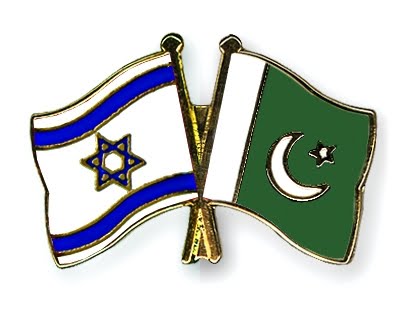
The world Zionist movement should not be neglectful of the dangers of Pakistan to it. And Pakistan now should be its first target, for this ideological State is a threat to our existence. And Pakistan, the whole of it, hates the Jews and loves the Arabs. This lover of the Arabs is more dangerous to us than the Arabs themselves. For that matter, it is most essential for the world Zionism that it should now take immediate steps against Pakistan.” Ben-Gurion, the Prime Minister of Israel.

This speech was first published in Jewish Chronicles on 9th August 1967. This statement risen many controversies bloggers like me have quoted it many times; various explanations were also given to disprove this statement, but still we read it on every article related to Pakistan and Israel.

Pakistan and Israel do share some history and ideology. These are only two countries in the world created in the name of Religion; Pakistan for Islam, Israel for Judaism and both countries have taken independence from same British Empire after World War II.

Then why my passport still says, “This Passport is valid for all the countries of the World, except Israel”?

Pakistan claimed its independence from foreign invaders after two centuries of struggle. In 1757 after Battle of Plessey, East India Company started ruling Indian Sub-continent. The first armed resistance was Battle of Independence in 1857 after which the power was transferred to British government. In 1885 the political movement of independence started as Indian National Congress. Some of the Muslim leaders soon separated and launched new movement in 1906 as All India Muslim League for separate Muslim state which led to the creation of independent Islamic state Pakistan on 14th August 1947, which then became Islamic Republic of Pakistan in 1973.

For Israel the timings was same and the rulers were also same as of Indian sub-continents, but events and circumstances were totally different. Israel declared its independence on 14th May 1948 from British Mandate of Palestine. But Israel independence movement was not against British Occupation; rather it was a movement of creating a Jewish State by silently invading the markets, trades and areas to make Jewish settlements. Hovevei Zion or Hibbat Zion refers to organizations that are considered the foundations of the modern Zionist movement. These movements led to creation of Rishon LeZion in 1882 which is the first Jewish settlement in Palestine; which was at that time under Ottoman Empire. First Zionist Congress held in 1897 started the unified Zionist Movement which was converted to World Zionist Organization in 1960. This movement was successful in legalizing its demand of separate Jewish state in Palestine after Balfour Declaration 1917, in which British Mandate of Palestine’s (1917 – 1948) foreign Secretary Arthur James Balfour wrote letter to the leader of British Jewish Community Baron Rothschild, pledging British Empire support of creation of Jewish State in Palestinian Land.

So what kind of relationship does Pakistan and Israel has over period of 60 years?

While writing this blog I also tried to ask couple Pakistanis; their view points about Pakistan-Israel Relationship. Yousaf is Pakistani Engineer living and working in Saudi Arabia. Being in the region, Pakistanis here are emotionally and regionally attached to Middle East crisis. I asked him what kind of relationship both countries have. “Relationship between Pakistan and Israel are tied to the fact that how Israel government treats the Palestinians. In general, as Jerusalem is considered as one of the holiest places in Islam; this fact serves as a thorn in the eyes of Pakistanis.” Yousaf said.

Pakistan is among those 20 UN member nations which do not recognize Israel as an independent state. These 20 countries also include Afghanistan, Algeria, Bahrain, Bangladesh, Chad, Cuba, Indonesia, Iran, Iraq, Kuwait, Lebanon, Libya, Malaysia, North Korea, Saudi Arabia, Sudan, Syria, United Arab Emirates and Yemen. Unofficial media reports say that first Prime Minister of Israel David Ben-Gurion send secret message to Muhammad Ali Jinnah to formally accept its existence, but no response was given back to him. At the time of independence of Pakistan, it was reported that some 2,000 Jews remained in Pakistan, mostly Bene Yisrale Jews. Many left to Israel after its declaration of independence. Jews from Karachi, Pakistan, now live in Ramla, Israel, and they also built a synagogue they named Magen Shalome after the Pakistani Synagogue which was demolished in 1980.

60s, 70s and beginning of 80s were the decades when for the first time both countries came face to face when Arab-Israel war started. In “Six-day Arab Israeli War” of 1967; Royal Jordanian Air Force (RJAF) and Pakistan Air Force (PAF) were flying under a joint command. PAF pilot Flt. Lt. Saiful Azam became the only pilot from the Arab side to have shot down 3 IDF/AF aircraft within 72 hours.

In 1973 Arab-Israeli Yom Kippur War, 16 PAF pilots volunteered to support Syria and Egypt. On 23 October 1973 Flt. Lt. M. Hatif shot down the Israeli Phantom. On 26 April 1974, PAF pilot Flt. Lt. A. Sattar Alvi became the first Pakistani pilot, during the Yom Kippur War; to shoot down an Israeli Mirage in air combat. He was honoured by the Syrian government. Nur Khan, who was the Wing Commander received praised from Israeli President Ezer Weizman who wrote in his autobiography that: “He was a formidable fellow and I was glad that he was Pakistani and not Egyptian”. Pakistan also sent medical ambulances to Egypt and Syria.

After the Israeli attack on Iraq’s under-construction French-built nuclear Osirak-type reactor, Tammuz-I, south of Baghdad on 7 June 1981, Pakistan’s then President President Zia-ul-Haq directed PAF Air Headquarters (AHQ) to make contingency plans for a possible Israeli attack on Kahuta. Kahuta is noted for its nuclear research studies and nuclear development technologies in Kahuta Research Laboratories. On 10 July 1982, a special contingency plan was issued. In the event of an Israeli attack on Pakistan’s strategic installations, plans were drawn up for a retaliatory Pakistani strike on Negev Nuclear Research Centre. The Negev Nuclear Research Centre is an Israeli nuclear installation located in the Negev desert, about thirteen kilometres to the south-east of the city of Dimona.

On political level many statements were given. As chair of the Second Islamic Summit in 1974, then Pakistan’s Prime Minister Zulfiqar Ali Bhutto said: “To Jews as Jews we bear no malice; to Jews as Zionists, intoxicated with their militarism and reeking with technological arrogance, we refuse to be hospitable.”

In of his speeches in National Assembly of Pakistan, before Zulfiqar Ali Bhutto was hanged in 1979, he said, “Mr. Speaker Sir! This is not Desi (local) conspiracy, it’s an international conspiracy. Let me make it quite clear for the history, whatever the future and fate of this individual will be; that doesn’t matter, but let me tell you again this is not a desi (local) conspiracy, this is not PNA conspiracy, this is massive, huge and colossal international conspiracy against the Islamic State of Pakistan.” (PNA was Pakistan National Alliance against the ruling Pakistan Peoples Party). Nowadays people like to refer this international controversy as Zionist or Israeli Conspiracy.

A controversial book was published in 2003, named Charlie’s Wilson war which conspire about use of Israeli weapons supplied to General Zia ul Haq to fight Soviets in Afghanistan (1979 – 1989). Famous Hollywood movie Charlie’s Wilson War was also released in 2007. After that the back door politics started between Pakistan and Israel.

The President of Pakistan General Zia ul Haq was assassinated in plane crash on 17 August 1988. Among the conspiracy theories; Mossad (Israeli Intelligence Agency) involvement is also believed to exist. In the fall 2005 World Policy Journal, John Gunther Dean, a former US ambassador to India, blamed the Mossad for orchestrating Zia’s assassination in retaliation for Pakistan developing a nuclear weapon to counteract India and Israel.

Ali is my friend living in Middle East. I asked him, can there ever be any friendship or peace between Pakistan and Israel, to which he replied, “Yes there can be, Israel is a small country with a group of people belonging to a group of faith. And also it is in its interest that it should be at peace with every country, and especially those countries that it feels can threaten its existence.”

It is believed that, at the time of Benazir Bhutto’s Government both countries had very strong relationship especially in countering terrorism. In 1993 Benazir Bhutto, along with her then-Director-General of Military Operations, Pervez Musharraf, intensified the ISI’s liaison with Mossad in 1993, and she too began to cultivate the American Jewish lobby. Bhutto is said to have had a secret meeting in New York with a senior Israeli diplomat, who flew to the U.S. during her visit to Washington, D.C. in 1995.

In 1996, Pakistan’s Intelligence Agency, FIA, started a secret war against Extremist in Pakistan under Rehman Malik. According to sources, FIA also contacted Israeli intelligence agency Mossad to help and send its officers to investigate the extremism. Even after these strong ties, controversies never left the scenario. Benazir Bhutto was assassinated on 27 December 2007 in one political rally. This was considered to be typical Mossad Assassination style. It is believed that she was the one knowing the reality of 9/11 being inside job and death of Osama Bin Laden, which she also publicly stated in David Frost TV program. That program was edited before telecasting. But Jewish Journals and Media still believed in the opposite way. According to Jewish media, Miss Bhutto asked for Mossad help to protect her on her return to Pakistan as she was afraid she will be killed.

In 1998 Pakistan and Israel were again on the verge of war. On 27 May 1998, day before Pakistan conducted its nuclear test in Chaghi, Southern Province of Baluchistan, Pakistan; unidentified F-16 was found hovering around skies on border areas of Pakistan. Pakistan Air Force; taking is as repetition of Israeli Conspiracy similar to 1981, Air Bourne its fighters to foil any attack. But Pakistan and Israeli UN delegation met in UN soon after Pakistan Nuclear tests in 1998 to give assurance that Pakistan will not transfer its technologies to Iran, the arch enemy of Israel.

Musharraf’s nine years of rule was also golden times for both countries. In 2003, General Pervaiz Musharraf said on television interview, “Mainly Muslim Pakistan must seriously take up the issue of recognizing Israel and avoid dealing with it on emotional grounds”. This statement gave birth to local opposition, esp. among Religious Parties in Pakistan. “Jerusalem is not just an Arab issue, it is linked to the faith of every Muslim” said Qazi Hussain Ahmed, chief of Jamaat-i-Islami Pakistan, the largest and oldest religious political party. “Presenting Palestine as a sole Arab issue is a heinous conspiracy of the imperialists and colonists aimed at disintegrating the Muslims and shattering the concept of Muslim unity. It is for the same reason the colonist forces are trying to portray every Muslim issue as regional or bilateral” said Qazi.

In 2005 Pakistani Foreign Minister Khurshid Kasuri and his Israeli counterpart Silvan Shalom met in Istanbul after Israel withdrew its forces from Gaza, Palestine hoping to start peace talks. However, following the meeting Musharraf said, “Pakistan will not recognize the state of Israel until an independent Palestinian state is established”.

An unofficial Pakistan-Israel Peace Forum was created the next day of the meeting. It was created by 3 friends Waleed Ziad (Pakistan), Dror Topf (Israel), and Michael Berenhaus (US), all currently based in Washington, DC. This forum was an unsuccessful attempt to lobby in UN, US, Israel and Pakistani political establishments, hoping that Pakistani might accept Israel as independent legal state.

Pakistan and Israel are also secretly involved in Weapons and Arms Development Race. Close ties between India and Israel, and arms business between them forces Pakistan to keep an eye on Israel’s weapons industry. Like for example; Pakistan Ordinance Factory (POF) developed POF Eye Gun and exhibited in 2008 to counter the Israeli made Cornershot Rifle which is also known as Jews Gun in Arab World.

Shall Pakistan recognize Israel as an independent state to which Yousaf and Ali shared the same answer, “Pakistan should only consider recognizing Israel if it gives an independent state to the Palestinians with Jerusalem at its capital. And completely cut off itself from the internal affairs of that state, only then Pakistan should even start to consider recognizing them.”

I thought why not to ask some of Palestinians who have been living in exile for almost six decades. Abdul-Rahman is originally from Nabulus, West Bank and Qasim is from Gaza. I asked them what role Pakistan can play any role in solving Middle East Crisis, to which Abdul Rahman replied, “May be or may be not. Pakistan has its own problems with India, in Kashmir and in Afghanistan.” And Qasim said, “Pakistan cannot play any role especially with the current government which is only thinking of business but not Islam or Muslims.” Which actually hit me hard but truth is truth. On inquiring the Pakistan’s nuclear threat to Israel, Abdul Rahman said, “Israelis are even scared of stones so obviously Israel want end to Pakistan’s Nuclear technology, the Islamic Bomb.” But Qasim stuck to his same point, “If Pakistani government wants it can use nuclear technology against Israel, not in war or something but also to play politics.” Then in the end I asked, shall Pakistan Recognize Israel as independent country. Both of them came up with different and interesting answers. Abdul Rahman said, “There is should be a procedure of acceptance. Israel should balance the power and control of every city between themselves and Palestinians, then Pakistan can recognize Israel.” Whereas Qasim said, “Pakistan should recognize Israel. Sitting outside and ending any communication will not resolve the Middle East problem. We need to enter the region to solve the problem and if Pakistan wants it can do that by taking first step of recognizing Israel.”

It was interesting journey going through all the historic events which Pakistan and Israel share and knowing different ideas and opinions. All these events which I have mentioned above, cannot be confirmed from any credible or authentic source as all this happened back stage, behind the camera. But whatever governments’ relationship may be it is true that people of Pakistan still want to call every conspiracy as Zionist conspiracy and this will keep on going until some peaceful solution is devised to Middle East crisis between Muslim Palestinians and Jewish Israelis
Analysis: Turkey Looks East, Snarling Key US Goals

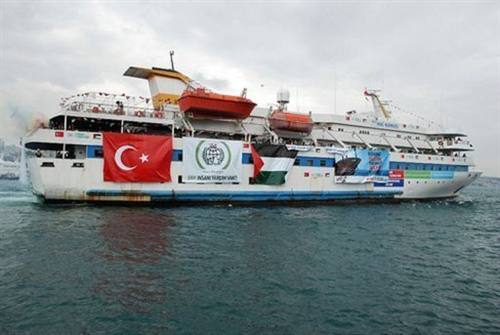
By Steven R Hurst for The Associated Press                                                                                                                                                                                                                                                    President Barack Obama scored two key foreign policy victories this week _ a new round of U.N. sanctions on Iran even as he kept Israeli-Palestinian talks on life support after the Israeli attack on Turkish ship carrying aid to Gaza.  The unintended costs may be heavy.

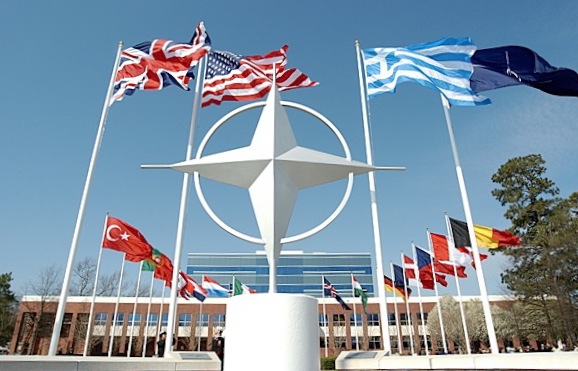
Both issues threaten key alliances with Muslim Turkey. And both test the ability of the U.S. and Israeli to cope with Ankara’s move out of the Western and NATO orbit toward largely Islamic regions of the Middle East and Central Asia. That matters because the United States is losing sway with its longtime NATO anchor, a democracy that bridges Europe to Asia and the Middle East.

Israel too is struggling to avoid Turkey’s threatened estrangement _ a break that would cost the Jewish state its only Muslim military ally. Turkey was one of the first countries to recognize Israel after its establishment more than six decades ago. The widening fissures in both alliances likely carry heavier psychological than strategic implications for the time being, particularly for Israel.

Here’s why. Turkish Prime Minister Recep Tayyip Erdogan “suddenly is the most popular politician in the Arab world and he doesn’t speak a word of Arabic,” asserts Henri Barkey of the Carnegie Endowment for International Peace.

Erdogan’s popularity grew exponentially after the Israeli commando raid on a Turkish-sanction flotilla of aid ships bound for Gaza. Muslims across the Middle East are holding him up as a hero for his tough talk against the Jewish state in their midst. That’s a stunning reversal. Turks, who migrated into modern day Turkey from Central Asia centuries ago, had always been seen in the Arab world as heirs to the Ottoman empire that had oppressed Arabs for 400 years.

Erdogan received a thunderous reception from fellow Muslim leaders Thursday at the Turkish-Arab Economic Forum that opened with calls for an international investigation of the May 31 Israeli raid that killed eight Turkish activists and a Turkish-American teenager. Erdogan’s Islamic-rooted Justice and Development Party came to power in 2002 in a landslide victory, a clear shift away from Turkey’s secular traditions that were established in the modern state, the post World War I and shrunken remnant of the Ottoman Empire.

The political shift was a clear precursor of Turkey’s move toward a more comfortable and powerful place in the Muslim world, despite continued efforts for membership in the European Union. Erdogan has since taken to championing the Palestinians’ cause, often more loudly than their fellow Arabs. That had badly strained Israeli-Turkish relations even before the crisis that blew up around the Gaza aid flotilla.

Then there was Turkey’s insertion of itself into the effort to move Iran away from uranium enrichment and its alleged program to build a nuclear weapon. After Iran rejected a deal to swap nuclear fuel last fall, the United States was determined to impose a fourth round of U.N. sanctions on Tehran. Washington had the backing of fellow U.N. Security Council members France and Britain all along and was on the verge of announcing that Russia and China also were on board.

Turkey, with help from Brazil, suddenly announced that it had revived the swap deal and that Iran had agreed. That agreement, more than a half year after initially rejected by Iran, was deeply flawed.

And the next day the United States said a new sanctions package had unanimous support from all five permanent Security Council members. It thanked Turkey for its efforts but said the train had already left the station. When the council voted earlier this week, only Turkey and Brazil cast no votes. Those did little but register protest since neither country holds a veto.

In spite of its rhetoric and obstructionism, Turkey does not appear ready any time soon the break fully from the West. It has vast interests intricately woven into NATO and the European Union. Turkey has a customs union agreement with its top trading partner, Europe, and wants to become part of the EU. But there is no doubt that the tone in Turkey’s foreign policy is changing.

Although the United States has been its chief ally since the Cold War, Turkey opposed the U.S. invasion of Iraq through Turkish soil, triggering tensions with Washington. Until the late 1990s, Turkish relations with Iran were tense, with its secular, westernized government accusing Tehran of trying to export its radical Islamic regime to this predominantly Muslim but secular country. Today, Turkey wants to build deeper trade ties with Iran.

Erdogan also is building support for next year’s election by playing the Islam card _ one that appeals heavily to traditionalist, rural and Muslim voters who make up the vast majority of the electorate. “This is not being driven by foreign affairs,” said Jonathan Adelman, professor at the University of Denver. “Erdogan is winning points at home _ going back to the country’s Muslim roots.”

Deaths as Israeli Forces Storm Gaza Aid Ship

As reported on BBC

More than 10 people have been killed after Israeli commandos stormed a convoy of ships carrying aid to the Gaza Strip, the Israeli army says. Armed forces boarded the largest vessel overnight, clashing with some of the 500 people on board. It happened about 40 miles (64 km) out to sea, in international waters.

Israel says its soldiers were shot at and attacked with weapons; the activists say Israeli troops came on board shooting. The activists were attempting to defy a blockade imposed by Israel after the Islamist movement Hamas took power in Gaza in 2007. There has been widespread condemnation of the violence, with several countries summoning the Israeli ambassadors serving there.

UN chief Ban Ki-moon said he was “shocked by reports of killings and injuries” and called for a “full investigation” into what happened.

Israeli Prime Minister Benjamin Netanyahu, who is in Canada, has cancelled a scheduled visit to Washington on Tuesday to return to Israel, officials said.

Earlier, he expressed his “full backing” for the military involved in the raid, his office said. The White House said the US “deeply regrets the loss of life and injuries sustained” in the storming of the aid ship.

A spokesman said US officials were “currently working to understand the circumstances surrounding this tragedy”.

‘Guns and knives’The six-ship flotilla, carrying 10,000 tonnes of aid, left the coast of Cyprus on Sunday and had been due to arrive in Gaza on Monday. Israel had repeatedly said the boats would not be allowed to reach Gaza.

Israel says its soldiers boarded the lead ship in the early hours but were attacked with axes, knives, bars and at least two guns.

“Unfortunately this group were dead-set on confrontation,” Israeli government spokesman Mark Regev told the BBC.

“Live fire was used against our forces. They initiated the violence, that’s 100% clear,” he said.

Organisers of the flotilla said at least 30 people were wounded in the incident. Israel says 10 of its soldiers were injured, one seriously. A leader of Israel’s Islamic Movement, Raed Salah, who was on board, was among those hurt.

Audrey Bomse, a spokesperson for the Free Gaza Movement, which is behind the convoy, told the BBC Israel’s actions were disproportionate.

“We were not going to pose any violent resistance. The only resistance that there might be would be passive resistance such as physically blocking the steering room, or blocking the engine room downstairs, so that they couldn’t get taken over. But that was just symbolic resistance.”

The footage showed a number of people, apparently injured, lying on the ground. A woman was seen holding a blood-stained stretcher.

Al-Jazeera TV reported from the same ship that Israeli navy forces had opened fire and boarded the vessel, wounding the captain. The Al-Jazeera broadcast ended with a voice shouting in Hebrew, saying: “Everybody shut up!” Israel’s deputy Foreign Minister Danny Ayalon said his country “regrets any loss of life and did everything to avoid this outcome”.

He accused the convoy of a “premeditated and outrageous provocation”, describing the flotilla as an “armada of hate”. Palestinian Authority President Mahmoud Abbas condemned Israel’s actions, saying it had committed a massacre, while Hamas said Israel had committed a “great crime and a huge violation of international law”.

Turkey, whose nationals comprised the majority of those on board, accused Israel of “targeting innocent civilians”. “We strongly denounce Israel’s inhumane interception,” it said, warning of “irreparable consequences” to the two countries’ relations

She said there was “absolutely no evidence of live fire”. Israel is towing the boats to the port of Ashdod and says it will deport the passengers from there.

Turkish TV pictures taken on board the Turkish ship leading the flotilla appeared to show Israeli soldiers fighting to control passengers.

The footage showed a number of people, apparently injured, lying on the ground. A woman was seen holding a blood-stained stretcher.

Israel’s deputy Foreign Minister Danny Ayalon said his country “regrets any loss of life and did everything to avoid this outcome”. He accused the convoy of a “premeditated and outrageous provocation”, describing the flotilla as an “armada of hate”.

Palestinian Authority President Mahmoud Abbas condemned Israel’s actions, saying it had committed a massacre, while Hamas said Israel had committed a “great crime and a huge violation of international law”.

“We strongly denounce Israel’s inhumane interception,” it said, warning of “irreparable consequences” to the two countries’ relations. Turkey was Israel’s closest Muslim ally but relations have deteriorated over the past few years.

In Turkey, thousands of protesters demonstrated against Israel in Istanbul, while several countries have summoned Israeli ambassadors to seek an explanation as to what happened.

Greece has withdrawn from joint military exercises with Israel in protest at the raid on the flotilla. Israel had repeatedly said it would stop the boats, calling the campaign a “provocation intended to delegitimise Israel”.

Israel says it allows about 15,000 tonnes of humanitarian aid into Gaza every week. But the UN says this is less than a quarter of what is needed.

Iran Presses Ahead with Nuclear Enrichment Despite Warning from the US and Others

By Manzer Munir

Tehran, Iran- France, Russia and the United States on Tuesday voiced their displeasure with Iran’s escalation of its uranium enrichment and saw this as a great a concern for its neighbors and other countries around the globe. The three countries, nuclear club members themselves, sent a letter to the International Atomic Energy Agency (IAEA) expressing worry about Iran’s actions and demonstrating renewed pressure on the regime of President Ahmadinejad.

This alarm by the US and other countries comes after February 7 when Iran announced it intended to start producing 20 percent enriched uranium for a medical research reactor, defying ultimatums by members of the UN security council that it faces strict UN sanctions unless it halts its nuclear weapons ambitions. The concern is that Iran is enriching uranium not for a medical research reactor but rather for making atomic weapons since enriched uranium in high purity form can be used in the fissile core of a nuclear bomb. “If Iran goes forward with this escalation, it would raise concerns about Iran’s nuclear intentions,” said the joint letter, which was obtained by AFP. “Iran’s enrichment of its LEU (low-enriched uranium) stockpile to higher levels is not only unnecessary, but would serve to further undermine the confidence of the international community in Iran’s actions,” it said.

The US and other powers are trying to convince Iran to accept an IAEA backed deal where Iran is supplied with nuclear fuel for the research reactor in exchange for its low enriched uranium. This is a deal that is not acceptable to the regime in Iran. Iran’s announcement that it would enrich on its own and its “subsequent formal notification to the IAEA are wholly unjustified,” the three countries wrote in the letter to IAEA chief Yukiya Amano. The moves “represent a further step toward a capability to produce highly enriched uranium.” The countries “recognize the need in Iran for medical radioisotopes,” the letter continued. “If Iran does not wish to accept the IAEA offer, we note that these are available on the world market and could be obtained as a responsible, timely and cost effective alternative to the IAEA’s proposal.

The pressure on Iran to not acquire nuclear weapons in the troubled neighborhood of the Middle East is justified. The area has long been very unstable and Iran and Israel have already for several years been fighting a proxy war with each other through Hezbollah in Lebanon and allegedly through arming Hamas in the West Bank and Gaza. But one must also realize that as long as Israel maintains nuclear weapons and there remains no peace in the Middle East, its enemies in the region, namely Syria, Iran, and until recently Iraq would stop at nothing to acquire nuclear weapons technology also. Therefore, the core of this issue as with many other problems involving regional security and even global terrorism have their roots in the situation in the Middle East between Israel, Palestine and its neighbors.

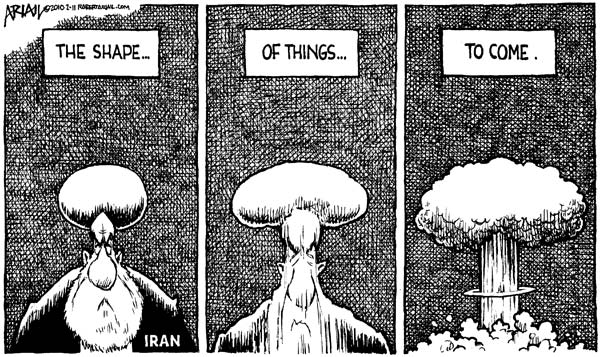
Al-Qaeda itself gives Israel and the United States backing of it as a reason to attack America and its interests. So as long as there is not a resolution to the problem of the Palestinian state, there will be friction and a charged atmosphere in the region. Believe me, it has not calmed down much in the last 62 years. One can continue to expect countries like Iran, Libya, Syria, Egypt, Saudi Arabia and others to continue to desire nuclear weapons in order to feel less threatened by Israel’s arsenal and military supremacy. The real solution to Iran’s nuclear ambitions and other regional security threats to Israel and American interests in the region is the need to get back to the table and return to the difficult task of making peace between the Israelis and its neighbors. Only a lasting and durable peace between the Israelis and the Arabs will encourage nuclear disarmament and make the neighborhood safe from a looming nuclear mushroom cloud.

Temporary Halt in Bombings

palestinian-boy-with-arafat-in-back palestinian-boy-with-arafat-in-back1palestinian-boy-with-arafat-in-back2palestinian-boy-with-arafat-in-back3arafat


January 19, 2009, Israel announced a cease-fire after 22 days of utter
chaos and destruction in Gaza.  Twelve hours later, Palestinian
militants followed suite and declared a week long cease-fire.  More
than 1300 people have died of which 1% are Israelis.
Earlier, a summit hosted  by Egyptian President Hosni Mubarak and
French President Nicolas Sarkozy, called on International leaders to
discuss the crisis and its resolutions.

Also present were Palestinian Authority leader Mahmoud Abbas and UN
chief Ban Ki-moon.   Although no concrete resolutions came at the end
of the summit, each side did make its own unilateral declaration of
a cease fire.  Still far from any permanent peace agreement the Israelis and
Palestinians each declared their demands.  Israel demands a complete
halt to the missile attacks on their Southern border by Hamas or any
Palestinian militants.  Hamas wants Israel to withdraw from the Gaza
strip within a week and to remove all bans and allow access to
humanitarian needs.  Or as stated by Charles Clayton, the national
director of World Vision Jerusalem, an aid group, an “18-month
blockade of the 1.5 million Palestinians in Gaza,” needs to come to an
end.  And he added that this blockade has “devastated the economy,
halted services, aisraels-wailing-wall2nd rendered the people of Gaza entirely dependent on

humanitarian aid.”  In the near future, the Israeli Prime Minister Ehud Olmert has planned
a meeting in Jerusalem.  Leaders of the UK, France, Germany, Italy,
Spain and the Czech Republic are expected to attend.  What, if any,
positive outcome will be reached at this meeting, remains to be seen.  As always, unless all sides are true and honest at the negotiating table, there will not be any lasting peace between these two long warring tribes of the children of Abraham.  Pakistanis for Peace calls on its Jewish and Muslim brothers in both countries to sit down and make an ever lasting peace with the help of perhaps the most important American President since FDR coming into office in Washington DC on Tuesday January 20, 2009. These two groups of people need to realize that with Secretary Clinton and President Obama on board, they have true allies in Real and Everlasting Peace and Never a better time than now to attain it. The Jews and the Muslims greet each other the same way when they meet their families or friends on the street. They say “Shalom” and the Muslims say “Salaam”. Both mean “Peace” in Hebrew and Arabic. Interesting that such a common word and form of greeting and salutation can be so uncommon in the lands of Jesus. Let’s continue to hope for peace in the region on the eve of this historic presidency in the United States across the Atlantic.

President Barack Hussein Obama, 44th President of the United States

President Barack Hussein Obama, 44th President of the United States


As  reported by Manzer Munir in Orlando, FL USA and Taneem Ali and M. Lameesa Ali in Chicago, Illinois, USA.