Archive for the ‘ terrorism ’ Category

Deadly blasts hit Sufi shrine in Lahore

By Syed Shoaib Hasan for The BBC

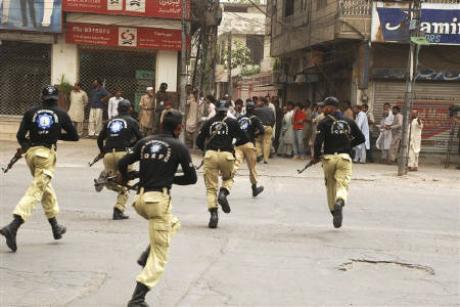
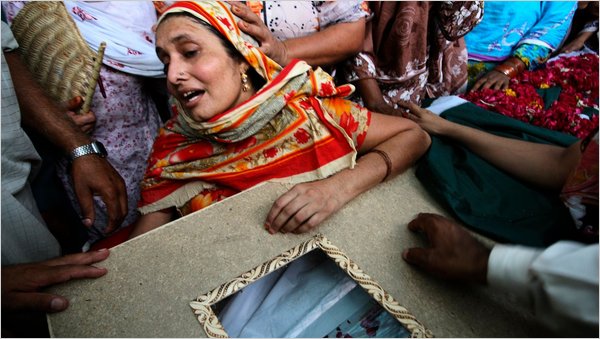
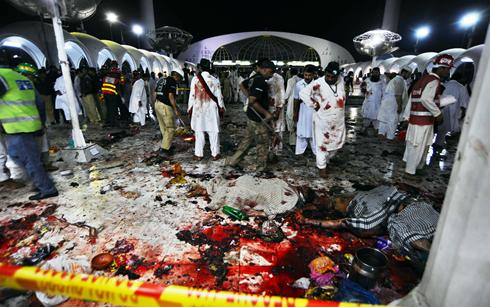
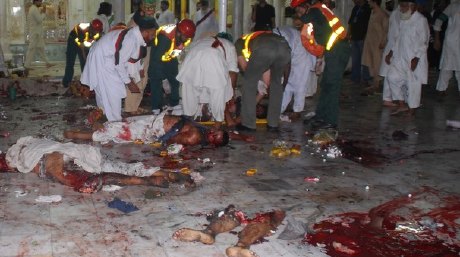
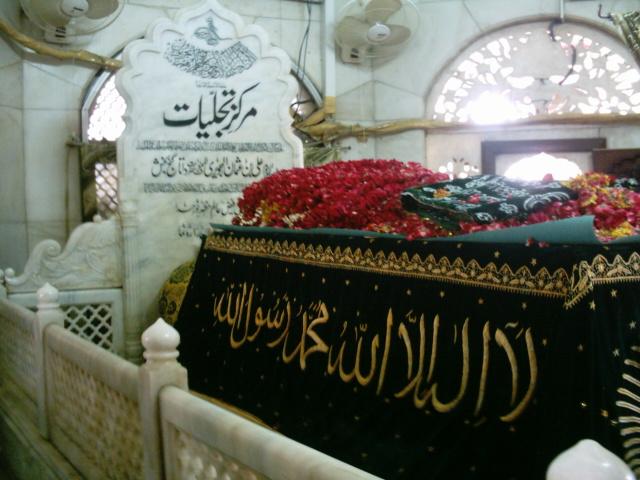
Suicide bombers have launched a deadly attack on a Sufi shrine in the eastern Pakistani city of Lahore. At least 35 people died in the blasts at the popular Data Darbar shrine late on Thursday evening, officials say. At least 175 other people were hurt in the blasts, believed to be the first targeting a shrine in Lahore. Thousands of people were visiting the shrine at the time, officials say. It holds the remains of a Persian Sufi saint, Abul Hassan Ali Hajvery.

Although no-one has yet said they carried out the attack, Taliban militants and their Punjabi jihadi allies have been involved in several such bombings in the northern Khyber Pakhtoonkhwa province. The shrine is largely frequented by members of the majority Barelvi sect, who are seen as heretics by the Taliban. Most of the Taliban belong to the rival Deoband Sunni sect, which strongly disapproves of worship at shrines. Many are also allied to the Sipah-e-Sahaba, and its armed splinter group, Lashkar-e-Jhangvi, which seeks to turn Pakistan into a Deoband Sunni state.

The shrine is visited by hundreds of thousands of people each year from both Sunni and Shia traditions of Islam. At least two attackers were involved, although police initially said three explosions had been heard. ย The impact of the blasts ripped open the courtyard of the shrine. Rescue workers could be seen clambering over the rubble as they carried out the victims. Khusro Pervez, commissioner of Lahore, said two of the attacks took place in the main courtyard and one in the lower level of the shrine.

The first attacker struck in the underground area where visitors sleep and prepare themselves for prayer, he said. As people fled, a second bomber detonated his explosives in the upstairs area. Officials say they believe the bombers used devices packed with ball-bearings to maximise the impact of their attack. ย A volunteer security guard at the shrine described scenes of devastation.

“It was a horrible scene,” said Mohammed Nasir. “There were dead bodies all around with blood and people were crying.” The attack is the biggest on a Sufi shrine in Pakistan since militant attacks began in 2001. ย No group has said it carried out the attack, but correspondents say the attacks continue a growing trend among militants to target members of other sects as well as minorities.

Lahore has been hit by a series of bomb attacks, including a suicide blast at anti-terrorist offices in March, when at least 13 people died. In May, more than 90 people were killed in a double attack on the minority Ahmadi sect in the city.

Earlier, security chiefs had been congratulating themselves after what was the first month in two years in which there had been no suicide bombings in Pakistan, the BBC’s Aleem Maqbool reports from Islamabad.

They said it was proof the militant networks had been disrupted. Most Pakistanis knew the battle against militancy in this country was far from over, he adds. Last year Pakistan launched a major military offensive against militant strongholds in South Waziristan. ย In December the military said they had achieved victory, but subsequent reports have suggested the militants remain active in the region.

Vengeful New Militant Group Emerges in Pakistan

By Kathy Gannon for The Associated Press
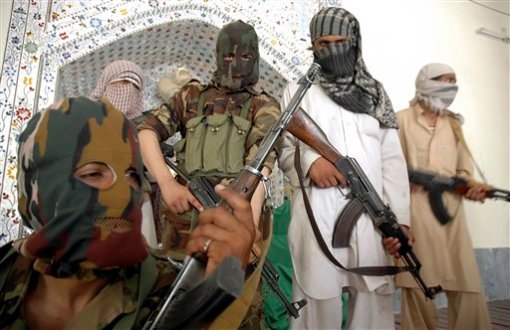
Pakistani authorities now believe a dangerous new militant group, out to avenge a deadly army assault on a mosque in Islamabad three years ago, has carried out several major bombings in the capital previously blamed on the Taliban.

The emergence of the Ghazi Force was part of the outrage among many deeply religious Pakistani Muslims over the July 2007 attack by security forces against the Lal Masjid, or Red Mosque, a stronghold of Islamic militants.

The fierce attack, in which scores of young, heavily armed religious students died, inspired a new generation of militants. These Pakistanis have turned against a government they felt has betrayed them and, to their dismay, backed the U.S. role in neighboring Afghanistan.

The brief but bloody history of the Ghazi Force illustrates the unintended results of Pakistan’s policy of promoting Islamic extremists to fight India in the disputed area of Kashmir. That policy โ€” which Pakistan denies it pursues โ€” now threatens regional stability as the U.S. and Pakistan’s other Western partners pour billions of dollars into the country to stop the rise of Islamic militancy.

The new group is made up of relatives of students who died in the Red Mosque assault. It is named after the students’ leader, Maulana Abdul Rashid Ghazi, who was also killed. The mosque’s religious school, or madrassa, had been a sanctuary for militants opposed to Pakistan’s support of the U.S.-run war in Afghanistan.

Private television stations broadcast vivid scenes of the assault โ€” commandos in black fatigues rapelling down ropes, the crackle of gunfire, bodies of black-shrouded girls carried out through the smoldering gates. Those images stunned the nation, especially families of the students and Pakistanis with deep religious feelings.

“Before the Lal Masjid, militants hadn’t yet declared war on the state of Pakistan. That changed with Lal Masjid,” said Zahid Hussain, author and terrorism expert who has written extensively about Pakistan.

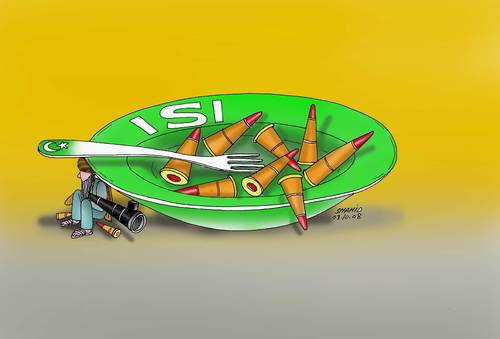
Islamabad’s inspector general of police, Kalim Imam, told The Associated Press that the Ghazi Force was behind most of the deadliest attacks in the capital during the last three years. The attacks targeted the military, the Inter-Services Intelligence agency or ISI โ€” which had ties to a number of militants โ€” and a five-star hotel frequented by foreigners and the Pakistani elite.

The Ghazi Force helped recruit a security official who blew himself up inside the office of the World Food Program last October, killing five people, according to Imam. The force also sent a suicide bomber in September 2007 into the mess hall of the commando unit that attacked the Red Mosque, killing 22 people, he said.

Ghazi Force members may also have been involved in the audacious June 9 attack north of the capital that killed seven people and destroyed 60 vehicles ferrying supplies to NATO and U.S. soldiers next door in Afghanistan, Imam said.

Many of those attacks had been attributed to the Pakistani Taliban, which operates in the remote tribal areas of the northwest along the border with Afghanistan. There is evidence of close ties between the Ghazi Force and the Pakistani Taliban, which the government has vowed to crush.

The Ghazi Force is believed to be headquartered in the Orakzai region of the border area, where the leader of the Pakistan Taliban, Hakimullah Mehsud, held sway for years. The leader of the Ghazi Force is believed to be Maulana Niaz Raheem, a former student at the Red Mosque.

Anger over the bloodshed at the mosque was all the greater because many of the militants and their supporters felt betrayed by a government that had once supported them. Both Ghazi and his brother Maulana Abdul Aziz Ghazi, who was freed on bail this year after two years in jail, were widely believed to have been on the payrolls of both the government and the ISI intelligence service.

Their father, Maulana Mohammed Abdullah, enjoyed a close relationship with the late President Mohammad Zia ul-Haq, and the mosque was a center for recruiting volunteers to fight against the Soviets in Afghanistan in the 1980s.

As opposition grew to Pakistan’s support of the U.S. role in Afghanistan, the mosque became a center of religious agitation against the government, with armed students taking over the complex and police laying siege.

A former senior official in the Interior Ministry told The Associated Press that the police wanted to storm the mosque and end the siege at its outset, send the students home and shut down the religious school and a neighboring library until tempers cooled.

President Gen. Pervez Musharraf refused, the official said, even though police knew that members of al-Qaida’s affiliate organization Jaish-e-Mohammed, which is banned in Pakistan, were bringing in weapons for the students.

Musharraf relented and ordered the assault after militants kidnapped several Chinese nationals running a massage parlor in Islamabad, accusing them of prostitution. The death toll remains in dispute. Red Mosque officials say hundreds died. The government says fewer than 100 were killed.

In a rare interview, Abdul Aziz Ghazi told AP he warned the government that an assault on the mosque would unleash forces that no one could control.

“I have been in jail. I did not form this force and I don’t condone the violence but they are angry at the injustices done,” he said this week.

Although the assault turned many Islamic hard-liners against the government, Pakistan remains unwilling to break all ties to the militants, instead following a high-risk strategy of coddling “good militants” while fighting those deemed “bad militants,” analysts say.

“The military and the ISI have given importance to these militants as assets. But those who have openly declared war, and there is no chance of them returning back to the state, the army is going after them,” said Manzar Jameel, a terrorism expert and researcher on the growth of extremism in Pakistan. “Yet they still believe that some are still assets and that they can keep control of the assets. It’s a failure of strategy.”

Army spokesman Maj. Gen. Athar Abbas denies any assistance to militant groups, saying past ties have long since been severed. He says the Ghazi Force is among the groups the 120,000 Pakistani soldiers waging war in the tribal regions are fighting.

Yet Anatol Lieven, a terrorism expert with the Department of War Studies at London’s King College, said it’s clear that the ISI continues to protect some militant groups, even if it has broken with others.

In a June report, the Rand Corporation think tank also alleged that Pakistan’s military and intelligence still support some militant groups “as a tool of its foreign and domestic policy.”

“A key objective of U.S. policy must be to alter Pakistan’s strategic calculus and end its support to militant groups,” the report said.

Christine Fair, a co-author of that report and an assistant professor at Georgetown University’s Center for Peace and Security Studies, said the battle against extremists in Pakistan is mired in layers of subterfuge by Pakistani intelligence and a “mystifying” acceptance by the CIA of Pakistan’s “good-militant, bad-militant” policy.

She said U.S. intelligence knows Pakistan protects one group โ€” Lashkar-e-Taiba, which India blames for the 2008 Mumbai assault and Afghanistan accuses of masterminding deadly attacks against the Indian Embassy in Kabul.

“Lashkar-e-Taiba remains intact. I have had conversations with … officials in Washington. It is not their priority. Lashkar-e-Taiba is not an issue,” she said in an interview. “Yet Lashkar-e-Taiba has been attacking us in Afghanistan since 2004.”
Imran Khan Moves Supreme Court Against Drone Attacks

As reported on Despardes.com

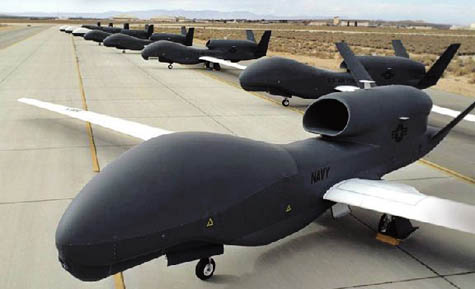
Cricketing legend-turned politician Imran Khan has filed a lawsuit in Pakistanโ€™s apex court asking it to declare drone attacks as war crimes.

According to published reports, the Pakistan Tehrik-i-Insaf (PTI) chief on Wednesday filed a petition in the Supreme Court asking it to declare drone attacks as attacks on the sovereignty and defence of Pakistan and a war crime.

The petition, filed by Imran Khanโ€™s lawyer Shaukat Aziz Siddiqui, argues that the provisions of logistics and facilities to any foreign country or alliance for mass destruction through drone strikes inside the territory of Pakistan resulting into killings of Pakistani citizen is illegal, unwarranted, unconstitutional, in violation the United Nations Charter, universal declaration of human rights, international law as well as the international humanitarian law, a war crime and an attack on the sovereignty, solidarity, integrity and defence of Pakistan.

Imran Khanโ€™s petition was filed today after a Lahore court Lahore cort ruled against drone strikes and called on the government to take appropriate measures to halt strikes by unmanned drones in Pakistan if they arenโ€™t approved by Islamabad.

Federal authorities should take measures to stop drone attacks in Pakistan if they are carried out without formal approval, the court said on Wednesday. The court was responding to a petition that said drone strikes were a violation of national sovereignty.

Drone attacks have increased under the authority of U.S. President Barack Obama, notably inside Pakistan. The CIA, a civilian entity, said it is acting according to the code of law in carrying out the strikes.

Pakistanโ€™s government publicly objects to the attacks, saying they violate its sovereignty. But it is widely thought there is a tacit agreement between the U.S. intelligence agency, the CIA, and Islamabad to allow such strikes, reported Voice of America on its website today.(http://www1.voanews.com/english/news/asia/Suspected-US-Missile-Strike-Kills-10-in-Pakistan-97396999.html)

Two missiles believed fired Tuesday by an unmanned drone struck a village in the tribal regions of Pakistan, killing militants including Hamza al-Jufi, an Egyptian allied with al-Qaida.

Pakistan Rejects Allegations of Taliban Ties

As reported by CNN

Pakistani officials Sunday rejected allegations that their country’s powerful intelligence agency still supports the Taliban and other Afghan insurgents after a paper from a Harvard academic accused the agency of continued links to the rebels.

The powerful Inter-Services Intelligence agency does not “actually control the Afghan insurgency” and does not have “the ability to bring it to an end,” Matt Waldman argues in a paper for the London School of Economics. But the ISI provides “sanctuary, and very substantial financial, military and logistical support to the insurgency,” giving it “strong strategic and operational influence — reinforced by coercion,” according to his report, which cites Taliban commanders among its sources.

The ISI is widely thought to have played a key role in creating the Afghan Taliban during the 1990s, but Pakistan officially denies supporting them now. Maj. Gen. Athar Abbas, spokesman for the Pakistani military, called the claim “rubbish” on Sunday and said Waldman’s report “does not have a credible source or authenticity.”

“At best, it is speculative and only gives open sources without naming [them],” Abbas told CNN. “So, therefore, this kind of report requires a treatment which it really deserves. We are not going to formally respond to this, but we reject these allegations and accusation. If there are hard evidence, we would like for them to be brought out and we would be able to respond accurately.”

And Farahnaz Ispahani, a spokeswoman for President Asif Ali Zardari, called Waldman’s report “one-sided” and dismissed what she called its “wild accusations.”

“If Mr. Waldman had been a seasoned academic, he would have conducted interviews in Pakistan itself to balance his so-called research report,” Ispahani said. “The Pakistani government and its military have been performing an outstanding service to the world community as well as the region in its fight against militancy and extremism, and we can count the dead we have sacrificed in the thousands.”

Waldman’s report is titled, “The Sun in the Sky: The relationship between Pakistan’s ISI and Afghan insurgents.” He based his conclusions on interviews with nine insurgent field commanders in three regions of Afghanistan, plus former Taliban officials, tribal leaders, politicians, experts and diplomats. The title comes from Taliban commanders’ claims that their relationship with Pakistani intelligence is “as clear as the sun in the sky.”

Waldman concluded that that Pakistan “continues to give extensive support to the insurgency in terms of funding, munitions and supplies.” But Abbas dismissed the unnamed sources, calling the report “rubbish.”

“Has he named any Taliban commanders in this, has he named any officials?” Abbas said. “So, therefore, if it doesn’t have any specific source, which is not willing to disclose a name, it just becomes one of those reports that keep appearing. It is a serious allegation, but unless it has a credible evidence to support it or substantiate the report, only then it warrants a serious consideration for response.”

The ISI works not only with the Taliban, but also with the armed Haqqani network, led by Jalaluddin Haqqani and his son Sirajuddin, Waldman wrote. The Haqqani network sometimes cooperates with the Taliban and sometimes fights it.

The Taliban members interviewed believe that the ISI has a heavy influence on their leadership, which some of them said amounts to control, according to the report.

One of the southern commanders claimed: “If anyone rejects that the ISI backs or controls the Taliban, he has a mental problem … all our plans and strategy are made in Pakistan and step by step it is brought to us, for military operations or other activities,” the report says.

And southern Taliban commanders all complained of heavy ISI involvement, which they blamed for some attacks on civilians.

“One southern commander described their predicament as follows: ‘Another group of Taliban is directly supported by the ISI. They will never stop fighting in the country; they want to destroy the government and bring chaos. Behind all the attacks on … NGOs, schools, teachers, doctors, this is Pakistan. We cannot deny that it is Taliban; but there are Pakistan controlled groups among us. They want destabilisation …,’ ” the report says.

Waldman’s report comes two months after a U.N. report on the assassination of former Prime Minister Benazir Bhutto in 2007 — an attack blamed on Pakistani Taliban leaders — found that intelligence agencies hindered the subsequent investigation. The report concluded that the “pervasive reach” of Pakistan’s intelligence agencies left police “unsure of how vigorously they ought to pursue actions, which they knew, as professionals, they should have taken,” the report states.

American Arrested in Pakistan was on Solo Mission to Hunt Bin Laden

By Manzer Munir for Pakistanis for Peace

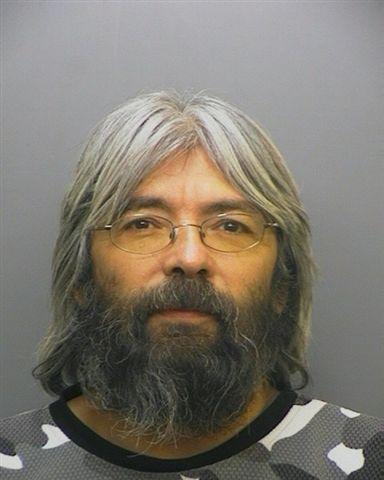
Gary Brooks Faulkner, a 51 year old construction worker from California was arrested by Pakistani police Monday night with a pistol, night vision goggles, and a 40 inch sword and apparently on a mission to kill Osama Bin Laden in revenge for the September 11 attacks on the US.

Faulkner was captured by the Pakistani police in the city of Chitral in the northwestern region of Pakistan near the Afghanistan border. According to a senior police officer, Faulkner was carrying religious Christian books and was reportedly on a mission to avenge the victims of the 9-11 attacks in New York, Washington and Pennsylvania.

According to Pakistani officials, Faulkner arrived in Pakistan on June 3 and stayed in a local hotel in an area of Pakistan known for its spring festivals and frequented by foreign tourists also. Apparently this was Mr. Faulknerโ€™s sixth trip to Pakistan since 2002. At a press conference in his present state of Colorado, Faulknerโ€™s brother Scott Faulkner, a physician, stated that his brother Gary was โ€œon a mission.โ€

“He’s not crazy,” Dr. Faulkner said of his brother. “He’s not a psychopath. He’s not a sociopath.” Because of Osama Bin Ladenโ€™s security and Gary Faulknerโ€™s kidney condition, Dr Faulkner did not believe he would see his brother again as he dropped him off at the airport prior to his flight to Pakistan this month. “I did not think I was going to see my brother again,” Dr. Faulkner said. “That’s the nature of going to Pakistan and hunting a wanted man who is surrounded by people with automatic weapons.โ€

Dr Faulkner stated that his brother underwent kidney dialysis three times a week and that if he killed or capture Bin Laden, he would use the reward money to live the rest of his life in Nicaragua helping build houses for the homeless.

According to Pakistani police, Mr Faulkner disappeared from his hotel Sunday night and away from the posted police guards, who are customarily there for the security of foreigners. When he checked out without informing police, officers began looking for him, according to the top police officer in the Chitral region, Mumtaz Ahmad Khan. He was in custody after a 10 hour search in a forest area in a high security zone close to the border with Afghanistan. He surrendered without any resistance and was flown to Peshawar where members of the United States embassy were notified of the arrest of an American.

“We initially laughed when he told us that he wanted to kill Osama bin Laden,” Khan said. But when officers seized the weapons and night-vision equipment, “our suspicion grew.” He said the American was trying to cross into the nearby Afghan region of Nuristan.

Chitral and Nuristan are among several rumored hiding places for bin Laden along the mountainous border between Afghanistan and Pakistan. He is currently being questioned by members of Pakistanโ€™s intelligence officials according to reports and is in Peshawar where at present he has not been charged with any wrongdoing.

Whether Faulkner was there on a half baked suicidal, Rambo style mission or he truly believed he could be successful in finding and infiltrating Osamaโ€™s inner circle in order to capture or kill him remains to be seen. Nonetheless, it is a testament to the American โ€œCan-doโ€ spirit that a patriotic yet perhaps disillusioned and aging construction worker could take it upon himself to go to dangerous areas of Pakistan in order to avenge the victims of September 11. Whether he is simply crazy or foolish, one can not deny his desire to capture one of the most wanted man in history.ย We can onlyย dream of the possibilities of real capture or death of Bin Laden if the majority of people in the Afghanistan-Pakistan region wanted to capture Osama and the terrorist Taliban leaders like Mullah Omar and others who shelter him.

India, Pakistan And U.S. Strategic Dialogue

By Apoorva Shah for The American Enterprise Institute

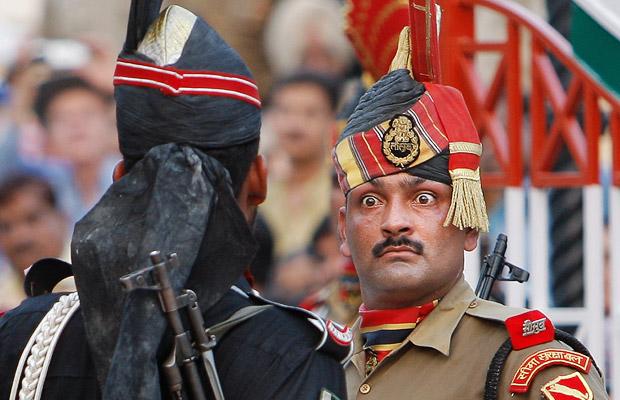
At this weekโ€™s first U.S.-India Strategic Dialogue in Washington, D.C., talks between the two countries will cover the spectrum of bilateral and multilateral issues, from trade and economic cooperation to terrorism and regional security.ย 

American participants may even feel the need to bring up Indiaโ€™s strained relationship with Pakistan. But it would serve them well to first consider a Times of India story from earlier this year, which went almost unreported in the United States.

According to an interview in the Indian newspaper with former Pakistani foreign minister Khurshid Mahmud Kasuri, India and Pakistan in 2007 were days away from reaching a comprehensive accord on their territorial dispute over Kashmir, the axis of the countriesโ€™ six-decade-long rivalry and casus belli of three wars between the two nations.

Kasuri, Pakistani leader General Pervez Musharrafโ€™s chief diplomat from 2002 to 2007, said in April that the secret deal had been in progress for more than three years and would have led to a full demilitarization of both Indian- and Pakistani-occupied areas of Kashmir and would have awarded the region a package of loose sovereignty at a point โ€œbetween complete independence and autonomy.โ€ Not only were Indian and Pakistani leaders on board (including, most importantly, the Pakistani military), so was every Kashmiri leader except for one hard-line separatist, Syed Ali Shah Gilani.

The accord was slated to be signed during Indian Prime Minister Manmohan Singhโ€™s scheduled visit to Islamabad in February and March of 2007, but before the trip ever occurred, a country-wide lawyersโ€™ protest in Pakistan had turned into a broader opposition campaign against General Musharraf. The rest of the year would be one of the most tumultuous in Pakistanโ€™s history, marked by the siege of the Red Mosque in July, the return of former Prime Minister Benazir Bhutto in October and her subsequent assassination in December, and the return of popular leader Nawaz Sharif from exile in September.

By August of the following year, public opposition had peaked, and Musharraf was forced to resign his post as president, ending his decade-long tenure as leader of Pakistan. After Musharrafโ€™s ouster, it appears that the deal had lost much of its momentum.

Then in November, the accord suffered another setback as ten Lashkar-e-Taiba terrorists took Indiaโ€™s largest city, Mumbai, hostage for almost 72 hours, killing more than 160 people and injuring scores more. The attack was quickly coined โ€œIndiaโ€™s 9/11,โ€ and the evidence pointed directly to Pakistan, where the gunmen had been trained and equipped.

In protest, India cut off all diplomatic talks with Pakistan almost immediately; there were even rumors that the country was preparing military action against its northern neighbor. Within a span of less than two years, the India-Pakistan relationship had traveled the spectrum from apparent rapprochement and compromise to mutual suspicion and renewed hostility.

Since then, the signs have only appeared to worsen: for example, in 2009, when Indian Army chief General Deepak Kapoor publicly introduced revisions to his countryโ€™s โ€œcold startโ€ military strategy.

This military modernization and training program, which was developed in response to the armyโ€™s sluggish mobilization to the Pakistani border following the December 2001 terrorist attacks on the Indian parliament, remained mostly under the radar for most of the early 2000s, relegated to defense journals and the occasional news article.

It was only following the 2008 attacks that โ€œcold startโ€ began to receive renewed attention from the media on both sides of the border and was more publicly discussed by Indian military officials like General Kapoor. Indeed, it appeared as if the next breakthrough in Indo-Pak relations would occur through hard rather than soft power.

Concomitantly, India and Pakistanโ€™s post-Mumbai attempts to return to diplomatic talks also appeared fraught with danger and seemed to only fuel more discord rather than reconciliation.

In February this year, Indian Foreign Secretary Nirupama Rao and her Pakistani counterpart Salman Bashir resumed high-level talks for the first time since November 2008, but both sides appeared unprepared (they could not even agree on the specific subject of the talks prior to sitting down) and spent more time bickering through separate press conferences.

For example, while Bashir accused India of covertly supplying weapons to militants in Pakistanโ€™s Balochistan province, Rao complained that Pakistan had โ€œnot gone far enoughโ€ in the 2008 Mumbai attack investigation. As India presented a dossier of evidence against one of the Mumbai attack perpetrators, Pakistan responded by calling it a โ€œpiece of literature not a dossier.โ€

Itโ€™s hard to see how any progress could be made on improving Indo-Pakistani relations in the midst of this hostility. But does Kasuriโ€™s revelation provide hope that a resolution on Kashmir could be revived? First, excepting Musharraf and Kasuri, many of the supporters of the failed 2007 accordโ€”including Pakistani Army Chief of Staff Ashfaq Kayani, Pakistanโ€™s current track II special negotiator Riaz Mohammed Khan, and, on the Indian side, Prime Minister Singhโ€”still hold high-level positions in their respective governments.

And second, the secrecy of the original deal shows that outward indifference, or even enmity, between the two countries can belie an internal desire for change. In a relationship where hostility is status quo and where amicable relations seem aberrant if not bizarre, a furtive accord lets ruling elites make slow, institutional changes in the relationship while preserving outward form and precedent. It also allows deal-makers to keep tempestuous domestic politicians and party leaders at arms length while deliberating sensitive issues.

Even Indiaโ€™s traditionally hyperactive media seems to understand: A subsequent editorial in the Times of India noted, โ€œthe fact that such a deal exists emphasizes the importance of maintaining contact with Islamabad.โ€

So what can we expect in the months ahead? Indian officials will undoubtedly continue to pressure Pakistan to confront Lashkar-e-Taiba and other terrorist groups that plan to attack India, and another attack could indeed result in Indian military action. There will also be more bickering between the sidesโ€”on water rights, โ€œmost-favored-nationโ€ clauses, and even cricket.

Yet the revelation of the secret deal should be both a lesson and a sign of hope. It is a lesson because it proves that progress on an entrenched conflict like Kashmir can occur without the United Statesโ€™ public mediation.

American officials at the U.S.-India Strategic Dialogue this week should keep in mind that the accord was pursued during the final years of the Bush administration, in which the United States made it a point to separate the U.S.-India relationship from the more sensitive Indo-Pak relationship.

It is a sign of hope because, despite the outward appearance of discord between the countries, internally, leaders on both sides haveโ€”at least at some point in recent memoryโ€”wanted to move forward on a resolution.

As Pakistan continues its domestic offensive against terrorists and India pursues closer economic engagement with its northern neighbor, wanting change may be the best sign that change is on the way.

Pakistan’s Mosques, Media and Intolerance

By Zeeshan Haider for Reuters

Pakistan has been fighting Islamist militants for years, but tough measures are needed to overturn a system breeding religious intolerance after the long failure of authorities to confront mullahs and hardline groups.

Analysts say the notion of religious mistrust is deeply entrenched in the predominatly Muslim country — even in the school system — and it is now up to leaders to mobilise public.

Last week’s massacre in the city of Lahore of more than 80 Ahmadis – a minority religious sect deemed non-Muslim and heretical by the constitution – has generated a heated debate in Pakistan, a U.S. ally, on how to tackle the issue.

In a sign of how hatred is propagated, The News newspaper said one of the two surviving gunmen caught by security forces said he had been persuaded that Ahmadis were “blaspheming” Islam.

Identified as Abdullah, he told investigators that his mentors had him believe that Ahmadis were drawing caricatures of Prophet Mohammad during a recent online contest and “so their bloodshed was a great service to Islam”, the newspaper said. That raised alarm bells in a country combatting militancy.

“The nagging feeling that the government has already lost the battle against extremism has now acquired the force of conviction,” Zafar Hilaly, a former ambassador, wrote in The News last week.

After joining the U.S.-led war on terrorism after the September 11, 2001 attacks on the United States, Pakistan mounted a crackdown on militancy, outlawing several groups, arresting hundreds of suspects and warning hardline mullahs against delivering hate speeches and distributing hate literature.

The government also vowed to reform tens of thousands of Islamic seminaries, known as madrassas, many of which are considered as breeding grounds for militancy. Almost none of these measures, however, has been implemented.

Most outlawed groups have re-emerged under new names. Radical clerics still deliver fiery speeches against sects. The U.S. Embassy acknowledged the difficulties, given the importance placed on Pakistan helping Washington battle al Qaeda and its extremist allies.

“We recognise this is a problem,” an embassy official said, adding that the embassy encouraged Pakistanis to take part in exchange programmes to see a multi-faith United States.

Analysts say Pakistani leaders dating back to the 1970s, however popular, took no action to counter radicals. Hasan Askari Rizvi, a Lahore-based political and security analyst said governments have lacked the stomach to implement reforms, particularly in school curricula.

“In textbooks used in government schools, Pakistan is equated with Muslims…They teach Pakistan is a country only for Muslims. They don’t teach that non-Muslims also live here,” he said.

Journalist and analyst Ahmed Rashid described school programmes as “the most sensitive issue. But it is an issue in which any attempt to change the curriculum would have a whole host of fundamentalist groups oppose you.”

In 1974, Pakistan’s first popularly elected Prime Minister, Zulfikar Ali Bhutto, bowed to Islamic groups and won approval of a constitutional amendment declaring Ahmadis as non-Muslims. He also switched the weekly day off from Sunday to Friday.

But much of the upsurge in militancy occurred in the late 1970s and 1980s during the “Islamisation drive” by late military leader General Mohammad Zia-ul-Haq and Pakistan’s support for the U.S.-baked Afghan jihad or holy war against the Soviet invasion which saw a rapid growth of radical groups and madrasas.

Haq introduced several laws, such as the notorious blasphemy law, which are deemed discriminatory against non-Muslim minorities and fuelled tensions between different Muslim sects. Subsequent governments did nothing to reverse the laws.

Military dictators, who ruled Pakistan for more than half of its existence, have also used militant groups to further policy objectives in Afghanistan and India and marginalise liberals.

“In earlier years, in order to pursue its foreign policy using the instrument of jihad, the state actively sought to create a religiously charged citizenry,” said Pervez Hoodbhoy, a physicist and analyst. “But, now that the Pakistani military and political establishments have become a victim of extremism, they are foundering in confusion.”

Former President Pervez Musharraf, a military ruler, though he espoused a modern and liberal version of Islam, repeatedly failed to get the laws reviewed while in office from 1999-2008.

Former Prime Minister Benazir Bhutto, a pro-West politician and a vocal opponent of the militants, was killed in December 2007 in a suicide attack blamed on militants linked to al Qaeda. Civilian leaders are made even more cautious now in tackling radical groups by the tremendous fear of militants who have unleashed bomb and suicide attacks across the country.

“Religious intolerance is getting worse in Pakistan because the political leadership lacks the will to fight this,” said analyst Rizvi. “They don’t want to face the wrath of mullahs.”

A Journey into America, Past and Present

By Akbar Ahmed for The Guardian

Muslims are for Americans what the Russians were for Churchill: “A riddle, wrapped in a mystery, inside an enigma.” While the post-9/11 period brought an interest in the Qur’an and its language, the gap between Islam and mainstream America has steadily widened. It remains more urgent than ever for the US to comprehend Islam, a religion practised by one out four people in the world, not only for the sake of its ideals (which include religious tolerance) but also for its geopolitical needs and strategy as America remains militarily involved in Afghanistan, Iraq, Pakistan, and Somalia.

The reality is that Islam remains unknown to most Americans, who, on top of all the other insecurities and fears about the religion, have recently added another: the “homegrown terrorist”, which President Obama has named as one of his administration’s top national security priorities.

I have been in a unique position to observe America’s attitudes towards Islam, travelling with a team of young Americans for over a year throughout the length and breadth of the United States to over 75 cities, visiting more than 100 mosques and talking to thousands of Muslims and non-Muslims.

I realised that it was impossible to study Islam in America without studying America itself and its identity, which I determined goes back to the first Mayflower settlers. In short, there are three basic identities that define American society: primordial, pluralist, and predator. Primordial identity is rooted in the seminal landing at Plymouth and provides the foundation of the two other identities. The aim of the early settlers was to survive and create a Christian society under the rule of law. The majority of the Founding Fathers in the next century would subscribe to what I call pluralist identity – believing in civil rights and liberties, religious freedom and tolerance.

America has a strong foundation in which to solve the challenge of the Muslim community if Americans look to their past and revive the spirit of some of their truly great leaders. Roger Williams, in the 17th century laid the groundwork for separation of church and state and welcomed people of other faiths. The state, said Williams, should allow all religions, including the “Turkish” (Islamic).

Thomas Jefferson owned a Qur’an and we found a statue of Jefferson at the University of Virginia advocating “Religious Freedom, 1786” with the words God, Jehovah, Brahma and Allah carved on the tablet he embraces.

A treaty, which was sponsored by George Washington and signed by John Adams in 1797, pertained to Tripoli and assured that the United States “has in itself no character of enmity against the laws, religion or tranquility of Musselmen.” Even the Prophet Muhammad was praised by the Founding Fathers; Adams called him one of the world’s “sober inquirers after truth” alongside such figures as Confucius and Socrates, and Benjamin Franklin cited the prophet as a model of compassion.

As primordial identity was taking shape at Plymouth, however, and new trends were already emerging. The more zealous of the settlers argued that the land was given to them by God, and they were to occupy it regardless of who was living there. As their confidence grew, they began to prey on the weaker natives, justifying their force in the name of protecting the community, generating an arrogance that did not encourage self-reflection and making it easy to demonise and destroy the enemy. This marked the birth of a predator identity.

It is this understanding of American society which allows us to put the Muslim community in America into context. Our findings from the field bring both bad news and good news. The bad news is that every one of the major American Muslim categories – African Americans, immigrants, and converts – has been involved in recent violence-related cases in the United States. In view of the bankruptcy of Muslim leadership and American failure to truly understand the Muslim community, it is not difficult to predict that violence will increase in both frequency and intensity. I am sorry to say that the government and its various agencies still do not have an adequate policy towards the country’s Muslim population. Some Muslims are affected by US actions taken in response to 9/11, which included the arrests and deportation of thousands, prompting many others to flee the country. These realities have reinforced the sense of being a mistrusted community. Others resent the Islamophobia they see in the media.

The good news is that American and Muslim leaders alike are now conscious of the problem of terrorism and its scale and are actively discussing the position of Muslims in America. Some of our findings challenge the received wisdom telling us that most Americans are hostile to Muslims. Of those questioned for our study, 95% said that they would vote for a Muslim for public office, for example, and an equally high number of respondents had no problem with Muslims being “American”, although some inserted “if” clauses. We found a patriotic and vibrant Muslim community committed to contributing to the country. Dialogue and understanding are urgently recommended.

America stands at a crossroads. It will have to choose either to embrace the Founding Fathers’ pluralist vision or the America that compromises the Constitution and the values of the Founding Fathers. Primordial and predator identity remain alive and well in today’s United States. In one way or another, people everywhere have a stake in America resolving its identity because America’s unique, universal vision of society formulated by its Founding Fathers attracts the world. A new chapter in the history of the United States has opened after 9/11 and America’s future will be decided on how it resolves its ongoing engagement and entanglement with Islam.

Official Admits Militancyโ€™s Deep Roots in Pakistan

By Jane Perlezย and Waqar Gillani for The New York Times

LAHORE, Pakistan โ€” Days after one of the worst terrorist attacks in Pakistan, a senior Pakistani official declared in a surprising public admission that extremist groups were entrenched in the southern portion of the nationโ€™s most populous province, underscoring the growing threats to the state.

ย The statements by the interior minister, Rehman Malik, after the killing of more than 80 peopleย at two mosques last week here in Lahore, were exceptional because few Pakistani politicians have acknowledged so explicitly the deep roots of militancy in Pakistan. They also highlighted the seeming impotence of the civilian government to root out the militant groups, even in Punjab Province, providing a troubling recognition that decades of state policy to nurture extremism had come home to roost in the very heart of the country.

ย The extent of the problem has become an increasing concern for the United States, which has pressed the government to deal with the issue with renewed urgency since the failed attempt by a Pakistani-American to explode a car bomb in Times Square.

ย โ€œWeโ€™re dealing with a problem that is so deeply burrowed into the bosom of the society,โ€ said a senior Western official about the difficulty of loosening the grip of the militant groups. โ€œAnd weโ€™re dealing with a government that is unhappy within itself.โ€

The problem for Pakistan, Western officials and some Pakistani politicians said, is not only the specific acts of terrorism by these groups, but the far more pervasive jihadi mentality that has been nurtured in the society by an extensive network of extremist madrasas and mosques.

Mr. Malikโ€™s remarks โ€” in which he rattled off a host of extremist groups once supported by the state โ€” were a nod to these larger problems. In contrast to the tribal areas at the nationโ€™s periphery, where the military is battling the Pakistani Taliban on several fronts, militants were โ€œnow activeโ€ in the southern part of Punjab and were trying to โ€œdestabilize the country,โ€ he said.

Though Mr. Malik seemed to hint at possible military action in Punjab, the civilian government, led by the Pakistan Peoples Party, the more secular of the political parties in Pakistan, has little leverage to make it happen.

The Pakistani military, which still holds most power, has shown little interest in taking on extremist groups in Punjab. The province is a major recruiting area for the army, and many of the militant groups there were created by the state decades ago and have been fostered since as arms of Pakistanโ€™s enduring anti-India strategy.

To a large degree, they have slipped from the control of their handlers in the military and intelligence services, according to Western diplomats and Pakistani security experts, and have linked up with Taliban fighters and other militant groups that are now striking deeper into Pakistan in an effort to overthrow the state.

Today these militants move back and forth easily between the tribal areas for training and Punjab, where they carry out a rising number of spectacular attacks.

โ€œThey โ€” Lashkar-e-Janghvi, the Sipah-e-Sohaba Pakistan and Jaish-e-Mohammad โ€” are allies of the Taliban and Al Qaeda,โ€ Mr. Malik told reporters in Lahore after the mosque attacks.ย 

The loose conglomerate of militants that Mr. Malik listed is now being grouped by officials and others under the name of the Punjabi Taliban, a designation that itself highlights the expanding nature of the threat in Pakistanโ€™s most important province and the militantsโ€™ shifting ambitions. Under that rubric also falls Lashkar-e-Taiba, an anti-India militant group. Like the others listed by Mr. Malik, Lashkar-e-Taiba has been banned by the state, but continues to operate under a different name and apparently with the blessing of the military.

The Punjabi Taliban took credit for the assaults on the two Ahmadi mosques last Friday. At least one of the men arrested by the Pakistani authorities in connection with the Times Square bombing case is connected to Jaish-e-Mohammed, according to law enforcement officials in Karachi.ย  Adding to the difficulty of clamping down on the groups, the Punjabi government, led by Shahbaz Sharif, a leader of the more conservative Pakistan Muslim League-N and a chief political rival of President Asif Ali Zardari, has stopped short of condemning the militants. In some respects, he has treated them as allies.

Two months ago, Mr. Sharif asked the Taliban to stay away from Punjab, arguing that his party and the Taliban had a common enemy in the United States. The Punjab government is โ€œin a state of denial,โ€ said Arif Nizami, a columnist with the newspaper The News. Mr. Sharif played down the attack on the two mosques in Lahore, Punjabโ€™s capital. Instead, he visited the wounded survivors in a hospital quietly at night without the usual television coverage.

The groups hold such sway that Pakistani politicians frequently pander to some, like the pro-Taliban Sipah-e-Sohaba Pakistan, during elections.ย  In a bold illustration of the power of one of the militant groups in southern Punjab, the provincial law minister, Rana Sanaullah, campaigned alongside the leader of Sipah-e-Sohaba, Maulana Muhammad Ahmed Ludhianvi, during a March by-election for the provincial assembly in the city of Jhang.

In an interview, Mr. Sanaullah, said he saw nothing wrong with campaigning with Mr. Ludhianvi. It was a good thing, he said, because it helped bring groups that he described as no longer militant into the democratic mainstream. โ€œIf they want to be law-abiding citizens, we should allow them to be,โ€ Mr. Sanaullah said.ย  Mr. Sanaullah was not alone in seeking votes from Sipah-e-Sohaba. A candidate for the National Assembly running for the Pakistan Peoples Party also won with its support earlier this year. Though security is a paramount concern, government officials and others acknowledge that the problem of militancy will not be solved by military force alone. Having been nurtured through generations, it will also not be undone quickly.

A program announced by Mr. Zardari two years ago to rein in the madrasas has yet to get off the ground, blocked by bureaucratic inertia and fears of a backlash from powerful conservative religious groups, Pakistani officials say. As state-sponsored education becomes too expensive for poor parents, the number of madrasas has actually increased in the past three years, to more than 17,000 in 2010 from 13,000 in 2007. At least several thousand of the madrasas churn out militant students, experts say.

Facebook in Pakistan: Islamists vs. Liberals

By Adam B Ellick and Ahmad Ziadi for The New York Times

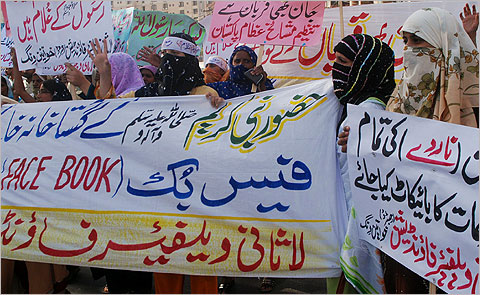
When Facebook was recently banned in Pakistan for hosting a โ€œDraw Muhammad Dayโ€ fan page, one thing became very clear: Islamists here operate with organized precision, able to mobilize the masses in an instant, while the liberal voice remains paralyzed by fear and passivity.

Some media experts predicted that the ban โ€“ which a Pakistani court has now ordered the government to lift โ€“ might motivate the nationโ€™s deeply disconnected liberal elite to take on the Islamists. After all, while members of the urban elite have been largely immune to the recent rise of violent militant attacks, the Facebook ban presented them with a personal vendetta.

In a nation without bars, and where entertainment options such as music concerts are rare, Facebook serves as a precious tool for the elite to organize discreet private events with music, drugs and alcohol. It has also helped mobilize social movements, including the lawyersโ€™ march in 2009.

But the fervor that has followed the Facebook ban has been entirely one-sided in favor of the Islamists.

As the rest of Muslim world remains largely indifferent, tens of thousands of anti-Facebook Pakistanis protested in urban centers by burning American flags. A poll conducted by an IT portal called ProPakistani showed 73 percent out of about 8,000 voters favor a permanent ban on Facebook.

How did it get to this? There has been a widespread SMS campaign perpetuating a false narrative that Pakistanโ€™s ban has brought a behemoth anti-Muslim company to its knees. One SMS attributes the recent fall in the Euro to the ban. Hereโ€™s another SMS I received:

THE BOYCOTT MADE BY MUSLIMS AGAINST FACEBOOK SINCE LAST 2 DAYS

CHARGE DEM A LOSS OF 2 BILLION EUROS..AND IF ITS CONTINUED AFTER 7 DAYS IT WOULD

REACH AROUND 40 BILLION EUROโ€ฆ. PLZ SPREAD AS MUCH AS U CAN.

Facts suggest otherwise. Facebook is not a publicly traded company, therefore, its earnings are not published. Still, some venture capitalists have valued Facebook at about $8 billion. Its annual revenue is estimated between $500 to $800 million.

In addition to the SMS campaign, this week, two new Muslim-friendly alternatives to Facebook have been launched. One of them, www.millatfacebook.com, was inaugurated by the bar association of the same Lahore court that banned Facebook. Millat means โ€œNationโ€ in Urdu.

The site wooed more than 20,000 users with its slogan: โ€œA site for Muslims by Muslims where sweet people of other religions are also welcome!!โ€ Members are asked to specify if they drink alcohol. The founders are enraged at Facebook for curtailing Nazi-related hate speech while refusing to curb the Muhammad cartoons.

Their website says โ€œLetโ€™s prove to the world that if we can generate revenue for Facebook.com then we can also run our own website. Prove to the world that we are independent Muslimsโ€ฆโ€ The other alternative site, www.Buddyflick.com , aims to โ€œcreate/build/run our own network.โ€ But where are Pakistanโ€™s liberal and moderate voices?

Speaking out against the ban can be as hazardous as the forbidden cartoons. When those against the ban held a small news conference, the press mostly ignored it. After the press conference, several anti-ban activists were aggressively confronted by a large crowd of opposing activists as they left the venue. As tensions escalated, the anti-ban activists retreated into the building and waited for the crowd to dissipate.

One friend who is especially furious about the ban wouldnโ€™t dare to speak out. โ€œNobody has the guts to go out and do something about it. The issue of Muhammad is so sensitive that you just never know.โ€

Instead, liberals are hashing out their frustrations in the low-traffic comment sections of liberal blogs and leftist newspapers, and, ironically enough, on their actual Facebook pages. Some have hacked into the banned site from the confines of their gated homes. Among the comment section in one newspaper is the latest joke: Whatโ€™s the difference between Facebook and Lashkarย  e Taiba? Answer: Facebook is banned!

Outrage in India As Mumbai Attacks Terrorist Leader Set to Be Freed By Pakistani Courts

By Manzer Munir for Pakistanis for Peace

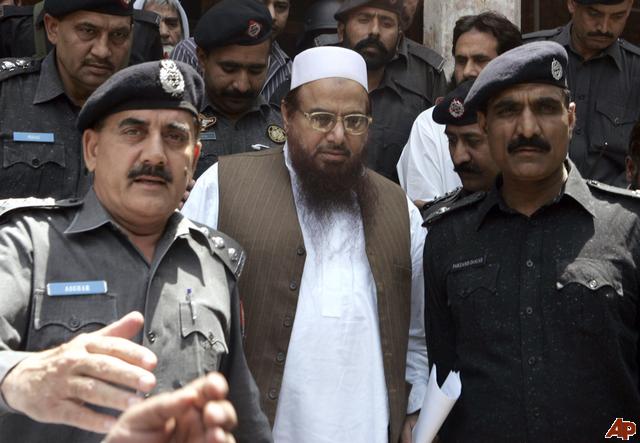
Pakistanโ€™s Supreme Court on Tuesday upheld a lower courtโ€™s decision to free the leader of Lashkar e Taiba (LeT), a militant group that is blamed by India for masterminding ย and orchestrating the November 2008 Mumbai attacks in India that killed 166 people.

Hafiz Mohammad Saeed, the leader of the terrorist group had been placed under house arrest. However, he was released a year ago by the provincial Lahore High Court due to the fact that there was insufficient evidence against Hafiz and other members of the group. The only evidence against him and the group was the confession of Mohammed Ajmal Amir Kassab, the lone person charged with attacks in India, who was given a death sentence earlier this month. Pakistanโ€™s government appealed the decision of the Lahore High cCourt to the Supreme Court which upheld the lower courtโ€™s decision.

Lawyers for the government of Pakistan had requested that India extradite Kassab so that he could give testimony in Pakistani courts against Saeed and the militant group. However, India understandably did not hand over Kassab for fear that the sole surviving perpetrator of the Mumbai attacks could end up in a Pakistani court that sets him free. Sadly, this now happens to be the case as the masterminds of the attacks and leader of an already banned terrorist group, Hafiz Saeed, is set to be freed soon.

This obviously is very disappointing news to India to say the least. It would be the equivalent of letting the mastermind of the September 11 attacks, Khalid Sheikh Mohammed, have a long and high profile trial in New York, only to be set free for lack of evidence and or a weak case by the prosecution. The families of the victimsย would notย stomach such a travesty and neither would the American people. In this same manner, the families of the Mumbai attacks are very upset by this decision by Pakistanย the Supreme Court to release Saeed will now surelyonly serve to stall peace talks between India and Pakistan that were slowly progressing at the sidelines of the South Asian Association for Regional Cooperation (SAARC) meeting in Bhutan in April of this year.

At a time when the worldโ€™s attention is on Pakistan and Pakistanis for being associated with terrorism due to the attempt to bombย Times Square by Faisal Shahzad, the country and its courts have shot themselves in the foot by allowing to set free a known terrorist leader of a group that is not only attacking India and trying to provoke a war between the two countries, but is believed to be behind many attacks inside Pakistan also killing many innocent people.

If the shoe was on the other foot and the attackers came from India and killed 166 Pakistanis in a busy shopping area, while simultaneously attacking a major hotel, railway station and other locations throughout any of Pakistanโ€™s major cities, then trust me, there would be demand for blood by Pakistani citizens and militias would have formed with or without the government’s blessings, and theywould have retaliated against the Indians. The Indian government and the Indian people are showing great resolve and patience with Pakistan and all along hoping that it truly becomes 100 percent committed to fighting and rooting out terrorism and terrorist groups within its borders as it is touted to be.

But as Tuesdayโ€™s decision by the Supreme Court illustrates, Pakistanโ€™s government has a mixed record when fighting extremist groups within the country. As mentioned in previous articles on this site, the government of Pakistan and the army have supported and helped organize some of these militant groups like Lashkar e Taiba in order for the Pakistan army to have a guerrilla outfit as an ally in the event of a war with India. That is why there is reluctance by some inside the military and ISI to fully disband Saeedโ€™s group, believed to be one of the largest and well funded militant groups in Pakistan. The government of Pakistan needs to realize that it cannot talk out of both sides of its mouth. It cannot present itself as one of the biggest allies of the US in the War on Terror, while at the same time not deal effectively with militant groups that are hostile to India.

We at Pakistanis for Peace are outraged that Hafiz Saeed, a known terrorist leader is set to be free from Pakistani courts. Our group and website Pakistanis for Peace was founded immediately after the Mumbai attacks in 2008 by concerned Pakistani Americans in response to the cowardly terrorist attacks by individuals who snuck in from Pakistan to cause one of the biggest terroristย incidents to ever hit India. These attacks certainly became their 9-11.ย 

Toย now have the leader of this terrorist group be set free by Pakistani courts only serves to strengthen the claims of opponents of Pakistan that it is not doing enough in the fight against terrorism. Certainly the families of the 166 dead Indian nationals deserve justice and better outcome than what transpired in Pakistanโ€™s Supreme Court this week. One should make no mistake, only a just and lasting peace with India will ever lead to a prosperous Pakistan and the sooner there is an earnest effort to stopย ALL militant and terrorist groups operating within inside the country by Pakistan, the sooner the two sides can sit across from each other at the peace table.

Pakistani Muslim Rocks Against Extremism

By Richard Allen Greene for CNN

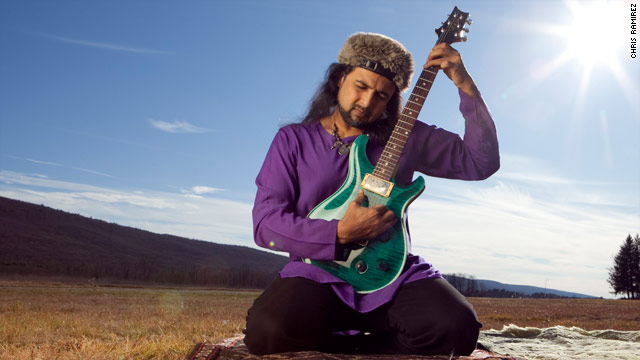
Salman Ahmad is a devout Pakistani Muslim on jihad — but his holy war is a rock ‘n’ roll battle against intolerance, he says. He’s the frontman of the band Junoon. He’s sold 30 million albums. And he says music is a powerful weapon against extremism. “My own personal narrative tells me that arts and culture is mightier than the sword,” he told CNN during a tour of the United Kingdom Thursday.

Ahmad, who was born in Pakistan and grew up in New York, has set himself an ambitious goal — not only fighting Muslims’ own misconceptions about their religion, but reclaiming the very word “jihad” from extremists.

It’s come to mean violent holy war of the kind waged by al Qaeda and the Taliban. But Ahmad says that’s not its true meaning”There has been a sinister case of identity theft where the extremists have hijacked not only language but culture,” he said. “Jihad means to strive, to overcome your ego, to work for social justice and peace.” That may be why his new book and album are called “Rock & Roll Jihad.”

He insists his long-haired, guitar-driven rock music is entirely compatible with Islam.

“Anybody who says that music is un-Islamic is a poser,” he said. “Muslims have expressed their faith, their lives, their hopes, through music, through poetry, for 1,400 years.”

His own music is a fusion of the wildly disparate influences he grew up with, he said. “I was a 13-year-old from Pakistan (when I) arrived in a suburban cocoon like New York,” he recalled. “My exposure to rock-and-roll was watching Led Zeppelin in Madison Square Garden.” Frontman Jimmy Page “had a two-headed guitar and dragons painted on his pants, and I said: ‘That’s what I want to do with the rest of my life.'”

“My music takes equal inspiration from classic rock like Led Zeppelin and the Beatles and also Sufi poetry,” he said, citing a mystical Muslim tradition. “We are in the same tradition of musicians who are sending out a message of love, a message of joy. “And while he may seem like a trailblazer — and be one — he said he is not alone. South Indian Muslim composer A.R. Rahman won an Academy Award for best song for “Slumdog Millionaire’s” anthemic “Jai Ho,” Ahmad observed. And Ahmad’s mentor, Nusrat Fateh Ali Khan, performed with Peter Gabriel and Pearl Jam’s Eddie Vedder. “He said to me, “The Quran promotes cultural diversity, so why not play with rockers?'”

Ahmad’s done some high-profile collaborations of his own, including recording a song with American rocker Melissa Etheridge. “I saw him perform at the concert and was amazed by his vocal and guitar abilities. Here was this traditional Eastern sound that was rocking hard at the same time,” Etheridge writes in the introduction to Ahmad’s new book. They traded ideas, resulting in the song “Ring The Bells.”

She remembers listening to some tunes he recorded to kick off their collaboration: “I found in one track a haunting guitar part that I kept playing over and over until finally the words started to come. ‘Whose God is God? Whose light is light? Whose law is wrong? Whose might is right?'” The message is resonating, Ahmad said.

He has played rock concerts in the disputed territory of Kashmir, with “thousands of kids braving death threats going to hear concerts,” he said.

“It’s a way for people to vent their emotions. Junoon’s sold over 30 million albums,” he said. “That music wasn’t bought by a fringe. That’s a mainstream majority.”

Pakistani-Americans and Police Sharing, and Trying to Spread, Trust

By Anne Barnhard for The New York Times

STRATFORD, Conn. โ€” Last month, a resident of Avon, Conn., received a threatening letter full of religious references. The police chief there, Mark Rinaldo, wondered whether the letter implied a broader threat from a Muslim militant.

He called Dr. Atique A. Mirza, a Pakistani-born Muslim cardiologist, who studied the letter for cultural, religious and political clues. They concluded that the threat probably involved a narrow dispute between neighbors.

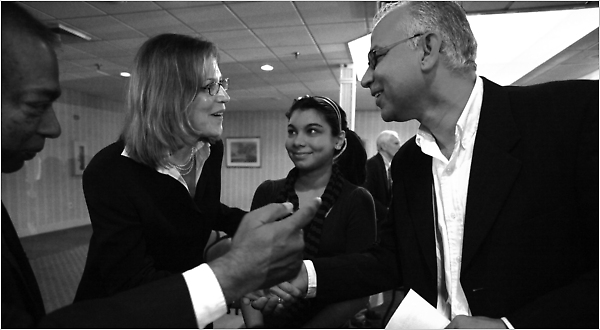
Now that a Pakistani-American man from Connecticut, Faisal Shahzad, stands accused of trying to detonate a car bomb in Times Square, setting off soul-searching and unease among the stateโ€™s thousands of residents of Pakistani descent, Mr. Rinaldo and Dr. Mirza are holding up their relationship โ€” built over three years of meetings and cooperation between Pakistani-Americans and law enforcement โ€” as a model for communities across the state and the nation.

The comfort level is such, said Mr. Rinaldo, that Dr. Mirza โ€œwouldnโ€™t be insulted and say, โ€˜Why are you calling me,โ€™ โ€œ nor would the chief doubt Dr. Mirzaโ€™s analysis. โ€œThatโ€™s the trusting relationship we are looking for,โ€ said Dr. Mirza, who has formally assumed the role of Avonโ€™s police-community liaison for the Pakistani American Association of Connecticut (Paact), which has similar representatives in 13 towns and hopes to increase the number to 70.

Paactโ€™s work makes Mr. Shahzadโ€™s case all the more upsetting to Dr. M. Saud Anwar, a pulmonologist who founded the group. He has played a role in the investigation, acting as liaison between the authorities and a Pakistani friend of Mr. Shahzadโ€™s who feared talking to them. The friend provided e-mail messages that may shed light on Mr. Shahzadโ€™s views on violence.

But Dr. Anwar wishes the attempt could have been stopped before it began, something he calls possible in future cases if cooperation between his community and the authorities increases by another โ€œorder of magnitude.โ€

โ€œThis is not, God forbid, to spy on people, but just to live your life the way it is and if you notice something that concerns you, speak up,โ€ he said, speaking to about 100 Connecticut residents of Pakistani descent and representatives of the F.B.I., the State Police and a dozen police departments who gathered Saturday at the Ramada Inn in Stratford. โ€œThis is someone who lived among us and under the radar without anybody in the community knowing he was radicalized.โ€

Paact moves beyond reminding law enforcement not to unfairly paint all Muslims as terrorists โ€” though it still strongly takes that position. It also calls on Pakistani-Americans to acknowledge that people of Pakistani descent have been implicated in high-profile terrorist attacks, to probe the causes and in the process to remind the public that they want security as much as other Americans do.

Dr. Mirzaโ€™s wife, Faryal, an endocrinologist, took a similar approach when her son was called โ€œterroristโ€ in school several years ago. She began giving annual diversity classes, in which she offered Pakistani food and talked about her culture and religion. She also goes out of her way to let patients know she is Pakistani, so they associate the country with something other than terrorism.

Although she could have argued that the burden of explaining culture should not fall on her, she said, โ€œWe have to be proactive.โ€

Now Paact hopes to franchise its approach to other states. On June 19, the group is holding a national conference in Hartford on radicalization and prevention, featuring the Pakistani ambassador, representatives of the National Counterterrorism Center, theologians and others.

Saturdayโ€™s meeting focused on the narrower question of how it could have been that people did not seem to remember Mr. Shahzad from a mosque or a dinner party, let alone alert the authorities about him.

Dr. Mirza said it pointed to a need to rethink the atomization of suburban culture: โ€œKnow your neighbors; say hi; help them when they need you; be attentive.โ€

Mr. Shahzad may have isolated himself from mosques and Pakistani organizations, but he must have had some connections; he was married to a Pakistani-American and lived in Bridgeport, where there is a relatively large Pakistani-American population, said Jaleel Rahman, a retired real estate agent.

โ€œWe have to be more vigilant,โ€ Mr. Rahman said.

Zaheer Sharaf, Paactโ€™s president, said that many Pakistanis were afraid of the police, because they believe that police officers in their original country are corrupt.

Add to that the post-9/11 fear that reporting a suspicion about a Muslim might lead to an overreaction by the authorities, and it made for a wide gulf between Pakistani-Americans and the police forces that Mr. Rinaldo, the police chief of Avon, said he was unaware of until he began meeting with Dr. Mirza and others.

His reaction: โ€œWait a minute. Weโ€™re the good guys. We have to open up to this community.โ€

This month, he said, he was upset to see negative reactions to Pakistani-Americans after Mr. Shahzadโ€™s arrest.

โ€œIt seems to be one individual, yet a whole community is suffering for the crime,โ€ Mr. Rinaldo said. โ€œItโ€™s not fair.โ€

Mateen Haider, 56, an engineer from South Windsor, said that Pakistanis, like all immigrants, simply want to fit in, so they are loath to do anything that could draw attention, including call the police.

โ€œThat is no longer enough,โ€ he said, telling the meeting: โ€œToday is a great day. We have spoken out. We are all united together as citizens, and we will fight this to the end.โ€

Pakistani is Charged in Chile for Explosives, not Terror

From The Associated Press

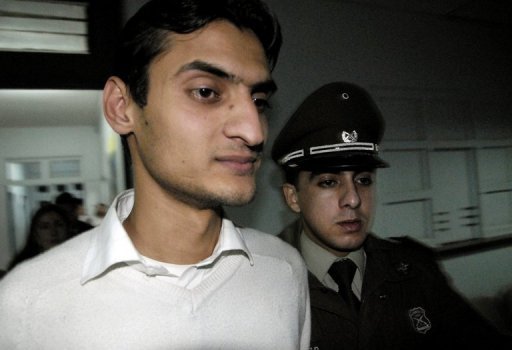
SANTIAGO, Chile — A Pakistani man detained with suspicious chemical residues at the U.S. Embassy in Chile was charged with possessing explosives on Saturday, and then set free pending further investigation.

Mohammad Saif Ur Rehman Khan was ordered to stay in Chile and check in with authorities once a week. Prosecutors have three more months to develop their case, Judge Maria Carolina Herrera ruled.

Defense attorney Gabriel Carrion said the judge declined to charge Khan with associating with terrorists for lack of evidence.

Khan, who maintains his innocence, made a victory sign with his hand and said only “Viva Chile” to a crowd of reporters as he left the courthouse with his lawyer.

Khan was called in to the embassy so that he could be told that his U.S. visa was revoked. A State Department spokesman in Washington said he had been added to a terrorism watch list after the U.S. government received information about him.

A summary of the closed hearing posted on the judiciary’s website Saturday said both TNT and tetryl – a chemical that boosts the power of explosives – were found on his cell phone and documents at the embassy, and that a police search of his room later found the same chemicals on his clothes, a suitcase and a computer bag.

But Carrion says the 28-year-old Khan is an innocent student of the tourism industry and Spanish, and that anyone can pick up traces of the chemical simply by living in a big, polluted city. Prosecutor Xavier Armendariz said the judge found that Khan’s detention was legal.

Chilean police have searched the apartment of an Egyptian man who prayed at the same mosque as Khan and continue to investigate people who associated with the suspect.

Khan’s parents were traveling to Chile to support their son, according to leftist Sen. Alejandro Navarro, who said he persuaded the interior ministry to grant them visas

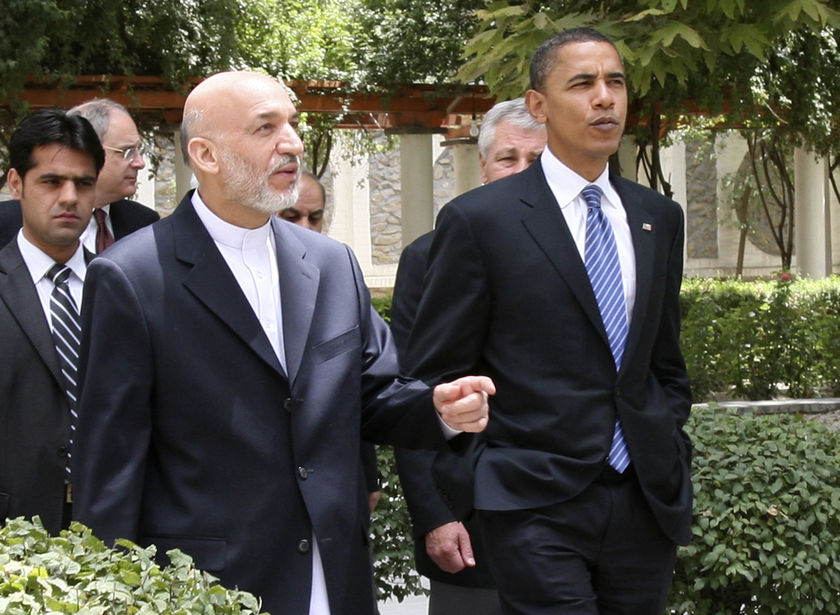
Obama, Karzai Strive To Project Unity, Deny Serious Differences

By Jonathan Landay for The Kansas City Star

President Barack Obama and Afghan President Hamid Karzai asserted Wednesday that progress is being made toward crushing the Taliban-led insurgency, but new studies on the Afghan army and police raise serious doubts about whether the strategy can succeed before a U.S. troop drawdown begins in July 2011.

Flanked by Karzai at a White House news conference, Obama urged Americans to have patience with the “joint strategy” that he unveiled in December to stabilize Afghanistan, defeat the insurgency and prevent the country’s reversion to a Qaida sanctuary. He warned, however, that “there is going to be some hard fighting over the next couple of months.”

He apparently was referring to the summer “fighting season” that’s traditionally racked Afghanistan and that this year will see a drive to clear the Taliban from the southern city of Kandahar that’s being supplemented by an additional 30,000 U.S. troops.

The joint news conference was the public high point of a tightly scripted four-day visit in which Karzai was feted, praised and lavished with the full red-carpet treatment by the U.S. administration, which is determined to reset a relationship scarred by feuding and anti-American tirades by the Afghan leader amid record bloodshed.

The administration concluded that the tensions were an obstacle to Afghan cooperation on a number of fronts central to Obama’s strategy, especially the operations to drive the Taliban from their strongholds in the southern provinces of Helmand and Kandahar, turn them over to government control and jump-start economic development.

Moreover, U.S. officials want to reassure Karzai and ordinary Afghans – as well as regional powers that already are jockeying for influence – that the U.S. troop drawdown doesn’t mean that the United States will abandon Afghanistan as it did after the 1979-89 Soviet occupation, which was followed by a vicious 12-year civil war.

“We are not suddenly as of July 2011 finished with Afghanistan,” Obama said. “This is a long-term partnership that is not simply defined by our military presence.”

Obama and Karzai sought to present a portrait of unity, saying that progress is being made by the U.S.-led counterinsurgency campaign, by an American effort to avert civilian casualties and by Karzai on his vows to clean up narcotics-fueled corruption and boost public services, the rule of law and good governance.

“Our solidarity today sends an unmistakable message to those who would stand in the way of Afghanistan’s progress,” Obama said. “They will try to drive us apart, but we will partner with the Afghan people for the long term, toward a future of greater security, prosperity, justice and progress. And I am absolutely convinced we will succeed.”

Obama conceded that “there are going to be tensions in such a complicated and difficult environment and in a situation in which, on the ground, both Afghans and Americans are making enormous sacrifices.”

However, he said, a lot of “perceived tensions” between the sides “were simply overstated.”

“It’s a real relationship,” Karzai agreed. “It’s based on some very hard realities. We are in a campaign against terrorism together. There are days that we are happy. There are days that we are not happy.

“The bottom line is that we are much more strongly related to each other than we ever were before. That is a good message that I will take back to the Afghan people.”

U.S.-led international efforts have made considerable progress in helping to bring stability, education, health care and development to many parts of the country of 32 million people since the 2001 invasion drove the Taliban and al-Qaida leadership into neighboring Pakistan.

However, the Taliban and allied groups – aided by al-Qaida and the former Bush administration’s diversion of U.S. forces, time and money to Iraq – staged a major comeback that’s surged as U.S. commanders struggle to implement Obama’s strategy.

New reports on the Afghan army and police – each a crucial element of Obama’s plan to transfer responsibility for districts cleared of insurgents to Afghan government control as the U.S. troop drawdown begins – underscore the enormous hurdles that persist.

A report released Wednesday by the International Crisis Group, a respected conflict-prevention organization, says that the Afghan army is suffused with corruption, desertions, ethnic tensions and disputes between its highest leaders.

The report warns that Obama’s plan to expand the Afghan National Army to 240,000 troops from 90,000 by 2013 could worsen those problems and “risk the army’s disintegration after the withdrawal of international forces.”

A report by the Rand Corp. research center on the Afghan Civil Order Police, an elite unit that’s playing a key role in Helmand and Kandahar, found that the contingent is infected with the same problems of corruption and ineptitude that plague other police forces.

ANCOP members have set up checkpoints to shake down residents, been kicked out of the unit for drug use and been shunned in some areas as outsiders, according to U.S. officials briefed on the Rand Corp. analysis, who spoke to McClatchy only on the condition of anonymity because of the sensitivity of the issue.

Relations between Kabul and Washington have been brittle since Obama took office last year, shaken by U.S. criticism of Karzai’s failure to crack down on official corruption, his dubious dependability, his reliance on a patronage network of warlords and family members, and the massive fraud that marred his re-election to another term last August.

For his part, Karzai has complained about civilian casualties caused by U.S. military operations and launched tirades against the United States and his other international backers, reflecting his unpopularity among ordinary Afghans, who are angry that the war is still raging nearly nine years after the U.S.-led invasion.

“We have an interest in reducing civilian casualties not because it’s a problem for President Karzai. We have an interest in reducing civilian casualties because I don’t want civilians killed,” said Obama, who noted that the Taliban have killed more civilians.

A Pentagon report last month said the overall level of violence in Afghanistan rose 87 percent from February 2009 to March 2010. More than 1,760 international troops – including 1,068 Americans – have been killed, according to iCasualties.org, a website that tracks casualties in Iraq and Afghanistan.

Tens of thousands of Afghan security forces, officials and civilians have been killed and wounded. There are currently 102,000 troops from 46 nations, including the United States, in Afghanistan. There will be 98,000 U.S. troops there when the surge is completed later this summer.