Archive for the ‘ US Commission on International Religious Freedom ’ Category

Islamists Rally for Pakistan’s Blasphemy Laws

By Zahid Hussain for The Washington Post

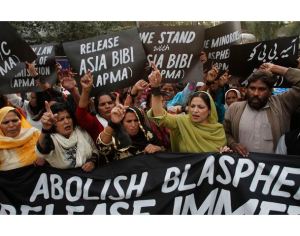
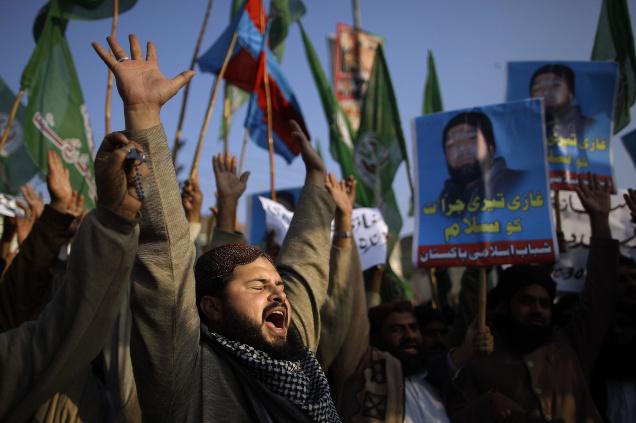
Tens of thousands of Islamists rallied Sunday in Pakistan’s southern port city of Karachi in support of the nation’s controversial blasphemy laws, and clerics threatened to kill anyone who challenged them.

Security was tightened around the house of Sherry Rehman, a former federal minister, who was threatened with death by radical clerics for moving a bill in the parliament last month to amend the blasphemy laws, which currently sentence to death anyone found guilty of insulting Islam.

The blasphemy laws have been in the spotlight since the murder last week of Salmaan Taseer, governor of Punjab province and a critic of the laws, who was shot by a member of his security detail. The shooter, Mumtaz Qadri, later said he killed Mr. Taseer because of the politician’s opposition to the laws. Mr. Taseer was a member of the Pakistan People’s Party, which runs the governing coalition, and was close to President Asif Ali Zardari.

The killing highlighted the extent to which extremist Islam has permeated Pakistan’s middle class and those close to the political elite even as the country grapples with an insurgency from the Pakistan Taliban and other violent Islamist groups. And it has deepened the polarization between moderate and radical Muslims throughout Pakistan. Radical clerics have seized the opportunity to whip up a campaign against moderate and progressive politicians, intellectuals and journalists.

Speakers at the Karachi rally sought to justify Mr. Taseer’s assassination, saying the killer fulfilled his obligation as a Muslim. “We will defend the assassin in the court,” declared Fazalur Rehman, the leader of Jamiat-e-Ulema Islam, a radical Islamic group that recently quit the coalition government after one of its ministers was sacked after publicly accusing a cabinet colleague of corruption.

The rally was organized by an alliance of hard-line Islamic groups including Jamaat-ud-Dawa, which the United Nations has said acts as a front for the outlawed terror group Lashkar-e-Taiba. Lashkar-e-Taiba is accused of masterminding the November 2008 terrorist attacks on Mumbai, which left more than 160 dead. Many demonstrators Sunday carried portraits of Mr. Qadri, who killed Mr. Taseer in a fashionable shopping district of Islamabad. Mr. Qadri has been hailed by Islamists as a great Islamic warrior.

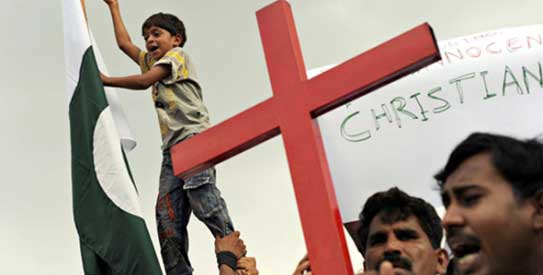
Mr. Taseer had provoked the ire of radical clerics for publicly supporting a Christian woman who has been sentenced to death by a Pakistani court for allegedly making derogatory remarks against Islam’s prophet. The controversial laws have often been used against Christians and other non-Muslim communities, something that Ms. Rehman is seeking to prevent with a private bill she introduced last month.

A cleric of the Sultan Mosque in Karachi in his sermon on Friday called Ms. Rehman an “infidel” for suggesting changes in the blasphemy laws. A pamphlet signed by several Islamic clerics named her for supporting blasphemy. And some hard-line clerics have issued a “fatwa” demanding death to Ms. Rehman, a senior member of parliament of the Pakistan People’s Party.

Ms. Rehman said she is under pressure from the administration to leave the country until the situation calms down. “I am not going anywhere and [will] face the threat,” she said in a telephone interview.

In Pakistan, Another Assassination and the Lessons Unlearned

By Natasha Fatah for Canadian Broadcasting Corporation

The Lion of Punjab is dead. Salman Taseer, the governor of Punjab in Pakistan, was assassinated in Islamabad on Tuesday by one of his own security guards.

When the guard later turned himself in to the police, he said that he killed the man he was supposed to be protecting because he considered Taseer’s campaign against Pakistan’s blasphemy laws an insult to Prophet Muhammad.

The blasphemy laws, which have been around since the 1980s, have been at the heart of a huge religious debate in Pakistan recently after a 45-year-old Christian woman was sentenced to death, allegedly in a dispute over drinking water among farm hands.

Most human rights observers say that the woman did nothing wrong, did not break any blasphemy law, and that the law is just being used to make some kind of example out of her.

Taseer stood by the side of this Christian woman, Asia Bibi, both literally and figuratively.

He stood next to her in the courtroom, which was a brave and dangerous move for any Muslim in Pakistan, but particularly so when you are a member of government and have a profile.

He had also waged an attack on those who wanted her dead by constantly criticizing the mullahs and hard-liners on his very active Twitter account these past weeks.

In response, Islamic fundamentalist politicians and imams were constantly attacking Taseer, even going as far as to say that criticizing the blasphemy law is an act of blasphemy itself, thus making Taseer an apostate.

A member of the Pakistan People’s Party and closely tied to President Asif Ali Zardari, Taseer had dedicated his life to social and political liberalism and to taking on the fundamentalists. But now that bravery has cost him everything.

According to witnesses, the guard who killed Taseer jumped out of a car, pointed his Kalashnikov and blasted away. He then continued his rampage, shooting the governor at least nine times.

Dropping his weapon, the man then gave himself up to police, saying later he was “proud” that he killed the blasphemer.

Another disturbing aspect to this story is that the assassin had managed to get himself into the police force and then, barely four months into the job, was transferred to the unit assigned to protect the governor.

It makes you wonder who was doing the vetting and whether some other even more devious plan was afoot. But how deep and powerful this doctrine of hate must be when someone who is paid to protect you ends up being the one to take your life?

Still, while it was the guard who pulled the trigger, it was the culture of hatred, ignorance and bigotry that put the idea in his head in the first place.

And it will no doubt be the disease of apathy among the majority of Pakistan’s comfortable middle class that will ensure nothing changes, which means more good men and women who want to reform Pakistan’s society will lose their lives.

After all, it was only three years ago that the world lost Benazir Bhutto, the former prime minister and leader of the Pakistan People’s Party, for the same reasons.

She, too, was an advocate on behalf of liberalism and democracy and an enemy of religious extremists and she, too, paid for it with her life. If her death could not motivate the wealthy, powerful and influential in Pakistan to stand up and change things, then I’m not sure what will.

There is strange culture in Pakistan of blaming the victim. When Benazir Bhutto was murdered, many middle-class Pakistanis, in effect blamed her for her own assassination.

They criticized her for knowing the risks and continuing to speak out. Some said that as a mother she was being selfish for putting herself in the public eye.

And now, with Taseer’s murder, there are murmurs about him bringing this on because he provoked the Islamists through his criticism of their agenda. These are the risks you take when you stand behind a Christian blasphemer, some are saying.

It is only in an upside-down world like Pakistan’s self-absorbed middle class where those who die for being brave are considered irresponsible.

And it’s not like these moderate politicians such as Taseer don’t represent the values of the ordinary Pakistani.

Overwhelmingly, whenever given the election opportunity, the people of Pakistan vote in liberal, moderate and middle-of-the-road parties. Hardline Islamist parties do not win majorities in any of the country’s provinces.

Still, there seems to be a disconnect between what the Pakistani middle class say they want — stability and democracy — and what they are willing to work for.

Yes, in the case of Taseer, they will mourn the loss of another great leader. But Pakistan has lost far too many moderate leaders like this while everything goes on as before.

Wealthy Pakistanis will continue to go to their luxurious parties at fancy hotels, where the poor and their servants are not even allowed to enter. They will continue to justify the economic divide that keeps so many of their fellow citizens in squalor. And they will continue to argue that the Islamist militants are just a creation of the Western media.

Fortunately, there are still a handful of journalists, lawyers and politicians in Pakistan who are fighting the good fight and putting their lives on the line to try to push back against the extremists who think that violence is the only way to get their ideas across.

But unless Pakistan’s elites joins this fight, nothing will change.

For Pakistan, with the current government coalition in danger of crumbling and its Taliban launched on a terror campaign in the capital Islamabad itself, Taseer’s murder is a horrible start to a new year.

Yes, there will be vigils throughout Pakistan and around the world this week for this fallen hero. But vigils are temporary and the underlying problem that Taseer was taking on will likely still be around long after the vigils have wrapped up.

Blasphemy Cases Draw Focus in Pakistan

By Alex Rodriguez for The Los Angeles Times

NANKANA SAHIB, Pakistan | Muslim cleric Muhammad Salim isn’t worried that a court or Pakistan’s president might spare a Christian mother from this village who has been sentenced to death on blasphemy charges.

After all, if Asia Bibi escapes the hangman’s noose, he’s confident someone else will kill her.

“Any Muslim, if given the chance, would kill such a person,” Salim said calmly, seated cross-legged on a straw mat at a mosque here. “You would be rewarded in heaven for it.”

Salim isn’t the only one calling for vigilante justice. A cleric in Peshawar has offered 500,000 rupees, or $6,000, to anyone who kills Asia Bibi, if her execution doesn’t take place.

The mother of five is accused of disparaging the prophet Muhammad and the Qur’an during a dispute with three other women. She denies the charge. “My God knows that I never used those words,” she told investigators.

Her case has exposed deep rifts in Pakistan over the blasphemy law, seen by some as an appropriate measure to defend the tenets of Islam, but viewed by others as a dangerous tool easily abused in a society that is a volatile patchwork of ethnicities, religions and sects.

There have been other controversial blasphemy cases. Accused of burning pages from the Koran, Imran Latif was charged with blasphemy in Lahore but then released on bail Nov. 3. Eight days later, two men shot him to death.

This month in the southern city of Hyderabad, a Shiite doctor was arrested on blasphemy charges after police received a complaint that he had maligned the prophet Muhammad. His crime? He tossed out the business card of a pharmaceutical company representative whose first name, Muhammad, was printed on it. The doctor belongs to the smaller Shiite sect known as Ismailis.

“There’s a fundamental lunacy to it,” said Ali Dayan Hasan, South Asia researcher for Human Rights Watch. “There is no good spin to put on the blasphemy law. It’s used frequently in these preposterous ways, for preposterous reasons.”

The law dates to the 1980s and the rule of Gen. Zia ul-Haq. Since Zia’s rule, 974 people have been charged under the law, according to the Pakistani news media. No one has been put to death for a blasphemy conviction.

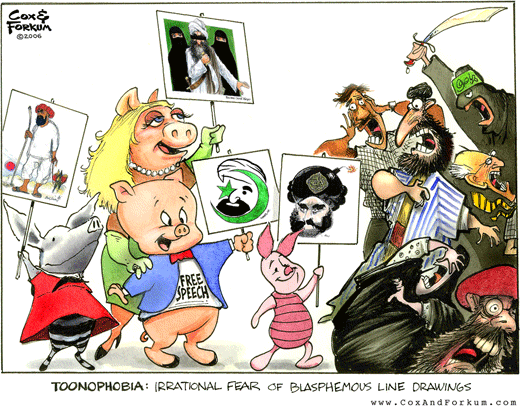
5 Arrested in Plot to attack Prophet Cartoon Paper

By Jan M Olsen for The Associated Press


COPENHAGEN, Denmark – Five men planning to shoot as many people as possible in a building housing the newsroom of a paper that published cartoons of the Prophet Muhammad were arrested Wednesday in an operation that halted an imminent attack, intelligence officials said.

Denmark’s intelligence service said that after months of surveillance they had arrested four men in two raids in suburbs of the capital, Copenhagen, and seized a submachine gun, a silencer and ammunition. Swedish police said they arrested a 37-year-old Swedish citizen of Tunisian origin living in Stockholm.

“An imminent terror attack has been foiled,” said Jakob Scharf, head of the Danish Security and Intelligence Service, or PET. He described some the suspects as “militant Islamists with relations to international terror networks” and said that more arrests were possible.

PET said it seized a 44-year-old Tunisian, a 29-year-old Lebanese-born man and a 30-year-old who were living in Sweden and had entered Denmark late Tuesday or early Wednesday. The fourth person detained was a 26-year-old Iraqi asylum-seeker living in Copenhagen.

The Danish intelligence service said the group had been planning to enter the building where the Jyllands-Posten daily has its Copenhagen newsdesk and had wanted “to kill as many of the people present as possible.” The four men face preliminary charges of attempting to carry out an act of terrorism. They will face a custody hearing Thursday.

“I am shocked that a group of people have concrete plans to commit a serious terrorist attack in this country,” Danish Prime Minister Loekke Rasmussen told reporters. “I want to stress that regardless of today’s event it remains my conviction that terrorism must not lead us to change our open society and our values, especially democracy and free speech.”

Danish and Swedish police, who appeared at a joint new conference with Loekke Rasmussen in Copenhagen, said they had been tailing the suspects for several months.

Anders Danielsson, the head of Sweden’s security police, said they had followed a car rented by the suspects from Stockholm to the Danish border.

“We knew that there were weapons in the car,” he said.

Zubair Butt Hussain, a spokesman for the Muslim Council of Denmark, called the plan “extremely worrying.”

The organization “absolutely condemns any act of terrorism regardless of the motives and motivations that may lie behind,” Hussain said.

There have been at least four plots to attack Jyllands-Posten or Kurt Westergaard, the artist who drew the most contentious of 12 cartoons, which were published by the daily in 2005 as a challenge to perceived self-censorship.

“The foiled plot is a direct attack on democracy and freedom of press,” Westergaard told the German tabloid Bild. “We may not and won’t let anyone forbid us to criticize radical Islamism. We may not be intimidated when it comes to our values.”

In January, a Somali man broke into Westergaard’s home wielding an ax and a knife but the artist escaped unharmed by locking himself in a safe-room in the house. In 2008, two Tunisians with Danish residence permits were arrested for plotting to kill him.

In September, a man was wounded when a letter bomb he was preparing exploded in a Copenhagen hotel. Police said it was intended for the daily, which has also been targeted in a number of thwarted terror plots in Norway and the United States.

U.S. citizen Tahawwur Rana faces trial in Chicago in February in connection with the 2008 terrorist attacks in the Indian city of Mumbai and a planned attack on the Jyllands-Posten.

The cartoons also provoked massive and violent protests in 2006 in Muslim countries where demonstrators considered the drawings as having profoundly insulted Islam. Islamic law generally opposes any depiction of the prophet, even favorable, for fear it could lead to idolatry.

In 2008, the Danish Embassy in Islamabad, Pakistan, was targeted by a car bomb that killed six people outside the mission.

The attacks and threats have caused concern and unprecedented security measures in Denmark, a country that prides itself on personal freedom and openness.

The JPPOL media group building, which includes Jyllands-Posten, is protected by metal fences and guards at all entrances. Mail is scanned and newspaper staff need identity cards to enter the buildings and the various floors.

Lars Munch, JPPOL chief executive, said his workers were worried.

“It is appalling for our group, for our employees and their families to see their workplace threatened,” Munch said.

Scharf said “there was no need to raise the terror threat alert level” in Denmark, although Danish Justice Minister Lars Barfoed described the plot as “terrifying.”

“The group’s plan to kill as many as possible is very frightening and is probably the most serious terror attempt in Denmark,” Barfoed said.

The head of Sweden’s security police, Anders Danielsson, said that “it has been possible to avert a serious terror crime in Denmark through efficient and close cooperation between PET and the (Swedish) security police.” Danielsson said the suspects who are residents in Sweden are also being investigated for suspected terror crimes in that country.

Pakistanis for Peace Editor’s Note– Muslims across the Islamic world, not just the ones who live in the western world, need to shed the notion that God Almighty needs them to go around taking revenge upon people on his behalf who said something blasphemous against him or any of his prophets, be they Muhammad, Jesus or others. Peace by upon them all.

We as a religion should be mature enough to  appreciate that people will not only not see eye to eye with our religious views many time, but that they can still have freedom of speech in their countries and the right, no matter how offensive, in ridiculing our, their own or anyone else’s faith. One just has to be mature enough to handle criticism of the most extreme measures.

The Illiteracy of Hate

A News and Opinion Special Report by Manzer Munir for Paksitanis for Peace

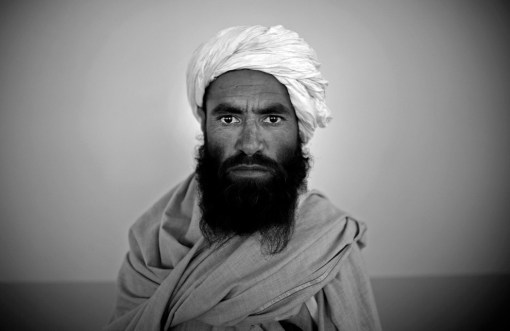
Alleged Taliban Member pic courtsey of Boston Globe

The Taliban are not just simply a bunch of illiterate thugs and bullies for they too often prove to be even worse than animals and barbarians.

Nowhere else in the world has a country experienced a more tragic and callous attack as the one on Christmas day, the birth day of Jesus, the Prince of Peace, than the one Pakistan experienced. In an attack described by President Obama as an “affront on humanity”, the cowards attacked helpless women, children and men while they queued up in food and aid distribution site such as the WFP depot, people who mind you are already suffering from the ongoing war, once in a lifetime floods, and the poverty and radicalism of a generation of desperate, hopeless and increasingly uneducated young men brainwashed by the Taliban and other radical Muslim extremists.

I am still disturbed by the disdain for basic human life that this new attack proves about this radical and extreme enemy. I imagine another one of their brain washed ‘walking zombies’, this time purportedly a woman suicide bomber, a first, even for Pakistan, killed in excess of 43 people in Bajur Pakistan at a World Food Program rations and aid storage and distribution center.

The Pakistani authorities and several domestic and foreign NGO’s who provide food aid at various centers in the area are temporarily closing these centers in order to have increased security. This means that aid distribution will come to a crawl and up to several hundred thousand people will now have to suffer at the hands of the attacker and their backers, the Taliban who have claimed responsibility. The authorities will have to ensure the safety of aid organizations and their personnel for both Pakistani and non Pakistanis relief workers involved in getting food, water and medicine to many people who are either suffering from the war or from the floods.

This catastrophe, although not of near Biblical proportions, does present both a security and humanitarian problem to both the government of Pakistan as well the suffering citizens in the northwest areas of the country where; Taliban fighters take sanctuary from the war in Afghanistan to regroup and return to the fight in warmer weather after the winter months as we have seen in years past. In fact, the reach of the Taliban in Pakistan is now not only reputed to be in the headquartered areas such as in Quetta Pakistan among the restive Baluchi population, now they are so often found to be in major cities like Karachi, Lahore, Rawalpindi, Peshawar and many points in between as they use their religious cover to endear themselves to certain impressionable, weakened or illiterate individuals that are so commonly found in throughout the country. 

Here are the some of the depressing facts. Pakistan, a nation approaching 180 million people at current estimates, perhaps only boasts to having about 60-65% of the male population at a literate level and at best, the females to be only at 40-45% of the total female population. Sadly, what this means is that 4 out of 10 Pakistani males are completely illiterate while up to as many as 6 out of 10 women are not able to read or write. Poverty breeds extremism since there is no support from any government programs or hope for any solution.

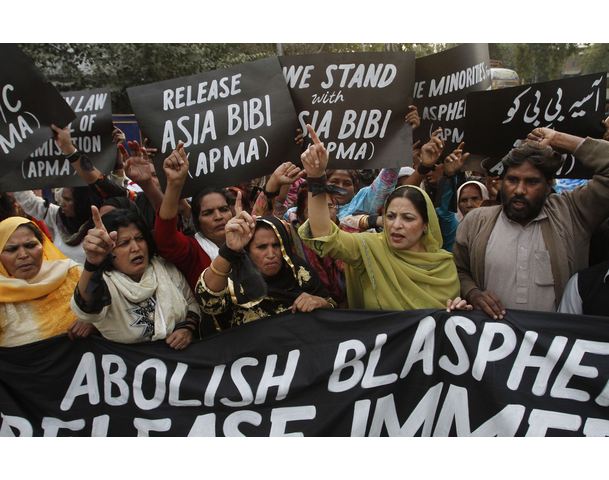
Time and time again throughout history and not just of Pakistan’s, we can see that the role of the church, synagogue or mosque in building the community is deeper than that of any government initiatives or other measures. The poverty for these young men along with the lack of jobs like for those individuals who are either very poorly paid construction site workers, household labor or servants, or beggars and sewer workers, a job sadly almost seems to have been reserved for Pakistan’s Christian community members as many can attest in Pakistan of their unfortunate and depressing state. One does not need to remind the reader of the plight of Asia Bibi (also Aasia and Ayesa), the Christian Pakistani woman who is still awaiting her fate in Pakistani courts after more than a year and a half since first being accused of a BS blasphemy charge and being in jail ever since. 

The medieval mentality of these radical extremists is not something that needs to be described as the evidence is here in this latest attack . Certainly anyone alive in any part of the world outside Pakistan and Afghanistan with eyes, TV, radio or newspaper within their reach can see plenty of near daily reminders of the carnage that many natives of these lands see, and to what they have painfully become accustomed.

 The Pakistani and Afghani Talibans have by all the various reports in newspapers and media sources over the last several years have pointed out to the fact that these groups all have too often similar goals. Not only that, these groups all share the same characteristics. The anti-Americanism, the pro-Wahaabi or Orthodox version of Islam, the need for justice for the ‘suffering of the Palestinian people’ , and the anti-colonial and often times anti western sentiment amongst these groups. The radicalization of certain Muslim groups be they Hamas and Hezbollah in the Mideast or Lashkar e taiba, or any other militant outfit operating in this part of the world as mentioned in this quote a few days before he passed, the late Richard Holbrooke of the US State department said that there are a range of militant groups such as the Afghan Taliban, the Pakistani Taliban, the Haqqani Network, Lashkar-e-Taiba, and that “an expert could add another 30.” His exact words are in quotations. 

The radical Muslim groups who take prey of the weaker, cannot think for themselves because they are scions of those abjectly illiterate segments of the society who are only educated in the madrassahs of Pakistan. This is the de facto way of educating Pakistan’s poorer children in little mosque schools which consist of nothing but Qu’ranic surahs and words of ‘wisdom’ or ‘interpretation’ by the local mullah of the said mosque/school. Most probably these children in many Pakistani madrassahs, especially the ones who live near the border areas within the NWFP or North West Frontier Province of Pakistan as this is the part of the country most affected by its close proximity to Afghanistan.

The people in this area of Pakistan, as well as their cousins in Afghanistan have been fighting one enemy or another for the better part of 100 years now. Whether to them the enemy be the British, during the height of the British Raj rule in India, or to the Soviets and the Red army and the Cold War, then in chronological order came the infighting after the Russian withdrawal as various Tajik, Afghani, Uzbek, Pakistani warlords came in to try and consolidate power to now us Americans and the Pakistanis who are our allies in this war.

Granted we do often hear that the Pakistanis can be doing more. By all accounts, the Pakistani government can do more in terms of fighting this war on terror. Numerous western reports and articles in respected dailies have alleged that small elements within both Pakistan’s Army as well as the spy agency, the ISI, have sympathizers to either the Taliban’s cause or they want to be on favorable terms with a powerful entity that most in Pakistan’s establishment believes that Pakistan will be dealing with and not a weakened Karzai once the US begins to draw down troops and end the war by 2014. If this is indeed true, then these ‘officers’ and supposed ‘leaders’ of Pakistan should realize that the colluding with the enemy, which in this case is the Taliban, is tantamount to treason, and the members of the armed forces of Pakistan as well as the intelligence community should not be assisting the enemies of all concerned: Afghanistan, Pakistan and the United States. 

Of course we must not kid ourselves and assume that only alleviating the illiteracy and poverty of the Pakistani youth will and bettering the education system of the Pakistani poor, particularly that of the refugees and residents of the northwest areas near the Afghan border. No there needs to be a study and introspection by the people of these two countries where this hatred breeds. To to get out of this darkness, the population needs be provided not only safety when delivering food aid and or medicine but aldo most importantly give them a book, a pen, and a paper. And teach them how to fish for knowledge with basic comprehension and deductive reasoning skills that can reject a radical and violent view of Islam too often manipulated by the clergy. This is the only way we can come to end this illiteracy of hate.

–Manzer Munir, is a proud and patriotic Pakistani American, an author, who plans to write a book on Pakistan, who is also a blogger and journalist, and as the Founder of Pakistanis for Peace  can be found at www.PakistanisforPeace.com, www.DigitalJournal.com ,www.Open.Salon.com, www.Examiner.com, as well at other websites as a freelance journalist and writer.

Blasphemy Trials in Pakistan Reveal a Broken Justice System

By Karin Brulliard and Shaiq Hussain for The Washington Post
With its single dirt road, friendly residents and abundance of drowsing donkeys, this village hardly seems a hotbed of religious radicalism.

Nevertheless, four years ago, dozens of angry townspeople marched and chanted, “Death to the blasphemer!” Their demands were answered. Two years later, court records show, a teenaged Muslim named Muhammad Shafique was sentenced to hang for cursing the Prophet Muhammad and tossing pages of the Koran onto “cow dung and urine.”

Today, an air of regret permeates Kulluwal. Shafique’s accusers fled town, and their relatives now say the allegations were lies. Many residents call the case a setup fueled by political and personal rivalries. But as Shafique waits on death row, his appeal stuck in Pakistan’s glacial courts, no one is quite sure what to do.

“The situation at that time was emotional. It was the responsibility of the police to sift through the facts and find the truth,” said Chaudhry Safraz Ahmed, 42, a community leader whose father was one of Shafique’s accusers. “That did not happen. And Shafique is behind bars.”

Pakistan is in the midst of a heated debate over its ban on blasphemy following the sentencing to death last month of a Christian woman, Asia Bibi. The pope condemned that sentence, which has not yet been carried out. Human rights organizations, meanwhile, have demanded the repeal of a law that they say is used to harass religious and sectarian minorities in this Sunni Muslim-majority nation.

But blasphemy cases, about half of which involve Muslim suspects such as Shafique, also point to a more fundamental problem with grave implications for the nation’s U.S.-backed fight against militancy: Pakistan’s broken justice system, corrupt and lacking in expertise, often rewards vendettas and encourages radicalism.

In this system, religious extremism is less an epidemic than a menacing shadow – just as it is across Pakistan, an unstable democracy where Islamist threats often eclipse the majority’s more peaceful views.

The law against blasphemy – which encompasses vaguely worded prohibitions on insults against Islam – gives radicals a tool with which to bully those who don’t share their hardline religious views. Legal experts say lawyers, witnesses and authorities are frequently intimidated into helping to enforce the law, leading to injustices that bolster militants’ anti-government arguments.

“These are the kind of provisions that allow space for extremists to act with impunity,” Ali Dayan Hasan, a Pakistan-based representative for Human Rights Watch, said of the blasphemy law. “This country is, in that sense, at a crossroads where it is time for people to stand up.”

Just what happened on the evening of March 17, 2006, in this agrarian corner of Punjab province remains in dispute. It took a court in the nearby city of Sialkot 73 hearings over 27 months to gather enough testimony for a verdict. Lawyers’ strikes, witnesses’ absences and a funeral caused delays. In the end, the key evidence against Shafique, now 22, was witness accounts and soiled scraps of pages from a Koran, which the judge deemed impossible to fake.

“The question arises whether . . . a Muslim can think to smear the pages of the Holy Book with cow dung and urine just to create an evidence to involve his opponents,” the judge wrote in 2008. “Not an iota of evidence has been produced by the accused in this regard.”

But Shafique’s family, along with many others in Kulluwal, cite two reasons for such a plot. Shafique, an aspiring electrician, had accused his brother’s wife of adultery. And her alleged paramour had powerful allies, among them a town politician with his own motive: Shafique’s brother was challenging him in a village election.

Whatever the case, word of Shafique’s alleged rampage spread, and a crowd beat him viciously, residents recalled. Qari Qadir, the village imam, said he declined requests to announce the offense over his mosque’s loudspeaker, fearing a “serious situation.” Instead, he led a march the next day at which protesters demanded that police file charges.

“Everybody was against him,” said Ahmed, the community leader. “The police thought it could become a law-and-order situation if they did not take action.”

According to court records, two main accusers – the politician and Ahmed’s father – did not testify. Four young men who did gave nearly identical statements about seeing Shafique curse the prophet and rip the Koran.

Shafique testified that the charges were personal and political, and that he “heatedly” loved Allah.

The court sentenced Shafique to join about 7,600 others in Pakistan on death row, about 60 of whom are convicted blasphemers, according to the Human Rights Commission of Pakistan. The country has not executed anyone since 2008, and blasphemy cases are often overturned on appeal.

But for many, that potential reprieve is little help. Suspects are often murdered in prison or after release, a fact one Pakistani court used to justify the blasphemy law – in prison, it reasoned, suspects are protected from public rage.

Blasphemy was outlawed during British colonial rule but made a capital crime in the 1980s under the Islamist military rule of Mohammed Zia ul-Haq. Now, the law is being scrutinized; a bill in parliament would shorten sentences, require evidence that the crime was committed intentionally and introduce punishment for false accusation.

But while recent international attention has galvanized opponents of the current law, it has also roused defenders. Conservative religious parties have threatened mayhem if the law is changed, an idea they deem a Western conspiracy. One cleric in northwest Pakistan went further, promising $6,000 to anyone who kills Bibi, the Christian woman.

Amid this debate, Mirza Shahid Baig, Shafique’s lawyer, sticks to technical arguments. The wrong police investigated, he said, and there was no serious look at Shafique’s side of the story.

“I am a very true lover of the holy prophet, but this case was totally false,” Baig said one recent afternoon at his dusty basement office in the bustling city of Lahore. “Whether the law is correct or not correct according to the morality, this is not my job.” In Kulluwal, most everyone seems to agree that a blasphemer deserves death. But they are certain Shafique was not one.

The investigators and witnesses who testified against him have all left town, and no one else recalls seeing Shafique’s alleged rampage. Ahmed said his father is ready to recant in court.

“This is a baseless charge,” said Ahmed, calmly sipping tea with Shafique’s parents on a recent day. “The issue is religious, so it had an influence on the police. It interfered with the investigation.”

Another resident, Mohammed Ibrahim, is the brother of the politician who accused Shafique and the father of one youth who testified. Ibrahim said his son has since told him he was pressured to lie, and that his brother forced police to file charges.

“He thought of himself as important, as someone who could not be challenged politically,” Ibrahim said of his brother, who, he added, has moved to Canada. To some Kulluwal residents, the whole affair proves elders should resolve disputes, not courts.

Shafique, meanwhile, writes letters to his family from solitary confinement. In one recent missive, he said that prison guards avoid touching him. He understands, he wrote, for he reserves no sympathy for blasphemers.

“My heart weeps for the innocent ones,” he wrote. “But I have no words of sympathy for the sinners . . . I would have killed them myself if I could.”
Aasia Bibi and Impurities in the Land of the Pure

By Manzer Munir for Pakistanis for Peace

The case of Aasia Noreen aka Aasia Bibi illustrates how far Pakistan has to go to secure freedoms for its religious minorities. Christians and Hindus are not the only minorities who are persecuted for their beliefs but it is also Muslim minorities such as the Ismailis, Ahmadis, and Shiites who are routinely harassed, discriminated and also killed. Sadly, it is the case of Aasia Bibi that has brought some much needed attention to Pakistan’s sad state of affairs towards the treatment of its religious minorities.

Several sections of Pakistan’s Criminal Code consist of its blasphemy laws and of all the Muslim countries of the world that have anti-blasphemy laws, Pakistan’s anti-blasphemy laws are by far the strictest. There is section 295 that forbids damaging or defiling a place of worship or a sacred object. Then there is section 295-A that “forbids outraging religious feelings.” There is also 295-B which prohibits defiling the Qu’ran and was originally punishable by life imprisonment but has since been amended to up to three years imprisonment.

No section of the blasphemy law is more controversial or harder to prove than Article 295-C, the law that Aasia Bibi is allegedly charged with having broken. In respect to prophet Muhammad, this statute states that ” Whoever by words, either spoken or written, or by visible representation, or by any imputation, innuendo, or insinuation, directly or indirectly defiles the sacred name of the Holy Prophet Muhammad shall be punished with death, or imprisonment for life and shall also be liable to a fine.”

Aasia’s case and charges against her started almost a year and a half ago when there was a quarrel over a bowl of water in a dusty village in the heart of Pakistan’s Punjab province. A group of women were working the fields in the heat of the Pakistani sun when one of them, Aasia Bibi, dipped her glass in the communal bucket of drinking water to fetch herself and others a glass of water to drink and immediately was rebuffed by the other women who claimed that the water was now unclean as it had been touched by a non-Muslim. According to witnesses, instead of quietly bowing her head and taking the indignities, Aasia’s crime was that she mounted a strong defense of her faith and remained steadfast in her demeanor that she did nothing wrong. Too often in Pakistan, the blasphemy laws are used against religious minorities to settle personal vendettas and old scores according to Pakistan’s Human Rights Watch, a watchdog group monitoring the case.

The news traveled fast in Aasia’s village of Ittan Wali, in Punjab’s Sheikhupura district that a Christian woman had insulted the prophet. The local mullah got on the mosque loudspeakers, urging the “faithful” to take action against Aasia Bibi. In sad but familiar pattern, her defense of her faith was somehow twisted into an accusation of blasphemy, according to her family and others familiar with the case. Soon as a mob gathered outside her home ready to take the law into their own hands and handing out vigilante justice, the police moved in and took her into custody. But instead of protecting her, they charged her with insulting Islam and its prophet under the blasphemy laws.

And then on Nov. 8, after suffering 18 months in prison, Aasia Bibi was sentenced to death by a district court, making her the first person to be handed the death penalty in Pakistan under the blasphemy laws. Many before her over the years have been charged, but punishment had been commuted to lesser penalties than the death sentence imposed on Aasia Bibi. No concrete evidence was ever presented against Aasia, according to Pakistan’s Human Rights Watch. Instead, the district judge relied on the testimonies of three other women, all of whom were hostile towards her.

Unfortunately this is a common insult hurled at many of Pakistan’s 2 million Christians who make up just 1.59% of the total population. Often, Christians in Pakistan are discriminated and persecuted and many times only get the lowest of the low jobs such as street sweepers, janitorial and sanitation workers. In fact, in Pakistan, the term ‘Chura‘ has become synonym with the Christian community as it relates to an unclean person akin to how the untouchables or Dalit community is seen in India. In India however, the Dalits are not subjected to arcane state blasphemy laws geared towards religious minorities as in Pakistan or are threatened with their lives at the hands of the Hindu majority.

As discussed in a couple of my previous articles, Taliban 1o1, History and Origins and Taliban 201, The Rise of the Pakistani Taliban, the Islamization of Pakistan started under the late General Zia ul Haq of Pakistan who took over the leadership of the country through a military coup in 1977 when he hung the deposed and democratically elected Prime Minister Zulfiqar Ali Bhutto. Earlier in 1973, the 1973 Constitution of Pakistan had declared that “Islam shall be the religion of the Pakistan” and had systematically begun the process of restricting the participation of religious minorities in government and politics.

Before General Zia, there were only two reported cases of blasphemy. Since the death sentence was inserted in 1986 into the Penal Code for the blasphemy laws, this number has now reached 962 — including 340 members of the Ahmadi Muslim community, 119 Christians, and 14 Hindus. A close examination of the cases reveals the blasphemy laws are often invoked to settle personal scores, or they are used by Islamist extremists as cover to persecute religious minorities, sadly with the help of the state under these laws.

General Zia began this policy of Islamization of Pakistan in conjunction with his support for the war against the Russians and assistance to the Afghan Mujahedeen as well as the building of thousands of madrassahs or religious schools across Afghanistan and Pakistan which nurtured the young men into what later became the Taliban. Many of these blasphemy laws fully came into being under his reign, although some were around since as early as more than 100 years prior when the British drew up the Indian Penal Code of 1860 which was initially an ill foreseen aim at keeping the peace among the many fractured faiths of the subcontinent. For instance, section 295-A, which “forbids outraging religious feelings”, could have been applied against a Muslim who insulted a Hindu or a Hindu who taunted a Sikh or Christian or vice versa. However under Zia, the blasphemy laws were expanded and almost exclusively applied against Muslim minorities such as the Ahmadis, Islamilis and Shiites as well as against the Christian and Hindu populations.

Recently, a religious ‘leader’ came out and has offered over $6000 to anyone who can kill Aasia Bibi while she awaits her punishment in police custody. Outrage and denunciations on this case are coming from across the world as many people are appalled at the sad state of rights for religious minorities in Pakistan. The Pope has intervened also asking for clemency for Aasia Bibi from Pakistan’s President Asif Ali Zardari. Against all manner of reason and justice, Lahore’s High Court recently issued an order on November 29, 2o1o, preventing Zardari from exercising his constitutional authority to pardon Aasia Bibi.

In a country rife with violence and chaos and one that has become synonymous with terror the world over, the case of Aasia Bibi is yet another dark stain on the country’s image around the world. The Taliban and the extremist groups ravaging Pakistan can be explained as being a violent minority and do not and should not reflect on the nation as a whole as the majority of people in Pakistan are opposed to them and their views of Islam. But the blasphemy laws, for as long as they have stayed on the books in Pakistan and in the constitution, cannot and should not be excused in any shape or form. These laws need to be repealed and the constitution needs to be amended in an emergency manner so that Aasia Bibi and other religious minority citizens of Pakistan are not subjected to cruel and subjective laws that are almost exclusively used against minorities to settle scores, personal vendettas, and instill terror in less than 3 percent of the country that is not part of the religious majority of Sunni Muslims.

There needs to be international pressure placed on Pakistan from the United Nations, the United States, Europe and others to modify the constitution immediately and to pardon this 45 year old mother of five children. It is ironic that in a country where many people sympathize with Osama’s Al Qaeda and profess to hate the west with one hand, they decry with the other why not enough western aid has came to their country when it recently saw the worst flooding in its history. Can you blame the American citizens, the Europeans or citizens of any other Christian nation from hesitating to give aid to a country that not only plays a duplicitous game when it comes to terrorists and terror havens but also treats Christians and other religious minorities in the manner as in the case of Aasia Bibi?

The name Pakistan literally translates into “The Land of the Pure”. And as a child growing up I was told that the meaning of Pakistan’s flag is this: “The green is a traditional Islamic color and the crescent moon and star are also Islamic symbols. The white stripe represents the non-Muslim minority and religious groups of Pakistan and there place in the country.” In my view, as long as the nation sanctions and tolerates these utterly unjust and biased blasphemy laws, the religious minorities of Pakistan clearly have no place in this land of the ‘pure’.

-Manzer Munir, a proud Pakistani American and peace activist, is the founder of Pakistanis for Peace and blogs at www.PakistanisforPeace.com as well at other websites as a freelance journalist and writer.

Time to Repeal the Blasphemy Law

By Nasim Zehra for The Express Tribune

In June 2008, Asiya Bibi, a Pakistani farm worker and mother of five, fetched water for others working on the farm. Many refused the water because Asiya was Christian. The situation got ugly. Reports indicate Asiya was harassed because of her religion and the matter turned violent. Asiya, alone in a hostile environment, naturally would have attempted to defend herself but was put in police custody for her protection against a crowd that was harming her.

However, that protection move turned into one that was to earn Asiya a death sentence. A case was filed against her under sections 295-B and C of the Pakistan Penal Code, claiming that Asiya was a blasphemer. Her family will appeal against the judgment in the Lahore High Court.

The Asiya case raises the fundamental question of how Pakistan’s minorities have been left unprotected since the passage of the blasphemy law. There may have been no hangings on account of the law but it has facilitated the spread of intolerance and populist rage against minorities, often leading to deaths. There is also a direct link between the Zia-ist state’s intolerance against minorities and the rise of criminal treatment of Ahmadis.

Cases have ranged from the Kasur case to the more recent Gojra case, from the mind-boggling row of cases between 1988-1992 against 80-year-old development guru Dr Akhtar Hameed Khan, to the case of the son of an alleged blasphemer, an illiterate brick kiln worker who was beaten to death by a frenzied mob.

Although doctor sahib faced prolonged mental torture, he was saved from the maddening rage that has sent to prison, and in some cases devoured, many innocent, poor and hence unprotected Pakistanis.

There is a long list, prepared by the Human Rights Commission of Pakistan, of unjust punishments handed down to Pakistani citizens whose fundamental rights the state is obliged to protect. Beyond punishments, minorities live in constant fear of being lethally blackmailed by those who want to settle other scores.

Yet most political parties have refrained from calling for the law’s repeal or improvement in its implementation mechanism. When, in the early 90s, I asked Nawaz Sharif sahib to criticise the hounding of Dr Khan, his response was a detailed recall of the story in which Prophet Muhammad (pbuh) went to ask after the health of a non-Muslim woman who repeatedly threw garbage over him. He condemned what was happening but said politics prevented him from doing so publicly. Later, General Musharraf, advised by other generals, reversed his announcement of changing the law’s implementation mechanism. Small crowds protested against it. Among politicians, very few exceptions include the PPP parliamentarian Sherry Rehman and, more recently, the ANP’s Bushra Gohar, who asked for its amendment and repeal.

Already sections of the judiciary have been critical of flawed judgements passed by lower courts in alleged blasphemy cases. Recently in July, Lahore High Court Chief Justice Khawaja Sharif quashed a blasphemy case against 60-year-old Zaibunnisa and ordered her release after almost 14 years in custody. According to the judgment, the “treatment meted out to the woman was an insult to humanity and the government and the civil organisations should be vigilant enough to help such people.” Surely the Bench should know the plethora of abuses that Pakistan’s minorities have suffered because of an evidently flawed law.

A message more appropriate, perhaps, would be to repeal the black law that grossly undermines the Constitution of Pakistan and indeed the teachings of Prophet Muhammad, one of the most tolerant and humane law-givers humankind has known. This environment of populist rage, fed by the distorted yet self-serving interpretation of religion principally by Zia and a populist mixing of religion and politics by a politically besieged Zulfikar Ali Bhutto, must be emphatically challenged. A collective effort to roll back these laws must come from parliament, the lawyers’ forums, the judiciary, civil society groups and the media.

Christian Woman Sentenced to Death in Pakistan

By Waqar Hussain for The AFP

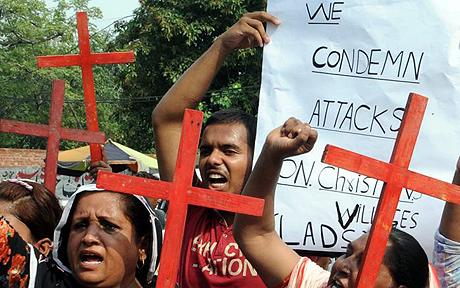
 A Pakistani court has sentenced to death a Christian mother of five for blasphemy, the first such conviction of a woman and sparking protests from rights groups Thursday.

Asia Bibi, 45, was sentenced Monday by a local court in Nankana district in Pakistan’s central province Punjab, about 75 kilometres (47 miles) west of the country’s cultural capital of Lahore.

Pakistan has yet to execute anyone for blasphemy, but the case spotlights the Muslim country’s controversial laws on the subject which rights activists say encourages Islamist extremism in a nation wracked by Taliban attacks.

Asia’s case dates back to June 2009 when she was asked to fetch water while out working in the fields. But a group of Muslim women labourers objected, saying that as a non-Muslim, she should not touch the water bowl.

A few days later the women went to a local cleric and alleged that Asia made made derogatory remarks about the Prophet Mohammed. The cleric went to local police, who opened an investigation.

She was arrested in Ittanwalai village and prosecuted under Section 295 C of the Pakistan Penal Code, which carries the death penalty.

Sentencing her to hang, Judge Naveed Iqbal “totally ruled out” any chance that Asia was falsely implicated and said there were “no mitigating circumstances”, according to a copy of the verdict seen by AFP.

Husband Ashiq Masih, 51, told AFP that he would appeal her death sentence, which needs to be upheld by the Lahore high court, the highest tribunal in Punjab, before it can be carried out.

“The case is baseless and we will file an appeal,” he said.

The couple have two sons and three daughters.

Rights activists and minority pressure groups said it was the first time that a woman had been sentenced to hang in Pakistan for blasphemy, although a Muslim couple were jailed for life last year.

Human rights activists want the controversial legislation repealed, saying it is exploited for personal enmity and encourages Islamist extremism. “The blasphemy law is absolutely obscene and it needs to be repealed in totality,” Human Rights Watch spokesman Ali Dayan Hasan told AFP.

“It is primarily used against vulnerable groups that face social and political discrimination. Heading that category are religious minorities and heterodox Muslim sects,” he said.

Asked about Asia’s case at a press conference in Islamabad on Thursday, visiting Italian Foreign Minister Franco Frattini said he was unaware of the details but would raise the matter with Pakistan’s minorities minister.

“The Italian position has always been against the death penalty,” he told reporters. He said he raised the problems faced by Christian minorities during his talks with his Pakistani counterpart Shah Mehmood Qureshi.

“I believe they should not misuse the law of blasphemy to discriminate against religious minorities and this is a point I share with my colleague — this is a key point for me.”

Around three percent of Pakistan’s population of 167 million is estimated to be non-Muslim. Last July, two Christian brothers accused of writing a blasphemous pamphlet critical of the Prophet Mohammed were shot dead outside a court in Punjab.

Pastor Rashid Emmanuel, 32, and his brother Sajjad, were killed as they left a court hearing in Faisalabad city, where hundreds of Muslim protesters had demanded they be sentenced to death.

Pakistanis for Peace Editor’s Note– Pakistan’s blasphemy laws are absolutely egregious and need to be repealed. Not only are minorities such as Christians and Hindus in Pakistan subjected to these outrageously unjust laws, but Muslim minorities such as the Ahmadis and Ismailis are also time and time again subjected to and singled out for unfair treatment under the guise of these BS laws. The white color in Pakistan’s flag is supposed to represent the minorities within this Islamic republic. Until and unless these blasphemy laws are repealed and Pakistan’s constitution is amended, the religious minorities within Pakistan will never get a fair shake, regardless of how much they are represented in the flag.

Ground Zero Mosque Controversy Helps Give Rise to Islamophobia Across the US

By Manzer Munir for Pakistanis for Peace

A man was accused of attempted murder for his vicious knife attack on a Muslim New York City Cab driver Tuesday evening in what is being described as a hate crime by the authorities.

Michael Enright, a college student who also did some volunteer work in Afghanistan, was being held without bail on charges of assault and attempted murder as hate crimes.

In a criminal complaint filed by the New York Police Department, Michael Enright allegedly asked the driver if he was a Muslim. The cab driver, Ahmed H Sharif, an immigrant from Bangladesh, replied that yes he was indeed a Muslim. At this point, Mr. Enright is alleged to have uttered the customary Arabic greeting of “Aslaam-a-laikum” (Peace be with you) and brutally attacked the cab driver with a knife, slashing him badly on the face, hands and neck. During the attack, Mr Enright also uttered “Consider this a checkpoint” to the cab driver, all the while brutally attacking him with his knife.

 Besides a serious neck wound, the cab driver, Mr Sharif, suffered cuts on his forearms, face, and hands while trying to defend himself from the attacker.

Inexplicably, Einright had volunteered with Intersections International, a group that promotes interfaith dialogue between religions and an organization that has also supported the plans for the Islamic center and mosque 2 blocks from Ground Zero. He had also recently returned from Afghanistan where he volunteered to be embedded with a combat battalion so that he could document their experiences as soldiers that Einright wanted to showcase in an upcoming documentary.

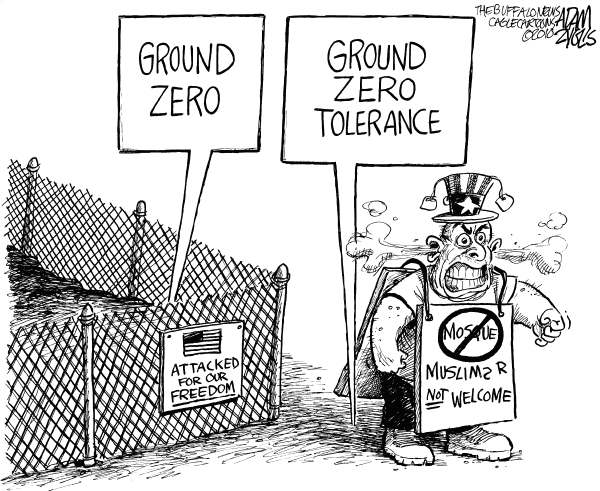
Police stated that Einright was drunk and intoxicated at the time of the attack on Mr Sharif and it is not clear what his motive was for perpetrating the violence on the cab driver. There is growing speculation however amongst members of the American Muslim community as well as several civil rights organizations such as the ACLU and CAIR that the attack is a result of the growing Islamophobia and fear amongst the American public as a direct result of the Ground Zero Mosque controversy that has been brewing for weeks and has been front and center in the media and the American public for some time now.

The plan to build an Islamic community center and mosque two blocks from the 9/11 tragedy and the site of the World Trade Center towers became controversial as right wing groups seized on what they believed to be “an insensitive provocation towards the American public”. Muslim groups demanded their First Amendment rights of freedom of religion and pointed to the New York City council vote allowing them the permit to build as reasons for what they are doing as legal and in fact an effort to build bridges between Islam and other faiths following the events of September 11. However, the issue became nationally prominent and controversial by then as fanned by right wing blogs and ad campaigns, the majority of the American public became against the building of the mosque, according to recent polls.

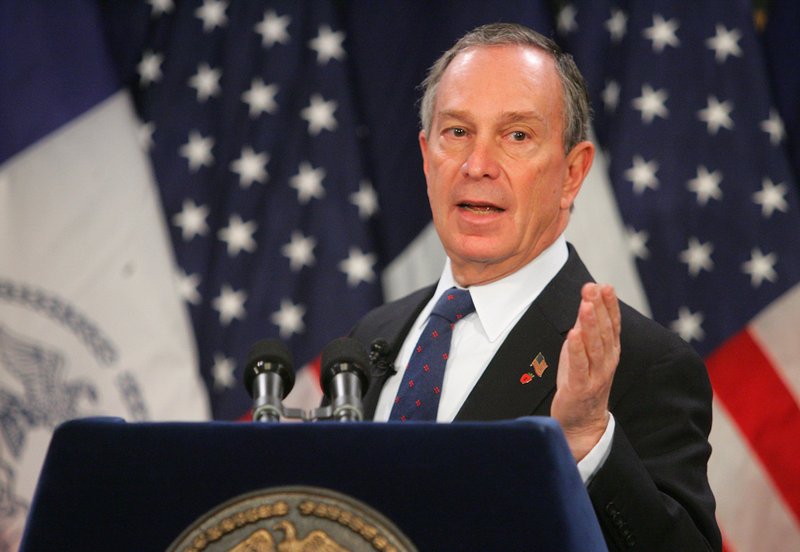
Thankfully, the voice of reason in this whole debate has been none other than the billionaire Jewish mayor of New York, Mayor Michael Bloomberg. His stance and views in support of the mosque as a constitutionally protected right has been welcomed by Muslims as well as civil rights organizations and he should be commended for standing up for what is constitutionally the right thing to do. Briefly, President Obama also came out in support of the group’s right to build the mosque as being a constitutional right, before making statements the next day that “questioned the wisdom” of building it there.

Nonetheless, a link has been made by the right wing, no matter how unfairly, that Islam promotes terror and violence. This can be seen in the fact that the vast majority of Americans now have a negative and unfavorable view of Muslims. For the country to be even having a debate whether a group of Americans can build a house of worship is a testament to how far things have regressed.

No one would ever have thought that a constitutionally protected right such as that of freedom of religion would ever seem controversial. Many have argued that only the area around Ground Zero is off limits to Muslims and they are free to build their mosques elsewhere. This does not appear to be the case as mosques thousands of miles away from Ground Zero in California, Tennessee, Ohio and elsewhere across the country have now come under heavy opposition by local zoning boards and people in those communities. The fear and hatred of Muslims is becoming a growing problem as the Ground Zero Mosque controversy has began to fuel acts of violence against Muslims as seen in the attack on the NYC cab driver. It is a message that is being sent to the American public that Muslims in the United States do not deserve the same rights and privileges enjoyed by all others. In fact, there is an attempt to link all mosques to terror somehow, which is very offensive to millions of peaceful Muslims who abhor violence and who live decent hard working lives in their communities.

At first I was not happy to learn that Muslims planned to build a mosque near Ground Zero as I knew that this would become controversial. But as the opposition to mosques has grown across the nation, and not just for building near Ground Zero, but hundreds and thousands of miles away, it has become clear that this anti-mosque movement is not just about that hallowed area near the World Trade Center site but is in fact becoming an opposition to the religion of Islam as a whole.

This idea by the opponents of the mosque and the right wingers that somehow it is perverted and insensitive to build a mosque several blocks from Ground Zero is in reality only true if we buy into the belief that Muslims and Islam brought down the towers and not a handful of radical extremists of the religion of Islam. If we believe that mainstream Islam itself was responsible for all those deaths on American soil and not Osama Bin Laden and his Al-Qaida network, only then would building the mosque there be insensitive. But for us to somehow associate the whole religion of Islam of over 1.5 billion people by the actions of 19 terrorists is ridiculous.

It is my fear that attacks similar to the one a few days ago on the NYC cab driver will continue to grow as we allow an environment of hate to perpetuate and grow against a group of people. At the very least, this opposition to mosques across the country will certainly grow and continue to spread the notion that ALL Muslims are violent and terrorists. This is simply not true as the 5-7 million American Muslims and the 1.5 billion Muslims around the world will attest.

We must remember that we have a war on terror and not a war on Islam. Far away from Ground Zero in cities across the US as more and more mosques come under opposition in their communities, we must hold steadfast to our ideals, principles and to the US Constitution. As the best nation in the world, we have to defend our ideal and the basis of what makes us the best and that is the US Constitution. Speaking as an American and not even as a Muslim, I know that if we stop defending it for fear of being distasteful, insensitive, or inconsiderate, then we lose what makes us who we are as the freest nation in the world and we must not ever let that happen!

-Manzer Munir, a peace activist, and the founder of Pakistanis for Peace, is a freelance journalist who writes for www.PakistanisforPeace.com and other online journals.

Mayor Bloomberg on Mosque: ‘A Test of Our Commitment to American Values’

As Reported By The Wall Street Journal

In a speech at a Ramadan Iftar dinner at Grace Mansion Tuesday, Mayor Michael Bloomberg offered an extended defense of the proposed Islamic community center and mosque near the World Trade Center site. Those who say the center should not be built “would compromise our commitment to fighting terror with freedom,” the mayor said. “There is nowhere in the five boroughs that is off limits to any religion.”

Below, the full transcript of Bloomberg’s prepared remarks.

Good evening, and Ramadan Kareem. I want to welcome everyone to our annual Ramadan Iftar at Gracie Mansion.

We call this ‘The People’s House,’ because it belongs to all 8.4 million New Yorkers who call this city home. People of every race and religion, every background and belief. We celebrate that diversity here in this house with gatherings like this.

And for me, whether it’s marking St. Patrick’s Day or Harlem Week or any other occasion, these gatherings are always a powerful reminder of what makes our city so strong and our country so great.

America is a nation of immigrants, and no place opens its doors more widely to the world than New York City. America is the land of opportunity, and no place offers its residents more opportunity to pursue their dreams than New York City. America is beacon of freedom, and no place defends those freedoms more fervently, or has been attacked for those freedoms more ferociously, than New York City.

In recent weeks, a debate has arisen that I believe cuts to the core of who we are as a city and a country. The proposal to build a mosque and community center in Lower Manhattan has created a national conversation on religion in America, and since Ramadan offers a time for reflection, I’d like to take a few minutes to reflect on the subject.

There are people of good will on both sides of the debate, and I would hope that everyone can carry on the dialogue in a civil and respectful way. In fact, I think most people now agree on two fundamental issues: First, that Muslims have a constitutional right to build a mosque in Lower Manhattan and second, that the site of the World Trade Center is hallowed ground. The only question we face is: how do we honor that hallowed ground?

The wounds of 9/11 are still very much with us. And I know that is true for Talat Hamdani, who is here with us tonight, and who lost her son, Salman Hamdani, on 9/11. There will always be a hole in our hearts for the men and women who perished that day.

After the attacks, some argued – including some of those who lost loved ones – that the entire site should be reserved for a memorial. But we decided – together, as a city – that the best way to honor all those we lost, and to repudiate our enemies, was to build a moving memorial and to rebuild the site.

We wanted the site to be an inspiring reminder to the world that this city will never forget our dead and never stop living. We vowed to bring Lower Manhattan back – stronger than ever – as a symbol of our defiance and we have. Today, it is more of a community neighborhood than ever before, with more people than ever living, working, playing and praying there.

But if we say that a mosque and community center should not be built near the perimeter of the World Trade Center site, we would compromise our commitment to fighting terror with freedom.

We would undercut the values and principles that so many heroes died protecting. We would feed the false impressions that some Americans have about Muslims. We would send a signal around the world that Muslim Americans may be equal in the eyes of the law, but separate in the eyes of their countrymen. And we would hand a valuable propaganda tool to terrorist recruiters, who spread the fallacy that America is at war with Islam.

Islam did not attack the World Trade Center – Al-Qaeda did. To implicate all of Islam for the actions of a few who twisted a great religion is unfair and un-American. Today we are not at war with Islam – we are at war with Al-Qaeda and other extremists who hate freedom.

At this very moment, there are young Americans – some of them Muslim – standing freedoms’ watch in Iraq and Afghanistan, and around the world. A couple here tonight, Sakibeh and Asaad Mustafa, has children who have served our country overseas and after 9/11, one of them aided in the recovery efforts at Ground Zero. I’d like to ask them to stand, so we can show our appreciation. Thank you.

The members of our military are men and women at arms – battling for hearts and minds. And their greatest weapon in that fight is the strength of our American values, which have always inspired people around the world. But if we do not practice here at home what we preach abroad – if we do not lead by example – we undermine our soldiers. We undermine our foreign policy objectives. And we undermine our national security.

In a different era, with different international challenges facing the country, President Kennedy’s Secretary of State, Dean Rusk, explained to Congress why it is so important for us to live up to our ideals here at home. He said, ‘The United States is widely regarded as the home of democracy and the leader of the struggle for freedom, for human rights, for human dignity. We are expected to be the model.’

We are expected to be the model. Nearly a half-century later, his words remain true. In battling our enemies, we cannot rely entirely on the courage of our soldiers or the competence of our diplomats. All of us must do our part.

Just as we fought communism by showing the world the power of free markets and free elections, so must we fight terrorism by showing the world the power of religious freedom and cultural tolerance. Freedom and tolerance will always defeat tyranny and terrorism – that is the great lesson of the 20th century, and we must not abandon it here in the 21st.

I understand the impulse to find another location for the mosque and community center. I understand the pain of those who are motivated by loss too terrible to contemplate. And there are people of every faith – including, perhaps, some in this room – who are hoping that a compromise will end the debate.

But it won’t. The question will then become, how big should the ‘no-mosque zone’ around the World Trade Center be? There is already a mosque four blocks away. Should it too, be moved?

This is a test of our commitment to American values. We must have the courage of our convictions. We must do what is right, not what is easy. And we must put our faith in the freedoms that have sustained our great country for more than 200 years.

I know that many in this room are disturbed and dispirited by the debate. But it is worth keeping some perspective on the matter. The first colonial settlers came to these shores seeking religious liberty and the founding fathers wrote a constitution that guaranteed it. They made sure that in this country the government would not be permitted to choose between religions or favor one over another.

Nonetheless, it was not so long ago that Jews and Catholics had to overcome stereotypes and build bridges to those who viewed them with suspicion and less than fully American. In 1960, many Americans feared that John F. Kennedy would impose papal law on America. But through his example, he taught us that piety to a minority religion is no obstacle to patriotism. It is a lesson that needs updating today, and it is our responsibility to accept the challenge.

Before closing, let me just add one final thought: Imam Rauf, who is now overseas promoting America and American values, has been put under a media microscope. Each of us may strongly agree or strongly disagree with particular statements he has made. And that’s how it should be – this is New York.

And while a few of his statements have received a lot of attention, I would like to read you something that he said that you may not have heard. At an interfaith memorial service for the martyred journalist Daniel Pearl, Imam Rauf said, ‘If to be a Jew means to say with all one’s heart, mind, and soul: Shma` Yisrael, Adonai Elohenu Adonai Ehad; Hear O Israel, the Lord our God, the Lord is One, not only today I am a Jew, I have always been one. If to be a Christian is to love the Lord our God with all of my heart, mind and soul, and to love for my fellow human being what I love for myself, then not only am I a Christian, but I have always been one.’

In that spirit, let me declare that we in New York are Jews and Christians and Muslims, and we always have been. And above all of that, we are Americans, each with an equal right to worship and pray where we choose. There is nowhere in the five boroughs that is off limits to any religion.

By affirming that basic idea, we will honor America’s values and we will keep New York the most open, diverse, tolerant, and free city in the world. Thank you.

Mosque Near Ground Zero Divides Sept. 11 Relatives

By Samantha Gross for The Associated Press

Talat Hamdani traveled to Mecca to pray that her missing son, an EMT, was safe in the days after 9/11. She held out hope that his Muslim background had led to his detention as a suspect, considering it better than the alternative.

When part of his body was returned to her — his lower half shattered into 34 pieces — it was final proof he had indeed been killed when Islamic extremists brought down the World Trade Center. As Americans take sides over plans to build an Islamic cultural center and mosque blocks away, Hamdani says it feels personal.

“Why are we paying the price? Why are we being ostracized? Our loved ones died,” she said at her Lake Grove, N.Y., home. “America was founded on the grounds of religious freedom,” and opposition to the cultural center “is un-American. It’s unethical. And it is wrong.”

The thousands of relatives of the 2,976 victims have no single representative and no unified voice, even as another 9/11 anniversary approaches. The conflict is dividing a group that in many ways has never been united, with some saying the cultural center would reopen old wounds too close to hallowed ground and others saying that opposing it is tantamount to bigotry.
And some, like Vandna Jain, walk a middle ground.

“It is unfair to persecute the group, however, in turn, there should be some respect for the feelings of the people that are forever attached to this site due to their losses,” the New City, N.Y., resident, whose father, Yudh, died in the north tower, wrote in an e-mail. “I think people have a right to be upset about it, just as much as people have a right to build a mosque.” Jim Riches, a former New York Fire Department deputy chief whose son, Jimmy, was killed at the trade center, believes the dispute has nothing to do with religious freedom.

“We’re not telling them not to practice their religion. … It’s about location, location, location,” he said, asking why the mosque couldn’t be built farther away from the land that he still considers a cemetery. “It’s disrespectful. You wouldn’t put a Japanese cultural center at Pearl Harbor.”

Liza Murphy feels differently. Her brother, Charlie, died at ground zero, but she says she doesn’t lay claim to the sprawling, 16-acre site. “It’s a place where a terrible tragedy took place, but I don’t see what makes it sacred,” said the Brooklyn resident. “Nine years later, that now belongs to the public. And my brother and his death are private and belong to me.” Murphy says she has no objection to the planned mosque and wouldn’t want to judge one group of Muslims based on the actions of another.

But Peter Gadiel says he owes no apologies for singling one group out. Since his son, James, was killed at the trade center, Gadiel has argued publicly that all Muslims should share some collective guilt for what happened on 9/11.

“The fact is that Islam does not coexist well with other religions, and you can’t separate that from Islam,” the Kent, Conn., resident said, explaining his stand against the mosque. “If that sounds intolerant on my part, that’s too bad.” The families’ impassioned responses to the prospect of the mosque have influenced the public debate.

Gov. David Paterson has suggested moving the project further away from the trade center site out of respect for opponents’ feelings, while Mayor Michael Bloomberg came out in support of the mosque, calling it a test of the separation of church and state.
President Barack Obama has said he believes Muslims have the right to build the Islamic center as a matter of religious freedom, though he’s also said he won’t take a position on whether they should actually build it.

The imam leading plans for the center on Friday called extremism a security threat in both the West and the Muslim world. Feisal Abdul Rauf made his comments to Associated Press Television News in Bahrain during a Mideast tour funded by the U.S. State Department, but he wouldn’t discuss the uproar over the Islamic center.

Relatives of those slain on Sept. 11 have made their diverging voices heard on a number of issues over the years — from whether to try the suspects in a civilian court to the location of a proposed freedom museum at ground zero that is no longer planned for the site.

Charles Wolf, who lost his wife, Katherine, at the trade center, says emotions among family members are especially raw right now.
“This is anniversary season. It’s really, really hard,” the Manhattanite said. “Passions are up and this is bringing up a lot of hurt in people.”

He says he worries that any decision to respond to public pressure and move the mosque would be used by extremists to paint Americans as intolerant.

“The powers of evil were piloting those airplanes,” he said of the Sept. 11 attackers. Now, with the mosque dispute, “here is where we’re falling into the terrorists’ trap … trying to tear each other apart. Good people fighting other good people — does that sound like evil at work?”

Keith Olbermann – Special Comment, Muslim Community Center

“THEY CAME FIRST for the Communists,
and I didn’t speak up because I wasn’t a Communist.

THEN THEY CAME for the trade unionists,
and I didn’t speak up because I wasn’t a trade unionist.

THEN THEY CAME for the Jews,
and I didn’t speak up because I wasn’t a Jew.

THEN THEY CAME for me
and by that time no one was left to speak up.”
-Martin Niemöller

“This is America damn it! And in America when somebody comes for your neighbor, or his Bible, or his Torah, or his Athiest Manifesto, or his Koran, you and I do what our fathers did and our grandmothers did, and our founders did, you and I SPEAK UP!”
– Keith Olbermann

Church Plans Quran-Burning Event

By Lauren Russell for CNN

In protest of what it calls a religion “of the devil,” a nondenominational church in Gainesville, Florida, plans to host an “International Burn a Quran Day” on the ninth anniversary of the September 11, 2001, attacks. 

The Dove World Outreach Center says it is hosting the event to remember 9/11 victims and take a stand against Islam. With promotions on its website and Facebook page, it invites Christians to burn the Muslim holy book at the church from 6 p.m. to 9 p.m.

“We believe that Islam is of the devil, that it’s causing billions of people to go to hell, it is a deceptive religion, it is a violent religion and that is proven many, many times,” Pastor Terry Jones told CNN’s Rick Sanchez earlier this week.

Jones wrote a book titled “Islam is of the Devil,” and the church sells coffee mugs and shirts featuring the phrase.  Muslims and many other Christians — including some evangelicals — are fighting the initiative. The church launched a YouTube channel to disseminate its messages.

“I mean ask yourself, have you ever really seen a really happy Muslim? As they’re on the way to Mecca? As they gather together in the mosque on the floor? Does it look like a real religion of joy?” Jones asks in one of his YouTube posts.

“No, to me it looks like a religion of the devil.”

The Islamic advocacy group Council on American-Islamic Relations called on Muslims and others to host “Share the Quran” dinners to educate the public during the month long fast of Ramadan beginning in August. In a news release, the group announced a campaign to give out 100,000 copies of the Quran to local, state and national leaders. “American Muslims and other people of conscience should support positive educational efforts to prevent the spread of Islamophobia,” said CAIR spokesman Ibrahim Hooper in the release.

The National Association of Evangelicals, the nation’s largest umbrella evangelical group, issued a statement urging the church to cancel the event, warning it could cause worldwide tension between the two religions. “The NAE calls on its members to cultivate relationships of trust and respect with our neighbors of other faiths. God created human beings in his image, and therefore all should be treated with dignity and respect,” it said in the statement. Dove’s Facebook page, set up for the September event, has more than 1,600 fans. “Eternal fire is the only destination the Quran can lead people to, so we want to put the Quran in it’s [sic] place — the fire!” the page says.

But another Facebook group with more than 3,100 fans says it stands “against the disrespect and intolerance that these people have for the Muslim people” and encourages people to report Dove’s page to Facebook. Targeting another group it calls “godless,” the Dove center is also hosting a protest against Gainesville Mayor Craig Lowe, who is openly gay, on Monday at Gainesville’s City Hall. The group previously fought — unsuccessfully — to derail Lowe’s election campaign.

“We protest sexual perversion because the Bible protests it. What is acceptable to today’s leadership becomes acceptable to tomorrow’s society,” the church says in its blog entry about the event. Lowe and other government figures and media outlets received e-mails from the church about the event, The Gainesville Sun reported. Lowe isn’t concerned with Monday’s event.

“I’ve got other things to do,” he said, The Sun reports.

On the outreach center’s front lawn, alongside a sign reading “Aug. 2 Protest, No Homo Mayor, City Hall,” stands not just one, but three signs bearing the slogan “Islam is of the Devil.”  One of the signs — one reading “Islam” on one side, “Devil” on the other — was vandalized. On its blog last week, the church said the sign will be replaced. “This is private property and vandalism is a crime here in America,” the blog says. “In Islam, many actions that we consider to be crimes are encouraged, condoned or sheltered under Islamic teaching and practice, though. Another reason to burn a Quran.”

2 Pakistani Christians Killed At Courthouse

By Chris Brummitt for The Associated Press

Gunmen killed two Pakistani Christian brothers accused of blasphemy against Islam as they left court on Monday, a government minister and police said.

The men were chained together when the attack took place in the eastern city of Faislabad as they were being taken back into custody after their court appearance.

They were arrested a month ago after leaflets allegedly bearing their names and featuring derogatory remarks against the Prophet Muhammad were found in the town, said Shahbaz Bhatti, the minister for minority affairs. He said mosques in Faislabad had called for the men to be attacked.

Bhatti said he suspected the men were falsely accused of blasphemy by people with a grudge against them. Their families had maintained their innocence, he said.

The brothers were killed by two gunmen as they left court, said police officer Rana Ahmed Hasan. A police officer accompanying the men was wounded, he said, adding the killers escaped.

Pakistan’s blasphemy laws have been often criticized by religious minorities and human rights activists.

In its latest report on religious freedom in Pakistan, the U.S. State Department said the laws are often abused to settle local disputes and discriminate against minorities.

Muslims make up an estimated 97 percent of Pakistan’s 180 million people, most of them Sunni.

Bhatti said he believed the brothers were innocent.

“I personally don’t think that anyone who wrote derogatory things against Muhammad would put their names on the bottom,” he said. “This was just to settle a personal issue.”

Bhatti has long campaigned against the blasphemy laws, which were introduced President Gen. Zia ul-Haq in the 1980s to win the support of hard-line religious groups.

Repealing them now would likely meet opposition from the same groups, something that could cause unrest.