Posts Tagged ‘ Asia Bibi ’

Pope Benedict Urges Pakistan to Repeal Blasphemy Law

By Elisabetta Povoledo for The New York Times

In a forceful appeal for religious freedom, Pope Benedict XVI urged Pakistan on Monday to repeal contentious blasphemy laws as he called on governments around the world to do more to enable Christians to practice their faith without violence, intolerance or restriction.

The pope was speaking in an annual address to diplomats accredited to the Vatican, a long-scheduled event. But this year, his words came after bomb attacks in Iraq and Egypt — the most recent in the Egyptian city of Alexandria less than two week ago — and the assassination last week of a leading Pakistani politician who had opposed his country’s law that makes blasphemy against Islam punishable by death.

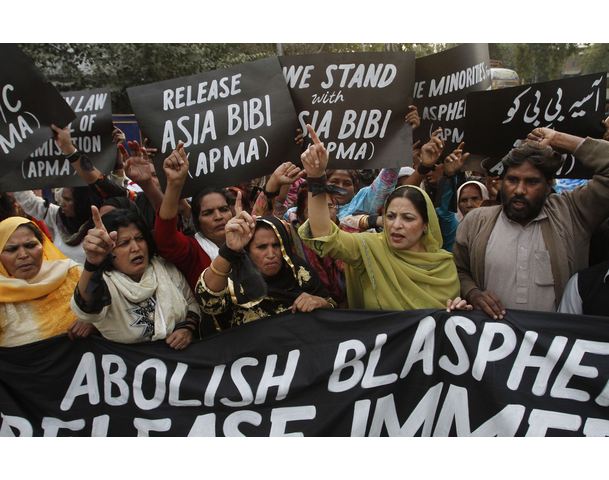
The politician, Salman Taseer, had campaigned vigorously against the law and had petitioned the Pakistani government to re-examine the case of Asia Bibi, a Christian woman who last November was sentenced to death under the legislation.

Mr. Taseer’s “tragic murder,” the pope said, “shows the urgent need to make progress in this direction: the worship of God furthers fraternity and love, not hatred and division.”

Referring to the attacks on Christians in Iraq and Egypt, Benedict called on the governments of those predominantly Muslim countries to adopt “effective measures” to better protect religious minorities. Urging Pakistan to repeal its blasphemy law, the pope said the legislation was being used “as a pretext for acts of injustice and violence against religious minorities.”

The pope has often spoken out against religious intolerance, but his condemnations have increased after recent attacks on Christian communities in several countries, including Nigeria and the Philippines, where churches were bombed during the recent holidays.

The plight of Christians in the Middle East has been of particular concern to the Vatican, which hosted a meeting of bishops in October to address the issue.

The concerns have deepened in recent months in the face of what clerics see as sustained violence. At a New Year’s Mass at a Coptic church in Alexandria, a suicide bomber killed 23 people and wounded nearly 100. Last October, a siege at a Baghdad church killed 53 people, prompting yet another exodus of Christians from the country.

On Monday, the pope cited a message to Christians in the Middle East that he delivered during the bishop’s synod in October. “It is natural,” he said, that “they should enjoy all the rights of citizenship, freedom of conscience, freedom of worship and freedom in education, teaching and the use of the mass media.”

The pope also took Western nations to task for marginalizing religion and minimizing its role in contemporary society and called for dialogue between faiths to promote “a common commitment to recognizing and promoting the religious freedom of each person and community.”


In Pakistan, Another Assassination and the Lessons Unlearned

By Natasha Fatah for Canadian Broadcasting Corporation

The Lion of Punjab is dead. Salman Taseer, the governor of Punjab in Pakistan, was assassinated in Islamabad on Tuesday by one of his own security guards.

When the guard later turned himself in to the police, he said that he killed the man he was supposed to be protecting because he considered Taseer’s campaign against Pakistan’s blasphemy laws an insult to Prophet Muhammad.

The blasphemy laws, which have been around since the 1980s, have been at the heart of a huge religious debate in Pakistan recently after a 45-year-old Christian woman was sentenced to death, allegedly in a dispute over drinking water among farm hands.

Most human rights observers say that the woman did nothing wrong, did not break any blasphemy law, and that the law is just being used to make some kind of example out of her.

Taseer stood by the side of this Christian woman, Asia Bibi, both literally and figuratively.

He stood next to her in the courtroom, which was a brave and dangerous move for any Muslim in Pakistan, but particularly so when you are a member of government and have a profile.

He had also waged an attack on those who wanted her dead by constantly criticizing the mullahs and hard-liners on his very active Twitter account these past weeks.

In response, Islamic fundamentalist politicians and imams were constantly attacking Taseer, even going as far as to say that criticizing the blasphemy law is an act of blasphemy itself, thus making Taseer an apostate.

A member of the Pakistan People’s Party and closely tied to President Asif Ali Zardari, Taseer had dedicated his life to social and political liberalism and to taking on the fundamentalists. But now that bravery has cost him everything.

According to witnesses, the guard who killed Taseer jumped out of a car, pointed his Kalashnikov and blasted away. He then continued his rampage, shooting the governor at least nine times.

Dropping his weapon, the man then gave himself up to police, saying later he was “proud” that he killed the blasphemer.

Another disturbing aspect to this story is that the assassin had managed to get himself into the police force and then, barely four months into the job, was transferred to the unit assigned to protect the governor.

It makes you wonder who was doing the vetting and whether some other even more devious plan was afoot. But how deep and powerful this doctrine of hate must be when someone who is paid to protect you ends up being the one to take your life?

Still, while it was the guard who pulled the trigger, it was the culture of hatred, ignorance and bigotry that put the idea in his head in the first place.

And it will no doubt be the disease of apathy among the majority of Pakistan’s comfortable middle class that will ensure nothing changes, which means more good men and women who want to reform Pakistan’s society will lose their lives.

After all, it was only three years ago that the world lost Benazir Bhutto, the former prime minister and leader of the Pakistan People’s Party, for the same reasons.

She, too, was an advocate on behalf of liberalism and democracy and an enemy of religious extremists and she, too, paid for it with her life. If her death could not motivate the wealthy, powerful and influential in Pakistan to stand up and change things, then I’m not sure what will.

There is strange culture in Pakistan of blaming the victim. When Benazir Bhutto was murdered, many middle-class Pakistanis, in effect blamed her for her own assassination.

They criticized her for knowing the risks and continuing to speak out. Some said that as a mother she was being selfish for putting herself in the public eye.

And now, with Taseer’s murder, there are murmurs about him bringing this on because he provoked the Islamists through his criticism of their agenda. These are the risks you take when you stand behind a Christian blasphemer, some are saying.

It is only in an upside-down world like Pakistan’s self-absorbed middle class where those who die for being brave are considered irresponsible.

And it’s not like these moderate politicians such as Taseer don’t represent the values of the ordinary Pakistani.

Overwhelmingly, whenever given the election opportunity, the people of Pakistan vote in liberal, moderate and middle-of-the-road parties. Hardline Islamist parties do not win majorities in any of the country’s provinces.

Still, there seems to be a disconnect between what the Pakistani middle class say they want — stability and democracy — and what they are willing to work for.

Yes, in the case of Taseer, they will mourn the loss of another great leader. But Pakistan has lost far too many moderate leaders like this while everything goes on as before.

Wealthy Pakistanis will continue to go to their luxurious parties at fancy hotels, where the poor and their servants are not even allowed to enter. They will continue to justify the economic divide that keeps so many of their fellow citizens in squalor. And they will continue to argue that the Islamist militants are just a creation of the Western media.

Fortunately, there are still a handful of journalists, lawyers and politicians in Pakistan who are fighting the good fight and putting their lives on the line to try to push back against the extremists who think that violence is the only way to get their ideas across.

But unless Pakistan’s elites joins this fight, nothing will change.

For Pakistan, with the current government coalition in danger of crumbling and its Taliban launched on a terror campaign in the capital Islamabad itself, Taseer’s murder is a horrible start to a new year.

Yes, there will be vigils throughout Pakistan and around the world this week for this fallen hero. But vigils are temporary and the underlying problem that Taseer was taking on will likely still be around long after the vigils have wrapped up.

A Brave Man Killed

A New York Times Editorial

Some twisted person has created a Facebook page in support of Malik Mumtaz Hussain Qadri, the bodyguard accused of assassinating Salman Taseer, the governor of Pakistan’s Punjab province. Mr. Taseer was a brave man who had called for the repeal of Pakistan’s outrageous anti-blasphemy law.

Whoever killed Mr. Taseer must be condemned and repudiated, not extolled. Otherwise, Pakistan will certainly continue on a downward spiral in which intolerance and self-destruction triumph.

The governor’s death is a tragedy not just for Pakistan but for all who understand that just and stable societies need honest debate and full respect for minorities. Pakistan cannot afford to lose any fair-minded leaders, especially at a time when it is struggling with a virulent insurgency, an unraveling economy and an unraveling central government.

Mr. Taseer — a longtime ally of President Asif Ali Zardari and his wife, Benazir Bhutto, who was assassinated in 2007 — was Pakistan’s most prominent defender of the rights of women and minorities. He had pressed hard for repeal of the blasphemy law, which imposes a mandatory death sentence on anyone convicted of insulting Islam.

The law is popular with the Muslim majority but is routinely manipulated to settle personal rivalries and persecute minorities. And Mr. Taseer had been particularly outspoken, calling for leniency for a Christian mother of four who was sentenced to death under the law, in a case that stemmed from a dispute in her village.

Pakistani officials, who have the bodyguard in custody, say he killed Mr. Taseer because of the governor’s opposition to the blasphemy law. But there are far too many unanswered questions: Did the suspect act alone? Why did the Punjab police assign a religious conservative to protect Mr. Taseer? News reports first said nine bullets were fired into Mr. Taseer, and hospital officials later said he was hit 24 times. Yet other members of the security detail did not shoot to stop Mr. Qadri, who surrendered with his hands up.

Pakistani authorities need to investigate thoroughly and share their full findings with the Pakistani people.

The United States and the international community must make clear their outrage over this killing. So must every Pakistani. The country’s political leaders and the Pakistani media also need to consider whether the way they have shaped the debate on the blasphemy law — some have argued that mentioning reform is blasphemy punishable by death — is further fueling conflict.

Ultimately, only Pakistanis can save their nation, and they must answer the more profound questions: Do they want a country in which Muslims and non-Muslims can peacefully co-exist? Or one in which religious zealots, espousing the most intolerant interpretation of Islam, kill anyone brave enough to defend the defenseless? That would be the true blasphemy.

Blasphemy Cases Draw Focus in Pakistan

By Alex Rodriguez for The Los Angeles Times

NANKANA SAHIB, Pakistan | Muslim cleric Muhammad Salim isn’t worried that a court or Pakistan’s president might spare a Christian mother from this village who has been sentenced to death on blasphemy charges.

After all, if Asia Bibi escapes the hangman’s noose, he’s confident someone else will kill her.

“Any Muslim, if given the chance, would kill such a person,” Salim said calmly, seated cross-legged on a straw mat at a mosque here. “You would be rewarded in heaven for it.”

Salim isn’t the only one calling for vigilante justice. A cleric in Peshawar has offered 500,000 rupees, or $6,000, to anyone who kills Asia Bibi, if her execution doesn’t take place.

The mother of five is accused of disparaging the prophet Muhammad and the Qur’an during a dispute with three other women. She denies the charge. “My God knows that I never used those words,” she told investigators.

Her case has exposed deep rifts in Pakistan over the blasphemy law, seen by some as an appropriate measure to defend the tenets of Islam, but viewed by others as a dangerous tool easily abused in a society that is a volatile patchwork of ethnicities, religions and sects.

There have been other controversial blasphemy cases. Accused of burning pages from the Koran, Imran Latif was charged with blasphemy in Lahore but then released on bail Nov. 3. Eight days later, two men shot him to death.

This month in the southern city of Hyderabad, a Shiite doctor was arrested on blasphemy charges after police received a complaint that he had maligned the prophet Muhammad. His crime? He tossed out the business card of a pharmaceutical company representative whose first name, Muhammad, was printed on it. The doctor belongs to the smaller Shiite sect known as Ismailis.

“There’s a fundamental lunacy to it,” said Ali Dayan Hasan, South Asia researcher for Human Rights Watch. “There is no good spin to put on the blasphemy law. It’s used frequently in these preposterous ways, for preposterous reasons.”

The law dates to the 1980s and the rule of Gen. Zia ul-Haq. Since Zia’s rule, 974 people have been charged under the law, according to the Pakistani news media. No one has been put to death for a blasphemy conviction.

The Illiteracy of Hate

A News and Opinion Special Report by Manzer Munir for Paksitanis for Peace

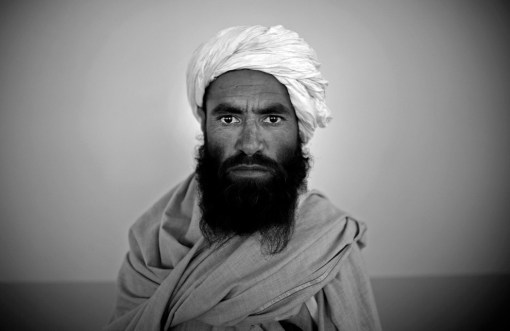
Alleged Taliban Member pic courtsey of Boston Globe

The Taliban are not just simply a bunch of illiterate thugs and bullies for they too often prove to be even worse than animals and barbarians.

Nowhere else in the world has a country experienced a more tragic and callous attack as the one on Christmas day, the birth day of Jesus, the Prince of Peace, than the one Pakistan experienced. In an attack described by President Obama as an “affront on humanity”, the cowards attacked helpless women, children and men while they queued up in food and aid distribution site such as the WFP depot, people who mind you are already suffering from the ongoing war, once in a lifetime floods, and the poverty and radicalism of a generation of desperate, hopeless and increasingly uneducated young men brainwashed by the Taliban and other radical Muslim extremists.

I am still disturbed by the disdain for basic human life that this new attack proves about this radical and extreme enemy. I imagine another one of their brain washed ‘walking zombies’, this time purportedly a woman suicide bomber, a first, even for Pakistan, killed in excess of 43 people in Bajur Pakistan at a World Food Program rations and aid storage and distribution center.

The Pakistani authorities and several domestic and foreign NGO’s who provide food aid at various centers in the area are temporarily closing these centers in order to have increased security. This means that aid distribution will come to a crawl and up to several hundred thousand people will now have to suffer at the hands of the attacker and their backers, the Taliban who have claimed responsibility. The authorities will have to ensure the safety of aid organizations and their personnel for both Pakistani and non Pakistanis relief workers involved in getting food, water and medicine to many people who are either suffering from the war or from the floods.

This catastrophe, although not of near Biblical proportions, does present both a security and humanitarian problem to both the government of Pakistan as well the suffering citizens in the northwest areas of the country where; Taliban fighters take sanctuary from the war in Afghanistan to regroup and return to the fight in warmer weather after the winter months as we have seen in years past. In fact, the reach of the Taliban in Pakistan is now not only reputed to be in the headquartered areas such as in Quetta Pakistan among the restive Baluchi population, now they are so often found to be in major cities like Karachi, Lahore, Rawalpindi, Peshawar and many points in between as they use their religious cover to endear themselves to certain impressionable, weakened or illiterate individuals that are so commonly found in throughout the country. 

Here are the some of the depressing facts. Pakistan, a nation approaching 180 million people at current estimates, perhaps only boasts to having about 60-65% of the male population at a literate level and at best, the females to be only at 40-45% of the total female population. Sadly, what this means is that 4 out of 10 Pakistani males are completely illiterate while up to as many as 6 out of 10 women are not able to read or write. Poverty breeds extremism since there is no support from any government programs or hope for any solution.

Time and time again throughout history and not just of Pakistan’s, we can see that the role of the church, synagogue or mosque in building the community is deeper than that of any government initiatives or other measures. The poverty for these young men along with the lack of jobs like for those individuals who are either very poorly paid construction site workers, household labor or servants, or beggars and sewer workers, a job sadly almost seems to have been reserved for Pakistan’s Christian community members as many can attest in Pakistan of their unfortunate and depressing state. One does not need to remind the reader of the plight of Asia Bibi (also Aasia and Ayesa), the Christian Pakistani woman who is still awaiting her fate in Pakistani courts after more than a year and a half since first being accused of a BS blasphemy charge and being in jail ever since. 

The medieval mentality of these radical extremists is not something that needs to be described as the evidence is here in this latest attack . Certainly anyone alive in any part of the world outside Pakistan and Afghanistan with eyes, TV, radio or newspaper within their reach can see plenty of near daily reminders of the carnage that many natives of these lands see, and to what they have painfully become accustomed.

 The Pakistani and Afghani Talibans have by all the various reports in newspapers and media sources over the last several years have pointed out to the fact that these groups all have too often similar goals. Not only that, these groups all share the same characteristics. The anti-Americanism, the pro-Wahaabi or Orthodox version of Islam, the need for justice for the ‘suffering of the Palestinian people’ , and the anti-colonial and often times anti western sentiment amongst these groups. The radicalization of certain Muslim groups be they Hamas and Hezbollah in the Mideast or Lashkar e taiba, or any other militant outfit operating in this part of the world as mentioned in this quote a few days before he passed, the late Richard Holbrooke of the US State department said that there are a range of militant groups such as the Afghan Taliban, the Pakistani Taliban, the Haqqani Network, Lashkar-e-Taiba, and that “an expert could add another 30.” His exact words are in quotations. 

The radical Muslim groups who take prey of the weaker, cannot think for themselves because they are scions of those abjectly illiterate segments of the society who are only educated in the madrassahs of Pakistan. This is the de facto way of educating Pakistan’s poorer children in little mosque schools which consist of nothing but Qu’ranic surahs and words of ‘wisdom’ or ‘interpretation’ by the local mullah of the said mosque/school. Most probably these children in many Pakistani madrassahs, especially the ones who live near the border areas within the NWFP or North West Frontier Province of Pakistan as this is the part of the country most affected by its close proximity to Afghanistan.

The people in this area of Pakistan, as well as their cousins in Afghanistan have been fighting one enemy or another for the better part of 100 years now. Whether to them the enemy be the British, during the height of the British Raj rule in India, or to the Soviets and the Red army and the Cold War, then in chronological order came the infighting after the Russian withdrawal as various Tajik, Afghani, Uzbek, Pakistani warlords came in to try and consolidate power to now us Americans and the Pakistanis who are our allies in this war.

Granted we do often hear that the Pakistanis can be doing more. By all accounts, the Pakistani government can do more in terms of fighting this war on terror. Numerous western reports and articles in respected dailies have alleged that small elements within both Pakistan’s Army as well as the spy agency, the ISI, have sympathizers to either the Taliban’s cause or they want to be on favorable terms with a powerful entity that most in Pakistan’s establishment believes that Pakistan will be dealing with and not a weakened Karzai once the US begins to draw down troops and end the war by 2014. If this is indeed true, then these ‘officers’ and supposed ‘leaders’ of Pakistan should realize that the colluding with the enemy, which in this case is the Taliban, is tantamount to treason, and the members of the armed forces of Pakistan as well as the intelligence community should not be assisting the enemies of all concerned: Afghanistan, Pakistan and the United States. 

Of course we must not kid ourselves and assume that only alleviating the illiteracy and poverty of the Pakistani youth will and bettering the education system of the Pakistani poor, particularly that of the refugees and residents of the northwest areas near the Afghan border. No there needs to be a study and introspection by the people of these two countries where this hatred breeds. To to get out of this darkness, the population needs be provided not only safety when delivering food aid and or medicine but aldo most importantly give them a book, a pen, and a paper. And teach them how to fish for knowledge with basic comprehension and deductive reasoning skills that can reject a radical and violent view of Islam too often manipulated by the clergy. This is the only way we can come to end this illiteracy of hate.

–Manzer Munir, is a proud and patriotic Pakistani American, an author, who plans to write a book on Pakistan, who is also a blogger and journalist, and as the Founder of Pakistanis for Peace  can be found at www.PakistanisforPeace.com, www.DigitalJournal.com ,www.Open.Salon.com, www.Examiner.com, as well at other websites as a freelance journalist and writer.

Blasphemy Trials in Pakistan Reveal a Broken Justice System

By Karin Brulliard and Shaiq Hussain for The Washington Post
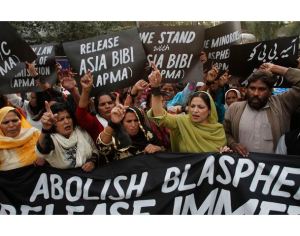
With its single dirt road, friendly residents and abundance of drowsing donkeys, this village hardly seems a hotbed of religious radicalism.

Nevertheless, four years ago, dozens of angry townspeople marched and chanted, “Death to the blasphemer!” Their demands were answered. Two years later, court records show, a teenaged Muslim named Muhammad Shafique was sentenced to hang for cursing the Prophet Muhammad and tossing pages of the Koran onto “cow dung and urine.”

Today, an air of regret permeates Kulluwal. Shafique’s accusers fled town, and their relatives now say the allegations were lies. Many residents call the case a setup fueled by political and personal rivalries. But as Shafique waits on death row, his appeal stuck in Pakistan’s glacial courts, no one is quite sure what to do.

“The situation at that time was emotional. It was the responsibility of the police to sift through the facts and find the truth,” said Chaudhry Safraz Ahmed, 42, a community leader whose father was one of Shafique’s accusers. “That did not happen. And Shafique is behind bars.”

Pakistan is in the midst of a heated debate over its ban on blasphemy following the sentencing to death last month of a Christian woman, Asia Bibi. The pope condemned that sentence, which has not yet been carried out. Human rights organizations, meanwhile, have demanded the repeal of a law that they say is used to harass religious and sectarian minorities in this Sunni Muslim-majority nation.

But blasphemy cases, about half of which involve Muslim suspects such as Shafique, also point to a more fundamental problem with grave implications for the nation’s U.S.-backed fight against militancy: Pakistan’s broken justice system, corrupt and lacking in expertise, often rewards vendettas and encourages radicalism.

In this system, religious extremism is less an epidemic than a menacing shadow – just as it is across Pakistan, an unstable democracy where Islamist threats often eclipse the majority’s more peaceful views.

The law against blasphemy – which encompasses vaguely worded prohibitions on insults against Islam – gives radicals a tool with which to bully those who don’t share their hardline religious views. Legal experts say lawyers, witnesses and authorities are frequently intimidated into helping to enforce the law, leading to injustices that bolster militants’ anti-government arguments.

“These are the kind of provisions that allow space for extremists to act with impunity,” Ali Dayan Hasan, a Pakistan-based representative for Human Rights Watch, said of the blasphemy law. “This country is, in that sense, at a crossroads where it is time for people to stand up.”

Just what happened on the evening of March 17, 2006, in this agrarian corner of Punjab province remains in dispute. It took a court in the nearby city of Sialkot 73 hearings over 27 months to gather enough testimony for a verdict. Lawyers’ strikes, witnesses’ absences and a funeral caused delays. In the end, the key evidence against Shafique, now 22, was witness accounts and soiled scraps of pages from a Koran, which the judge deemed impossible to fake.

“The question arises whether . . . a Muslim can think to smear the pages of the Holy Book with cow dung and urine just to create an evidence to involve his opponents,” the judge wrote in 2008. “Not an iota of evidence has been produced by the accused in this regard.”

But Shafique’s family, along with many others in Kulluwal, cite two reasons for such a plot. Shafique, an aspiring electrician, had accused his brother’s wife of adultery. And her alleged paramour had powerful allies, among them a town politician with his own motive: Shafique’s brother was challenging him in a village election.

Whatever the case, word of Shafique’s alleged rampage spread, and a crowd beat him viciously, residents recalled. Qari Qadir, the village imam, said he declined requests to announce the offense over his mosque’s loudspeaker, fearing a “serious situation.” Instead, he led a march the next day at which protesters demanded that police file charges.

“Everybody was against him,” said Ahmed, the community leader. “The police thought it could become a law-and-order situation if they did not take action.”

According to court records, two main accusers – the politician and Ahmed’s father – did not testify. Four young men who did gave nearly identical statements about seeing Shafique curse the prophet and rip the Koran.

Shafique testified that the charges were personal and political, and that he “heatedly” loved Allah.

The court sentenced Shafique to join about 7,600 others in Pakistan on death row, about 60 of whom are convicted blasphemers, according to the Human Rights Commission of Pakistan. The country has not executed anyone since 2008, and blasphemy cases are often overturned on appeal.

But for many, that potential reprieve is little help. Suspects are often murdered in prison or after release, a fact one Pakistani court used to justify the blasphemy law – in prison, it reasoned, suspects are protected from public rage.

Blasphemy was outlawed during British colonial rule but made a capital crime in the 1980s under the Islamist military rule of Mohammed Zia ul-Haq. Now, the law is being scrutinized; a bill in parliament would shorten sentences, require evidence that the crime was committed intentionally and introduce punishment for false accusation.

But while recent international attention has galvanized opponents of the current law, it has also roused defenders. Conservative religious parties have threatened mayhem if the law is changed, an idea they deem a Western conspiracy. One cleric in northwest Pakistan went further, promising $6,000 to anyone who kills Bibi, the Christian woman.

Amid this debate, Mirza Shahid Baig, Shafique’s lawyer, sticks to technical arguments. The wrong police investigated, he said, and there was no serious look at Shafique’s side of the story.

“I am a very true lover of the holy prophet, but this case was totally false,” Baig said one recent afternoon at his dusty basement office in the bustling city of Lahore. “Whether the law is correct or not correct according to the morality, this is not my job.” In Kulluwal, most everyone seems to agree that a blasphemer deserves death. But they are certain Shafique was not one.

The investigators and witnesses who testified against him have all left town, and no one else recalls seeing Shafique’s alleged rampage. Ahmed said his father is ready to recant in court.

“This is a baseless charge,” said Ahmed, calmly sipping tea with Shafique’s parents on a recent day. “The issue is religious, so it had an influence on the police. It interfered with the investigation.”

Another resident, Mohammed Ibrahim, is the brother of the politician who accused Shafique and the father of one youth who testified. Ibrahim said his son has since told him he was pressured to lie, and that his brother forced police to file charges.

“He thought of himself as important, as someone who could not be challenged politically,” Ibrahim said of his brother, who, he added, has moved to Canada. To some Kulluwal residents, the whole affair proves elders should resolve disputes, not courts.

Shafique, meanwhile, writes letters to his family from solitary confinement. In one recent missive, he said that prison guards avoid touching him. He understands, he wrote, for he reserves no sympathy for blasphemers.

“My heart weeps for the innocent ones,” he wrote. “But I have no words of sympathy for the sinners . . . I would have killed them myself if I could.”

Aasia Bibi and Impurities in the Land of the Pure

By Manzer Munir for Pakistanis for Peace

The case of Aasia Noreen aka Aasia Bibi illustrates how far Pakistan has to go to secure freedoms for its religious minorities. Christians and Hindus are not the only minorities who are persecuted for their beliefs but it is also Muslim minorities such as the Ismailis, Ahmadis, and Shiites who are routinely harassed, discriminated and also killed. Sadly, it is the case of Aasia Bibi that has brought some much needed attention to Pakistan’s sad state of affairs towards the treatment of its religious minorities.

Several sections of Pakistan’s Criminal Code consist of its blasphemy laws and of all the Muslim countries of the world that have anti-blasphemy laws, Pakistan’s anti-blasphemy laws are by far the strictest. There is section 295 that forbids damaging or defiling a place of worship or a sacred object. Then there is section 295-A that “forbids outraging religious feelings.” There is also 295-B which prohibits defiling the Qu’ran and was originally punishable by life imprisonment but has since been amended to up to three years imprisonment.

No section of the blasphemy law is more controversial or harder to prove than Article 295-C, the law that Aasia Bibi is allegedly charged with having broken. In respect to prophet Muhammad, this statute states that ” Whoever by words, either spoken or written, or by visible representation, or by any imputation, innuendo, or insinuation, directly or indirectly defiles the sacred name of the Holy Prophet Muhammad shall be punished with death, or imprisonment for life and shall also be liable to a fine.”

Aasia’s case and charges against her started almost a year and a half ago when there was a quarrel over a bowl of water in a dusty village in the heart of Pakistan’s Punjab province. A group of women were working the fields in the heat of the Pakistani sun when one of them, Aasia Bibi, dipped her glass in the communal bucket of drinking water to fetch herself and others a glass of water to drink and immediately was rebuffed by the other women who claimed that the water was now unclean as it had been touched by a non-Muslim. According to witnesses, instead of quietly bowing her head and taking the indignities, Aasia’s crime was that she mounted a strong defense of her faith and remained steadfast in her demeanor that she did nothing wrong. Too often in Pakistan, the blasphemy laws are used against religious minorities to settle personal vendettas and old scores according to Pakistan’s Human Rights Watch, a watchdog group monitoring the case.

The news traveled fast in Aasia’s village of Ittan Wali, in Punjab’s Sheikhupura district that a Christian woman had insulted the prophet. The local mullah got on the mosque loudspeakers, urging the “faithful” to take action against Aasia Bibi. In sad but familiar pattern, her defense of her faith was somehow twisted into an accusation of blasphemy, according to her family and others familiar with the case. Soon as a mob gathered outside her home ready to take the law into their own hands and handing out vigilante justice, the police moved in and took her into custody. But instead of protecting her, they charged her with insulting Islam and its prophet under the blasphemy laws.

And then on Nov. 8, after suffering 18 months in prison, Aasia Bibi was sentenced to death by a district court, making her the first person to be handed the death penalty in Pakistan under the blasphemy laws. Many before her over the years have been charged, but punishment had been commuted to lesser penalties than the death sentence imposed on Aasia Bibi. No concrete evidence was ever presented against Aasia, according to Pakistan’s Human Rights Watch. Instead, the district judge relied on the testimonies of three other women, all of whom were hostile towards her.

Unfortunately this is a common insult hurled at many of Pakistan’s 2 million Christians who make up just 1.59% of the total population. Often, Christians in Pakistan are discriminated and persecuted and many times only get the lowest of the low jobs such as street sweepers, janitorial and sanitation workers. In fact, in Pakistan, the term ‘Chura‘ has become synonym with the Christian community as it relates to an unclean person akin to how the untouchables or Dalit community is seen in India. In India however, the Dalits are not subjected to arcane state blasphemy laws geared towards religious minorities as in Pakistan or are threatened with their lives at the hands of the Hindu majority.

As discussed in a couple of my previous articles, Taliban 1o1, History and Origins and Taliban 201, The Rise of the Pakistani Taliban, the Islamization of Pakistan started under the late General Zia ul Haq of Pakistan who took over the leadership of the country through a military coup in 1977 when he hung the deposed and democratically elected Prime Minister Zulfiqar Ali Bhutto. Earlier in 1973, the 1973 Constitution of Pakistan had declared that “Islam shall be the religion of the Pakistan” and had systematically begun the process of restricting the participation of religious minorities in government and politics.

Before General Zia, there were only two reported cases of blasphemy. Since the death sentence was inserted in 1986 into the Penal Code for the blasphemy laws, this number has now reached 962 — including 340 members of the Ahmadi Muslim community, 119 Christians, and 14 Hindus. A close examination of the cases reveals the blasphemy laws are often invoked to settle personal scores, or they are used by Islamist extremists as cover to persecute religious minorities, sadly with the help of the state under these laws.

General Zia began this policy of Islamization of Pakistan in conjunction with his support for the war against the Russians and assistance to the Afghan Mujahedeen as well as the building of thousands of madrassahs or religious schools across Afghanistan and Pakistan which nurtured the young men into what later became the Taliban. Many of these blasphemy laws fully came into being under his reign, although some were around since as early as more than 100 years prior when the British drew up the Indian Penal Code of 1860 which was initially an ill foreseen aim at keeping the peace among the many fractured faiths of the subcontinent. For instance, section 295-A, which “forbids outraging religious feelings”, could have been applied against a Muslim who insulted a Hindu or a Hindu who taunted a Sikh or Christian or vice versa. However under Zia, the blasphemy laws were expanded and almost exclusively applied against Muslim minorities such as the Ahmadis, Islamilis and Shiites as well as against the Christian and Hindu populations.

Recently, a religious ‘leader’ came out and has offered over $6000 to anyone who can kill Aasia Bibi while she awaits her punishment in police custody. Outrage and denunciations on this case are coming from across the world as many people are appalled at the sad state of rights for religious minorities in Pakistan. The Pope has intervened also asking for clemency for Aasia Bibi from Pakistan’s President Asif Ali Zardari. Against all manner of reason and justice, Lahore’s High Court recently issued an order on November 29, 2o1o, preventing Zardari from exercising his constitutional authority to pardon Aasia Bibi.

In a country rife with violence and chaos and one that has become synonymous with terror the world over, the case of Aasia Bibi is yet another dark stain on the country’s image around the world. The Taliban and the extremist groups ravaging Pakistan can be explained as being a violent minority and do not and should not reflect on the nation as a whole as the majority of people in Pakistan are opposed to them and their views of Islam. But the blasphemy laws, for as long as they have stayed on the books in Pakistan and in the constitution, cannot and should not be excused in any shape or form. These laws need to be repealed and the constitution needs to be amended in an emergency manner so that Aasia Bibi and other religious minority citizens of Pakistan are not subjected to cruel and subjective laws that are almost exclusively used against minorities to settle scores, personal vendettas, and instill terror in less than 3 percent of the country that is not part of the religious majority of Sunni Muslims.

There needs to be international pressure placed on Pakistan from the United Nations, the United States, Europe and others to modify the constitution immediately and to pardon this 45 year old mother of five children. It is ironic that in a country where many people sympathize with Osama’s Al Qaeda and profess to hate the west with one hand, they decry with the other why not enough western aid has came to their country when it recently saw the worst flooding in its history. Can you blame the American citizens, the Europeans or citizens of any other Christian nation from hesitating to give aid to a country that not only plays a duplicitous game when it comes to terrorists and terror havens but also treats Christians and other religious minorities in the manner as in the case of Aasia Bibi?

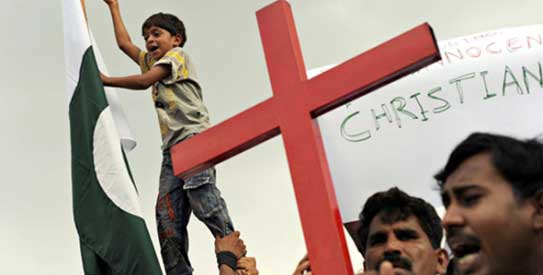
The name Pakistan literally translates into “The Land of the Pure”. And as a child growing up I was told that the meaning of Pakistan’s flag is this: “The green is a traditional Islamic color and the crescent moon and star are also Islamic symbols. The white stripe represents the non-Muslim minority and religious groups of Pakistan and there place in the country.” In my view, as long as the nation sanctions and tolerates these utterly unjust and biased blasphemy laws, the religious minorities of Pakistan clearly have no place in this land of the ‘pure’.

-Manzer Munir, a proud Pakistani American and peace activist, is the founder of Pakistanis for Peace and blogs at www.PakistanisforPeace.com as well at other websites as a freelance journalist and writer.

Christian Woman Sentenced to Death in Pakistan Not Yet Pardoned

By Reza Sayah for CNN

A Christian woman sentenced to death for blasphemy has not yet been pardoned by Pakistan’s president, representatives for the president said Wednesday, a day after a provincial governor told CNN that the president is expected to pardon the woman.

Asia Bibi, who has been jailed for nearly 15 months, was convicted in a Pakistani court earlier this month of breaking the country’s controversial blasphemy law by insulting Islam’s Prophet Mohammed, a crime punishable with death or life imprisonment, according to Pakistan’s penal code. She was sentenced to death.

Two representatives of President Asif Ali Zardari said Wednesday that no action has been taken, but the president will pardon if necessary.

“No decision has been taken,” spokesman Farhatullah Babar said. “Under the constitution, the president has to act under the advise of the prime minister. He will advise the president to take whatever action he proposes.”

On Tuesday, the governor of Punjab province said Zardari will pardon Bibi.

“What basically he’s made it clear is that she’s not going to be a victim of this law,” Gov. Salman Taseer told CNN International’s “Connect the World” program.

“I mean, he’s a liberal, modern-minded president and he’s not going to see a poor woman like this targeted and executed. … It’s just not going to happen,” Taseer said.

She has filed a petition for mercy with the high court, Taseer said.

“If the high court suspends the sentence and gives her bail then that is fine. We’ll see that, and if that doesn’t happen, then the president will pardon her,” he said.

Babar said jurists and legal experts have debated about whether the president has absolute power under the constitution to grant a pardon.

But he said Bibi is not in danger of being executed.

“Asia cannot be executed now,” Babar said. “Under the law, a death sentenced issued by a session court can not be carried out until it has been endorsed by the high court.”

Farahnaz Ispahani, a spokeswoman for the president, said Pakistan remains committed to protecting religious minorities.

“Pakistan is a nation of many faiths and religions, and all Pakistanis, no matter what their religion, are equal under the law,” Ispahani said in a written statement. “President Zardari has followed the case of Asia Bibi closely and will take appropriate action, if necessary, to issue a pardon or grant clemency to insure that Asia Bibi is neither incarcerated or harmed.”

A preliminary investigation showed Bibi was falsely accused, a government official said Monday.

“The president asked me to investigate her case, and my preliminary findings show she is innocent and the charges against her are baseless,” Pakistani Minister for Minority Affairs Shahbaz Bhatti told CNN.

Bhatti has said he will submit a final report Wednesday to Zardari’s office.

Prosecutors say Bibi, a 45-year-old field worker, insulted the Prophet Mohammed after she got into a heated argument with Muslim co-workers who refused to drink from a bucket of water she had touched.

In a brief news conference at the prison where she’s being held, Bibi said last weekend that the allegations against her are lies fabricated by a group of women who don’t like her.

“We had some differences and this was their way of taking revenge,” she said.

Bibi’s death sentence sparked outrage among human rights groups, who condemned Pakistan’s blasphemy law as a source of violence and persecution against religious minorities.

But Babar said the president’s party lacks the power in parliament to repeal Pakistan’s blasphemy laws.

“The manifesto of the Pakistan Peoples Party calls for the law to be repealed, but the party has not been able to repeal it because we lack the majority in parliament,” Babar said. “We don’t have the numbers to do it.”

Christian Woman Sentenced to Death in Pakistan

By Waqar Hussain for The AFP

 A Pakistani court has sentenced to death a Christian mother of five for blasphemy, the first such conviction of a woman and sparking protests from rights groups Thursday.

Asia Bibi, 45, was sentenced Monday by a local court in Nankana district in Pakistan’s central province Punjab, about 75 kilometres (47 miles) west of the country’s cultural capital of Lahore.

Pakistan has yet to execute anyone for blasphemy, but the case spotlights the Muslim country’s controversial laws on the subject which rights activists say encourages Islamist extremism in a nation wracked by Taliban attacks.

Asia’s case dates back to June 2009 when she was asked to fetch water while out working in the fields. But a group of Muslim women labourers objected, saying that as a non-Muslim, she should not touch the water bowl.

A few days later the women went to a local cleric and alleged that Asia made made derogatory remarks about the Prophet Mohammed. The cleric went to local police, who opened an investigation.

She was arrested in Ittanwalai village and prosecuted under Section 295 C of the Pakistan Penal Code, which carries the death penalty.

Sentencing her to hang, Judge Naveed Iqbal “totally ruled out” any chance that Asia was falsely implicated and said there were “no mitigating circumstances”, according to a copy of the verdict seen by AFP.

Husband Ashiq Masih, 51, told AFP that he would appeal her death sentence, which needs to be upheld by the Lahore high court, the highest tribunal in Punjab, before it can be carried out.

“The case is baseless and we will file an appeal,” he said.

The couple have two sons and three daughters.

Rights activists and minority pressure groups said it was the first time that a woman had been sentenced to hang in Pakistan for blasphemy, although a Muslim couple were jailed for life last year.

Human rights activists want the controversial legislation repealed, saying it is exploited for personal enmity and encourages Islamist extremism. “The blasphemy law is absolutely obscene and it needs to be repealed in totality,” Human Rights Watch spokesman Ali Dayan Hasan told AFP.

“It is primarily used against vulnerable groups that face social and political discrimination. Heading that category are religious minorities and heterodox Muslim sects,” he said.

Asked about Asia’s case at a press conference in Islamabad on Thursday, visiting Italian Foreign Minister Franco Frattini said he was unaware of the details but would raise the matter with Pakistan’s minorities minister.

“The Italian position has always been against the death penalty,” he told reporters. He said he raised the problems faced by Christian minorities during his talks with his Pakistani counterpart Shah Mehmood Qureshi.

“I believe they should not misuse the law of blasphemy to discriminate against religious minorities and this is a point I share with my colleague — this is a key point for me.”

Around three percent of Pakistan’s population of 167 million is estimated to be non-Muslim. Last July, two Christian brothers accused of writing a blasphemous pamphlet critical of the Prophet Mohammed were shot dead outside a court in Punjab.

Pastor Rashid Emmanuel, 32, and his brother Sajjad, were killed as they left a court hearing in Faisalabad city, where hundreds of Muslim protesters had demanded they be sentenced to death.

Pakistanis for Peace Editor’s Note– Pakistan’s blasphemy laws are absolutely egregious and need to be repealed. Not only are minorities such as Christians and Hindus in Pakistan subjected to these outrageously unjust laws, but Muslim minorities such as the Ahmadis and Ismailis are also time and time again subjected to and singled out for unfair treatment under the guise of these BS laws. The white color in Pakistan’s flag is supposed to represent the minorities within this Islamic republic. Until and unless these blasphemy laws are repealed and Pakistan’s constitution is amended, the religious minorities within Pakistan will never get a fair shake, regardless of how much they are represented in the flag.