Posts Tagged ‘ Baluchistan ’

Ramadan or Not, Hunger Hits Pakistan Flood Victims

By Mahmood Farooq for The Associated Press
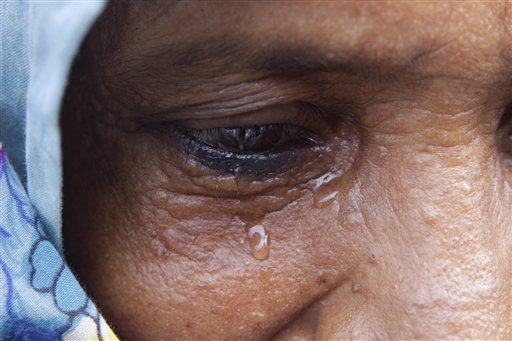
Pakistani flood survivors already short on food and water began the fasting month of Ramadan on Thursday, a normally festive, social time marked this year by misery and fears of an uncertain future.

The U.S. announced a navy ship with 19 helicopters and 1,000 Marines on board was close to the southern coast of the country and relief flights would soon begin. The U.N. launched an emergency appeal for international assistance for Pakistan after the already-poor nation was hit with one of its worst-ever natural disasters.

Damage to crops, roads and bridges have caused food prices to triple in some parts of the country, adding to the pain of those marking the fasting month.

“Ramadan or no Ramadan, we are already dying of hunger,” said Mai Hakeema, a 50-year-old who sat alongside her ailing husband in a tent outside the city of Sukkur. “We are fasting forcibly, and mourning our losses.”

Observant Muslims fast from dawn to dusk each day for a month each year to control their desires and show empathy for the poor. The month is marked by increased attendance at mosques, a rise in charitable giving and family gatherings that coincide with the evening breaking of the fast.

While millions of flood-affected people were performing the fast, Mufti Muneebur Rehman, one of the country’s top religious scholars, said victims living in difficult conditions dependent on charity could skip the fast and perform later in the year.

“I am sad to miss the first day of fasting,” said Ghullam Fareed of Gormani village in eastern Punjab province. “Later, when we reach home, we will compensate for this.”

In the northwest, where many are especially devout, many refugees said flood or no flood, they would fast.

“I cannot disobey God, so I am fasting as it is part of my faith no matter what the conditions are,” said Fazal Rabi, 47, who was staying in a tent village in Akbarpura.

The floods hit the country more than two weeks ago, beginning in the northwest before spreading down the country and inundating thousands of villages. Around 1,500 people have been killed, and the U.N. estimates up to 7 million people need emergency assistance.

On Wednesday, the U.N. appealed for $460 million to provide immediate help, including shelter, food, clean water, sanitation and medical care.

“Make no mistake, this is a major catastrophe,” U.N. humanitarian chief John Holmes told diplomats from several dozen countries in launching the appeal in New York. “We have a huge task in front of us. The death toll has so far been relatively low compared to other major natural disasters, but the numbers affected are extraordinarily high.”

The United States said it was more than doubling the number of helicopters it is providing to help.

Defense Secretary Robert Gates said the USS Peleliu was off the coast near Karachi, carrying 19 helicopters and about 1,000 Marines. The helicopters will help rescue people and deliver food and other supplies.

The Pakistani government’s response to the crisis has been criticized by many as too slow and patchy, and the civilian leaders have struggled to rally public opinion in their favor.

Pakistani Prime Minister Yousuf Raza Gilani flew to southwestern Baluchistan province Thursday to see flood-hit areas. He told The Associated Press that Pakistan still needs more helicopters to assist in the relief work.

“We will try our best to reach millions of people to ensure that they get food and other basic items during and after the month of Ramadan,” he said while aboard a military plane.
Pakistan Oil & Gas to Spend $1 Billion on Exploration, CEO Says

By Khaliq Ahmed and Farhan Sharif for Bloomberg

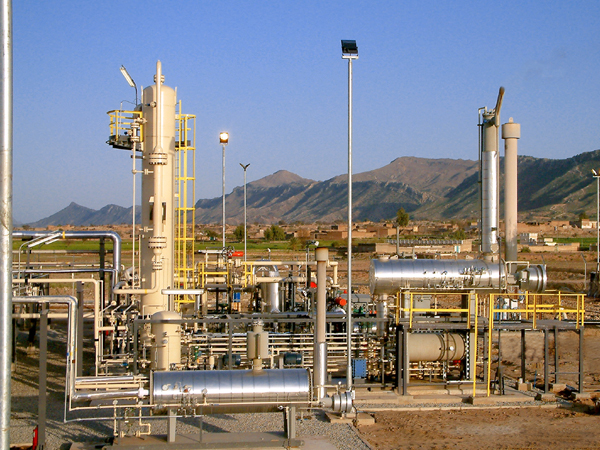
Oil & Gas Development Co., Pakistan’s biggest fuels explorer, plans to spend a record $1 billion this year to drill 48 new wells and increase production, to help bridge the nation’s record energy deficit.

“We are following a very aggressive exploration policy,” Chief Executive Shah Mehboob Alam said in an interview at his office in Islamabad yesterday. “We are targeting a number of discoveries.”

Improved domestic energy supplies may help Pakistan’s economy which has been hurt by terrorism and falling foreign investment. Demand for energy is three times supply and daily power outages have forced textile and engineering factories to close and caused riots across the country.

“There is a huge need and also huge potential to increase production by explorers,” said Umer Ayaz, a research analyst at JS Global Capital Ltd. in Karachi. “Pakistan has unusual risks in exploration and also unusually high potential.” A “sizeable” discovery in the northwest will be announced in “a couple of days,” Alam said, without giving details.

Shares of Oil & Gas Development rose 2.8 percent to 149.56 rupees on the Karachi Stock Exchange yesterday, the highest since Oct. 30, 2006. The stock has gained 35 percent this year compared with an 8 percent increase in the benchmark index. Oil & Gas plans to expand exploration in the western province of Baluchistan, where attacks on pipelines and installations have disrupted gas supplies, Alam said. The province is estimated to hold more than half the country’s gas reserves.

The company expects the Zin Block in Baluchistan to generate its first gas flows within two years. The block has estimated gas reserves of 10 trillion cubic feet and drilling is scheduled to start as soon as the government approves security plans within the next two weeks, he said.

“We drilled only five out a planned 15 wells in Baluchistan last year because of security issues,” he said. “Now, we have submitted a plan to the Finance Ministry under which the Frontier Corp. will raise a special force of 500 to 600 people.” Baluch nationalists want political autonomy and a share of the resources in the province, where the country’s largest gas fields, including Sui, are located. The Frontier Corp. is part of Pakistan’s paramilitary force.

The company is also working in fields in western Baluchistan, including the Samandar field, west of Karachi, and Shahana, which is near the border with Iran, Alam said. Oil & Gas will invite bids today for the development of Kunar Pasakhi Deep and Tando Allah Yar fields in the southern province of Sindh, Alam said. Previously awarded tenders had been canceled after being challenged in court for not complying with regulatory procedures. The two fields may produce 280 million cubic feet of gas a day, 360 metric tons of liquefied petroleum gas a day and 4,300 barrels of oil a day, Alam said.

The company drilled 26 wells and made six discoveries in the year ended June 30, including at Nashpa in the northwest, which is producing 15 million cubic feet a day of gas and 4,700 barrels of oil a day, he said. Oil & Gas Development discovers fuel in one out of every 2.3 wells drilled, compared with an industry average of one in every 3.8, he said.

Oil & Gas Development will increase production after installing new compressors to plug leaks at the Qadirpur gas field by September, Alam said. The company plans to buy two new rigs this year. The Qadirpur field in the southern province of Sindh contributes about 40 percent of the company’s total gas output.

Oil & Gas Development produces about 1 billion cubic feet of gas a day, or a quarter of the country’s total output. Its oil production is 60 percent of the nation’s total of 62,000 barrels a day. Pakistan imports 85 percent of its oil needs. The company’s profit in the 12 months ended June 30, will be “higher than last year,” Alam said, without giving details. Oil & Gas reported a net profit of 55.5 billion rupees ($647 million) in the year ended June 30, 2009, according to data compiled by Bloomberg.