Posts Tagged ‘ blasphemy laws ’

Time to Repeal the Blasphemy Law

By Nasim Zehra for The Express Tribune
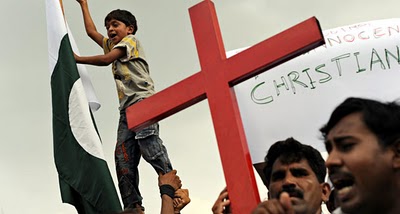
In June 2008, Asiya Bibi, a Pakistani farm worker and mother of five, fetched water for others working on the farm. Many refused the water because Asiya was Christian. The situation got ugly. Reports indicate Asiya was harassed because of her religion and the matter turned violent. Asiya, alone in a hostile environment, naturally would have attempted to defend herself but was put in police custody for her protection against a crowd that was harming her.

However, that protection move turned into one that was to earn Asiya a death sentence. A case was filed against her under sections 295-B and C of the Pakistan Penal Code, claiming that Asiya was a blasphemer. Her family will appeal against the judgment in the Lahore High Court.

The Asiya case raises the fundamental question of how Pakistan’s minorities have been left unprotected since the passage of the blasphemy law. There may have been no hangings on account of the law but it has facilitated the spread of intolerance and populist rage against minorities, often leading to deaths. There is also a direct link between the Zia-ist state’s intolerance against minorities and the rise of criminal treatment of Ahmadis.

Cases have ranged from the Kasur case to the more recent Gojra case, from the mind-boggling row of cases between 1988-1992 against 80-year-old development guru Dr Akhtar Hameed Khan, to the case of the son of an alleged blasphemer, an illiterate brick kiln worker who was beaten to death by a frenzied mob.

Although doctor sahib faced prolonged mental torture, he was saved from the maddening rage that has sent to prison, and in some cases devoured, many innocent, poor and hence unprotected Pakistanis.

There is a long list, prepared by the Human Rights Commission of Pakistan, of unjust punishments handed down to Pakistani citizens whose fundamental rights the state is obliged to protect. Beyond punishments, minorities live in constant fear of being lethally blackmailed by those who want to settle other scores.

Yet most political parties have refrained from calling for the law’s repeal or improvement in its implementation mechanism. When, in the early 90s, I asked Nawaz Sharif sahib to criticise the hounding of Dr Khan, his response was a detailed recall of the story in which Prophet Muhammad (pbuh) went to ask after the health of a non-Muslim woman who repeatedly threw garbage over him. He condemned what was happening but said politics prevented him from doing so publicly. Later, General Musharraf, advised by other generals, reversed his announcement of changing the law’s implementation mechanism. Small crowds protested against it. Among politicians, very few exceptions include the PPP parliamentarian Sherry Rehman and, more recently, the ANP’s Bushra Gohar, who asked for its amendment and repeal.

Already sections of the judiciary have been critical of flawed judgements passed by lower courts in alleged blasphemy cases. Recently in July, Lahore High Court Chief Justice Khawaja Sharif quashed a blasphemy case against 60-year-old Zaibunnisa and ordered her release after almost 14 years in custody. According to the judgment, the “treatment meted out to the woman was an insult to humanity and the government and the civil organisations should be vigilant enough to help such people.” Surely the Bench should know the plethora of abuses that Pakistan’s minorities have suffered because of an evidently flawed law.

A message more appropriate, perhaps, would be to repeal the black law that grossly undermines the Constitution of Pakistan and indeed the teachings of Prophet Muhammad, one of the most tolerant and humane law-givers humankind has known. This environment of populist rage, fed by the distorted yet self-serving interpretation of religion principally by Zia and a populist mixing of religion and politics by a politically besieged Zulfikar Ali Bhutto, must be emphatically challenged. A collective effort to roll back these laws must come from parliament, the lawyers’ forums, the judiciary, civil society groups and the media.
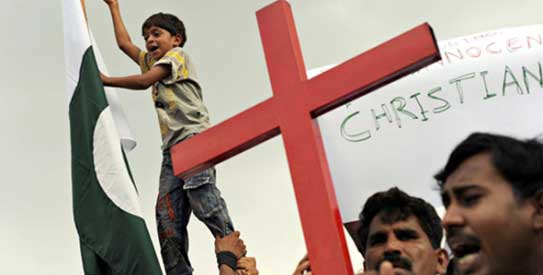
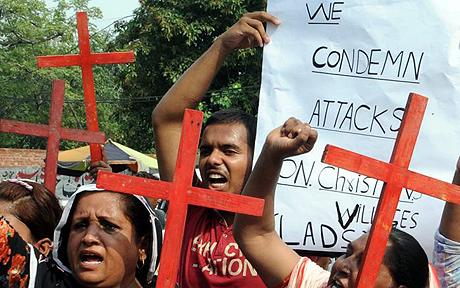
Christian Woman Sentenced to Death in Pakistan

By Waqar Hussain for The AFP

 A Pakistani court has sentenced to death a Christian mother of five for blasphemy, the first such conviction of a woman and sparking protests from rights groups Thursday.

Asia Bibi, 45, was sentenced Monday by a local court in Nankana district in Pakistan’s central province Punjab, about 75 kilometres (47 miles) west of the country’s cultural capital of Lahore.

Pakistan has yet to execute anyone for blasphemy, but the case spotlights the Muslim country’s controversial laws on the subject which rights activists say encourages Islamist extremism in a nation wracked by Taliban attacks.

Asia’s case dates back to June 2009 when she was asked to fetch water while out working in the fields. But a group of Muslim women labourers objected, saying that as a non-Muslim, she should not touch the water bowl.

A few days later the women went to a local cleric and alleged that Asia made made derogatory remarks about the Prophet Mohammed. The cleric went to local police, who opened an investigation.

She was arrested in Ittanwalai village and prosecuted under Section 295 C of the Pakistan Penal Code, which carries the death penalty.

Sentencing her to hang, Judge Naveed Iqbal “totally ruled out” any chance that Asia was falsely implicated and said there were “no mitigating circumstances”, according to a copy of the verdict seen by AFP.

Husband Ashiq Masih, 51, told AFP that he would appeal her death sentence, which needs to be upheld by the Lahore high court, the highest tribunal in Punjab, before it can be carried out.

“The case is baseless and we will file an appeal,” he said.

The couple have two sons and three daughters.

Rights activists and minority pressure groups said it was the first time that a woman had been sentenced to hang in Pakistan for blasphemy, although a Muslim couple were jailed for life last year.

Human rights activists want the controversial legislation repealed, saying it is exploited for personal enmity and encourages Islamist extremism. “The blasphemy law is absolutely obscene and it needs to be repealed in totality,” Human Rights Watch spokesman Ali Dayan Hasan told AFP.

“It is primarily used against vulnerable groups that face social and political discrimination. Heading that category are religious minorities and heterodox Muslim sects,” he said.

Asked about Asia’s case at a press conference in Islamabad on Thursday, visiting Italian Foreign Minister Franco Frattini said he was unaware of the details but would raise the matter with Pakistan’s minorities minister.

“The Italian position has always been against the death penalty,” he told reporters. He said he raised the problems faced by Christian minorities during his talks with his Pakistani counterpart Shah Mehmood Qureshi.

“I believe they should not misuse the law of blasphemy to discriminate against religious minorities and this is a point I share with my colleague — this is a key point for me.”

Around three percent of Pakistan’s population of 167 million is estimated to be non-Muslim. Last July, two Christian brothers accused of writing a blasphemous pamphlet critical of the Prophet Mohammed were shot dead outside a court in Punjab.

Pastor Rashid Emmanuel, 32, and his brother Sajjad, were killed as they left a court hearing in Faisalabad city, where hundreds of Muslim protesters had demanded they be sentenced to death.

Pakistanis for Peace Editor’s Note– Pakistan’s blasphemy laws are absolutely egregious and need to be repealed. Not only are minorities such as Christians and Hindus in Pakistan subjected to these outrageously unjust laws, but Muslim minorities such as the Ahmadis and Ismailis are also time and time again subjected to and singled out for unfair treatment under the guise of these BS laws. The white color in Pakistan’s flag is supposed to represent the minorities within this Islamic republic. Until and unless these blasphemy laws are repealed and Pakistan’s constitution is amended, the religious minorities within Pakistan will never get a fair shake, regardless of how much they are represented in the flag.

2 Pakistani Christians Killed At Courthouse

By Chris Brummitt for The Associated Press

Gunmen killed two Pakistani Christian brothers accused of blasphemy against Islam as they left court on Monday, a government minister and police said.

The men were chained together when the attack took place in the eastern city of Faislabad as they were being taken back into custody after their court appearance.

They were arrested a month ago after leaflets allegedly bearing their names and featuring derogatory remarks against the Prophet Muhammad were found in the town, said Shahbaz Bhatti, the minister for minority affairs. He said mosques in Faislabad had called for the men to be attacked.

Bhatti said he suspected the men were falsely accused of blasphemy by people with a grudge against them. Their families had maintained their innocence, he said.

The brothers were killed by two gunmen as they left court, said police officer Rana Ahmed Hasan. A police officer accompanying the men was wounded, he said, adding the killers escaped.

Pakistan’s blasphemy laws have been often criticized by religious minorities and human rights activists.

In its latest report on religious freedom in Pakistan, the U.S. State Department said the laws are often abused to settle local disputes and discriminate against minorities.

Muslims make up an estimated 97 percent of Pakistan’s 180 million people, most of them Sunni.

Bhatti said he believed the brothers were innocent.

“I personally don’t think that anyone who wrote derogatory things against Muhammad would put their names on the bottom,” he said. “This was just to settle a personal issue.”

Bhatti has long campaigned against the blasphemy laws, which were introduced President Gen. Zia ul-Haq in the 1980s to win the support of hard-line religious groups.

Repealing them now would likely meet opposition from the same groups, something that could cause unrest.

Pakistani minister promises to revise blasphemy law despite death threats

PD*30407144

 Islamabad, Pakistan- The minister for minority affairs of Pakistan, Shahbaz Bhatti,  promised to work to amend the blasphemy laws used to target non-Muslims in Pakistan such as Christians and Hindus and said he was ready to die fighting for this cause.

A Member of Parliament and head of the All Pakistan Minorities Alliance (APMA), Shahbaz Bhatti was visiting Washington DC at the invitation of the US Commission on International Religious Freedom, which awarded him a first-of-a-kind medal for championing the rights of minorities in Islamic Pakistan.

A Catholic member of President Asif Ali Zardari’s administration as a federal minister for minority affairs, he took over the job last year when it was made a cabinet level position in Zardari’s cabinet.

Bhatti said he has received threats for his work on numerous occasions. Earlier this month, Pakistan’s religious affairs minister was wounded in an assassination attempt in Islamabad that left his driver dead.

“I personally stand for religious freedom, even if I will pay the price of my life,” Bhatti said. “I live for this principle and I want to die for this principle.”

Pakistan’s law against blaspheming Islam carries the death penalty. While no one has ever been sent to the executed for the crime, activists say the law is used to exploit others out of personal vendettas by some in the Muslim community against Christians, Hindus, Sikhs, and Buddhist minorities in Pakistan.

A 25-year-old Christian jailed on blasphemy allegations earlier this week died in prison. Authorities said he committed suicide but civil rights activists suspect that he was tortured by the police.

The death came several weeks after an angry mob killed seven Christians in an arson attack that destroyed about 40 houses in the town of Gojra in central Punjab province.

Christians and other religious minorities have a long history of persecution and discrimination in all walks of life in Pakistan by the Muslim majority. This is a sad reality and a country such as Pakistan that was founded for religious freedoms for the Muslims of India in 1947, has to do a much better job at protecting the 3 to 5% of the population that does not share the Islamic faith.

Unfair, subjective and antiquated laws such as Pakistan’s blasphemy laws need to be urgently amended so that the non-Muslim minorities in Pakistan do not live in fear of an upset neighbor calling the authorities and falsely claiming an individual blasphemed the religion of Islam. Furthermore, if an individual is indeed ever guilty of blasphemy, the death penalty is a rather harsh punishment for simply stating one’s opinions, no matter how offensive to the faithful.

Although he may face strong resistance by some of the extremist and ultra religious members of Parliament in Pakistan, many moderate and enlightened Pakistanis support the minister for minority affairs and hope that he is successful in amending this archaic law.

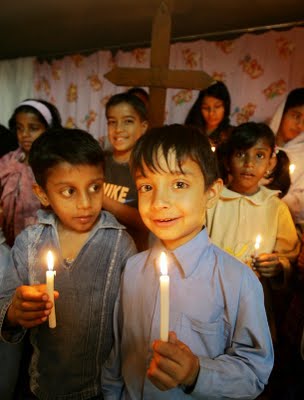
Christian Pakistani Children


Reported by Manzer Munir for www.PakistanisforPeace.com