Posts Tagged ‘ cricket ’

Tendulkar leads India past Pakistan, to World Cup final

As Reported by The Japan Times
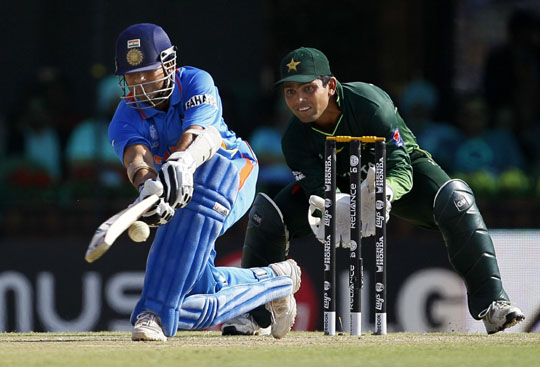
A lucky 85 from Sachin Tendulkar was followed by a disciplined bowling effort as India beat Pakistan by 29 runs in a high-stakes semifinal Wednesday to progress to the World Cup final against Sri Lanka.

Pakistan was dismissed for 231 in the last over chasing 261, sparking wild celebrations among the 28,000 people inside the Punjab Cricket Association Stadium and across the nation of more than 1 billion people.

Pakistan had done well earlier to peg India back to 260-9 after Virender Sehwag’s flying start, with left-arm pace bowler Wahab Riaz taking a career-best 5-46.

The victory continued a streak for India, which has beaten Pakistan in all five World Cup head-to-heads dating back to 1992.

The game was touted as a duel between India’s batting lineup and Pakistan’s bowling attack, but Pakistan’s shoddy fielding was eventually the difference between the two sides.

Tendulkar was let off four times, giving him the opportunity to knit together a challenging total for India and the bowlers then ensured a third World Cup final appearance for the 1983 champion.

“Going back to Mumbai, especially for this event, is a wonderful occasion,” Tendulkar said of playing a World Cup final on his home ground. “All I want to say is, we want to be calm, focus on our job and get the job done.”

India piled the pressure on a Pakistan batting lineup which failed to produce a single century in the tournament.

Pakistan’s early promise was slowed down in the middle overs as Yuvraj made early inroads and the bowlers slowly took control, marshaled well by captain Mahendra Singh Dhoni. All five Indian bowlers finished with two wickets each.

The only time Pakistan looked capable of the chase was when openers Kamran Akmal and Mohammad Hafeez were at the crease.

Kamran Akmal slashed a ball from Zaheer Khan straight to Yuvraj at point after making 19, while Hafeez went for an unnecessary scoop off Munaf Patel and was caught behind for 43.

Yuvraj then dismissed Asad Shafiq and Younis Khan and Pakistan was reduced to 106-4 by the 26th over.

Umar Akmal added some interest with a 24-ball 29 and Misbah-ul-Haq made a late charge of 56, but with the ball not coming on to the bat too well later in the day, it was always going to be difficult for them.

“I want to say sorry to my nation. We tried our level best,” Pakistan skipper Shahid Afridi said. “I want to congratulate the Indian cricket and all of the Indian nation for this great victory. We wish them well in the final.”

In the first innings, Riaz exposed India’s traditional weakness against left-arm seamers, striking at crucial junctures. He accounted for a dangerous looking Sehwag (38) and an in-form Yuvraj for a first-ball duck, as the famed Indian batting struggled against his swing.

Pakistan also made Tendulkar wait for his 100th international century despite dropping the world’s best batsman four times. Tendulkar also had an lbw decision overturned on referral and survived a close stumping appeal in what has to be one of his luckiest innings ever.

Tendulkar faced 115 balls and hit 11 fours even as Riaz pegged back the Indian middle order with the dismissals of Virat Kohli (nine) and Yuvraj off successive deliveries.

How Can India Beat Pakistan?

By Will Davies for The Wall Street Journal

It’s the million dollar question that a billion people are asking: How can India beat Pakistan? Setting aside the obvious answers such as score more runs and get more wickets, there are some key areas where India can gain an advantage over its fiercest rival.

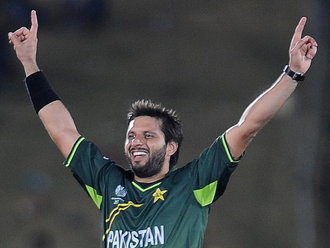
Indian and Pakistani cricket fans with a replica of the Cricket World Cup trophy. Unsettle Shahid Afridi – Pakistan’s captain has been an inspirational presence at this World Cup. He is the tournament’s leading wicket taker, with 21 scalps already to his name, comfortably ahead of the second-top bowler, India’s Zaheer Khan on 17. Afridi oozes charisma but he is prone to tantrums – it’s not uncommon seeing him shouting at teammates when things go wrong in the field, as is all too often the case with Pakistan – so India should try to frustrate him. Afridi is the nerve center of the Pakistan team, and if he is exasperated then negativity will spread to the other players.

Nullify Umar Gul – Afridi may have taken the most wickets, but Gul has been Pakistan’s most lethal pace bowler and looks on top of his game with 14 wickets (joint fifth with South Africa’s Imran Tahir in the tournament rankings). Gul has been so important to Pakistan’s campaign, particularly bearing in mind the team was stripped of two key bowling assets – Mohammad Asif and Mohammad Amir – ahead of the World Cup. The track at Mohali should favor pace bowlers over spin (will this mean we’ll see the Rawalpindi Express Shoaib Akhtar?), so the Pakistanis will be heavily reliant on another good showing from Gul, who has been effective with both the new and the old ball. If India’s excellent batsmen can nullify the ever aggressive Gul, Pakistan’s armory will be significantly weakened.

Silence Younis Khan – The big-hitting middle-order batsman has had a relatively quiet World Cup by his standards, scoring 172 runs in six innings, though that includes a 72 against a very fine Sri Lanka. He often saves his best for India so the co-hosts should be on guard if or when he comes to the crease. Out of his six career centuries, three have been made against India, including one at Mohali, the venue for Wednesday’s semifinal. India will do well to keep him contained.

Bat to Potential – India has a wonderful batting lineup but there’s a nagging feeling we haven’t seen the best of it at this World Cup. Sachin Tendulkar, Virender Sehwag and Yuvraj Singh are among the tournament’s top 10 run scorers, but India’s other batsmen haven’t consistently backed up the trio’s good work. Captain Mahendra Singh Dhoni hasn’t done much at all with the bat – his top score so far is 34 – though he has often come to the crease when his only option was to have a bit of a slog. All the batsmen in this star-studded lineup will need to play at least one great innings if India is to beat Pakistan and go on to win the World Cup final in Mumbai on April 2.

Support Zaheer Khan – India’s bowling was seen as a weakness at the start of this World Cup and it remains a concern. Zaheer Khan has been a revelation but the other pace bowlers need to give him better support. Munaf Patel was targeted by the Australians, particularly Brad Haddin, and it will be interesting to see if India’s coach Gary Kirsten selects him for the semifinal. Shanthakumaran Sreesanth and Ashish Nehra could get a call-up, but both have had their problems this tournament. Left-armer Nehra was hurt in the match against South Africa when he failed to defend 13 runs in the final over, while Sreesanth hasn’t featured since the opening match against Bangladesh when he returned disappointing figures of 0 for 53 from just five overs.

Kamran Akmal – It’s harsh to single out the Pakistani wicket-keeper, but he is prone to lapses that make him look like he has smeared his gloves in butter. Akmal put in a much improved performance in the quarterfinal against the West Indies, but India will be hoping he has another bad day at the office and gives the hosts a few reprieves.

Ignore the hype – Ok, that’s like telling a skydiver to relax and enjoy the view after his parachute has failed, but India must try to focus on the task at hand and not get carried away by the enormity of this match and the weight of expectation from a billion or so fans.

And how can Pakistan beat India?

Hide Sachin Tendulkar’s bat.

Also, Pakistan needs to silence the home crowd. The stadium in Mohali is small, with capacity for only 27,500 spectators, but they’ll be so loud it’ll seem like there are 10 times that many people. If Pakistan gets some early wickets or an early batting partnership, the home crowd will become restless and that will put India under pressure. Pakistan has the quality and talent to beat the best in the world, but it’s the kind of side that needs momentum and confidence. That will come if the team unsettles India early in the match.

Still, hiding Tendulkar’s bat wouldn’t be a bad tactic. And while they’re at it, they should probably take Sehwag’s and Yuvraj’s too.

Can Pakistan Tame Australia?

By Will Davies for The Wall Street Journal

Saturday’s Group A match between Pakistan and Australia is a tough one to predict, as is generally the case when Pakistan plays. One team – Australia – epitomizes consistency and solidity, while the other – Pakistan – is about as well-adjusted and reliable as a moody teenager.

On its day, Pakistan is one of the best sides at this World Cup, but on other occasions the team looks disorganized and uninterested. That’s one of the reasons why Pakistan is such a fascinating team to watch – you never quite know what you’re going to get.

This unpredictability can work in its favor as opponents struggle to form and stick to a game plan. Of all the sides at the World Cup, Australia is the most capable of dealing with Pakistan’s maverick approach, but it will have to tread carefully and blow off the rust that has tinged its performances thus far.

If the likes of Shahid Afridi and Shoaib Akhtar – two players who are such fun to watch – perform well, then Pakistan is in with a chance of upsetting Australia in Colombo and ending its incredible 34-match unbeaten run in World Cup cricket.

Australia has been prowling quietly but menacingly on the verges of this tournament, snapping up victims, while other teams – particularly in Group B – struggle to gain momentum and avoid upsets. But the Australians aren’t the threat they once were, and their World Cup record looks more vulnerable than in previous tournaments when the team boasted superstars like the Waugh brothers, Shane Warne, Glenn McGrath and Adam Gilchrist.

Australia’s captain Ricky Ponting is out of sorts with the bat and angry in the field. It looked like he was ready to thump Steven Smith when his teammate bumped into him as he took a catch in Wednesday’s match against Canada.

Smith is looking increasingly at ease in the Australian squad, but he’d do well to tread a little carefully, particularly when near Ponting’s toes. The Sydney-born youngster is a player of great promise and is now a regular in the Australian team, but he is yet to really shine. He needs a big performance, otherwise he risks slipping into nearly-man territory.

Pakistan has had its ups and downs this World Cup, from the heights of beating Sri Lanka to the lows of collapsing against New Zealand and a Ross Taylor batting onslaught. Australia beat New Zealand convincingly, while the match against Sri Lanka was cut short by a huge thunderstorm, an unfortunate outcome as the game was shaping up nicely and Australia, for once, looked like it had a tough opponent to deal with.

The weather forecast for tomorrow isn’t promising, but hopefully the rain will stay away from Colombo as matches between teams like Australia and Pakistan are the big occasions that make the World Cup so special.

Bangladesh Stun England in Chittagong Thriller

By Azad Majumdar for Reuters News Agency

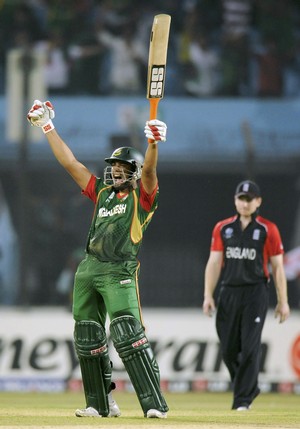
Two unheralded Bangladeshi tail-enders with ice in their veins played the innings of their lives to subject England to yet another giant-killing act on Friday.

Shafiul Islam (24) and Mahmudullah (21) defied the nerve-jangling pressure to forge an unbeaten 58-run ninth wicket stand to complete a two-wicket Group B victory that even their captain did not think they could pull off.

“I never believed they can win it for us. It’s only after hitting the winning run that I believed they have done this,” said Bangladesh skipper Shakib Al Hasan, whose house was stoned by irate fans after the team’s defeat by West Indies last week.

At 169-8, Bangladesh’s chase for a 226-run victory target on a tricky track looked so doomed that even some of their ardent followers exited the Zahur Ahmed Chowdhury Stadium shaking their heads, not realising the drama that was about to unfold.

Aided by England’s profligate bowlers who conceded 33 extras, including 23 wides, in the see-saw contest, both the tail-enders kept going before Mahmudullah drove Tim Bresnan through covers to seal the match with one over to spare and trigger wild celebrations.

Tamim Iqbal (38), Imrul Kayes (60) and Shakib (32) chipped in with useful cameos but Shafiul and Mahmudullah were the toast of the nation.

Wary of the dew factor, Shakib won a good toss and opted to field and he had reasons to feel vindicated when the English bowlers struggled to grip the wet ball in the evening.

England’s batting was also inconsistent and if it had not been for the knocks by Jonathan Trott (67) and Eoin Morgan (63), they might not have even scored 225 all out.

They looked completely shackled by the home team bowlers, managing just four boundaries in the first 20 overs.

Once again, they could not make the most of their batting powerplay either, managing just 33 runs and losing two wickets.

MISSED OPPORTUNITY
Defending a below-par total, English bowlers seemed to have turned the table on their hosts before being thwarted by Bangladesh’s spectacular rearguard resistance.

“We are very disappointed, it was a missed opportunity for us,” rued England skipper Andrew Strauss, admitting problems both in the batting and bowling departments.

Consistency has been a real problem for the team which narrowly escaped an upset against the Netherlands, tied with India, went down to Ireland before losing to Bangladesh here.

“These defeats hurt, there’s no doubt about it,” said Strauss, whose side could have sealed a place in the last eight if they had won Friday’s match.

“But you’ve got to channel that frustration and make sure you channel it the right way and come out and beat the next side you’re playing against. It’s a big game for us (against the West Indies) and we’re going to have to win it.”

England now need to win their final match against the West Indies on March 17 to be sure of a quarter-final place while Bangladesh next face Netherlands on Monday and then South Africa on March 19. Wins would take them through.

Afridi Tells Pakistan to Learn New Zealand Lessons

As Reported by Agence France-Presse

Pakistan captain Shahid Afridi on Wednesday urged his team to learn the lessons of the 110-run defeat against New Zealand.

The Black Caps rode on a brilliant unbeaten 131 by Ross Taylor to post a challenging 302-7 before Tim Southee removed the top order with a burst of three early wickets to bowl Pakistan out for 192.

“There were quite a few lessons to be learned from the defeat, especially those chances we gave to Taylor and when you give such chances to a player like him he makes you pay,” said Afridi.

Wicketkeeper Kamran Akmal let Taylor off twice in the same Shoaib Akhtar over – once when the batsman was on nought and then on eight – allowing two straightforward chances to slip past him.

Afridi said his bowlers were poor in the death overs when New Zealand plundered 139 runs off the last 10 overs.

“I think the way we started with the ball was good, but then the missed chances maybe demoralised the bowlers and they were very poor in the end,” said Afridi.

Afridi hoped his top order batsmen will show improvement in the next game, against Zimbabwe on Monday.

“Our top order did not work well although we have given them the time to settle down and this was the first time we were chasing. We need to learn how to bat while chasing,” said Afridi.

“Taylor took the game away from us although the bowlers had reverse swing. But the way he played was brilliant and he took the game away from us,” said the Pakistan captain.

Pakistan now have six points from four matches, second in Group A behind New Zealand who also have six points but a better net run-rate.

Co-hosts Sri Lanka (five points from four) and Australia (five from three) are third and fourth respectively.

Pakistan plan to spread the grief

As reported by Agence France-Presse

Pakistan are still reeling from the cricket corruption scandal that has dogged the side since last summer, but Shoaib Akhtar has warned that he and his teammates plan to take out their frustrations over the affair on their World Cup opponents.

Salman Butt, Pakistan’s then Test captain, and the bowlers Mohammad Asif and Mohammad Aamer were banned by the International Cricket Council (ICC) last month, after being found guilty of spot-fixing, which depleted Pakistan’s bowling options just two weeks before the start of the World Cup.

But Akhtar said the loss of the trio has helped unite the squad and galvanised them to push for a second World Cup victory to replicate their 1992 success.

“We are a hurt side so we are here to hurt others,” Akhtar said yesterday. “It’s better that it happened to us because every time a controversy happens it gathers us together and what better situation than before a World Cup?”

Pakistan beat co-hosts Sri Lanka by 11 runs in their last match after seeing off Kenya by 205 runs in their opening game.

Akhtar, 35, admitted he was missing Aamer and Asif but said others have stepped up.

“Obviously without Aamer and Asif we have suffered badly, they were the best with the new ball, it’s unfortunate what happened to them. Had they been with us it would have been the most lethal bowling attack,” he said.

“But the way [Umar] Gul and [Abdul] Razzaq have been bowling, the way [Wahab] Riaz is bowling, we can still do a much better job as we have variety in our attack.”

Akhtar, who has taken 246 wickets in 162 one-day internationals, said he had changed his bowling style to maintain his fitness, concentrating on accuracy rather than the pure pace that in the past regularly saw him bowl in excess of 100mph.

“I left this race of bowling at 100mph a long time ago,” he said. “I am nearing 36 now and am more mature, so I am focusing more on getting wickets now than bowling fast. But I crossed 98mph the other day.”

He said he is enjoying the chance to perform on the world stage after injury and discipline problems left him sidelined four years ago.

But he warned his teammates – who next face Canada in Colombo on Thursday – not to be over confident after beating Sri Lanka. “We have to move on and we shouldn’t get complacent,” he said.

The Cup That May Brighten Up Pakistan

By Nilankur Das for The Hindustan Times
For others winning this World Cup could be a matter of pride and glory for the country. For Pakistan, which has won a World Cup and hosted a final, a lot more is at stake. A terror attack on the Sri Lanka team bus in Lahore in 2009 had put an end to Pakistan playing international matches at home an

d also taken away its rights to host World Cup ties. The country shredded by blasts and violence is now forced to host its international matches in Dubai.

Play to prove
Winning this World Cup, coach Waqar Younis feels, could change all that and pave the way to bring international cricket back to the country.

“It is unfortunate that we are not hosting. Yes, we are missing World Cup matches at home. But if we play as a unit, which we are at the moment and go on to win, I believe it will definitely help get international matches back to Pakistan,” Waqar said after Pakistan began their campaign with a win in a warm-up match against Bangladesh.

“Everyone back home is disappointed that the World Cup is not happening in Pakistan. But we are looking forward. Violence has taken international cricket away from the country but I am sure our cricket will bring cricket back,” Intikhab Alam, Pakistan’s first one-day captain who is the manager of the team here, told HT.

Ccricket Buzz
Back in Pakistan which is celebrating Id-e- Milad-un-Nabi, the birthday of Prophet Mohammad, cricket, it was learnt, is the buzz now.

“I think the people of Pakistan have already come to terms with the World Cup not happening here. Tuesday’s match was not on TV and so very few people could follow it. But people are keeping track and everywhere I went I heard cricket being discussed,” spokesperson of the Pakistan Cricket Board, Nadeem Sarwar told HT from Lahore.

“What Waqar said is right. But it will not happen overnight. Winning the World Cup will surely have a unifying effect on the country and if that means law and order is restored, the other boards too will not have problems sending their teams to Pakistan.

“We are making progress in this regard. The Afghanistan team was here. And now the Nepal women’s team is playing a T20 and one-day series here,” Sarwar said.

It’s still early days but a motto like this can definitely keep the team together. But sport has its share of such instances. When Spain, with a majority of Catalan players led by a man from Real Madrid, went on to win the football World Cup, a month-long euphoria blurred all differences.

Pakistan Consider Pitching up in China

As Reported by Reuters

The Pakistan Cricket Board (PCB) is considering using China as a neutral venue for its international cricket events, Chinese state media said today. The official Xinhua news agency cited sources as saying that the board’s director Javed Miandad had submitted a report to the PCB suggesting its management “take special steps to finalise China as a neutral venue.”

“We should take immediate and solid steps to decide this issue soon before the time passes away,” Miandad was quoted as saying.

Pakistan became a no-go area for cricket’s leading nations after an armed attack on the Sri Lanka team bus in Lahore in March last year killed eight people, and injured seven Sri Lankan players and their assistant coach.

Pakistan was due to host matches in next year’s World Cup. But the attack on the Sri Lanka bus saw the tournament restricted to the three remaining Asian Test nations of India, Bangladesh and Sri Lanka.

Even before the Lahore incident, countries such as Australia had refused to tour Pakistan, where thousands have died in a decade of conflict.

The security situation led Pakistan to play its “home” series against Australia in England this year. In the last two years, the nation’s “home” games have also been staged in the United Arab Emirates and New Zealand.

According to Xinhua, Pakistan will support China in its bid to host the 2012 Asia Cup in the southern city of Guangzhou, where the Asian Games recently concluded successfully with their first-ever cricket tournament.

Pakistani authorities say China’s hosting of its first major international cricket event would pave the way for making it a neutral venue.

Pakistani Women Break Taboos in Winning Asiad Gold

As reported by Reuters

Sana Mir, captain of the Pakistan women’s cricket team that won a gold medal at the Asian Games in Guangzhou, had other ideas.

“I belong to Abbotabad where girls are not encouraged to take up sports leave alone cricket but my family was supportive and made it possible for me to play cricket and study as well,” Mir said after a triumphant return home on Sunday.

“I hope our victory will serve as a catalyst for women’s sports in Pakistan.”

The women’s team, wearing their green team blazers, were garlanded and showered with rose petals in a rousing welcome at Karachi airport after winning the gold medal in a one-sided final against Bangladesh on Saturday.

“This welcome is like icing on the cake after our victory,” Mir said.

Pakistani media greeted the gold medal as a victory for women in the country.  “Looking for positive faces to show the world, Pakistan need go no further than its sportswomen,” the Dawn English daily newspaper said in an editorial.

“Despite the many restrictions they face, Pakistani women have done well in the field of sports from time to time.”  “Unfortunately too little has been done to encourage these brave young women,” the News daily paper said.

“We never dreamt one day women’s cricket would be acknowledged this way,” said Mir. “The day we won the medal I called up my family to thank them for their support.”

In a country where cricket remains a passion despite the spot-fixing allegations surrounding the men’s team, the Pakistan Cricket Board (PCB) has been giving steady exposure to the women’s team.

“The fact that we have played regularly since last year in International Cricket Council (ICC) tournaments and against better opposition has helped these girls gain confidence,” said Bushra Aitzaz who heads the women’s wing in the PCB.

What if Zulqarnain Haider Was Right About Corruption in Pakistan?

By Paul Hayward for The Guardian

The curse of the whistleblower is to be denounced as a fraud, a fantasist or a weirdo. In America, where they have an organisation for everything, the National Whistleblowers Center in Washington helps people wanting to expose iniquity, much like our own Public Concern at Work. Either may hear soon from a 24-year-old Pakistani wicketkeeper.

Let’s imagine this as a short movie, a study in motivation. Zulqarnain Haider approaches passport control at Heathrow one day and asks for sanctuary. Behind him he has left a wife and two daughters in Pakistan and the national team in Dubai, who learn of his disappearance when they find his hotel room empty.

The immediate cause of Haider’s flight is a conversation he says he had near the team hotel. An unknown man approaches him to say: “If you work with us, we will give you a lot of money. If not, we will not select you again in cricket and, if you go back home, we will kill you and your family.”

Notice the “we” in “we will not select you again in cricket”. One largely ignored facet of this drama is that if Haider’s interlocutor existed he boasted of his power to pick the Pakistan XI. All three layers are present: potential reward, intermediary punishment, and death, not just for him but his family. If Haider is for real, the offer he was made and the warning he was given imply a connection between match- and spot-fixing, team selection and serious organised crime.

In other words they suggest corruption runs through many tiers of Pakistan cricket. In a recent editorial, the country’s Daily Times speculated: “The elephant in the room is the link between people wielding power and the bookmakers. It is alleged that a top bookmaker and mafia don have connections with a powerful intelligence agency in Pakistan.”

This is as far as conjecture can be pushed in the strange tale of Haider’s dash to Britain, which featured a chaotic press conference in the backroom of a curry house in Southall. To summarise, he claims he was approached before the fourth one-day international against South Africa, in which he hit 19 winning runs, and then fled before the fifth, the second target for the alleged match-fixers.

Here in England he has said players’ phones should be tapped to assist evidence gathering and that “a lot of people” are involved in the scam. He has said, too, that he does not want any aid from the British government beyond temporary asylum and has promised to co-operate with the International Cricket Council’s Anti‑Corruption and Security Unit.

To gain a sense of Haider’s motivation it is tempting to imagine him on that flight to London, knowing what was ahead of him and what lay behind: most poignantly, grave danger for his wife and daughters. No conclusion can be drawn from such a filmic and intuitive form of analysis, but most of us would think something fairly big must have spooked him in Dubai to cause him to run away from his family and his livelihood.

We would suspect also that a professional cricketer had to break in the end, and that Haider simply looks like the first to buckle. Heroic status eludes him, so far. No senior Pakistan cricketer, either serving or retired, has praised his actions. Some asked why he waited at least four days after the threat to his life to board a flight to London.

Denunciations fly in from those who say he ought to have “reported his concerns” to the Pakistan team management and the ICC’s detectives, which protocol required him to do.

And from Pakistan’s sports minister, Ijaz Hussain Jakhrani, came the most brutal condemnation: “If he is such a weak and scared person he should not have played cricket in the first place, particularly not for the national team.” Asif Iqbal weighed in: “He has let the motherland down. There wasn’t even a reserve wicketkeeper to replace him. He just flew off.”

This censorious tone obscures the dark realities of the past year. The current cycle of trouble began with the dubious tour of Australia, with its suspicious Sydney Test and nine straight defeats for Pakistan in all formats. After the News of the World’s spot-fixing exposé, Mohammad Amir, Mohammad Asif and Salman Butt are under an ICC provisional suspension and have had their central contracts cancelled by the Pakistan Cricket Board.

As pressure builds in India, the hub of cricket betting, to legalise and therefore regulate the wild east of gambling on the country’s national sport, you wonder why more punters are not put off by all the evidence suggesting choreography on the field of play. It’s an odd kink of human nature that people will go on betting in an apparently bent casino, as if to beat a crooked system confers more pleasure than winning against an honest house.

At the centre of this vast global issue is one man who stepped off a flight in London and told the BBC on Friday: “I want to be a good citizen.”

Afridi for Resumption of Indo-Pak Bilateral Cricket Series

As reported on Sify.com

Following coach Waqar Younis’ call for resumption of bilateral cricket series between India and Pakistan, skipper Shahid Afridi also wants more encounters with the arch rivals.

Afridi said India and Pakistan must play against each other more often, which would help in toning down the heightened tension between the two neighbouring nations.

“I have always enjoyed playing against India and I have been saying we should play more often against each other as it will only help improve relations,” The Nation quoted Afridi, as saying.

Pakistan and India last played in the ICC Champions Trophy in South Africa in September 2009.

The newly appointed captain added that he was eagerly looking forward to the match against India in the Asia Cup, starting June 15 in Sri Lanka.

Afridi, however, pointed out that Pakistan’s opening match against Sri Lanka would also hold great importance.

“Certainly, the event will not be easy and the team would have to start it on a winning note to lift its morale. As a captain I would try my every bit to cash in on every opportunity to win,” he said.

Earlier, Waqar had also lamented the lack of bilateral series between India and Pakistan.

“I want to see the two teams revive bilateral cricket ties and for now I am eagerly awaiting their clash in the Asia Cup in Sri Lanka,” Waqar had said.

“It should be a great match as any contest between the two teams produces top quality cricket. It is unfortunate we are not playing against each other more often as Indo-Pak matches are watched by people all over the world and they are great for the sport,” he added.

India and Pakistan are scheduled to fight it out on June 20 in Dambulla.

Afghanistan Is Feel-Good Element in Twenty20

By Huw Richards for The New York Times

Cricketing contrast rarely comes more vividly than it will Saturday when India plays Afghanistan on day two of the World Twenty20 tournament on the West Indian island of St. Lucia.

India is cricket’s economic giant, generating around three quarters of its income. Its players count both their fans and their personal fortunes in millions. They have just been playing in the India Premier League, the hugely lucrative competition that has brought unprecedented riches — accompanied by allegations of corruption — into the game.

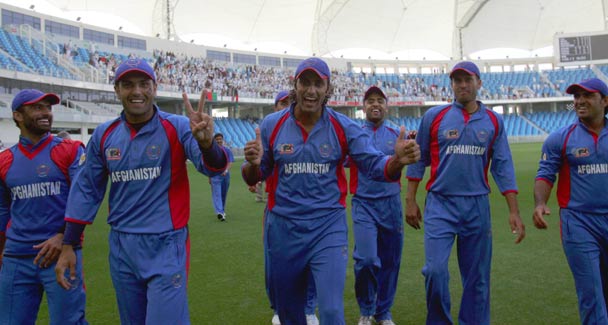
Afghanistan is the tournament newcomer, taking its first steps on the game’s biggest stages. It is cricket’s almost-too-good-to-be-true story.

A team from an impoverished and war-torn nation with no real cricket history has risen with incredible speed. That this success is a bizarre byproduct of those wider sufferings, with Afghans learning the game in refugee camps in Pakistan, only adds to the joyous unlikelihood of the whole story.

Saturday will be Afghanistan’s first competitive meeting with any of cricket’s established giants. Its players bring with them not only the fearlessness of youth — none admits to being older than 26 — but whose life experiences put mere sporting disappointment in context.

As Graeme Smith, captain of South Africa, the third team in the same initial pool, said when told that an Afghan batsman had declared himself unafraid of paceman Dale Steyn: “I wouldn’t be either, if I had grown up in a war zone.”

Afghanistan, a fifth-division team in the International Cricket Council’s league system only two years ago, should, logically, have finally reached the limit of its abilities. Yet that has been said of it at most stages in its rise. India will be wary. It remembers its elimination by Bangladesh in the 2007 World Cup, the last major tournament played in the West Indies. Lose to the Afghans and it will be tough for India to find a way back — it plays its second pool match only 24 hours later against South Africa, traditionally a fast starter in big tournaments.

There is nothing like an early shock to animate a championship. Ireland, the other qualifier from outside the 10 test-playing nations, will hope to provide one before Afghanistan even takes the field, when it plays host West Indies on Friday.

The West Indians will be seeking success on and off the field. It needs the 12-team, 27 match, 17 day tournament — the final is May 16 in Barbados — to be everything the 2007 World Cup was not. Then, overpriced tickets and heavy-handed crowd control seemed expressly designed to eliminate the distinctive ambience of Caribbean cricket.

It also needs its team to play with the vibrant spirit shown by Trinidad and Tobago in the Champions League competition for regional and national title-holders. Trinidad contributes four men to its 15-strong squad including the volcanic hitter Keiron Pollard.

In the tournament opener, Sri Lanka, runner-up in the 2009 World Twenty20, takes on New Zealand. The Sri Lankans field a 40-year-old member of Parliament, Sanath Jayasuriya, and a clutch of unorthodox but highly effective bowlers.

Predicting Twenty20 matches is notoriously tough. The short length of matches — only 20 six-ball overs apiece — and the limited number of international contests make for the unexpected.

There are, though, indications that Australia — which has won the World Cup, in which teams have innings of 50 overs, three times in a row — is coming to terms with the shorter format. It has won four of its last five official matches, drawing the other. Its teams dominated the Champions League. Paceman Doug Bollinger has emerged as a real force. On the other hand, it lost its warm-up contest against Zimbabwe.

This is the third Twenty20 World Cup. Pakistan won last year and was the runner-up in 2007. It comfortably has the best winning percentage in this format.

Pakistan should, by logic, be a prohibitive favorite. Logic, though, is in short supply in Pakistan. Several of its winning team, including inspirational captain Younis Khan, have since been thrown off the team following internal disputes.

Afghanistan owes much of its aggressive playing style to examples set by Pakistan. It must be hoped it will take its administrative models from elsewhere.

The pool stages might see Bangladesh trouble Pakistan’s traditionally slow starters. Two weeks beyond that, it would be no surprise to see Australia and Sri Lanka reprise their roles as finalists in 2007 World Cup in the 50-over format.

Attacks on Sri Lankan Cricket Team in Pakistan a New Low on War on Terror


Lahore, Pakistan- The already bad security situation in Pakistan got worse Tuesday when about 12 to 15 gunmen attacked the bus carrying Sri Lanka’s cricket team for a match against the Pakistani national team in Lahore Pakistan. At least 5 Pakistani policemen and a driver were killed in the attack and up to eight visiting Sri Lankan cricketers were injured.


The masked men opened fire on the Sri Lankan bus as it approached the cricket stadium for its match against Pakistan. Grenades, rocket launchers, weapons and backpacks with dry food and water were left behind by the attackers who all successfully fled the scene after the carnage.


Pakistani officials stated that the incident had similarities to the attacks in Mumbai in November of last year by the organization, weapons and the brazenness of the attacks. New Zealand immediately canceled its planned tour of Pakistan scheduled for later this year.  Australia also had previously canceled matches in Pakistan last year due to safety concerns. The attacks have also put great doubt on Pakistan’s ability to host some of the matches for the cricket World Cup scheduled for 2011 to be hosted by India, Pakistan and Sri Lanka. In fact, all international sporting events to be held in Pakistan are now in jeopardy as visiting foreign sportsmen will fear for their safety and are obvious targets by the crazed militants in Pakistan.


Pakistan has long been feared to be a country on the verge of becoming a failed state. However various events in the last 18 months have shown how true this unfortunate statement has come to reality. All the attacks that have happened in Pakistan from the Marriott bombing in Islamabad, to the murder of Benazir Bhutto, to the involvement in the Mumbai attacks in India, to the Taliban attacks in Swat valley and their win against the government in gaining Sharia Law, the continued kidnapping and beheading of foreigners and now the brazen attacks on a foreign sporting team just go to show how close to a failed state Pakistan has become.


Pakistan has for a long time been the most dangerous country in the world for its citizens with rampant crime, lawlessness, mixture of ethnic groups fighting amongst themselves, armed militants and Islamic extremists fighting in Afghanistan and India, and nuclear weapons in a country with a very weak government and constant political upheaval. The attacks on the Sri Lankan team now show the world and especially to the cricket loving Pakistanis that the enemies of the country will stop at nothing to destroy everything that is cherished in their country for their own misguided goals. No patriotic citizen of Pakistan should after these attacks have any doubt as to the immediate need to eradicate these terrorist groups from within Pakistan as they not only represent a clear and present danger to all friends and visitors to Pakistan but to the nation of Pakistan and its sovereignty. These terrorists aim to destroy Pakistan from within and hope to incite a civil war much like the one in Afghanistan with chaos and destruction through their continued attacks and then hope to put in power Islamic extremists like the Taliban who will proclaim to bring order to the country by instituting Sharia Law throughout the country.


We at Pakistanis for Peace and the majority of the good citizenry of Pakistan can not let this happen as the dissolution of the state of Pakistan into anarchy like the one in most parts of Afghanistan and Somalia will lead to a point of no return. As a nation of 170 million people, Pakistan’s population is five to six times the size of Iraq and Afghanistan. It has more ethnic groups and divisions than the two countries combined. And most importantly, it possesses a nuclear arsenal believed to be between 80 to 120 warheads. In a country with many armed militant groups that are operating in various parts of the nation and where the security and law and order situation is perhaps the worst in the world, there needs to be greater attention placed by the international community and the United States in eradicating the militant threat and in securing the weapons. Our condolences go out to the family of the dead policemen and to the injured Sri Lankan team and hope that this horrible attack helps the Pakistani people realize and understand that the true enemy of Islam and Pakistan are these extremists who are determined to destroy their nation.

 Reported by Manzer Munir for http://www.PakistanisforPeace.com