Posts Tagged ‘ ISI ’

What They Said: Pakistan Spies Downgrade India Threat

By Vibhuti Agarwal for The Wall Street Journal

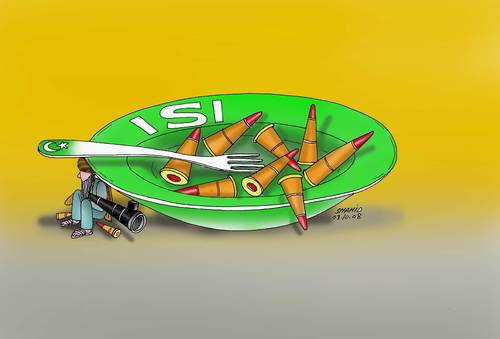
The Wall Street Journal reportedTuesday that a report from the Pakistan’s chief spy agency, the Inter-Services Intelligence, said domestic militancy had overtaken the Indian army as the greatest threat to Pakistan’s national security. This is the first time since the ISI was founded in 1948 that the ISI has found a bigger threat than its neighbor. India Real Time presents a roundup of comments from readers and others below:

The Times of India newspaper reported Wednesday that Pakistan’s acknowledgment of its internal problems comes as the country is struggling with an image problem which may be affecting the flow of international aid to help the victims of the devastating floods there. “The unexpected downgrading of the threat perception from New Delhi and waking up to the scourge of home-grown terrorism comes even as foreign aid for the thousands affected in floods in Pakistan is yet to pick up,” wrote Chidanand Rajghatta for the Times of India.

The Hindustan Times newspaper quoted analysts saying the change of mindset makes sense. “I am not surprised that the ISI has changed its strategic thinking,” Talat Masood, a retired general and analyst on defense and security issues told the newspaper. Another analyst, Imtiaz Gul, was also quoted in the article. “The ground realities have changed and have forced allies into becoming enemies,” he said.

“At this point, the Pakistan government will say just about anything the world community wants it to,” wrote H. Jere. “After seeing the response to the aid request has been disappointing, it will agree to almost anything.”

Other readers called Pakistan’s latest admission “hogwash,” adding that it may be a trick to get more funds from the United States.

“It is sheer naivetĂ© to consider Pakistan’s ISI and Islamic terrorists as two separate entities,” said Shri K. “ISI is the quintessence of rabid Islamic fascism and has been mercilessly exporting Islamic terror all over the world.”

Some readers said Pakistan’s admission came as a ray of hope for improving the long-estranged India-Pakistan relationship.

“I hope India take this opportunity to offer real assistance to the victims of the floods,” wrote Phillip Hwee. “It’s time for India and Pakistan to reconcile with one another. A dĂ©tente is very necessary so that each of the two rivals can reallocate their resources to improve the standard of living of their respective citizens.”

David Almeida agreed, adding that “one can only hope that the military establishment in Pakistan is truly serious about abjuring terrorism, regardless of whether it is targeted at Indian or Pakistani state.”

Pakistan Fight Stalls for U.S.

By Julian Barnes for The Wall Street Journal
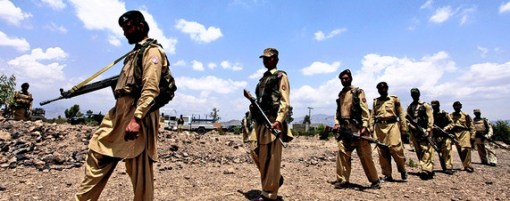
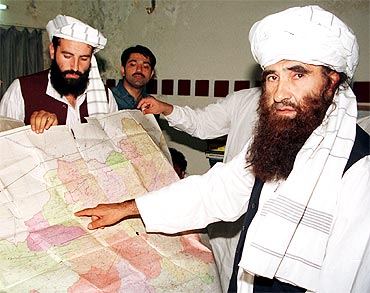
The U.S. military has stopped lobbying Pakistan to help root out one of the biggest militant threats to coalition forces in Afghanistan, U.S. officials say, acknowledging that the failure to win better help from Islamabad threatens to damage a linchpin of their Afghan strategy.

Until recently, the U.S. had been pressing Islamabad to launch major operations against the Haqqani network, a militant group connected to al Qaeda that controls a key border region where U.S. defense and intelligence officials believe Osama bin Laden has hidden.

The group has been implicated in the Dec. 30 bombing of a CIA base in Khost, a January assault on Afghan government ministries and a luxury hotel in Kabul, and in the killing of five United Nations staffers in last year’s raid on a U.N. guesthouse.

But military officials have decided that pressing Pakistan for help against the group—as much as it is needed—is counterproductive.

U.S. officials believe elements of Pakistan’s intelligence agency, Inter-Services Intelligence, are continuing to protect the Haqqani network to help it retain influence in Afghanistan once the U.S. military eventually leaves the country. U.S. officials say the support includes housing, intelligence and even strategic planning,

During a trip to Pakistan last month, Adm. Michael Mullen, chairman of the Joint Chiefs of Staff, chose not to raise the issue of an offensive against the Haqqani network—a departure from the message U.S. defense officials delivered earlier this year.

The U.S. also had intensified the pressure for Pakistani operations in North Waziristan in May after the attempted bombing of New York’s Times Square was linked to militants in Pakistan.

Pakistan officials reject the U.S. conclusions about their efforts. They say they are taking significant action against militants in North Waziristan. They say their intelligence service has severed all ties with the Haqqani network. Islamabad points to a series of surgical strikes the Pakistani military has executed in North Waziristan, and say they have ratcheted up those efforts in recent months in a precursor toward more aggressive moves.

Pakistan’s operations complement a Central Intelligence Agency drone campaign targeting militants in North Waziristan, a Pakistani official said.

Defense Secretary Robert Gates praised the Pakistani effort to rout al Qaeda and other militants from Swat and South Waziristan. “Are they doing a lot to help us? The answer is yes,” Mr. Gates said Thursday.

U.S. officials acknowledged the recent Pakistani operations, but discounted their value against the Haqqani network.

A U.S. defense official said that most of the raids have been against the Pakistani Taliban, a militant group that poses no direct threat to U.S. forces in Afghanistan, but opposes the Pakistani government.

Pakistan has failed to act on detailed intelligence about the Haqqanis provided in recent months, said a senior military official. “Our forces have put a significant dent in the Haqqani network,” said the official. “It would be good if the [Pakistanis] would do the same on their side.”

U.S. officials say they have concluded that making more demands, public or private, on Islamabad to start a military offensive against the Haqqani network will only strain U.S.-Pakistani relations.

The Haqqani network has decades-long ties with al Qaeda leaders that date back to their days of fighting the Soviets in Afghanistan prior to al Qaeda’s formation.

The network now is believed to provide al Qaeda with protection, shelter and support in North Waziristan. The group’s historic base is in Afghanistan’s Khost province and it remains the most potent insurgent force in the eastern part of the country and is closely aligned with the Taliban.

The number of al Qaeda fighters in Afghanistan is thought to be very small, under 100; Haqqani network fighters number in the thousands.

The U.S. shift partly is in recognition that the Pakistanis simply may not have the military capacity to expand operations enough to secure the North Waziristan area, one U.S. official acknowledged.

Pakistani efforts in North Waziristan so far are too small to have a significant impact, said Bruce Riedel, a former CIA analyst who headed the Obama administration’s first review of U.S. policy toward Afghan and Pakistan.

“It is mostly show to keep the Americans happy,” he said.

In the wake of Pakistan’s recent flooding, U.S. officials also are concerned the Pakistanis may ratchet back counterterrorism operations as they redeploy troops to help respond to a burgeoning humanitarian crisis.

U.S. defense officials now argue the only way to convince Pakistan to take action in North Waziristan is to weaken the Haqqani network so much that Pakistan sees little value in maintaining an alliance with the group—though they acknowledge that will be harder without Pakistani help.

The U.S. military has stepped up its own operations against the Haqqani network since April, and most significantly in the last two weeks, according to military officials. Strikes have significantly reduced the Haqqani network’s ability to mount attacks in Kabul and outside their traditional tribal areas of eastern Afghanistan, said senior U.S. military officials.

In eastern Afghanistan, a task force of elite troops assigned to target the Haqqani network conducted 19 operations in April, 11 in May, 20 in June and 23 in July. The high pace continued in the first week of August with seven operations.

The Haqqanis threatened to disrupt an international conference in Kabul last month, but were not able to make good on the threat.
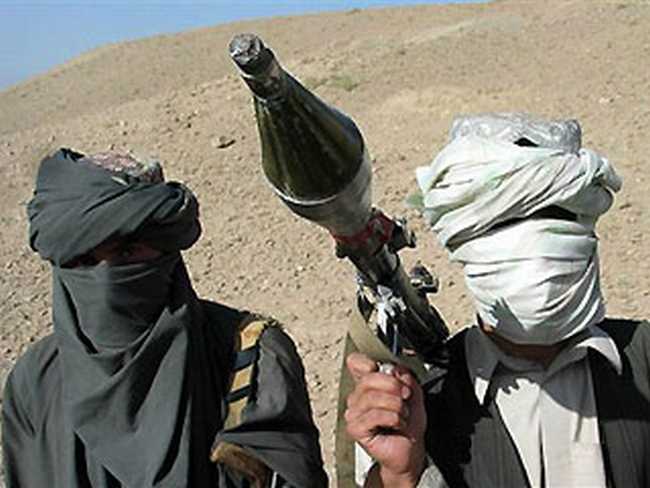
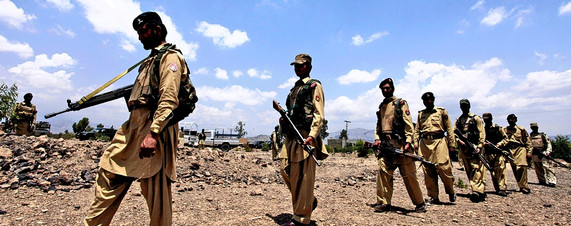
Going After the Haqqani Network

From the Editors of The Express Tribune

The question of the Haqqani network and how it is to be handled continues to fester. The US special envoy, Richard Holbrooke, this time in London, has suggested that Pakistan needs to go after the group with more force. The warning from Mr Holbrooke will have dashed hopes, raised during Hillary Clinton’s visit, that Washington was prepared to go along with a Pakistani strategy of dialogue with the network — led by Jalaluddin Haqqani and his son Sirajuddin. Links between the Pakistani intelligence forces and the Haqqanis have existed since the Afghan war and they have never been explicitly denied by either party. The elder Haqqani made his name as a formidable mujahideen commander during the Soviet occupation of Afghanistan when he was a member of Maulvi Yunis Khalis’s Hizb-i-Islami. He was also, according to American investigative journalist Steve Coll (who recently wrote Ghost Wars : The Secret History of the CIA, Afghanistan and Bin Laden, from the Soviet Invasion to September 10, 2001), offered a major role in the government by Afghan President Hamid Karzai some years ago.

For Islamabad, the pressure is on again. The Haqqani network is seen in Afghanistan as a key problem; it has carried out numerous attacks there. Washington believes Pakistan needs to do more to support the efforts against the militants in that country. The Pakistan military meanwhile, following its operation in South Waziristan, has avoided any move into North Waziristan – despite some gentle nudging from the US – reportedly following the intervention of the Haqqanis. They are also said to be facilitating talks with other militant factions across the conflict zone.

This brings us to an old issue: that of ‘good’ and ‘bad’ militants. It is clear that in the minds of the Pakistani military and the agencies allied to it this line of distinction continues to exist. Of course, Washington is in many ways responsible for creating this. The ghosts of the Afghan war, the alliance it formed with the mujahideen fighting the former Soviets and the engagement of Pakistan’s agencies, notably the ISI, are today coming back to haunt it. This is not to say that the CIA didn’t have its own connections to some of these actors in the past, but the point that is missed by most people is that it is America which calls the shots in this part of the world (or perhaps in most other parts as well).

There is a need for Islamabad to think things through. The division of militants into various camps, for example, so-called ‘good’ Taliban versus so-called ‘bad’ Taliban, has to stop. Essentially, these men of violence do more harm than good. The fact that a particular faction directs its wrath outside the country and avoids targeting Pakistani security forces should not be enough to cast it in the role of an ally. The effort against militancy does need to be seen in the wider regional context, and not as a matter of narrow allegiances and temporary agreements. The people who make decisions in Islamabad should keep in mind just how unsuccessful past efforts to do deals with the militants have been — with such attempts giving groups making up the complex Taliban network in the North a chance to reorganise and strengthen themselves on more than one occasion. There is reason to believe that this has contributed to the terrorism that has claimed thousands of lives. Even if the Haqqani network did not itself send out the bombers it has acted to back forces that have played a part in encouraging militant trends. The so-called Quetta Shura, led by the elusive Mullah Omar, is among these.

This having been said, Washington too needs also to review its own demands. There have been mixed signals over recent weeks. It is possible there is a lack of clarity on strategy within the US capital. This of course means the confusion in Islamabad has grown. A clear course of action needs to be planned in unison so the militants that Washington helped nurture can be driven away.

Pakistan Rejects Allegations of Taliban Ties

As reported by CNN

Pakistani officials Sunday rejected allegations that their country’s powerful intelligence agency still supports the Taliban and other Afghan insurgents after a paper from a Harvard academic accused the agency of continued links to the rebels.

The powerful Inter-Services Intelligence agency does not “actually control the Afghan insurgency” and does not have “the ability to bring it to an end,” Matt Waldman argues in a paper for the London School of Economics. But the ISI provides “sanctuary, and very substantial financial, military and logistical support to the insurgency,” giving it “strong strategic and operational influence — reinforced by coercion,” according to his report, which cites Taliban commanders among its sources.

The ISI is widely thought to have played a key role in creating the Afghan Taliban during the 1990s, but Pakistan officially denies supporting them now. Maj. Gen. Athar Abbas, spokesman for the Pakistani military, called the claim “rubbish” on Sunday and said Waldman’s report “does not have a credible source or authenticity.”

“At best, it is speculative and only gives open sources without naming [them],” Abbas told CNN. “So, therefore, this kind of report requires a treatment which it really deserves. We are not going to formally respond to this, but we reject these allegations and accusation. If there are hard evidence, we would like for them to be brought out and we would be able to respond accurately.”

And Farahnaz Ispahani, a spokeswoman for President Asif Ali Zardari, called Waldman’s report “one-sided” and dismissed what she called its “wild accusations.”

“If Mr. Waldman had been a seasoned academic, he would have conducted interviews in Pakistan itself to balance his so-called research report,” Ispahani said. “The Pakistani government and its military have been performing an outstanding service to the world community as well as the region in its fight against militancy and extremism, and we can count the dead we have sacrificed in the thousands.”

Waldman’s report is titled, “The Sun in the Sky: The relationship between Pakistan’s ISI and Afghan insurgents.” He based his conclusions on interviews with nine insurgent field commanders in three regions of Afghanistan, plus former Taliban officials, tribal leaders, politicians, experts and diplomats. The title comes from Taliban commanders’ claims that their relationship with Pakistani intelligence is “as clear as the sun in the sky.”

Waldman concluded that that Pakistan “continues to give extensive support to the insurgency in terms of funding, munitions and supplies.” But Abbas dismissed the unnamed sources, calling the report “rubbish.”

“Has he named any Taliban commanders in this, has he named any officials?” Abbas said. “So, therefore, if it doesn’t have any specific source, which is not willing to disclose a name, it just becomes one of those reports that keep appearing. It is a serious allegation, but unless it has a credible evidence to support it or substantiate the report, only then it warrants a serious consideration for response.”

The ISI works not only with the Taliban, but also with the armed Haqqani network, led by Jalaluddin Haqqani and his son Sirajuddin, Waldman wrote. The Haqqani network sometimes cooperates with the Taliban and sometimes fights it.

The Taliban members interviewed believe that the ISI has a heavy influence on their leadership, which some of them said amounts to control, according to the report.

One of the southern commanders claimed: “If anyone rejects that the ISI backs or controls the Taliban, he has a mental problem … all our plans and strategy are made in Pakistan and step by step it is brought to us, for military operations or other activities,” the report says.

And southern Taliban commanders all complained of heavy ISI involvement, which they blamed for some attacks on civilians.

“One southern commander described their predicament as follows: ‘Another group of Taliban is directly supported by the ISI. They will never stop fighting in the country; they want to destroy the government and bring chaos. Behind all the attacks on … NGOs, schools, teachers, doctors, this is Pakistan. We cannot deny that it is Taliban; but there are Pakistan controlled groups among us. They want destabilisation …,’ ” the report says.

Waldman’s report comes two months after a U.N. report on the assassination of former Prime Minister Benazir Bhutto in 2007 — an attack blamed on Pakistani Taliban leaders — found that intelligence agencies hindered the subsequent investigation. The report concluded that the “pervasive reach” of Pakistan’s intelligence agencies left police “unsure of how vigorously they ought to pursue actions, which they knew, as professionals, they should have taken,” the report states.

Outrage in India As Mumbai Attacks Terrorist Leader Set to Be Freed By Pakistani Courts

By Manzer Munir for Pakistanis for Peace

Pakistan’s Supreme Court on Tuesday upheld a lower court’s decision to free the leader of Lashkar e Taiba (LeT), a militant group that is blamed by India for masterminding  and orchestrating the November 2008 Mumbai attacks in India that killed 166 people.

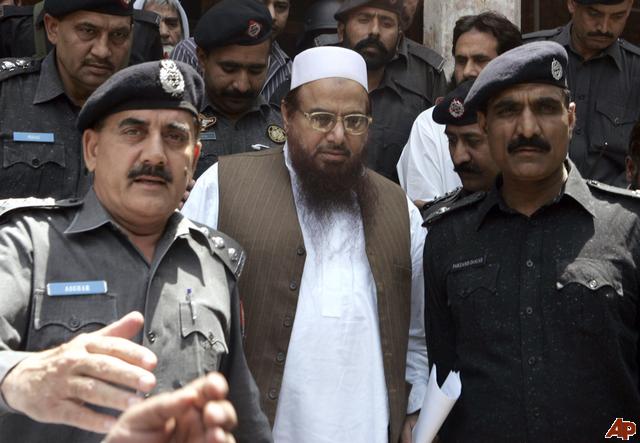
Hafiz Mohammad Saeed, the leader of the terrorist group had been placed under house arrest. However, he was released a year ago by the provincial Lahore High Court due to the fact that there was insufficient evidence against Hafiz and other members of the group. The only evidence against him and the group was the confession of Mohammed Ajmal Amir Kassab, the lone person charged with attacks in India, who was given a death sentence earlier this month. Pakistan’s government appealed the decision of the Lahore High cCourt to the Supreme Court which upheld the lower court’s decision.

Lawyers for the government of Pakistan had requested that India extradite Kassab so that he could give testimony in Pakistani courts against Saeed and the militant group. However, India understandably did not hand over Kassab for fear that the sole surviving perpetrator of the Mumbai attacks could end up in a Pakistani court that sets him free. Sadly, this now happens to be the case as the masterminds of the attacks and leader of an already banned terrorist group, Hafiz Saeed, is set to be freed soon.

This obviously is very disappointing news to India to say the least. It would be the equivalent of letting the mastermind of the September 11 attacks, Khalid Sheikh Mohammed, have a long and high profile trial in New York, only to be set free for lack of evidence and or a weak case by the prosecution. The families of the victims would not stomach such a travesty and neither would the American people. In this same manner, the families of the Mumbai attacks are very upset by this decision by Pakistan the Supreme Court to release Saeed will now surelyonly serve to stall peace talks between India and Pakistan that were slowly progressing at the sidelines of the South Asian Association for Regional Cooperation (SAARC) meeting in Bhutan in April of this year.

At a time when the world’s attention is on Pakistan and Pakistanis for being associated with terrorism due to the attempt to bomb Times Square by Faisal Shahzad, the country and its courts have shot themselves in the foot by allowing to set free a known terrorist leader of a group that is not only attacking India and trying to provoke a war between the two countries, but is believed to be behind many attacks inside Pakistan also killing many innocent people.

If the shoe was on the other foot and the attackers came from India and killed 166 Pakistanis in a busy shopping area, while simultaneously attacking a major hotel, railway station and other locations throughout any of Pakistan’s major cities, then trust me, there would be demand for blood by Pakistani citizens and militias would have formed with or without the government’s blessings, and theywould have retaliated against the Indians. The Indian government and the Indian people are showing great resolve and patience with Pakistan and all along hoping that it truly becomes 100 percent committed to fighting and rooting out terrorism and terrorist groups within its borders as it is touted to be.

But as Tuesday’s decision by the Supreme Court illustrates, Pakistan’s government has a mixed record when fighting extremist groups within the country. As mentioned in previous articles on this site, the government of Pakistan and the army have supported and helped organize some of these militant groups like Lashkar e Taiba in order for the Pakistan army to have a guerrilla outfit as an ally in the event of a war with India. That is why there is reluctance by some inside the military and ISI to fully disband Saeed’s group, believed to be one of the largest and well funded militant groups in Pakistan. The government of Pakistan needs to realize that it cannot talk out of both sides of its mouth. It cannot present itself as one of the biggest allies of the US in the War on Terror, while at the same time not deal effectively with militant groups that are hostile to India.

We at Pakistanis for Peace are outraged that Hafiz Saeed, a known terrorist leader is set to be free from Pakistani courts. Our group and website Pakistanis for Peace was founded immediately after the Mumbai attacks in 2008 by concerned Pakistani Americans in response to the cowardly terrorist attacks by individuals who snuck in from Pakistan to cause one of the biggest terrorist incidents to ever hit India. These attacks certainly became their 9-11. 

To now have the leader of this terrorist group be set free by Pakistani courts only serves to strengthen the claims of opponents of Pakistan that it is not doing enough in the fight against terrorism. Certainly the families of the 166 dead Indian nationals deserve justice and better outcome than what transpired in Pakistan’s Supreme Court this week. One should make no mistake, only a just and lasting peace with India will ever lead to a prosperous Pakistan and the sooner there is an earnest effort to stop ALL militant and terrorist groups operating within inside the country by Pakistan, the sooner the two sides can sit across from each other at the peace table.

Pakistan, Training Camps, and a Culture of Terror

By Manzer Munir for Pakistanis for Peace

The arrest of the would be Times Square bomber Faisal Shahzad has brought increased scrutiny to the fact that Pakistan has become the central destination for the world’s would be terrorists and extremists. This should not come as a surprise to anyone as there have been reports of everyone from the militant Muslims of the Philippines to the Arab Al-Qaeda extremists of Yemen and Saudi Arabia who have all trained side by side with each other. Now Pakistan and Pakistanis everywhere are increasingly coming under suspicion due to the numerous instances of Pakistani men’s involvement in attacks and attempted terrorist attacks.

The London Tube bombings in 2005 by young Pakistani British men, the Mumbai attackers in late 2008, and the attempted Times Square bombing by Faisal Shahzad all are linked by the fact that all the perpetrators in these instances were Pakistani men and that they all got their schooling at terrorist training camps in Pakistan.

Something I have never understood is how are these guys from all over the world able to come to Pakistan and simply find training camps to attend? If these camps are so easy to find by your average would be terrorist wanna-be, then how come with the billions being spent on the war on terror are we not able to find the locations, the leadership, and the infrastructure of these camps and destroy it? I know that the US government has been aiding Pakistan with billions of dollars for the fight against the Taliban and Al Qaeda. So how come are there still terrorist training camps and extremist groups in throughout Pakistan?

Part of the problem as to why there are still terrorist and militant camps in Pakistan is because a number of Pakistan’s army leadership and specifically Pakistan’s spy agency, Inter-Services Intelligence (ISI), view India as the ultimate threat to Pakistan’s security and sovereignty. And in order to fuel a low level insurgency in the disputed state of Jammu and Kashmir, the rationale was to use the militants and insurgents in causing maximum havoc and to use them in the decades old war with India over the disputed Kashmir region.

The real issue is that the groups such as Lashkar e-Taiba and Harkat-ul-Mujahideen were originally founded by the ISI to help obtain volunteers for the Pak army who would be willing to fight India and aid the militancy in Indian Kashmir. Pakistan’s army and the ISI used the same technique used by the US during the Soviet-Afghan war where militants were encouraged to wage a “jihad” against the Russians and were now asked to do the same in Kashmir against India. So this climate of tacit state approval for militancy and the funding and support for militant groups took root at the time of the Russian invasion of Afghanistan and continued after the Soviet retreat.

Once the Soviets left, warring factions or warlords in neighboring Afghanistan led to great instability and hardship for the average Afghani who was just trying to survive in a thoroughly destroyed and desperate country. During this time, students or Talibs of local madrassas in Afghanistan and neighboring Pakistan, emerged as a force as they started to defeat various powerful warlords around Afghanistan with the help of Pakistan’s ISI.

These young men, and in many cases boys, were made up mostly of Afghan refugees who had studied at Islamic religious schools in Pakistan during the Soviet-Afghan war. These young Talibs had received important training, supplies and arms from the Pakistani government and particularly from the ISI as well as logistical and financial support. The ISI historically supported the Taliban throughout the 1990s, viewing it as a counter to what they regarded as an Indian-supported Northern Alliance. In a matter of months, the Taliban captured many key provinces inside Afghanistan and soon Kabul and declared themselves rulers of the country. Only three countries ever did recognize the Taliban government’s 5 years in office running Afghanistan from 1996 to 2001, and they were United Arab Emirates (UAE), Saudi Arabia, and Pakistan.

For the Pakistani government, the psychological thinking has always been figuring out this: How do you contain India to the east? What ways can we leverage ourselves in a retreat and counter strike strategy if ever the eastern border with India collapsed in the event of an all out 4th war in 60 years? This is what has always kept the generals up in their barracks in Rawalpindi at Pakistan Army’s Headquarters. When the country of Afghanistan was embroiled in a struggle for power between the warring factions of among others Gulbuddin Hekmatyar, Ahmed Shah Massoud, and other warlords for control of various provinces and cities, the Taliban were gaining valuable training from the ISI and eventually becoming into the force they did culminating in their rise to power in 1996.

When 9/11 happened in 2001, the Taliban were in the cross hairs of the US forces for not handing over their guest, Osama Bin Laden. And since the arrival of US troops have continued to be on the run from American and Pakistani forces. The problem is that certain elements in the ISI still view the predominantly Pashtun Taliban as an important ally in Afghanistan. Despite Pakistan’s efforts to combat and eradicate the Taliban, there is evidence that they are still receiving some support from some members within the Pakistani spy agency.

Now despite being on the run in Afghanistan and Pakistan, the Taliban have joined forces with other militants in the country. These previously separate and independent Islamic extremist groups are now joining forces to fight the Pakistani government. What makes the apparent link-up of Islamic militant groups so much more dangerous than they were on their own is the fact that now the fighters are also coming from Punjab, the country’s largest and most important province, and who were originally trained by the Pakistani military to fight a guerilla war in Kashmir against India.

So now the chickens have come home to roost as both the Taliban who were trained to fight the Soviets and the other groups trained to fight the Indians are instead now causing chaos and mayhem inside Pakistan while fighting Pakistani and foreign forces. These extremist groups are the real threat to Pakistan as they are responsible for near daily civilian deaths inside the country as they battle government forces. This culture of jihadist and militant Islam propagated during the time of General Zia-ul-Haq’s efforts to fight the Soviets has ended up making Pakistan a haven for terrorist groups and militant Islamic ideology. Now couple this with the fact that elements in both the Pakistan army and the spy agency, ISI, continue to provide support, logistics, and information about Pakistani and American forces efforts to capture them, and you start to see picture why there are still terrorist networks and camps available for individuals like Faisal Shahzad to join and get support from in terrorist activities.

Several decades of both fighting the Russians, each other, Pakistani and now American forces along with training from the ISI has made these terrorist and militant groups very adept at surviving. And even though by all accounts the Pakistani government is now fighting the Taliban with full force and in all earnest, it is not doing enough to dismantle and destroy all the other groups that have sprung up throughout the country. If it is so easy for a thirty something year old Pakistani American from a Connecticut to come and get training from a terrorist group as is the case with Shahzad gaining assistance by the Pakistan Taliban, then why can the ISI or Pakistan army or even American or Nato forces sniff out all the training camps and terrorist infrastructure within Pakistan?

Unfortunately that answer is more complex than this simple question. There are many competing interests fighting each other inside Pakistan. As their conflict flares on and continues to escalate, the citizens of Pakistan continue to pay the biggest price with their lives as slowly Pakistan is itself turning into Afghanistan in front of our very eyes. The only solution that makes any sense is a durable peace with India. For if there is peace with the giant neighbor to the east, the very reason for the existence of many of these militant groups will cease and that will allow Pakistan to focus entirely on the Taliban and stabilization of Afghanistan to the west. Also it would free up hundreds of thousands of troops from the Indian border who would go into Waziristan and the North West Frontier Province (NWFP) bordering Afghanistan to finish off the Taliban and destroy their terror training camps and infrastructure.

Eliminating the terrorist infrastructure and militant and extremist network ingrained in Pakistan is the only way that the war on terror will have a fitting and lasting end. And in order for Pakistan to successfully accomplish that, it must eliminate the threat it constantly feels from India by aggressively attaining the elusive peace treaty with its neighbor. Just like the French and the British are such good enemies that they cannot resist being friends, so too must Pakistan extend a hand of friendship to India, if only to ensure its survival from the vicious cycle of violence it now finds itself as a result of decades of militant ideology primarily directed at its Hindu neighbor.