Posts Tagged ‘ Kashmir ’

Who Cares About Pakistan?

By Jude Sheerin for The BBC News

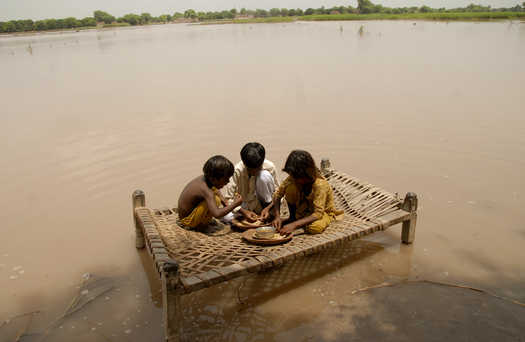
Donations have been sluggish to the Pakistan floods appeals, as they were back in 2005 when the part of Kashmir the country administers was torn apart by an earthquake. The BBC News website asked some experts to comment on possible reasons why.

Donor Fatigue

Dr Marie Lall, Pakistan expert at the Royal Institute of International Affairs (Chatham House) and senior lecturer at the Institute of Education, says: “I think there is donor fatigue all around. The [2004] Indian Ocean tsunami, the Burmese Cyclone [Nargis, 2008], the [2005] Pakistan earthquake, and [this year’s] Haiti earthquake. It is getting too much; we are in a recession and people are short of money.”

Rebecca Wynn, Pakistan specialist for UK-based aid agency Oxfam, says: “Many donors have made substantial contributions in humanitarian assistance to Pakistan over the years, particularly in response to the conflict-related displacements over the last two years. Of course, the fact that the people of Pakistan have been hit time and again by disaster is even more reason to give.”

Dr Elizabeth Ferris, senior fellow at the US-based Brookings Institution, a foreign policy think tank, says: “It should also be noted that the international humanitarian system isn’t set up to deal with more than one major crisis a year. USAID, for example, committed one-third of its annual budget to the Haitian earthquake response. And among the general public there may be a feeling of, ‘Well, I donated to the victims of the Haitian earthquake and Haiti is a far needier country than Pakistan.'”

Corruption

Yale University economics professor Dean Karlan, an expert on charitable giving, says: “Corruption concerns may explain why giving is lower to developing countries than many would like it to be, but it does not explain why there is less money pouring into Pakistan now than does to disaster relief causes in other developing countries with similar governance issues.”

Dr Marie Lall says: “People in Pakistan are sceptical the government will be transparent. But they are giving to philanthropic organisations. In the UK, I think people are sceptical of [non-governmental organisations’] overheads and costs. They don’t know which ones are transparent and reliable, even though local organisations such as TCF [The Citizens’ Foundation] are doing an incredible job.”

Dr Elizabeth Ferris says: “People are always sceptical about their money reaching flood victims, particularly in countries with reputations for corruption. But Haiti didn’t have a very good reputation in this regard. [Pakistan] President [Asif Ali] Zardari trip to Europe [during the floods] was not a good move. For a few days, that was the ‘story’ of the Pakistani floods, which doesn’t inspire people to be generous, particularly in this economic climate.”

Terrorism

Dr Marie Lall says: “British Prime Minister David Cameron’s comments in India [when he said Islamabad promoted the export of terror] did not help.”

Dr Elizabeth Ferris says: “People are less likely to donate to any country seen as a haven for terrorism. And more generally, the fact that so much Western news coverage in recent years about Pakistan has been negative, stressing its links with the conflict in Afghanistan. I think this is the major reason for the slow public response – the image of Pakistan in our media. There may also be a feeling, particularly in the US, that Islamic governments and charities should be stepping up to the plate to donate.”

Timing

Rebecca Wynn says: “This disaster has come at a bad time, following the financial crisis and the Haiti earthquake. Many donors made huge commitments to Haiti, so may find it hard to fund another major disaster, particularly in the same year.”

Dr Marie Lall says: “Timing may be a factor, but I think it’s more to do with not realising the scale of the disaster, and the attitude by the British government; the UK should be leading the aid effort, given the Pakistani diaspora here and the fact that we need Pakistan for the war in Afghanistan.”

Wrong Disaster

Professor Dean Karlan says: “Sudden events seem to generate more funds. A flood (and droughts) happen gradually and build. There isn’t any one single day in which news is huge. For the same reason, this pushes the story away from the media spotlight. But massive and sudden earthquakes or tsunamis draw our immediate attention and shock us.”

Dr Elizabeth Ferris says: “It’s important to note that in general people are likely to give more to emergencies occurring in countries geographically closer to them – although this didn’t hold true for the tsunami. But when you trace contributions over time, you find that Americans and Canadians are more likely to respond to disasters in the Western hemisphere while Europeans tend to be more responsive to African countries (and their former colonies, in particular).”

Dr Marie Lall says: “This was not one cataclysmic event, but one which grew over three weeks. The fact that 25% of the country was or is under water is not understood. The low numbers of dead, relatively speaking, mask the disaster on the ground. The crisis has destroyed crops, dead livestock and damaged homes and infrastructure. Food prices are through the roof and there won’t be a normal harvest. It will get worse. Farmers will starve.”

What They Said: Pakistan Spies Downgrade India Threat

By Vibhuti Agarwal for The Wall Street Journal

The Wall Street Journal reportedTuesday that a report from the Pakistan’s chief spy agency, the Inter-Services Intelligence, said domestic militancy had overtaken the Indian army as the greatest threat to Pakistan’s national security. This is the first time since the ISI was founded in 1948 that the ISI has found a bigger threat than its neighbor. India Real Time presents a roundup of comments from readers and others below:

The Times of India newspaper reported Wednesday that Pakistan’s acknowledgment of its internal problems comes as the country is struggling with an image problem which may be affecting the flow of international aid to help the victims of the devastating floods there. “The unexpected downgrading of the threat perception from New Delhi and waking up to the scourge of home-grown terrorism comes even as foreign aid for the thousands affected in floods in Pakistan is yet to pick up,” wrote Chidanand Rajghatta for the Times of India.

The Hindustan Times newspaper quoted analysts saying the change of mindset makes sense. “I am not surprised that the ISI has changed its strategic thinking,” Talat Masood, a retired general and analyst on defense and security issues told the newspaper. Another analyst, Imtiaz Gul, was also quoted in the article. “The ground realities have changed and have forced allies into becoming enemies,” he said.

“At this point, the Pakistan government will say just about anything the world community wants it to,” wrote H. Jere. “After seeing the response to the aid request has been disappointing, it will agree to almost anything.”

Other readers called Pakistan’s latest admission “hogwash,” adding that it may be a trick to get more funds from the United States.

“It is sheer naiveté to consider Pakistan’s ISI and Islamic terrorists as two separate entities,” said Shri K. “ISI is the quintessence of rabid Islamic fascism and has been mercilessly exporting Islamic terror all over the world.”

Some readers said Pakistan’s admission came as a ray of hope for improving the long-estranged India-Pakistan relationship.

“I hope India take this opportunity to offer real assistance to the victims of the floods,” wrote Phillip Hwee. “It’s time for India and Pakistan to reconcile with one another. A détente is very necessary so that each of the two rivals can reallocate their resources to improve the standard of living of their respective citizens.”

David Almeida agreed, adding that “one can only hope that the military establishment in Pakistan is truly serious about abjuring terrorism, regardless of whether it is targeted at Indian or Pakistani state.”

India Hints at Pakistan Role in Kashmir Unrest

By Nigam Prusty for Reuters

India’s interior minister hinted on Friday that Pakistan could be behind weeks of violent anti-India protests in the disputed Kashmir region, a move that could hurt the nuclear-armed rivals’ attempts to improve ties.

This is the first time New Delhi has linked Pakistan to the violence in Kashmir that has killed nearly 50 people since June. Earlier India had said Pakistan-based militants were inciting trouble in Kashmir, a region divided between India and Pakistan and which both claim in full.

“Pakistan appears to have altered its strategy in influencing events in Jammu and Kashmir,” Palaniappan Chidambaram told the Indian parliament during a debate on the protests, among the biggest since a separatist revolt against Indian rule broke out in 1989.

“It is possible that they believe that relying upon civilian unrest will pay them better dividends. But I am confident if we are able to win the hearts and minds of the people … those designs can be foiled.”

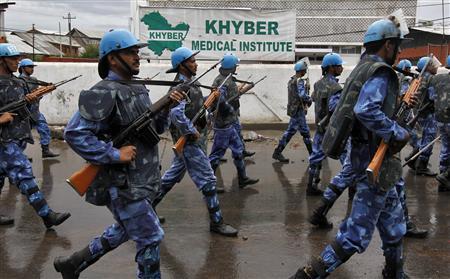
There were fresh pro-independence protests in several places in Kashmir on Friday. At least two people were wounded when police opened fire on thousands of protesters in Sopore town in north Kashmir.

The minister’s comments could be seen by Islamabad as a provocation, damaging prospects for improving ties that plummeted after the 2008 Mumbai attacks that killed 166 people and derailed a sluggish four-year-old peace process with Pakistan.

So far, the latest violence in Kashmir has appeared to have little impact on relations.

The two sides last held peace talks in July and those ended in acrimony over the attacks, even though the dialogue itself is seen as a tentative step towards improving ties.

Divided Kashmir remains at the heart of the dispute between India and Pakistan, with both sides claiming the Himalayan region in full. They have fought two of their three wars over it.

India accuses Pakistan of fuelling unrest in Kashmir, but Islamabad says it only lends moral support to what it calls Kashmir’s independence movement which has killed tens of thousands of people.

In June, India blamed Pakistan-based Lashkar-e-Taiba (LeT) militants for the Mumbai attacks, but Kashmiri separatists say protests by crowds of mainly Muslim youths are generally spontaneous.

LeT was founded in 1990 to fight Indian rule in Kashmir and is based in Pakistan’s Punjab province.

Militant violence has fallen dramatically in recent years but popular protests have continued. In 2008, the region witnessed the biggest protests against Indian rule in two decades.

Kashmiri separatists want to carve out an independent homeland or merge with predominantly Muslim Pakistan.

Cross-Border Unions: How Indo-Pakistani Marriages Prosper

By Vinita Bharadwaj for The National-UAE

While relations between their countries may be at an all-time low, Indians and Pakistanis who marry each other often find extended family ties confound their nations’ mutual hostility.

It is a truth universally acknowledged, that when two South Asians wed, they not only marry each other, they also marry into each other’s family.

And family matters between Indians and Pakistanis might be expected to be highly charged, given those two countries’ mutual antipathy for more than 60 years.

“When an Indian marries a Pakistani, it’s a loaded event that can only be matched by the energy of a cricket match between the two countries,” says Amra Hyder, a Pakistani.

The partition of British India into Pakistan and India is historically recorded as the largest human migration ever. It displaced millions and forced people of a common culture to choose a new geography and subscribe overnight to the idea of previously non-existent nations.

Most tragically, it split families. The ghosts of the 1947 partition loom large in the psyches of both countries’ modern histories that include three wars, a continuing dispute over Kashmir and terrorism.

Amra is originally from Pakistan and is married to Zulfiqar Hyder, who hails from India. Amra and Zulfiqar, now Canadian citizens, have lived in Sharjah with their four children since 2006.

In 1992, when the gregarious, romantic 23-year-old Amra married the 33-year old Zulfiqar, a studious man from India, she did not quite know what to expect – from married life, her in-laws and most importantly, her husband’s country. “I also never would have imagined I would be apologetic for both countries’ ridiculous obsession with ‘Shonia’,” she says of the media brouhaha over the recent nuptials of the Pakistani cricketer Shoaib Malik and the Indian tennis player Sania Mirza.

For long before the Malik-Mirza marriage, thousands of Indians and Pakistanis, mostly from families divided by the 1947 partition, have been marrying each other.

The difference is that now these marital alliances are formed outside the extended family circuit. Amra and Zulfiqar did not have an arranged marriage, and neither of them had any intention of settling in either India or Pakistan. They opted to overcome predictable visa hassles by initially residing in the UAE soon after their wedding, and migrated to Canada in 1996 to obtain citizenship, in the hope that it would ease their trips between India and Pakistan.

 
Masooma Syed, from Lahore, met her Keralan husband Sumedh Rajendran at an artists’ residency programme in Delhi. ‘I knew he understood me perfectly.’ Charla Jones

The couple first met in Abu Dhabi at a mutual friend’s party, and married within a year. The wedding took place in Karachi, with Zulfiqar’s entire family flying in from the northern Indian city of Lucknow. “It was a lovely wedding,” Amra recalls, adding that the questioning – albeit, in jest – began soon after they were married. “It was like, ‘Now you’re an Indian daughter-in-law’ and ‘Who will you support in cricket’ or even ‘Who will you support in war’?”

Her response was simple. “I married an Indian, not India. Having said that, I have been welcomed so warmly and given unbelievable respect by Indians, whenever I visit. My relationship with the people, I cherish. The politics, I don’t care for.”

Amra grew up in Abu Dhabi and returned to Lahore for university. Her childhood perception of Indians was to lump them all as people from the Southern Indian state of Kerala. “It was so wrong,” she says regretfully admitting to an error of judgment on her part, “but I honestly never really gave it any thought.” Although her grandfather was an active political leader – initially in the Indian independence struggle and later in the Muslim League, which pressed for Pakistan’s creation – she was uninterested in matters of politics.

On numerous trips to Northern India in the last 18 years, Amra has returned amazed by the cultural similarities she has observed between Indians – including non-Muslims – and her community in Pakistan. “We speak the same kind of language, we appreciate the same food, we like the same clothes, we place the same importance on family values. We even share similar pre-wedding festivities. It’s hardly an alien experience,” she says.

The differences were more to do with class and little do with the country. “Compared to my husband’s childhood, mine was very privileged. He is a self-made man and has single-handedly contributed to his family’s success. If I had to get used to anything, it was holidaying in a home that would experience power cuts and water shortages.”

Amra and Zulfiqar’s children – Hira (17), Anum (13), Zahra (11) and Ali (10) – describe themselves as desi, a generic, originally sanskrit, term used by South Asian immigrants that loosely denotes their origins. They are an animated group and debate the definition of desi among themselves, as their parents look on proudly. The conclusion: among younger generations in urban settings, desi communities have spawned a culture bound by a fondness for Bollywood, cricket, South Asian food and fused elements of their upbringing at home with the globalised, western outlook they are exposed to outside.

Having said that, India and Pakistan enjoy enormous cultural riches – largely attributable to their ethnic, regional and linguistic diversity. Both countries together are akin to the European Union – with each of their provinces having their own quirks, tastes and sensibilities. These subtleties within communities are apparent when embedded among the people in their own land.

Shadab Raza, from Lucknow, India, his Pakistani wife Sana Zehri and their six-year-old son Ali have relatives on both sides of the border. ‘There’s never been this India-Pakistan mentality in our families,’ Shadab said. Siddharth Siva / Arabian Eye

Masooma Syed, an artist from Lahore, lives in Delhi with her husband Sumedh Rajendran, also an artist, but from the south of India. They were introduced to each other at an artists’ residency programme in the Indian capital Delhi in 2003. Following that, they would arrange to meet in Manchester, Sri Lanka and New York before finally geting married in July 2008.

Their cultural backgrounds could not be more different, as are their temperaments and artistic styles. “And yet, I knew he understood me perfectly,” says Masooma of the decision to marry across the border and step into the cumbersome world of visas, soon after exchanging wedding vows in Sri Lanka.

“We never thought about a third country [to live in]. Sumedh has lived in Delhi for the last 15 years and I’ve had absolutely no problem in adjusting to living here. It’s just like Lahore. Ironically, I find Sumedh is more of a foreigner in his own country’s capital than I am. We have discussed moving to a neutral country, especially if visa regulations became tighter, but then as artists all our inspirations stem from this region. Relocating would uproot those emotions and we wonder what impact that would have on our work.”

Kerala, where Sumedh is from, however, is an altogether different milieu. “The first time Masooma visited, she was stunned,” says Sumedh.

“I thought to myself, how lucky am I to be able to see and discover these different facets of India,” she says recalling her reaction to the abundant greenery, the aromatic spices, the swaying coconut palms and the simple people.

But since marrying Sumedh, Masooma has found herself saddled with the unexpected baggage of acting as an ambassador of sorts for both countries. “It’s annoying at times,” she says. “And really it’s all because of immature media reportage in one country about the other. So I end up having to either justify, explain or make excuses for India when in Pakistan or vice versa. I’m not used to being accountable to anyone and this new role is quite tiring, even if it does come with special treatment in some instances.”
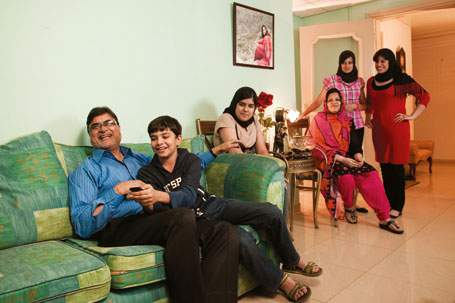
The challenges within an Indo-Pak marriage, according to Masooma, seem to be similar to any mixed-culture marriage. Except that among South Asian communities, tradition dictates the wife follows the husband to his home, or homeland. In the specific India-Pakistan context of the 21st century, the complications of visas and work permits make it harder for educated women to carve out an identity for themselves in their new environment. “It’s definitely much easier to be in a third country – either resident or citizen – when in an Indo-Pak marriage. Also, in today’s world, the younger generations of Indians and Pakistanis are meeting and interacting abroad, first as students and then as professionals. Marriages between different faiths among this demographic is on the rise and logistics is no longer a deterrent to falling in love.”

Masooma has been visiting India since 2003 and as an artist she has travelled, exhibited and worked in both countries. “I go through the same motions as all Pakistani nationals applying for an Indian visa. It’s a process and is easy or difficult depending entirely on how you want to look at it,” she says. In early June, the Indian government announced it was relaxing the requirements for granting the extension of long-term visas to four categories of Pakistani nationals, including Pakistani women married to Indian nationals and staying in India. The announcement was welcomed by individuals in her situation.

Her current visa is a ‘visit visa’ valid for nine months that is split into three visits of 90 days each. She has to exit India after each ‘visit’, but says it suits her work commitments that require her to travel abroad. “And I can visit my family in Lahore,” she adds.

Pakistani nationals issued visas to India are typically allowed to visit a maximum of three cities and must report to a police station on arrival and before leaving for their next destination. Masooma is now exempted from the police reporting, as she is a regular traveller between India and Pakistan and is also now married to an Indian national. “I’m allowed to visit more than three cities each time, but it will be a while before I am given complete freedom to travel like any other foreigner,” she says.

She could apply for a residence permit, but would be compelled to stay in India until the paperwork is completed, but it’s diffiuclt to predict how long that would take. Nationality, however, remains a touchy issue, particularly among the educated and liberal women of either country, who see no reason in giving up the passport of the country they originally belong to.

“Unfortunately, political relations keep changing and this spills over into visas and affects people-to-people relationships,” says Zulfiqar Hyder, a staunch believer in encouraging contact between the two countries. The Hyder family hold Canadian passports, but they still have to apply for visas to visit India and Pakistan.

In the wake of the David Headley arrest – a US citizen of Pakistani origin – over his alleged terrorist connections and involvement in the 2008 Mumbai attack, Zulfiqar says having the Canadian passport makes little difference towards easing the process. “I’m trying to get a PIO (Person of Indian Origin) card for the children,” he says of the document issued by the Indian government that functions as a long-term multiple entry visa. As things stand, the foreign spouse of an Indian national is eligible for the PIO card, but the spouses from Pakistan are not, effectively ruling out Amra and her two elder daughters, as they were previously travelling on her passport. “I don’t understand the logic that my children cannot get the PIO card, because their mother is Pakistani,” says Zulfiqar.

The national security argument does not resonate with him as much as it does with Amra. “Frankly, if my family can be assured of safe travel, I don’t mind a little more waiting or dealing with a bit more bureaucracy,” she says. He shakes his head furiously, looks at me and asks: “Did the 26/11 terrorists enter India with passports? Did they? How did they enter India?”

They arrived by night. Across the Arabian Sea, first on a small boat, then a hijacked fishing trawler and finally entered Mumbai’s waters on a rubber dinghy.

Visa-related policies in both countries are updated depending on the warmth or frostiness of the political relationship. Shadab Raza, a 35-year old Indian also from Lucknow, married Pakistani national Sana Zehri, who grew up in the UAE. They have a six-year-old son who has an Indian passport. The families arranged their marriage, as Shadab’s maternal aunts live in Pakistan. “There’s never been this India-Pakistan mentality in our families, because we have relatives on both sides of the border,” says Shadab.

Sana’s ancestry can be traced back to Lucknow, as her grandparents migrated to Pakistan at the time of the partition. On her first visit to the city after her marriage, she visited the ancestral home of her grandparents and filmed it to share with them. “I filmed the house, the neighbourhood and some of the people recorded messages for them. When they watched the video they were consumed by nostalgic sadness. I think partition hurt their generation the most. Our parents to a lesser extent, but they still feel the impact of it as they grew up hearing about it from their parents and visiting immediate relatives in the other country. For my generation, the degree of the trauma is even more reduced, because we haven’t experienced much of the consequences of it directly,” she says.

Shadab and Sana’s son, Ali, however, is quite clear about where he is from. “India,” he says firmly.

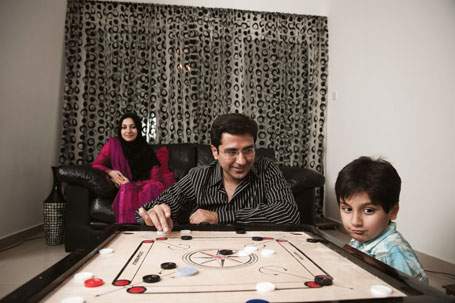
Sana laughs and recalls an incident of him wanting a carrom board specifically ‘made in India’. “My father-in-law had to get the lettering customised because the shop, where they bought it didn’t sell carrom boards with a ‘made in India’ label,” she says. In the meantime, Ali brings out his carrom board and empties out the coins from their container. He then calls out to Shadab to come and play with him.

“There’s never been this India-Pakistan mentality in our families, because we have relatives on both sides of the border,” says Shadab sitting down at the board, across from Ali, who flicks the large striker coin towards the arrangement of smaller black and white coins stacked by colour in the centre of the board. The two towers collapse, some of the coins disperse in four directions, but none of them is pocketed.

“What a mess,” exclaims Ali.
The Pakistan America Peace Through Music Project

A Musical Journey to Peace, Freedom and Understanding
(A Collaboration of The Sonic Peace Makers and SHINE HUMANITY)

The following information in this article is taken from the Peace Through Music webpage on Global Giving at:  http://www.globalgiving.org/projects/peace-through-music/  

Peace Through Music (#5719)

Mention Pakistan today and what comes to the minds of most Americans is terrorism, poverty, and hopelessness. That’s all they see in the news. But Pakistan also has one of the world’s most diverse and rich cultures, equaled only by its spectacular natural beauty as home to part of Kashmir, the Khyber Pass and high mountain peaks like K2. Once upon a time in the not so distant past, Texan gun enthusiasts brought their prized antique revolvers to Peshawar’s gun smiths to make copies, actor Robert DeNiro posed for pictures with restaurant owners while vacationing in Chitral, and Mick Jagger tested his dance skills with Lahore’s most well-known Mujra dancers. And many of Pakistan’s greatest musicians and singers like Nusrat Fateh Ali Khan regularly collaborated with their counterparts in Europe and America such as Peter Gabriel and Pearl Jam’s Eddie Vedder.

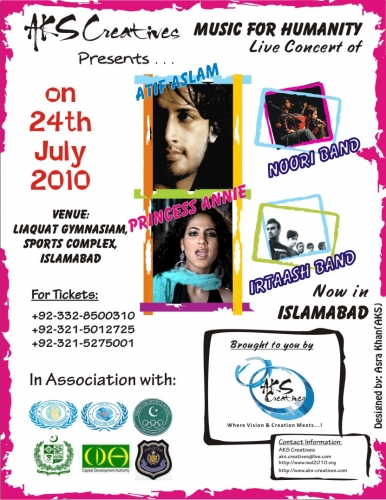
Two decades ago, we failed to uphold our principles and fulfill a moral obligation to help rebuild Afghanistan and assist Pakistan with the painful aftermath of the Soviet-Afghan war, which included millions of Afghan refugees who still reside in Pakistan. In stark contrast, we helped rebuild our enemies Germany and Japan after WWII, but inexplicably abandoned our friends after the war in Afghanistan, a key factor in allowing extremists to begin their destructive swarm across Afghanistan and Pakistan’s western frontier and become a grave threat to the security and stability of the entire world. But today, while the wounds are deep and the challenges are great, the forces of light and sonic harmony are again on the ascendance. Pakistan today is home not just to 11 music video channels and has one of the most innovative and vibrant music scenes anywhere in the world. A country that has produced some of the greatest sitar and tabla players is today home of some of the finest singers, guitar shredders and drummers. Music pioneers like Junoon, the godfathers of “Sufi Rock,” are joined by Qawwali rockers like Mekaal Hasan and Aaroh, indie projects like Peshawar’s Sajid and Zeeshan, and Heavy Metal innovators like Akash and Karavan. In recent years Atif Aslam has become the most successful Pop singer in all of South Asia with a growing following world-wide.

The Pakistan America Peace Through Music Project was inspired by the work of Greg Mortenson (author of the bestseller “Three Cups of Tea” and “Stones Into Schools”) and is based, among other things, on world music pioneer Manu Dibango’s declaration that musicians are “all from the same tribe” regardless of their race, nationality or religion and John Coltrane’s belief in the power of music to spread peace and harmony. Building on the millennia-long tradition of musical and cultural exchange in Pakistan and South and Central Asia more broadly, we will bring a group of leading musicians from the U.S. to Pakistan led by guitarist/producer Lanny Cordola (House of Lords, Giuffria, The Beach Boys), drummer/producer Matt Sorum (Guns ‘n’ Roses, Velvet Revolver), singer/guitarist Todd Shea and many others for a month long musical caravan throughout the country, creating and performing with some of Pakistan’s most well known, talented and innovative artists such as Atif Aslam, Shehzad Roy, Strings, Arieb Azhar, Abda Parveen, Ustad Fateh Ali Khan, Rustam Fateh Ali Khan, Beo Rana Zafar and celebrated record producer Rohail Hyatt (Vital Signs, Coke Studio). The inspiring poetry of Allama Iqbal and other revered poets will be prominently featured as an artistic and cultural base for the musical collaboration. Later on in the year, the Pakistani musicians will come to the U.S. for performances and events joined by their American comrades (including members of Guns ‘n’ Roses, Velvet Revolver, Red Hot Chili Peppers, etc.), which will also include time for more song writing and recording. Both the Pakistani and American “legs” of the gathering will be filmed for a documentary. The music and film will then be completed and released for sale on CDs & DVDs.

Goals
The project’s goals will be to bring Americans and Pakistanis closer together by erasing misconceptions and raising awareness of the diversity and beauty of Pakistan and its people, ultimately revealing the commonalities between Pakistani/Muslim and American cultures, to show Americans the Pakistan they never see in the mainstream media and to support Pakistan’s courageous artistic community, as well as raise funds and awareness to help establish and equip music schools and fund innovative health and education projects across Pakistan and Afghanistan. Once the initial project has been released, the music will continue with a series of collaborations with musicians and artists from all over the world to bring people together and help people in need.

Help bring people from all over the world closer together through a musical journey designed to erase misconceptions and build bridges of Peace and understanding between Human Beings.
Go to http://www.globalgiving.org/projects/peace-through-music and donate to the project.

More Information About this Project
Project Needs and Beneficiaries
SHINE Humanity and The Sonic Peacemakers need your support to help raise the funding needed to produce, record, film and document musical collaborations between singers and musicians from all over the world to promote peace and support humanitarian aid projects.

Activities
Musical fusion and celebration of diverse cultures will erase misconceptions and raise funding which will lead to a lasting positive effect on vulnerable children in developing nations, and help create a better, safer world for all Humanity

Funding Information
Total Funding Received to Date: $9,620
Remaining Goal to be Funded: $490,380
Total Funding Goal: $500,000

Why this Project is Important
Potential Long Term Impact

Project Message
“Music has incredible power to inspire and energize Human Beings to bridge divides and create a better world”
– Todd Shea, Chief Operating Officer

Who is Running This Project
Contact
Todd Shea
Executive Director
8020 N. Nob Hill Road
#201
Tamarac, FL 33321
Pakistan
Email: toddshea@cdrspakistan.org

Project Sponsor
GlobalGiving
Organization
Comprehensive Disaster Response Services
Chikar Rural Health Center
Chikar, Dist. Muzaffarabad 131000
Pakistan
011-92-300-502-9705
http://www.ShineHumanity.org

Additional organizations worthy of your donations
http://www.penniesforpeace.org/
http://www.ikat.org/

Two Die in Gunfire at India-Pakistan Border

By Augustine Anthony for Reuters

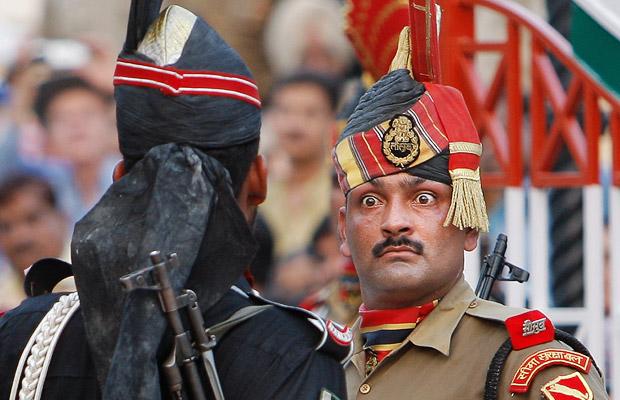
An exchange of fire at the Indian-Pakistan border near Pakistan’s Punjab province has killed two Indian troops and wounded a Pakistani soldier and several villagers, officials said Wednesday.

The neighbours have in the past exchanged almost daily fire across what is known as the Line of Control separating the two armies in Kashmir, but the latest incident occurred in the Sialkot sector of Pakistan which rarely experiences trouble.

A spokesman for the Pakistan Rangers said Indian border security forces fired automatic weapons and mortars at a village along the Sialkot working boundary, north of the Pakistani city of Lahore.

“First they fired yesterday morning and then again in the evening and the firing continued sporadically throughout the night until Wednesday morning,” said Nadeem Raza.

“One of our soldiers and several villagers have been wounded in the Indian firing.” A senior Indian border official confirmed the incident but said Indian forces retaliated for “unprovoked firing” from the Pakistani side.

“We were facing unprovoked firing from the Pakistani side for the last two days, resulting in the death of two of our men. We were forced to retaliate,” said K. Srinivasan. “The firing was precise, but at this stage we cannot say for sure who fired at us.”

The flare-up comes ahead of Indian Foreign Minister S.M. Krishna’s trip to Pakistan next week to meet with his counterpart in a renewed bid to normalise ties.

Relations between the nuclear-armed neighbours, who have fought three wars since 1947, were frozen when Pakistan-based militants attacked the Indian city of Mumbai in 2008, killing 166 people.

A late 2003 cease-fire between the two sides across the cease-fire line in Kashmir has largely held although there have been several exchanges of fire over the past year. Raza said Pakistani forces returned fire after Indian forces “did not respond to the call for a flag-meeting” and continued firing.

The Director General of Pakistan Rangers in Punjab, Major General Yaqub Khan, said a protest had been lodged with Indian forces. “In future, a strong reply will be given by Rangers and loss of civilian lives and property will not be tolerated at any cost,” he was quoted as saying in a statement issued after visiting the area.

This was the third violation of a cease-fire in that area in the last two weeks, according to the statement. India has long accused Pakistan of backing militants fighting Indian security forces in the Himalayan region of Kashmir.

Pakistan supports what it calls a freedom struggle by the people of Kashmir against what it sees as the brutal and illegitimate Indian occupation of the region. But it denies arming the guerrillas, who have been fighting Indian forces since 1989.

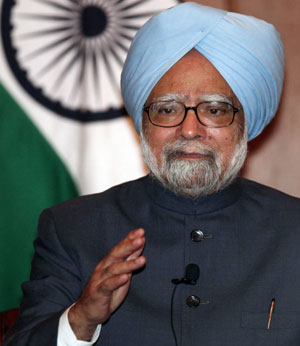
Indian PM Manmohan Singh Renews Kashmir Talks Offer

As reported by BBC

Indian Prime Minister Manmohan Singh has renewed an offer of talks with Kashmiri separatists who shun violence. He made the comments during a visit to a university in Indian-administered Kashmir. He is on a two-day trip to the state to review development schemes. Separatists have called a shutdown. The PM has disappointed those who expected him to announce a political package, the BBC’s Altaf Hussain in Srinagar says.

“We felt that the people of the state are not only interested in financial assistance and development projects, but also desire a political process that meets their aspirations,” Mr Singh told gathering at the agricultural university in Srinagar.

“We want to take the dialogue process forward. We are ready to talk to representatives of all sections who are opposed to terrorism and violence,” he said. ‘Strict instruction’  The prime minister repeated his government’s policy of “zero tolerance” for human rights violations.

“The security forces in Jammu and Kashmir have been strictly instructed to respect the rights of the civilians. We’ll act to remove any deficiency in the implementation of these instructions,” he said. The PM’s visit was greeted by protests against human rights violations  The prime minister’s visit came a day after the Indian army suspended a senior officer accused of killing three civilians in a staged gun battle.

The incident happened at Machhil near the Line of Control, the de facto border which separates Indian-administered Kashmir from Pakistani-administered Kashmir, in April. The Muslim-majority Kashmir Valley staged a total shutdown to protest against the prime minister’s visit. The strike was called by a hardline separatist leader Syed Ali Shah Geelani.

Mr Singh’s visit has also disappointed the moderate faction of the separatist Hurriyat Conference, headed by Mirwaiz Umar Farooq, our correspondent says. Mr Farooq had urged the prime minister to announce a political package during his visit.

He had demanded withdrawal of troops from cities and towns and release of political prisoners to facilitate talks between the separatist leadership and the government, our correspondent adds. Violence has declined in Kashmir in recent years, but analysts say militants opposed to Indian rule are now trying to regroup. There has been a spate of clashes in recent months along the LoC. Hundreds of thousands of Indian troops are based in Kashmir, where there has been a two decade-old insurgey against Indian rule.

India, Pakistan And U.S. Strategic Dialogue

By Apoorva Shah for The American Enterprise Institute

At this week’s first U.S.-India Strategic Dialogue in Washington, D.C., talks between the two countries will cover the spectrum of bilateral and multilateral issues, from trade and economic cooperation to terrorism and regional security. 

American participants may even feel the need to bring up India’s strained relationship with Pakistan. But it would serve them well to first consider a Times of India story from earlier this year, which went almost unreported in the United States.

According to an interview in the Indian newspaper with former Pakistani foreign minister Khurshid Mahmud Kasuri, India and Pakistan in 2007 were days away from reaching a comprehensive accord on their territorial dispute over Kashmir, the axis of the countries’ six-decade-long rivalry and casus belli of three wars between the two nations.

Kasuri, Pakistani leader General Pervez Musharraf’s chief diplomat from 2002 to 2007, said in April that the secret deal had been in progress for more than three years and would have led to a full demilitarization of both Indian- and Pakistani-occupied areas of Kashmir and would have awarded the region a package of loose sovereignty at a point “between complete independence and autonomy.” Not only were Indian and Pakistani leaders on board (including, most importantly, the Pakistani military), so was every Kashmiri leader except for one hard-line separatist, Syed Ali Shah Gilani.

The accord was slated to be signed during Indian Prime Minister Manmohan Singh’s scheduled visit to Islamabad in February and March of 2007, but before the trip ever occurred, a country-wide lawyers’ protest in Pakistan had turned into a broader opposition campaign against General Musharraf. The rest of the year would be one of the most tumultuous in Pakistan’s history, marked by the siege of the Red Mosque in July, the return of former Prime Minister Benazir Bhutto in October and her subsequent assassination in December, and the return of popular leader Nawaz Sharif from exile in September.

By August of the following year, public opposition had peaked, and Musharraf was forced to resign his post as president, ending his decade-long tenure as leader of Pakistan. After Musharraf’s ouster, it appears that the deal had lost much of its momentum.

Then in November, the accord suffered another setback as ten Lashkar-e-Taiba terrorists took India’s largest city, Mumbai, hostage for almost 72 hours, killing more than 160 people and injuring scores more. The attack was quickly coined “India’s 9/11,” and the evidence pointed directly to Pakistan, where the gunmen had been trained and equipped.

In protest, India cut off all diplomatic talks with Pakistan almost immediately; there were even rumors that the country was preparing military action against its northern neighbor. Within a span of less than two years, the India-Pakistan relationship had traveled the spectrum from apparent rapprochement and compromise to mutual suspicion and renewed hostility.

Since then, the signs have only appeared to worsen: for example, in 2009, when Indian Army chief General Deepak Kapoor publicly introduced revisions to his country’s “cold start” military strategy.

This military modernization and training program, which was developed in response to the army’s sluggish mobilization to the Pakistani border following the December 2001 terrorist attacks on the Indian parliament, remained mostly under the radar for most of the early 2000s, relegated to defense journals and the occasional news article.

It was only following the 2008 attacks that “cold start” began to receive renewed attention from the media on both sides of the border and was more publicly discussed by Indian military officials like General Kapoor. Indeed, it appeared as if the next breakthrough in Indo-Pak relations would occur through hard rather than soft power.

Concomitantly, India and Pakistan’s post-Mumbai attempts to return to diplomatic talks also appeared fraught with danger and seemed to only fuel more discord rather than reconciliation.

In February this year, Indian Foreign Secretary Nirupama Rao and her Pakistani counterpart Salman Bashir resumed high-level talks for the first time since November 2008, but both sides appeared unprepared (they could not even agree on the specific subject of the talks prior to sitting down) and spent more time bickering through separate press conferences.

For example, while Bashir accused India of covertly supplying weapons to militants in Pakistan’s Balochistan province, Rao complained that Pakistan had “not gone far enough” in the 2008 Mumbai attack investigation. As India presented a dossier of evidence against one of the Mumbai attack perpetrators, Pakistan responded by calling it a “piece of literature not a dossier.”

It’s hard to see how any progress could be made on improving Indo-Pakistani relations in the midst of this hostility. But does Kasuri’s revelation provide hope that a resolution on Kashmir could be revived? First, excepting Musharraf and Kasuri, many of the supporters of the failed 2007 accord—including Pakistani Army Chief of Staff Ashfaq Kayani, Pakistan’s current track II special negotiator Riaz Mohammed Khan, and, on the Indian side, Prime Minister Singh—still hold high-level positions in their respective governments.

And second, the secrecy of the original deal shows that outward indifference, or even enmity, between the two countries can belie an internal desire for change. In a relationship where hostility is status quo and where amicable relations seem aberrant if not bizarre, a furtive accord lets ruling elites make slow, institutional changes in the relationship while preserving outward form and precedent. It also allows deal-makers to keep tempestuous domestic politicians and party leaders at arms length while deliberating sensitive issues.

Even India’s traditionally hyperactive media seems to understand: A subsequent editorial in the Times of India noted, “the fact that such a deal exists emphasizes the importance of maintaining contact with Islamabad.”

So what can we expect in the months ahead? Indian officials will undoubtedly continue to pressure Pakistan to confront Lashkar-e-Taiba and other terrorist groups that plan to attack India, and another attack could indeed result in Indian military action. There will also be more bickering between the sides—on water rights, “most-favored-nation” clauses, and even cricket.

Yet the revelation of the secret deal should be both a lesson and a sign of hope. It is a lesson because it proves that progress on an entrenched conflict like Kashmir can occur without the United States’ public mediation.

American officials at the U.S.-India Strategic Dialogue this week should keep in mind that the accord was pursued during the final years of the Bush administration, in which the United States made it a point to separate the U.S.-India relationship from the more sensitive Indo-Pak relationship.

It is a sign of hope because, despite the outward appearance of discord between the countries, internally, leaders on both sides have—at least at some point in recent memory—wanted to move forward on a resolution.

As Pakistan continues its domestic offensive against terrorists and India pursues closer economic engagement with its northern neighbor, wanting change may be the best sign that change is on the way.

Pakistan, Training Camps, and a Culture of Terror

By Manzer Munir for Pakistanis for Peace

The arrest of the would be Times Square bomber Faisal Shahzad has brought increased scrutiny to the fact that Pakistan has become the central destination for the world’s would be terrorists and extremists. This should not come as a surprise to anyone as there have been reports of everyone from the militant Muslims of the Philippines to the Arab Al-Qaeda extremists of Yemen and Saudi Arabia who have all trained side by side with each other. Now Pakistan and Pakistanis everywhere are increasingly coming under suspicion due to the numerous instances of Pakistani men’s involvement in attacks and attempted terrorist attacks.

The London Tube bombings in 2005 by young Pakistani British men, the Mumbai attackers in late 2008, and the attempted Times Square bombing by Faisal Shahzad all are linked by the fact that all the perpetrators in these instances were Pakistani men and that they all got their schooling at terrorist training camps in Pakistan.

Something I have never understood is how are these guys from all over the world able to come to Pakistan and simply find training camps to attend? If these camps are so easy to find by your average would be terrorist wanna-be, then how come with the billions being spent on the war on terror are we not able to find the locations, the leadership, and the infrastructure of these camps and destroy it? I know that the US government has been aiding Pakistan with billions of dollars for the fight against the Taliban and Al Qaeda. So how come are there still terrorist training camps and extremist groups in throughout Pakistan?

Part of the problem as to why there are still terrorist and militant camps in Pakistan is because a number of Pakistan’s army leadership and specifically Pakistan’s spy agency, Inter-Services Intelligence (ISI), view India as the ultimate threat to Pakistan’s security and sovereignty. And in order to fuel a low level insurgency in the disputed state of Jammu and Kashmir, the rationale was to use the militants and insurgents in causing maximum havoc and to use them in the decades old war with India over the disputed Kashmir region.

The real issue is that the groups such as Lashkar e-Taiba and Harkat-ul-Mujahideen were originally founded by the ISI to help obtain volunteers for the Pak army who would be willing to fight India and aid the militancy in Indian Kashmir. Pakistan’s army and the ISI used the same technique used by the US during the Soviet-Afghan war where militants were encouraged to wage a “jihad” against the Russians and were now asked to do the same in Kashmir against India. So this climate of tacit state approval for militancy and the funding and support for militant groups took root at the time of the Russian invasion of Afghanistan and continued after the Soviet retreat.

Once the Soviets left, warring factions or warlords in neighboring Afghanistan led to great instability and hardship for the average Afghani who was just trying to survive in a thoroughly destroyed and desperate country. During this time, students or Talibs of local madrassas in Afghanistan and neighboring Pakistan, emerged as a force as they started to defeat various powerful warlords around Afghanistan with the help of Pakistan’s ISI.

These young men, and in many cases boys, were made up mostly of Afghan refugees who had studied at Islamic religious schools in Pakistan during the Soviet-Afghan war. These young Talibs had received important training, supplies and arms from the Pakistani government and particularly from the ISI as well as logistical and financial support. The ISI historically supported the Taliban throughout the 1990s, viewing it as a counter to what they regarded as an Indian-supported Northern Alliance. In a matter of months, the Taliban captured many key provinces inside Afghanistan and soon Kabul and declared themselves rulers of the country. Only three countries ever did recognize the Taliban government’s 5 years in office running Afghanistan from 1996 to 2001, and they were United Arab Emirates (UAE), Saudi Arabia, and Pakistan.

For the Pakistani government, the psychological thinking has always been figuring out this: How do you contain India to the east? What ways can we leverage ourselves in a retreat and counter strike strategy if ever the eastern border with India collapsed in the event of an all out 4th war in 60 years? This is what has always kept the generals up in their barracks in Rawalpindi at Pakistan Army’s Headquarters. When the country of Afghanistan was embroiled in a struggle for power between the warring factions of among others Gulbuddin Hekmatyar, Ahmed Shah Massoud, and other warlords for control of various provinces and cities, the Taliban were gaining valuable training from the ISI and eventually becoming into the force they did culminating in their rise to power in 1996.

When 9/11 happened in 2001, the Taliban were in the cross hairs of the US forces for not handing over their guest, Osama Bin Laden. And since the arrival of US troops have continued to be on the run from American and Pakistani forces. The problem is that certain elements in the ISI still view the predominantly Pashtun Taliban as an important ally in Afghanistan. Despite Pakistan’s efforts to combat and eradicate the Taliban, there is evidence that they are still receiving some support from some members within the Pakistani spy agency.

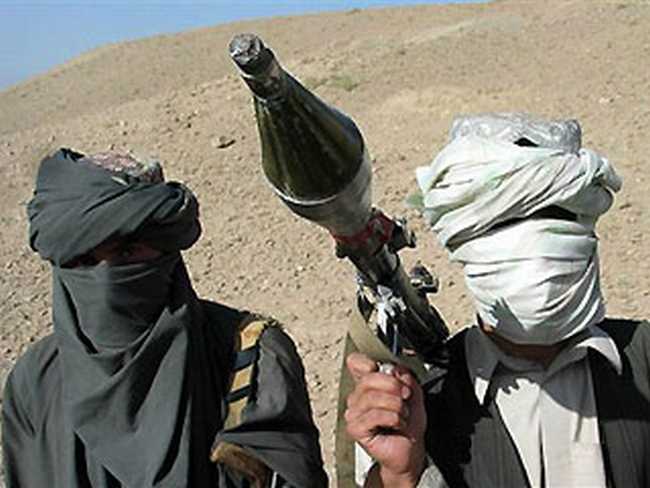
Now despite being on the run in Afghanistan and Pakistan, the Taliban have joined forces with other militants in the country. These previously separate and independent Islamic extremist groups are now joining forces to fight the Pakistani government. What makes the apparent link-up of Islamic militant groups so much more dangerous than they were on their own is the fact that now the fighters are also coming from Punjab, the country’s largest and most important province, and who were originally trained by the Pakistani military to fight a guerilla war in Kashmir against India.

So now the chickens have come home to roost as both the Taliban who were trained to fight the Soviets and the other groups trained to fight the Indians are instead now causing chaos and mayhem inside Pakistan while fighting Pakistani and foreign forces. These extremist groups are the real threat to Pakistan as they are responsible for near daily civilian deaths inside the country as they battle government forces. This culture of jihadist and militant Islam propagated during the time of General Zia-ul-Haq’s efforts to fight the Soviets has ended up making Pakistan a haven for terrorist groups and militant Islamic ideology. Now couple this with the fact that elements in both the Pakistan army and the spy agency, ISI, continue to provide support, logistics, and information about Pakistani and American forces efforts to capture them, and you start to see picture why there are still terrorist networks and camps available for individuals like Faisal Shahzad to join and get support from in terrorist activities.

Several decades of both fighting the Russians, each other, Pakistani and now American forces along with training from the ISI has made these terrorist and militant groups very adept at surviving. And even though by all accounts the Pakistani government is now fighting the Taliban with full force and in all earnest, it is not doing enough to dismantle and destroy all the other groups that have sprung up throughout the country. If it is so easy for a thirty something year old Pakistani American from a Connecticut to come and get training from a terrorist group as is the case with Shahzad gaining assistance by the Pakistan Taliban, then why can the ISI or Pakistan army or even American or Nato forces sniff out all the training camps and terrorist infrastructure within Pakistan?

Unfortunately that answer is more complex than this simple question. There are many competing interests fighting each other inside Pakistan. As their conflict flares on and continues to escalate, the citizens of Pakistan continue to pay the biggest price with their lives as slowly Pakistan is itself turning into Afghanistan in front of our very eyes. The only solution that makes any sense is a durable peace with India. For if there is peace with the giant neighbor to the east, the very reason for the existence of many of these militant groups will cease and that will allow Pakistan to focus entirely on the Taliban and stabilization of Afghanistan to the west. Also it would free up hundreds of thousands of troops from the Indian border who would go into Waziristan and the North West Frontier Province (NWFP) bordering Afghanistan to finish off the Taliban and destroy their terror training camps and infrastructure.

Eliminating the terrorist infrastructure and militant and extremist network ingrained in Pakistan is the only way that the war on terror will have a fitting and lasting end. And in order for Pakistan to successfully accomplish that, it must eliminate the threat it constantly feels from India by aggressively attaining the elusive peace treaty with its neighbor. Just like the French and the British are such good enemies that they cannot resist being friends, so too must Pakistan extend a hand of friendship to India, if only to ensure its survival from the vicious cycle of violence it now finds itself as a result of decades of militant ideology primarily directed at its Hindu neighbor.