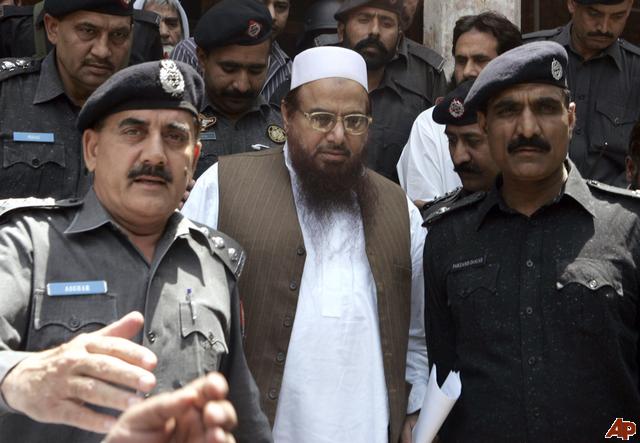
Posts Tagged ‘ Lashkar-e-Taiba ’

India Hints at Pakistan Role in Kashmir Unrest

By Nigam Prusty for Reuters

India’s interior minister hinted on Friday that Pakistan could be behind weeks of violent anti-India protests in the disputed Kashmir region, a move that could hurt the nuclear-armed rivals’ attempts to improve ties.

This is the first time New Delhi has linked Pakistan to the violence in Kashmir that has killed nearly 50 people since June. Earlier India had said Pakistan-based militants were inciting trouble in Kashmir, a region divided between India and Pakistan and which both claim in full.

“Pakistan appears to have altered its strategy in influencing events in Jammu and Kashmir,” Palaniappan Chidambaram told the Indian parliament during a debate on the protests, among the biggest since a separatist revolt against Indian rule broke out in 1989.

“It is possible that they believe that relying upon civilian unrest will pay them better dividends. But I am confident if we are able to win the hearts and minds of the people … those designs can be foiled.”

There were fresh pro-independence protests in several places in Kashmir on Friday. At least two people were wounded when police opened fire on thousands of protesters in Sopore town in north Kashmir.

The minister’s comments could be seen by Islamabad as a provocation, damaging prospects for improving ties that plummeted after the 2008 Mumbai attacks that killed 166 people and derailed a sluggish four-year-old peace process with Pakistan.

So far, the latest violence in Kashmir has appeared to have little impact on relations.

The two sides last held peace talks in July and those ended in acrimony over the attacks, even though the dialogue itself is seen as a tentative step towards improving ties.

Divided Kashmir remains at the heart of the dispute between India and Pakistan, with both sides claiming the Himalayan region in full. They have fought two of their three wars over it.

India accuses Pakistan of fuelling unrest in Kashmir, but Islamabad says it only lends moral support to what it calls Kashmir’s independence movement which has killed tens of thousands of people.

In June, India blamed Pakistan-based Lashkar-e-Taiba (LeT) militants for the Mumbai attacks, but Kashmiri separatists say protests by crowds of mainly Muslim youths are generally spontaneous.

LeT was founded in 1990 to fight Indian rule in Kashmir and is based in Pakistan’s Punjab province.

Militant violence has fallen dramatically in recent years but popular protests have continued. In 2008, the region witnessed the biggest protests against Indian rule in two decades.

Kashmiri separatists want to carve out an independent homeland or merge with predominantly Muslim Pakistan.

Vengeful New Militant Group Emerges in Pakistan

By Kathy Gannon for The Associated Press
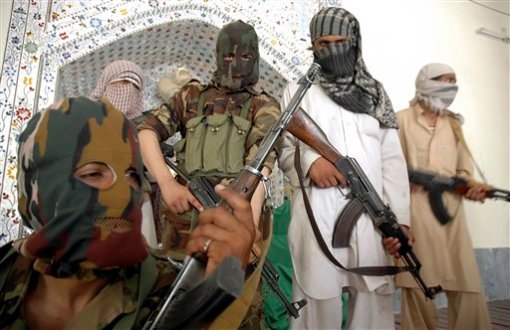
Pakistani authorities now believe a dangerous new militant group, out to avenge a deadly army assault on a mosque in Islamabad three years ago, has carried out several major bombings in the capital previously blamed on the Taliban.

The emergence of the Ghazi Force was part of the outrage among many deeply religious Pakistani Muslims over the July 2007 attack by security forces against the Lal Masjid, or Red Mosque, a stronghold of Islamic militants.

The fierce attack, in which scores of young, heavily armed religious students died, inspired a new generation of militants. These Pakistanis have turned against a government they felt has betrayed them and, to their dismay, backed the U.S. role in neighboring Afghanistan.

The brief but bloody history of the Ghazi Force illustrates the unintended results of Pakistan’s policy of promoting Islamic extremists to fight India in the disputed area of Kashmir. That policy — which Pakistan denies it pursues — now threatens regional stability as the U.S. and Pakistan’s other Western partners pour billions of dollars into the country to stop the rise of Islamic militancy.

The new group is made up of relatives of students who died in the Red Mosque assault. It is named after the students’ leader, Maulana Abdul Rashid Ghazi, who was also killed. The mosque’s religious school, or madrassa, had been a sanctuary for militants opposed to Pakistan’s support of the U.S.-run war in Afghanistan.

Private television stations broadcast vivid scenes of the assault — commandos in black fatigues rapelling down ropes, the crackle of gunfire, bodies of black-shrouded girls carried out through the smoldering gates. Those images stunned the nation, especially families of the students and Pakistanis with deep religious feelings.

“Before the Lal Masjid, militants hadn’t yet declared war on the state of Pakistan. That changed with Lal Masjid,” said Zahid Hussain, author and terrorism expert who has written extensively about Pakistan.

Islamabad’s inspector general of police, Kalim Imam, told The Associated Press that the Ghazi Force was behind most of the deadliest attacks in the capital during the last three years. The attacks targeted the military, the Inter-Services Intelligence agency or ISI — which had ties to a number of militants — and a five-star hotel frequented by foreigners and the Pakistani elite.

The Ghazi Force helped recruit a security official who blew himself up inside the office of the World Food Program last October, killing five people, according to Imam. The force also sent a suicide bomber in September 2007 into the mess hall of the commando unit that attacked the Red Mosque, killing 22 people, he said.

Ghazi Force members may also have been involved in the audacious June 9 attack north of the capital that killed seven people and destroyed 60 vehicles ferrying supplies to NATO and U.S. soldiers next door in Afghanistan, Imam said.

Many of those attacks had been attributed to the Pakistani Taliban, which operates in the remote tribal areas of the northwest along the border with Afghanistan. There is evidence of close ties between the Ghazi Force and the Pakistani Taliban, which the government has vowed to crush.

The Ghazi Force is believed to be headquartered in the Orakzai region of the border area, where the leader of the Pakistan Taliban, Hakimullah Mehsud, held sway for years. The leader of the Ghazi Force is believed to be Maulana Niaz Raheem, a former student at the Red Mosque.

Anger over the bloodshed at the mosque was all the greater because many of the militants and their supporters felt betrayed by a government that had once supported them. Both Ghazi and his brother Maulana Abdul Aziz Ghazi, who was freed on bail this year after two years in jail, were widely believed to have been on the payrolls of both the government and the ISI intelligence service.

Their father, Maulana Mohammed Abdullah, enjoyed a close relationship with the late President Mohammad Zia ul-Haq, and the mosque was a center for recruiting volunteers to fight against the Soviets in Afghanistan in the 1980s.

As opposition grew to Pakistan’s support of the U.S. role in Afghanistan, the mosque became a center of religious agitation against the government, with armed students taking over the complex and police laying siege.

A former senior official in the Interior Ministry told The Associated Press that the police wanted to storm the mosque and end the siege at its outset, send the students home and shut down the religious school and a neighboring library until tempers cooled.

President Gen. Pervez Musharraf refused, the official said, even though police knew that members of al-Qaida’s affiliate organization Jaish-e-Mohammed, which is banned in Pakistan, were bringing in weapons for the students.

Musharraf relented and ordered the assault after militants kidnapped several Chinese nationals running a massage parlor in Islamabad, accusing them of prostitution. The death toll remains in dispute. Red Mosque officials say hundreds died. The government says fewer than 100 were killed.

In a rare interview, Abdul Aziz Ghazi told AP he warned the government that an assault on the mosque would unleash forces that no one could control.

“I have been in jail. I did not form this force and I don’t condone the violence but they are angry at the injustices done,” he said this week.

Although the assault turned many Islamic hard-liners against the government, Pakistan remains unwilling to break all ties to the militants, instead following a high-risk strategy of coddling “good militants” while fighting those deemed “bad militants,” analysts say.

“The military and the ISI have given importance to these militants as assets. But those who have openly declared war, and there is no chance of them returning back to the state, the army is going after them,” said Manzar Jameel, a terrorism expert and researcher on the growth of extremism in Pakistan. “Yet they still believe that some are still assets and that they can keep control of the assets. It’s a failure of strategy.”

Army spokesman Maj. Gen. Athar Abbas denies any assistance to militant groups, saying past ties have long since been severed. He says the Ghazi Force is among the groups the 120,000 Pakistani soldiers waging war in the tribal regions are fighting.

Yet Anatol Lieven, a terrorism expert with the Department of War Studies at London’s King College, said it’s clear that the ISI continues to protect some militant groups, even if it has broken with others.

In a June report, the Rand Corporation think tank also alleged that Pakistan’s military and intelligence still support some militant groups “as a tool of its foreign and domestic policy.”

“A key objective of U.S. policy must be to alter Pakistan’s strategic calculus and end its support to militant groups,” the report said.

Christine Fair, a co-author of that report and an assistant professor at Georgetown University’s Center for Peace and Security Studies, said the battle against extremists in Pakistan is mired in layers of subterfuge by Pakistani intelligence and a “mystifying” acceptance by the CIA of Pakistan’s “good-militant, bad-militant” policy.

She said U.S. intelligence knows Pakistan protects one group — Lashkar-e-Taiba, which India blames for the 2008 Mumbai assault and Afghanistan accuses of masterminding deadly attacks against the Indian Embassy in Kabul.

“Lashkar-e-Taiba remains intact. I have had conversations with … officials in Washington. It is not their priority. Lashkar-e-Taiba is not an issue,” she said in an interview. “Yet Lashkar-e-Taiba has been attacking us in Afghanistan since 2004.”
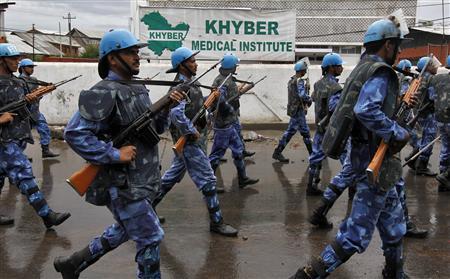
Outrage in India As Mumbai Attacks Terrorist Leader Set to Be Freed By Pakistani Courts

By Manzer Munir for Pakistanis for Peace

Pakistan’s Supreme Court on Tuesday upheld a lower court’s decision to free the leader of Lashkar e Taiba (LeT), a militant group that is blamed by India for masterminding  and orchestrating the November 2008 Mumbai attacks in India that killed 166 people.

Hafiz Mohammad Saeed, the leader of the terrorist group had been placed under house arrest. However, he was released a year ago by the provincial Lahore High Court due to the fact that there was insufficient evidence against Hafiz and other members of the group. The only evidence against him and the group was the confession of Mohammed Ajmal Amir Kassab, the lone person charged with attacks in India, who was given a death sentence earlier this month. Pakistan’s government appealed the decision of the Lahore High cCourt to the Supreme Court which upheld the lower court’s decision.

Lawyers for the government of Pakistan had requested that India extradite Kassab so that he could give testimony in Pakistani courts against Saeed and the militant group. However, India understandably did not hand over Kassab for fear that the sole surviving perpetrator of the Mumbai attacks could end up in a Pakistani court that sets him free. Sadly, this now happens to be the case as the masterminds of the attacks and leader of an already banned terrorist group, Hafiz Saeed, is set to be freed soon.

This obviously is very disappointing news to India to say the least. It would be the equivalent of letting the mastermind of the September 11 attacks, Khalid Sheikh Mohammed, have a long and high profile trial in New York, only to be set free for lack of evidence and or a weak case by the prosecution. The families of the victims would not stomach such a travesty and neither would the American people. In this same manner, the families of the Mumbai attacks are very upset by this decision by Pakistan the Supreme Court to release Saeed will now surelyonly serve to stall peace talks between India and Pakistan that were slowly progressing at the sidelines of the South Asian Association for Regional Cooperation (SAARC) meeting in Bhutan in April of this year.

At a time when the world’s attention is on Pakistan and Pakistanis for being associated with terrorism due to the attempt to bomb Times Square by Faisal Shahzad, the country and its courts have shot themselves in the foot by allowing to set free a known terrorist leader of a group that is not only attacking India and trying to provoke a war between the two countries, but is believed to be behind many attacks inside Pakistan also killing many innocent people.

If the shoe was on the other foot and the attackers came from India and killed 166 Pakistanis in a busy shopping area, while simultaneously attacking a major hotel, railway station and other locations throughout any of Pakistan’s major cities, then trust me, there would be demand for blood by Pakistani citizens and militias would have formed with or without the government’s blessings, and theywould have retaliated against the Indians. The Indian government and the Indian people are showing great resolve and patience with Pakistan and all along hoping that it truly becomes 100 percent committed to fighting and rooting out terrorism and terrorist groups within its borders as it is touted to be.

But as Tuesday’s decision by the Supreme Court illustrates, Pakistan’s government has a mixed record when fighting extremist groups within the country. As mentioned in previous articles on this site, the government of Pakistan and the army have supported and helped organize some of these militant groups like Lashkar e Taiba in order for the Pakistan army to have a guerrilla outfit as an ally in the event of a war with India. That is why there is reluctance by some inside the military and ISI to fully disband Saeed’s group, believed to be one of the largest and well funded militant groups in Pakistan. The government of Pakistan needs to realize that it cannot talk out of both sides of its mouth. It cannot present itself as one of the biggest allies of the US in the War on Terror, while at the same time not deal effectively with militant groups that are hostile to India.

We at Pakistanis for Peace are outraged that Hafiz Saeed, a known terrorist leader is set to be free from Pakistani courts. Our group and website Pakistanis for Peace was founded immediately after the Mumbai attacks in 2008 by concerned Pakistani Americans in response to the cowardly terrorist attacks by individuals who snuck in from Pakistan to cause one of the biggest terrorist incidents to ever hit India. These attacks certainly became their 9-11. 

To now have the leader of this terrorist group be set free by Pakistani courts only serves to strengthen the claims of opponents of Pakistan that it is not doing enough in the fight against terrorism. Certainly the families of the 166 dead Indian nationals deserve justice and better outcome than what transpired in Pakistan’s Supreme Court this week. One should make no mistake, only a just and lasting peace with India will ever lead to a prosperous Pakistan and the sooner there is an earnest effort to stop ALL militant and terrorist groups operating within inside the country by Pakistan, the sooner the two sides can sit across from each other at the peace table.

Pakistan, Training Camps, and a Culture of Terror

By Manzer Munir for Pakistanis for Peace

The arrest of the would be Times Square bomber Faisal Shahzad has brought increased scrutiny to the fact that Pakistan has become the central destination for the world’s would be terrorists and extremists. This should not come as a surprise to anyone as there have been reports of everyone from the militant Muslims of the Philippines to the Arab Al-Qaeda extremists of Yemen and Saudi Arabia who have all trained side by side with each other. Now Pakistan and Pakistanis everywhere are increasingly coming under suspicion due to the numerous instances of Pakistani men’s involvement in attacks and attempted terrorist attacks.

The London Tube bombings in 2005 by young Pakistani British men, the Mumbai attackers in late 2008, and the attempted Times Square bombing by Faisal Shahzad all are linked by the fact that all the perpetrators in these instances were Pakistani men and that they all got their schooling at terrorist training camps in Pakistan.

Something I have never understood is how are these guys from all over the world able to come to Pakistan and simply find training camps to attend? If these camps are so easy to find by your average would be terrorist wanna-be, then how come with the billions being spent on the war on terror are we not able to find the locations, the leadership, and the infrastructure of these camps and destroy it? I know that the US government has been aiding Pakistan with billions of dollars for the fight against the Taliban and Al Qaeda. So how come are there still terrorist training camps and extremist groups in throughout Pakistan?

Part of the problem as to why there are still terrorist and militant camps in Pakistan is because a number of Pakistan’s army leadership and specifically Pakistan’s spy agency, Inter-Services Intelligence (ISI), view India as the ultimate threat to Pakistan’s security and sovereignty. And in order to fuel a low level insurgency in the disputed state of Jammu and Kashmir, the rationale was to use the militants and insurgents in causing maximum havoc and to use them in the decades old war with India over the disputed Kashmir region.

The real issue is that the groups such as Lashkar e-Taiba and Harkat-ul-Mujahideen were originally founded by the ISI to help obtain volunteers for the Pak army who would be willing to fight India and aid the militancy in Indian Kashmir. Pakistan’s army and the ISI used the same technique used by the US during the Soviet-Afghan war where militants were encouraged to wage a “jihad” against the Russians and were now asked to do the same in Kashmir against India. So this climate of tacit state approval for militancy and the funding and support for militant groups took root at the time of the Russian invasion of Afghanistan and continued after the Soviet retreat.

Once the Soviets left, warring factions or warlords in neighboring Afghanistan led to great instability and hardship for the average Afghani who was just trying to survive in a thoroughly destroyed and desperate country. During this time, students or Talibs of local madrassas in Afghanistan and neighboring Pakistan, emerged as a force as they started to defeat various powerful warlords around Afghanistan with the help of Pakistan’s ISI.

These young men, and in many cases boys, were made up mostly of Afghan refugees who had studied at Islamic religious schools in Pakistan during the Soviet-Afghan war. These young Talibs had received important training, supplies and arms from the Pakistani government and particularly from the ISI as well as logistical and financial support. The ISI historically supported the Taliban throughout the 1990s, viewing it as a counter to what they regarded as an Indian-supported Northern Alliance. In a matter of months, the Taliban captured many key provinces inside Afghanistan and soon Kabul and declared themselves rulers of the country. Only three countries ever did recognize the Taliban government’s 5 years in office running Afghanistan from 1996 to 2001, and they were United Arab Emirates (UAE), Saudi Arabia, and Pakistan.

For the Pakistani government, the psychological thinking has always been figuring out this: How do you contain India to the east? What ways can we leverage ourselves in a retreat and counter strike strategy if ever the eastern border with India collapsed in the event of an all out 4th war in 60 years? This is what has always kept the generals up in their barracks in Rawalpindi at Pakistan Army’s Headquarters. When the country of Afghanistan was embroiled in a struggle for power between the warring factions of among others Gulbuddin Hekmatyar, Ahmed Shah Massoud, and other warlords for control of various provinces and cities, the Taliban were gaining valuable training from the ISI and eventually becoming into the force they did culminating in their rise to power in 1996.

When 9/11 happened in 2001, the Taliban were in the cross hairs of the US forces for not handing over their guest, Osama Bin Laden. And since the arrival of US troops have continued to be on the run from American and Pakistani forces. The problem is that certain elements in the ISI still view the predominantly Pashtun Taliban as an important ally in Afghanistan. Despite Pakistan’s efforts to combat and eradicate the Taliban, there is evidence that they are still receiving some support from some members within the Pakistani spy agency.

Now despite being on the run in Afghanistan and Pakistan, the Taliban have joined forces with other militants in the country. These previously separate and independent Islamic extremist groups are now joining forces to fight the Pakistani government. What makes the apparent link-up of Islamic militant groups so much more dangerous than they were on their own is the fact that now the fighters are also coming from Punjab, the country’s largest and most important province, and who were originally trained by the Pakistani military to fight a guerilla war in Kashmir against India.

So now the chickens have come home to roost as both the Taliban who were trained to fight the Soviets and the other groups trained to fight the Indians are instead now causing chaos and mayhem inside Pakistan while fighting Pakistani and foreign forces. These extremist groups are the real threat to Pakistan as they are responsible for near daily civilian deaths inside the country as they battle government forces. This culture of jihadist and militant Islam propagated during the time of General Zia-ul-Haq’s efforts to fight the Soviets has ended up making Pakistan a haven for terrorist groups and militant Islamic ideology. Now couple this with the fact that elements in both the Pakistan army and the spy agency, ISI, continue to provide support, logistics, and information about Pakistani and American forces efforts to capture them, and you start to see picture why there are still terrorist networks and camps available for individuals like Faisal Shahzad to join and get support from in terrorist activities.

Several decades of both fighting the Russians, each other, Pakistani and now American forces along with training from the ISI has made these terrorist and militant groups very adept at surviving. And even though by all accounts the Pakistani government is now fighting the Taliban with full force and in all earnest, it is not doing enough to dismantle and destroy all the other groups that have sprung up throughout the country. If it is so easy for a thirty something year old Pakistani American from a Connecticut to come and get training from a terrorist group as is the case with Shahzad gaining assistance by the Pakistan Taliban, then why can the ISI or Pakistan army or even American or Nato forces sniff out all the training camps and terrorist infrastructure within Pakistan?

Unfortunately that answer is more complex than this simple question. There are many competing interests fighting each other inside Pakistan. As their conflict flares on and continues to escalate, the citizens of Pakistan continue to pay the biggest price with their lives as slowly Pakistan is itself turning into Afghanistan in front of our very eyes. The only solution that makes any sense is a durable peace with India. For if there is peace with the giant neighbor to the east, the very reason for the existence of many of these militant groups will cease and that will allow Pakistan to focus entirely on the Taliban and stabilization of Afghanistan to the west. Also it would free up hundreds of thousands of troops from the Indian border who would go into Waziristan and the North West Frontier Province (NWFP) bordering Afghanistan to finish off the Taliban and destroy their terror training camps and infrastructure.

Eliminating the terrorist infrastructure and militant and extremist network ingrained in Pakistan is the only way that the war on terror will have a fitting and lasting end. And in order for Pakistan to successfully accomplish that, it must eliminate the threat it constantly feels from India by aggressively attaining the elusive peace treaty with its neighbor. Just like the French and the British are such good enemies that they cannot resist being friends, so too must Pakistan extend a hand of friendship to India, if only to ensure its survival from the vicious cycle of violence it now finds itself as a result of decades of militant ideology primarily directed at its Hindu neighbor.