Posts Tagged ‘ Mumbai Attacks ’

What They Said: Pakistan Spies Downgrade India Threat

By Vibhuti Agarwal for The Wall Street Journal

The Wall Street Journal reportedTuesday that a report from the Pakistan’s chief spy agency, the Inter-Services Intelligence, said domestic militancy had overtaken the Indian army as the greatest threat to Pakistan’s national security. This is the first time since the ISI was founded in 1948 that the ISI has found a bigger threat than its neighbor. India Real Time presents a roundup of comments from readers and others below:

The Times of India newspaper reported Wednesday that Pakistan’s acknowledgment of its internal problems comes as the country is struggling with an image problem which may be affecting the flow of international aid to help the victims of the devastating floods there. “The unexpected downgrading of the threat perception from New Delhi and waking up to the scourge of home-grown terrorism comes even as foreign aid for the thousands affected in floods in Pakistan is yet to pick up,” wrote Chidanand Rajghatta for the Times of India.

The Hindustan Times newspaper quoted analysts saying the change of mindset makes sense. “I am not surprised that the ISI has changed its strategic thinking,” Talat Masood, a retired general and analyst on defense and security issues told the newspaper. Another analyst, Imtiaz Gul, was also quoted in the article. “The ground realities have changed and have forced allies into becoming enemies,” he said.

“At this point, the Pakistan government will say just about anything the world community wants it to,” wrote H. Jere. “After seeing the response to the aid request has been disappointing, it will agree to almost anything.”

Other readers called Pakistan’s latest admission “hogwash,” adding that it may be a trick to get more funds from the United States.

“It is sheer naiveté to consider Pakistan’s ISI and Islamic terrorists as two separate entities,” said Shri K. “ISI is the quintessence of rabid Islamic fascism and has been mercilessly exporting Islamic terror all over the world.”

Some readers said Pakistan’s admission came as a ray of hope for improving the long-estranged India-Pakistan relationship.

“I hope India take this opportunity to offer real assistance to the victims of the floods,” wrote Phillip Hwee. “It’s time for India and Pakistan to reconcile with one another. A détente is very necessary so that each of the two rivals can reallocate their resources to improve the standard of living of their respective citizens.”

David Almeida agreed, adding that “one can only hope that the military establishment in Pakistan is truly serious about abjuring terrorism, regardless of whether it is targeted at Indian or Pakistani state.”

Two Die in Gunfire at India-Pakistan Border

By Augustine Anthony for Reuters

An exchange of fire at the Indian-Pakistan border near Pakistan’s Punjab province has killed two Indian troops and wounded a Pakistani soldier and several villagers, officials said Wednesday.

The neighbours have in the past exchanged almost daily fire across what is known as the Line of Control separating the two armies in Kashmir, but the latest incident occurred in the Sialkot sector of Pakistan which rarely experiences trouble.

A spokesman for the Pakistan Rangers said Indian border security forces fired automatic weapons and mortars at a village along the Sialkot working boundary, north of the Pakistani city of Lahore.

“First they fired yesterday morning and then again in the evening and the firing continued sporadically throughout the night until Wednesday morning,” said Nadeem Raza.

“One of our soldiers and several villagers have been wounded in the Indian firing.” A senior Indian border official confirmed the incident but said Indian forces retaliated for “unprovoked firing” from the Pakistani side.

“We were facing unprovoked firing from the Pakistani side for the last two days, resulting in the death of two of our men. We were forced to retaliate,” said K. Srinivasan. “The firing was precise, but at this stage we cannot say for sure who fired at us.”

The flare-up comes ahead of Indian Foreign Minister S.M. Krishna’s trip to Pakistan next week to meet with his counterpart in a renewed bid to normalise ties.

Relations between the nuclear-armed neighbours, who have fought three wars since 1947, were frozen when Pakistan-based militants attacked the Indian city of Mumbai in 2008, killing 166 people.

A late 2003 cease-fire between the two sides across the cease-fire line in Kashmir has largely held although there have been several exchanges of fire over the past year. Raza said Pakistani forces returned fire after Indian forces “did not respond to the call for a flag-meeting” and continued firing.

The Director General of Pakistan Rangers in Punjab, Major General Yaqub Khan, said a protest had been lodged with Indian forces. “In future, a strong reply will be given by Rangers and loss of civilian lives and property will not be tolerated at any cost,” he was quoted as saying in a statement issued after visiting the area.

This was the third violation of a cease-fire in that area in the last two weeks, according to the statement. India has long accused Pakistan of backing militants fighting Indian security forces in the Himalayan region of Kashmir.

Pakistan supports what it calls a freedom struggle by the people of Kashmir against what it sees as the brutal and illegitimate Indian occupation of the region. But it denies arming the guerrillas, who have been fighting Indian forces since 1989.

India and Pakistan’s Leaders Meet

As reported by BBC.com

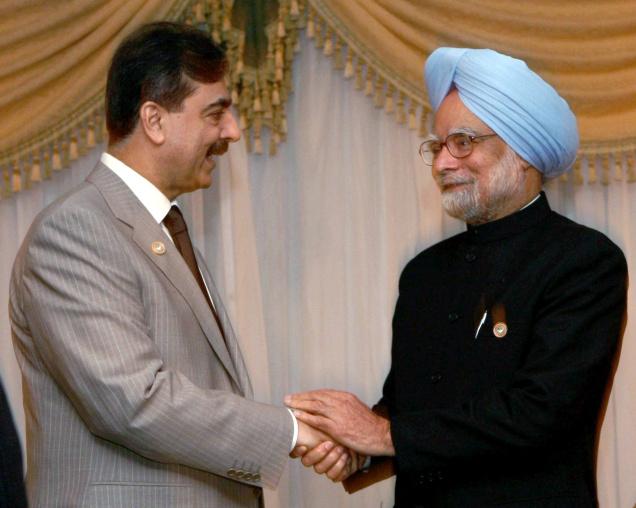
Pakistan PM Yousuf Raza Gilani spoke to his Indian counterpart Manmohan Singh at a reception hosted by the US President Barack Obama, reports said. The prime ministers of India and Pakistan met briefly during a nuclear summit attended by 47 world leaders in Washington DC.

A Pakistani embassy spokesman said it was “not a formal meeting”. cIt comes a day after Mr Singh told Mr Obama that Pakistan’s government lacked the will to punish those responsible for the Mumbai attacks. The November 2008 attacks left 174 people dead, including nine gunmen, and soured ties between India and Pakistan. Late last year, Pakistan charged seven people in connection with the attacks.

They include the suspected mastermind Zaki-ur-Rehman Lakhvi, who is allegedly the leader of the Pakistan-based militant group Lashkar-e-Taiba. Mr Singh and Mr Gilani spoke to each other at a reception hosted by Mr Obama, Pakistani embassy spokesman Nadeem Kiani said.

“Both leaders were present at the same place and so they shook hands and talked,” he said. A spokesman for India’s foreign ministry, Vishnu Prakash, told The Hindu newspaper that the two leaders “exchanged pleasantries”.
‘State elements’

India put peace talks on hold after the attacks, blaming them on Pakistan-based militants. Pakistan admitted they had been partly planned on its soil. India has also suggested what it calls “state elements” were involved. Both Pakistan and Lashkar-e-Taiba have denied any involvement.

In February, the two sides held their first formal talks since the 2008 attacks and agreed to “remain in touch”. Leaders from 40 states are attending the meeting in Washington which is expected to focus on how to secure nuclear material.

Pakistan and India Are Back At the Peace Table

By Manzer Munir

Islamabad, Pakistan- India’s Foreign Secretary Nirupama Rao is scheduled to visit Islamabad later this month as both India and Pakistan are back on track to resume their high level diplomatic talks. The discussions between the two so far are considered “preliminary” and are a “first step” in the words of Secretary Rao. She had earlier restated India’s concerns about terrorist groups operating in Pakistan and provided additional information related to the Mumbai attacks. Her counterpart in Pakistan, Foreign Secretary Salman Bashir, stated that “Pakistan is doing all that it can to fight terrorism”. Expressing his sympathy with the victims of the Mumbai attacks, he focused on Pakistan’s core concern that “terrorism should be looked at more broadly”. He believes that the two countries should address the root causes of the terror campaign and, from that perspective; Kashmir is the “core issue.” Pakistani officials believe that if India was a bit more flexible on Kashmir, then all the outstanding issues between the two countries can be resolved.

India’s Prime Minister Manmohan Singh is believed to sincerely desire to make a “breakthrough” in relations with Pakistan and has been vocal about it too in recent interviews. During the elections last year, he had highlighted his efforts to promote back-channel diplomacy for conflict resolution during the rule of former Pakistani President Pervez Musharraf. He also met last year with the current Pakistani Prime Minister to pledge to resume peace talks.

In Pakistan there also appears to be a significant shift in foreign policy. The American and Pakistani militaries and intelligence agencies are working closely and have had some recent successes together to stop the al Qaeda-sponsored terrorism in Pakistan and Afghanistan. The US commanders have been full of praise of the Pakistan army and its recent offensives against the Taliban. The Pakistani army has disrupted the al Qaeda and Taliban network over most of the Federally Administered Tribal Areas. This has come at a steep price as more than 2,500 soldiers have been killed.

This sacrifice by the Pakistan army has not gone unnoticed as the United States has increased both military and economic aid to Pakistan. The US is nudging both India and Pakistan to the peace table since a peaceful border with India will allow Pakistan to focus entirely on its western border at the Taliban and Al-Qaeda in Afghanistan. This will facilitate the Obama administration’s ability to eradicate the Taliban and Al-Qaeda once and for all from the region with Pakistan army’s help.

For far too long since Pakistan’s independence, the army has always felt India to be the biggest threat to the nation’s sovereignty and freedom. But for the first time in its history, an enemy has surfaced and proven to be much more detrimental to Pakistan’s survival as a nation and security for its citizens. And that enemy and threat is the radicalized groups such as the Taliban both from Afghanistan and inside Pakistan as well as the largely Arab Al-Qaeda network that operates in the area. Also militant groups like Lashkar-e-Taiba, Jaish-e-Mohammed and others also pose the biggest threat to the nuclear armed nation. The danger from the extremists has allowed elements inside Pakistan’s army leadership to reconsider the threats to Pakistan.

The dialogue between India and Pakistan has been off again and on again for over 63 years. But in the current climate of mistrust and hatred coupled with tensions still simmering from the Mumbai attacks, there is little room for error on both sides. It is hoped that the upcoming talks prove to be a step in the right direction of normalizing relations between these two nuclear armed neighbors who share almost an 1800 mile long border known in this part of the world as the Berlin Wall of Asia.

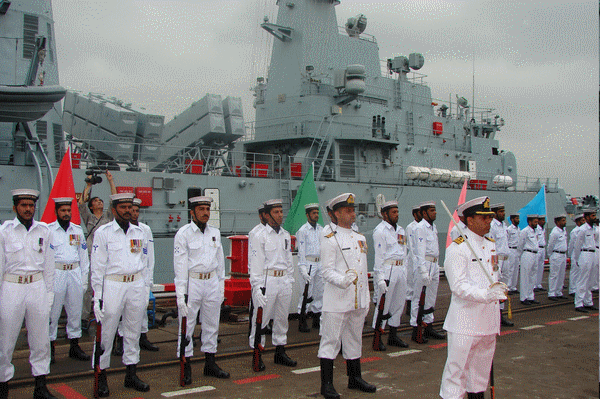
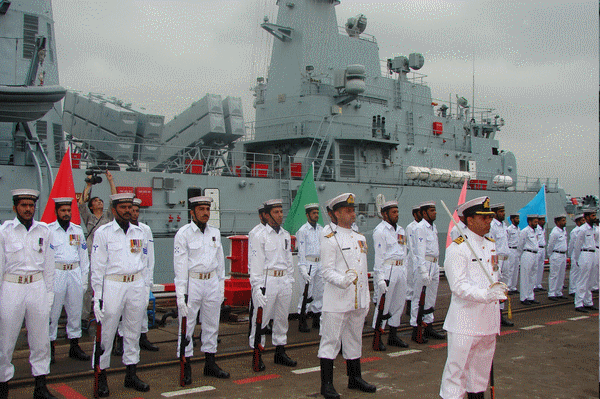
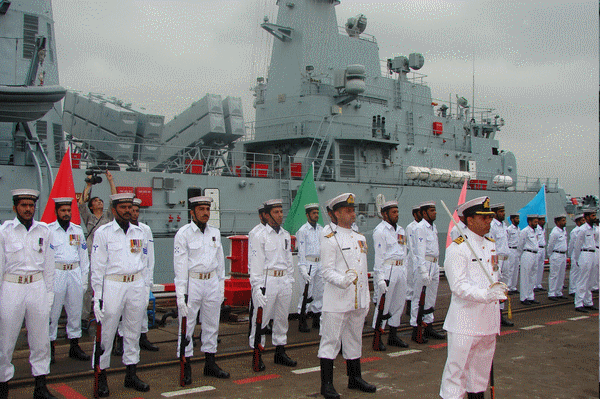
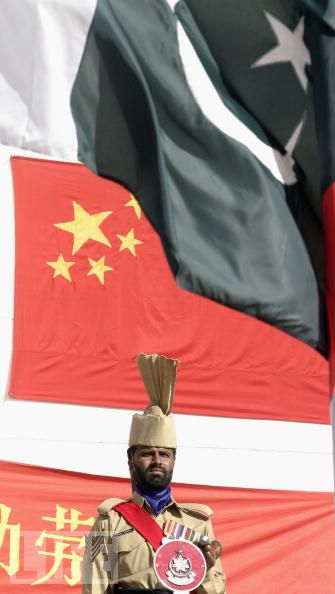
Pakistan and China increase military spending and cooperation as India shows concern

Beijing, China- A senior Chinese defense official has justified Chinese sales of warships and submarines to Pakistan on the grounds that Russia and the United States were selling similar systems to India.

The defense official also indicated that China was aware of the fact that India may not be happy with its deal with Pakistan. “The initiative may invite concerns from its neighboring countries. But the doubts are unnecessary,” Zhai Dequan, deputy director of China Arms Control and Disarmament Association , was quoted as saying by the official media.

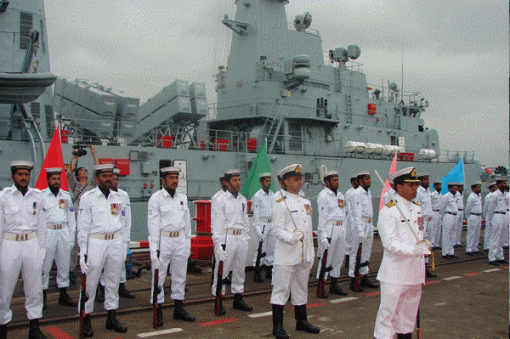
Pakistan’s chief of naval staff, Norman Bashir, also made a push to persuade China to sell higher capacity ships compared to the F22P frigates that China began delivering in June.  Chinese official Zhai said that Pakistan’s   desire for higher capacity ships is normal for an independent nation seeking to bolster its security. “India has also entered into deals for military hardware from the Unites States and Russia. India’s aircraft carrier has already cost it billions of dollars”, said Zhai.

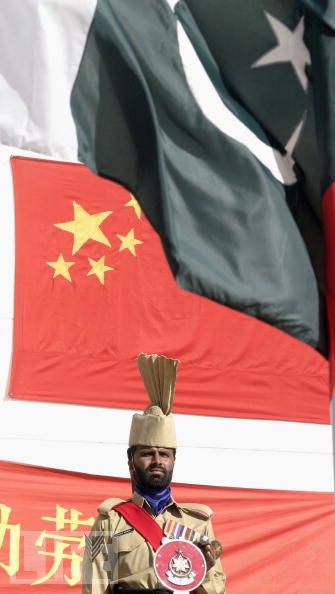
Bashir also met with the Chinese defense minister, Liang Guanglie, and discussed with him Pakistan’s needs in terms of modernizing their armed forces to try and keep up with the torrid pace of rival India’s defense spending. “The Chinese armed forces would like to improve friendly and cooperative relations with the Pakistani armed forces,” defense minister Liang Guangile said, according to China’s state-run Xinhua press agency.” China attached great importance to its traditional friendship with Pakistan, Liang said, adding that the two countries had conducted comprehensive and multi-level military exchanges and cooperation in various areas.”

“The Pakistani armed forces and people cherished their friendship with the Chinese armed forces and people”, Noman Bashir said, noting that “Pakistan would like to work with China to promote the comprehensive and cooperative partnership.” Bashir also stated that Pakistan was keen on buying bigger ships and more JF-17 fighter planes from China in addition to submarines and that Pakistan will be buying more weapons from China, including missiles. 

“These growing military ties between China and Pakistan are a serious concern to India,” stated Defense Minister A K Antony. India worries about China’s rising influence in South Asia and the Indian Ocean region, a neighborhood traditionally considered as its sphere of influence.

India’s relations with Pakistan, never easy after three wars since 1947, went downhill fast after last November’s Mumbai attacks blamed on Pakistani originated militants. Meanwhile, Chinese and Pakistani cooperation on military and economic projects has increased in the last few years. “The increasing nexus between China and Pakistan in military sphere remains an area of serious concern,” Antony said in a speech. “We have to carry out continuous appraisals of Chinese military capabilities and shape our responses accordingly. At the same time, we need to be vigilant at all times.” Tensions between India and China, who fought a brief war in 1962, flared again in recent months, especially with the re-emergence of a long-standing border dispute made worse by a visit by the Dalai Lama, the Tibetan spiritual leader, to Indian territory claimed by Beijing.

India increased defense spending by 24% for this year’s budget to $28.4 billion a year dwarfing Pakistan’s budget of $4.2 billion for the same period. Meanwhile, China and India are together set to make Asia the highest regional spender on defense in the next seven years replacing North America as their economies continue to fund their weapons appetite.

Pakistan cannot compete with the likes of India and China militarily. Just as Taiwan could not compete with China militarily, but went on to become an economic powerhouse and used its influence economically,  so too must Pakistan focus on growing its economy rather than growing militarily. Even though Pakistan possesses the nuclear bomb, and that very well may end up being a strong deterrent against India in the likelihood of a war, it still is loathe to use it, for the consequences from India would be similar and far worse due to their increased warheads and military might.

Also, although Pakistan’s military and previous leadership have articulated the right to a preemptive nuclear strike or a nuclear first use option in the event of hostilities with India, this choice is often seen as a losing option by the military due to the aftermath of a nuclear exchange between the two countries. India’s budget and its technological advancements make it impossible for Pakistan to ever win a conventional war with India. And a nuclear exchange between these two neighbors will leave neither side feeling as the winner.  

Pakistan’s most beneficial strategy must consist of directing its full armed forces against the Taliban and militant groups within its territory and re-engaging India back to the peace table in hopes of resolving the long disputed Kashmir region because war with India will certainly not leave Pakistan the victor. However a peace treaty can open the long border between India and Pakistan for trade, goods, ideas, money and people to move freely across the border and allowing much needed investments and flow of technology to Pakistan that will go a long ways in helping the country and its people catch up with the rest of the world.
Reported by Manzer Munir for www.PakistanisforPeace.com
Pakistani court suspends deportation as another case of homegrown terror troubles US authorities

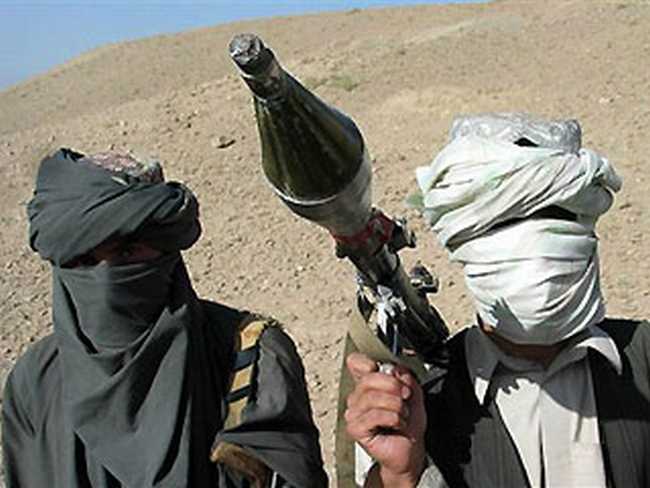
Karachi, Pakistan- Pakistani police on Monday seized a luggage and a cell phone from a hotel where three of the five Americans who were arrested on suspicion of terrorism planning and militant links stayed. A court has ruled that the men cannot be deported to the United States until the judges review their case.  Pakistani police has alleged that the five young Americans intended to join militant and extremist groups in the northwest tribal areas of Pakistan and Afghanistan. This case is troubling as it would appear that Americans and Western raised men are traveling to Pakistan to link up with Al-Qaeda and other militant groups like the Taliban.

Pakistani police had searched their hotel, aptly named Saddam Hotel in the southern city of Karachi.  The detainees have been accused of using the internet and such sites as Facebook and Youtube to reach out and connect to extremist groups and have been said to have been in contacts with a Taliban recruiter also.  The Pakistani court actions are intended to prevent the deportation of the accused to the United States until the courts in Pakistan can ascertain the facts and review the case.

The men, who are from the Washington DC area were picked up last week by Pakistani authorities after their worried families in the US contacted the FBI about their missing sons and enlisted their help in tracking the men down. The authorities were given a farewell video found by one of the family members that showed scenes of war and called for Muslims to be defended. FBI agents, who have had some access to the men, are trying to see if there is enough evidence to charge the men with conspiracy to provide material support to a terrorist group.

A US government official was satisfied with the Pakistani government’s assistance stating that “We’ve had excellent cooperation with the Pakistani authorities, both on the diplomatic side and on the law enforcement side,” said State Department spokesman Ian Kelly, “And the Pakistani authorities granted us access to the individuals within 24 hours of our request, which is a very speedy response.”

The threat posed by homegrown terrorists in the United States and in European countries is a growing concern for the FBI and US agencies. The incidents such as the Fort Hood shooting where Major Nidal Hasan allegedly shot and killed 13 fellow soldiers at the Texas base last month do nothing but further raise those concerns. Then there’s David Headley, an American born Muslim to mixed ancestry who is indicted in the Mumbai blasts of November 2008. And now comes the story of the five Muslim American men arrested in Pakistan who were interested in waging  jihad against the US.

It is too early to call it a growing trend, but the incidents and their frequency does suggest that there is certainly a minority segment of very young Muslim males who somehow are being radicalized not in strict Afghanistan or Pakistan or somewhere in Iran. Rather, in the streets of Virginia, New York, Chicago and other cities, certain young Muslim males are becoming radicalized and becoming extremists. This phenomenon can be best described as a catch 22. You see, these radicalized and misguided men feel that because the United States is waging wars in Muslin countries such as Iraq and Afghanistan, it is being an oppressor. To these men, defending Muslim lands from an outsider and an oppressor is an obligation and a duty and is a call for every Muslim. On the other side, there is the American policy of engagement of the enemy on its turf, as is seen in the Bush doctrine. “Take the war to the terrorists” as President Bush so famously put it in 2001.  These wars that were initiated to be pre-emptive in the case of Iraq and retribution in the case of Afghanistan, have inadvertently become the cause célèbre of these jihadists and young extremists.

In essence, there is a vicious cycle of violence at work here. We have American troops in Afghanistan who are there to defeat the Taliban and Al-Qaeda in Afghanistan so that the US is safe from a terrorist attack hatched overseas. Yet, the next threat may actually be coming from an American born Muslim who is being alienated and radicalized due to the “unjust” war against his “brothers” constant 24 hour cable news coverage, satellite TV and foreign news channels, the internet websites and other sources.

As instances of homegrown Muslim radicalization grow or come into the limelight, it is imperative that the vast majority of peaceful, law abiding and patriotic American Muslims keep vigilant and mindful of the few in their midst who may be becoming radicalized in front of their eyes. It is vital that the Muslim community speak up as the parents of these young men did and alerted the authorities when they became concerned that they may have some sinister designs after discovering their farewell video. It is together with our cooperation with the authorities that we can sniff out these lost individuals before they do any harm to anyone or to an entire religion. The mosques and Islamic centers must do more to ensure that there is no radicalization or fiery sermons. There needs to be a conscientious effort on the part of the American Muslim community of progressives and moderates to speak up and chastise those that are becoming extremists within their midst in order to prevent the next Fort Hood massacare or the next Mumbai.

 Reported by Manzer Munir for www.PakistanisforPeace.com
The Mumbai Attacks, 1 Year Later

Mumbai (Bombay), India- It has been a year since November 26, 2008, when 10 Pakistani militants of the group Lakshar-e-Taiba coordinated and carried out simultaneous and deadly bombings and shootings in the heart of several important Mumbai buildings and institutions. The lone surviving gunman from that rampage, Mohammed Ajmal Amir Kasab, admitted to his role in the attacks during his trial in Mumbai and he could be executed if found guilty. No other individuals have been charged in India with the killings of over 170 people and injuries to scores of others.

In his visit to the United States this week, Prime Minister Manmohan Singh has expressed India’s concern over Pakistan’s efforts in bringing the perpetrators of the Mumbai attacks to justice. “No they haven’t done enough,” he told CNN television in an interview telecast as he landed in Washington for a four-day state visit Sunday. Manmohan Singh said when he met Pakistan Prime Minister Yousuf Raza Gilani in Sharm-el-Sheikh, Egypt, in July this year, he (Gilani) had assured that his government would do all that’s possible to bring the perpetrators to justice. “That’s not happening.”  

Then three days after that statement by Singh, seven people were indicted in a Pakistani anti-terrorism court Wednesday in connection with the attacks of last year. All have denied the charges and are planning to plead not guilty. This is the first indictment in Pakistan in a case that is closely being followed in India and in the United States. The seven men charged in Pakistan allegedly belong to the militant group Lashkar-e-Taiba which is believed to be behind the coordinated attacks carried out simultaneously at numerous locations in Mumbai that lasted up to three days when all except Ajmal Kasab were killed.

Earlier in the week Prime Minister Manmohan Singh called on world powers to put pressure on Pakistan to rein in militants amid the rise in Taliban linked violence inside Pakistan and also in neighboring Afghanistan. Britain “will work shoulder to shoulder with India and our international partners to confront this common threat”, Prime Minister Gordon Brown said Thursday, while French Foreign Minister Bernard Kouchner pledged “unreserved support” for India in the fight against terrorism.

India’s minister for external affairs, Shashi Tharoor told a vigil at the Chabad House Jewish center, where six people died, including the rabbi who ran it and his pregnant wife, that the gunmen had killed “in cold blood”.”The terrorists demonstrated that their brand of fanaticism was anchored less in the absolutism of pure faith than in the geopolitics of pure hatred,” he told the congregation, including the slain couple’s parents.

The Mumbai attacks ended the peace dialogue between India and Pakistan that has been off and on over the last 60 years, remaining unresolved over the disputed Kashmir region. The militants groups in Pakistan that were left unchecked through the 80’s and the 90’s have now gotten out of control as the level of violence and attacks inside Pakistan has reached an unprecedented level. All cities of Pakistan have been touched by attacks and violence either blamed on religious zealots like the Taliban or militant groups like Lashkar-e-Taiba, which was allegedly formed with the help of the Pakistani intelligence agency ISI to infiltrate and fight Indians in Kashmir.

Bringing the perpetrators of the Mumbai attacks to justice is not only needed for the victims of these attacks in India, but finding and punishing these individuals and prosecuting them to the full extent of the law is also in Pakistan’s best interests. With a crime and violence rate currently in Pakistan that is off the charts, the average Pakistani citizen has no sense of security inside their own country. Near daily news of attacks inside some part of the country or another has also given many civilians a siege mentality.

Pakistan’s biggest neighbor is India. It is also considered by many inside the country to be its biggest enemy. The two share a border of approximately 1800 miles. They also share over 5,000 years of common history, language, culture, and customs. India is not the biggest threat facing Pakistan as India is too big and complex to focus on just Pakistan. India is fast approaching world power status as it now competes with the likes of China, Russia and the Unites States in various fields due to its robust economy, fast growing middle class, and ever increasing influence around the world.

Pakistan’s biggest enemies are the Taliban and the various militant and extremist groups that are now causing havoc within the country and also are attempting to incite a war between India and Pakistan with attacks such as the attacks of November 26 of last year. Bringing these seven individuals to justice in front of the country and the whole world will go along ways to show its neighbor and the United States that it is serious in confronting these groups and putting an end to terror both within and outside its borders.


Reported by Manzer Munir for www.PakistanisforPeace.com, a group and website started by Pakistanis dedicated to peace between India and Pakistan and outraged by the Mumbai attacks of Nov 26, 2008.

Lone Surviving Mumbai Attacker Pleads Guilty

Mumbai, India- The only surviving gunman from last year’s Mumbai attacks in India’s financial and entertainment capital which killed at least 173 people and wounded more than 300, pleaded guilty today in an Indian court. The confession of guilt from Pakistani citizen Mohammad Ajmal Kasab, 21 years of age, took many in the court by surprise including the lead prosecutor, Ujjwal Nikam.

“He pleaded guilty in court today “a senior police officer told the Associated Press reporter. “He has confessed to his role and the fact that he was involved in the attacks that killed so many people during the attacks. He admitted to both being a part of the planning as well as the execution of the attacks”, stated the officer who was present in court.

Kasab, had earlier pleaded not guilty in May prior to the start of the trial, now faces a  possible death sentence as the court can proceed to the sentencing portion rather than continue with the trial in bringing about a guilty verdict.  During a routine interrogation of the witnesses in his trial, Kasab got up and told the court he had something to say and proceeded to confess his involvement in the attacks.  He also admitted that the closed-circuit video was of him, and he narrated the entire of sequence of events in detail to corroborate his involvement in the crime.

Analysts believe the guilty plea will help Pakistan’s President Asif Ali Zardari’s stance that the country must confront the truth about its militant ties and organizations that operate within its borders. Zardari himself is a victim of such terrorist attacks as his wife, the former Prime Minister Benazir Bhutto too was killed by suspected militants in December of 2007 while campaigning for office and running on a platform of wiping out the militant threat inside Pakistan.

This admission of guilt on the part of Kasab also should allow Pakistan to press the individuals in its custody that are believed to have been a part of Kasab’s network to be brought to justice as well. One hopes that Pakistan is able to secure guilty pleas against the individuals in its custody and brings some justice to the hundreds of families who have lost loved ones or who were seriously injured by the cowardly attackers preying on innocent civilians. A just and fair trial with guilty pleas and full cooperation is needed on the part of the Pakistani government before India would agree to move ahead with the now stalled peace process between the two nuclear armed hostile nations.

 by Manzer Munir for www.PakistanisforPeace.com
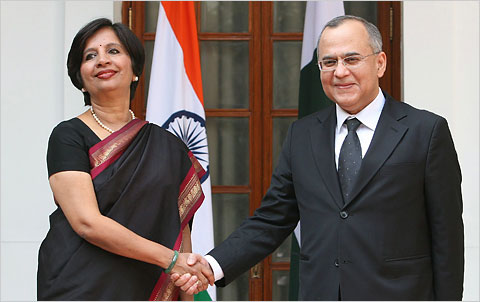
India and Pakistan to discuss relations at NAM meeting in Egypt

Sharm El-Sheikh, Egypt- The prime ministers of India and Pakistan are scheduled to meet on the sidelines of the Non-Aligned Movement Summit (NAM) in Egypt this week inviting hopes of a resumption of peace talks between the two nuclear armed neighbors.

The NAM consists of 118 member countries of developing countries from Afghanistan to Zimbabwe and make up almost 60% of the world population.  NAM countries consider themselves not formally aligned with or against any major country or power bloc such as NATO.

The importance of this meeting between the Indian Prime Minister Manmohan Singh and Pakistani PM Yousuf Raza Gilani is that this is only the second high level meeting between the Indian and Pakistani leaders since the Mumbai attacks of November 2008.  At least 173 people were killed and more than 300 wounded by terrorist attacks blamed on Pakistan based militant group Lashkar-e-Taiba.

Since the attacks, the relations between India and Pakistan worsened dramatically as India demanded Pakistan take action against the responsible parties. This week Pakistan announced that it will “probably” put the five accused attackers in its custody on trial next week. This is welcome news for the Indian government which has predictably  tied any improvement in relations with Pakistan on the prosecution of the accused for the attacks as well as curbing of violence on Indian soil from the Pakistan based militants.

Unfortunately, Pakistan has its hands full on its own soil when it comes to stopping the militants let alone preventing violence from groups inside its terroritory from carrying out attacks in India. But a willingness to fully prosecute any individuals or groups apprehended as well as dismantling the infrastructure of these organizations will go a long way in showing good faith to India in resuming a comprehensive peace agreement with its fellow nuclear armed neighbor.  Similarly India must be willing to consider Pakistan’s disputes with India over Kashmir from all sides and be able to negotiate a lasting and long term peace deal that is so desperately needed in the most dangerous neighborhood of the world and one that has been elusive for over 60 years.


Reported by Manzer Munir for http://www.PakistanisforPeace.com

Pakistan to release cleric linked to Mumbai attacks

Islamabad, Pakistan- In what would be seen as a court ruling that would surely worsen the already tense relations between India and Pakistan, a court in Lahore ordered the release of the founder of the militant group Lashkar-e-Taiba (LeT), seen by many as the main group behind the attacks in Mumbai India in November of 2008.


Hafiz Saeed, the head of a charity that international organizations have said is tied to the militant group and had been under house arrest since December 11 of last year was ordered released by a panel of three judges in a Lahore court Tuesday. Lashkar-e-Taiba has been accused by Indian officials of engineering and carrying out the attacks on Mumbai that left about 170 people dead last November.


Saeed founded Lashkar-e-Taiba reportedly with support from Pakistan’s intelligence agency, Inter-Services Intelligence to fight Indian rule in the Himalayan region of Kashmir.


The court ruling will likely worsen relations between Pakistan and India, both nuclear armed countries that regard each other as archenemies and have fought three wars in the last six decades. After the attacks in Mumbai, India accused Pakistan of dragging its feet in tracking down Lashkar-e-Taiba members involved in the terrorism that lasted several days in India’s commercial and financial capital of Mumbai. And only after pressure from the United States did Pakistan arrest several members of the militant group, including 2 men still held and believed to be masterminds of the attacks. Saeed was placed under house arrest and the government closed many of the relief offices, hospitals, schools and madrassahs operated by Jamaat-ud-Dawa, the relief agency associated with Lashkar-e-Taiba.


The ruling Tuesday renewed criticisms from India that Pakistan’s resolve to fight militant organizations was not genuine. Indian analysts say that Pakistan has a history of arresting militants only to release them once the spotlight has faded weeks or month later. They believe that the intelligence agency and the militant groups like Lashkar-e-Taiba have close links and that the military and the intelligence agency have used these groups in the past as proxy warriors in the decades long war with India over the dispute region of Kashmir.


These are valid points by Indian analysts and Pakistan must do more to disassociate itself with these militant groups. Just as Pakistan has finally gotten serious in fighting the Taliban inside its borders, it must also be consistent and forceful in tackling other militant groups within Pakistan as they threaten its security and sovereignty. Unfortunately, the Pakistani intelligence agency and some members of the military see these groups that are determined to fight India for liberation of Kashmir as allies rather than enemies.


One hopes that as the Obama administration starts working on a dialogue between the Arabs and the Israelis in solving the decades long Arab-Israeli conflict, it must realize that a peace between India and Pakistan is just as important for regional and global security and working towards that end will go a long way in achieving this goal.


Reported by Manzer Munir for www.PakistanisforPeace.com


Charges to be Filed against Mumbai attacks suspect


Mumbai, India- The joint commissioner of police in Mumbai, India Rakesh Maria told reporters on Tuesday that the government expected to file charges against Pakistani citizen Mohammed Ajmal Amir Iman, also known as Kasab, who was arrested in India during the attacks on Mumbai in November of 2008.The charges are expected to be filed in the city courthouse according to the police commissioner. In addition to Kasab and nine other members of Lashkar-i-Taiba (LeT) militants, the charges may name around 20 more accused individuals believed to be in hiding in Pakistan, according to an official familiar with the situation who did not want to be named.


Indian laws require that individuals be charged formally within 90 days of being arrested. Kasab who was arrested on November 28, 2008 is a Pakistani citizen who along with other militants is accused of planning and carrying out the attacks from Pakistani soil in Mumbai, India and was one of the people responsible for the deaths of at least 173 people and the injury to at least 308 others. His charges include ‘making war against the country and murder’. If convicted, he faces the death penalty.


The government of Pakistan earlier this month admitted to the fact that its soil was used by the militants for the planning and carrying out of the attacks. This was a great first step and Pakistan’s government needs to closely examine the charges and the individuals named in the sheet Wednesday and do everything in its power to cooperate fully in bringing the perpetrators to justice.


Pakistanis for Peace has long believed in the dangers of these groups operating inside its territory not only against the people of Pakistan, but also against its neighbors. This occasion gives Pakistan a great opportunity to cooperate with the Indian government and show its good faith and its commitment to eradicating terror groups inside its country and in the region. As the recent battles between the Pakistani army and the militants inside Pakistan’s North West Frontier Provience (NWFP) has shown, the militants are getting stronger by the day and their ability to carry out attacks at will should be a disturbing trend for the government of Pakistan and its citizens. Doing everything it can to assist the Indian government will go a long ways in bringing the two enemies back to the Kashmir peace talks that are currently on pause since the Mumbai attacks. We urge both the Pakistani and Indian governments to share every bit of information they have in bringing these heinous individuals responsible for so much death and destruction in Mumbai to swift justice. This is a great opportunity for both governments to act in a manner that illustrates what the people of both countries have longed for the last 62 years and that is to live in peace side by side as they have done for over 5,000 years.

Reported for www.PakistanisforPeace.com by Manzer Munir
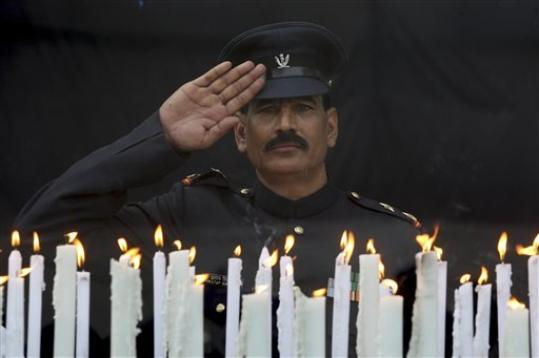
War with Pakistan not an option after Mumbai attacks states India’s Minister


New Dehli, India- India’s External Affairs Minister, Pranab Mukherjee told the Indian Parliament on Wednesday that war with Pakistan was not an option following the Mumbai attacks of November 26, 2008. He spoke to members of Parliament and the opposition parties and stated that diplomacy had succeeded and not failed as members of the opposition had claimed as it forced Pakistan to admit that its soil was used for the planning and carrying out of the attacks.

“We did not mobilize a single soldier, we did not press the panic button, we did not lay mines on the border, but we said we expected Pakistan to fulfill its commitments, ” he said. He stated that he believed that war with Pakistan following the Mumbai attacks was not an option as the government of India did not believe that it would solve the problem of terrorism.

Mr Mukherjee accepted that it did take Pakistan a substantial amount of time to admit that its soil was used in the attacks but that the Indian leadership understood the complexities of the situation inside Pakistan. He stated that the Indian government will keep up the pressure on Pakistan to bring the perpetrators of the attacks to justice and the terrorist infrastructure inside Pakistan dismantled to prevent any future attacks.

We at Pakistanis for Peace believe that diplomacy between the two nations is the only solution to the tense relations between India and Pakistan and war between the two nuclear armed neighbors will never be a solution that the people of South Asia could accept. It is a welcome sign to see that the Indian government did not consider war with Pakistan as an option. The situation inside Pakistan is very volatile and the weakness of the Pakistani government in fighting various militant groups was further underscored this week by the capitulation of the Pakistan army to agree to allow the Taliban in the Swat Valley in the North West Frontier Province (NWFP) to allow Sharia law. Within Pakistan there are not only Taliban militants operating freely in various areas of the country namely in the NWFP province, but also there are insurgent groups in Baluchistan ( Baluchistan Liberation Army in Quetta and surrounding cities), Sindh province (Jaish-e-Mohammad and Harkat-ul- Mujahideen terror groups building bases in Karachi) and the Lahore based Lashkar-e-Taiba group that is blamed for the Mumbai attacks.

With this many various terror groups and militants that the Pakistani army is fighting on several fronts, it is remarkable that there have not been more attacks on the Indian side of the border. We believe that the war in Afghanistan and the presence of American forces in the region has diverted most of these terror groups and militants to the western border to fight their misguided form of jihad. Unfortunately groups like Lashkar-e-Taiba, Jaish-e-Mohammad and Harkat-ul-Mujahideen have turned most of their focus to fighting the Indians in Kashmir and driving them out of the troubled area as their primary objective.

Pakistan must ask itself that if there was violence perpetrated by Indian groups like the Mumbai attacks inside Pakistan, how would Pakistan respond to such terror inside its territory by militant Indian groups? It is not unconceivable that not only militant Muslim groups would call for a war with India, but even the common citizen would be up in arms and pressure the government of Pakistan to respond with mobilizing the army. The government of Pakistan must realize that war with India is not imminent, however a worsening of the situation within Pakistan due to the various terror groups operating inside its territory are a much bigger threat to the country’s stability and sovereignty than its hostilities with its neighbor India. Compromising with the terrorists as the government recently did in the Swat valley sends a double signal and gives the other terror groups operating in the country an indication that enough violence and carnage by these groups will allow them to have their way with the Pakistani government. This is a bad situation that is getting worse by the day and we at Pakistanis for Peace hope and pray that the situation turns around before events unfold that will set off a chain reaction that will be impossible to stop. By all accounts, most experts agree that Pakistan is the most dangerous country in the world with its mix of terror groups and nuclear weapons, we must all do what  we can to ensure it does not ignite a regional war with India fueled by militant groups and backed by nuclear weapons that will be a concern for the whole world and not just the long suffering citizens of Pakistan.


Manzer Munir reporting from Orlando, FL for www.PakistanisforPeace.com