Posts Tagged ‘ New Delhi ’

Dialogue Key to Peace with Pakistan, Says India

By Anjana Pasricha for The Voice of America

As India and Pakistan get ready to restart peace talks after more than two years, Prime Minister Manmohan Singh says dialogue is the only way to resolve their differences.  The embattled Indian leader is also vowing to tackle inflation and punish those guilty of corruption — two issues which have put his government on the ropes at home.

Speaking to parliament Thursday, Prime Minister Singh said South Asia will not realize its potential unless India-Pakistan relations are normalized. India is willing to discuss all outstanding issues with Pakistan, he said.

But, striking a cautious note, he expressed hope that Islamabad will give up allowing its territory to be used for terrorist activity directed at India.

“I sincerely hope and believe that the new ruling classes of Pakistan would grasp the hands of our friendship and recognize that whatever our differences, terror as an instrument of state policy, is something no civilized society ought to be using,” he said. “I am not saying that we have today an atmosphere in which negotiations can go forward, but there are hopeful signs.”

Earlier this month, both countries decided to restart a peace process, which New Delhi had put on hold after blaming Pakistan-based Islamic militants for mounting the 2008 terror attacks in Mumbai. The foreign secretaries of the two countries will meet in the Indian capital in March. Their foreign ministers are to meet by July.

Singh’s comments on the peace talks with Pakistan came during an address to parliament, in which he outlined the priorities facing his government.

He pledged to lower inflation from 10 percent to seven percent by the end of the year. Food inflation is even higher and has emerged as a major worry in a country with millions of poor people.

Singh has promised to bring a new food security bill in parliament to ensure that poor people are protected from rising food prices.

Inflation has to be tackled in a manner that it does not hurt the economy, which the prime minister says is growing well.

“If we had a ham-handed [heavy] approach, we could have killed the growth process which is the only source of providing jobs for our youth. So, this delicate balance has to be preserved between control of inflation and protection of employment,” he said.

The Indian leader also vowed to crack down on those guilty of corruption in connection with sale of telecom spectrum, in 2008, and the organization of the Commonwealth Games in New Delhi, last year. Allegations that officials siphoned off billions of dollars have put the spotlight on corrupt practices in government contracts.

With the two corruption scandals dominating headlines in recent months, Singh expressed fears that the wrong impression may be going out.

“The message should not go out that India is adrift, that India has lost its way, that the enthusiasm for getting this country moving forward is something that is no longer in evidence,” he said.

The Congress-led government was voted back to power in 2009, but is facing a rising wave of discontent both becauseof high food prices and the high-profile graft scandals.

India and Pakistan Are United by Language and History, Divided by Commerce

By Karin Brulliard for The Washington Post

In India, where it is made, Fair and Handsome men’s skin lightening cream sells for $1.25 a tube.

But by the time it hits the shelf at Sajid Khan’s shop in this city’s old marketplace, it has traversed 2,000 miles of sea and land, been smuggled over the Hindu Kush and marked up 25 percent.

Pakistan and India share language, culture, history and an 1,800-mile border; they are South Asia’s largest economies. What they barely share is trade – officially at least, because of a quasi-blockade that dates from partition in 1947, and all but chokes off commerce under a dizzying web of rules.

The hurdles have spurred off-the-books trade, much of it shipped through third parties in such places as Dubai, where products are re-labeled as imports from other lands – journeys that result in 40-to-70-percent markups. Only recently did Pakistan make its first export to India by truck: a load of gypsum rock.

But economists, business groups and U.S. officials are pushing to loosen at least the most maddening restrictions, and they are hopeful that the two nations’ decision two weeks ago to resume peace talks might help. Free trade, they say, would benefit both India and Pakistan and might help to ease tensions whose gravity is reflected in rival nuclear arsenals.

“Economics 101 dictates that countries’ major trading partners should be their neighbors,” said Shuja Nawaz, director of the South Asia Center at the Washington-based Atlantic Council. “To change the dialogue from a zero-sum game to a positive, win-win outcome for both India and Pakistan, you need to start with the low-hanging fruit of opening trade and tourism.”

For a Pakistani economy in tatters, experts say, a freer flow of goods from India would allow cheaper access to products and raw materials, and could open up India, with its enormous population, to exports of Pakistan products such as cement.

Some research indicates that bilateral trade – currently at about $2 billion a year, less than 1 percent of each country’s total trade – could swell 20 to 50 times under more liberal policies. Estimates of illicit trade range from $2 billion to $10 billion a year.

But for now, progress creeps. India admits all Pakistani products, but Pakistani firms complain that stringent standards and paperwork make many exports unviable. Pakistan, for its part, allows a slowly expanding list of Indian products that now includes artificial kidneys, camphor, parachutes and 1,931 other items – but not Fair and Handsome cream, which is instead legally exported from Kolkata to landlocked Afghanistan, via the Pakistani port of Karachi, then smuggled back into Pakistan.

Travel restrictions are another barrier. Businessmen in both countries say they wait months for visas that allow travel only within major cities in the other country – preventing visits to rural factories or farms – where they are often tailed by intelligence agents.

Then there is the logistic muddle of land trade at the one border crossing, midway between Lahore and the Indian city of Amritsar. The twice daily cargo train involves an engine switch: A train carrying Pakistani exports, for example, can enter mere miles into India, at which point the Pakistani engine and conductors are replaced by an Indian ones before continuing inland. With so few trains, exporters wait months for cargo space.

Trucks have only eight hours each day to cross, because each afternoon the two-lane road is overtaken by Indian and Pakistani border guards’ theatrical gate-closing ceremony. Even then, trucks must stop just past the frontier, where porters transfer the goods to local trucks. That is an advancement: Before 2007, trucks were barred from crossing at all, and laborers lugged all cargo across the boundary on their heads.

The little existing trade often falls victim to what look like political whims. In December, cargo trains sat idle for three weeks while Indian conductors awaited the visas that allow them to park just inside Pakistan.

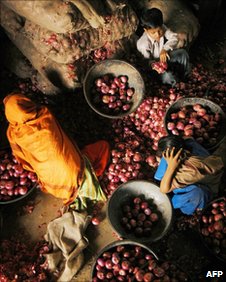
That same month, spiraling onion prices prompted India to drop import tariffs and standards for the staple, triggering a surge in Pakistani onion exports. But Pakistan abruptly halted overland sales amid concerns about a domestic shortage.

“I had 400 trucks stuck on the other side,” said Rajdeep Uppal, a trader who is vice president of the Amritsar Exporters Council. “For a week these onions were standing there, and eventually they had to be sold within Pakistan for half the price. Who loses? Both the countries.”

Tensions aside, scenes of goodwill abound along the border. Pakistani and Indian train conductors sip tea and gripe about red tape together. Satanam Singh, a turbaned Indian driver – wearing a regulation yellow vest stamped “Indian Driver” – beamed as laborers unloaded his ginger on the Pakistani side. Coming to Pakistan, he gushed, was delightful compared with Mumbai, where the language is different and people hostile.

“It is a strange feeling, like I am going to a strange land,” said a smiling Mohammed Zafar, a Pakistani whose vibrantly painted truck, brimming with dates, was about to make its virgin voyage across the Indian frontier. “I am very happy.”

Here in Lahore, just 20 miles from the Indian border, Khan’s shop was the pioneer in a winding lane of stores now crammed with Indian silk and cosmetics – all smuggled into Pakistan illegally.

He said he would welcome friendlier business relations, even if they lessened the luxury value of his stock. Even his Afghan smuggler, who stopped by on a recent evening, agreed, on grounds that it would lessen the need to bribe border officials.

Among some merchants, skepticism about trade prospects remains, with Pakistanis fearing that open trade would lead to a glut of cheap Indian imports. S.M. Akhter, a top Indian customs official at the border, said national security concerns must trump market demands.

But despite the tangle of rules, some trade is quietly rising. Tahir Habib Cheema, the top Pakistani customs official at the border, said he realized last year that truck exports from Pakistan were allowed, but that “status quo” and “fear” had prevented them. He decided to change that – without notifying his bosses.

A comedy of errors ensued. By Oct. 7, Cheema had found one willing exporter and one importer. After hiccups on each side, a meeting at the frontline was arranged.

All parties agreed, Cheema said – and then the truck would not start. Someone proposed pushing it into India, an idea that was nixed by border guards who said the pushers would need visas. Finally, another vehicle nudged the truck over the line.

“This was something for the national cause,” Cheema said proudly. Since then, he added, Pakistani trucks have exported $2.5 million worth of products to India. He expects that to escalate this spring, when the two nations open a dedicated truck passage.

Correspondent Rama Lakshmi contributed to this article from New Delhi.
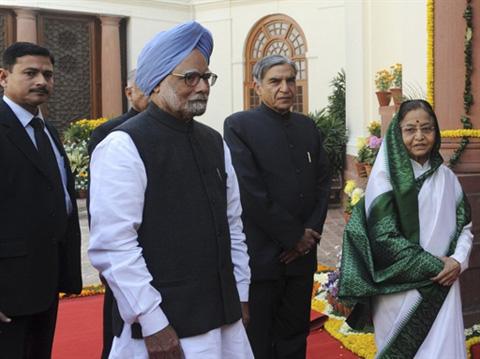
 

Top Diplomats From India, Pakistan Meet on Sidelines of Regional Conference

By Anjana Pasricha for The Voice of America

Officials from India and Pakistan have met to discuss the possible resumption of a stalled peace process. The meeting was held Sunday on the sidelines of a regional conference in Bhutan. The discussions are another step in building trust between the two rival nations.

Indian and Pakistani diplomats made no specific announcements, but sounded positive after their late Sunday discussions in the Bhutanese capital, Thimpu.

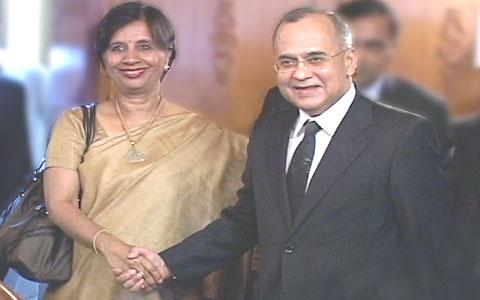
Indian Foreign Secretary Nirupama Rao expressed optimism on Monday. But she also said government leaders would remain realistic, pointing out that the relationship between the two countries is “complex.”   

“We talked about the process to chart the way forward, what the best modalities would be,” Rao said.

The meeting in Bhutan was held on the sidelines of a South Asian Association for Regional Cooperation conference. It was the first time in six months that officials representing the two countries met to discuss the possibility of resuming peace talks. India suspended peace talks more than two years ago after terror attacks in Mumbai killed more than 160 people. The attacks were blamed on Pakistan-based Islamic militants.

There had been some expectation that the two countries would set a date for resuming full-fledged peace talks, but that did not happen.

Commenting on the meeting, Indian Foreign Minister S.M. Krishna said in New Delhi that the two countries are trying to re-build trust, and build bridges of confidence.

“The very fact that the two foreign secretaries have met, it is certainly an indication of the fact that solid foundations are being laid for getting the two countries on to a sustained engagement,” Krishna said.  

India is under pressure to return to the negotiating table and resolve its many differences with Pakistan.

But New Delhi accuses Islamabad of not doing enough to bring the Pakistan-based perpetrators of the Mumbai terror attacks to justice. It says relations between the two countries cannot improve unless Pakistan cracks down on the Islamic militant group, Laskhar-e-Taiba.

Pakistan says it has put on trial seven of the suspected Mumbai attackers. Meanwhile, Islamabad says it wants New Delhi to take action against those responsible for the 2007 bombing of a train that runs between the two countries.

India Urges Pakistan to Resume Onion Exports

As Reported by The BBC

India is trying to persuade Pakistan to resume exporting onions overland to curb soaring prices. The matter has been taken up with the government of Pakistan, External Affairs Minister SM Krishna said.

Pakistan banned overland exports of onions to India on Tuesday with traders saying they feared shortages at home. Last month, India abolished import taxes on onions after prices nearly tripled in a month.

“We have initiated talks and before not too long, we are hopeful we will find a solution to this, easing pressure within our country for onions,” Mr Krishna told a press conference in Delhi.

Pakistan banned exports to India through the land route via the Attari-Wagah border crossing, although the sea route is still open. Much of the trade, however, is by road and rail which are cheaper and quicker.

India’s food inflation has risen for the fifth straight week this week to 18.32% – the highest in more than a year.

The price of onions, a key food staple for Indian families used in almost all dishes, has risen dramatically over the past month.

A kilogram which usually costs 20 rupees went up to 85 rupees ($1.87; £1.20) last month. At present, it is 65 to 70 rupees a kilo.

The rise has been blamed on unusually heavy rains in the bulk-producing western states of Maharashtra and Gujarat and in southern states, as well as on hoarders and speculators.

Discontent over food inflation has been a major headache for the government.

High prices of essential commodities such as onions have previously sparked unrest and helped bring down the national government in 2004.

Pakistanis, Indians want peace, friendship, says poll

As Reported by SANA (South Asian News Agency)

Despite a history of conflicts, mistrust and estranged relationship, an overwhelming number of Pakistanis and Indians want peace and friendship between the nuclear-armed South Asian nations, a survey conducted on both sides of the border has revealed.

The survey – conducted by independent research agencies and sponsored by the Jang Group of Pakistan and The Times of India on the first anniversary of their joint peace initiative ‘Aman Ki Asha’ – showed that 70 per cent of Pakistanis and 74 per cent of Indians want peaceful relations.

Although, the process of composite dialogue between Islamabad and New Delhi remains stalled since the 2008 Mumbai carnage, 72 per cent Pakistanis and 66 per cent Indians hope to see ’sustainable friendly relations’ in their lifetime. Compared with last year, the number of Indians hoping to see peace in their lifetime has surged by 17 per cent.

The optimism at the people’s level appears in a stark contrast to the current bitter official positions. The Indian government accuses Pakistan of harbouring terrorists and not doing enough against the alleged sponsors of the Mumbai attack, while Islamabad says that New Delhi has been using this incident as a ‘propaganda’ tool to avoid talks on the core issue of Kashmir. Islamabad also blames India for instigating violence in Balochistan.

According to the survey, awareness of the Kashmir problem as being central to the state of relations between the two countries, particularly in India, has increased. The survey results show that 77 per cent Pakistanis and 87 per cent of Indians feel that peace can be achieved by settling the protracted Kashmir dispute.

The scientific survey covered 10 Pakistani cities and 42 villages, covering a cross-section of people from rural and urban areas. Pakistani cities where the survey was carried out were: Karachi, Lahore, Rawalpindi, Islamabad, Peshawar, Quetta, Multan, Faisalabad, Hyderabad and Sukkur. In India, the survey was conducted in six cities: Delhi, Mumbai, Kolkata, Bangalore, Hyderabad (Deccan) and Chennai. Adult population, both male and female, were represented in the survey.

This was the second survey on Pakistan-India relations. The first survey was conducted in December 2009; just before the Aman Ki Asha peace campaign was launched. Survey results show a consistent and marked improvement in perceptions about each other by people in both countries.

The survey showed that the issue of Pakistan-India relations featured in the thoughts of 73 per cent Pakistanis and 68 per cent Indians. The survey results said apart from settling the Kashmir dispute, 80 per cent Pakistanis and 91 per cent Indians think ’stronger relations and better defence’ would also contribute in achieving the goal of peace.

The survey tracked the impact of the Aman Ki Asha campaign in India by asking a similar set of questions to two groups of people – one aware of this peace campaign and the other not aware of it. On all four questions asked – perceiving Pakistan as a high threat to India, as a sponsor of terror, desire for peace and being hopeful for achieving sustainable peace – there was a marked difference in the responses of the two groups. The group that was aware of the Aman Ki Asha initiative had a much better perception of Pakistan.

Around 77 per cent of Pakistanis and 87 per cent Indians consider that international pressure may help in bringing peace, while 71 per cent Pakistanis and 72 per cent Indians pin hopes on greater people-to-people contact to pave the way for friendly relations. Eighty-one per cent Pakistanis and Indians see people-to-people contact as an effective ‘instrument of peace’.

An increase in business has also been tipped as a vehicle of peace by 67 per cent Pakistanis and 69 per cent Indians, the survey said. Among other steps needed to promote peace, 32 per cent Pakistanis pinned hopes on sports, 28 per cent on business, 22 per cent on tourism, 20 per cent on travel for health treatment and 13 per cent each on culture and higher education. The data from the Indian side regarding this questionnaire was not available.

For 51 per cent of Pakistanis, business can help bring peace, while 46 and 45 per cent of respondents said that it can also be done through sports and tourism respectively.

AMAN KI ASHA: The first of its kind peace drive ‘Aman Ki Asha’ was seen by a vast majority as articulating the aspirations of the people. Around 87 per cent Pakistanis and 74 per cent Indians were of the view that this sustained campaign ‘developed tremendous awareness about the Indo-Pak relationship’. Around 85 per cent Pakistanis and 61 per cent Indians said Aman Ki Asha communicated ‘peoples’ desire for peace to their governments, while 80 per cent Pakistanis and 86 per cent Indians said it ‘helped bring the people of the two countries together’.

The Jang Group and The Times of India have held a series of events over the last 12 months that involved a broad section of people, including students, intellectuals, artists, businessmen, doctors, information technology experts and ordinary citizens in an attempt to boost people-to-people ties.

In Pakistan, the recall of the ‘Aman Ki Asha’ campaign has been around an impressive 92 per cent. Shahrukh Hasan, Group Managing Director of the Jang Group, said this media-led civil society movement had made a huge contribution for peace at a time when tensions remained high between the two countries.

“The survey results should lay to rest any misgivings or apprehensions people may have had about the objectives or chances of success of the campaign,” he said. “The survey results show that Aman Ki Asha has brought about a sea change in perceptions in India about Pakistan. Every negative perception has decreased and every positive perception has improved. The Jang Group feels vindicated and is delighted that we have helped put across Pakistan’s point of view through honest dialogue, seminars, people-to-people contacts and cultural events.”

According to the survey, the terror perception in India about Pakistan is down to 42 per cent from 75 a year ago, of bomb threats to 29 per cent from 54 and awareness about the Kashmir dispute rising to 17 per cent from a mere four per cent. Hasan hoped that the Pakistani and Indian governments would continue to facilitate the Aman Ki Asha peace campaign and take advantage of the access to the hearts and minds of the people of the two countries that the Jang Group and the Times of India provided.

Pakistan, India Swap Nuclear Sites Lists

By Zhang Xiang for Xinhua News

Pakistan and India exchanged lists of nuclear installations and facilities on Saturday in spite of a tension over the 2008 Mumbai attacks that has disrupted the dialogue process between the two countries, the Foreign Ministry said.

The two countries exchange the lists of nuclear sites on the first day of the new year under an agreement signed in 1988 and came into force in January 1991.

“The government of Pakistan and India today exchanged lists of their respective nuclear installations and facilities in accordance with Article-II of the Agreement on Prohibition of Attacks against Nuclear Installations and Facilities between Pakistan and India of Dec. 31, 1988,” a Foreign Ministry statement said.

The statement said the Ministry of Foreign Affairs handed over the list of Pakistan’s nuclear installations and facilities to an officer of the Indian High Commission in Islamabad at the Foreign Office on Saturday morning.

The Indian side also handed over their list to an officer of the Pakistan High Commission at the Ministry of External Affairs in New Delhi, it said.

After the agreement was signed the first exchange took place Jan. 1, 1992.

Sources said it is the 20th consecutive list exchange between the two countries.

Pakistan and India conducted tit-for-tat nuclear tests in 1998. India conducted its first nuclear test in 1974, followed by five more in 1998. Pakistan conducted its six nuclear tests in 1998. Neither India nor Pakistan is a signatory to the Nuclear Non- Proliferation Treaty (NPT).

India considers the NPT discriminatory, while Pakistan has indicated that it won’t join the international agreement till its neighbor does so.

Neither of the two rival neighbors have signed the Comprehensive Test Ban Treaty.

In 2004 they launched a peace process, but that is now on hold following the Mumbai attacks, with New Delhi pressuring Islamabad to do more to punish those responsible for the carnage and to crack down on anti-India groups.

Meanwhile, both countries also exchanged Lists of Prisoners in the two countries, the Foreign Ministry said.

According to the Agreement on Consular Access signed between Pakistan and India on May 21, 2008, both countries are required to exchange lists of prisoners in each other’s custody on Jan. 1 and July 1 every year, the statement said.

“Consistent with the provisions of this Agreement, the Ministry of Foreign Affairs handed over the list of Indian prisoners in Pakistan to the Indian High Commission in Islamabad today,” it said.

Will India Win Coveted UN Seat?

By Sunil Sharan for The Huffington Post

Indian foreign secretary Nirupama Rao says Pakistan is hypnotically obsessed with India but she and her bosses too are fixated on a coveted prize, a permanent seat at the United Nations Security Council. The mandarins of New Delhi must be pleased as punch to have had over to visit leaders of all five permanent member countries in quick succession. Inexorable appears the march but will India find the pot of gold at the end of the rainbow? And, if it does, what are the implications for itself as well as for Pakistan?

First in was David Cameron of Britain, who arrived during the summer and offered unstinting support, whetting local appetite for the main American course. And, did he fail to disappoint? No sir, Barack Obama set the cat amongst the pigeons by endorsing India for the seat, the first time ever by the US. India rejoiced while Pakistan recoiled.

But a careful examination shows him adhering closely to what he told Bob Woodward in the book, Obama’s Wars. In lieu of the seat, he expects India to resolve Kashmir. At a press conference with Manmohan Singh, Obama characterized Kashmir as a long-standing dispute making the latter stutter that the K-word was not scary. Only then did Obama hand over the endorsement in India’s Parliament but couched in such diplomatese that countless local hair were split over when “the years ahead” would dawn.

Next waltzed in Nicolas Sarkozy of France. The French, like the British, have consistently seen merit in India’s case. Sarkozy though, true to type, proved an enigma. He first tagged on the applications of Africa, the Arabs and pretty much the rest of the world onto India’s, befuddling his hosts, who are willing to concede as equal aspirants only “self-appointed frontrunners” Germany, Japan and Brazil. Just as they were about to give up on him, Sarkozy warmed the cockles of India’s heart by throwing in 2011 as early as when it could make it.

But soon came the caveat. Sarkozy, just like Obama before him, cautioned that with great power status came great responsibilities. Whereas Obama wanted India to be more mindful of human rights violations of countries such as Iran and Myanmar, Sarkozy wanted India to send military forces to keep world peace. With India already being one of the foremost contributors to UN peacekeeping missions throughout the world, the mandarins of New Delhi must have been left wondering what more was being asked of them.

No matter, three down, two to go. By now the state jets were landing at Delhi airport almost on top of one another. Wen Jiabao, the leader India was least looking forward to, came with the master key to entry. Shortly before his visit, WikiLeaks revealed China’s opposition to any council expansion. Indian hopes were up nevertheless but Wen remained inscrutable, willing only to acknowledge an understanding of India’s aspirations. No one in India knew quite what to make of him and since Wen was off to Pakistan next, all the country could do was wait with clenched teeth to hear what he would say there.

Rounding off the passage to India was Dmitry Medvedev. Relations between Russia and India have frayed considerably since the heady days of the cold war, so much so that Russia has waffled on India’s bid. Medvedev signaled that the waffle still needed baking, voicing support for India while reiterating that reforming the council was tough and required consensus.

All the while Pakistan protested vociferously against what it deemed an indulgence of Indian hegemonism. But what will India gain with a permanent UN seat? Could it block Pakistani claims on Kashmir? True a permanent member wielding veto power can stonewall but the veto seems unattainable for seekers since they themselves have forsaken it. And, while India sees red when the K-word is uttered in the UN by Pakistan, no ascension to permanency can make it strangle the latter. Nor can it efface any past security council resolutions.

So then, what is it? Nothing comes to mind but the obvious, the acceptance that any arriviste craves. Even that appears a false hankering because ever since its early years, Gandhi’s legacy and Nehru’s charisma burnished the country with global influence disproportionate to its economic and military capabilities. A bee once in one’s bonnet is hard to get rid of though. And, as every journey must have a fitting end, India has found a destination to its liking.

Flush with cash, New Delhi wants to beef up its military. All of the recent visitors bar China are major suppliers of defence equipment to India. As bees flock to honey, they arrived armed with catalogues of the most terrifying stuff. Inherent was a delicate diplomatic quid-pro-quo. The more arms you buy from us, the more we will push your candidacy. As Islamabad keeps raising the bar for India’s seat, so too will India have to up its arms binge.

Lost in Pakistan’s current rhetoric was its vote in October to put India in the security council for two years beginning January 1, 2011. Once on, we will never get off is the new mantra of India’s brave. India seemingly returned the favor by taking in stride the sale of Chinese nuclear reactors to Pakistan. Is there more afoot than meets the eye?

Every country is entitled to its obsession. Pakistan’s is obvious. By continually thumbing its nose at a NATO mired in Afghanistan, it has put the K-word in spotlight, albeit on the backstage. A deal has been blessed by the powers that be. Both the seat and Srinagar are not far away.

The writer edits a website on India: http://www.scooptime.com.

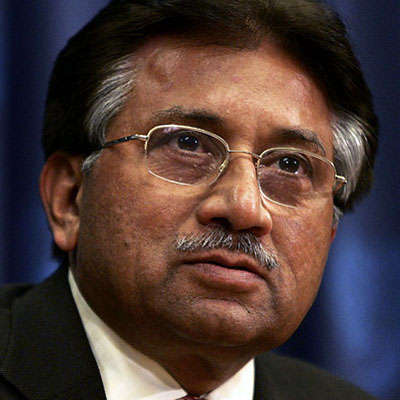
India Denies Visa to Former Pakistan President Musharraf

By Anjana Pasricha for The Voice of America

Indian officials have confirmed that former Pakistani President Pervez Musharraf has been denied a visa. They did not give a reason.

Mr. Musharraf had been invited to speak at a seminar organized by business professionals in New Delhi.

Several of Mr. Musharraf’s supporters, who were planning to visit India with him, were also denied a visa. The former Pakistani military ruler, who lives in Britain, is attempting a political comeback and launched a political party in October.

Foreign affairs observers say that India wants to avoid providing a platform for Mr. Musharraf’s political ambitions, which they believe would be sending a wrong message to the civilian government in Islamabad.

“With Mr. Musharraf threatening to go back to Pakistan to start a political career, the Indian government is not very comfortable with helping him enlarge his political portfolio or image,” said Bharat Karnad, a strategic affairs analyst with the independent Center for Policy Research in New Delhi.

New Delhi has also been irked by Mr. Musharraf’s recent comments that India is responsible for creating unrest in Pakistan’s south-western Balochistan province, and that India is trying to create an anti-Pakistan Afghanistan.

Mr. Musharraf was army chief when India and Pakistan came close to a fourth war in 1999. Later, when he became Pakistan’s military ruler, the South Asian rivals embarked on a peace process which lowered tensions and led to a ceasefire along their tense Kashmir border.

That ceasefire is still holding. But the peace process remains stalled since the November 2008 terror attacks in Mumbai, which India says were planned by the Pakistan-based Lashkar-e-Taiba.

Karnad says New Delhi is unlikely to resume a full-fledged peace dialogue with its rival until its repeated calls to clamp down on groups directing terror at India are heeded.

“There has to be something on the ground is what Delhi wants by way of reassurance before it gets into thinking of resuming the composite dialogue,” added Karnad. “There is no give on Pakistan’s part, so there is unlikely to be any movement in Delhi.”

The top Indian demand is that Islamabad speed up the trial of the Lashkar-e-Taiba operatives it accuses of planning the Mumbai attacks.

India Urged to Revive Pakistan Talks

By James Lamont and Edward Luce for The Financial Times

Barack Obama, the US president, has urged India to step up its dialogue with Pakistan to help to secure the region’s stability, warning that efforts to combat extremism in India’s nuclear-armed neighbour have not progressed as quickly as Washington had hoped.

Mr Obama, on a three-day visit to India, called on Sunday for New Delhi to revive a dialogue with Islamabad badly set back by the 2008 terror attacks on Mumbai by Pakistani militants.

His comments at a town hall event with students in Mumbai were a sharp break from his initial emphasis on creating jobs in the US and gaining more access to the fast-growing Indian economy for US companies.

“My hope is that over time trust develops between the two countries, that dialogue begins,” he told students at St Xavier’s College. “Ultimately India and Pakistan have to arrive at their own understandings”.

Mr Obama cautioned that the economic success that India was enjoying would be imperilled by an unstable region where militant insurgencies raged in Pakistan and Afghanistan, where US troops are fighting the Taliban.

“The country that has the biggest stake in Pakistan’s success is India. I think that if Pakistan is unstable that is bad for India. If Pakistan is stable and prosperous that’s good,” he said.

Mr Obama recommended the two rivals start talking about the “less controversial issues” and then build up to tougher issues, such as the disputed territory of Kashmir, over which the two have fought three wars over the past 63 years.

Manmohan Singh, India’s prime minister, believes the two countries have shared destinies, and has stressed that India poses no threat to Pakistan in an effort to scale down military forces on the border.

Yet Mr Obama’s emphasis of linkages between Pakistan and India, which were separated at the end of British rule in 1947, is highly sensitive. Many Indian leaders gauge the growing maturity of New Delhi’s relationship with Washington by what they call the “de-hyphenation” of India and Pakistan in recognition of India as a global power and vibrant economy.

New Delhi is suspicious of US military assistance to Pakistan and is uneasy about Washington identifying any role for Islamabad in bringing stability to Afghanistan and brokering talks with the Taliban.

Mr Obama warned that Pakistan was confronted by a “profound problem” and that its progress towards eradicating extremism was “not as quick as we would like”. He said that his administration was “engaging aggressively” with the Pakistani government to bring peace and stability.

“There’s a need to look for practical steps . . . Living in the past simply won’t work,” said Stephen Cohen, a senior fellow at the Brookings Institution, in Washington.

“I see a 100 years of conflict between India and Pakistan looking ahead.”

Haroon in Pakistan squad for Common Wealth Games

By Fawad Hussain for The Express Tribune

Haroon Shahid Khan, the younger brother of Britain’s light welterweight world champion, Amir Khan will be representing Pakistan in this year’s Commonwealth Games. The Pakistan Boxing Federation decided to include Haroon in the six-member national squad for the event that will be held from October 3 till October 14 in New Delhi.

Haroon won the Amateur Boxing Association (ABA) bantam weight title last year and also has other junior titles under his belt. The PBF secretary Akram Khan felt his inclusion in the side has brightened the team’s chances of winning in the event.

“He is an excellent boxer and has been trained at his brother’s academy – so definitely our chances of winning medals have increased,” Khan told The Express Tribune following the team’s announcement.

Haroon, who is famous in the UK as “Harry Khan”, will join the national training camp next month. “Haroon will be coming in August to join his teammates. It is important for him to train in our conditions which are similar to those in India,” said the secretary.

According to Akram, the PBF are not only relying on Haroon for winning medals at the competition.

“Wasim, Nisar and Mir Waiz also have a lot of experience and have also won accolades for the country- so we are banking on all our boxers,” said Akram while adding that the Cuban coach recommended the names of these boxers after working with them for months.