Posts Tagged ‘ Pakistanis for Peace ’

Arabs Must Recognize Israel’s Right to Exist

By Manzer Munir for Pakistanis for Peace
New York – President Obama delivered his speech to the United Nations General Assembly Thursday in New York and it focused largely on his desire to see the Middle East peace process proceed ahead despite all the difficulties. 

Mr. Obama stated that he wanted it to succeed in accomplishing the peace that has eluded the Arabs and the Israelis for over 60 years. Realizing that there are many obstacles and hurdles ahead during tough negotiations for diplomats from both sides, he stated his concerns and his hopes for the road ahead.

“I hear those voices of skepticism, but I ask you to consider the alternative,” Obama said. If no peace agreement is reached, he added, “then the hard realities of demography will take hold. More blood will be shed. This Holy Land will remain a symbol of our differences, instead of our common humanity.”

“I refuse to accept that future,” he added. “And we all have a choice to make. Each of us must choose the path of peace. …We can say that this time will be different – that this time we will not let terror, or turbulence, or posturing, or petty politics stand in the way.”

“If we do, when we come back here next year, we can have an agreement that will lead to a new member of the United Nations – an independent, sovereign state of Palestine, living in peace with Israel,” Obama said to a loud applause by the delegates of all the countries at the United Nations.

In order for this to happen, the Arabs must first recognize Israel’s right to exist and the right of the Jewish people to claim specifically a part of the Holy Land as theirs. I know, it sounds so basic and a no- brainer. But surprisingly a large portion of the Arab world does not believe in Israel’s right to exist and specifically their right to exist in the southern Levant area which makes up the majority of the area for present day Israel. They want to ignore history and all the Biblical and historical evidence of Jewish settlement and claims to the land. They point to the migration of many Jews all over the world the last few hundred years as reason enough as to why they no longer can call Israel home.

Some Arabs demand that the Jewish homeland should be in Germany. After all, they claim, it is where so many of them were killed by Hitler and the main reason that precipitated the need to allow the Zionists of Europe and America, post World War II, to demand a home for the Jews. Why should the Palestinians pay for the crimes of the Europeans they argue?

Others have blamed the British and the Balfour Declaration when in 1917 the British Foreign Secretary, Arthur James Balfour, declared in a letter to Baron Rothschild, a leader of the British Jewish community for a need for a home for the Jews when he stated: “His Majesty’s government view with favor the establishment in Palestine of a national home for the Jewish people, and will use their best endeavors to facilitate the achievement of this object, it being clearly understood that nothing shall be done which may prejudice the civil and religious rights of existing non-Jewish communities in Palestine, or the rights and political status enjoyed by Jews in any other country.”

Quite simply, no other place makes any sense whatsoever. First of all, there is extensive mentioning of the land of Israel that is promised to the Jews in the Bible as well as the Hebrew texts, not to mention the Qur’an. All three identify geographic areas in present day Israel that has historically been identified as the homeland of the Jews. Jewish people do not even make up more than 1% of any country’s overall population other than in United States (2.2% of overall population), Canada (1.2% of population), France (1% of population) and Israel (75% of population). That means that for the rest of the world, each country’s Jewish population is not even one half of one percent of the overall population of that nation! Where else would the Arabs have them go? Certainly not Germany where many claim that they should be settled since that is where over 6 million of them were killed in the holocaust. The United States actually has more Jews in its boundaries than are currently residing in all of Israel. So they cannot very well say that they should go there as over half the population already lives here.

Most people do not realize that the Jewish population of the world is very small compared to Christianity or Islam. There are an estimated 15 million Jews around the world including in Israel. By comparison, there are over 2.1 billion Christians and nearly 1.5 billion Muslims. Nearly 105 countries of the world are majority Christian nations while there are perhaps at best 55 majority Muslim countries on the planet. Did you ever wonder how many majority Jewish countries of the world are there?  There is just one. Israel.

This is one of the great religions of the world and also one of the oldest monotheistic beliefs aside from Zoroastrianism, and came at a time when polytheistic beliefs were more prevalent as a human concept of divinity. No doubt, both Christianity and Islam owe a great deal of their religious thoughts and laws to the early Hebrew laws and traditions. In fact, large parts of both the Bible and the Qur’an constitute the Old Testament, also known as the Torah, the Jewish holy book and the scriptures revealed to Moses.

Jewish contributions to humanity have been disproportionate and staggering when one realizes that as less than one half of one percent of the world’s populations, the Jews have made immense advances in nearly every field that has benefitted the whole world. We can go from Albert Einstein’s advances in physics to Jonas Salk’s polio vaccine, discuss Galileo’s contributions in astronomy to Freud’s understanding of the mind. We could illustrate how Baruch Spinoza’s rationalist ideas and philosophies laid the groundwork for The Enlightenment of the 18 century or marvel at the brilliant filmmaking of 21st century Jews like Steven Spielberg and Oliver Stone. The list of Jewish contributions and the value of their culture to man’s history cannot be ignored.

What also cannot be ignored is that historically these are a persecuted people. The troubles that they faced in ancient Egypt as illustrated in the Bible as well as the deaths and expulsions during the Spanish Inquisition are part of their sad history. They faced persecution at the hands of both Christians and Muslims during the Crusades and at the time of the Papal States as well as during Muslim rule when they were subjected to the jizya (a per capita tax imposed on free adult non-Muslim males). The worst crimes nonetheless happened in the 20th century leading up to World War II when millions were killed in the Holocaust in Germany by Hitler’s Nazism and by Stalinist Russia.

So as the Israelis and Palestinians, as well as the other Arab countries, sit down over the next couple of weeks to resolve once and for all the Middle East conflict, the Arab street and indeed the entire Muslim world, must come to a realization and acceptance of the fact that the state of Israel has a right to exist; and has a right to exist in this ancient land as much as the Palestinians, who also have the rights to parts of this holy soil that is so important to all three religions. No doubt, historically and Biblically, the Palestinians can make similar claims also. Except, in Israel’s case, there is no other nation for the Jews, whereas, there are 55 others for Muslims. It is only with this undeniable understanding that true and lasting peace will ever be achieved and it can clear the way for a two state solution that President Obama envisions and one that will allow the normalization of relations between Israel, the Arab and the entire Muslim world. 

As perhaps the most famous Jew of all time, Jesus, once said, “Greet ye one another with a kiss of charity and may peace be with you.” Indeed, Shalom and Salaam equal peace and that can finally be achieved once there is mutual respect and acceptance of the right of the other to exist.

–Manzer Munir, a proud Pakistani American and peace activist, looks forward to a day when there will be peace between Israel and all the Muslim countries of the world, including Pakistan. He is the founder of Pakistanis for Peace and blogs at www.PakistanisforPeace.com as well at other websites as a free lance journalist and writer.


Why The Mosque Needs To Be Built At Ground Zero

By Manzer Munir for Pakistanis for Peace

This is already my third article on the NYC Mosque controversy. When I started my Facebook group and website Pakistanis for Peace by the same name nearly two years ago, I did it in response to the tragic and callous terrorist attacks in Mumbai India in 2008 and my desire to see peace in that region and beyond. As a firm believer in God, but not a particularly religious person, I never would have imagined that I would end up making a big part of my focus not just peace between India and Pakistan, but also peace and understanding between the Muslim and non-Muslim worlds as well. Heaven knows I have my own questions and issues with certain Muslim laws and practices and I of all people am the least suitable to be one of its defenders. However, I am a strict constitutionalist and as mentioned in my previous articles on this subject, I have advocated the building of the mosque simply on First Amendment religious freedom grounds.

Now here I am in less than one month, I find myself already writing a third article on the mosque controversy. Much has been written already by others on this topic also, but I wanted to give a few more opinions from a rational, moderate and patriotic American Muslim perspective, one which is missing in the current dialogue.

We know that many people who are opposed to the building of the mosque in lower Manhattan simply ask “Why there?” “Why would “they” possibly want to build it there of all places? It is seen as an affront by them that Muslims should want to build an inter-faith mosque, community center and a planned outreach ministry in the heart of Manhattan two city blocks from the site of the World Trade Center and the attacks of September 11, nine year ago. In fact, last night, while watching CNN, I saw Rick Sanchez ask former Governor George Pataki of New York about the Ground Zero Mosque controversy and his views on the subject. “Why there of all places would you build a mosque?” asked Gov. Pataki.  Why there?  As if he had fully bought into a favorite point of right wing groups that “Muslims build mosques at places they conquer” and that this is somehow a celebration of their “victory” over us because of the deaths of so many of our fellow countrymen on 9/11. That statement is wrong on so many levels that normally I would not even waste energy answering a clearly misguided assumption, but I will make an exception to clear the air as that is precisely what this article aims to do.

First of all, the 9/11 attacks were not a result of the actions of mainstream Muslims or the collective billion plus adherents of the religion but instead by members of a terror group known as Al-Qaeda, whose leader, Osama Bin Laden, we were very familiar and friendly with during the Soviet Afghan War of the 1980’s as he had assisted us in stopping the Red Army from conquering Afghanistan at the height of the Cold War between the two superpowers. Also a mosque is a place of worship. It is not a place where bombs are made and terrorists are trained either in ideology or practical training. To equate the building of a mosque to a direct link to terrorism or some other nefarious activity is in itself a deeply offensive argument to any Muslim, if one must speak of insensitivities.

So are we at war with Islam? This really is the only question we must ask ourselves to understand the debate over the mosque controversy. Debra Burlingame, the co-founder of 9/11 Families for a Safe and Strong America, issued a statement saying that “Building a 15-story mosque at Ground Zero is a deliberately provocative act.” This is simply not true as it is not exclusively just a mosque, but rather a multi layered structure that will house an auditorium, restaurant, gymnasium, library, conference rooms and multi-faith prayer halls devoted to allowing non-Muslim visitors the chance to come explore the center and at the same time take time to meditate and pray according to their own customs.

The center, as its leader Imam Faisal Abdul Rauf pointed out recently, “will establish this community as the place where the moderate Muslim voice condemns terrorism and works for new, peaceful, and harmonious relationships with all New Yorkers and indeed all Americans.” Just the fact that this center will have a restaurant, conference rooms, a library and multi-faith dialogue and prayer rooms, already makes this proposed building the most uniquely American mosque in the world. Nowhere else will one find a mosque so devoted to understanding and bridge building between Islam and other religions and no other place and location will it be more sorely needed in the years to come than in New York City! Too often, many non-Muslims complain about the self segregation practices of Muslims and indeed a characteristic of all minority communities to be in their own bubble and for not having a lot of interaction between other communities or faiths.

Many times my own non-Muslim friends have been curious and inquired on how Muslims pray and what they believe in and what exactly goes on in a typical mosque. But typically a small, regular mosque does not have the sort of access and resources to satisfy this curiosity and neither the infrastructure nor the logistics to handle curious visitors of other faiths. Primarily mosques in this country have been built with Muslims as its sole audience and occupants. This is the first time a mosque and cultural center is being proposed that will eliminate the barriers that many non-Muslims feel when it comes to understanding Islam and Muslims and actually takes into considerations its non-Muslim visitors when planning the structure. For many years to come, many Americans and indeed tourists from around the world will be coming to the proposed complex now under construction at the site of the World Trade Centers that will house the 9/11 Memorial. What better place  will there be than a few blocks away from the 9/11 Memorial where visitors can be told about the Islam of the great boxer Muhammed Ali and hall of fame basketball player Kareem Abdul Jabbar and not that of evil individuals such as Mohammed Atta and Osama Bin Laden? Where else should they be told of the difference between the Islam that is practiced by comedian Dave Chappelle and Oprah’s Dr Mehemt Oz versus the one practiced by the backward barbarian murderers known as the Taliban in the mountains of Afghanistan? Where else can they come to know of the type of Islam practiced by patriotic Bronze Star and Purple Heart decorated deceased US soldier Kareem Rashad Sultan Khan or the one practiced by the deranged Major Nidal Malik Hasan, the accused perpetrator of the Fort Hood Army base who sadly killed 13 fellow soldiers almost 1 year ago?

Now in order to satisfy the opponents and critics of the center, I also believe that all the funding needs to be transparent, there needs to be a multi-faith board of directors, and the Muslim leadership needs to be cognizant that this is indeed a very special place for all Americans and a place of national mourning. This mosque needs to therefore address the attacks of 9/11 and also needs to be a reminder not just to non-Muslims of the tragedy that was 9/11 but more importantly it needs to  serve as a constant reminder to the rest of the Muslim world of the terrible actions some have committed in the name of Islam.

Why build it here of all places you may still ask? Why not here? What other place in America, nay, what other place in the world did Islam take the biggest blow to its reputation and image? It is Ground Zero and lower Manhattan itself where this religion of over a billion people got literally hijacked and its message of peace and tolerance got forever destroyed in the eyes of the world’s non-Muslims by events of 9/11 and the actions of a handful of radical extremists who were terrorists and part of a network known as Al-Qaeda. So, why not build a monument to tolerance and understanding for the very religion that took the biggest hit to its global credibility by events that happened in this area?  I believe that it is not out of any provocation or insensitivities that Muslims want to build a community center near Ground Zero, but rather because this is the one place in the world where truth about the religion needs to be told and the need to showcase the real Islam of the world’s Muslims rather than allow the story of the hatred and violence perpetrated by the terrorists to be the only story one hears when discussing the religion of Islam. This center needs to be a part of the healing process we must go through as a nation and will be a testament for the rest of the Muslim world outside our shores of the grandeur of our nation and for our acceptance of Muslims and for not allowing the stereotyping of a religion of hundreds of millions of people over the actions of 19 evildoers. 

Trust me, the terrorists will triumph if this mosque does not get built.  We must not forget who we’re fighting against, and what we are indeed fighting for. The Taliban, the terrorists and other radical Islamists do not respect religious freedom or tolerance. Their distorted and narrowly interpreted Wahhabi views of Islam leave no room for dissent, debate or disagreements. These terrorists are responsible for more deaths of dissenting and or differing Muslims than of any other religion at their hands. These terrorists are Islam’s biggest enemy and threat and we must remember that this is not a war between us and the Muslim world. It is a war between us and Al-Qaeda. And to prevent moderate, peace seeking, bridge building, and patriotic American Muslims from building a structure that will help ease the pain and misunderstanding of the events of that dark day 9 years ago in September will only play into the hands of those who hate us for our freedoms. To have Muslim Americans potentially lose these very freedoms due to all the pressure, in this land built on freedom and liberty, will only strengthen the hands of the terrorists and bolster their claims that this is truly a war on Islam and that they are second class citizens who do not even have the fundamental rights to worship that is afforded to all Americans. This is a battle for Islam itself, one where the forces of evil are attempting to commandeer the entire religion towards their narrow minded interpretation of the sacred texts. We must hold steadfast to our principles and ideals and support moderate Islam in taking back the religion from the extremists and allowing this mosque to be built will go a long ways in turning the tide of radicalism, and ensuring that we stand for our time tested principles, no matter how unpopular they may be in the current climate.

-Manzer Munir, founder of Pakistanis for Peace, a proud Pakistani American and peace activist, is a freelance journalist that writes for PakistanisforPeace.com and other publications.

Ground Zero Mosque Controversy Helps Give Rise to Islamophobia Across the US

By Manzer Munir for Pakistanis for Peace

A man was accused of attempted murder for his vicious knife attack on a Muslim New York City Cab driver Tuesday evening in what is being described as a hate crime by the authorities.

Michael Enright, a college student who also did some volunteer work in Afghanistan, was being held without bail on charges of assault and attempted murder as hate crimes.

In a criminal complaint filed by the New York Police Department, Michael Enright allegedly asked the driver if he was a Muslim. The cab driver, Ahmed H Sharif, an immigrant from Bangladesh, replied that yes he was indeed a Muslim. At this point, Mr. Enright is alleged to have uttered the customary Arabic greeting of “Aslaam-a-laikum” (Peace be with you) and brutally attacked the cab driver with a knife, slashing him badly on the face, hands and neck. During the attack, Mr Enright also uttered “Consider this a checkpoint” to the cab driver, all the while brutally attacking him with his knife.

 Besides a serious neck wound, the cab driver, Mr Sharif, suffered cuts on his forearms, face, and hands while trying to defend himself from the attacker.

Inexplicably, Einright had volunteered with Intersections International, a group that promotes interfaith dialogue between religions and an organization that has also supported the plans for the Islamic center and mosque 2 blocks from Ground Zero. He had also recently returned from Afghanistan where he volunteered to be embedded with a combat battalion so that he could document their experiences as soldiers that Einright wanted to showcase in an upcoming documentary.

Police stated that Einright was drunk and intoxicated at the time of the attack on Mr Sharif and it is not clear what his motive was for perpetrating the violence on the cab driver. There is growing speculation however amongst members of the American Muslim community as well as several civil rights organizations such as the ACLU and CAIR that the attack is a result of the growing Islamophobia and fear amongst the American public as a direct result of the Ground Zero Mosque controversy that has been brewing for weeks and has been front and center in the media and the American public for some time now.

The plan to build an Islamic community center and mosque two blocks from the 9/11 tragedy and the site of the World Trade Center towers became controversial as right wing groups seized on what they believed to be “an insensitive provocation towards the American public”. Muslim groups demanded their First Amendment rights of freedom of religion and pointed to the New York City council vote allowing them the permit to build as reasons for what they are doing as legal and in fact an effort to build bridges between Islam and other faiths following the events of September 11. However, the issue became nationally prominent and controversial by then as fanned by right wing blogs and ad campaigns, the majority of the American public became against the building of the mosque, according to recent polls.

Thankfully, the voice of reason in this whole debate has been none other than the billionaire Jewish mayor of New York, Mayor Michael Bloomberg. His stance and views in support of the mosque as a constitutionally protected right has been welcomed by Muslims as well as civil rights organizations and he should be commended for standing up for what is constitutionally the right thing to do. Briefly, President Obama also came out in support of the group’s right to build the mosque as being a constitutional right, before making statements the next day that “questioned the wisdom” of building it there.

Nonetheless, a link has been made by the right wing, no matter how unfairly, that Islam promotes terror and violence. This can be seen in the fact that the vast majority of Americans now have a negative and unfavorable view of Muslims. For the country to be even having a debate whether a group of Americans can build a house of worship is a testament to how far things have regressed.

No one would ever have thought that a constitutionally protected right such as that of freedom of religion would ever seem controversial. Many have argued that only the area around Ground Zero is off limits to Muslims and they are free to build their mosques elsewhere. This does not appear to be the case as mosques thousands of miles away from Ground Zero in California, Tennessee, Ohio and elsewhere across the country have now come under heavy opposition by local zoning boards and people in those communities. The fear and hatred of Muslims is becoming a growing problem as the Ground Zero Mosque controversy has began to fuel acts of violence against Muslims as seen in the attack on the NYC cab driver. It is a message that is being sent to the American public that Muslims in the United States do not deserve the same rights and privileges enjoyed by all others. In fact, there is an attempt to link all mosques to terror somehow, which is very offensive to millions of peaceful Muslims who abhor violence and who live decent hard working lives in their communities.

At first I was not happy to learn that Muslims planned to build a mosque near Ground Zero as I knew that this would become controversial. But as the opposition to mosques has grown across the nation, and not just for building near Ground Zero, but hundreds and thousands of miles away, it has become clear that this anti-mosque movement is not just about that hallowed area near the World Trade Center site but is in fact becoming an opposition to the religion of Islam as a whole.

This idea by the opponents of the mosque and the right wingers that somehow it is perverted and insensitive to build a mosque several blocks from Ground Zero is in reality only true if we buy into the belief that Muslims and Islam brought down the towers and not a handful of radical extremists of the religion of Islam. If we believe that mainstream Islam itself was responsible for all those deaths on American soil and not Osama Bin Laden and his Al-Qaida network, only then would building the mosque there be insensitive. But for us to somehow associate the whole religion of Islam of over 1.5 billion people by the actions of 19 terrorists is ridiculous.

It is my fear that attacks similar to the one a few days ago on the NYC cab driver will continue to grow as we allow an environment of hate to perpetuate and grow against a group of people. At the very least, this opposition to mosques across the country will certainly grow and continue to spread the notion that ALL Muslims are violent and terrorists. This is simply not true as the 5-7 million American Muslims and the 1.5 billion Muslims around the world will attest.

We must remember that we have a war on terror and not a war on Islam. Far away from Ground Zero in cities across the US as more and more mosques come under opposition in their communities, we must hold steadfast to our ideals, principles and to the US Constitution. As the best nation in the world, we have to defend our ideal and the basis of what makes us the best and that is the US Constitution. Speaking as an American and not even as a Muslim, I know that if we stop defending it for fear of being distasteful, insensitive, or inconsiderate, then we lose what makes us who we are as the freest nation in the world and we must not ever let that happen!

-Manzer Munir, a peace activist, and the founder of Pakistanis for Peace, is a freelance journalist who writes for www.PakistanisforPeace.com and other online journals.

A Pakistani American Celebrates July 4

By Manzer Munir for Pakistanis for Peace

Thousands of Pakistani Americans celebrate the July 4 Independence Day holiday with their friends and families across the United States today. As different as Pakistan and the United States may be as countries and societies, one thing they both have in common is that both countries were founded on religious reasons. Unfortunately, that is where their similiarites end as the religious freedom experience in these present day countries varies greatly.

The earliest settlers of these United States were in fact Europeans who felt persecuted in the old countries of Europe for their religious beliefs. Many of these Puritans came to America in search of religious freedom.  Their hope was to escape the religious persecution they were facing in their countries and so the United States was founded on religious grounds.

Pakistan too is a country that sees the basis of its founding for a religious purpose. The nationalist movement for an independent India from British rule also caused communal conflicts between the Hindus and Muslims as there were calls by many Muslim leaders for a separate country for the Muslims of India since many felt being a minority in a Hindu dominated country would come at the expense of their rights. So a separate country for the Muslims of India and for their right to practice their religion gained momentum and indeed on August 14, 1947, the Islamic Republic of Pakistan became independent, a country founded on religious freedom for the Muslims of India.

This is not to deny the fact that Muslims still exist in India and are free to practice their religion under a Hindu dominated country. In fact, there are more Muslims in India than there are in present day Pakistan. However, many Muslims at the time of partition felt that they would be freer to practice Islam in a Muslim country rather than a Hindu one. It is an open debate whether people in Pakistan today have more freedom to practice their religion. If you are a member of either a minority Muslim group as Shiite or if you happen to be a Christian, Hindu, Sikh or Jew In Pakistan today, you have far less freedom of religion than a comparable religious group in present day India. There is absolutely a very low level of tolerance in Pakistan today for other religions or ways of life different than the majority group.

The promise of religious freedom that saw the founding of both Pakistan and the United States has seen the two countries go separate ways in realizing the dream of each countries forefathers. While the American Founding Fathers dream of a nation that respects freedom of religion and honors a separation between church and state held true, Pakistan unfortunately  has become a country that has become intolerant of other religions. Many religious minorities such as Christians, Hindus, and even Muslim Ahmadis are routinely persecuted or attacked by Muslims who see these groups as infidels and heathens and not merely as human beings with different religious beliefs. The influx of Taliban and religious extremists inside Pakistan has further made life difficult for anyone who is not a devout Sunni Muslim. On many occasions, the police does not investigate or prosecute attacks on religious minorities by various extremist groups leading to a constant fear of their lives and properties.

As Pakistani as well as Muslim Americans across the United States today celebrate the the July 4 holiday, they are keenly aware  that their brethren back in their original countries are not as free to practice their religion, speak their minds, and or protest peacefully as they are able to do in the United States. For this nation indeed guarantees freedom and liberty for all and not just a certain religious or ethnic group.

That is why Pakistani Americans such as myself and Muslim Americans across the US are appreciative of the fact that in this, our adopted country, our religious and civic freedoms are safe guarded in that greatest of living documents, the US Constitution. I have long felt that after the three great religious books of the Torah, the Bible, and the Koran, the US Constitution is the next best thing that man ever wrote down on paper. The Founding Fathers of America were indeed some of the greatest minds in history for crafting a document that continues to make the United States the freest country in the world and one that stayed true to its founding of liberty and freedom for all. Happy Birthday America, May you have many more!

–Manzer Munir, a proud Pakistani American plans to celebrate the July 4 Independence Day with family and friends at a picnic with fireworks and by watching a parade.

Outrage in India As Mumbai Attacks Terrorist Leader Set to Be Freed By Pakistani Courts

By Manzer Munir for Pakistanis for Peace

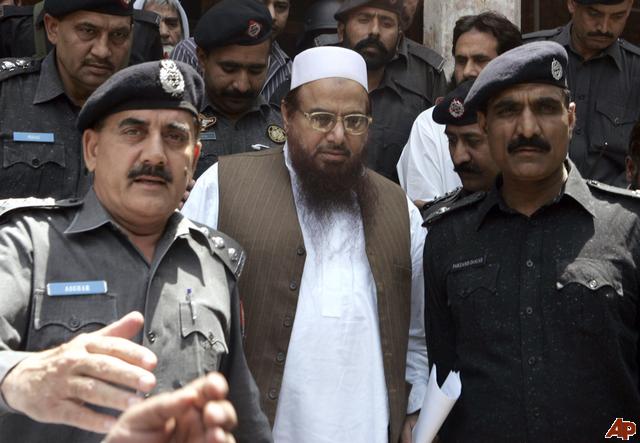
Pakistan’s Supreme Court on Tuesday upheld a lower court’s decision to free the leader of Lashkar e Taiba (LeT), a militant group that is blamed by India for masterminding  and orchestrating the November 2008 Mumbai attacks in India that killed 166 people.

Hafiz Mohammad Saeed, the leader of the terrorist group had been placed under house arrest. However, he was released a year ago by the provincial Lahore High Court due to the fact that there was insufficient evidence against Hafiz and other members of the group. The only evidence against him and the group was the confession of Mohammed Ajmal Amir Kassab, the lone person charged with attacks in India, who was given a death sentence earlier this month. Pakistan’s government appealed the decision of the Lahore High cCourt to the Supreme Court which upheld the lower court’s decision.

Lawyers for the government of Pakistan had requested that India extradite Kassab so that he could give testimony in Pakistani courts against Saeed and the militant group. However, India understandably did not hand over Kassab for fear that the sole surviving perpetrator of the Mumbai attacks could end up in a Pakistani court that sets him free. Sadly, this now happens to be the case as the masterminds of the attacks and leader of an already banned terrorist group, Hafiz Saeed, is set to be freed soon.

This obviously is very disappointing news to India to say the least. It would be the equivalent of letting the mastermind of the September 11 attacks, Khalid Sheikh Mohammed, have a long and high profile trial in New York, only to be set free for lack of evidence and or a weak case by the prosecution. The families of the victims would not stomach such a travesty and neither would the American people. In this same manner, the families of the Mumbai attacks are very upset by this decision by Pakistan the Supreme Court to release Saeed will now surelyonly serve to stall peace talks between India and Pakistan that were slowly progressing at the sidelines of the South Asian Association for Regional Cooperation (SAARC) meeting in Bhutan in April of this year.

At a time when the world’s attention is on Pakistan and Pakistanis for being associated with terrorism due to the attempt to bomb Times Square by Faisal Shahzad, the country and its courts have shot themselves in the foot by allowing to set free a known terrorist leader of a group that is not only attacking India and trying to provoke a war between the two countries, but is believed to be behind many attacks inside Pakistan also killing many innocent people.

If the shoe was on the other foot and the attackers came from India and killed 166 Pakistanis in a busy shopping area, while simultaneously attacking a major hotel, railway station and other locations throughout any of Pakistan’s major cities, then trust me, there would be demand for blood by Pakistani citizens and militias would have formed with or without the government’s blessings, and theywould have retaliated against the Indians. The Indian government and the Indian people are showing great resolve and patience with Pakistan and all along hoping that it truly becomes 100 percent committed to fighting and rooting out terrorism and terrorist groups within its borders as it is touted to be.

But as Tuesday’s decision by the Supreme Court illustrates, Pakistan’s government has a mixed record when fighting extremist groups within the country. As mentioned in previous articles on this site, the government of Pakistan and the army have supported and helped organize some of these militant groups like Lashkar e Taiba in order for the Pakistan army to have a guerrilla outfit as an ally in the event of a war with India. That is why there is reluctance by some inside the military and ISI to fully disband Saeed’s group, believed to be one of the largest and well funded militant groups in Pakistan. The government of Pakistan needs to realize that it cannot talk out of both sides of its mouth. It cannot present itself as one of the biggest allies of the US in the War on Terror, while at the same time not deal effectively with militant groups that are hostile to India.

We at Pakistanis for Peace are outraged that Hafiz Saeed, a known terrorist leader is set to be free from Pakistani courts. Our group and website Pakistanis for Peace was founded immediately after the Mumbai attacks in 2008 by concerned Pakistani Americans in response to the cowardly terrorist attacks by individuals who snuck in from Pakistan to cause one of the biggest terrorist incidents to ever hit India. These attacks certainly became their 9-11. 

To now have the leader of this terrorist group be set free by Pakistani courts only serves to strengthen the claims of opponents of Pakistan that it is not doing enough in the fight against terrorism. Certainly the families of the 166 dead Indian nationals deserve justice and better outcome than what transpired in Pakistan’s Supreme Court this week. One should make no mistake, only a just and lasting peace with India will ever lead to a prosperous Pakistan and the sooner there is an earnest effort to stop ALL militant and terrorist groups operating within inside the country by Pakistan, the sooner the two sides can sit across from each other at the peace table.

India and Pakistan’s Leaders Meet

As reported by BBC.com

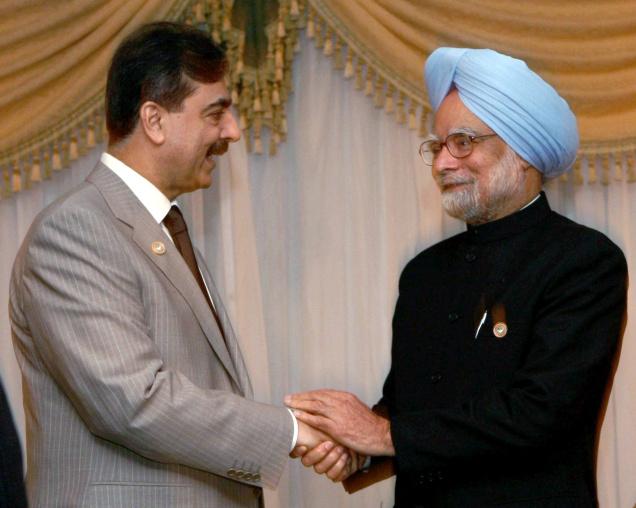
Pakistan PM Yousuf Raza Gilani spoke to his Indian counterpart Manmohan Singh at a reception hosted by the US President Barack Obama, reports said. The prime ministers of India and Pakistan met briefly during a nuclear summit attended by 47 world leaders in Washington DC.

A Pakistani embassy spokesman said it was “not a formal meeting”. cIt comes a day after Mr Singh told Mr Obama that Pakistan’s government lacked the will to punish those responsible for the Mumbai attacks. The November 2008 attacks left 174 people dead, including nine gunmen, and soured ties between India and Pakistan. Late last year, Pakistan charged seven people in connection with the attacks.

They include the suspected mastermind Zaki-ur-Rehman Lakhvi, who is allegedly the leader of the Pakistan-based militant group Lashkar-e-Taiba. Mr Singh and Mr Gilani spoke to each other at a reception hosted by Mr Obama, Pakistani embassy spokesman Nadeem Kiani said.

“Both leaders were present at the same place and so they shook hands and talked,” he said. A spokesman for India’s foreign ministry, Vishnu Prakash, told The Hindu newspaper that the two leaders “exchanged pleasantries”.
‘State elements’

India put peace talks on hold after the attacks, blaming them on Pakistan-based militants. Pakistan admitted they had been partly planned on its soil. India has also suggested what it calls “state elements” were involved. Both Pakistan and Lashkar-e-Taiba have denied any involvement.

In February, the two sides held their first formal talks since the 2008 attacks and agreed to “remain in touch”. Leaders from 40 states are attending the meeting in Washington which is expected to focus on how to secure nuclear material.

Freelance Journalist Missing, Feared Kidnapped from Pakistan’s Northwest Frontier Province

By Nayana Jayarajan for International Press Institute

A freelance journalist and filmmaker has gone missing under suspicious circumstances from the tribal areas around the city of Kohat in the Northwest Frontier Province of Pakistan according to a senior editor for a broadcaster with whom the reporter was working, and a source at Pakistan’s Dawn newspaper.

The senior broadcast editor asked that neither he nor the broadcaster be identified out of concern for the safety of the reporter.

The Dawn newspaper source also requested anonymity for security reasons. He identified the journalist as freelance reporter and filmmaker Asad Qureshi.

According to Dawn, which first reported the story, Qureshi was traveling with two retired officers from Pakistan’s intelligence agency, the Inter-Services Intelligence (ISI).

The Dawn source told IPI that Qureshi and the two former ISI operatives had been returning from a meeting with Taliban representatives when they were all intercepted and kidnapped by unknown individuals. The two officers have been identified by local media as Col (R) Imam and Sq Leader (R) Khalid Khawaja.

So far, the source told IPI, no group has claimed responsibility. “Everything is shrouded in mystery,” he said.

The senior broadcast editor said: “I think we can say that something has happened.” He said that the journalist and the two retired ISI operatives had been believed to merely have been delayed until yesterday morning, when it was suddenly reported that they had gone missing and had been kidnapped.

When IPI called a mobile phone number for Qureshi listed on his website, it was switched off.

A reporter working in the NWFP told IPI that the son of one of the missing ISI operatives had spoken to his father before the kidnapping, and had been told that the trio would return in about two hours time. They have not been heard from since. The source was not able to confirm the exact time of the kidnapping, but estimated it to have taken place two to three days ago.

“We are gravely concerned for Qureshi’s well-being and safety”, said IPI Director David Dadge. “We call on the authorities to investigate his disappearance and to do everything possible to ensure his safe release.”

The North West Frontier Province has witnessed a long-running battle for control between the Pakistani military and tribal and Islamist political factions.

On Monday 5 April, forty people were killed and over a 100 injured in a suicide bomb attack at Timergarah of the Lower Dir district in the northwest province. The bomb was planted at a party meeting of the ANP, the Awami National Party, which is in a ruling coalition in the NWFP, along with Pakistani President Asif Ali Zardari’s ruling Pakistan People’s Party.

The rising levels of violence have made the region one of the world’s most dangerous for journalists.

According to IPI’s Death Watch, in the last two years alone 14 journalists have been killed in Pakistan. Seven of the deaths occurred in the Northwest Frontier Province. In August 2009, Aaj TV correspondent Sadiq Bacha Khan was gunned down in broad daylight on his way to work in Mardan, a town in the province. On 4 January 2009, Muhammad Imran, 20, a trainee cameraman with Express TV, and Saleem Tahir Awan, 45, a freelance reporter with the local dailies Eitedal and Apna Akhbar, were killed when a suicide bomber blew himself up in front of The Government Polytechnic College in Dera Ismail Khan in the North West Frontier Province. And on 18 February 2009, Musa Khankhel, a reporter for Geo TV and the English-language newspaper The News, was shot dead by unidentified gunmen while on assignment covering a peace march led by Muslim cleric Sufi Muhammad in the Swat valley.

-Read more about Asad Qureshi in his own words from his website prior to his disappearance at http://www.asadqureshi.com

Hamid Karzai Is Losing All His Marbles and His Credibility

By Manzer Munir for Pakistanis for Peace

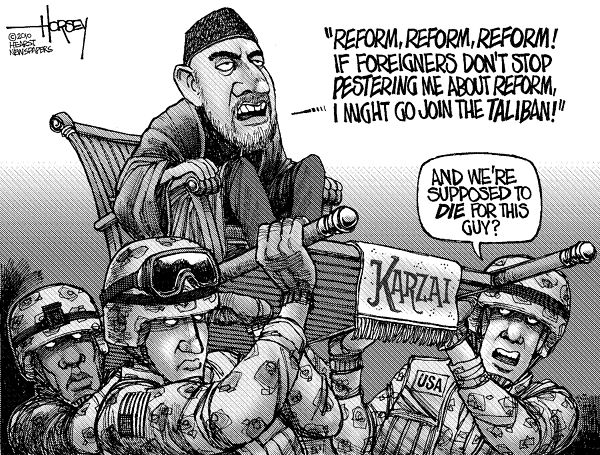
Kabul, Afghanistan- President Hamid Karzai’s troubling remarks this past Saturday that he would join the Taliban if he continues to come under pressure to reform by the United States and other “outsiders” has caused a stir in Washington DC.  Karzai’s comments came a week after President Obama’s surprise visit to Afghanistan at the end of March to pressure Karzai’s government to reform the political system, end corruption, and do a better job of fighting the Taliban.

Instead, what Karza delivered was a threat of the worse kind and quite possibly the most offensive and troubling thing one can say to a country that is risking countless soldiers lives daily to secure the country from the Taliban and other militant warlords in Afghanistan. In 8 short years, Hamid Karzai has gone from being the special guest of honor at George Bush’s State of the Union address to a leader who threatened to join our worst enemy. All because he feels that the US needs to stop badgering him to be a more responsible, fair, and an equitable leader as well as an effective partner in fighting the Taliban.

Karzai apparently made these unusual comments at a closed door meeting of lawmakers on Saturday, just days after accusing “foreigners” presumably the Unites States of being behind the fraud of the disputed elections of 2009. “He said that if I come under foreign pressure, I might join the Taliban”, said Farooq Marenai, a lawmaker from the eastern province of Nangarhar.  Mareni also stated that Karzai appeared nervous and demanded to know why parliament last week rejected legal reforms that would have strengthened Karzai’s authority over the country’s electoral institutions. Several other lawmakers confirmed that Karzai twice threatened to join the insurgency and the Taliban.

Karzai’s comments are troubling on many levels. First and foremost, he gives legitimacy and strength to the Taliban as his comments present the Taliban as an alternative option to American support or view on the situation. Karzai’s statement will no doubt have traveled the length and breadth of Afghanistan as word will spread that there is a weakness in the American-Afghan coalition that has been fighting and hunting the Taliban since October of 2001, post 9-11. The remarks by Karzai also puts every American, NATO, and Pakistani soldier at risk as instead of liberators, the foreign armies would be thought of as invaders, literally overnight. Lastly, Karzai’s remarks prove to the fact that Karzai is no longer an ally nor a credible partner for the US , NATO, and Pakistani army that have been fighting the Taliban with all their might.

There are reports of widespread nepotism, corruption, fraud, looting of the treasuries, and even drug trafficking, as Karzai’s brother, Ahmed Wali Karzai, has been alleged to be a prominent figure in Afghanistan’s world leading illegal heroin production, cultivation and its global distribution. These facts along with his inability to rule effectively and assist the United States in its exit strategy out of Afghanistan by end of 2011 has made the Obama administration weary of dealing with Karzai. Also his typically slow response in instituting political and social freedoms along with a renewed focus in fighting the Taliban, has also been a factor in displeasure from Washington.

The Obama administration has refocused on the Afghan war with 30,000 additional troops to help with the war effort and that initial surge has helped the commanders on the ground in running the Taliban out of certain areas. There have also been great recent victories by the Pakistani army to go after the Taliban militants on its side of the border and in helping cut down the bases of support for the Afghan Taliban from the Pakistani tribal areas sympathetic to their cause. So these comments come at the worst possible time when the Taliban are on the run both in Afghanistan and Pakistan and a strong coalition of US-Afghan-Pakistan resistance against them could help eliminate or destroy the militants for good. But instead, the US and its allies are left wondering what to do with Karzai and how much he could be trusted in this tenuous partnership against the Taliban.

Taliban 201- The Rise of The Pakistani Taliban

By Manzer Munir for Pakistanis for Peace

Peshawar, Pakistan- Taliban militants attacked the U.S. consulate in the Pakistani city of Peshawar on Monday, using  powerful bombs and rocket launchers in a sophisticated and daring attack killing 8 people, just hours after a suicide bomber killed 48 people elsewhere in the Swat valley. The attacks came as the United States has increased its airstrikes on targets both inside Afghanistan and Pakistan. The nearly decade long war waged against the Taliban in neighboring Afghanistan since 9-11 has created safe areas inside Pakistan for these militants to regroup and band with Pakistani militants sympathetic to their cause. Often, the militants on the Pakistani side and the Afghani Taliban share the Pashtun tribal and ethnic links among the border areas of both countries.
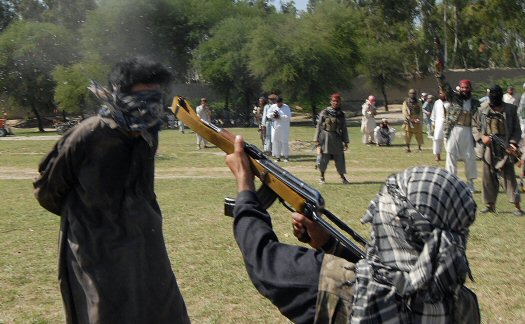
The US bombing of Afghanistan since late 2001 had pushed the Taliban and Al Qaeda militants to the mountains near the border with Pakistan. With help from sympathetic militant tribal warriors from the Pakistani side, the Taliban were able to dig in and have been able to fight the American forces for nearly a decade now. The onslaught by US and NATO forces continues in Afghanistan, but now for most of last year and certainly this year, the war has shifted to the streets and cities of Pakistan.

Now, much like Afghanistan, Pakistan too is a country that finds itself engulfed in the flames of religious extremism at the hands of determined and highly disciplined thugs. It used to be back during the Soviet-Afghan War, the only place perhaps not entirely safe inside Pakistan was Peshawar. Now, not one city or town of Pakistan has been spared from the violence by the Taliban. Back then, Peshawar was a city where attacks would happen frequently and often. During the 1980’s, the city became a haven for both jihadi militants fighting against the godless system of communism, and a base for spies as both the United States and Saudi Arabia funded a mujahedeen guerrilla war to defeat the Soviet troops from Afghanistan. President Reagan and General Zia of Pakistan used the fervor of religion to incite able bodied boys and men of Afghanistan and their distant cousins from the border area in Pakistan, along with thousands of volunteer Muslim fighters from across the Arab and Muslim world, to come and fight the Soviet Red Army. It was seen as a duty to come defend a Muslim land from occupation by a regime that would not allow the worship of Allah as communism discourages religion and encourages a sectarian society.

That strategy by General Zia ul Haq to promote the fight against the Russians as a holy war or jihad was brilliant at first. It mobilized not just every Muslim male in Afghanistan to stand and fight for his faith and their way of life, while also defending the country from invaders, but it also garnered the sympathy and enlistment of thousands upon thousands of Pakistani and Arab Muslim fighters to join the cause of these mujahedeen, as one who engages in jihad is called. The riling up of religious fervor and militant Islam was deemed necessary by both Reagan and Zia at the time as they sought to defeat the communists at all costs from succeeding in Afghanistan. It would not seem likely at the time, that this very same entity would become enemy number one of both the US and Pakistan a decade later.

It was monumental, it was historic,” retired Pakistani general Hamid Gul, who headed the ISI military spy agency from 1987-1989, said of Reagan’s role in defeating the Soviets. “We were receiving arms and logistics from the CIA, we were partners in this struggle,” Gul said, estimating the CIA spent up to $7bn in supplying arms and logistics to Islamic fighters or “jihadis.” “The jihadis he supported. It was their resistance against the forces of occupation and repression – that’s what jihad is – that Reagan identified himself with,” Gul said. “His greatest achievement was that he stood behind the Islamic world when it was arrayed against the Soviet empire.”

Pakistani analyst Hasan Askari Rivzi stated that “Al-Qaeda and the Taliban took shape later on, but they grew from this period of jihadism against the Soviets and with the initial help of Pakistan, Saudi Arabia along with the military and economic assistance from the United States to fight the Soviets during the ‘80’s. Rizvi sees the roots of the militancy that now ravages Pakistan and Afghanistan as having its beginnings from this period of war against the Soviets army.

That war with the Russians lasted almost 10 years. By the time the USSR pulled out all its troops from Afghanistan in 1989, the country had been completely destroyed. What was left of any government or authority of any sort was now held in the hands of a few militias and various warriors who commanded thousands of tribal and other ethnic fighters under them. These militias immediately started warring amongst themselves for more and more control of the country. The already weak, nonexistent central government of Afghanistan, post Soviet pullout was not able to cope and quickly capitulated. During the power vacuum that resulted, Pakistan’s spy agency, the ISI, realized the chance to wield power inside Afghanistan and threw its support behind a religious student movement based out of Kandahar. The ISI had previously assisted the cause to fight the Soviets by helping gather and organize radical Muslims from around the world to come and assist the Afghani mujahedeen in fighting the Soviets and had therefore developed good contacts with various religious groups including the young Taliban students and the fast growing movement.

The Afghani population initially welcomed the Taliban as they represented fairness and a rule of law over the notorious corruption, brutality and constant infighting of the warlord militias. Soon, with popular citizen support, along with Pakistan’s help, the Taliban became the dominant group within the country and soon held the seat of power in Kabul. Its leader Mullah Omar, was a friend of Osama Bin Laden and when the US forces came to Afghanistan in the hunt for Bin Laden, he gave the Al Qaeda leader refuge and in essence, became a fugitive of the US in the process for harboring America’s Most Wanted.

Fast forward to nearly nine years later as the war in Afghanistan continues against the Taliban and remnants of Al Qaeda responsible for the 9-11 attacks. However, the Taliban have grown and laid roots inside Pakistan also now as the nearly decade long war at the border with Afghanistan has ratcheted up sympathy by locals Pakistani Pashtun tribes for their brethren being bombed by both Pakistani and American forces. The Tehrik-i-Taliban Pakistan known as the Pakistani Taliban formed soon after the US invasion of Afghanistan and the Pakistani army’s offensive at the tribal areas near the border to combat the militants. The Pakistani Taliban led by the recently killed Baitullah Mehsud, has been largely responsible for hundreds of attacks in all major cities of Pakistan including Monday’s bombing of the American consulate in Peshawar.

The war in Afghanistan by the US against the Taliban that harbored and sheltered Bin Laden and the 9-11 killers of Al Qaeda is much the same as the war between the Pakistani army and the Pakistani Taliban in the Swat valley and the North West Frontier Province as well as in various cities of the country. This war has been brought home to the citizens of Pakistan. Over the last few months, bomb blasts in Lahore, Karachi, Islamabad and various other cities have now personalized this conflict for the average Pakistani as no longer a battle or skirmish at the border far away in the northwest of Pakistan near its border with Afghanistan.

No, the nearly daily attacks all over the country by the militants on government installations, public institutions like universities, factories and residential areas as well as markets and restaurants has made the country much less safer than at any time in its 63 year history. Many Pakistanis now are beginning to realize that the Taliban, operating with impunity all over Pakistan, pose a much bigger threat to the sovereignty and republic of Pakistan than any threat from anywhere else, including from that eternal archrival to the east, India. It is now well understood by both partners in this fight that only a sustained and vigorous fight taken to the militants inside both countries by the US and Pakistan over a long period of time can hope to defeat this disease known as the Taliban.

For an earlier report titled Taliban 101- Origins and History, Please click on this link:

https://pakistanisforpeace.wordpress.com/2009/05/25/taliban-101-origins-and-history/

U.S. Aims to Ease India-Pakistan Tension

By Peter Spiegel and Matthew Rosenberg for The Wall Street Journal

President Barack Obama issued a secret directive in December to intensify American diplomacy aimed at easing tensions between India and Pakistan, asserting that without dĂŠtente between the two rivals, the administration’s efforts to win Pakistani cooperation in Afghanistan would suffer.

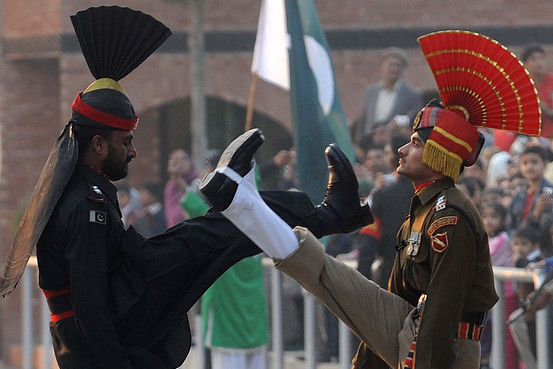
Pakistani Rangers (L) and Indian Border Security Force (BSF) personnel perform the daily retreat ceremony at the India-Pakistan Border at Wagah on December 26, 2009. The directive concluded that India must make resolving its tensions with Pakistan a priority for progress to be made on U.S. goals in the region, according to people familiar with its contents.

The U.S. has invested heavily in its own relations with Pakistan in recent months, agreeing to a $7.5 billion aid package and sending top military and diplomatic officials to Islamabad on repeated visits. The public embrace, which reached a high point last month in high-profile talks in Washington, reflects the Obama administration’s belief that Pakistan must be convinced to change its strategic calculus and take a more assertive stance against militants based in its western tribal regions over the course of the next year in order to turn the tide in Afghanistan.

A debate continues within the administration over how hard to push India, which has long resisted outside intervention in the conflict with its neighbor. The Pentagon, in particular, has sought more pressure on New Delhi, according to U.S. and Indian officials. Current and former U.S. officials said the discussion in Washington over how to approach India has intensified as Pakistan ratchets up requests that the U.S. intercede in a series of continuing disputes.

Pakistan has long regarded Afghanistan as providing “strategic depth”—essentially, a buffer zone—in a potential conflict with India. Some U.S. officials believe Islamabad will remain reluctant to wholeheartedly fight the Islamic militants based on its Afghan border unless the sense of threat from India is reduced.

Indian Prime Minister Manmohan Singh has already taken the political risk of pursuing peace talks with Pakistan, but faces significant domestic opposition to any additional outreach without Pakistani moves to further clamp down on Islamic militants who have targeted India.

U.S. and Indian officials say the Obama administration has so far made few concrete demands of New Delhi. According to U.S. officials, the only specific request has been to discourage India from getting more involved in training the Afghan military, to ease Pakistani concerns about getting squeezed by India on two borders.

“This is an administration that’s deeply divided about the wisdom of leaning on India to solve U.S. problems with Pakistan,” said Ashley Tellis, an analyst at the Carnegie Endowment for International Peace who has discussed the issue with senior officials in the U.S. and India. “There are still important constituencies within the administration that have not given up hope that India represents the answer.”

India has long resisted outside involvement in its differences with Pakistan, particularly over the disputed region of Kashmir. But, according to a U.S. government official, a 56-page dossier presented by the Pakistani government to the Obama administration ahead of high-level talks in Washington last month contained a litany of accusations against the Indian government, and suggestions the U.S. intercede on Pakistan’s behalf.

The official said the document alleges that India has never accepted Pakistan’s sovereignty as an independent state, and accuses India of diverting water from the Indus River and fomenting separatism in the southwestern Pakistani province of Baluchistan.

Secretary of State Hillary Clinton has signaled that Washington isn’t interested in mediating on water issues, which are covered by a bilateral treaty.

The White House declined to comment on Mr. Obama’s directive or on the debate within the administration over India policy. The directive to top foreign-policy and national-security officials was summarized in a memo written by National Security Adviser James Jones at the end of the White House’s three-month review of Afghan war policy in December.

An Indian government official said the U.S.’s increasing attention to Pakistani concerns hasn’t hurt bilateral relations overall. “Our relationship is mature—of course we have disagreements, but we’re trying not to have knee-jerk reactions,” the Indian official said.

According to U.S. and Indian officials, the Pentagon has emerged in internal Obama administration debates as an active lobbyist for more pressure on India, with some officials already informally pressing Indian officials to take Pakistan’s concerns more seriously. Adm. Mike Mullen, chairman of the Joint Chiefs of Staff and the U.S. government’s prime interlocutor with the powerful head of the Pakistani army, Gen. Ashfaq Kayani, has been among the more vocal advocates of a greater Indian role, according to a U.S. military official, encouraging New Delhi to be more “transparent” about its activities along the countries’ shared border and to cooperate more with Pakistan.

In interviews, U.S. military officials were circumspect about what specific moves they would like to see from New Delhi. But according to people who have discussed India policy with Pentagon officials, the ideas discussed in internal debates include reducing the number of Indian troops in Kashmir or pulling back forces along the border.

“They say, ‘The Pakistanis have this perception and you have to deal with the perception’,” said one foreign diplomat who has discussed India’s role with Pentagon officials. An Indian defense ministry spokesman said his country’s army has already moved about 30,000 troops out of Kashmir in recent years.

The State Department has resisted such moves to pressure India, according to current and former U.S. officials, insisting they could backfire. These officials have argued that the most recent promising peace effort—secret reconciliation talks several years ago between Indian Prime Minster Singh and then-Pakistani President Pervez Musharraf—occurred without U.S. involvement.

Progress, For a Price, in Pakistan

By Doyle McManus for The Los Angeles Times

In 2001, on the eve of the U.S. invasion of Afghanistan, President George W. Bush gave Pakistan’s then-leader, Gen. Pervez Musharraf, a choice: He was either with us or against us. Musharraf chose to become an ally, but the question ever since has been whether that shotgun marriage can mature into a healthy adult relationship. At times, the prospect has seemed far from reach.

The world’s second-most-populous Muslim country is caught in a brutal internal struggle between extremism and moderation. Most of its people tell pollsters they don’t like the United States and wish we’d go away. The tribesmen of its western frontier shelter Osama bin Laden and the leaders of Afghanistan’s Taliban. And the United States can’t forget how, in the 1980s, Pakistan built nuclear weapons — and then later exported nuclear technology to North Korea and Iran.

But in recent months, there has been progress in the relationship. Military and intelligence cooperation between the United States and Pakistan has increased significantly. Pakistan has allowed the CIA to increase its missile strikes against Al Qaeda and Taliban targets in Pakistani territory. Pakistani authorities have arrested several Taliban leaders and allowed U.S. intelligence officers to question them. And now Pakistan is offering to increase its own military operations in North Waziristan, the presumed lair of Bin Laden. All that cooperation came at a price, of course: a flood of U.S. military and economic aid.

And last week, the Pakistanis came to Washington to press for more. The academic criticism of the U.S.-Pakistani relationship is that it is “transactional” — nothing more than a series of bargains between buyers and sellers who don’t trust each other much. That’s still mostly true. Pakistan’s delegation arrived with a 56-page shopping list covering everything from military equipment to education and cultural exchanges. And one Pakistani official, asked during the visit whether his government was truly willing to act against the havens that allow the Taliban to maintain bases in Pakistan, replied frankly: “Yes — but at a price.”

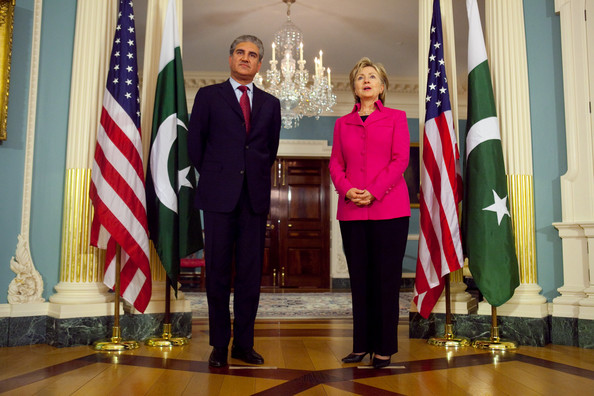
After a series of meetings with Secretary of State Hillary Rodham Clinton, Pakistan’s ebullient foreign minister, Shah Mehmood Qureshi, declared: “I think we are going to move from a relationship to a partnership.” But he used the future tense. In the meantime, there are things to work out. Pakistan is clearly worried about what happens when the United States begins pulling troops out of Afghanistan in 2011.

Although Obama administration officials have tried to reassure Pakistan that Washington’s commitment to the region is for the long haul, uncertainty remains. “Our fear is . . . that we get into a fight with these guys [the Taliban], and you walk away, and we’re still there,” a Pakistani official said. Pakistan’s powerful army chief of staff, Gen. Ashfaq Kayani, spent part of his time in Washington visiting Congress with PowerPoint slides to show that Pakistan has committed more troops to its fight against insurgents than the United States has on the ground in Afghanistan, and that it has suffered almost 30,000 killed and wounded in the process.

According to U.S. officials, Kayani made a strong case that Pakistan can do more if it gets more modern military equipment from the United States, especially helicopters to ferry troops into the rugged badlands where Al Qaeda and the Taliban hide. The United States has helped Pakistan acquire some helicopters, but not as many and not as quickly as the Pakistanis would like. U.S. officials said they would try to speed the delivery of more. In the past, U.S. officials complained that Pakistan used much of its U.S. military aid to bolster its eastern front with India instead of its fight with internal insurgents; but since Pakistan’s 2009 offensive in the Swat Valley, that criticism has been stilled.

The delegation also added a new item to Islamabad’s wish list: a nuclear agreement under which the United States would help Pakistan develop its civilian nuclear energy industry — to mirror a similar U.S. agreement with India, Pakistan’s longtime enemy. The United States told the Pakistanis that would have to wait. The memory of having to clamp sanctions on Pakistan for its nuclear weapons program is still too fresh. But it was a sign of improving relations that the idea wasn’t rejected completely.

 In 2001, the United States sought a new relationship with Pakistan mostly because it was next to Afghanistan — and thus a country we would need for moving military supplies and basing drones. But that thinking has slowly evolved. In the long run, with its population of 170 million people — not to mention its cache of nuclear weapons — Pakistan is more important than Afghanistan.

“We’re engaging with Pakistan because we’re afraid of it,” says Christine Fair, a Pakistan expert at Georgetown University. “It’s the scariest country in the region. Because of Afghanistan, it’s been treated as if it were a subsidiary issue. But Pakistan should be the primary issue.” The Americans are working hard to convince the Pakistanis that they are interested in Pakistan’s stability for its own sake, not just because it’s next door to Afghanistan. The Pakistanis are working hard to convince the Americans that they are committed to defeating the extremists in their midst. It’s not a strategic relationship yet. If it’s a partnership, it’s still a wary one. But that’s progress.

Obama Pledges To Work With ‘Peace-Loving’ Pakistanis On Occasion of 70th Pakistan Day 3/23

By Lalit K Jha for The Press Trust of India  

Greeting people of Pakistan on the occasion of its National Day, US President Barack Obama today pledged to remain a partner of all Pakistanis who “seek to build a future of peace and prosperity”.

Sending his best wishes to the people of Pakistan and all those of Pakistani descent in America and around the world observing Pakistan National Day, Obama said: “Seventy years ago, Muhammad Ali Jinnah and those of the independence generation declared their dreams of self-determination and democracy.

“Today, the people of Pakistan are carrying on the great work of Quaid-e Azam,” Obama said in his message issued on the occasion of Pakistan National Day, being marked on March 23.

“Here in the United States, our country is enriched by the many Pakistani Americans who excel as doctors, small business owners, students, members of our armed forces and in many other fields. On this National Day, we give thanks for the contributions of these fellow Americans, and the United States pledges to remain a partner of all Pakistanis who seek to build a future of peace and prosperity.”

“In these efforts, the American people are proud to join in the education, health and economic partnerships that can improve the daily lives of Pakistanis and their families,” he said.

US-Pakistan Talks Mark ‘Intensification’ of Partnership

By Suzanne Presto for Voice of America News

The United States and Pakistan will hold their first strategic dialogue at the ministerial level in Washington next Wednesday (March 24). U.S. Special Representative for Afghanistan and Pakistan Richard Holbrooke told reporters at the State Department Friday that these talks mark a “major intensification” of the U.S.-Pakistan partnership. Wednesday’s talks will be co-chaired by Secretary of State Hillary Clinton and Pakistani Foreign Minister Shah Mehmood Qureshi.

Holbrooke says delegations from both sides will include senior officials of their nation’s defense, diplomacy, finance and agriculture departments. The U.S. delegation will also include aid and trade officials, and Pakistan’s will include officials who handle water, power and social issues.
“This is a partnership that goes far beyond security, but security is an important part of it,” he said. Holbrooke told reporters Friday that U.S. officials want to see aid money for Pakistan distributed more quickly.

“We are doing more. We will announce more. We want to do as much as the Congress will support,” Holbrooke said. The Obama administration has made improving and broadening relations with Pakistan a top priority, but U.S. policies and drone strikes targeting militants in the region remain unpopular. Holbrooke said the U.S. supports Pakistan as it seeks to strengthen democratic institutions and economic development, handle energy and water problems, as well as defeat extremists. “Everyone is aware of the popular public-opinion polls, and we think that our support for Pakistan deserves more recognition among the people,” he added.

Speaking to reporters in Islamabad Thursday, Foreign Minister Qureshi said Pakistani and U.S. officials have been talking a lot, and in his words, “the time has come to walk the talk.” Holbrooke responded to Qureshi’s statement that next week’s talks would be a good opportunity to rebuild confidence and trust on both sides. “The first time I went to Pakistan, Foreign Minister Qureshi introduced me to the phrase “trust deficit,” and so I have heard it many times,” he said. “The last time I was there, we both said in a press conference that we thought we had made huge advances in that,” Holbrooke added. Secretary of State Clinton last visited Pakistan in October, where she spoke with officials and students alike.

Holbrooke said there are plans to hold the next set of strategic talks in Pakistan, likely within the next six months. He underscored that these bilateral talks do not replace the trilateral talks among the U.S., Pakistan and Afghanistan which he said are expected to resume later this year.

Tribute to a Pakistani Icon

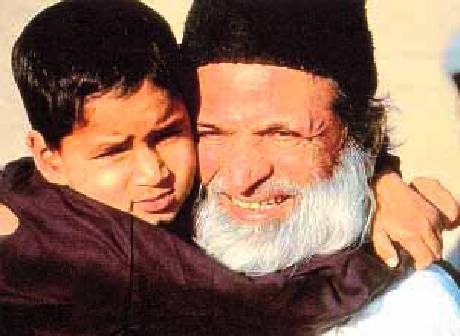
The story of Abdul Sattar Edhi is an awe inspiring one. Amidst the daily materialism, frenetic rat race, ambition and angst which envelops one, here is a man who only thinks of others and their suffering.

Edhi single-handedly set up the Edhi Foundation in 1957, and continued to operate it as a non-profit social welfare organisation. Over 300 centres of the Edhi Foundation span the length and breadth of Pakistan, and provide the needy with medical aid, family planning, emergency assistance and education. There are also maternity homes, mental asylums, homes for the physically handicapped, blood banks and orphanages, among other services.

The remarkable Abdul Sattar Edhi has no qualms about going where others fear to tread, and for taking a stand against extremism. He went to Tank, the gateway to the tribal areas, although he was advised against travelling to such a volatile and dangerous place.

There were fears that he might be killed by the Taliban, but instead they welcomed him with open arms. Edhi tried to reason with the Taliban and told them bluntly that they should renounce their violent way of life, which is against the teachings of Islam. The Taliban called him a ‘’Khudai Faqir’’ and listened to him with great respect, and provided him with safe passage.

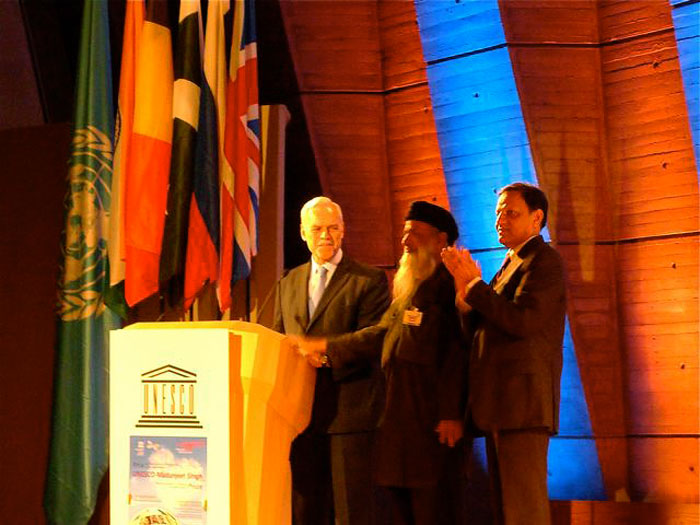
Edhi was recently awarded the UNESCO Madanjit Singh Prize for the Promotion of Tolerance and Non Violence. He was conferred the award in recognition of his life long efforts to ameliorate the condition of the most disadvantaged groups in Pakistan and South Asia, and for promoting the ideals of human dignity, human rights, mutual respect and tolerance.

The prize giving ceremony was held on November 16, the International Day for Tolerance, at the sprawling United Nations edifice in Paris. Amidst all the fancy suits, designer coats and gleaming shoes, Abdul Sattar Edhi stood out in his simple Shalwar Kameez and worn slippers. A documentary was also screened, which showed Edhi and Bilquis Edhi, his wife and companion of 50 years, engaged in their charity work amidst the poor, disadvantaged and outcasts of society.

As Edhi rose with difficulty to receive the UNESCO award, there was prolonged applause for this great Pakistani. Many Europeans remarked on how privileged they felt to have the opportunity of meeting such a great man. An Indian couple postponed their flight home, and came to the UN to pay homage to Edhi, saying that they only wanted his blessings.

As soon as the impressive ceremony was over, Abdul Sattar Edhi was surrounded by a bevy of delighted Pakistanis. Their stimulating interaction with Edhi and the countless photo opportunities went on and on, until some UN officials started glancing at their watches, and it was obvious that it was time to leave the hall. But then the dinner invitations started rolling in.

At times, Edhi looked a trifle tired, but he never lost his composure. At 88, and grappling with diabetes, life could not be easy for him, but he always seems to think of others. Accustomed to sleeping at 7pm and waking up at 4 am, jet lag and the constant socialising must have been draining. When asked how he was feeling, Edhi admitted that he was exhausted, but said that he did not want to turn down the opportunity of meeting with Pakistanis.

Many Pakistanis sought his blessings and said they were willing to contribute to his organisation. Despite all the hero worship, Edhi remained calm and focused, displaying none of the whims and attitude which signifies the behaviour of many Pakistanis who have not achieved even an iota of what he has.

Notwithstanding his lack of formal schooling, Edhi came across as alert, witty, mature and savvy. Talking to him is an enriching experience indeed. He refuses to espouse any political party, because he likes to steer clear of politics.

What motivates this octogenarian to work for such long and punishing hours. and refuse to take time off? When he was still a child, Edhi’s mother became very ill and he nursed her for years until she passed away.

“I had accepted at the outset that charity was distorted and unrelated to its original concept. Another major obstacle in the promotion of welfare was the disgust of man towards mankind. There was only one reaction from everyone Ăą cringing. From the grimacing faces of my colleagues, I understood that I was the only one not disgusted. They washed their hands vigorously, smelt their clothes repeatedly and complained incessantly of the stench having seeped under their skins.

Then they rushed home to bathe, scrubbed their clothes and disinfected them, sometimes gave them away saying, ‘The very weave was stricken.’ We could not reduce suffering unless we rose above our senses”

Abdul Sattar Edhi has devoted his life to a thorny field where hardly any one can match his dedication, focus, common sense and sagacity. Being in his presence gives one hope for the future, because it is his belief that there are no people more generous than Pakistanis in giving aid, and there is no place in the world as great as Pakistan.

Originally Printed December 14, 2009
By Maheen Usmani
The News, Karachi

Attacks By the Taliban Illustrate their Growing Strength in the Region

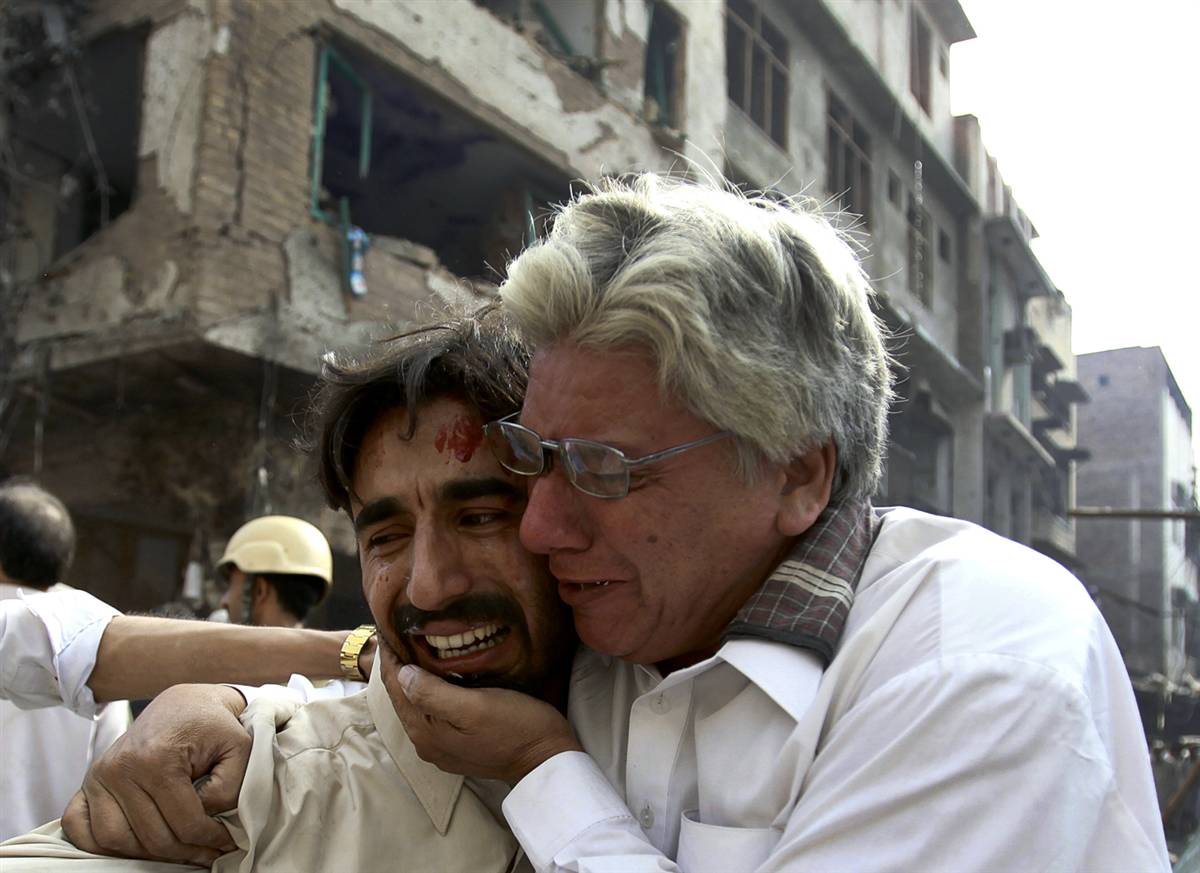
Peshawar, Pakistan- A suicide bomber detonated his vehicle packed with explosives on New Year’s Day in a crowd of people watching a volleyball tournament killing at least 75 people, wounding another 60, of which 13 are in critical condition. Police stated that they believed that the attack was directed towards anti-Taliban leaders of local groups made up of ordinary residents of the area who had recently formed armed local militias to help the government fight the Taliban. The blasts demonstrate the capabilities of the Taliban who also were responsible for the killing of seven American CIA employees at an agency base in Khost, Afghanistan the same day.

The targeting and the killing of both the anti-Taliban civilians as well as the CIA employees is an alarming start to a new year in the region as the Taliban have stepped up their efforts against American troops, Pakistani security forces, civilians and anyone else that challenges them.

Analysts believe that the Afghani Taliban has agreed to bury its differences with the Pakistani Taliban and join forces after President Obama announced plans to increase troop levels in Afghanistan and hunker down for the foreseeable future in a protracted conflict with the armed group. The Pakistani Taliban is an offshoot of the Afghani Taliban and is led by veterans of the fighting in Afghanistan who come from the border regions with Pakistan. Although they have always supported the fight against foreign forces in Afghanistan by supplying fighters, training and logistical aid, they have concentrated on battling the Pakistani government. Many believe that the Pakistani Taliban provides an essential rear base to for the Taliban insurgency in Afghanistan.

This new Taliban alliance has raised concerns for the US and NATO forces where generals are forecasting that the conflict will only worsen this year as Friday’s attacks are proving the grave assessment correct. The attack was not far from South Waziristan, where the Pakistan army is waging an offensive against the Pakistan Taliban. Western intelligence agencies believe that time is running out in the fight to eradicate the Taliban from Afghanistan as they are evolving, adapting and getting better organized and resilient as the nearly decade long conflict rages on.

The insurgency is organized, increasingly effective and growing more cohesive, said a senior intelligence officer with NATO’s International Security Assistance Force (ISAF). “The insurgent strength is enabled by the weakness of the Afghan government,” the officer told reporters on condition of anonymity.

The Taliban is funding its operations, which he estimated to cost between 100 million to 200 million dollars a year, through “Al-Qaeda, drugs and taxing the people. “Its goal is to “establish Al-Qaeda as a global entity”, ridding the region of foreign forces and establishing a caliphate, or Islamic state, and the Taliban in Afghanistan and Pakistan work together to those ends stated the officer.

It is apparent that the stepped up offensive on the security forces and civilians by both the Pakistani and the Afghani Taliban on both sides of the border is an illustration of both their strength and resolve in the fighting the government forces. Pakistan, Afghanistan, the US and NATO forces must redouble their efforts and provide increased financial, military and logistical support if this formidable enemy is to be defeated, let alone eradicated from the region.

 Reported by Manzer Munir for www.PakistanisforPeace.com