Posts Tagged ‘ President Obama ’

Staying Nimble to Fight Al-Qaeda’s Shifting Threat

By David Ignatius for The Washington Post

Behind the latest terrorism plots is an al-Qaeda leadership that is getting battered in Pakistan but that is determined to strike back wherever it can – using a dispersed network and new tactics that are harder to detect.

The package bombs sent last week from Yemen are one face of al-Qaeda’s continuing campaign. The Yemeni operatives are nimble, adaptive and “frustratingly clever,” says a U.S. counterterrorism official. “They have one main goal, which is to mess with us.”

The Yemen-based operations came as intelligence officials were struggling to disrupt another al-Qaeda plot to launch Mumbai-style attacks in European cities. Officials say that plan involved roughly 25 al-Qaeda terrorists, organized into cells of perhaps three to five members who would stage roving assaults in one or more European cities. Of the 25, about 10 have been captured or killed, according to a second U.S. official.

While these operations are tactically separate, officials say they both reflect a secret mid-2009 directive from an embattled Osama bin Laden to his followers to demonstrate that al-Qaeda could still do damage.

For U.S. officials, these latest terror plots have been a grim reminder that there’s a long fight ahead against al-Qaeda, with no “quick fixes” available. Defense isn’t enough: The explosives sent from Yemen can’t be detected by conventional X-ray screening or sniffer dogs, so stopping these plots requires good intelligence, as was the case last week when Saudi Arabia tipped the United States about the package bombs.

Nobody wants to say so publicly, but the lesson of the past few weeks, for me at least, is that one of these days the terrorists will succeed – and people should be prepared for that likelihood. The greatest damage won’t be the attack itself but the public response. The Yemeni plotters saw the frenzy produced by their failed Christmas Day bombing attempt on a flight to Detroit. They must be hoping now, with the package bombs, to disrupt cargo-handling around the world and damage a fragile global economy.

As the CIA has stalked al-Qaeda over the past two years, this has been a story of punch and counterpunch, of escalating U.S. drone attacks over Pakistan’s tribal areas and defiant al-Qaeda responses. As the senior U.S. official says, this is a “learning enemy” that adapts its tools and tactics as the West alters its defenses.

To understand the latest news, it helps to scroll back to early 2008. The CIA gathered intelligence that al-Qaeda leaders were regrouping, forming new alliances and planning new operations in the West. At that time, the CIA’s attacks from Predator drones were sporadic, and Pakistan was consulted before each attack.

So the Bush administration escalated the drone attacks in mid-2008. Now, Pakistan was given only “concurrent” notification, which in practice meant it was informed after the drone had launched its missile. Moreover, the CIA was authorized to strike targets that had a “signature” of terrorist activity, rather than a precise identification. President Obama has increased the tempo of Predator attacks even more.

The drone attacks have pounded al-Qaeda and killed key members of its leadership. Bin Laden reacted with his mid-2009 directive, which the U.S. official summarizes this way: “Undertake operations however and wherever you can. We need to prove ourselves again.” Specifically, bin Laden directed operatives to plan assaults in Europe similar to the November 2008 attacks that killed about 175 people and terrified Mumbai.

The United States and its European allies have been working hard to disrupt the Mumbai copycat operations. Since the third week of August, the CIA has conducted more than 40 drone attacks on the tribal areas, more than in all of 2008. A British national was killed in Pakistan in September, and two Germans in October. Other plotters have been arrested in Europe and Pakistan. Officials say they can’t be sure yet whether the terror plans have been shelved.

A similar escalation is likely in Yemen, with soldiers from the U.S. Joint Special Operations Command working with Yemeni government forces. The JSOC sums up its lethal approach with the phrase “find, fix, finish,” but a U.S. official says it has been hard to keep track of al-Qaeda targets in Yemen’s tribal villages and cities.

The reality is that the adversary that declared war on the United States in 1996 is still active – morphing and mobilizing even as it is hunted by America and its allies. It’s a nasty fight, and it’s far from over.

For Better or Worse, White House Bets on Pakistan’s Civilian Government

Reported by Josh Rogin for Foreign Policy magazine

The Obama administration has always been clear that the path to winning the war in Afghanistan goes through Pakistan. But if Bob Woodward’s new book is accurate, the White House considers its war effort much more dependent on the success and survival of Pakistan’s civilian government than was previously known.

Woodward’s “Obama’s Wars,” which hit bookstores Monday, sheds new light on the Obama administration’s vast outreach to the Pakistani civilian government led by President Asif Ali Zardari. It paints a picture of an administration working hard to court the Pakistanis while remaining somewhat confused about Pakistani thinking on a range of issues.

Obama himself was confused about the nature of Pakistani intentions during two crucial decision points in his administration’s Afghan policy — the March 2009 strategy rollout and the deliberations in November 2009, which resulted in a troop surge and a huge expansion of covert operations in Pakistan. However, based on advice from the majority of his key advisers, he nonetheless tried to entice Pakistan to commit to a deep and long-term partnership with the United States by offering the Zardari government incentive after incentive, with relatively few pressures.

According to Woodward’s account, the centrality of Pakistan was championed early on by Bruce Riedel, the Brookings scholar who was brought on as a key figure in the Obama administration’s March 2009 Afghanistan strategy review.

Riedel, who referred to Islamist extremists in Pakistan as the “real, central threat” to U.S. national security, personally convinced Obama, only two months after he took office, that Pakistan needed to be the centerpiece of his new strategy. Riedel’s plan involved arming the Pakistani military for counterinsurgency and increasing economic and other forms of aid to the civilian government. This marked the beginning of the term “Af-Pak,” which drove the administration’s belief that stability in Afghanistan and Pakistan were inextricably linked.

Riedel’s Pakistan focus was not due to his confidence that the civilian government could control the military and intelligence services. In fact, he referred to Army Chief of Staff Gen. Ashfaq Parvez Kayani as a “liar” with regards to the activities of the secretive Inter Services Intelligence agency (ISI), which is widely suspected of aiding the Taliban insurgency. Then Director of National Intelligence Dennis Blair reportedly echoed Riedel’s views on this matter.

Inside the administration, Blair argued that Obama was approaching Pakistan with too many carrots and not enough sticks. He at one point advocated bombing inside Pakistan and conducting raids there without the Pakistani government’s approval. “I think Pakistan would be completely, completely pissed off and they would probably take actions against us … but they would probably adjust,” he once told Obama.

Obama, however, opted to pursue a less confrontational path. He concluded the central task would be convincing the Pakistani leadership to throw its lot in with the United States He said at the time of the initial strategy review in March 2009, “that we had to have a serious heart-to-heart with Pakistani civilian, military and intelligence leaders.”

Later that year, when making the decision to send an additional 30,000 “surge” troops to Afghanistan, Obama knew that his plans to also expand the U.S. military presence in Pakistan and widen drone strikes would be a hard sell to the Zardari government. In an attempt to sweeten the deal, Obama framed the policy as a new “strategic partnership” with Pakistan, even tying the success of the U.S. mission in Afghanistan to the survival of Zardari and the legacy of his deceased wife Benazir Bhutto.

“I know that I am speaking to you on a personal level when I say that my commitment to ending the ability of these groups to strike at our families is as much about my family’s security as it is about yours,” Obama wrote in a letter to Zardari delivered by National Security Advisor Jim Jones and counterterrorism advisor John Brennan.

Zardari’s response to that letter reinforced what many in the administration already suspected: Pakistan’s government was in the grips of an internal struggle over whether to embrace the United States. Zardari’s initial response focused heavily on India, though the Pakistani president only referred obliquely to his country’s strategic rival. Woodward reports that the White House believed the letter was written by the Pakistani military and the ISI. However, the Zardari government did end up accepting Obama’s offer.

Obama’s top advisors told the U.S. president that he would have to accept something short of complete success in convincing Pakistan to turn away from its longstanding obsession with the military threat it perceives from India.

When Obama had a meeting with Zardari in May 2009, he told the Pakistani president the he did not want U.S. taxpayers to be funding Pakistan’s military buildup against India “We are trying to change our world view,” Zardari told Obama, “but it’s not going to happen overnight.”

At times, Obama was downright puzzled by his advisors’ advice regarding Pakistan. For example, intelligence reports confirmed that Pakistani officials were afraid that the United States would leave Afghanistan too early, as they believed had occurred after the end of the resistance to the Soviet regime in the 1980s. On the other hand, Pakistan worried that if the United States was too involved in Afghanistan, it might aid in the establishment of a larger Afghan army than Islamabad was comfortable with.

“What am I to believe?” Obama asked his senior staff. Secretary of State Hillary Clinton, Special Representative Richard Holbrooke, and Defense Secretary Robert Gates all told him these were the types of contradictions that were commonplace when dealing with Pakistan.

For its part, the Pakistani government was just as confused and puzzled by the Obama administration. Woodward recounts one anecdote, in which Zardari tells the former U.S. Ambassador to Afghanistan Zalmay Khalilzad that he believed the United States was involved in orchestrating attacks by the Pakistani Taliban against the Pakistani civilian government.

Pakistan’s Ambassador to Washington Husain Haqqani, a key go-between, tried several times to explain to the Obama administration how to court Pakistani leaders, comparing the dynamic to “a man who is trying to woo a woman.”

“We all know what he wants from her. Right?” Haqqani said in a meeting with Jones, Deputy National Security Advisor Tom Donilon and the NSC’s Gen. Doug Lute.

“But she has other ideas. She wants to be taken to the theater. She wants that nice new bottle of perfume,” Haqqani told them. “If you get down on one knee and give the ring, that’s the big prize. And boy, you know, it works.”

Haqqani said the “ring” was official U.S. recognition of Pakistan’s nuclear program as legitimate. He also warned that the Pakistanis would always ask for the moon as a starting point in negotiations. He compared it to the salesmanship of rug merchants.

“The guy starts at 10,000 and you settle for 1,200,” Haqqani told the Obama team. “So be reasonable, but never let the guy walk out of the shop without a sale.”

Although the Obama administration has had some success improving the relationship between the two governments, Pakistan’s civilian leadership still faces a series of difficulties in its goal of exerting control over its entire national security structure. Stability has also been threatened by the enormous pressures resulting from the war that it is waging inside its own borders, and political attacks leveled against it from the media and the courts. Zardari’s perceived sluggish response to the devastating flood crisis has cost him even more credibility among the Pakistani public.

But while the end of Zardari regime has often been predicted, it appears that he will remain in place for the foreseeable future. The Obama administration, meanwhile, is aware of how crucial his cooperation remains for the success of the mission in Afghanistan.

When Woodward sat down for his interview with Obama earlier this year, he asked the president if the situation was still that Pakistan is the centerpiece of the U.S. strategy. “It continues to this day,” Obama replied.

Arabs Must Recognize Israel’s Right to Exist

By Manzer Munir for Pakistanis for Peace

New York – President Obama delivered his speech to the United Nations General Assembly Thursday in New York and it focused largely on his desire to see the Middle East peace process proceed ahead despite all the difficulties. 

Mr. Obama stated that he wanted it to succeed in accomplishing the peace that has eluded the Arabs and the Israelis for over 60 years. Realizing that there are many obstacles and hurdles ahead during tough negotiations for diplomats from both sides, he stated his concerns and his hopes for the road ahead.

“I hear those voices of skepticism, but I ask you to consider the alternative,” Obama said. If no peace agreement is reached, he added, “then the hard realities of demography will take hold. More blood will be shed. This Holy Land will remain a symbol of our differences, instead of our common humanity.”

“I refuse to accept that future,” he added. “And we all have a choice to make. Each of us must choose the path of peace. …We can say that this time will be different – that this time we will not let terror, or turbulence, or posturing, or petty politics stand in the way.”

“If we do, when we come back here next year, we can have an agreement that will lead to a new member of the United Nations – an independent, sovereign state of Palestine, living in peace with Israel,” Obama said to a loud applause by the delegates of all the countries at the United Nations.

In order for this to happen, the Arabs must first recognize Israel’s right to exist and the right of the Jewish people to claim specifically a part of the Holy Land as theirs. I know, it sounds so basic and a no- brainer. But surprisingly a large portion of the Arab world does not believe in Israel’s right to exist and specifically their right to exist in the southern Levant area which makes up the majority of the area for present day Israel. They want to ignore history and all the Biblical and historical evidence of Jewish settlement and claims to the land. They point to the migration of many Jews all over the world the last few hundred years as reason enough as to why they no longer can call Israel home.

Some Arabs demand that the Jewish homeland should be in Germany. After all, they claim, it is where so many of them were killed by Hitler and the main reason that precipitated the need to allow the Zionists of Europe and America, post World War II, to demand a home for the Jews. Why should the Palestinians pay for the crimes of the Europeans they argue?

Others have blamed the British and the Balfour Declaration when in 1917 the British Foreign Secretary, Arthur James Balfour, declared in a letter to Baron Rothschild, a leader of the British Jewish community for a need for a home for the Jews when he stated: “His Majesty’s government view with favor the establishment in Palestine of a national home for the Jewish people, and will use their best endeavors to facilitate the achievement of this object, it being clearly understood that nothing shall be done which may prejudice the civil and religious rights of existing non-Jewish communities in Palestine, or the rights and political status enjoyed by Jews in any other country.”

Quite simply, no other place makes any sense whatsoever. First of all, there is extensive mentioning of the land of Israel that is promised to the Jews in the Bible as well as the Hebrew texts, not to mention the Qur’an. All three identify geographic areas in present day Israel that has historically been identified as the homeland of the Jews. Jewish people do not even make up more than 1% of any country’s overall population other than in United States (2.2% of overall population), Canada (1.2% of population), France (1% of population) and Israel (75% of population). That means that for the rest of the world, each country’s Jewish population is not even one half of one percent of the overall population of that nation! Where else would the Arabs have them go? Certainly not Germany where many claim that they should be settled since that is where over 6 million of them were killed in the holocaust. The United States actually has more Jews in its boundaries than are currently residing in all of Israel. So they cannot very well say that they should go there as over half the population already lives here.

Most people do not realize that the Jewish population of the world is very small compared to Christianity or Islam. There are an estimated 15 million Jews around the world including in Israel. By comparison, there are over 2.1 billion Christians and nearly 1.5 billion Muslims. Nearly 105 countries of the world are majority Christian nations while there are perhaps at best 55 majority Muslim countries on the planet. Did you ever wonder how many majority Jewish countries of the world are there?  There is just one. Israel.

This is one of the great religions of the world and also one of the oldest monotheistic beliefs aside from Zoroastrianism, and came at a time when polytheistic beliefs were more prevalent as a human concept of divinity. No doubt, both Christianity and Islam owe a great deal of their religious thoughts and laws to the early Hebrew laws and traditions. In fact, large parts of both the Bible and the Qur’an constitute the Old Testament, also known as the Torah, the Jewish holy book and the scriptures revealed to Moses.

Jewish contributions to humanity have been disproportionate and staggering when one realizes that as less than one half of one percent of the world’s populations, the Jews have made immense advances in nearly every field that has benefitted the whole world. We can go from Albert Einstein’s advances in physics to Jonas Salk’s polio vaccine, discuss Galileo’s contributions in astronomy to Freud’s understanding of the mind. We could illustrate how Baruch Spinoza’s rationalist ideas and philosophies laid the groundwork for The Enlightenment of the 18 century or marvel at the brilliant filmmaking of 21st century Jews like Steven Spielberg and Oliver Stone. The list of Jewish contributions and the value of their culture to man’s history cannot be ignored.

What also cannot be ignored is that historically these are a persecuted people. The troubles that they faced in ancient Egypt as illustrated in the Bible as well as the deaths and expulsions during the Spanish Inquisition are part of their sad history. They faced persecution at the hands of both Christians and Muslims during the Crusades and at the time of the Papal States as well as during Muslim rule when they were subjected to the jizya (a per capita tax imposed on free adult non-Muslim males). The worst crimes nonetheless happened in the 20th century leading up to World War II when millions were killed in the Holocaust in Germany by Hitler’s Nazism and by Stalinist Russia.

So as the Israelis and Palestinians, as well as the other Arab countries, sit down over the next couple of weeks to resolve once and for all the Middle East conflict, the Arab street and indeed the entire Muslim world, must come to a realization and acceptance of the fact that the state of Israel has a right to exist; and has a right to exist in this ancient land as much as the Palestinians, who also have the rights to parts of this holy soil that is so important to all three religions. No doubt, historically and Biblically, the Palestinians can make similar claims also. Except, in Israel’s case, there is no other nation for the Jews, whereas, there are 55 others for Muslims. It is only with this undeniable understanding that true and lasting peace will ever be achieved and it can clear the way for a two state solution that President Obama envisions and one that will allow the normalization of relations between Israel, the Arab and the entire Muslim world. 

As perhaps the most famous Jew of all time, Jesus, once said, “Greet ye one another with a kiss of charity and may peace be with you.” Indeed, Shalom and Salaam equal peace and that can finally be achieved once there is mutual respect and acceptance of the right of the other to exist.

–Manzer Munir, a proud Pakistani American and peace activist, looks forward to a day when there will be peace between Israel and all the Muslim countries of the world, including Pakistan. He is the founder of Pakistanis for Peace and blogs at www.PakistanisforPeace.com as well at other websites as a free lance journalist and writer.

Obama Calls For Religious Tolerance

By Christi Parsons, Tribune Washington Bureau

In a news conference on the eve of Sept. 11, he speaks of his own Christianity, the economy, and asks Americans to remember they’re not at war with Islam, but with terrorists that distort the faith.

President Obama spoke of his own Christianity on Friday while calling on Americans to turn away from religious divisions and join together as “one nation, under God.” It was a rare personal reference from the president, coming in a news conference that sounded more like a homily to the nation before a somber anniversary.

“As somebody who relies heavily on my Christian faith in my job, I understand the passions that religious faith can raise,” Obama said. “But I’m also respectful that people of different faiths can practice their religion, even if they don’t subscribe to the exact same notions that I do, and that they are still good people, and they are my neighbors and they are my friends, and they are fighting alongside us in our battles.”

In his first news conference in several months, Obama talked up his plans for stimulating economic growth and complained about Republican obstruction to his proposals. He said people should remember that there is still a terrorist threat to Americans nine years after Sept. 11, even though U.S. troops overseas are successfully compromising the ability of extremists to carry out new plots.

Capturing or killing Osama bin Laden and Ayman Zawahiri, Al Qaeda’s No. 2 leader, is a high priority, he said, though it “doesn’t solve all our problems.”

But as a Florida preacher held out the possibility of a Koran-burning demonstration on Saturday, tying it to plans for the development of a mosque near the site of the World Trade Center attacks, even Obama’s messages about the economy and overseas conflict were interwoven with a larger message about religious tolerance.

If there is an increase in suspicion and resentment of Islam in this country, Obama said, it arises during trying times when the country is feeling a sense of general anxiety. He said he worries that the threat of a Koran burning could endanger American troops and cause others around the country to think it’s a good way to get attention.

The proposed New York City mosque has run up against the “extraordinary sensitivities around 9/11,” he said. “But I go back to what I said earlier: We are not at war against Islam,” Obama said. “We are at war against terrorist organizations that have distorted Islam or falsely used the banner of Islam to engage in their destructive acts.”

Americans, he said, must cling to the shared belief in religious tolerance. “We’ve got millions of Muslim Americans, our fellow citizens, in this country,” he said. “They’re going to school with our kids. They’re our neighbors. They’re our friends. They’re our co-workers. And when we start acting as if their religion is somehow offensive, what are we saying to them?”

Obama devoted a substantial portion of his Friday remarks to the economy, beginning with the announcement that he is naming Chicago economist Austan Goolsbee to head his Council of Economic Advisors. Goolsbee is an economist with expertise in tax policy.

The president refused to characterize his proposal to spend money on infrastructure as a “second stimulus” plan, despite one reporter’s prodding and even though he said he has “no problem with people saying the president is trying to stimulate growth and hiring.”

“I would assume that’s what the Republicans think we should do, to stimulate growth and jobs,” Obama said. Senate Republican leader Mitch McConnell of Kentucky fired off a speedy critique, saying Americans are more interested in lower taxes and reductions in federal spending.

“The president spent a lot of time blaming others and talking about more government spending,” McConnell said. “But Americans want to know that Washington is going to stop the reckless spending and debt, the burdensome red-tape and job-killing taxes.”

But McConnell and others hastened to echo the president’s words about who, exactly, the U.S. is targeting with its war effort. “I agree wholeheartedly with the president that we need to do everything we can to fight Al Qaeda, while being clear who the enemy is,” McConnell said. “This war on terror goes on,” McConnell said. “We are confident in the strength and goodness of our cause and our country.”

Republican Accuses Indian American Challenger of Playing Race Card

As Reported By The Hindu

A Democratic Indian American Congressional candidate for the November elections to the US House of Representatives has been accused by his rival of playing the race card.

“The only one who has played the race card here is him, by going to Indian-American groups to raise money,” Mark Campbell, spokesman of sitting Republican Congressman Jim Gerlach, told Congressional newspaper ‘The Hill’ in an interview.

As per latest news reports, Geralch is facing a tough challenge from Democrat Manan Tridevi in his Pennsylvania 6th District. Democratic National Committee Chairman Tim Kaine is headed to Philadelphia to raise money for him.

Cutting across party lines, the community, which has one of the highest per capita incomes across all the ethnic groups in the US, are contributing significantly for all the six Indian American candidates who are running for a record number of Congressional seats this year.

“Dr Manan Trivedi is running a campaign focused on the Pennsylvania families and businesses struggling in this economy. Gerlach, on the other hand, is making these ethnic charges to distract voters from his record of supporting the economic policies that created this recession,” Kathy Kulkarni, president of the Indian American Leadership Initiative (IALI), said in a statement.

Noting that Trivedi is now one of the Democratic Party’s top Congressional candidates, IALI said: “Let’s make Jim Gerlach regret the day his campaign attacked the Indian American community.”

It also urged the community to make a generous contribution to Trivedi’s campaign.

Terming it as an incredible accusation to make in an American political campaign where it is quite common for candidates from both parties to seek support from ethnic organisations, IALI said: “You would never see Gerlach attack an Italian American, Jewish American or Greek American candidate for raising money from their ethnic communities.”

It is ludicrous for Gerlach to say an Indian American candidate should live by different rules, Kulkarni said.

“His campaign statement shows disdain for the Indian American community and the Congressman should apologise immediately,” Kulkarni demanded.

In an election which has seen the largest number of Indian Americans running for office, this is not the first time that a candidate has experienced an attack by his/her political opponent in racial or ethnic lines.

Last month in Kansas, Republican Mike Pompeo apologised to his main rival Democrat Raj Goyle after his campaign tweeted a link to a blog post that included a racial slur aimed at Goyle and labelled President Obama as a Muslim.

The Pompeo campaign said the link to the post was sent in an error. “The statements of the blogger in no way reflect my views,” the Republican said in a statement. “There is no place in campaigns or in public discourse for language of this nature,” he added.

In California, Democratic nominee and Indian American Ami Bera returned the USD 250 received from a donor affiliated with the Council on American Islamic Relations (CARI), a group whom his Republican rivals alleged is linked with terrorists.

CARI, however, has denied these charges.

Bera has alleged that his rival Republican Congressman Dan Lungren’s campaign has been using the diversionary tactics of “fear and race” in order to deflect from jobs, the economy and healthcare — what his campaign is all about.

Lungern’s campaign denies such an allegation.

“Was it race-baiting when Barbara Boxer withdrew an award from the very same CAIR executive director? Bera is a rookie candidate making rookie mistakes,” a spokesman of Lungern told ’The Hill’

The other three Indian Americans running for the Congress are Reshma Saujani, who is giving a tough primary challenge to Congressman Carolyn Maloney in New York; Ravi Sangisetty, running for the seat left open by Congressman Charlie Melancon and Surya Yalamanchili who is challenging Republican Congressman Jean Schmidt in Ohio.

While all the six Indian American candidates running for the seats in US House of Representative are Democrats, leading the community is the Republican Nikki Haley who is running for the gubernatorial race.

Give White House Credit for Mideast Peace Efforts

By Peter A Joseph for The Huffington Post

Skeptics have had a field day criticizing the direct negotiations between Israelis and Palestinians to be launched this week in Washington. To be sure, the obstacles to concluding an agreement are significant, the stakes are high and expectations are low.

But it is time to give the Obama Administration some credit. The White House is launching direct talks on Thursday with tools that previous administrations did not have or were unwilling to employ in past negotiation efforts. Despite the rampant skepticism, there are indeed reasons to be hopeful without being naïve.

The Obama Administration has come a long way to get to this point. The year-long tussle with Israel over West Bank settlement construction, a botched photo-op between the Israeli and Palestinian leadership in New York one year ago, and painstaking attempts to bring the parties to direct talks in recent months have eroded the optimism and expectations that came with the election of President Obama.

However, there are a number of essential ingredients that the Administration has got right as it launches direct talks. Martin Indyk mentioned four of them last week in the New York Times: 1) there is very little violence between the parties today; 2) settlement activity has been limited; 3) the majority on both sides support a two-state solution; and 4) the contours of an agreement are largely already known. Here are four more:

First, violence is down because security cooperation between Israel and the Palestinians is at an all-time high. Palestinian security forces trained with the direct support and supervision of the United States, Israel and Jordan have significantly secured the West Bank and created an atmosphere conducive to economic growth. The success of the burgeoning Palestinian security force is providing Israelis with much needed confidence. Security is – and always has been – Israel’s number one concern. With such cooperation already in place, these talks will have a distinct advantage over all other previous efforts.

Second, the Arab states have endorsed President Mahmoud Abbas’ negotiating with Israel and pledged to be part of the effort. The inclusion of Egypt and Jordan in the launch next week is vital. As co-chairs of the Arab League’s Arab Peace Initiative follow-up committee, Egypt and Jordan bring with them the promise of normal relations for Israel with 22 Arab states following a successfully negotiated agreement on the final status issues.

Regardless of whether Yasser Arafat truly intended to achieve peace with Israel, he never enjoyed the mobilized support of the Arab states, let alone the United States and Israel. Mahmoud Abbas does. The Arab states are providing Abbas with the kind of backing and legitimacy to negotiate with Israel on all of the sensitive final status issues that he will need in order to conclude a historic agreement. This is particularly significant given the political split of the Palestinians between the West Bank and Gaza.

Third, the Palestinians are invested in building the foundation for a Palestinian state. The Palestinians have been plagued in previous negotiation efforts by poor governance and widespread corruption. While concerning issues remain, the progress of Prime Minister Salaam Fayyad to establish the infrastructure for a future state – like the aforementioned security advancements – distinguishes these negotiations from previous ones. The success of the state-building effort to this point and the growth of the West Bank economy lends credibility to the moderate leadership of Abbas and Fayyad and their ability to govern a viable, contiguous state, should the political process enable one to be established. Their efforts should also give Israelis added confidence that they would be establishing a conflict-ending agreement with a responsible neighbor.

Fourth, the Netanyahu government has been calling for negotiations for months, repeatedly stating that an agreement could be reached quickly if negotiated in good faith. The Administration now has a chance to test them on their word.

The make-up of the Israeli government presents both a challenge and an advantage to the renewed talks. The fact that this is a largely right-wing government intended to provide Israel with essential guarantees on security could bolster confidence among the Israeli public for an agreement, should one be achieved. This would remain true even if the government were at some point to replace Avigdor Lieberman’s Yisrael Beiteinu party with Tzipi Livni’s Kadima party. Just as the Likud Prime Minister Menachem Begin secured a peace agreement with Egypt, so too might the current Likud Prime Minister secure the elusive peace agreement with the Palestinians.

Finally, the White House has pledged to be actively engaged and bridge the gaps when necessary. The failed Annapolis process proved that Israelis and Palestinians need the United States to be at the negotiating table in order to help the parties bridge the gaps.

Active engagement by the United States does not just require bridging proposals, but also reminding the parties of the interests at stake. To Israelis, concluding an agreement with the Palestinians would certainly help amplify efforts to mobilize the international community to counter the threat from Iran. To Palestinians, a viable and secure state can only come about through negotiations.

However, even with these various important ingredients in place, there remains a missing one that is vital to the success of direct talks: trust. Without trust between the parties – or in the United States’ leadership – the current effort will undoubtedly fail. Building this trust, beginning with navigating the parties past the September 26th deadline of Israel’s settlement moratorium, is clearly the United States’ most pressing challenge in the weeks ahead. But the foundation to succeed in doing so is beginning to be put into place. The Administration deserves some credit for laying it.

– Peter A Joseph is the president of the Israel Policy Forum

The Next Ronald Reagan?

By James T Hackett for The Washington Times

Ronald Reagan was an American original and a unique political phenomenon. He combined unusual charm and personality and showed common sense that connected with the average American. He was attacked viciously by the political elites, who saw his popular appeal – and his opposition to big government and high taxes – as a threat to their domination of the nation’s politics.

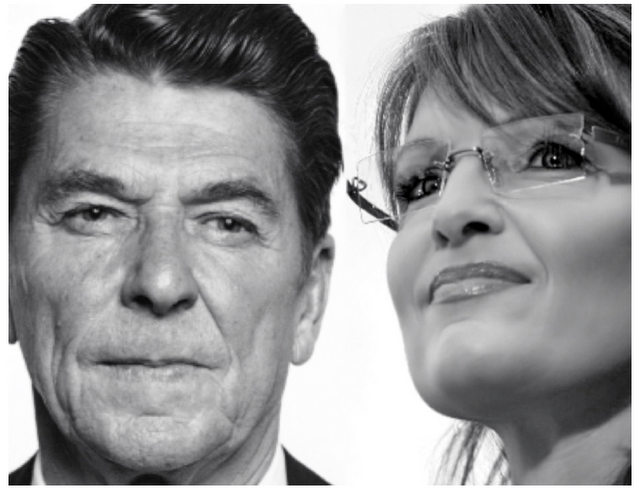
Conservatives have been searching for a new Ronald Reagan, so far without success. But perhaps the Gipper’s heir is in sight. Sarah Palin is remarkably similar to the late president. The Mama Grizzly from Alaska is certainly an American original, and her success in picking political winners against the odds has shown that she is no less a political phenomenon. And the policies she supports are similar – small government and low taxes, plus energy self-sufficiency and a balanced budget.

Just as Reagan was denigrated as an ex-movie actor with limited education, Mrs. Palin is portrayed as an ex-model with limited education, which means she did not go to Harvard or Yale, like most recent presidents and much of the liberal elite. The fact that elites from those institutions have nearly destroyed the economy and bankrupted the country does not reduce their arrogance or diminish their efforts to hold onto power.

Mrs. Palin was roundly criticized when she left the office of governor of Alaska, but since then, she has been riding a populist wave accompanied by Tea Party activists who want a return to common sense and responsible spending. President Obama promised change, which many sought after the budget excesses of the George W. Bush years and the pork-obsessed Republican Congress. But candidate Obama was unclear, telling each audience what it wanted to hear.

Now we know what he meant by change – a much bigger federal government, excessive government spending, harsh new energy and environmental regulations on business, spending in support of labor unions and the bailout of profligate state governments. Under Mr. Obama, the environmentalists are running amok, spending billions on windmills, electric cars and other green-energy schemes while blocking oil drilling in Alaska and the Gulf of Mexico.

The administration does not care that giving money to the states only perpetuates their overspending while doing little to help unemployment. At the same time, their anti-oil bias and excessive regulation are reducing jobs in the all-important private sector. The Keynesian economists in control will not accept that their policies are aggravating the problem.

Most Tea Party activists are grass-roots Americans who see what Washington elites cannot, which is why they keep winning. Sarah Palin has become a political power by encouraging Republican women to run for office and by her amazing ability to pick winners – and often help them win – even against heavy opposition spending. With Mrs. Palin’s support, Republican women are becoming politically successful in growing numbers.

Mrs. Palin has endorsed more than 20 winners in Republican primaries this year, many underdogs who were given little chance against the party’s chosen candidates. Among her notable successes have been the nominations of Nikki Haley, an Indian-American woman, for governor of South Carolina; Carly Fiorina, a former corporate executive running against Sen. Barbara Boxer in California; Rand Paul, a maverick candidate for U.S. Senate in Kentucky; and Susana Martinez, running for governor of New Mexico. Now she is supporting another maverick, Sharron Angle, in her high-profile race against Harry Reid, the Democrats’ Senate leader.

But Mrs. Palin’s biggest success has to be the amazing turnaround in last week’s Alaska election for the Republican Senate nomination. It is very hard to oust an entrenched incumbent such as Sen. Lisa Murkowski, daughter of a former senator and governor, with eight years in office. Her opponent, a virtually unknown lawyer, Joe Miller, was considered a hopeless candidate, with polls showing him far behind and practically no one picking him to win, except Sarah Palin.

Yet, with Mrs. Palin’s endorsement, he came from behind to win the Election Day count by 1,668 votes. The final result waits for the counting of absentee and contested ballots, but the turnaround has nonetheless been spectacular. Mrs. Palin has shown she is a force to reckon with, which is why the left is attacking her so relentlessly.

The question is whether she can apply her keen political instincts and the grass-roots support she generates to become the next Ronald Reagan. The liberal powers clearly fear that she can.


-James T. Hackett is a former Reagan administration official and Heritage Foundation writer.

Ground Zero Mosque Controversy Helps Give Rise to Islamophobia Across the US

By Manzer Munir for Pakistanis for Peace

A man was accused of attempted murder for his vicious knife attack on a Muslim New York City Cab driver Tuesday evening in what is being described as a hate crime by the authorities.

Michael Enright, a college student who also did some volunteer work in Afghanistan, was being held without bail on charges of assault and attempted murder as hate crimes.

In a criminal complaint filed by the New York Police Department, Michael Enright allegedly asked the driver if he was a Muslim. The cab driver, Ahmed H Sharif, an immigrant from Bangladesh, replied that yes he was indeed a Muslim. At this point, Mr. Enright is alleged to have uttered the customary Arabic greeting of “Aslaam-a-laikum” (Peace be with you) and brutally attacked the cab driver with a knife, slashing him badly on the face, hands and neck. During the attack, Mr Enright also uttered “Consider this a checkpoint” to the cab driver, all the while brutally attacking him with his knife.

 Besides a serious neck wound, the cab driver, Mr Sharif, suffered cuts on his forearms, face, and hands while trying to defend himself from the attacker.

Inexplicably, Einright had volunteered with Intersections International, a group that promotes interfaith dialogue between religions and an organization that has also supported the plans for the Islamic center and mosque 2 blocks from Ground Zero. He had also recently returned from Afghanistan where he volunteered to be embedded with a combat battalion so that he could document their experiences as soldiers that Einright wanted to showcase in an upcoming documentary.

Police stated that Einright was drunk and intoxicated at the time of the attack on Mr Sharif and it is not clear what his motive was for perpetrating the violence on the cab driver. There is growing speculation however amongst members of the American Muslim community as well as several civil rights organizations such as the ACLU and CAIR that the attack is a result of the growing Islamophobia and fear amongst the American public as a direct result of the Ground Zero Mosque controversy that has been brewing for weeks and has been front and center in the media and the American public for some time now.

The plan to build an Islamic community center and mosque two blocks from the 9/11 tragedy and the site of the World Trade Center towers became controversial as right wing groups seized on what they believed to be “an insensitive provocation towards the American public”. Muslim groups demanded their First Amendment rights of freedom of religion and pointed to the New York City council vote allowing them the permit to build as reasons for what they are doing as legal and in fact an effort to build bridges between Islam and other faiths following the events of September 11. However, the issue became nationally prominent and controversial by then as fanned by right wing blogs and ad campaigns, the majority of the American public became against the building of the mosque, according to recent polls.

Thankfully, the voice of reason in this whole debate has been none other than the billionaire Jewish mayor of New York, Mayor Michael Bloomberg. His stance and views in support of the mosque as a constitutionally protected right has been welcomed by Muslims as well as civil rights organizations and he should be commended for standing up for what is constitutionally the right thing to do. Briefly, President Obama also came out in support of the group’s right to build the mosque as being a constitutional right, before making statements the next day that “questioned the wisdom” of building it there.

Nonetheless, a link has been made by the right wing, no matter how unfairly, that Islam promotes terror and violence. This can be seen in the fact that the vast majority of Americans now have a negative and unfavorable view of Muslims. For the country to be even having a debate whether a group of Americans can build a house of worship is a testament to how far things have regressed.

No one would ever have thought that a constitutionally protected right such as that of freedom of religion would ever seem controversial. Many have argued that only the area around Ground Zero is off limits to Muslims and they are free to build their mosques elsewhere. This does not appear to be the case as mosques thousands of miles away from Ground Zero in California, Tennessee, Ohio and elsewhere across the country have now come under heavy opposition by local zoning boards and people in those communities. The fear and hatred of Muslims is becoming a growing problem as the Ground Zero Mosque controversy has began to fuel acts of violence against Muslims as seen in the attack on the NYC cab driver. It is a message that is being sent to the American public that Muslims in the United States do not deserve the same rights and privileges enjoyed by all others. In fact, there is an attempt to link all mosques to terror somehow, which is very offensive to millions of peaceful Muslims who abhor violence and who live decent hard working lives in their communities.

At first I was not happy to learn that Muslims planned to build a mosque near Ground Zero as I knew that this would become controversial. But as the opposition to mosques has grown across the nation, and not just for building near Ground Zero, but hundreds and thousands of miles away, it has become clear that this anti-mosque movement is not just about that hallowed area near the World Trade Center site but is in fact becoming an opposition to the religion of Islam as a whole.

This idea by the opponents of the mosque and the right wingers that somehow it is perverted and insensitive to build a mosque several blocks from Ground Zero is in reality only true if we buy into the belief that Muslims and Islam brought down the towers and not a handful of radical extremists of the religion of Islam. If we believe that mainstream Islam itself was responsible for all those deaths on American soil and not Osama Bin Laden and his Al-Qaida network, only then would building the mosque there be insensitive. But for us to somehow associate the whole religion of Islam of over 1.5 billion people by the actions of 19 terrorists is ridiculous.

It is my fear that attacks similar to the one a few days ago on the NYC cab driver will continue to grow as we allow an environment of hate to perpetuate and grow against a group of people. At the very least, this opposition to mosques across the country will certainly grow and continue to spread the notion that ALL Muslims are violent and terrorists. This is simply not true as the 5-7 million American Muslims and the 1.5 billion Muslims around the world will attest.

We must remember that we have a war on terror and not a war on Islam. Far away from Ground Zero in cities across the US as more and more mosques come under opposition in their communities, we must hold steadfast to our ideals, principles and to the US Constitution. As the best nation in the world, we have to defend our ideal and the basis of what makes us the best and that is the US Constitution. Speaking as an American and not even as a Muslim, I know that if we stop defending it for fear of being distasteful, insensitive, or inconsiderate, then we lose what makes us who we are as the freest nation in the world and we must not ever let that happen!

-Manzer Munir, a peace activist, and the founder of Pakistanis for Peace, is a freelance journalist who writes for www.PakistanisforPeace.com and other online journals.

Analysis: US Struggles With Image in Pakistan

By Foster Klug  for The Associated Press

U.S. efforts to help Pakistani flood victims will give America’s image there a boost, but not much of one.

The U.S. reputation in a country the Obama administration sees as crucial to defeating the Taliban and al-Qaida already is so tarnished that even millions of dollars from Washington and the work of U.S. soldiers and diplomats probably will do little to change the thinking of most Pakistanis.

After all, U.S. flood aid is only a drop in a bucket already filled with billions of American dollars that have been shipped to Pakistan since the Sept. 11, 2001, terror attacks against the United States.

All that money, apparently, has done little to impress. A recent Pew Foundation poll found nearly six in 10 Pakistanis viewed the United States as an enemy; only one in 10 called it a partner.

Still, the Obama administration does not have the option of doing nothing.

The U.S. interest in helping goes beyond easing the suffering of the more than 17 million people affected by the floods. Washington also wants Pakistan’s weak civilian government to succeed so that it does not lose ground to the aid work of Muslim charity groups associated with militants.

Making sure the pro-U.S. government looks good, or at least competent, is important to the Obama administration as it encourages Pakistan in its fight against militants operating along the border with Afghanistan, where the United States is fighting a 9-year-old war.

Robert Hathaway, director of the Woodrow Wilson Center’s Asia program, warns against expecting U.S. aid to immediately turn around the deep distrust many Pakistanis feel toward America. “This relationship has a lot of baggage, and it will take an incredible amount of hard work over many years really to rebuild,” Hathaway said.

Many in Pakistan see the United States as interested more in killing insurgents than in helping the country’s poor. Past U.S. support for former Gen. Pervez Musharraf and other military rulers has fueled a perception that Washington cares little about Pakistan’s democracy. Then there is the idea in Pakistan that the United States is anti-Muslim, a view that could be strengthened by opposition to a mosque planned near the World Trade Center site that Islamic extremists destroyed in 2001.

Dan Feldman, the Obama administration’s deputy special representative for Afghanistan and Pakistan, recently bristled at the notion that U.S. relief work is an attempt at image improvement. “We’re doing it as a response to a humanitarian crisis,” he said.

Still, the United States has made sure to spread the word of its response to the floods aggressively, with senior U.S. officials, including Secretary of State Hillary Rodham Clinton, making regular statements.

Feldman said in a briefing this week that the United States is providing up to $150 million in aid. U.S. military helicopters have evacuated thousands of people and delivered hundreds of tons of relief supplies. Among those supplies are 700,000 mosquito nets to help families ward off malaria, giant water treatment machines to provide safe drinking water and tens of thousands of blankets and inflatable boats to help isolated villages.

For people saved from rising waters by U.S. helicopters or given lifesaving medicine or food, America’s image will rise. U.S. aid cannot reach every flood victim, however, and not everyone getting the aid will know it is from the United States.

Along with worrying about helping as many people as possible, the Obama administration also must keep an eye on insurgents who know the people and the terrain and can use the flood to build support among its victims.

Jason Campbell, a South Asia analyst at the Rand Corp. think tank, said Washington understands that any “gaps in U.S. assistance will likely be filled by charities that, if not directly tied to militant groups, are at least sympathetic with them.”

The U.S. aid could provide another boost to counterinsurgency efforts. The sooner the Pakistani military can scale down its relief work, the sooner it can return to fighting insurgents.

Teresita Schaffer, a former State Department South Asia specialist, said the United States must do everything it can to help. But, she said, “I don’t think there will be an attack of the warm fuzzies just because we’re providing some helicopters.”

U.S. Strategy in Afghanistan May Involve Greater Use of Special Operations Forces

By David S. Cloud and Julian E. Barnes for The Los Angeles Times

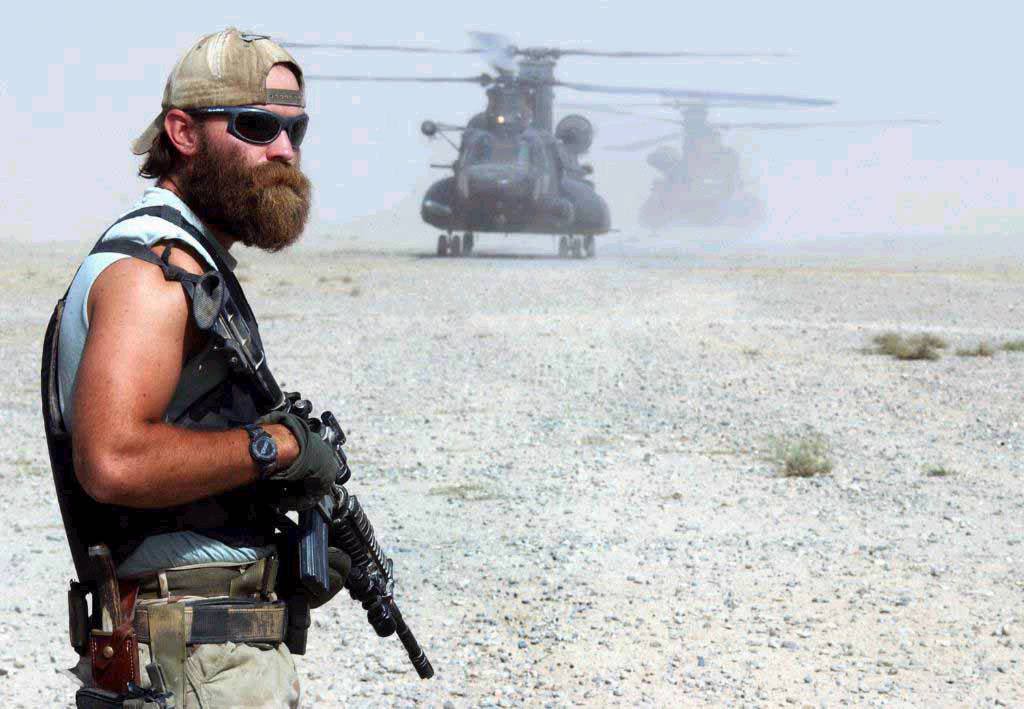
U.S. special operations troops in Afghanistan have stepped up a campaign to kill or capture insurgent leaders, senior U.S. officials say, an effort that began in March and is likely to expand as Army Gen. David H. Petraeus looks for ways to show progress.

Senior U.S. military officials said the raids by special operations troops have killed or captured 186 insurgent leaders and detained an additional 925 lower-level fighters in the last 110 days. That would mark a rare success for American troops in a war that has otherwise gone poorly in recent months.

The operations have been most effective in and around the southern city of Kandahar and in eastern Afghanistan, according to American military officials, who requested anonymity in discussing information that had not been released publicly, and outside analysts. Already, they said, there are signs in these areas that roadside bomb attacks have decreased and the Taliban control is weakening, as senior leaders are killed or captured.

A successful effort would support the contention made by Vice President Joe Biden and other administration officials who are skeptical of the military strategy in Afghanistan: Special operations troops, with their small footprint and skill at tracking and killing the enemy, can be more effective than conventional forces in the difficult conflict the U.S. faces in that country.

Biden has argued for shrinking the U.S. effort and relying largely on special operations troops and airstrikes to disrupt the Taliban and Al Qaeda, officials say.

President Obama has sided so far with those who favor using large numbers of U.S. troops as part of a far-reaching counterinsurgency effort, a point that he reiterated last week in naming Petraeus to replace Army Gen. Stanley A. McChrystal as commander of the war in Afghanistan.

But if the special operations effort is the most successful element of the war effort, Biden and those who agree with him could be in a stronger position to argue for shrinking the U.S. military presence when the strategy is reexamined, perhaps as soon as the December review Obama has promised.

Supporters of the more limited strategy advocated by Biden believe special operations should be the main military effort in Afghanistan. Petraeus, however, argues that special operations troops are just one tool, albeit a highly effective one, in fighting an insurgency.

While leading the U.S. military force in Iraq, Petraeus advocated a comprehensive counterinsurgency strategy aimed at combating militants with both special and conventional forces. He is expected to utilize the same strategy in Afghanistan.

Current and former Petraeus advisors also said the general will try to quickly reverse the perception that the Afghanistan war is going badly. When he appears before the Senate on Tuesday for a hearing on his nomination to lead the allied war effort in Afghanistan, he is likely to emphasize recent successes by special operations forces.

“Trumpeting the successes of ISAF [the North Atlantic Treaty Organization’s International Security Assistance Force] operations, Afghan operations, should be part of the strategy,” said Peter Mansoor, who served as Petraeus’ executive officer in Iraq. “The strategy is clearly to knock the Taliban back, but if you don’t show the world that is happening, what is the use?”

A senior military official in Afghanistan said the killings of leaders since March have reduced the effectiveness of the Taliban, making the militant movement less capable of threatening the Afghan population.

Officials did not release the list of 186 insurgent leaders they say have been killed since March. Last week, however, they did name two insurgent leaders slain last month in Kandahar.

In eastern Afghanistan, the U.S. has been trying to take out key commanders in the Haqqani network, a Taliban-aligned insurgency that maintains a safe haven in Pakistan, said Jeffrey Dressler, a researcher at the Institute for the Study of War in Washington.

“We have seen over the last four weeks an increase in special operation maneuvers,” Dressler said. “And it is having a significant impact on the Haqqani network’s ability to operate.”

But Haqqani fighters still are able to use their base in Pakistan’s North Waziristan region to try and mount suicide bombings across the border in Kabul, the Afghan capital, and has been linked to several recent attacks, including a mortar barrage that disrupted a peace conference convened by Afghan President Hamid Karzai this month.

U.S. officials hope that continued special operations raids against insurgent leaders will encourage lower-level followers to lay down their arms and reconcile with the government in Kabul.

Skeptics of the administration’s overall strategy see the results of the special operations campaign as a powerful argument for shifting away from the counterinsurgency campaign crafted by McChrystal toward the strategy advocated by Biden.

“This is a great opportunity to reconsider the direction of the strategy and move it more towards what is showing some success, the strategy Vice President Biden advocated from the beginning,” said Charles J. Dunlap, a retired Air Force major general who writes extensively on counterinsurgency strategies.

A plan focused first on killing insurgent leaders will ensure that the U.S. does not have to remain in Afghanistan for decades building up the central government, he said.

But advocates of the current strategy said special operations forces alone can disrupt insurgent movements, hindering their advance, but are not enough to stabilize a country and help it take charge of its own security.

“There is a misconception that in counterinsurgency there isn’t any sort of assassinations or special operation forces doing targeted killings,” Dressler said. “As we have seen from Iraq, that is not the case. It is a critical part of counterinsurgency.”

BP Stands for Let’s Blame Palin for the Recklessness of “Drill Baby Drill!”

By Manzer Munir for Pakistanis for Peace

As the BP Oil Spill passes into its 61st day, I began to wonder what the BP in British Petroleum could also stand for. Here is a list of things that I and some friends have come up with that could be the abbreviation for BP.

BP= Bad Planning- The Bad Planning and lack of a coherent emergency response in the event of a rig collapse such as the one that caused the BP Oil Spill and has made a bad situation worse as the company, now still in charge 61 days after a disaster of their own causing, struggles to find a way to stop the leak.

BP= Barely Plugging- More than 6 weeks after the spill started, BP was able to attach a pipe to the well at the bottom of the ocean and is able to siphon 250,000 gallons a day (one tenth of what is estimated to be spilling into the Gulf each day). This clearly is not a solution as this is Barely Plugging the oil spill that continues to poison the ocean and all that live in and around it.

BP= Beach Pollution= See also Bathing Prohibited. The oil from the spill has caused Beach Pollution in Louisiana, Mississippi, Alabama, Texas, and Florida. The loss of revenue by the towns and cities in these states that would normally welcome millions of tourists in the summer months is going to have a very damaging effect to many of these states already reeling from the worst recession since the Great Depression.

BP= Bankrupt Probably- Many experts are saying that BP will not be able to financially survive this disaster and most likely will go Bankrupt Probably. If that happens, will the American public foot the bill as we did for the Wall Street failure? One thing is for sure, the company is looking at a very bleak future both criminally and financially.

BP= Be Prepared- This disaster shows the lack of planning for events such as these and underscores the reason for oil companies as well as government agencies such as the Minerals Management Service to Be Prepared in the event of disasters such as this spill. A lack of an emergency plan both by BP and the government is also at fault for making this disaster as bad as it has been.

BP= Bad People- Are the executives at BP Bad People for being at the helm of a company that caused the greatest disaster in history and worse yet for calling the residents of the Gulf “Small People” and showing great indifference to the plight of the residents of the Gulf and to the American public?

BP= Barren Planet- The oil spill is causing irreparable damage to the environment and to the ecology of the ocean and its long term effects are unknown by scientists at this point. One thing is for sure, water is the source of all life on the planet and as we kill the ocean and all living creatures in it with this oil spill, we are guaranteeing ourselves future where life will be hard to sustain on a Barren Planet.

BP= Behemoth Plume- The oil spill has created a Behemoth Plume that is at least 15 miles wide and 3 miles long and growing. This plume is a dead zone with no oxygen and a place where no living creature can survive. As the oil continues to flow and goes unchecked the size of this plume grows and there are reports of second and third oil plumes now forming in the Gulf.

BP= Beyond Pathetic- 61 days and counting and the leak has not been stopped. This is beyond pathetic for BP, and the government’s oversight departments.

BP= Be Patient- How long can the people of the Gulf of Mexico as well as the American people wait for BP and the government to fix the spill and stop the oil leak, not to mention clean up the gulf? And is that even a possibility?

BP= Barely Progressing- 61 days into the oil spill and it seems we are Barely Progressing as oil continues to spill into the Gulf at alarming rates.

BP= Bad Publicity- No amount of new splashy television or print advertisements will replace the Bad Publicity that the company of BP has received. Rarely in the annals of corporate history has a company ever faced such a public relations nightmare as has BP and it will be interesting to see if it ever recovers from this or ends up going under, much like the rig.

BP= Big Problems- The BP Oil Spill is perhaps the biggest of the Big Problems facing the Obama administration and the American people. The economy can be eventually fixed, the housing prices will come back up, people will eventually get rehired, wars will eventually be won or lost and will come to an end, but an ecological and environmental disaster such as this spill we will never fully recover from as a planet.

BP= Birds Poisoned- Tens of thousands of Birds Poisoned as a result of the oil spill. Many birds and animals that are unique to the Gulf region are feared irreparably harmed due to the disaster.

BP= Black Plague- The oil spilled into the Gulf of Mexico and continuing to do so each day means that this spill has become the Black Plague of death not just to the people and the animals of the area, but indeed quite possibly for marine life and perhaps eventually for the planet as no one knows the true effects of this unprecedented disaster on the ecology of the planet.

BP= Broken Pipeline- The Broken Pipeline at the bottom of the Deepwater Horizon rig in the Gulf of Mexico continues to spill as much as an estimated 1.5 million to 2.5 million gallons of oil a DAY into the ocean!

BP= Blood Pressure- Blood pressure was further raised for those living along the Gulf of Mexico as the administration imposed a ban on all new offshore oil drilling and exploration. This has caused many workers in the area who rely on this industry to feed their families, to be laid off by other oil companies as the government assesses the situation and the safety of offshore drilling.

BP= Boiling Point= The Americans affected by the oil spill that rely on the fishing, boating, and tourism in the area have long reached a Boling Point in their patience with BP and with the government’s response.

BP= Better Prosecute= Attorney General Eric Holder is assigned by President Obama to investigate the BP Oil Spill and into criminal charges against the company are now a certainty, especially given the deaths of 11 workers in the explosion that caused the Deepwater Horizon rig to collapse and start the spill on April 20.

BP= Black Pelicans= Pictures of Black Pelicans and other animals as environmentalists worry that number of dead and affected animals is in the tens of thousands. The animal and sea creatures of the Gulf region are expected to be devastated for many years to come.

BP= Billions Paid- This stands for the billions and billions of dollars already paid by BP and the untold billions that will be paid by them in the future and possibly all of us tax payers if the company goes under and becomes bankrupt

BP= Barack’s Problem- This disaster has become President Barack Obama’s Katrina. But at least with hurricane Katrina, the calamity passed within hours and the government started the clean up and rescue, whereas with the BP Oil Spill this is a disaster that keeps on spewing and keeps on polluting as today is the 61st day the spill has continued to flow. How he has handled himself at the onset of this disaster and its continuation could be the defining moment of his presidency as this is squarely Barack’s Problem, unlike the economy, Iraq, and Afghanistan, which all he inherited.

BP=Bankruptcy Protection- See also bankruptcy probably. The amount of damages and compensation that BP will have to pay out in claims and also in penalties could wipe out the company and it may have to seek Bankruptcy Protection.

BP= Brand Problems- See also Bad Publicity. The BP brand has been damaged forever and no amount of advertisements will change the public image and Brand Problems that the spill has created for BP.

BP= Bleeding Planet- The unchecked, endless, and prolonged seepage of the thick crude oil into the ocean is causing death to millions of wildlife and is making earth a Bleeding Planet which one wonders whether we can survive this catastrophe.

BP= Bathing Prohibited- See also Beach Polluted, hence bathing prohibited. And if no beach visitors, no revenue for many states like Florida from tourists and many other places in and around the Gulf of Mexico that depend on the billions of revenue dollars from the fishing and tourism.

BP= Blame Palin- Probably one of the most poignant points of this article and one ignored by major media publications is that there is a correlation to the BP Oil Spill and Palin’s “Drill Baby Drill” slogan during the presidential campaign. Her proposals of allowing the oil drilling everywhere during the 2008 campaign, including in some of America’s most pristine places such as Alaska, galvanized the oil industry and revved them up into a “Gold Rush” mentality where short cuts were taken and oversight lost by the government in a greedy push for more oil saw sloppiness and Bad Planning cause the worst environmentalist disaster in history.

BP= Bye Planet- If the oil spill continues to go on and spill up to 2.5 million gallons into the ocean each day, how long before it engulfs all our oceans and kills a large portion of plant and animal life on the planet? Would that mean the end of the world when that happens?

So in conclusion, BP stands for The Black Plague, because of the Bad Planning,  now let’s Blame Palin, for the Beach Pollution casued by Broken Pipes, with Billions Paid, now it’s Beyond Pathetic, as we’re Barely Progressing, while Black Pelicans, become Barack’s Problem, and the Behomoth Plumes, mean bye Bye Planet!
India, Pakistan And U.S. Strategic Dialogue

By Apoorva Shah for The American Enterprise Institute

At this week’s first U.S.-India Strategic Dialogue in Washington, D.C., talks between the two countries will cover the spectrum of bilateral and multilateral issues, from trade and economic cooperation to terrorism and regional security. 

American participants may even feel the need to bring up India’s strained relationship with Pakistan. But it would serve them well to first consider a Times of India story from earlier this year, which went almost unreported in the United States.

According to an interview in the Indian newspaper with former Pakistani foreign minister Khurshid Mahmud Kasuri, India and Pakistan in 2007 were days away from reaching a comprehensive accord on their territorial dispute over Kashmir, the axis of the countries’ six-decade-long rivalry and casus belli of three wars between the two nations.

Kasuri, Pakistani leader General Pervez Musharraf’s chief diplomat from 2002 to 2007, said in April that the secret deal had been in progress for more than three years and would have led to a full demilitarization of both Indian- and Pakistani-occupied areas of Kashmir and would have awarded the region a package of loose sovereignty at a point “between complete independence and autonomy.” Not only were Indian and Pakistani leaders on board (including, most importantly, the Pakistani military), so was every Kashmiri leader except for one hard-line separatist, Syed Ali Shah Gilani.

The accord was slated to be signed during Indian Prime Minister Manmohan Singh’s scheduled visit to Islamabad in February and March of 2007, but before the trip ever occurred, a country-wide lawyers’ protest in Pakistan had turned into a broader opposition campaign against General Musharraf. The rest of the year would be one of the most tumultuous in Pakistan’s history, marked by the siege of the Red Mosque in July, the return of former Prime Minister Benazir Bhutto in October and her subsequent assassination in December, and the return of popular leader Nawaz Sharif from exile in September.

By August of the following year, public opposition had peaked, and Musharraf was forced to resign his post as president, ending his decade-long tenure as leader of Pakistan. After Musharraf’s ouster, it appears that the deal had lost much of its momentum.

Then in November, the accord suffered another setback as ten Lashkar-e-Taiba terrorists took India’s largest city, Mumbai, hostage for almost 72 hours, killing more than 160 people and injuring scores more. The attack was quickly coined “India’s 9/11,” and the evidence pointed directly to Pakistan, where the gunmen had been trained and equipped.

In protest, India cut off all diplomatic talks with Pakistan almost immediately; there were even rumors that the country was preparing military action against its northern neighbor. Within a span of less than two years, the India-Pakistan relationship had traveled the spectrum from apparent rapprochement and compromise to mutual suspicion and renewed hostility.

Since then, the signs have only appeared to worsen: for example, in 2009, when Indian Army chief General Deepak Kapoor publicly introduced revisions to his country’s “cold start” military strategy.

This military modernization and training program, which was developed in response to the army’s sluggish mobilization to the Pakistani border following the December 2001 terrorist attacks on the Indian parliament, remained mostly under the radar for most of the early 2000s, relegated to defense journals and the occasional news article.

It was only following the 2008 attacks that “cold start” began to receive renewed attention from the media on both sides of the border and was more publicly discussed by Indian military officials like General Kapoor. Indeed, it appeared as if the next breakthrough in Indo-Pak relations would occur through hard rather than soft power.

Concomitantly, India and Pakistan’s post-Mumbai attempts to return to diplomatic talks also appeared fraught with danger and seemed to only fuel more discord rather than reconciliation.

In February this year, Indian Foreign Secretary Nirupama Rao and her Pakistani counterpart Salman Bashir resumed high-level talks for the first time since November 2008, but both sides appeared unprepared (they could not even agree on the specific subject of the talks prior to sitting down) and spent more time bickering through separate press conferences.

For example, while Bashir accused India of covertly supplying weapons to militants in Pakistan’s Balochistan province, Rao complained that Pakistan had “not gone far enough” in the 2008 Mumbai attack investigation. As India presented a dossier of evidence against one of the Mumbai attack perpetrators, Pakistan responded by calling it a “piece of literature not a dossier.”

It’s hard to see how any progress could be made on improving Indo-Pakistani relations in the midst of this hostility. But does Kasuri’s revelation provide hope that a resolution on Kashmir could be revived? First, excepting Musharraf and Kasuri, many of the supporters of the failed 2007 accord—including Pakistani Army Chief of Staff Ashfaq Kayani, Pakistan’s current track II special negotiator Riaz Mohammed Khan, and, on the Indian side, Prime Minister Singh—still hold high-level positions in their respective governments.

And second, the secrecy of the original deal shows that outward indifference, or even enmity, between the two countries can belie an internal desire for change. In a relationship where hostility is status quo and where amicable relations seem aberrant if not bizarre, a furtive accord lets ruling elites make slow, institutional changes in the relationship while preserving outward form and precedent. It also allows deal-makers to keep tempestuous domestic politicians and party leaders at arms length while deliberating sensitive issues.

Even India’s traditionally hyperactive media seems to understand: A subsequent editorial in the Times of India noted, “the fact that such a deal exists emphasizes the importance of maintaining contact with Islamabad.”

So what can we expect in the months ahead? Indian officials will undoubtedly continue to pressure Pakistan to confront Lashkar-e-Taiba and other terrorist groups that plan to attack India, and another attack could indeed result in Indian military action. There will also be more bickering between the sides—on water rights, “most-favored-nation” clauses, and even cricket.

Yet the revelation of the secret deal should be both a lesson and a sign of hope. It is a lesson because it proves that progress on an entrenched conflict like Kashmir can occur without the United States’ public mediation.

American officials at the U.S.-India Strategic Dialogue this week should keep in mind that the accord was pursued during the final years of the Bush administration, in which the United States made it a point to separate the U.S.-India relationship from the more sensitive Indo-Pak relationship.

It is a sign of hope because, despite the outward appearance of discord between the countries, internally, leaders on both sides have—at least at some point in recent memory—wanted to move forward on a resolution.

As Pakistan continues its domestic offensive against terrorists and India pursues closer economic engagement with its northern neighbor, wanting change may be the best sign that change is on the way.

A Journey into America, Past and Present

By Akbar Ahmed for The Guardian

Muslims are for Americans what the Russians were for Churchill: “A riddle, wrapped in a mystery, inside an enigma.” While the post-9/11 period brought an interest in the Qur’an and its language, the gap between Islam and mainstream America has steadily widened. It remains more urgent than ever for the US to comprehend Islam, a religion practised by one out four people in the world, not only for the sake of its ideals (which include religious tolerance) but also for its geopolitical needs and strategy as America remains militarily involved in Afghanistan, Iraq, Pakistan, and Somalia.

The reality is that Islam remains unknown to most Americans, who, on top of all the other insecurities and fears about the religion, have recently added another: the “homegrown terrorist”, which President Obama has named as one of his administration’s top national security priorities.

I have been in a unique position to observe America’s attitudes towards Islam, travelling with a team of young Americans for over a year throughout the length and breadth of the United States to over 75 cities, visiting more than 100 mosques and talking to thousands of Muslims and non-Muslims.

I realised that it was impossible to study Islam in America without studying America itself and its identity, which I determined goes back to the first Mayflower settlers. In short, there are three basic identities that define American society: primordial, pluralist, and predator. Primordial identity is rooted in the seminal landing at Plymouth and provides the foundation of the two other identities. The aim of the early settlers was to survive and create a Christian society under the rule of law. The majority of the Founding Fathers in the next century would subscribe to what I call pluralist identity – believing in civil rights and liberties, religious freedom and tolerance.

America has a strong foundation in which to solve the challenge of the Muslim community if Americans look to their past and revive the spirit of some of their truly great leaders. Roger Williams, in the 17th century laid the groundwork for separation of church and state and welcomed people of other faiths. The state, said Williams, should allow all religions, including the “Turkish” (Islamic).

Thomas Jefferson owned a Qur’an and we found a statue of Jefferson at the University of Virginia advocating “Religious Freedom, 1786” with the words God, Jehovah, Brahma and Allah carved on the tablet he embraces.

A treaty, which was sponsored by George Washington and signed by John Adams in 1797, pertained to Tripoli and assured that the United States “has in itself no character of enmity against the laws, religion or tranquility of Musselmen.” Even the Prophet Muhammad was praised by the Founding Fathers; Adams called him one of the world’s “sober inquirers after truth” alongside such figures as Confucius and Socrates, and Benjamin Franklin cited the prophet as a model of compassion.

As primordial identity was taking shape at Plymouth, however, and new trends were already emerging. The more zealous of the settlers argued that the land was given to them by God, and they were to occupy it regardless of who was living there. As their confidence grew, they began to prey on the weaker natives, justifying their force in the name of protecting the community, generating an arrogance that did not encourage self-reflection and making it easy to demonise and destroy the enemy. This marked the birth of a predator identity.

It is this understanding of American society which allows us to put the Muslim community in America into context. Our findings from the field bring both bad news and good news. The bad news is that every one of the major American Muslim categories – African Americans, immigrants, and converts – has been involved in recent violence-related cases in the United States. In view of the bankruptcy of Muslim leadership and American failure to truly understand the Muslim community, it is not difficult to predict that violence will increase in both frequency and intensity. I am sorry to say that the government and its various agencies still do not have an adequate policy towards the country’s Muslim population. Some Muslims are affected by US actions taken in response to 9/11, which included the arrests and deportation of thousands, prompting many others to flee the country. These realities have reinforced the sense of being a mistrusted community. Others resent the Islamophobia they see in the media.

The good news is that American and Muslim leaders alike are now conscious of the problem of terrorism and its scale and are actively discussing the position of Muslims in America. Some of our findings challenge the received wisdom telling us that most Americans are hostile to Muslims. Of those questioned for our study, 95% said that they would vote for a Muslim for public office, for example, and an equally high number of respondents had no problem with Muslims being “American”, although some inserted “if” clauses. We found a patriotic and vibrant Muslim community committed to contributing to the country. Dialogue and understanding are urgently recommended.

America stands at a crossroads. It will have to choose either to embrace the Founding Fathers’ pluralist vision or the America that compromises the Constitution and the values of the Founding Fathers. Primordial and predator identity remain alive and well in today’s United States. In one way or another, people everywhere have a stake in America resolving its identity because America’s unique, universal vision of society formulated by its Founding Fathers attracts the world. A new chapter in the history of the United States has opened after 9/11 and America’s future will be decided on how it resolves its ongoing engagement and entanglement with Islam.

Pakistan Needs Chemotherapy, Says Obama

From The Economic Times

US President Barack Obama has said that there is growing recognition among Pakistani leaders that the `cancer’ of terrorism is the
primary threat to Pakistan’s sovereignty and not India.

“I think there has been in the past a view on the part of Pakistan that their primary rival, India, was their only concern. I think what you’ve seen over the last several months is a growing recognition that they have a cancer in their midst; that the extremist organisations that have been allowed to congregate and use as a base the frontier areas to then go into Afghanistan, that that now threatens Pakistan’s sovereignty,” Mr Obama said at a joint press conference with Afghan president Hamid Karzai. He further maintained that he was encouraged by what he has seen from the Pakistani government over the last several months.

“But just as it’s going to take some time for Afghanistan’s economy, for example, to fully recover from 30 years of war, it’s going to take some time for Pakistan, even where there is a will, to find a way in order to effectively deal with these extremists in areas that are fairly loosely governed from Islamabad,’’ he maintained.

His remarks follow some tough talking by US secretary of state Hillary Clinton and show Washington’s ‘dual policy’ towards Islamabad. “He is telling Pakistan we still have problems with you but you are still important to us,’’ said former Indian envoy to Pakistan G Parthasarathy. “He has gone out of his way to save Pakistan.

Though New Delhi has initiated the dialogue process with Islamabad, there is low expectation of any real outcome on the terror front. Experts believe that the Pakistani Army — which is the central figure — has not shed its anti-India policies and continues to perceive terror as a state policy.

US secretary of state Hillary Clinton issues a statement that sounded tough… but the real issue is has the military leadership in Pakistan changed its stand,’’ asked former foreign secretary Lalit Mansingh. “I don’t think there is any change in Pakistan’s approach on issue of terrorism.’’ He further noted that this kind of observation from the US on Pakistan has come earlier too.

Mr Obama maintained that the US aim is to build trust and continue working with the Pakistani government. “Our goal is to break down some of the old suspicions and the old bad habits and continue to work with the Pakistani government to see their interest in a stable Afghanistan which is free from foreign meddling — and that Afghanistan, Pakistan, the United States, the international community, should all be working to reduce the influence of extremists in those regions,’’ he said. He also said that the US is encouraged by Pakistan’s willingness to start asserting more control over some of these areas. “But it’s not going to happen overnight. And they have been taking enormous casualties; the Pakistani military has been going in fairly aggressively. But this will be a ongoing project,’’ he added.

Polls Show Obama’s First Year Deemed Dismal