Posts Tagged ‘ September 11 ’

Pakistan’s Mosques, Media and Intolerance

By Zeeshan Haider for Reuters
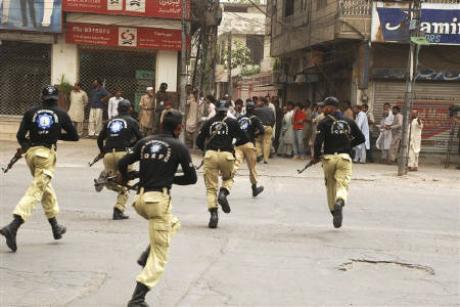
Pakistan has been fighting Islamist militants for years, but tough measures are needed to overturn a system breeding religious intolerance after the long failure of authorities to confront mullahs and hardline groups.

Analysts say the notion of religious mistrust is deeply entrenched in the predominatly Muslim country — even in the school system — and it is now up to leaders to mobilise public.

Last week’s massacre in the city of Lahore of more than 80 Ahmadis – a minority religious sect deemed non-Muslim and heretical by the constitution – has generated a heated debate in Pakistan, a U.S. ally, on how to tackle the issue.

In a sign of how hatred is propagated, The News newspaper said one of the two surviving gunmen caught by security forces said he had been persuaded that Ahmadis were “blaspheming” Islam.

Identified as Abdullah, he told investigators that his mentors had him believe that Ahmadis were drawing caricatures of Prophet Mohammad during a recent online contest and “so their bloodshed was a great service to Islam”, the newspaper said. That raised alarm bells in a country combatting militancy.

“The nagging feeling that the government has already lost the battle against extremism has now acquired the force of conviction,” Zafar Hilaly, a former ambassador, wrote in The News last week.

After joining the U.S.-led war on terrorism after the September 11, 2001 attacks on the United States, Pakistan mounted a crackdown on militancy, outlawing several groups, arresting hundreds of suspects and warning hardline mullahs against delivering hate speeches and distributing hate literature.

The government also vowed to reform tens of thousands of Islamic seminaries, known as madrassas, many of which are considered as breeding grounds for militancy. Almost none of these measures, however, has been implemented.

Most outlawed groups have re-emerged under new names. Radical clerics still deliver fiery speeches against sects. The U.S. Embassy acknowledged the difficulties, given the importance placed on Pakistan helping Washington battle al Qaeda and its extremist allies.

“We recognise this is a problem,” an embassy official said, adding that the embassy encouraged Pakistanis to take part in exchange programmes to see a multi-faith United States.

Analysts say Pakistani leaders dating back to the 1970s, however popular, took no action to counter radicals. Hasan Askari Rizvi, a Lahore-based political and security analyst said governments have lacked the stomach to implement reforms, particularly in school curricula.

“In textbooks used in government schools, Pakistan is equated with Muslims…They teach Pakistan is a country only for Muslims. They don’t teach that non-Muslims also live here,” he said.

Journalist and analyst Ahmed Rashid described school programmes as “the most sensitive issue. But it is an issue in which any attempt to change the curriculum would have a whole host of fundamentalist groups oppose you.”

In 1974, Pakistan’s first popularly elected Prime Minister, Zulfikar Ali Bhutto, bowed to Islamic groups and won approval of a constitutional amendment declaring Ahmadis as non-Muslims. He also switched the weekly day off from Sunday to Friday.

But much of the upsurge in militancy occurred in the late 1970s and 1980s during the “Islamisation drive” by late military leader General Mohammad Zia-ul-Haq and Pakistan’s support for the U.S.-baked Afghan jihad or holy war against the Soviet invasion which saw a rapid growth of radical groups and madrasas.

Haq introduced several laws, such as the notorious blasphemy law, which are deemed discriminatory against non-Muslim minorities and fuelled tensions between different Muslim sects. Subsequent governments did nothing to reverse the laws.

Military dictators, who ruled Pakistan for more than half of its existence, have also used militant groups to further policy objectives in Afghanistan and India and marginalise liberals.

“In earlier years, in order to pursue its foreign policy using the instrument of jihad, the state actively sought to create a religiously charged citizenry,” said Pervez Hoodbhoy, a physicist and analyst. “But, now that the Pakistani military and political establishments have become a victim of extremism, they are foundering in confusion.”

Former President Pervez Musharraf, a military ruler, though he espoused a modern and liberal version of Islam, repeatedly failed to get the laws reviewed while in office from 1999-2008.

Former Prime Minister Benazir Bhutto, a pro-West politician and a vocal opponent of the militants, was killed in December 2007 in a suicide attack blamed on militants linked to al Qaeda. Civilian leaders are made even more cautious now in tackling radical groups by the tremendous fear of militants who have unleashed bomb and suicide attacks across the country.

“Religious intolerance is getting worse in Pakistan because the political leadership lacks the will to fight this,” said analyst Rizvi. “They don’t want to face the wrath of mullahs.”
Pakistan, Training Camps, and a Culture of Terror

By Manzer Munir for Pakistanis for Peace

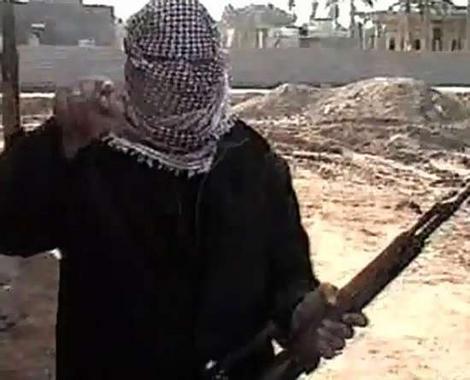
The arrest of the would be Times Square bomber Faisal Shahzad has brought increased scrutiny to the fact that Pakistan has become the central destination for the world’s would be terrorists and extremists. This should not come as a surprise to anyone as there have been reports of everyone from the militant Muslims of the Philippines to the Arab Al-Qaeda extremists of Yemen and Saudi Arabia who have all trained side by side with each other. Now Pakistan and Pakistanis everywhere are increasingly coming under suspicion due to the numerous instances of Pakistani men’s involvement in attacks and attempted terrorist attacks.

The London Tube bombings in 2005 by young Pakistani British men, the Mumbai attackers in late 2008, and the attempted Times Square bombing by Faisal Shahzad all are linked by the fact that all the perpetrators in these instances were Pakistani men and that they all got their schooling at terrorist training camps in Pakistan.

Something I have never understood is how are these guys from all over the world able to come to Pakistan and simply find training camps to attend? If these camps are so easy to find by your average would be terrorist wanna-be, then how come with the billions being spent on the war on terror are we not able to find the locations, the leadership, and the infrastructure of these camps and destroy it? I know that the US government has been aiding Pakistan with billions of dollars for the fight against the Taliban and Al Qaeda. So how come are there still terrorist training camps and extremist groups in throughout Pakistan?

Part of the problem as to why there are still terrorist and militant camps in Pakistan is because a number of Pakistan’s army leadership and specifically Pakistan’s spy agency, Inter-Services Intelligence (ISI), view India as the ultimate threat to Pakistan’s security and sovereignty. And in order to fuel a low level insurgency in the disputed state of Jammu and Kashmir, the rationale was to use the militants and insurgents in causing maximum havoc and to use them in the decades old war with India over the disputed Kashmir region.

The real issue is that the groups such as Lashkar e-Taiba and Harkat-ul-Mujahideen were originally founded by the ISI to help obtain volunteers for the Pak army who would be willing to fight India and aid the militancy in Indian Kashmir. Pakistan’s army and the ISI used the same technique used by the US during the Soviet-Afghan war where militants were encouraged to wage a ā€œjihadā€ against the Russians and were now asked to do the same in Kashmir against India. So this climate of tacit state approval for militancy and the funding and support for militant groups took root at the time of the Russian invasion of Afghanistan and continued after the Soviet retreat.

Once the Soviets left, warring factions or warlords in neighboring Afghanistan led to great instability and hardship for the average Afghani who was just trying to survive in a thoroughly destroyed and desperate country. During this time, students or Talibs of local madrassas in Afghanistan and neighboring Pakistan, emerged as a force as they started to defeat various powerful warlords around Afghanistan with the help of Pakistan’s ISI.

These young men, and in many cases boys, were made up mostly of Afghan refugees who had studied at Islamic religious schools in Pakistan during the Soviet-Afghan war. These young Talibs had received important training, supplies and arms from the Pakistani government and particularly from the ISI as well as logistical and financial support. The ISI historically supported the Taliban throughout the 1990s, viewing it as a counter to what they regarded as an Indian-supported Northern Alliance. In a matter of months, the Taliban captured many key provinces inside Afghanistan and soon Kabul and declared themselves rulers of the country. Only three countries ever did recognize the Taliban government’s 5 years in office running Afghanistan from 1996 to 2001, and they were United Arab Emirates (UAE), Saudi Arabia, and Pakistan.

For the Pakistani government, the psychological thinking has always been figuring out this: How do you contain India to the east? What ways can we leverage ourselves in a retreat and counter strike strategy if ever the eastern border with India collapsed in the event of an all out 4th war in 60 years? This is what has always kept the generals up in their barracks in Rawalpindi at Pakistan Army’s Headquarters. When the country of Afghanistan was embroiled in a struggle for power between the warring factions of among others Gulbuddin Hekmatyar, Ahmed Shah Massoud, and other warlords for control of various provinces and cities, the Taliban were gaining valuable training from the ISI and eventually becoming into the force they did culminating in their rise to power in 1996.

When 9/11 happened in 2001, the Taliban were in the cross hairs of the US forces for not handing over their guest, Osama Bin Laden. And since the arrival of US troops have continued to be on the run from American and Pakistani forces. The problem is that certain elements in the ISI still view the predominantly Pashtun Taliban as an important ally in Afghanistan. Despite Pakistan’s efforts to combat and eradicate the Taliban, there is evidence that they are still receiving some support from some members within the Pakistani spy agency.

Now despite being on the run in Afghanistan and Pakistan, the Taliban have joined forces with other militants in the country. These previously separate and independent Islamic extremist groups are now joining forces to fight the Pakistani government. What makes the apparent link-up of Islamic militant groups so much more dangerous than they were on their own is the fact that now the fighters are also coming from Punjab, the country’s largest and most important province, and who were originally trained by the Pakistani military to fight a guerilla war in Kashmir against India.

So now the chickens have come home to roost as both the Taliban who were trained to fight the Soviets and the other groups trained to fight the Indians are instead now causing chaos and mayhem inside Pakistan while fighting Pakistani and foreign forces. These extremist groups are the real threat to Pakistan as they are responsible for near daily civilian deaths inside the country as they battle government forces. This culture of jihadist and militant Islam propagated during the time of General Zia-ul-Haq’s efforts to fight the Soviets has ended up making Pakistan a haven for terrorist groups and militant Islamic ideology. Now couple this with the fact that elements in both the Pakistan army and the spy agency, ISI, continue to provide support, logistics, and information about Pakistani and American forces efforts to capture them, and you start to see picture why there are still terrorist networks and camps available for individuals like Faisal Shahzad to join and get support from in terrorist activities.

Several decades of both fighting the Russians, each other, Pakistani and now American forces along with training from the ISI has made these terrorist and militant groups very adept at surviving. And even though by all accounts the Pakistani government is now fighting the Taliban with full force and in all earnest, it is not doing enough to dismantle and destroy all the other groups that have sprung up throughout the country. If it is so easy for a thirty something year old Pakistani American from a Connecticut to come and get training from a terrorist group as is the case with Shahzad gaining assistance by the Pakistan Taliban, then why can the ISI or Pakistan army or even American or Nato forces sniff out all the training camps and terrorist infrastructure within Pakistan?

Unfortunately that answer is more complex than this simple question. There are many competing interests fighting each other inside Pakistan. As their conflict flares on and continues to escalate, the citizens of Pakistan continue to pay the biggest price with their lives as slowly Pakistan is itself turning into Afghanistan in front of our very eyes. The only solution that makes any sense is a durable peace with India. For if there is peace with the giant neighbor to the east, the very reason for the existence of many of these militant groups will cease and that will allow Pakistan to focus entirely on the Taliban and stabilization of Afghanistan to the west. Also it would free up hundreds of thousands of troops from the Indian border who would go into Waziristan and the North West Frontier Province (NWFP) bordering Afghanistan to finish off the Taliban and destroy their terror training camps and infrastructure.

Eliminating the terrorist infrastructure and militant and extremist network ingrained in Pakistan is the only way that the war on terror will have a fitting and lasting end. And in order for Pakistan to successfully accomplish that, it must eliminate the threat it constantly feels from India by aggressively attaining the elusive peace treaty with its neighbor. Just like the French and the British are such good enemies that they cannot resist being friends, so too must Pakistan extend a hand of friendship to India, if only to ensure its survival from the vicious cycle of violence it now finds itself as a result of decades of militant ideology primarily directed at its Hindu neighbor.