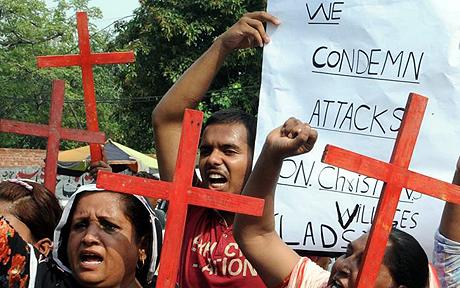
Posts Tagged ‘ Shahbaz Bhatti ’

Uniting Pakistan’s Minority and Majority

By Mohsin Hamid for The Express Tribune
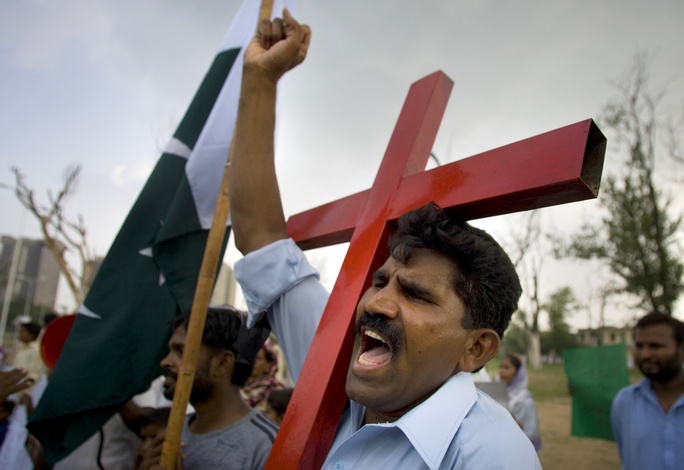
There’s a nurse I know in Lahore. She’s tall and stocky, middle-aged. She is on call 24 hours a day and works six days a week. She’s also a freelance headhunter, placing cooks and drivers and maids. She sleeps little. She has five children she hopes to give better lives. Last year, she donated time and money to flood victims.

She is a Pakistani Christian. And on Wednesday, I saw her weep.

She was staring at a TV set. It was reporting the assassination of Shahbaz Bhatti, Pakistan’s federal minister for minorities, a Roman Catholic. “What’s going to happen to Christians in this country?” she asked me.

I had no answer. But her question is searingly important. A country should be judged by how it treats its minorities. To the extent it protects them, it stands for the ennobling values of empathy and compassion, for justice rooted, not in might, but in human equality, and for civilisation instead of savagery.

Pakistan ought to be exemplary in this regard. After all, ours is a nation of minorities: A patchwork of cultures, ethnicities, languages and sects. Since independence, we’ve tried to use Islam to bind us together, to undo our inherent and pervasive minority-ness. After the country split in 1971, these appeals to religion expanded under ZA Bhutto and reached previously unimaginable extents under Ziaul Haq. They have continued to intensify ever since.

One problem with this approach, of course, has been that our religious minorities, a twentieth of our population, have been left out of our grand national narratives. Five per cent may seem like a small proportion, but in absolute numbers it includes almost 10 million Pakistanis, which equals everyone in Tunisia, or one-and-half times all of Libya. If Pakistan’s religious minorities were a country, they would be more populous than half the members of the UN.

So how have they been treated by Pakistan? Shamefully. They are looked down upon, discriminated against, physically threatened and not infrequently killed. They are second-class citizens in every sense. Nor has our state offered them much support. Indeed, our state has been actively involved in their oppression.

None of this is new, of course. So, for those of us fortunate enough to belong to the religious majority, does it even matter?

Yes. Desperately. Minority relations are a microcosm of society. Each individual human being is, after all, a minority of one. And, as Pakistan becomes a country at war with its minorities, it is becoming a country at war with its individuals, with itself, with you and with me, with the human desire to be allowed to believe what we believe. In this direction lies Orwellian Newspeak, an inability to say what we mean, a condition of external dishonesty that inevitably leads to internal dishonesty. Orwell imagined the result of this to be something he called doublethink: People holding “simultaneously two opinions which cancelled out, knowing them to be contradictory and believing in both of them.”

I find it difficult to imagine a better description of many of our TV talk show hosts — or much of our public discourse — today.

There are three main political positions we hear over and over in Pakistan, and all three are suffused with doublethink. There is the national security position: ‘America is our enemy; America should give us more aid.’ The privileged liberal position: ‘There should be equal rights for all; I should not have to share my riches with the poor.’ And the (remarkably similar) ambitious cleric position: ‘Religion makes us all equal; only I decide what religion says.’

It is unsurprising that the privileged liberal position is the one most often associated with attempts to protect the rights of religious minorities in our country. It is also unsurprising that it has been largely unpersuasive.

The good news, from a religious minority standpoint, is that the other positions are equally incoherent. (The bad news is that they are much more willing to resort to violence in support of their arguments.)

What Pakistan’s religious minorities need, therefore, is a new position, a position that champions equality while, and this is the tricky part, also championing equality. In other words, a position that dispenses with the illusion that equality can be enhanced in a society prostrate before either its rich or its clerics.

Such a position would also be to the benefit of the country’s economic majority, its poor. For they, too, are looked down upon, discriminated against, physically threatened and not infrequently killed. They, too, are second-class citizens. They, too, have been actively oppressed by our state.

At its heart, our country’s toxic treatment of its religious minorities is intertwined with its toxic treatment of its impoverished majority. Both groups suffer from the denial of our common humanity. And that, paradoxically, offers great hope. For we can reject false dichotomies between our clerical and our liberal positions, between our minorities and our majority. We can begin the search for common ground that has eluded us as a nation thus far.

We might, for example, shift from disputes over blasphemy laws to actually delivering due process of law, from arguments over curbing radical madrassas to actually building a high-quality state education system, from alternately buying off and fighting tribal chieftains to actually empowering local tribespeople.

Our problems are not insurmountable. Pakistan is, simply put, a land that mistreats its minorities and its majority. It is ripe for a revolution, except that it already has many trappings of democracy: Elected assemblies, free media, independent judges. A revolution in our thinking and behaviour, brought about by sustained pressure from below, is what is really called for.

Let us be clear: The messy but effective compromises we require can only come about through the dramatically improved functioning of our democracy. But a better-functioning democracy is feared by many with vested interests who benefit from the impaired system we currently have. They must be convinced otherwise.

Above all, we must convince our powerful national security state. Rationally, it is clear that under our current policies, Pakistan is becoming ever less secure. The stability and growth that a well-functioning democracy could bring is our country’s best chance of escaping from its ‘eagerly-dependent-on-enemy-America’ strategic incoherence. Unless, that is, our national security doublethink really boils down to this: ‘I will protect you; you are the threat.’

For the sake of our vulnerable, which is to say, in different ways, just about all of us, I hope this is not the case. Too much Pakistani blood has already been shed and too many Pakistanis have already gone to bed hungry.

Obama Condemns Assassination in Pakistan

As reported by The Associated Press

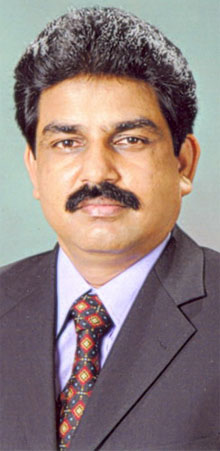
President Barack Obama on Wednesday condemned the assassination of the only Christian member of Pakistan’s government, calling the slaying of Shabaz Bhatti a “horrific act of violence.”

Republicans and Democrats in Congress echoed Obama’s outrage, hours after Bhatti was gunned down outside his mother’s home. His slaying came just weeks after the killing of liberal politician Salman Taseer. The two men had pushed to change laws that impose the death penalty for insulting Islam.

“He is literally a modern-day martyr,” said Rep. Frank Wolf, R-Va., at a Capitol Hill news conference.

Bhatti, a campaigner for human rights causes, had been aware of threats to his life. Obama said Bhatti “fought for and sacrificed his life for the universal values that Pakistanis, Americans and people around the world hold dear” — including rights to free speech and religious freedom.

Assailants from al-Qaida and the Pakistani Taliban Movement in Punjab province claimed responsibility, calling Bhatti an “infidel Christian.”

Obama said that whoever committed the crime should be brought to justice, and people who share Bhatti’s vision of tolerance and religious freedom should live free of fear.

Secretary of State Hillary Rodham Clinton, who recently met Bhatti, called him “a patriot and a man of courage and conviction.” She said in a statement that the United States remains committed to working with the government and people of Pakistan “to build a more stable and prosperous future for all — a future in which violent extremists are no longer able to silence the voices of tolerance and peace.”

More than half a dozen lawmakers, many of whom knew Bhatti, called on the Pakistan government to change the laws. Rep. Chris Smith, R-N.J., who said he prayed with Bhatti, said the events need to be a “game-changing moment.”

“No matter what your religion, his murder is an affront to God,” said Rep. Jim McGovern, D-Mass.

They showed a videotaped message from Bhatti in which he said he received death threats and was “ready to die” for the country’s often persecuted Christian and other non-Muslim minorities.

Rep. Howard Berman, D-Calif., said Bhatti’s death reflects the growing climate of intolerance in Pakistan and urged all Pakistanis to stand united against violence and intolerance.

What motives led to Shahbaz Bhatti’s murder in Pakistan?

By Aamer Ahmed Khan for BBC

It is hard to find an immediate motive behind the murder of Pakistan’s Minorities Affairs Minister Shahbaz Bhatti.

The courageous battle he had vowed to fight against the country’s draconian blasphemy laws had already been abandoned by the government in the wake of Punjab governor Salman Taseer’s murder.

In fact, the final surrender had come from no less a person than Pakistan’s prime minister who had only last month pleaded with a large gathering of religious personalities to believe him when he said that his government had no intention of reviewing the blasphemy laws.

And unlike the slain governor – a veteran politician, a high profile socialite and one of the president’s many billionaire friends – Mr Bhatti neither had the status nor the political clout to influence the state’s agenda.

Some evidence of that also comes from the eerie silence on social media, from the extremists’ side.

All that one sees are some anguished rants from some of Pakistan’s best known liberals, many of whom are not even resident in the country.

Even hours after the assassination, we have seen none of the fierce onslaught against free speech that erupted on social media within minutes after Mr Taseer’s murder.

Nor have we seen eulogies of his killers mushrooming on Facebook as they did after Mr Taseer’s murder. It is a silence smug in the knowledge that their agenda is not at risk.

So why kill a man who considered himself – and was indeed considered by the world around him – to be so ineffective that he had not even bothered to seek proper security for himself, despite being constantly threatened by Pakistan’s millions of faceless fanatics?

The answer perhaps lies in the difference between the commitment of the government and the extremists to their respective agendas.

Politics v ideology

The government had unambiguously decided to lay off the blasphemy laws after Mr Taseer’s murder, its ministers hinting privately that it was a hornets’ nest best left untouched.

The country’s liberal political and social leadership had meekly followed suit and perhaps understandably so.

In their silence had rested a hope that by abandoning their agenda to rationalise any legislation-feeding extremism, they would perhaps be able to keep the extremists quiet.

It was never about any ideological commitment, just hard, cold politics that made tactical sense.

For the extremists though, it is all about ideology. It didn’t matter if Mr Bhatti’s battle had proved to be a non-starter or if he was an ineffective and powerless minister.

What mattered was that he had spoken against blasphemy laws in the past and was likely to do so again if a situation arose. That made him a legitimate target, not to be tolerated, not to be ignored.

Mr Taseer had said that he would continue to fight against blasphemy laws even if he was the last man standing. He could not stand for long.

And the ideology that led to his assassination has now sent another determined and deadly message to the state – that it will continue to fight till the last liberal falls.

This is how different the two commitments are. And for the liberals in Pakistan, this is how hopeless the situation seems to be.

Aasia Bibi and Impurities in the Land of the Pure

By Manzer Munir for Pakistanis for Peace

The case of Aasia Noreen aka Aasia Bibi illustrates how far Pakistan has to go to secure freedoms for its religious minorities. Christians and Hindus are not the only minorities who are persecuted for their beliefs but it is also Muslim minorities such as the Ismailis, Ahmadis, and Shiites who are routinely harassed, discriminated and also killed. Sadly, it is the case of Aasia Bibi that has brought some much needed attention to Pakistan’s sad state of affairs towards the treatment of its religious minorities.

Several sections of Pakistan’s Criminal Code consist of its blasphemy laws and of all the Muslim countries of the world that have anti-blasphemy laws, Pakistan’s anti-blasphemy laws are by far the strictest. There is section 295 that forbids damaging or defiling a place of worship or a sacred object. Then there is section 295-A that “forbids outraging religious feelings.” There is also 295-B which prohibits defiling the Qu’ran and was originally punishable by life imprisonment but has since been amended to up to three years imprisonment.

No section of the blasphemy law is more controversial or harder to prove than Article 295-C, the law that Aasia Bibi is allegedly charged with having broken. In respect to prophet Muhammad, this statute states that ” Whoever by words, either spoken or written, or by visible representation, or by any imputation, innuendo, or insinuation, directly or indirectly defiles the sacred name of the Holy Prophet Muhammad shall be punished with death, or imprisonment for life and shall also be liable to a fine.”

Aasia’s case and charges against her started almost a year and a half ago when there was a quarrel over a bowl of water in a dusty village in the heart of Pakistan’s Punjab province. A group of women were working the fields in the heat of the Pakistani sun when one of them, Aasia Bibi, dipped her glass in the communal bucket of drinking water to fetch herself and others a glass of water to drink and immediately was rebuffed by the other women who claimed that the water was now unclean as it had been touched by a non-Muslim. According to witnesses, instead of quietly bowing her head and taking the indignities, Aasia’s crime was that she mounted a strong defense of her faith and remained steadfast in her demeanor that she did nothing wrong. Too often in Pakistan, the blasphemy laws are used against religious minorities to settle personal vendettas and old scores according to Pakistan’s Human Rights Watch, a watchdog group monitoring the case.

The news traveled fast in Aasia’s village of Ittan Wali, in Punjab’s Sheikhupura district that a Christian woman had insulted the prophet. The local mullah got on the mosque loudspeakers, urging the “faithful” to take action against Aasia Bibi. In sad but familiar pattern, her defense of her faith was somehow twisted into an accusation of blasphemy, according to her family and others familiar with the case. Soon as a mob gathered outside her home ready to take the law into their own hands and handing out vigilante justice, the police moved in and took her into custody. But instead of protecting her, they charged her with insulting Islam and its prophet under the blasphemy laws.

And then on Nov. 8, after suffering 18 months in prison, Aasia Bibi was sentenced to death by a district court, making her the first person to be handed the death penalty in Pakistan under the blasphemy laws. Many before her over the years have been charged, but punishment had been commuted to lesser penalties than the death sentence imposed on Aasia Bibi. No concrete evidence was ever presented against Aasia, according to Pakistan’s Human Rights Watch. Instead, the district judge relied on the testimonies of three other women, all of whom were hostile towards her.

Unfortunately this is a common insult hurled at many of Pakistan’s 2 million Christians who make up just 1.59% of the total population. Often, Christians in Pakistan are discriminated and persecuted and many times only get the lowest of the low jobs such as street sweepers, janitorial and sanitation workers. In fact, in Pakistan, the term ‘Chura‘ has become synonym with the Christian community as it relates to an unclean person akin to how the untouchables or Dalit community is seen in India. In India however, the Dalits are not subjected to arcane state blasphemy laws geared towards religious minorities as in Pakistan or are threatened with their lives at the hands of the Hindu majority.

As discussed in a couple of my previous articles, Taliban 1o1, History and Origins and Taliban 201, The Rise of the Pakistani Taliban, the Islamization of Pakistan started under the late General Zia ul Haq of Pakistan who took over the leadership of the country through a military coup in 1977 when he hung the deposed and democratically elected Prime Minister Zulfiqar Ali Bhutto. Earlier in 1973, the 1973 Constitution of Pakistan had declared that “Islam shall be the religion of the Pakistan” and had systematically begun the process of restricting the participation of religious minorities in government and politics.

Before General Zia, there were only two reported cases of blasphemy. Since the death sentence was inserted in 1986 into the Penal Code for the blasphemy laws, this number has now reached 962 — including 340 members of the Ahmadi Muslim community, 119 Christians, and 14 Hindus. A close examination of the cases reveals the blasphemy laws are often invoked to settle personal scores, or they are used by Islamist extremists as cover to persecute religious minorities, sadly with the help of the state under these laws.

General Zia began this policy of Islamization of Pakistan in conjunction with his support for the war against the Russians and assistance to the Afghan Mujahedeen as well as the building of thousands of madrassahs or religious schools across Afghanistan and Pakistan which nurtured the young men into what later became the Taliban. Many of these blasphemy laws fully came into being under his reign, although some were around since as early as more than 100 years prior when the British drew up the Indian Penal Code of 1860 which was initially an ill foreseen aim at keeping the peace among the many fractured faiths of the subcontinent. For instance, section 295-A, which “forbids outraging religious feelings”, could have been applied against a Muslim who insulted a Hindu or a Hindu who taunted a Sikh or Christian or vice versa. However under Zia, the blasphemy laws were expanded and almost exclusively applied against Muslim minorities such as the Ahmadis, Islamilis and Shiites as well as against the Christian and Hindu populations.

Recently, a religious ‘leader’ came out and has offered over $6000 to anyone who can kill Aasia Bibi while she awaits her punishment in police custody. Outrage and denunciations on this case are coming from across the world as many people are appalled at the sad state of rights for religious minorities in Pakistan. The Pope has intervened also asking for clemency for Aasia Bibi from Pakistan’s President Asif Ali Zardari. Against all manner of reason and justice, Lahore’s High Court recently issued an order on November 29, 2o1o, preventing Zardari from exercising his constitutional authority to pardon Aasia Bibi.

In a country rife with violence and chaos and one that has become synonymous with terror the world over, the case of Aasia Bibi is yet another dark stain on the country’s image around the world. The Taliban and the extremist groups ravaging Pakistan can be explained as being a violent minority and do not and should not reflect on the nation as a whole as the majority of people in Pakistan are opposed to them and their views of Islam. But the blasphemy laws, for as long as they have stayed on the books in Pakistan and in the constitution, cannot and should not be excused in any shape or form. These laws need to be repealed and the constitution needs to be amended in an emergency manner so that Aasia Bibi and other religious minority citizens of Pakistan are not subjected to cruel and subjective laws that are almost exclusively used against minorities to settle scores, personal vendettas, and instill terror in less than 3 percent of the country that is not part of the religious majority of Sunni Muslims.

There needs to be international pressure placed on Pakistan from the United Nations, the United States, Europe and others to modify the constitution immediately and to pardon this 45 year old mother of five children. It is ironic that in a country where many people sympathize with Osama’s Al Qaeda and profess to hate the west with one hand, they decry with the other why not enough western aid has came to their country when it recently saw the worst flooding in its history. Can you blame the American citizens, the Europeans or citizens of any other Christian nation from hesitating to give aid to a country that not only plays a duplicitous game when it comes to terrorists and terror havens but also treats Christians and other religious minorities in the manner as in the case of Aasia Bibi?

The name Pakistan literally translates into “The Land of the Pure”. And as a child growing up I was told that the meaning of Pakistan’s flag is this: “The green is a traditional Islamic color and the crescent moon and star are also Islamic symbols. The white stripe represents the non-Muslim minority and religious groups of Pakistan and there place in the country.” In my view, as long as the nation sanctions and tolerates these utterly unjust and biased blasphemy laws, the religious minorities of Pakistan clearly have no place in this land of the ‘pure’.

-Manzer Munir, a proud Pakistani American and peace activist, is the founder of Pakistanis for Peace and blogs at www.PakistanisforPeace.com as well at other websites as a freelance journalist and writer.

Christian Woman Sentenced to Death in Pakistan Not Yet Pardoned

By Reza Sayah for CNN

A Christian woman sentenced to death for blasphemy has not yet been pardoned by Pakistan’s president, representatives for the president said Wednesday, a day after a provincial governor told CNN that the president is expected to pardon the woman.

Asia Bibi, who has been jailed for nearly 15 months, was convicted in a Pakistani court earlier this month of breaking the country’s controversial blasphemy law by insulting Islam’s Prophet Mohammed, a crime punishable with death or life imprisonment, according to Pakistan’s penal code. She was sentenced to death.

Two representatives of President Asif Ali Zardari said Wednesday that no action has been taken, but the president will pardon if necessary.

“No decision has been taken,” spokesman Farhatullah Babar said. “Under the constitution, the president has to act under the advise of the prime minister. He will advise the president to take whatever action he proposes.”

On Tuesday, the governor of Punjab province said Zardari will pardon Bibi.

“What basically he’s made it clear is that she’s not going to be a victim of this law,” Gov. Salman Taseer told CNN International’s “Connect the World” program.

“I mean, he’s a liberal, modern-minded president and he’s not going to see a poor woman like this targeted and executed. … It’s just not going to happen,” Taseer said.

She has filed a petition for mercy with the high court, Taseer said.

“If the high court suspends the sentence and gives her bail then that is fine. We’ll see that, and if that doesn’t happen, then the president will pardon her,” he said.

Babar said jurists and legal experts have debated about whether the president has absolute power under the constitution to grant a pardon.

But he said Bibi is not in danger of being executed.

“Asia cannot be executed now,” Babar said. “Under the law, a death sentenced issued by a session court can not be carried out until it has been endorsed by the high court.”

Farahnaz Ispahani, a spokeswoman for the president, said Pakistan remains committed to protecting religious minorities.

“Pakistan is a nation of many faiths and religions, and all Pakistanis, no matter what their religion, are equal under the law,” Ispahani said in a written statement. “President Zardari has followed the case of Asia Bibi closely and will take appropriate action, if necessary, to issue a pardon or grant clemency to insure that Asia Bibi is neither incarcerated or harmed.”

A preliminary investigation showed Bibi was falsely accused, a government official said Monday.

“The president asked me to investigate her case, and my preliminary findings show she is innocent and the charges against her are baseless,” Pakistani Minister for Minority Affairs Shahbaz Bhatti told CNN.

Bhatti has said he will submit a final report Wednesday to Zardari’s office.

Prosecutors say Bibi, a 45-year-old field worker, insulted the Prophet Mohammed after she got into a heated argument with Muslim co-workers who refused to drink from a bucket of water she had touched.

In a brief news conference at the prison where she’s being held, Bibi said last weekend that the allegations against her are lies fabricated by a group of women who don’t like her.

“We had some differences and this was their way of taking revenge,” she said.

Bibi’s death sentence sparked outrage among human rights groups, who condemned Pakistan’s blasphemy law as a source of violence and persecution against religious minorities.

But Babar said the president’s party lacks the power in parliament to repeal Pakistan’s blasphemy laws.

“The manifesto of the Pakistan Peoples Party calls for the law to be repealed, but the party has not been able to repeal it because we lack the majority in parliament,” Babar said. “We don’t have the numbers to do it.”

Pakistani minister promises to revise blasphemy law despite death threats

PD*30407144

 Islamabad, Pakistan- The minister for minority affairs of Pakistan, Shahbaz Bhatti,  promised to work to amend the blasphemy laws used to target non-Muslims in Pakistan such as Christians and Hindus and said he was ready to die fighting for this cause.

A Member of Parliament and head of the All Pakistan Minorities Alliance (APMA), Shahbaz Bhatti was visiting Washington DC at the invitation of the US Commission on International Religious Freedom, which awarded him a first-of-a-kind medal for championing the rights of minorities in Islamic Pakistan.

A Catholic member of President Asif Ali Zardari’s administration as a federal minister for minority affairs, he took over the job last year when it was made a cabinet level position in Zardari’s cabinet.

Bhatti said he has received threats for his work on numerous occasions. Earlier this month, Pakistan’s religious affairs minister was wounded in an assassination attempt in Islamabad that left his driver dead.

“I personally stand for religious freedom, even if I will pay the price of my life,” Bhatti said. “I live for this principle and I want to die for this principle.”

Pakistan’s law against blaspheming Islam carries the death penalty. While no one has ever been sent to the executed for the crime, activists say the law is used to exploit others out of personal vendettas by some in the Muslim community against Christians, Hindus, Sikhs, and Buddhist minorities in Pakistan.

A 25-year-old Christian jailed on blasphemy allegations earlier this week died in prison. Authorities said he committed suicide but civil rights activists suspect that he was tortured by the police.

The death came several weeks after an angry mob killed seven Christians in an arson attack that destroyed about 40 houses in the town of Gojra in central Punjab province.

Christians and other religious minorities have a long history of persecution and discrimination in all walks of life in Pakistan by the Muslim majority. This is a sad reality and a country such as Pakistan that was founded for religious freedoms for the Muslims of India in 1947, has to do a much better job at protecting the 3 to 5% of the population that does not share the Islamic faith.

Unfair, subjective and antiquated laws such as Pakistan’s blasphemy laws need to be urgently amended so that the non-Muslim minorities in Pakistan do not live in fear of an upset neighbor calling the authorities and falsely claiming an individual blasphemed the religion of Islam. Furthermore, if an individual is indeed ever guilty of blasphemy, the death penalty is a rather harsh punishment for simply stating one’s opinions, no matter how offensive to the faithful.

Although he may face strong resistance by some of the extremist and ultra religious members of Parliament in Pakistan, many moderate and enlightened Pakistanis support the minister for minority affairs and hope that he is successful in amending this archaic law.

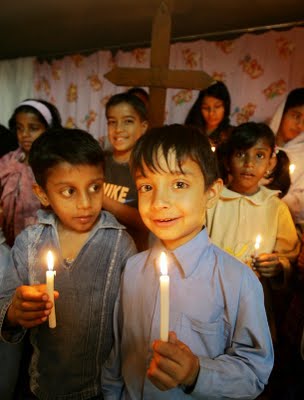
Christian Pakistani Children


Reported by Manzer Munir for www.PakistanisforPeace.com