Posts Tagged ‘ terrorism ’

Obama Calls for India – Pakistan Peace

By Andrew Buncombe for NZ Hearald
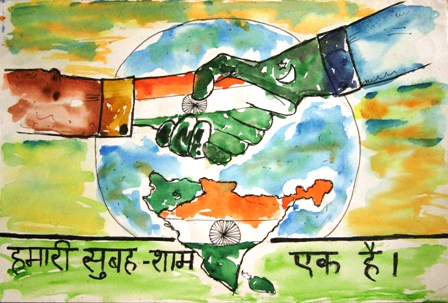
Barack Obama has called on India and Pakistan to renew their efforts to find peace, even as he said Islamabad was not moving quickly enough to counter militants operating from inside its borders.

In comments that appeared to underscore the high-wire act of diplomacy the US president is trying to pull off while on the three-day visit to India, Mr Obama said Washington would not act as an intermediary between the two countries.

However, he told a group of students in Mumbai: “My hope is that over time, trust develops between the two countries, that dialogue begins, perhaps on less controversial issues, building up to more controversial issues. There are more Pakistanis who’ve been killed by terrorists inside Pakistan than probably anywhere else.”

The president has received criticism from some opposition parties in India after he failed to directly mention Pakistan when he arrived in India on Saturday and spoke of the 2008 attacks at the Taj Hotel and other locations in Mumbai, that left more than 160 people dead.

In the aftermath of the attacks, the so-called “composite dialogue” peace process between India and Pakistan was put on hold and while there have been a series of high-level meetings, the relationship between the two remains tense.

The president, who stayed at the seafront hotel in what aides said was a clear sign of solidarity, had talked about the militants and the terror they wrought, but was criticised by the right-wing Bharatiya Janata Party (BJP) for failing to attribute the blame to Pakistan.

Asked why he had not done so, Mr Obama reflected a reality in which the US is paying billions of dollars to Pakistan in aid as it pushes it to do more against militants responsible for cross-border strikes in Afghanistan.

“Pakistan is a strategically important country, not just for America, but for the world,” he said. “India and Pakistan can prosper and live side by side. This can happen and this should be the ultimate goal. The US can be a partner but cannot impose this process. India and Pakistan have to arrive at an understanding.”

Mr Obama started his visit to India, one of four countries he is including on a tour through Asia, by announcing more than 20 deals he said were worth up to $10bn and would help support 50,000 US jobs.

He also said the US was to relax export controls over sensitive technology, a demand of India’s that will help deepen ties between the two countries. The president is to hold formal talks today with India’s prime minister, Manmohan Singh.

On a domestic level, Mr Obama also recognised he needed to make “midcourse corrections” in the aftermath of last week’s mid-term elections if he is going to win over a frustrated and divided electorate.
Police: Plot to Kill Pakistan PM Uncovered

By Frederik Pleitgen for CNN

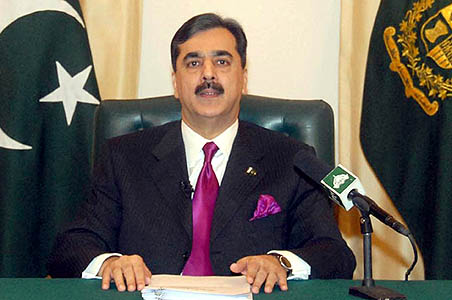
Several people have been seized in a plot to kill Pakistan’s prime minister, and the suspects claim they were getting orders from a militant in the country’s volatile tribal region, police said.

Police official Babar Bakhat Qureshi told CNN that officers arrested several suspects who were plotting to attack the compound of Pakistani Prime Minister Yousaf Raza Gilani.

Shabir Anwar, Gilani’s press secretary, had no comment on the alleged plot because it is a security matter.

The plot to strike the compound, located in the Punjab provincial city of Multan, was in its “final planning stages,” Qureshi said. The location is about 395 kilometers, or 245 miles, southeast of the nation’s capital, Islamabad.

The suspects were planning to use a car bomb for the attack, and that they had acquired large amounts of fertilizer to manufacture an improvised explosive device, since confiscated by police, he said.

A vehicle for the attack had not been acquired yet.

The police confiscated one kilogram of gold and and two and a half kilograms of silver, which the men were going to sell to fund the plot, the official said.

Qureshi said the suspects have confessed that they were getting their orders and instructions from Kari Imram, a leader of a Taliban offshoot group from Miran Shah in North Waziristan. Drone strikes said to be conducted by the United States have targeted militants in North Waziristan, one of seven of the county’s tribal districts.

The arrests were made after police stopped three suspects traveling on two motorcycles near Multan in the town of Ahmed Pur Sharkia on a check during a police patrol. Questioning led police to other suspects.

Qureshi Uses U.S. Open Platform to Call For Understanding

By Matt Majendie for Reuters

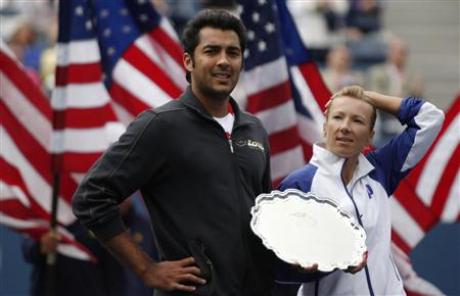
Pakistan’s Aisam-ul-Haq Qureshi used the platform of the U.S. Open to deliver a message of peace on the eve of the ninth anniversary of the September 11 attacks in New York and Washington.

Qureshi lost in Friday’s men’s doubles final alongside India’s Rohan Bopanna, the other half of a unique partnership nicknamed the “Indo-Pak Express.”

In his on-court after-match speech, Qureshi said: “I feel there’s a very wrong perception of Pakistan as a terrorist country.

“We are a very peace-loving country and we want peace as much as you.”

Peace has very much been the message of Bopanna and Qureshi since their doubles partnership began with them sporting “Stop War, Start Tennis” sweatshirts in a bid to improve relations between their two countries.

Qureshi delved further into the message he was trying to get across at Arthur Ashe Stadium after the 7-6 7-6 defeat to Americans Bob and Mike Bryan.

“Since September 11, every time I come to the States or Western countries, I feel people have the wrong impression about Pakistan as a terrorist nation,” he said.

“There are extremists I think in every religion but, just because of them, you can’t judge the whole country as a terrorist nation.

“I just want to get this message across as a Pakistani.”

Qureshi said he vividly recalled the moment of the 2001 attacks in New York, which resulted in the deaths of nearly 3,000 people.

An up-and-coming tennis player at the time, he had been at a training camp in Holland when he saw events unfold at the World Trade Center in lower Manhattan.

“It was strange but I was going through the channels and I actually thought it was a movie or something,” he recalled. “I switched the channel again and then felt like it was the same movie on a different channel.

“I was kind of confused. Everything was mostly in Dutch so I couldn’t really understand. Then I actually realized what had happened. It was a very shocking moment.”

Ground Zero Mosque Controversy Helps Give Rise to Islamophobia Across the US

By Manzer Munir for Pakistanis for Peace

A man was accused of attempted murder for his vicious knife attack on a Muslim New York City Cab driver Tuesday evening in what is being described as a hate crime by the authorities.

Michael Enright, a college student who also did some volunteer work in Afghanistan, was being held without bail on charges of assault and attempted murder as hate crimes.

In a criminal complaint filed by the New York Police Department, Michael Enright allegedly asked the driver if he was a Muslim. The cab driver, Ahmed H Sharif, an immigrant from Bangladesh, replied that yes he was indeed a Muslim. At this point, Mr. Enright is alleged to have uttered the customary Arabic greeting of “Aslaam-a-laikum” (Peace be with you) and brutally attacked the cab driver with a knife, slashing him badly on the face, hands and neck. During the attack, Mr Enright also uttered “Consider this a checkpoint” to the cab driver, all the while brutally attacking him with his knife.

 Besides a serious neck wound, the cab driver, Mr Sharif, suffered cuts on his forearms, face, and hands while trying to defend himself from the attacker.

Inexplicably, Einright had volunteered with Intersections International, a group that promotes interfaith dialogue between religions and an organization that has also supported the plans for the Islamic center and mosque 2 blocks from Ground Zero. He had also recently returned from Afghanistan where he volunteered to be embedded with a combat battalion so that he could document their experiences as soldiers that Einright wanted to showcase in an upcoming documentary.

Police stated that Einright was drunk and intoxicated at the time of the attack on Mr Sharif and it is not clear what his motive was for perpetrating the violence on the cab driver. There is growing speculation however amongst members of the American Muslim community as well as several civil rights organizations such as the ACLU and CAIR that the attack is a result of the growing Islamophobia and fear amongst the American public as a direct result of the Ground Zero Mosque controversy that has been brewing for weeks and has been front and center in the media and the American public for some time now.

The plan to build an Islamic community center and mosque two blocks from the 9/11 tragedy and the site of the World Trade Center towers became controversial as right wing groups seized on what they believed to be “an insensitive provocation towards the American public”. Muslim groups demanded their First Amendment rights of freedom of religion and pointed to the New York City council vote allowing them the permit to build as reasons for what they are doing as legal and in fact an effort to build bridges between Islam and other faiths following the events of September 11. However, the issue became nationally prominent and controversial by then as fanned by right wing blogs and ad campaigns, the majority of the American public became against the building of the mosque, according to recent polls.

Thankfully, the voice of reason in this whole debate has been none other than the billionaire Jewish mayor of New York, Mayor Michael Bloomberg. His stance and views in support of the mosque as a constitutionally protected right has been welcomed by Muslims as well as civil rights organizations and he should be commended for standing up for what is constitutionally the right thing to do. Briefly, President Obama also came out in support of the group’s right to build the mosque as being a constitutional right, before making statements the next day that “questioned the wisdom” of building it there.

Nonetheless, a link has been made by the right wing, no matter how unfairly, that Islam promotes terror and violence. This can be seen in the fact that the vast majority of Americans now have a negative and unfavorable view of Muslims. For the country to be even having a debate whether a group of Americans can build a house of worship is a testament to how far things have regressed.

No one would ever have thought that a constitutionally protected right such as that of freedom of religion would ever seem controversial. Many have argued that only the area around Ground Zero is off limits to Muslims and they are free to build their mosques elsewhere. This does not appear to be the case as mosques thousands of miles away from Ground Zero in California, Tennessee, Ohio and elsewhere across the country have now come under heavy opposition by local zoning boards and people in those communities. The fear and hatred of Muslims is becoming a growing problem as the Ground Zero Mosque controversy has began to fuel acts of violence against Muslims as seen in the attack on the NYC cab driver. It is a message that is being sent to the American public that Muslims in the United States do not deserve the same rights and privileges enjoyed by all others. In fact, there is an attempt to link all mosques to terror somehow, which is very offensive to millions of peaceful Muslims who abhor violence and who live decent hard working lives in their communities.

At first I was not happy to learn that Muslims planned to build a mosque near Ground Zero as I knew that this would become controversial. But as the opposition to mosques has grown across the nation, and not just for building near Ground Zero, but hundreds and thousands of miles away, it has become clear that this anti-mosque movement is not just about that hallowed area near the World Trade Center site but is in fact becoming an opposition to the religion of Islam as a whole.

This idea by the opponents of the mosque and the right wingers that somehow it is perverted and insensitive to build a mosque several blocks from Ground Zero is in reality only true if we buy into the belief that Muslims and Islam brought down the towers and not a handful of radical extremists of the religion of Islam. If we believe that mainstream Islam itself was responsible for all those deaths on American soil and not Osama Bin Laden and his Al-Qaida network, only then would building the mosque there be insensitive. But for us to somehow associate the whole religion of Islam of over 1.5 billion people by the actions of 19 terrorists is ridiculous.

It is my fear that attacks similar to the one a few days ago on the NYC cab driver will continue to grow as we allow an environment of hate to perpetuate and grow against a group of people. At the very least, this opposition to mosques across the country will certainly grow and continue to spread the notion that ALL Muslims are violent and terrorists. This is simply not true as the 5-7 million American Muslims and the 1.5 billion Muslims around the world will attest.

We must remember that we have a war on terror and not a war on Islam. Far away from Ground Zero in cities across the US as more and more mosques come under opposition in their communities, we must hold steadfast to our ideals, principles and to the US Constitution. As the best nation in the world, we have to defend our ideal and the basis of what makes us the best and that is the US Constitution. Speaking as an American and not even as a Muslim, I know that if we stop defending it for fear of being distasteful, insensitive, or inconsiderate, then we lose what makes us who we are as the freest nation in the world and we must not ever let that happen!

-Manzer Munir, a peace activist, and the founder of Pakistanis for Peace, is a freelance journalist who writes for www.PakistanisforPeace.com and other online journals.

Who Cares About Pakistan?

By Jude Sheerin for The BBC News

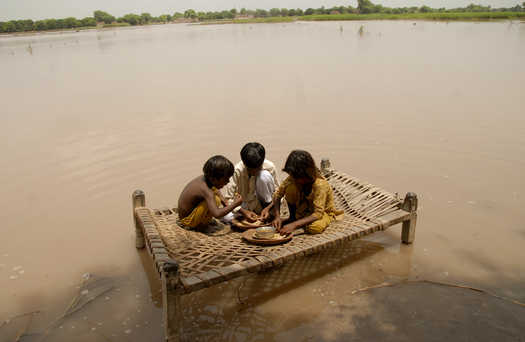
Donations have been sluggish to the Pakistan floods appeals, as they were back in 2005 when the part of Kashmir the country administers was torn apart by an earthquake. The BBC News website asked some experts to comment on possible reasons why.

Donor Fatigue

Dr Marie Lall, Pakistan expert at the Royal Institute of International Affairs (Chatham House) and senior lecturer at the Institute of Education, says: “I think there is donor fatigue all around. The [2004] Indian Ocean tsunami, the Burmese Cyclone [Nargis, 2008], the [2005] Pakistan earthquake, and [this year’s] Haiti earthquake. It is getting too much; we are in a recession and people are short of money.”

Rebecca Wynn, Pakistan specialist for UK-based aid agency Oxfam, says: “Many donors have made substantial contributions in humanitarian assistance to Pakistan over the years, particularly in response to the conflict-related displacements over the last two years. Of course, the fact that the people of Pakistan have been hit time and again by disaster is even more reason to give.”

Dr Elizabeth Ferris, senior fellow at the US-based Brookings Institution, a foreign policy think tank, says: “It should also be noted that the international humanitarian system isn’t set up to deal with more than one major crisis a year. USAID, for example, committed one-third of its annual budget to the Haitian earthquake response. And among the general public there may be a feeling of, ‘Well, I donated to the victims of the Haitian earthquake and Haiti is a far needier country than Pakistan.'”

Corruption

Yale University economics professor Dean Karlan, an expert on charitable giving, says: “Corruption concerns may explain why giving is lower to developing countries than many would like it to be, but it does not explain why there is less money pouring into Pakistan now than does to disaster relief causes in other developing countries with similar governance issues.”

Dr Marie Lall says: “People in Pakistan are sceptical the government will be transparent. But they are giving to philanthropic organisations. In the UK, I think people are sceptical of [non-governmental organisations’] overheads and costs. They don’t know which ones are transparent and reliable, even though local organisations such as TCF [The Citizens’ Foundation] are doing an incredible job.”

Dr Elizabeth Ferris says: “People are always sceptical about their money reaching flood victims, particularly in countries with reputations for corruption. But Haiti didn’t have a very good reputation in this regard. [Pakistan] President [Asif Ali] Zardari trip to Europe [during the floods] was not a good move. For a few days, that was the ‘story’ of the Pakistani floods, which doesn’t inspire people to be generous, particularly in this economic climate.”

Terrorism

Dr Marie Lall says: “British Prime Minister David Cameron’s comments in India [when he said Islamabad promoted the export of terror] did not help.”

Dr Elizabeth Ferris says: “People are less likely to donate to any country seen as a haven for terrorism. And more generally, the fact that so much Western news coverage in recent years about Pakistan has been negative, stressing its links with the conflict in Afghanistan. I think this is the major reason for the slow public response – the image of Pakistan in our media. There may also be a feeling, particularly in the US, that Islamic governments and charities should be stepping up to the plate to donate.”

Timing

Rebecca Wynn says: “This disaster has come at a bad time, following the financial crisis and the Haiti earthquake. Many donors made huge commitments to Haiti, so may find it hard to fund another major disaster, particularly in the same year.”

Dr Marie Lall says: “Timing may be a factor, but I think it’s more to do with not realising the scale of the disaster, and the attitude by the British government; the UK should be leading the aid effort, given the Pakistani diaspora here and the fact that we need Pakistan for the war in Afghanistan.”

Wrong Disaster

Professor Dean Karlan says: “Sudden events seem to generate more funds. A flood (and droughts) happen gradually and build. There isn’t any one single day in which news is huge. For the same reason, this pushes the story away from the media spotlight. But massive and sudden earthquakes or tsunamis draw our immediate attention and shock us.”

Dr Elizabeth Ferris says: “It’s important to note that in general people are likely to give more to emergencies occurring in countries geographically closer to them – although this didn’t hold true for the tsunami. But when you trace contributions over time, you find that Americans and Canadians are more likely to respond to disasters in the Western hemisphere while Europeans tend to be more responsive to African countries (and their former colonies, in particular).”

Dr Marie Lall says: “This was not one cataclysmic event, but one which grew over three weeks. The fact that 25% of the country was or is under water is not understood. The low numbers of dead, relatively speaking, mask the disaster on the ground. The crisis has destroyed crops, dead livestock and damaged homes and infrastructure. Food prices are through the roof and there won’t be a normal harvest. It will get worse. Farmers will starve.”

With Friends Like These…

By Ron Moreau for Newsweek

The Afghan Taliban say they have one thing in common with the Americans: they’re both getting played by Pakistan. 

The Afghan Taliban logistics officer laughs about the news he’s been hearing on his radio this past week. The story is that a Web site known as WikiLeaks has obtained and posted thousands of classified field reports from U.S. troops in Afghanistan, and hundreds of those reports mention the Americans’ suspicions that Pakistan is secretly assisting the Taliban—a charge that Pakistan has repeatedly and vehemently denied. “At least we have something in common with America,” the logistics officer says. “The Pakistanis are playing a double game with us, too.”

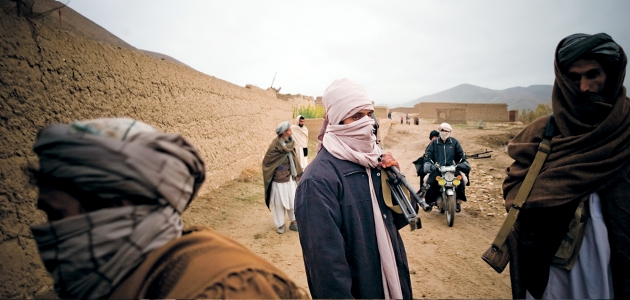
Pakistan’s ongoing support of the Afghan Taliban is anything but news to insurgents who have spoken to NEWSWEEK. Requesting anonymity for security reasons, many of them readily admit their utter dependence on the country’s Directorate for Inter-Services Intelligence (ISI) not only for sanctuary and safe passage but also, some say, for much of their financial support. The logistics officer, speaking at his mud-brick compound near the border, offers an unverifiable estimate that Pakistan provides roughly 80 percent of the insurgents’ funding, based on his conversations with other senior Taliban. He says the insurgents could barely cover their expenses in Kandahar province alone if not for the ISI. Not that he views them as friends. “They feed us with one hand and arrest and kill us with the other,” he says.

The militants say that most often they’re dealing with middlemen who appear to be merchants, money-changers, or businessmen, although the assumption is that they’re working for Pakistani intelligence. Some provide money, some motorbikes; others supply contacts for sources who can provide weapons. One smuggler who funnels much of his profits to the insurgency claims that Pakistani forces reserve one remote border crossing in Baluchistan for the Taliban and force civilians to divert to far-off posts.

But many insurgents still blame the Pakistani government for its cooperation in the U.S. invasion of Afghanistan after 9/11. “We can’t forget or forgive Pakistan for turning against us nine years ago,” says a senior Taliban intelligence operative, also speaking with NEWSWEEK along the remote border. And the betrayals didn’t stop there. Every Taliban can recite a long list of insurgent leaders who have been arrested in Pakistan or who were killed in Afghanistan with assumed Pakistani complicity. One of the biggest losses was Mullah Akhtar Mohammad Osmani, a driving force in the Taliban’s revival whose hideout near Quetta was raided by Pakistani forces in 2006. He fled across the border, where he was killed in a U.S. airstrike. Another was Mullah Dadullah Akhund, one of the insurgency’s most feared commanders, who died in a coalition raid in Helmand—with the help of the ISI, the Taliban suspects. The insurgents say he was too brazen, too independent, and too close to Al Qaeda for Pakistan’s comfort.

Some leading Taliban even suspect that Mullah Mohammed Omar, the leader and symbol of their jihad, may also be in ISI custody. He has appeared in no videos and issued no verifiable audio messages or written statements since he disappeared into the Kandahar mountains on the back of Baradar’s motorcycle in late 2001. “I wouldn’t be surprised if the ISI arrested us all in one day,” says a former cabinet minister. “We are like sheep the Pakistanis can round up whenever they want.”

On top of the years of grudges, there’s a persistent strain of ethnic animosity between the Taliban’s overwhelmingly Pashtun membership and its mostly Punjabi patrons from Pakistan’s security forces. The insurgents refer contemptuously to the ISI as “blacklegs,” for their supposedly darker skin. “Any commander who is more or less self-sufficient and independent of Pakistan becomes more popular with his fighters,” the intelligence officer says. Nevertheless, the insurgents see little choice about accepting any help they can get from Pakistan.

The Pakistanis, for their part, continue to resist U.S. pressure for strikes against Taliban sanctuaries. “Their aim seems to be to prolong the war in Afghanistan by aiding both the Americans and us,” says the logistics officer. “That way Pakistan continues to receive billions from the U.S., remains a key regional player, and still maintains influence with [the Taliban].” And which side is Pakistan on? “That’s a foolish question,” says Anatol Lieven, a professor in the Department of War Studies at King’s College London. “Pakistan is on Pakistan’s side, just as America is on America’s.” Nobody knows that better than the Taliban.

Going After the Haqqani Network

From the Editors of The Express Tribune

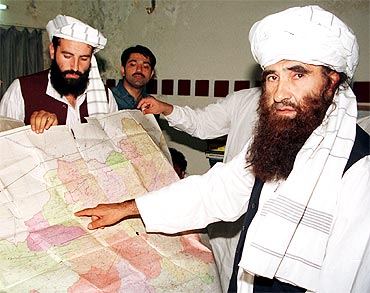
The question of the Haqqani network and how it is to be handled continues to fester. The US special envoy, Richard Holbrooke, this time in London, has suggested that Pakistan needs to go after the group with more force. The warning from Mr Holbrooke will have dashed hopes, raised during Hillary Clinton’s visit, that Washington was prepared to go along with a Pakistani strategy of dialogue with the network — led by Jalaluddin Haqqani and his son Sirajuddin. Links between the Pakistani intelligence forces and the Haqqanis have existed since the Afghan war and they have never been explicitly denied by either party. The elder Haqqani made his name as a formidable mujahideen commander during the Soviet occupation of Afghanistan when he was a member of Maulvi Yunis Khalis’s Hizb-i-Islami. He was also, according to American investigative journalist Steve Coll (who recently wrote Ghost Wars : The Secret History of the CIA, Afghanistan and Bin Laden, from the Soviet Invasion to September 10, 2001), offered a major role in the government by Afghan President Hamid Karzai some years ago.

For Islamabad, the pressure is on again. The Haqqani network is seen in Afghanistan as a key problem; it has carried out numerous attacks there. Washington believes Pakistan needs to do more to support the efforts against the militants in that country. The Pakistan military meanwhile, following its operation in South Waziristan, has avoided any move into North Waziristan – despite some gentle nudging from the US – reportedly following the intervention of the Haqqanis. They are also said to be facilitating talks with other militant factions across the conflict zone.

This brings us to an old issue: that of ‘good’ and ‘bad’ militants. It is clear that in the minds of the Pakistani military and the agencies allied to it this line of distinction continues to exist. Of course, Washington is in many ways responsible for creating this. The ghosts of the Afghan war, the alliance it formed with the mujahideen fighting the former Soviets and the engagement of Pakistan’s agencies, notably the ISI, are today coming back to haunt it. This is not to say that the CIA didn’t have its own connections to some of these actors in the past, but the point that is missed by most people is that it is America which calls the shots in this part of the world (or perhaps in most other parts as well).

There is a need for Islamabad to think things through. The division of militants into various camps, for example, so-called ‘good’ Taliban versus so-called ‘bad’ Taliban, has to stop. Essentially, these men of violence do more harm than good. The fact that a particular faction directs its wrath outside the country and avoids targeting Pakistani security forces should not be enough to cast it in the role of an ally. The effort against militancy does need to be seen in the wider regional context, and not as a matter of narrow allegiances and temporary agreements. The people who make decisions in Islamabad should keep in mind just how unsuccessful past efforts to do deals with the militants have been — with such attempts giving groups making up the complex Taliban network in the North a chance to reorganise and strengthen themselves on more than one occasion. There is reason to believe that this has contributed to the terrorism that has claimed thousands of lives. Even if the Haqqani network did not itself send out the bombers it has acted to back forces that have played a part in encouraging militant trends. The so-called Quetta Shura, led by the elusive Mullah Omar, is among these.

This having been said, Washington too needs also to review its own demands. There have been mixed signals over recent weeks. It is possible there is a lack of clarity on strategy within the US capital. This of course means the confusion in Islamabad has grown. A clear course of action needs to be planned in unison so the militants that Washington helped nurture can be driven away.

Clinton, With Initiatives in Hand, Arrives in Pakistan

By Mark Landler for The New York Times

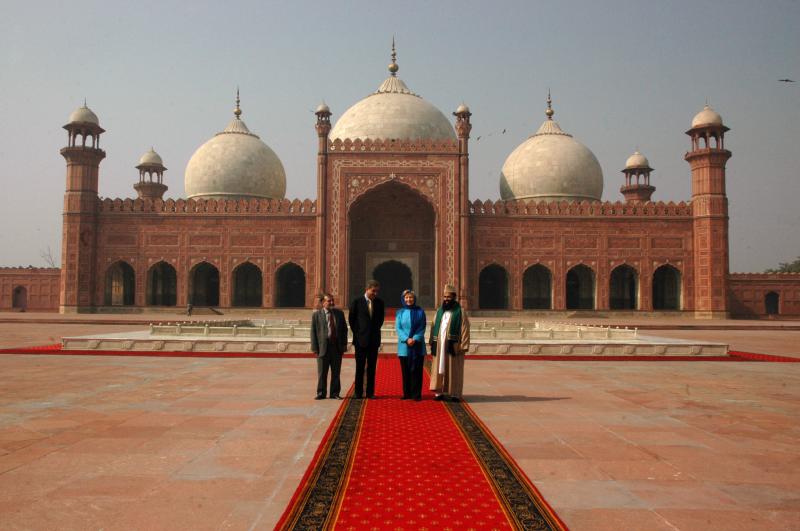
Secretary of State Hillary Rodham Clinton arrived here Sunday for high-level deliberations with Pakistani leaders, the latest in a series of encounters that the Obama administration hopes will chip away at decades of suspicion between Pakistan and the United States.

Hillary Rodham ClintonMrs. Clinton will announce a raft of initiatives to help Pakistan in public health, water distribution and agriculture, to be funded by $500 million in American economic aid. Among other things, the United States will build a 60-bed hospital in Karachi and help farmers export their mangoes.

Yet these projects, however beneficial to this economically fragile country, do not disguise several nagging sources of friction between the two sides. American officials still question Pakistan’s commitment to root out Taliban insurgents in its frontier areas, its motives in reaching out to war-torn Afghanistan and its determination to expand its own nuclear program.

Pakistan plans to buy two nuclear reactors from China — a deal that alarms the United States because it is cloaked in secrecy and is being conducted outside the global nonproliferation regime. Administration officials said they did not know if Mrs. Clinton planned to raise the purchase.

Relations could be further tested if the Obama administration decides to place a major Pakistani insurgent group, the Haqqani network, on the State Department’s list of terrorist organizations. Islamabad maintains ties to the group through its intelligence service, and it is seeking to exploit those connections as a way to extend its influence over Afghanistan.

For all that, tensions between the two sides have ebbed since Mrs. Clinton’s last visit here in October, when she was peppered with hostile questions in public meetings and bluntly suggested that people in the Pakistani government know the whereabouts of Osama bin Laden and Mullah Omar.

“We needed to change the core of the relationship with Pakistan,” said Richard C. Holbrooke, the special representative to Afghanistan and Pakistan. “The evolution of the strategic dialogue, and the fact that we are delivering, is producing a change in Pakistani attitudes.”

Mr. Holbrooke noted a U-turn in Pakistan’s policy on issuing visas to American diplomats. For months, Pakistani officials had held up those applications, creating a huge backlog and frustrating the United States. But Pakistan issued 450 visas in the last five days, he said.

Mr. Holbrooke conceded that public-opinion polls toward the United States had yet to show much of a change. Mrs. Clinton may receive more criticism on Monday at a town-hall meeting in Islamabad. Her visit, which was not announced due to security concerns, is being conducted under tight security.

Vali Nasr, a senior advisor to Mr. Holbrooke, said it was unrealistic to expect “to change 30 years of foreign policy of Pakistan on a dime.” But he said, “On foreign policy issues, we’re seeing a lot more convergence.”

The United States is encouraged by the burgeoning dialogue between President Hamid Karzai of Afghanistan and Pakistani leaders, including the chief of the staff of the army, Gen. Ashfaq Parvez Kayani. Any resolution of the war, Mr. Holbrooke said, must involve Pakistan.

While American officials would like to see a more aggressive Pakistani military push in North Waziristan, the stronghold of the Haqqani network, they praise the military’s campaigns in South Waziristan and the Swat Valley, where Taliban insurgents had also made gains.

Pakistan’s battle against insurgents has exacted a fearful civilian toll. Last week, a suicide bomber killed 45 people, and injured 175, in an attack on a 1,000-year-old Sufi shrine in Lahore. Many Pakistanis blame the American-led war in Afghanistan for fomenting anti-Pakistan terrorism.

A coalition of protest groups issued a statement Sunday, timed to Mrs. Clinton’s arrival, which calls for an end to the war in Afghanistan and for Americans and Pakistanis who are involved in clandestine air strikes on Pakistani targets to be tried for war crimes.

Mrs. Clinton is to meet General Kayani on Monday, after meetings on Sunday with President Asif Ali Zardari and Prime Minister Yousaf Raza Gillani. She was also scheduled to meet Pakistani business leaders and the head of the Pakistani opposition, Nawaz Sharif.

Mrs. Clinton has brought a shopping-bag full of commitments for Pakistan, drawn from the $7.5 billion in non-military aid, over five years, pledged by Congress last year. The emphasis is on basic services like electricity and water, politically-charged issues in this country, particularly during the hot summer.

“Our commitment is broad and deep,” said Rajiv Shah, the administrator of the United States Agency for International Development, who is with Mrs. Clinton. “We will not do what we’ve done in the past.”

Administration officials said the project to upgrade Pakistan’s creaky power grid, which involves building hydroelectric dams and rehabilitating power plants, had helped reduce chronic power outages. But on the day Mrs. Clinton landed, television reports here warned of further outages.

Law and Order in Pakistan Gets Worse as Schools are Shut across the country after Attacks

PakistanIslamabad, Pakistan- Millions of children and university students across the country stayed home Wednesday and are expected to for the rest of the week following fresh bomb attacks a university in Islamabad. Children as little as first graders all the way through Phd candidates in both government as well as private schools across the country got an unexpected holiday from their studies as the law and order situation in Pakistan continues to get worse by the day.

Many schools had shut down earlier in the week and the rest of the country followed suit after two suicide bombers Tuesday blew themselves up at Islamabad’s International Islamic University, killing five people.

“All educational institutions are shut across the country,” said an education ministry spokesman.

“The closure has been ordered because of security threats received in recent days… We will assess the situation and hopefully they will reopen on Monday,” the spokesman, Atiqur Rehman, told reporters.

“We are under constant threat. Our children’s education is suffering. If they can attack an Islamic university, they can do it anywhere,” said Muhammad Irfan, whose five-year-old had to stay away from one of Islamabad’s top private schools.

“We don’t know what to do. We can’t sacrifice our children but neither can we keep them at home.”

Tuesday’s university bombing was the seventh major militant attack in just over two weeks, and the first since the military launched what officials vowed would be a knock-out blow against the Taliban in South Waziristan.

The attacks came after a raid on army headquarters left 23 people dead and five UN World Food Programme workers were killed when a suicide bomber dressed in military uniform detonated his explosives in their Islamabad office.

Authorities believe that many of the bombings in Pakistan, as well as attacks in the West, are being planned by Al-Qaeda and Taliban militants who are fiercely fighting the Pakistan army in the border regions with Afghanistan.

Law and order inside Pakistan is getting grimmer by the day as the general public does not feel secure in their daily lives knowing that many government institutions, army and police barracks, and now educational institutions are now targets. The population is becoming shell shocked as live round the clock news coverage by over a dozen Pakistani media outlets broadcasts the carnage and destruction live from the scene of the attacks. The average Pakistani who is desperately poor and trying to survive economically is now also fighting for survival of their lives by avoiding becoming targets of the Taliban and the militants by not becoming unwitting victims during the fight between the government forces and the Taliban.

It used to be that people inside the country for years cried out with pride the slogan “Pakistan Zindabad” (Long Live Pakistan). That slogan has now popularly been replaced by the younger generation as “Pakistan say Zinda Bhaag” (Run from Pakistan with your Life)

The situation inside Pakistan has gotten worse by the day and there are fears by many in the country that it is headed towards becoming a lawless and failed state like its neighbor Afghanistan, if it hasn’t already started on that path.

Reporting by Manzer Munir for www.PakistanisforPeace.com