Posts Tagged ‘ US-Pakistani relations ’

Jacksonville Jaguars- Allah’s NFL Team?

By Manzer Munir for Pakistanis for Peace
The last few days have not been easy ones for me. I have had to watch as my adopted homeland, the United States, is accused by Pakistan, the nation of my forefathers, for being responsible for the deaths of 24 Pakistani soldiers by “friendly” fire.

So it wasn’t hard to imagine that once again I would be hurting for being both American and Muslim as I was on 9/11, and now I am once again feeling the pinch of being both Pakistani and American as well. Believe it or not, you can love two countries; just ask Italian or Irish Americans. I am sure you know that this is not the first time and certainly will not be the last time that as a Pakistani American I will be reeling from news concerning Pakistan. Yet the covert attack and neutralization of Osama Bin Laden in May of this year in Pakistan, a country long suspected to be his hiding place, have all but shattered any remaining doubts to the American public regarding which side of the fence Pakistan finds itself. As President Bush so famously said “You’re either with us, or against us” to President Pervez Musharraf immediately following the attacks of September 11, 2011.

At least since Bin Laden’s killing on May 2, 2011, as far as the average American, John Q Public is concerned, it appears that Pakistan was against us all along, and merely only was paying lip service the last 10 years. However staffers at the US State Department, all the way up to Secretary Hillary Clinton and President Obama will rightly admit, that this simply is not the case. Pakistan has been a difficult ally to be sure, but the country has been an ally nonetheless and has proven time and time again to be invaluable not just in this current fight for the strategic direction of Afghanistan, but also was critical in the last great fight involving this land against the former USSR in the ‘80’s.

One can go even further back and talk about the historically strong US and Pakistan relations that go all the way back to at least President Eisenhower and the Southeast Asia Treaty Organization (SEATO), a security pact similar to NATO, but for Asia and parts of the Pacific, it was an organization of which Pakistan and the US comprised membership, along with six other nations namely Australia, France, Great Britain, New Zealand, the Philippines, and Thailand. This was an eclectic bunch of nations to be sure, but a defense pact tying Pakistan and the US, this once brought the two together in a treaty of mutual defense and cooperation going back as early as 1954.

One would also be remiss if we forget that the famous US Air force pilot Gary Powers flew on a U-2 secret mission from Pakistan’s Peshawar airbase at the request of Eisenhower and at Pakistan’s acquiescence. He had been doing a reconnaissance mission against the Soviets at the height of the Cold War when his plane was shot down causing the then famous 1960 U-2 incident. Amazingly, it was less than just a couple generations ago when President Dwight D. Eisenhower famously called Pakistan America’s “most allied ally in Asia. Wow, as the old Virginia Slim’s cigarette ad tagline used to go “ You’ve come a long way baby!” Haven’t you, Pakistan?

I suppose before we get lost on another few paragraphs on US-Pakistan alliances of old and their longstanding history of cooperation and friendship, whether from the days of the Cold War or the far more recent war on terror, let me get back to the original purpose of this article. So, there I was, in my now seemingly regular funk, on account of all the rapidly downward spiraling US-Pak relations, and then, there it was, a glimmer of hope for a bit of positive news. Maybe a chance for something unrelated to terror, bombs, Taliban, Shiite-Sunni violence, blasphemy laws, honor killings or anyone of the myriad of utterly negative topics that so easily and regularly grace the top of the headline news on any cable news channel on any given day regarding Pakistan.

So here finally was some positive news regarding this nation. Initially I wondered if perhaps this feel good story would be along the lines of the usual sports filled beacons of hope for the otherwise unfortunate Pakistani masses such as in the form of when an Amir Khan gains world boxing glory or when an Imran Khan led cricket team of old wins a Cricket World Cup or maybe it was similar to the legend of the Khan boys, Jahanghir and Jansher Khan who were busy conquering the world of squash (racquetball) for decades. Perhaps this news I so eagerly awaited to get me out of this rut was related to a scientific or professional endeavor that highlighted Pakistani achievements and success stories such as that of Pakistani born neurologist Dr Malik M Hasan, the man who single-handedly helped change the medical industry in the US for the better, when over the course of a few years through a process of mergers and acquisitions, he helped eventually form HSI, a multi-billion dollar healthcare provider that in 1993, which was an organization with about 1.4 million members, 40,000 doctors, and nearly 400 member hospitals! His innovative and entrepreneurial management style led to the very first modern Health Management Organization (HMO) in the United States, and thereby brought more affordable healthcare to the vast majority of Americans in the 1980’s. Dr Hasan eventually grew the business to be worth more than $10 billion dollars and countless thousands jobs for professionals through many midwestern and western states.

Maybe a boldly similar idea or solution in today’s rapidly increasing costs of healthcare and lack of insurance for over 40 million Americans can come, if not from a Pakistani American like Dr Hasan, then perhaps from another of the world’s brightest who still yearn to come to these shores with their dreams and aspirations for success and achieving a piece of the American Dream that millions of their countryman from Europe had done years before them. Along the way, people like Dr Hasan employed hundreds and thousands of Americans and become a mega job creator, kind of like the ones that Republicans say they love.

It could be that the Pakistani American feel good story bringing much needed good news to the Pakistani global diaspora, and indeed by that realization, at the very least, to a Pakistani American like myself was going to be similar to a fellow Lahore born compatriot like Tariq Farid, the founder of the wildly popular Edible Arrangements, a US based international franchise that specializes in fresh fruit arrangements for special occasions and gifts. With nearly a 1000 locations in the US and a few countries abroad, I am sure many a Congressman from both Red and Blue states would love to attract job creators like him to their state and lure his growing and profitable company, during these economically depressed times, to their state from their Headquarters in Connecticut.

I suppose I could go on and on at the long list of distinguished Pakistani Americans from the renowned NASA physicist, Dr Bashir A Syed, to Gibran Latif Hamdan, the first person of Pakistani descent to play in the NFL. Other major contributions not in the field of science, sports or business, yet still as inspirational to Pakistani Americans could have been the story of the American hero of Pakistani descent, Sgt. Wasim Khan, the first Purple Heart winner from that nation who won the award for valor during Operation Iraqi Freedom, costing him numerous injuries while fighting for our freedoms.

Certainly no one to date has better demonstrated a greater sacrifice to this nation than the story of Cpl. Kareem R Khan, another Pakistani American, one who gave the ultimate sacrifice for his beloved country, the United States, when he gave his life for American freedom, liberty and ideals dying on Iraqi soil during combat there. He also earned the Purple Heart and has the honor of being buried at the resting place of fallen American heroes, the venerated Arlington National Cemetery. One can do their own Google search for a list of Pakistani Americans to find out that this list comprises far more accomplished and good citizens of Pakistani descent than the occasional delusional individual like Faisal Shahzad, of the Times Square bomb fame.

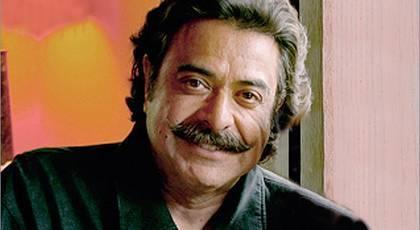
So you bet it was good news for me to hear a few days ago that a successful and hard working American businessman and multi-millionaire from the midwest, Shahid Khan, a Pakistani American owner of a large automobile parts manufacturer, Flex-N-Gate, had just bought an NFL team, the Jacksonville Jaguars! My rare good optimism however seems to perhaps been ill placed though because it seems that even a positive and notable news story like this can quickly turn into something far more twisted and sinister as witnessed by the scores of Islamophobic and racial comments being left on the Jacksonville Jaguars Facebook page and other sports blogs and boards, hours since the sale and the origins and national background of the new owner became public. The deal which still has to go to an NFL owner’s vote would only then be complete and final. Whether the NFL owner’s vote affirmatively on the deal or not, the rancid and clearly Un-American comments on the team’s fan page demonstrate that a majority of the local fans of this NFL team seem only to care about his Pakistani background and not of the fact that he is committed to staying and keeping the team in the small Jacksonville market and that he is a genuine fan of football and by all accounts would make a great manager/owner of the franchise.

The sad fact remains that there is a possibility that despite all the countless contributions to this great nation made by Pakistani Americans, many of these die hard football fans have no problem with risking losing their team to a different owner who would take the team out possibly west to the vacant Los Angeles market than to have a “Paki” keep the team in Florida’s small Jacksonville market and try and build a contender there.

Maybe its his IRS troubles that Shahid had a few years ago that prevented him from buying the St Louis Ram’s majority ownership stake last year or maybe it really is his very interesting moustache that scares people away. Regardless, I will gladly take either reason for his bid not being approved than anything that points to his national origin or racial makeup. Afterall, us Americans should never forget the words of the late great Rev. Dr. Martin Luther King, Jr when he said that we should ”not judge a man by the color of his skin, but rather by the content of his character.” All I know is that this Pakistani American still keeps alive Dr King’s dream. So no amount of paranoia should let the die-hard Jaguar fans fear that Muslims and Allah are on their way to taking over their beloved NFL franchise. Now gentlemen, let’s play ball!

–Manzer Munir, a proud American of Pakistani descent, is a former US State Department Foreign Service Officer Management Selectee, and the founder of Pakistanis for Peace. He is also an often tormented fan of the Kansas City Chiefs of the NFL as well as having the good fortune of being a lifelong fan of Kansas Jayhawk Basketball.

Obama Refrains From a Formal ‘I’m Sorry’ to Pakistan

By Helene Cooper and Mark Mazzetti for The New York Times

The White House has decided that President Obama will not offer formal condolences — at least for now — to Pakistan for the deaths of two dozen soldiers inNATO airstrikes last week, overruling State Department officials who argued for such a show of remorse to help salvage America’s relationship with Pakistan, administration officials said.

On Monday, Cameron Munter, the United States ambassador to Pakistan, told a group of White House officials that a formal video statement from Mr. Obama was needed to help prevent the rapidly deteriorating relations between Islamabad and Washington from cratering, administration officials said. The ambassador, speaking by videoconference from Islamabad, said that anger in Pakistan had reached a fever pitch, and that the United States needed to move to defuse it as quickly as possible, the officials recounted.

Defense Department officials balked. While they did not deny some American culpability in the episode, they said expressions of remorse offered by senior department officials and Secretary of State Hillary Rodham Clinton were enough, at least until the completion of a United States military investigation establishing what went wrong.

Some administration aides also worried that if Mr. Obama were to overrule the military and apologize to Pakistan, such a step could become fodder for his Republican opponents in the presidential campaign, according to several officials who declined to be named because they were not authorized to speak publicly.

On Wednesday, White House officials said Mr. Obama was unlikely to say anything further on the matter in the coming days.

“The U.S. government has offered its deepest condolences for the loss of life, from the White House and from Secretary Clinton and Secretary Panetta,” said Tommy Vietor, spokesman for the National Security Council, referring to Defense Secretary Leon E. Panetta, “and we are conducting an investigation into the incident. We cannot offer additional comment on the circumstances of the incident until we have the results.”

The American and Pakistani accounts of the NATO strikes vary widely. A former senior American official briefed on the exchange said Wednesday that the airstrikes came in the last 15 to 20 minutes of a running three-hour skirmish, presumably with Taliban fighters on one or both sides of the border. That is at odds with the Pakistani account that its troops were in a two-hour firefight with the Americans.

Pakistan, rejecting the American account, has blocked all NATO logistical supplies that cross the border into Afghanistan, given the Central Intelligence Agency 15 days to vacate the Shamsi air base from which it has run drone strikes into Pakistani tribal areas and announced that it will boycott an international conference on Afghanistan’s security and development next week in Bonn, Germany.

With everything at stake in the relationship with Pakistan, which the United States sees as vital as it plans to exit from Afghanistan, some former Obama administration officials said the president should make public remarks on the border episode, including a formal apology.

“Without some effective measures of defusing this issue, Pakistan will cooperate less rather than more with us, and we won’t be able to achieve our goals in Afghanistan,” said Vali Nasr, a former State Department official who specialized in Pakistan.

But David Rothkopf, a former Clinton administration official and the author of “Running the World: The Inside Story of the National Security Council and the Architects of American Power,” said Pakistani officials need to understand that in the next year, the Obama administration will be less accommodating to Pakistani sensibilities.

“I do think that it’s important for them to recognize that political dynamics in the United States will lead to a hardening of U.S. positions, and the president will have less and less flexibility to accept the kind of behavior that he has in the past,” Mr. Rothkopf said. “The prognosis for U.S.-Pakistani relations is bleak.”

America’s strained ties with Pakistan have been buffeted by crises this year, from the killing of two Pakistanis by a C.I.A. contractor to the raid inside Pakistan that killed Osama bin Laden.

The headaches of the relationship have meant that Pakistan has few friends inside the administration. As one former senior United States official who has been briefed on the administration’s recent deliberations put it, “Right now there are no Pakistan friendlies” at the White House.

But the administration desperately needs Pakistan’s cooperation in the American plan to withdraw militarily from Afghanistan by 2014. Several senior American officials have said Pakistani help is essential to persuade the Taliban to negotiate for peace.

Twice recently, the administration has solicited help from Senator John Kerry, Democrat of Massachusetts, to deliver messages to Islamabad to help defuse crises in the relationship.

On Wednesday, Mr. Kerry was guarded in his comments about the border episode. “We all appreciate how deeply this tragedy has affected the Pakistani people, and we have conveyed our heartfelt condolences through multiple channels,” Mr. Kerry said in an e-mail. “Ultimately, the only way to move the ball forward is to focus on areas where our interests align and where we can really make progress. Our two countries need each other.”

What Happened on the Border?

As Reported by The New York Times

It’s not clear what led to NATO strikes on two Pakistani border posts this weekend, but there can be no dispute that the loss of lives is tragic. At least 24 Pakistani troops were killed. We regret those deaths, as we do those of all American, NATO and Afghan troops and Pakistani and Afghan civilians killed by extremists.

Washington and Islamabad need to work together, urgently, to ensure that this incident does not destroy their deeply troubled relationship. The United States needs Pakistan’s cooperation — as grudging as it is — to pursue the fight against the Taliban. And without American support, Pakistan’s fragile government will be even more vulnerable to extremist attacks.

So far, Pakistan’s leaders seem most interested in fanning popular anger. The Obama administration and NATO have wasted precious time, allowing the crisis to escalate.

On Saturday, after the first reports, Secretary of State Hillary Rodham Clinton and Defense Secretary Leon Panetta issued a statement offering their “deepest condolences for the loss of life.” We’re not sure why President Obama waited until Monday to add his voice.

We are also puzzled, and concerned, by the delay in opening a full and transparent inquiry. On Saturday, the top American commander in Afghanistan, Gen. John Allen, said he would “thoroughly” investigate the incident. But that was never going to be enough.

It took until Monday for Gen. James Mattis, leader of the Pentagon’s Central Command, to announce a more formal investigation and to name Brig. Gen. Stephen Clark to lead it. The inquiry will include representatives of NATO and General Allen’s team. Significantly, Central Command said Pakistan and Afghanistan would be invited to participate. Islamabad and Kabul should both agree. The panel needs to move ahead quickly and credibly, with full disclosure no matter what it finds.

Pakistan’s leaders, as ever, are playing a very dangerous game. On Monday, Prime Minister Yousaf Raza Gilani vowed in an interview on CNN, that “business as usual will not be there.” His government has already shut down NATO supply routes to Afghanistan, ordered a base used for drone strikes evacuated and threatened to boycott a conference on Afghanistan’s security and development. Some news reports are also quoting ordinary Pakistanis demanding that their government retaliate militarily against American forces across the border.

Before things get out of control, Pakistan’s leaders need to lower their rhetoric and make clear that it is in their country’s interest to work with the Americans to find out what happened and ensure it will not happen again.

There are many questions that need to be answered. Who first fired on the American-Afghan force? Pakistan’s army is far too cozy with the Taliban. Were fighters sheltering near the Pakistani outposts? What about Pakistan’s claim that the NATO strikes continued for two hours even after Pakistan alerted allied officials? What needs to be done differently going forward?

The two sides need answers if there is any hope of finding a way back from the brink.

Pakistan’s 10 Years of Chaos

As Reported by Jennie Matthew for AFP

The 9/11 attacks that thrust Pakistan into the war on terror have brought the nuclear-armed state to its knees, fighting Islamist radicals at home and risking pariah status abroad.

It was already evening in Pakistan when television channels, recently deregulated by then president General Pervez Musharraf, began broadcasting the terrifying scenes from the twin towers in New York.

Few slept that night, realising immediately that the world had changed forever and that Pakistan was in the eye of the storm after spending years fostering extremist movements for its own ends.

“My immediate thought was ‘oh my God, more trouble coming onto Pakistan’,” said author Imtiaz Gul, who has written extensively about the subsequent war and its fallout at home.

“My fears have been borne out… The 9/11 events shocked Pakistan into an unprecedented crisis of insecurity,” he said.
It didn’t take long for Musharraf to weigh up conditions imposed by Washington and announce on September 19 that Pakistan would offer its airspace, territory and capabilities to help the United States defeat terrorism.

But as America put the finishing touches to its war plans, Pakistan desperately tried to persuade its Taliban allies in Afghanistan to give up Osama bin Laden and avert catastrophic military action, to no avail.

Within weeks, bin Laden, his future successor Ayman al-Zawahiri and Taliban leaders had fled the American invasion into Pakistan.

And there in the northwestern tribal belt, which no government has been able to subjugate, they found refuge among an extremist support network dating back to the 1990s jihad against the Soviets in Afghanistan.

They regrouped, forming bases used by the Taliban to direct the insurgency in Afghanistan and training camps for Al-Qaeda to brainwash young extremists from all over the world into carrying out terror attacks.

As a result, the last decade has made the only Muslim nuclear power more unstable than ever before in its bloody and chaotic 64-year existence.

The watershed came in July 2007 when government troops cleared out extremists preaching hate from the Red mosque in the heart of the capital Islamabad.

The militants declared war and in the past four years, around 500 bomb attacks have killed 4,600 people, according to an AFP tally.
Just when it appeared things couldn’t get worse, this year the US discovered bin Laden living close to Pakistan’s equivalent of West Point, sending in Navy SEALs to kill him and sinking already fractured US-Pakistani relations.

“No doubt that this is absolutely the worst time for the country,” said Pakistani journalist Ahmed Rashid, whose book “Taliban” became an international bestseller after 9/11.

Rashid describes Pakistan as “completely isolated” by a war that “brought terrorism, sectarianism, a weakening of the state (and) much greater ethnic insurgencies” within the country.

But the blame — he says — is Pakistan’s for frittering away American aid money and refusing to realign its national security priorities.
“Politically, the most far-reaching mistake was the hosting and relaunching of the Afghan Taliban by the military and the intelligence agencies. That was enormously detrimental and led to the growth of the Pakistani Taliban.” Pakistan routinely proclaims to have sacrificed the most of any country fighting terror.

The government claims that 35,000 people have been killed. The army confirms the deaths of 3,019 soldiers since 2001 — more than the 2,684 Western soldiers to have died in Afghanistan.

More than three million people have been displaced by violence and counter-terrorism activities in Pakistan since 9/11, according to International Crisis Group figures released in 2010.

The army says 147,000 troops are deployed in the northwest compared to 35,000 in October 2001, a drastic reversal from the previous concentration along the Indian border in the east.

Yet extremism has increased. An average of one US drone strike every four days against militants in the tribal belt is raising fears that the campaign is recruiting a new generation of insurgents and suicide bombers.

Jihadist groups — fostered by Pakistan’s security establishment to fight India in Kashmir and maintain Afghanistan as a strategic asset — have splintered, and increasingly turned the guns on their old allies in the state.

“Pakistan is a lot less secure country now than 10 years ago, because it has become a battleground, an extension of the Afghan war. Pakistan is now facing a serious threat for its stability,” said journalist Zahid Hussain.

Yet the public discourse concentrates less on how to defeat militancy than debating the merits of the hugely unpopular US alliance.
Trust between Islamabad and Washington is at an all-time low. Cooperation between the CIA and Pakistan’s ISI spy agency is poor. Blame games on both sides are played out in the media.

Compounding the sense of crisis is the country’s economic meltdown. Pakistan says losses related to the war are $68 billion. Critics say the country has squandered up to $20 billion in aid given by the United States. “The biggest mistake was the failure to really address strategic issues in the economy. Pakistan could have changed its very weak economic structure at that point in time,” said Rashid.

Instead crippling inflation, rampant unemployment and an energy crisis with power cuts of up to 16 hours a day have left millions wondering how to fill the void.