Archive for December, 2009

War on Terror Requires Continued Muslim Support From Friends and Family of Suspects
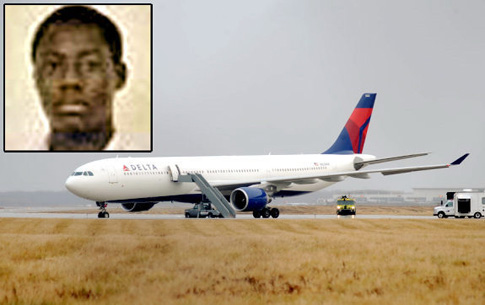
Detroit, USA- The attempted Christmas Day foiled terror attack proved that there are terrorists out there still very much planning and attempting to carry out attacks on the United States and Europe. The alleged terrorist is a 23 year old man from an affluent family in Nigeria. The suspect Umar Farouk Abdulmutallab, boarded a plane from Amsterdam headed to Detroit, Michigan. The young man’s father, who is a prominent banker in Nigeria, had previously notified the American embassy in Lagos, Nigeria that his son may have become radicalized and he was concerned that he may carry out an attack based on his extremist views.

The American authorities had placed Abdulmutallab on a watch list known as Terrorist Identities Datamart Environment (TIDE) list which has roughly 550,000 names. But despite being on this list, being denied a visa for the United Kingdom, and the fact that his father warned authorities a month ago, Abdulmutallab managed to buy a one way ticket purchased with cash, boarded a plane with no luggage, and snuck past security and screening at Amsterdam airport and almost succeeded in creating a Christmas Day massacre somewhere over the Atlantic or the United States.

The suspect has claimed to have received training and instructions from Al-Qaida operatives in Yemen, a country known for an active Al-Qaeda network called Al-Qaeda in the Arabian Peninsula and is also the paternal homeland of Al-Qaeda chief, Osama Bin Laden.

It is simply good fortune that the suspect was incompetent in carrying out the detonation on his device, which authorities say would have brought down the plane. Also helpful was the fact that there were several alert and vigilant passengers who were quick to prevent Abdulmutallab from succeeding in mass murder. Despite all the technological and security advances, the last line of defense always appears to be other passengers and civilians who must heroically act to stop these fundamentalists from carrying out their attacks.

There is a good deal to be learned by American intelligence and airport security agencies to ensure that terrorist incidents like these are prevented by following the clues and connecting the dots much earlier in order to avoid a catastrophe. The various agencies of the United States from the embassies and foreign missions to FBI, TSA, and Homeland Security must work closely to identify individuals who have been placed on strict watch lists. Also needed are very stringent security procedures for international flights coming to the United States, as the majority of the terrorists have attempted to blow up planes inbound to the United States from abroad. Also, authorities must ask themselves how they did not do enough after the young man’s father himself alerted US officials to inform them he was worried his son may have become radicalized and may be planning an attack.

The obvious good news that came out of this incident is that the terrorist attack was foiled and no one was injured. A closer look at the facts should also hearten the American public that for the second straight potential terrorist incident, a Muslim family member willingly and proactively alerted the authorities regarding the suspicious activities of their family member. Just as we saw with the family of the five Washington DC men who are accused of planning attacks on the US and are currently in detention in Pakistan, we should take heart in the fact that Abdulmutallab’s father felt compelled to notify American authorities of his son’s radicalization and possible terrorist planning.

It is sad to see an uptick in the amounts of terrorist incidents in the last few months, but it is also nonetheless heartening to see that Muslim family members are willing to step forward to thwart terrorist attacks and alert the authorities whenever they have suspected them to have become extremist and radicalized in nature and planning attacks. The recent events show that the authorities must continue to rely on Muslim communities to step forward and offer any assistance they can to prevent any future terrorist attacks as authorities tighten their security procedures to continue to protect the public.

Reported by Manzer Munir for http://www.PakistanisforPeace.com

Tiger, AP’s Athlete of the Decade, has more scrutiny in his future as it is reported that his wife is shopping for an attorney~

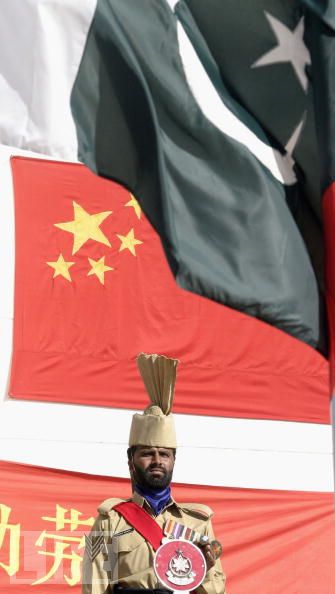
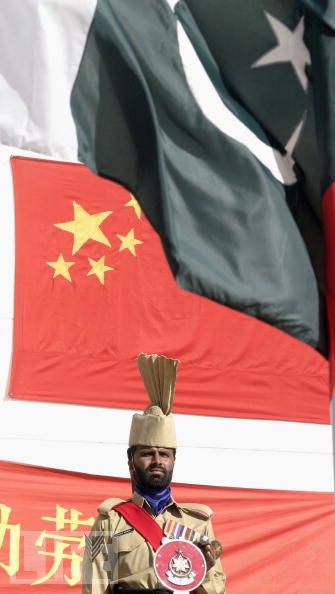
Pakistan and China increase military spending and cooperation as India shows concern

Beijing, China- A senior Chinese defense official has justified Chinese sales of warships and submarines to Pakistan on the grounds that Russia and the United States were selling similar systems to India.

The defense official also indicated that China was aware of the fact that India may not be happy with its deal with Pakistan. “The initiative may invite concerns from its neighboring countries. But the doubts are unnecessary,” Zhai Dequan, deputy director of China Arms Control and Disarmament Association , was quoted as saying by the official media.

Pakistan’s chief of naval staff, Norman Bashir, also made a push to persuade China to sell higher capacity ships compared to the F22P frigates that China began delivering in June.  Chinese official Zhai said that Pakistan’s   desire for higher capacity ships is normal for an independent nation seeking to bolster its security. “India has also entered into deals for military hardware from the Unites States and Russia. India’s aircraft carrier has already cost it billions of dollars”, said Zhai.

Bashir also met with the Chinese defense minister, Liang Guanglie, and discussed with him Pakistan’s needs in terms of modernizing their armed forces to try and keep up with the torrid pace of rival India’s defense spending. “The Chinese armed forces would like to improve friendly and cooperative relations with the Pakistani armed forces,” defense minister Liang Guangile said, according to China’s state-run Xinhua press agency.” China attached great importance to its traditional friendship with Pakistan, Liang said, adding that the two countries had conducted comprehensive and multi-level military exchanges and cooperation in various areas.”

“The Pakistani armed forces and people cherished their friendship with the Chinese armed forces and people”, Noman Bashir said, noting that “Pakistan would like to work with China to promote the comprehensive and cooperative partnership.” Bashir also stated that Pakistan was keen on buying bigger ships and more JF-17 fighter planes from China in addition to submarines and that Pakistan will be buying more weapons from China, including missiles. 

“These growing military ties between China and Pakistan are a serious concern to India,” stated Defense Minister A K Antony. India worries about China’s rising influence in South Asia and the Indian Ocean region, a neighborhood traditionally considered as its sphere of influence.

India’s relations with Pakistan, never easy after three wars since 1947, went downhill fast after last November’s Mumbai attacks blamed on Pakistani originated militants. Meanwhile, Chinese and Pakistani cooperation on military and economic projects has increased in the last few years. “The increasing nexus between China and Pakistan in military sphere remains an area of serious concern,” Antony said in a speech. “We have to carry out continuous appraisals of Chinese military capabilities and shape our responses accordingly. At the same time, we need to be vigilant at all times.” Tensions between India and China, who fought a brief war in 1962, flared again in recent months, especially with the re-emergence of a long-standing border dispute made worse by a visit by the Dalai Lama, the Tibetan spiritual leader, to Indian territory claimed by Beijing.

India increased defense spending by 24% for this year’s budget to $28.4 billion a year dwarfing Pakistan’s budget of $4.2 billion for the same period. Meanwhile, China and India are together set to make Asia the highest regional spender on defense in the next seven years replacing North America as their economies continue to fund their weapons appetite.

Pakistan cannot compete with the likes of India and China militarily. Just as Taiwan could not compete with China militarily, but went on to become an economic powerhouse and used its influence economically,  so too must Pakistan focus on growing its economy rather than growing militarily. Even though Pakistan possesses the nuclear bomb, and that very well may end up being a strong deterrent against India in the likelihood of a war, it still is loathe to use it, for the consequences from India would be similar and far worse due to their increased warheads and military might.

Also, although Pakistan’s military and previous leadership have articulated the right to a preemptive nuclear strike or a nuclear first use option in the event of hostilities with India, this choice is often seen as a losing option by the military due to the aftermath of a nuclear exchange between the two countries. India’s budget and its technological advancements make it impossible for Pakistan to ever win a conventional war with India. And a nuclear exchange between these two neighbors will leave neither side feeling as the winner.  

Pakistan’s most beneficial strategy must consist of directing its full armed forces against the Taliban and militant groups within its territory and re-engaging India back to the peace table in hopes of resolving the long disputed Kashmir region because war with India will certainly not leave Pakistan the victor. However a peace treaty can open the long border between India and Pakistan for trade, goods, ideas, money and people to move freely across the border and allowing much needed investments and flow of technology to Pakistan that will go a long ways in helping the country and its people catch up with the rest of the world.

Reported by Manzer Munir for www.PakistanisforPeace.com

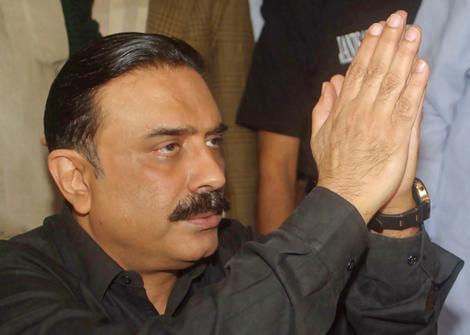
Court deals blow to Zardari

ISLAMABAD, Pakistan – The nation’s Supreme Court yesterday nullified a deal that had given President Asif Ali Zardari and thousands of other government officials amnesty for past crimes.

The decision likely will further weaken Zardari’s shaky hold on power and complicate U.S. efforts to get the Pakistani government to intensify its fight against Taliban extremists who use Pakistan’s border regions as a base for cross-border attacks in Afghanistan.So long as Zardari is president, he has immunity from prosecution, but the limits of that protection are expected to be tested in the courts.

The court decision comes as the United States pushes for an expanded strategic partnership with Pakistan to help combat the growing threat from Islamist extremists, including the Taliban and al-Qaeda.The United States is sending 30,000 more troops to Afghanistan and wants Pakistan to step up efforts on its side of the border. But elements of the military, which ran the country for half its history and remains more powerful than the civilian government, oppose a major offensive on behalf of the United States. They, and much of the Pakistani public, instead blame Washington for stirring up turmoil in their country.

Zardari’s ability to govern has been compromised by his struggle to simply hold on to his job – a task made harder by yesterday’s ruling. Zardari, 54, regards all the cases against him, which date back to the 1990s, as politically motivated. The court was ruling on a challenge to the 2007 amnesty, known as the National Reconciliation Ordinance.It was granted to politicians and bureaucrats by then-President Pervez Musharraf in a deal brokered by the United States and Britain to enable exiled Pakistani leaders, including Zardari’s wife, former Prime Minister Benazir Bhutto, to return to the country without fear of prosecution and help it transition to civilian rule.Soon after her return, Bhutto was assassinated. Her Pakistan Peoples Party then swept national elections last year, Musharraf stepped down, and Zardari became president.

The court ruled that the amnesty was illegal because it was discriminatory, favoring a small category of people.The decision to overturn the amnesty deal had been expected, but the 17-member Supreme Court panel – led by Chief Justice Iftikhar Mohammed Chaudhry, who had been removed by Musharraf and reluctantly restored by Zardari – went further. It requested that Swiss authorities reopen years-old corruption cases against Zardari that had been set aside.Zardari allegedly received millions in illegal commissions from two Swiss companies and was convicted in 2003 on money-laundering charges by a Swiss magistrate. The conviction was later suspended.The court’s ruling, issued late in the evening, had the immediate effect of reopening cases against thousands of politicians and bureaucrats that had been frozen under the amnesty deal. Four government ministers had been protected under the amnesty, including Interior Minister Rehman Malik.

Zardari spokesman Farhatullah Babar said the government would respect the court’s decision, but he reiterated that the president remained immune from prosecution under the constitution. “We believe this does not affect the president of Pakistan,” Babar said.Others had different ideas. Roedad Khan, a retired civil servant who was one of the petitioners who challenged the amnesty, said the decision would “destroy” Zardari.Khan called Zardari “a man who has looted and plundered this poor country. . . . Is there one law for Zardari and one law for the 160 million people of Pakistan? No, there is one law for everyone. He can’t get away with it.”

Reported by Griff Witte for The Washington Post


Even a Watered Down Healthcare Bill Seems Unlikely for the US Taxpayer

Pakistani court suspends deportation as another case of homegrown terror troubles US authorities

Karachi, Pakistan- Pakistani police on Monday seized a luggage and a cell phone from a hotel where three of the five Americans who were arrested on suspicion of terrorism planning and militant links stayed. A court has ruled that the men cannot be deported to the United States until the judges review their case.  Pakistani police has alleged that the five young Americans intended to join militant and extremist groups in the northwest tribal areas of Pakistan and Afghanistan. This case is troubling as it would appear that Americans and Western raised men are traveling to Pakistan to link up with Al-Qaeda and other militant groups like the Taliban.

Pakistani police had searched their hotel, aptly named Saddam Hotel in the southern city of Karachi.  The detainees have been accused of using the internet and such sites as Facebook and Youtube to reach out and connect to extremist groups and have been said to have been in contacts with a Taliban recruiter also.  The Pakistani court actions are intended to prevent the deportation of the accused to the United States until the courts in Pakistan can ascertain the facts and review the case.

The men, who are from the Washington DC area were picked up last week by Pakistani authorities after their worried families in the US contacted the FBI about their missing sons and enlisted their help in tracking the men down. The authorities were given a farewell video found by one of the family members that showed scenes of war and called for Muslims to be defended. FBI agents, who have had some access to the men, are trying to see if there is enough evidence to charge the men with conspiracy to provide material support to a terrorist group.

A US government official was satisfied with the Pakistani government’s assistance stating that “We’ve had excellent cooperation with the Pakistani authorities, both on the diplomatic side and on the law enforcement side,” said State Department spokesman Ian Kelly, “And the Pakistani authorities granted us access to the individuals within 24 hours of our request, which is a very speedy response.”

The threat posed by homegrown terrorists in the United States and in European countries is a growing concern for the FBI and US agencies. The incidents such as the Fort Hood shooting where Major Nidal Hasan allegedly shot and killed 13 fellow soldiers at the Texas base last month do nothing but further raise those concerns. Then there’s David Headley, an American born Muslim to mixed ancestry who is indicted in the Mumbai blasts of November 2008. And now comes the story of the five Muslim American men arrested in Pakistan who were interested in waging  jihad against the US.

It is too early to call it a growing trend, but the incidents and their frequency does suggest that there is certainly a minority segment of very young Muslim males who somehow are being radicalized not in strict Afghanistan or Pakistan or somewhere in Iran. Rather, in the streets of Virginia, New York, Chicago and other cities, certain young Muslim males are becoming radicalized and becoming extremists. This phenomenon can be best described as a catch 22. You see, these radicalized and misguided men feel that because the United States is waging wars in Muslin countries such as Iraq and Afghanistan, it is being an oppressor. To these men, defending Muslim lands from an outsider and an oppressor is an obligation and a duty and is a call for every Muslim. On the other side, there is the American policy of engagement of the enemy on its turf, as is seen in the Bush doctrine. “Take the war to the terrorists” as President Bush so famously put it in 2001.  These wars that were initiated to be pre-emptive in the case of Iraq and retribution in the case of Afghanistan, have inadvertently become the cause célèbre of these jihadists and young extremists.

In essence, there is a vicious cycle of violence at work here. We have American troops in Afghanistan who are there to defeat the Taliban and Al-Qaeda in Afghanistan so that the US is safe from a terrorist attack hatched overseas. Yet, the next threat may actually be coming from an American born Muslim who is being alienated and radicalized due to the “unjust” war against his “brothers” constant 24 hour cable news coverage, satellite TV and foreign news channels, the internet websites and other sources.

As instances of homegrown Muslim radicalization grow or come into the limelight, it is imperative that the vast majority of peaceful, law abiding and patriotic American Muslims keep vigilant and mindful of the few in their midst who may be becoming radicalized in front of their eyes. It is vital that the Muslim community speak up as the parents of these young men did and alerted the authorities when they became concerned that they may have some sinister designs after discovering their farewell video. It is together with our cooperation with the authorities that we can sniff out these lost individuals before they do any harm to anyone or to an entire religion. The mosques and Islamic centers must do more to ensure that there is no radicalization or fiery sermons. There needs to be a conscientious effort on the part of the American Muslim community of progressives and moderates to speak up and chastise those that are becoming extremists within their midst in order to prevent the next Fort Hood massacare or the next Mumbai.

 Reported by Manzer Munir for www.PakistanisforPeace.com

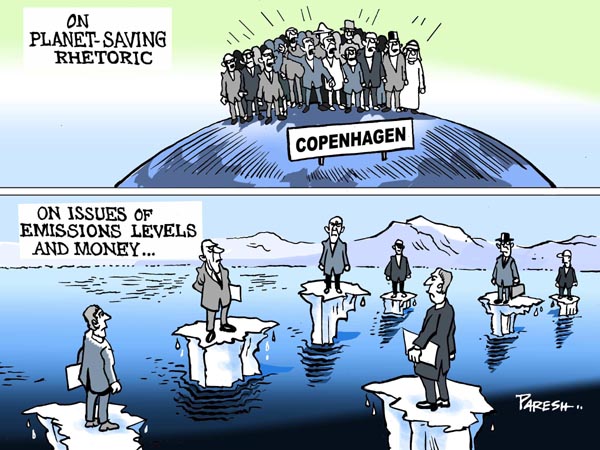
Climate Debate “Heats” Up In Copenhagen

Where is the Freedom for Afghan Women?

In 2001 as the impending invasion of Afghanistan beat like a drum through the newly traumatized nation then President George W. Bush declared the liberation of Afghan women as a primary goal of the war. While the current U.S. and Afghanistan governments continue to work to defeat the Taliban insurgency in Afghanistan, the eight-year-old promise to help relieve the oppression of women and girls has largely gone unmet.

During his address last week at the U.S. Military Academy at West Point, President Obama relayed several military goals and a commitment to law and order. But he did not mention women and girls. This week Human Rights Watch released the report “We have the Promises of the World,” chronicling the oppressive conditions women and girls continue to face in Afghanistan.

The Karzai government will now work with Taliban fighters who are willing to give up violence and support the efforts of the Afghan government. “Women have concerns about reconciliation with Taliban but their priority is peace. What is needed is honest discussion about what reconciliation agreements mean for women,” said Rachel Reid, researcher for Human Rights Watch and co-author of this weeks report. Reid went on to say, “Women want to be apart of the conversation. They want to be engaged because they bear the biggest cost.”

Similarly, both the U.S. and Afghan administrations have committed to support local tribal leaders in establishing militias in rural areas to police the Taliban. “In the past local militias given guns and money have disappeared or committed human rights abuses themselves or they start polarizing with another group,” Reid said. But Reid, who has lived and worked in Afghanistan for more than two years, said sometimes there is little difference in the mindset of the Taliban, tribal leaders or the parliament when it comes to the rights of women and girls. “In the Jirgess or traditional councils where Afghans go if there is a crime or they have a complaint, a girl can be given as compensation for the crime, it’s called baad. Girls are traded like property,” Reid said.

The entrenched cultural norms take time to change. “Many organizations are on a six month to one year funding cycle. This will take a generation to change,” she said. While Reid was disappointed that President Obama’s address did not mention women’s needs she said the U.S. congress has approved programs for women and girls.

Sivanka Dhanapala, a senior regional coordinator for the United Nations High Commission on Refugees (UNHCR), said “Some women find the situation intolerable because of forced marriage at a young age. Some set themselves on fire as an attempt to escape.” Because of that, he added, there is a special burn unit in a hospital in the province of Hera. While on paper President Hamid Karzai’s government promises the equality of women and men in Article 22 of the Constitution, many argue the situation on the ground does not reflect that commitment. According to the United Nations Development Fund for Women’s (UNIFEM) gender development index Afghan women are second to last in the entire world.

Many young women are forced into marriages some before the legal age of 16. The controversial Shia Personal Status Law that received international attention in April of 2009 was often referred to in the international media as the rape law. It mandated women have sex with their husbands every fourth night. The law was amended and signed by president Karzai in July of this year. It now states that women cannot leave their homes without the permission of their husbands or fathers, that custody of children will be given to fathers and grandfathers, and their husbands can refuse food to women if they refuse to oblige their husbands sexually.

“The Shia Personal Status Law sets a terrible precedent. The law reflects the realities of many women’s lives but it doesn’t mean you take customary law and enshrine as state law. It just makes it harder for women.” Reid said.

Currently, there is one female minister in the government, the minister of women’s affairs. Over the past few years, women in public life have come under severe threat. Lt. Col. Malalai Kakar was the highest-ranking female police officer. She was shot on her way to work in 2008. Similarly, Sitara Achakzai a member of a provincial council and respected local leader was shot in 2009. In both incidents the Taliban claimed responsibility but there has not been an arrest in either case. The murders and threats often have a ripple affect for women in Afghanistan, which contributes to a culture of fear and intimidation. This extends into the Afghan refugee population in neighboring Pakistan and Iran. “Afghan women living in Iran would rather stay in Iran than return to Afghanistan because they have access to education and can work in Iran,” Dhanapal said. “Not all the news is bad. One of the more heartening aspects is the opening of many girls schools,” said Dhanapala. He went on to say, “when you drive through the countryside and see girls going to school in their bright uniforms it gives you hope to persevere.” Senzil Nawid, author and scholar on Afghan women, said the women of Afghanistan are incredibly resilient. “If security is improved the women will bounce right back,” Nawid said.

Nawid points out that the cultural oppression of women began when the Afghan communist parties overthrew the first Afghan president in 1978. At that point a bloody civil war ensued. “Women were the victims, they were treated horribly under the radical Marxists regimes and the Mujahadeen forces,” Nawid Said. She went on to say that orphaned young men were trained in Pakistan and part of the training was based in Pashtun and Wahhabist Islamic traditions. These customs forbid women from working outside the home or pursuing formal education. “The Obama administration has to address the corruption within the Afghan government. The culture of impunity needs to be tackled. It’s a huge factor in the rise of the insurgencies,” Reid said. Over the next few weeks President Karzai will be appointing ministers and cabinet people. “The government has lost credibility. We have to be very watchful in terms of the appointments,” Dhanapal said. McChrystal and President Obama have stressed the training of Afghan security forces and the rule of law.

Yet, according to Reid the police force is poorly trained. “They do not have enough civilian law enforcement training they are trained as paramilitary troops really. They have to know the law to enforce it,” she said. Nawid said President Karzai is in a difficult position. “He started the country from scratch. There was nothing, no army, no educational institutions, no economy or civil servants,” she said. While assuring the international community that he wants equality for women through commitments like the millennium development goals that state “achievement of primary education for everyone and the promotion of gender equality and the empowerment of women.” But President Karzai’s actions and desire to retain Shia support appear to contradict these goals.

While the situation that women face is profoundly challenging, they continue to speak out in spite of threats. Reid shared a story about a 13-year-old girl who ran away from the man she was forced to marry. Through a series of unbelievable and courageous steps, the young woman ended up at a safe house in the capital Kabul. While the parliament, local leaders and her husband’s family demanded she go back, the girl refused. Reid said her actions are threatening because it’s a young woman standing up for herself. “She told me she met with the president who told her it was safe to go back to her husband’s family. She said she told him ‘if you think it’s safe why don’t you send your wife or one of your children.” Reid finds great hope in the courage of this young woman whose attempt to demand her rights have not come from outside Western influence. “She knows her rights and is fighting for them,” Reid said. It is hard to know how the Obama administration will support women’s rights in Afghanistan, as there has been little public attention to the matter. Reid said that sustained work by local Afghan NGO’s is essential. “The biggest question in Afghanistan, is if you have a willing partner in the Afghan government,” Reid said.

Charity Tooze, a freelance journalist originally published this article on The Huffington Post on Dec 10, 2009. Currently she is producing a documentary about Iraqi refugees. Previously she produced a television series by and for young women, http://www.ritesofpassage.tv

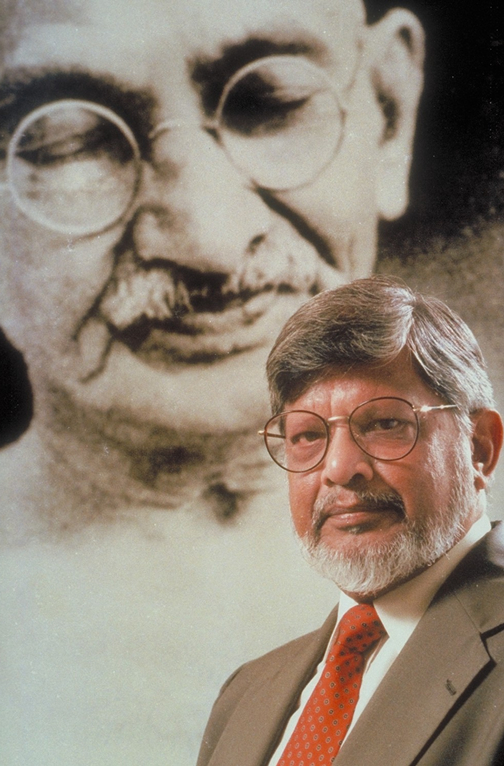
The Power of Forgiveness by Gandhi’s Grandson, Dr. Arun Gandhi

Dr. Arun Gandhi, grandson of Mahatma Gandhi and founder of the M.K. Gandhi Institute for Nonviolence, in his June 9 lecture at the University of Puerto Rico, shared the following story as an example of nonviolence in parenting:

“I was 16 years old and living with my parents at the institute my grandfather had founded 18 miles outside of Durban, South Africa, in the middle of the sugar plantations. We were deep in the country and had no neighbors, so my two sisters and I would always look forward to going to town to visit friends or go to the movies. One day, my father asked me to drive him to town for an all-day conference, and I jumped at the chance.

Since I was going to town, my mother gave me a list of groceries she needed and, since I had all day in town, my father asked me to take care of several pending chores, such as getting the car serviced. When I dropped my father off that morning, he said, ‘I will meet you here at 5:00 p.m., and we will go home together.’

 After hurriedly completing my chores, I went straight to the nearest movie theater. I got so engrossed in a John Wayne double-feature that I forgot the time. It was 5:30 before I remembered. By the time I ran to the garage and got the car and hurried to where my father was waiting for me, it was almost 6:00.

He anxiously asked me, ‘Why are you late?’ I was so ashamed of telling him I was watching a John Wayne western movie that I said, ‘The car wasn’t ready, so I had to wait,’ not realizing that he had already called the garage.

When he caught me in the lie, he said: ‘There’s something wrong in the way I brought you up that didn’t give you the confidence to tell me the truth. In order to figure out where I went wrong with you, I’m going to walk the walk home 18 miles and think about it.’ So, dressed in his suit and dress shoes, he began to walk home in the dark on mostly unpaved, unlit roads. I couldn’t leave him, so for five-and-a-half hours I drove behind him, watching my father go through this agony for a stupid lie that I uttered. I decided then and there that I was never going to lie again.

 I often think about that episode and wonder, if he had punished me the way we punish our children, whether I would have learned a lesson at all. I don’t think so. I would have suffered the punishment and gone on doing the same thing. But this single nonviolent action was so powerful that it is still as if it happened yesterday. That is the power of nonviolence.

Originally posted by Dr.Arun Gandhi at PSY On Saturday, December 5, 2009

Chicago Man Is Charged in 2008 Attack on Mumbai

December 7, 2009 WASHINGTON — The Chicago man with roots in Pakistan who was arrested two months ago for planning to attack a Danish newspaper now faces the much more serious charge that he was deeply involved in planning the 2008 massacre in India that killed more than 150 people, according to court documents filed by the Justice Department.  

Court documents charge that David Coleman Headley, 49, an American citizen who is the son of a former Pakistani diplomat and a Philadelphia socialite, conducted extensive surveillance of targets in Mumbai, India, for more than two years prior to the attacks by the terrorist group called Lakshar-e-Taiba, which is based in Pakistan.  

Six Americans were among the dead in the attacks on a Mumbai train station, the Oberoi and Taj Mahal hotels and other sites.

He has been charged with conspiracy to murder and maim in a foreign country, and material support of terrorism. Federal officials said the most serious charges, conspiring to carry out bombings that resulted in deaths, carry possible sentences of death or life in prison.

The Justice Department said that Mr. Headley, who is cooperating with the government’s investigation, spent several years and considerable effort on behalf of the plotters, attended training by the group in Pakistan, videotaped targets and briefed the other conspirators on how to carry out the attack on India’s largest city.

 Mr. Headley took boat trips in and around Mumbai harbor in the spring of 2008, videotaping potential landing sites for the attackers, who would arrive by sea, the court documents charge. The attackers traveled from Karachi, Pakistan, hijacked an Indian fishing trawler, killed its captain, and then used a small boat to go ashore. The masked men used assault rifles and grenades in their deadly onslaught.

 Mr. Headley also scouted out other potential targets in Mumbai and elsewhere in India that were not attacked, including the National Defense College in Delhi.

 Mr. Headley, a resident of Chicago with a criminal record for smuggling drugs to the United States from Pakistan, was arrested in October with a Pakistani-born businessman, Tahawwur Rana, 45, who runs several businesses in Chicago and Toronto. Mr. Rana and Mr. Headley, who have known each other since attending an elite Pakistani military high school, were charged with plotting an attack against Jyllands-Posten, a Danish newspaper that published a series of cartoons depicting the Prophet Muhammad.

 Mr. Rana, a citizen of Canada, was not charged in the Mumbai attacks. But officials said the two men appeared to consult closely, and Mr. Headley posed as a representative of a company owned by Mr. Rana. In a bail hearing last week, Mr. Rana argued that he was duped by Mr. Headley.

 The Justice Department also announced Monday it had filed charges against Abdur Rehman Hashim Syed, a retired major in the Pakistani army, with collaborating in the plot against the Danish newspaper.

“This investigation remains active and ongoing,” said Patrick J. Fitzgerald, the United States Attorney for the northern district of Illinois.

 David Kris, the Assistant Attorney General for National Security, said, “This case serves as a reminder that the terrorist threat is global in nature and requires constant vigilance at home and abroad.”

Arrested on Oct. 3 at O’Hare airport in Chicago as he was boarding a plane on the first leg of a trip to Pakistan, Mr. Headley was officially charged a few weeks later with plotting to attack employees of a Danish newspaper that in 2005 published cartoons of the Prophet Muhammad that offended many Muslims.

Federal authorities said at the time that Mr. Headley told F.B.I. agents that he had initially targeted a building occupied by the Danish newspaper, Morgenavisen Jyllands-Posten in Copenhagen, but later proposed killing the paper’s cartoonist and cultural editor instead.

Officials said they regarded the case as significant because Mr. Headley traveled to Pakistan and consulted closely with three Pakistani men who belonged to Harakat-ul Jihad Islami, a terrorist group affiliated with Al Qaeda. The officials said Mr. Headley reported to Ilya Kashmiri, the operational leader of the terrorist group, who is based in a tribal region of northwest Pakistan.

When he was arrested, Mr. Headley was carrying about a dozen videotapes of the Danish newspaper office and surrounding areas that he was going to deliver to other conspirators in Pakistan, federal officials said. They said he had made the videotapes during several visits to Copenhagen in 2009.

Mr. Headley (or Daood Gilani, the name he was given at birth) is a man who has been pulled in different directions almost from the moment he was born. Even his eyes — one brown, one green — seem to symbolize the contradictions in his life.

Mr. Headley was born in Washington, where his Pakistani father and American mother worked at the Pakistani Embassy, he as a diplomat and she as a secretary. Mr. Headley’s mother, Serrill, grew up in a fashionable suburb of Philadelphia, and the cultural differences between her and her husband were too vast for the marriage to survive after the family went to Pakistan.

Serrill Headley left her husband and her children and moved back to Philadelphia sometime in the early 1970s. She worked at various office jobs and borrowed enough money from a suitor to buy an old bar, which she named the Khyber Pass.

In the late 1970s, she brought her adolescent son to Philadelphia to live with her. “Daood was not immune to the pleasures of American adolescence,” a former Khyber Pass employee once recalled.

Nor, to judge from his own words, was he immune to the lure of Islamic fundamentalism. “Courage is, by and large, exclusive to the Muslim nation,” he told high school classmates in an e-mail message last February. More chilling was an e-mail message he wrote defending the beheading of a Polish engineer by the Taliban in Pakistan: “The best way for a man to die is with the sword.”

By Ginger Thompson and David Stout for The New York Times originally published Dec 7, 2009

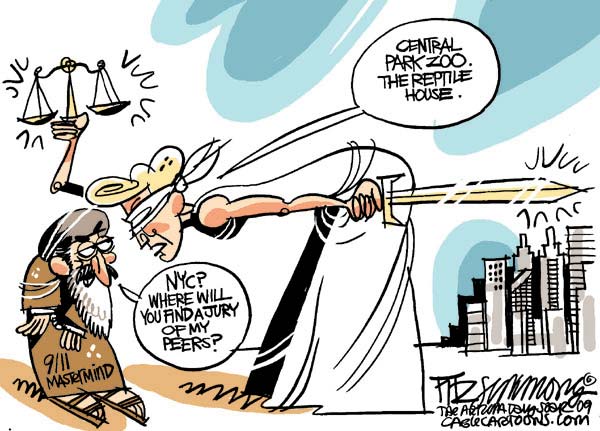
Accused 9/11 Mastermind to Have Civilian Trial in NY Despite Controversy

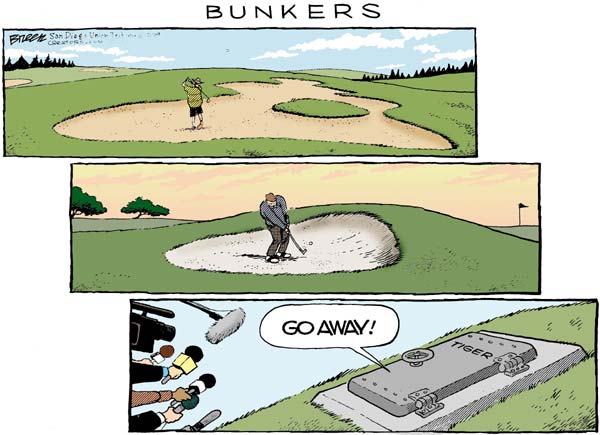
Tiger Wood’s Story Grips US News Media All Week

And

And This One Among Others….