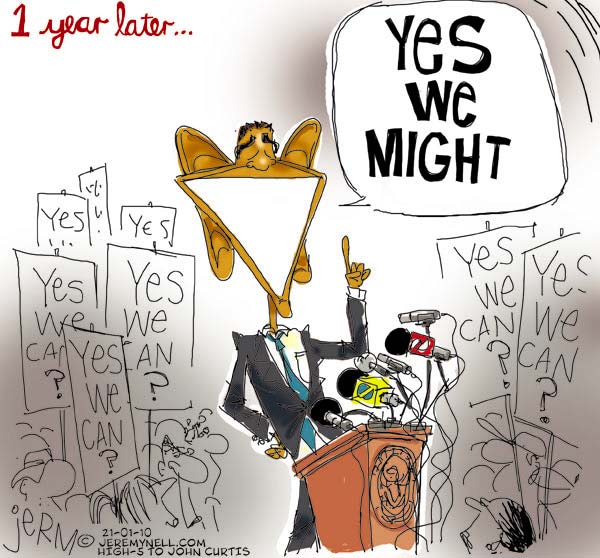
Polls Show Obama’s First Year Deemed Dismal

Archive for January, 2010
By Manzer Munir
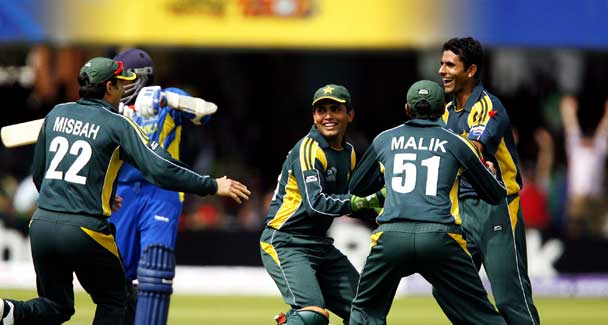
New Delhi, India- Events at an auction held earlier this month by India’s wildly popular Indian Premier League (IPL), consisting of professional cricket teams and franchises, has caused outrage amongst the cricket crazed Pakistani population. Up to seventeen top Pakistani cricketers were anticipated to be selected as top picks in the auction between the teams that saw none of the Pakistani players being selected.
Indian Union Home Minister P. Chidambaram on Monday said that the “decision of the franchisees not to select any of the 17 Pakistani cricketers, who had been given Indian visas for participation in the third edition of the Indian Premier League (IPL), was a disservice to the game of cricket.” Speaking in an interview to a television channel, Chidambaram said that the “IPL issue could have been handled in a better way” and expressed disappointment over the non-selection of the Pakistani cricketers as individuals.
He said these players were 20-20 World Champions and did not deserve to be treated this way. He said that any suggestion that the Indian Government had “nudged” the IPL not to select Pakistani players was not true and had no foundation.
The Pakistani press also had a field day with this turn of events calling for a boycott by the hockey team that is scheduled to visit India next month for Hockey’s World Cup being held in India where Pakistan is scheduled to participate.
Pakistan’s sports minister has demanded the Indian government carry out an inquiry into the snubbing of Pakistan cricketers in the Indian Premier League player auction. “We want the government of India to intervene in this issue and let us know who were responsible in keeping Pakistan cricketers away from the IPL,” Ijaz Jhakrani said Tuesday. “From day one our stance is that the IPL decision was an influenced one.”
The sports ministry has also put on hold its granting its permission for the Pakistan golf team to tour India next month. In addition, Speaker of Pakistan parliament’s lower house, Dr. Fehmida Mirza, stopped a parliamentary delegation’s proposed tour of India in protest. “We have asked both our foreign and interior ministries to let us know about the golf team’s tour to India,” sports ministry spokesman Faik Ali told the Associated Press. “We will decide on golf team’s tour to India after receiving inputs from both ministries”, she said.
Even Bollywood superstar actor Shah Rukh Khan, an owner of one of the IPL teams, the Kolkata Knight Riders, weighed on the issue saying it was “humiliating” to see none of the Pakistani players being picked and that the issue could have been handled better.
The tensions between India and Pakistan are seen as the main reason why the teams stayed away from picking the top Pakistani cricketers. There is a fear amongst the owners of the teams that should the animosities between India and Pakistan escalate, then the teams would suffer as their Pakistani players would be unable to travel or participate in games due to conflict between the two long time enemies. So in a sense it is a business reason that may have precipitated the action by the IPL. There is also a belief by many in Pakistan that perhaps the Indian government influenced the IPL into not accepting Pakistani cricketers as a way to reprimand Pakistan and punish it and its citizens for the Mumbai attacks of 2008, which is still fresh in everyone’s minds. India feels Pakistan has not done enough to rein the terrorist groups blamed for the attacks.
Nonetheless, the upset Pakistani cricket fans should also realize that there is a persistent uneasiness and suspicion on the part of India as Pakistan continues to be seen as the major threat to India’s sovereignty and security. To many in India, allowing Pakistani cricketers to play in India’s IPL would be seen as a way of rewarding a country and its citizens whom you detest and view with deep suspicion and enmity. So in a region of the world where so much tension and conflict already exists between the two neighbors and has simmered for over 60 years, one must not assume everything is peachy and just play ball!
Reporting by Yvette Cabrera for The Orange County Register
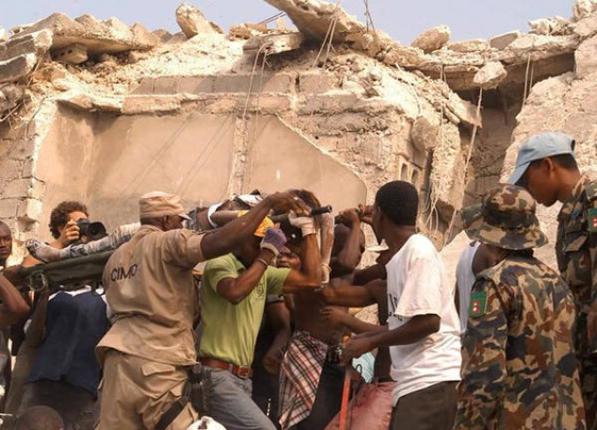
 On Sunday, as Newport Beach physician Salman Naqvi watched news reports out of Haiti – images of suffering and fear and chaos that defy imagination – he got an e-mail. It was from Todd Shea, an American Naqvi knows well. Shea has been working in Haiti since Friday, doing what Shea does – helping people in need. But the note, sent at 2 a.m., revealed some exhaustion and pessimism. Haiti, Shea wrote, is “one of the most tragic, toxic, difficult” environments he’s ever encountered.
And, for Shea, that’s saying something. Naqvi knows Shea because both have been involved in helping people in Pakistan – Naqvi’s native country – since 2005, when an estimated 73,000 people died following a 7.6-magnitude earthquake. Shea has been on the ground in Pakistan, while Naqvi has been part of a group of Pakistani-Americans in Orange County, who have helped finance his work there.
So, when he read the sad note, Naqvi remained calm. He says if anyone can handle the logistical nightmare of Haiti, it’s Shea. And, indeed, according to Naqvi, Shea’s work in Haiti has included tactics he’s learned in Pakistan.
An example: While most relief efforts so far have been coordinated out of Haiti’s flattened capital, Port-au-Prince, Shea initially landed, solo, in the neighboring Dominican Republic. From there, he rented a truck, filled it with water and any medical supplies he could get (disposable syringes, pain killers) and drove in to Haiti. Once there, Shea skipped Port-au-Prince and went instead to Croix-des-Bouquets, about eight miles to the east. Once there, he helped create a walled medical compound and hired Haitians to patrol it. And, in that manner, Shea has been supplying aid groups already on the ground – groups such as Partners in Health.
Meanwhile, in Orange County, Naqvi and Irvine resident Laila Karamally have been fielding calls from doctors and nurses who want to volunteer. They’re coordinating arrivals of American doctors, who Shea transports from the Dominican Republic to the compound. Once there, they treat patients in an urgent care facility comprised mostly of tents and open sky. Finding a way to make things happen is, according to Naqvi, “typical Todd.”
In his e-mail, Shea squelched rumors about the Dominican border being closed. It’s open by day, closed at night, Shea wrote. (He also explained how he’s befriended a Dominican Army commander at the border, and can come and go at all hours.) Shea, a burly guy with a friendly demeanor, is quick to disarm most people. But Naqvi, who made three aid missions to Pakistan after the quake, says he’s also seen Shea bluntly tell people – from prime minister to military leaders – what’s what.
The mix of tough kindness is effective in emergency situations. “In Pakistan I’ve never seen people work 24/7 in any organization the way they work in (Shea’s) hospital. And they do it happily,” says Naqvi, who visited the hospital last summer. “In Haiti, he’s probably already organized our logistical center so the medical camp is functioning like a well-oiled machine,” Naqvi adds.
When the Haitian quake struck last week, Naqvi said he and fellow board members of the quirkily named Sustainable Healthcare Initiatives Now Empowering, a.k.a. SHINE Pakistan, (they’re the locals who help finance Shea’s work in Pakistan), rallied behind Shea’s decision to fly to Haiti, though none of them is Haitian. They also backed his plan to set up 10 urgent care facilities around the periphery of the capital, to help those fleeing Port-au-Prince. The tragic images out of Haiti remind Naqvi of Pakistan – and that, in turn, reminds Naqvi that suffering knows no nationality.
“We can feel it… We’ve gone through it over there (in Pakistan),” says Naqvi, who wanted to get on a plane to Haiti last week, but has been delayed because he recently became an American citizen and has not yet received his passport from the government. Naqvi, a pulmonary critical care doctor, says his experience serving as an aid worker in Pakistan, his first disaster relief mission, changed his life view. Nothing, he came to believe, compares to the satisfaction of helping others in horrible circumstances.
“You can take the most expensive vacation, but you will not get that pleasure that you get from helping a single person, especially in a traumatic condition like what Haiti is in,” Naqvi says. “You’re helping many more with very little effort.” He plans to be in Haiti by early February. Going with him will be his wife, Farzana Naqvi, an endocrinologist, and his daughter, Sameen, a senior at University High School in Irvine, who has held bake sales to raise funds for the quake victims.
In the meantime, Naqvi and Karamally are making calls and firing off e-mails to friends, family, and supporters. They need $168,000 to keep the operation Shea has set up running for six weeks. “You can save thousands of lives with just basic water, basic infection antibiotics, basic wound care,” Naqvi says. “And that’s what the tragedy is.”
Reported by Yochi J. Dreazen and Paul Beckett for The Wall Street Journal
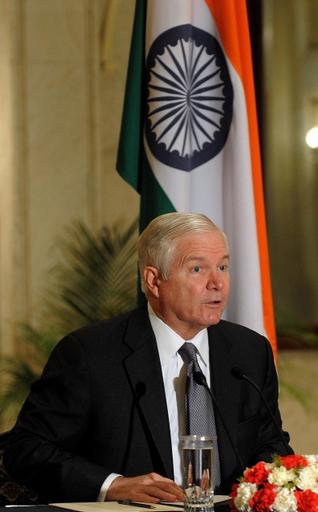
NEW DELHI—U.S. Defense Secretary Robert Gates said al Qaeda is working with an array of local militant groups to destabilize South Asia and trigger a war between India and Pakistan, an indication of growing U.S. fears about new terror attacks throughout the volatile region. Mr. Gates said al Qaeda had formed alliances with the Afghan and Pakistani Taliban as well as with Lashkar-e-Taiba, a Pakistani-based group that carried out the attacks in Mumbai in 2008 that left more than 160 dead.
The American defense chief, who is in the middle of a three-day visit to India, said the al Qaeda-led “syndicate” is trying “to destabilize not just Afghanistan, not just Pakistan, but potentially the whole region. “Speaking to reporters here, Mr. Gates said the Islamist groups were focusing particular attention on India and Pakistan, regional rivals who have fought three major wars since 1947. He said that Pakistani-based militants were trying to carry out strikes within India in hopes of provoking an Indian counterattack that could escalate into a new conflict between the two nations.
Mr. Gates said the groups also posed an “existential” threat to Pakistan and warned that India’s government—which refrained from reprisal attacks on Pakistan after the Mumbai assault— wasn’t likely to exercise similar restraint if new attacks occurred on its territory. “The ability of any state to continue that, were it to be attacked again, I think is in question,” Mr. Gates said. “I have to leave the answer to that question to the Indian government and its officials, but I think it’s not unreasonable to assume that Indian patience would be limited were there to be further attacks.”
The three-day trip here was designed to bolster Washington’s ties to New Delhi, a U.S. ally that is rapidly emerging as one of the biggest purchasers of American-made weapons, airplanes and military vehicles in the world. In an editorial published in the Times of India on Tuesday, Mr. Gates said India and the U.S. had made “significant strides in developing a stable defense trade.”
Mr. Gates encouraged India’s government to sign a series of technical agreements that would clear the way for India to purchase high-tech American-made encryption, navigation and targeting systems. The agreements, which have been under discussion for months, face significant Indian opposition. Beyond the commercial dealings, Mr. Gates’s meetings with senior Indian officials including Prime Minister Manmohan Singh focused heavily on the threat posed by al Qaeda and its regional allies.
Mr. Gates said that Pakistani-based militants might try to provoke a new war “through some provocative act” within India. After the Mumbai attacks in November 2008, New Delhi has pursued an international diplomatic push to force Pakistan to take responsibility for the fact that the terrorists emanated from there.
With United Nations and U.S. pressure, Pakistan agreed to pursue the Lashkar-e-Taiba militants responsible for the attack and to clamp down on the organization’s charitable wing. Pakistan also brought charges against several individuals suspected of helping to plan the attack.Indian officials take pride in the fact that their response was handled entirely through diplomatic channels, and Mr. Gates praised them this week for behaving with “great statesmanship.”
But the Indian government has also repeatedly called on Pakistan to do more to curtail terrorists dedicated to attacking India. Indian officials have cautioned that if there is another attack on India emanating from Pakistan, the response would likely go further than mere diplomacy.If new major attacks take place in India, it is widely expected here that India would respond with what it considers to be military restraint—such as targeted missile strikes against terrorist camps on the Pakistani side of Kashmir.
That scenario presents American officials who are in the region with a huge challenge: how to create enough political breathing space to prevent a subsequent escalation that could lead to outright war between the two sidesIt is an effort that U.S. officials in the region view as central to their mission of helping maintain and improve relations between the two neighbors.
Mr. Gates encouraged India and Pakistan to work together and share information about the militants imperiling both their countries, and to avoid blaming each other for any new violence. “It’s very dangerous for the region as a whole,” Mr. Gates said. “It does require a high level of cooperation among us all.”
By Manzer Munir
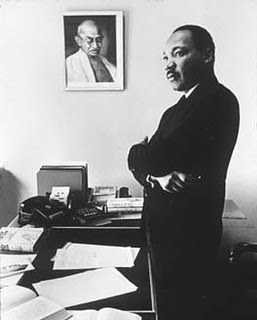
Martin Luther King Jr, who would have been 81 years old January 15, was a great believer of Mohandas K Gandhi, the leader of India’s independence movement from Brittan. King saw that Gandhi’s peaceful civil disobedience and non-violent methods of protest were very effective in bringing down the British Empire in India and as a result Pakistan after some 300 years of direct and indirect rule. Gandhi had believed that people could resist immoral government action by simply refusing to cooperate. Gandhi adopted many peaceful resistance techniques in developing his concept of Satyagraha, which was a philosophy and practice of passive nonviolent resistance.
Gandhi had earlier used this resistance technique in his struggles for freedom and equality for blacks and Indians in South Africa where both minorities were subjected to second and third class citizenry. His methods and refusal to bow down to the injustices that Indians faced in colonial South Africa inspired Nelson Mandela several years later to start his own peaceful struggle that eventually led to the end of Apartheid in South Africa in 1990.
While at Morehouse College, King learned about Gandhi and became very excited about his ideas. He wanted to further educate himself and read many books on Gandhi and his life and beliefs. In his book, Stride Toward Freedom, King states that “Gandhi was probably the first person in history to lift the love ethic of Jesus above mere interaction between individuals to a powerful and effective social force on a large scale. He further writes in his book that “It was in this Gandhian emphasis on love and nonviolence that I discovered the method for social reform that I had been seeking. I came to feel that this was the only morally and practically sound method open to oppressed people in their struggle for freedom.”
King felt that he had finally found a way to where oppressed people could successfully unlock social protest through Jesus’ teachings of love. In fact Gandhi himself had said “What does Jesus mean to me? To me, he was one of the greatest teachers humanity has ever had.” He also once mentioned Jesus as the “most active resister known perhaps to history. His was non-violence par excellence” Therefore to the Christian minister living in the pre-civil rights era in the South in America, Gandhi appeared to King as a follower of Christ, someone who preached peace and love even at the expense of suffering. Martin Luther King once said of Gandhi “It is ironic yet inescapably true that the greatest Christian of the modern world was a man who never embraced Christianity.”
In 1959, King visited India and became fully convinced that Satyagraha could be effectively applied to the struggle by blacks in the United States for racial integration. He came back to the United States where he continued the struggle for freedom and equality for all Americans. Like Gandhi, King also talked about suffering as a path to self purification and spiritual growth. He not only experienced this suffering by being jailed, beaten and harassed by the authorities of the day, but he eventually ended up paying for this cause for freedom for all with his life.
Mohandas K Gandhi and Martin Luther King Jr arguably were two of the greatest men of the last century. Both men believed that “injustice anywhere was a threat to justice everywhere.” They both led their people and millions of others out of slavery and servitude against seemingly insurmountable odds to freedom and salvation. On what would have been his 81st birthday, let us recognize that despite an assassin’s bullet and in the greatest democracy in the history of the world, the spirit and dream of a King still live on.
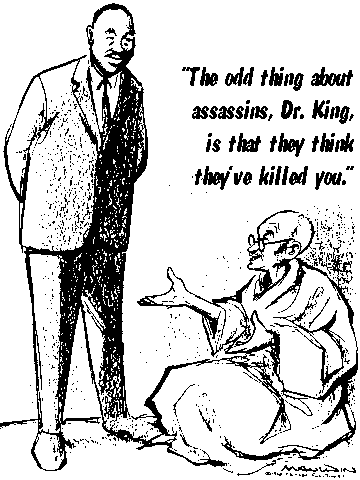
(Yes, this is Singer Bono from U2 in case you were wondering)
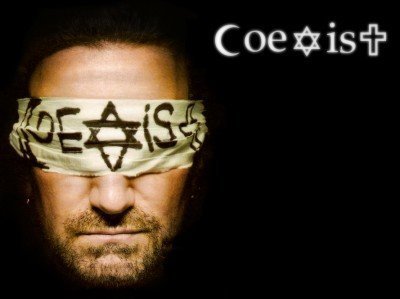
Dear Group,
Below is a response that I wrote after receiving a message from a Christian minister I thought I knew after sending him an email to join Pakistanis for Peace on Facebook. I don’t have his original message but he stated that Muslims are instructed by the Quran to “kill the infidels”, called Mohammad (pbuh) a “blood warrior”, said the Islam was a violent religion and Jesus is the one true Lord.
It was nice to see an email from you but I have to admit I was a little disappointed in the message. This group is not a “Muslim” group. Yes it is for Pakistan and yes the majority of Pakistanis are Muslim, however, the focus of this group is to promote peace in a region of the world where there is little. These people simply want their home to be peaceful so they can send their children to school or go to the market without being blown to pieces!! I would support a group that was promoting this in any region of the world regardless of the religion of its people or the politics of their government. I would join Japanese for Peace, Finns for Peace, Mexicans for Peace, etc. When the message is for peace, why would anyone NOT support the cause?
I too have read parts of the Quran along with commentary regarding it. I own more than one copy in order to get more than one perspective. I’ve also read material on the Sunna and the Hadiths (most people outside of Islam don’t even know what those are). I’ve been to more than one mosque in the Orlando area and have been to countless lectures regarding Islam and the Middle East. (I graduated with minors in Religion AND the Middle Eastern studies.) The reason I selected those topics was because I want to educate myself in order to educate others about the misconceptions of the Middle East and of the Muslims worldwide. You are not the first person to say these things and I’m sure you will not be the last.
Yes there are things in the Quran that are violent but there are peaceful things as well. The Muslim mission is not to kill all of the infidels. All of the suicide bombers we hear about are all going to hell according to the laws of their own religion!! Suicide in Islam is haram, or sinful. The acts of these extremists are killing innocent people AND other Muslims so they will punished on the Day of Judgment (yes Islam has this too). Also, Muslims are required to respect Jews and Christians because they are people of the book. Did you know that Jesus is mentioned in the Quran more than their own prophet Mohammed (peace be upon him)? Most people don’t know that that. Most people don’t even know that Jesus is part of Islam.
As far as Mohammed (pbuh) is concerned, yes he fought but he did for his religion….wouldn’t you? Would you not kill or be killed for your lord and your God? Yes there are extremists within Islam but you can find extremist in EVERY religion….even in Christianity. The Crusades were for the sake of God. Convert or be killed and many were killed. Many people don’t know that in the Ottoman Empire, which was Islamic, some leaders were not concerned with people converting to Islam. Why? If the people were not Muslim, they would pay a higher tax. The Empire receives more money and the citizen worship however the please. Does that not seem like a much more reasonable solution rather then murdering those who don’t worship as you do? Let’s not forget, Hitler was a Christian. Some KKK groups are Christians too and if you’re a Jew, black, Latino, Arab, gay, etc, they want you dead. That’s not very Christian like but I would never condemn all Christians based on the behavior of a few extremists.
The issue these days a simple lack of knowledge. We listen to what we hear on the News and take it as gospel. This is very dangerous. Watch this video and you’ll understand were I’m coming from.
This should have NEVER happened! I have no underlining motive here do to the fact I do not practice Christianity OR Islam. I just have a message of peace. I encourage you to take another look at the religion with more of an open mind. If you would like, I can give you the name and number of an Imam in the area that can answer questions for you and give you an endless amount of material and resources to investigate on your own. Also, seeing that you are a religious leader within your own community, I ask that you support and promote peace as much as possible. Peace should not be a luxury, enjoyed by only a few. Everyone has the right to live peaceful regardless of where they live, what they look like, what language they speak or who (or what) they worship.
Written by Pakistanis for Peace Facebook group member Alicia for www.PakistanisforPeace.com
Alicia Koutsoulieris
President of Amnesty International at the University of Central Florida
Akoutsoulieris@aol.com
Reported by Paul Armstrong originally on CNN.com 1/14/10
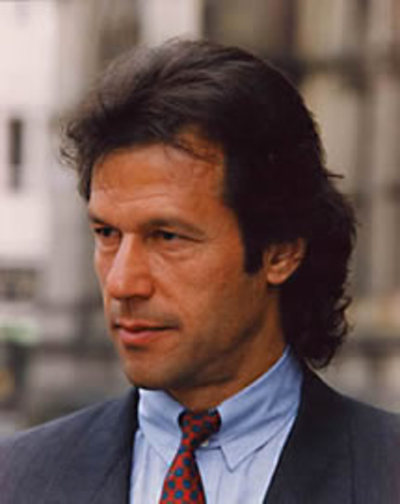
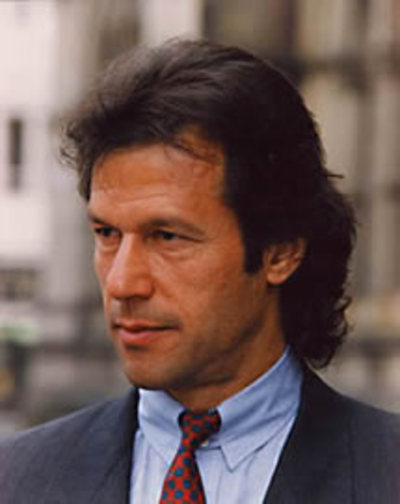
Pakistan cricket legend Imran Khan has described how the unfolding crisis in Haiti revived harrowing memories of a similar earthquake in his own region.
The devastating 7.6 magnitude quake struck northern Pakistan and the divided Kashmir region in October 2005, claiming the lives of almost 80,000 people, according to official estimates, and leaving millions homeless.
Khan, who is now a prominent politician and campaigner for social issues in Pakistan, told CNN Thursday that he was left numbed by the scenes which greeted him as he traveled to some of the worst-affected areas in the aftermath.
“It was one of the most traumatic experiences I’ve ever had. Just watching human suffering, he said. “It was the children that really disturbed me … their crushed limbs.
“There were so many people needing attention. I remember seeing makeshift hospitals where they were amputating. That was difficult to take. “Families were torn apart as parents lost their children and children were orphaned. Whole families were caught inside buildings, while few escaped.”
Khan recalled being overwhelmed by the sight of an entire town being reduced to rubble.
“We arrived in the town of Balakot and it was totally flattened. You don’t know what to do or say. So many people needing help at one time and you don’t have the infrastructure, you don’t have the hospitals to help.”
Balakot was one of the worst-hit places, with one in 10 of about 20,000 residents killed, according to the local government of the Mansehra district, where the town of is located. Thousands more were injured. Pakistani authorities later planned to move the town in the country’s North West Frontier Province to a completely new location, owing to its current position on a volatile fault line.
The destruction of Balakot brought home to Khan how much people had lost. “Their livelihoods disappeared overnight,” he said. “They had nothing, no business, money, food.
“From what I’ve seen on television it’s similar to what is happening now in Haiti. Clearly they (Haiti) won’t have the resources to cope with it, so it will require a real outside effort.”
While acknowledging the importance of the international aid effort, Khan pointed to role ordinary Pakistanis played in 2005. “It was incredible. The government was incapacitated but there were little charities and groups forming all over the area trying to help.
“I was in an earthquake-hit area on the second day and I’ll never forget seeing a three-mile queue of people trying to get to what was a largely remote area to help with whatever they could put in their cars.
“The government was paralyzed but people came forward, from rich to poor, young to old.”
He also pointed to the success volunteer networks had in adopting villages and towns, taking responsibility for providing basic shelter, food and medicine. “Everyone took responsibility,” recalled Khan. “Each group would look after a specific issue until the local population was able to get back on its feet.”It’s so important that the aid effort continues months after the disaster.”
Reported by Tony Pierce for The Los Angeles TImes 1/13/10
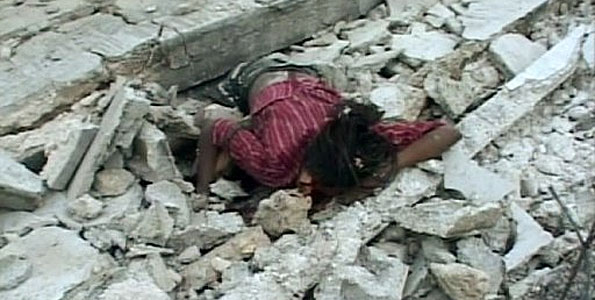
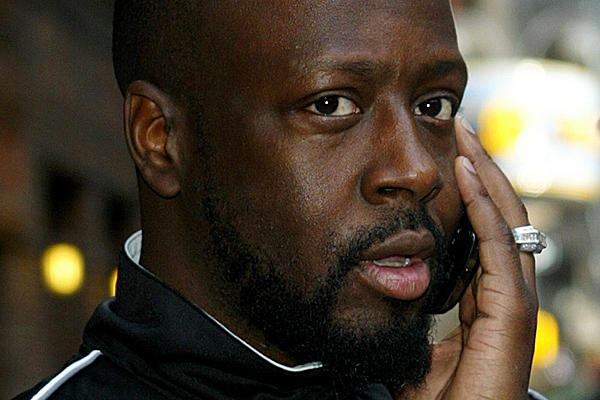
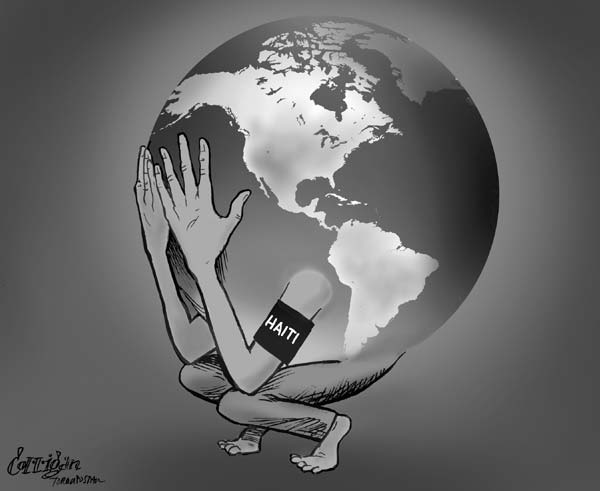
Grammy award-winning musician Wyclef Jean returned to his native Haiti today to lend a helping hand to his reeling homeland. In a statement released this afternoon, the singer/songwriter/producer pleaded for immediate action by the U.S. military as well as help from the international community, warning that “idle hands” could exacerbate the problems.
Haiti yesterday faced a natural disaster of unprecedented proportion, an earthquake unlike anything the country has ever experienced.
The magnitude 7.0 earthquake – and several very strong aftershocks – struck only 10 miles from Port-au-Prince.
I cannot stress enough what a human disaster this is, and idle hands will only make this tragedy worse. The over 2 million people in Port-au-Prince tonight face catastrophe alone. We must act now.
President Obama has already said that the U.S. stands “ready to assist” the Haitian people. The U.S. military is the only group trained and prepared to offer that assistance immediately. They must do so as soon as possible. The international community must also rise to the occasion and help the Haitian people in every way possible.
Jean came to prominence in the early ’90s when his group The Refugee Camp, best known as The Fugees, released the hugely successful debut album “Blunted on Reality” and the even more popular follow-up “The Score.” Since the break-up of The Fugees, Jean has recorded several solo records and created the Yéle Haiti Foundation to provide scholarships and jobs for thousands of Haitians.
To donate please go to:
or other charitable institutions dedicated to helping those in need.
DUBAI, United Arab Emirates- A United Arab Emirates sheikh was acquitted Sunday of charges connected to the videotaped beating and torture of an Afghan grain dealer.
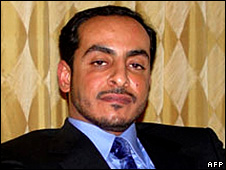
Sheikh Issa bin Zayed al-Nahyan, a member of the emirates’ ruling family, was charged with rape, endangering life and causing bodily harm in connection with the nearly three-hour long tape shot in 2004 in the desert outside Abu Dhabi, one of the United Arab Emirates in the Persian Gulf region.
However, the court acquitted Issa on Sunday, ruling he had diminished responsibility for his actions because of the effects of medication his defense attorney claimed he was given. Issa had a “lack of criminal responsibility,” the court found, defense attorney Habib al-Mulla told CNN.
“The judiciary system acquitted Issa based on the evidence presented by the defense that the sheikh was under the influence of drugs given to him,” al-Mulla said. “That deprived him from his poise and caused him to carry out acts that were out of consciousness and that were photographed with the intention for later extortion.”
The tape surfaced last year as a piece of evidence in a federal civil suit filed in Houston, Texas, against the sheikh by his former business partner, Bassam Nabulsi. It caused outrage among human rights groups and in the United States, where senior U.S. officials familiar with the case said the tape delayed the ratification of a civil nuclear deal between the UAE and the United States.
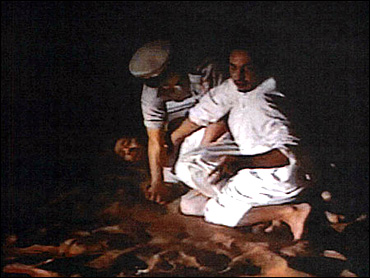
On the tape, Issa is seen along with a private security officer stuffing sand in the man’s mouth. As the grain dealer pleads and whimpers, he is beaten with a nailed board, burned in the genitals with a cigarette lighter, shocked with a cattle prod and led to believe he would be shot. Salt is poured into his wounds.
In the end, the victim can muster up only weak moans as an SUV is repeatedly driven over him.
“No one can prove that this videotape has not been tampered with,” al-Mulla said Sunday. The only person who can confirm the incidents happened as seen on the tape is the victim, and he has not confirmed that, he added. “We deny the incident as it was shown on that videotape.”
The defense did not just center on the medication, he said, but claimed that the videotape and other incidents from that night were all part of a conspiracy aimed at blackmailing the sheikh.
During the trial, the defense presented medical reports from experts in the United States and the United Arab Emirates showing that the various types of medicines given to Issa, when combined, “would lead any person to act in a very aggressive manner, losing his control and his behavior.”
Asked about a Human Rights Watch statement that one trial was not enough to stop torture and restore the United Arab Emirates’ image, al-Mulla told CNN he believed the UAE was “courageous” to hold the trial, calling it “a very positive signal of what the UAE is trying to achieve.”
The incident allegedly was triggered by Issa’s belief he was cheated in a business deal. UAE officials have said the grain dealer survived and has settled the matter privately with the sheikh, with the two agreeing not to bring formal charges against the other.
Al-Mulla said he is “pleased with the verdict as it was proven that Sheikh Issa was a victim, and he was not what the media tried to portray him [as].”
The Afghan man was in the courtroom, and the court issued him a “temporary” compensation of 10,000 dirhams ($2,722), al-Mulla said.
Nabulsi, a Lebanese-born U.S. citizen now living in Houston, said he met Issa when the sheikh came to Houston for medical treatment in 1994. They became friends and business partners and the sheikh recruited Nabulsi to move to Abu Dhabi to work for him.
In the lawsuit, Nabulsi claimers breaches of contract and fiduciary duty. A federal court dismissed the suit in June, ruling it did not have jurisdiction, according to online federal court records. Nabulsi has appealed to the Fifth Circuit U.S. Court of Appeals.
Nabulsi told CNN in April the sheikh turned on him after he expressed concern over the Afghan’s treatment. Later, he was arrested on drug charges, and security officers working for the sheikh ransacked his home and demanded the torture video. But the tape — shot by Nabulsi’s brother at the order of the sheikh, he said — had already been smuggled out of the country.
Nabulsi said he was arrested, jailed and ultimately convicted on drug charges — and was tortured and humiliated by UAE police, who demanded he return the tape.
Al-Mulla said Sunday Nabulsi was sentenced to five years in jail in absentia, agreeing that he was responsible for the drugging of the sheikh. Prosecutors will attempt to implement the sentence through Interpol, he said.
Reported by CNN’s Caroline Faraj, Stan Grant and Saad Abedine originally in 1/10/10 for cnn.com
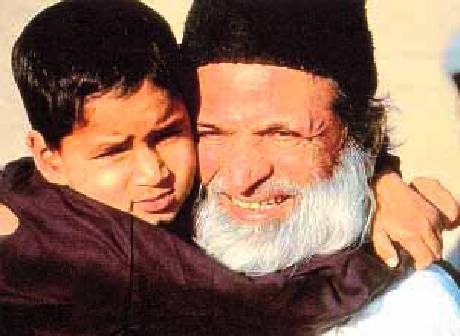
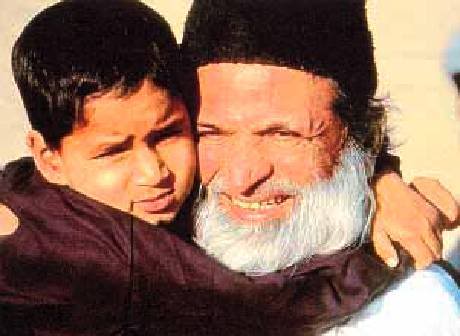
The story of Abdul Sattar Edhi is an awe inspiring one. Amidst the daily materialism, frenetic rat race, ambition and angst which envelops one, here is a man who only thinks of others and their suffering.
Edhi single-handedly set up the Edhi Foundation in 1957, and continued to operate it as a non-profit social welfare organisation. Over 300 centres of the Edhi Foundation span the length and breadth of Pakistan, and provide the needy with medical aid, family planning, emergency assistance and education. There are also maternity homes, mental asylums, homes for the physically handicapped, blood banks and orphanages, among other services.
The remarkable Abdul Sattar Edhi has no qualms about going where others fear to tread, and for taking a stand against extremism. He went to Tank, the gateway to the tribal areas, although he was advised against travelling to such a volatile and dangerous place.
There were fears that he might be killed by the Taliban, but instead they welcomed him with open arms. Edhi tried to reason with the Taliban and told them bluntly that they should renounce their violent way of life, which is against the teachings of Islam. The Taliban called him a ‘’Khudai Faqir’’ and listened to him with great respect, and provided him with safe passage.
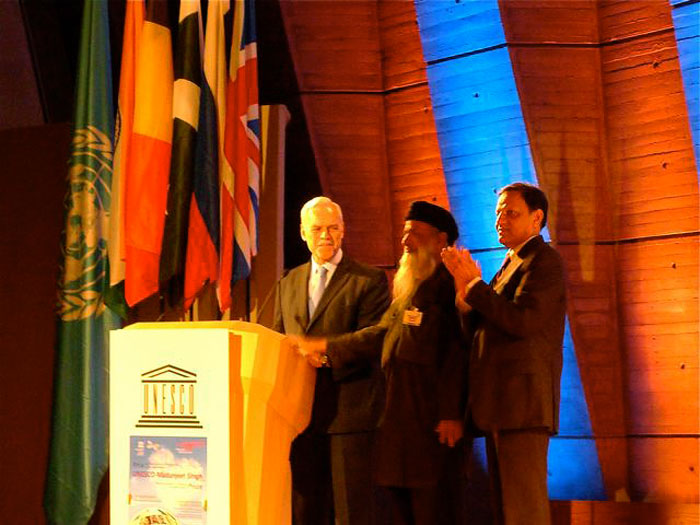
Edhi was recently awarded the UNESCO Madanjit Singh Prize for the Promotion of Tolerance and Non Violence. He was conferred the award in recognition of his life long efforts to ameliorate the condition of the most disadvantaged groups in Pakistan and South Asia, and for promoting the ideals of human dignity, human rights, mutual respect and tolerance.
The prize giving ceremony was held on November 16, the International Day for Tolerance, at the sprawling United Nations edifice in Paris. Amidst all the fancy suits, designer coats and gleaming shoes, Abdul Sattar Edhi stood out in his simple Shalwar Kameez and worn slippers. A documentary was also screened, which showed Edhi and Bilquis Edhi, his wife and companion of 50 years, engaged in their charity work amidst the poor, disadvantaged and outcasts of society.
As Edhi rose with difficulty to receive the UNESCO award, there was prolonged applause for this great Pakistani. Many Europeans remarked on how privileged they felt to have the opportunity of meeting such a great man. An Indian couple postponed their flight home, and came to the UN to pay homage to Edhi, saying that they only wanted his blessings.
As soon as the impressive ceremony was over, Abdul Sattar Edhi was surrounded by a bevy of delighted Pakistanis. Their stimulating interaction with Edhi and the countless photo opportunities went on and on, until some UN officials started glancing at their watches, and it was obvious that it was time to leave the hall. But then the dinner invitations started rolling in.
At times, Edhi looked a trifle tired, but he never lost his composure. At 88, and grappling with diabetes, life could not be easy for him, but he always seems to think of others. Accustomed to sleeping at 7pm and waking up at 4 am, jet lag and the constant socialising must have been draining. When asked how he was feeling, Edhi admitted that he was exhausted, but said that he did not want to turn down the opportunity of meeting with Pakistanis.
Many Pakistanis sought his blessings and said they were willing to contribute to his organisation. Despite all the hero worship, Edhi remained calm and focused, displaying none of the whims and attitude which signifies the behaviour of many Pakistanis who have not achieved even an iota of what he has.
Notwithstanding his lack of formal schooling, Edhi came across as alert, witty, mature and savvy. Talking to him is an enriching experience indeed. He refuses to espouse any political party, because he likes to steer clear of politics.
What motivates this octogenarian to work for such long and punishing hours. and refuse to take time off? When he was still a child, Edhi’s mother became very ill and he nursed her for years until she passed away.
“I had accepted at the outset that charity was distorted and unrelated to its original concept. Another major obstacle in the promotion of welfare was the disgust of man towards mankind. There was only one reaction from everyone ñ cringing. From the grimacing faces of my colleagues, I understood that I was the only one not disgusted. They washed their hands vigorously, smelt their clothes repeatedly and complained incessantly of the stench having seeped under their skins.
Then they rushed home to bathe, scrubbed their clothes and disinfected them, sometimes gave them away saying, ‘The very weave was stricken.’ We could not reduce suffering unless we rose above our senses”
Abdul Sattar Edhi has devoted his life to a thorny field where hardly any one can match his dedication, focus, common sense and sagacity. Being in his presence gives one hope for the future, because it is his belief that there are no people more generous than Pakistanis in giving aid, and there is no place in the world as great as Pakistan.
Originally Printed December 14, 2009
By Maheen Usmani
The News, Karachi
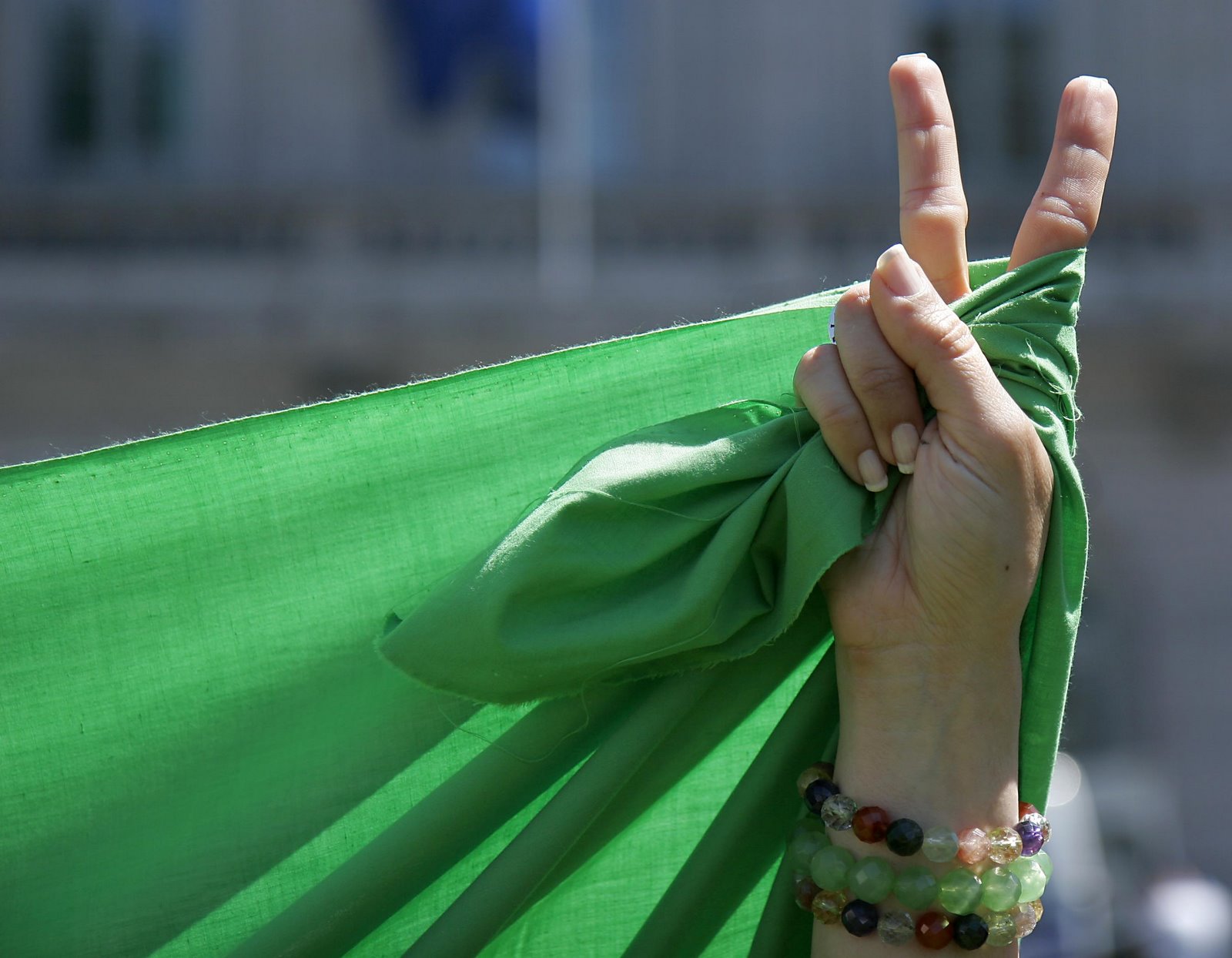
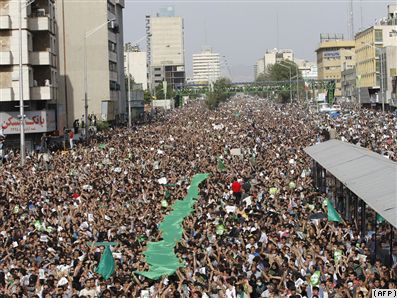
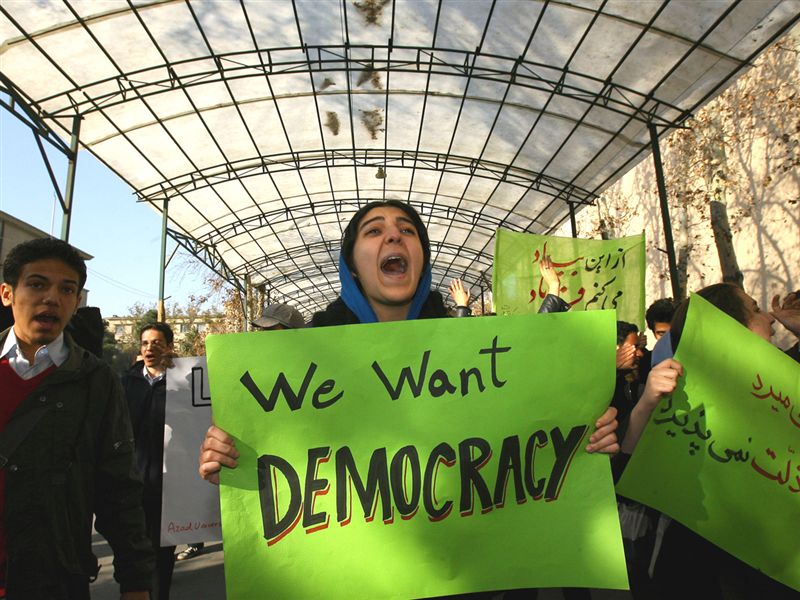
Tehran, Iran- Demonstrations in Iran continue a little over a week after the mass protests the occurred throughout Iran on the Shiite festival of Ashura as protestors defy the government’s crackdown on dissent. It appears that for the first time since the Iranian Revolution of 1979, the regime of Iran is appearing weakened. Despite the brutal violence used by government soldiers and militiamen, the Iranian people are brazenly standing up and are demanding the end of the supreme rule of Ayatollah Ali Khamenei and establishment of a democratic nation where freedom and rights of the Iranian people are respected.
For far too long the current regime has used violence and intimidation to quell revolt. However since the disputed election of last year, the majority of Iranian citizens want an end to theocratic rule. The government must sense the tide turning against them as the popular revolt is gathering steam and gaining strength. Overseas, the Iranian communities around the world are standing in support with their brothers and sisters in Iran and demanding an end to suppression and tyranny also and asking governments around the world for support of this movement by instituting embargos and sanctions on the Iranian government.
The situation is bleak in many Muslim countries around the world when it comes to prudent and competent government. If one takes a look at the Arabian Gulf region we have kingdoms such as Saudi Arabia and Jordan, Bahrain, UAE, etc. There is not a great deal of individual and civil liberties as they are normally afforded in the western world. Freedom of speech, religion and right to protest is simply outlawed in most of these countries. If one takes a look at countries like Egypt, Libya, Syria, and until recently Iraq, are all countries where there are dictatorships akin to monarchies where power is held for generations as is the case with Muammar Al-Gaddafi or it is passed on to a family member as was the case with Bashar Al-Assad of Syria. Pakistan too is a country that of its 62 years of modern history, over half have been ruled by dictatorships robbing the people of a robust democratic system as is one that flourishes in neighboring India.
Far too often, in many Muslim countries around the world, governments and individuals in power are robbing the coffers of their national treasuries for their own greed and simultaneously either brutally cracking down on human rights and dissent or neglecting their responsibilities all together and therefore not providing basic services, infrastructure, and security.
It is not as if democracy is in theory in any ways in conflict with Islam, rather, Islam’s set of norms and ideals that emphasize the equality of people, the accountability of leaders to community, and the respect of diversity and other faiths, is fully compatible with democracy. Yet time after time, Muslim countries are finding themselves under repressive, corrupt and inept leadership that has no problem using vote rigging, violence, brutality and intimidation to remain in power.
The Iranian uprising and protests currently underway in Iran should inspire Muslims in other countries to demand better governance, more accountability, and freedoms from their leaders. A country that does not have the participation of all it citizens in all fields of endeavor is not going to advance aggressively as it should. Many citizens of Iran and Iranians around the world are hoping that the repressive regime in Tehran is overthrown by the brave protesters there. One would hope that eventually this starts a chain reaction throughout the Muslim world where repressive, authoritarian and harmful governments are holding back the progress of nations. Thomas Jefferson said it best when he stated that “A bill of rights is what the people are entitled to against every government on earth, general or particular, and what no just government should refuse, or rest on inferences.”
Reported by Manzer Munir for http://www.PakistanisforPeace.com

When Obama proclaimed an 18-month deadline for his Afghan “surge”, he had two purposes. One was to assuage the concerns of the anti-war constituency back home. The other was to provide a wake-up call to countries in the region who will, so the reasoning goes, pay the highest price for continuing instability in Afghanistan.
That call is being answered in India, where officials are starting to fret over what happens in their neighbourhood when the US starts packing up shop. Shashank Joshi recently made a strong case in the Guardian that now is the time to build on India’s considerable soft power presence in Afghanistan – which consists of development aid, cultural ties and symbolic projects such as the building of the new parliament building in Kabul – and combine it with an increased hard power posture.
Others have started to flesh out what that might look like: more combat troops in north and west Afghanistan, and large-scale training programmes for the Afghan national army.
There are two problems with all this. The first is that “filling the vacuum” left by the Americans could easily become “leaping into their quagmire”. It is very much in Obama’s interest to spread the burden, and the difficulties he faces in extricating the US from the Long War ought to be a sobering lesson for those seeking to step up their involvement.
The other problem is Pakistan, whose military establishment dreads the prospect of an India-friendly government on its western flank and may sponsor further militancy against Indian interests in retaliation. Advocates of a bigger Indian footprint in Afghanistan argue that they should not kowtow to the neurotic concerns of a paranoid Pakistani establishment. They are wrong, for it is that very neurosis that is India’s real enemy – much more so than the Taliban or even the militant cells seeking a repeat of the Mumbai attacks. India may be able to contribute positively to a more stable Afghanistan, but the starting point for any policy decision must be how it will play with the Pakistanis.
What has somehow been lost in this discussion is the central role of Kashmir. When Obama was still on the campaign trail, he frequently called for a comprehensive regional solution linking Kashmir to problems on the AfPak border. But once in office, things changed. When Richard Holbrooke was appointed special representative for Afghanistan and Pakistan, it was notable that his brief did not include India or Kashmir. The reason for the change of heart, it turned out, was that India had intensively lobbied Washington to leave Kashmir off Holbrooke’s agenda, incensed at the idea of outside interference. India’s wishes have been realised: not once did the word “Kashmir” appear in Obama’s Afghan strategy speech at the start of December.
And yet it is common knowledge that Kashmir remains priority number one for the Pakistani military and the main reason for its reluctance to commit fully to the US effort in Afghanistan. The whole point of Pakistan’s support for the Taliban during the 1990s – and in a more nuanced fashion to the present day – has been to give it “strategic depth” in its long-term struggle with India.
Having successfully isolated the Kashmir issue, Indian hawks now risk treating Afghanistan as if it, too, were a stand-alone problem. Keen to exert their growing regional influence, they ask: “What can we do to support the government in Kabul and bolster Indian interests there?” when the key question should be: “How will our actions be perceived by the Pakistani establishment and will it encourage them to crackdown on terrorists in their midst?”
Pakistan’s neurosis cannot simply be dismissed – it is the hammer that will continue to drive a wedge between the two countries for as long as it exists. No amount of military superiority or regional influence will ever make India truly safe from another terrorist strike while the Kashmir question remains unresolved. Part of the Pakistani neurosis stems from a history of violence between the two, but recent years have surely added an element of resentment to the mix. How easy can it be to watch as India extricates itself in the world’s eyes from the old India-Pakistan dynamic– which conjured images of intractable conflict, wasted potential and the threat of imminent nuclear war – to forge a new hyphenation of India-China, which speaks instead of booming growth figures, acceptance into the civil nuclear club, and banquets at the White House? This is how the world increasingly looks on India – as a potential superpower for the 21st century – while Pakistan remains mired in the past, playing out centuries-old battles between Shia and Sunni, Mehsud and Wazir, and looking to a future already mortgaged to foreign debtors.
The harsh reality that Indians face is that despite frequently being the victim of aggression in recent years – from the bombing of its parliament in December 2001 to the Mumbai attacks of November 2008 – the impetus for change must come from them. With a landslide election victory last April, its government has the political capital for bold moves that its counterpart in Islamabad lacks.
Reflecting his strong position, the Indian prime minister Manmohan Singh took a brave first step towards restarting negotiations (which have been stalled since Mumbai) when he signed a joint declaration on terrorism with Zardari in July 2009. He did so despite the inclusion of suggestions that India has supported separatist insurgents in Pakistan’s Baluchistan province, for which there is little or no proof. Inevitably, this did not play well back in India, but the prime minister understood that the aim cannot be one of apportioning blame – the decades have created simply too much on both sides for that to be productive.
Rather, India’s goal must be to build a new trust, ease anxieties and find a way for Pakistan to share in some of the benefits that relative stability has brought. This does not preclude India from offering assistance to Afghanistan, but whatever form that takes must be determined with a clear understanding of how it will impact on Kashmir negotiations and the broader anxieties of a neighbour to which it is inextricably tied.
As reported by Eric Randolph for The Guardian originally on 1/5/10


 The Express Tribune BBC South Asia News Feed The News International





You must be logged in to post a comment.