Archive for August, 2010

Pakistanis’ Anger Grows as Flood Damage Mounts

By Adam B Ellick for The New York Times

The damage from Pakistan’s worst floods in generations mounted on Monday as rescue operations continued and public fury rose in the country’s most volatile province.

The official death toll remains under 800, but on Monday the minister of information in Khyber-Pakhtunkhwa Province, formerly the North-West Frontier Province, estimated the true number to be 1,500. Another provincial official said 1.4 million people had lost their homes. As much as 70 percent of the region’s livestock is gone.

The number of people affected by the floods is 2.5 million, the International Federation of Red Cross and Red Crescent Societies said.

“The next week is critical. With further heavy rains there is a real danger that the flooding will spread further south into Sindh Province,” Ateeb Siddiqui, director of operations with the Pakistan Red Crescent Society, said in a statement.

The displaced are clustered in hundreds of schools, largely fending for themselves for food and drinking water. Pakistani television channels showed survivors voicing venomous anger toward a government that has provided little immediate aid.

Meanwhile, President Asif Ali Zardari landed in France for talks with the French government.

“People think that the government is not providing anything to them,” said Adnan Khan, an official at the government’s disaster-relief management office. “But the scale is so high and huge that we cannot cater to all of the people.”

The growing frustration with the government adds to its troubles in dealing with the province, which abuts Afghanistan in Pakistan’s north and is a pivotal battleground against the Islamic militants operating in both countries.

For the past year, the government and the military have been engaged in a campaign to restore public services, trying to rebuild trust after more than two million people were displaced last year when government forces launched a major offensive against militants. But the reconstruction efforts have been painfully slow, and the public mood has shifted from frustrated to furious.

Analysts said the government’s flood relief effort would not only serve as another test of public trust, but would also most likely be exploited as a wedge by foreign governments and militant organizations.

Last summer, hard-line Islamist charities ended up providing significant aid to the displaced, while Pakistani authorities were unable to deliver enough help but refused to allow American agencies to deliver more. The authorities did not want to be associated with the United States, widely blamed here for many of the country’s ills.

That has not changed. For the moment, the United States, which has pledged $10 million in aid for flood victims and has donated thousands of meals, is handing over the supplies for Pakistan to deliver. The United States is also sending 2 water filtration systems, 7 helicopters and 12 prefabricated bridges.

One of the priorities is rebuilding a crucial bridge in Dir district, which remains largely cut off and where thousands are feared trapped or dead. And in Upper Swat, mules were being used to shuttle food rations across high waters to the hungry, an official said.
Pride of Pakistan: Chiniot

Originally Reported by S.A.J. Shirazi for All Things Pakistan

Chiniot – the name is enough to start the furniture lovers, travelers and cautiously curious dreaming. Antiquity is the first message of the town. And, international quality furniture “made in Chiniot” is collectors delight with potentials for marketing all over the world.

On the bank of River Chenab in area called Sandal Bar, Chiniot town is an exotic place in the foot of series of hillocks that seem to be man made rather than evidence of old mountains.

The town is very ancient. It was inhabited before the time when Alexander of Macedon came in the South Asia and was principal city during the rule of White Huns. Chinese explorer Hiuen Tsiang visited it. Alberuni has mentioned in Kitabul-Hind that Chiniot was one of the there most important places in this part of the world.

Chiniot suffered much from the Durrani inroads during the last half of the eighteenth century and also during the troubles of I848 because it remained the scene of constant fierce struggle among the leaders of local factions. As per the local legend, portion of the wall, surviving in situ, had been built during Hellenic period. The veracity of the wall’s association with Alexander the great is yet to be proven though. But the sit does give evidence of its distant past.

During the Mughal era, Chiniot produced many intelligent personalities and talented artisans who occupied positions in the Mughal courts, Nawab Saad Ullah Khan and Nawab Wazir Khan held the post of Prime Minister of India and the Governor of Lahore respectively during the rule of King Shah Jehan.

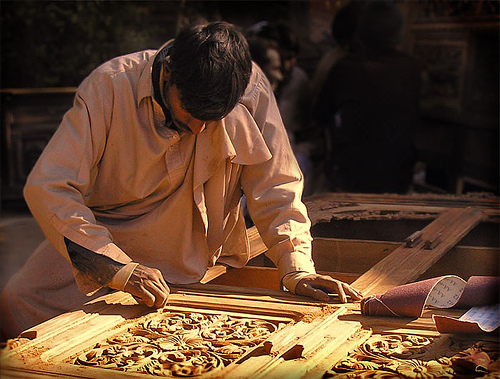
Artisans of Chiniot have instinctive good taste and they have achieved a distinctive excellence in woodwork. Masons of the town are said to have been employed during the construction of Taj Mahal at Agra and Golden Temple at Amritsar. Special type of furniture with brightly lacquered woodcarving is made in Chiniot and is famous all over the world.

What this internationally acclaimed craft of the town needs is an institutional patronization and extensive efforts for international marketing? Made in Chiniot furniture is already being shipped to different countries but so far there are very little marketing efforts being made for this purpose. It can be a potent source of earning foreign exchange if attention is paid to and earnest efforts are made. Sadly, the trained incompetents responsible for export promotion do not see this and the unique potentials are not being taped yet. The first exhibition of Chinioti furniture in Islamabad last year was attended by large number of people from all walks of life. Particularly foreigners appreciated the furniture for its style, solidity and the cost.

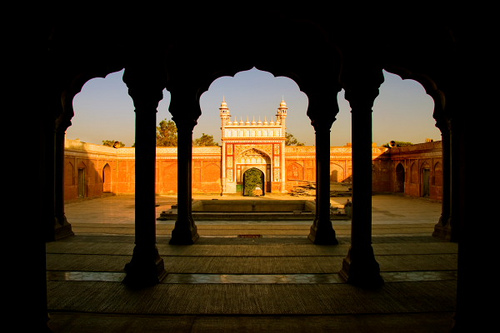
Apart from furniture, there are more attractions for any visitor to this off the beaten track tranquil town. A towering architectural masterpiece Shahi Mosque, which was built during rule of Mughal King Shah Jehan by Nawab Saad Ullah Khan in 1655, is still functional. It resembles the Shahi Mosque Delhi that was also built under the supervision of Nawab Saad Ullah Khan. After the invasions of British, the city lost its old glory and importance. However, the historical buildings and their ruins are scattered in and around the city, reflect its wonderful past.

Another such building is the Umar Hayat Palace commonly known as the Gulzar Mahal. Attracting local and foreign tourist, it is known for its beauty and legendary tales attached to it. The palace is said to have been built by Sheikh Umar Hayat, a rich merchant whose family originally migrated to Chiniot from India.

Legend has it that in a village fair at Panda Haitian, Umar Hayat fell in love with a performer girl and married. She bore him a son and a daughter. Umar Hayat grew particularly fond of his son whom he named Gulzar – a rose garden or a sign of happiness. It was for his son that Umar Hayat decided to construct a wonderful palace and name after him. Umar Hayat could not see the palace completed and later his son Gulzar died mysteriously in the palace in the early hours of his marriage night.

A different tale reveals that the construction of the palace was a result of rivalry between Umar Hayat and Elahi Baksh – a famous artisan of the time. The latter taunted the Umar Hayat by saying that his artistic abilities were superior to all the wealth in the world. Infuriated, Umar Hayat counter claimed that his money would last long enough to buy all the possible feats skilled artisans could offer.

The result of the challenge was the creation of Gulzar Manzil. The construction of the palace started in 1923 and Umar Hayat lavishly spent his wealth. According to one account, the supervision of the construction was assigned to Syed Hassan Shah who gathered famous artisans and carried out day and night work for ten years. Elahi Baksh and Rahim Baksh did the wood carving, for which the palace is known. Both were masters of the art. The Punjab District Gazetteers reads:

“The house built by Sheikh Umar Hayat is a sort of wonder.”

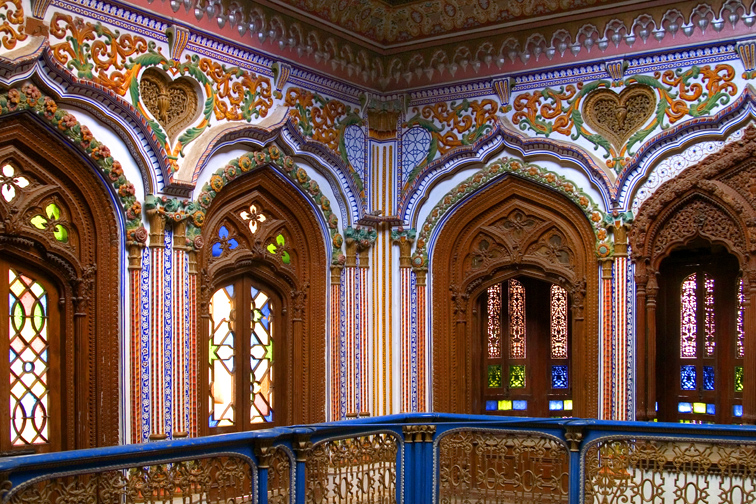
The imposing building is a work of art. The woodwork, the stucco work, inlay of bricks, use of marbles and floral design in the roof, stairways and balconies are living memories of the glories of the Mughal period. Very elaborate and extensive woodwork in the palace speak of the craftsmanship of the artisans who perfected it beyond amazing limits. One has to possess a sensibility shaped in granite not to be moved after seeing the woodwork even today.

The palace originally had six stories including a basement. Two of the upper stories decayed and had to be demolished in 1978. Remains of the building are in the care and custody of Auqaf. Presently it is in public use and houses a library section and a small museum.

 – For Rehana Saher, a stunning and exemplary product of Chiniot~ MM

Haroon in Pakistan squad for Common Wealth Games

By Fawad Hussain for The Express Tribune

Haroon Shahid Khan, the younger brother of Britain’s light welterweight world champion, Amir Khan will be representing Pakistan in this year’s Commonwealth Games. The Pakistan Boxing Federation decided to include Haroon in the six-member national squad for the event that will be held from October 3 till October 14 in New Delhi.

Haroon won the Amateur Boxing Association (ABA) bantam weight title last year and also has other junior titles under his belt. The PBF secretary Akram Khan felt his inclusion in the side has brightened the team’s chances of winning in the event.

“He is an excellent boxer and has been trained at his brother’s academy – so definitely our chances of winning medals have increased,” Khan told The Express Tribune following the team’s announcement.

Haroon, who is famous in the UK as “Harry Khan”, will join the national training camp next month. “Haroon will be coming in August to join his teammates. It is important for him to train in our conditions which are similar to those in India,” said the secretary.

According to Akram, the PBF are not only relying on Haroon for winning medals at the competition.

“Wasim, Nisar and Mir Waiz also have a lot of experience and have also won accolades for the country- so we are banking on all our boxers,” said Akram while adding that the Cuban coach recommended the names of these boxers after working with them for months.

Officials: Pakistan Flood Deaths Top 1100‎

As Reported By CNN

The devastating floods in Pakistan have killed more 1,100 people, Pakistani government officials told CNN on Sunday. Another 30,000 people were stuck on their rooftops and in higher areas as they tried to escape rushing floodwaters, a United Nations official said Sunday.

“We’ve got the government sending boats and helicopters to try to reach people and bring them to safety at the same time as trying to deliver emergency relief,” said Nicki Bennett, a senior humanitarian affairs officer for the U.N.

Damaged roads and bridges have made rescuing stranded residents difficult, she said, noting that even a U.N. warehouse where the organization stores food, blankets, soaps and bucks is partially underwater. “As we are trying to reach people, we have to battle with the ongoing access problems,” she said. The rescue and recovery efforts of the Pakistan flooding could become more complicated as weather officials predict more monsoon rains starting Monday.

The Pakistan Meteorological Department said Sindh, Punjab, Kashmir, eastern parts of Khyber-Pakhtunkhwa and eastern parts of Balochistan would receive monsoon rains. Areas along the Indus River would be badly affected due to extremely high flood conditions.

The number reflects those killed only in Khyber Pakhtunkhwa province, previously known as the North West Frontier Province, said spokesman Mian Iftikhar Hussain. Flooding has also been reported in Pakistani-controlled Kashmir. Twenty-five deaths were recorded there Friday, Hussain said.

A Pakistani Red Crescent official told CNN that the number of people affected by the floods has risen to nearly 2.5 million people, with infrastructure receiving major damage. Rushing water also has washed away thousands of acres of crops, government buildings, businesses, schools, bridges and homes, officials said.

The United States will assist in relief efforts by bringing in 50,000 meals, rescue boats and helicopters, 12 pre-fabricated steel bridges and water filtration units, the embassy in Islamabad said.

According to Geo TV, 150 people are missing in a northwestern province, and 3,700 homes were swept away. Forty-seven bridges in Swat have been destroyed or damaged.

Geo TV also said 3,000 are in a camp in Nowshera and are without enough water and food. Displaced residents are unhappy with the government response, Geo TV said. Trains have also been delayed, frustrating commuters.

“They have made this a joke,” a commuter told the network. “There are young children here, but there is no water, nor is there any seating. They have taken our ticket money. Yet after every few minutes they change the train timings. They are playing a game of lies and deceit.”

Pakistani Interior Minister Rehman Malik visited Khyber Pakhtunkhwa on Saturday and found tourists and local residents trapped because of the heavy floods, the state-run Associated Press of Pakistan reported.

President Asif Ali Zardari said all available resources would be used to help those stranded by the waters, the APP reported.

Many of the victims died when flood waters swept away hundreds of mud houses in parts of Swat Valley and the districts of Shangla and Tank, according to Bashir Ahmed Bilour, a provincial minister in Khyber Pakhtunkhwa.

Hussain said flooding has cut off the Swat Valley and the districts of Shangla and Peshawar. There is no way to get to these areas by road, he said.

The Pakistani Air Force has been helping with rescue efforts, spokesman Tariq Yazdanie said in an interview on Pakistani TV. The recent torrential rains have broken all previous records of rainfall in the country, he said.

The United Nations said there is a need for help in providing emergency shelter, food, drinking water and sanitation facilities. Its agencies are geared to help with these issues.

The European Commission is providing 30 million euros ($39 million) to help the people affected by the flooding.

U.S. Embassy officials in Pakistan said the United States has committed $10 million to support flood relief priorities, four inflatable rescue boats, two water filtration units that can fulfill the daily water requirements of up to 10,000 people, and 12 pre-fabricated steel bridges to temporarily replace damaged bridges.

U.S. officials have also provided more than 51,000 halal meals (military rations tailored for people of Islamic faith) and another 62,000 will arrive Sunday.

In addition, the U.S. provided helicopters to support the Ministry of Interior’s rescue operations.

The same weather system is also responsible for flooding in bordering Afghanistan, where 65 people have died, and 61 were injured since Thursday, according to Abdul Matin Adrak, head of disaster management for Afghanistan.

The flooding started Thursday and continued for more than six hours. Rescue teams were able to access all the flooded villages using ministry of defense helicopters. Food and equipment was donated and transferred to the affected people by ISAF and Afghan Security forces.

U.S. Air Force Lt. Col. Greg “Boomer” Roberts, adviser to the Afghan Air Force, told CNN Sunday morning that the Afghan air force rescued about 2,000 villagers who were stranded. Roberts accompanied the air force during their rescue mission in the Kunar province — a known insurgent stronghold.

“They knew they could accomplish their mission. When we came into the area and the Taliban made their presence known, they continued … and picked up 2,000 people who were definitely overcome by the floods. And they did it right there in full view of the Taliban.

“There’s not a doubt in my mind that some of the folks we picked up are Taliban,” he said, adding that most were probably looking for employment with the organization. He said the rescue mission is the type of move that could sway people away from the Taliban and toward the Afghan government.

What Can Happen in a War

By Andrea Woo for The Vancouver Sun

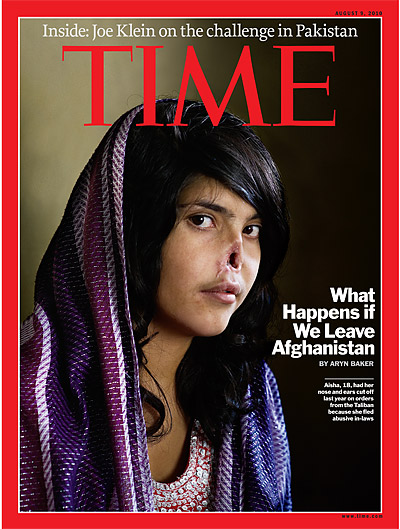
She looks back from the cover with an inscrutable gaze, her dark eyes intensified by the black hair that spirals out in thick curls from under her patterned purple head scarf. Her top is red and sequined; her mouth expressionless and slightly agape.

Where 18-year-old Aisha’s nose should be, however, is a hole: After attempting to flee abusive family members in Afghanistan, a Taliban commander sentenced Aisha to have her nose and ears cut off.

The powerful portrait is the front cover of the Aug. 9 Time magazine, accompanied by a story titled, “What Happens if We Leave Afghanistan.” In it, author Aryn Baker argues that the withdrawal of the U.S. military and its allies could result in a revival of the Taliban at a devastating cost to the nation’s women.

Christopher Schneider, an assistant professor of sociology at the University of B.C. whose research includes media studies, said the image is an obvious — and effective — attempt to garner attention.

“Things like sex and violence, our culture is so saturated with these kinds of images and symbols that people have become somewhat accustomed to them,” Schneider said.

“Something like this would probably tend to capture people’s perspectives or views in a way that, say, scantily clad woman on the cover of Time magazine might.” Photographer Jodi Bieber said in a video posted on the magazine’s website that Aisha’s beauty struck her.

“I said to her, ‘You know, you are really such a beautiful woman, and I could never understand or know how you’re feeling by having your nose and ears cut off,'” Bieber said.

“‘But what I can do is show you as beautiful in this photograph.’ I could have made a photograph with her looking or being portrayed more as the victim, and I thought, ‘No. This woman is beautiful.'”

In an accompanying editorial, managing editor Richard Stengel defended the image selection, saying he thought “long and hard” about whether to use it for the cover. “Bad things do happen to people, and it is part of our job to confront and explain them,” he wrote.

“In the end, I felt that the image is a window into the reality of what is happening — and what can happen — in a war that affects and involves all of us. I would rather confront readers with the Taliban’s treatment of women than ignore it. I would rather people know that reality as they make up their minds about what the U.S. and its allies should do in Afghanistan.”

Donald Gutstein, an adjunct professor at Simon Fraser University’s school of communications, whose research includes media analysis, said the image is unquestionably powerful, but its message misleading.

“It says that if Canada and the U.S. leave Afghanistan, this [mutilation] will be happening all over the place,” Gutstein said. “However, it happened while the U.S. and Canada were there, so what does that really tell us?”

Aisha is now in a secret women’s shelter in Kabul and is protected by armed guards, Stengel noted in his editorial. She will soon head to the U.S. for reconstructive surgery sponsored by the Grossman Burn Foundation.

Church Plans Quran-Burning Event

By Lauren Russell for CNN

In protest of what it calls a religion “of the devil,” a nondenominational church in Gainesville, Florida, plans to host an “International Burn a Quran Day” on the ninth anniversary of the September 11, 2001, attacks. 

The Dove World Outreach Center says it is hosting the event to remember 9/11 victims and take a stand against Islam. With promotions on its website and Facebook page, it invites Christians to burn the Muslim holy book at the church from 6 p.m. to 9 p.m.

“We believe that Islam is of the devil, that it’s causing billions of people to go to hell, it is a deceptive religion, it is a violent religion and that is proven many, many times,” Pastor Terry Jones told CNN’s Rick Sanchez earlier this week.

Jones wrote a book titled “Islam is of the Devil,” and the church sells coffee mugs and shirts featuring the phrase.  Muslims and many other Christians — including some evangelicals — are fighting the initiative. The church launched a YouTube channel to disseminate its messages.

“I mean ask yourself, have you ever really seen a really happy Muslim? As they’re on the way to Mecca? As they gather together in the mosque on the floor? Does it look like a real religion of joy?” Jones asks in one of his YouTube posts.

“No, to me it looks like a religion of the devil.”

The Islamic advocacy group Council on American-Islamic Relations called on Muslims and others to host “Share the Quran” dinners to educate the public during the month long fast of Ramadan beginning in August. In a news release, the group announced a campaign to give out 100,000 copies of the Quran to local, state and national leaders. “American Muslims and other people of conscience should support positive educational efforts to prevent the spread of Islamophobia,” said CAIR spokesman Ibrahim Hooper in the release.

The National Association of Evangelicals, the nation’s largest umbrella evangelical group, issued a statement urging the church to cancel the event, warning it could cause worldwide tension between the two religions. “The NAE calls on its members to cultivate relationships of trust and respect with our neighbors of other faiths. God created human beings in his image, and therefore all should be treated with dignity and respect,” it said in the statement. Dove’s Facebook page, set up for the September event, has more than 1,600 fans. “Eternal fire is the only destination the Quran can lead people to, so we want to put the Quran in it’s [sic] place — the fire!” the page says.

But another Facebook group with more than 3,100 fans says it stands “against the disrespect and intolerance that these people have for the Muslim people” and encourages people to report Dove’s page to Facebook. Targeting another group it calls “godless,” the Dove center is also hosting a protest against Gainesville Mayor Craig Lowe, who is openly gay, on Monday at Gainesville’s City Hall. The group previously fought — unsuccessfully — to derail Lowe’s election campaign.

“We protest sexual perversion because the Bible protests it. What is acceptable to today’s leadership becomes acceptable to tomorrow’s society,” the church says in its blog entry about the event. Lowe and other government figures and media outlets received e-mails from the church about the event, The Gainesville Sun reported. Lowe isn’t concerned with Monday’s event.

“I’ve got other things to do,” he said, The Sun reports.

On the outreach center’s front lawn, alongside a sign reading “Aug. 2 Protest, No Homo Mayor, City Hall,” stands not just one, but three signs bearing the slogan “Islam is of the Devil.”  One of the signs — one reading “Islam” on one side, “Devil” on the other — was vandalized. On its blog last week, the church said the sign will be replaced. “This is private property and vandalism is a crime here in America,” the blog says. “In Islam, many actions that we consider to be crimes are encouraged, condoned or sheltered under Islamic teaching and practice, though. Another reason to burn a Quran.”