Archive for October, 2010

Sufi Shrine in Pakistan Is Hit by a Lethal Double Bombing

By Huma Imtiaz for The New York Times

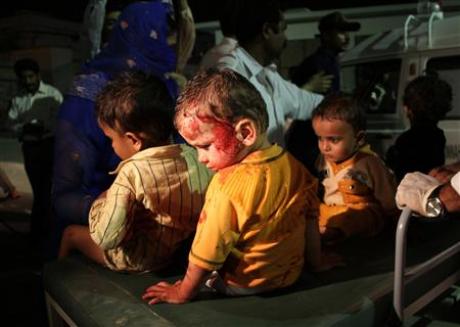
KARACHI, Pakistan — A nearly simultaneous double explosion that may have been the work of suicide bombers struck a crowded Sufi shrine in Pakistan’s main port city of Karachi on Thursday evening, killing at least 7 people and wounding 65, officials and rescue workers said. Pakistani women mourn the death of a child killed in an attack on the shrine Sufi Saint Abdullah Shah Ghazi.

It was the first attack on the shrine, the grave of the Sufi saint Abdullah Shah Ghazi, and it appeared to be an effort by hard-line militants in Pakistan to strike at the heart of Sufism, the moderate, more flexible blend of Islam practiced by most Pakistanis.

The attack came three months after militants struck one of the country’s most important Sufi shrines in the city of Lahore, which left at least 42 people dead.

The first blast at the Karachi shrine occurred at the main gate. Police officials said that within 25 seconds, the second blast hit the steps leading up to the saint’s grave.

Rescuers said three children were among the dead.

Dr. Seemi Jamali, deputy director of the emergency ward at Jinnah Hospital in Karachi, where the wounded were taken, said “many of them have severe injuries, trauma to the head and neck.”

Television channels showed body parts strewn at the site and chaotic scenes of unnerved, sobbing survivors.

The home minister of Sindh Province, Zulfiqar Mirza, told reporters that the severed heads of two suspected suicide bombers had been recovered from the site. Police officials were more circumspect, saying it was premature to conclude that the attack was by suicide bombers.

Local TV channels reported later that Tehreek-e-Taliban, or Movement of Taliban, an umbrella group of militants, had claimed responsibility for the attack. The group is known to have trained cohorts of suicide bombers for attacks in Pakistan and Afghanistan.

The attackers apparently chose Thursday night because it is one of the most crowded times of the week at the shrine, when hundreds throng to seek blessings from the saint and to receive free food.

The government closed all shrines in the city after the bombings.

The West is Being ‘Outmanoeuvred’ by Violent Islamist Extremists: Tony Blair

By John Swaine for The Telegraph

In a speech in New York, the former prime minister said that warnings over the past week of new terrorist plots against Europe should remind people that they remain under threat.

Mr Blair said a “narrative” that Muslims were under attack from the US and its allies, who act out of support for Israel, had been allowed to take hold, aided by “websites and blogs”.

A fresh confrontation is needed because it will be impossible to defeat extremism “without defeating the narrative that nurtures it”, he said.

“The practitioners of extremism are small in number. The adherents of the narrative stretch far broader into parts of mainstream thinking,” Mr Blair told the Washington Institute for Near East Policy.

“It is a narrative that now has vast numbers of assembled websites, blogs and organizations.” Mr Blair said it was “absurd” that some people were surprised at how powerful Islamist extremist groups were, given the amount of funding they received and indoctrination they spread.

“Measure, over the years, the paucity of our counter-attack in the name of peaceful coexistence,” he said. “We have been outspent, outmaneuvered and out-strategized.”

Mr Blair said a tendency to “sympathize” with extremism was not only dangerous but also disempowering for moderate Muslims, because it made people resent them as much as extremists.

He said he was “intrigued” by the fact that western leaders, including Barack Obama, the US President, felt the need to condemn Terry Jones, a pastor who threatened to burn a Koran.

“Suppose an Imam, with thirty followers, in Karachi was to burn a bible,” he said. “I can barely imagine a murmur of protest. It wouldn’t be necessary for the President of Pakistan to condemn it because no one here would remotely consider he supported it.”

The former prime minister also called on the west to make it “crystal clear” to Iran that their acquisition of a nuclear bomb would be unacceptable to the entire “civilized world”.

“Go and read the speech of Iran’s President to the United Nations just days ago here in New York, and tell me that is someone you want with a nuclear bomb,” he told those who disagree.

He stressed that the achievement of a peace settlement between Israel and Palestine would remove “much of the poison which the extremists use”.

And he defended his decision to invade Iraq and Afghanistan, saying: “whatever you think of the original action, we enabled the people to choose their Government”.

Mr. Blair last night appeared on the Late Show with David Letterman on American television. He said that satirists like Letterman had been wrong to paint George W. Bush as unintelligent. “You don’t get to this position by being a fool,” he said.

The Media Turns a Blind Eye to Pakistan

By Maryam Jameel for North by Northwestern
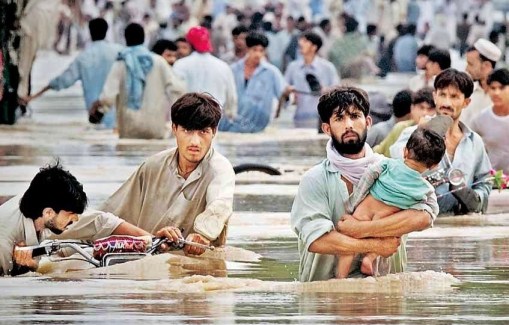
U.S. media coverage of Pakistan’s flood disaster remains low while apathy and misinformation run high.

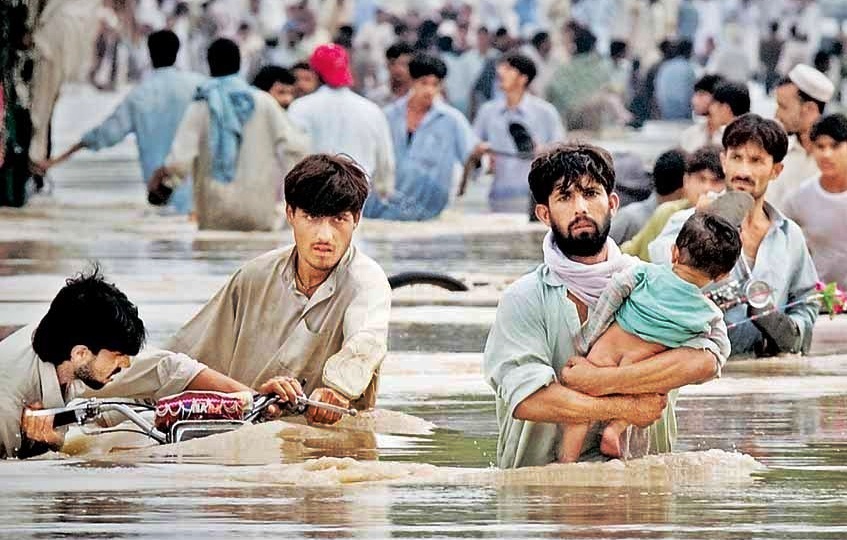
Throughout the summer, while politicians and news correspondents debated endlessly over the precise coordinates of New York’s Park 51 community center, an immense disaster struck the nation of Pakistan. Floods covered much of the country, leaving an area roughly the size of England underwater, and inflicting more damage than South-East Asia’s tsunami, and Haiti and Kashmir’s recent earthquakes combined.

The U.S. media, however, has scarcely reported on the flooding. In the two weeks following Haiti’s earthquakes, The New York Times published 88 articles on the topic. About the flooding? 15. And only one of these was front page – one discussing “hard-line Islam” in flooded Pakistan.

In an effort to raise awareness of Pakistan’s situation and contribute donations for flood relief, Northwestern students have launched a campaign called NU Stands with Pakistan. Weinberg junior and SASA co-president Sahil Mehta is one of the students leading the initiative. “I think it’s a unique opportunity to push a world view of saying we’re all in this together, these people are the same people who are suffering in the United States, the people who are suffering in Pakistan are the same people who were suffering in New Orleans during Katrina, the same people who are suffering in Haiti,” he says.

Members of Northwestern’s community were personally affected; Northwestern has a large number of Pakistani international students and students of Pakistani descent. “NU Stands with Pakistan is about what stance our community takes when something like this happens. Whether its in Haiti, whether it’s a tsunami, whether it’s in Pakistan,” Mehta says.

Alongside the underreporting of Pakistan’s floods, there has been a low response in aid donated for Pakistani flood relief compared with other recent natural disasters. “I think at the end of the day our information controls our action, we are reactions to what we see, and if we’re not seeing anything, I think it’s going to de-motivate people to act,“ Mehta says.

Weinberg senior Sana Rahim is also at the head of NU Stands with Pakistan. “There is mass Islamophobia in this country, and I don’t want to say it, and I don’t want to believe it, but I do think that has to have some kind of hand in why so many people are not paying attention,” says Rahim. “When they see images of Pakistan, and when the media talks about the terrorist activities in Pakistan, it’s not going to really call people to respond.”

Professor Loren Ghiglione says that while U.S. media is a large influence upon its audience, it is also a reflection of its audience. “There’s good coverage [available], but it’s probably in a limited number of places, and the question is also who bothers to look at it? Partly, it’s the public’s response too,” he says.

McCormick sophomore Khalid Aziz lives in Lahore, Pakistan. Lahore, alongside Pakistan’s other major cities, was not directly affected by the flooding; however, most of Pakistan is experiencing the economic effects of the disaster and the pain of watching so much of its population displaced. “Whenever we tried going out, you just couldn’t have fun in Pakistan because you were feeling so guilty, because one fifth of the population was directly affected by these floods, and the rest were indirectly effected by the rising food prices, and it’s only going to get worse because so much of agrarian life is underwater,” Aziz says.

Though the majority of Pakistanis have zero connection to the so-called terrorist groups that the media frequently covers, the constant news reports affiliating Pakistan with terror creates quite the opposite impression. “I think that the media needs to have a bit more of a conscience in this regard. [When] the only thing [the average American] sees about Pakistan is about terrorism, he might not send in the 10 dollars or 20 dollars he could have otherwise sent to the flood victims,” Aziz says.

Aziz reflects that to expect Americans to express nothing but kindness and generosity towards Pakistanis after years of negative, often sensationalized reports, would be unrealistic. On articles depicting Pakistanis’ current situation, he saw many individuals write comments saying that they would not want to spend their hard-earned money to help a “terrorist country.”

With the limited media coverage of Pakistan, most of which talks of violence and some of which now speaks of suffering, displaced human beings, deciding how to feel towards Pakistan remains a challenge for many. “There may be a sense of ‘is Pakistan our friend or our enemy or what?’” Ghiglione says.

“Pakistanis are people who Americans’ fear is instinctively telling them not to feel bad for, but their human side is saying that these are just regular people, these are average people who are trying to lead lives and earn honest livings just like myself and my neighbor,” Mehta says.

NU Stands with Pakistan is raising funds throughout this week at Norris and Scott Hall. Funds will go to Oxfam to assist with flood relief efforts.

“We’re hoping to motivate a dialogue that continues past this campaign, that continues into the year and continues in classes and discussions an other events,” Mehta says.

Loud Cheers for Pakistan, British Team Sports Indian Look

By Shivani Kala for The Indian Express

The loudest applause, predictably, was reserved for the Indian contingent. But what surprised many, perhaps even the participating athletes, was that the 60,000-plus crowd chose Pakistan for the second-loudest cheer.

If sheer crowd applause was any measure of the popularity of the participating countries, the 54-member Pakistani delegation, distinct in their green coats, was by far the most loved after India. Of course, the Indian delegation, led by flag-bearer Abhinav Bindra, was received with a standing ovation across the stadium, with even President Pratibha Patil and Prince Charles standing up to welcome the participants. UPA chairperson Sonia Gandhi was the last to sit down after the resounding applause that lasted several minutes.

In contrast, to the embarrassment of the Organising Committee (OC), as soon as its chairman Suresh Kalmadi stepped on stage to make the opening remarks, a rather cold silence descended, following by distinct booing. The only exception was when he mentioned Delhi Chief Minister Sheila Dikshit, whose name was greeted with loud cheers.

Besides Pakistan, other cricket-playing countries also received loud cheers. In fact, the British participants struck a chord with the host country with their choice of outfit — white kurta with the signature Nehru collar and a red jacket. The marching members of the 371-strong contingent turned out in the best of fashion inspired by India.

Envoy Insists Pakistan Will Tackle Terrorists As Attack Kills 3

By Nasir Habib for Cnn

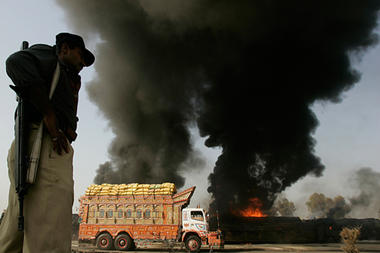
Islamabad, Pakistan (CNN) — Gunmen in Pakistan opened fire on oil trucks bound for NATO forces in Afghanistan, setting some 20 vehicles on fire and killing three, police said Monday. The attack came shortly after Pakistan’s ambassador to the United States vowed his country would go after terrorists on its soil.

Naeem Iqbal, a police spokesman, said five people were wounded in the attack on tankers parked on a main road outside a housing complex near the capital city of Islamabad. Efforts to put out the blaze are ongoing, he said.

Bin Yamin, a deputy police chief, said eight gunmen entered the area on Monday around 12:15 a.m. local time. He said they told people near the trucks to run away and that most did. Then they opened fire.

The tankers were parked in the vicinity of an oil refinery where they were going to go to pick up fuel for NATO forces in Afghanistan, Yamin said. Video images of the scene showed firefighters working to put out flames that stood out in the night against the overturned trucks.

On Sunday, Pakistan’s ambassador to the United States insisted his country would go after terrorists on its soil and needed only “technical” help from Washington, not U.S. troops on the ground.

Husain Haqqani, told CNN’s “State of the Union” that Pakistan would reopen a NATO supply route into Afghanistan “relatively quickly,” probably in less than a week.

Pakistan halted the convoys Thursday after officials blamed cross-border NATO helicopter fire for the deaths of three Pakistani soldiers. Haqqani said the United States and Pakistan were investigating the killings together. He said Pakistan will move against militants on its own schedule, not Washington’s.

“Pakistan is saying we will take care of all terrorists on the Pakistani side of the border, but we will do it on our timeline,” Haqqani said Sunday. “We cannot always follow a timeline that our allies set for us, because we are allies, not a satellite.”

Pakistan has lodged protests against NATO helicopter incursions into its territory — which the International Security Assistance Force says its rules of engagement permit — and is very sensitive about reported U.S. drone strikes in Pakistan.

There were a record number of drone strikes last month, according to a CNN count. On Saturday, three suspected drone strikes killed 18 people.

Pakistani intelligence officials said 10 people died in one drone strike targeting a militant hideout, four people died when a vehicle was struck, and four others were killed when another hideout was targeted.

All three occurred in the Data Khel area of North Waziristan. The intelligence officials did not want to be named because they are not authorized to speak to the media.

Security analysts have described North Waziristan as a haven for various factions of Afghan and Pakistani Taliban and al Qaeda militants. The majority of reported strikes this year have hit targets in the district, a mountainous tribal area on Pakistan’s border with Afghanistan, analysts said.

The United States does not officially acknowledge that it has unmanned aircraft firing missiles at suspected militants in Pakistan, but it is the only country operating in the area that is known to have the ability to do so.

Ambassador Haqqani also said Pakistan couldn’t do everything Washington wants “because sometimes we don’t have the capacity and sometimes we don’t have the means.” He said Pakistan’s geography makes it hard to hit militants.

“Sometimes people in the U.S. think … that it’s all flat land with everything visible. Not even the drones can identify everyone in North Waziristan because of the complexity of terrain,” Haqqani said.

Haqqani also argued that Pakistani politicians, just like U.S. counterparts, are constrained by public opinion. “All politics is local and the local situation in Pakistan is that the United States is not very popular amongst our public,” he said. “The fact remains that an elected democratic government in Pakistan is limited by public opinion to the extent of what it can do,” he said.

The Continuous Struggle Along Pakistan’s Frontier

By David Ignatius for The Wall Street Journal

In the same week when U.S. helicopters mistakenly killed three members of Pakistan’s Frontier Corps near the Afghan border, American Special Forces were training members of that same force on how to use radios, sniper rifles and other counterinsurgency tools at a remote base here.

Pakistanis and Americans don’t talk much about this joint training camp, northwest of Peshawar about 20 miles from Afghanistan. But the program is a symbol of the weird duality of the relationship — a mix of public distance and private cooperation that’s awkward for both sides.

“We have good relations; it’s going very well,” Col. Ahsan Raza, the camp commander, said when I visited Tuesday afternoon, two days before the fatal U.S. cross-border attack. But the Pakistani commandant was eager not to appear too close to America, stressing that the U.S. trainers were supplying technical skills, not running the show.

Both sides view the program here as a success story. But the joint effort masks a tension that is only likely to deepen in coming months.

Pakistan wants to use the 70,000-strong Frontier Corps to stabilize the Federally Administered Tribal Areas, or FATA, and halt the domestic Taliban insurgency. The United States, struggling in Afghanistan, wants Pakistan to help seal the border and destroy the sanctuaries used by al-Qaeda and the Afghan Taliban. The two sides talk as if their goals are identical, but they aren’t. The differing priorities became clear in conversations last week with Pakistani commanders.

Warsak is a pet project of Maj. Gen. Tariq Khan, the commander of the Frontier Corps. At his headquarters in the ancient Bala Hissar fortress in Peshawar, the traditional garb of the tribal “scouts,” as they’re called, makes you wonder whether the days of the British Raj ever really ended. Behind Khan’s desk is a plaque bearing the names of his predecessors back to 1907.

Khan argues that it’s time for Pakistan to move from big military offensives in the tribal areas to what he calls “policing” actions. “No steamroller operations,” he says.

Lt. Gen. Asif Yasin Malik, who commands the Pakistani army in the western border areas and is Khan’s boss, makes the same point. “Don’t expect major new kinetic operations,” he says. “We have changed gears to a softer approach.”

This can’t be comforting to Gen. David Petraeus, the U.S. commander in Afghanistan. He is said to have concluded, after several months in Kabul, that more Pakistani pressure on the havens is crucial for American success. That’s the basic conflict — an overstretched America wants a Pakistani surge in the tribal areas; an overstretched Pakistan just wants to keep the peace.

Khan’s strategy is an updated version of the old British approach: work through the tribal chiefs, or maliks, keep the roads open and pound any renegades back into line. He wants to maintain order through three tiers of force: local militias, known as “levies,” recruited by the maliks; the Frontier Corps dispersed across the FATA; and the big guns of the Pakistani army.

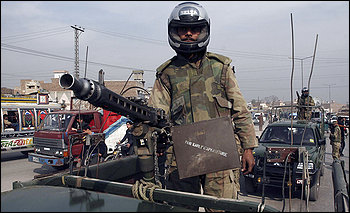
Working with the American trainers at Warsak, Khan has devised some smart tactics: Private vehicles in the FATA will have electronic chips that register their movements. The scouts will report suspicious activities on their American-made radios, and the snipers will blow away any miscreants using their American-made sniper rifles. To demonstrate that order is returning, the burly Khan, the scion of a princely Pashtun family, took a car trip last summer through the FATA with his wife and daughter.

Khan’s enthusiasm is infectious: “There are no safe havens in my area of responsibility — I can take you anywhere, any place, anytime.” That sidesteps the fact that North and South Waziristan, the main trouble spots, are still the responsibility of the army.

Driving down the roads of the border areas, you sometimes have the sense that you are traveling back in time. But that “back to the future” strategy is a temporary fix, at best. Pakistan, with U.S. support, should be moving forward, not in reverse. The years of war have shattered the old tribal order, and the long-run goal should be to bring the tribal areas into a modern Pakistan, rather than let them fester on their own.

U.S. drone attacks and other firepower can keep the insurgents on the run, but they won’t bring stability. Neither will Tariq Khan’s snipers. Somehow, the people in this desolate region have to feel they have a stake in a future that’s something other than continuous warfare.

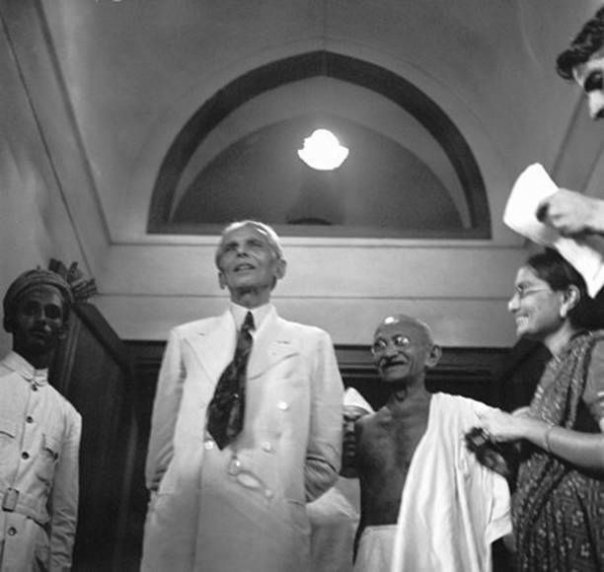
Pakistan Should Celebrate Gandhi’s Life, Legacy and Contributions

By Manzer Munir for Pakistanis for Peace

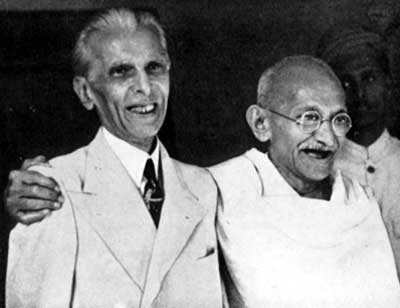
Mohandas Karamchand Gandhi, who was born 141 years ago today on October 2, 1869, is a revered figure in India as well as in many countries around the world for his peaceful civil disobedience techniques that succeeded in granting India its independence from Britain. He is also credited by Martin Luther King Jr., the American civil rights leader, as an inspiration in using similar peaceful protests to change unjust laws against blacks and other minorities in the United States. These protests and opposition eventually led to the Civil Rights Act of 1965 being passed granting all Americans of every ethnicity equal freedoms and protection in the eyes of the law.

Gandhi’s birthday, October 2nd, is celebrated by the United Nations as International Day of Non-Violence. He is an admired figure in India where his contributions for the freedom of his countrymen is celebrated on stamps, currency, and folklore. Gandhi is also appreciated in many other countries outside the Indian subcontinent. Statues of him are found in such disparate places like New York’s Union Square, Gandhi Square in Moscow, the Johannesburg city center in South Africa, and even as far away as Waikiki Hawaii where a statue to the leader stands in Kapiolani Park in Honolulu.  

Yet in Pakistan, a country that also benefitted from Gandhi’s movement for independence, he is vilified and not thought of highly. Many in Pakistan blame Gandhi for his failing to prevent the deaths of thousands of Muslims during the religious violence the precipitated the independence of both countries. In many Pakistani books he is depicted as a villain; however few people know that he died because of his great favour for Pakistan and that he was seen by right wing Hindu groups as someone who was concerned with the appeasement of the Muslims of India.

India’s first prime minister, Jawaharlal Nehru, had refused to give Pakistan their share of the money that was due to them after partition. But Gandhi went on a fast till death to protest against this injustice against the newly created Pakistani state and this pressure led to Nehru’s agreeing to pay the money so direly needed by the new Muslim nation.

He was assassinated by a young Hindu fanatical, Nathuram Godse, who felt that M.K. Gandhi was more of a hindrance to India than an asset. Godse, like many fanatical right wing Hindus felt that Gandhi was solely responsible for the partition of India into a country for Hindus and one country for the Muslims and he felt that he was a traitor to other Hindus.

Sadly, this man who ultimately gave his life in the cause of others is not very appreciated in Pakistan and neither are his contributions for freedom and independence from the British colonizers taught to today’s school children. In a country rife with violence, intolerance and instability, many Pakistanis can learn a great deal in the lessons of brotherhood and peaceful co-existence preached by Mahatma, the great soul. He would be the perfect anti-Taliban in today’s Pakistan, a country inflamed by animosity and hatred between all ethnic and religious groups. His ideas of tolerance and harmony with others would go a long way against the barbaric views of the Taliban, the enemies of man.

His belief that violence was not a solution towards any objective would benefit today’s Pakistani society if his message was given importance and taught at an early age. His reasoning towards peace and nonviolence lead him to once say that “An eye for an eye leaves the whole world blind.”  In today’s chaotic and violent Pakistan, there is a lot that my fellow Pakistanis can learn from this man and how he lived his life with humility, simplicity and non-violence as well as towards his service of others. More people inside Pakistan should be taught about Gandhi as he is as much responsible for Pakistan’s independence from Britain as was Jinnah, the founder of the country.

-Manzer Munir, a proud Pakistani American and peace activist, is the founder of Pakistanis for Peace and blogs at www.PakistanisforPeace.com as well at other websites as a freelance journalist and writer.

Pakistan Furious With US Over Fatal Raid, But There’s Little It Can Do

By Howard LaFranchi for The Christian Science Monitor

Pakistan has always bristled at US airstrikes inside its territory, but a helicopter gunship attack earlier this week that killed three Pakistani border guards has led to new frictions and exposed heightened sensitivities over Pakistan’s growing dependence on American support.

US and Pakistani officials have until now managed to paper over unresolved differences over how to deal with insurgents who attack US and NATO forces in Afghanistan from their command-and-control centers in neighboring Pakistan. But this time Pakistan closed a vital supply route for provisioning US and NATO forces in Afghanistan, causing US military and civilian leaders to scramble to attempt to undo the action.

US officials predict the border crossing – one of two Pakistani crossings used by NATO to move supplies into Afghanistan – will reopen soon. The Pakistani government, largely dependent on the US and the West, has no other choice, analysts agree. But the move to close the border crossing, they add, lays bare the government’s inability to react strongly to violations of its sovereignty.

“They don’t have too many cards to play without hurting themselves,” says Marvin Weinbaum, a former State Department Pakistan expert now at the Middle East Institute in Washington. Closing border crossings used by the US “in some ways is their trump card, but they are not really going to play it.”

“They know full well that if they persevered with this, they’d be putting the whole relationship with the US in jeopardy,” he says.

US and Pakistan: uneasy alliance

About three-quarters of the supplies for the 120,000-strong NATO force in Afghanistan move through Pakistan. The US, meanwhile, provides Pakistan with about $2 billion in military aid annually.

The cross-border attack came at a time when the US was already stepping up unmanned drone attacks on Taliban and insurgent refuges inside Pakistan. The US launched a record number of these attacks in August.

The NATO helicopter attack that killed the three border guards – the fourth such manned cross-border strike in about a week – is part of an upswing in manned aircraft strikes. It reflects new NATO willingness to enter Pakistani airspace to pursue insurgents fleeing to refuge across the border.

But Pakistan’s tit-for-tat action also suggests a civilian government that is weak and desperate to demonstrate to the Pakistani public – already estranged by government corruption and an ineffective flood response – that it is standing up to the deeply unpopular Americans.

“I want to assure the entire nation from this house that we will consider other options if there is interference in the sovereignty of our country,” Prime Minister Yusuf Raza Gilani said Friday in a speech to parliament.

Mr. Gilani’s comments, in which he repeated Pakistan’s commitment to fighting Islamist extremists that have targeted the country’s civilian government, came a day after he took a call from Sen. John Kerry, chairman of the Senate Foreign relations Committee, seeking to smooth out the rough patch in US-Pakistan relations.

A reminder of the fragility of the Pakistani supply line came Friday when gunmen attacked a convoy of NATO fuel tankers, burning as many as 40 vehicles.

How to ‘walk back’ now?

The key now will be some US effort allowing the Pakistanis to “walk back” from the border closing while saving face, Mr. Weinbaum says.

“If they [in the government] hadn’t shown some backbone here it could have really been devastating for them,” he says. “But now they will have to walk back on this, and the key will be the way they do it.”

“The US can help them do that,” he adds.

One possibility is a joint investigation into the incident.

Continuing deterioration in the Pakistani government’s standing with the public has led to speculation of a military coup.

But Weinbaum says he doesn’t see the military itching to topple the civilian leadership. “Yes, the military is putting pressure on the government, but the way I see it the military leadership really does want the government to do better,” he says. Pointing to the Pakistani military chief, Gen. Ashfaq Kayani, he adds, “He would welcome the government being able to stand up more so that his hand isn’t forced.”