Posts Tagged ‘ Haiti ’

Pakistan and the American Learning Curve

By Ethan Casey for Dawn
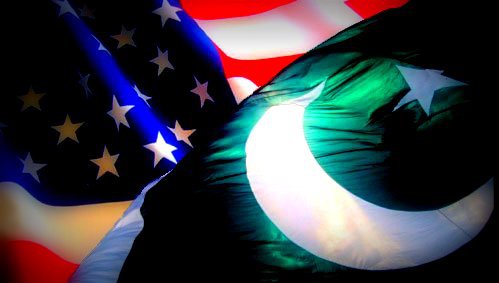
On June 1, I took part in a TEDx event hosted by the Princeton Public Library in Princeton, New Jersey, USA. The TED people bill what they do as “ideas worth spreading,” and during the weeks I spent preparing my talk I pondered what ideas I wanted to spread to an American audience. I titled my talk “What Does Pakistan Have to Do with Haiti? (the full text is on my website, and I’m told the video will be online soon), but in an important sense it’s really about the United States.

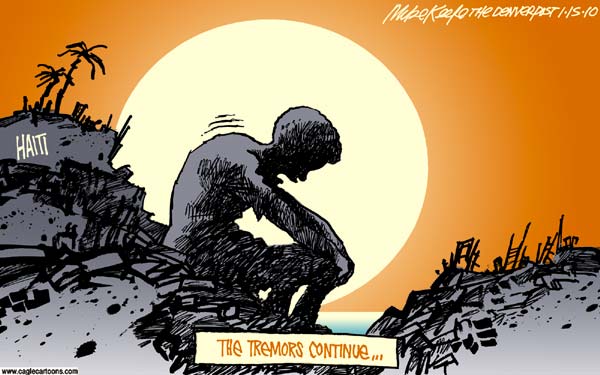
I used the occasion to try to make some sense of the weird coincidence that the two countries I care about most deeply and personally, other than my own, both were devastated in 2010 by horrific natural disasters. I did find a number of things they have in common, believe it or not, but the most salient is that Pakistanis and Haitians both see the United States from the outside. And what they see is often ugly and cruel, because they live on the receiving end of the American power that we Americans usually don’t experience, because we’re the ones wielding it. This is a point that’s very clearly apparent to many people worldwide, but not always easy to get across to Americans.

One way I tried to do it in Princeton was by arguing that both countries are prime examples of what the Nigerian novelist Chimamanda Adichie, in an excellent TED talk in 2009, called “the danger of a single story.” We Americans tell ourselves a single story about Haiti, and a different single story about Pakistan. Dr. Paul Farmer, a celebrated physician who works in the poorest areas of rural Haiti, wrote a book titled The Uses of Haiti. We use Haiti rhetorically and ideologically and, every time there’s a new fitful spasm of American interest in Haiti, our uses for it rear their heads anew. It’s never an edifying thing to see, and it’s maddening to those of us who know Haiti.

America has different uses for Pakistan, and those are not unlike the uses we used to have for the Soviet Union. If Haiti meets Americans’ need to have someone to pity, Pakistan fulfills our need to have someone or something to fear. Fear, pity, and contempt are easy, self-indulgent emotions. But much more demanding, I said, is to cultivate and practice respect. Respect implies distance and difference, and to practice it entails acknowledging that difference is inevitable and even desirable.

Another thing Haitians and Pakistanis have in common is their experience as immigrants and visitors to America. I tried to bring this home by telling the audience about novelist Edwidge Danticat’s 81-year-old uncle, who fled violence in his neighborhood in Haiti’s capital, Port-au-Prince, in 2004 and made the mistake of asking for political asylum at the airport in Miami. US Immigration officials threw him into the infamous Krome Detention Center and denied him his diabetes medication, and he died in detention. Danticat tells the story eloquently in her wonderful nonfiction book Brother, I’m Dying, which is above all a beautifully composed story about family love, immigrant struggle and aspiration, and the tortured and all too intimate relationship between Haiti and the United States, told by a Haitian who is also an American. I often find myself telling Pakistanis the story of Edwidge Danticat’s uncle, and I know that many Pakistanis would recognize its elements.

The idea I tried to leave the American audience with was that, as I put it, our lazy and self-comforting reductionism says nothing about Haiti or Pakistan, and all too much about us Americans — that the earthquake in Haiti and the floods in Pakistan were natural disasters, to be sure, but didn’t happen in a geopolitical vacuum. I gave them a lot to think about, possibly too much.

What I want, by the same token, to offer Pakistani readers is an occasion to reflect on just how big and delicate is the task of influencing American awareness and opinion. The novelist Upton Sinclair famously quipped that it’s difficult to get a man to understand something when his salary depends on his not understanding it. There’s a national analogue that applies to Americans: we are no less innately patriotic than Pakistanis or anyone else, and no one wants to think ill of his or her own country.

So the job of educating and influencing the American public is a long uphill battle, and changing US foreign policy is like turning around an aircraft carrier: it has to be done carefully and very patiently.

Perhaps it can be helped along by American friends of Pakistan like myself and, even more, by leaders and members of the Pakistani-American community. In the meantime I urge Pakistanis to remember the humanity of ordinary Americans, who have been on a steep learning curve since at least September 11, 2001.

Ethan Casey is the author of Alive and Well in Pakistan: A Human Journey in a Dangerous Time (2004) and Overtaken By Events: A Pakistan Road Trip (2010). He is currently writing Bearing the Bruise: A Lifetime in Haiti, to be published in early 2012. Web: http://www.facebook.com/ethancaseyfans or http://www.ethancasey.com.

Follow Ethan Casey on Twitter: http://www.twitter.com/ethan.casey
The Media Turns a Blind Eye to Pakistan

By Maryam Jameel for North by Northwestern

U.S. media coverage of Pakistan’s flood disaster remains low while apathy and misinformation run high.

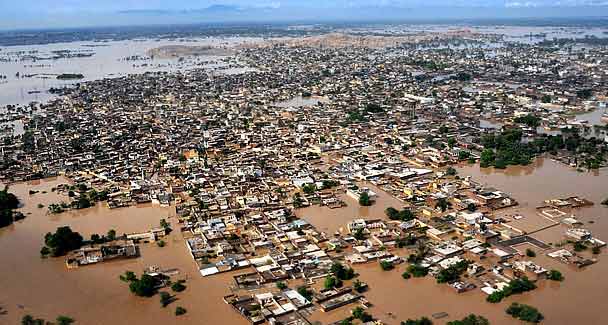
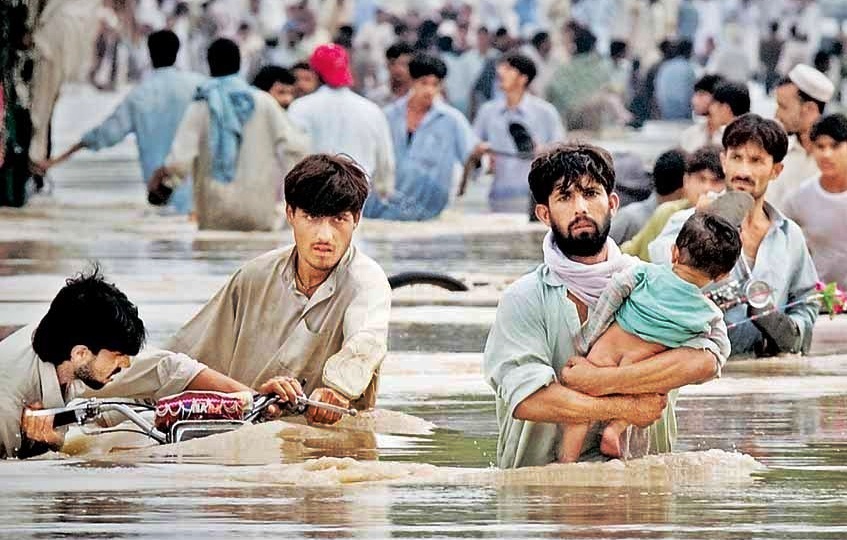
Throughout the summer, while politicians and news correspondents debated endlessly over the precise coordinates of New York’s Park 51 community center, an immense disaster struck the nation of Pakistan. Floods covered much of the country, leaving an area roughly the size of England underwater, and inflicting more damage than South-East Asia’s tsunami, and Haiti and Kashmir’s recent earthquakes combined.

The U.S. media, however, has scarcely reported on the flooding. In the two weeks following Haiti’s earthquakes, The New York Times published 88 articles on the topic. About the flooding? 15. And only one of these was front page – one discussing “hard-line Islam” in flooded Pakistan.

In an effort to raise awareness of Pakistan’s situation and contribute donations for flood relief, Northwestern students have launched a campaign called NU Stands with Pakistan. Weinberg junior and SASA co-president Sahil Mehta is one of the students leading the initiative. “I think it’s a unique opportunity to push a world view of saying we’re all in this together, these people are the same people who are suffering in the United States, the people who are suffering in Pakistan are the same people who were suffering in New Orleans during Katrina, the same people who are suffering in Haiti,” he says.

Members of Northwestern’s community were personally affected; Northwestern has a large number of Pakistani international students and students of Pakistani descent. “NU Stands with Pakistan is about what stance our community takes when something like this happens. Whether its in Haiti, whether it’s a tsunami, whether it’s in Pakistan,” Mehta says.

Alongside the underreporting of Pakistan’s floods, there has been a low response in aid donated for Pakistani flood relief compared with other recent natural disasters. “I think at the end of the day our information controls our action, we are reactions to what we see, and if we’re not seeing anything, I think it’s going to de-motivate people to act,“ Mehta says.

Weinberg senior Sana Rahim is also at the head of NU Stands with Pakistan. “There is mass Islamophobia in this country, and I don’t want to say it, and I don’t want to believe it, but I do think that has to have some kind of hand in why so many people are not paying attention,” says Rahim. “When they see images of Pakistan, and when the media talks about the terrorist activities in Pakistan, it’s not going to really call people to respond.”

Professor Loren Ghiglione says that while U.S. media is a large influence upon its audience, it is also a reflection of its audience. “There’s good coverage [available], but it’s probably in a limited number of places, and the question is also who bothers to look at it? Partly, it’s the public’s response too,” he says.

McCormick sophomore Khalid Aziz lives in Lahore, Pakistan. Lahore, alongside Pakistan’s other major cities, was not directly affected by the flooding; however, most of Pakistan is experiencing the economic effects of the disaster and the pain of watching so much of its population displaced. “Whenever we tried going out, you just couldn’t have fun in Pakistan because you were feeling so guilty, because one fifth of the population was directly affected by these floods, and the rest were indirectly effected by the rising food prices, and it’s only going to get worse because so much of agrarian life is underwater,” Aziz says.

Though the majority of Pakistanis have zero connection to the so-called terrorist groups that the media frequently covers, the constant news reports affiliating Pakistan with terror creates quite the opposite impression. “I think that the media needs to have a bit more of a conscience in this regard. [When] the only thing [the average American] sees about Pakistan is about terrorism, he might not send in the 10 dollars or 20 dollars he could have otherwise sent to the flood victims,” Aziz says.

Aziz reflects that to expect Americans to express nothing but kindness and generosity towards Pakistanis after years of negative, often sensationalized reports, would be unrealistic. On articles depicting Pakistanis’ current situation, he saw many individuals write comments saying that they would not want to spend their hard-earned money to help a “terrorist country.”

With the limited media coverage of Pakistan, most of which talks of violence and some of which now speaks of suffering, displaced human beings, deciding how to feel towards Pakistan remains a challenge for many. “There may be a sense of ‘is Pakistan our friend or our enemy or what?’” Ghiglione says.

“Pakistanis are people who Americans’ fear is instinctively telling them not to feel bad for, but their human side is saying that these are just regular people, these are average people who are trying to lead lives and earn honest livings just like myself and my neighbor,” Mehta says.

NU Stands with Pakistan is raising funds throughout this week at Norris and Scott Hall. Funds will go to Oxfam to assist with flood relief efforts.

“We’re hoping to motivate a dialogue that continues past this campaign, that continues into the year and continues in classes and discussions an other events,” Mehta says.

Pakistan Floods: Why Should We Care?

By Ethan Casey for EthanCasey.com

Yesterday a non-Pakistani friend here in Seattle emailed me: “I wanted to ask you which you think would be the best organization to make a donation to for the current crisis in Pakistan. We usually give to MSF, but their website doesn’t seem to offer the opportunity to give specifically for Pakistan. Can you offer advice?”

This friend is British and greatly prefers British media outlets, but I need to believe that there are many Americans who also want to help flood victims in Pakistan – or who would want to, if they knew the scale and severity of the disaster.

Why don’t they know? We can, and I do, blame “the media,” but that’s unhelpful and ultimately a cop-out. Each of us individually has the opportunity and responsibility to be aware of every tragedy in our world, and we should be willing to exert ourselves to redress them. We’re all in this together. But the real problem is that there’s too much tragedy, and it’s happening too fast, and these days Americans are distracted and confused and worried about serious problems close to home, like our own jobs and mortgages.

This is understandable. But you need to know that all indicators are pointing toward an enormous, long-term human tragedy unfolding in Pakistan, and we need to do something about it, for several good reasons. The New York Times acknowledged one of these when – belatedly, in its first significant coverage of the floods that I noticed – it headlined an August 6 article “Hard-Line Islam Fills Void in Flooded Pakistan.”

A related point is that we Americans owe Pakistanis a measure of basic human respect and compassion, as well as gratitude specifically for the sacrifices they’ve made at our behest in several wars in Afghanistan. When we repay this debt, it will also redound to our benefit. “It’s high time we showed Pakistanis the best of America,” disaster relief specialist Todd Shea told me last year. “If you’re a true friend, you don’t run out on somebody when you don’t need them anymore. … Pakistanis don’t trust America anymore. We need to show Pakistanis who we really are.”

Todd Shea runs a charity hospital in the Pakistan-administered portion of the disputed region of Kashmir, where he has been working since the October 2005 earthquake that killed 80,000 people. He also responded urgently and effectively to the World Trade Center attack, the Asian tsunami, Hurricane Katrina, and the earthquake this January in Haiti. He’s currently on the ground in Pakistan, running medical camps and providing drinking water, food, and other relief. An August 11 update on his organization’s website suggests the scale of the challenge:

In a recent statement appealing for more aid to Pakistan, UN humanitarian chief John Holmes said: “While the death toll may be much lower than in some major disasters, taking together the vast geographical area affected, the numbers of people requiring assistance and the access difficulties currently affecting operations in many parts of the country, it is clear that this disaster is one of the most challenging that any country has faced in recent years.”

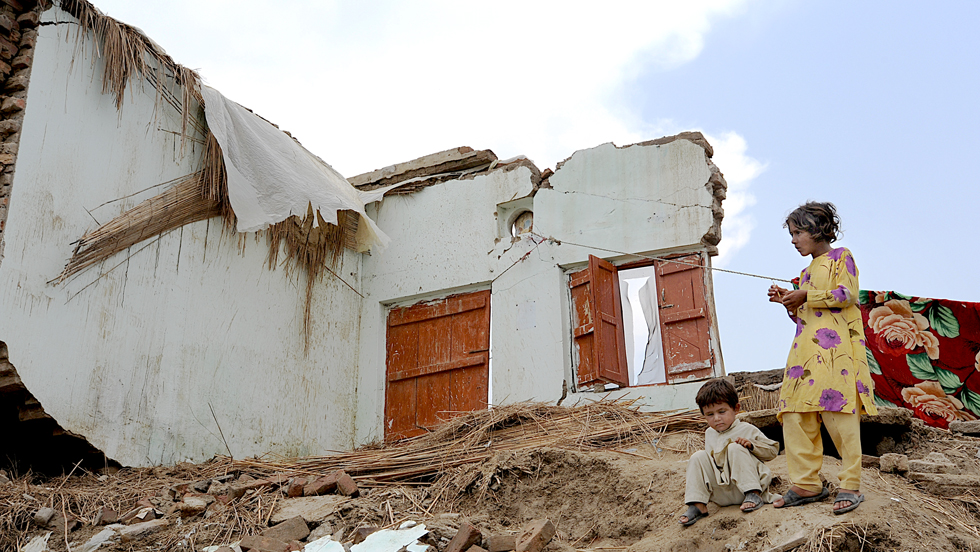
Thousands of people are camped out on roads, bridges and railway tracks – any dry ground they could find – often with nothing more than the clothes on their backs and perhaps a plastic sheet to keep off the rain. “I have no utensils. I have no food for my children. I have no money,” said one survivor, sitting on a rain-soaked road in Sukkur along with hundreds of other people. “We were able to escape the floodwaters, but hunger may kill us.” …

There is a desperate need to send more well-equipped medical teams to the flood-hit areas to prevent the further spread of disease. The victims of the flood have lost everything and cannot cope with potential epidemics on their own.

I’m writing this article because I live and work between two worlds: the mainstream North America that I come from, and the Pakistani immigrant community. My job is to help bridge the gulf in awareness and sympathy between those worlds. What I’m seeing right now is that Pakistani-Americans and their admirable and effective nonprofit groups are jumping once more into the breach, as they always do. And, as always, they’re confined – and confining themselves – to soliciting funds from each other.

The flooding is “well timed” in the sense that the fasting month of Ramadan has just begun, and many Muslims will be directing their annual zakat charity contributions toward flood relief. Pakistani-Americans are generally an affluent community, but there’s a limit to what they can do. Wealthy Pakistanis in Pakistan also need to help, and surely are helping. Just as important, we non-Pakistani Americans and Canadians must help. We also must somehow self-raise our own awareness, given the paucity of decent media coverage. This is important both for obvious-enough political reasons, and simply because it’s the right thing to do.

I see troubling contrasts between the outpouring of generosity and attention that followed the earthquake in Haiti and the averting of eyes from the flooding in Pakistan. I see several reasons for this: Haiti is nearby; the earthquake killed 200,000 or more people all at once. In addition, though, there’s the fact that Haiti is not a Muslim country. The earthquake fit right in with the story we were already telling ourselves about Haiti, which is all about poverty and tragedy. Dr. Paul Farmer sums it up pithily in the title of his book The Uses of Haiti. The uses of Pakistan are different. We need to move beyond the uses of both countries and toward understanding them accurately and respectfully, in their own terms. Our awareness of Haiti should be more political and of Pakistan less so, or differently so.

Anyway, back to my friend’s question. The short answer is that, as always, grassroots groups are more nimble and effective, and your money will be put to better use if you give it to groups that are nearer the ground. This is why the nonprofit groups founded and run by Pakistani-Americans are crucially important. I’m including links to several of these below, and I recommend them all.

I was jolted the other day when another friend suggested that being asked to donate to the excellent Islamic Medical Association of North America “could possibly turn some people off.” He’s probably right, but we goras need to get over our knee-jerk aversion to the word “Islamic.” Your doctor might be a member of IMANA. As a Haitian woman told Paul Farmer years ago, “Tout moun se moun” – all people are people. We’re all in this together.

Please contribute to flood relief in Pakistan through one of these organizations (listed in alphabetical order):

APPNA    www.appna.org/

The Citizens Foundation   www.thecitizensfoundation.org/

Developments in Literacy   www.dil.org/

Edhi Foundation    www.edhifoundation.com

Human Development Foundation     www.hdf.com/

IMANA    www.imana.org/

Islamic Relief USA    www.islamicreliefusa.org/ 

Relief International   www.ri.org/

SHINE Humanity   www.shinehumanity.org/

UNICEF    www.unicef.org/

Suffering in Haiti Continues into its 2nd Week after Earthquake

Haiti crisis triggers quake nightmare for Pakistan legend

Reported by Paul Armstrong originally on CNN.com 1/14/10

Pakistan cricket legend Imran Khan has described how the unfolding crisis in Haiti revived harrowing memories of a similar earthquake in his own region.

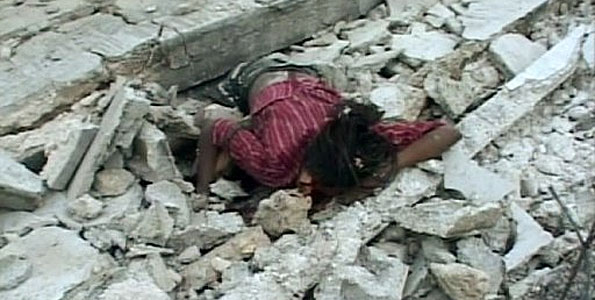
The devastating 7.6 magnitude quake struck northern Pakistan and the divided Kashmir region in October 2005, claiming the lives of almost 80,000 people, according to official estimates, and leaving millions homeless.

Khan, who is now a prominent politician and campaigner for social issues in Pakistan, told CNN Thursday that he was left numbed by the scenes which greeted him as he traveled to some of the worst-affected areas in the aftermath.

“It was one of the most traumatic experiences I’ve ever had. Just watching human suffering, he said. “It was the children that really disturbed me … their crushed limbs.

“There were so many people needing attention. I remember seeing makeshift hospitals where they were amputating. That was difficult to take. “Families were torn apart as parents lost their children and children were orphaned. Whole families were caught inside buildings, while few escaped.”

Khan recalled being overwhelmed by the sight of an entire town being reduced to rubble.

“We arrived in the town of Balakot and it was totally flattened. You don’t know what to do or say. So many people needing help at one time and you don’t have the infrastructure, you don’t have the hospitals to help.”

Balakot was one of the worst-hit places, with one in 10 of about 20,000 residents killed, according to the local government of the Mansehra district, where the town of is located. Thousands more were injured. Pakistani authorities later planned to move the town in the country’s North West Frontier Province to a completely new location, owing to its current position on a volatile fault line.

The destruction of Balakot brought home to Khan how much people had lost. “Their livelihoods disappeared overnight,” he said. “They had nothing, no business, money, food.

“From what I’ve seen on television it’s similar to what is happening now in Haiti. Clearly they (Haiti) won’t have the resources to cope with it, so it will require a real outside effort.”

While acknowledging the importance of the international aid effort, Khan pointed to role ordinary Pakistanis played in 2005. “It was incredible. The government was incapacitated but there were little charities and groups forming all over the area trying to help.

“I was in an earthquake-hit area on the second day and I’ll never forget seeing a three-mile queue of people trying to get to what was a largely remote area to help with whatever they could put in their cars.

“The government was paralyzed but people came forward, from rich to poor, young to old.”

He also pointed to the success volunteer networks had in adopting villages and towns, taking responsibility for providing basic shelter, food and medicine. “Everyone took responsibility,” recalled Khan. “Each group would look after a specific issue until the local population was able to get back on its feet.”It’s so important that the aid effort continues months after the disaster.”