Archive for June, 2011

Pakistan’s Bubbling Water Crisis

By Haider Warraich for Foreign Policy
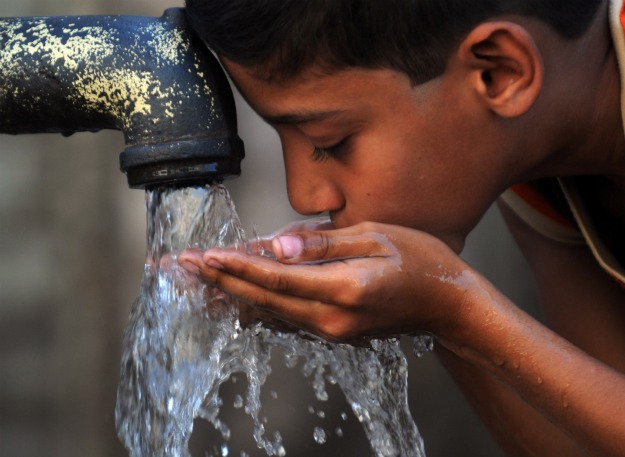
More than 1 billion people in the developing world lack access to clean water, with this number slated to rise to more than 2 billion by 2020. According to UNESCO, 2.3 billion people suffer from water-related diseases, 5 million of whom die each year. However, the burden of water scarcity is not shared equally. According to Rajendra Pachauri, chair of the intergovernmental panel on climate change (IPCC), “At one level the world’s water is like the world’s wealth. Globally, there is more than enough to go round. The problem is that some countries get a lot more than others. With 31 percent of global freshwater resources, Latin America has 12 times more water per person than South Asia.”

Pakistan is on the dry end of the water stress spectrum. About a third of Pakistanis do not have access to safe drinking water, while a further 46% lack access to proper sanitation. However, this deficiency is not uniformly distributed. Pakistan is populated to a large extent around the Indus River that runs the length of the country. The Indus plains cover about a quarter of the country’s landmass and host two thirds of its people, meaning that people living outside this region are particularly water stressed. Furthermore, according to a World Bank report, Pakistan’s per capita water availability has diminished five-fold from 5000 cubic meters in 1951 to 1100 cubic meters in 2006 due to rising consumption by a growing population coupled with rising water waste.

What is even more worrisome is that of the water that is actually available, very little is safe for consumption. A study of 14,000 water sources in 24 major Pakistani districts conducted by the Pakistan Council of Research in Water Resources (PCRWR) over a five-year period found that 82% of sources in Pakistan were unfit for human consumption. The major contaminants noted were bacteria, dissolved solids, nitrates and fluoride.
By Haider Warraich for Foreign Policy

This worsening water crisis is having a drastic impact on public health in Pakistan. According to a UNICEF report, 20-40 percent of hospitalized patients in Pakistan suffer from water-borne infections. Several disease epidemics in Pakistan have been traced back to water contamination, including several outbreaks of the potentially fatal Hepatitis E, rotavirus diarrhea, typhoid fever and dysentery. Polio is also a water-borne infection, and Pakistan is one of the last countries on earth to continue to suffer major problems from the disease.

The sustained high levels of chemical compounds in Pakistan’s drinking water supply have also caused the outbreak of population-wide poisonings. Fluoride toxicity, known to cause bone pain and deformation, has been reported from several areas of Punjab province, with a high occurrence in children. Arsenic poisoning, which causes a wide array of dangerous complications, has been reported to be present in up to 73% of the residents of Sindh province’s Manchar Lake, the largest freshwater lake in Pakistan and one of the largest in Asia. Pesticide poisoning, also linked to infiltration into the water supply, has been reported in Pakistani farmers.

Pesticide poisoning, among other problems, stems from the endemic misuse of water in Pakistan. About 97 percent of Pakistan’s freshwater resources are expended in irrigation and agriculture, yet Pakistan has one of the lowest productivities per unit of water and unit of land in the world. Waste is incurred at several stages: Canal heads, water courses and farms themselves all are the sites of considerable leakage. Furthermore, with Pakistan’s major hydroelectric dams losing storage capacity, there is little reserve during times of famine. Pakistan is in dire need of major hydroelectric projects to increase power generation, protect against seasonal flooding, and to have greater control over the water supply. However, provincial politics has stifled this debate, halting any progress in this direction. Concerns abound about the fate and compensation for displaced people, fears of downstream provinces of a reduction in water supply. Another important issue is that most Pakistani rivers originate from Indian-occupied Jammu and Kashmir. Pakistan and India in 1960 signed the Indus Water Treaty, in which both countries agreed to abstain from any activity that would jeopardize water supply of the other. However, according to a recent U.S. Senate report, India has made several dams in Jammu and Kashmir, which “could give India the ability to store enough water to limit the supply to Pakistan at crucial moments in the growing season.” Pakistani officials have argued that in doing so, India has violated the treaty, worsening the water situation in Pakistan.

The lack of access to water in Pakistan only exacerbates the country’s already dire public health situation. Hand washing, for instance, is the most effective step against infection in both homes and hospitals, but hand washing practices prescribed by public health organizations are impractical in water stressed areas, with one study concluding that an extra 20 liters per person per year would be required in order to follow handwashing recommendations. Another review of medical literature found that access to potable water sources has far more of an impact on reduced infections than water quality. With a deficit in both water quality and quantity, then, public health in Pakistan faces an immense burden frrom water-related illness.

Several measures need to be taken to ward off this crisis. Water policy, currently a minor issue in Pakistan, needs to be brought to the center stage of national debate. It will remain easy for politicians to defer the contentious issue of building dams unless the masses realize the extent to which they are needed. The good work conducted by the PCRWR should be better-funded and -promoted in order to highlight problems as well as evaluate possible solutions. Water waste in agriculture and irrigation also needs to be addressed; the government must make more of an effort to line canals to prevent leakage, and further promote water efficiency on farms. To increase access of rural populations to potable water, India has developed a successful project to provide piped water and hand pumps, with a particular emphasis on improving child health — Pakistan needs to develop a similar program. Pakistan should also make the most of the post-Cricket World Cup diplomatic thaw with India, insofar as it still exists, and ensure equitable implementation of the Indus Water Treaty. Access in arid areas such as desert regions of Sindh and practically all of Baluchistan need to be particularly improved. Promotion of hygienic practices such as boiling water to kill bacteria and appropriate sanitary practices needs to be increased to reduce water-borne infections. This can be conducted on both a national level using television programs, and on a grass root level using community health workers and prominent locals. Finally, the most long-lasting solution to improving water supply will be to slow Pakistan’s population growth, which will only put further strain on reduced water supplies. Unless measures are taken now, this bubbling crisis might reach the point of overflowing.

Haider Warraich, MD, is a research fellow at Harvard Medical School. He is a graduate of the Aga Khan University in Karachi, Pakistan, and the author of the forthcoming novel, Auras of the Jinn.
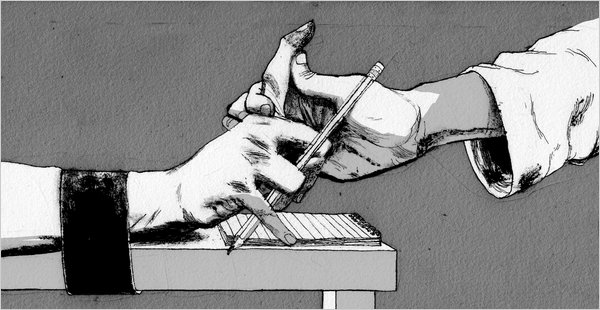
Dying to Tell the Story

By Umar Cheema for The New York Times

WE have buried another journalist. Syed Saleem Shahzad, an investigative reporter for Asia Times Online, has paid the ultimate price for telling truths that the authorities didn’t want people to hear. He disappeared a few days after writing an article alleging that Al Qaeda elements had penetrated Pakistan’s navy and that a military crackdown on them had precipitated the May 22 terrorist attack on a Karachi naval base. His death has left Pakistani journalists shaken and filled with despair.

I couldn’t sleep the night that Saleem’s death was confirmed. The fact that he was tortured sent me back to a chilly night last September, when I was abducted by government agents. During Saleem’s funeral service, a thought kept haunting me: ā€œIt could have been me.ā€

Mourning journalists lined up after the service to console me, saying I was lucky to get a lease on life that Saleem was denied. But luck is a relative term.

Adil, my 2-year-old son, was the first person in my thoughts after I was abducted. Journalists in Pakistan don’t have any institutionalized social security system; those killed in the line of duty leave their families at the mercy of a weak economy.

When my attackers came, impersonating policemen arresting me on a fabricated charge of murder, I felt helpless. My mouth muzzled and hands cuffed, I couldn’t inform anybody of my whereabouts, not even the friends I’d dropped off just 15 minutes before. My cellphone was taken away and switched off. Despite the many threats I’d received, I never expected this to happen to me.

Sure, I had written many stories exposing the corrupt practices of high-ranking officials and pieces criticizing the army and the intelligence agencies. After they were published, Inter-Services Intelligence, Pakistan’s prime security agency, always contacted me. I was first advised not to write too much about them and later sent messages laced with subtle threats. But I never imagined action was imminent.

On Sept. 4, I was driven to an abandoned house instead of a police station, where I was stripped naked and tortured with a whip and a wooden rod. While a man flogged me, I asked what crime had brought me this punishment. Another man told me: ā€œYour reporting has upset the government.ā€ It was not a crime, and therefore I did not apologize.

Instead, I kept praying, ā€œOh God, why am I being punished?ā€ The answer came from the ringleader: ā€œIf you can’t avoid rape, enjoy it.ā€ He would employ abusive language whenever he addressed me.

ā€œHave you ever been tortured before?ā€ he asked.

ā€œNo,ā€ I said.

ā€œThese marks will stay with you forever, offering you a reminder never to defy the authorities,ā€ he replied.

They tortured me for 25 minutes, shaved my head, eyebrows and moustache and then filmed and photographed my naked body. I was dumped nearly 100 miles outside Islamabad with a warning not to speak up or face the consequences.

The following months were dreadful. I suffered from a sleep disorder. I would wake up fearing that someone was beating my back. I wouldn’t go jogging, afraid that somebody would pick me up again and I’d never return. Self-imposed house arrest is the life I live today; I don’t go outside unless I have serious business. I have been chased a number of times after the incident. Now my son asks me questions about my attackers that I don’t answer. I don’t want to sow the seeds of hatred in his heart.

When Saleem disappeared, I wondered if he had been thinking about his children, as I had. He had left Karachi, his hometown, after receiving death threats, and settled with his wife and three children in Islamabad. From there, he often went on reporting trips to the tribal areas along the Afghan border. Tahir Ali, a mutual friend, would ask him: ā€œDon’t you feel scared in the tribal areas?ā€ Saleem would smile and say: ā€œDeath could come even in Islamabad.ā€ His words were chilling, and prescient.

The killing of Syed Saleem Shahzad is yet another terrifying reminder to Pakistani journalists. He is the fifth to die in the first five months of 2011. Journalists are shot like stray dogs in Pakistan — easily killed because their assassins sit at the pinnacle of power.

When Daniel Pearl was brutally murdered by militants in Karachi in 2002, his case was prosecuted and four accomplices to the crime were sentenced. This happened only because Mr. Pearl was an American journalist. Had he been a Pakistani, there would have been no justice.

Today, impunity reigns and no organization is powerful enough to pressure the government to bring Saleem’s killers to justice. Journalists have shown resilience, but it is hard to persevere when the state itself becomes complicit in the crime. Now those speaking up for Saleem are doing so at a price: they are being intimidated and harassed.

Pakistan is at a crossroads and so is its news media. In a situation of doom and gloom, Pakistani journalists offer a ray of hope to their fellow citizens and they have earned the people’s trust. Even the former prime minister Chaudhry Shujaat Hussain has admitted that people who once went to the police with complaints now go to the press.

But this trust will be eroded if journalists continue to be bullied into walking away from the truth. News organizations throughout the world must join hands in seeking justice for Saleem and ending the intelligence agencies’ culture of impunity. An award for investigative journalists should be created in his honor, as was done for Daniel Pearl. No stronger message could be delivered to his killers than making him immortal.

Umar Cheema is an investigative reporter at The News International, Pakistan’s largest English-language daily. He was a Daniel Pearl Fellow at The Times in 2008.

Pakistan Troops Caught on Film Shooting Unarmed Teenager Dead

By Barry Neild for The Guardian

Pakistan’s security forces are facing criticism after paramilitary troops were caught on camera apparently shooting dead a teenager at point-blank range.

The footage, broadcast repeatedly on local television, is likely to further undermine faith in the country’s powerful security establishment, which is already facing allegations it helped conceal Osama bin Laden.

The video, captured by a cameraman from Pakistan’s Awaz television channel, shows a youth, identified as Sarfaraz Shah, arguing with paramilitary rangers in Karachi. The 18-year-old appears to plead for mercy before being shot at close quarters. He then falls to the ground and screams in pain as blood pools beneath his legs.

Zohra Yusuf, head of Pakistan’s independent Human Rights Commission, condemned the killing as “another indication of law enforcement personnel becoming increasingly trigger happy.”

She said the violence depicted in the video was a trend seen across Pakistan that reflected the impunity of the country’s law enforcers.

Pakistan’s prime minister, Yousuf Raza Gilani, said an inquiry would be launched and the culprits punished. Six members of the paramilitary Rangers, who are controlled by the interior ministry, have since been arrested.

Major general Aijaz Chaudhry, who commands the force, described the incident as “deplorable”. “The Rangers have no authority to kill any unarmed individual and they can fire only in self-defence,” he said. “On completion of the inquiry, all those found responsible will be given strict punishment.”

The incident is likely to further dent public faith in the government’s ability to control its security forces at a time when the US ally is facing questions about how bin Laden could have hidden for so long without the complicity of intelligence officials.

“What we saw on television shows that now there is the law of the jungle in this country and no one is accountable for his action or deeds. This is pathetic,” Mohammad Sultan, a retired soldier, told Reuters.

“What we are seeing is visual records of what we have long documented, which is the culture of impunity in the Pakistani law enforcement agencies,” said Ali Dayan Hasan, a researcher for Human Rights Watch. “What is becoming clear is that the free for all, the culture of wanton abuse and killing, is becoming untenable in the age of new media and cell phone cameras.”

In one media interview, a man identified as Salik Shah, the victim’s brother, said: “My brother was a victim of barbarism, brutality and aggression and everyone has seen it. The innocent young man was begging for his life regardless of whether he had done anything wrong. He was asking to be pardoned by the rangers; despite his repeated requests they did not listen to him, they did not arrest him, instead they were adamant about killing him and in the end they did.”

Hundreds of people showed up at Shah’s funeral a day after his death and denounced the Rangers. Some shouted “Rangers, murderers!” and others carried signs that said “Down with the Karachi Rangers.”

The video’s broadcast comes a few days after a prominent journalist was tortured to death after reporting claims about al-Qaida. Military intelligence officials have rejected claims they played a role in the killing.

Pakistan’s Daily Times newspaper said the military, paramilitary forces, police and intelligence agencies “who confidently violate human rights” should be held accountable for their actions.

“The security and law enforcement forces that do not respect the law themselves are inviting anarchy, which arguably is already under way,” it said in an editorial.

Last year, a video emerged of two teenage brothers being beaten to death before being strung up on a metal pole in broad daylight as police personnel looked on.

Pakistan Orders an Inquiry After Troops Kill a Teenager

By Salman Masood for The New York Times

President Asif Ali Zardari of Pakistan ordered an investigation on Thursday into the shooting death of an apparently unarmed teenager by paramilitary troops in the southern port city of Karachi. The shooting, which was captured on video and broadcast on national television, has led to protests and has been condemned by political parties and human rights groups.

It was the second time in recent weeks that a video has shown paramilitary troops using extreme force against civilians. Last month, five Chechens were gunned down in Quetta, Pakistan.

The shootings are sure to feed complaints that Pakistan’s security forces are too aggressive and sometimes bypass the sluggish and corrupt judicial system. Pakistan’s military leaders are also still embarrassed by the American raid on Osama bin Laden’s compound in Abbottabad, which the armed forces did not detect.

The victim of the Karachi shooting, Sarfraz Shah, whose age was given as 18 or 19, was stopped by paramilitary troops on Wednesday and accused of being involved in an attempted robbery in a nearby park.

A spokesman for the troops said a gun had been taken from him, but in the video, Mr. Shah does not appear to be armed when he is shot.

The recording shows the young man begging for mercy before being led toward a group of troops. One points his gun at Mr. Shah before firing several shots. Mr. Shah crouches, asking forgiveness while bleeding profusely.

ā€œMy hand is gone,ā€ Mr. Shah shouts. ā€œTake me to the hospital.ā€ The troops step back, out of the video frame. A government official said five of the troops had been arrested.

Mr. Shah was buried on Thursday in Karachi, accompanied by protests from family members.

The shootings in Quetta last month were also recorded. The police and paramilitary troops initially reported that the victims, three women and two men, were suicide bombers. They were killed near a checkpoint on the outskirts of Quetta, the capital of Baluchistan Province in southwestern Pakistan, in a volley of fire as police officers stood by.

Video from local television networks showed one young woman raising her arm, as if to try to stop the gunfire. No weapons were recovered on the victims. An investigation of that shooting is under way.

The Pakistani security forces have repeatedly been accused of misusing their power. The army was accused of extrajudicial killings during a military operation to drive out militants that began in the Swat Valley in 2009. The army denied the allegations.

The country’s powerful intelligence agencies have also been accused of illegally detaining hundreds of terrorism suspects. And military intelligence has been accused of gross human rights violations in Baluchistan, where a separatist insurgency by Baluch nationalists has long simmered.

Pakistani Rangers, the group involved in Mr. Shah’s death, are controlled by the Interior Ministry. Rehman Malik, the country’s interior minister, announced the arrests in the case on Thursday evening, but he also accused Mr. Shah of being part of a gang involved in robberies, according to the local news media.

Mr. Malik said Mr. Shah had tried to steal a woman’s purse and was caught by guards in the park before being handed over to the Rangers.

The Rangers have been deployed in Karachi for several years and help the local law enforcement authorities in maintaining peace in the city, which is riven by political, ethnic and sectarian tensions.

Pakistan’s Secular Martyrs

By Beena Sarwar for The News International

The murder of professor Saba Dashtiyari in Quetta last week, coming on the heels of the killing of investigative journalist Saleem Shahzad, is yet another sign of an ongoing ā€˜genocide’ of progressive Pakistani intellectuals and activists. ā€˜Genocide’ generally means the deliberate destruction of an ethnic group or tribe. In this context, it applies to the tribe of Pakistanis who have publically proclaimed or implicitly practiced the enlightenment agenda of freedom of conscience. They may have very different, even opposing, political views but they are people who are engaged knowingly or unknowingly in spreading ā€˜enlightenment’ values. Perceived to be out to undermine or eliminate members of this tribe are sections of state long engaged in establishing Pakistan’s ā€œIslamicā€ identity and determining the ā€œnational interestā€. They decide who is a patriot or a Muslim. Most of those killed in mysterious circumstances over the years were critics of this sate of affairs.

Let’s list some of them (a complete list is not possible here), starting with the former governor of Punjab Salmaan Taseer, murdered by an official bodyguard. Contrary to standard operating procedures, the other guards did not open fire on the assailant – who had been assigned to this duty despite his ā€œextremist viewsā€ due to which the Special Branch had earlier dismissed him. Barely two months later, two human rights defenders were gunned down — former federal minister for minority affairs Shahbaz Bhatti in Islamabad, and Naeem Sabir, the Human Rights Commission of Pakistan’s former coordinator in Khuzdar, Balochistan.

The assassins ā€œmay perhaps belong to different groups,ā€ said the HRCP, but the murders were ā€œthe work of militants out to eliminate anyone who raises his voice against persecution of the vulnerable peopleā€. Naeem Sabir, associated with the HRCP since 1997, had been targeted off and on ā€œby minions of the stateā€ for his coverage of human rights abuses. A shadowy group calling itself the ā€˜Baloch Musala Defai Tanzeem’ (Armed Baloch Defence Committee) claimed responsibility.

Saba Dashtiyari was not exposing human rights abuses but he was doing something more dangerous – opening young minds to progressive thought. Although he received his basic education in the slums of Lyari he shared a wealth of knowledge, running ā€œkind of a (liberal) university within the (strictly controlled) university,ā€ writes his former student Malik Siraj Akbar. The disparate group of students around him often comprised ā€œprogressive and liberalsā€; they clutched books by ā€œfreethinkers like Bertrand Russell, Russian fiction by Leo Tolstoy and Maxim Gorky,ā€ and writings of Pakistani progressive intelletuals like the late Syed Sibte Hasan and Dr Mubarak Ali. Their discussions revolved around ā€œpolitics, religion, revolutions, nationalismā€ and also included social taboos like sex and homosexuality. He contributed his salary ā€œto impart cultural awareness and secular educationā€.

The state, on the other hand, is ā€œconstructing more and more religious schools to counter the liberal nationalist movementā€ which only accelerates the process of right-wing radicalisation (Obituary: The Martyred Professor, June 2, 2011, Baloch Hal).

Prof Dashtiyari had lately become ā€œa staunch backer of the Baloch armed resistance for national liberationā€ (ā€˜The Baloch Noam Chomsky Is Dead’, Baloch Hal, Jun 2, 2011). Although he himself had not taken up arms, his views were anathema to the ā€˜establishment’ as defined above.

In April last year, another professor at the University of Balochistan, Nazima Talib was murdered — the first time a woman was target-killed in the province. The Baloch Liberation Army (BLA) said it had killed her in response to the security forces’ killing of ā€œtwo Baloch women in Quetta and Pasni and torture of women political workers in Mand and Tumpā€. Security forces routinely pick up Baloch youth for questioning. Far too often, mutilated bodies are found in what Amnesty International has termed as ā€œkill and dumpā€ operations. Since July 2010, the rights body has documented ā€œthe disappearances and killing of at least 100 activists, journalists, lawyers and teachers in Balochistan, with victims’ relatives often blaming the security and intelligence servicesā€.

One can empathise with the anger of the Baloch. But revenge killings cannot be justified or condoned. When victims become oppressors, it becomes even harder to emerge from the downward spiral.

The murder of Nawab Akbar Bugti in Gen Musharraf’s military operation of August 2006 contributed to this downward spiral, sparking off a wave of target killings of non-Balochis, particularly educationists and civil servants. Those killed since include former education minister Shafique Ahmed and Hamid Mehmood, former secretary of the Board of Intermediate and Secondary Education.

Although shadowy groups with long names sometimes claim responsibility, it is usually ā€œunidentified assailantsā€ who are said to be behind the murders, like those who gunned down former senator Habib Jalib of the Balochistan National Party (BNP-Mengal) last July.

Journalists remain vulnerable, walking a tightrope between the military and the militants, as Saleem Shahzad did. At least half-a-dozen Baloch journalists have been target-killed over the past nine months alone: Rehmatullah Shaeen, Ejaz Raisani, Lala Hameed Hayatan, Ilyas Nazar, Mohammad Khan Sasoil, Siddiq Eido and Abdus Rind. These murders have not been investigated, nor has the mainstream media taken any notice of them.

Many compare the situation to 1971. Just before Bangladesh’s liberation (albeit with foreign intervention), extremists trying to kill progressive ideas in the new country massacred progressive intellectuals. Is a similar mindset at work in what’s left of Pakistan? Extremists know they cannot win the argument so they silence the voices that make the argument.

Musharraf’s ā€œmoderate enlightenmentā€ led to an escalation of violence against those who are genuinely enlightenment partisans from all shades of political opinion. This is not just a series of ā€œincidentsā€ but a tacitly agreed upon plan operating under a culture of impunity for both the state and the insurgents, fostered, it must be noted, by non-elected arms of the state. All demands for accountability, and for these acts to be tried and punished as criminal offences have so far come to naught.

There are signs of hope in the unprecedented number of people speaking out, in the Supreme Court’s seeking of the past three-year record of targeted killings in Balochistan, and in the Aghaz Huqooq-i-Balochistan (ā€œthe Beginning of Rights of Balochistanā€) introduced by the government in November 2009. It is essential to build on these moves and urgently address Balochistan’s long-standing grievances about economic and political disenfranchisement, and human rights abuses.

As mentioned above, the genocide of Pakistan’s progressives is not limited to Balochistan. After educationist Latifullah Khan was murdered in Dir in November last year the Communist Party of Pakistan noted that since the start of the Taliban insurgency in Khyber-Pukhtunkhwa, systematic elimination of the enlightened and educated people had been underway. Terming it ā€˜rampant ā€˜intellecticide’, the CPP urged the international community to take note as not a day passed without a university professor, chancellor, doctor, enlightened teacher or a progressive political worker being target-killed or kidnapped.

Saba Dashtiyari is the latest in a long line of such ā€˜enlightenment martyrs’ in Pakistan. They include those fighting the land mafia – like Nisar Baloch (of Gutter Bagheecha fame, Karachi), and the fisherfolk Haji Ghani and Abu Bakar who spearheaded a movement against the destruction of the mangrove forests along the coast.

Let this blood not have been spilt in vain.

The writer is a journalist working with the Jang Group

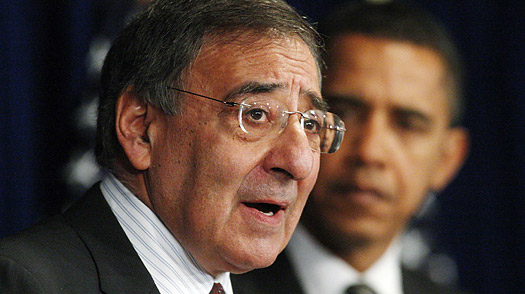
Pakistan Aid Depends on Security Cooperation, Panetta Says

By Roxana Tiron for Bloomberg News

An accelerated counterterrorism campaign in the border region between Afghanistan and Pakistan is “vital” for the U.S. to defeat al-Qaeda there and prevent its return, according to CIA Director Leon Panetta, who is nominated to succeed Defense Secretary Robert Gates.

Any decisions on future U.S. security assistance ā€œwill be informedā€ by Pakistan’s response to the ā€œconcrete stepsā€ the U.S. has set for counterterrorism cooperation, Panetta said in a 79-page set of answers to questions from the Senate Armed Services Committee in advance of his confirmation hearing scheduled for June 9.

Last month, the U.S. found and killed al-Qaeda leader Osama bin Laden who was hiding in a compound in the city of Abbottabad, 30 miles (50 kilometers) north of the capital, Islamabad.

The U.S. “train-advise-equip” programs with Pakistani military and paramilitary forces have been important in eliminating terrorist sanctuaries and disrupting the al-Qaeda network, Panetta said.

ā€œIt is vital, however, that Pakistan live up to its end of the bargain, cooperating more fully in counterterrorism matters and ceasing to provide sanctuary to Afghan Taliban and other insurgent groups,ā€ he said.

Pakistan continues to lack the necessary military and civilian capacities to ā€œholdā€ and ā€œbuildā€ in areas along the border region that have been cleared of al-Qaeda forces, Panetta said.

Seeking Results

ā€œIf confirmed, I will work the Congress to ensure that the support we provide is yielding the results we seek,ā€ he said.
Since 2009, Pakistan has undertaken counterinsurgency operations against extremist organizations in the northwest, including in Swat, South Waziristan, Mohmand and Bajaur ā€œwith varying levels of success,ā€ said Panetta.

ā€œPakistan’s level of commitment is reflected in the enormous casualties it has suffered as a result of terrorism in the last few years, including more than 11,000 military personnel killed or wounded in action and more than 30,000 civilian causalities in recent years,ā€ he said.
Panetta said that while, bin Laden’s death is a “significant blow” to al-Qaeda, the core group and its offshoots ā€œremain a vary dangerous threatā€ in the region and to the U.S. homeland.

ā€œThere is a risk that decentralized affiliates may pose an increased threat to the United States,ā€ he said
Panetta said that President Barack Obama’s Afghanistan strategy is ā€œsoundā€ and the U.S. has made ā€œthe progress necessary to give the President meaningful options for his decision,ā€ on how many U.S. forces to withdraw beginning in July.
The military gains in Afghanistan are ā€œhelping to create the conditions for reconciliation,ā€ between Afghanistan’s government and the Taliban insurgents.

Anthony Weiner: Sex, Lies, and the Pakistan Connection

By Manzer Munir for Pakistanis for Peace

On Monday night’s Daily Show with Jon Stewart, the host, a former roommate of the congressman, confessed that Weinergate and the entire episode involving pictures of his friend Rep. Anthony Weiner of NY, was ā€œkillingā€ him.

Jon Stewart was clearly not sure how to react to his friend’s confession that he had indeed himself been responsible for sending sexually suggestive photos of himself via Twitter.ā€œI don’t know what to do anymore! It’s killing me, ā€œhe said on last night’s ā€œDaily Showā€, which was taped in New York after the congressman had already given his press conference earlier in the day admitting to the indiscretions after having denied them for a week.

I must admit, I am also deeply saddened by this story as it too is killing me. No I didn’t room with Anthony Weiner in a summer house in Delaware in the 1980s as did Stewart. However I was a fan of the representative from New York who was the first Democrat in a long time that seemed to have balls in Congress when it came to speaking his mind and standing up to the other guys across the aisle. He didn’t have to go and practically show them to prove it though.

Sending salacious pictures of yourself to strange women across the country while being married, in itself, is not a crime. But had he fessed up to his martial indiscretions and not gone about for a whole week giving interviews to the national media denying everything and claiming to have had his twitter account hacked, might have been enough for him to be forgiven by many of his constituents. Perhaps he would not have been so easily forgiven by his American born Pakistani wife,Ā Huma Abedin. Needless to say, the congressman would surely have saved himself a great amount of grief and further humiliation.

Instead after a week of denials, and as new pictures and allegations surfaced regarding other women, Rep. Weiner finally came clean and called a press conference on Monday afternoon and confessed to having sent the pictures himself.

Congressman Weiner is not the first politician to have been involved in a sex scandal and God knows he certainly will not be the last. And yet, of all the politicians I have followed over the years, Anthony Weiner of New York seemed like the only Democrat who had the wits to match the guts when it came to fighting for his party’s principles in Washington. A few months ago when he showed great anger on the House floor arguing for healthcare benefits and a fund for the 911Ā First Responders, he further cemented my belief in him as an outstanding up and coming member of the House of Representatives.

Weiner’s chutzpah and boldness in many interviews and House sessions had indeed endeared many Democrats across the country of all faiths and backgrounds who have been clamoring for a Democrat with a backbone. Rep. Weiner seemed to fit the bill. His recent marriage to long time top aide to Secretary of State Hillary Clinton, Huma Abedin, a Muslim American of Pakistani decent, only further solidified him in my eyes as one of ā€œour ownā€. The marriage of an up and coming Jewish Congressman from NY and a Muslim American top aid to, arguably one of the most powerful women in the world, in Hillary Clinton, certainly seemed like an odd pairing.

By all accounts the couple was in love and a long happy union seemed destined for them as President Bill Clinton officiated their wedding almost a year ago last July. Now one of the brightest stars of the Democratic party is facing a House investigation into ethical violations as well as a tremendous fallout from his lies and infidelity.

To many people, including myself, I am not only upset that we have lost one of the stars of the Democratic party to this scandal, but I am also upset for Huma, as she is the one who is suffering the worst end of the entire situation. For her to be dragged into this mess like this will surely test their nascent marriage. As a one time supporter of Rep Weiner, I hope that his career, and more importantly, his marriage survive this entire ordeal.

However, as has been the case with other scandals, there is usually more information that will come out that will be damning to Rep. Weiner. I only hope that at some point the representative from the great state of New York realizes that it is foolish to further humiliate his spouse and all his former supporters byĀ resigningĀ from his office immediately.

–Manzer Munir,Ā a proud American of Pakistani descent, is the founder of Pakistanis for Peace and blogs atĀ www.PakistanisforPeace.comĀ as well at other websites as a freelance journalist and writer.

Pakistan Leaders Must Make Choice After Clinton’s Warning

By The Bloomberg News Editorial Board

When U.S. Secretary of State Hillary Clinton visited Pakistan last week, she noted that U.S.- Pakistani relations were at a turning point after the killing of Osama bin Laden. It was up to the Pakistanis, she said, to decide ā€œwhat kind of country they wish to live in.ā€

The brutalized body of investigative journalist Syed Saleem Shahzad, which turned up outside of Islamabad on May 31, may provide a clue to the answer.
Shahzad disappeared after publishing the first of two promised articles linking elements of the Pakistan navy to al- Qaeda following a deadly May 22 attack on a Karachi naval station. Last fall, after being questioned about a different story by Pakistan’s Directorate for Inter-Services Intelligence (ISI), Shahzad wrote that he was threatened by the spy agency.

Alternatively, it could be that foul play like Shahzad’s murder will become a thing of the past in Pakistan. While in Islamabad May 27, Clinton and Chairman of the Joint Chiefs of Staff Admiral Mike Mullen demanded authorities take ā€œdecisive stepsā€ to crush the violent extremists the government has long supported, which would end the need to intimidate journalists who expose that support. Whichever way the Pakistan government goes, the May warnings by the U.S. ought to be the last.

The U.S. administration has continued to insist, as President Barack Obama did in a May 22 interview with the BBC, that the Pakistanis have ā€œgenerally been significant and serious partners against the terrorist threat to the West.ā€ This simply isn’t the case.

Victim, Sponsor

For much of the past decade, Pakistan has been both a victim and a sponsor of Islamic militants. Its soldiers are fighting bravely against homegrown terrorists seeking to install an Islamic government. In 20 attacks in May, these radicals killed some 150 people.

At the same time, the Pakistani army, led by General Ashfaq Parvez Kayani, is a longstanding patron of violent groups targeting Afghanistan and India.
Guided by excessive fear bordering on paranoia about India, Pakistan’s military and intelligence services believe that nurturing those extremists is an effective way to frustrate India’s regional ambitions. The ISI largely created and continues to support the Taliban and the Haqqani Network, the principal groups battling U.S. forces in Afghanistan and the fledgling government in Kabul. It also backs Lashkar-e-Taiba, the group responsible for the 2008 attacks in Mumbai that killed more than 160 people.

Double-Dealing

President George W. Bush’s administration tried to end this double-dealing by giving Pakistan billions in economic and military assistance. Yet Bush didn’t make the aid contingent on a crackdown on extremists. The Pakistanis cooperated somewhat with U.S. efforts to dismantle al-Qaeda but refused to act against other groups, including the Afghan Taliban, which was given refuge inside Pakistan’s borders.

The Obama administration accelerated the failed Bush policy, substantially increasing military and economic assistance, again without imposing rigorous conditions. And Pakistan continued to ignore administration warnings about continued support for extremists.
In one incident reported by the Washington Post, Obama’s first national security adviser, James Jones, warned officials in Islamabad that there would be ā€œconsequencesā€ if a terrorist attack directed at the U.S. was traced to Pakistan. Yet when a man who had trained at a terrorist camp in that country attempted to detonate a car bomb in Times Square in May 2010, the U.S. administration did nothing. Shortly thereafter, Obama watered down Jones’s words, telling Kayani that a ā€œsuccessfulā€ attack would have consequences.

Meaning Business

So when U.S. authorities learned that Osama bin Laden might be housed in a villa in a Pakistani garrison town, they dispatched Navy Seals to capture or kill him without so much as notifying the Pakistanis in advance. The raid provoked great outrage from officials in Pakistan. Since then, emotions have cooled. Clinton and Mullen have delivered their warnings, public and private. And this time, the Americans may mean business.

Will the Pakistanis respond?

Shahzad’s murder is a bad sign. On the other hand, reports from Pakistani tribal leaders suggest that the Pakistani army may be preparing a serious campaign in North Waziristan, where the leaders of the Haqqani Network and other extremist groups live.
It will soon be clear whether Clinton’s latest message got through. If not, the administration must consider new ways to persuade Pakistan to change course, recognizing that the country is behaving more like an adversary than a partner.

Al Qaeda’s Latest Loss

By Bruce Riedel for The Daily Beast

The reported death of Muhammad Ilyas Kashmiri deals a huge hit to the terror cell, still reeling from bin Laden’s killing. Ex-CIA analyst Bruce Riedel on the impact on U.S.-Pakistan relations.

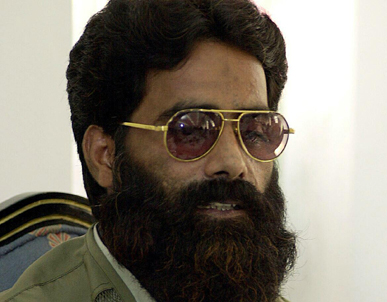
Pakistani sources are reporting the death in a drone strike this weekend of Muhammad Ilyas Kashmiri. If true, it is a big setback for al Qaeda and could help ease tensions between Pakistan and the U.S. a bit.

Kashmiri is al Qaeda’s top Pakistani operative. He was born in Pakistani-controlled Kashmir on February 10, 1964. Trained in the camps of the Pakistani Inter Services Intelligence directorate (ISI) and then the elite Pakistani commando group, the Special Services Group (SSG), he was the darling of the Pakistani army for years. He fought in the war against the Soviets in Afghanistan where he lost an eye and a finger. Then he took the war to India both in Kashmir and in New Delhi itself.

He formed his own militant group called the 313 Brigade, after the 313 fighters who joined the prophet Muhammad in an early Islamic victory. His exploits in India were legendary. He was personally decorated and thanked by the then head of Inter-services Intelligence (ISI), Mahmud Ahmad and Pakistani’s dictator, Pervez Musharraf, in 2000. But Kashmiri broke with his ISI and army friends in 2002 when Musharraf decided to give the Americans at least some help against al Qaeda.

Kashmiri took his 313 Brigade into al Qaeda’s camp and assisted in training Taliban fighters in Afghanistan and began targeting his former friends in the ISI. His teams killed at least one senior ISI officer. He was involved in an attempt to assassinate Musharraf in 2004. The United Nations credits him as a key player in the plot to murder former Prime Minister Benazir Bhutto in December 2007.

The Pakistani American David Headley, who has confessed to plotting the Mumbai terror attack in November 2008, says Kashmiri was his key contact in al Qaeda. The two worked on a plot to attack a Danish newspaper office in Copenhagen in 2009. That was foiled when the FBI arrested Headley, but Kashmiri continued planning to carry out Mumbai-style attacks in Europe. Another was foiled in Denmark at the end of 2010. Kashmiri would have played an important role in helping al Qaeda recover from bin Laden’s demise. He had key connections inside the Pakistani syndicate of terror groups.

Just last week one of Pakistan’s best investigative reporters Syed Salam Shahzad was murdered after finishing a new book on al Qaeda in Pakistan. According to excerpts published in India and Pakistan, Shahzad had evidence Kashmiri may have been the real brains behind the Mumbai plot and hoped it would precipitate an Indo-Pakistani war that al Qaeda could exploit.

This is not the first time Kashmiri has been reported killed by a drone attack; he has reappeared after claims of his demise. But if this time he is dead, it is a significant setback for al Qaeda just a month after American commandos killed Osama bin Laden. Kashmiri would have played an important role in helping al Qaeda recover from bin Laden’s demise. He had key connections inside the Pakistani syndicate of terror groups with both the Afghan and Pakistani Taliban and Lashkar-e-Taiba, and with al Qaeda operatives in Europe and fund raisers in the Persian Gulf. And he had penetrations deep inside the Pakistani army and ISI.

So both Washington and Islamabad will be glad to see him gone. Kashmiri’s demise won’t solve all the problems in the tortured American relationship with Pakistan by any means but it will help.

Of course, if Kashmiri is not dead and reappears yet again unscathed, it will only add to his credentials. Bin Laden benefited enormously from surviving the cruise missile attack that targeted him in 1998. Recriminations could damage the Pakistani-American relationship further. Nonetheless those are risks worth taking. In either case we will know soon. Al Qaeda is quick to eulogize its martyrs. If Kashmiri’s dead, they will say so.

-Pakistanis for Peace Editor’s Note– Good Riddance!!!

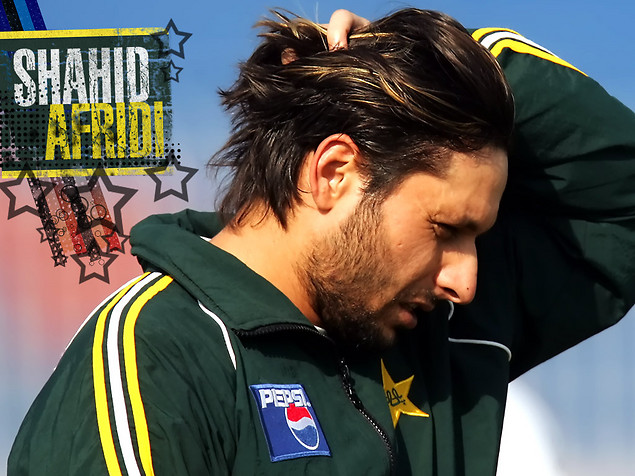
Afridi Asks Zardari For Help

As Reported by The AFP

Former captain Shahid Afridi appealed to President Asif Ali Zardari for help on Wednesday after his central contract was suspended when he announced his retirement from international cricket. ā€œI have appealed to the president to intervene urgently, also deal with other issues and save the game from getting into more crises,ā€ Afridi told AFP by telephone from Southampton.

Afridi confirmed that the England and Wales Cricket Board stopped him from playing after the PCB revoked its permission.
ā€œThe captaincy was not an issue as I have already played under senior players, but it was a matter of self respect and honour which was hurt,ā€ said Afridi who refused to speak about the PCB sanctions.

The opposition Pakistan Muslim League-N party has already submitted an adjournment motion in the national assembly against Afridi’s punishment.
Former Pakistan captain Imran Khan, who now heads his own opposition party, said the PCB was not run professionally.
ā€œThe board is not run like an institution,ā€ Khan told a television channel. ā€œAfridi feels injustice is done so he has taken a decision and you don’t change four-five captains in a year.ā€

ā€œJust recently everyone was praising Afridi after he led Pakistan to the semi-final of the World Cup and then suddenly this happened,ā€ said Khan. ā€œThe board is also run on ad-hoc basis like the country,ā€ he added.
The Muttahida Qaumi Movement (MQM), which belongs to the coalition government headed by Zardari’s Pakistan People’s Party, also objected to the sanctions on Afridi. ā€œPresident Zardari should take notice of the biased attitude of the board,ā€ said MQM leader Farooq Sattar. ā€œYou don’t treat national heroes like this.ā€

Sports Minister Shaukatullah Khan lashed out at PCB chairman Ijaz Butt over the ā€œinjusticeā€ and said he would discuss the matter with Prime Minister Yousuf Raza Gilani.

Abdul Ghaffar Qureshi, who heads the sports committee in the upper house of parliament, demanded Butt’s sacking.
ā€œA change in the PCB is imperative,ā€ said Qureshi. ā€œButt has not allowed any captain to settle so it will be better to sack him.ā€

The 31-year-old all-rounder, dumped as one-day captain following a row with coach Waqar Younis last month, quit international cricket in protest at his treatment by the Pakistan Cricket Board (PCB).
In response, the PCB suspended his central contract and revoked all his no-objection certificates, meaning he will not be officially permitted to play overseas.

The move will stop him from playing for Hampshire in England’s Twenty20 league and in next month’s Sri Lankan Premier League.
Afridi said that he came to know about his removal from the team’s captaincy through media and the board did not bother to inform him about that decision.

Soldier cited for holding off up to 30 Taliban by himself

As reported by CNN

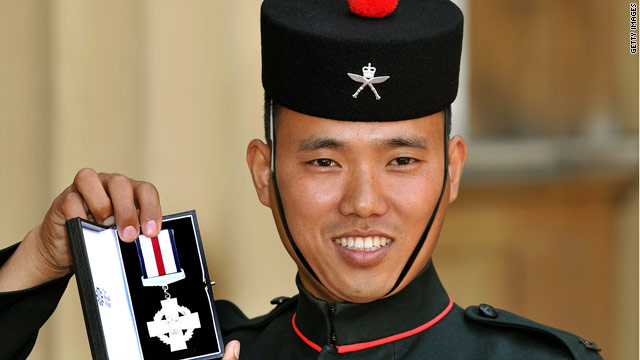
Britain’s newest hero is a Nepali.

Queen Elizabeth II on Wednesday awarded Britain’s second-highest award for bravery, the Conspicuous Gallantry Cross, to Acting Sgt. Dipprasad Pun of the Royal Gurkha Rifles.

While stationed as a lone sentry at a checkpoint in Afghanistan’s Helmand province on September 17, Pun fended off an attack by up to 30 Taliban fighters.

“There were many Taliban around me,” Pun said in an interview with British Forces News. “I thought they are definitely going to kill me. … I thought before they kill me I have to kill some of them.”

During the 15-minute battle, Pun fired more than 400 rounds of ammunition, detonated 17 grenades and a mine and even threw his gun tripod at a Taliban fighter climbing toward his position, according to British Forces News.

“He was just about to climb up there and I hit (him) with my tripod and he fell down again,” Pun told British Forces News.

Pun’s actions saved the lives of three fellow soldiers at the checkpoint and were the “bravest seen in his battalion over two hard tours in Afghanistan,” according to his medal citation.

Pun was not wounded in the firefight.

ā€œThat he survived unscathed is simply incredible,” his medal citation says. ā€œThroughout Dip’s actions he was under almost constant intense fire. Dip’s courage and gallantry were simply astonishing.”

Pun, 31, joined the British military in 2000 and also has served in Bosnia and Kosovo.

Like other Gurkhas, Pun is from Nepal. The Gurkhas were incorporated into British forces after their fighting skill impressed the opposition British during the Nepal Wars of 1814 to 1816. As part of the peace treaty ending that conflict, Gurkhas were admitted into East India Company’s army and then into the British military.

Gurkhas recruited solely in Nepal remain Nepalese citizens during their service. Gurkha unit officers are British.

–Pakistanis for Peace Editor’s Note– Congratulations to Sgt. Dipprasad Pun for his amazing feat of bravery and determination in his battle with the Taliban. We salute him for his gallantry and wish there were thousands more like him in the allied forces fighting the Taliban menace. If that were the case, these barbarians would be already defeated.

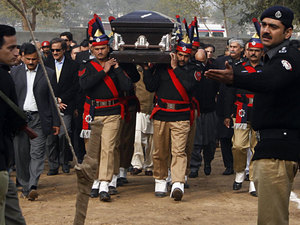
Pakistani Journalists Defiant at Reporter’s Burial

As Reported by The Associated Press

A Pakistani reporter who investigated terrorism and was found slain after telling a rights activist he’d been threatened by intelligence agents was buried Wednesday. Fellow journalists vowed his killing would not silence them.

Syed Saleem Shahzad wrote for the Asia Times Online and other publications. He delved into topics that were often sensitive in Pakistan, where journalists face threats from insurgents as well as a security establishment that operates largely outside the law.

“We will not shut our voices down,” said Azhar Abbas, a prominent Pakistani journalist. “The journalist community is united on this. We will not stop ”

Pakistan was the deadliest country for journalists in 2010, with at least eight killed in the line of duty, according to the New York-based Committee to Protect Journalists. Six died in suicide attacks, the group said in a report late last year.

Despite the dangers, the media establishment in Pakistan has expanded rapidly over the past decade, and reporters here operate with tremendous freedom compared with many other developing countries.

In recent weeks, the media have carried unusually scathing coverage about the security establishment after it was caught unawares by the May 2 U.S. raid that killed al-Qaida chief Osama bin Laden in a garrison city in Pakistan’s northwest.

Shahzad’s death could heighten the criticism, though commentators are being careful about how they discuss the alleged link to spy agencies.

After disappearing Sunday from Islamabad, Shahzad’s body was found dozens of miles outside the capital on Tuesday, bearing signs of torture, police said. His death drew numerous condemnations, including from U.S. Secretary of State Hillary Rodham Clinton.

The 40-year-old was buried in his hometown, Karachi, as hundreds of friends, relatives, political figures and fellow journalists mourned.

Sindh province Information Minister Sharjeel Memon called the killing a “cowardly act” and promised that those responsible would be brought to justice. But it’s unclear how much the weak civilian government can do if, as some suspect, Pakistani security agencies played a role.

A spokesman for Pakistan’s premier spy agency, Inter-Services Intelligence, called the allegations “absurd.” He spoke on condition of anonymity because he was not authorized to speak to media on the record.

However, Ali Dayan Hasan, a researcher with Human Rights Watch, said Shahzad had told him that he feared Pakistani intelligence agents were after him.

The agencies pressured him to reveal his sources in October after he wrote a story about Pakistan allegedly freeing a detained Afghan Taliban commander, according to an email Shahzad sent Hasan. Hasan said Shahzad was still worried in recent weeks, but kept up his reporting.

Just last week, Shahzad wrote a story about alleged al-Qaida infiltration of the navy. The report came after a 17-hour insurgent siege of a naval base in Pakistan’s south added to the recent humiliations suffered by security agencies.

Within days, Shahzad vanished, and his wife contacted Hasan as her husband had instructed in case he disappeared.

In a statement, Clinton said Shahzad’s reporting “brought to light the troubles extremism poses to Pakistan’s stability,” and said the U.S. supports the “Pakistani government’s investigation into the circumstances surrounding his death.”