Pakistan’s Bubbling Water Crisis
By Haider Warraich for Foreign Policy
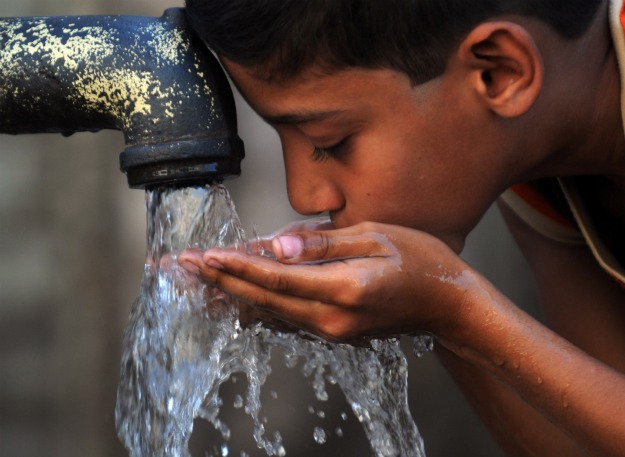
More than 1 billion people in the developing world lack access to clean water, with this number slated to rise to more than 2 billion by 2020. According to UNESCO, 2.3 billion people suffer from water-related diseases, 5 million of whom die each year. However, the burden of water scarcity is not shared equally. According to Rajendra Pachauri, chair of the intergovernmental panel on climate change (IPCC), “At one level the world’s water is like the world’s wealth. Globally, there is more than enough to go round. The problem is that some countries get a lot more than others. With 31 percent of global freshwater resources, Latin America has 12 times more water per person than South Asia.”
Pakistan is on the dry end of the water stress spectrum. About a third of Pakistanis do not have access to safe drinking water, while a further 46% lack access to proper sanitation. However, this deficiency is not uniformly distributed. Pakistan is populated to a large extent around the Indus River that runs the length of the country. The Indus plains cover about a quarter of the country’s landmass and host two thirds of its people, meaning that people living outside this region are particularly water stressed. Furthermore, according to a World Bank report, Pakistan’s per capita water availability has diminished five-fold from 5000 cubic meters in 1951 to 1100 cubic meters in 2006 due to rising consumption by a growing population coupled with rising water waste.
What is even more worrisome is that of the water that is actually available, very little is safe for consumption. A study of 14,000 water sources in 24 major Pakistani districts conducted by the Pakistan Council of Research in Water Resources (PCRWR) over a five-year period found that 82% of sources in Pakistan were unfit for human consumption. The major contaminants noted were bacteria, dissolved solids, nitrates and fluoride.
By Haider Warraich for Foreign Policy
This worsening water crisis is having a drastic impact on public health in Pakistan. According to a UNICEF report, 20-40 percent of hospitalized patients in Pakistan suffer from water-borne infections. Several disease epidemics in Pakistan have been traced back to water contamination, including several outbreaks of the potentially fatal Hepatitis E, rotavirus diarrhea, typhoid fever and dysentery. Polio is also a water-borne infection, and Pakistan is one of the last countries on earth to continue to suffer major problems from the disease.
The sustained high levels of chemical compounds in Pakistan’s drinking water supply have also caused the outbreak of population-wide poisonings. Fluoride toxicity, known to cause bone pain and deformation, has been reported from several areas of Punjab province, with a high occurrence in children. Arsenic poisoning, which causes a wide array of dangerous complications, has been reported to be present in up to 73% of the residents of Sindh province’s Manchar Lake, the largest freshwater lake in Pakistan and one of the largest in Asia. Pesticide poisoning, also linked to infiltration into the water supply, has been reported in Pakistani farmers.
Pesticide poisoning, among other problems, stems from the endemic misuse of water in Pakistan. About 97 percent of Pakistan’s freshwater resources are expended in irrigation and agriculture, yet Pakistan has one of the lowest productivities per unit of water and unit of land in the world. Waste is incurred at several stages: Canal heads, water courses and farms themselves all are the sites of considerable leakage. Furthermore, with Pakistan’s major hydroelectric dams losing storage capacity, there is little reserve during times of famine. Pakistan is in dire need of major hydroelectric projects to increase power generation, protect against seasonal flooding, and to have greater control over the water supply. However, provincial politics has stifled this debate, halting any progress in this direction. Concerns abound about the fate and compensation for displaced people, fears of downstream provinces of a reduction in water supply. Another important issue is that most Pakistani rivers originate from Indian-occupied Jammu and Kashmir. Pakistan and India in 1960 signed the Indus Water Treaty, in which both countries agreed to abstain from any activity that would jeopardize water supply of the other. However, according to a recent U.S. Senate report, India has made several dams in Jammu and Kashmir, which “could give India the ability to store enough water to limit the supply to Pakistan at crucial moments in the growing season.” Pakistani officials have argued that in doing so, India has violated the treaty, worsening the water situation in Pakistan.
The lack of access to water in Pakistan only exacerbates the country’s already dire public health situation. Hand washing, for instance, is the most effective step against infection in both homes and hospitals, but hand washing practices prescribed by public health organizations are impractical in water stressed areas, with one study concluding that an extra 20 liters per person per year would be required in order to follow handwashing recommendations. Another review of medical literature found that access to potable water sources has far more of an impact on reduced infections than water quality. With a deficit in both water quality and quantity, then, public health in Pakistan faces an immense burden frrom water-related illness.
Several measures need to be taken to ward off this crisis. Water policy, currently a minor issue in Pakistan, needs to be brought to the center stage of national debate. It will remain easy for politicians to defer the contentious issue of building dams unless the masses realize the extent to which they are needed. The good work conducted by the PCRWR should be better-funded and -promoted in order to highlight problems as well as evaluate possible solutions. Water waste in agriculture and irrigation also needs to be addressed; the government must make more of an effort to line canals to prevent leakage, and further promote water efficiency on farms. To increase access of rural populations to potable water, India has developed a successful project to provide piped water and hand pumps, with a particular emphasis on improving child health — Pakistan needs to develop a similar program. Pakistan should also make the most of the post-Cricket World Cup diplomatic thaw with India, insofar as it still exists, and ensure equitable implementation of the Indus Water Treaty. Access in arid areas such as desert regions of Sindh and practically all of Baluchistan need to be particularly improved. Promotion of hygienic practices such as boiling water to kill bacteria and appropriate sanitary practices needs to be increased to reduce water-borne infections. This can be conducted on both a national level using television programs, and on a grass root level using community health workers and prominent locals. Finally, the most long-lasting solution to improving water supply will be to slow Pakistan’s population growth, which will only put further strain on reduced water supplies. Unless measures are taken now, this bubbling crisis might reach the point of overflowing.
Haider Warraich, MD, is a research fellow at Harvard Medical School. He is a graduate of the Aga Khan University in Karachi, Pakistan, and the author of the forthcoming novel, Auras of the Jinn.


You must be logged in to post a comment.