Archive for October, 2011

Pakistan, US Pledge to Strengthen Alliance

As Reported By The Khaleej Times

Pakistani and US diplomats on Thursday vowed to strengthen their troubled alliance two days after Washington acknowledged for the first time that it is waging “war” against militants in Pakistan.

US special envoy, Marc Grossman, on Thursday met Pakistani leaders in Islamabad as US drone strikes killed 10 militants, including a commander in the Haqqani network that the US military has linked to Pakistani intelligence.

“We tried to think about the future and way to keep our strategic dialogue going,” Grossman told a joint press conference with Pakistani Foreign Minister Hina Rabbani Khar.

“We also talked about how can we continue in a systematic way to identify the interests that we share with Pakistan, and there are many, and then find ways to act on them jointly,” he added.

Grossman said they had been preparing for conferences on the future of Afghanistan, in Istanbul next month and in the German city of Bonn in December.

US officials openly acknowledge that the relationship with Pakistan is complicated, but say it is important to persevere no less because Pakistan is a key stakeholder in any eventual political settlement in Afghanistan.

Khar said both sides would “build on this partnership which is not only important for the two countries but also for the region and the whole world”.

On Tuesday, acknowledging for the first time that the US is waging a war in Pakistan, Defense Secretary Leon Panetta described Washington’s relationship with Islamabad as “complicated”.

“And admittedly, there are a lot of reasons for that. We are fighting a war in their country,” Panetta said.

He said the two countries sharply disagreed over “relations they maintain with some of the militant groups in that country,” a reference to Washington’s demand that Islamabad crack down on the Haqqani network.

A covert CIA drone campaign that the US government declines to discuss publicly has seen around 30 missile attacks in Pakistan since American troops killed Osama bin Laden near the capital Islamabad on May 2.

Pakistan Court Suspends Death Sentence of Governor’s Killer

By Shaan Khan For CNN

A Pakistani court has suspended the death sentence of Mumtaz Qadri, a security guard who killed a liberal politician over the latter’s remarks on the nation’s controversial blasphemy law.

“Qadri was provoked by the governor and should therefore be tried for murder, not an act of terror which is what he was tried for earlier” said his attorney Raja Shuja Ur Rehman in confirming the judge’s decision.

Earlier this month, a terror court in the garrison city of Rawalpindi, near Pakistan’s capital, sentenced Qadri to death. The Islamabad High Court suspended the sentence Tuesday until the appeals process is complete. The court did not say when it will meet again to consider the case.

Police said Qadri, a policeman serving as a security guard for Punjab Gov. Salman Taseer, fatally shot him in a market in Islamabad on January 4 because of Taseer’s remarks on Pakistan’s controversial blasphemy law. Police said Qadri confessed to gunning down the man he was supposed to be protecting. Qadri’s lawyer appealed the sentence imposed by the Anti-Terrorist Court, saying the court did not have the jurisdiction to make the death penalty decision.

Taseer, a successful businessman as well as politician, had said Pakistan’s controversial blasphemy law is too harsh. The law makes it a crime punishable by death to insult Islam, the Quran or the Prophet Mohammed. The legislation has been criticized by some as being used to entrap minorities.

Wake up Pakistan

By Najam Sethi for The Friday Times

US- PAK relations have broken down. The United States has “ suspended” military aid and all but closed the Kerry- Lugar- Berman tap of funds for the civilians. Proud Pakistanis have puffed up their chests and vowed to eat grass, if necessary, in order to defend their country’s “sovereignty”. What’s the big deal, they aver, US aid was peanuts anyway, and our traditional friends like China and Saudi Arabia can bail us out of our problems.

To be sure, our relationship with the US has been no small disaster.

In the 1950s, we begged the US to befriend us instead of India, cheerily going along with the US into the Cold War against the USSR when it wasn’t our war at all. In consequence, the military became the dominant theme of our life and wrecked the budding impulse of democracy. Once again, in the 1980s and 2000s, we tripped over ourselves to rent out our services to the US in Afghanistan.

Today we are reaping the terrorist whirlwind of our greed and opportunism.

But a little introspection is in order to prove that we don’t need the US as an enemy because we are our own worst enemies.

More Pakistanis are eating “ grass” now than ever before. The number of Pakistanis below the poverty line has increased from 27 per cent five years ago to 33 per cent in 2011. And this has nothing to do with the US. The growth rate of the economy has fallen from 6.5 per cent five years ago to 3 per cent now. The fiscal deficit is yawning at 7.5 per cent of the GDP today compared to 4.5 per cent five years ago. And this has nothing to do with the US. The Rupee has fallen from 77 to the dollar five years ago to 90 today. General inflation is running at 15% and food inflation at 25%. And this has nothing to do with the US. The tax to GDP ratio is down to 8.7% in 2011 from 11.5% five years ago. And this has nothing to do with the US. Floods continue to devastate the lives and produce of millions of poor people across the country.

And this has nothing to do with the US. Sunni extremists are rampaging, killing Shias. Ethnic parties continue to mow down people in Karachi. And this has nothing to do with the US. Power breakdowns have made the lives of tens of millions wretched and miserable while rendering millions of others jobless.

And this has nothing to do with the US. Instead of rooting for Pakistani nationalism, we are proud to undermine it as Muslims first, or Sindhis, Muhajirs, Baloch, Pakhtun, Punjabi, Seraiki, Hazarajat, Kashmiri, Sunni, Shia, Deobandi, Barelvi. And this has nothing to do with the US. We are counted amongst the most corrupt countries of the world. We have waged four wars with India and lost each of them, in the bargain losing half of Pakistan.

And this has nothing to do with the US. As if this litany of self- induced failures isn’t enough, there is the hypocrisy of double standards to contend with too. Of course, the US has violated our sovereignty by raining drones on FATA. But so have the Afghan Taliban and Al- Qaeda who have established safe havens there too. But we are quick to blast the US and quicker still to pretend that Al- Qaeda doesn’t exist and the Taliban are innocent refugees for whom our traditional hospitality is on offer.

The story doesn’t end here.

The IMF is not welcome. How dare it demand that we tax the rich, plug the bleeding in public sector corporations, stop the theft of power, and spend according to our means. US aid is dispensable.

We don’t need to build dams and reservoirs for managing our natural resources, we don’t need schools and teachers for our children and hospitals for the poor.

Our all- weather friends are China and Saudi Arabia. Never mind that China doesn’t help us much when we are ravaged by earthquakes and floods or when we are short of cash to pay our foreign bills.

NEVER MIND that Saudi Arabia treats our migrant workers like slaves, rents our military to crack down on Shia majorities in Bahrain and exports extremist “ Islam” to our lands.

At the end of the day, who eats grass when we rise to defend our sovereignty? Not our pot- bellied traders and businessmen. Not our golf- playing generals. Not our Defence Housing Society residents.

Not our foreign- asset holding politicians whose kids go to English- medium private schools at home and abroad. Not our self righteous media Mughals who berate our slavish black- skins and white masks. Not our corrupt judges and civil servants. It’s the wretched of the earth, the poorest of the poor, who eat grass.

For too long we have made foreign scapegoats for our own failures and corruptions. It is time to wake up and set our house in order without begging or berating the US.

Why Not Free Qadri?

By Ayesha Siddiqa for The Express Tribune

How about freeing Mumtaz Qadri for the simple reason that the state system has lost the capacity to execute punishment? The Anti-Terrorism Court (ATC) judge, who gave him the death sentence, is already on the run. It will be quite a cost to protect Justice Shah and his family or other judges that may be brave enough not to overturn the ATC’s decision.

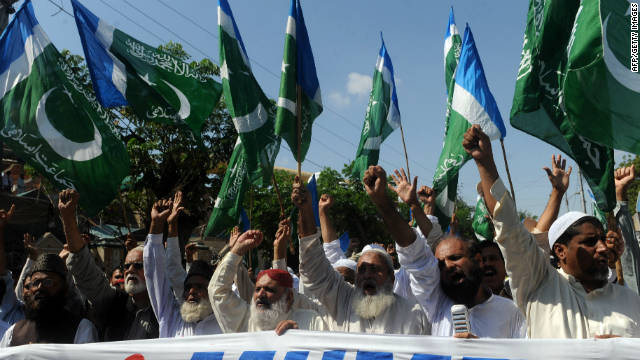
Why bother with the idea of punishing Qadri when it is no longer in the realm of the possible. An olive branch that is offered to the Tehreek-i-Taliban (TTP) Pakistan and other killers can be extended to Qadri as well. Not to forget that the political leadership in the form of the recent All Parties Conference has surrendered to a peculiar agenda. So, forget about Jinnah’s August 11 speech now as the state has already transformed to a hybrid-theocracy. It has small liberal spaces, equally smaller spaces where Sharia is formally implemented, and larger spaces where the orthodox law is informally enforced. Try standing in front of a Jamaat-i-Islami/Jamaatud Dawa procession in support of Qadri to feel the melting away of the state and its changed character. Sadly, many of our post-modernists scholars will, yet again, call this as part of the secularising process through bringing religion into public sphere. Driven by personal ambitions to establish their scholarship, they won’t even question that the current discourse is not secularising as it condemns all other arguments as being against Islam. Are the protesters even willing to explore other religious arguments that may not save Qadri from the sentence given by the ATC judge?

There are no governments that are willing to stand up to the bullying and to establish the writ of the state. There is no intent to even deradicalise society because, in the words of a senior bureaucrat of the Punjab government, reputed to be close to the chief minister, there is no radicalisation in Punjab and even if there were, why should the state become an ideological warrior. Obviously, this CSS-qualified babu considered deradicalisation as anti-religion or against the tenets of Islam. This bureaucrat was a good example to debunk the argument that radicalisation results from lack of education. Here was a case of a literate man not willing to understand that deradicalisation is about creating sufficient space for all religions and sects to co-exist without fear of persecution, and increasing the state’s capacity to provide justice for all, irrespective of their cast, creed and religion. Thus, he presented the Punjab government’s development priorities as devoid of the goal of deradicalisation.

It was almost unbelievable to think that the bureaucrat’s plan had the sanction of his political bosses, especially someone like Mian Nawaz Sharif who made some bold pronouncements of building ties with regional neighbours and condemned parties with militant wings. Notwithstanding the goodness of Mian Sahib’s heart, one wonders how familiar is he with his own party’s support of militant outfits and if he considers this linkage equally condemnable? The fact of the matter is that no political party can claim to be above board as far as rising radicalism is concerned. The absence of the state in most provinces — Balochistan where people are being picked up and killed, Khyber-Pakhtunkhwa where the provincial government has willingly opted to share space with certain types of militants, Sindh, which is devastated by floods and a government that is almost invisible and Punjab where the government opts to burn down state infrastructure — is visible. Therefore, it is not surprising to see militant outfits becoming the new arbiters even replacing the old feudal class. They have and will exercise greater influence on the electoral process, especially ensuring that no parliamentarian challenges the writ of these militant outfits.

The militants of today are the new feudal lords that will adjudicate and dispense justice not on the basis of any higher religious law but their personal bias for things which are superficially religious. These people, who hold jirgas and dispense justice, are not fully aware or trained to interpret religious text or other sources. Surely, memorising the Holy Book cannot be the sole criterion. For those who believe that voting another party into power will solve the problem of radicalism, they will be disappointed to know that religious radicalism is the only game in town. It is now time to think of ways to grapple with the new reality.

Caring for Pakistan’s Children

By Allison Zelkowitz for The Express Tribune

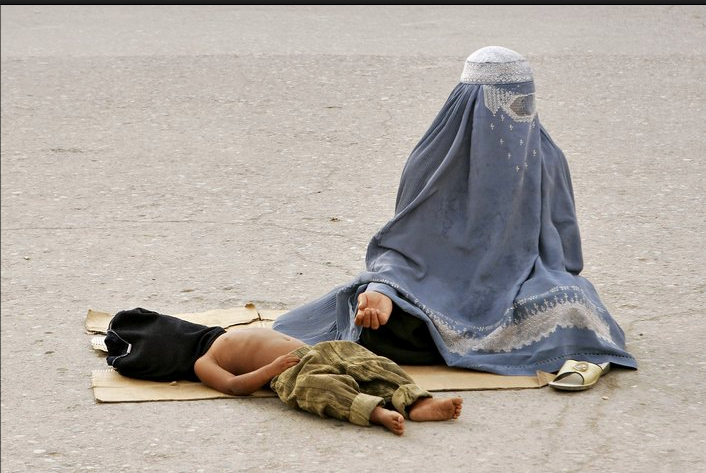
Every day we must each decide who to help, and who to ignore: the woman on the sidewalk begging for change, a neighbour carrying grocery bags up the apartment stairs, a colleague staying late in the office trying to finish a project. Sometimes we offer money, support, or time, and sometimes we walk by. Sometimes caring seems too hard.

These days, it seems that caring for Pakistan’s children is too hard. Millions of children are homeless, hungry, and sick in lower Sindh, which was devastated by flooding over a month ago. But Pakistan is not on the world’s good side at the moment — Osama Bin Laden was discovered here. Media reports on suicide attacks and terrorist networks abound. Relations between the US and Pakistan have soured. With so much negative news, it’s hard to feel good about helping Pakistan. Our hearts go out to the downtrodden and helpless, not those who are tinged with violence and controversy.

But Pakistan’s children don’t know this. They don’t know that if they had been born in a different country, they might not be going to bed hungry. They don’t know that if they spoke Japanese or Creole, rather than Sindhi, they might be sleeping in a waterproof tent, rather than under a plastic sack strung between trees. And they don’t know that, if they had survived last year’s floods, rather than this year’s – they might have clean water to drink.

More than two weeks ago, the United Nations launched a $357 million appeal to provide life-saving relief to over 5.4 million people affected by the floods, including 2 million children. Last year, when a $460 million appeal was issued to help victims of the 2010 floods, 64 per cent of this amount was committed by international donors in 18 days. This year, only 14 per cent has been pledged so far.

For aid workers like myself, the ‘humanitarian imperative’ guides our work — this principle avows that it is the duty of the international community to provide humanitarian assistance wherever needed. Our job is to save lives and reduce suffering when disaster strikes. We are trying to do this in flood-ravaged lower Sindh. Both the government and the humanitarian community in Pakistan have provided food, water, shelter, and medical care to hundreds of thousands of people. Save the Children — the organisation I work for — has reached over 240,000 people in less than four weeks. Yet there are still hundreds of communities who have received no support, and aid agencies will run out of funding soon. What, then, for Pakistan’s children?
In some areas of lower Sindh, it will take months for the flood waters to recede. While they wait, those with livestock will sell off their goats and cattle one by one, for ten to 20 per cent of their value, so they can feed their families. The less fortunate families, those without such assets, will take loans from wealthy landlords, and fall further into debt. Their children will eat once a day, and often only flatbread. They will suffer from skin diseases and diarrhoea, and some will contract malaria. As children become more malnourished, their immune systems will weaken. Soon many will die.

With so much need in the world, we often become deaf to cries for help. But national governments and international donor agencies are not deaf — they read the reports, they know the numbers. And 5.4 million people is no small number — it is more than the populations of Norway, Ireland, and New Zealand. Yet unlike these countries, the 5.4 million people in Pakistan affected by the floods do not have savings accounts or insurance. Right now, most have only make-shift shelters, a few clay pots, and some dirty blankets, and with that they are trying to get by.
Pakistan will likely remain at the forefront of global controversy for some time to come. But its children should not have to pay the price for this. The children in lower Sindh are not militants or politicians. They are like your children — hopeful, genuine, and kind — and they deserve to survive as all children do.

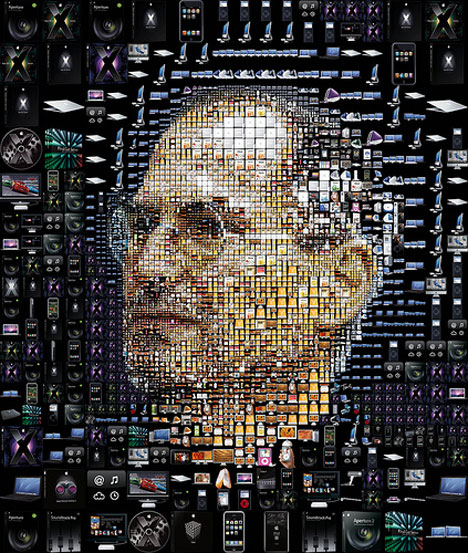
Steve Jobs’s Best Quotes

By Jennifer Valentino-DeVries for The Wall Street Journal

This post originally ran on Aug. 24, after Steve Jobs stepped down as CEO of Apple. It has been updated to reflect the news of his death.

Steve Jobs, one of the fathers of the personal computing era and the founder of Apple, died Wednesday at the age of 56. Although he will be remembered for ushering in fundamental changes in the way people interact with technology, he has also been known for his ability to turn a phrase – and a knack for taking complicated ideas and making them easy to understand. Below, a compendium of some of the best Steve Jobs quotes.

On Technology

“It takes these very simple-minded instructions—‘Go fetch a number, add it to this number, put the result there, perceive if it’s greater than this other number’––but executes them at a rate of, let’s say, 1,000,000 per second. At 1,000,000 per second, the results appear to be magic.” [Playboy, Feb. 1, 1985]

***

“The problem is I’m older now, I’m 40 years old, and this stuff doesn’t change the world. It really doesn’t.

“I’m sorry, it’s true. Having children really changes your view on these things. We’re born, we live for a brief instant, and we die. It’s been happening for a long time. Technology is not changing it much — if at all.

“These technologies can make life easier, can let us touch people we might not otherwise. You may have a child with a birth defect and be able to get in touch with other parents and support groups, get medical information, the latest experimental drugs. These things can profoundly influence life. I’m not downplaying that.

“But it’s a disservice to constantly put things in this radical new light — that it’s going to change everything. Things don’t have to change the world to be important.” [Wired, February 1996]

***

“I think it’s brought the world a lot closer together, and will continue to do that. There are downsides to everything; there are unintended consequences to everything. The most corrosive piece of technology that I’ve ever seen is called television — but then, again, television, at its best, is magnificent.” [Rolling Stone, Dec. 3, 2003]

On Design

“We think the Mac will sell zillions, but we didn’t build the Mac for anybody else. We built it for ourselves. We were the group of people who were going to judge whether it was great or not. We weren’t going to go out and do market research. We just wanted to build the best thing we could build.

AP
Steve Jobs in 1997

When you’re a carpenter making a beautiful chest of drawers, you’re not going to use a piece of plywood on the back, even though it faces the wall and nobody will ever see it. You’ll know it’s there, so you’re going to use a beautiful piece of wood on the back. For you to sleep well at night, the aesthetic, the quality, has to be carried all the way through.” [Playboy, Feb. 1, 1985]

***

“Design is a funny word. Some people think design means how it looks. But of course, if you dig deeper, it’s really how it works. The design of the Mac wasn’t what it looked like, although that was part of it. Primarily, it was how it worked. To design something really well, you have to get it. You have to really grok what it’s all about. It takes a passionate commitment to really thoroughly understand something, chew it up, not just quickly swallow it. Most people don’t take the time to do that.

“Creativity is just connecting things. When you ask creative people how they did something, they feel a little guilty because they didn’t really do it, they just saw something. It seemed obvious to them after a while. That’s because they were able to connect experiences they’ve had and synthesize new things. And the reason they were able to do that was that they’ve had more experiences or they have thought more about their experiences than other people.

“Unfortunately, that’s too rare a commodity. A lot of people in our industry haven’t had very diverse experiences. So they don’t have enough dots to connect, and they end up with very linear solutions without a broad perspective on the problem. The broader one’s understanding of the human experience, the better design we will have. [Wired, February 1996]

***

“For something this complicated, it’s really hard to design products by focus groups. A lot of times, people don’t know what they want until you show it to them.”

“That’s been one of my mantras — focus and simplicity. Simple can be harder than complex: You have to work hard to get your thinking clean to make it simple. But it’s worth it in the end because once you get there, you can move mountains.” [BusinessWeek, May 25, 1998, in a profile that also included the following gem: “Steve clearly has done an incredible job,” says former Apple Chief Financial Officer Joseph Graziano. “But the $64,000 question is: Will Apple ever resume growth?”]

***

“This is what customers pay us for–to sweat all these details so it’s easy and pleasant for them to use our computers. We’re supposed to be really good at this. That doesn’t mean we don’t listen to customers, but it’s hard for them to tell you what they want when they’ve never seen anything remotely like it. Take desktop video editing. I never got one request from someone who wanted to edit movies on his computer. Yet now that people see it, they say, ‘Oh my God, that’s great!’” [Fortune, January 24 2000]

***

“Look at the design of a lot of consumer products — they’re really complicated surfaces. We tried to make something much more holistic and simple. When you first start off trying to solve a problem, the first solutions you come up with are very complex, and most people stop there. But if you keep going, and live with the problem and peel more layers of the onion off, you can often times arrive at some very elegant and simple solutions. Most people just don’t put in the time or energy to get there. We believe that customers are smart, and want objects which are well thought through.” [MSNBC and Newsweek interview, Oct. 14, 2006]

On His Products

“I don’t think I’ve ever worked so hard on something, but working on Macintosh was the neatest experience of my life. Almost everyone who worked on it will say that. None of us wanted to release it at the end. It was as though we knew that once it was out of our hands, it wouldn’t be ours anymore. When we finally presented it at the shareholders’ meeting, everyone in the auditorium gave it a five-minute ovation. What was incredible to me was that I could see the Mac team in the first few rows. It was as though none of us could believe we’d actually finished it. Everyone started crying.” [Playboy, Feb. 1, 1985]

***

Playboy: We were warned about you: Before this Interview began, someone said we were “about to be snowed by the best.”

[Smiling] “We’re just enthusiastic about what we do.” [Playboy, Feb. 1, 1985]

***

“We made the buttons on the screen look so good you’ll want to lick them.” [On Mac OS X, Fortune, Jan. 24, 2000]

***

“It will go down in history as a turning point for the music industry. This is landmark stuff. I can’t overestimate it!” [On the iTunes Music Store, Fortune, May 12, 2003]

***

“Every once in a while a revolutionary product comes along that changes everything. 
 One is very fortunate if you get to work on just one of these in your career. Apple’s been very fortunate it’s been able to introduce a few of these into the world.” [Announcement of the iPhone, Jan. 9, 2007]

On Business

“You know, my main reaction to this money thing is that it’s humorous, all the attention to it, because it’s hardly the most insightful or valuable thing that’s happened to me.” [Playboy, Feb. 1, 1985]

***

“Being the richest man in the cemetery doesn’t matter to me 
 Going to bed at night saying we’ve done something wonderful
 that’s what matters to me.” [The Wall Street Journal, May 25, 1993]

***

Q: There’s a lot of symbolism to your return. Is that going to be enough to reinvigorate the company with a sense of magic?

“You’re missing it. This is not a one-man show. What’s reinvigorating this company is two things: One, there’s a lot of really talented people in this company who listened to the world tell them they were losers for a couple of years, and some of them were on the verge of starting to believe it themselves. But they’re not losers. What they didn’t have was a good set of coaches, a good plan. A good senior management team. But they have that now.” [BusinessWeek, May 25, 1998]

***

“Innovation has nothing to do with how many R&D dollars you have. When Apple came up with the Mac, IBM was spending at least 100 times more on R&D. It’s not about money. It’s about the people you have, how you’re led, and how much you get it.” [Fortune, Nov. 9, 1998]

***

“The cure for Apple is not cost-cutting. The cure for Apple is to innovate its way out of its current predicament.” [Apple Confidential: The Real Story of Apple Computer Inc., May 1999]

***

“The problem with the Internet startup craze isn’t that too many people are starting companies; it’s that too many people aren’t sticking with it. That’s somewhat understandable, because there are many moments that are filled with despair and agony, when you have to fire people and cancel things and deal with very difficult situations. That’s when you find out who you are and what your values are.

“So when these people sell out, even though they get fabulously rich, they’re gypping themselves out of one of the potentially most rewarding experiences of their unfolding lives. Without it, they may never know their values or how to keep their newfound wealth in perspective.” [Fortune, Jan. 24, 2000]

***

“The system is that there is no system. That doesn’t mean we don’t have process. Apple is a very disciplined company, and we have great processes. But that’s not what it’s about. Process makes you more efficient.

“But innovation comes from people meeting up in the hallways or calling each other at 10:30 at night with a new idea, or because they realized something that shoots holes in how we’ve been thinking about a problem. It’s ad hoc meetings of six people called by someone who thinks he has figured out the coolest new thing ever and who wants to know what other people think of his idea.

“And it comes from saying no to 1,000 things to make sure we don’t get on the wrong track or try to do too much. We’re always thinking about new markets we could enter, but it’s only by saying no that you can concentrate on the things that are really important. [BusinessWeek, Oct. 12, 2004]

On His Competitors

Playboy: Are you saying that the people who made PCjr don’t have that kind of pride in the product?

“If they did, they wouldn’t have made the PCjr.” [Playboy, Feb. 1, 1985]

***

“Some people are saying that we ought to put an IBM PC on every desk in America to improve productivity. It won’t work. The special incantations you have to learn this time are the “slash q-zs” and things like that. The manual for WordStar, the most popular word-processing program, is 400 pages thick. To write a novel, you have to read a novel––one that reads like a mystery to most people. They’re not going to learn slash q-z any more than they’re going to learn Morse code. That is what Macintosh is all about.” [Playboy, Feb. 1, 1985]

***

“The only problem with Microsoft is they just have no taste. They have absolutely no taste. And I don’t mean that in a small way, I mean that in a big way, in the sense that they don’t think of original ideas, and they don’t bring much culture into their products.”

“I am saddened, not by Microsoft’s success — I have no problem with their success. They’ve earned their success, for the most part. I have a problem with the fact that they just make really third-rate products.” [Triumph of the Nerds, 1996]

***

“I wish him the best, I really do. I just think he and Microsoft are a bit narrow. He’d be a broader guy if he had dropped acid once or gone off to an ashram when he was younger.” [On Bill Gates, The New York Times, Jan. 12, 1997]

On Predicting the Future

“I’ll always stay connected with Apple. I hope that throughout my life I’ll sort of have the thread of my life and the thread of Apple weave in and out of each other, like a tapestry. There may be a few years when I’m not there, but I’ll always come back. [Playboy, Feb. 1, 1985]

***

“The most compelling reason for most people to buy a computer for the home will be to link it to a nationwide communications network. We’re just in the beginning stages of what will be a truly remarkable breakthrough for most people––as remarkable as the telephone.” [Playboy, Feb. 1, 1985]

***

“The desktop computer industry is dead. Innovation has virtually ceased. Microsoft dominates with very little innovation. That’s over. Apple lost. The desktop market has entered the dark ages, and it’s going to be in the dark ages for the next 10 years, or certainly for the rest of this decade.

“It’s like when IBM drove a lot of innovation out of the computer industry before the microprocessor came along. Eventually, Microsoft will crumble because of complacency, and maybe some new things will grow. But until that happens, until there’s some fundamental technology shift, it’s just over.” [Wired, February 1996]

***

The desktop metaphor was invented because one, you were a stand-alone device, and two, you had to manage your own storage. That’s a very big thing in a desktop world. And that may go away. You may not have to manage your own storage. You may not store much before too long. [Wired, February 1996]

On Life

“It’s more fun to be a pirate than to join the navy.” [1982, quoted in Odyssey: Pepsi to Apple, 1987]

***

“When you’re young, you look at television and think, There’s a conspiracy. The networks have conspired to dumb us down. But when you get a little older, you realize that’s not true. The networks are in business to give people exactly what they want. That’s a far more depressing thought. Conspiracy is optimistic! You can shoot the bastards! We can have a revolution! But the networks are really in business to give people what they want. It’s the truth.” [Wired, February 1996]

***

“I’m an optimist in the sense that I believe humans are noble and honorable, and some of them are really smart. I have a very optimistic view of individuals. As individuals, people are inherently good. I have a somewhat more pessimistic view of people in groups. And I remain extremely concerned when I see what’s happening in our country, which is in many ways the luckiest place in the world. We don’t seem to be excited about making our country a better place for our kids.” [Wired, February 1996]

***

“You can’t connect the dots looking forward; you can only connect them looking backwards. So you have to trust that the dots will somehow connect in your future. You have to trust in something — your gut, destiny, life, karma, whatever. This approach has never let me down, and it has made all the difference in my life.” [Stanford commencement speech, June 2005]

***

“Your work is going to fill a large part of your life, and the only way to be truly satisfied is to do what you believe is great work. And the only way to do great work is to love what you do. If you haven’t found it yet, keep looking. Don’t settle. As with all matters of the heart, you’ll know when you find it. And, like any great relationship, it just gets better and better as the years roll on. So keep looking until you find it. Don’t settle.” [Stanford commencement speech, June 2005]

***

“When I was 17, I read a quote that went something like: “If you live each day as if it was your last, someday you’ll most certainly be right.” It made an impression on me, and since then, for the past 33 years, I have looked in the mirror every morning and asked myself: “If today were the last day of my life, would I want to do what I am about to do today?” And whenever the answer has been “No” for too many days in a row, I know I need to change something.

“Remembering that I’ll be dead soon is the most important tool I’ve ever encountered to help me make the big choices in life. Because almost everything — all external expectations, all pride, all fear of embarrassment or failure — these things just fall away in the face of death, leaving only what is truly important. Remembering that you are going to die is the best way I know to avoid the trap of thinking you have something to lose. You are already naked. There is no reason not to follow your heart.” [Stanford commencement speech, June 2005]

***

“I think if you do something and it turns out pretty good, then you should go do something else wonderful, not dwell on it for too long. Just figure out what’s next.” [NBC Nightly News, May 2006]

***

And One More Thing

“No one wants to die. Even people who want to go to heaven don’t want to die to get there. And yet death is the destination we all share. No one has ever escaped it. And that is as it should be, because Death is very likely the single best invention of Life. It is Life’s change agent. It clears out the old to make way for the new. Right now the new is you, but someday not too long from now, you will gradually become the old and be cleared away. Sorry to be so dramatic, but it is quite true.

“Your time is limited, so don’t waste it living someone else’s life. Don’t be trapped by dogma — which is living with the results of other people’s thinking. Don’t let the noise of others’ opinions drown out your own inner voice. And most important, have the courage to follow your heart and intuition. They somehow already know what you truly want to become. Everything else is secondary.” [Stanford commencement speech, June 2005]

From the Heart- My Thoughts on the Death of Steve Jobs

By Dan Ahmed for Pakistanis for Peace

I am quite saddened to hear about the death Wednesday evening of the co-founder of Apple, Mr Steve Jobs. He forever changed the world we are living in and he will never die because we are living examples of his dreams coming true and how he envisioned technology and products enhancing our human existence.

I remember when I first got my iPod in 2001 and early on I must admit that I did not know what it was all capable of, but I remember thinking that I would fall in love with this company’s products.  That is just what happened the day I got my hands on the Apple iPod and since then I have not looked back!

I was buying anti-shock CD players and as well as eventually the Sony Mini discs for my music. Sometimes I would have to carry 3 to 4 discs on my way to work but Apple’s large internal memory based products jumped in as a life changer and I have became a fan of it ever since.

Some years later I recall that I paid $600 for a Motorola Razr in 2004 and never changed it even after I heard about various other new phones coming in out including when I heard rumors about Apple’s new product the “iPhone”. It was getting launched soon and I waited patiently for it because deep in my heart I knew it was going to be worth it.

It was on June 29, 2007 that the first iPhone came out and I was one of the first ones in the line that day to get my hands on the one of the first 60 devices that day. It was a life changing moment for me and so every year since then I tried to get my hands on every one of Apple’s newest products as I have always since that day felt that they exceed my expectations.

Then on June 21, 2010 I got picked up as one of the 5,000 developers around the globe by the company. For me, it was one of the happiest moments of my life. I may have been capable of creativity on my own but it just wouldn’t have been possible without his vision and ingenuity.

Steve Jobs really changed the way that we think and operate on a daily basis. He brought us the concept of the mouse for computers as well as he introduced us to the touch screen system.

He was simply one of the most influential people of the 21st century and he brought a revolution to this world with his friendly and easy to use devices.

I don’t think that there is anyone in the world presently that doesn’t appreciate his company’s products all around the globe. One man truly is enough to change the whole world if he has a genuine love for what he does and this is a very clear message that our determination and dedication for peace like Steve’s love and dedication in his craft can bring the world together.

May he rest in peace and my best regards for the after life for a genius and how he taught us to live our dreams and made it possible for all of us to dream big.

Dan Ahmed, is a group member of Pakistanis for Peace and currently resides in New York with his wife, Nalini and young son.

Pakistan’s Power Woes

By Huma Imtiaz for Foreign Policy

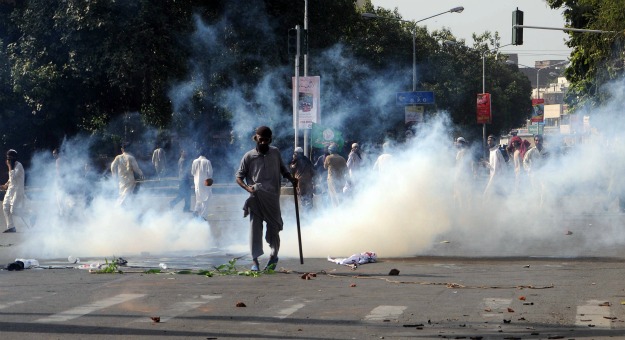
Pakistan’s power crisis has become a catastrophe. Power cuts of up to 14 hours a day have become the norm in Pakistan. In Karachi, four patients admitted in the largest public hospital died when the hospital’s backup generator failed after prolonged cuts. Riots have engulfed Punjab, and other major cities across the country, as the government wrings its hands and tries to get the situation under control. Allegations have flown between the leaders of the two major political parties — the Pakistan Muslim League (Nawaz) and the ruling Pakistan People’s Party (PPP). The PML (N) — has accused the PPP of being responsible for the crisis. In turn, the PPP has accused the PML-N of instigating the violence.

Riots over power cuts in the country, known as “load shedding,” have now become a matter of routine. In neighborhoods and cities across Pakistan, hundreds have taken to the streets to vent their anger at the frequent load shedding. This time around though, the PML-N, perhaps to apply more pressure as a political tactic against its rival PPP, has stepped in, and is supporting the protestors.

But as the flurry of allegations continues, the problem at hand grows more serious. Dubbed the circular debt issue, power companies have racked up billions in unpaid dues to petroleum companies, which supply them oil to run their powerhouses. On Sunday, Pakistan State Oil (PSO), tired of waiting for the dues long promised to them, decided to stop the petroleum supply to the power companies, leading to an increase in the already inhumane cuts.

While the Government of Pakistan (GoP) has now released some funds to appease PSO, this is not a long-term solution. The Federal Minister for Water and Power Naveed Qamar responded to the most recent protests by saying that there were no quick fixes, and then turned around and announced that the situation would improve in 24-36 hours. Last week in Washington DC, the Finance Minister of Pakistan Hafeez Sheikh solemnly announced that the government understood the severity of the circular debt issue, and would resolve it in the weeks to come. But with a growing fiscal deficit, and a refusal of the Asian Development Bank to fund programs in Pakistan after the GoP decided to end their International Monetary Fund (IMF) loan program, how Pakistan plans to resolve the circular debt issue is anyone’s guess.

One solution, according to Prime Minister Yousaf Raza Gilani, was that the United States “should help Pakistan solve its energy crisis if it wanted better ties.” The United States has previously said that it is investing in dams in Pakistan to help add to the power grid, and has helped in the reconstruction of existing dams in the country.

However, Pakistan needs to stop looking towards the West for a solution (or a scapegoat), and perhaps redirect its attention to how to fix its problems internally first — perhaps by collecting payment of unpaid bills, or cracking down against those stealing electricity. First, though, it has to deal with the political ramifications of these protests. The PML-N has played its cards right; by blaming the political center of which it is no longer part, it has easily scored political points while the PPP becomes the fall guy — and to an extent, perhaps deservedly so. Pakistan’s government, in turn, can only do so much. Strapped for cash, it barely has the funds to invest in power generation, and in cases where it has, such investments have barely led to a meaningful increase in the electricity grid.

Additionally, in the face of all of these problems, if Pakistan raises power tariffs on those that have been suffering for the last many years, the law and order situation could become even more perilous.

Meanwhile, the Pakistani population continue to take to the streets, hoping that it might eventually lead to the light bulbs burning bright again.

Huma Imtiaz works as a correspondent for Express News and is based in Washington, DC.

Gunmen Attack Shiite Muslims in Pakistan, 12 Dead

As Reported By USA Today

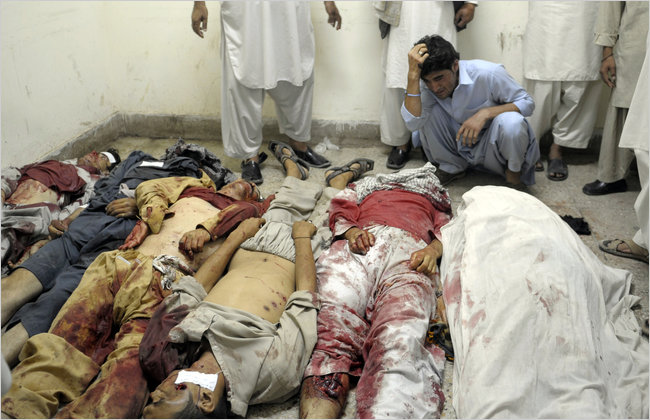
Suspected Sunni extremists opened fire on Shiite Muslims traveling through southwestern Pakistan on Tuesday, killing 12 people and wounding six others in the latest apparent sectarian attack to plague the country, police said.

Sunni militants with ideological and operational links to al-Qaida and the Taliban have carried out scores of bombings and shootings against minority Shiites in recent years, but the past couple weeks have been particularly bloody.

The gunmen who attacked Tuesday were riding on motorbikes and stopped a bus carrying mostly Shiite Muslims who were headed to work at a vegetable market on the outskirts of Quetta, the capital of Baluchistan province, said police official Hamid Shakeel.

The attackers forced the people off the bus, made them stand in a line and then opened fire, said Shakeel. The dead included 11 Shiites and one Sunni, he said. The wounded included four Shiites and two Sunnis.

Sunni extremists carried out a similar attack on Shiite pilgrims traveling through Baluchistan about two weeks ago, killing 26 people. Pakistan is a majority Sunni Muslim state, with around 15 percent Shiite.

Most Sunnis and Shiites live together peacefully in Pakistan, though tensions have existed for decades. In the 1980s and 1990s, Pakistan became the scene of a proxy war between mostly Shiite Iran and Sunni Saudi Arabia, with both sides funneling money to sectarian groups that regularly targeted each other.

The level of sectarian violence has declined somewhat since then, but attacks continue. In recent years, Sunni attacks on Shiites have been far more common.

The groups have been energized by al-Qaida and the Taliban, which are also Sunni and share the belief that Shiites are infidels and it is permissible to kill them. The Sunni-Shiite schism over the true heir to Islam’s Prophet Muhammad dates back to the seventh century.

Lashkar-e-Jhangvi, one of the country’s most ruthless Sunni militant groups, claimed responsibility for the attack in Baluchistan two weeks ago. One of its alleged leaders, Malik Ishaq, was released from prison on bail in July after being held for 14 years on charges, never proven, of killing Shiites.

Ishaq was re-arrested about a week ago after making inflammatory speeches against Shiites in the country. He was not charged but detained under a public order act, which means he can be held for three months.

It’s not clear if Ishaq’s speeches have been connected to the recent wave of sectarian attacks.

Growing Hope for Trade Ties Between India and Pakistan

By Shahzeb Jillani

Business leaders from India and Pakistan say there’s new optimism about the efforts their governments are making to improve trade ties. But critics warn that overcoming decades of mistrust may not be that easy.

For the first time in 35 years, a Pakistani commerce minister led a business delegation to India last week. The entourage included nearly 80 leading industrialists, traders and high-ranking officials.

Peace talks between the two nuclear-armed neighbours broke down in 2008 after the attacks in the Indian city of Mumbai, which India blamed on Pakistan-based militants.

Nearly three years on, as if to emphasise a sense of normalcy, the Pakistani Commerce Minister, Makhdoom Amin Fahim, stayed at the city’s Taj Mahal Hotel – which was one of the main targets of the 2008 attacks.

There, leading Pakistani traders got a chance to mingle with their equally eager-for-business Indian counterparts.

Between them, they spoke not just of the profits their individual businesses could make if their governments removed the long standing hurdles in their way. But also of how much the people of their two countries, and indeed the wider region, stand to benefit from freer movement of goods, money and commodities.

The only way I see realisation of trade potential between our two countries is for India to remove its non-tariff trade barriers and for Pakistan to reciprocate by granting the MFN status to India”

Vijay Kalantri, president of All India Association of Industries, said traders on both sides feel business between India and Pakistan is a win-win situation for everyone.

“Why are Indians and Pakistanis forced to trade unofficially via third countries like Dubai or Sri Lanka?” he tells the BBC from Mumbai.

“All we are asking is, let there be direct business-to-business contact between us.”

After the talks in Delhi, ministers from the two sides announced their agreement to boost their annual bilateral trade from current $2.7bn (ÂŁ1.7bn) to $6bn by 2015.

They also pledged to ease business travel and promote bilateral trade through the land route.

For Pakistan, a significant announcement was a pledge by India to drop its opposition to the European Union’s plan to grant Pakistan tariff waiver on select commodities to help it recover from the devastation of 2010 floods.

There was hope that Pakistan might reciprocate and grant India the Most Favoured Nation status (India granted Pakistan MFN status way back in the 1990s).

Even though no such announcement came, Pakistan committed itself to a road map to implement preferential trade ties with India, as prescribed under the South Asia Free Trade Agreement (Safta).

Trade barriers
There are a number of explanations why Pakistan has so far withheld the MFN status from India.

At present there are a number of barriers to prevent trade between Indian and Pakistan
First is political. Pakistani leaders have often linked it to the resolution of the core issue of Kashmir.

It’s a stance which has long been propagated for mainly domestic consumption.

But there is a sense in Pakistan that while the country should continue to push for a negotiated settlement of the Kashmir issue, trade and commerce should not be held hostage to resolution of political disputes.

The second is protectionism. For years, domestic industry in Pakistan has feared it would be swamped by imports from India. But even there, the mood appears to have shifted.

Senator Haji Ghulam Ali, president of Federation of Pakistan Chambers of Commerce and Industry, says there’s a consensus that Pakistan should open up to Indian business.

“Everyone now recognises it will be beneficial for both sides. It’s just a matter of time before it’s done,” he tells the BBC from Delhi.

Business leaders say that less trade barriers would benefit firms in both countries, However, the last, and more plausible, obstacle is the issue of non-tariff barriers.

“In my experience, India has one of the most restrictive trade regimes in the region,” asserts Dr Ashfaq Hasan Khan, a former advisor to Pakistan’s Ministry of Finance. His view matters, given has decades of dealings with South Asian governments on trade liberalization.

He explains that despite granting Pakistan the MFN status, India has a variety of non-tariff barriers in place – such as, stringent certification codes, customs rules, security clearances and movement restrictions – which make it virtually impossible for Pakistani traders to do business in India.

“The only way I see realisation of trade potential between our two countries is for India to remove its non-tariff trade barriers and for Pakistan to reciprocate by granting the MFN status to India,” says Mr Khan.

He adds: “Unless there’s political will to do that, everything else is just talk and photo op.”

CIA Contractor Charged in Pakistan Deaths Arrested in Colorado

By Jim Spellman for CNN

Raymond Davis, who was charged with killing two men in Pakistan as a CIA contractor but was later released, was arrested Saturday after a fistfight at a shopping center in Colorado, authorities said.

Davis was charged with misdemeanor assault and disorderly conduct after allegedly getting into a fight over a parking space at a suburban Denver mall, according to Lt. Glenn Peitzmeier of the Douglas County Sheriff’s Office.

The incident at the Highlands Ranch Town Center began as an argument between 37-year-old Davis and 50-year-old Jeff Maes and then turned physical, Peitzmeier said. Davis was released after posting $1,750 bond, Peitzmeier said.

Davis’ wife, Rebecca, declined a CNN request for comment. Davis was charged with killing two men in Lahore, Pakistan, in January. He was released in March after compensation was paid to their families.

U.S. officials originally said Davis was a diplomat and tried to claim diplomatic immunity but then revealed that he was a CIA contractor.
Davis said he killed the two men in self-defense, though Lahore authorities called the case “clear-cut murder.”

Death Sentence in Slaying of Pakistani Governor

By Salman Masood for The New York Times

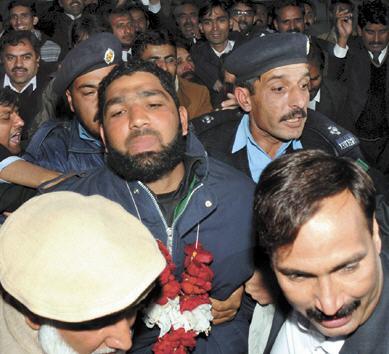
A court on Saturday sentenced to death an elite police guard who assassinated a leading secular politician he had been charged with protecting, a slaying that sent shockwaves throughout Pakistan and was seen as a clear marker of the growing religious intolerance and extremism in the country.

The news made international headlines not just because of the prominence of the politician killed, Salman Taseer, but because the killer was celebrated by many in Pakistan, including lawyers who showered him with rose petals and garlands at a court appearance.

Judge Syed Pervez Ali Shah announced the sentence for the guard, Malik Mumtaz Qadri, in an antiterrorism court at Adiala Jail in Rawalpindi. “Nobody can be given a license to kill on any pretext,” the judge was quoted as saying after the conclusion of the trial, which was held under tight security.

The ruling was unusual in Pakistan; frightened justices in recent years have been cowed into releasing Islamic militants or letting them off with light sentences. The judgment was especially noteworthy in such a high-profile case against a man whose popularity only grew with his confession and defense of the killing on religious grounds.

Mr. Taseer was the governor of Punjab Province and one of the country’s most outspoken opponents of the country’s controversial blasphemy laws, which mandate a death sentence for anyone convicted of insulting Islam.

Liberals and rights activists were encouraged by the verdict, but noted that it could be overturned in appeals that can drag on for years.

“Today’s judgment is a positive development whereby norms of justice have prevailed,” said Raza Rumi, a political analyst and columnist in the eastern city of Lahore. “Pakistan cannot be allowed to become a vigilante society, and the state — its judges and prosecutors — need to uphold the law.”

No matter what happens with the case, however, Mr. Taseer’s death cast a pall over discussions of the blasphemy laws — which had become something of a test case for broader debate of how religion and politics mix in Pakistan. That trend continued Saturday. The usually voluble Pakistani press dutifully covered the story, but news broadcasts were mainly devoid of the normal commentary or debate.

“Local media’s muted coverage of the sentence is reflective of the fear factor and the polarization within the society which includes media personnel,” Mr. Rumi said.

Mr. Qadri, 26, was convicted of murder and committing an act of terrorism, and was handed two life sentences.

No date for the execution has been announced, and Mr. Qadri has a right to appeal within seven days. Raja Shuja-ur-Rahman, a lawyer for Mr. Qadri, told the DAWN television channel that an appeal would be filed.

Mr. Qadri killed Mr. Taseer in a hail of bullets on Jan. 4, shooting at close range as Mr. Taseer was getting into his car.

Mr. Taseer, a businessman and a liberal politician, had emerged as a leader in a fight against the blasphemy law, which rights groups say has been used to persecute minorities, especially Christians.

The law was introduced in the 1980s under the military dictatorship of Gen. Mohammad Zia ul-Haq as part of a policy of promoting Islam to unite Pakistan’s deeply fractious society.

Mr. Qadri was hailed as a hero by Islamist lawyers, several mainstream politicians and religious leaders.

On Saturday, dozens of supporters of Mr. Qadri gathered outside the jail and chanted slogans against the sentence, while the judge slipped out a back door.

“We will free you! We will die for you!” 20-year-old Mohamemd Aslam was quoted as saying by The Associated Press. Others yelled: “Long live Qadri, long live Qadri!”

“By punishing one Mumtaz Qadri, you will produce a thousand Mumtaz Qadris!” shouted another man.

The ruling Pakistan Peoples Party, to which Mr. Taseer belonged, has been accused of distancing itself from the cause of repealing the blasphemy law since the assassination.

Bahrain Doctors Tried For Treating Protesters

As Reported By CBS News and PBS

The U.N. condemned Bahrain’s brutal crackdown on anti-government protesters Friday. Human rights groups say that since March, 34 people have been killed and more than 1,400 arrested. And now, Bahrain has put doctors on trial — just for treating injured protesters. CBS News correspondent Mark Phillips spoke with one doctor who faces a long prison term.

The wave of the Arab Spring peoples’ revolutions that had rolled across Tunisia and Egypt, crashed when it hit the tiny Gulf kingdom of Bahrain. The government quashed the demonstrators. And the people who had failed in their challenge to the authorities are still paying the price.

Dr. Nadu Dhaif was one of many health workers who treated the injured in makeshift clinics and supported their cause. Now, as she explained in a Skype interview, a Bahraini court has handed down its judgement.

“I was sentenced for 15 years in prison,” she said. “It was a complete total shock.”

The World Medical Association has called the sentences handed down to 20 doctors “totally unacceptable.” The convictions were based on confessions — some broadcast on TV, and some, as in Dhaif’s case, extracted under duress. “I was given an abundance of papers to sign while I was blindfolded,” she said.

“You were given papers while you blindfolded and told to sign them?” asked Phillips. “Yes, yes.” “Why did you sign those papers if you couldn’t see what you were signing?”

“I was threatened,” said Dhaif. “I had to sign them. They would beat me, torture me if I don’t go ahead and sign those papers.”

Dhaif is out on bail now, but expects to be re-arrested — separated from her children again and sent to prison at any moment. Going public, she said, is her only hope.