Archive for the ‘ Saudi Arabia ’ Category

Religion Journal: For Ramadan, India Goes it Alone

By Joanna Sugden for The Wall Street Journal

Muslims start the month-long daytime fast of Ramadan Friday. But not in India.

While most of the world’s Muslims look to Saudi Arabia or follow astronomical calculations to determine when the new moon of the ninth lunar month has arrived – marking the start of Ramadan – India follows the declaration of its own Central Moon Sighting Committee.

ā€œGeographical differences mean we are a day behind Saudi Arabia in terms of lunar months, so we are expecting to start on Saturday,ā€ says Syed Tariq Bukhari, a member of the committee and general secretary of the advisory council at Old Delhi’s Jama Masjid, one of the country’s most important mosques.

At sunset Friday, the 29th day of the eighth lunar month, 21 senior leaders from Delhi’s mosques will meet to decide whether the new moon has been sighted. In the Muslim calendar, months are either 29 or 30 days long.

ā€œIt is very difficult to spot a new moon, particularly on the 29th day of the month because it appears for a very short time and is a very thin sliver,ā€ Mr. Bukhari said, adding that the best time to spot a new moon is half an hour before sunset.

ā€œIf naturally we are not able to see it because it’s cloudy then we coordinate with the other committees of other cities who have similar geographic circumstances,ā€ Mr. Bukhari said.

The committee then waits for a Shahadah or Islamic witness who has seen the new moon. ā€œThe appearance of the witness should be according to Sharia law, which means having a beard and his neighbors should know him as a dependable person as far as being a witness is concerned,ā€ Mr. Bukhari added.

If no credible Islamic witness comes forward, the committee waits until between 80 and 90 other witness statements on sightings are collected by moon sighting committees across the country. Then it declares the start of Ramadan.

If the moon isn’t sighted at all in the last days of the lunar month, the committee waits until the first day of the ninth lunar month – which this year is on Sunday – to declare that Ramadan has begun. It announces the start of the fast via the media, to the government and over loud speakers from mosques.

Zasarul Islam Khan, president of the All India Muslim Majlis-e-Mushawarat, an umbrella body for Muslim organizations, says the timing of Ramadan should always be based on local sightings of the moon.

ā€œOutside the Subcontinent they are following Saudi Arabia, which is technically wrong. The scholars say that you should wait to see the new moon physically before starting Ramadan,ā€ he told India Real Time.

Mosques in the southern Indian state of Kerala go by Saudi Arabian timings because they have close links with the Middle East, according to Mr. Bukhari. Those in the northern state of Jammu and Kashmir go by Pakistan’s declaration as they are more geographically in line with the country, he adds.

The Fiqh Council of North America, which rules on matters of Islamic jurisprudence, says Muslims should follow precise astrological calculations to decide the start of the fast.

In sunlight hours during Ramadan, Muslims refrain from food, water, sex, smoking and oral medicine in order to bring desire under self-control and to focus on prayer and Allah.

This year, the fast coincides with the London Olympics, so Muslim athletes will have to decide whether to observe it and risk a dent in their performance or exempt themselves and carry out the fast once they finish the competition.

Maher Abu Rmeileh, a Palestinian Judo champion who is competing at the Games, told the BBC that he would not be observing Ramadan this year. ā€œScholars recommended me not to fast and said that I represented my nation not just myself, so once I return from the games I will have to make up for it,ā€ he said.

Such a clash only happens once every 44 years and the International Olympic Committee has said it will look into the possibility of avoiding such a conflict in future, once London 2012 is over.

People exempt from fasting include pregnant women, children who haven’t reached puberty, menstruating women, breast-feeding women, the elderly, travelers and the chronically ill.

Mr. Khan said those who are sick or elderly are allowed to give to charity instead of fasting. If they are determined to observe Ramadan, they should consult their doctor, he added.

Joanna Sugden is freelance journalist living in Delhi. Before coming to India in 2011 she spent four-and-a-half years as a reporter at The Times of London, covering religion and education. You can follow her on Twitter @jhsugden.

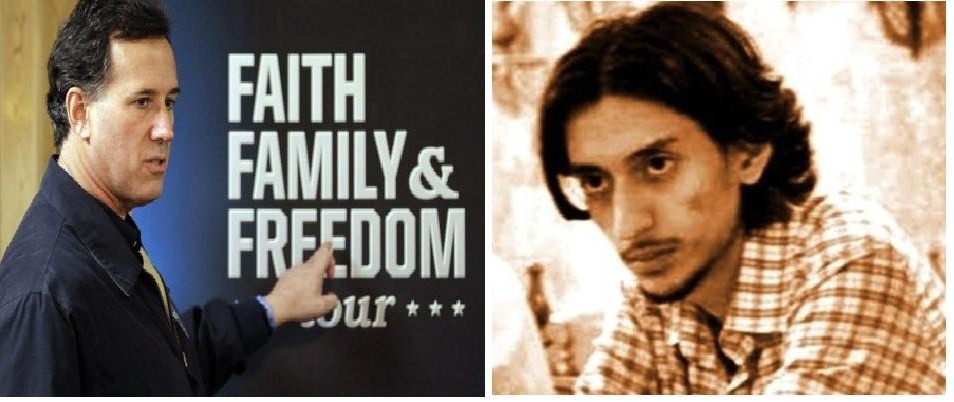
Rick Santorum, Meet Hamza Kashgari

By George Packer for The New Yorker

President Kennedy’s 1960 speech on religious freedom makes Rick Santorum ā€œthrow up.ā€ ā€œWhat kind of country do we live in that says only people of nonfaith can come into the public square and make their case?ā€ Santorum says. It’s a central part of his campaign strategy to distort such things as a Kennedy speech, or an Obama speech, to whip up outrage at the supposed war on religious people in America. Here’s what Kennedy said:

I believe in an America where the separation of church and state is absolute; where no Catholic prelate would tell the President—should he be Catholic—how to act, and no Protestant minister would tell his parishioners for whom to vote; where no church or church school is granted any public funds or political preference, and where no man is denied public office merely because his religion differs from the President who might appoint him, or the people who might elect him… I believe in a President whose religious views are his own private affair.

Kennedy said much more, but this is the strongest passage of that famous campaign speech to a group of ministers in Houston, in which he argued that the election of a Catholic President who believed in the Constitution shouldn’t concern any American who believed in the Constitution—and, Santorum says, ā€œThat makes me throw up.ā€ Santorum’s rhetorical eloquence is about equal to his analytical skill. Kennedy had nothing to say against believers entering public life, or believers bringing their religious conscience to bear on public policy. He spoke against any move to make religion official. The Constitution speaks against this, too—Article VI establishes an oath to the Constitution as the basis for public office, and explicitly prohibits a religious test, while the First Amendment forbids the official establishment of religion and protects its free practice. Santorum claims to be a constitutionalist, but that’s just rhetoric and opportunism. Santorum believes in a religious test—that may be all he believes in. (Mitt Romney believes in a religious test of a slimy, halfway, Romneyesque variety: in 2007, he reportedly dismissed the idea of appointing a Muslim to his Cabinet, saying, ā€œBased on the numbers of American Muslims [as a percentage] in our population, I cannot see that a Cabinet position would be justified.ā€ So does Newt Gingrich, who has made atheist-baiting a central part of his political business.)

Kennedy seemed to have someone like Santorum in mind when he warned, ā€œFor while this year it may be a Catholic against whom the finger of suspicion is pointed, in other years it has been—and may someday be again—a Jew, or a Quaker, or a Unitarian, or a Baptist. It was Virginia’s harassment of Baptist preachers, for example, that led to Jefferson’s statute of religious freedom. Today, I may be the victim, but tomorrow it may be you—until the whole fabric of our harmonious society is ripped apart at a time of great national peril.ā€ In 1960, it would have been hard to imagine how thoroughly religious sectarianism and intolerance would infect American politics, and especially one major party. The outcry over Obama’s policy on health insurance and contraception has almost nothing to do with that part of the First Amendment about the right to free religious practice, which is under no threat in this country. It is all about a modern conservative Kulturkampf that will not accept the other part of the religion clause, which prohibits any official religion.

Santorum, like most conservatives these days, says he is a constitutionalist. Jefferson wrote, and Madison worked to pass, the Commonwealth of Virginia’s Bill for Establishing Religious Freedom, which held that ā€œall men shall be free to profess, and by argument to maintain, their opinions in matters of religion, and that the same shall in no wise diminish, enlarge, or affect their civil capacities.ā€ Jefferson included an even stronger phrase that was eventually struck out by amendment: ā€œthe opinions of men are not the object of civil government, nor under its jurisdiction.ā€ Presumably, all of this originalist nonsense makes Rick Santorum heave, gag, vomit, and puke.

What makes me throw up is the story of Hamza Kashgari. It’s a shame that every American doesn’t know his name. He’s a young, slender, philosophical-minded columnist and blogger from Saudi Arabia who, earlier this month, dared to tweet phrases of an imagined conversation with the Prophet Mohammad: ā€œI have loved things about you and I have hated things about you and there is a lot I don’t understand about you…I loved the rebel in you…I will not pray for you.ā€ Within twenty-four hours, more than thirty thousand furious replies had been posted on Twitter. Within a few days, more than twenty thousand people had signed on to a Facebook page called ā€œSaudi People Want Punishment for Hamza Kashgari.ā€ (So much for Arab liberation by social media.) One commenter wrote, ā€œThe only choice is for Kashgari to be killed and crucified in order to be a lesson to other secularists.ā€

Kashgari backed down, apologized profusely, and continued to be attacked. He went into hiding. Clerics and government officials threatened him with execution for blasphemy. He fled to Malaysia, hoping to continue to fly to New Zealand, where he would ask for asylum. But Malaysian officials, behaving against law and decency, had him detained at the airport and sent back to Saudi Arabia, where he was promptly arrested. Since mid-February there’s been no word of Kashgari. The Saudis have said they will put him on trial. What a pity there’s no First Amendment to protect him.
If only he had more powerful friends—if only Christopher Hitchens were still alive—Hamza Kashgari would be called the Saudi Rushdie. There would be a worldwide campaign to pressure the Saudis into releasing him. The United States would offer him asylum and quietly push our friends the Saudis into letting him go. But we’ve come to expect these things from our friends the Saudis.

We’ve come to expect these things from the Muslim world. We expect Afghans to riot for days and kill Americans and each other because a few NATO soldiers were stupid enough to burn copies of the Koran along with other objects discarded from a prison outside Kabul. Yes, those soldiers were colossally, destructively insensitive. Yes, we should know by now. Yes, the reaction has a lot to do with ten years of war and occupation and civilian deaths and marines urinating on Taliban corpses. Still, can we have a little outrage at the outrage? Can we reaffirm that human lives are more sacred than books? Can we point out that every time something like this happens, there’s a manufactured and whipped-up quality to much of the hysteria, which has its own cold political calculation (not unlike the jihad against secularists by Sean Hannity and other Salafist mouthpieces)?

Saudi Arabia needs an absolute separation of religion and state so that Hamza Kashgari can say things that other people don’t like without having to flee for his life. Afghanistan needs it, too, and so does Pakistan, so that mob violence and political assassination can’t enjoy the encouragement of religious authorities and the tolerance or acquiescence of government officials. And America needs it so that our Presidents’ religious views remain their own private affairs, and Rick Santorum and his party can’t impose dominion of one narrow, sectarian, Bible-based idea of the public good over a vast, pluralist, heterodox, freedom-loving democracy.

Pakistan is a Nation at Odds With Itself, U.S.

By Stephen Magagnini for The Sacremento Bee
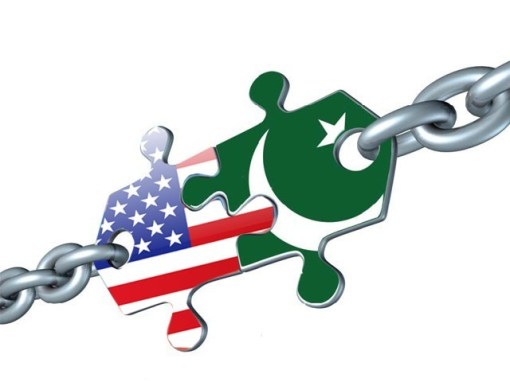
KARACHI, Pakistan — On a moonlit Thursday night in February, a television network executive hosted an elegant affair for journalists and diplomats at his villa above the Arabian Sea.

Karachi’s privileged dined on lamb, shrimp, chicken, mutton and fettuccine in mushroom sauce, and were surprised by a quartet of wandering minstrels, soulful Sufi poets who serenade for their supper, uncorking ballads about love.

On the south side of this city of 18 million, a group of Afghan refugees, who scrape out a living collecting cardboard and other recyclables in a slum straddling a swamp of open sewage, were mopping up gravy with roti – Pakistani bread.

About 900 Afghans live in this fetid slum, down the street from poor Pakistanis and water buffalo. They earn about $60 a month and survive on bottled water, chewing tobacco and roti.

“We’re happy in Pakistan,” said 33-year-old Shaezhad, leader of a cardboard collection station. “We get food and respect.”

At the party across town, talk-show hosts and other Pakistani elites blew cigarette smoke into the faces of U.S. journalists, criticizing U.S. foreign policy and the toll the war in Afghanistan has taken on their country.

Many Pakistanis resent American aggression in the region and want more respect from U.S. policymakers, but they don’t hold individual Americans responsible. Yet everywhere we went, we were held to answer for U.S. wars and Americans’ deep misunderstanding of Pakistan.

“You are arrogant, playing video games with our lives,” Abdul Moiz Jaferii, political analyst for CNBC Pakistan, said over lunch one day in Karachi. He was referring to U.S. drone attacks that have killed Pakistani and Afghan civilians.

“And we hate America because the U.S. has always been the biggest, closest ally of the military dictators. You have done nothing to help democracy.”

The impact of the war in Afghanistan has permeated nearly every pore of this country of 180 million. More than 2 million Afghan refugees have fled to Pakistan, and some have brought a culture of violence. Since 9/11, 35,000 Pakistanis have been killed in terrorist attacks by suicide bombers and other war-related violence, according to Pakistan’s intelligence agency. The victims include 6,000 soldiers and 29,000 civilians.

The unpredictable violence and the kidnapping of foreign workers have created a climate of fear in this country. We weren’t allowed to visit villages outside urban areas, where 40 percent of Pakistanis live. Two shotgun-wielding security guards protected our buses in Islamabad, Lahore and Karachi. We entered our hotels through metal detectors and were rarely allowed to interact with average citizens in public places.

Pakistan – strategically located between Afghanistan, India, China and Iran and influenced by Saudi Arabia – remains an enigma to many Americans, who aren’t sure whether it’s friend or foe, democracy or military dictatorship.

Pakistan has provided critical support to NATO troops in the Afghan war – drones are launched from here, NATO supplies are sent through this country, and Pakistani troops have helped recapture terrorist strongholds along the volatile Afghan border.

But distrust of the United States in the wake of deadly drone attacks and the deaths of 24 Pakistani soldiers in a cross-border battle in November is such that rather than calling for more U.S. aid to build needed power plants, schools and hospitals, a growing number of Pakistanis want nothing to do with the United States. The government of Punjab – Pakistan’s most powerful state with about 90 million people – has decided to reject U.S. aid.

The killing of Osama bin Laden by U.S. Navy SEALs in Abbottabad in the heart of this country embarrassed and angered the Pakistan military and made Americans question why bin Laden was allowed to live in essentially a resort town. Some U.S. politicians have called for an end to the $18 billion in financial aid pledged since 9/11.

An Islamic republic?

Some of the world’s largest, most beautiful mosques are here, and to celebrate the Prophet Muhammad’s birthday on Feb. 4, 10,000 people named Muhammad gathered in prayer in Karachi.

We saw few women wearing hijabs, or head coverings, except those at Islamabad’s Faisal Mosque, which can hold 10,000 people for Juma, or Friday prayer.

Professional women drive cars, dress like their counterparts in U.S. cities and run government ministries, clinics and newsrooms. Women, who constitute 52 percent of the population, are increasingly getting advanced degrees. There’s a Pakistani proverb: “Every girl who goes to university gets a husband.”

Despite Islam’s ban on liquor, at a party in Islamabad guests of both sexes repaired to a speakeasy in the basement to drink wine or Johnny Walker Black and smoke cigars.

Though most marriages are still arranged, as many as 20 percent are “love marriages,” said Samina Parvez, director general of the government’s external publicity agency. “The divorce rate is also increasing – it’s about 10 or 15 percent,” Parvez said. “The majority of us are not practicing Muslims.”

Kamoran Sani, sales and marketing director for the Sheraton Hotel in Karachi, declared, “What you’ve heard about the Islamic Republic of Pakistan’s a big farce. There are orgies, voyeurs’ lounges, raves.”

A diverse nation

Pakistan didn’t become a nation until the British sliced India into Muslim and Hindu majority states in 1947. Pakistan – an Urdu acronym for Punjab, Afghania, Kashmir, Sindh province and Baluchistan (“stan” means nation) – varies wildly from region to region.

“There is no such thing as Pakistan,” Jaferii said. “First comes your family, then your clan, third your region, fourth your province – the nation comes a distant fifth.”

Much of rural Pakistan is a feudal society dating back to the 13th century. Mullahs, or religious leaders, still invoke blasphemy laws exacting punishment against those accused of insulting Islam. Last year, the governor of Punjab was killed by his bodyguard for criticizing the law as he sought a pardon for a Christian woman sentenced to death.

But Pakistan has tremendous religious and ethnic diversity. Muslims include Sunnis, Shiites, Ismaelis, Ahmadis and Sufis – each practicing their own brand of Islam. At Lahore University of Management Sciences, I chatted with Muslims, Hindus and Christians who were all friends.

From the Sufi love poems to Pashtun folk songs about social justice, music plays a key role in Pakistani identity.

In the center of Karachi there’s a Catholic church – St. Patrick’s Cathedral, built by the Jesuits in 1931. There’s a Jewish cemetery. Sikhs worship throughout Pakistan. The ancient city of Taxila was occupied by Alexander the Great and reflects Persian, Moghul, Buddhist and Christian traditions.

Pakistan’s future

Sixty percent of Pakistan’s population is under age 30; half is under age 20. Half the kids haven’t been to school, and fifth-grade students are reading at a second-grade level, said Nadeem ul-Haq, deputy chairman of the government’s planning commission.

“We have 2 million kids a year entering the labor force. What are these kids going to do?” ul-Haq said. There is no building boom to provide jobs, and foreign investments have been scared away by terrorism.

“Entrepreneurship is the key thing we need to focus on,” he said. “Overseas Pakistanis have been very entrepreneurial, sending back $13 billion a year to their poorer relatives.”

From 7-Elevens to Silicon Valley firms and venture capital funds, ex-pat Pakistanis are thriving in the United States. The 500,000 Pakistanis in the United States, including 100,000 in California, send $100 million a year to charities in Pakistan, said Ahson Rabbani, CEO of I-Care, which connects donors with 30 nonprofits.

In Northern California, Pakistanis raised more than $100,000 for Pakistani flood relief efforts spearheaded by cricket star Imran Khan, who may lead the country if his party wins the next election. Khan has gained credibility by building a cancer hospital for the poor in honor of his late mother. His party includes a women’s wing that has direct access to him.

Philanthropy is playing a growing role in Pakistan, financing schools in poor villages and slums. The Citizens Foundation is educating 100,000 students.

“I mentored six girls,” said Karachi journalist Samia Saleem. “One was 13 and said she didn’t want to get married – she wants to be a teacher.”

Ali Shah Haider, 17, wants to be a commercial pilot. “I sleep from 2 p.m. until 4:30 p.m., then go to work at the textile factory from 8 p.m. to 5 a.m. to support my family – there are 12 of us. I do my homework between shifts.”

A nation’s dreams

Though life seems cheap in Pakistan, the people are upbeat survivors who often describe life as bo hat acha, which means “great!” in Urdu, their main language.

Last year 1,575 people were killed in Karachi, where 2 million weapons are in circulation, said Francisco Quinones of Arcis International Security. A doctor was killed in Karachi the day before we landed. Violence has been blamed on the Taliban, rival political gangs, Sunni and Shia militants, rogue security forces, and Afghan refugees.

Some refugees have been recruited by the Taliban. Others like Shaezhad, who collects recyclables in the slums of Karachi, are glad to be alive under the green and white crescent flag of this country.

Still, he wants to go home to Afghanistan. “We want our land back, we want to live with respect and we want employment.”

Azhar Abbas, the managing director of Geo TV news who hosted the party in Karachi, said that “democracy is taking hold” in his Pakistan despite the violence many here believe followed the U.S. war on terror.

The business editor of daily newspaper the News, Amir Zia, said the United States can still play a positive role in Pakistan. “If Americans pull out without getting the job done, the Islamic extremists will say it’s a victory and will become much more organized.”

But at the National Defense University, business and technology expert Bilal Munshi called Pakistan “a psychologically scarred nation suffering from a mass form of PTSD (post-traumatic stress disorder).”

If the 4 million young people entering the workforce each year get jobs, “we will be a power … but if they don’t see a future they’re going to pick up the gun, and you’re going to be in real trouble.”

The U.S. can help develop Pakistani schools, Bilal said, “but don’t interfere in our internal affairs – let us do things our way.”
This is not Prophet Muhammad’s Islam

By Manzer Munir for Pakistanis for Peace

The steady stream of negative news about the twisted way Islam is being practiced around the world seems to never end. In my view, it is not how the Prophet would have wanted his followers to behave.

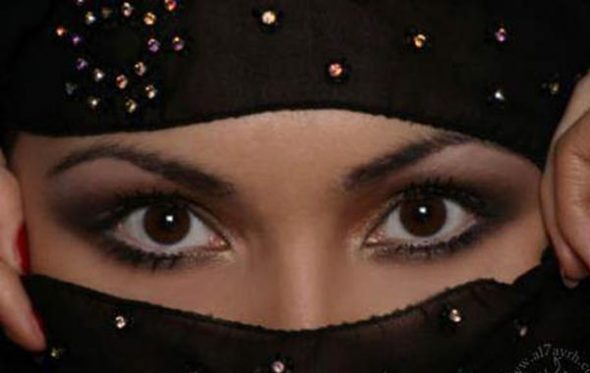
Just when I thought I was beginning to get used to the ridiculousness of the news coming out of Saudi Arabia, where a religious edict is trying to force women there with beautiful eyes to Ā completely cover up their face in order to stopĀ the temptation of the men, along comes the grim news of Gulnaz Ā from Afghanistan. If you are not familiar with Gulnaz’s story, let me give you the facts.

Two years ago, in 2009, Gulnaz, a 19 year old single girl who lived with her elderly mother in Afghanistan, was brutally raped by her cousin’s husband. To describe the events, she recalls that on this day, the rapist came into her house when her mother left for a brief visit to the hospital.Ā “He had filthy clothes on as he does metal and construction work. When my mother went out, he came into my house and he closed doors and windows. I started screaming, but he shut me up by putting his hands on my mouth,” she said.

Afterwards, she hid what had happened out of shame and fear, as shockingly there is no difference seen between women who are raped and women who commit actual adultery. Ā In Afghanistan and in many conservative Muslim countries, any sex outside marriage, whether the guilty party is single or married is considered adultery by the society and the justice system.

A few weeks after her rape, she began to vomit and started showing signs of pregnancy with her attacker’s child. Instead of sympathy and proof of her ordeal, she was charged and found guilty of adultery by the courts and for having sex outside marriage and was sentenced to twelve years in prison. She has already served two years and even gave birth to her rapist’s child, a little girl, in Kabul’sĀ Badam Bagh jail where sadly, her innocent daughter is being raised in captivity alongside the unfortunate mother.

Rather than being freed from jail and given justice for her painful ordeal, the only way out of the dishonor of rape or adultery for her is incredibly only by marrying her attacker. In Afghan culture, and indeed in most Muslim communities, this is believed to be the only way to restore a woman’s honor, by marrying the man who she had sex with, damned be the factĀ whetherĀ it was willingly or unwillingly!

Sadly in many Muslim countries, rape remains a common form of violence against women. In addition, women are often blamed for being the victim of rape. Islam however, views rape as a violent crime against the victim, against society, and against God. The perpetrator who commits a crime is morally and legally responsible for that crime and should be held accountable. The victim, who is an unwilling partner in the sex act and so should bear neither blame nor stigma associated with the unfortunate act. To either ostracize or condemn the victim because she was compelled to engage in sexual intercourse is against the laws of Islam since the victim was an unwilling, and therefore a blameless, participant.

As common as her story and circumstances are for a woman in Afghanistan, the world has only learned of it due to a chance foreign documentary. Ā Gulnaz’s ordeal came to light because of a dispute between filmmakers and the European Union who hired the crew to film a documentary on the improving situation of women’s rights in Afghanistan and the assistance that the EU has been providing in the better treatment of women in the country. It was only when the documentarians came across her story and the grave injustice being done to Gulnaz and indeed by some accounts, hundreds of women across Afghanistan in similar circumstances, that the EU decided to cancel the project out of fear of harming their relations with Afghan government and institutions. Officially the EU states that it fears for the safety of the women in the film as they could be identified and face reprisals but many human rights organizations believe it is due to the fact that the film shows Afghan justice system in a poor light and the EU is concerned about the Afghan government’s sensitivities to the situation. It isĀ despicableĀ that the EU is more concerned with the sensitivities of the Afghan government rather than fighting for justice for Gulnaz.

Customs such as these in Afghanistan or the recent religious ruling in Saudi Arabia warning women to cover their attractive eyes, or the continued religious persecution of Christians and other minorities in Pakistan through the egregiousĀ blasphemy laws as seen in the case of Aasia Bibi, only serve to illustrateĀ to many within and outside Islam the tremendous challenges that exist in what is right and what is logically very wrong and goes against all sense of justice and common sense, not to mention the very essence of Islam.

I am certainly not arguing for making any changes in the Quran or interpretations of religious text or any wholesale revisions whatsoever. That would not only be blasphemous but also counterproductive and unnecessary. Furthermore, Ā a big part of the beauty of our religion stems from the fact that it has remained unchanged as we Muslims believe that mutations and changes in both the Bible and the TorahĀ necessitatedĀ the need for a third Abrahamic religion, Islam, Ā to arrive some 1400+ years ago to “set the record straight” after all the changes over the years in the two earlier Holy Books. Instead, I believe the only thing that needs to occur is the realization amongst the leaders and countries of the Organization of Islamic Conference (OIC) that in this day and age, there are certain rights and freedoms that should be guaranteed to citizens of all countries of the world and this does not require any changes in the great religion but rather some simple changes in the current laws.

Aristotle once said that “You can judge a nation by the way it treats its most vulnerable citizens”.Ā You could be a Hindu or a Christian in Pakistan, a woman in Afghanistan or Saudi Arabia or a homosexual orĀ transgenderedĀ person in Iran, you do not deserve to lose your life or liberty under the guise of religious laws. Allah almighty is a just and fair God in Islam, just as he is in the Christian and Jewish faiths. He most certainly would never condone the treatment of Gulnaz, Aasia Bibi and countless other poor souls who are being mistreated under the banner of Islam.

I am not a religious scholar and nor do I profess to know everything I need to know about Islam, Christianity and many other religions. Some may even question my faith and belief in calling myself Muslim simply because I am asking these tough questions, and in their version of Islam, you never question, you simply obey. Lest they forget, Islam also clearly states to seek knowledge and to be just and fair and respectful of other religions. Ā “Surely those who believe and those who are Jews and the Sabians and the Christians whoever believes in Allah and the last day and does good — they shall have no fear nor shall they grieve.” (Quran 5:69)

I am however certain that the Prophet Muhammad (peace be upon him) would indeed be very upset with the current state of affairs of most Muslim countries when it comes to morality, religious freedoms, Ā respect for other religions and the treatment of women. Sadly, I do not see the changes necessary coming into being voluntarily by these nations, I believe it isĀ incumbent ofĀ the benefactors of these nations, such as the United Nations, United States, the European Union, China and other trading partners, to push for better treatment of women and religious minorities in many Muslim countries of the world. Ā It is high time that they pressure these nations into enacting basic rights and freedoms for all people, regardless of their race, religion, gender, and sexual orientation. It must become a precursor to being a part of the civilized nations of the world and in being a member of the world community of nations. FreedomĀ after allĀ is what the Arab Spring is all about!

-Manzer Munir, a proud American of Pakistani descent, is a practicing Sufi Muslim and member of Muslims for Progressive Values, he is also the founder of Pakistanis for Peace and blogs atĀ www.PakistanisforPeace.comĀ as well at other websites as a freelance journalist and writer.

Saudi Women With Beautiful Eyes Should Cover Them up, Says New Sharia Proposal

Reported by Amrutha Gayathri for International Business Times

In yet another sexist and repressive act, a conservative Islamic committee in Saudi Arabia has proposed a law to stop women from revealing their “tempting” eyes to the public.

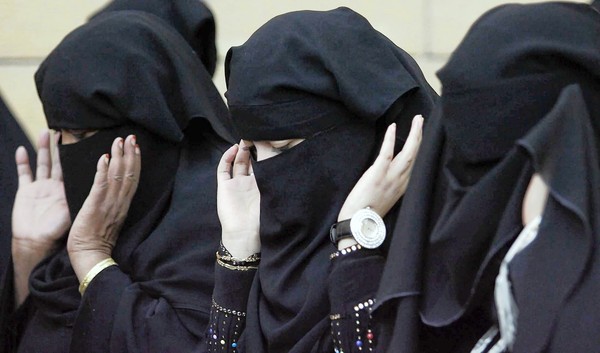
As of now, Saudi Arabian women are required to cover themselves up from head to toe, with a long black cloak called the “abaya”, except for their eyes and in most cases the eyebrows. Ā The laws on women covering their bodies are strictly imposed and anyone who doesn’t abide by the codes of conduct faces fines and public floggings.

However, Saudi Arabia’s Committee for the Promotion of Virtue and the Prevention of Vice (CPVPV) found that even women’s eyes could sometimes be too attractive for men and drafted a new proposal.

According to the Daily Mail, aĀ reportĀ on the Bikya Masr news site suggested the proposal was made after a member of the committee was attracted by a woman’s eyes as he walked along a street, provoking a fight. The fight culminated in the woman’s husband getting stabbed twice in the hand.

A spokesperson for CPVPV, Sheikh Motlab al Nabet, said a proposal aimed at making it illegal for women to be in public without covering themselves up completely, if they happened to have attractive eyes, had been tabled.

The committee has always been under fire from human rights activists for repressive measures had carried out in the name of Islamic principles. It was widely criticized for its inhuman enforcement of the Sharia law in March 2002, when a public school in Mecca was on fire.

The religious police prevented female students from escaping by locking the doors and barring firemen and emergency services personnel from entering the building because the students had not covered their heads properly. The committee said it didn’t want to invoke the “sexual feelings” of emergency personnel by allowing them see the girls without their head-cover. The CPVPV was held responsible by human rights organizations for a death toll of 14. Though the organization denied the charges, the shocking accounts of witnesses were published by local media.

Incidents of brutal physical torture of women, by religious committees, for not abiding by Islamic laws have regularly appeared in Saudi media. Women are not allowed to drive or travel without male authorization or accompaniment in the country.

Wake up Pakistan

By Najam Sethi for The Friday Times

US- PAK relations have broken down. The United States has ā€œ suspendedā€ military aid and all but closed the Kerry- Lugar- Berman tap of funds for the civilians. Proud Pakistanis have puffed up their chests and vowed to eat grass, if necessary, in order to defend their country’s ā€œsovereigntyā€. What’s the big deal, they aver, US aid was peanuts anyway, and our traditional friends like China and Saudi Arabia can bail us out of our problems.

To be sure, our relationship with the US has been no small disaster.

In the 1950s, we begged the US to befriend us instead of India, cheerily going along with the US into the Cold War against the USSR when it wasn’t our war at all. In consequence, the military became the dominant theme of our life and wrecked the budding impulse of democracy. Once again, in the 1980s and 2000s, we tripped over ourselves to rent out our services to the US in Afghanistan.

Today we are reaping the terrorist whirlwind of our greed and opportunism.

But a little introspection is in order to prove that we don’t need the US as an enemy because we are our own worst enemies.

More Pakistanis are eating ā€œ grassā€ now than ever before. The number of Pakistanis below the poverty line has increased from 27 per cent five years ago to 33 per cent in 2011. And this has nothing to do with the US. The growth rate of the economy has fallen from 6.5 per cent five years ago to 3 per cent now. The fiscal deficit is yawning at 7.5 per cent of the GDP today compared to 4.5 per cent five years ago. And this has nothing to do with the US. The Rupee has fallen from 77 to the dollar five years ago to 90 today. General inflation is running at 15% and food inflation at 25%. And this has nothing to do with the US. The tax to GDP ratio is down to 8.7% in 2011 from 11.5% five years ago. And this has nothing to do with the US. Floods continue to devastate the lives and produce of millions of poor people across the country.

And this has nothing to do with the US. Sunni extremists are rampaging, killing Shias. Ethnic parties continue to mow down people in Karachi. And this has nothing to do with the US. Power breakdowns have made the lives of tens of millions wretched and miserable while rendering millions of others jobless.

And this has nothing to do with the US. Instead of rooting for Pakistani nationalism, we are proud to undermine it as Muslims first, or Sindhis, Muhajirs, Baloch, Pakhtun, Punjabi, Seraiki, Hazarajat, Kashmiri, Sunni, Shia, Deobandi, Barelvi. And this has nothing to do with the US. We are counted amongst the most corrupt countries of the world. We have waged four wars with India and lost each of them, in the bargain losing half of Pakistan.

And this has nothing to do with the US. As if this litany of self- induced failures isn’t enough, there is the hypocrisy of double standards to contend with too. Of course, the US has violated our sovereignty by raining drones on FATA. But so have the Afghan Taliban and Al- Qaeda who have established safe havens there too. But we are quick to blast the US and quicker still to pretend that Al- Qaeda doesn’t exist and the Taliban are innocent refugees for whom our traditional hospitality is on offer.

The story doesn’t end here.

The IMF is not welcome. How dare it demand that we tax the rich, plug the bleeding in public sector corporations, stop the theft of power, and spend according to our means. US aid is dispensable.

We don’t need to build dams and reservoirs for managing our natural resources, we don’t need schools and teachers for our children and hospitals for the poor.

Our all- weather friends are China and Saudi Arabia. Never mind that China doesn’t help us much when we are ravaged by earthquakes and floods or when we are short of cash to pay our foreign bills.

NEVER MIND that Saudi Arabia treats our migrant workers like slaves, rents our military to crack down on Shia majorities in Bahrain and exports extremist ā€œ Islamā€ to our lands.

At the end of the day, who eats grass when we rise to defend our sovereignty? Not our pot- bellied traders and businessmen. Not our golf- playing generals. Not our Defence Housing Society residents.

Not our foreign- asset holding politicians whose kids go to English- medium private schools at home and abroad. Not our self righteous media Mughals who berate our slavish black- skins and white masks. Not our corrupt judges and civil servants. It’s the wretched of the earth, the poorest of the poor, who eat grass.

For too long we have made foreign scapegoats for our own failures and corruptions. It is time to wake up and set our house in order without begging or berating the US.

Saudi Arabia to Allow Women to Vote

By Jeffrey Fleishmam for The Los Angeles Times

King Abdullah of Saudi Arabia surprised his ultraconservative nation Sunday by announcing bold reforms that for the first time will give women the right to vote, run for local office and serve on the Shura Council, the king’s advisory board.

The measures by an aging monarch who has battled Islamic hard-liners for years will marginally improve the standing of women in a country that still forbids them to drive or leave the house without their faces covered. The moves appear likely to enrage religious conservatives while advancing at least a veneer of change in one of the world’s most repressive states.

“Because we refuse to marginalize women in society in all roles that comply with sharia [Islamic law], we have decided … to involve women in the Shura Council as members, starting from the next term,” the king said in a five-minute speech to his advisors.

He added: “Women will be able to run as candidates” in the 2015 municipal election “and will even have a right to vote.”

The announcement suggests that the ailing 87-year-old king seeks a legacy as a reformer, despite making only modest inroads on human rights. Abdullah built the country’s first coeducational university and has granted 120,000 scholarships to students, many of them women, to study outside the country. Each move was opposed by clerics and religious ultraconservatives in the royal family.

Allowing women to vote is “hugely significant,” said Lubna Hussain, a Saudi writer. “The king is implementing the reform promises he made when he became leader. It shows he is not willing to pander to religious fundamentalists … who are quite weakened and don’t seem to have the voice they used to.”

The new rights for women come as Saudi Arabia has bristled at demands for political freedoms that have sparked spirited rebellions across the Arab world and toppled such longtime allies of the king as Egyptian President Hosni Mubarak. When rumblings of revolt echoed in Saudi Arabia, the government, whose security forces are omnipresent, promised $130 billion in salary raises and spending for social and religious programs.

Such largesse and attempts at modernization have kept Abdullah popular even as challenges to the royal family have been quickly crushed. Saudi dissidents and human rights groups have condemned the government for crackdowns that have occasionally damaged the king’s image and led to criticism that his family’s reliance on religious conservatives to stay in power makes him too cautious a reformer.

The king is the counterbalance to influential anti-reformist forces, including Prince Nayif ibn Abdulaziz, the interior minister, who many believe may succeed Abdullah. Nayif is sympathetic to fundamentalist Wahhabi clerics who uphold the segregation of sexes and have resisted the monarch’s attempts at modest reforms to ease religion’s grip on schools, courts and other institutions.

Yet discriminatory laws, such as those preventing women from driving, have become an international embarrassment for the kingdom, a key U.S. ally that relies on oil wealth to expand its diplomatic stature. A number of women were arrested over the summer for defying the driving ban. Analysts predicted that by allowing women to vote the king has opened the possibility for wider rights debates.

But others said the latest reforms were diversions that did little to change the plight of women in a country where they can be flogged for adultery and cannot travel abroad without the permission of a male guardian.

“It’s a mixed feeling. On one hand he opens the door for her and on the other hand she is still banned from driving,” said Mohammad Fahad Qahtani, a college professor and human rights advocate. “It doesn’t save her from horrible treatment by government agencies and the courts. It’s a symbolic gesture, but it is in no way enough to improve the lives of women.”

He added: “These rights to vote are still, if you see how it’s worded, are contingent on Islamic jurisprudence. So we’ll have to see in coming years what happens. The devil could be in the details. But maybe it’ll get some international praise for the regime.”

Sunday’s announcements “represent an important step forward in expanding the rights of women in Saudi Arabia, and we support King Abdullah and the people of Saudi Arabia as they undertake these and other reforms,” said Tommy Vietor, spokesman for the U.S. National Security Council.

The change will not alter the Saudi power structure. Municipal councils have little authority and only half their members are elected. The Shura Council, a body akin to a parliament but with no legislative power, advises the king on economic, social and international affairs.

But liberals and activists believe that even a little nudge forward in the kingdom is significant.

“It’s almost like a watershed,” said Hussain, who has written eloquently over the years on women’s rights. “You’ll now have women in [the Shura Council] taking up women’s causes. Before it was men talking for us. It’s quite revolutionary and it will open up a Pandora’s box.”

Eid ul-Fitr 2011

Rights Violations: Pakistan Maintains Discreet Silence Over Syria Protest

By Saba Imtiaz for The Express Tribune

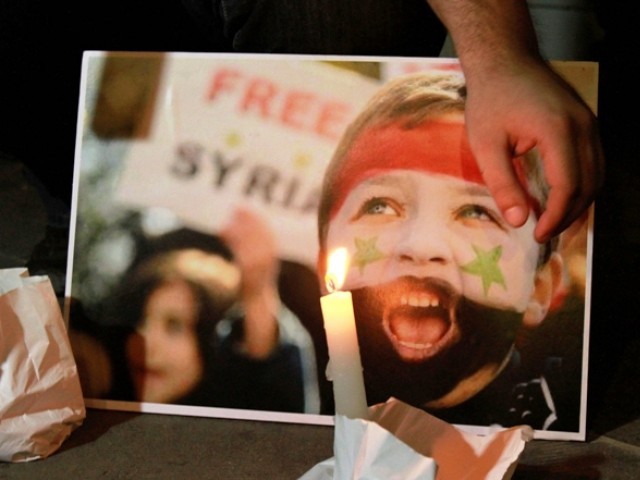
As the chorus against the Syrian government grows louder, Pakistan remains silent on the issue of human rights abuses in Syria. According to Amnesty International, over 1,500 people have been killed since March in the protests against Syrian President Bashar alAssad’s regime. Pressure against Syria appeared to grow over the weekend from Arab states, as the Gulf Cooperation Council asked for an immediate end to bloodshed.

On Monday, Saudi Arabia’s King Abdullah issued a written statement on the situation. ā€œWhat is happening in Syria is not acceptable for Saudi Arabia. Syria should think wisely before it is too late and issue and enact reforms that are not merely promises but actual reforms. Either it chooses wisdom on its own or it will be pulled down into the depths of turmoil and loss.ā€ Soon enough, Saudi Arabia, Kuwait and Bahrain had recalled their ambassadors from Damascus for ā€˜consultations’.

In April, Pakistan joined China and Russia in voting against a resolution by the UN Human Rights Council condemning the violence in Syria. Pakistan’s ambassador to the UN Zamir Akram was quoted as saying, ā€œMy country has always believed that ā€˜naming and shaming’ is an approach which is counterproductive.ā€

Three months and over a thousand dead bodies later, no public statement has yet to be made on the situation in Syria. The Foreign Office spokesperson did not respond to a query till the filing of this report.
According to former foreign minister Khurshid Mahmud Kasuri, Pakistan’s silence is a product of ā€œhistorical links between the Bhutto and alAssad familiesā€.

President Bashar’s father, the late president Hafez alAssad, was believed to be a close ally of former prime minister Zulfikar Ali Bhutto. Murtaza and Shahnawaz Bhutto travelled to Syria in 1979 to seek support for their campaign to save Bhutto and were offered asylum by the elder alAssad. Murtaza spent several years in Syria before returning to Pakistan in 1993. In 1981, a Pakistan International Airlines flight was hijacked and forced to land in Kabul, and then Damascus. The hijacking is widely believed to be the work of the Al Zulfikar Organisation.
Kasuri said that given the high death toll, ā€œthe government of Pakistan needs to make its position clear [and say] that it stands with the people of Syria.ā€

Pakistan’s silence, according to former foreign secretary Shamshad Ahmad, shows lack of a foreign policy. ā€œForeign policy is a reflection of a country’s internal state of affairs. If the state is in disorder, it has no foreign policy. Forget Syria or any other Arab country – Pakistan has enough problems at home and has no time to focus on international issues. No one is going to pay any attention to what Pakistan says because it has no credibility. No country is looking to Pakistan for support.ā€

Pakistanis for Peace Editor’s Note– The writer makes some valid points about Pakistan’s foreign policy or lack thereof. Being complicit also in the suppression of the civilians in Bahrain by providing troops as illustrated in this article shows that the country is often found on the wrong side of terrorism, women and religious minorities rights, and democratic and human rights. Not a good equation and no excuse for any of it any way one looks at it.

Arab Spring Hardening Into Summer of Stalemates

As Reported by USA Today

Among the protest banners in Cairo’s Tahrir Square was a hand-drawn map of the Arab Spring with black target symbols covering each country hit by anti-government uprisings since the leaders of Tunisia and Egypt were ousted earlier this year.

A rebel fighter walks in a old and abandoned Catholic Church used by Gadhafi forces as a military camp near Misrata, Libya, on May 25.
But the bull’s-eyes could easily be replaced with question marks as the groundswell for change has splintered into scattered and indecisive conflicts that have left thousands dead and Western policymakers juggling roles from NATO airstrikes in Libya to worried bystanders in Syria and Yemen.
The stalemates could shift into a deeper holding pattern in August during the Islamic holy month of Ramadan, when the pace of daily life traditionally slows as the Islamic world observes a dawn-to-dusk fast and other customs such as temporary truces.

It’s a huge and traumatic undertaking to shove aside regimes with decades in power — and sway over nearly every decision down to who gets hired as street sweeper. Iran did it with the 1979 Islamic Revolution, and the American-led invasion to topple Saddam Hussein cleaned the slate for Iraq and ushered in years of near civil war.

But no such wholesale change appears in the pipeline with the present revolts. That has raised concern that even if the leaders fall, the pillars of the regimes could survive, as happened when military rulers took temporary control after Egypt’s Hosni Mubarak stepped down.
“Half revolution doesn’t work,” a headline last week in Egypt’s Al-Ahram Al-Massai newspaper said after demonstrators returned to Tahrir Square to press for swifter political reforms and bolder legal action against officials from Mubarak’s regime who were accused of corruption and killing protesters.

But even a halfway mark appears farther along than most of the rebellions against the Mideast’s old guard. Cores of loyal security forces in Yemen and Syria keep the regimes hanging on despite relentless protests. In Libya, Moammar Gadhafi could face a moment of truth as rebels press closer to the capital Tripoli and NATO warplanes hammer military sites, yet the anti-Gadhafi militias have no clear leader to prevent possible power grabs to control the country’s oil riches if he is ousted.

The country where the Arab Spring began, Tunisia, has been shaken by unrest — including a rise in ultraconservative Islamists — ahead of planned elections in October to elect an assembly that will write a new constitution. Some political groups are urging further delays in the election to give new parties a chance to organize.

Egypt, meanwhile, is questioning when — or if — the ruling military council will surrender power. The caretaker rulers effectively announced a delay of the elections on Tuesday when they said preparations for the vote would start Sept. 30.

“Bring down the military junta,” chanted some of the 30,000 protesters Tuesday in Tahrir Square. Hours later, the military made clear its patience was wearing thin — with Maj. Gen. Mohsen el-Fangari wagging his finger and warning protesters against “harming national interests.”

Mubarak is under arrest and faces trial next month over the deaths of nearly 900 protesters in the uprising that ended his 29-year-rule in February. In a transcript of his interrogation published by two newspapers Thursday, he claimed to have had no control over security forces who attacked demonstrators.

“No one would have paid any attention to me or my orders,” he said when asked why he did not stop the violence. He claimed he gave clear orders that no force be used against the protesters, and blamed top aides for keeping him in the dark about the gravity of the protests that led to his downfall.
Only in tiny Bahrain have authorities apparently tipped the scales clearly in their favor. Security forces — aided by Saudi-led reinforcements — smothered an uprising by the kingdom’s majority Shiites seeking greater rights from the Sunni rulers. A so-called “national dialogue” began this month, but it’s unlikely that the 200-year-old ruling dynasty will give up any significant hold on power and may need a heavy hand to keep Shiite-led protests from reigniting.

“It’s not over, but we are in an ugly situation now,” said Christopher Davidson, a lecturer on Middle East and Gulf affairs at Britain’s Durham University.

That’s why the definition of the Arab Spring is increasingly being stretched. It’s both about the current showdowns and the long-term spillover. The upheavals — supercharged by the instant communications of the Web — have given the region a crash course in the clout of the streets. The view from the top is suddenly less comfortable.

Even monarchs have acted swiftly after relatively small-scale clamor. Oman’s Sultan Qaboos bin Said promised 50,000 new civil servant posts and allocated $2.6 billion for job programs. Jordan’s King Abdullah II has set in motion plans for an elected government in coming years.
In the tightly ruled United Arab Emirates, officials have opened the vaults to fund development programs in poorer regions outside Dubai and Abu Dhabi and plan to expand voting rights in September’s balloting for a federal advisory council. It’s been trumpeted as a “great leap” for democracy in a country that jailed five activists just for posting Internet appeals to form a true parliament.

“No matter what happens, countries gripped or just touched by the Arab Spring will never go back to what they were,” said Marina Ottaway, director of the Middle East Program at the Carnegie Endowment for International Peace. That leads to the bigger question: How deep can the changes go?
Syrian protesters, for example, know that even if President Bashar Assad falls, the underpinnings such as the rank-and-file military and public works staff cannot be purged as well without sending the country into a tailspin.

Omar Idilbi, a spokesman for the anti-Assad Local Coordination Committees, which track the protests in Syria, said the opposition has no plans to dissolve the army or even the ruling Baath Party if he is overthrown but will seek to weaken the powers of security agencies. “At the beginning of the uprising when we chanted, ‘the people want to bring down the regime,’ we did not mean President Assad, but the security agencies that interfere in everything from a marriage certificate to the opening of a shop,” said Idilbi, who is based in Beirut.

Yemen’s president isn’t even in the country, yet his regime fights on. A blast last month sent Ali Abdullah Saleh to Saudi Arabia for extensive medical treatment, including more than eight operations. But his son, Ahmed, kept the regime’s crucial Republican Guards forces intact.
Washington believes no credible alternative exists for the current regime as an ally to fight Yemen’s al-Qaida affiliate, which has been declared a major threat to U.S. interests. But President Barack Obama’s counterterrorism chief, John Brennan, has urged Saleh to accept a proposal that would transfer power to his vice president in exchange for immunity from prosecution.

“The current crisis showed that neither side can win,” said Ahmed Obeid bin Dagher, the deputy secretary general of the ruling party. “If there is no national consensus through dialogue, then al-Qaida will be the alternative.” Jordan-based political analyst Labib Khamhawi sees such calls by regime insiders as bids for survival: Protect the system, not necessarily the leader.

“I think it will be very difficult to imagine that the Libyan, Yemeni or Syrian presidents will remain in power,” he said. “The faces will be changed, but the system might continue to exist.” Among the kings and sheiks in the Gulf, however, there’s not even room for those concessions.
The region’s anchor power, Saudi Arabia, which has not seen protests take off, is staking out a role as “sort of the Arab Spring counterrevolution,” said Shadi Hamid, director of research at The Brookings Doha Center in Qatar.

“The Arab Spring revolutions may have their moments of self-doubt or seem stalled at times, but they are authentic expressions for change and, to use an overused phrase, on the right side of history,” said Hamid. “What began in Tunisia and Egypt is a long, long way from being finished.”

John Lennon- Imagine

Osama Bin Laden Hunted Down And Killed By US

By Brad Norington for The Australian

Bin Laden was killed in Pakistan and his body retrieved by a US strike team nearly 10 years after the September 11 terror attacks on the World Trade Centre in New York and the Pentagon killed more than 3000 people.

Announcing “justice has been done”, Mr Obama said bin Laden had been found hiding in Pakistan and a targeted operation launched today by a small US team.

ā€œAfter a firefight they killed Osama bin Laden and took custody of his body,ā€ Mr Obama said, adding that no Americans were harmed in the assault.

ā€œThe death of bin Laden marks the most significant achievement to date in our nation’s efforts to defeat al-Qa’ida,ā€ the President said. ā€œHis demise should be welcomed by all that believe in peace and human dignity.

ā€œIt’s important to note our counter terrorism cooperation with Pakistan helped lead us to bin Laden and the compound where he had been hiding.ā€ ā€œYet his death does not mark the end of our effort.

ā€œThere is no doubt that al-Qa’ida will continue to pursue attacks against us. ā€œWe must and will remain vigilant at home and abroad.ā€

Despite the decade that has elapsed since the September 11 attacks, the event, one of the most traumatic in US history, still stirs raw emotions, and his demise will be celebrated across the United States.

Chants of ā€œUSA, USAā€ rang out from tourists outside the White House as the news of bin Laden’s death sent an electric charge through Washington.

Hundreds of people gathered outside the fence of the presidential mansion and sang the US national anthem and started shouting and cheering. Mr Obama said the United States people understood the cost of war, but would not stand by if threatened.

ā€œAs a country we will never tolerate our security being threatened nor stand idly by when our people have been killed,ā€ he said. ā€œWe will be relentless in defence of our citizens and our friends and allies.

ā€œWe will be true to the values that make us who we are. ā€œAnd on nights like this one we can say to those families who have lost loved ones to al-Qa’ida terror, justice has been done.ā€

The location of bin Laden and his family confirms recent speculation that he was hiding in comfortable surroundings and close to civilisation, not in the remote mountains dividing Pakistan and Afghanistan.

US armed forces have been hunting the Saudi terror kingpin for years, an effort that was redoubled following the 2001 terror attacks on the World Trade Centre in New York and the Pentagon which killed 3000 people. But bin Laden always managed to evade US armed forces and a massive manhunt.

The death of bin Laden will raise huge questions about the future shape of al-Qa’ida and also have steep implications for US security and foreign policy 10 years into a global anti-terror campaign. It will also raise fears that the United States and its allies will face retaliation from supporters of bin Laden and other Islamic extremist groups.

Osama bin Mohammed bin Awad bin Laden was a member of the wealthy Saudi bin Laden family and the founder of the jihadist organisation al-Qa’ida, most widely recognised for the September 11 attacks on the US and numerous other mass-casualty attacks against civilian and military targets.

As a result of his dealings in and advocacy of violent extremist jihad, bin Laden lost his Saudi citizenship and was disowned by his billionaire family.

Bin Laden evaded US capture in Afghanistan after the 9/11 attacks and since then he and his organisation have been major targets of the US war on terror.

Bin Laden and fellow al-Qa’ida leaders are believed to have been hiding near the border of Afghanistan and Pakistan, in tribal areas that lie outside government control.

Why Pakistan’s Taliban Target the Muslim Majority

By Omar Waraich for Time

Although Pakistan’s headlines are dominated by the violent excesses of Taliban extremists, the majority of Pakistanis subscribe to the more mystical Sufi tradition of the country’s Barelvi school of Islam. And attacks on their places of worship are becoming depressingly familiar. Last Sunday, two bombers attacked the 13th Century Sakhi Sarwar shrine, near the southern Punjabi town of Dera Ghazi Khan, slaughtering 50 people and injuring twice as many. Mercifully, two other bombers failed to detonate their devices, preventing even higher casualties. Still, it was the deadliest assault yet on a Sufi shrine in Pakistan — and the sixteenth in the last two years.

The Pakistani Taliban swiftly claimed responsibility for the attack, as they have done for each previous one. Pakistan’s Taliban claims the mantle of the hardline Deobandi tradition, with many beliefs in common with the austere Wahabism of Saudi Arabia. They regard the Barelvi, who comprise more than three quarters of Pakistan’s Sunni Muslims, as irredeemable heretics. The Barelvis favor a more tolerant approach to Islam, promoting a cult of the Prophet and incorporate folkloric traditions such as seeking intercession from rural saints. Sakhi Sarwar, a mystic who is also revered by some Hindus and Sikhs, is said to grant women a son — a local legend that rouses anger among Islam’s more literalist adherents, who ascribe such powers only to Allah.

Tensions between Deobandis and Barelvis have punctuated most of Pakistan’s history. But with the arrival of al-Qaeda in the country a decade ago, local militants forged links with the global jihadists, their sectarianism sharpened to accept al-Qaeda’s “takfiri” worldview that deems adherents of other strains of Islam as deviant apostates worthy of death.

One reason for the uptick in sectarian-based terror attacks may be that the militants’ ability to strike the high profile urban targets that once grabbed global headlines has been diminished by Pakistani military offensives in their strongholds over the past two years. “It has become harder for the militants to strike hard targets,” says security analyst Ejaz Haider. “Some lessons have been learned from the previous attacks.”

So, the militants have, over the past two years, more keenly focused on sectarian attacks. Traditional Shi’ite processions are now routinely targeted by suicide bombers. In May 2010, two mosques of the minority Ahmedi sect were targeted in Lahore, killing 93 people. And there’s been an escalation of bombings directed against the majority Barelvis. After attacks on two of their most prominent shrines, Data Darbar in Lahore’s old city and Abdullah Shah Ghazi in Karachi, Barelvis came out on to the streets, wielding weapons and vowing revenge against the Taliban. They did not extend blame to the broader spectrum of Deobandis, perhaps wisely evading the beginnings of a more gruesome sectarian conflict that Pakistan can ill-afford.

Not all Barelvis are the models of peace and tolerance that some have portrayed them to be. It was a Barelvi, Mumtaz Qadri, that assassinated Punjab Governor Salmaan Taseer in January, for his opposition to Pakistan’s prejudicial blasphemy laws. The assassination was applauded by 500 Barelvi scholars in a joint statement. And the Sunni Tehreek, a Barelvi militant outfit, rewarded Qadri’s family and threatened Taseer’s daughter. While they may favor a more permissive vision of Islam, certain Barelvis are quite capable of violence where they feel the Prophet has been dishonored.

The campaign to defend Pakistan’s blasphemy laws from reform has, in fact, united Barelvis and Deobandis since last November. Barelvi anti-Taliban rhetoric was also put on pause. “We had seen the Barelvis getting ready to organize a campaign against the Taliban,” observes analyst Nasim Zehra, “but they got sidetracked by the blasphemy issue and this was forgotten.” Until last month’s assassination of Minorities Minister Shahbaz Bhatti, the religious right was able to frequently draw tens of thousands on to the streets.

Sectarian hatred aside, rural shrines are a far easier terror target than the more heavily guarded state and economic targets in the cities. Suicide bombers, especially the teenage boys favored by militants, can often evade notice before they reach the target. A crowded space helps secure the militants’ aim of causing high casualties. In the case of the Sakhi Sarwar bombers, they only had travel to a relatively short and unimpeded distance from North Waziristan to the edge of Punjab.

The bombings may also be an attempt to relieve pressure from sporadic Army actions against militants in the northern tip of the tribal areas. “Just to remain alive there, the militants have to try and force the government’s hand into diminishing pressure,” says analyst Haider. “To counter that pressure, they mount attacks in the mainland in the hope of securing some deal back in the tribal areas.” By targeting shrines across the country, the militants are able to demonstrate their enduring geographical reach and expose the state’s vulnerabilities.

The bad news is that the state is in a poor position to respond. After the latest bombings, Barelvi leaders denounced the Punjab provincial government for failing to provide security at shrines. The Punjab government dismisses the charge. “It’s happening all over,” says Ahsan Iqbal, a leading politician from the Pakistan Muslim League-N, the ruling party in Punjab. “This is not something that is province-specific.” Iqbal casts blame on the federal government for failing to share intelligence. The federal government reverses the charge, and argues that the law and order is a provincial responsibility. What no one seems to be focusing on is the desperate need to enhance the police’s capacity, with better equipment, counterterrorism training and an intelligence gathering network that reaches deep into Pakistan’s remote areas.

Pakistan Army To Restore ā€œPeaceā€ in Bahrain?

By Aijaz Ahmed for Indus Herald

Pakistan and Bahrain are seriously considering ways and means and possible repercussions of Pakistan’s military and intelligence agencies’ help to the later in restoring ā€œpeaceā€ in politically disturbed areas. Foreign Minster of Bahrain Sheikh Khalid bin Ahmed Al-Khalifa is to arrive in Pakistan on Tuesday to discuss the matter, highly placed sources have confided to Indus Herald. The Saudi led Gulf Cooperation Council (GCC) has already approved deployment of Peninsula Shield Force in the Kingdom of Bahrain to crush the movement for democracy that is getting stronger with every passing day. Assurances from King Hammad to introduce some reforms with regards to civil liberties and democratic and human rights have not succeeded so far to calm down anger among people demonstrating for a democratic system. Interestingly the reaction of the world community, the United States, Saudi Arabia and Pakistan is totally different on the situation as compared to the reaction demonstrated on the situation in Libya.

Pakistan has already expressed its support for the GCC decision, and that too on Saudi pressure, a source at the foreign office revealed. The economically hard-pressed Pakistan had no other way but to follow the Saudi demands as the holy kingdom has assured a sizable support in meeting the economic challenges ahead, the foreign office source added. However, Pakistan’s nauseating defense of its endorsement to GCC intervention in Bahrain to deploy Peninsula Shield Force isn’t finding any takers. Majority of foreign policy commentators and experts are not ready to buy Pakistani endorsement but people having close relations with PML-N including the likes of Shamshad Ahmed Khan, Tariq Fatmi and Riaz Khokhar are intriguingly silent on the support that Pakistan has diplomatically provided to Bahrain on the behest of Saudi Arabia. The sole reason for the silence of these former ā€˜babus’ of Foreign Office and some other ā€œwell informed expertsā€ lies behind the special relationship that PML-N leader Mian Nawaz Sharif enjoys with the Royal family of the holy land.

Pakistan desired return of peace, security and stability to Middle East that had been hit by political upheaval, the newly designated foreign office spokesperson Ms Tahmina Janjua observed while briefing the media the other day. ā€œAs far as Bahrain is concerned, it was an internal decision of the GCC. The GCC decided on the basis of its founding principles that security forces would go to Bahrain,ā€ said Foreign Office Spokesperson in her stammering voice while replying to hard hitting questions on Bahrain though her words did not match the principles of ā€˜non-intervention and non-interference in domestic affairs of others’ that she had painstakingly learnt during her 27 years long diplomatic career. This was not the first time that Foreign Office stood up for Bahrain’s monarchy. Foreign Secretary Salman Bashir had earlier praised the Bahraini Monarch on March 1. While the protestors were being tear-gassed and shot at, he had said: ā€œWe … admire the progress made by Bahrain under the leadership of His Majesty King Hamad bin Isa Al-Khalifa.ā€

The current political upheaval is a geniune cause of concern for Pakistan as there are some 65,000 Pakistanis in Bahrain, some of whom are working with Bahraini security services, the FO sources maintained adding that the security of King of Bahrain, the major installations, the Royal Family and the state dignitaries is prime responsibility of the Pakistanis employed in the Bahraini security services. Perhaps this was the reason that a number of Pakistanis became vistims of the public anger and some of them were seriously injured earlier this month during the violent protest of people on streets. Reports received from the tiny Gulf Kingdom suggest that the xenophobic attacks against Pakistani expatriates earlier this month were commited as Pakistani policemen had been at frontlines of riot police that attacked demonstrators.

In an atmosphere where common Pakistanis are quite unsafe in the Kingdom, Pakistan has not only quietly endorsed the intervention, but allowed the welfare wings of its military forces – Fauji Foundation and Bahria Foundation – to recruit about 1000 guards to bolster Bahrain’s security apparatus and the recruitment was not made secretly, instead the process was completed in very open way.

The reasons for the uprising in Bahrain are said to be more than just the political, the sources further revealed. The detailed analysis of the situation reflects that the political upheaval is being financed by some external factors and the sources point their fingers towards some hard core religious elements having strong presence in Pakistan and also towards the Iranian Government, thus both Saudi Arabia and Bahrain intend to use good offices of Pakistan Army and its intelligence wings to play their ole in bringing in peace and stability in the Gulf State.

Foreign Office has confirmed that the The Foreign Minister of Bahrain will discuss security cooperation and internal political situation of the country with Pakistani leadership. During his hectic visit, he will meet President Zardari, Prime Minister Yusuf Raza Gillani, State Minister for Foreign Affairs, and the military leadership in a very short span of time. The two sides will discuss further strengthening security cooperation and additional steps, sources revealed. Bahrain may formally furnish a request for Pakistan army contingents to be deployed with the GCC Shield Force in troubled areas as well as a request to ISI and Military Intelligence (MI) for using their good offices to establish contacts and facilitate parlays between the Bahrain Government and the right wing forces as well as in direct talks between Iran and Bahrain, sources confided with confidentiality. ā€˜Pakistan is the only country that can help Bahrain in bringing in the political stability in the country and thus a request is expected to be made for an active Pakistani role in the greater regional and trans regional interest’, sources said. But any decision will be taken keeping the sensitivities and threats in mind, the sources assured.

Meanwhile some brain storming is being done between Pakistan and Saudi Arabia for revival of an already expired defense agreement between Pakistan and the Kingdom of Saudi Arabia and an initial discussion has been made during the recent visit of Saudi National Security Chief, however few changes will be made in the previous agreement if any progress in this regard is made, sources in the diplomatic circles maintained.

Iran Calls Saudi Troops in Bahrain ā€˜Unacceptable’

By Ethan Bronner and Michael Slackman for The New York Times

A day after Saudi Arabia’s military rolled into Bahrain, the Iranian government branded the move ā€œunacceptableā€ on Tuesday, threatening to escalate a local political conflict into a regional showdown with Iran.

ā€œThe presence of foreign forces and interference in Bahrain’s internal affairs is unacceptable and will further complicate the issue,ā€ Ramin Mehmanparast, the Iranian Foreign Ministry spokesman told a news conference in Tehran, according to state-run media.

Even as predominantly Shiite Muslim Iran pursues a determined crackdown against dissent at home, Tehran has supported the protests led by the Shiite majority in Bahrain.

ā€œPeople have some legitimate demands and they are expressing them peacefully,ā€ Mr. Memanparast said. ā€œIt should not be responded to violently.ā€

ā€œWe expect their demands be fulfilled through correct means,ā€ Mr. Mehmanparast added. Iran’s response — while anticipated — showed the depth of rivalry across the Persian Gulf in a contest that has far-reaching consequences in many parts of the Middle East.

On Monday, Iranian state-run media went so far as to call the troop movement an invasion. Saudi Arabia has been watching uneasily as Bahrain’s Shiite majority has staged weeks of protests against a Sunni monarchy, fearing that if the protesters prevailed, Iran, Saudi Arabia’s bitter regional rival, could expand its influence and inspire unrest elsewhere.

The Saudi decision to send in troops on Monday could further inflame the conflict and transform this teardrop of a nation in the Persian Gulf into the Middle East’s next proxy battlefield between regional and global powers. On Tuesday, there was no immediate indication that the Saudi forces were confronting protesters in the central Pearl Square — the emblem of the Bahrain protest much as Cairo’s Tahrir Square assumed symbolic significance in the Egyptian uprising.

Several hundred protesters camped out there on what seemed initially to be a quiet day with little traffic on the streets as the details of the deployment by Bahrain’s neighbors — and their mission — remained ill-defined.

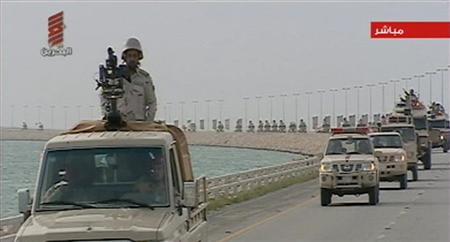
On Monday, about 2,000 troops — 1,200 from Saudi Arabia and 800 from the United Arab Emirates — entered Bahrain as part of a force operating under the aegis of the Gulf Cooperation Council, a six-nation regional coalition of Sunni rulers that has grown increasingly anxious over the sustained challenge to Bahrain’s king, Hamad bin Isa al-Khalifa. ā€œThis is the initial phase,ā€ a Saudi official said. ā€œBahrain will get whatever assistance it needs. It’s open-ended.ā€

The decision is the first time the council has used collective military action to help suppress a popular revolt — in this case a Shiite popular revolt. It was rejected by the opposition, and by Iran, as an ā€œoccupation.ā€ Iran has long claimed that Bahrain is historically part of Iran.

The troops entered Bahrain at an especially combustible moment in the standoff between protesters and the monarchy. In recent days protesters have begun to move from the encampment in Pearl Square, the symbolic center of the nation, to the actual seat of power and influence, the Royal Court and the financial district. As the troops moved in, protesters controlled the main highway and said they were determined not to leave.

ā€œWe don’t know what is going to happen,ā€ Jassim Hussein Ali, a member of the opposition Wefaq party and a former member of Parliament, said in a phone interview. ā€œBahrain is heading toward major problems, anarchy. This is an occupation, and this is not welcome.ā€

Rasool Nafisi, an academic and Iran expert based in Virginia, said: ā€œNow that the Saudis have gone in, they may spur a similar reaction from Iran, and Bahrain becomes a battleground between Saudi and Iran. This may prolong the conflict rather than put an end to it, and make it an international event rather than a local uprising.ā€

An adviser to the United States government, who spoke on the condition of anonymity because he was not authorized to talk to the press, agreed. ā€œIran’s preference was not to get engaged because the flow of events was in their direction,ā€ he said. ā€œIf the Saudi intervention changes the calculus, they will be more aggressive.ā€

Though Bahrain said it had invited the force, the Saudi presence highlights the degree to which the kingdom has become concerned over Iran’s growing regional influence, and demonstrates that the Saudi monarchy has drawn the line at its back door. Oil-rich Saudi Arabia, a close ally of Washington, has traditionally preferred to operate in the shadows through checkbook diplomacy. It has long provided an economic lifeline to Bahrain.

But it now finds itself largely standing alone to face Iran since its most important ally in that fight, Hosni Mubarak of Egypt, has been ousted in a popular uprising. Iran’s ally, Hezbollah, recently toppled the Saudi-backed government of Lebanon — a symbol of its regional might and Saudi Arabia’s diminishing clout.

But Bahrain is right at Saudi Arabia’s eastern border, where the kingdoms are connected by a causeway.

The Gulf Cooperation Council was clearly alarmed at the prospect of a Shiite political victory in Bahrain, fearing that it would inspire restive Shiite populations in Saudi Arabia and Kuwait to protest as well. The majority of the population in Saudi Arabia’s eastern provinces, where the oil is found, is Shiite, and there have already been small protests there.

ā€œIf the opposition in Bahrain wins, then Saudi loses,ā€ said Mustafa el-Labbad, director of Al Sharq Center for Regional and Strategic Studies in Cairo. ā€œIn this regional context, the decision to move troops into Bahrain is not to help the monarchy of Bahrain, but to help Saudi Arabia itself .ā€

The Bahrain government said that it had invited the force in to help restore and preserve public order. The United States — which has continued to back the monarchy — said Monday that the move was not an occupation. The United States has long been allied with Bahrain’s royal family and has based the Navy’s Fifth Fleet in Bahrain for many years.

Though the United States eventually sided with the demonstrators in Egypt, in Bahrain it has instead supported the leadership while calling for restraint and democratic change. The Saudi official said the United States was informed Sunday that the Saudi troops would enter Bahrain on Monday.

Saudi and council officials said the military forces would not engage with the demonstrators, but would protect infrastructure, government offices and industries, even though the protests had largely been peaceful. The mobilization would allow Bahrain to free up its own police and military forces to deal with the demonstrators, the officials said.

The Gulf Cooperation Council ā€œforces are not there to kill people,ā€ said a Saudi official, speaking on the condition of anonymity because he was not authorized to talk to the press. ā€œThis is a G.C.C. decision; we do not violate international law.ā€

But the officials also acknowledged that it was a message to Iran. ā€œThere is no doubt Iran is involved,ā€ said the official, though no proof has been offered that Iran has had anything to do with the political unrest.

Political analysts said that it was likely that the United States did not object to the deployment in part because it, too, saw a weakened monarchy as a net benefit to Iran at a time when the United States wants to move troops out of Iraq, where Iran has already established an influence.

The military force is one part of a Gulf Cooperation Council effort to try to contain the crisis in Bahrain that broke out Feb. 14, when young people called for a Day of Rage, fashioned after events in Egypt and Tunisia. The police and then the army killed seven demonstrators, leading Washington to press Bahrain to remove its forces from the street.

The royal family allowed thousands of demonstrators to camp at Pearl Square. It freed some political prisoners, allowed an exiled opposition leader to return and reshuffled the cabinet. And it called for a national dialogue.

But the concessions — after the killings — seemed to embolden a movement that went from calling for a true constitutional monarchy to demanding the downfall of the monarchy. The monarchy has said it will consider instituting a fairly elected Parliament, but it insisted that the first step would be opening a national dialogue — a position the opposition has rejected, though it was unclear whether the protesters were speaking with one voice.

The council moved troops in after deciding earlier to help prop up the king with a contribution of $10 billion over 10 years, and said that it might increase that figure. But if the goal was to intimidate Iran, or the protesters, that clearly was not the first response.

Bahrain’s opposition groups issued a statement: ā€œWe consider the entry of any soldier or military machinery into the Kingdom of Bahrain’s air, sea or land territories a blatant occupation.ā€