Archive for November, 2011

Occupy: Out of Zuccotti Park And Into The Streets

By Eugene Robinson for The Washington Post

Occupy Wall Street may not occupy Zuccotti Park anymore, but it refuses to surrender its place in the national discourse. Up close, you get the sense that the movement may have only just begun.

Demonstrators staged a “day of action” Thursday, following the eviction of their two-month-old encampment this week. The idea was, well, to occupy Wall Street in a literal sense — to shut down the financial district, at least during the morning rush hour.

For the most part, it didn’t work. Entrances to some subway stations were blocked for a while, and traffic was more of a mess than usual. But police turned out in force, erecting barricades that kept protesters from getting anywhere near their main target, the New York Stock Exchange. Captains of commerce may have been hassled and inconvenienced, but they weren’t thwarted.

There was some pushing and shoving, resulting in a few dozen arrests. Coordinated “day of action” protests were held in other cities. They did not change the world.

A big failure? No, quite the opposite.

Lower Manhattan was swarming not just with demonstrators and police but with journalists from around the world — and with tourists who wanted to see what all the fuss was about. A small, nonviolent protest had been amplified into something much bigger and more compelling, not by the strength of its numbers but by the power of its central idea.

There is a central idea, by the way: Our financial system has been warped to serve the interests of a privileged few at the expense of everyone else.

Is this true? I believe the evidence suggests that it is. Others might disagree. The important thing is that because of the activism of the Occupy Wall Street protests — however naive, however all-over-the-map — issues of unfairness and inequality are being discussed.

This is a conversation we haven’t been having for the past 30 years. For politicians — and those who pay lavishly to fund their campaigns — the discussion is destabilizing because it does not respect traditional alignments. For example, white working-class voters are supposed to be riled up against Democrats for policies such as affirmative action and gun control. They’re not supposed to get angry with Republicans for voting to bail out the banks and then flatly ruling out the idea of relief on underwater mortgages.

How people feel about fairness — the 1 percent at the top versus the other 99 percent — has nothing to do with how they feel about limiting abortion or banning assault weapons. It has nothing to do with whether people think racism is a thing of the past or a continuing scourge. Fairness can’t be dismissed as some sort of first step toward socialism, unless we’re willing to concede that capitalism and fairness are fundamentally incompatible. I don’t believe this is the case. Maybe some of the Occupy protests’ most vocal opponents would like to disagree.

In Midtown Manhattan, many blocks from Zuccotti Park, famously jaded New Yorkers were eager to talk about Occupy Wall Street. Buttonholing people at random, I found a lot of support for the decision by Mayor Michael R. Bloomberg (I) to clear the park of tents, sleeping bags and other appurtenances of a permanent settlement. But I also found a lot of agreement with the protesters — even if not everyone had the same idea about just what the protesters were saying.

“Yeah, they were talking a lot of crazy stuff, some of them,” said Ramon Henriquez, owner of a limousine company, who was idling on Central Park South behind the wheel of one of his cars. “Some of them, when they’d do that crazy human microphone thing, they would talk about socialism. I didn’t like that at all. But I liked what they said about the banks.”

He remembered one Occupy speaker asking what would happen if every homeowner decided to skip a month on the mortgage, instead putting the money in escrow — just to get the banks’ attention. “You saw what happened with the debit-card fee,” he said, referring to Bank of America’s abandoned attempt to squeeze new revenue out of account holders. “They listened because they had to listen.”

The erstwhile occupiers of Zuccotti Park swear that they aren’t going anywhere — that they’ll get back into the park one way or another. But they’ve done something more important: They’ve gotten into people’s heads.
In the Name of ‘Honour’: Brazen Shikarpur Killings Shake Hindu Community

By Sarfaraz Memon for The Express Tribune

Most shops in Taluka Chak in Shikarpur were open on Wednesday but there was an uneasy calm. Three Hindu men are dead and no one knows the whereabouts of Seema Bhayo, the girl at the centre of the storm. Residents fear that she may also have been killed. The police have no clue.

It is a simple tale of a love affair that turned tragic. The president has ordered an inquiry into the matter. Not to be outdone, the Sindh home minister has suspended the SHO of the area but neither of these moves brought any comfort to the families who lost their loved ones.

The brutal attack took place on Monday, the first day of Eid, when four armed men on two motorcycles barged into the house of one Naresh Kumar, where he and his friends Dr Ajeet Kumar, Dr Satya Pal and Ashok Kumar were present. The intruders opened fire and killed Ashok and Naresh on the spot, injuring  Dr Ajeet Kumar and Dr Satya Pal.

Dr Ajeet Kumar later died of his wounds at a Sukkur Hospital, more so because no one was willing to take him to the hospital. The policemen who were supposed to guard the house were nowhere to be seen. They did not turn up that day, despite the fact that they had been stationed on fear that such an attack was imminent.

The “crime” that these four men apparently committed was that they intervened on behalf of two young men of their community who had been apprehended two weeks earlier and charged with criminally assaulting a Muslim girl. The real story, as told by area residents, was that Seema and Sandeep Kumar fell in love and were caught while they were meeting at the house of Sandeep’s friend, Nakash Kumar.

This correspondent also visited Qazi mohalla where Seema’s home is situated on the right side of the road and the shops of Sandeep and Nakash were on the left side. A neighbour said that Seema and Sandeep used to meet at Nakash’s house. On that fateful day, area residents saw them going in and raided the house and thus the affair was revealed.

It was the promise of a better life which attracted Seema towards Sandeep, said another resident, adding that Seema’s father Nazir Ahmed Bhayo was a mason by profession. When the couple was caught, the Hindu community intervened to settle the matter. President of the Hindu Panchayat in Chak, Prem Kumar, said “We went to the Bhayo elders and told them that we are ready to pay any fine to reconcile the matter.”

Area resident Moulvi Allah Bux confirmed that the Hindu community were trying to reconcile with the Bhayo clansmen and for this they had met Sardar Babul Bhayo, who gave them a positive response and told them that the date of the reconciliatory meeting would be announced on the second day of Eid. But before the meeting could be held, the murders were committed.

While Babul Khan Bhayo was not available, clan chieftan Sardar Wahid Bux Bhayo  said that it was the Hindu community which had resorted to aggression by sexually assaulting a Bhayo girl. According to him, the three Hindus were killed in retaliation for that incident. But he added that he condemned both incidents.

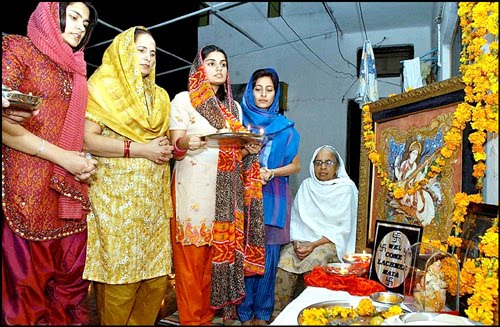
On Tuesday, hundreds participated in the last rites of the three men. The rituals were performed near the Sadhu Bela temple in Sukkur.

Following the notice by the president, the Chak police has swung into action. During raids in different localities, they have apprehended more than 25 people. DIG Larkana Sain Rakhiyo Mirani said that the murder was an act of terrorism. But the Hindu community maintains that the real perpetrators of the crime have so far not been arrested.

Seeking Solace in Sufism

By Renuka Deshpande for Daily News & Analysis

The city’s metamorphosis from a sleepy town to a metropolis has left most of us long for peace and contentment. This is why Punekars are taking to Sufism as a quest for harmony and the need to seek refuge in the promise of hope and love.

Sufism or Tasawwuf, the mystical arm of Islam, which is inwardly directed, deals with the soul’s relationship with god. It advocates oneness with god and urges that everything men do, be driven by one sole motivation — the love of god. The word Sufi means ‘clothed in wool’, reveals Dr Zubair Fattani in his article The Meaning of Tasawwuf, and is metaphoric of the inwardness of Islam wrapped in its exterior expressions.

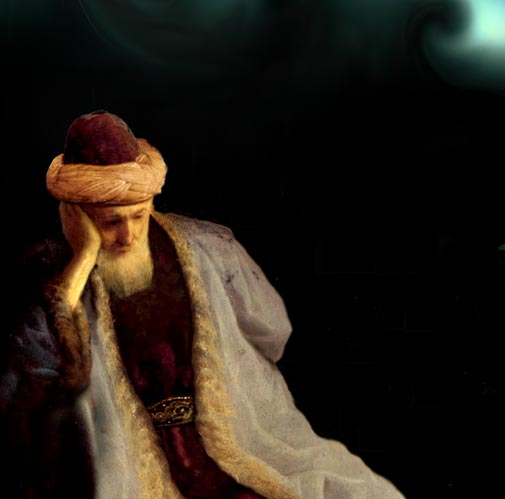
Over the centuries, it has found expression in the ecstatic and reflective poetry of Jalaluddin Rumi, Baba Bulleh Shah, Hafiz, Rabia and Moinuddin Chisti and others, which is increasingly popular in the city.

Bookshelves laden with books on Sufism and its various expressions in poetry, music and dance are a common sight, as are the collections featuring Sufi music maestros like Nusrat Fateh Ali Khan, Abida Parveen, Kailash Kher and the Sabri brothers, among many illustrious others.

Jyoti Mate, a city Sufi music and dance therapist, uses this mystical dimension to heal all those who seek solace in it. The whirling dervishes, the most iconic symbol of Sufism, are the basic element of Sufi dance and represent the earth rotating around the sun, also symbolic of the universe.

“Sufi dance helps stir pent-up and suppressed emotions within oneself. The hands are outspread while whirling and the head is thrown off-centre. A lot is metaphorical in Sufism, dance being no exception. The raising of the right hand and facing it skyward indicates absorption of knowledge from the heavens and the left hand which is pointed downwards, palm-down, passes it on to others.The head thrown off-centre is an urge to be non-egocentric, so that the ego doesn’t grow further. The cap used by Sufis is made of camel hair and is of a specific height, again symbolising the curtailing of the ego,” she says.

Mate adds that response to her therapy sessions has steadily grown since she first started in June 2008 and people often break into tears after the session is over.

On the music front, there is Ruhaniyat, the all-India Sufi and mystic music festival presented by Banyan Tree, which has been coming to Pune for the past eight years. The seven-city festival brings with it Baul musicians from West Bengal, comprising Sufi Muslims and Vaishnav Hindus, the Manganiars from Rajasthan singing Sufi folk music from the state, qawwals like the Sabri brothers and Turkish Sufi musician Latif Bolat, among others. Nandini Mukesh, director of Banyan Tree, who also emcees Ruhaniyat, says that the festival has elicited phenomenal response in the city.

“Last year, our attendance read around 1,800 people. We found ourselves continually adding chairs,” she says adding that the audience in Pune is very evolved and sophisticated and comes with an understanding of the music played at the festival.

Speaking of the musical response she receives at Ruhaniyat, Nandini says, “Baul songs are incredibly symbolic and metaphorical and touch a chord within people. Qawwalis comprise incredibly powerful musical compositions and progressions, but the Hindi and Urdu lyrics are simple to understand. Beyond a point, however, words cease to matter and the musical experience turns mystical and takes precedence.”

The popularity of Sufi rock bands like Junoon from Pakistan, along with Coke Studio, has also led to the emergence of Sufi rock bands like Chakra in the city, which does a lot of covers of Pakistani Sufi music songs, along with some original compositions featuring dohas of Baba Bulleh Shah and Kabir.

The Osho Meditation Resort in Koregaon Park, has whirling meditation sessions every Wednesday. Ma Amrit Sadhana of the resort, says the eyes are kept open and unfocused while whirling, which forms the first stage of the meditation technique, the second being rest.

“The response to these sessions is great. Watching so many people be a part of the session, and the sight of them totally engrossed in whirling is beautiful,” she adds.

Sheetal Sanghvi of The Urban Ashram, which hosts many Sufi music and dance workshops, is bringing Sheikha Khadija to Pune in November for a whirling meditation workshop. Khadija is a Sheikha in the Mevlevi Order of America.

“Sufism promotes unity and love and the response to our Sufi workshops is really growing. This is because orthodox systems of religious beliefs sometimes don’t narrate to the soul as well as they should. Sufism, with its teachings, gives hope to people,” he adds.

Islamic scholar Anees Chishti, who isn’t a Sufi but has studied it, is skeptical of this current trend of what he feels is pop-Sufism.

“Sufism requires penance and meditation. Sufi rock and dances are nothing but a Western concept. They call the whirling movements dervishes, but the term, is durvesh, dur meaning pearl and vesh meaning hanging, in Persian. So the composite means ‘hanging like a pearl’. In Turkey, during the time of Rumi, the head of the khanqah or mystic hall, was a durvesh. When he played the daf and sang mystical poetry, people listening to him would go in a trance and start whirling. So ‘durvesh’ refers to a person and not a bodily movement. All this pageantry is a marketing tactic,” he says.

Opinions on the topic are many and varied, but most will agree that Sufism in its numerous interpretations in literature, music and dance does feel divine.

Pakistanis for Peace Editor’s Note– Amongst literally hundreds of favorite Rumi quotes, one of our top one sums up life very well when he said: “All day I think about it, then at night I say it. Where did I come from, and what am I supposed to be doing? I have no idea. My soul is from elsewhere, I’m sure of that, and I intend to end up there.”

Pakistani journalist given U.S. Asylum Tells of Threats, Disappearances in Baluchistan

By Pamela Constable for The Washington Post

Siraj Ahmed Malik, an ambitious young Pakistani journalist, was enjoying a stint last fall on a fellowship at the University of Arizona when he started getting chilling messages from home.

One after another, his friends and colleagues were disappearing, he learned, and their bodies were turning up with bullet holes and burn marks. A doctor’s son from his home town was arrested and vanished. A fellow reporter was kidnapped, and his corpse was found near a river. A student leader was detained, and his bullet-riddled body dumped on a highway. A writer whose stories Malik had edited was shot and killed.

“These were kids I had played cricket with, people I had interviewed, younger reporters I had taught,” Malik, 28, said in an interview last week in Arlington County, where he now lives. The final straw came in early June, when one of his mentors, a poet and scholar, was gunned down in Quetta, the capital of Baluchistan, Malik’s native province.

On Aug. 19, Malik applied for political asylum in the United States. In his petition, he said that his work as a journalist and ethnic activist in Baluchistan, where he had exposed military abuses, made him likely to be arrested, tortured, abducted and “ultimately killed by the government” if he returned.

Two weeks ago, his petition was granted. It was a highly unusual decision by U.S. immigration officials, given Pakistan’s status: a strategic partner in Washington’s war against Islamic terrorism; a longtime recipient of U.S. aid; and a democracy with an elected civilian government and vibrant national news media.

“I never wanted to leave my country, but I don’t want to become a martyr, either,” said Malik, a soft-spoken but steely man who spends his days hunched over a laptop at coffee shops in Clarendon, checking with sources back home to update his online newspaper, whose name means “Baluch Truth.”

“What’s going on in Baluchistan is like the dirty war in Argentina,” he said. “I need to be telling the story, but I can’t afford to become the story.”

Baluchistan is the Wild West of Pakistan — a remote desert province, larger than France, that is home to a mix of radical Islamic groups, rival ethnic and refugee gangs, rebellious armed tribes, and security agencies that have long been reported to kidnap, torture and kill dissidents with impunity.

Living under constant threat

Yet this ongoing violence and skulduggery receives scant international attention. Foreign journalists are banned from visiting the region alone, while headlines about Pakistan are dominated by a separate, high-stakes border conflict in which American drones and Pakistani troops are battling the Taliban and al-Qaeda.

As a result, a handful of local journalists such as Malik have been left to investigate and report the news without big-city patrons or visiting foreign delegations to give them cover.

“The threat of disappearance was always lurking in the back of our minds,” Malik wrote in his asylum petition. “My friends, colleagues and I lived with the knowledge that yesterday it was him that disappeared; today it is someone else; tomorrow it could easily be me.”

As Malik recounted over coffee, pressure and threats from unidentified intelligence agents were a daily hazard. According to his asylum file, agents accosted him in airports and hotels, detained and questioned him, and repeatedly threatened to “teach me a lesson.”

Malik acknowledges that as an advocate for the Baluch nationalist cause, his journalism is hardly neutral. The ethnic minority movement, which seeks autonomy from the central government, includes armed groups. Malik claims that he does not condone them, but he describes their stance as a “defensive” response to official abuse.

Still, his case for protection was bolstered by reports from human rights groups and letters from university officials in Arizona, who called him “nothing short of brave.” In a July report, Human Rights Watch described a “practice of enforced disappearances” of Baluch leaders and intellectuals, often by security agencies, and listed 45 abductions or killings since 2009.

Activists including Malik assert that more than 5,000 Baluch have vanished in the past decade, but the issue has never been seriously addressed, while the government has both co-opted and persecuted Baluch tribal chiefs. In 2007, Pakistan’s military president fired the head of the Supreme Court, who sought to probe the disappearances. In 2008, a civilian government took office and an investigative commission was established, but little action has been taken.

“The authorities have no answers because there is no accountability,” said one Pakistani diplomat, who asked not to be identified because of the sensitivity of the subject. He suggested that Malik had exaggerated his fear of persecution as a “ploy” to remain in the United States, but he also called disappearances “the tip of the iceberg” in a society where security forces hold sway behind the scenes. Even a chief justice, he added, “knows there are lines he cannot cross.”

Driven to speak out

Najam Sethi, a newspaper publisher and titan of Pakistan’s liberal media establishment, was Malik’s boss from 2006 to 2010, when he worked as a correspondent in Quetta. For the past few months, Sethi has been on his own sabbatical at the New America Foundation in Washington, partly to escape the pressure he faces at home.

At a public forum here last week, Sethi described Pakistan’s news media as free to snipe at politicians and expose financial scandals but said it remains cautious about reporting on military and intelligence institutions, partly out of respect and partly out of fear.

“The media are scared, because there is no one to protect them,” Sethi said.

According to the Committee to Protect Journalists, more than 40 Pakistani journalists have been killed since 1992. In May, a well-known investigative reporter, Saleem Shahzad, was abducted and found murdered. Shahzad had received threats after writing about al-Qaeda infiltration of the military, and a senior U.S. military official said his killing had been “sanctioned” by the government.

Asked about Malik, Sethi said he thought his former staffer had been too aggressive and outspoken. As Malik’s editor, he said, he had intervened several times with military authorities to protect him. “I wish he hadn’t gone so far,” Sethi said. “He crossed too many red lines.”

Malik, however, said he felt “betrayed” by such liberal media leaders, saying they have avoided speaking out against oppression in Baluchistan. He recounted how Baluch groups had been galvanized by the 2006 army slaying of the legendary tribal chief Nawab Akbar Bugti.

“For us, the killing of Bugti was Pakistan’s 9/11,” Malik said. After that, he said, he stepped up his exposure of the violence and abuses. His activities drew increasing attention from government agents, who, he said, called him a “traitor” and threatened to kill him if he did not stop.

Instead, Malik persisted. In early 2010, he attended a conference in India and denounced the disappearances. From his fellowship perch in Arizona last winter, and then while working briefly at the Center for Public Integrity in Washington in the spring, he wrote and spoke out at every opportunity.

But as the deaths of other Baluch journalists and friends began to mount, Malik said last week, he began to hesitate about returning.

“Baluchistan needs a messenger to the world,” he said, itching to get back to his reporting. “Here in the United States, I don’t have an office or money, but at least I can stay alive and get the message out.”

Indo-Pak Tennis Duo Lifts Paris Crown

By Khalid Hussain for The Arab News

The Indo-Pak Express of Pakistan’s Aisam-ul-Haq Qureshi and India’s Rohan Bopanna claimed their first ever ATP Masters crown when they crushed France’s Julien Benneteau and Nicolas Mahut in a one-sided final in Paris on Sunday.

Aisam and Bopanna were in full flow in a final that jusxt lasted for 65 minutes as they raced to a 6-2, 6-4 triumph in the Paris Masters final in the French capital to bag their third title of the season.

Before Sunday’s title-winning triumph, the Aisam-Bopanna duo had won the Gerry Weber Open at Halle and the Stockholm Open. Ranked seventh in the world doubles rankings, Aisam and Bopanna had already qualified for the year-ending ATP Masters finale to be played in London later this month. The Paris win gave the pair 1000 ranking points and a prize purse of 134,500 euros.

Aisam and Bopanna were on the attack right from the word go and broke their rivals in the third and fifth games to open up a comprehensive 4-1 lead in the opening set within 20 minutes into the final. Twice they were down 0-30 but did not lose control over the set as they bounced back to win it with ease.

Benneteau and Mahut, who had shocked top seeds Mike and Bob Bryan en route to the final, managed to put up a better show in the second set but failed to stop their rampaging opponents from winning the title.

Both the pairs were locked in a close battle in second set and at one stage were locked at 4-4. But the Indo-Pak team broke Mahut when the Frenchman committed his second double fault in the ninth game, sixth overall, to offer a break chance. Aisam and Bopanna then served out the match in the next game after facing a few anxious moments.

The result should come as a huge morale-booster for Aisam and Bopanna in the lead up to the London finale where the duo will be competing for the first time.

“We’ve been working hard and hopefully will produce more positive results in the future,” said Aisam, who together with Bopanna, reached the final of the US Open men’s doubles event last year.

The Aisam-Bopanna duo has been making headlines for all the right reasons in recent times. And it’s not just their exploits on the international tennis circuit that’s keeping them in the spotlight. Aisam and Bopanna – regarded among leading sport stars in the sub-continent – are also campaigning for peace between Pakistan and India, two neighboring countries, which have been at loggerheads for the best part of the last six decades.

Pakistanis for Peace Editor’s Note
– Congratulations to the Indo-Pak Express for winning their first major ATP Championship! Clearly, together India and Pakistan can conquer the world!

Republicans Sharply Criticize Pakistan in Debate

By Arshad Mohammed for Reuters

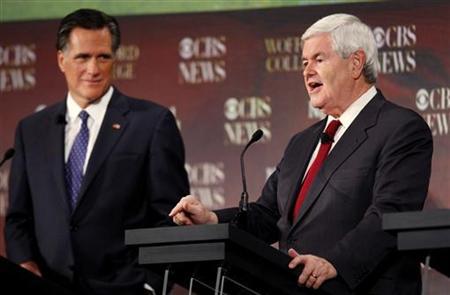
Pakistan took a lot of criticism in Saturday’s Republican presidential debate, with a leading candidate saying it was nearly a failed state and another suggesting the United States cut its foreign aid to zero.

But it is unclear whether any of their ideas is likely to be imposed on a country that has nuclear weapons and whose cooperation is seen as vital to stabilizing Afghanistan as the United States prepares to pull out from there by the end of 2014.

Former Massachusetts Governor Mitt Romney said Pakistan has multiple centers of power including the relatively weak civilian leadership, the military and the powerful intelligence agency know as the Inter-Services Intelligence Directorate.

“The right way to deal with Pakistan is to recognize that Pakistan is not a country, like other countries, with a strong political center that you can go to and say, ‘Gee, can we come here, will you take care of this problem?'” Romney said.

“This is instead a nation which is close to being a failed state. I hope it doesn’t reach that point, but it’s really a fragile nation,” he said.

Polls point to Romney as the Republican who would be the most likely among the party’s crop of candidates to defeat President Barack Obama, a Democrat, in the November 2012 U.S. presidential election. The Republicans begin choosing their nominee in state contests beginning in January.

Texas Governor Rick Perry suggested that every country, including Pakistan, should see its U.S. aid eliminated each year and then should convince the United States why it deserves any money at all.

“Then we’ll have a conversation in this country about whether or not a penny of our taxpayer dollars needs to go into those countries,” Perry said in response to a question about whether Islamabad was playing a double game with Washington.

“Pakistan is clearly sending us messages … that they don’t deserve our foreign aid … because they’re not being honest with us,” he added.

“American soldiers’ lives are being put at jeopardy because of that country … and it’s time for us as a country to say no to foreign aid to countries that don’t support the United States of America,” he said.

‘FRIEND OR FOE’

Businessman Herman Cain had difficulty offering a direct response when asked whether Pakistan was ultimately an ally or adversary. “There isn’t a clear answer as to whether or not Pakistan is a friend or foe,” Cain said.”

U.S. officials have long argued that the Taliban and other militants enjoy safe havens in Pakistan from which they attack U.S. soldiers in neighboring Afghanistan.

They privately argue Pakistan plays a double game, taking billions of dollars in U.S. aid while elements of its government tolerate militant groups such as the Haqqani network blamed for a September attack on the U.S. embassy in Kabul.

Pakistan says it has made more sacrifices than any other country in the war against militancy, losing about 10,000 members of its military and security forces.

There have been growing questions in Washington about whether U.S. troops should to go after Taliban safe havens in Pakistan, an idea sure to be deeply unpopular in a population already embittered by U.S. drone strikes.

Some Republican candidates argued that the United States has little choice but to nurture relations with Pakistan, citing the fact that it has nuclear arms and that it has to be part of the solution in Afghanistan.

“Pakistan must be a friend of the United States for the reason that Michele (Bachmann) outlined. Pakistan is a nuclear power,” said former Pennsylvania Senator Rick Santorum, referring to fellow Republican candidate Bachmann.

“It’s important for us, with a nuclear power with a very vast number of people in Pakistan who are radicalizing, that we keep a solid and stable relationship and work through our difficulties,” he added.

11/11/11: Luck, Mysticism and Conspiracy of Rare Perfect Palindrome

By The National Post Staff

Regardless of how you keep the date — year/month/day? month/day/year? — 11/11/11 is a rare day on the Western calendar when six of the same number line up, capturing the fancy of numerologists, conspiracy theorists and textile lovers (more on this later) alike. Below, some of the ways the world is marking November 11, 2011.

Remembrance

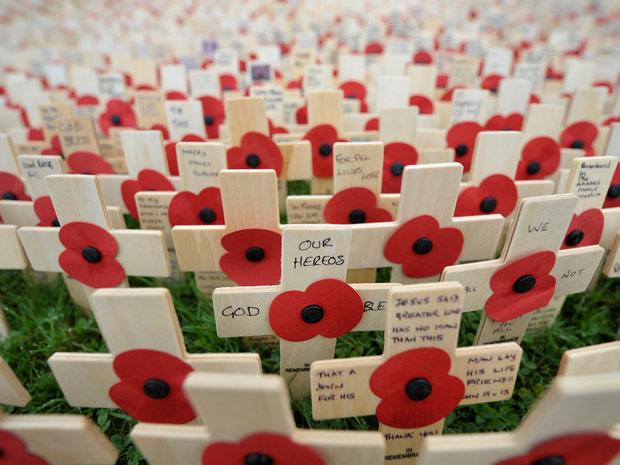
The most solemn meaning of November 11? Remembrance, as much of the globe pauses in honour of those who fought — and those who fell — in various conflicts around the world. As most who paid attention during their school’s Remembrance Day ceremony know, the date’s origins come from signing of the armistice ending World War I on the eleventh hour of the eleventh day of the eleventh month — November 11, 1918.

Luck

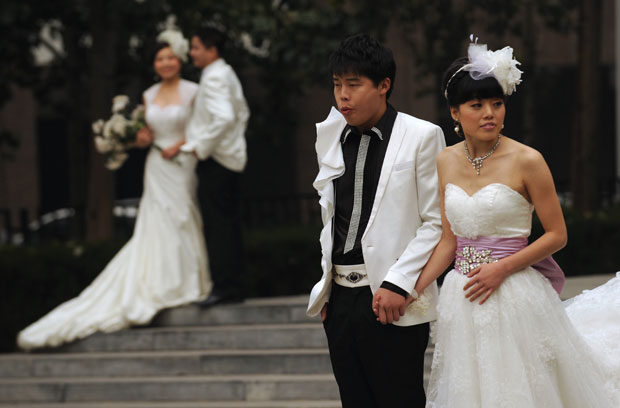
In China, couples flocked to registry offices to marry on Friday in the belief that the “11/11/11” date is the most auspicious in a century. November 11 has been celebrated as an unofficial “singles’ day” in China since the 1990s — as the date is composed of the number one — and it is seen as a good day to marry and leave the single life behind. But this year is viewed as particularly special because the year also ends in the number 11. More than 200 couples packed into a marriage registration office in downtown Shanghai Friday morning, some having lined up for hours before its doors opened to ensure they were among the first to marry.

Shanghai alone had more than 3,300 couples who booked to marry on Friday, but the final tally could be higher as it does not include people who walk-in unannounced, a civil affairs bureau spokeswoman told AFP. Other Chinese cities reported a similar mania for marriage. In the eastern city of Nanjing, more than 3,000 couples planned to marry on Friday, ten times the usual daily average, the official Xinhua news agency said. More than 1,300 pairs will tie the knot in eastern Hangzhou city.

Conspiracy

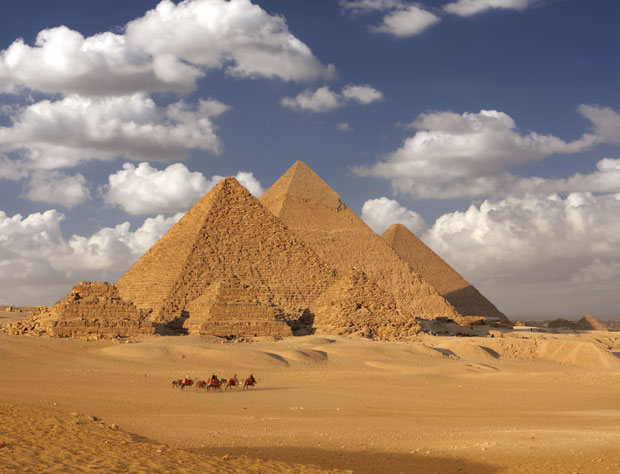
Egypt will close the Great Pyramid of Giza on Friday to avoid any rituals by a group rumoured to have plans to mark the date of 11/11/11 at the site, an official said. The decision came “after much pressure” from Egyptian Internet users that strange rituals were going to be held “within the walls of the pyramid on November 11, 2011,” Atef Abu Zahab, head of the Department of Pharaonic Archaeology, told AFP.

The Supreme Council of Antiquities confirmed the closure Friday of the tourist site, in a statement that only referred to the need for maintenance following a busy period during Muslim holidays.

The Pyramid of Cheops is the biggest and most famous of the three Giza pyramids. It houses the tomb of Pharaoh Khufu, and is the only surviving one of the seven wonders of the ancient world.

Mysticism

Thousands of people plan to meet at the time around the world for ceremonial dances, and several pages devoted to the date have appeared on social networking website Facebook.

Some attribute the number 11 to paranormal powers that provide a channel of communication with the subconscious, others see a mystical connection between the number and disasters, like the 9/11 attacks on the United States.

Corduroy

It’s not just a day for solemnity and subconscious-channeling — what about the fabric that has given so much plush joy to the world? The folks at the Corduroy Appreciation Club havedeclared November 11, 2011 The date which most closely resembles Corduroy, EVER. In honour of this extremely important occasion — the culmination of an 11-day celebration that includes protests against that sinister, smooth rival, velvet and a “mass waling” — members are assembling in New York. They will be required to don at least three (not two!) items of corduroy. Activities will include “Dark Secret Rituals,” “Presentation of Awards for Exemplary Usage of Corduroy,” “Singing, Dancing and Poetry inspired by Corduroy,” and, we suspect most crucially, an open bar.


Marketing

Much like 9-9-99, 01-01-01 and 09-09-09, 11-11-11 is a great date for marketers. Several companies, including Taco Bell and Energizer had huge promotions based around the easy-to-remember date. Probably the most notable North American promotion was the release of Elder Scrolls V: Skyrim, a massive role playing video game, which switched its launch date from the traditional Tuesday to Friday to get the 11-11-11 date. The fact that the date is an American holiday, Veteran’s Day, is also fueling ad dollars. From the NYT:

Ads that hinge on a special date are an example of a marketing tactic called borrowed interest, in which advertisers try to involve themselves in big, topical events that the proverbial “everyone” is talking about. It is the hucksters’ equivalent of candidates far down on the ballot attempting to win by riding the coattails of those at the top of the ticket.

Births

Marketers aren’t the only ones looking to cash in — several Des Moines, Iowa women hope to get a refund on their obstetrician’s fee by giving birth on 11/11/11. Reports the Des Moines Register:

Dr. Ross Valone announced last February — nine months ago — that he would put the fee money into a bank account in the baby’s name, with the stipulation that the child could withdraw the money upon turning 21. His fee usually runs from $900 to $2,000, depending on the case and the insurer. Valone said Wednesday that he is scheduled to perform cesarean sections Friday on two women who delivered that way in the past. He also is scheduled that day to deliver a baby for a woman who plans to have an induced birth.

With files from Agence France-Presse

India, Pakistan PMs Vow to Start ‘New Chapter’

As Reported by The Economic Times

The prime ministers of India and Pakistan said Thursday they expected to open a “new chapter” at future talks between the rival nations after they met at a regional summit in the Maldives.

India’s Manmohan Singh and his Pakistani counterpart Yousuf Raza Gilani said their often strained ties were improving, but they declined to give a date for their next meeting.

“The time has come to write a new chapter in the history of our countries,” Singh told reporters. “The next round of talks should be far more productive and far more practical-orientated in bringing the two countries closer.”

Gilani said that “all issues” had been discussed during their one-hour meeting including the contentious subject of Kashmir, a Muslim-majority region divided between the two nuclear rivals and claimed in its entirety by both.

“I am ready to discuss each and every issue,” Gilani said. “I think that the next round of the talks would be more constructive, more positive, and will open a new chapter in the history of both the countries.”

The leaders did not give further details of their discussions on the sidelines of the South Asian Association for Regional Cooperation (SAARC) gathering in the Maldives.

However Singh added that the two sides should push to make real progress as they had “wasted lot of time in the past in acrimonious debates”.

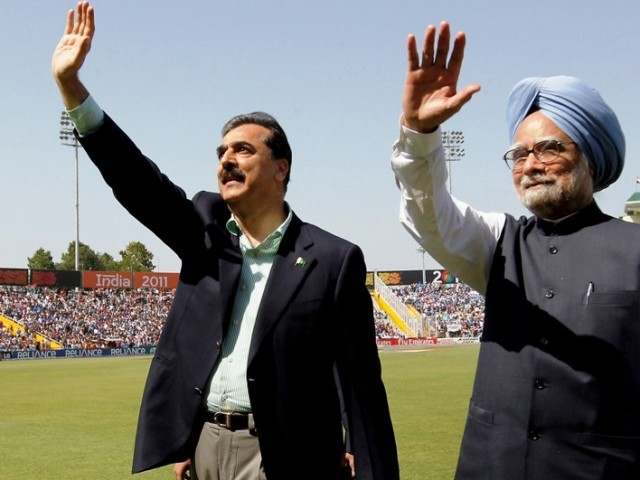
The two men emphasised their warm friendship and shook hands twice to oblige photographers at the start of closed-door talks at the luxury Shangri-La Villingili island resort.

After the meeting, the two men headed for the opening of the SAARC summit, where their host, Maldivian President Mohamed Nasheed, hailed their dialogue.

“These developments are extremely welcome,” he said. “I hope this summit will be enthused with optimism.”

The two prime ministers last met in March when Gilani accepted Singh’s invitation to watch the India-Pakistan cricket World Cup semi-final. Their previous talks were at the April 2010 SAARC summit in Bhutan.

Both countries, who have fought three wars since independence in 1947, struck an upbeat note ahead of the Maldives summit, with officials describing the cross-border atmosphere as “considerably improved”.

However the vexed subject of Kashmir and the threat of Pakistan-based extremism remain major obstacles to their ongoing peace process.

A full peace dialogue — suspended by India after the 2008 Mumbai attacks blamed on Pakistan-based militants — was resumed in February this year.

The process remains tentative with only incremental progress on issues such as trade.

Last week, Pakistan’s cabinet announced it had approved a proposal giving India the status of “most favoured nation” but there has been confusion about when it will be implemented.

Efforts to reduce tensions have been complicated by concern over Afghanistan’s prospects as international troops begin departing after ten years of fighting the Taliban.

Indian involvement in Afghanistan is sensitive, with Pakistan vehemently opposed to its arch foe meddling in what it considers its backyard.

Islamabad’s suspicions were fuelled when Afghanistan and India signed a strategic partnership pact last month.

Afghan President Hamid Karzai is also attending the SAARC summit, along with the leaders of other member nations Bangladesh, Bhutan, the Maldives, Nepal and Sri Lanka.

Trust Deficit with Pakistan Shrinking: Singh

As Reported by The Express-Tribune via AFP


The leaders of India and Pakistan will meet on the sidelines of a regional summit this week, as the nuclear-armed rivals seek to push a tentative rapprochement in their fractious relationship.

Talks between Indian Prime Minister Manmohan Singh and Pakistani counterpart Yousuf Raza Gilani will take place at the summit of South Asian Association for Regional Cooperation (SAARC) nations that opens Thursday in the Maldives.

India’s foreign minister said Wednesday that a “trust deficit” with Pakistan was shrinking as he headed for a regional summit, in a clear sign of warming relations between the neighbours.

“The trust deficit with Pakistan is shrinking,” S.M. Krishna said on board his flight to the South Asian Association for Regional Cooperation (SAARC) summit in the Maldives, the Press Trust of India news agency reported.

He also said that it was necessary for Pakistan and India to develop a joint strategy to fight terror in the region, the agency reported.

Their meeting follows what Indian Foreign Secretary Ranjan Mathai described as “positive indicators” from Pakistan in recent weeks that it is serious about reducing tensions.

An Indian military helicopter which strayed into Pakistani territory last month was promptly released along with its crew and returned to India, avoiding what in the past could easily have escalated into a diplomatic row.

And last week the Pakistani cabinet approved a proposal to grant India the status of “most favoured nation” in a move towards normalising trade relations.

“These are I would say indications of forward movement,” Mathai said, adding that “all aspects” of the India-Pakistan relationship would be discussed during the Singh-Gilani talks.

The two prime ministers last met in March when Gilani accepted Singh’s invitation to watch the India-Pakistan cricket World Cup semi-final. They last held formal talks at the 2010 SAARC summit in Bhutan.

Talks between the neighbours’ foreign ministers in July failed to produce a major breakthrough, but both sides signalled a warming of ties, with Pakistan’s Foreign Minister Hina Rabbani speaking of a “new era of cooperation.”

But efforts to reduce tensions have been complicated by the increasing influence of Afghanistan in the bilateral equation.

Indian involvement in Afghanistan is sensitive, with Pakistan vehemently opposed to its arch foe meddling in what it considers its backyard. Islamabad’s suspicions were fuelled when Afghanistan and India signed a strategic partnership pact last month.

Afghan President Hamid Karzai will also attend the SAARC summit, along with the leaders of other member nations Bangladesh, Bhutan, the Maldives, Nepal and Sri Lanka. Previous summits of the regional body have been largely overshadowed by the India-Pakistan dynamic — a fact that Mathai acknowledged with regret.

“We would like the focus to remain essentially on the common business of SAARC … and hope that the focus will not be diverted to one single event,” he said. The summit is being held in Addu, on the southern Maldives’ island of Gan.

Satirical Song, a YouTube Hit, Challenges Extremism in Pakistan

By Salman Masood for The New York Times


A satirical song that takes a tongue-in-cheek swipe at religious extremism, militancy and contradictions in Pakistani society has become an instant hit here, drawing widespread attention as a rare voice of the country’s embattled liberals.

The song, “Aalu Anday,” which means “Potatoes and Eggs,” comes from a group of three young men who call themselves Beygairat Brigade, or A Brigade Without Honor, openly mocking the military, religious conservatives, nationalist politicians and conspiracy theorists.

Their YouTube video has been viewed more than 350,000 times since it was uploaded in mid-October. The song is getting glowing reviews in the news media here and is widely talked about — and shared — on social networking sites like Twitter and Facebook.

The name of the band is itself a satire of Pakistan’s nationalists and conservatives, who are often described in the local news media as the Ghairat Brigade, or Honor Brigade.

Local musicians have produced work in the past vilifying the West, especially the United States, but rarely do they ridicule the military or religious extremists, and none have had Beygairat Brigade’s kind of success.

Sung in Punjabi, the language of the most populous and prosperous province, the song delivers biting commentary on the current socio-political milieu of the country, in which religious radicalism and militancy have steadily risen over the years and tolerance for religious minorities is waning.

Just this year, a governor who opposed Pakistan’s contentious blasphemy law was killed by one of his guards. The assassin was then celebrated by many in the country, including lawyers who greeted him with rose petals and garlands.

The song rues the fact that killers and religious extremists are hailed as heroes in Pakistan, while someone like Abdus Salam, the nation’s only Nobel Prize-winning scientist, is often ignored because he belonged to the minority Ahmadi sect.

“Qadri is treated like a royal,” wonders the goofy-looking lead vocalist in the song, referring to Malik Mumtaz Qadri, the elite police guard who killed the governor of Punjab, Salman Taseer, in January after he challenged the blasphemy law.

Another line in the song, “where Ajmal Kasab is a hero,” makes a reference to the only surviving Pakistani gunman involved in the 2008 terrorist attacks in Mumbai, India. Still another line, “cleric tried to escape in a veil,” alludes to the head cleric of Islamabad’s Red Mosque — which was the target of a siege in 2007 by the Pakistani government against Islamic militants — who tried unsuccessfully to break the security cordon by wearing a veil.

The song even makes fun of the powerful army chief, Gen. Ashfaq Parvez Kayani, for extending his role for another three years.

Potatoes and eggs “never tasted so good,” wrote Fahd Husain in a commentary on Tuesday in The Daily Times, a newspaper based in Lahore. “They will always be credited for being politically incorrect when most needed, and giving voice to all those Pakistanis who live in fear.”

The popularity of the song on the Internet has made it a sensation across the border in India as well, surprising the band members, who have been incessantly asked whether they feel they have put their lives in danger by ridiculing the mighty.

There are certainly enough provocations to rile nationalists and conservatives. At one point in the music video, the lead singer holds a placard that reads, in English: “This video is sponsored by Zionists.”

The band members chose to upload the song on YouTube instead of handing it to television networks because they said the work was too offbeat and might be censored. Not surprisingly, some have criticized the song and its taunts as pedestrian and in bad taste.

“We were not expecting such a huge response,” said Ali Aftab Saeed, 27, the lead vocalist, who lives in Lahore, a city that is often considered the country’s cultural capital.

He said the assassination of Mr. Taseer was the inspiration for the song and its lyrics.

Resistance poetry and literature are not new to Pakistan, and they raised spirits during the somber years of military dictatorships.

During the protest rallies of the seminal lawyers movement in 2007, when they led the campaign to oust the president, Pervez Musharraf, the lawyers would sing and dance to a poem written by Faiz Ahmad Faiz, considered a giant of Urdu literature. Habib Jalib, another famous Pakistani poet, wrote several poems against Gen. Mohammad Zia ul-Haq, the military dictator in the 1980s.

But “Jalib is irrelevant to the generation of urban, young, middle-class kids that Beygairat Brigade is addressing,” said Nadeem Farooq Paracha, a culture critic based in Karachi.

“This band is offering an alternative narrative to the one this generation has grown up on, and provides a counternarrative to establishmentarian and conservative notions of politics, history and society advocated by televangelists, conspiracy theorists and, of course, the right-wing electronic media,” Mr. Paracha added. “And what better and more effective way to do this than by using satire and pop music.”

The band members, on the other hand, have no pretensions of being revolutionaries, activists or intellectuals, though they do feel that the song represents those who do not believe in extremism and want to live peacefully.

“At the end of the day,” said Mr. Saeed, the lead vocalist, “we are just musicians who raised some questions.”

Pakistan, India take Another Cautious Step Forward

By Alex Rodriguez and Mark Magnier for The Los Angeles Times


In cautious increments, nuclear archrivals Pakistan and Indiahave been easing the pall of tension that has overshadowed the two nations in recent years, as Islamabad increasingly worries about another neighbor: volatile Afghanistan.

The latest move toward rapprochement came last week, when the Pakistani Cabinet announced it would normalize trade relations with India by granting its longtime foe “most favored nation” status.

The designation has practical ramifications, including the elimination of discriminatory pricing and mutual imposition of lower tariffs and high import quotas. More important, however, it marks the latest in a series of decisions and events that signals a warming in relations between two countries that have fought three wars since their independence after the 1947 partition of British India.

Driving the move toward improved relations with India is Pakistan’s belief that strained ties with traditional allies such as the U.S. and Afghanistan are leaving it increasingly isolated, analysts say. India and Afghanistan signed a strategic partnership pact last month that included the training of Afghan troops by Indian forces — a move that rankled Islamabad.

The steps between the two South Asian neighbors have been small yet striking.

After an Indian military helicopter flying in bad weather strayed into Pakistani-controlled territory Oct. 23, Pakistani troops promptly released the aircraft and its crew and returned them to India, averting a crisis. Earlier this year, the two countries also resumed peace talks scuttled by the 2008 attacks in Mumbai that killed 166 people. Pakistani militants carried out the attacks, and India has accused Pakistan’s ISI spy agency of involvement in the assault.

Both countries are also discussing a deal that would allow Pakistan to import electricity from India to relieve massive power shortages crippling the Muslim nation’s economy. In addition, India didn’t oppose Pakistan’s nonpermanent seat on the United Nations Security Council last month, which passed by a single vote. And, earlier this year, New Delhi didn’t fight a European Union bid to allow duty-free imports of Pakistani textiles, even though it would cost competing Indian textile makers an estimated $1 billion a year in lost sales.

Experts warn that major roadblocks still loom. At the top of that list is the divided Himalayan region of Kashmir, claimed by both countries and the cause of two wars since 1947. A dispute over water rights remains unresolved, and New Delhi continues to accuse the ISI of backing militant groups that target India.

Still, bolstering trade relations between the two countries, said Zafar Hilaly, a former Pakistani ambassador to the U.S., “is a good first step. It shows a genuine feeling within Pakistan that the relationship should be normalized.”

Particularly significant is the Pakistani military’s decision to endorse granting MFN status to India. Foreign policy remains the purview of Pakistan’s security establishment, especially when it comes to the country historically regarded by the military as its chief enemy.

“All the stakeholders, including the military … are on board,” Pakistani Information Minister Firdous Ashiq Awan said in announcing the decision. “Such a big step could not be taken alone.”

The military’s backing of MFN status for India, Hilaly said, likely represents a realization that an easing of tensions with New Delhi may now be in Pakistan’s best interests, particularly at a time when relations with Washington and Kabul have soured. Both the U.S. and Afghanistan assert that their efforts to battle Afghan Taliban insurgents have been hampered by Pakistan’s backing of the insurgency there, a charge that Islamabad denies.

“What has happened is that, with respect to issues that the military faces, the priorities have changed,” Hilaly said. “India is still the main culprit as far as security is concerned, but the eastern front is much less active than the one developing in Afghanistan.”

Officials in Washington have been encouraged by the movement toward trade normalization between Islamabad and New Delhi, especially because economic interdependence is seen as an ideal path toward stability in South Asia. Testifying before the House Foreign Affairs Committee last month, Secretary of State Hillary Rodham Clinton called the Pakistan-India relationship “the real game-changer in the region.”

“We have in Pakistan today a leadership, both civilian and military, that wants to see progress with India, and we have the same on the Indian side,” Clinton told lawmakers. “I firmly believe greater regional economic integration would revolutionize the economy in Pakistan.”

Though India extended MFN status to Pakistan in 1996, Pakistan had not reciprocated until now. Observers in India wondered why it took Islamabad so long to see the value in the move. “Not allowing MFN status hurt Pakistan more than India and was shortsighted,” said Satish Chandra, an analyst and former Indian ambassador to Pakistan. “It was an exercise in cutting your nose to spite your face.”

With trade normalization, experts estimate two-way trade could triple to $8 billion within five years. Official trade flows currently run nearly 7 to 1 in New Delhi’s favor, with Indian exports to Pakistan totaling about $2.33 billion versus $332 million in the other direction.

“When trade picks up, there’s more and more confidence to ease political and other differences,” said Shaqeel Qalander, a furniture maker and former president of a business group on the Indian-held portion of Kashmir. “It’s a very good decision.”

Our Man in Pakistan?

By Ed Husain for The Council on Foreign Relations

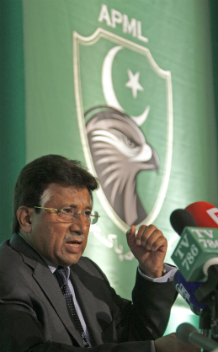
His close proximity to former U.S. president George W. Bush earned him the popular moniker, “Busharraf.” So it was with some intrigue that I went to hear Pakistan’s former president, Pervez Musharraf, address a prestigious and influential U.S. audience at a packed meeting at the Council on Foreign Relations’ headquarters in New York this week.

I was struck by what was, essentially, his appeal for U.S. political sponsorship of his bid to contest elections in Pakistan next year. He spoke eloquently about the poor state of U.S.-Pakistan relations, the need for a peace settlement with elements of the Taliban, and his country’s—and his own—unhelpful Machiavellian attitude toward India and Afghanistan. Nevertheless, the following facts left me worried:
First, for a man who prosecuted the war on terror with such vigor, it was unforgivable for him to say to an Indian journalist who asked about Pakistan’s export of terrorism, ‘Sir, your terrorist is someone else’s freedom fighter.” This moral equivocation is the same justification used by terrorists to inflict harm on innocent lives around the world. Musharraf should know better.

Second, a major cause for widespread, ongoing anti-American radicalization in Pakistan is the CIA-led drone attacks in the country’s tribal regions. Musharraf did not make any references to the drones, their many innocent victims, and the perceived violation of Pakistani sovereignty. It would have been wiser to reassure the audience that a Pakistan under his control would be a nation in which the United States would not need to use drones because terrorists would be brought to justice. Ignoring the issue of drones is self-defeating all around.

Third, his confidence that Pakistan’s nuclear weapons arsenal is safe is questionable. The premise of his assurance was that extremists seeking access to these weapons would need to fight elite battalions of the Pakistani armed forces. The assumption there, of course, is that the Pakistani army is immune from extremism. Sadly, that thinking is flawed. Since General Zia’s time, and increasingly so in recent years, Islamist radicalization within Pakistan’s armed forces has been a cause for concern.

It wasn’t all bad. Fortunately, he spoke somewhat candidly about the economic and energy generation challenges faced by Pakistan. My colleague Isobel Coleman, who was also in attendance, has analyzed his remarks on her thoughtful blog, “Democracy in Development.”
With Imran Khan and Pervez Musharraf both gearing up for elections in Pakistan in 2013, the next two years will be eventful and heated in Pakistan’s fractious political landscape.

Players Get Prison Terms in Fixing Case

By John F Burns for The New York Times

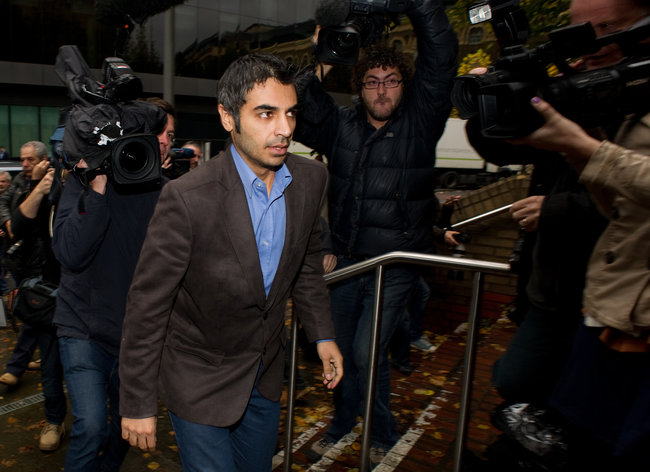
The judge in London’s monthlong cricket corruption trial imposed prison sentences Thursday on the four men involved, including a 30-month jail term for Salman Butt, the captain of Pakistan’s national team.

The longest term, 32 months, went to Mazhar Majeed, the agent for the three players sentenced. Butt’s teammate Mohammad Asif drew a one-year sentence, and another teammate, Mohammad Amir, received six months. Amir, 19, is to serve his time in a institution for young offenders.

The judge, Jeremy Cooke, who admonished the men for “the insidious effect of your actions on the international game,” said that if they behaved they would be released under supervision halfway through their sentences. He ordered the players to pay compensation toward the cost of their prosecution, with the highest sum, about $49,600, imposed on Butt.

The scene in Southwark Crown Court, close to the Thames in South London, was tense. Butt, 27, and Asif, 28, appeared stunned as the judge read out the sentences. Afterward, security guards led the men to their cells. The lawyer for Amir said his client planned to appeal.

The trial, which rocked the cricket world, centered on a sting operation conducted by the now-defunct News of the World newspaper during Pakistan’s tour of England in summer 2010. It followed years of suspicions that powerful gambling syndicates based on the Indian subcontinent were bribing players to fix parts of high-profile matches, or even to throw them entirely.

The case hinged on a secretly recorded meeting at a London hotel at which Majeed took £150,000 in marked notes, or about $240,000, from a reporter posing as an agent for the syndicates. The three players were found guilty of a scam that involved bowling three so-called no balls — foul deliveries — at predetermined points in a test match between Pakistan and England at Lord’s, the London ground that is the spiritual home of cricket.

Majeed also boasted at the meeting that he could fix matches involving Pakistan outright in return for about $1.6 million.

Much of the concern has focused on Pakistan’s national team, but a special corruption unit of the International Cricket Council, the Dubai-based governing body of the world game, has been investigating the possibility that other teams have been involved in similar scandals.

Cricket experts have said corruption has the capacity to destroy the game unless policing is expanded, perhaps to the extent of posting officials from the unit, which includes former police officers, at all top international matches.

Amir, 18 at the time of the match, entered a guilty plea to the corruption charges early in the trial, a fact that was sealed on Cooke’s orders until the trial’s resolution. At sentencing, Cooke, addressing Amir through an Urdu interpreter, said that in determining his punishment he had taken into account Amir’s age, his vulnerability to pressure from the older players and his plea. “It took courage,” he said, to plead guilty, according to a BBC account. “You come from a village background where life is hard.”

Earlier this year, the players were barred from all forms of cricket for five years by the International Cricket Council, which had conducted its own inquiry. Cooke said he took that into account in passing sentence, but some powerful figures in the game have said publicly that the punishment, especially in Butt’s case, should be reviewed in light of the evidence at the trial and extended to expulsion for life.

Cooke scolded Butt at the hearing, saying he deserved the heaviest sentence of the three players because the evidence showed that he was “the orchestrator of this thing.” Cooke also said Butt had done “a terrible thing” in corrupting Amir, who was regarded by many as a natural successor to the legendary fast bowlers in Pakistan’s past.

In 1992, Pakistan won the sport’s World Cup, and it has continued to be an international power. For many of the nation’s 170 million people, cricket has been a source of pride in a society plagued by a history of military coups and political corruption. Pakistan has also been accused by the United States of conniving with the Taliban in mounting suicide bombings.

Inevitably, cricket fans will compare the penalties imposed on Butt with the fate of Hanse Cronje, the former South African captain who until now had been the most prominent player caught in a corruption scandal.

In 2001, after a lengthy inquiry in South Africa into match-fixing between South Africa and India, Cronje was barred from the sport for life. He died the next year, at 32, in a plane crash in Johannesburg. Two other South African players were suspended for six months but later resumed their international careers.

Pakistan is the World’s Sixth Country to Map a Human Genome

As Reported by the Pamir Times

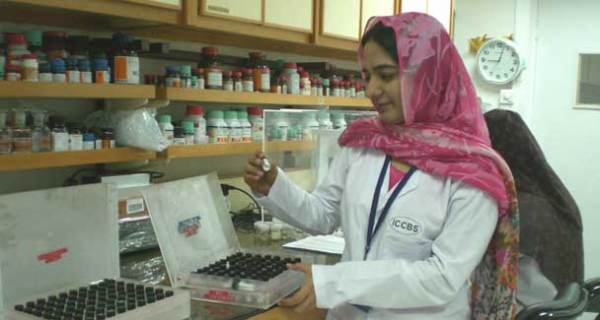
Pakistan has become the world’s sixth country and the first Muslim state to map the genome of the first Pakistani individual. The complete genome mapping was done jointly by the Panjwani Center for Molecular Medicine & Drug Research (PCMD) at Karachi University and Beijing Genomics Institute (BGI) in China.

The details were revealed to the Pakistani media by Prof. Dr. M. Iqbal Choudhary, Director International Centre for Chemical and Biological Sciences (ICCBS), Karachi University and Dr. Kamran Azim of ICCBS at a press conference at PCMD.

Highlighting the importance of the project, Dr. Choudhary said Pakistan had officially entered into the world of genome mapping and the details of the work would be published soon in a research journal. He disclosed that eminent Pakistani chemist and former chairman of the Higher Education Commission (HEC), Dr. Atta-ur-Rehman was the first Muslim and Pakistani whose complete genome was mapped by Dr. Kamran Azim.

“The important work will pave the way for research on heredity diseases, evolution and the over all genetic make up of Pakistanis which now hold a unique genetic pattern as a nation. In the past many people like Dr. Watson and others urged scientists not to reveal their genome publicly but Dr. Rehman has never put any restrictions for his genome draft,” Choudhary added.

The whole process cost US$ 40,000 and was equally contributed by PCMD and BGI.
The blood samples of Dr. Atta ur Rehman were sent to BGI where his genome was sequenced by state of the art gene sequencing machines, however, the technical and research work was mainly done by Dr. Azim.

Genome: The Book of Life

In his marvelous book, Genome, Matt Ridley wrote:

“Imagine that the genome is a book. There are 23 chapters, called chromosomes. Each chapter contains several thousand stories, called genes. Each story is made up of paragraphs called exons, which are interrupted by advertisements called introns. Each paragraph is made up of words called codons. Each word written in letters are called bases, which are Cytosine, Guanine, Adenine, Thiamine or shortly A,G,T,C.”

The remarkable achievement of the first genome mapping of any Pakistani is just like opening the software or book of life of a nation.

Later, in his presentation, Dr. Kamran Azim said the project would help improve the diagnosis of diseases and also help trace back mutations in genetics of the Pakistani nation. Both Dr. Azim and Dr. Choudhary emphasised to establish a national genomic center and Dr. Choudhary said that the center should be established at the PCMD premises because of the knowledge and infrastructure that exists at the center. [Originally published on DAWN in 2011]

Pakistan: More To Offer Than Bombs And Beards

By Asim Haneef for Al Jazeera

If you did not know anything about Pakistan and happened to pick up a newspaper or turn on the evening news, you might be forgiven for assuming that it is possibly the most broken, troubled and violent country on the face of the earth – a basket case just moments from imploding.

In the all-important arena of international public perception, Pakistan has taken an unprecedented battering in recent years, accumulating more bad headlines than nearly any other country and making places like Afghanistan and Iraq look relatively stable by comparison.

The list of challenges it faces is seemingly unending: terrorism, corruption, drone attacks, natural disasters, poverty, a deficit in leadership, discrimination against minorities, mistreatment of women, attacks on freedom of speech, mass tax evasion, match fixing, the murder of judges, politicians, union organisers and journalists – and that is just the tip of the iceberg.

So pervasive are the headlines pointing to a crisis in Pakistan that after a while they seem to blur into one another. Whether it is “hostages held in Karachi”, “al-Qaeda hideout discovered in Swat”, “floods bring pain to millions”, “suicide bomber explodes in market square”, “senior judge in blasphemy case shot dead” or “Pakistan’s ISI actively supporting Taliban in Afghan war” the message is uniformly bad news. The result is that for many the image of Pakistan is one of bombers, beards, shaking fists, distressed women and utter hopelessness. It makes for a pretty depressing picture.

I guess that is why the work of Syed Ali Abbas and his Pakistan Youth Alliance (PYA) featured in this week’s Activate, Pakistan: The New Radicals, is so refreshing. A courageous young social activist, Ali founded the PYA together with Maryam Kanwer when he was just 21 years old. It was born in the midst of severe political turmoil, as then-President Pervez Musharraf imposed emergency rule and fired the chief justice on national television, while the security forces brutally cracked down on dissenting lawyers.

Fed up with watching their country’s problems on the television, the PYA initially organised protests and rallies but quickly became more active. Its core premise and mission statement is to take a stand, to get as practically involved on the ground as possible and to exemplify the change they seek through their actions rather than merely proposing it on paper.

Their main goal is to create political and social awareness among the youth of Pakistan and to unite them irrespective of their religion, ethnicity, caste, race or language on an unbiased platform through which they can engage with one another and contribute practically to building a more progressive society in Pakistan – whether through protest, social and relief work or the arts.

Earlier this year, Ali was among a small group instrumental in organising counter protests to the hate filled ones celebrating and glorifying Mumtaz Qadri, the killer of Salman Taseer, the governor of Punjab who was murdered in January over his stance on Pakistan’s blasphemy laws and his ardent defence of religious minorities like Christians and Ahmadis. Ali says he did this because: “This is not what the founder of Pakistan and ‘Father of the Nation’ Quaid-i-Azam Muhammad Ali Jinnah would have wanted for this country today, especially as he repeatedly stressed the importance of inter-faith unity and religious harmony.”

Stories like these and others bring about something much needed in international news these days – a positive, hopeful narrative against the odds, showcasing some of the good news stories coming out of places like Pakistan, which often go unreported and deserve a spotlight too. So although we appear to have an extraordinary capacity to become fixated on negative headlines, there are also good things happening too and though progress and development is not as ‘sexy’ as a suicide bomber or a train-wreck, perhaps a little balance is in order, so that we do not become as, Ali says at the close of the film, “filled with dread, being hopeless about the future”.

So do good stories actually emanate from Pakistan? And, if so, where are they? Well an initiative by brothers and social entrepreneurs Majid and Mahmood Mirza aims to answer this. They set up a website simply titled Good News (www.goodnews.pk) , which focuses solely on positive developments coming out of the country. They describe the idea behind the website via Skype as being “to highlight amazing, awesome and inspirational news stories coming from Pakistan, as opposed to the usual negativities that steal the headlines”.

And they have plenty of examples ready. For instance, did you know that Pakistan has become only the sixth country in the world to map the human genome, joining the ranks of the US, the UK, China, Japan and India, which have all successfully sequenced it. Or, how about the fact that Pakistan has the largest volunteer ambulance organisation in the world started by “living saint” Abdul Sattar Edhi in 1948. Today, the radio-linked network includes 600 ambulances that work in every corner of the country. Or how about the recent news that Dr Umar Saif, an associate professor at the School of Science and Engineering in Lahore, has been recognised by MIT Technology Review as one of the top 35 innovators in the world – joining an elite group of researchers and entrepreneurs selected over the last decade, which includes Larry Page and Sergey Brin, the co-founders of Google, Mark Zuckerberg, the founder of Facebook, and Jonathan Ive, the chief designer at Apple. Now who has heard of those stories?

Then there are serial entrepreneurs like Monis Rahman, who just four years ago set-up Rozee.pk, which is now Pakistan’s largest jobs website, with 500,000 unique visitors a month; or Karachi-born freelance designer Vakas Siddiqui laying to rest the myth that Pakistani students are limited to excellence in science and the humanities by being selected as one of the top 28 designers in the world; or filmmaker Sharmeen Obaid Chinoy who has just been shortlisted for an Oscar in the ‘best documentary short’ category for her film Saving Face. Whether it be in music, fashion, academia, activism, technology, sports or science these are stories that people do not usually associate with Pakistan and which might just show that there is more to the country than just bombs and beards.

Some of these unreported positive stories, along with the courage and creativity shown by people like Syed Ali Abbas and the Pakistan Youth Alliance in challenging these problems, reflect a surprising shift in the country’s growing and increasingly switched-on, globally-minded youth. They are using outlets like social media platforms and blogs to become more aware, educated and informed about their rights and more savvy to the different methods they must perfect in order to stop their country peddling even further backwards than it already has and to lead it to a brighter day, free from the same old headlines we’re all universally tired of reading and hearing about.

Asim Haneef worked extensively on Activate, a new eight part series featuring grass-roots activists from across the globe who are challenging the status quo and bringing about a change in their society. You can follow him on Twitter @asimhaneef