Archive for the ‘ Afghanistan ’ Category

Vengeful New Militant Group Emerges in Pakistan

By Kathy Gannon for The Associated Press

Pakistani authorities now believe a dangerous new militant group, out to avenge a deadly army assault on a mosque in Islamabad three years ago, has carried out several major bombings in the capital previously blamed on the Taliban.

The emergence of the Ghazi Force was part of the outrage among many deeply religious Pakistani Muslims over the July 2007 attack by security forces against the Lal Masjid, or Red Mosque, a stronghold of Islamic militants.

The fierce attack, in which scores of young, heavily armed religious students died, inspired a new generation of militants. These Pakistanis have turned against a government they felt has betrayed them and, to their dismay, backed the U.S. role in neighboring Afghanistan.

The brief but bloody history of the Ghazi Force illustrates the unintended results of Pakistan’s policy of promoting Islamic extremists to fight India in the disputed area of Kashmir. That policy — which Pakistan denies it pursues — now threatens regional stability as the U.S. and Pakistan’s other Western partners pour billions of dollars into the country to stop the rise of Islamic militancy.

The new group is made up of relatives of students who died in the Red Mosque assault. It is named after the students’ leader, Maulana Abdul Rashid Ghazi, who was also killed. The mosque’s religious school, or madrassa, had been a sanctuary for militants opposed to Pakistan’s support of the U.S.-run war in Afghanistan.

Private television stations broadcast vivid scenes of the assault — commandos in black fatigues rapelling down ropes, the crackle of gunfire, bodies of black-shrouded girls carried out through the smoldering gates. Those images stunned the nation, especially families of the students and Pakistanis with deep religious feelings.

“Before the Lal Masjid, militants hadn’t yet declared war on the state of Pakistan. That changed with Lal Masjid,” said Zahid Hussain, author and terrorism expert who has written extensively about Pakistan.

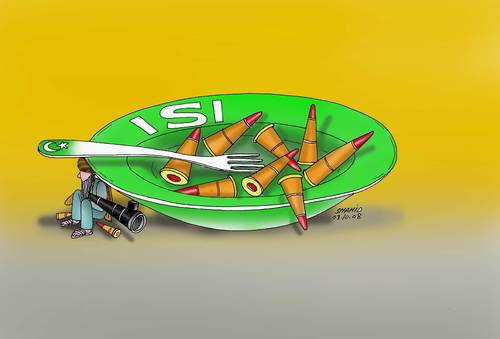
Islamabad’s inspector general of police, Kalim Imam, told The Associated Press that the Ghazi Force was behind most of the deadliest attacks in the capital during the last three years. The attacks targeted the military, the Inter-Services Intelligence agency or ISI — which had ties to a number of militants — and a five-star hotel frequented by foreigners and the Pakistani elite.

The Ghazi Force helped recruit a security official who blew himself up inside the office of the World Food Program last October, killing five people, according to Imam. The force also sent a suicide bomber in September 2007 into the mess hall of the commando unit that attacked the Red Mosque, killing 22 people, he said.

Ghazi Force members may also have been involved in the audacious June 9 attack north of the capital that killed seven people and destroyed 60 vehicles ferrying supplies to NATO and U.S. soldiers next door in Afghanistan, Imam said.

Many of those attacks had been attributed to the Pakistani Taliban, which operates in the remote tribal areas of the northwest along the border with Afghanistan. There is evidence of close ties between the Ghazi Force and the Pakistani Taliban, which the government has vowed to crush.

The Ghazi Force is believed to be headquartered in the Orakzai region of the border area, where the leader of the Pakistan Taliban, Hakimullah Mehsud, held sway for years. The leader of the Ghazi Force is believed to be Maulana Niaz Raheem, a former student at the Red Mosque.

Anger over the bloodshed at the mosque was all the greater because many of the militants and their supporters felt betrayed by a government that had once supported them. Both Ghazi and his brother Maulana Abdul Aziz Ghazi, who was freed on bail this year after two years in jail, were widely believed to have been on the payrolls of both the government and the ISI intelligence service.

Their father, Maulana Mohammed Abdullah, enjoyed a close relationship with the late President Mohammad Zia ul-Haq, and the mosque was a center for recruiting volunteers to fight against the Soviets in Afghanistan in the 1980s.

As opposition grew to Pakistan’s support of the U.S. role in Afghanistan, the mosque became a center of religious agitation against the government, with armed students taking over the complex and police laying siege.

A former senior official in the Interior Ministry told The Associated Press that the police wanted to storm the mosque and end the siege at its outset, send the students home and shut down the religious school and a neighboring library until tempers cooled.

President Gen. Pervez Musharraf refused, the official said, even though police knew that members of al-Qaida’s affiliate organization Jaish-e-Mohammed, which is banned in Pakistan, were bringing in weapons for the students.

Musharraf relented and ordered the assault after militants kidnapped several Chinese nationals running a massage parlor in Islamabad, accusing them of prostitution. The death toll remains in dispute. Red Mosque officials say hundreds died. The government says fewer than 100 were killed.

In a rare interview, Abdul Aziz Ghazi told AP he warned the government that an assault on the mosque would unleash forces that no one could control.

“I have been in jail. I did not form this force and I don’t condone the violence but they are angry at the injustices done,” he said this week.

Although the assault turned many Islamic hard-liners against the government, Pakistan remains unwilling to break all ties to the militants, instead following a high-risk strategy of coddling “good militants” while fighting those deemed “bad militants,” analysts say.

“The military and the ISI have given importance to these militants as assets. But those who have openly declared war, and there is no chance of them returning back to the state, the army is going after them,” said Manzar Jameel, a terrorism expert and researcher on the growth of extremism in Pakistan. “Yet they still believe that some are still assets and that they can keep control of the assets. It’s a failure of strategy.”

Army spokesman Maj. Gen. Athar Abbas denies any assistance to militant groups, saying past ties have long since been severed. He says the Ghazi Force is among the groups the 120,000 Pakistani soldiers waging war in the tribal regions are fighting.

Yet Anatol Lieven, a terrorism expert with the Department of War Studies at London’s King College, said it’s clear that the ISI continues to protect some militant groups, even if it has broken with others.

In a June report, the Rand Corporation think tank also alleged that Pakistan’s military and intelligence still support some militant groups “as a tool of its foreign and domestic policy.”

“A key objective of U.S. policy must be to alter Pakistan’s strategic calculus and end its support to militant groups,” the report said.

Christine Fair, a co-author of that report and an assistant professor at Georgetown University’s Center for Peace and Security Studies, said the battle against extremists in Pakistan is mired in layers of subterfuge by Pakistani intelligence and a “mystifying” acceptance by the CIA of Pakistan’s “good-militant, bad-militant” policy.

She said U.S. intelligence knows Pakistan protects one group — Lashkar-e-Taiba, which India blames for the 2008 Mumbai assault and Afghanistan accuses of masterminding deadly attacks against the Indian Embassy in Kabul.

“Lashkar-e-Taiba remains intact. I have had conversations with … officials in Washington. It is not their priority. Lashkar-e-Taiba is not an issue,” she said in an interview. “Yet Lashkar-e-Taiba has been attacking us in Afghanistan since 2004.”

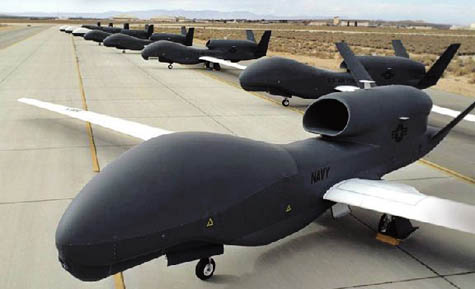
Imran Khan Moves Supreme Court Against Drone Attacks

As reported on Despardes.com

Cricketing legend-turned politician Imran Khan has filed a lawsuit in Pakistan’s apex court asking it to declare drone attacks as war crimes.

According to published reports, the Pakistan Tehrik-i-Insaf (PTI) chief on Wednesday filed a petition in the Supreme Court asking it to declare drone attacks as attacks on the sovereignty and defence of Pakistan and a war crime.

The petition, filed by Imran Khan’s lawyer Shaukat Aziz Siddiqui, argues that the provisions of logistics and facilities to any foreign country or alliance for mass destruction through drone strikes inside the territory of Pakistan resulting into killings of Pakistani citizen is illegal, unwarranted, unconstitutional, in violation the United Nations Charter, universal declaration of human rights, international law as well as the international humanitarian law, a war crime and an attack on the sovereignty, solidarity, integrity and defence of Pakistan.

Imran Khan’s petition was filed today after a Lahore court Lahore cort ruled against drone strikes and called on the government to take appropriate measures to halt strikes by unmanned drones in Pakistan if they aren’t approved by Islamabad.

Federal authorities should take measures to stop drone attacks in Pakistan if they are carried out without formal approval, the court said on Wednesday. The court was responding to a petition that said drone strikes were a violation of national sovereignty.

Drone attacks have increased under the authority of U.S. President Barack Obama, notably inside Pakistan. The CIA, a civilian entity, said it is acting according to the code of law in carrying out the strikes.

Pakistan’s government publicly objects to the attacks, saying they violate its sovereignty. But it is widely thought there is a tacit agreement between the U.S. intelligence agency, the CIA, and Islamabad to allow such strikes, reported Voice of America on its website today.(http://www1.voanews.com/english/news/asia/Suspected-US-Missile-Strike-Kills-10-in-Pakistan-97396999.html)

Two missiles believed fired Tuesday by an unmanned drone struck a village in the tribal regions of Pakistan, killing militants including Hamza al-Jufi, an Egyptian allied with al-Qaida.

U.S. Strategy in Afghanistan May Involve Greater Use of Special Operations Forces

By David S. Cloud and Julian E. Barnes for The Los Angeles Times

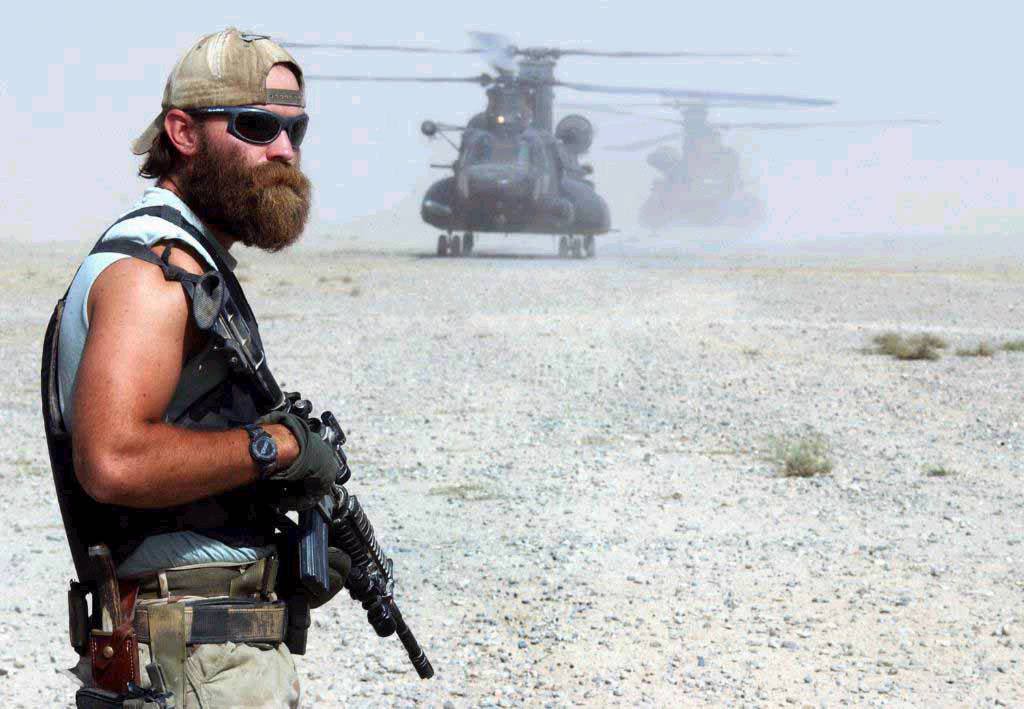
U.S. special operations troops in Afghanistan have stepped up a campaign to kill or capture insurgent leaders, senior U.S. officials say, an effort that began in March and is likely to expand as Army Gen. David H. Petraeus looks for ways to show progress.

Senior U.S. military officials said the raids by special operations troops have killed or captured 186 insurgent leaders and detained an additional 925 lower-level fighters in the last 110 days. That would mark a rare success for American troops in a war that has otherwise gone poorly in recent months.

The operations have been most effective in and around the southern city of Kandahar and in eastern Afghanistan, according to American military officials, who requested anonymity in discussing information that had not been released publicly, and outside analysts. Already, they said, there are signs in these areas that roadside bomb attacks have decreased and the Taliban control is weakening, as senior leaders are killed or captured.

A successful effort would support the contention made by Vice President Joe Biden and other administration officials who are skeptical of the military strategy in Afghanistan: Special operations troops, with their small footprint and skill at tracking and killing the enemy, can be more effective than conventional forces in the difficult conflict the U.S. faces in that country.

Biden has argued for shrinking the U.S. effort and relying largely on special operations troops and airstrikes to disrupt the Taliban and Al Qaeda, officials say.

President Obama has sided so far with those who favor using large numbers of U.S. troops as part of a far-reaching counterinsurgency effort, a point that he reiterated last week in naming Petraeus to replace Army Gen. Stanley A. McChrystal as commander of the war in Afghanistan.

But if the special operations effort is the most successful element of the war effort, Biden and those who agree with him could be in a stronger position to argue for shrinking the U.S. military presence when the strategy is reexamined, perhaps as soon as the December review Obama has promised.

Supporters of the more limited strategy advocated by Biden believe special operations should be the main military effort in Afghanistan. Petraeus, however, argues that special operations troops are just one tool, albeit a highly effective one, in fighting an insurgency.

While leading the U.S. military force in Iraq, Petraeus advocated a comprehensive counterinsurgency strategy aimed at combating militants with both special and conventional forces. He is expected to utilize the same strategy in Afghanistan.

Current and former Petraeus advisors also said the general will try to quickly reverse the perception that the Afghanistan war is going badly. When he appears before the Senate on Tuesday for a hearing on his nomination to lead the allied war effort in Afghanistan, he is likely to emphasize recent successes by special operations forces.

“Trumpeting the successes of ISAF [the North Atlantic Treaty Organization’s International Security Assistance Force] operations, Afghan operations, should be part of the strategy,” said Peter Mansoor, who served as Petraeus’ executive officer in Iraq. “The strategy is clearly to knock the Taliban back, but if you don’t show the world that is happening, what is the use?”

A senior military official in Afghanistan said the killings of leaders since March have reduced the effectiveness of the Taliban, making the militant movement less capable of threatening the Afghan population.

Officials did not release the list of 186 insurgent leaders they say have been killed since March. Last week, however, they did name two insurgent leaders slain last month in Kandahar.

In eastern Afghanistan, the U.S. has been trying to take out key commanders in the Haqqani network, a Taliban-aligned insurgency that maintains a safe haven in Pakistan, said Jeffrey Dressler, a researcher at the Institute for the Study of War in Washington.

“We have seen over the last four weeks an increase in special operation maneuvers,” Dressler said. “And it is having a significant impact on the Haqqani network’s ability to operate.”

But Haqqani fighters still are able to use their base in Pakistan’s North Waziristan region to try and mount suicide bombings across the border in Kabul, the Afghan capital, and has been linked to several recent attacks, including a mortar barrage that disrupted a peace conference convened by Afghan President Hamid Karzai this month.

U.S. officials hope that continued special operations raids against insurgent leaders will encourage lower-level followers to lay down their arms and reconcile with the government in Kabul.

Skeptics of the administration’s overall strategy see the results of the special operations campaign as a powerful argument for shifting away from the counterinsurgency campaign crafted by McChrystal toward the strategy advocated by Biden.

“This is a great opportunity to reconsider the direction of the strategy and move it more towards what is showing some success, the strategy Vice President Biden advocated from the beginning,” said Charles J. Dunlap, a retired Air Force major general who writes extensively on counterinsurgency strategies.

A plan focused first on killing insurgent leaders will ensure that the U.S. does not have to remain in Afghanistan for decades building up the central government, he said.

But advocates of the current strategy said special operations forces alone can disrupt insurgent movements, hindering their advance, but are not enough to stabilize a country and help it take charge of its own security.

“There is a misconception that in counterinsurgency there isn’t any sort of assassinations or special operation forces doing targeted killings,” Dressler said. “As we have seen from Iraq, that is not the case. It is a critical part of counterinsurgency.”

Pakistan Rejects Allegations of Taliban Ties

As reported by CNN

Pakistani officials Sunday rejected allegations that their country’s powerful intelligence agency still supports the Taliban and other Afghan insurgents after a paper from a Harvard academic accused the agency of continued links to the rebels.

The powerful Inter-Services Intelligence agency does not “actually control the Afghan insurgency” and does not have “the ability to bring it to an end,” Matt Waldman argues in a paper for the London School of Economics. But the ISI provides “sanctuary, and very substantial financial, military and logistical support to the insurgency,” giving it “strong strategic and operational influence — reinforced by coercion,” according to his report, which cites Taliban commanders among its sources.

The ISI is widely thought to have played a key role in creating the Afghan Taliban during the 1990s, but Pakistan officially denies supporting them now. Maj. Gen. Athar Abbas, spokesman for the Pakistani military, called the claim “rubbish” on Sunday and said Waldman’s report “does not have a credible source or authenticity.”

“At best, it is speculative and only gives open sources without naming [them],” Abbas told CNN. “So, therefore, this kind of report requires a treatment which it really deserves. We are not going to formally respond to this, but we reject these allegations and accusation. If there are hard evidence, we would like for them to be brought out and we would be able to respond accurately.”

And Farahnaz Ispahani, a spokeswoman for President Asif Ali Zardari, called Waldman’s report “one-sided” and dismissed what she called its “wild accusations.”

“If Mr. Waldman had been a seasoned academic, he would have conducted interviews in Pakistan itself to balance his so-called research report,” Ispahani said. “The Pakistani government and its military have been performing an outstanding service to the world community as well as the region in its fight against militancy and extremism, and we can count the dead we have sacrificed in the thousands.”

Waldman’s report is titled, “The Sun in the Sky: The relationship between Pakistan’s ISI and Afghan insurgents.” He based his conclusions on interviews with nine insurgent field commanders in three regions of Afghanistan, plus former Taliban officials, tribal leaders, politicians, experts and diplomats. The title comes from Taliban commanders’ claims that their relationship with Pakistani intelligence is “as clear as the sun in the sky.”

Waldman concluded that that Pakistan “continues to give extensive support to the insurgency in terms of funding, munitions and supplies.” But Abbas dismissed the unnamed sources, calling the report “rubbish.”

“Has he named any Taliban commanders in this, has he named any officials?” Abbas said. “So, therefore, if it doesn’t have any specific source, which is not willing to disclose a name, it just becomes one of those reports that keep appearing. It is a serious allegation, but unless it has a credible evidence to support it or substantiate the report, only then it warrants a serious consideration for response.”

The ISI works not only with the Taliban, but also with the armed Haqqani network, led by Jalaluddin Haqqani and his son Sirajuddin, Waldman wrote. The Haqqani network sometimes cooperates with the Taliban and sometimes fights it.

The Taliban members interviewed believe that the ISI has a heavy influence on their leadership, which some of them said amounts to control, according to the report.

One of the southern commanders claimed: “If anyone rejects that the ISI backs or controls the Taliban, he has a mental problem … all our plans and strategy are made in Pakistan and step by step it is brought to us, for military operations or other activities,” the report says.

And southern Taliban commanders all complained of heavy ISI involvement, which they blamed for some attacks on civilians.

“One southern commander described their predicament as follows: ‘Another group of Taliban is directly supported by the ISI. They will never stop fighting in the country; they want to destroy the government and bring chaos. Behind all the attacks on … NGOs, schools, teachers, doctors, this is Pakistan. We cannot deny that it is Taliban; but there are Pakistan controlled groups among us. They want destabilisation …,’ ” the report says.

Waldman’s report comes two months after a U.N. report on the assassination of former Prime Minister Benazir Bhutto in 2007 — an attack blamed on Pakistani Taliban leaders — found that intelligence agencies hindered the subsequent investigation. The report concluded that the “pervasive reach” of Pakistan’s intelligence agencies left police “unsure of how vigorously they ought to pursue actions, which they knew, as professionals, they should have taken,” the report states.

American Arrested in Pakistan was on Solo Mission to Hunt Bin Laden

By Manzer Munir for Pakistanis for Peace

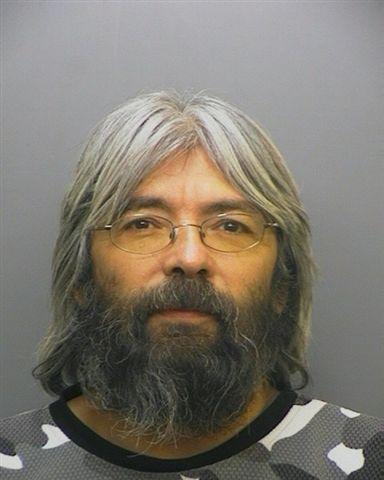
Gary Brooks Faulkner, a 51 year old construction worker from California was arrested by Pakistani police Monday night with a pistol, night vision goggles, and a 40 inch sword and apparently on a mission to kill Osama Bin Laden in revenge for the September 11 attacks on the US.

Faulkner was captured by the Pakistani police in the city of Chitral in the northwestern region of Pakistan near the Afghanistan border. According to a senior police officer, Faulkner was carrying religious Christian books and was reportedly on a mission to avenge the victims of the 9-11 attacks in New York, Washington and Pennsylvania.

According to Pakistani officials, Faulkner arrived in Pakistan on June 3 and stayed in a local hotel in an area of Pakistan known for its spring festivals and frequented by foreign tourists also. Apparently this was Mr. Faulkner’s sixth trip to Pakistan since 2002. At a press conference in his present state of Colorado, Faulkner’s brother Scott Faulkner, a physician, stated that his brother Gary was “on a mission.”

“He’s not crazy,” Dr. Faulkner said of his brother. “He’s not a psychopath. He’s not a sociopath.” Because of Osama Bin Laden’s security and Gary Faulkner’s kidney condition, Dr Faulkner did not believe he would see his brother again as he dropped him off at the airport prior to his flight to Pakistan this month. “I did not think I was going to see my brother again,” Dr. Faulkner said. “That’s the nature of going to Pakistan and hunting a wanted man who is surrounded by people with automatic weapons.”

Dr Faulkner stated that his brother underwent kidney dialysis three times a week and that if he killed or capture Bin Laden, he would use the reward money to live the rest of his life in Nicaragua helping build houses for the homeless.

According to Pakistani police, Mr Faulkner disappeared from his hotel Sunday night and away from the posted police guards, who are customarily there for the security of foreigners. When he checked out without informing police, officers began looking for him, according to the top police officer in the Chitral region, Mumtaz Ahmad Khan. He was in custody after a 10 hour search in a forest area in a high security zone close to the border with Afghanistan. He surrendered without any resistance and was flown to Peshawar where members of the United States embassy were notified of the arrest of an American.

“We initially laughed when he told us that he wanted to kill Osama bin Laden,” Khan said. But when officers seized the weapons and night-vision equipment, “our suspicion grew.” He said the American was trying to cross into the nearby Afghan region of Nuristan.

Chitral and Nuristan are among several rumored hiding places for bin Laden along the mountainous border between Afghanistan and Pakistan. He is currently being questioned by members of Pakistan’s intelligence officials according to reports and is in Peshawar where at present he has not been charged with any wrongdoing.

Whether Faulkner was there on a half baked suicidal, Rambo style mission or he truly believed he could be successful in finding and infiltrating Osama’s inner circle in order to capture or kill him remains to be seen. Nonetheless, it is a testament to the American “Can-do” spirit that a patriotic yet perhaps disillusioned and aging construction worker could take it upon himself to go to dangerous areas of Pakistan in order to avenge the victims of September 11. Whether he is simply crazy or foolish, one can not deny his desire to capture one of the most wanted man in history. We can only dream of the possibilities of real capture or death of Bin Laden if the majority of people in the Afghanistan-Pakistan region wanted to capture Osama and the terrorist Taliban leaders like Mullah Omar and others who shelter him.

U.S. Identifies Vast Riches of Minerals in Afghanistan

By James Risen for The New York Times
WASHINGTON — The United States has discovered nearly $1 trillion in untapped mineral deposits in Afghanistan, far beyond any previously known reserves and enough to fundamentally alter the Afghan economy and perhaps the Afghan war itself, according to senior American government officials.

The previously unknown deposits — including huge veins of iron, copper, cobalt, gold and critical industrial metals like lithium — are so big and include so many minerals that are essential to modern industry that Afghanistan could eventually be transformed into one of the most important mining centers in the world, the United States officials believe.

An internal Pentagon memo, for example, states that Afghanistan could become the “Saudi Arabia of lithium,” a key raw material in the manufacture of batteries for laptops and BlackBerrys.

The vast scale of Afghanistan’s mineral wealth was discovered by a small team of Pentagon officials and American geologists. The Afghan government and President Hamid Karzai were recently briefed, American officials said.

While it could take many years to develop a mining industry, the potential is so great that officials and executives in the industry believe it could attract heavy investment even before mines are profitable, providing the possibility of jobs that could distract from generations of war.

“There is stunning potential here,” Gen. David H. Petraeus, commander of the United States Central Command, said in an interview on Saturday. “There are a lot of ifs, of course, but I think potentially it is hugely significant.” The value of the newly discovered mineral deposits dwarfs the size of Afghanistan’s existing war-bedraggled economy, which is based largely on opium production and narcotics trafficking as well as aid from the United States and other industrialized countries. Afghanistan’s gross domestic product is only about $12 billion.

“This will become the backbone of the Afghan economy,” said Jalil Jumriany, an adviser to the Afghan minister of mines. American and Afghan officials agreed to discuss the mineral discoveries at a difficult moment in the war in Afghanistan. The American-led offensive in Marja in southern Afghanistan has achieved only limited gains. Meanwhile, charges of corruption and favoritism continue to plague the Karzai government, and Mr. Karzai seems increasingly embittered toward the White House.

So the Obama administration is hungry for some positive news to come out of Afghanistan. Yet the American officials also recognize that the mineral discoveries will almost certainly have a double-edged impact. Instead of bringing peace, the newfound mineral wealth could lead the Taliban to battle even more fiercely to regain control of the country.

The corruption that is already rampant in the Karzai government could also be amplified by the new wealth, particularly if a handful of well-connected oligarchs, some with personal ties to the president, gain control of the resources. Just last year, Afghanistan’s minister of mines was accused by American officials of accepting a $30 million bribe to award China the rights to develop its copper mine. The minister has since been replaced.

Endless fights could erupt between the central government in Kabul and provincial and tribal leaders in mineral-rich districts. Afghanistan has a national mining law, written with the help of advisers from the World Bank, but it has never faced a serious challenge.

“No one has tested that law; no one knows how it will stand up in a fight between the central government and the provinces,” observed Paul A. Brinkley, deputy undersecretary of defense for business and leader of the Pentagon team that discovered the deposits.

At the same time, American officials fear resource-hungry China will try to dominate the development of Afghanistan’s mineral wealth, which could upset the United States, given its heavy investment in the region. After winning the bid for its Aynak copper mine in Logar Province, China clearly wants more, American officials said.

Another complication is that because Afghanistan has never had much heavy industry before, it has little or no history of environmental protection either. “The big question is, can this be developed in a responsible way, in a way that is environmentally and socially responsible?” Mr. Brinkley said. “No one knows how this will work.”

With virtually no mining industry or infrastructure in place today, it will take decades for Afghanistan to exploit its mineral wealth fully. “This is a country that has no mining culture,” said Jack Medlin, a geologist in the United States Geological Survey’s international affairs program. “They’ve had some small artisanal mines, but now there could be some very, very large mines that will require more than just a gold pan.”

The mineral deposits are scattered throughout the country, including in the southern and eastern regions along the border with Pakistan that have had some of the most intense combat in the American-led war against the Taliban insurgency.

The Pentagon task force has already started trying to help the Afghans set up a system to deal with mineral development. International accounting firms that have expertise in mining contracts have been hired to consult with the Afghan Ministry of Mines, and technical data is being prepared to turn over to multinational mining companies and other potential foreign investors. The Pentagon is helping Afghan officials arrange to start seeking bids on mineral rights by next fall, officials said.

“The Ministry of Mines is not ready to handle this,” Mr. Brinkley said. “We are trying to help them get ready.” Like much of the recent history of the country, the story of the discovery of Afghanistan’s mineral wealth is one of missed opportunities and the distractions of war.

In 2004, American geologists, sent to Afghanistan as part of a broader reconstruction effort, stumbled across an intriguing series of old charts and data at the library of the Afghan Geological Survey in Kabul that hinted at major mineral deposits in the country. They soon learned that the data had been collected by Soviet mining experts during the Soviet occupation of Afghanistan in the 1980s, but cast aside when the Soviets withdrew in 1989.

During the chaos of the 1990s, when Afghanistan was mired in civil war and later ruled by the Taliban, a small group of Afghan geologists protected the charts by taking them home, and returned them to the Geological Survey’s library only after the American invasion and the ouster of the Taliban in 2001.

“There were maps, but the development did not take place, because you had 30 to 35 years of war,” said Ahmad Hujabre, an Afghan engineer who worked for the Ministry of Mines in the 1970s.

Armed with the old Russian charts, the United States Geological Survey began a series of aerial surveys of Afghanistan’s mineral resources in 2006, using advanced gravity and magnetic measuring equipment attached to an old Navy Orion P-3 aircraft that flew over about 70 percent of the country.

The data from those flights was so promising that in 2007, the geologists returned for an even more sophisticated study, using an old British bomber equipped with instruments that offered a three-dimensional profile of mineral deposits below the earth’s surface. It was the most comprehensive geologic survey of Afghanistan ever conducted. The handful of American geologists who pored over the new data said the results were astonishing.

But the results gathered dust for two more years, ignored by officials in both the American and Afghan governments. In 2009, a Pentagon task force that had created business development programs in Iraq was transferred to Afghanistan, and came upon the geological data. Until then, no one besides the geologists had bothered to look at the information — and no one had sought to translate the technical data to measure the potential economic value of the mineral deposits.

Soon, the Pentagon business development task force brought in teams of American mining experts to validate the survey’s findings, and then briefed Defense Secretary Robert M. Gates and Mr. Karzai.

So far, the biggest mineral deposits discovered are of iron and copper, and the quantities are large enough to make Afghanistan a major world producer of both, United States officials said. Other finds include large deposits of niobium, a soft metal used in producing superconducting steel, rare earth elements and large gold deposits in Pashtun areas of southern Afghanistan.

Just this month, American geologists working with the Pentagon team have been conducting ground surveys on dry salt lakes in western Afghanistan where they believe there are large deposits of lithium. Pentagon officials said that their initial analysis at one location in Ghazni Province showed the potential for lithium deposits as large of those of Bolivia, which now has the world’s largest known lithium reserves.

For the geologists who are now scouring some of the most remote stretches of Afghanistan to complete the technical studies necessary before the international bidding process is begun, there is a growing sense that they are in the midst of one of the great discoveries of their careers. “On the ground, it’s very, very, promising,” Mr. Medlin said. “Actually, it’s pretty amazing.”

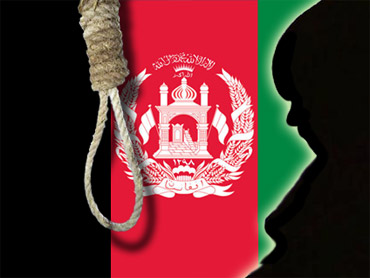
Taliban Hangs 7 Year Old Afghan Boy For Spying

By Tucker Reals for CBS News

Taliban militants accused a seven-year-old boy of spying and hanged him earlier this week in Afghanistan’s southern Helmand province, a local government official tells CBS News.  

Provincial government spokesman Daud Ahmadi confirmed the incident which took place on Tuesday in the Taliban stronghold of Sangin, in Helmand. Ahmadi told CBS News’ Fazul Rahim the boy was hanged in public after a Taliban commander read a verdict out loud, accusing the youth of spying for international forces.

Afghan President Hamid Karzai said Thursday that, if confirmed by his national government, the hanging would be “heart breaking and shocking.”

Karzai spoke in Kabul at a joint news conference with Britain’s new Prime Minister David Cameron, who was in town for his first visit as head of state. Cameron said the alleged hanging would be a “horrific crime… a crime against humanity,” if proven.

A local resident in the remote village of Sang e Hissar, in the Sangin valley, tells CBS News he witnessed the hanging. The man says three militants brought the boy before a crowd of about 150 people, read the short verdict, and then hanged him from a tree.

The youngster was the grandson of a respected local elder, the resident tells CBS. According to the villager, the Taliban have intensified their campaign of intimidation in the area in recent months.

A Taliban source in Helmand told CBS News’ Sami Yousafzai on Thursday he was aware of the boy being killed, but that it was a case of a militant settling a personal vendetta against the boy’s family, then using the spying charges as an excuse. The source said he believed the boy’s executor had fled across the border to Pakistan.

The hanging comes as a Taliban commander in neighboring Kandahar province — the Taliban’s traditional home territory — tells CBS News that a suicide attack on a wedding party that left 40 people dead was “collective punishment” for villagers standing up to the Islamic militants’ control in the region.

Pakistan’s Mosques, Media and Intolerance

By Zeeshan Haider for Reuters

Pakistan has been fighting Islamist militants for years, but tough measures are needed to overturn a system breeding religious intolerance after the long failure of authorities to confront mullahs and hardline groups.

Analysts say the notion of religious mistrust is deeply entrenched in the predominatly Muslim country — even in the school system — and it is now up to leaders to mobilise public.

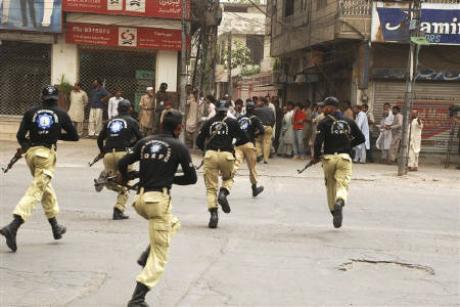
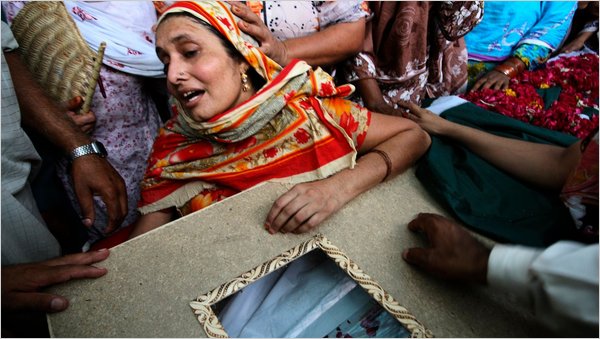
Last week’s massacre in the city of Lahore of more than 80 Ahmadis – a minority religious sect deemed non-Muslim and heretical by the constitution – has generated a heated debate in Pakistan, a U.S. ally, on how to tackle the issue.

In a sign of how hatred is propagated, The News newspaper said one of the two surviving gunmen caught by security forces said he had been persuaded that Ahmadis were “blaspheming” Islam.

Identified as Abdullah, he told investigators that his mentors had him believe that Ahmadis were drawing caricatures of Prophet Mohammad during a recent online contest and “so their bloodshed was a great service to Islam”, the newspaper said. That raised alarm bells in a country combatting militancy.

“The nagging feeling that the government has already lost the battle against extremism has now acquired the force of conviction,” Zafar Hilaly, a former ambassador, wrote in The News last week.

After joining the U.S.-led war on terrorism after the September 11, 2001 attacks on the United States, Pakistan mounted a crackdown on militancy, outlawing several groups, arresting hundreds of suspects and warning hardline mullahs against delivering hate speeches and distributing hate literature.

The government also vowed to reform tens of thousands of Islamic seminaries, known as madrassas, many of which are considered as breeding grounds for militancy. Almost none of these measures, however, has been implemented.

Most outlawed groups have re-emerged under new names. Radical clerics still deliver fiery speeches against sects. The U.S. Embassy acknowledged the difficulties, given the importance placed on Pakistan helping Washington battle al Qaeda and its extremist allies.

“We recognise this is a problem,” an embassy official said, adding that the embassy encouraged Pakistanis to take part in exchange programmes to see a multi-faith United States.

Analysts say Pakistani leaders dating back to the 1970s, however popular, took no action to counter radicals. Hasan Askari Rizvi, a Lahore-based political and security analyst said governments have lacked the stomach to implement reforms, particularly in school curricula.

“In textbooks used in government schools, Pakistan is equated with Muslims…They teach Pakistan is a country only for Muslims. They don’t teach that non-Muslims also live here,” he said.

Journalist and analyst Ahmed Rashid described school programmes as “the most sensitive issue. But it is an issue in which any attempt to change the curriculum would have a whole host of fundamentalist groups oppose you.”

In 1974, Pakistan’s first popularly elected Prime Minister, Zulfikar Ali Bhutto, bowed to Islamic groups and won approval of a constitutional amendment declaring Ahmadis as non-Muslims. He also switched the weekly day off from Sunday to Friday.

But much of the upsurge in militancy occurred in the late 1970s and 1980s during the “Islamisation drive” by late military leader General Mohammad Zia-ul-Haq and Pakistan’s support for the U.S.-baked Afghan jihad or holy war against the Soviet invasion which saw a rapid growth of radical groups and madrasas.

Haq introduced several laws, such as the notorious blasphemy law, which are deemed discriminatory against non-Muslim minorities and fuelled tensions between different Muslim sects. Subsequent governments did nothing to reverse the laws.

Military dictators, who ruled Pakistan for more than half of its existence, have also used militant groups to further policy objectives in Afghanistan and India and marginalise liberals.

“In earlier years, in order to pursue its foreign policy using the instrument of jihad, the state actively sought to create a religiously charged citizenry,” said Pervez Hoodbhoy, a physicist and analyst. “But, now that the Pakistani military and political establishments have become a victim of extremism, they are foundering in confusion.”

Former President Pervez Musharraf, a military ruler, though he espoused a modern and liberal version of Islam, repeatedly failed to get the laws reviewed while in office from 1999-2008.

Former Prime Minister Benazir Bhutto, a pro-West politician and a vocal opponent of the militants, was killed in December 2007 in a suicide attack blamed on militants linked to al Qaeda. Civilian leaders are made even more cautious now in tackling radical groups by the tremendous fear of militants who have unleashed bomb and suicide attacks across the country.

“Religious intolerance is getting worse in Pakistan because the political leadership lacks the will to fight this,” said analyst Rizvi. “They don’t want to face the wrath of mullahs.”

A Journey into America, Past and Present

By Akbar Ahmed for The Guardian

Muslims are for Americans what the Russians were for Churchill: “A riddle, wrapped in a mystery, inside an enigma.” While the post-9/11 period brought an interest in the Qur’an and its language, the gap between Islam and mainstream America has steadily widened. It remains more urgent than ever for the US to comprehend Islam, a religion practised by one out four people in the world, not only for the sake of its ideals (which include religious tolerance) but also for its geopolitical needs and strategy as America remains militarily involved in Afghanistan, Iraq, Pakistan, and Somalia.

The reality is that Islam remains unknown to most Americans, who, on top of all the other insecurities and fears about the religion, have recently added another: the “homegrown terrorist”, which President Obama has named as one of his administration’s top national security priorities.

I have been in a unique position to observe America’s attitudes towards Islam, travelling with a team of young Americans for over a year throughout the length and breadth of the United States to over 75 cities, visiting more than 100 mosques and talking to thousands of Muslims and non-Muslims.

I realised that it was impossible to study Islam in America without studying America itself and its identity, which I determined goes back to the first Mayflower settlers. In short, there are three basic identities that define American society: primordial, pluralist, and predator. Primordial identity is rooted in the seminal landing at Plymouth and provides the foundation of the two other identities. The aim of the early settlers was to survive and create a Christian society under the rule of law. The majority of the Founding Fathers in the next century would subscribe to what I call pluralist identity – believing in civil rights and liberties, religious freedom and tolerance.

America has a strong foundation in which to solve the challenge of the Muslim community if Americans look to their past and revive the spirit of some of their truly great leaders. Roger Williams, in the 17th century laid the groundwork for separation of church and state and welcomed people of other faiths. The state, said Williams, should allow all religions, including the “Turkish” (Islamic).

Thomas Jefferson owned a Qur’an and we found a statue of Jefferson at the University of Virginia advocating “Religious Freedom, 1786” with the words God, Jehovah, Brahma and Allah carved on the tablet he embraces.

A treaty, which was sponsored by George Washington and signed by John Adams in 1797, pertained to Tripoli and assured that the United States “has in itself no character of enmity against the laws, religion or tranquility of Musselmen.” Even the Prophet Muhammad was praised by the Founding Fathers; Adams called him one of the world’s “sober inquirers after truth” alongside such figures as Confucius and Socrates, and Benjamin Franklin cited the prophet as a model of compassion.

As primordial identity was taking shape at Plymouth, however, and new trends were already emerging. The more zealous of the settlers argued that the land was given to them by God, and they were to occupy it regardless of who was living there. As their confidence grew, they began to prey on the weaker natives, justifying their force in the name of protecting the community, generating an arrogance that did not encourage self-reflection and making it easy to demonise and destroy the enemy. This marked the birth of a predator identity.

It is this understanding of American society which allows us to put the Muslim community in America into context. Our findings from the field bring both bad news and good news. The bad news is that every one of the major American Muslim categories – African Americans, immigrants, and converts – has been involved in recent violence-related cases in the United States. In view of the bankruptcy of Muslim leadership and American failure to truly understand the Muslim community, it is not difficult to predict that violence will increase in both frequency and intensity. I am sorry to say that the government and its various agencies still do not have an adequate policy towards the country’s Muslim population. Some Muslims are affected by US actions taken in response to 9/11, which included the arrests and deportation of thousands, prompting many others to flee the country. These realities have reinforced the sense of being a mistrusted community. Others resent the Islamophobia they see in the media.

The good news is that American and Muslim leaders alike are now conscious of the problem of terrorism and its scale and are actively discussing the position of Muslims in America. Some of our findings challenge the received wisdom telling us that most Americans are hostile to Muslims. Of those questioned for our study, 95% said that they would vote for a Muslim for public office, for example, and an equally high number of respondents had no problem with Muslims being “American”, although some inserted “if” clauses. We found a patriotic and vibrant Muslim community committed to contributing to the country. Dialogue and understanding are urgently recommended.

America stands at a crossroads. It will have to choose either to embrace the Founding Fathers’ pluralist vision or the America that compromises the Constitution and the values of the Founding Fathers. Primordial and predator identity remain alive and well in today’s United States. In one way or another, people everywhere have a stake in America resolving its identity because America’s unique, universal vision of society formulated by its Founding Fathers attracts the world. A new chapter in the history of the United States has opened after 9/11 and America’s future will be decided on how it resolves its ongoing engagement and entanglement with Islam.

Official Admits Militancy’s Deep Roots in Pakistan

By Jane Perlez and Waqar Gillani for The New York Times

LAHORE, Pakistan — Days after one of the worst terrorist attacks in Pakistan, a senior Pakistani official declared in a surprising public admission that extremist groups were entrenched in the southern portion of the nation’s most populous province, underscoring the growing threats to the state.

 The statements by the interior minister, Rehman Malik, after the killing of more than 80 people at two mosques last week here in Lahore, were exceptional because few Pakistani politicians have acknowledged so explicitly the deep roots of militancy in Pakistan. They also highlighted the seeming impotence of the civilian government to root out the militant groups, even in Punjab Province, providing a troubling recognition that decades of state policy to nurture extremism had come home to roost in the very heart of the country.

 The extent of the problem has become an increasing concern for the United States, which has pressed the government to deal with the issue with renewed urgency since the failed attempt by a Pakistani-American to explode a car bomb in Times Square.

 “We’re dealing with a problem that is so deeply burrowed into the bosom of the society,” said a senior Western official about the difficulty of loosening the grip of the militant groups. “And we’re dealing with a government that is unhappy within itself.”

The problem for Pakistan, Western officials and some Pakistani politicians said, is not only the specific acts of terrorism by these groups, but the far more pervasive jihadi mentality that has been nurtured in the society by an extensive network of extremist madrasas and mosques.

Mr. Malik’s remarks — in which he rattled off a host of extremist groups once supported by the state — were a nod to these larger problems. In contrast to the tribal areas at the nation’s periphery, where the military is battling the Pakistani Taliban on several fronts, militants were “now active” in the southern part of Punjab and were trying to “destabilize the country,” he said.

Though Mr. Malik seemed to hint at possible military action in Punjab, the civilian government, led by the Pakistan Peoples Party, the more secular of the political parties in Pakistan, has little leverage to make it happen.

The Pakistani military, which still holds most power, has shown little interest in taking on extremist groups in Punjab. The province is a major recruiting area for the army, and many of the militant groups there were created by the state decades ago and have been fostered since as arms of Pakistan’s enduring anti-India strategy.

To a large degree, they have slipped from the control of their handlers in the military and intelligence services, according to Western diplomats and Pakistani security experts, and have linked up with Taliban fighters and other militant groups that are now striking deeper into Pakistan in an effort to overthrow the state.

Today these militants move back and forth easily between the tribal areas for training and Punjab, where they carry out a rising number of spectacular attacks.

“They — Lashkar-e-Janghvi, the Sipah-e-Sohaba Pakistan and Jaish-e-Mohammad — are allies of the Taliban and Al Qaeda,” Mr. Malik told reporters in Lahore after the mosque attacks. 

The loose conglomerate of militants that Mr. Malik listed is now being grouped by officials and others under the name of the Punjabi Taliban, a designation that itself highlights the expanding nature of the threat in Pakistan’s most important province and the militants’ shifting ambitions. Under that rubric also falls Lashkar-e-Taiba, an anti-India militant group. Like the others listed by Mr. Malik, Lashkar-e-Taiba has been banned by the state, but continues to operate under a different name and apparently with the blessing of the military.

The Punjabi Taliban took credit for the assaults on the two Ahmadi mosques last Friday. At least one of the men arrested by the Pakistani authorities in connection with the Times Square bombing case is connected to Jaish-e-Mohammed, according to law enforcement officials in Karachi.  Adding to the difficulty of clamping down on the groups, the Punjabi government, led by Shahbaz Sharif, a leader of the more conservative Pakistan Muslim League-N and a chief political rival of President Asif Ali Zardari, has stopped short of condemning the militants. In some respects, he has treated them as allies.

Two months ago, Mr. Sharif asked the Taliban to stay away from Punjab, arguing that his party and the Taliban had a common enemy in the United States. The Punjab government is “in a state of denial,” said Arif Nizami, a columnist with the newspaper The News. Mr. Sharif played down the attack on the two mosques in Lahore, Punjab’s capital. Instead, he visited the wounded survivors in a hospital quietly at night without the usual television coverage.

The groups hold such sway that Pakistani politicians frequently pander to some, like the pro-Taliban Sipah-e-Sohaba Pakistan, during elections.  In a bold illustration of the power of one of the militant groups in southern Punjab, the provincial law minister, Rana Sanaullah, campaigned alongside the leader of Sipah-e-Sohaba, Maulana Muhammad Ahmed Ludhianvi, during a March by-election for the provincial assembly in the city of Jhang.

In an interview, Mr. Sanaullah, said he saw nothing wrong with campaigning with Mr. Ludhianvi. It was a good thing, he said, because it helped bring groups that he described as no longer militant into the democratic mainstream. “If they want to be law-abiding citizens, we should allow them to be,” Mr. Sanaullah said.  Mr. Sanaullah was not alone in seeking votes from Sipah-e-Sohaba. A candidate for the National Assembly running for the Pakistan Peoples Party also won with its support earlier this year. Though security is a paramount concern, government officials and others acknowledge that the problem of militancy will not be solved by military force alone. Having been nurtured through generations, it will also not be undone quickly.

A program announced by Mr. Zardari two years ago to rein in the madrasas has yet to get off the ground, blocked by bureaucratic inertia and fears of a backlash from powerful conservative religious groups, Pakistani officials say. As state-sponsored education becomes too expensive for poor parents, the number of madrasas has actually increased in the past three years, to more than 17,000 in 2010 from 13,000 in 2007. At least several thousand of the madrasas churn out militant students, experts say.

Al Qaeda Aide Believed Dead- Drone Attack in Pakistan Said to Have Killed No. 3 Official

By Kimberley Dozier for AP

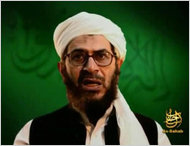
Al Qaeda’s third in command, who played key roles in a recently foiled terrorist plot against the U.S. and the 2001 terrorist attacks, is believed to have been killed by a U.S. drone strike in Pakistan’s tribal areas, potentially dealing a significant blow to the terrorist network. Mustafa al-Yazid, al Qaeda’s chief operating officer, was killed a little more than a week ago, according to two U.S. officials. This is the main person who everyone has been looking for,” one official said.

Al-Qaida announced Monday that its No. 3 official, Mustafa al-Yazid, had been killed along with members of his family — perhaps one of the most severe blows to the terror movement since the U.S. campaign against al-Qaida began. A U.S. official said al-Yazid was believed to have died in a U.S. missile strike.

A statement posted on an al-Qaida Website said al-Yazid, which it described as the organization’s top commander in Afghanistan, was killed along with his wife, three daughters, a grandchild and other men, women and children but did not say how or where.

The statement did not give an exact date for al-Yazid’s death, but it was dated by the Islamic calendar month of “Jemadi al-Akhar,” which falls in May.

A U.S. official in Washington said word was “spreading in extremist circles” of his death in Pakistan’s tribal areas in the past two weeks.

His death would be a major blow to al-Qaida, which in December “lost both its internal and external operations chiefs,” the official said on condition of anonymity because of the sensitivity of the information.

The Egyptian-born al-Yazid, also known as Sheik Saeed al-Masri, was a founding member of al-Qaida and the group’s prime conduit to Osama bin Laden and Ayman al-Zawahri. He was key to day-to-day control, with a hand in everything from finances to operational planning, the U.S. official said.

Al-Yazid has been reported killed before, in 2008, but this is the first time his death has been acknowledged by the militant group on the Internet.

Two Pakistani intelligence officials, speaking on condition of anonymity because they were not authorized to talk to the media, said al-Yazid died in a U.S. missile strike on May 21 in the North Waziristan tribal area.

Soon after the attack, officials reported that two foreigners were among the 10 people killed, but did not know their identities. Five women and two children were also wounded in the attack, which occurred in the village of Boya near the main town in the area, Miran Shah.

The intelligence officials said they received word of al-Yazid’s death last week and confirmed it by speaking to local tribal elders and Taliban members. They said their sources had not seen al-Yazid’s body and did not know where he was buried.

Al-Yazid has been one of many targets in a U.S. Predator drone campaign aimed at militants in Pakistan since President Barack Obama took office. Al-Yazid made no secret of his contempt for the United States, once calling it “the evil empire leading crusades against the Muslims.”

“We have reached the point where we see no difference between the state and the American people,” al-Yazid told Pakistan’s Geo TV in a June 2008 interview. “The United States is a non-Muslim state bent on the destruction of Muslims.”

The shadowy, 55-year-old al-Yazid has been involved with Islamic extremist movements for nearly 30 years since he joined radical student groups led by fellow Egyptian al-Zawahri, now the No. 2 figure in al-Qaida after bin Laden.

In the early 1980s, al-Yazid served three years in an Egyptian prison for purported links to the group responsible for the 1981 assassination of Egyptian President Anwar Sadat. After his release, al-Yazid turned up in Afghanistan, where, according to al-Qaida’s propaganda wing Al-Sabah, he became a founding member of the terrorist group.

He later followed bin Laden to Sudan and back to Afghanistan, where he served as al-Qaida’s chief financial officer, managing secret bank accounts in the Persian Gulf that were used to help finance the Sept. 11, 2001, attacks on New York and Washington. After the U.S. and its allies invaded Afghanistan in 2001, al-Yazid went into hiding for years. He surfaced in May 2007 during a 45-minute interview posted on the Web by Al-Sabah, in which he was introduced as the “official in charge” of the terrorist movement’s operations in Afghanistan.

Some security analysts believe the choice of al-Yazid as the Afghan chief may have signaled a new approach for al-Qaida in the country where it once reigned supreme.

Michael Scheuer, former head of the CIA unit that tracked bin Laden, believes bin Laden and al-Zawahri wanted a trusted figure to handle Afghanistan “while they turn to other aspects of the jihad outside” the country.

Al-Yazid had little background in leading combat operations. But terrorism experts say his advantage was that he was close to Taliban leader Mullah Omar. As a fluent Pashto speaker known for impeccable manners, al-Yazid enjoyed better relations with the Afghans than many of the al-Qaida Arabs, whom the Afghans found arrogant and abrasive.

That suggested a conscious decision by al-Qaida to embed within the Taliban organization, helping the Afghan allies with expertise and training while at the same time putting an Afghan face on the war.

Al-Yazid himself alluded to such an approach in an interview this year with Al-Jazeera television’s Islamabad correspondent Ahmad Zaidan. Al-Yazid said al-Qaida fighters were involved at every level with the Taliban.

“We participate with our brothers in the Islamic Emirate in all fields,” al-Yazid said. “This had a big positive effect on the (Taliban) self-esteem in Afghanistan.”

A September 2007 al-Qaida video sought to promote the notion of close Taliban-al-Qaida ties at a time when the Afghan insurgents were launching their comeback six years after their ouster from power in Kabul.

The video showed al-Yazid sitting with a senior Taliban commander in a field surrounded by trees as a jihad anthem played. The Taliban commander vowed to “target the infidels in Afghanistan and outside Afghanistan” and to “focus our attacks, Allah willing, on the coalition forces in Afghanistan.”

There is also evidence that al-Yazid has promoted ties with Islamic extremist groups in Central Asia and Pakistan, where other top al-Qaida figures are believed to be hiding.

“He definitely seems to have significant influence among the Pakistani Taliban and the Central Asian groups,” terrorism expert Evan Kohlman said. “They regularly post and share his videos on the Web, just as they would with bin Laden or al-Zawahri.”

In August 2008, Pakistani military officials claimed al-Yazid had been killed in fighting in the Bajaur tribal area along the Afghan border. However, he turned up in subsequent al-Qaida videos, all of which had clearly been made after the Bajaur fighting.

Pakistani-Americans and Police Sharing, and Trying to Spread, Trust

By Anne Barnhard for The New York Times

STRATFORD, Conn. — Last month, a resident of Avon, Conn., received a threatening letter full of religious references. The police chief there, Mark Rinaldo, wondered whether the letter implied a broader threat from a Muslim militant.

He called Dr. Atique A. Mirza, a Pakistani-born Muslim cardiologist, who studied the letter for cultural, religious and political clues. They concluded that the threat probably involved a narrow dispute between neighbors.

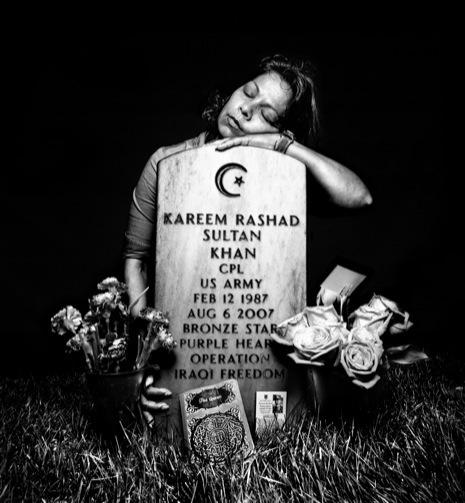
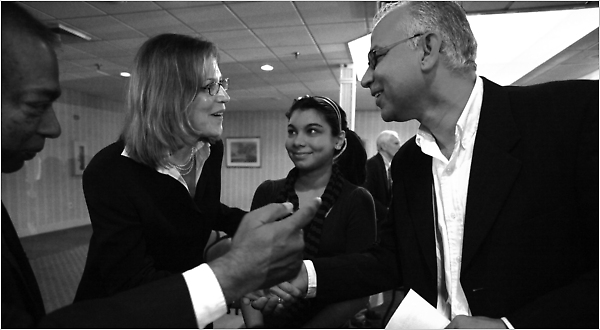
Now that a Pakistani-American man from Connecticut, Faisal Shahzad, stands accused of trying to detonate a car bomb in Times Square, setting off soul-searching and unease among the state’s thousands of residents of Pakistani descent, Mr. Rinaldo and Dr. Mirza are holding up their relationship — built over three years of meetings and cooperation between Pakistani-Americans and law enforcement — as a model for communities across the state and the nation.

The comfort level is such, said Mr. Rinaldo, that Dr. Mirza “wouldn’t be insulted and say, ‘Why are you calling me,’ “ nor would the chief doubt Dr. Mirza’s analysis. “That’s the trusting relationship we are looking for,” said Dr. Mirza, who has formally assumed the role of Avon’s police-community liaison for the Pakistani American Association of Connecticut (Paact), which has similar representatives in 13 towns and hopes to increase the number to 70.

Paact’s work makes Mr. Shahzad’s case all the more upsetting to Dr. M. Saud Anwar, a pulmonologist who founded the group. He has played a role in the investigation, acting as liaison between the authorities and a Pakistani friend of Mr. Shahzad’s who feared talking to them. The friend provided e-mail messages that may shed light on Mr. Shahzad’s views on violence.

But Dr. Anwar wishes the attempt could have been stopped before it began, something he calls possible in future cases if cooperation between his community and the authorities increases by another “order of magnitude.”

“This is not, God forbid, to spy on people, but just to live your life the way it is and if you notice something that concerns you, speak up,” he said, speaking to about 100 Connecticut residents of Pakistani descent and representatives of the F.B.I., the State Police and a dozen police departments who gathered Saturday at the Ramada Inn in Stratford. “This is someone who lived among us and under the radar without anybody in the community knowing he was radicalized.”

Paact moves beyond reminding law enforcement not to unfairly paint all Muslims as terrorists — though it still strongly takes that position. It also calls on Pakistani-Americans to acknowledge that people of Pakistani descent have been implicated in high-profile terrorist attacks, to probe the causes and in the process to remind the public that they want security as much as other Americans do.

Dr. Mirza’s wife, Faryal, an endocrinologist, took a similar approach when her son was called “terrorist” in school several years ago. She began giving annual diversity classes, in which she offered Pakistani food and talked about her culture and religion. She also goes out of her way to let patients know she is Pakistani, so they associate the country with something other than terrorism.

Although she could have argued that the burden of explaining culture should not fall on her, she said, “We have to be proactive.”

Now Paact hopes to franchise its approach to other states. On June 19, the group is holding a national conference in Hartford on radicalization and prevention, featuring the Pakistani ambassador, representatives of the National Counterterrorism Center, theologians and others.

Saturday’s meeting focused on the narrower question of how it could have been that people did not seem to remember Mr. Shahzad from a mosque or a dinner party, let alone alert the authorities about him.

Dr. Mirza said it pointed to a need to rethink the atomization of suburban culture: “Know your neighbors; say hi; help them when they need you; be attentive.”

Mr. Shahzad may have isolated himself from mosques and Pakistani organizations, but he must have had some connections; he was married to a Pakistani-American and lived in Bridgeport, where there is a relatively large Pakistani-American population, said Jaleel Rahman, a retired real estate agent.

“We have to be more vigilant,” Mr. Rahman said.

Zaheer Sharaf, Paact’s president, said that many Pakistanis were afraid of the police, because they believe that police officers in their original country are corrupt.

Add to that the post-9/11 fear that reporting a suspicion about a Muslim might lead to an overreaction by the authorities, and it made for a wide gulf between Pakistani-Americans and the police forces that Mr. Rinaldo, the police chief of Avon, said he was unaware of until he began meeting with Dr. Mirza and others.

His reaction: “Wait a minute. We’re the good guys. We have to open up to this community.”

This month, he said, he was upset to see negative reactions to Pakistani-Americans after Mr. Shahzad’s arrest.

“It seems to be one individual, yet a whole community is suffering for the crime,” Mr. Rinaldo said. “It’s not fair.”

Mateen Haider, 56, an engineer from South Windsor, said that Pakistanis, like all immigrants, simply want to fit in, so they are loath to do anything that could draw attention, including call the police.

“That is no longer enough,” he said, telling the meeting: “Today is a great day. We have spoken out. We are all united together as citizens, and we will fight this to the end.”

Obama, Karzai Strive To Project Unity, Deny Serious Differences

By Jonathan Landay for The Kansas City Star

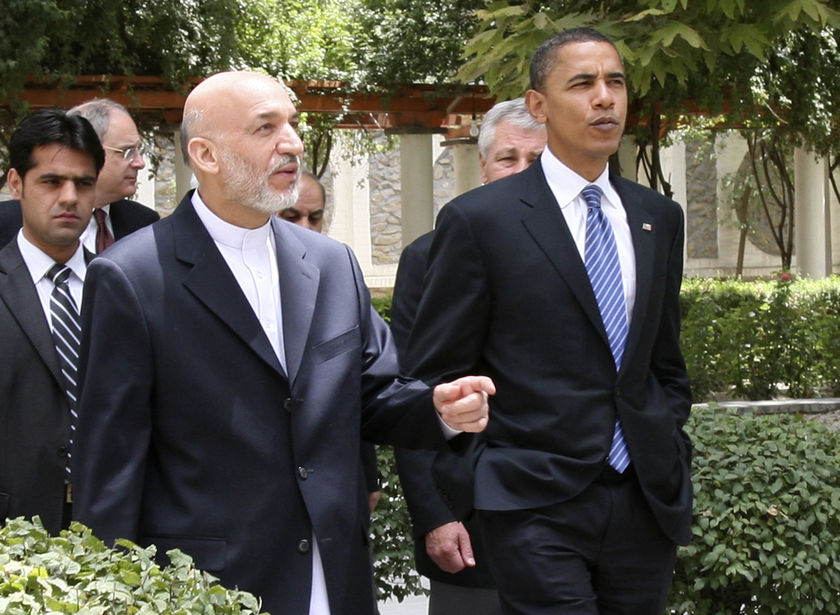
President Barack Obama and Afghan President Hamid Karzai asserted Wednesday that progress is being made toward crushing the Taliban-led insurgency, but new studies on the Afghan army and police raise serious doubts about whether the strategy can succeed before a U.S. troop drawdown begins in July 2011.

Flanked by Karzai at a White House news conference, Obama urged Americans to have patience with the “joint strategy” that he unveiled in December to stabilize Afghanistan, defeat the insurgency and prevent the country’s reversion to a Qaida sanctuary. He warned, however, that “there is going to be some hard fighting over the next couple of months.”

He apparently was referring to the summer “fighting season” that’s traditionally racked Afghanistan and that this year will see a drive to clear the Taliban from the southern city of Kandahar that’s being supplemented by an additional 30,000 U.S. troops.

The joint news conference was the public high point of a tightly scripted four-day visit in which Karzai was feted, praised and lavished with the full red-carpet treatment by the U.S. administration, which is determined to reset a relationship scarred by feuding and anti-American tirades by the Afghan leader amid record bloodshed.

The administration concluded that the tensions were an obstacle to Afghan cooperation on a number of fronts central to Obama’s strategy, especially the operations to drive the Taliban from their strongholds in the southern provinces of Helmand and Kandahar, turn them over to government control and jump-start economic development.

Moreover, U.S. officials want to reassure Karzai and ordinary Afghans – as well as regional powers that already are jockeying for influence – that the U.S. troop drawdown doesn’t mean that the United States will abandon Afghanistan as it did after the 1979-89 Soviet occupation, which was followed by a vicious 12-year civil war.

“We are not suddenly as of July 2011 finished with Afghanistan,” Obama said. “This is a long-term partnership that is not simply defined by our military presence.”

Obama and Karzai sought to present a portrait of unity, saying that progress is being made by the U.S.-led counterinsurgency campaign, by an American effort to avert civilian casualties and by Karzai on his vows to clean up narcotics-fueled corruption and boost public services, the rule of law and good governance.

“Our solidarity today sends an unmistakable message to those who would stand in the way of Afghanistan’s progress,” Obama said. “They will try to drive us apart, but we will partner with the Afghan people for the long term, toward a future of greater security, prosperity, justice and progress. And I am absolutely convinced we will succeed.”

Obama conceded that “there are going to be tensions in such a complicated and difficult environment and in a situation in which, on the ground, both Afghans and Americans are making enormous sacrifices.”

However, he said, a lot of “perceived tensions” between the sides “were simply overstated.”

“It’s a real relationship,” Karzai agreed. “It’s based on some very hard realities. We are in a campaign against terrorism together. There are days that we are happy. There are days that we are not happy.

“The bottom line is that we are much more strongly related to each other than we ever were before. That is a good message that I will take back to the Afghan people.”

U.S.-led international efforts have made considerable progress in helping to bring stability, education, health care and development to many parts of the country of 32 million people since the 2001 invasion drove the Taliban and al-Qaida leadership into neighboring Pakistan.

However, the Taliban and allied groups – aided by al-Qaida and the former Bush administration’s diversion of U.S. forces, time and money to Iraq – staged a major comeback that’s surged as U.S. commanders struggle to implement Obama’s strategy.

New reports on the Afghan army and police – each a crucial element of Obama’s plan to transfer responsibility for districts cleared of insurgents to Afghan government control as the U.S. troop drawdown begins – underscore the enormous hurdles that persist.

A report released Wednesday by the International Crisis Group, a respected conflict-prevention organization, says that the Afghan army is suffused with corruption, desertions, ethnic tensions and disputes between its highest leaders.

The report warns that Obama’s plan to expand the Afghan National Army to 240,000 troops from 90,000 by 2013 could worsen those problems and “risk the army’s disintegration after the withdrawal of international forces.”

A report by the Rand Corp. research center on the Afghan Civil Order Police, an elite unit that’s playing a key role in Helmand and Kandahar, found that the contingent is infected with the same problems of corruption and ineptitude that plague other police forces.

ANCOP members have set up checkpoints to shake down residents, been kicked out of the unit for drug use and been shunned in some areas as outsiders, according to U.S. officials briefed on the Rand Corp. analysis, who spoke to McClatchy only on the condition of anonymity because of the sensitivity of the issue.

Relations between Kabul and Washington have been brittle since Obama took office last year, shaken by U.S. criticism of Karzai’s failure to crack down on official corruption, his dubious dependability, his reliance on a patronage network of warlords and family members, and the massive fraud that marred his re-election to another term last August.

For his part, Karzai has complained about civilian casualties caused by U.S. military operations and launched tirades against the United States and his other international backers, reflecting his unpopularity among ordinary Afghans, who are angry that the war is still raging nearly nine years after the U.S.-led invasion.

“We have an interest in reducing civilian casualties not because it’s a problem for President Karzai. We have an interest in reducing civilian casualties because I don’t want civilians killed,” said Obama, who noted that the Taliban have killed more civilians.

A Pentagon report last month said the overall level of violence in Afghanistan rose 87 percent from February 2009 to March 2010. More than 1,760 international troops – including 1,068 Americans – have been killed, according to iCasualties.org, a website that tracks casualties in Iraq and Afghanistan.

Tens of thousands of Afghan security forces, officials and civilians have been killed and wounded. There are currently 102,000 troops from 46 nations, including the United States, in Afghanistan. There will be 98,000 U.S. troops there when the surge is completed later this summer.

Afghanistan Is Feel-Good Element in Twenty20

By Huw Richards for The New York Times

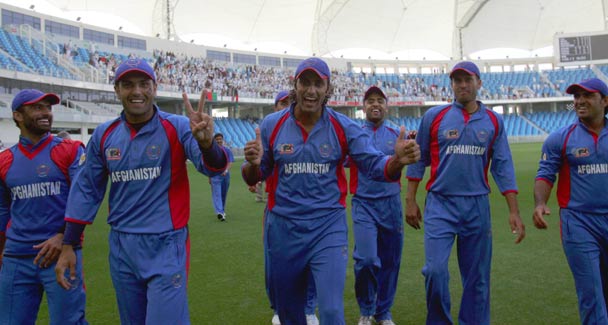
Cricketing contrast rarely comes more vividly than it will Saturday when India plays Afghanistan on day two of the World Twenty20 tournament on the West Indian island of St. Lucia.

India is cricket’s economic giant, generating around three quarters of its income. Its players count both their fans and their personal fortunes in millions. They have just been playing in the India Premier League, the hugely lucrative competition that has brought unprecedented riches — accompanied by allegations of corruption — into the game.

Afghanistan is the tournament newcomer, taking its first steps on the game’s biggest stages. It is cricket’s almost-too-good-to-be-true story.

A team from an impoverished and war-torn nation with no real cricket history has risen with incredible speed. That this success is a bizarre byproduct of those wider sufferings, with Afghans learning the game in refugee camps in Pakistan, only adds to the joyous unlikelihood of the whole story.

Saturday will be Afghanistan’s first competitive meeting with any of cricket’s established giants. Its players bring with them not only the fearlessness of youth — none admits to being older than 26 — but whose life experiences put mere sporting disappointment in context.

As Graeme Smith, captain of South Africa, the third team in the same initial pool, said when told that an Afghan batsman had declared himself unafraid of paceman Dale Steyn: “I wouldn’t be either, if I had grown up in a war zone.”

Afghanistan, a fifth-division team in the International Cricket Council’s league system only two years ago, should, logically, have finally reached the limit of its abilities. Yet that has been said of it at most stages in its rise. India will be wary. It remembers its elimination by Bangladesh in the 2007 World Cup, the last major tournament played in the West Indies. Lose to the Afghans and it will be tough for India to find a way back — it plays its second pool match only 24 hours later against South Africa, traditionally a fast starter in big tournaments.

There is nothing like an early shock to animate a championship. Ireland, the other qualifier from outside the 10 test-playing nations, will hope to provide one before Afghanistan even takes the field, when it plays host West Indies on Friday.

The West Indians will be seeking success on and off the field. It needs the 12-team, 27 match, 17 day tournament — the final is May 16 in Barbados — to be everything the 2007 World Cup was not. Then, overpriced tickets and heavy-handed crowd control seemed expressly designed to eliminate the distinctive ambience of Caribbean cricket.

It also needs its team to play with the vibrant spirit shown by Trinidad and Tobago in the Champions League competition for regional and national title-holders. Trinidad contributes four men to its 15-strong squad including the volcanic hitter Keiron Pollard.

In the tournament opener, Sri Lanka, runner-up in the 2009 World Twenty20, takes on New Zealand. The Sri Lankans field a 40-year-old member of Parliament, Sanath Jayasuriya, and a clutch of unorthodox but highly effective bowlers.

Predicting Twenty20 matches is notoriously tough. The short length of matches — only 20 six-ball overs apiece — and the limited number of international contests make for the unexpected.

There are, though, indications that Australia — which has won the World Cup, in which teams have innings of 50 overs, three times in a row — is coming to terms with the shorter format. It has won four of its last five official matches, drawing the other. Its teams dominated the Champions League. Paceman Doug Bollinger has emerged as a real force. On the other hand, it lost its warm-up contest against Zimbabwe.

This is the third Twenty20 World Cup. Pakistan won last year and was the runner-up in 2007. It comfortably has the best winning percentage in this format.

Pakistan should, by logic, be a prohibitive favorite. Logic, though, is in short supply in Pakistan. Several of its winning team, including inspirational captain Younis Khan, have since been thrown off the team following internal disputes.

Afghanistan owes much of its aggressive playing style to examples set by Pakistan. It must be hoped it will take its administrative models from elsewhere.

The pool stages might see Bangladesh trouble Pakistan’s traditionally slow starters. Two weeks beyond that, it would be no surprise to see Australia and Sri Lanka reprise their roles as finalists in 2007 World Cup in the 50-over format.

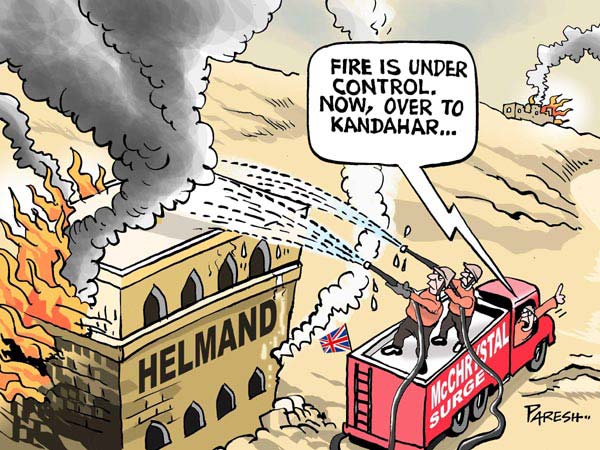
Situation in Afghanistan Remains Unstable Despite Gen McChrystal’s Troop Surge