Archive for the ‘ Afghanistan ’ Category

Pakistan is Helping Afghan Taliban, Says Nato Report

As Reported by The BBC
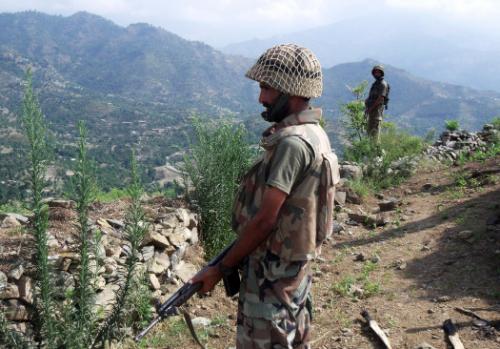
The Taliban in Afghanistan are being directly assisted by Pakistani security services, according to a secret Nato report seen by the BBC.
The leaked report, derived from thousands of interrogations, claims the Taliban remain defiant and have wide support among the Afghan people. It alleges that Pakistan knows the locations of senior Taliban leaders.

A BBC correspondent says the report is painful reading for international forces and the Afghan government. Pakistan has strenuously denied any links with the Taliban on previous occasions.

“We have long been concerned about ties between elements of the ISI and some extremist networks,” said US Pentagon spokesman Captain John Kirby, adding that the US Defence Department had not seen the report.

The BBC’s Quentin Sommerville in Kabul says the report – on the state of the Taliban – fully exposes for the first time the relationship between the Pakistani intelligence service (ISI) and the Taliban.

The report is based on material from 27,000 interrogations with more than 4,000 captured Taliban, al-Qaeda and other foreign fighters and civilians.
It notes: “Pakistan’s manipulation of the Taliban senior leadership continues unabatedly”. It says that Pakistan is aware of the locations of senior Taliban leaders.

The report states: “As this document is derived directly from insurgents it should be considered informational and not necessarily analytical.”
Despite Nato’s strategy to secure the country with Afghan forces, the secret document details widespread collaboration between the insurgents and Afghan police and military.

Lt Col Jimmie Cummings, a spokesman for Nato’s International Security Assistance Force (Isaf) in Afghanistan, said the document was “a classified internal document that is not meant to be released to the public”.

“It is a matter of policy that documents that are classified are not discussed under any circumstances,” he said.
The report also depicts the depth of continuing support among the Afghan population for the Taliban, our correspondent says.
It paints a picture of al-Qaeda’s influence diminishing but the Taliban’s influence increasing, he adds.

In a damning conclusion, the document says that in the last year there has been unprecedented interest, even from members of the Afghan government, in joining the Taliban cause. It adds: “Afghan civilians frequently prefer Taliban governance over the Afghan government, usually as a result of government corruption.”

The report has evidence that the Taliban are purposely hastening Nato’s withdrawal by deliberately reducing their attacks in some areas and then initiating a comprehensive hearts-and-minds campaign.

It says that in areas where Isaf has withdrawn, Taliban influence has increased, often with little or no resistance from government security forces. And in many cases, with the active help of the Afghan police and army.

When foreign soldiers leave, Afghan security forces are expected to take control. However according to the report, rifles, pistols and heavy weapons have been sold by Afghan security forces in bazaars in Pakistan.
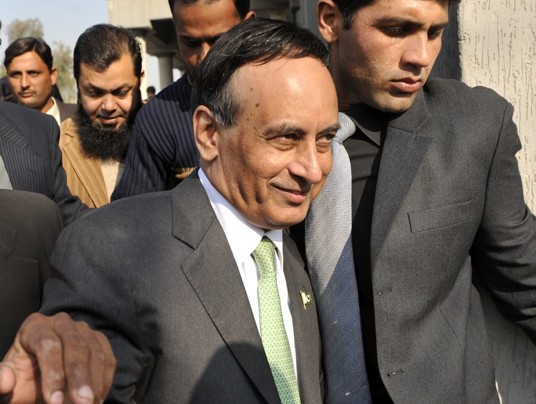
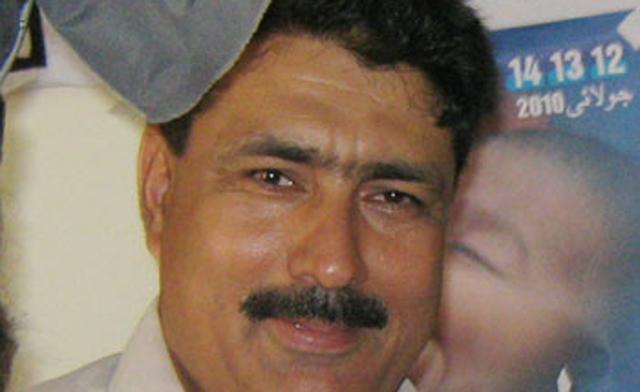
Husain Haqqani, former Pakistan envoy to US, allowed to travel abroad

By Richard Leiby for The Washington Post

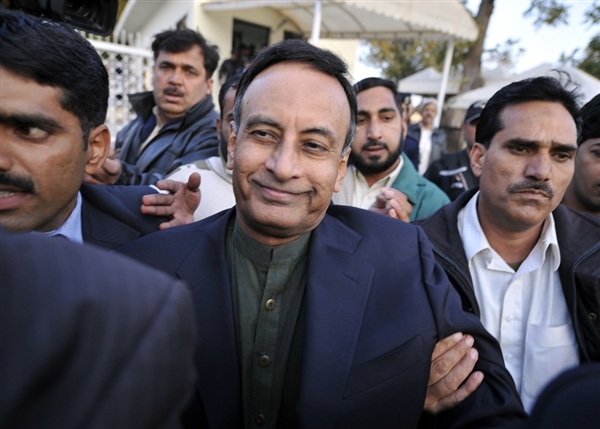
Husain Haqqani, Pakistan’s former ambassador to the United States, was permitted to travel abroad Monday by the nation’s Supreme Court after two months of fending off treason allegations over his purported involvement in a mysterious memo that sought Washington’s help to neuter Pakistan’s powerful military.

The court ruling indicated that authorities seem to have lost interest in continuing to probe Haqqani’s role in the scandal, known here as Memogate, which at one point threatened to bring down the civilian leadership of this coup-prone country.

Haqqani, a confidant of President Asif Ali Zardari, was forced to resign, recalled to Islamabad and ordered not to travel abroad after a Pakistani American tycoon, Mansoor Ijaz, alleged that the diplomat engineered an unsigned missive to the Pentagon hoping to block a coup in the turbulent days after the killing of Osama bin Laden.

Haqqani denied involvement and said Ijaz, a onetime acquaintance, cooked up the memo.

In an e-mail to Agence France-Presse, Haqqani said: “I am glad that the Supreme Court has restored my right to travel, which had been rescinded without any charges being filed against me.” He added that he planned to join his family in the United States.

Memogate prompted a showdown between the army and the civilian leadership, which technically oversees the military, and brought an already shaky government to the verge of collapse. The fissures between the two sides now seem to have been repaired, and the incessant political and media interest in the scandal has waned in recent days.

One reason seemed to be the dwindling credibility of Ijaz, who has yet to appear to testify about his role in the memo, saying he fears for his safety. The bulk of evidence has come from Ijaz, who released logs of what he says are BlackBerry message conversations between him and Haqqani.

Since his return to Islamabad, Haqqani has stayed within the walls of the official government residence, saying he feared for his life.

Earlier this month, U.S. Sens. John McCain (R-Ariz.), Mark Kirk (R-Ill.) and Joseph I. Lieberman (I-Conn.) issued a statement condemning the “harassment” of Haqqani, a former journalist and Boston University professor. They called him a “principled advocate” for Pakistan.

Despite allowing the erstwhile diplomat to travel, the Supreme Court did not drop the matter entirely: It granted a two-month extension to the judicial commission that is probing Memogate. And Haqqani’s lawyer had to guarantee that the former envoy would appear before the court if called, on four days’ notice.

A separate parliamentary investigation is also underway.

Pakistani Doctor Helped U.S. Track Bin Laden, Panetta says

By Saeed Shah for McClatchy Newspapers

A senior American official has for the first time admitted that a Pakistani doctor played a key role in tracking Osama bin Laden to his hideout in northern Pakistan, and called for his release.

The comments by U.S. Defense Secretary Leon Panetta were the first public confirmation of a part of the bin Laden operation reported by McClatchy Newspapers in July, about how the CIA used Shakil Afridi to try to establish whether the al-Qaida leader was really living in a large house in Abbottabad, northern Pakistan.

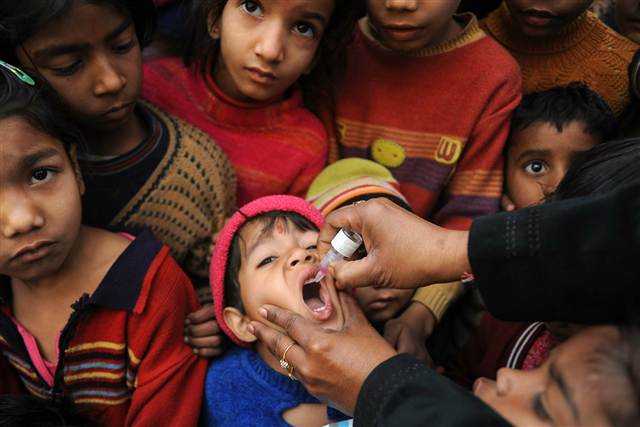
This morning in Islamabad, Pakistan’s Inquiry Commission on the Abbottabad Operation issued an order to charge Afridi with treason, local media reported. The timing makes it appear that Pakistan is rebuking Panetta for his public acknowledgement of Afridi’s role. Afridi has been in Pakistani custody since the country’s own spy agency, Inter Services Intelligence (ISI), learned of the secret task performed by the doctor, who set up a fake vaccination program in Abbottabad to get DNA samples from those staying at the compound.

The CIA was never certain that bin Laden was present in the house. Afridi worked for the American intelligence agency in the weeks leading up to the Navy SEALs raid on May 2, setting up an elaborate scheme that was supposedly going house to house to vaccinate residents in Abbottabad.

Panetta told CBS’ “60 Minutes” “I am very concerned about what the Pakistanis did with this individual (Afridi). This was an individual who, in fact, helped provide intelligence that was very helpful with regard to this operation.” Panetta also voiced his belief that elements within Pakistan must have known that bin Laden, or at least someone significant, was present inside the compound. The interview was posted on the “60 Minutes” website. However, it was not included in the segment telecast on Sunday night. The McClatchy investigation discovered that Afridi was arrested by the ISI in late May and was tortured. It is believed that he remains in the custody of the intelligence agency, which is part of the military.

The whereabouts of Afridi’s family, including his American wife of Pakistani origin, is still unknown. The fate of the doctor has become another source of tension between Islamabad and Washington, with American officials pressing Pakistan to free him so he and his family can be resettled in the United States.

The military, which will decide what happens to Afridi, is furious that the CIA recruited Pakistani citizens for clandestine operations inside the country. Privately, officials point out that it is a crime to work for a foreign intelligence agency.
The doctor has turned into a bargaining chip in the failing U.S-Pakistan alliance. It is thought that Pakistan will let him go after public attention on the case wanes and it gets something in return from the U.S. “He was not in any way treasonous towards Pakistan. He was not in any way doing anything that would have undermined Pakistan,” Panetta told “60 Minutes.”

“Pakistan and the U.S. have a common cause here against terrorism,” he said. “And for them to take this kind of action against somebody who was helping to go after terrorism, I just think it is a real mistake on their part.”
Panetta, who was in charge of the CIA at the time of the bin Laden raid, also said that while there was no evidence of Pakistani complicity in keeping the al-Qaida chief, suspicions must have been raised about his hideout. “I personally have always felt that somebody must have had some sense of what was happening at this compound. Don’t forget, this compound had 18-foot walls. … It was the largest compound in the area.

“So you would have thought that somebody would have asked the question, ‘What the hell’s going on there?'” Panetta said.
But asked whether he knew for sure that Pakistan was aware of bin Laden’s presence, he said: “I don’t have any hard evidence, so I can’t say it for a fact.”

Peace Pipeline Moves Closer To Fruition

By Mohammed Aasim Saleem for Deutsche Welle

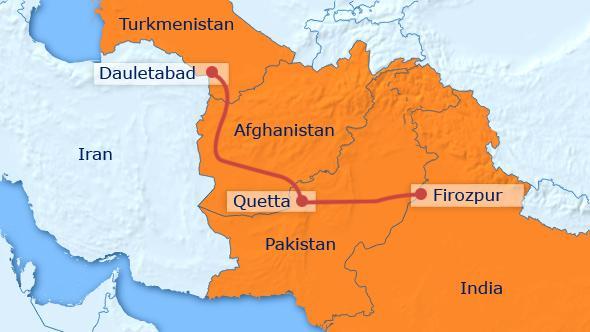
Officials from India and Pakistan have announced they are moving closer to inking a deal to import gas from Turkmenistan via a pipeline through Afghanistan. The 1,700-kilometer “TAPI” duct will transport over 30 billion cubic meters of gas annually from fields in Dauletabad in southeastern Turkmenistan.

In high-level talks in New Delhi this week, Indian Oil Minister S. Jaipal Reddy said “considerable progress” has been made on the project. His Pakistani counterpart, Asim Hussain, added at the meeting that “the issue of transit fees is being discussed with Afghanistan. A joint strategy is also being created between India and Pakistan.”

When the four countries signed a framework agreement back in 2008, the Asian Development Bank estimated the cost of the TAPI pipeline project at around $7.6 billion.

After the talks in New Delhi, the Indian oil minister emphasized that the pipeline would help address the energy needs of the region. Reddy also clarified that security concerns were discussed with Afghan officials, who themselves sought to provide reassurance that necessary measures would be taken to protect the TAPI project.

“We consider it a pipeline of peace,” Reddy said. “Everyone needs gas.”

Improving cooperation between the nuclear armed and traditionally hostile neighbors is seen as a positive development towards establishing long term stability in South Asia.

Pakistan gave India a “Most Favored Nation” trading status when the countries’ commerce secretaries met in New Delhi in November last year to discuss energy and bilateral trade. Indian commerce chief Rahul Khullar expressed his desire to boost bilateral trade to $6 billion within the next three years. Currently, total trade amounts to $2.7 billion.

Reddy said that Pakistan had pledged to also consider a proposal to import Indian petroleum products, highlighting the cost advantages for Pakistan. India, meanwhile, offered electricity to Pakistan through its power plants in Punjab and Gujrat.

The Indian oil minister went on to express disappointment over a failed Iran-Pakistan-India gas pipeline project. With the US leaving no stone unturned in trying to corner Iran over its nuclear ambitions, any possibility of India, Afghanistan or Pakistan going against the Obama administration is somewhat remote. India imports 12 to 14 percent of its oil from Iran, making the Islamic Republic India’s second largest source of oil after Saudi Arabia.

There was significant domestic pressure in India as the analysts and masses called for a stern stand against the US in determining trade relations with Iran. With other regional countries, including China, also refusing to follow US directions, India is still continuing with the import of oil from Iran. In this regard, Reddy said that New Delhi would continue importing oil from Iran and was not bound by new sanctions imposed by the European Union on the Islamic Republic earlier this week.

“We, as a member of the UN, are obliged to follow UN sanctions. Other sanctions imposed by big blocs of countries, we can have some freedom there,” he added further.

Improving relations and cooperation in the energy sector between India and Pakistan will go a long way to establishing harmony and stability in the region. Pakistan is experiencing a severe energy crisis whilst India needs to feed its rapidly developing economy. Mutual dependency and cooperation in this sector with projects such as the TAPI pipeline can also ensure smoother political ties.

Pakistanis for Peace Editor’s Note– A Peace pipe was often used between the Native American tribes when they ended their wars and called a truce. A different sort of peace pipe between Turkmenistan and India via Pakistan can do great wonders for the bilateral relations of the two feuding neighbors and must be encouraged to fruition.

How Pakistan Continues to Help US Drone Campaign Despite Political Tensions

As Reported by Reuters

The death of a senior Al-Qaeda leader in a US drone strike in Pakistan’s tribal badlands, the first strike in almost two months, signaled that the US-Pakistan intelligence partnership is still in operation despite political tensions. The Jan 10 strike-and its follow-up two days later- were joint operations, a Pakistani security source based in the tribal areas told Reuters. They made use of Pakistani “spotters” on the ground and demonstrated a level of coordination that both sides have sought to downplay since tensions erupted in January 2011 with the killing of two Pakistanis by a CIA contractor in Lahore.

“Our working relationship is a bit different from our political relationship,” the source told Reuters, requesting anonymity. “It’s more productive.” US and Pakistani sources told Reuters that the target of the Jan 10 attack was Aslam Awan, a Pakistani national from Abbottabad, the town where Osama bin Laden was killed last May by a US commando team.

They said he was targeted in a strike by a US-operated drone directed at what news reports said was a compound near the town of Miranshah in the border province of North Waziristan. That strike broke an undeclared eight-week hiatus in attacks by the armed, unmanned drones that patrol the tribal areas and are a key weapon in US President Barack Obama’s counter-terrorism strategy.

The sources described Awan, also known by the nom-de-guerre Abdullah Khorasani, as a significant figure in the remaining core leadership of al Qaeda, which US officials say has been sharply reduced by the drone campaign. Most of the drone attacks are conducted as part of a clandestine CIA operation.

The Pakistani source, who helped target Awan, could not confirm that he was killed, but the US official said he was. European officials said Awan had spent time in London and had ties to British extremists before returning to Pakistan. The source, who says he runs a network of spotters primarily in North and South Waziristan, described for the first time how US-Pakistani cooperation on strikes works, with his Pakistani agents keeping close tabs on suspected militants and building a pattern of their movements and associations. “We run a network of human intelligence sources,” he said. “Separately, we monitor their cell and satellite phones. “Thirdly, we run joint monitoring operations with our US and UK friends,” he added, noting that cooperation with British intelligence was also extensive. Pakistani and US intelligence officers, using their own sources, hash out a joint “priority of targets lists” in regular face-to-face meetings, he said. “Al-Qaeda is our top priority,” he said. He declined to say where the meetings take place. Once a target is identified and “marked,” his network coordinates with drone operators on the US side. He said the United States bases drones outside Kabul, likely at Bagram airfield about 25 miles (40 km) north of the capital. From spotting to firing a missile “hardly takes about two to three hours”, he said.

It was impossible to verify the source’s claims and American experts, who decline to discuss the drone program, say the Pakistanis’ cooperation has been less helpful in the past. US officials have complained that when information on drone strikes was shared with the Pakistanis beforehand, the targets were often tipped off, allowing them to escape. Drone strikes have been a sore point with the public and Pakistani politicians, who describe them as violations of sovereignty that produce unacceptable civilian casualties. The last strike before January had been on Nov 16, 10 days before 24 Pakistani soldiers were killed in what NATO says was an inadvertent cross-border attack on a Pakistani border post. That incident sent US-Pakistan relations into the deepest crisis since Islamabad joined the US-led war on militancy following the Sept 11, 2001 attacks. On Thursday, Pakistani foreign minister Hina Rabbani Khar said ties were “on hold” while Pakistan completes a review of the alliance.

The End of a Geopolitical Affair

By Pramit Pal Chaudhri for The Hindustan Times

In Pakistan’s current crisis, why is its military is so reluctant to consider simply seizing power? One reason is that General Ashfaq Pervez Kayani cannot count on the US looking the other way. At a minimum, Washington would have to slap sanctions on an economically faltering country. At a maximum, it would be the last straw in a bilateral relationship at its lowest ebb since it was first woven in the 1950s.

Pakistan’s establishment claims it has been used and abused by the US, the most serious violation being that country’s stealth attack on Abbottabad that led to Osama bin Laden’s death. There has been the Raymond Davies affair, the endless drone attacks and the increasingly public accusation of double-dealing by senior US officials – the most notable being Admiral Mike Mullen’s linking of the Inter-Services Intelligence with terrorist groups.

There is some satisfaction for India in all this. It has been persistently claiming the existence of a military-terrorist nexus. Many in Washington agree. After Abbottabad, there is no one in Washington who doesn’t. The US-Pakistan relationship, says Daniel Twining of the German Marshall Fund, “was really at a historic high for the past decade but is diminishing.” But it might not matter as much to the US if relations fall apart, he says.

Other events are undermining the basis of the US-Pakistani bond. Islamabad had expected the US to totally retreat from Afghanistan, leaving Pakistan’s Taliban allies in charge. Instead, the US will leave a substantial force behind along with many drone bases. The US is talking with the Taliban, but only desultorily with groups that Islamabad patronises.

With the US Congress also pulling the plug on aid to Pakistan, what is left? The answer is nukes. “If Pakistan didn’t have nuclear weapons, with Al Qaeda almost gone, no one would care a fig about that country,” said one ex-US ambassador to the region. As they realise this, Islamabad is getting more paranoid about the security of its “strategic assets.” The more unstable they look, the more willing the US will be to try and do something risky to salvage Pakistan’s nuclear weapons.

US officials are talking about a “new normal” in their Pakistan relations. This would cut ties to the bare bones: counterterrorism cooperation, limited military transit requirements, Afghan talks, narcotics and some humanitarian assistance. “We’ll have to work with the Pakistan military on a limited basis while negotiations with the Taliban proceed,” says John Schlosser, a former state department South Asia hand.

There seems to be no real understanding among Pakistanis that their leverage is dwindling or how much Abbottabad vapourised their credibility in the US. A parliamentary committee report on how to change the US relationship bizarrely demanded, for example, a civilian nuclear agreement.

It could get worse. “The relationship will fall further if the US finds [Al Qaeda chief] Zawahiri in Pakistan. Or there are terror strikes on India or the US,” says Bruce Riedel, former AfPak advisor to Barack Obama.

The worst thing is that Washington is decoupling just at a time when Pakistan, economically and otherwise, can least afford to lose their most generous international partner.

Pakistan High Court Launches Contempt Case Against Prime Minister

By Alex Rodriguez for The Los Angeles Times

Dealing a heavy blow to Pakistan’s embattled government, the Supreme Court on Monday initiated contempt proceedings against Prime Minister Yousuf Raza Gilani for refusing to revive a long-standing corruption case against the nation’s president.

Gilani, a top ally of President Asif Ali Zardari in the ruling Pakistan People’s Party, must appear before the court Thursday, when the justices will listen to his explanation for not going ahead with the case.

If the court moves forward with the contempt proceedings and Gilani is convicted, he could be disqualified from office and forced to step down. He also could be forced to serve up to six months in jail.

Zardari’s government is locked in battles with the Supreme Court and Pakistan’s powerful military, both of which have had an acrimonious relationship with the president since he took office in 2008. The crisis has stirred talk of the government’s possible ouster, though experts say it probably would happen through legal action taken by the high court rather than a military coup.

The military has ousted civilian leaders in coups four times in Pakistan’s 65-year history, but military generals have said they have no plans to mount a takeover.

Nevertheless, they were deeply angered by an unsigned memo that a Pakistani American businessman contends was engineered by a top Zardari ally to seek Washington’s help in preventing a military coup last spring. In exchange, the memo offered several concessions, including the elimination of a wing of the Inter-Services Intelligence agency that maintains links with Afghan insurgent groups.

The businessman, Mansoor Ijaz, says the then-ambassador to the U.S., Husain Haqqani, approached him with the idea. Haqqani, who was forced to resign after the allegations surfaced, denies any involvement in the creation or conveyance of the memo. A Supreme Court commission is investigating the case, and on Monday it ordered Ijaz to come to Pakistan and appear before the panel Jan. 24.

The high court’s move to start contempt proceedings against Gilani involves money-laundering charges in Switzerland that Zardari was convicted of in absentia in 2003. The case was appealed by Zardari and his late wife, former Prime Minister Benazir Bhutto, and was later dropped at the request of the Pakistani government in 2008.

Since 2009, Pakistan’s high court has repeatedly ordered the government to write a letter to Swiss authorities asking that the case be reopened. Gilani and government lawyers have refused, arguing that as president, Zardari enjoys constitutional immunity from prosecution.

Last week, the court warned Gilani that it could remove him from office if he did not abide by its demand. Government lawyers were supposed to appear in court Monday and explain why Gilani’s administration had ignored the court.

Instead, Atty. Gen. Maulvi Anwarul Haq appeared before a packed courtroom and told a high court panel that the government had not given him any instructions about what to say in court. The head of the panel, Justice Nasir Mulk, said Gilani’s inaction gave the court no recourse but to pursue a contempt case against him.

Outside the courtroom, Haq said that if the court eventually issues a contempt finding against Gilani, “this conviction has ramifications…. Under the constitution, with a conviction it’s disqualification from office.”

Before the court issues its findings, it probably would hold evidentiary hearings, Haq said. If Gilani on Thursday tells the court he will ask Swiss authorities to reopen the corruption case, the justices probably would consider dropping the contempt proceeding, said Tariq Mehmood, a lawyer and retired judge.

Gilani has given no indication he plans to give in. He will, however, appear in court Thursday to explain the government’s rationale, he told parliament late Monday. “We have always respected the courts,” he said. “The court has summoned me, and in respect of the court I will go there on Jan. 19.”

Zardari’s administration hopes to become the first civilian government to finish out its term, which ends in 2013. The political turmoil may thwart that plan, as opposition leaders increasingly push harder for early elections. Though Zardari is widely criticized in Pakistan for failing to revive the country’s moribund economy and tackle corruption, his party remains confident that it can weather the storm and retain power for a second term.

Even if Gilani is removed from office, Zardari continues to hold together a coalition that controls parliament’s lower house, which elects the prime minister. On Monday, however, Interior Minister Rehman Malik, a staunch ally of the president, doubted it would come to that.

“The prime minister will stay,” Malik told reporters outside parliament. “The government is in command. Our flight may be a little bumpy, but God willing, we will have a smooth landing in 2013.”

Early Elections Seen as Possible Solution to Pakistan’s Political Crisis

By Saeed Shah for The Miami Herald

Pakistan’s political crisis, which pits its president against determined opponents in foes in Parliament, the Supreme Court and the military, is likely to reach fever pitch on Monday with a confidence vote scheduled in Parliament and hearings scheduled in two critical court cases.

The crisis is so intense that President Asif Zardari’s administration may be willing to call elections for as soon as October, according to members of his ruling coalition and its advisers. But that may not be enough to mollify the opposition, which wants earlier elections, or the country’s powerful military establishment, which is believed to be trying to force a so-called “soft coup,” under which Zardari, a critic of the military’s traditional dominance of Pakistan, would be forced out by Parliament or the courts.

The threat of an outright coup also hangs over the crisis, if the politicians cannot find a way out or the court proceedings reach absolute stalemate.

Whether the government can reach agreement with opposition leader Nawaz Sharif is unclear. Zardari’s Pakistan Peoples Party doesn’t want to announce elections until after voting in March for a new Senate, which the PPP is widely expected to win. But Sharif would like the new elections to be in the summer, perhaps June, which would require an earlier announcement.

“There is no other option for the government to come out of the current crisis without elections,” said an adviser to the PPP leadership, who spoke on condition of anonymity because of the sensitivity of the issue, as did the other coalition members. “It is in the interests of the PPP to reach an agreement with Nawaz.”

The PPP rules with three major coalition partners, but the alliance is looking shaky. Two of the parties, the Muttahida Quami Movement (MQM) and the Pakistan Muslim League-Q, have distanced themselves somewhat from the government.

A senior member of the coalition said the parties so far have agreed internally only to a general election to be held in October. That would be just a few months before the February 2013 date when Parliament would complete its five-year term and elections would have to be held anyway.

An early election should also placate the courts and the military. A supposedly neutral caretaker government would have to be installed to oversee a three-month electioneering period.

Another coalition member said: “It is 100 percent certain that there will be elections in 2012. The only solution is elections. It doesn’t matter whether they are held in June or October.”

Zardari’s coalition itself brought Monday’s confidence vote resolution to Parliament, cleverly wording it so that it asks for support not for the prime minister or even the government, but for democracy. That makes it difficult to oppose.

But the PPP’s troubles in Parliament are only one of the fronts in its battle for survival. The courts and the military are both maneuvering against the party’s leaders, with two explosive cases coming up for hearings Monday.

The first stems from a 2007 decree by President Pervez Musharraf that granted immunity from prosecution to Zardari and other exiled PPP politicians in an effort to persuade them to return to Pakistan to participate in elections that Musharraf was being pressured by the United States to hold.

The Supreme Court later ruled, however, that the decree was illegal and demanded that the government reopen corruption charges against Zardari stemming from the time when his wife, the assassinated PPP leader Benazir Bhutto, was prime minister.

The government declined, however, and now the court has summoned the government to explain its actions. The court could declare Prime Minister Yousaf Raza Gilani in contempt of court, which would in effect remove him from office.

The other case involves the the scandal in which a judicial commission is investigating allegations that Husain Haqqani, a close Zardari adviser and former ambassador to the U.S., wrote a memo that was passed to U.S. officials in May. That memo offered to replace the Pakistan military’s top officials in return for U.S. support should the military attempt to push Zardari aside.

Haqqani, who was forced to resign, says he had nothing to do with the memo, which the military has said amounted to treason.

The judicial commission may take testimony this week from an American businessman, and occasional news commentator, Mansoor Ijaz, who claimed that he had delivered the memo to U.S. officials, in a column that appeared in the British newspaper the Financial Times in October. Ijaz has said he will show up as a witness, though he apparently has yet to receive a visa to enter Pakistan.

India Marks Milestone in Fight Against Polio

By Ravi Nessman for The Associated Press

India will celebrate a full year since its last reported case of polio on Friday, a major victory in a global eradication effort that seemed stalled just a few years ago.

If no previously undisclosed cases of the crippling disease are discovered, India will no longer be considered polio endemic, leaving only Pakistan, Afghanistan and Nigeria on that list.

“This is a game changer in a huge way,” said Bruce Aylward, head of the World Health Organization’s global polio campaign.

The achievement gives a major morale boost to health advocates and donors who had begun to lose hope of ever defeating the stubborn disease that the world had promised to eradicate by 2000.

It also helps India, which bills itself as one of the world’s emerging powers, shed the embarrassing link to a disease associated with poverty and chaos, one that had been conquered long ago by most of the globe.

The government cautiously welcomed the milestone as a confirmation of its commitment to fighting the disease and the 120 billion rupees ($2.4 billion) it has spent on the program.

“We are excited and hopeful. At the same time, vigilant and alert,” Health Minister Ghulam Nabi Azad said in a statement. Azad warned that India needed to push forward with its vaccination campaign to ensure the elimination of any residual virus and to prevent the import and spread of virus from abroad.

The polio virus, which usually infects children in unsanitary conditions, attacks the central nervous system, sometimes causing paralysis, muscular atrophy, deformation and, in some cases, death.

With its dense population, poor sanitation, high levels of migration and weak public health system, India had been seen as “the perfect storm of polio,” Aylward said. Even some vaccinated children fell ill with the virus because malnutrition and chronic diarrhea made their bodies too weak to properly process the oral vaccine.

In 2009, India had 741 cases. That plunged to 42 in 2010. Last year, there was a single case, an 18-month-old girl named Ruksana Khatun who fell ill in West Bengal state Jan. 13. She was the country’s last reported polio victim.

Part of the sudden success is credited to tighter monitoring that allowed health officials to quickly hit areas of outbreaks with emergency vaccinations. Part is also attributed to the rollout of a new vaccine in 2010 that more powerfully targeted the two remaining strains of the disease.

Under the $300 million-a-year campaign the government runs with help from the WHO and UNICEF, 2.5 million workers fan out across the country twice a year to give the vaccine to 175 million children.

They hike to remote villages, wander through trains to reach migrating families and stop along roadsides to vaccinate the homeless.

Philanthropist Bill Gates, whose foundation has made polio eradication a priority, hailed India’s achievement as an example of the progress that can be made on difficult development problems.

“Polio can be stopped when countries combine the right elements: political will, quality immunization campaigns and an entire nation’s determination. We must build on this historic moment and ensure that India’s polio program continues to move full-steam ahead until eradication is achieved,” he said in a statement.

Health officials are working to make polio the second human disease eradicated, after smallpox. But while smallpox carriers were easy to find because everyone infected developed symptoms, only a tiny fraction of those infected with the polio virus ever contract the disease. So while no one in India is reported to have suffered from polio in a year, the virus — which travels through human waste — could still be lingering.

That’s why the country will not be certified as completely polio-free until at least three full years pass without a case. And it is why public health advocates warn against complacency in the massive vaccination efforts.

“We are at a threshold. If we take a long step, we may be in trouble,” said Dr. Yash Paul, a pediatrician in the northern city of Jaipur who was a member of the Indian Academy of Pediatrics’ polio eradication committee until it was dismantled last year because the academy felt it was no longer needed.

Paul also appealed to public health officials to begin switching from the oral vaccine, which is easy to administer but contains live virus that can cause the disease in rare cases, to an injectible vaccine that uses dead virus.

The last time a country came off the endemic list was Egypt in 2006. If India succeeds in getting removed from the list in the coming weeks, only Pakistan, Afghanistan and Nigeria will remain. All three saw a rise in cases last year over 2010, and Pakistan is suffering a particularly explosive outbreak, Aylward said.

In addition, 22 other countries that had eradicated the disease suffered new outbreaks. However, some of those outbreaks stemmed from polio imported from India, so getting rid of the virus here is expected to lessen such outbreaks in the future.

Dr. Donald Henderson, who headed WHO’s smallpox eradication program and had long been skeptical of the possibility of eradicating polio, said Thursday he was now hopeful the disease could be conquered across the world by the end of next year.

“You look at a series of dominoes, this is the big one. The others are definitely easier. If we can do it in India, than I’m more optimistic that we can do it in these other countries,” he said. “I’m celebrating a bit. I’ll certainly drink a glass tomorrow … and keep my fingers crossed.”

Aylward hopes India’s success will spur donors to dedicate more money to the polio fight, partly because full eradication could free up funds for other global health issues.

The WHO program needs another $500 million to fund operations for the rest of the year, and some programs could run out of funding by March, he said.

“If we fail at this point, it’s an issue of will,” he said.

Pakistanis for Peace Editor’s Note– Congratulations to India on a great achievement. Despite massive poverty and numerous internal problems, India is working towards the betterment of its people, something Pakistan can learn a great deal from~

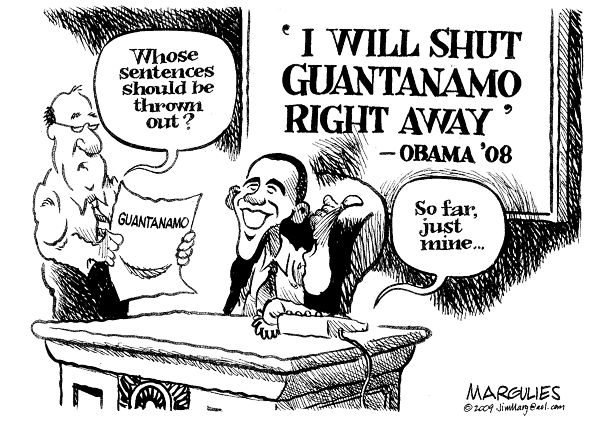
Unhappy Anniversary, Guantanamo!

By Carlos Harrison for The Huffington Post

It’s been a troubled – some might say, tragic – 10 years for the detention camps at the Guantánamo Naval Base in Cuba. And as they slouch into their 11th year on January 11, there’s no end in sight.

“We say to ourselves, in sort of gallows humor: Guantánamo will close when the last detainee there dies of natural causes,” Jeremy Varon, an organizer with Witness Against Torture, told the Huffington Post on Wednesday.

Franz Kafka himself would have been hard-pressed to concoct a more bewildering and brutal contradictory reality. Allegations over the years have included sexual humiliation, waterboarding, and the use of dogs to scare detainees. Released detainees reported being locked in in sensory deprivation cells, beaten repeatedly, and forced to race while wearing leg shackles. If they fell, they were punished.

If it sounds like Abu Ghraib, it should. The U.S. Senate Armed Services Committee found that intelligence teams transported the “aggressive” interrogation techniques perfected at Guantánamo to Afghanistan and Iraq.

The link between Cuba and the war zones, the New York Times reported, was Maj. Gen. Geoffrey D. Miller, then the head of detention operations at Guantánamo. At his insistence, the Times wrote, the Defense Department sent training teams on 90-day tours in Iraq, showing the soldiers there the techniques utilized on the island. The timing, Amnesty International points out, happened to coincide with when the worst abuses occurred at Abu Ghraib.

Thanks to reports like those, the detention camps have become an international symbol of what democracy and justice are not. They’ve been plagued by suicide attempts by desperate detainees and condemned by the United Nations, human rights groups, even former U.S. Secretary of State Colin Powell, who called for the immediate closing of the camps in 2006.
“The value of holding prisoners there was unclear, but the price we were paying around the world for doing so was obvious,” Powell said.

The camps were created in 2002 as a deliberately “extraterritorial” place to extract information from captives in the “War on Terror.” By putting them at Guantanamo, the United States, meant to be beyond the jurisdiction of both the Geneva Conventions and U.S. courts.

That didn’t put them outside the range of public opinion. The camps sparked outrage on day one. Pictures flew around the world of shackled and handcuffed detainees on their knees on the ground with black hoods over their heads and mittens on their hands.

The indignation grew as the first 20 captives went into wire cages at Camp X-Ray, described by critics as “kennels.” Soon, though, the detainees were transferred to permanent cells, and Camp X-Ray was closed.

But the human rights complaints continued, even from some of America’s closest allies.
In 2006, speaking on BBC radio, British Foreign Secretary Jack Straw said:

“I am absolutely clear that the U.S. has no intention of maintaining a Gulag in Guantanamo Bay. They want to see the situation resolved and they would like it other than it is. However, that is the situation that they have.”

In all 779 detainees have been held in the camps. Eight have died there, including six suicides. One man died of colon cancer, another after an apparent heart attack.

And, in the 10 years since it opened, only six detainees have been convicted of war crimes.
The last 171 still there are caught at the conflicting conjunction where bureaucracy, politics, and military regulations collide – offering little chance, at least for the foreseeable future, of gaining their release.

Forty-six are classified as “indefinite detainees,” held without charges, but considered too dangerous to be released; 89 are eligible for release or transfer but in perpetual custody because there is no place to send them. Five more have been convicted of war crimes; and six face trial – perhaps this year – for the 9/11 attacks and the October 2000 U.S.S. Cole bombing.
That makes Guantanamo, as Carol Rosenberg of the Miami Herald described it in a piece for Foreign Affairs, “arguably the most expensive prison camp on earth, with a staff of 1,850 U.S. troops and civilians managing a compound that contains 171 captives, at a cost of $800,000 a year per detainee.”

But even the budget conscious Congress resists closing the base. In fact, it has used its spending oversight powers to thwart the president’s efforts to do just that. It has used that authority to prevent the trial of detainees on U.S. soil and to block the purchase of a dedicated prison facility in Illinois to house transferred detainees.
And no one wants to risk having a released captive later become involved in an act of terrorism or insurgency, which happened with at least one-fourth of the 500 detainees set free under President George W. Bush.

So, the captives remain in Guantanamo. Until when no one knows.
As Marc Thiessen, a fellow at the American Enterprise Institute, told CNN:

“We have the right to continue to hold them as long as al Qaeda is at war with us.”

Having the right, though, doesn’t make it right, said Geneve Mantri, government relations director for national security, Amnesty International.

Speaking to The Huffington Post on Wednesday, he said the 89 cleared for release by both the Bush administration and a review ordered by President Obama, “represent little or no threat.”

“This has always been sold as a question of the worst of the worst and the reality is that a large number of the people that have been picked up, I hate to say it are in the insignificant and rather pathetically sad story category,” he said.

“There is a minority of people (in the camps) that no one doubts are truly dangerous. That minority of people should be placed in front of a US court. Because we have the most efficient system, the fastest and cheapest and best system for looking at all the evidence. You produce it all in a court of law. Have a real defense — an internationally recognized defense. And then put them away forever.”

Pakistani Judges Press Premier to Defy President

By Salman Masood and Ismail Khan for The New York Times

The political and legal crisis in Pakistan took a new turn on Tuesday when the Supreme Court threatened to dismiss Prime Minister Yousaf Raza Gilani for failing to comply with court orders to reopen corruption cases against his political boss: President Asif Ali Zardari.

The latest pressure from the court compounds the problems of the governing Pakistan Peoples Party, already facing a political crisis over a controversial memo that sought United States support in thwarting a feared military coup.

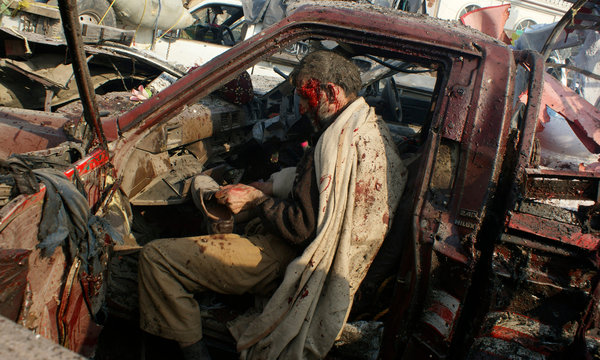
Adding to the government’s troubles is a steep increase in terrorist attacks. Another attack occurred early Tuesday, a truck bombing that the authorities said killed more than 25 people, including women and children, in northwestern Pakistan. A senior government official said the bombing appeared to be in retaliation for the recent killing of a militant leader.

Since December 2009, when the Supreme Court struck down an amnesty that nullified corruption charges against thousands of politicians, the court has insisted that the government reopen corruption cases against Mr. Zardari.

But the government has resisted court orders, and Mr. Zardari said last week that, “come what may,” officials from his party would not reopen the graft cases filed against him and his wife, Benazir Bhutto, in Switzerland. Ms. Bhutto was assassinated in 2007.

On Tuesday, a five-member panel of the Supreme Court, led by Justice Asif Saeed Khosa, ruled that the government was guilty of “willful disobedience” and said that Mr. Gilani was “dishonest” for failing to carry out the earlier court orders.

The judges laid out six options — including initiating contempt of court charges, dismissing the prime minister, forming a judicial commission and taking action against the president for violating his constitutional oath — and ordered the attorney general to explain the government’s position in court on Monday.

A three-member judicial commission that is investigating the controversial memo is scheduled to resume its hearing the same day. Apart from having an acrimonious relationship with the judiciary, the government has an uneasy relationship with the country’s top generals.

Mr. Zardari, who spent 11 years in prison on unproved corruption charges, says the corruption cases against him and Ms. Bhutto that date to the 1990s were politically motivated.

In an interview last week with GEO TV, a news network, Mr. Zardari said reopening those cases would be tantamount to “a trial of the grave” of his wife.

Mr. Zardari also claims immunity as president, but the judiciary, led by Chief Justice Iftikhar Muhammad Chaudhry, has resisted that claim and has aggressively pursued cases against Mr. Zardari’s party, leading many government officials to speculate that the judiciary was being used by the country’s powerful military to dismiss the government before the March elections for the Senate, in which the Pakistan Peoples Party is expected to win a majority.

Political analysts said the fate of Mr. Gilani, the prime minister, was in peril.

Mr. Zardari called a meeting of his party officials and coalition partners on Tuesday evening to chart strategy, and he was expected to get a statement of support from his allies.

“The situation is fast moving towards a head-on confrontation,” said Hasan Askari Rizvi, a political and military analyst based in Lahore. “It depends on what options are exercised by the Supreme Court.”

According to the Pakistani Constitution, a prime minister can be removed only by the Parliament, and the Supreme Court can disqualify the prime minister only indirectly, Mr. Rizvi said.

“If the court disqualifies the prime minister and the prime minister continues to enjoy the support of the Parliament, then the stage is set for a very dangerous confrontation,” he said.

The legal standoff is forcing the government to defer issues of greater importance, like rescuing a failing economy and fighting Taliban insurgents, as it focuses on its political survival, Mr. Rizvi said.

“The court, the military and the executive are trying to assert themselves,” he said. “It has become a free-for-all.”

There were no immediate claims of responsibility for the bombing on Tuesday, but it appeared to have been carried out by Tehrik-i-Taliban, an umbrella organization of Pakistani militant groups, against the Zakhakhel tribe, which has formed a militia in support of the government, said Mutahir Zeb, administrator for the Khyber tribal region.

Mr. Zeb said the Tehrik-i-Taliban sought to avenge the killing of Qari Kamran, a local Taliban commander, by security forces last week in an area occupied by the Zakhakhel.

Mr. Zeb said a pickup truck exploded in the middle of a bus terminal used by the Zakhakhel in the town of Jamrud.

The bomb destroyed several vehicles, damaged a nearby gasoline pump and shattered windows in the area. In addition to those killed, 27 people were reported wounded in the bombing and were taken to hospitals in Peshawar.

“I was on duty at the nearby checkpoint when I heard a big bang,” said Mir Gul, a security guard. “I rushed toward the spot and saw bodies lying around while the injured cried for help. It was devastating. There was blood everywhere.”

Pakistanis for Peace Editor’s Note-
The Pakistani people deserve better than this. The only solution to EVERYTHING that ails Pakistan is a true and long lasting peace with India. The sooner this dream becomes a reality, the sooner grim news of extremism and its grip on Pakistan will go away~

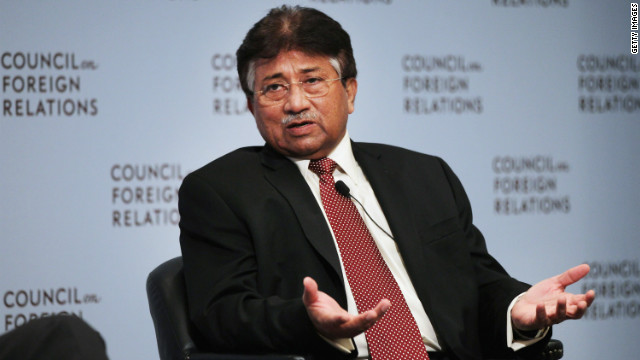
Musharraf Announces He Will Return to Pakistan Late This Month

By Nasir Habib for CNN

Former Pakistani President Pervez Musharraf pledged in a speech Sunday to return to his country later this month, despite word from authorities that he will be arrested when he does so.

“I am coming, Pakistan,” Musharraf told thousands of supporters via video link in the southern city of Karachi. “Attempts have been made to scare me, but I am not afraid of anything.”
He pledged to return between January 27 and 30.

When he does, Pakistani officials said, Musharraf will be arrested in connection with the assassination of former Prime Minister Benazir Bhutto in 2007. Chaudhry Zulfiqar Ali, a special public prosecutor in the assassination case, said a Rawalpindi court has already issued an arrest warrant for Musharraf.

“They are bound to execute the order unless a higher court sets aside the orders,” Ali said, adding that Musharraf is accused of conspiring in the assassination.

Musharraf’s attorney, Chaudry Faisal, said the threat of arrest is politically motivated and has no legal bearing. The warrant is being challenged in court, the attorney said.

He described the claim that Musharraf could be arrested at any time upon return as “absurd.” The former president said Sunday that he will return even at the risk of his life.

Musharraf, who resigned in 2008, is expected to fly into Pakistan from the United Arab Emirates later this month, accompanied by up to 500 supporters, said Jawed Siddiqi, spokesman for the former president’s All Pakistan Muslim League party.

“President Musharraf told me that although the possibility of arrest is there — there is no way of knowing what will happen, and how dangerous the situation is, until one jumps into the situation head first,” he said. Elections are set to take place in Pakistan next year; Musharraf intends to run.

On Sunday, he told Pakistanis that other politicians have failed leading the country, but “I succeeded 100%.”

“When I took charge of the country, it was surrounded in huge problems,” he said. “… Today, we have to decide whether we need change or we need the same faces.”

Terrorism in Pakistan, he said, “is at its peak. We are alone in the world.” He said he restored Pakistan’s economic development, increased its global standing and strengthened the armed forces.

Musharraf resigned in 2008 as the country’s ruling coalition began taking steps to impeach him. He was succeeded by Asif Zardari, Bhutto’s widower.
In 2010, the United Nations released a report that said Musharraf’s government had failed to protect Bhutto before her 2007 assassination. Musharraf has rejected such accusations, saying that Bhutto had police protection and took unnecessary risks.

Bhutto’s assassination turned public opinion strongly against Musharraf in 2008 and led to his resignation and self-exile in London. In 2010, Musharraf said the timing of his return to Pakistan would depend on the environment there.

“My going back is dependent, certainly, on an environment to be created in Pakistan and also, I would say, with certainty, that whenever the signs of the next election comes up, I will be there in Pakistan,” he said.

Pakistan’s alleged ‘Washington lackey’ fears for life

By Aamir Qureshi for MSNBC

Pakistan’s former ambassador to the United States fears he will be murdered if he leaves the sanctuary of the prime minister’s official residence after he was branded a “Washington lackey” and a “traitor,” according to a new interview.

Speaking to The Daily Telegraph newspaper, Husain Haqqani said that “certain powerful quarters” in Pakistan — the paper said this was a reference to the country’s ISI intelligence agency — were behind the claims against him.

Haqqani is at the center of a scandal that threatens to topple Pakistan’s government over an alleged request to the U.S. to help stop a coup by the army, following the American raid that killed Osama bin Laden.

In October, a U.S. businessman of Pakistani origin, Mansoor Ijaz, wrote an article for the Financial Times newspaper claiming Haqqani had written a memo to U.S. Admiral Mike Mullen, who was then chairman of the joint chiefs of staff, supposedly promising to replace Pakistan’s national security hierarchy with people favorable to the U.S. in exchange for help in reining in the military.

Ijaz, who claimed he had been asked to convey the message to Mullen, further alleged that Pakistani President Asif Ali Zardari supported the move. The Financial Times operates behind a paywall, but Ijaz also wrote an article for Pakistan’s The News in November describing his allegations.

‘Hysteria’
Both Zardari and Haqqani denied Ijaz’s claims, but Haqqani subsequently resigned.

“I’m a guest of the prime minister (Yousuf Raza Gilani) with whom I have had a long-standing political association. There are clear security concerns given the hysteria generated against me. Staying at the prime minister’s house is the safest option,” Haqqani told the Telegraph in an interview published Wednesday.

“My good friend Salman Taseer (the late governor of Punjab) was killed by a security guard because he heard in the media that the governor had blasphemed. I’m being called a traitor and an American lackey in the media with the clear encouragement of certain powerful quarters even though I’ve not been charged legally with anything,” he added.

He said that he had left the prime minister’s house twice, once to go to court and another time to visit the dentist because he had toothache.

“The president and prime minister are firmly standing behind me and the government is not going anywhere. This is psychological warfare against the government,” he told the Telegraph.

In December, Zardari, who was married to former Prime Minister Benazir Bhutto, who was assassinated in 2007, said people should pay tribute to her memory by guarding against anti-democratic conspiracies, an apparent reference to tensions over the memo scandal.

He said his wife’s death was also a conspiracy against Pakistani democracy.

“I therefore urge all the democratic forces and the patriotic Pakistanis to foil all conspiracies against democracy and democratic institutions,” said Zardari in a statement sent to reporters.

Defining Terror: Better Late Than Never?

By Ahad Khan for EthanCasey.com

In his recent article “Home Free: Waging War on Ourselves,” Ethan Casey writes about what I know as “the American dream” or, as he calls it, “the ugly truth buried beneath the manicured lawns of the American suburbs.”

As a person of Pakistani heritage, I didn’t need help to notice the near exact parallel between the history of black people in America on one hand, and the plight of the U.S. government’s ghosts somewhere in “Afpakistan” on the other. I am talking about the victims of America’s drone war in the “Af-Pak” border region, home to the folks who supposedly hate the American way of life (courtesy U.S. presidents of the past decade). If we are to believe their advocates, Predator drones are so advanced that they even have their own conscience. You don’t have to worry about them mistakenly firing on women and children alike.

Our world’s affairs have arrived at a confusing point. Wars between different countries, overt and covert, increasingly appear to be conflicts between civilizations. I should not say that we can’t tell where it may lead us during the course of our own generation. History has clearly taught us time and again that struggles for freedom become inevitable wherever people are forced to live with a feeling of being suppressed. It was just such a struggle that gave birth to an America that dreamt of liberty and justice for all. It was such a struggle that solemnized the rights of the black people of America, through the brilliance of heroes like Martin Luther King and Malcolm X.

It was that same struggle that led to the creation of Pakistan, by a nation of people that – like black Americans – had grown sick and tired of being denied equal treatment in their own society. It is this freedom that we, as human beings, have shown to hold so dear, that it has served to justify our restless campaigns for the rights we demanded to live in honour and dignity.

It is no less amazing what man would do to defend what he perceives to be his freedom, or any symbol that represents it. While it still holds true that the horrific events of 9/11 raised more questions than answers (technically speaking), who would dare to challenge the notion that the USA was dealt a devastating blow to its core beliefs? To repair America’s presumably unshakeable spirit of justice, someone was going to have to pay. A determined U.S. military thus engaged in a worldwide war on ‘terror’. Over a decade later, we find the same forces holed up in Afghanistan, unwelcome and surrounded from all directions. Their enemies (those that were meant to be paid back) are stronger than they were at any point during the course of the war and easily project effective control over most of the country. The lack of a clearly defined war strategy is just one rampant example out of many to show how American leadership is completely clueless about what it’s doing there. But at least bin Laden’s dead. Mission accomplished, whatever it’s been.

As the world looks at its old ally today – they who slammed the lid on Hitler’s coffin – it’s been curious to know what the USA really aims to achieve. As America’s government continues to pursue ‘the terrorists’, it has made that country itself into the biggest victim of terror. Before anyone jumps me for contradicting other countries’ body counts: terror succeeds where people allow themselves to be terrorized; you can’t terrorize the dead. Thus, in my humble opinion, the primary victims of terror are not those that are now laid to rest in their graves; they’re the people amongst us who are ready to sacrifice their freedom for the sake of the mirage that’s presented as “threats to national security.” Those who refused to come to terms with their defeat once, failing to learn from it, are thereby damned to fail in future.

In my humble opinion the Obama administration does know that it had failed, long before the latest breakdown in relations with Pakistan after Pakistani soldiers were attacked without reason. When was the last time you heard any U.S. government official tell the world that they’re trying to “win the hearts of minds” of people on the other side of the world? They never intended to bomb their hearts and minds out, it depends on the means chosen to aim at the target. The tendencies that champion the death sentence as a means for the sake of internal security, favor the use of drones when it comes to external security.

As much as we’ve suffered as Pakistanis under America’s misleading wars, I can’t help but feel sorry for America. As this great nation’s ideology is its biggest victim of war, the defeat couldn’t be greater. The rampant paranoia at present about hunting “terrorists” does not represent the example America gave to the rest of the world in the course of the previous century. Sadly, most of our generation will remember it by the images of a shoe-throwing Iraqi journalist. Pakistan and the emerging Arab nations will learn what democracy is on their own. They’ll take an example in future of what happened in America when people allowed themselves to be governed by fear instead of by a determined leadership. Justice will be sought and found, even by some of those people that the knights of freedom would describe as terrorists.

Ahad Khan is a Dutch Pakistani whose parents hail from Karachi. A health management student from Erasmus University in Rotterdam, he’s a dental practice manager in everyday life.

New Year’s gift: Obama signs bill freezing aid to Pakistan

As Reported By Reuters

President Barack Obama signed a sweeping US defense funding bill on Saturday which includes new sanctions on financial institutions dealing with Iran’s central bank, and curtailing up to $850 million in aid to Pakistan. The bill was signed despite concerns about sections that expand the US military’s authority over terrorism suspects and limit his powers in foreign affairs.

The massive defense bill Congress passed on earlier in December freezes 60 per cent of the $850 million aid, or $510 million, until the US defense secretary provides lawmakers with assurances that Pakistan is working to counter improvised explosive devices (IEDs). US lawmakers say that many Afghan bombs that kill US troops are made with fertilizer smuggled by militants across the border from Pakistan into Afghanistan.

“The fact that I support this bill as a whole does not mean I agree with everything in it,” Obama said in a statement, citing limits on transferring detainees from the US base at Guantanamo Bay, Cuba, and requirements he notify Congress before sharing some defense missile information with Russia as problematic.

The bill, approved by Congress last week after its language was revised, aims with its Iran sanctions to reduce Tehran’s oil revenues but gives the US president powers to waive penalties as required. Senior US officials said Washington was engaging with its foreign partners to ensure the sanctions can work without harming global energy markets, and stressed the US strategy for engaging with Iran was unchanged by the bill.

The bill may also prove problematic for Pakistan in ways other than providing assurances of concrete steps to counter the manufacture of IEDs. The sanctions placed on dealing with Iran’s central banks may weigh on Pakistan’s plans for the Iran-Pakistan pipeline which aims to provide gas to Pakistan.

Pakistan needs the gas supplies from Iran to augment its own gas reserves which have been shrinking fast, leading to widespread gas shortages affecting its industry and daily life.