Archive for the ‘ Afghanistan ’ Category

Pakistan Spy Agency Picks the Wrong Fight

By Jeffrey Goldberg for Bloomberg News

The Pakistani military and its spy agency, the Directorate for Inter-Services Intelligence, have an expansive menu of options before them in their endless campaign to subvert democracy.

And subverting democracy (as opposed to, say, winning wars against India, or helping the U.S. defeat the Haqqani terrorist network in Afghanistan) is the real specialty of Pakistan’s military.

On many occasions, the intelligence service, known as the ISI, achieves its goals through sheer brutality. Such was the case in the beating death of Saleem Shahzad, a Pakistani investigative journalist, in May. His murder was sanctioned by the ISI, according to Admiral Mike Mullen, the just-retired chairman of the U.S. Joint Chiefs of Staff. In a recent article in the Atlantic, Marc Ambinder and I reported that U.S. officials saw intelligence showing that officials in the office of General Ashfaq Kayani, the head of Pakistan’s army (and the most powerful man in a country ostensibly led by a civilian president), ordered the head of the ISI to “take care of the problem” posed by Shahzad. His body was soon found on the bank of a canal.

On other occasions, the ISI executes its mission with slightly more politesse. Such is the case in a controversy now raging around the alleged activities of the Pakistani ambassador to the U.S., Husain Haqqani. He stands accused of something akin to treason for allegedly trying to enlist American help to undermine the Pakistani military’s hold on the country’s elected government.

An Absurd Campaign

Haqqani (no relation to the Haqqanis of terrorism fame) has long been known as a pro-democracy activist and a critic of the army’s meddling in Pakistan’s civilian affairs. As a scholar (he was a professor at Boston University before taking his current post), he wrote the definitive book on the Pakistani military’s unholy alliance with jihadists, “Pakistan: Between Mosque and Military.” Haqqani was appointed ambassador to the U.S. in 2008 over the objections of the ISI, which has been gunning for him ever since. This is an absurd campaign for the ISI to wage: Haqqani is one of the few Pakistani officials who have any credibility in Washington, and he has carried water for the ISI numerous times. Self-destructive behavior, however, is also an ISI specialty.

Last month, the Financial Times published an op-ed article by Mansoor Ijaz, a Pakistani-American businessman. In it, Ijaz claimed that he had helped deliver a memo, ostensibly on behalf of partisans of President Asif Ali Zardari, to Mullen, asking the chairman to help curtail the Pakistani military’s power in politics. (Mullen later said he ignored it.) The article intimated that Haqqani was behind the memo.
Ijaz keeps turning up in the most unlikely places. In the 1990s, he has said, he was involved in discussions in which the Sudanese government offered to deliver Osama bin Laden to justice, a claim denied by Clinton administration officials. In 2006, he suggested that he knew of evidence that Iran had already produced a nuclear weapon.

But the ISI apparently sees him as very credible. And they found in his op-ed a chance to move against Haqqani. The spy agency quickly fomented an anti-Haqqani campaign among the more pliant of Pakistan’s newspapers (the ISI is also known to keep journalists directly on its payroll, which is a timesaver for its media-manipulation department), and Zardari was forced to recall Haqqani to Islamabad. Haqqani denies drafting the memo, and has already offered to resign, in order to protect Pakistan’s civilian president.

Some Obvious Questions

Like many people who know Haqqani, I feared that he would be met at the airport by a Benigno Aquino-type arrival ceremony, or at the very least by ISI officers more interested in interrogation than explanation. But Haqqani, with whom I e- mailed several times in the past few days, seemed to be handling the pressure coolly: At one point this weekend he wrote, “Someone’s game plan was to scare me and my President into submission without a fight.”

He also raised some obvious questions about Ijaz and his motivations. Ijaz says he is a critic of the ISI and claims to be opposed to military rule in Pakistan. Yet, according to reports in the Pakistani press, he recently met with General Ahmed Shuja Pasha, the head of the ISI, and turned over his BlackBerry.

Ijaz’s behavior suggests that he is either an epically erratic operator or someone who from the outset was attempting to subvert Haqqani.
It’s not at all clear how this scandal (known as “Memogate” in the obsessed Pakistani press) will end, but if it results in Haqqani’s removal as ambassador, it would be a minor tragedy for an already tragic country. Military rule has brought Pakistan nothing but violence, stagnation and political repression. Many Pakistanis see the Haqqani network — the pro-Taliban terrorists who are killing American troops — as a more serious threat than a pro-democracy academic. But as long as the military and the ISI are in charge of Pakistan, the wrong Haqqanis will be ascendant.

Fate of Pakistan’s Zardari May Hinge on Scandal of Purported Memo

By Alex Rodriguez for The Los Angeles Times

Did he, or didn’t he?

All over Pakistan, people are asking whether Pakistani President Asif Ali Zardari approved a memo asking for Washington’s help in reining in the country’s powerful military.

The answer could play a role in whether Zardari, already deeply unpopular with both the public and the military, stays in power.

The scandal scorching the airwaves in Pakistani cities and towns now has a name — Memogate — and it is sparking talk of early elections. At the center of it all is Pakistani American businessman Mansoor Ijaz, who says a senior Pakistani diplomat asked him to convey a letter to Washington seeking its help in preventing a military takeover of Zardari’s administration.

In return, the letter stated, the Zardari government would eliminate a wing of the Inter-Services Intelligence spy agency, or ISI, that maintains links with Afghan insurgent groups, and would give U.S. troops “a green light” to root out Afghan militants hiding out in Pakistan’s tribal areas.

Ijaz says Pakistan’s ambassador to the United States, Husain Haqqani, asked him to be the intermediary and that Zardari had endorsed the memo. The explosive allegations prompted Haqqani to offer his resignation as a way of defusing the controversy, though he denies either writing the memo or asking Ijaz to pass it on to Washington.

Unless Haqqani can show that the memo was fabricated, he could be ousted from his post. But analysts say the crisis also casts a shadow on Zardari, who has been criticized by many Pakistanis for his closeness to the American government, which they mistrust, as well as his failure to solve the country’s myriad economic and infrastructure ills.

“It might be a game-changer in the political arena, with the military concluding there’s no way it can trust the Zardari government,” said Pakistani columnist and legal expert Babar Sattar. “If the military isn’t willing to let this go, it could reduce the term of this government. That might be the only resolution: to hold early elections.”

If genuine, the memo sheds a harsh light on the deep rifts between Pakistan’s civilian and military leaders. Although Zardari is president, the military, led by army chief Gen. Ashfaq Kayani, holds ultimate power in Pakistan, as it has for most of the country’s 64-year history. The military thinks Zardari is too acquiescent to Washington’s demands.

The memo purportedly was drafted a week after U.S. commandos killed Al Qaeda leader Osama bin Laden during a secret nighttime raid on his compound in the Pakistani military city of Abbottabad, about a two-hour drive from the capital. It portrays a civilian government convinced that the country’s military leaders were planning a coup against Zardari.

The rationale, Ijaz said in an Oct. 10 op-ed piece in the Financial Times newspaper, was that the military was being heavily criticized by the public and the media for allowing the raid to occur, and needed to make Zardari a scapegoat to deflect blame.

“Request your direct intervention in conveying a strong, urgent and direct message to Gen. Kayani that delivers Washington’s demand for him and [ISI chief Lt. Gen. Ahmed Shuja] Pasha to end their brinkmanship aimed at bringing down the civilian apparatus,” stated the memo, which was delivered to the then-chairman of the U.S. Joint Chiefs of Staff, Adm. Michael G. Mullen. The memo was published on the website of Foreign Policy magazine and by the Pakistani newspaper the News.

“If true, it shows that the civilian government really panicked,” said security analyst Talat Masood, a retired Pakistani general. “It’s extraordinary that they would get so nervous that they would write all this. It shows the deep divide between the civilian leadership and the military.

“If it’s a phony memo, it would recoil back at the [military].”

If the military was behind such a move, it could be aimed at discrediting or weakening Zardari’s government.

“The more likely, but far from certain, scenario? The boys are up to their tricks again,” Cyril Almeida, a columnist for Dawn, an English-language Pakistani newspaper, wrote Friday, referring to the military.

To back up his claims, Ijaz gave the News email that he says he and Haqqani exchanged at the time the memo was drafted and later conveyed to Mullen. On May 10, after the memo was delivered to Mullen, Ijaz allegedly emailed Haqqani, saying, “Ball is in play now — make sure you have protected your flanks.”

Republicans Sharply Criticize Pakistan in Debate

By Arshad Mohammed for Reuters

Pakistan took a lot of criticism in Saturday’s Republican presidential debate, with a leading candidate saying it was nearly a failed state and another suggesting the United States cut its foreign aid to zero.

But it is unclear whether any of their ideas is likely to be imposed on a country that has nuclear weapons and whose cooperation is seen as vital to stabilizing Afghanistan as the United States prepares to pull out from there by the end of 2014.

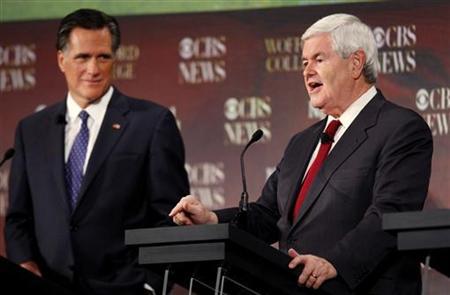
Former Massachusetts Governor Mitt Romney said Pakistan has multiple centers of power including the relatively weak civilian leadership, the military and the powerful intelligence agency know as the Inter-Services Intelligence Directorate.

“The right way to deal with Pakistan is to recognize that Pakistan is not a country, like other countries, with a strong political center that you can go to and say, ‘Gee, can we come here, will you take care of this problem?'” Romney said.

“This is instead a nation which is close to being a failed state. I hope it doesn’t reach that point, but it’s really a fragile nation,” he said.

Polls point to Romney as the Republican who would be the most likely among the party’s crop of candidates to defeat President Barack Obama, a Democrat, in the November 2012 U.S. presidential election. The Republicans begin choosing their nominee in state contests beginning in January.

Texas Governor Rick Perry suggested that every country, including Pakistan, should see its U.S. aid eliminated each year and then should convince the United States why it deserves any money at all.

“Then we’ll have a conversation in this country about whether or not a penny of our taxpayer dollars needs to go into those countries,” Perry said in response to a question about whether Islamabad was playing a double game with Washington.

“Pakistan is clearly sending us messages … that they don’t deserve our foreign aid … because they’re not being honest with us,” he added.

“American soldiers’ lives are being put at jeopardy because of that country … and it’s time for us as a country to say no to foreign aid to countries that don’t support the United States of America,” he said.

‘FRIEND OR FOE’

Businessman Herman Cain had difficulty offering a direct response when asked whether Pakistan was ultimately an ally or adversary. “There isn’t a clear answer as to whether or not Pakistan is a friend or foe,” Cain said.”

U.S. officials have long argued that the Taliban and other militants enjoy safe havens in Pakistan from which they attack U.S. soldiers in neighboring Afghanistan.

They privately argue Pakistan plays a double game, taking billions of dollars in U.S. aid while elements of its government tolerate militant groups such as the Haqqani network blamed for a September attack on the U.S. embassy in Kabul.

Pakistan says it has made more sacrifices than any other country in the war against militancy, losing about 10,000 members of its military and security forces.

There have been growing questions in Washington about whether U.S. troops should to go after Taliban safe havens in Pakistan, an idea sure to be deeply unpopular in a population already embittered by U.S. drone strikes.

Some Republican candidates argued that the United States has little choice but to nurture relations with Pakistan, citing the fact that it has nuclear arms and that it has to be part of the solution in Afghanistan.

“Pakistan must be a friend of the United States for the reason that Michele (Bachmann) outlined. Pakistan is a nuclear power,” said former Pennsylvania Senator Rick Santorum, referring to fellow Republican candidate Bachmann.

“It’s important for us, with a nuclear power with a very vast number of people in Pakistan who are radicalizing, that we keep a solid and stable relationship and work through our difficulties,” he added.

India, Pakistan PMs Vow to Start ‘New Chapter’

As Reported by The Economic Times

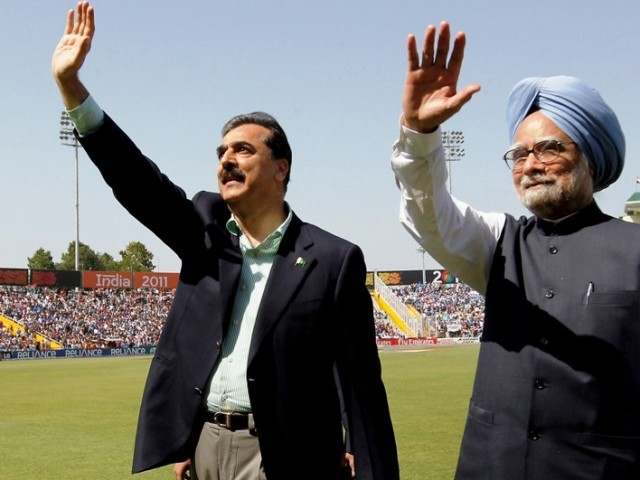
The prime ministers of India and Pakistan said Thursday they expected to open a “new chapter” at future talks between the rival nations after they met at a regional summit in the Maldives.

India’s Manmohan Singh and his Pakistani counterpart Yousuf Raza Gilani said their often strained ties were improving, but they declined to give a date for their next meeting.

“The time has come to write a new chapter in the history of our countries,” Singh told reporters. “The next round of talks should be far more productive and far more practical-orientated in bringing the two countries closer.”

Gilani said that “all issues” had been discussed during their one-hour meeting including the contentious subject of Kashmir, a Muslim-majority region divided between the two nuclear rivals and claimed in its entirety by both.

“I am ready to discuss each and every issue,” Gilani said. “I think that the next round of the talks would be more constructive, more positive, and will open a new chapter in the history of both the countries.”

The leaders did not give further details of their discussions on the sidelines of the South Asian Association for Regional Cooperation (SAARC) gathering in the Maldives.

However Singh added that the two sides should push to make real progress as they had “wasted lot of time in the past in acrimonious debates”.

The two men emphasised their warm friendship and shook hands twice to oblige photographers at the start of closed-door talks at the luxury Shangri-La Villingili island resort.

After the meeting, the two men headed for the opening of the SAARC summit, where their host, Maldivian President Mohamed Nasheed, hailed their dialogue.

“These developments are extremely welcome,” he said. “I hope this summit will be enthused with optimism.”

The two prime ministers last met in March when Gilani accepted Singh’s invitation to watch the India-Pakistan cricket World Cup semi-final. Their previous talks were at the April 2010 SAARC summit in Bhutan.

Both countries, who have fought three wars since independence in 1947, struck an upbeat note ahead of the Maldives summit, with officials describing the cross-border atmosphere as “considerably improved”.

However the vexed subject of Kashmir and the threat of Pakistan-based extremism remain major obstacles to their ongoing peace process.

A full peace dialogue — suspended by India after the 2008 Mumbai attacks blamed on Pakistan-based militants — was resumed in February this year.

The process remains tentative with only incremental progress on issues such as trade.

Last week, Pakistan’s cabinet announced it had approved a proposal giving India the status of “most favoured nation” but there has been confusion about when it will be implemented.

Efforts to reduce tensions have been complicated by concern over Afghanistan’s prospects as international troops begin departing after ten years of fighting the Taliban.

Indian involvement in Afghanistan is sensitive, with Pakistan vehemently opposed to its arch foe meddling in what it considers its backyard.

Islamabad’s suspicions were fuelled when Afghanistan and India signed a strategic partnership pact last month.

Afghan President Hamid Karzai is also attending the SAARC summit, along with the leaders of other member nations Bangladesh, Bhutan, the Maldives, Nepal and Sri Lanka.

Trust Deficit with Pakistan Shrinking: Singh

As Reported by The Express-Tribune via AFP


The leaders of India and Pakistan will meet on the sidelines of a regional summit this week, as the nuclear-armed rivals seek to push a tentative rapprochement in their fractious relationship.

Talks between Indian Prime Minister Manmohan Singh and Pakistani counterpart Yousuf Raza Gilani will take place at the summit of South Asian Association for Regional Cooperation (SAARC) nations that opens Thursday in the Maldives.

India’s foreign minister said Wednesday that a “trust deficit” with Pakistan was shrinking as he headed for a regional summit, in a clear sign of warming relations between the neighbours.

“The trust deficit with Pakistan is shrinking,” S.M. Krishna said on board his flight to the South Asian Association for Regional Cooperation (SAARC) summit in the Maldives, the Press Trust of India news agency reported.

He also said that it was necessary for Pakistan and India to develop a joint strategy to fight terror in the region, the agency reported.

Their meeting follows what Indian Foreign Secretary Ranjan Mathai described as “positive indicators” from Pakistan in recent weeks that it is serious about reducing tensions.

An Indian military helicopter which strayed into Pakistani territory last month was promptly released along with its crew and returned to India, avoiding what in the past could easily have escalated into a diplomatic row.

And last week the Pakistani cabinet approved a proposal to grant India the status of “most favoured nation” in a move towards normalising trade relations.

“These are I would say indications of forward movement,” Mathai said, adding that “all aspects” of the India-Pakistan relationship would be discussed during the Singh-Gilani talks.

The two prime ministers last met in March when Gilani accepted Singh’s invitation to watch the India-Pakistan cricket World Cup semi-final. They last held formal talks at the 2010 SAARC summit in Bhutan.

Talks between the neighbours’ foreign ministers in July failed to produce a major breakthrough, but both sides signalled a warming of ties, with Pakistan’s Foreign Minister Hina Rabbani speaking of a “new era of cooperation.”

But efforts to reduce tensions have been complicated by the increasing influence of Afghanistan in the bilateral equation.

Indian involvement in Afghanistan is sensitive, with Pakistan vehemently opposed to its arch foe meddling in what it considers its backyard. Islamabad’s suspicions were fuelled when Afghanistan and India signed a strategic partnership pact last month.

Afghan President Hamid Karzai will also attend the SAARC summit, along with the leaders of other member nations Bangladesh, Bhutan, the Maldives, Nepal and Sri Lanka. Previous summits of the regional body have been largely overshadowed by the India-Pakistan dynamic — a fact that Mathai acknowledged with regret.

“We would like the focus to remain essentially on the common business of SAARC … and hope that the focus will not be diverted to one single event,” he said. The summit is being held in Addu, on the southern Maldives’ island of Gan.

Pakistan, India take Another Cautious Step Forward

By Alex Rodriguez and Mark Magnier for The Los Angeles Times


In cautious increments, nuclear archrivals Pakistan and Indiahave been easing the pall of tension that has overshadowed the two nations in recent years, as Islamabad increasingly worries about another neighbor: volatile Afghanistan.

The latest move toward rapprochement came last week, when the Pakistani Cabinet announced it would normalize trade relations with India by granting its longtime foe “most favored nation” status.

The designation has practical ramifications, including the elimination of discriminatory pricing and mutual imposition of lower tariffs and high import quotas. More important, however, it marks the latest in a series of decisions and events that signals a warming in relations between two countries that have fought three wars since their independence after the 1947 partition of British India.

Driving the move toward improved relations with India is Pakistan’s belief that strained ties with traditional allies such as the U.S. and Afghanistan are leaving it increasingly isolated, analysts say. India and Afghanistan signed a strategic partnership pact last month that included the training of Afghan troops by Indian forces — a move that rankled Islamabad.

The steps between the two South Asian neighbors have been small yet striking.

After an Indian military helicopter flying in bad weather strayed into Pakistani-controlled territory Oct. 23, Pakistani troops promptly released the aircraft and its crew and returned them to India, averting a crisis. Earlier this year, the two countries also resumed peace talks scuttled by the 2008 attacks in Mumbai that killed 166 people. Pakistani militants carried out the attacks, and India has accused Pakistan’s ISI spy agency of involvement in the assault.

Both countries are also discussing a deal that would allow Pakistan to import electricity from India to relieve massive power shortages crippling the Muslim nation’s economy. In addition, India didn’t oppose Pakistan’s nonpermanent seat on the United Nations Security Council last month, which passed by a single vote. And, earlier this year, New Delhi didn’t fight a European Union bid to allow duty-free imports of Pakistani textiles, even though it would cost competing Indian textile makers an estimated $1 billion a year in lost sales.

Experts warn that major roadblocks still loom. At the top of that list is the divided Himalayan region of Kashmir, claimed by both countries and the cause of two wars since 1947. A dispute over water rights remains unresolved, and New Delhi continues to accuse the ISI of backing militant groups that target India.

Still, bolstering trade relations between the two countries, said Zafar Hilaly, a former Pakistani ambassador to the U.S., “is a good first step. It shows a genuine feeling within Pakistan that the relationship should be normalized.”

Particularly significant is the Pakistani military’s decision to endorse granting MFN status to India. Foreign policy remains the purview of Pakistan’s security establishment, especially when it comes to the country historically regarded by the military as its chief enemy.

“All the stakeholders, including the military … are on board,” Pakistani Information Minister Firdous Ashiq Awan said in announcing the decision. “Such a big step could not be taken alone.”

The military’s backing of MFN status for India, Hilaly said, likely represents a realization that an easing of tensions with New Delhi may now be in Pakistan’s best interests, particularly at a time when relations with Washington and Kabul have soured. Both the U.S. and Afghanistan assert that their efforts to battle Afghan Taliban insurgents have been hampered by Pakistan’s backing of the insurgency there, a charge that Islamabad denies.

“What has happened is that, with respect to issues that the military faces, the priorities have changed,” Hilaly said. “India is still the main culprit as far as security is concerned, but the eastern front is much less active than the one developing in Afghanistan.”

Officials in Washington have been encouraged by the movement toward trade normalization between Islamabad and New Delhi, especially because economic interdependence is seen as an ideal path toward stability in South Asia. Testifying before the House Foreign Affairs Committee last month, Secretary of State Hillary Rodham Clinton called the Pakistan-India relationship “the real game-changer in the region.”

“We have in Pakistan today a leadership, both civilian and military, that wants to see progress with India, and we have the same on the Indian side,” Clinton told lawmakers. “I firmly believe greater regional economic integration would revolutionize the economy in Pakistan.”

Though India extended MFN status to Pakistan in 1996, Pakistan had not reciprocated until now. Observers in India wondered why it took Islamabad so long to see the value in the move. “Not allowing MFN status hurt Pakistan more than India and was shortsighted,” said Satish Chandra, an analyst and former Indian ambassador to Pakistan. “It was an exercise in cutting your nose to spite your face.”

With trade normalization, experts estimate two-way trade could triple to $8 billion within five years. Official trade flows currently run nearly 7 to 1 in New Delhi’s favor, with Indian exports to Pakistan totaling about $2.33 billion versus $332 million in the other direction.

“When trade picks up, there’s more and more confidence to ease political and other differences,” said Shaqeel Qalander, a furniture maker and former president of a business group on the Indian-held portion of Kashmir. “It’s a very good decision.”

Our Man in Pakistan?

By Ed Husain for The Council on Foreign Relations

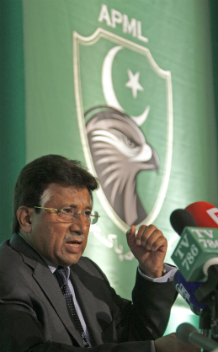
His close proximity to former U.S. president George W. Bush earned him the popular moniker, “Busharraf.” So it was with some intrigue that I went to hear Pakistan’s former president, Pervez Musharraf, address a prestigious and influential U.S. audience at a packed meeting at the Council on Foreign Relations’ headquarters in New York this week.

I was struck by what was, essentially, his appeal for U.S. political sponsorship of his bid to contest elections in Pakistan next year. He spoke eloquently about the poor state of U.S.-Pakistan relations, the need for a peace settlement with elements of the Taliban, and his country’s—and his own—unhelpful Machiavellian attitude toward India and Afghanistan. Nevertheless, the following facts left me worried:
First, for a man who prosecuted the war on terror with such vigor, it was unforgivable for him to say to an Indian journalist who asked about Pakistan’s export of terrorism, ‘Sir, your terrorist is someone else’s freedom fighter.” This moral equivocation is the same justification used by terrorists to inflict harm on innocent lives around the world. Musharraf should know better.

Second, a major cause for widespread, ongoing anti-American radicalization in Pakistan is the CIA-led drone attacks in the country’s tribal regions. Musharraf did not make any references to the drones, their many innocent victims, and the perceived violation of Pakistani sovereignty. It would have been wiser to reassure the audience that a Pakistan under his control would be a nation in which the United States would not need to use drones because terrorists would be brought to justice. Ignoring the issue of drones is self-defeating all around.

Third, his confidence that Pakistan’s nuclear weapons arsenal is safe is questionable. The premise of his assurance was that extremists seeking access to these weapons would need to fight elite battalions of the Pakistani armed forces. The assumption there, of course, is that the Pakistani army is immune from extremism. Sadly, that thinking is flawed. Since General Zia’s time, and increasingly so in recent years, Islamist radicalization within Pakistan’s armed forces has been a cause for concern.

It wasn’t all bad. Fortunately, he spoke somewhat candidly about the economic and energy generation challenges faced by Pakistan. My colleague Isobel Coleman, who was also in attendance, has analyzed his remarks on her thoughtful blog, “Democracy in Development.”
With Imran Khan and Pervez Musharraf both gearing up for elections in Pakistan in 2013, the next two years will be eventful and heated in Pakistan’s fractious political landscape.

Pakistan: More To Offer Than Bombs And Beards

By Asim Haneef for Al Jazeera

If you did not know anything about Pakistan and happened to pick up a newspaper or turn on the evening news, you might be forgiven for assuming that it is possibly the most broken, troubled and violent country on the face of the earth – a basket case just moments from imploding.

In the all-important arena of international public perception, Pakistan has taken an unprecedented battering in recent years, accumulating more bad headlines than nearly any other country and making places like Afghanistan and Iraq look relatively stable by comparison.

The list of challenges it faces is seemingly unending: terrorism, corruption, drone attacks, natural disasters, poverty, a deficit in leadership, discrimination against minorities, mistreatment of women, attacks on freedom of speech, mass tax evasion, match fixing, the murder of judges, politicians, union organisers and journalists – and that is just the tip of the iceberg.

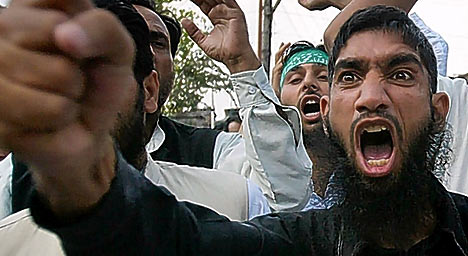
So pervasive are the headlines pointing to a crisis in Pakistan that after a while they seem to blur into one another. Whether it is “hostages held in Karachi”, “al-Qaeda hideout discovered in Swat”, “floods bring pain to millions”, “suicide bomber explodes in market square”, “senior judge in blasphemy case shot dead” or “Pakistan’s ISI actively supporting Taliban in Afghan war” the message is uniformly bad news. The result is that for many the image of Pakistan is one of bombers, beards, shaking fists, distressed women and utter hopelessness. It makes for a pretty depressing picture.

I guess that is why the work of Syed Ali Abbas and his Pakistan Youth Alliance (PYA) featured in this week’s Activate, Pakistan: The New Radicals, is so refreshing. A courageous young social activist, Ali founded the PYA together with Maryam Kanwer when he was just 21 years old. It was born in the midst of severe political turmoil, as then-President Pervez Musharraf imposed emergency rule and fired the chief justice on national television, while the security forces brutally cracked down on dissenting lawyers.

Fed up with watching their country’s problems on the television, the PYA initially organised protests and rallies but quickly became more active. Its core premise and mission statement is to take a stand, to get as practically involved on the ground as possible and to exemplify the change they seek through their actions rather than merely proposing it on paper.

Their main goal is to create political and social awareness among the youth of Pakistan and to unite them irrespective of their religion, ethnicity, caste, race or language on an unbiased platform through which they can engage with one another and contribute practically to building a more progressive society in Pakistan – whether through protest, social and relief work or the arts.

Earlier this year, Ali was among a small group instrumental in organising counter protests to the hate filled ones celebrating and glorifying Mumtaz Qadri, the killer of Salman Taseer, the governor of Punjab who was murdered in January over his stance on Pakistan’s blasphemy laws and his ardent defence of religious minorities like Christians and Ahmadis. Ali says he did this because: “This is not what the founder of Pakistan and ‘Father of the Nation’ Quaid-i-Azam Muhammad Ali Jinnah would have wanted for this country today, especially as he repeatedly stressed the importance of inter-faith unity and religious harmony.”

Stories like these and others bring about something much needed in international news these days – a positive, hopeful narrative against the odds, showcasing some of the good news stories coming out of places like Pakistan, which often go unreported and deserve a spotlight too. So although we appear to have an extraordinary capacity to become fixated on negative headlines, there are also good things happening too and though progress and development is not as ‘sexy’ as a suicide bomber or a train-wreck, perhaps a little balance is in order, so that we do not become as, Ali says at the close of the film, “filled with dread, being hopeless about the future”.

So do good stories actually emanate from Pakistan? And, if so, where are they? Well an initiative by brothers and social entrepreneurs Majid and Mahmood Mirza aims to answer this. They set up a website simply titled Good News (www.goodnews.pk) , which focuses solely on positive developments coming out of the country. They describe the idea behind the website via Skype as being “to highlight amazing, awesome and inspirational news stories coming from Pakistan, as opposed to the usual negativities that steal the headlines”.

And they have plenty of examples ready. For instance, did you know that Pakistan has become only the sixth country in the world to map the human genome, joining the ranks of the US, the UK, China, Japan and India, which have all successfully sequenced it. Or, how about the fact that Pakistan has the largest volunteer ambulance organisation in the world started by “living saint” Abdul Sattar Edhi in 1948. Today, the radio-linked network includes 600 ambulances that work in every corner of the country. Or how about the recent news that Dr Umar Saif, an associate professor at the School of Science and Engineering in Lahore, has been recognised by MIT Technology Review as one of the top 35 innovators in the world – joining an elite group of researchers and entrepreneurs selected over the last decade, which includes Larry Page and Sergey Brin, the co-founders of Google, Mark Zuckerberg, the founder of Facebook, and Jonathan Ive, the chief designer at Apple. Now who has heard of those stories?

Then there are serial entrepreneurs like Monis Rahman, who just four years ago set-up Rozee.pk, which is now Pakistan’s largest jobs website, with 500,000 unique visitors a month; or Karachi-born freelance designer Vakas Siddiqui laying to rest the myth that Pakistani students are limited to excellence in science and the humanities by being selected as one of the top 28 designers in the world; or filmmaker Sharmeen Obaid Chinoy who has just been shortlisted for an Oscar in the ‘best documentary short’ category for her film Saving Face. Whether it be in music, fashion, academia, activism, technology, sports or science these are stories that people do not usually associate with Pakistan and which might just show that there is more to the country than just bombs and beards.

Some of these unreported positive stories, along with the courage and creativity shown by people like Syed Ali Abbas and the Pakistan Youth Alliance in challenging these problems, reflect a surprising shift in the country’s growing and increasingly switched-on, globally-minded youth. They are using outlets like social media platforms and blogs to become more aware, educated and informed about their rights and more savvy to the different methods they must perfect in order to stop their country peddling even further backwards than it already has and to lead it to a brighter day, free from the same old headlines we’re all universally tired of reading and hearing about.

Asim Haneef worked extensively on Activate, a new eight part series featuring grass-roots activists from across the globe who are challenging the status quo and bringing about a change in their society. You can follow him on Twitter @asimhaneef

Pakistan, Islam & Radicalism

By Syed Ali Abbas Zaidi for The Huffington Post

I was in Kasur, a small town near Lahore, Pakistan, where the celebrated mystic poet Bulleh Shah is buried. Thousands gathered for the 254th anniversary of his death. Slogans chanted on that occasion would be branded ‘blasphemous’ by extremist organisations in Pakistan.

Neither Hindu nor Muslim,
Sacrificing pride, let us sit together.
Neither Sunni nor Shia,
Let us walk the road of peace.

Bulleh Shah penned these verses challenging religious extremism and orthodoxy that plagued Muslim society hundreds of years ago. He was exiled from his home town and, history has it, he was denied a burial in Muslim cemetery. His advice has clearly gone unheeded as my country is still yet to find peace. Not even the founder of Pakistan, Muhammad Ali Jinnah has been spared being labelled ‘the great infidel’.

Incidentally, the same ilk of religio-political parties who now manipulate public discourse were at the forefront of using religious narrative for political point scoring before Pakistan came into being.

4 January 2011 is a day I cannot forget. Salmaan Taseer, the Governor of Pakistan’s biggest province Punjab, was gunned down by his bodyguard. He was killed for supporting a Christian woman accused of insulting the Prophet Muhammad. He was shot twenty six times.

For the entire week after the killing, I was scared. I don’t remember being in that state of mind since Benazir Bhutto was assassinated. It’s not a very heartening sight to see fellow ‘educated’ countrymen glorifying a murderer and justifying his actions based on ignorant rhetoric. Scores of fan pages popped up on Facebook, many of my friends changed their profile pictures to one of the killer, Mumtaz Qadri, exalting a murderer as hero.

Very few turned out to pay homage to the slain governor in days to come, as ‘liberals’ arranged vigils in his remembrance. Yet thousands poured on to the streets to defend Mumtaz Qadri, his assassin. The media, which has been a primary tool in fanning conspiracy theories in public, had again played a pivotal role in enticing ‘religious’ emotions on this issue.

The killer of Salman Taseer had confessed proudly. The brave judge who sentenced him to death has gone into hiding and will not be re-appearing anytime soon.

7 March 2011. The start of another week of gloom and, if I’m honest, I was ashamed to be a Pakistani. We had arranged a protest to condemn the killing of Shahbaz Bhatti, the Federal Minister for Minorities who was brutally assassinated on 2 March. He was an outspoken critic of Pakistan’s blasphemy laws and the only Christian in the cabinet. Only a few youngsters turned up.

When it comes to numbers, we can gather thousands but the ’cause’ has to be against India, Israel or America. Not many will show up if the demonstration is against radical organisations, or asking for introspection within.

Many who rallied for Gaza in early 2009 were not seen in protests condemning Taliban atrocities in Swat at the same time. Many who burnt down shops in anger at the Danish cartoons of the Prophet Muhammad never stood up for Parachinar, a small town near the border of Afghanistan where thousands have been killed in sectarian violence between Sunni’s and Shia’s.

9 October 2011. I was stuck on the Islamabad Highway, the main road that connects Islamabad with Rawalpindi as it was blocked by flash mobs protesting for the release of Mumtaz Qadri.

Two decades and 40,000 deaths later which includes top politicians, generals and clerics – not many things have changed when it comes to checking radicalism within Islam.

Many attacks on places of worship of minority sects within Islam, recurring violent brawls between followers of different schools of thought, reaction to the murder of Salman Taseer and Shahbaz Bhatti, recent acts of violence in Baluchistan and the tale of Parachinar are chapters in recent history which expose the extent of radicalisation in Pakistani society.

Soon, we as citizens of a country founded because a minority felt discriminated against and followers of the great religion of Islam, need to face up to the challenge of the radical minded and their extremist ideology.

This is a war of ideologies and is inevitably a war that must be fought with opinions and ideas; it must encourage discourse and exchange of reason. It is a war that must form the basic pillar of a new and improved national paradigm for Pakistan

We as a society cannot ignore an emerging threat from radicalism within our ranks, because if it gets too late, there might be no ‘music’ left to face.

China Seeks Military Bases in Pakistan

By Amir Mir for Asia Times
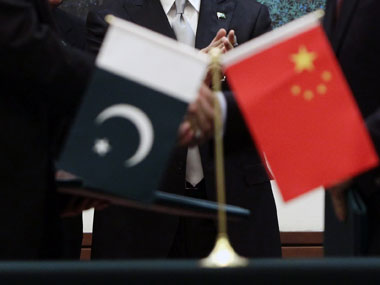
While Pakistan wants China to build a naval base at its southwestern seaport of Gwadar in Balochistan province, Beijing is more interested in setting up military bases either in the Federally Administered Tribal Areas (FATA) of Pakistan or in the Federally Administered Northern Areas (FANA) that border Xinjiang province.

The Chinese desire is meant to contain growing terrorist activities of Chinese rebels belonging to the al-Qaeda-linked East Turkestan Islamic Movement (ETIM) that is also described as the Turkistani Islamic Party (TIP).

The Chinese Muslim rebels want the creation of an independent Islamic state and are allegedly being trained in the tribal areas of Pakistan. According to well-placed diplomatic circles in Islamabad, Beijing’s wish for a military presence in Pakistan was discussed at length by the political and military leadership of both countries in recent months as China (which views the Uyghur separatist sentiment as a dire threat) has become ever-more concerned about Pakistan’s tribal areas as a haven for radicals.

Beijing believes that similar to the United States military presence in Pakistan, a Chinese attendance would enable its military to effectively counter the Muslim separatists who have been operating from the tribal areas of Pakistan for almost a decade, carrying out cross-border terrorist activities in trouble-stricken Xinjiang province.

There have been three high-profile visits from Pakistan to China in recent months; the first by Foreign Minister Hina Rabbani Khar; the second by President Asif Ali Zardari and the third by the director general of the Inter-Services Intelligence, Lieutenant General Ahmed Shuja Pasha.

The Pakistani visits were reciprocated by the September 28 visits to Islamabad by Chinese Vice Premier Meng Jianzhu and Public Security Minister Meng Jianzhu. This was prompted by two bomb blasts in Kashgar city of Xinjiang province on July 30 and 31 in which 18 people were killed.

The explosions provoked senior government officials in Xinjiang to publicly claim for the first time in recent years that the attackers had been trained in explosives in ETIM/TIP camps run by Chinese separatists in the Waziristan tribal regions of Pakistan.

The Chinese allegation was described by many in the diplomatic circles of Islamabad as a clear sign of the growing impatience of Beijing with Islamabad’s failure to control radical groups operating within its borders.

The Chinese charge was made on the basis of a confession by a Uyghur militant arrested by the Chinese authorities. Pakistan swiftly extended all possible cooperation to Beijing against the ETIM/TIP network. “Terrorists, extremists and separatists in Xinjiang province constitute an evil force,” said an August 1 statement issued by the Pakistani Foreign Ministry after Chinese President Hu Jintao rang Zardari to express his grave concern over the growing activities of “terrorists” belonging to the Pakistan-based ETIM/TIP network.

In a subsequent video released on September 7, ETIM/TIP corroborated earlier Chinese claims that it was involved in attacks in Xinjiang in July.

The ETIM/TIP, run by natives of Xinjiang province, a Muslim-dominated region three times the size of France, is fighting against the settlement of China’s majority Han ethnic group in the western province, describing its struggle as a freedom movement.

The ETIM/TIP maintains that the Chinese are a colonial force in Xinjiang province – which it refers to as Turkistan – and emphasizes Islam over ethnicity. Though the ETIM/TIP network on the Pakistan-Afghanistan border has been much weakened in recent years in the wake of the killing of many of its top leaders in US drone attacks, hardcore Uyghur militants are still shuttling between China and Pakistan, mainly because Xinjiang province shares a border with Pakistan.

The ETIM/TIP presence in Pakistan was first confirmed when one of its founding leaders, Hasan Mahsum alias Abu Muhammad al-Turkistan, was killed by Pakistani security forces in South Waziristan in October 2003.

The next one to be killed by the Americans in a drone attack was Memetiming Memeti alias Abdul Haq al-Turkistani, the ETIM/TIP chief, who was targeted in North Waziristan on February 15, 2010. Abdul Haq was succeeded by Abdul Shakoor Turkistani, a Chinese Uyghur, who is well known for his friendly terms with major Taliban groups in Waziristan.

He has taken control of overall command of Chinese and Uzbek militants in North Waziristan, due to his past association with the late Abdul Haq and late Tahir Yuldashev of the Islamic Movement of Uzbekistan.

Beijing believes that the Chinese rebels operating from the Pakistani tribal areas are well-connected to al-Qaeda, which not only trains them but also provides funding.

Thus, Pakistan and China, which have cooperated for a long time in the field of counter-terrorism, have intensified their efforts to nip the terrorism in the bud, especially after the Kashgar blasts.

In fact, it was in the aftermath of the May 2 US raid which killed al-Qaeda chief Osama bin Laden in his Abbottabad hideout that Islamabad started playing its China card aggressively, perhaps to caution Washington against pushing it too hard. Shortly after the Abbottabad raid, Pakistani Prime Minister Yousaf Raza Gillani traveled to Beijing.

Accompanying Defense Minister Ahmed Mukhtar had stated on May 21 that whatever requests for assistance the Pakistani side made, the Chinese government was more than happy to oblige, including agreeing to take over operations of the strategically positioned but underused port of Gwadar on the Arabian Sea on expiry of a contract with a Singaporean government company.

He disclosed that Pakistan had asked China to begin building a naval base at Gwadar, where Beijing funded and built the port. “We would be grateful to the Chinese government if a naval base is constructed at the site of Gwadar for Pakistan,” he said in a statement. Mukhtar later told a British newspaper in an interview: “We have asked our Chinese brothers to please build a naval base at Gwadar port.”

Knowledgeable Defense Ministry sources in Islamabad say that by having a Chinese naval base in the Gwadar area, Pakistan intends to counter-balance Indian naval forces.

However, diplomatic circles in Islamabad say Beijing, which has no military bases outside its territory and has often been vocal in criticizing American moves for operating such bases, first wants to establish military bases in Pakistan, which could be followed by the setting up of the naval base.

Therefore, Chinese Defense Minister Liang Guanglie promptly dismissed (on June 6) suggestions that Beijing was carving out a permanent naval presence in India’s neighborhood.

Answering questions at the 10th Asia Security Summit, organized by the London-based International Institute for Strategic Studies, Liang disclaimed moves to build naval bases at Gwadar and at a Sri Lankan port. Emphasizing his credentials as a member of the Chinese State Council and Central Military Commission, he said:
We will have a very serious and careful study of an issue of such importance to the government and the military like the reported move for establishing naval bases in Pakistan and Sri Lanka. Indeed, we will have exact plans and set up a panel to discuss it if the move were for real. However, I haven’t heard of it.

Asked by Manish Tewari, the Indian Congress party’s spokesman, to spell out China’s core interests in South Asia and the Indian Ocean area, Liang said:
The core interests include anything related to sovereignty, stability and form of government. China is now pursuing socialism. If there is any attempt to reject this path, it will touch upon China’s core interests. Or, if there is any attempt to encourage any part of China to secede, that also touches upon China’s core interests related to our land, sea or air. Then, anything that is related to China’s national economic and social development also touches upon China’s core interests.
The Chinese desire to have military bases in Pakistan is not a new one and has been discussed in the past.

An article published on the official website of the Chinese central government (www.gov.cn) on January 28, 2010, signaled that Beijing wanted to go the US way and set up military bases in overseas locations that would possibly include Pakistan. The obvious purpose would be to exert pressure on India as well as counter American influence in Pakistan and Afghanistan. The article stated:
Setting up overseas military bases is not an idea we have to shun; on the contrary, it is our right. It is baseless to say that we will not set up any military bases in future because we have never sent troops abroad. As for the military aspect, we should be able to conduct a retaliatory attack within the country or at the neighboring area of our potential enemies. We should also be able to put pressure on the overseas interests of potential enemies. With further development, China will be in great demand of military protection.
Analysts say although it might not be politically feasible for the Pakistani government to openly allow China to set up military bases on its soil, Islamabad might allow Beijing the use of its military facilities without any public announcement as a first step.

The Chinese demand to set up military bases in Pakistan has gained momentum at a time when the Indian military leadership is already raising a hue and cry over the alleged presence of People’s Liberation Army (PLA) troops in the Pakistan-administered part of Kashmir as well as in the FANA, which was earlier called Gilgit and Baltistan.

In August 2009, the Pakistan government passed the Gilgit-Baltistan Empowerment and Self-Governance Order to grant self-rule to the people of the area and create an elected legislative assembly. Gilgit-Baltistan thus gained de facto province-like status without doing so constitutionally.

Gilgit Baltistan province borders Pakistan’s Khyber Pukhtunkhwa province to the west, Afghanistan’s Wakhan Corridor to the north, China to the east and northeast, Pakistan-administered Kashmir to the southwest, and Jammu Kashmir to the southeast.

Although the supposed Chinese military presence in Pakistan’s northern areas of Gilgit Baltistan has been a matter of intense speculation in India, it was on October 5 that Indian army chief General V K Singh went public for the first time with the Indian establishment’s assessment of the kind of Chinese presence in the northern areas of Pakistan. “Around 4,000 Chinese including troops of the People’s Liberation Army are present in Pakistan-occupied Kashmir,” Singh told journalists in New Delhi.

However, senior Foreign Office officials of Xinjiang told this writer during a briefing in Urumqi, the capital of the province, that the Indian army chief’s claim was fallacious and must be based on some misunderstanding.

Despite the fact that diplomatic ties between China and India have improved in recent years, they are still at odds over territorial claims from both countries dating back to the India-China border war in 1962.

While India and Pakistan control Pakistan-administered Kashmir (Azad) and Jammu Kashmir states respectively, China claims part of northeastern Kashmir that it says is a part of Tibet. Therefore, Beijing is highly critical of India’s support for the Tibetan spiritual leader, the Dalai Lama, who fled Tibet in 1959 and set up a government in exile in the northern Indian hill town of Dharmsala.

The Indian army chief was not the first senior military official to have talked about the alleged Chinese presence in the northern areas of Pakistan.

In April this year, Northern Army Commander Lieutenant General K T Parnaik, while addressing a seminar in Jammu and Kashmir, said that the Chinese footprint in Pakistan-administered Kashmir was increasing steadily and its troops were actually present along the line of control (LoC) that divides the disputed Kashmir area.

“The Chinese presence in Gilgit-Baltistan and the northern areas of Pakistan is increasing steadily. There are many who are concerned about the fact that if there was to be hostility between India and Pakistan, what would be the complicity of the Chinese. Not only are they in the neighborhood, but the fact is that they are actually present and stationed along the LoC,” Parnaik said.

Zhang Xiaodi, the director general of the foreign affairs office in Urumqi, told this writer in a meeting on October 10 that there is no truth in the allegations leveled by Indian military officials. “There are only Chinese construction teams working in the northern areas of Pakistan on certain development projects being carried out by Pakistan and China jointly. The presence of People’s Liberation Army troops there is out of question.”

At the same time, there are those in the Pakistani Embassy in Beijing who view the Indian army chief’s allegation against the backdrop of the Pakistan army’s recent decision to include for the first time Chinese troops in military exercises along the border with the Indian states of Punjab and Rajasthan; the 101 Engineering Regiment of the PLA took part in exercises with their Pakistani counterparts in August this year.

Analysts say China’s deepening strategic penetration of Pakistan and the joint plans to set up not only new oil pipelines and railroads but also naval and military bases, are enough to set alarm bells ringing in New Delhi and Washington. The repercussions are particularly stark for India because both Beijing and Islamabad refuse to accept the territorial status quo and lay claim to large tracts of Indian land that could come under Chinese sway once Beijing is allowed to establish military bases in Pakistan.

The fact that Gilgit and Baltistan is located in the Pakistani-administered part of Kashmir presents India with a two-front theater in the event of a war with either country. By deploying troops near the LoC and playing the Kashmir card against New Delhi, Beijing is clearly signaling that Kashmir is where the Sino-Pakistan nexus can squeeze India.

Amir Mir is a senior Pakistani journalist and the author of several books on the subject of militant Islam and terrorism, the latest being The Bhutto murder trail: From Waziristan to GHQ.

Karzai’s Pakistan Comment Jolts West

By Dion Nissenbaum for The Wall Street Journal

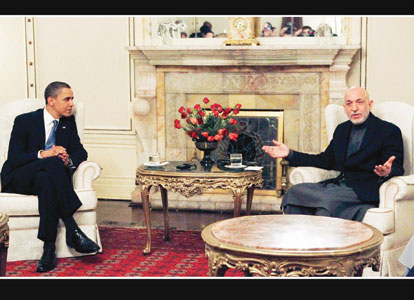
America’s latest attempts to strengthen its relationship with Afghan President Hamid Karzai received an unexpected jolt over the weekend, as the Afghan leader said he would back Pakistan if it went to war with the U.S.

“God forbid, if any war took place between Pakistan and the United States, we will stand by Pakistan,” Mr. Karzai said an interview broadcast Saturday on Pakistan’s Geo television network. “If Pakistan is attacked and if the people of Pakistan needed Afghanistan’s help, Afghanistan will be there with you.”

The prospects for a U.S. war with Pakistan are remote, and Mr. Karzai’s comments were viewed by some Afghan and Western officials in Kabul as a poorly executed effort to blunt his recent angry comments about Pakistan’s support for Afghan insurgent groups. “This is not about war with each other,” said Gavin Sundwall, spokesman for the U.S. Embassy in Kabul. “This is about a joint approach to a threat to all three of our countries.”

Mr. Karzai’s comments came as a surprise to some Western officials in Kabul, who were heartened by the success of last week’s visit by U.S. Secretary of State Hillary Clinton.

In the past, Mr. Karzai has alienated his Western allies with comments suggesting that he might side with the Taliban, or that America could come to be seen as an occupier if its forces didn’t stop killing Afghan civilians.

Mr. Karzai’s latest remarks struck a nerve with some Afghan and Western officials in Kabul who were reminded of the president’s penchant for criticizing the U.S.-led coalition that supports and funds his government. “It was totally careless, unnecessary and, yes, irresponsible,” said one Afghan official. “He hasn’t pleased anyone except, maybe, a few Pakistani generals.”

American officials said, however, that Mr. Karzai’s remarks wouldn’t overshadow Mrs. Clinton’s visit. Mr. Karzai and Mrs. Clinton were united during her trip in demanding that Pakistan stop supporting the Taliban and other Afghan insurgent groups.

Relations between Afghanistan and Pakistan have vacillated over the past year between spells of political chill and attempts at a rapprochement.
Mr. Karzai and the U.S. have sought to pressure Pakistan in recent weeks to clamp down on the Haqqani insurgent network suspected of staging a series of deadly attacks on American and Afghan targets.

Afghan officials also accused Pakistan’s spy agency of involvement in last month’s assassination of Burhanuddin Rabbani, the former Afghan president who had been leading the country’s peace entreaties to the Taliban. Pakistan denied these accusations. Earlier this month, Mr. Karzai unexpectedly flew to New Delhi to sign a strategic agreement with Pakistan’s archenemy India. The move angered Pakistani officials, who viewed it as political provocation.

In the Saturday TV interview, Mr. Karzai repeated his characterization of Pakistan as a “brother” and said Afghanistan wouldn’t let the U.S. or any other country dictate its foreign policy. “Afghanistan is a brother,” he said “But, please brother, stop using all methods that hurt us and are now hurting you. Let us engage from a different platform.” Separately, Afghanistan’s interior minister Sunday evaded an apparent assassination attempt near Kabul.

Officials said a suicide bomber targeted a convoy thought to be carrying Interior Minister Bismullah Khan Mohammadi. But the attacker was shot dead before he could do any harm, and the interior minister wasn’t in the convoy, the Interior Ministry said.
–Ziaulhaq Sultani contributed to this article.

Beyond Gaddafi, America Turns its Attention to Pakistan

By Peter Hoskin for The Spectator

It’s hard to recall a more grisly complement of newspaper covers than those this morning. Only the FT refrains from showing either Gaddafi’s stumbling last moments or his corpse, whereas the Sun runs with the headline, big and plain: “That’s for Lockerbie”.

The insides of the papers are more uncertain. There are doubts about the details, such as what has happened to Gaddafi’s infamous son Saif. And there are doubts about the general tide of events too. Several commentators, includingPeter Oborne, make the point that the passing of Gaddafi is only the first phase in Libya’s struggle towards democracy — and it is a struggle that might easily be forced off course by various factions, splinter groups and madmen. As the New York Times puts it, “The conflicting accounts about how [Gaddafi] was killed seemed to reflect an instability that could trouble Libya long after the euphoria fades…”

As significant as all this is, however, we should also alight on the news from another area of instability: Afghanistan and Pakistan. Hillary Clinton visited Kabul yesterday, where she not only heard about the Gaddafi’s death in photo montage-friendly fashion, but took some very clear swipes at Pakistan for being the Taliban’s favourite holiday destination. Here are some extracts from the full transcript of her speech and Q&A here:

“We will be looking to the Pakistanis to take the lead, because the terrorists operating outside of Pakistan pose a threat to Pakistanis, as well as to Afghans and others. And we will have ideas to share with the Pakistanis. We will certainly listen carefully to the ideas that they have. But our message is very clear: We’re going to be fighting, we’re going to talking, and we’re going to be building. And they can either be helping or hindering, but we are not going to stop our efforts……So my message will be as it just was to you: We have to deal with the safe havens on both sides of the border. It is not enough to point fingers across the border; we must work together to end the safe havens. We must send a clear, unequivocal message to the government and the people of Pakistan that they must be part of the solution, and that means ridding their own country of terrorists who kill their own people and who cross the border to kill in Afghanistan.I think that how we increase that pressure, how we make that commitment, is the subject of the conversations that President Karzai and I have had, and that I will have in Pakistan. But we’re looking to the Pakistanis to lead on this, because there’s no place to go any longer. The terrorists are on both sides. They are killing both people. No one should be in any way mistaken about allowing this to continue without paying a very big price. So I will deliver the message on behalf of the mothers of Afghanistan andon behalf of my own country.”

Just words, perhaps. But these words are some of the firmest that Obama’s adminstration has directed towards Islamabad since the death of Osama Bin Laden. In a news interview last night (do watch it if you’ve got two minutes), Clinton suggested that “something has changed” in the relationship between the two countries, and that Pakistan needs to “make some some serious choices”. That change could well define much of what lies ahead for Afghanistan and the wider region.

Pakistan Leans Toward Talks With Taliban, Not Battle

By Karin Brulliard and Haq Nawaz Khan for The Washington Post

ISLAMABAD — Amid growing American frustration with Pakistan’s handling of Islamic militancy, the government here appears less willing than ever to challenge insurgent groups and is more inclined to make peace with them.

In a series of recent statements, Pakistani officials have rejected the notion of robust military action against insurgents based in its tribal belt and instead called for truces. At a recent summit, political leaders issued a resolution that did not condemn terrorism but said their policy is dialogue. The decree was widely viewed as having been rubber-stamped by the powerful military, whose top two figures briefed the conference.

The approach has puzzled U.S. officials and renewed debate in Pakistan about how to handle insurgents who have killed thousands in attacks nationwide.

Much remains unclear about the potential for peacemaking, including which militant groups would be included or willing. But some analysts say Pakistan has lost the resolve to battle homegrown insurgents who many here view as disgruntled brethren.

“Everyone went along with what the army wanted” at the recent political summit, said Rahimullah Yousafzai, a Pakistani journalist and expert on militancy in the northwest. “It became obvious that the military has no appetite for military operations.”

Many here express skepticism about talks, arguing that such efforts had failed in the past. But the idea is backed by Islamic parties and other political leaders.

In interviews, politicians and security officials said Pakistan views the Pakistani Taliban, an umbrella insurgent group that is an offshoot of the Afghan movement, as splintered enough to be open to peace deals mediated through tribal elders or clerics. And the United States, they note, is supporting a similar approach in Afghanistan.

“If by giving a chance to peace, any terror is eliminated, it’s the best option,” Interior Minister Rehman Malik, a leading ruling party figure, said in an interview. He added that he had received armistice offers from militants: “They want to talk.”

Pakistan’s fragile civilian government regularly condemns terrorism, and the army has executed several operations in the country’s northwest, including against Pakistani Taliban factions in the Swat Valley and South Waziristan. The battles have scattered some militant leaders, leaving the organization weakened but still capable of carrying out deadly attacks. But there is little public enthusiasm for large-scale military action, which could displace millions of people.

Meanwhile, Pakistan is jockeying for inclusion in any Afghan political settlement, which security officials here believe will bring Afghan Taliban representatives into the government. The army therefore sees little incentive to antagonize Pakistan insurgents, who commingle with their Afghan counterparts, security analysts said.

‘A focus on peace’

Pakistani Prime Minister Yousuf Raza Gilani called last month’s political conference as tensions with the United States soared over American allegations of Pakistani state support for the Haqqani network, an Afghan group based in the Pakistani tribal area of North Waziristan. Participants, in a rare show of unity, unanimously rejected the U.S. claims and called for a “new direction and policy with a focus on peace and reconciliation” with “our own people in the tribal areas.”

Two days later, Gilani told local media that a parliamentary committee would monitor talks that could include all Taliban factions, including the Haqqani network, but warned that failure could prompt military action. Army chief Gen. Ashfaq Parvez Kayani, however, suggested otherwise to reporters, saying: “Military operation is not a solution to every problem. We’re done with those operations where we had to.”

An American official said the United States was unsure what to make of the resolution. “We’ll be watching, of course, and asking through military channels what the [Pakistanis] have in mind,” said the official, who spoke on the condition of anonymity to discuss a sensitive relationship.

The United States has stepped up a campaign of drone strikes against the Haqqani network, targeting the group with several strikes in recent days.

Taliban reaction to the Pakistani overture has been wary. One top commander, Faqir Mohammed, was quoted by local media as saying he welcomed talks — but that they must lead to the establishment of Islamic law. Mohammed later denied willingness to talk.

“There have been contacts between the government and militants through indirect channels,” said a tribal elder from the Waziristan region. “Both sides are seeking guarantees before starting.”

A Pakistani intelligence official pointed to the recent defection of one Pakistani Taliban commander, Fazal Saeed Haqqani, as an argument for truces, which he said exploit insurgent infighting. Pakistan, the official said, “met Haqqani’s demands,” including by releasing some of Haqqani’s imprisoned relatives.

Others bemoan the idea of talks as surrender, though many critics remain enthusiastic about reconciliation in Afghanistan. Javed Ashraf Qazi, a senator and former intelligence chief, said the Afghan Taliban is fighting a foreign occupation, while the Pakistani Taliban seeks to create an Islamic caliphate.

“These are our own citizens who have revolted against the state . . . and therefore they should be subjected to the law,” Qazi said. “They have the blood of innocent people on their hands.”

Pakistan’s numerous past attempts at peacemaking with domestic insurgent groups provide ample reason for doubt. Some analysts say a 2006 deal in North Waziristan helped create a haven in the area, from which the Haqqani network and other fighters now operate freely.

The Pakistani army has maintained truces with a few factions, including one led by Hafiz Gul Bahadur, whose North Waziristan-based forces attack U.S. troops in Afghanistan and are closely allied with the Haqqani network. Some analysts speculate that the army has struck other secret deals that it wants to avoid jeopardizing.

The military and the Taliban are “ happy nowadays because there are fewer attacks — on both sides,” Yousafzai said.

Special correspondent Khan reported from Peshawar, Pakistan.

Have We Hit Rock Bottom Yet?

By Shahzad Chaudhry for The Express Tribune

Attending conferences and travelling to them are the two most testing tasks these days for most Pakistanis. The airports tend to give you a full low-down as soon as the ‘green’ passport is presented: I am told by authentic sources that in as friendly country as China it takes twice the time to clear immigration for a Pakistani traveller than for someone with any other passport.

Just so that we may place our ‘higher than the Himalayas’ relationship in perspective, I was also informed that there was a daily flight between Delhi and Beijing compared to only two a week between Islamabad and Beijing. The disparity in trade figures between Beijing and Delhi, and Beijing and Islamabad, respectively, are already well-known. Call it anything, size of the economies or economic pragmatism, or whatever, the fact is China and India are unlikely to go to war with a $100 billion stake, keeping the two tied in an interdependent embrace; wish what you may, Pakistan, bosom love ain’t coming to the rescue. That is the new world ‘geconomics’.

One thing that always strengthened my hand as an ambassador for Pakistan during the Shaukat Aziz years was the perpetual good news that came out on the economic front from Pakistan. Now there may be more than one opinion about Musharrafian economy, but I have always held, and with some conviction I might add, that economies work on few sound fundamentals and a lot of good sentiment. This last word is key. So if the services sector — telecom, construction, finance — all seemed to be galloping under Shaukat Aziz’s mantra of economic progress, he perhaps understood well the significance of looking dapper and sounding happy. He held the dollar pegged and the stock market boomed: the first was clever policy, the latter sentiment. After all what is in the story of an ‘Incredible’ India — the incredibility indeed of a well-manufactured fable and from there on the critical mass of success takes on.

It was famously reported that a particular British chancellor of the Exchequer was singing in the bathroom: the veil of pessimism lifted and the economic sentiment began its own hum. But when you sit on a dredged economy and scooped-out resources there is little that you can offer to the world as hope. Words remain just that, words. Give Hafeez Shaikh something to hum about, and he will hum. The difficulty is he himself remains incapable of carving one.

I haven’t heard a sicker pronouncement of Pakistan’s economic predicament than someone quoting to me the likely $12-16 billion flowing in remittances, as the ultimate trigger for turning around our fortunes. There cannot be a darker indictment of our lows. Incapable of generating revenues inside, we hope like hell for the world and the people to resuscitate us from the outside. Even in that, though, madness must have a method. Investments, portfolio or otherwise, flow into congenial environs; some, Hafeez Shaikh will have to conjure, some we, as partners in crime, will have to relent and enable.

I am not an economist, and certainly never pretended to be one, but I have been subjected enough to the pains of a few that even I could venture to suggest a course to the hapless finance minister. For instance, capital flight is a growing reality and industry needs an injection of support and sustenance under a dwindling availability of energy. The approaching winter months may just provide some respite from domestic energy consumption, enabling diversion to the industry sector. Where possible, policy measures can enable relief and sectoral benefits to industries that wish to work through the difficult times. That might just sustain the benefits emerging from an export boost last year.

Many have tended to qualify the boost in different ways and perhaps each has a point but then how long can you keep a merchant down; there is something called “recess fatigue”, and he must break from it to keep the wheels going. One hopes that a finance minister may recognise such trends and then have the wits to turn them into triggers of rebound. If not, paralysis may just be a more enveloping reality in Islamabad.

Agriculture is half policy, half divine. The policy side has seen some attention while divinity is mostly earned. Our erstwhile brothers in East Punjab seem to have hit a good combination and are worth a reflection. So if there is a formula for our finance gurus to follow in the short-term, it must reside around energy, industry and agriculture. Once out of the hole, we can then begin to embellish our societal existence.

What will bring back a smile on the finance minister’s face? An enabling environment? A country in war, and a 10-year-old war at that, cannot be given to economic congeniality. We need to wean this country away from war. Seriously taken, the All Parties Conference urgings to ‘give peace a chance’ is a worthy, if catchy slogan, and must find the necessary politico-military resolve. The difficulty in our prevailing discourse is that few are willing to find solace in a political effort alone. As the refrain is that military runs the policy, perhaps that is where one may head. So then, over to General Kayani.

With two years to go in his tenure, here are a few things that General Kayani must do: get us out of this war — the lesser the pain the better; shun militancy in all its manifestations — and here the word manifestation to my mind carries all its consequences; and cleanse the military system of this ill-advised and ill-conceived baggage of the yore. We need not depend on the augmenting effect of an irregular effort in enhancing our national agenda. For some time let us simply look inside and avoid external diversions. With General Kayani convinced of such disposition, no arm whatever can practice any part of our rather sad legacy in regional ambitions.

I do not know who killed Rabbani and why; I also don’t know if the Pakistani military alone supports the Haqqani network and to what extent, but I do know that defending accusations of Pakistani culpability is becoming a harder task. The time when any such insinuation will stick is when we will have hit rock bottom.

I wish we were out of this predicament. I wish to see my country relevant and respected; and, I wish to see a smile on a humming Hafeez Shaikh.

Pakistan, US Pledge to Strengthen Alliance

As Reported By The Khaleej Times

Pakistani and US diplomats on Thursday vowed to strengthen their troubled alliance two days after Washington acknowledged for the first time that it is waging “war” against militants in Pakistan.

US special envoy, Marc Grossman, on Thursday met Pakistani leaders in Islamabad as US drone strikes killed 10 militants, including a commander in the Haqqani network that the US military has linked to Pakistani intelligence.

“We tried to think about the future and way to keep our strategic dialogue going,” Grossman told a joint press conference with Pakistani Foreign Minister Hina Rabbani Khar.

“We also talked about how can we continue in a systematic way to identify the interests that we share with Pakistan, and there are many, and then find ways to act on them jointly,” he added.

Grossman said they had been preparing for conferences on the future of Afghanistan, in Istanbul next month and in the German city of Bonn in December.

US officials openly acknowledge that the relationship with Pakistan is complicated, but say it is important to persevere no less because Pakistan is a key stakeholder in any eventual political settlement in Afghanistan.

Khar said both sides would “build on this partnership which is not only important for the two countries but also for the region and the whole world”.

On Tuesday, acknowledging for the first time that the US is waging a war in Pakistan, Defense Secretary Leon Panetta described Washington’s relationship with Islamabad as “complicated”.

“And admittedly, there are a lot of reasons for that. We are fighting a war in their country,” Panetta said.

He said the two countries sharply disagreed over “relations they maintain with some of the militant groups in that country,” a reference to Washington’s demand that Islamabad crack down on the Haqqani network.

A covert CIA drone campaign that the US government declines to discuss publicly has seen around 30 missile attacks in Pakistan since American troops killed Osama bin Laden near the capital Islamabad on May 2.