Archive for the ‘ American Muslims ’ Category

Seeking Solace in Sufism

By Renuka Deshpande for Daily News & Analysis

The city’s metamorphosis from a sleepy town to a metropolis has left most of us long for peace and contentment. This is why Punekars are taking to Sufism as a quest for harmony and the need to seek refuge in the promise of hope and love.

Sufism or Tasawwuf, the mystical arm of Islam, which is inwardly directed, deals with the soul’s relationship with god. It advocates oneness with god and urges that everything men do, be driven by one sole motivation — the love of god. The word Sufi means ‘clothed in wool’, reveals Dr Zubair Fattani in his article The Meaning of Tasawwuf, and is metaphoric of the inwardness of Islam wrapped in its exterior expressions.

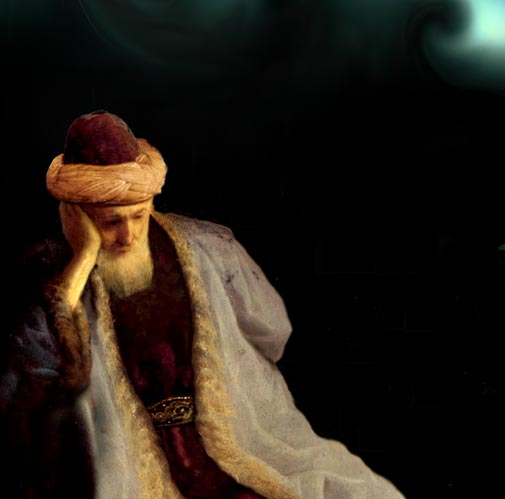
Over the centuries, it has found expression in the ecstatic and reflective poetry of Jalaluddin Rumi, Baba Bulleh Shah, Hafiz, Rabia and Moinuddin Chisti and others, which is increasingly popular in the city.

Bookshelves laden with books on Sufism and its various expressions in poetry, music and dance are a common sight, as are the collections featuring Sufi music maestros like Nusrat Fateh Ali Khan, Abida Parveen, Kailash Kher and the Sabri brothers, among many illustrious others.

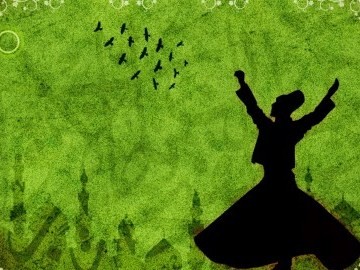
Jyoti Mate, a city Sufi music and dance therapist, uses this mystical dimension to heal all those who seek solace in it. The whirling dervishes, the most iconic symbol of Sufism, are the basic element of Sufi dance and represent the earth rotating around the sun, also symbolic of the universe.

“Sufi dance helps stir pent-up and suppressed emotions within oneself. The hands are outspread while whirling and the head is thrown off-centre. A lot is metaphorical in Sufism, dance being no exception. The raising of the right hand and facing it skyward indicates absorption of knowledge from the heavens and the left hand which is pointed downwards, palm-down, passes it on to others.The head thrown off-centre is an urge to be non-egocentric, so that the ego doesn’t grow further. The cap used by Sufis is made of camel hair and is of a specific height, again symbolising the curtailing of the ego,” she says.

Mate adds that response to her therapy sessions has steadily grown since she first started in June 2008 and people often break into tears after the session is over.

On the music front, there is Ruhaniyat, the all-India Sufi and mystic music festival presented by Banyan Tree, which has been coming to Pune for the past eight years. The seven-city festival brings with it Baul musicians from West Bengal, comprising Sufi Muslims and Vaishnav Hindus, the Manganiars from Rajasthan singing Sufi folk music from the state, qawwals like the Sabri brothers and Turkish Sufi musician Latif Bolat, among others. Nandini Mukesh, director of Banyan Tree, who also emcees Ruhaniyat, says that the festival has elicited phenomenal response in the city.

“Last year, our attendance read around 1,800 people. We found ourselves continually adding chairs,” she says adding that the audience in Pune is very evolved and sophisticated and comes with an understanding of the music played at the festival.

Speaking of the musical response she receives at Ruhaniyat, Nandini says, “Baul songs are incredibly symbolic and metaphorical and touch a chord within people. Qawwalis comprise incredibly powerful musical compositions and progressions, but the Hindi and Urdu lyrics are simple to understand. Beyond a point, however, words cease to matter and the musical experience turns mystical and takes precedence.”

The popularity of Sufi rock bands like Junoon from Pakistan, along with Coke Studio, has also led to the emergence of Sufi rock bands like Chakra in the city, which does a lot of covers of Pakistani Sufi music songs, along with some original compositions featuring dohas of Baba Bulleh Shah and Kabir.

The Osho Meditation Resort in Koregaon Park, has whirling meditation sessions every Wednesday. Ma Amrit Sadhana of the resort, says the eyes are kept open and unfocused while whirling, which forms the first stage of the meditation technique, the second being rest.

“The response to these sessions is great. Watching so many people be a part of the session, and the sight of them totally engrossed in whirling is beautiful,” she adds.

Sheetal Sanghvi of The Urban Ashram, which hosts many Sufi music and dance workshops, is bringing Sheikha Khadija to Pune in November for a whirling meditation workshop. Khadija is a Sheikha in the Mevlevi Order of America.

“Sufism promotes unity and love and the response to our Sufi workshops is really growing. This is because orthodox systems of religious beliefs sometimes don’t narrate to the soul as well as they should. Sufism, with its teachings, gives hope to people,” he adds.

Islamic scholar Anees Chishti, who isn’t a Sufi but has studied it, is skeptical of this current trend of what he feels is pop-Sufism.

“Sufism requires penance and meditation. Sufi rock and dances are nothing but a Western concept. They call the whirling movements dervishes, but the term, is durvesh, dur meaning pearl and vesh meaning hanging, in Persian. So the composite means ‘hanging like a pearl’. In Turkey, during the time of Rumi, the head of the khanqah or mystic hall, was a durvesh. When he played the daf and sang mystical poetry, people listening to him would go in a trance and start whirling. So ‘durvesh’ refers to a person and not a bodily movement. All this pageantry is a marketing tactic,” he says.

Opinions on the topic are many and varied, but most will agree that Sufism in its numerous interpretations in literature, music and dance does feel divine.

Pakistanis for Peace Editor’s Note– Amongst literally hundreds of favorite Rumi quotes, one of our top one sums up life very well when he said: “All day I think about it, then at night I say it. Where did I come from, and what am I supposed to be doing? I have no idea. My soul is from elsewhere, I’m sure of that, and I intend to end up there.”

From the Heart- My Thoughts on the Death of Steve Jobs

By Dan Ahmed for Pakistanis for Peace

I am quite saddened to hear about the death Wednesday evening of the co-founder of Apple, Mr Steve Jobs. He forever changed the world we are living in and he will never die because we are living examples of his dreams coming true and how he envisioned technology and products enhancing our human existence.

I remember when I first got my iPod in 2001 and early on I must admit that I did not know what it was all capable of, but I remember thinking that I would fall in love with this company’s products.  That is just what happened the day I got my hands on the Apple iPod and since then I have not looked back!

I was buying anti-shock CD players and as well as eventually the Sony Mini discs for my music. Sometimes I would have to carry 3 to 4 discs on my way to work but Apple’s large internal memory based products jumped in as a life changer and I have became a fan of it ever since.

Some years later I recall that I paid $600 for a Motorola Razr in 2004 and never changed it even after I heard about various other new phones coming in out including when I heard rumors about Apple’s new product the “iPhone”. It was getting launched soon and I waited patiently for it because deep in my heart I knew it was going to be worth it.

It was on June 29, 2007 that the first iPhone came out and I was one of the first ones in the line that day to get my hands on the one of the first 60 devices that day. It was a life changing moment for me and so every year since then I tried to get my hands on every one of Apple’s newest products as I have always since that day felt that they exceed my expectations.

Then on June 21, 2010 I got picked up as one of the 5,000 developers around the globe by the company. For me, it was one of the happiest moments of my life. I may have been capable of creativity on my own but it just wouldn’t have been possible without his vision and ingenuity.

Steve Jobs really changed the way that we think and operate on a daily basis. He brought us the concept of the mouse for computers as well as he introduced us to the touch screen system.

He was simply one of the most influential people of the 21st century and he brought a revolution to this world with his friendly and easy to use devices.

I don’t think that there is anyone in the world presently that doesn’t appreciate his company’s products all around the globe. One man truly is enough to change the whole world if he has a genuine love for what he does and this is a very clear message that our determination and dedication for peace like Steve’s love and dedication in his craft can bring the world together.

May he rest in peace and my best regards for the after life for a genius and how he taught us to live our dreams and made it possible for all of us to dream big.

Dan Ahmed, is a group member of Pakistanis for Peace and currently resides in New York with his wife, Nalini and young son.

U.S.: Al-Awlaki Believed Dead in Attack

As reported by the Detroit News

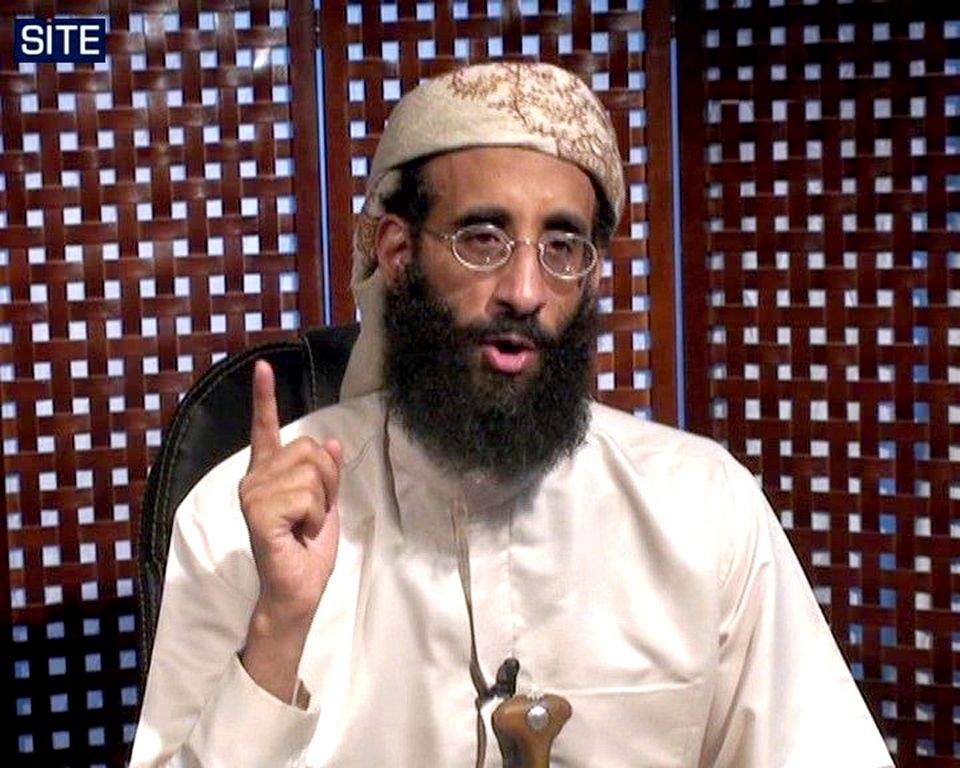
American forces targeted al-Qaida cleric Anwar al-Awlaki’s convoy with a drone and jet attack and believe he’s been killed, a U.S. counterterrorism official said Friday.

The U.S.-born cleric known for fiery anti-American rhetoric has been suspected of ties to the Fort Hood attack and the attempted Christmas Day airliner bombing in 2009.

The counterterrorism official was not authorized to speak publicly and spoke on condition of anonymity.

Word from the U.S. comes after the government of Yemen reported that al-Awlaki was targeted and killed Friday about five miles from the town of Khashef, some 87 miles from the capital Sanaa. He would be the most prominent al-Qaida figure to be killed since Osama bin Laden.

U.S. officials have said they believe al-Awlaki directed, led and planned attempted attacks on the U.S. He was believed to have inspired the Fort Hood shooter, Army psychiatrist Maj. Nidal Hasan, and to have played a more direct role in the Christmas 2009 attempted bombing of a Detroit-bound airliner. Hasan is charged with 13 counts of premeditated murder and 32 counts of attempted premeditated murder in the November 2009 attack at Fort Hood, Texas.

On Sept. 13, an FBI Special Agent testified in Detroit that al-Awlaki played a key role in the radicalization of so-called “underwear bomber” Umar Farouk Abdulmutallab.

Abdulmutallab spent hours listening to al-Awlaki’s video clips posted on the Internet, Special Agent Timothy Waters testified.

Abdulmutallab faces up to life in prison if convicted of a host of charges stemming from his alleged attempt to blow up the plane from Amsterdam to Detroit on Christmas Day 2009.

Al-Awlaki’s death “will especially impact the group’s ability to recruit, inspire and raise funds as al-Awlaki’s influence and ability to connect to a broad demographic of potential supporters was unprecedented,” said terrorist analyst Ben Venzke of the private intelligence monitoring firm, the IntelCenter.

But Venzke said the terror group al-Qaida in the Arab Peninsula will remain the most dangerous regional arm “both in its region and for the direct threat it poses to the U.S. following three recent failed attacks,” with AQAP leader Nasir al-Wahayshi still at large.

Venzke said al-Awlaki was due to release a new article in the next issue of AQAP’s Inspire magazine justifying attacking civilians in the West.

“The article, which may already have been completed, was announced by AQAP on Tuesday as being entitled, ‘Targeting Populations of Countries at War with Muslims,'” he said.

Muslims in America: A mosque rehabilitates its image

Conversations / Live Q&A Washington Post

ABOUT THE HOST
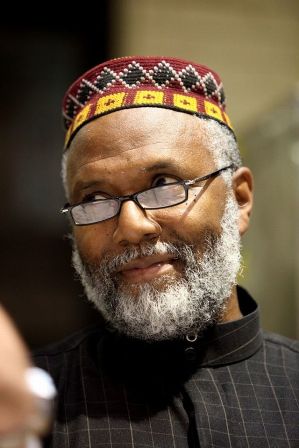
Imam Johari Abdul-Malik
Imam Johari Abdul-Malik serves as the director of Community Outreach for the Dar Al-Hijrah Islamic Center. He was the first Muslim Chaplain installed at Howard University. The imam is the former chair of Government Relations for the Muslim Alliance in North America [MANA founded by Imam Siraj Wahhaj] and is the founding President of the Muslim Society of Washington, DC Inc and Associate Imam of First Hijrah Islamic Center in Washington, DC.

Known nationally for his fundraising efforts for masjids, schools and relief organizations, Imam Johari is a founding member of the Muslim Advocacy Commission of Washington, D.C. and “Muslim Men Against Domestic Violence” [MMADV] and has edited a book on”What Islam Says About Domestic Violence”.
ABOUT THE TOPIC
Dar Al-Hirjah is one of the largest mosques in America, and it can be linked to many terrorism suspects in some way. Imam Johari Abdul-Malik discussed the Dar Al-Hijrah mosque, rehabilitating the mosque’s image after 9-11, how 9-11 has affected Muslim life in America, and more.

Read: Imam serves as public face of an embattled mosque
IMAM JOHARI ABDUL-MALIK :
Salaam-Shalom-OmShanti-Peace,

I would like to thank The Washington Post and especially William Wan and Jahi for their work on this article. I pray that it will inspire more bridge building

– September 19, 2011 11:03 AM Permalink
Q.
CHANGES IN SENSITIVITIES
What are examples of what you have heard from fellow Muslims to any changes in how they have been treated since 2001? How much of a difference has there been? How often do they find themselves in a situation where someone has said or done something offensive or hurtful?
– September 19, 2011 10:43 AM Permalink
A.
IMAM JOHARI ABDUL-MALIK :
The overall experience has actually been positive. However, the negative experiences have been structural (Homeland Security, etc) but I expect that those things will change with time. I am a very positive person and I expect things to continue to only get better

– September 19, 2011 11:06 AM
Q.
AMERICAN MUSLIMS
Salaam alaykum, Imam Johari I am a devout American Muslim woman (and a convert like yourself), but after reading this, I would be terrified to attend your masjid. Instead of honoring your women, you make them go through a separate entrance in the back, for what? To protect men from seeing their wives and daughters? In the time of the Prophet, peace be upon him, men and women prayed in the same space. So my question is this, how can you hope to move from simply defending your community to integrating them into the country at large? This type of isolation and anger only breeds mistrust and silently encourages the behavior of men like Aulaqi. I truly wish you luck and will pray for your community. Please believe that there is another way. My masjid in Brooklyn is nothing like this.
– September 19, 2011 10:57 AM Permalink
A.
IMAM JOHARI ABDUL-MALIK :
I agree with you that the architecture of the mosque is not women friendly. I am working first to change to minds of people who attend the mosque and then we have to work on reconstructing the bricks to be more women and family friendly.

– September 19, 2011 11:09 AM
Q.
SHARIA
Do you agree with sharia?
– September 19, 2011 11:02 AM Permalink
A.
IMAM JOHARI ABDUL-MALIK :
Firstly, “sharia” for me, is similar to keeping kosher for Jews. I don’t believe that my beliefs or practices should be enforced on others. In short, I don’t believe that stoning or cutting off hands are what the Qur’an intended for the 21st century

– September 19, 2011 11:09 AM
Q.
PEDOPHILIA
Do you think its OK for a 53 year old man to marry a 6 year old girl? If so, why?
– September 19, 2011 11:03 AM Permalink
A.
IMAM JOHARI ABDUL-MALIK :
I would advise you not to do!

– September 19, 2011 11:10 AM
Q.
COEXISTENCE
What kind of outreach are you doing to local Christians and Jews?

– September 19, 2011 11:09 AM Permalink
A.
IMAM JOHARI ABDUL-MALIK :
We have been working with several churches and synagogues in the DC metro area for the past decade and have built many strong relationships…

– September 19, 2011 11:13 AM
HALEY CRUM :
What’s the most common question you usually get?

– September 19, 2011 11:15 AM Permalink
IMAM JOHARI ABDUL-MALIK :
The most common question to me is as a convert “how did you become a muslim?”.

– September 19, 2011 11:15 AM
Q.
FGM
Where do you stand on female genital mutilation?
– September 19, 2011 11:05 AM Permalink
A.
IMAM JOHARI ABDUL-MALIK :
FGM: Is not a practice of Islam and although many cultures before Islam practiced it and this unislamic practice continues. I am working with relief organizations and interfaith organizations to end this horrible pracitice.

– September 19, 2011 11:15 AM
IMAM JOHARI ABDUL-MALIK :
I wanted to mention here that it is my hope that terms such as “non-Muslim” and “Muslim World” will cease to be used as I see those terms as divisive. I always make it a point to correct anyone that I hear use these terms. I prefer “people of other faiths/traditions” when speaking of those that do not share my faith

– September 19, 2011 11:21 AM Permalink
Q.
AMERICAN MUSLIMS
But how do we change hearts and minds? Especially in a climate that seems to have grown more hostile to us? It’s difficult to tell other Muslims, especially conservative immigrants that they should embrace change and their new country when we’re being told we can’t build mosques. Park51 (aka the supposed Ground Zero mosque) is the perfect example. We worked so hard and against so much opposition for this place. Yet when I attended services a couple Fridays ago, a community member began berating a young Muslim woman for leading two male journalists in for both being uncovered and talking to a man. It’s humiliating.
– September 19, 2011 11:17 AM Permalink
A.
IMAM JOHARI ABDUL-MALIK :
I have learned so much from the examples of great people and the prophet Muhammad and Jesus (peace be upon them). We have to increase our efforts for the positive, try to understand the other. New immigrants have their baggage as everyone does. Dr. King said, ‘Let us overcome them with our capacity’ to love

– September 19, 2011 11:30 AM
HALEY CRUM :
What has the Muslim community done for America lately – is America a better place because of Muslims? – rickdumbronski

– September 19, 2011 11:30 AM Permalink
IMAM JOHARI ABDUL-MALIK :
First of all, there is single “Muslim community”. There are many different “communities” of Muslims with many diverse ethnic groups and sects. Secondly, there are Muslims in the US Armed Services and working within Homeland Security (including the FBI) that are serving their country with honor. Thirdly, there are many Muslim civilians that are working with law enforcement and are the very key to keeping us safe from terror plots. Without the help of Muslims, it would be much more difficult to fight terror

– September 19, 2011 11:30 AM
Q.
HOW TO COMBAT SHARIA STEREOTYPES?
I’m a humanistic Jew, and while I do not practice traditional Jewish law, I’m well versed in them. I personally don’t see a difference between Sharia and the Talmudic laws that also dictate not just keeping kosher, but divorces, shabbat, how, when, and where to pray, conversions, and all other sorts of elements of daily life. There are orthodox rabbinic courts, Beit Dins, that are sometimes used as alternative dispute resolution mechanisms instead of regular secular courts. The Catholic Church has ecclesiastical courts that gives annulments and hears other similar sorts of cases. How can we better express that Sharia is no different from the rules and institutions of other systems?
– September 19, 2011 11:21 AM Permalink
A.
IMAM JOHARI ABDUL-MALIK :
You are right on brother! We all need to speak this truth from the hill tops. Criminal law needs to stay in the hands of law enforcement.

– September 19, 2011 11:32 AM
Q.
THE ETHICS OF A FAIR FIGHT
Salam dear brother. Islam, as a way of life, prescribes an appropriate way to deal with oppression and systemic injustice. While it was recently reported that Muslims in the U.S. are less likely to justify attacks on civilians (Source – http://www.gallup.com/poll/148763/Muslim-Americans-No-Justification-Violence.aspx) than other groups, there are specific limits on what is acceptable when engaging against an oppressive military, even in self defense. Could you provide an example of a just war, at level of a country, based in what Islam teaches us? Could you provide an example that could apply to daily life at an individual level? Salam!
– September 19, 2011 11:28 AM Permalink
A.
IMAM JOHARI ABDUL-MALIK :
The “just war” theory seems to have only been applied to justify war. As they say, “war is hell”.

– September 19, 2011 11:37 AM
Q.
SHOUDLN’T YOU LEAVE THE COUNTRY?
In view of the past associations like Awlawki and the obvious distrust with which you and your mosque are held, don’t you think it is time you moved to a country like Pakistan or Yemen where you would find a more positive response to your preachings? Face the facts you don’t really fit in here.
– September 19, 2011 11:29 AM Permalink
A.
IMAM JOHARI ABDUL-MALIK :
I take great issue with the hate speech of Anwar Awlawki.

I’m from Brooklyn, NY. I am the decendent of enslaved Africans – I have every right to live in my own country. The first amendment affords me the right and responsibility to practice my faith alone with my fellow Americans.

– September 19, 2011 11:37 AM
Q.
TRUST
Mosques are places of public worship. What is wrong with the FBI monitoring places of interest in these times of distrust and international Islamic terrorism? Muslims in the West must accept a reasonable amount of observation given the facts. Muslims rooting out and identifying the dangerous extremists amongst them is not an unreasonable expectation of the non-Muslim citizenry. Trust has to be built by both sides. – Cretius

– September 19, 2011 11:19 AM Permalink
A.
IMAM JOHARI ABDUL-MALIK :
I agree that trust works both ways. My issue is the engagement with the leadership of the mosque as a partnership. I have worked with law enforcement on many cases but they only come to me after the fact. There have been instances where had they been a partner early on perhaps our security as a nation could be better secured. I like president Obamas new a approach – “Empowering Local Partners to prevent violentextremism in the US” . We are safer when we work together.

– September 19, 2011 11:37 AM
Q.
MUSLIME IN THE WEST
Many Muslims who came in an earlier age, assimilated well — but the new iimmigrnts refuse to assimilate but continue to wear Muslim dress, demand we set aside muslim holidays in our schools etc. don’t you think these muslims would be better off staying in a country which is predominately muslim.?
– September 19, 2011 11:37 AM Permalink
A.
IMAM JOHARI ABDUL-MALIK :
The question remains: Is American the great melting pot or the mulligan stew.

In the melting pot – all of the ingredients get boiled down.

I believe that what makes the great dish are the spices of every culture that adds to the favors of America, while still being able to identify the fruits.

– September 19, 2011 11:42 AM
Q.
ON TO THE NEXT
Do you think people view Muslims as “the enemy” now and will move on to another religion/ culture when the next big attack happens from another group? Is this a vicious cycle?

– September 19, 2011 11:40 AM Permalink
A.
IMAM JOHARI ABDUL-MALIK :
While Islam is the issue of time, we should not be in denial about the violence that is besieging our societies. All ideologies that promote violence as a mechanism for social change are dangerous whether they are so-called Muslims, White Supremist or drug cartels….non-violent resistance for social change must become the new revolution.

– September 19, 2011 11:46 AM
Q.
PART OF THE PROBLEM.
Don’t you think that your and your mosque are part of the problem and not part of the solutions? After all when you see the number of terrorists who have passed through your mosque, how can you not see yourself as part of the problem?
– September 19, 2011 11:45 AM Permalink
A.
IMAM JOHARI ABDUL-MALIK :
knowledge is power! I think the article addresses this issue well. I believe that my work is to counter-radicalization.

– September 19, 2011 11:52 AM
Q.
AMERICAN A MELTING POT FOR WESTERN EUROPE
The American melting pot, a description beloved of so many who know no history, forget that that melting was for people from W. Europe who came from similar backgrounds as Americans. The melting pot image lack veracity when you include non Westeners in the picture – it is they who have created the problem and ripped appart the melting pot immage.

– September 19, 2011 11:48 AM Permalink
A.
IMAM JOHARI ABDUL-MALIK :
With the melting pot only being for W Europeans, you are forgetting that there were slaves that were brought here from Africa 400 years ago. What is to happen to their decendents? We must work together -ALL OF US – and build bridges and not fantasize about an all white country that will never happen

– September 19, 2011 11:55 AM
IMAM JOHARI ABDUL-MALIK :
This has been a wonderful conversation and only increases the need for more dialogue and understanding. I would like to thank the Post for this wonderful medium of exchange – The On-Line Chat. Please share your experience with you friends and family –

‘You have been created into tribes and nations that you might know each other..verily the best among you are those who have faith and good deeds’-Quran
Park 51 Photo Exhibit Features American Children From All Over The World

BY Jessica Jenkins for Groundswell

NYChildren, a new photo exhibit at the Park51 community center in downtown Manhattan highlights the diversity of American identity by featuring New York City children from all parts of the world. A slideshow in the New York Times highlights a dozen portraits from the NYChildren exhibit. The photographer, Danny Goldfield, says he was inspired by a 2004 encounter with the brother of Balbir Singh Sodhi, the Sikh man who was murdered at his Mesa, Arizona gas station on September 15, 2001. That encounter led Mr. Goldstein to think about what constitutes American identity, and his project to photograph a child from each country of the world. So far Mr. Goldstein has photographed children from 171 different countries, all living in New York City.

It’s been a year since the Park51 community center was besieged by Islamophobic attacks from across the nation for its proximity to Ground Zero. Park51 has since scaled back its plans to build a new community center and mosque in Lower Manhattan but nevertheless has continued to offer events and faith services to the local community in its existing building. On its website, Park51 says about the exhibition: “We live in a world with far too much fear and misunderstanding. This exhibition is about finding the courage to meet and get to know neighbors to build trust and friendship.” We can’t think of a better way to set a tone of resilience, tolerance and hope.

Ten Years After 9/11, We’re Still in the Dark

By Omar S. Ashmawy for The Washington Post

I joined the U.S. military after law school to help my country defend itself against the threat of Islamic extremism. My final assignment in my eight years in the Air Forcewas as a war crimes prosecutor in Guantanamo Bay, Cuba. With access to our nation’s most intimate secrets, I shuttled between Guantanamo and the Pentagon from the summer of 2007 to the winter of 2009. I learned many lessons, but on the anniversary of the Sept. 11 attacks, the most important lesson I can share is the most alarming: After so many years and so much sacrifice, nothing has changed.

Our greatest weakness remains today what it was 10 years ago, and what it was eight years before that, when the World Trade Center was bombed in 1993. We don’t understand Islam or Arab culture, and that ignorance prevents us from accurately predicting our relationship with Arab and Muslim countries and identifying our enemies.

From our government to the front lines, individuals are making decisions based on inaccurate, biased information. The White House’s August announcement on combating radical Islam acknowledged this reality. Our soldiers, agents and analysts don’t have the facts they need to make informed decisions about whom to trust, what to believe and how to keep the threat at bay.

Whether it’s the FBI recommending its agents read books by a known anti-Muslim author, misplaced anxiety over “sharia law,” the near absence of linguistic and cultural training in the military, or our government’s collective surprise at the Arab Spring, the effect of what we don’t know reverberates through U.S. policy. But the result is the same: We are caught off guard by events we should have anticipated or, worse, we confuse our enemy’s propaganda with knowledge.

As an American Muslim born and raised in New Jersey, I am frustrated that America still struggles with the basics: We don’t understand the difference between Islam and Islamic extremism, or that Arab culture is not the same as the religion. We divide Muslims into secularists and extremists and can’t tell the devout from the radical, the sympathizer from the opportunist.

Two of the most enduring examples are the military commissions and Guantanamo Bay — intractable problems that will never be resolved to anyone’s satisfaction. They’re once and future disasters built by people who should have known better — people America trusted to know more. Both were operated and sustained by individuals so uninformed of our enemy’s religion, language and culture that they could not accurately process the information available to them. Attorneys couldn’t tell good cases from bad ones, and the agents assigned to the commissions didn’t know what questions to ask detainees.

I saw it firsthand. From lawyers to interrogators, the vacuum was enormous. It filled Guantanamo Bay with men who did not need to be there and barred their release. It was fuel on a fire set by a legal process that initially conflated the mutually exclusive missions of intelligence-gathering and the rendering of justice. The absence of knowledge and leadership permitted the worst of what happened — reports of the abuse of prisoners, the desecration of holy books, the legal pantomimes — and continues to prevent a resolution to the human drama playing out on that island.

We cannot close Guantanamo because the trials of the detainees who remain would be tainted by evidence from botched interrogations and because the men there are now radicalized — the result of decisions based in an ignorance tantamount to racism.

This ignorance is a degenerative disease that debilitates our efforts to protect our nation. It was tempting to think that with Osama bin Laden’s death we could end this conflict, if only we could end the wars in Iraq and Afghanistan. While those wars must be concluded, neither their end nor the death of any individual terrorist will secure us against another attack by Islamic extremists. We’re not fighting a single enemy but a decentralized patchwork of groups that adhere to the same twisted, bankrupt ideology. Whether it is Jemaah Islamiah in Southeast Asia or al-Shabab in Somalia, our enemies are motivated and wait — patiently — until we forget.

As we honor the past, we must also commit to the future. This commitment must include an expectation that all Americans responsible for protecting us possess the education and knowledge to do so and be committed to accuracy and learning. A good place to start would be language and culture training for our soldiers, and training in Islam and Arab culture and history for policymakers. Similar education should be made available to local law enforcement and community leaders. At the height of the Cold War, we encouraged our best and brightest to study Russian language and history. Ten years after Sept. 11, this is a basic but necessary step. Ignorance is our vulnerability, and we must begin somewhere. Those individuals we remember Sunday deserve better. We all do.

The writer is a former Air Force officer and war crimes prosecutor. He prosecuted U.S. v. Hamdan and U.S. v. Al Bahlul, the first two litigated cases to be brought before a military tribunal since the Nuremberg trials after World War II.

Amir Khan Gets Invited to The White House

By Araiz Baqi for Sportspulse

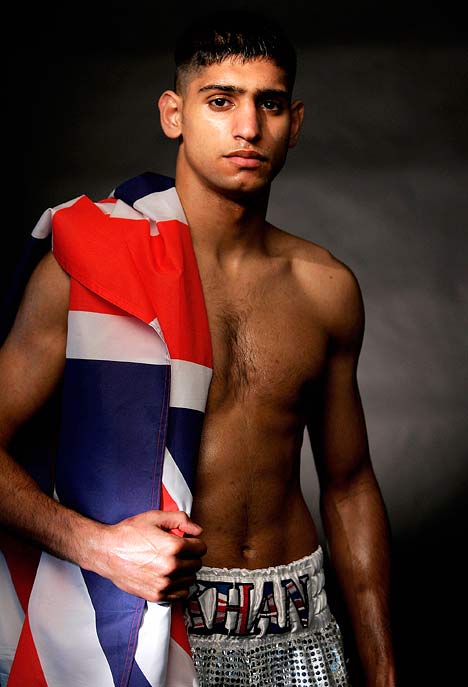
Amir Khan, the British professional boxer of Pakistani descent, has been invited to the official residence and principal workplace of the President of the United States, also known as the White house, for a dinner, along with other Muslim sportsmen, on the eve of the tenth anniversary of the 9/11 atrocities in New York.

The currently unified IBF and WBA World Light Welterweight Champion was invited to attend the dinner by the United States Secretary of State Hilary Clinton. The event will take place on September 10. “Amir was invited there by Mrs Clinton,” a source revealed. “He will be among a group of the most prominent Muslim sportsmen in America, and as Amir is now based in the US, that offer was extended to him.”

The Irony is that IBF and WBA champion have become frustrated with the lengthy delays he has to face whenever he travels to the States. There are seven levels of security at the, with seven being the highest, and Amir comes in at full seven.

When on vacation, Amir almost everytime visits Pakistan, and most recently, he visited Egypt and Saudi Arabia (All Muslim Countries). ‘All these things are taken into account by US Homeland Security. The Khan family are kept in a holding area until the green light is given from Washington DC, as all the checks that are made.’ – reports dailymail.

The Organizers of the event have yet to confirm whether President Barack Obama will be present at the event or not. If the President attends the ceremony, Amir might find a smoother passage on future entries to the United States.

Khan, Currently rated as the best boxer in the Light Welterweight division, has made his fans, especially Pakistanis, proud after getting the invitation for the dinner. After all, in this world of racism, hatred, and diversity, who eould expect a Pakistani to get invited to the White house…

After returning from pilgrimage last week in the holy month of Ramadan, Khan will fight in the United States most likely against Mexican legend Erik Morales. He will leave the White House on Sept 11 and go on to Las Vegas, where one of his rivals, Victor Ortiz, defends the World Boxing Council welterweight title against Floyd Mayweather Jnr.

Eid ul-Fitr 2011

Eid al Fitr To Be Celebrated Tomorrow in US: Fiqh Council Clarifies Eid Dates Controversy

As Reported by The Northern Voices Online

The biggest Muslim festival celebrated across the world, Eid al Fitr, is set to be held tomorrow in US and many other nations. Though in South Asia it will probably be celebrated on Wednesday.

There were some questions about the announcement of Eid in advance by the Fiqh Council of North America. Now the council has announced clarifications on the issue.

Doubts have been raised by some about the decision of the Fiqh Council of North America and the European Council of Fatwa and Research about the date of Eidul Fitr this year on August 30, 2011. Following are some clarifications from the Fiqh Council of North America.

The Fiqh Council of North America recognizes astronomical calculation as an acceptable Shar’i method for determining the beginning of Lunar months including the months of Ramadan and Shawwal. FCNA uses Makkah al-Mukarram as a conventional point and takes the position that the conjunction must take place before sunset in Makkah and moon must set after sunset in Makkah.

The Astronomical New Moon is on August 29, 2011 (Monday) at 3:04 Universal Time (6:04 a.m. Makkah time). On Monday, August 29, sunset at Makkah is 6:40 p.m. local time, while moonset is at 6:44 pm local time.

It is claimed that the new moon will not be visible on August 29 anywhere in the world. This information is not correct.

In United States the birth of Astronomical new moon is on August 28, 2011 (Sunday) at 11:04 p.m. (New York), at 8:04 p.m. (California) and 5:04 p.m. (Hawaii).

On Monday, August 29, the Crescent will set 13 minutes after sunset in San Diego, California and 28 minutes after sunset in Honolulu, Hawaii.

On Monday, August 29 the Crescent should be visible in Hawaii by binoculars and telescope and in South America by naked eye.

The Shawwal Crescent of Monday, August 29 is acceptable according to Shari’ah for those who recognize the Global sighting as it is also acceptable according to the criteria adopted by the Fiqh Council of North America.

Eidul Fitr is on Tuesday, August 30, 2011. Eid Mubarak and best wishes for a blessed Eid with peace and harmony among all.

Edible Arrangements–A Pakistani-American’s Success Story

By Riaz Haq for RiazHaq.com

Tariq Farid is the founder and CEO of Edible Arrangements, a successful international franchise business that specializes in delivering gifts of beautifully arranged bouquets of edibles like fruits and candy on holidays and various other special occasions.

Currently in its 11th year of operation, the company boasts 883 franchise locations in the United States, the United Kingdom and Kuwait. The company earned $300 million in revenue last year, according to published reports.

Born near Sahiwal in Pakistan, Tariq Farid has founded several other companies. One is Frutation by Edible Arrangements, which includes salads and fruit drinks. They’re sold in Edible Arrangements stores and stand-alone stores. He also created Netsolace, which provides software for the franchise industry. Another, BerryDirect, offers containers, vases and other products to our Edible Arrangements franchisees and other companies. His latest start-up is Farid Capital Corporation, a financing company that helps franchisees buy equipment.

The key to Farid’s success, he says, has come from paying attention to often overlooked details such as the website, order tracking and follow-up customer service, the logo and branding, and employee training.

The economy may need more entrepreneurs like Farid – according to the International Franchise Association, every $1 million lent to franchise small businesses creates 34 jobs and $3.6 million in annual economic output, cited Reuters.

Here is Farid in his own words describing his journey:

I was born in Pakistan and came to the United States in 1981, when I was 11. My grandfather owned a farm in Pakistan and we had been fairly well-to-do. We started at the bottom when we came here. My father found a job as a machinist during the day and worked at McDonald’s and Burger King at night.

All five of my siblings pitched in. I delivered newspapers to 300 houses. Instead of putting the paper into the mailbox, I’d deliver it to the door. I got great tips. When I was 13, a flower shop hired me to water the flowers. Soon I was taking care of orders. By 16, I had learned a lot.

One day my father found a flower shop for sale in the paper. The owner wanted $6,000. My dad asked me if I could run the shop, and I said sure. We got a cash advance and a loan from a friend. I thought I’d negotiate, and asked the owner what terms he was offering. He looked at me as if to say, “What can this kid possibly know?”

We opened a week before Easter and earned about $50 a day. I stayed open until 7 p.m., seven days a week, because few other flower shops did. I thought $350 a week was wonderful. Soon, sales doubled, and I was shocked. Five years later, we had three shops and were making close to $1 million a year. I said we needed to make more, about $5,000 a day. My mother asked me if I remembered when I was making $50 a day and she suggested that I relax. I told her that it never really ends, and that I could achieve that goal.

It was a lot of work. I didn’t really have a social life. We stayed open on holidays. On my way to high school, I’d drop off my mother at the shop. She spoke no English, so I told her what to do to supervise the two employees. After school I’d make flower arrangements and deliver them myself until I could hire a driver.

I attended college part-time, but I started weighing the benefit against what I was making. I decided to put off school, and I never finished. I was so young when I started a career that I blindly jumped into it.

Edible Arrangements, which I started in 1999 with my brother, Kamran, goes back to our roots. In Pakistan, my father always brought home tons of fruit for us. When we started the company, we created basic fruit arrangements that included fresh pineapple, strawberries, cantaloupe and more, and later added extras like chocolate and cinnamon toppings.

We got 30 orders the first day. We had learned from our flower stores, so this time did everything right. A stranger asked about opening a store, which gave us the idea to franchise them. I knew nothing about the franchise industry, so I contacted an association for the names of experts and found Michael Seid. He gave great advice.

I’ve started several other companies. One is Frutation by Edible Arrangements, which includes salads and fruit drinks. They’re sold in Edible Arrangements stores and stand-alone stores. I also started Netsolace, which provides software for the franchise industry. Another, BerryDirect, offers containers, vases and other products to our Edible Arrangements franchisees and other companies. I just started the Farid Capital Corporation, a financing company that helps franchisees buy equipment.

When I was starting out, I used to give my mother $50 a week. When I wanted to buy a building for our second Edible Arrangements location, I needed $40,000 more than I had. My mother had saved the money I gave her over the years and handed it back to me. She asked only that I do something in her name someday and give her $20,000 for my sister’s wedding.

When my mother passed away in 2000, I started a foundation in her memory. The organization built a hospital in Pakistan for needy people and an Islamic school in the United States.

Originally published in The New York Times as told to Patricia R. Olsen
.

How Many Sufis Are There in Islam?

By Stephen Schwartz for The Huffington Post

Devotees of Sufism, the spiritual interpretation of Islam, face problems wherever they are found. In the West, many self-styled Sufis have never become Muslim, know little of the religious background of the Sufi way, and give Sufism a reputation as simply another flavor of New-Age, “weekend” mysticism. In Muslim lands, especially in the Arab core countries, classic Sufi authors may be praised while living Sufi teachers are derided as un-Islamic charlatans. And in some places, Sufis are imprisoned and murdered.

As a Muslim Sufi adherent, however, I am troubled especially by another expression of contempt very widely cast against Sufism by Islam-hating amateur experts in the West. That is the claim of Sufi irrelevance. Since the horror of Sept. 11, now almost a decade past, the identification of a moderate and contemplative form of Islam, which can oppose radical and fundamentalist doctrines, has seemed of considerable importance both for the moral health of Muslim believers and for the security of non-Muslims and Muslims alike. But the Sufi alternative to Islamist extremism is neglected or even disparaged, typically, by Muslim and non-Muslim commentators.

Western misperception of the importance of Sufis in Islamic life is complicated by lack of clarity as to who and what Sufis are. Sufis often enjoy great prestige with the mass of Muslims, based on Sufi examples of personal humility in fervor for God and Sufi preaching of love for humanity. But Sufis are not, mainly, other-worldly, exotic individuals or groups that spend all their time absorbed in semah (ecstatic turning on one foot and other forms of dance).

Some Sufis withdraw from the daily affairs of society, but others pursue satisfaction of the Creator by seeking social justice through improvement of popular education and services to the needy, such as housing of the homeless and free distribution of food. Rather than disappearing in a misty aura of meditation, numerous Sufis around the Muslim world contribute actively to defense of the victims of oppression.

Sufis may also take on the risky challenge of overt political engagement. This has been seen most strikingly in Turkish developments over the past two decades. Turkish Sufis were suppressed by the secularist regime established in the 1920s, but flourished in clandestinity, and have now emerged to lead Islamist parties and to assume positions in government. How the relations between Turkish Islamist politicians and Turkish and Kurdish Sufis will evolve remains to be seen.

Essential principles shared by most Muslim Sufis include emphasis on commonalities with other faiths and traditions, which has contributed to improved relations between Muslims and Jews, Christians, Buddhists and other non-Islamic believers. Commentators concerned to denigrate Islam altogether have asserted that Sufis, even if they embody moderation and mutual respect among people of religion, comprise no more than 5 percent of the world’s Muslims. Since the importance of Sufism stands, in the minds of many Westerners, on demographic measurement, let us therefore ask: How many Sufis are found in the Muslim world?

I would first observe that Sufis are present, persistently, in every Muslim population, including those where they were persecuted the longest: Saudi Arabia. Although the Saudi kingdom prohibited and punished possession of Sufi books and the practice of Sufi observances, the country always possessed a thriving Sufi underground with access to the heights of power. Before his elevation to the throne in 2005, then-Saudi Crown Prince, and now King Abdullah, who favored Sufis, gained them the right to hold zikr (remembrance of God by vocal or silent chanting, singing and bodily movements) in their homes.

In some countries Sufism is praised as an item of a proud heritage while it is repressed in daily life. The most obvious such example is that of Iran. The clerical regime established by Ayatollah Ruhollah Khomeini could not act easily against Sufis, since so many famous Sufis — such as Jalaladdin Rumi, the 13th century author believed by many to be, currently, the most widely read poet in the West — wrote in Persian, and Sufi texts became the national literature of the Iranians.

But while the Tehran clerics honor the Sufis of the past, they repress Sufis in the present. Sufis have most often functioned as an alternative to clerical authority in Islam, and widely represented Iranian Sufi bodies like the Nimatullahi-Gonabadi dervish order and the “hidden,” Kurdish-speaking Ahl-e Haqq or “people of truth” have sustained a difficult challenge to the Iranian authorities. Iranian Sufis have been arrested and disappeared into the obscurity of the prisons, with some doubtless dealt a fatal destiny.

As certain Islamic countries are ambivalent about Sufism, in other Muslim societies we see variations in the intensity of Sufi “activism.” Analyzing Islamic Sufism, I have generally divided Muslim territories between those in which Sufism has a deep but informal influence in local Islam, in contrast with those where it has a well-established institutional presence.

In the great Eurasian expanses, Islam is widely permeated by Sufi teachings and customs. From my travels, observation and participation in Muslim life, I have seen and experienced that Sufi-oriented Islam is prevalent among Slavic and Russian Turkic Muslims, dominant in Central Asia, and widely-represented in South Asia and in Southeast Asia. Across this heartland, Sufi authors are studied and throngs of pilgrims visit Sufi shrines or otherwise commemorate the lives of Sufi saints.

Elsewhere the spiritual heritage is maintained by powerful, organized orders, sometimes called “brotherhoods” although they typically include female disciples. These are prominent in North Africa, French-speaking West Africa, East Africa, the Albanian lands, plus Syria, Iraq, Kurdistan and Iran.

In Turkey, most Muslims are Sufi either by identification with the normative Sunnism subsidized by the state, which exalted Sufis and places the works of Rumi in all Turkish mosques, or by participation in Sufi orders as well as widespread, part-time study circles and other voluntary communities that teach an esoteric Islam. Others are involved in more singular phenomena like the Turkish-Kurdish, Shia-Sufi-shamanist Alevi movement. As a different variant in the Sufi continuum, Indonesia possesses a Sufi civic movement of national scope — the Nahdatul Ulama (NU) organization. Returning to South Asia, organized Sufism there is enacted with a backdrop of a broader, “cultural” Sufism and is under bloody attack by radicals.

Aggregating Sufi-influenced Muslims with active Muslim Sufis from Senegal to Singapore, I believe it is realistic to claim a large plurality, at least, of the world’s 1.3-plus billion Muslims. This should be a source of optimism for those who seek conciliation, rather than confrontation, between the world’s religions, affecting positively both the direction of Islam and the image of Islam among non-Muslims. For these reasons, more concentrated attention on the Sufis by social-science investigators and other experts would be welcome.

Muslims Are the Most Loyal American Religious Group, New Poll Says

As reported by The Christian Science Monitor

After the 9/11 attacks, Muslim Americans faced intense scrutiny, both individually and from federal agencies such as the Federal Bureau of Investigation. Obama is credited with helping smooth tensions through his outreach to the US Muslim community and his effort to end the Iraq war responsibly. The poll shows that 83 percent of Muslim Americans – more than any other religious group – say the war was a “mistake.”

Despite the positive signs, “there are still obstacles” for Muslim Americans, Ms. Mogahed says. “They embrace American values and democratic principles but aren’t sure if the rest of American embraces them,” she says.

Some 56 percent of Protestants said American Muslims had no sympathy for Al Qaeda, the lowest number of any faith group. By comparison, 63 percent of Catholics and 70 percent of Jews thought Muslim Americans had no sympathies for Al Qaeda.

“That’s certainly a challenge for the [US Muslim] community – to have their loyalty questioned by such a large number of their fellow Americans,” Mogahed says.

Those challenges, however, have not led Muslim Americans to try to affect change at the ballot box. They are the least likely religious group to vote, with just 65 percent of Muslims in America are registered. One reason is age: The average age of a Muslim-American is 35, while the average American Protestant is 55. Younger people tend to be less politically active, Mogahed says.

Another reason is affiliation: Poll findings show that the majority of Muslim Americans say that none of the leading Muslim organizations in the US, such as the Council on American-Islamic Relations or the Islamic Society of North America, represents their interests.

With the 2012 election around the corner, Mogahed says political parties that want to reach out to Muslim-American voters might be better off establishing partnerships with local mosques than focusing on winning endorsements from national advocacy organizations. This is especially relevant considering that Muslim Americans who attend a religious service once a week are two times more likely to be politically active than those who attend less frequently, the poll found.

“The mosque should be more the mobilization engine” for get-out-the-vote drives than it has been in the past, she says.bThe poll surveyed 2,482 adults, 475 of whom were Muslim. For Muslims, there was a margin of sampling error of plus or minus 7 percentage points.

30 Mosques in 30 Days: An American Ramadan Roadtrip

By Bassam Tariq and Aman Ali for The Huffington Post

It was an impulsive and half-baked idea that changed our lives forever. During Ramadan 2010, Islam’s holy month of fasting and reflection, we hopped in a car and drove across America, stopping each evening to break our fast at a different mosque in a different state. We drove over 13,000 miles during the trip and blogged about it daily on our site, http://www.30mosques.com. We prayed in the infamous “Ground Zero Mosque,” got pulled over by a cop in Mississipi and stumbled upon one of the first mosques ever built in the United States when our car broke down. Along the way we also met the protagonist of Dave Eggers’ bestselling book Zeitoun, Cambodian Muslim victims of the Khmer Rouge, a Pakistani-Mormon couple, and many, many others, all of whom are part of the diverse Muslim-American community.

Our journey explored what it means to be Muslim in America today and served as a powerful counter-narrative to the media’s image of a monolithic Islam.

The project gained widespread coverage on several national media outlets including CNN, ABC News, NPR and even the Huffington Post, but the success really should be credited to our thousands of readers using Facebook and Twitter to buzz about the trip. Thanks to them, we were able to finance the entire project on individual contributions instead of large corporate sponsors.

Outside of this project, we are both respected in our professions as storytellers – Bassam as a cultivated filmmaker and an award-winning ad writer and Aman as an animated writer and standup comedian. When we came together as friends for this project, we told stories about Muslims in ways that nobody ever could. We spent time rolling down slides with kids in Jacksonville, laughing with Bosnians in Idaho – all in hopes of sharing intimate moments with Muslims in America that is seldom seen.

This year’s Ramadan, we’re finishing what we started. We will be back on the road visiting the 20 states we didn’t get a chance to visit – including Alaska and Hawaii. The remaining 10 days will have us revisiting some of the most compelling communities from last year. We felt we’ve only scratched the surface when it came to telling compelling stories about Muslims in this country and it is a no brainer for us to continue this journey.

Amir Khan, A Son of Pakistan

By Manzer Munir for Pakistanis for Peace

Amir Khan is a British boxer. Let’s first get that straight. He represented Britain in the 2004 Olympics in Athens, Greece where he was the only British boxer in the contingent. In those Olympics, the British flag was raised and a medal counted towards their overall tally due to Amir’s performance. At the age of 17, he brought home the silver in his lightweight boxing class and became the youngest British boxer to represent the United Kingdom since Colin Jones in 1976.

Since then, an impressive professional career has blossomed to where presently Khan is the current WBA Super Lightweight champion of the world. He has a record of 26 wins and only one loss with 17 of those wins coming by way of a knockout. That sole loss to Briedis Prescott, where Khan was knocked out in the first round, is the only blemish in his otherwise stellar career. Since that bout in 2008 against Prescott, Khan has gone on to defeat such notable fighters as Marcos Antonio Barrera, Marcos Maidana and Paul McCloskey. Today he is considered one of the best pound for pound British fighters in the world.

Standing in his way to even bigger fame and glory was tonight’s fight against Zab Judah, the IBF light welterweight champion of the world and a fighter who had won five world titles in different weight classes. The fight was thought to be very interesting as Judah is considered a very experienced fighter and someone who was capable of knocking out the lightening quick Khan. The winner of tonight’s fight also would go on to unify the Light Welterweight titles as he would be the IBF and WBA Light Welterweight champion of the world.

In the boxing circles there was also a lot of talk of a potential fight in the near future with the undefeated Floyd Mayweather Jr. prior to Kans’s fight against Judah. Mayweather is considered as one of the best boxers in history due to his impressive undefeated fighting record of 41 wins and 0 losses. In an interesting note, Amir Khan is trained by Freddie Roach who also happens to be the trainer for Manny Pacquiao, the seven division world champion and also arguably one of the best fighters of all time. Pacquiao is the only boxer that Mayweather has refused to fight due to one reason or another. A fight that boxing fans around the world have been salivating at for several years now. A potential fight between Khan and Mayweather will need to suffice the fight fans until and if the Mayweather vs Pacquiao fight ever materializes. Therefore saying that the ramifications of tonight’s fight are big would be an understatement in the boxing community.

As for me, my love for boxing must have started at an early age when I learned that my father, on a training trip to the United States, met and had a lengthy meeting with the greatest of all time, Muhammad Ali. At that time my dad had gone to America in the 70’s on a training course on behalf of his company. While staying at the Hilton hotel in Memphis, Tennessee, he ran into the world heavyweight champion Ali in the lobby where a crowd was hounding the champion.

Instantly recognizing Ali, who surely must be one of the most famous people the world has ever known, my dad reached out to shake his hand and at the same time uttered “Asalaam-alikum” to Ali. Grabbing my father’s hand, Ali replied with “Walikum Asalaam” and asked where my father was from, to which he replied Pakistan.

Intrigued with meeting a Muslim from the East as he later stated to my father, Ali invited him to his penthouse suite where my dad proceeded to spend close to two hours with Ali and his entourage during which time the champ asked him many questions about Pakistan and Islam. In particular, he was interested in how the religion was practiced as compared to the way practiced by the Muslims of the Nation of Islam in America, an organization that Ali was influenced by.

Having heard numerous accounts of his story growing up along with seeing countless pictures of my dad and Ali during their encounter so many years ago, not only endeared me to the champ but also to the sport of boxing. Since then I have always followed boxing and seen many great fights and boxers. But for the first time, my interests in boxing along with many people of Pakistani origins has piqued further by the arrival on the world stage of Amir Khan.

Although he is known as the pride of Bolton in England where he was born, his Pakistani origins are never far away as they are a big part of his life and spirituality since his family hails from Kahuta in Rawalpindi, Pakistan. Kahuta which was previously famous for being the site of Pakistan’s main nuclear facility is now also known as the area of Pakistan where Amir’s family originates.

This nation of Pakistan has in the last few years perhaps become synonymous with terrorism, instability, bombings, religious intolerance and extremism. But for one night, the Pakistani people can raise their head with pride and claim Amir as one of their own. He is a product of their soil who is making the country proud during a difficult time in their history. It is also a credit to his native England that promoted an environment for him to train and succeed. There is no limit to the amount of other talent in Pakistan that would have a chance to succeed if only there were such facilities and opportunities in Pakistan or even stability and security that was provided to Khan in England.

There is no doubt that to many people both inside and outside the nation of his forefathers, Amir Khan represents the best of every Pakistani. To these people. whether they are Pakistani Canadians in Toronto, or a youth in the inner streets of Birmingham, UK or a Pakistani American eating paan on Devon St in Chicago, Amir Khan is one of their own.

As he fought and defeated Judah in Las Vegas Saturday night, Amir Khan looked up and saw the thousands of British fans in attendance who had traveled from the UK and were proudly waiving the Union Jack. Deep inside, he must have known that many more millions in Pakistan and across the world were praying and hoping for even greater future success for him as the hopes and dreams of an entire nation are squarely on his able shoulders.

–Manzer Munir, a proud American of Pakistani descent, is the founder of Pakistanis for Peace and blogs at www.PakistanisforPeace.com as well at other websites as a freelance journalist and writer.

In This Country, Religious Freedom Is Real

By Imran Hayee for The StarTribune

My childhood memories of celebrating Independence Day are no different than those of my fellow citizens — except that it was on Aug. 14th instead of July 4th.

I grew up in Pakistan, which obtained its independence from British rule on Aug. 14, 1947.

As a child, I marked Independence Day year after year without having a clue about what independence really meant. As I grew older, I read from a speech of Muhammad Ali Jinnah, Pakistan’s founder, which he had delivered immediately after the nation’s independence was announced.

“You are free; you are free to go to your temples,” he said. “You are free to go to your mosques or to any other places of worship in this State of Pakistan. You may belong to any religion or cast or creed — that has nothing to do with the business of the State.”

This was Jinnah’s dream, the founding principle behind the independence of Pakistan as he himself stated in the same landmark speech: “We are all citizens and equal citizens of one State. We should keep that in front of us as our ideal and you will find that in due course, Hindus would cease to be Hindus and Muslims would cease to be Muslims, not in the religious sense, because that is the personal faith of each individual, but in the political sense as citizens of the State.”

Growing up in Pakistan, as a Muslim, I never saw Jinnah’s dream materializing. The constitution of Pakistan defines who is a Muslim — any “impersonator” is subject to imprisonment or death. Temples, churches and mosques not ascribing to a single distorted version of Islam are routinely attacked.

What caused the secular ideology of Jinnah to take this U-turn?

Soon after the nation’s creation in 1947, and Jinnah’s demise a year later, Pakistan’s rulers succumbed to the demands of religious extremists who wanted to convert Pakistan into a puritanical fundamentalist state.

Gradually, the monster of religious fundamentalism grew large enough to devour Jinnah’s philosophy of spreading freedom and equality.

I never experienced independence until I came to America 18 years ago. For the first time — when Independence Day was being celebrated on July 4th instead of Aug. 14th — I wanted to rejoice once again.

I was unaware of the history behind America’s Independence Day, but still, I saw freedom and equality prevail all around me. I could freely go to my mosque without having to fear the state’s interference.

As I learned more about the history behind July 4th, it reminded me of the same philosophy of freedom and equality that Jinnah dreamed for Pakistan. What made the difference in America was that its rulers never succumbed to extremists’ demands.

Rather, its forefathers risked their wealth and lives to uphold the principles of freedom and equality. Their sacrifices paved the way for a Muslim like me to emigrate from a Muslim country and practice Islam the way I wanted to but could not do in the country of my birth.

More recently, while some European countries have banned building minarets on mosques and the wearing of veils by Muslim women, U.S. courts have struck down any such attempted restrictions as unconstitutional.

Addressing the Muslim world in Cairo, President Obama proudly announced, “Freedom in America is indivisible from the freedom to practice one’s religion. That is why there is a mosque in every state of our union, and over 1,200 mosques within our borders. That is why the U.S. government has gone to court to protect the right of women and girls to wear hijab, and to punish those who would deny it.”

As a Muslim-American, I feel proud and honored to be in America and find many reasons to celebrate Independence Day on July 4th. Among others, let me add that the founding principles of America’s Constitution are in perfect harmony with the Qur’an.

The Qur’an (2:257) proclaims, “There is no compulsion in religion. Surely, the right way has become distinct from error.” It further declares fundamental human equality: “O mankind, We have created you from male and female; and We have made you into tribes and sub-tribes that you may recognize one another” (Qur’an 49:14).

These golden principles of freedom and equality have been implemented — in America. In fact, I find the American Constitution to be more Islamic than the constitution of Pakistan or of any other Muslim country in the world today.

Imran Hayee is a professor of engineering at the University of Minnesota Duluth.