Muslims in many parts of the Islamic world overwhelmingly reject al Qaeda, support a large role for their faith in government and believe democracy is preferable to any other kind of political structure, according to a new survey released by Pew Research Center’s Global Attitudes Project.
The study also found falling support for suicide bombings, as well as mixed attitudes towards Hamas and Hezbollah, Islamic groups designated as terrorist organizations by Western governments but which operate extensive social services networks in parts of the Muslim world.
The survey, conducted this spring in Jordan, Lebanon, Nigeria, Indonesia, Egypt, Pakistan and Turkey, found that only in Nigeria did Muslim populations have anything approaching a favorable view of al Qaeda, with 49 percent expressing positive views and 34 percent holding an unfavorable opinion.
At least seven in 10 Muslims had unfavorable views of the group in Egypt, Turkey and Lebanon, as did lesser majorities in Jordan and Indonesia, according to the study.
But views of Hamas and Hezbollah were more mixed. Both groups got favorable ratings from a majority of Jordanian Muslims, with 60 percent supporting Hamas and 55 percent holding favorable views of Hezbollah, Pew reported.
Muslims in every nation but Turkey expressed a positive feeling about Islam’s influence in their nation’s politics. More than nine in 10 Indonesian Muslims said its influence is positive, as did more than eight in 10 Egyptian and Nigerian Muslims. In Jordan, 76 percent of Muslims approved of Islam’s influence, as did 69 percent in Pakistan and 58 percent in Lebanon.
In Turkey, 38 percent had a positive opinion of Islam’s influence in political life.
At the same time, majorities of Muslims in every country but Turkey said they were concerned about Islamic extremism in the world and their own countries.
Democracy was favored by a majority of Muslims in every country but Pakistan, although even there it received the largest share of responses. Lebanese Muslims were most favorable toward democracy, followed by those in Turkey, Jordan, Nigeria, Indonesia and Egypt.
Support for suicide bombing had also fallen by double digits since 2002 in every country except Turkey, where it was never well-received among Muslims, according to the study.
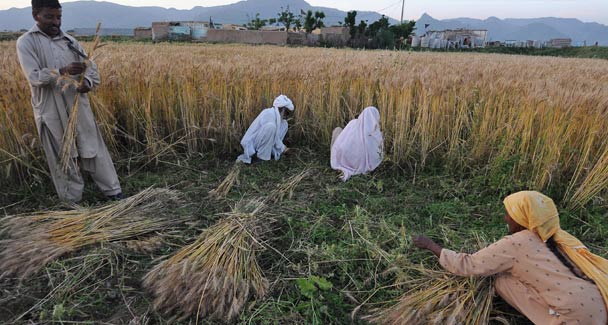
With the devastating floods that began in July, Mother Nature has left an indelible imprint on Pakistan—its geography, its people, its national psyche. But it has also created an opportunity to change the destiny of millions of flood victims who traumatically lost their loved ones, homes, and livelihoods in mere days. This natural disaster may have given the country an opportunity to tackle a recurring point of contention in Pakistan—feudalism.
Academics, journalists, and analysts have frequently pointed to feudalism as a reason for the huge inequalities in Pakistan, claiming that many landlords treat their tenants and peasants like slaves. According to a 2009 estimate by campaigner Anti-Slavery International, debt has forced more than 1.8 million people to work for their landlords with no pay. If there is truth to this today, in even a few cases, perhaps the floods have delivered Pakistan an opportunity to empower those trapped in decades of feudalism and poverty.
The question is how to capitalize on this potential opportunity. Land reforms in 1959, 1972, and 1977 failed to redistribute land more equitably and are not expected ever to be legitimately carried out by any government, due to political constraints. What is possible today, in a post-flood scenario, is a collaborative effort among the private sector, entrepreneurs, NGOs, and foreign donors to be creative about job creation, even if only on a small scale. If successful, at least some of these landless flood victims could be given an opportunity to rebuild their lives outside the feudal context.
Laboring for the Owners
As many flood victims return to their homes to figure out how to rehabilitate their lives, others have already declared they will never go back. They appear to feel the floods have given them an opportunity to break away from the hold of their landlords. They did not own the land they were tilling and had to give large portions of their produce to their landlords while never coming close to paying off their debts.
Recent media coverage has captured the anger of many flood victims, particularly in rural Sindh. Some residents of Dari, near Kandhkhot, for instance, reportedly said they were literally left on the side of the road and abandoned by their landlords when the floods began. Unable to find shelter, they took refuge under some trees for a few weeks before making their way to overpopulated relief camps. Others with health problems made their way to camps but were turned away for medical treatment because they were not registered and have yet to be contacted by their landlords. Those who had small plots of land fear they will never retrieve what they owned because all the paperwork has been washed away.
There have also been reports of some influential landlords having had floodwaters diverted to save their own lands and instead engulf the villages of the poor. Others have said food rations and other forms of aid given to these landlords have only been passed on to their relatives and voters, while some apparently have kept the aid in storage for their own use in the coming months. While this has been difficult to prove, the perception of such acts has likely added to the resentment of some tenants and peasants toward their landlords that could derail feudal relations in the long term. As flood relief efforts increasingly focus on rehabilitation, we have to consider what these flood victims will do now. If they are not in a position to return to work on the land of their feudal lords, how will they make a living?
Earning Money in Aid Projects
Beyond finding housing for these landless flood victims, there is a real need to focus on job-creation strategies. Some aid agencies, such as Oxfam and the UNDP, have already teamed up with local NGOs to offer cash-for-work programs. In the Charsada and Nowshera districts of Khyber Pakhtunkhwa province, for instance, 1,500 flood victims from relief camps are being paid to pick up and dispose of rubble from the streets and build drains and roads,
working five days per week and receiving 400 to 600 Pakistani rupees ($4.7 to $7) for six hours of labor in a UNDP-sponsored project.
So while they earn money, these flood victims are rebuilding their homes.
But these jobs are short-term and do not cater to those who feel they cannot return home to work for their landlords. It would thus be prudent to think about long-term employment strategies, such as bottom-up programs, specifically for this cadre of flood victims. Perhaps foreign aid and NGO workers could work together with a local microfinance bank to introduce a combination of vocational training and loans for these flood victims so they can create their own employment and gain self-sufficiency. Or maybe social entrepreneurs can ally with the private sector to consider training flood victims for rural outsourcing in a particular area. There should also be a psychological component to any rehabilitation efforts, not only to help the flood-afflicted cope with the ongoing trauma of the floods, but also to introduce them to the idea of economic independence through these job creation projects.
This is the time to be creative for those flood victims who are not in a position to go home and work for their landlords anymore. It would be worthwhile for a local university, such as Lahore University of Management Sciences or Karachi’s Institute of Business Administration, to organize a job-creation conference, drawing on the perspectives of local businessmen, entrepreneurs, academics, NGO workers, and the flood victims themselves. These participants could start by “adopting” one flood-afflicted community of landless tenants and peasants, and brainstorming creative strategies specifically for their long-term employment and self-sufficiency.
We have already witnessed how quickly Pakistanis all over the world and in the country have rallied together to raise money aggressively for flood relief in the past few months. As the floods recede and recovery effects have turned to rehabilitation, perhaps these individuals would now be willing to offer “patient capital” to invest in their own job-creation project targeting those flood victims who will no longer go back to their feudal setup. It may not turn a profit for investors immediately, but if this works, it could provide at least one landless tenant or peasant with economic freedom—for the first time in his life
Maha Hosain Azizis the senior teaching fellow in South Asian Politics at London’s School of Oriental & African Studies.
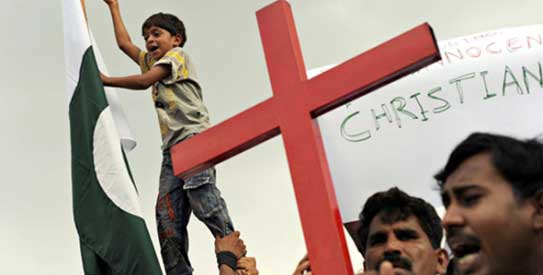
Pakistanis living in the United States have joined human rights groups in urging the government to release Aasia Bibi and reconsider the laws that discriminate against minorities.
“We condemn the abuse of the blasphemy law and request President Asif Ali Zardari not to accede to the threats made by certain religious groups and award imminent clemency to Aasia Bibi,” said the Pakistani-American Public Affairs Committee, an umbrella organisation representing a dozen groups. In a recent meeting of its executive board, the Christian League of Pakistan in America also “strongly condemned the victimisation of innocent people under the blasphemy law”, reminding the government that “the entire world is awaiting a sane decision in the Aasia Bibi case”.
The organisation noted that President Zardari, Prime Minister Yousuf Raza Gilani, Human rights activist Asma Jehanghir and Punjab Governor Salman Taseer have all concluded that Aasia Bibi is innocent.
These and other Pakistani leaders also have realised that the blasphemy law discriminates against religious minorities, said a statement issued by the Christian League in Philadelphia.
“This law encourages certain elements which institutionalise intolerance in the name of religion and spread social persecution and legal discrimination,” observed the Pakistani American Public Affairs Committee. “As it stands, this law with its ambiguity
harms Pakistan and its’ citizens.”
The group warned that such news emanating from Pakistan “hinders its stature in rest of the world, which in turn negatively impacts its economic stability and trade practices”. The committee referred to a study by the National Commission for Justice and Peace, which reported that a total of 964 people had been charged under these laws from 1986 to 2009. Out of them, 479 were Muslims, 340 Qadianis, 119 Christians, 14 Hindus, and 10 of other religions.
The report also noted that although none of those charged under the laws has been executed; 32 people charged with blasphemy have been extra-judicially killed.
PAPAC noted that last July, Lahore High Court Chief Justice Khawaja Sharif while overturning a blasphemy case, said that “the treatment meted out to the woman was an insult to humanity and the government; and that civil organisations should be vigilant enough to help such people”.
The group urged the larger society in Pakistan to educate the masses of the virtue of tolerance.
“Pakistanis must start a meaningful and focused dialogue to look at how the blasphemy laws are being abused and thus violating the basic premise of their creation – to protect minorities.”
PAPAC also asked Pakistan’s legislators to amend and remove ambiguity and legal discrimination from Section 295 and 298 of the Pakistan Penal Code which covers the blasphemy provisions.
Meanwhile, a leading US human rights group called on Pakistan’s government to abolish the blasphemy law and other discriminatory legislation.
The government should also take legal action against militant groups responsible for threats and violence against minorities and other vulnerable groups, the New York-based Human Rights Watch said.
Referring to Aasia Bibi’s conviction, the group noted that she had already “suffered greatly and should never have been put behind bars”.
Amnesty International, USA, also issued a statement on Friday, seeking Aasia Bibi’s release and revision of the law under which this mother of five was convicted this month.
“Critics say that Pakistan’s blasphemy laws are used to persecute Christian and other minorities,” the group observed.
A Christian woman sentenced to death for blasphemy has not yet been pardoned by Pakistan’s president, representatives for the president said Wednesday, a day after a provincial governor told CNN that the president is expected to pardon the woman.
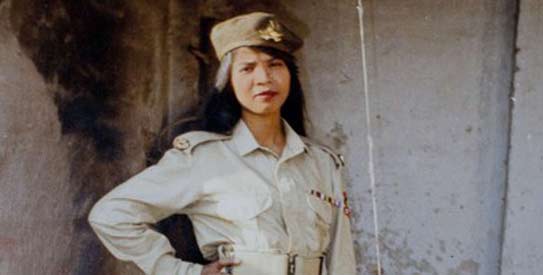
Asia Bibi, who has been jailed for nearly 15 months, was convicted in a Pakistani court earlier this month of breaking the country’s controversial blasphemy law by insulting Islam’s Prophet Mohammed, a crime punishable with death or life imprisonment, according to Pakistan’s penal code. She was sentenced to death.
Two representatives of President Asif Ali Zardari said Wednesday that no action has been taken, but the president will pardon if necessary.
“No decision has been taken,” spokesman Farhatullah Babar said. “Under the constitution, the president has to act under the advise of the prime minister. He will advise the president to take whatever action he proposes.”
On Tuesday, the governor of Punjab province said Zardari will pardon Bibi.
“What basically he’s made it clear is that she’s not going to be a victim of this law,” Gov. Salman Taseer told CNN International’s “Connect the World” program.
“I mean, he’s a liberal, modern-minded president and he’s not going to see a poor woman like this targeted and executed. … It’s just not going to happen,” Taseer said.
She has filed a petition for mercy with the high court, Taseer said.
“If the high court suspends the sentence and gives her bail then that is fine. We’ll see that, and if that doesn’t happen, then the president will pardon her,” he said.
Babar said jurists and legal experts have debated about whether the president has absolute power under the constitution to grant a pardon.
But he said Bibi is not in danger of being executed.
“Asia cannot be executed now,” Babar said. “Under the law, a death sentenced issued by a session court can not be carried out until it has been endorsed by the high court.”
Farahnaz Ispahani, a spokeswoman for the president, said Pakistan remains committed to protecting religious minorities.
“Pakistan is a nation of many faiths and religions, and all Pakistanis, no matter what their religion, are equal under the law,” Ispahani said in a written statement. “President Zardari has followed the case of Asia Bibi closely and will take appropriate action, if necessary, to issue a pardon or grant clemency to insure that Asia Bibi is neither incarcerated or harmed.”
A preliminary investigation showed Bibi was falsely accused, a government official said Monday.
“The president asked me to investigate her case, and my preliminary findings show she is innocent and the charges against her are baseless,” Pakistani Minister for Minority Affairs Shahbaz Bhatti told CNN.
Bhatti has said he will submit a final report Wednesday to Zardari’s office.
Prosecutors say Bibi, a 45-year-old field worker, insulted the Prophet Mohammed after she got into a heated argument with Muslim co-workers who refused to drink from a bucket of water she had touched.
In a brief news conference at the prison where she’s being held, Bibi said last weekend that the allegations against her are lies fabricated by a group of women who don’t like her.
“We had some differences and this was their way of taking revenge,” she said.
Bibi’s death sentence sparked outrage among human rights groups, who condemned Pakistan’s blasphemy law as a source of violence and persecution against religious minorities.
But Babar said the president’s party lacks the power in parliament to repeal Pakistan’s blasphemy laws.
“The manifesto of the Pakistan Peoples Party calls for the law to be repealed, but the party has not been able to repeal it because we lack the majority in parliament,” Babar said. “We don’t have the numbers to do it.”
A Pakistani court has sentenced to death a Christian mother of five for blasphemy, the first such conviction of a woman and sparking protests from rights groups Thursday.
Asia Bibi, 45, was sentenced Monday by a local court in Nankana district in Pakistan’s central province Punjab, about 75 kilometres (47 miles) west of the country’s cultural capital of Lahore.
Pakistan has yet to execute anyone for blasphemy, but the case spotlights the Muslim country’s controversial laws on the subject which rights activists say encourages Islamist extremism in a nation wracked by Taliban attacks.
Asia’s case dates back to June 2009 when she was asked to fetch water while out working in the fields. But a group of Muslim women labourers objected, saying that as a non-Muslim, she should not touch the water bowl.
A few days later the women went to a local cleric and alleged that Asia made made derogatory remarks about the Prophet Mohammed. The cleric went to local police, who opened an investigation.
She was arrested in Ittanwalai village and prosecuted under Section 295 C of the Pakistan Penal Code, which carries the death penalty.
Sentencing her to hang, Judge Naveed Iqbal “totally ruled out” any chance that Asia was falsely implicated and said there were “no mitigating circumstances”, according to a copy of the verdict seen by AFP.
Husband Ashiq Masih, 51, told AFP that he would appeal her death sentence, which needs to be upheld by the Lahore high court, the highest tribunal in Punjab, before it can be carried out.
“The case is baseless and we will file an appeal,” he said.
The couple have two sons and three daughters.
Rights activists and minority pressure groups said it was the first time that a woman had been sentenced to hang in Pakistan for blasphemy, although a Muslim couple were jailed for life last year.
Human rights activists want the controversial legislation repealed, saying it is exploited for personal enmity and encourages Islamist extremism. “The blasphemy law is absolutely obscene and it needs to be repealed in totality,” Human Rights Watch spokesman Ali Dayan Hasan told AFP.
“It is primarily used against vulnerable groups that face social and political discrimination. Heading that category are religious minorities and heterodox Muslim sects,” he said.
Asked about Asia’s case at a press conference in Islamabad on Thursday, visiting Italian Foreign Minister Franco Frattini said he was unaware of the details but would raise the matter with Pakistan’s minorities minister.
“The Italian position has always been against the death penalty,” he told reporters. He said he raised the problems faced by Christian minorities during his talks with his Pakistani counterpart Shah Mehmood Qureshi.
“I believe they should not misuse the law of blasphemy to discriminate against religious minorities and this is a point I share with my colleague — this is a key point for me.”
Around three percent of Pakistan’s population of 167 million is estimated to be non-Muslim. Last July, two Christian brothers accused of writing a blasphemous pamphlet critical of the Prophet Mohammed were shot dead outside a court in Punjab.
Pastor Rashid Emmanuel, 32, and his brother Sajjad, were killed as they left a court hearing in Faisalabad city, where hundreds of Muslim protesters had demanded they be sentenced to death.
Pakistanis for Peace Editor’s Note– Pakistan’s blasphemy laws are absolutely egregious and need to be repealed. Not only are minorities such as Christians and Hindus in Pakistan subjected to these outrageously unjust laws, but Muslim minorities such as the Ahmadis and Ismailis are also time and time again subjected to and singled out for unfair treatment under the guise of these BS laws. The white color in Pakistan’s flag is supposed to represent the minorities within this Islamic republic. Until and unless these blasphemy laws are repealed and Pakistan’s constitution is amended, the religious minorities within Pakistan will never get a fair shake, regardless of how much they are represented in the flag.
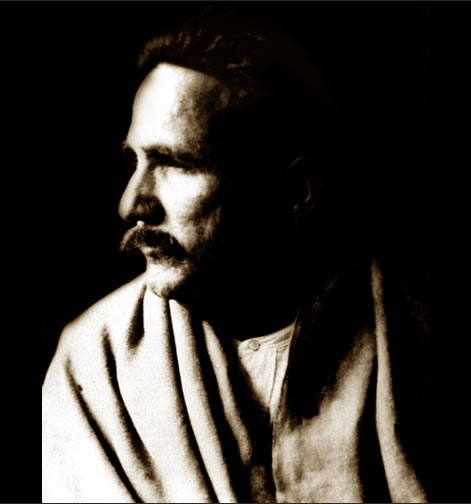
Nature gives birth to great philosophers and poets when the need arises. Natural calamities, wars, epidemics, storms and earthquakes etc causing human sufferings have always given birth to creative minds. Plato was born in 420 BC when his country had almost been ruined as a result of Peloponnesian war. Iqbal was born in 1877 AD when the inhabitants of India were suffering from miseries and deaths while struggling for the Independence of their country from British rule.
The people of Muslim community of India were the worst hit. They were being crushed ruthlessly. At that time Iqbal’s poetry played miraculous role. It awakened the people from slumbering hopelessness, made them stood on their own feet. They were united and then fought courageously for Independence with the result that they achieved a free homeland for them within a few years time.
Creative thinker
This means that despite being a creative thinker, Iqbal was addressing the situation at hand. The ideas he enunciated, though intrinsically creative in themselves and abiding in appeal beyond a particular time and place, were yet primarily meant to salvage the bleak Muslim situation in India and the world at large. This makes Iqbal, in a sense, oriented towards the Indian Muslim psyche and situation.
This framework makes his periodic forays into discussing and suggesting solutions to the problems of the Muslim world at large and his consuming concern with the ‘Reconstruction of Religious Thought in Islam’ (1930) – a logical extension of his role as a modern Muslim ideologue, attempting to analyze and, see Muslim India’s problems and predicament on a wider canvas and in a total context. After all, Iqbal regarded India, if only because of the Muslim numerical strength, as ‘the greatest Muslim country in the world’, to quote his own words. These tasks, both critical and onerous as they were, he fulfilled squarely.
Effective medium
His emotion-leaden and soul-lifting poetry was the medium Iqbal chose to bring his people a new awareness of the depths of degradation to which they had fallen, to diagnose their ailments, their predicament and the prime cause of their decline and to warn them of the dire consequences if they failed to mend themselves in good time. A more effective medium he could not have possibly chosen.
For one thing, poetry is the most powerful medium for touching the deepest emotions of people and for driving a message into their subconscious. For another, the Indian Muslims had been among the most poetry-oriented people in the wold, with a long tradition of readily taking to heart what was written in verse. Political orations may stir and audience into action, but their impact is bound to be restricted to a particular audience and dissipate with time and events. In contrast, a poetic message seeps through the ethos of a nation, working on its psyche all the while.
Political leaders
Hence Iqbal achieved through his poems what a thousand speeches could not. But for the silence mental preparation that had gone on for long decades, the people would not have responded to the call of political leaders – in this case, especially of Jinnah during the 1937-47 epochal decade. No wonder, the pandals of the League sessions from Lucknow (1937) onwards were plastered with Iqbal’s couplets, calling on Muslims to rise and take their destiny in their own. Iqbal was quoted oft and on to rouse Muslims to a new awareness of their destiny. All this had an electrifying effect on the audience since Iqbal, though generally complex and couched in an appropriate idiom, was, straightforward and yielded clear guidelines.
Besides being a poet of extraordinary merit, Iqbal was a thinker of a high order. Thus, while Syed Ahmed Khan, Maulana Mohammed Ali and Jinnah provided political leadership to Muslims, Iqbal took upon himself the task of setting the intellectual tone for Muslim thought and action. (Previously, this was done by Sir Syed’s, writing and the Aligarh school). In addressing himself to this task, Iqbal brought a revolution in Muslim thinking at various levels, he also made a significant contribution to keeping them stolidly anchored to their pristine ideology and historical legacy.
New consciousness
His role in awakening the Muslims to a new consciousness began in 1899 when he recited a poem at the annual session of the Anjuman-i-Islam, Lahore. His moving ‘Nala-i-Yatim’ was symbolic of the echoing cry of the faceless masses of the Indian Muslims, who had long felt themselves sidelined neglected.
What pained him most was the impact of nationalism on various Muslim countries, eroding the pan-Islamic concept, enfeebling the Muslim world and laying it open to European aggression and exploitation.
To the ailments the Muslim world was afflicted with, Iqbal found the solution in Islam and its message. In order to reach the innermost recesses of their consciousness, he invoked the past glory of Islam, telling Muslims of the accomplishments of their ancestors. In so doing, he tried to fight off the prevalent slough of despondency, raising drooping spirit of Muslims and replacing it with a sense of soaring confidence.
Message of hope
Next, he gave them a message of hope. He told them that they could still redeem themselves if they could only recapture their soul and regain their pristine moral and spiritual values.
He emphasized the imperative need to develop human qualities and the right type of character. He attributed their degeneration to their taking to a life of passivity and resignation for several generations. That debilitating trend could be reversed by opting for initiative and endeavour which, he believed, Islam stood for. To him, an active, struggling non-believer was preferable to a sleeping Muslim.
But if Muslims were to be beckoned to a new destiny, they must first be confirmed as Muslims and they must own up their pristine values. This was all he more necessary in the context of the rise of positivism and skepticism, which posed a serious challenge to the modern Muslim.
Modern Muslim
To Iqbal, the task before the modern Muslim is to re-think the whole system of Islam without completely breaking with the past. And this crucial task he undertook in a series of lectures since compiled as ‘The Reconstruction of Religious Thought in Islam’ (1930). In these he argued that Islam represented a philosophy of action, for faith without action was a life bereft of any significance. Seldom does a poet exert such profound influence on the course of history and in changing the destiny of a nation. But Iqbal did because his accomplishments extended far beyond the realm of mere imagination and into the sphere of objective realities, because in the final years of his eventful life he donned the mantle of an ideologue, besides being a national poet. And, to be sure, all of Iqbal’s efforts throughout the whole span of his active life were directed towards the regeneration of Muslims and the resurgence of Islam.
Human rights
The question, ‘do we need Iqbal today?’ The reply is a clear ‘Yes’. It is a need of the time, because the honour of humanity is at stake. The preachers of human rights are abusing humanity. Masses of men are being trampled ruthlessly under the heavy feet of the powerful. There is dearth of love in the world these days. Iqbal is a messenger of love. His message of love is universal… the humanity needs him.. we do need him without any doubt.
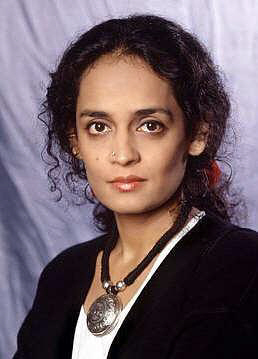
Noted Indian Hindu writer Arundhati Roy Tuesday said her speeches supporting the call for azadi were what “millions” in Kashmir say every day and were “fundamentally a call for justice”. Following is the full text of the statement that she has issued.
“I write this from Srinagar, Kashmir. This morning’s papers say that I may be arrested on charges of sedition for what I have said at recent public meetings on Kashmir. I said what millions of people here say every day. I said what I, as well as other commentators have written and said for years. Anybody who cares to read the transcripts of my speeches will see that they were fundamentally a call for justice. I spoke about justice for the people of Kashmir who live under one of the most brutal military occupations in the world; for Kashmiri Pandits who live out the tragedy of having been driven out of their homeland; for Dalit soldiers killed in Kashmir whose graves I visited on garbage heaps in their villags in Cuddalore; for the Indian poor who pay the price of this occupation in material ways and who are now learning to live in the terror of what is becoming a police state.
“Yesterday I traveled to Shopian, the apple-town in South Kashmir which had remained closed for 47 days last year in protest against the brutal rape and murder of Asiya and Nilofer, the young women whose bodies were found in a shallow stream near their homes and whose murderers have still not been brought to justice. I met Shakeel, who is Nilofer’s husband and Asiya’s brother. We sat in a circle of people crazed with grief and anger who had lost hope that they would ever get ‘insaf’—justice—from India, and now believed that Azadi—freedom— was their only hope. I met young stone pelters who had been shot through their eyes. I traveled with a young man who told me how three of his friends, teenagers in Anantnag district, had been taken into custody and had their finger-nails pulled out as punishment for throwing stones.
“In the papers some have accused me of giving ‘hate-speeches’, of wanting India to break up. On the contrary, what I say comes from love and pride. It comes from not wanting people to be killed, raped, imprisoned or have their finger-nails pulled out in order to force them to say they are Indians. It comes from wanting to live in a society that is striving to be a just one. Pity the nation that has to silence its writers for speaking their minds. Pity the nation that needs to jail those who ask for justice, while communal killers, mass murderers, corporate scamsters, looters, rapists, and those who prey on the poorest of the poor, roam free.”
Arundhati Roy is a novelist, essayist and human rights activist. She won a Booker Prize in 1997 for her novel, The God of Small Things. For more on her read http://en.wikipedia.org/wiki/Arundhati_Roy
Pakistanis for Peace Editor’s Note– Arundhati Roy’s courageous plea to her country is to be lauded. Although branded a traitor by many in India and within the government, she knows that she stands for peace, justice and fairness for all humanity. She wants self determination for all Kashmiris, be they Muslim, Hindu, Buddhist or Christian.
We at Pakistanis for Peace want nothing more than peace between India and Pakistan and therefore understand that Kashmir is the one and single most important issue between the two countries. Solve it and you do not have the threat of cross border attacks, friction, animosity, perpetual war and a tense border between two neighbors of nearly 2,000 miles. If we continue to ignore it then it will eventually be the crisis that starts a 4th and possibly nuclear war between the two neighbors. A war that neither the neighborhood nor the world can afford.
BEIJING – The casino-loving eldest son of North Korea’s Kim Jong Il — once tipped to succeed him before trying to sneak into Japan to go to Disneyland — says he opposes a hereditary transfer of power to his youngest half-brother.
It’s the first public sign of discord in the tightly choreographed succession process, though analysts said Kim Jong Nam spends so much time outside his native land that his opinion carries little weight.
The chubby 39-year-old Kim, the oldest of three brothers who were in the running to take over secretive North Korea, is the closest thing the country has to a playboy.
Unlike many of his countrymen back home who lack the resources and connections to travel overseas, Kim travels freely and spends much of his time in China or the country’s special autonomous region of Macau — the center of Asian gambling with its Las Vegas-style casinos.
He sports the family pot belly and favors newsboy caps and an unshaven face, while frequenting five-star hotels and expensive restaurants. In June, he was photographed in Macau wearing blue Ferragamo loafers.
Speaking in Korean, he told Japan’s TV Asahi, in an interview from Beijing aired late Monday and Tuesday, that he is “against third-generation succession,” but added, “I think there were internal factors. If there were internal factors, (we) should abide by them.”
“I have no regrets about it. I wasn’t interested in it and I don’t care,” Kim said, when asked whether he is OK with the succession plan.
Kim said he hopes his brother will do his best to bring abundance to the lives of North Koreans and that he stands ready to help from abroad, according to a dubbed Japanese-language version of his remarks.
Kim Jong Un, believed to be 26, appeared with his father at Pyongyang celebrations on Sunday marking the 65th anniversary of the ruling Workers’ Party, saluting troops marching past in a massive military parade and waving to the crowd. The appearance was less than two weeks after he was named to a top political post and promoted to four-star general.
Andrei Lankov, a Russian expert on North Korea at Seoul’s Kookmin University, said Kim Jong Nam’s remarks were “almost a challenge,” but noted he has little influence due to the considerable time he spends abroad and lacks military support.
“I don’t see them rallying to Kim Jong Nam,” he added, emphasizing that key generals who run the military far prefer Kim Jong Un, who they see as young, inexperienced and thus easy to control.
Kim Jong Il is known to have three sons — one from his second wife and two from his third. He favors his youngest, Jong Un, who looks and is said to act like his father, according to the leader’s former sushi chef. He studied at a Swiss school and learned to speak English, German and French, news reports have said.
In contrast, Kim often derided the middle son, Jong Chul, as “girlish,” the chef, who goes by the pen name Kenji Fujimoto, said in a 2003 memoir. Little is publicly known about the brother, except that he also studied in Switzerland and is a fan of U.S. professional basketball.
Jong Nam is widely believed to have fallen out of favor after embarrassing the government in 2001 by being caught trying to enter Japan on a fake passport, saying he wanted to visit Tokyo Disneyland.
Experts said Kim Jong Nam will most likely continue living abroad, with fewer reasons than ever to return to Pyongyang.
“In the future Kim Jong Nam will have little influence on the political situation in North Korea. It’s very unlikely he will go back. His force within the country is now almost nonexistent,” said Cai Jian, deputy director of the Center for Korean Studies in Shanghai’s Fudan University.
It is 5:50 in the morning, and dark shadows scurry through narrow alleys to the mosque, as the call to prayer echoes from a minaret in Kaifeng. This city in central China’s Henan province has an Islamic enclave, where Muslims have lived for more than 1,000 years.
In an alleyway called Wangjia hutong, women go to their own mosque, where Yao Baoxia leads prayers. For 14 years, Yao has been a female imam, or ahong as they are called here, a word derived from Persian.
As she leads the service, Yao stands alongside the other women, not in front of them as a male imam would. But she says her role is the same as a male imam. “The status is the same,” Yao says confidently. “Men and women are equal here, maybe because we are a socialist country.”
Yao Baoxia is a female ahong, or imam, at Wangjia Hutong Women’s Mosque in Kaifeng, in central China. She sits alongside believers during prayers, not in front of them like male imams. She believes male and female imams are equal in their role as teachers and leaders of prayers. Yao Baoxia is a female ahong, or imam, at Wangjia Hutong Women’s Mosque in Kaifeng, in central China. She sits alongside believers during prayers, not in front of them like male imams. She believes male and female imams are equal in their role as teachers and leaders of prayers.
China has an estimated 21 million Muslims, who have developed their own set of Islamic practices with Chinese characteristics. The biggest difference is the development of independent women’s mosques with female imams, something scholars who have researched the issue say is unique to China.
Yao studied to become an imam for four years, after being laid off from her job as a factory worker. First she studied under a female imam, then with a male imam alongside male students.
Her main role is as a teacher, she says. “When people come to pray, they don’t know how to chant the Quran, so my job is teaching people about Islam, helping them to study one line at a time and leading the prayers,” she says.
Mosques Began As Quranic Schools
The modest courtyard of Wangjia Hutong Women’s Mosque contains within it the entire history of China’s mosques for females. It’s the oldest surviving women’s mosque in China, with one gray plaque high up on a wall dating back to 1820.
Like other women’s mosques, it began as a Quranic school for girls. These sprang up in the late 17th century in central China, including Shanxi and Shandong provinces. They morphed into women’s mosques about 100 years ago, starting in Henan province. Remembering her own childhood, 83-year-old Tang Guiying says even then the women’s mosque was the only place a girl could receive education.
“I didn’t go to school when I was small,” she chuckles. “We were all too poor; none of us girls studied. But I came here to play and study. The old imam was very, very old — she was 80-something, and she had bound feet.”
Tang is sitting in the mosque’s washroom as she talks. This is where women conduct ritual ablutions before prayer. This space — and the mosque itself — doubles as a social center for these women, the heart of a community. In Kaifeng, there are 16 women’s mosques, one-third the number of mosques for males.
A Unique Chinese Tradition
Shui Jingjun, of the Henan Academy of Social Sciences and co-author of a book on the phenomenon, says that so far there are no women’s mosques in other countries. In most of the Muslim world, women pray behind a partition or in a separate room, but in the same mosque as men.
Shui points out that the women’s mosques in China are administered independently, by women for women, in addition to being legally separate entities in some cases. “After reform and opening up [in 1979], some female mosques registered independently, which shows the equality of male and female mosques,” she explains.
Controversy still rages in the Muslim world about whether women can be imams. In 2006, Morocco became the first country in the Arab world to officially sanction the training of female religious leaders.
China is the only country to have such a long history of female imams. However, there are things that, according to the customary practices of Chinese Muslims, female imams can’t do.
They can’t, for instance, lead funeral rituals or wash male corpses. Forty miles away in the provincial capital of Zhengzhou, white-sashed mourners wail as they process through the streets carrying the coffin from a mosque. No female imams are participating.
Opposition Still Exists To Women’s Roles
In central China, most Muslims support the female mosques, but there is some resistance closer to China’s border with Pakistan and Afghanistan, closer to the harder-line Wahhabi and Salafi influences.
“Historically in northwestern China, there were no female mosques,” says Shui, the researcher. “There was resistance because people thought that building female mosques was against the rules of religion. But in central China and most provinces, people think it’s a good innovation for Islam.”
In the past decade, some women’s mosques have been established in northwest China. The phenomenon appears to be spreading, helped politically by the Islamic Association of China, a state-controlled body that regulates Islam and issues licenses to practice to male and female imams alike.
This is part of the anomaly that is religion in China — the atheist Chinese authorities are endorsing a practice some Muslims find unacceptable. While there is broad support among Kaifeng’s Muslims for female mosques and imams, there is also some opposition.
“The education of Islamic women is a very important job,” says Guo Baoguang, of the Islamic Association of Kaifeng. But he admits that he has been criticized for organizing religious education forums for Muslim men and women to take part in together.
“There were some criticisms that women ought to be in the home, and ought not take part in social activities. I think these criticisms are too conservative, and don’t account of the importance of women’s education in Islam,” he says.
Guo believes that when it comes to female imams, China is leading the way.”Given the fast development of China’s economy, and as its political status rises, I think Chinese Islam will become more important in the Islamic world,” Guo says. “The developments Chinese Islam has made, like the role played by Chinese women, will be more accepted by Muslims elsewhere in the world.”
Greatest Challenge Is Economic
In the women’s mosques, most of the faithful are elderly. Young women with families often don’t have the time to worship, especially given the lengthy purification rituals several times a day.
Third-generation imam Sun Chengying, who has been practicing for 21 years, worries about the future.
“I haven’t had any students since 1996,” she says, shaking her head. “Women don’t want be imams anymore, because the salaries in the mosques are too low. No one is willing to do it.”
Female imams sometimes earn as little as $40 a month, one-third of what can be earned in other jobs. Younger women need to earn more to support their families. And so it appears the future of female imams in China is threatened — not by the state, not by resistance from inside Islam, but by the forces of market economics.
-Pakistanis for Peace Editor’s Note- Chinese Muslim female imams are unique to China but this practice of allowing female imams is one that should be encouraged throughout the Muslim world. Female imams as well as increased rights for women in Islam across the board will only help strengthen Muslim societies.
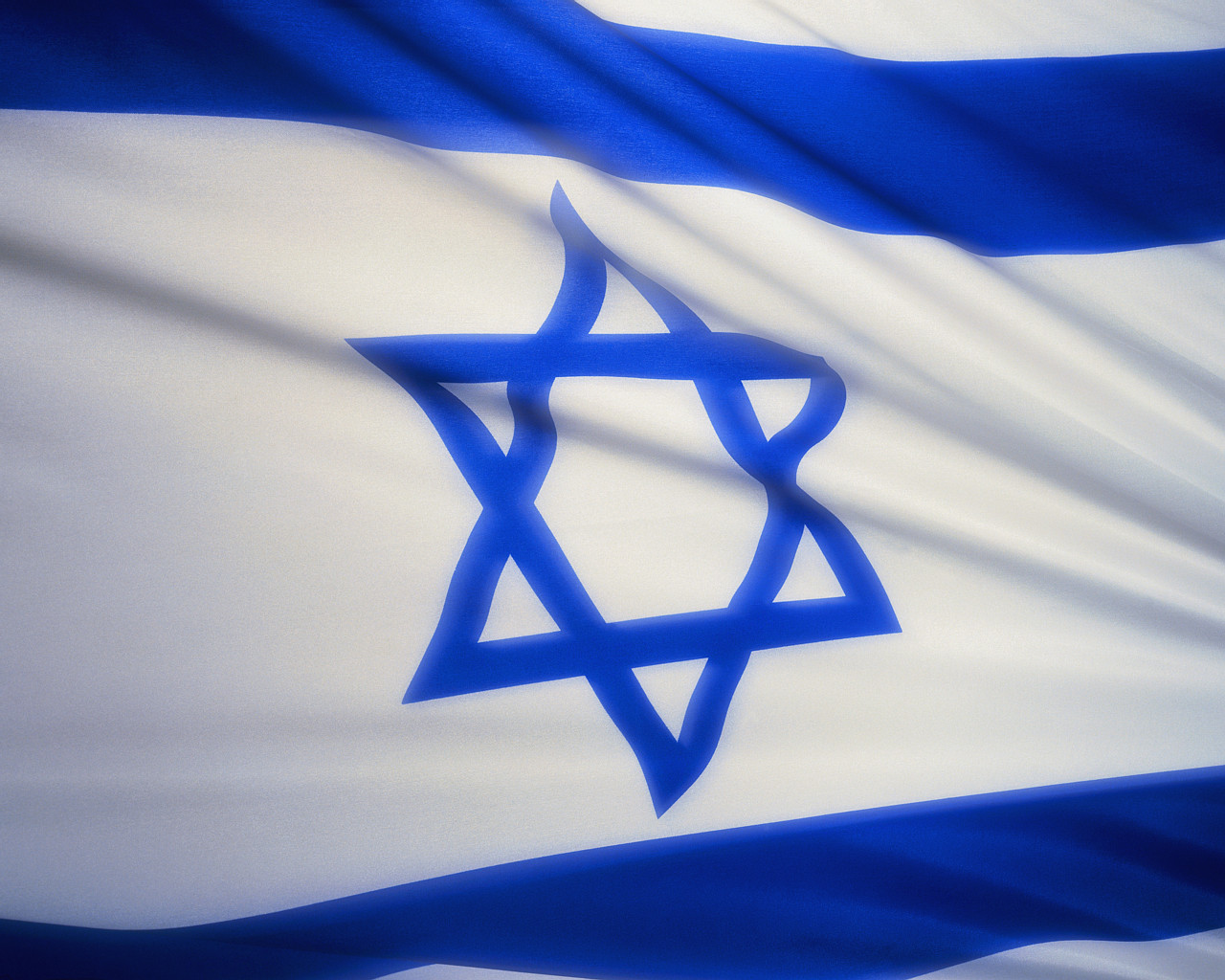
New York – President Obama delivered his speech to the United Nations General Assembly Thursday in New York and it focused largely on his desire to see the Middle East peace process proceed ahead despite all the difficulties.
Mr. Obama stated that he wanted it to succeed in accomplishing the peace that has eluded the Arabs and the Israelis for over 60 years. Realizing that there are many obstacles and hurdles ahead during tough negotiations for diplomats from both sides, he stated his concerns and his hopes for the road ahead.
“I hear those voices of skepticism, but I ask you to consider the alternative,” Obama said. If no peace agreement is reached, he added, “then the hard realities of demography will take hold. More blood will be shed. This Holy Land will remain a symbol of our differences, instead of our common humanity.”
“I refuse to accept that future,” he added. “And we all have a choice to make. Each of us must choose the path of peace. …We can say that this time will be different – that this time we will not let terror, or turbulence, or posturing, or petty politics stand in the way.”
“If we do, when we come back here next year, we can have an agreement that will lead to a new member of the United Nations – an independent, sovereign state of Palestine, living in peace with Israel,” Obama said to a loud applause by the delegates of all the countries at the United Nations.
In order for this to happen, the Arabs must first recognize Israel’s right to exist and the right of the Jewish people to claim specifically a part of the Holy Land as theirs. I know, it sounds so basic and a no- brainer. But surprisingly a large portion of the Arab world does not believe in Israel’s right to exist and specifically their right to exist in the southern Levant area which makes up the majority of the area for present day Israel. They want to ignore history and all the Biblical and historical evidence of Jewish settlement and claims to the land. They point to the migration of many Jews all over the world the last few hundred years as reason enough as to why they no longer can call Israel home.
Some Arabs demand that the Jewish homeland should be in Germany. After all, they claim, it is where so many of them were killed by Hitler and the main reason that precipitated the need to allow the Zionists of Europe and America, post World War II, to demand a home for the Jews. Why should the Palestinians pay for the crimes of the Europeans they argue?
Others have blamed the British and the Balfour Declaration when in 1917 the British Foreign Secretary, Arthur James Balfour, declared in a letter to Baron Rothschild, a leader of the British Jewish community for a need for a home for the Jews when he stated: “His Majesty’s government view with favor the establishment in Palestine of a national home for the Jewish people, and will use their best endeavors to facilitate the achievement of this object, it being clearly understood that nothing shall be done which may prejudice the civil and religious rights of existing non-Jewish communities in Palestine, or the rights and political status enjoyed by Jews in any other country.”
Quite simply, no other place makes any sense whatsoever. First of all, there is extensive mentioning of the land of Israel that is promised to the Jews in the Bible as well as the Hebrew texts, not to mention the Qur’an. All three identify geographic areas in present day Israel that has historically been identified as the homeland of the Jews. Jewish people do not even make up more than 1% of any country’s overall population other than in United States (2.2% of overall population), Canada (1.2% of population), France (1% of population) and Israel (75% of population). That means that for the rest of the world, each country’s Jewish population is not even one half of one percent of the overall population of that nation! Where else would the Arabs have them go? Certainly not Germany where many claim that they should be settled since that is where over 6 million of them were killed in the holocaust. The United States actually has more Jews in its boundaries than are currently residing in all of Israel. So they cannot very well say that they should go there as over half the population already lives here.
Most people do not realize that the Jewish population of the world is very small compared to Christianity or Islam. There are an estimated 15 million Jews around the world including in Israel. By comparison, there are over 2.1 billion Christians and nearly 1.5 billion Muslims. Nearly 105 countries of the world are majority Christian nations while there are perhaps at best 55 majority Muslim countries on the planet. Did you ever wonder how many majority Jewish countries of the world are there? There is just one. Israel.
This is one of the great religions of the world and also one of the oldest monotheistic beliefs aside from Zoroastrianism, and came at a time when polytheistic beliefs were more prevalent as a human concept of divinity. No doubt, both Christianity and Islam owe a great deal of their religious thoughts and laws to the early Hebrew laws and traditions. In fact, large parts of both the Bible and the Qur’an constitute the Old Testament, also known as the Torah, the Jewish holy book and the scriptures revealed to Moses.
Jewish contributions to humanity have been disproportionate and staggering when one realizes that as less than one half of one percent of the world’s populations, the Jews have made immense advances in nearly every field that has benefitted the whole world. We can go from Albert Einstein’s advances in physics to Jonas Salk’s polio vaccine, discuss Galileo’s contributions in astronomy to Freud’s understanding of the mind. We could illustrate how Baruch Spinoza’s rationalist ideas and philosophies laid the groundwork for The Enlightenment of the 18 century or marvel at the brilliant filmmaking of 21st century Jews like Steven Spielberg and Oliver Stone. The list of Jewish contributions and the value of their culture to man’s history cannot be ignored.
What also cannot be ignored is that historically these are a persecuted people. The troubles that they faced in ancient Egypt as illustrated in the Bible as well as the deaths and expulsions during the Spanish Inquisition are part of their sad history. They faced persecution at the hands of both Christians and Muslims during the Crusades and at the time of the Papal States as well as during Muslim rule when they were subjected to the jizya (a per capita tax imposed on free adult non-Muslim males). The worst crimes nonetheless happened in the 20th century leading up to World War II when millions were killed in the Holocaust in Germany by Hitler’s Nazism and by Stalinist Russia.
So as the Israelis and Palestinians, as well as the other Arab countries, sit down over the next couple of weeks to resolve once and for all the Middle East conflict, the Arab street and indeed the entire Muslim world, must come to a realization and acceptance of the fact that the state of Israel has a right to exist; and has a right to exist in this ancient land as much as the Palestinians, who also have the rights to parts of this holy soil that is so important to all three religions. No doubt, historically and Biblically, the Palestinians can make similar claims also. Except, in Israel’s case, there is no other nation for the Jews, whereas, there are 55 others for Muslims. It is only with this undeniable understanding that true and lasting peace will ever be achieved and it can clear the way for a two state solution that President Obama envisions and one that will allow the normalization of relations between Israel, the Arab and the entire Muslim world.
As perhaps the most famous Jew of all time, Jesus, once said, “Greet ye one another with a kiss of charity and may peace be with you.” Indeed, Shalom and Salaam equal peace and that can finally be achieved once there is mutual respect and acceptance of the right of the other to exist.
–Manzer Munir, a proud Pakistani American and peace activist, looks forward to a day when there will be peace between Israel and all the Muslim countries of the world, including Pakistan. He is the founder of Pakistanis for Peace and blogs atwww.PakistanisforPeace.comas well at other websites as a free lance journalist and writer.
Many Americans have suggested that more moderate Muslims should stand up to extremists, speak out for tolerance, and apologize for sins committed by their brethren.
Go to Columnist Page »That’s reasonable advice, and as a moderate myself, I’m going to take it. (Throat clearing.) I hereby apologize to Muslims for the wave of bigotry and simple nuttiness that has lately been directed at you. The venom on the airwaves, equating Muslims with terrorists, should embarrass us more than you. Muslims are one of the last minorities in the United States that it is still possible to demean openly, and I apologize for the slurs.
I’m inspired by another journalistic apology. The Portland Press Herald in Maine published an innocuous front-page article and photo a week ago about 3,000 local Muslims praying together to mark the end of Ramadan. Readers were upset, because publication coincided with the ninth anniversary of 9/11, and they deluged the paper with protests.
So the newspaper published a groveling front-page apology for being too respectful of Muslims. “We sincerely apologize,” wrote the editor and publisher, Richard Connor, and he added: “we erred by at least not offering balance to the story and its prominent position on the front page.” As a blog by James Poniewozik of Time paraphrased it: “Sorry for Portraying Muslims as Human.”
I called Mr. Connor, and he seems like a nice guy. Surely his front page isn’t reserved for stories about Bad Muslims, with articles about Good Muslims going inside. Must coverage of law-abiding Muslims be “balanced” by a discussion of Muslim terrorists?
Ah, balance — who can be against that? But should reporting of Pope Benedict’s trip to Britain be “balanced” by a discussion of Catholic terrorists in Ireland? And what about journalism itself?
I interrupt this discussion of peaceful journalism in Maine to provide some “balance.” Journalists can also be terrorists, murderers and rapists. For example, radio journalists in Rwanda promoted genocide.
I apologize to Muslims for another reason. This isn’t about them, but about us. I want to defend Muslims from intolerance, but I also want to defend America against extremists engineering a spasm of religious hatred.
Granted, the reason for the nastiness isn’t hard to understand. Extremist Muslims have led to fear and repugnance toward Islam as a whole. Threats by Muslim crazies just in the last few days forced a Seattle cartoonist, Molly Norris, to go into hiding after she drew a cartoon about Muhammad that went viral.
And then there’s 9/11. When I recently compared today’s prejudice toward Muslims to the historical bigotry toward Catholics, Mormons, Jews and Asian-Americans, many readers protested that it was a false parallel. As one, Carla, put it on my blog: “Catholics and Jews did not come here and kill thousands of people.”
That’s true, but Japanese did attack Pearl Harbor and in the end killed far more Americans than Al Qaeda ever did. Consumed by our fears, we lumped together anyone of Japanese ancestry and rounded them up in internment camps. The threat was real, but so were the hysteria and the overreaction.
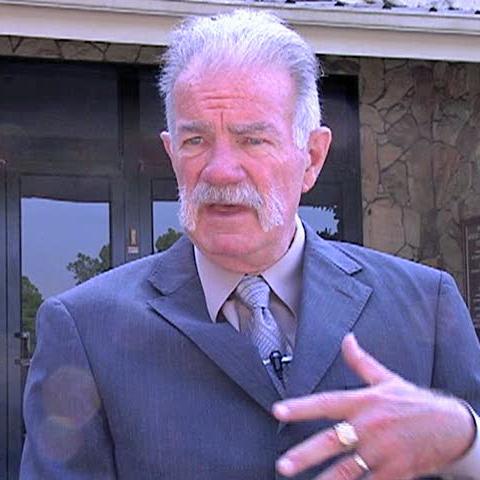
Radicals tend to empower radicals, creating a gulf of mutual misunderstanding and anger. Many Americans believe that Osama bin Laden is representative of Muslims, and many Afghans believe that the Rev. Terry Jones (who talked about burning Korans) is representative of Christians.
Many Americans honestly believe that Muslims are prone to violence, but humans are too complicated and diverse to lump into groups that we form invidious conclusions about. We’ve mostly learned that about blacks, Jews and other groups that suffered historic discrimination, but it’s still O.K. to make sweeping statements about “Muslims” as an undifferentiated mass.
In my travels, I’ve seen some of the worst of Islam: theocratic mullahs oppressing people in Iran; girls kept out of school in Afghanistan in the name of religion; girls subjected to genital mutilation in Africa in the name of Islam; warlords in Yemen and Sudan who wield AK-47s and claim to be doing God’s bidding.
But I’ve also seen the exact opposite: Muslim aid workers in Afghanistan who risk their lives to educate girls; a Pakistani imam who shelters rape victims; Muslim leaders who campaign against female genital mutilation and note that it is not really an Islamic practice; Pakistani Muslims who stand up for oppressed Christians and Hindus; and above all, the innumerable Muslim aid workers in Congo, Darfur, Bangladesh and so many other parts of the world who are inspired by the Koran to risk their lives to help others. Those Muslims have helped keep me alive, and they set a standard of compassion, peacefulness and altruism that we should all emulate.
I’m sickened when I hear such gentle souls lumped in with Qaeda terrorists, and when I hear the faith they hold sacred excoriated and mocked. To them and to others smeared, I apologize.
As Muslim Americans and millions around the world celebrate the end of Ramadan 2010 what will they pray for? What was the spiritual harvest of the month of fasting, prayer, deep reflection, and discipline? Given the growing hostility directed towards Muslims in the United States and the horrible deeds perpetrated by persons aligned to Islam on 9/11 and elsewhere in the world, I for my part, will be making two prayers.
The first is to urge Muslims to affirm their solidarity with all of humanity. The words of this prayer come from a tradition of the Prophet Muhammad. It reads:
Oh Allah, Lord (Rabb) of all things. I testify that You alone are the Lord of the world, Lord of all things… I testify that all servants of God are one family… Make me and my family truthful to you in every moment of life in this world and the next. Oh powerful and generous one, hear and respond to my prayers…
My second prayer is that God bless Islam with a religious leadership that has a modicum of Solomonic wisdom and tons of moral courage.
Why these two prayers? I think many Muslims have forgotten the message of humanism and solidarity with all creation that are the cornerstones of Islam. All servants of God are part of a single family, the Prophet Muhammad taught. So how can faiths be at war, if only to serve earthly gods? Many of our religious leaders have forgotten that our theologies, teachings, and practices were means to serve a transcendent Creator; not for idolatrous ends. Many of the most prominent Muslim religious and moral authorities the world over—clergy, intellectuals, scholars, politicians—have, through silence and inaction, invited a plague of craven violence on a number of Muslim societies. In a manner of speaking, in many places, the asylum is in charge of the mosque. Religious leaders are more interested in cowing to public adulation through demagoguery than in showing courage and exhorting people to piety and sanity.
Check if the sermon in the`Id al-Fitr (End of Fasting) sermon at your mosque hinted at the cowardly acts of al-Qaeda who killed thousands on September 11 and elsewhere. Or if deeds of the Somalian Shabab who killed dozens of Ugandans watching a soccer World Cup match in the suburbs of Kampala caused outrage. Has anyone been able to keep track of the death toll inflicted in Pakistan by Taliban suicide bombers, who most recently killed more than 60 people in Quetta because they were Shi’a? Did anyone even notice that a radical Muslim group in India chopped off the hand of a Catholic professor in the state of Kerala in July for apparently offending the image of the Prophet Muhammad in an exam questionnaire?
`Id is a day of celebration with family and friends. But it is unconscionable if Muslims do not think seriously and act in unison about the deep moral crises afflicting our communities here and abroad. To think critically is not to bow to the hate of the Islamophobes, it is a sign of strength and faith. Those who claim that there are no “moderate” Muslim voices denouncing acts of violence committed by Muslims are wrong, and yes, there are many good things happening in Muslim societies that do not make the headlines. Yet it is delusional to think that the evil masquerading as faith does not erode the belief and values each Muslim.
To Muslim Americans I say, next time you wonder why young men like the Times Square bomber Faisal Shahzad become entangled in conspiracies to commit acts of violence in this country and abroad please ask the following questions: What is the qualification of the imam at your mosque? Is he enriched by the best of American and Islamic culture, in tune with his environment, or is he preaching a theology no longer even appropriate for people in Iran, Egypt, or Pakistan? Does he teach the tradition creatively and help people think imaginatively? Or does he focus on impieties and promote the virtues of paraphernalia like the dress code and the mandatory length of facial hairs? If the imam is as wise as the religious leader in the Canadian sitcom Little Mosque on the Prairie, it will be a huge step up.
Mosque committees share their burden of responsibility too. Often they appoint preachers by applying the lowest and cheapest standard; theological diversity is frequently absent and enlightened thinking is considered too challenging and burdensome for them to contemplate. Will the smart Muslims in America and around the world stand up and be counted?
-Originally printed on Sep 9, 2010 for Religion Dispatches. Ebrahim Moosa is a professor of Islamic Studies at Duke University and an author of several books on Islam.
As a pastor from a small church in the U.S. state of Florida plans to burn Korans on September 11, Christian, Jewish and Muslim leaders stood side by side at the National Press Club in Washington Tuesday to show their solidarity against anti-Muslim acts of discrimination in the U.S.
A group of religious leaders from Christian and Jewish faiths joined together with the Islamic Society of North America for an emergency meeting to discuss a recent increase in anti-Muslim rhetoric and intolerance.
Baptist Pastor Gerald Durley spoke for the group. “As religious leaders in this great country, we have come together in our nation’s capital to denounce categorically the derision, misinformation and outright bigotry being directed against America’s Muslim community,” he said.
The group said people around the world have seen non-Muslim Americans show fear and contempt toward their Muslim neighbors–emotions that have generated from a national debate about a planned Islamic Center near the site of the September 11, 2001 terrorist attacks in New York City.
Catholic Cardinal Theadore McCarrick, Archbishop of Washington, said he wants the international community to understand that the U.S was built on the principle of valuing one another.
“I have a great fear that the story of bigotry, the story of hatred, the story of animosity to others is going to be taken by some to be the story of the real America and it’s not. This is not our country and we have to make sure our country is known around the world as a place where liberty of religion, where respect for your neighbor, where love for your neighbor, where these things are the most prominent in our society,” he said.
A Christian pastor in Florida says his church will burn Korans on Saturday, the ninth anniversary of the terrorist attacks on the United States. He says the act serves as a protest against violent Islamist extremists. The local government has denied the church a permit to conduct the public burning. But the pastor of the Dove World Outreach Center has vowed to go ahead with his plan.
Rabbi Nancy Fuchs-Kreimer says the interfaith group strongly condemns the desecration of a sacred text. “We stand by the principle that to attack any religion in the United States is to do violence to the religious freedom of all Americans,” she said. Farhana Khera, president of the organization Muslim Advocates, was part of a separate group of religious leaders that met with U.S. Attorney General Eric Holder at the Justice Department. She said Holder also condemned the plan. “To quote the attorney general, he called the Gainesville plans, burning of Korans, idiotic and dangerous,” Khera said.
The plan has sparked protests in Indonesia and Afghanistan. Demonstrators in the Afghan capital burned the American flag and shouted “Death to America.” Islamic Society of North America President Ingrid Mattson says American Muslims must show the world that the U.S. is a place where all religions can live together in peace. “American Muslims have a unique ability to be this bridge and to show the Muslims who do not live in this kind of freedom that an open, pluralistic atmosphere where there are diverse religions together can really be good for everyone,” she said.
Tensions have heightened in America as the anniversary of the attacks approaches. In 2001, Islamist extremists killed nearly 3,000 people by ramming passenger planes into the twin towers of the World Trade Center in New York and the Pentagon.
American Muslims are boosting security at mosques, seeking help from leaders of other faiths and airing ads underscoring their loyalty to the United States — all ahead of a 9/11 anniversary they fear could bring more trouble for their communities.
Their goal is not only to protect Muslims, but also to prevent them from retaliating if provoked. One Sept. 11 protest in New York against the proposed mosque near ground zero is expected to feature Geert Wilders, the aggressively anti-Islam Dutch lawmaker. The same day in Gainesville, Fla., the Dove World Outreach Center plans to burn copies of the Quran.
“We can expect crazy people out there will do things, but we don’t want to create a hysteria,” among Muslims, said Victor Begg of the Council of Islamic Organizations of Michigan. “Americans, in general, they support pluralism. It’s just that there’s a lot of misinformation out there that has created confusion.”
On Tuesday, the Islamic Society of North America will hold a summit of Christian, Muslim and Jewish leaders in Washington “to address the growing tide of fear and intolerance” in the furor over the planned New York mosque.
Islamic centers in many cities are intensifying surveillance and keeping closer contact with law enforcement. Adding to Muslim concern is a fluke of the lunar calendar: Eid al-Fitr, a joyous holiday marking the end of Ramadan, will fall around Sept. 11 this year. Muslim leaders fear festivities could be misinterpreted as celebrating the 2001 terror strikes.
“We’re telling everyone to keep their eyes open and report anything suspicious to authorities and call us,” said Ramzy Kilic of the Tampa, Fla., chapter of the Council on American Islamic Relations.
Other efforts around 9/11 aim to fight bigotry. Muslims will clean parks, feed the homeless, and give toys to sick children as part of Muslim Serve, a national campaign to demonstrate Islamic commitment to serving humanity.
Separately, groups are distributing ads to combat persistent suspicions about Islam. One spot, called “My Faith, My Voice,” features American Muslims saying, “I don’t want to take over this country.”
Sept. 11 anniversaries have always been challenging for U.S. Muslims, who have been under scrutiny since the attacks. This year, the commemoration follows a stunning summer in which opposition to a planned Islamic community center near the World Trade Center site escalated into a national uproar over Islam, extremism and religious freedom.
Islamic centers as far away as Tennessee and California faced protests and vandalism. In western New York, police said a group of teenagers recently yelled obscenities, set off a car alarm and fired a shotgun during two nights of drive-by harassment at a small-town mosque near Lake Ontario.
Usama Shami, board chairman for the Islamic Community Center of Phoenix, said a new mosque the congregation has been building for years drew little attention until recently, when some resistance emerged in the neighborhood and from some in city government. Recently, vandals broke into the new building, spilled paint on the floor and broke expensive windows.
Shami believes the ground zero dispute is partly to blame for the trouble, along with passions unleashed by Arizona’s strict new law that would require police to question people about their immigration status if there is reason to suspect they are in the country illegally.
“All of these issues came at the same time,” Shami said. “When things like that happen, I think they bring out the worst in some people.”
On Sept. 11 in Chicago, Zeenat Rahman, a 34-year-old native of the city, will visit a local nursing home with Muslim and non-Muslim friends to spend time with residents and help serve a meal.
“This is when people are going to look at our community, and when they do, what are they going to see?” said Rahman, a policy director for the Interfaith Youth Core, which promotes pluralism. “Sometimes, saying `Islam means peace,’ feels a little defensive and apologetic, whereas service is really core to our faith.”
Unity Productions Foundation, a Washington-area group that specializes in films about Islam and Muslim Americans, will hold an interfaith talk on Sept. 11 at the Washington Jewish Community Center.
Speakers include Monem Salam, the subject of a Unity Productions film titled, “On a Wing and a Prayer: An American Muslim Learns to Fly.” Unity recently launched groundzerodialogue.org, where visitors can view films and use them for community discussion about Islam in the U.S.
Salam, 38, of Bellingham, Wash., usually spends the Eid weekend with his wife and three young children, but said he persuaded his wife he had to participate in the event.
“I have to leave them and go across the country to answer questions about Islam,” said Salam, a portfolio manager who was 4 years old when his family left Pakistan for the U.S. “It’s unfortunate. It’s the time that we live in.”
This is an amazing Public Service Announcement by my friend Ani Zonneveld, founder of Muslims for Progressive Values, a peace activist and an award winning singer/songwriter as well as a great ambassador for moderate Muslims everywhere and a voice of reason within Islam during these difficult times. This video is a must watch for Muslims and non-Muslims alike for helping build bridges and understanding between moderate voices of Islam within and outside the Muslim world.




You must be logged in to post a comment.