Archive for the ‘ India ’ Category

Ahmed Rashid on Negotiating With the Taliban

By Amar C Bakshi for CNN Global Public Square
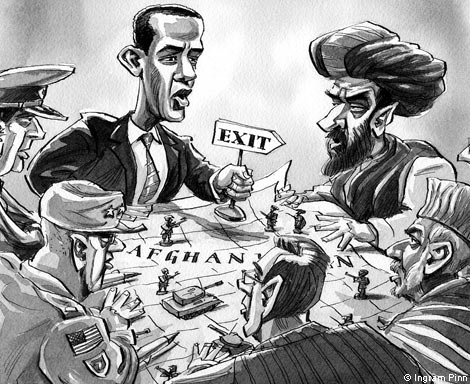
Intrepid Pakistani author and journalist Ahmed Rashid wrote an op-ed in the Financial Times describing the Obama administration’s secret decision to ramp up talks with the Afghan Taliban, trying to find a negotiated solution to a decade-long conflict. In a follow-up phone call, Rashid said that the Obama administration ought to announce these talks publicly and pressure Afghanistan’s neighbors to get behind them.

Amar C. Bakshi: What is the shift in U.S. policy toward Afghanistan?
Ahmed Rashid: For a very long time there was a lot of division about whether the U.S.would talk to the Taliban or not. Those divisions have now more or less ended. There is much greater determination to set in motion not just secret talks but everything around it that has to happen.

For example, the Taliban are very keen to open an office somewhere in one of the Gulf countries or maybe Turkey. There is nowU.S.support for that. There would presumably be international support for that also. These are the kinds of steps that are needed to get a political process going.

There is the acknowledgement that an over-dependence on a military strategy is not going to work in the long-term. Secondly, the economic and international situation is really not in favor of a long-term military strategy. What is needed now very much is a political strategy. Secretary of State Hillary Clinton herself has said this several times in the past few weeks.

What would a deal with the Taliban look like?
We are a very, very long way away from that. Many questions are being raised. For example, would there be a power-sharing with the present government? How would it take place? How would the constitution accommodate something like that? There are all sorts of social and legal issues about the constitution and Islamic law.

One of the key steps that the Americans have taken is that for the last two years or so, the Obama administration has been talking about preconditions – that the Taliban has to renounce Al Qaeda, accept the constitution and President Karzai. Now what we’re seeing is that talks are going on without any preconditions. These preconditions, or red lines, are something that everyone assumes will be accepted by the Taliban at the end of the talks rather than at the beginning. That is a very positive thing because I don’t think either side could go into their talks with their preconditions.

There are Taliban preconditions that seem to be watered down too because the Taliban were insisting that they wouldn’t talk until the American forces started to leave. But they seem to be willing to put that aside for the time being.

Why is this shift happening now?
The overall international and economic situation is very, very dire. First of all, the majority of European countries want to pull their troops out of Afghanistan as quickly as possible and that includes some of the leading nations like Britain, Germany and Canada.

Economically they can’t do it. They’re cutting their defense budgets. They are in recession.

And secondly the huge expenditure by the Americans themselves: Something like $108 billion is going to be spent on Afghanistan this year on the war effort. This is clearly not sustainable with all the economic crises that President Obama is facing right now.

What can the U.S. do to help make India and Pakistan see eye-to-eye on Afghanistan?
That is obviously a very crucial part of it. The big tussles going on over Afghanistan right now is between India and Pakistan in a battle for influence there. I think the U.S. needs to play a more upfront role – privately at least – to bring the two countries together if not on the other issues that divide them like Kashmir and larger issues, then certainly on Afghanistan. I think that’s very doable.

The more we get into this endgame and negotiations – the more the world realizes that the Americans are talking to the Taliban – I think it becomes very imperative for both the governments in India and Pakistan to accept the fact that they will have to work with each other if they want to be part of the ultimate equation.

Does Pakistan want to see stability in Afghanistan?
Pakistanis very keen to see stability in Afghanistan. An end to the war in Afghanistan could have a very dramatic effect on containing terrorism inside Pakistan too and containing the Pakistani Taliban. So I think Pakistanis very keen to see stability.

The question at the moment is: If the U.S. is going to take the lead – or the United Nations or whoever we are going to see in the months ahead take the lead on this – they have to bring together all the neighboring countries, of which Pakistan is probably by far the most important, but all of the neighboring countries have to agree to some king of on non-interference in Afghanistan.

Tensions between Iran and Saudi Arabia are being exacerbated by upheavals throughout the Middle East. How might Saudi Arabia and Iran see eye-to-eye in Afghanistan?
For the last 30 years, Saudi Arabia and Iran have been rivals in Afghanistan. For example, the Saudis backed the Taliban regime in the 90s. The Iranians very strongly opposed it.

The point right now is that with the tensions in the Gulf – the Saudis accusing the Iranians of destabilizing Bahrain and Saudi Arabia– they are both searching for allies.

The Saudis have recently been approaching the Afghans and the Pakistanis to ally with them against Iran. That is something that neither country can afford to do – neitherAfghanistannorPakistan. Secondly, you need the compliance of both Saudi Arabia and Iran for any eventual Afghan peace settlement.

So taking sides on this Iran-Saudi dispute in the region is not a good idea. It is not very helpful, especially if you want to bring the two countries into the peace agreement.

So a major diplomatic lift is needed?
Yes, absolutely. We’re talking about a huge diplomatic effort, which the former U.S. Af-Pak Special Envoy, Richard Holbrooke, had started. It needs a very big push by the United States, NATO and the European countries.

It needs some public diplomacy. Things need to be done and said in public so that people around the world can see that there is movement on this. As well, of course, a great deal of private diplomacy is needed such as dealing with this Iran-Saudi Arabia issue, bringing India and Pakistan together. A mixture of private and public diplomacy is needed.

We might see some of that public diplomacy in July when President Obama marks the withdrawal of some U.S. troops from Afghanistan.
The quicker the United States gets on with this, the better it is going to be. One of the big steps it should take in the public realm is admitting that the U.S. is having talks with the Taliban and set out a roadmap as to what the President would like to see. The quicker we see the administration doing this, the faster this process will move.
Fight Against Extremists Stretches Pakistan’s Military

By Jim Garamone for The American Forces Press Service

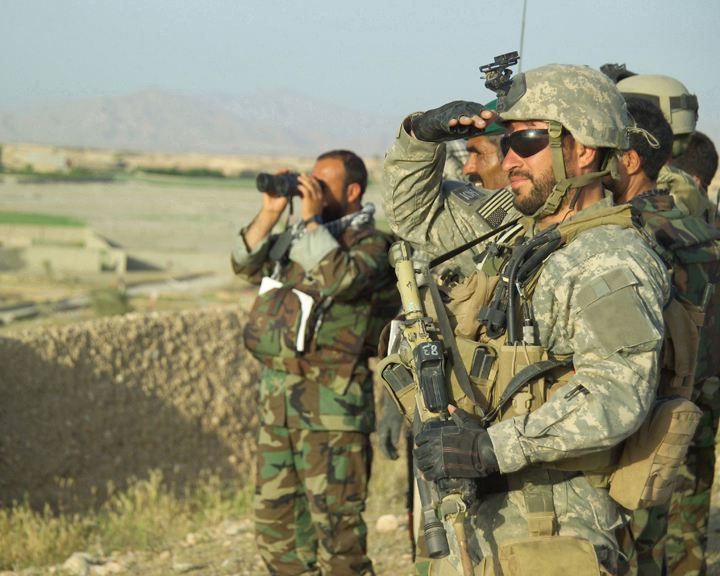
Just as two wars over the last decade have stretch the U.S. Army thin, the Pakistani military is stretched by its fight against extremist groups along the country’s western border, senior defense officials said here today.

At any given time, roughly one-third of the Pakistani army is deployed along the border region. Another third is along Pakistan’s border with India, and the rest is in garrison training and re-equipping.

“There are units along the border that have been in the fight for two years,” said a senior defense official, speaking on background. “That’s a long time. They are stretched.”

While many in the United States want the Pakistani military to do more against terrorist groups in North Waziristan, the truth is it may not be able to do much more, the official said. Pakistani troops – including members of the Frontier Corps – are in Khyber province, South Waziristan and other areas of Pakistan’s federally administered tribal areas. North Waziristan, specifically, is a safe haven for many senior Taliban leaders launching attacks in Afghanistan.

The military has launched a campaign against terrorists in Mohmond province – an area they cleared once, but where extremists have re-emerged. And that’s the problem, the official said: once the army clears an area – “and they do that quite well,” he said – the soldiers don’t have a force to turn it over to, and they’re forced to police the region. “The civil capacity does not exist in the region to hold the area,” the official said.

The civil capacity also does not exist to rebuild areas, and the army is stepping into the breach. “They are building schools and roads and water projects,” the official said. “This should be the job of civilian agencies, but they are not available.”

If Pakistan’s army could turn over the policing and development duties, troops would be available for further operations against the extremists, the official said, but they cannot.

The Pakistani military could deploy troops from the border with India to step up the fight against extremists, but Pakistan sees India – a nation with which it has fought four wars– as the foe. India and Pakistan have troops facing each other in Kashmir province. A solution to the dispute over Kashmir, which goes back to the founding of the two nations in 1947, could “unlock solutions” for Pakistan, Navy Adm. Mike Mullen, chairman of the Joint Chiefs of Staff, said in an interview with Pakistani reporters.

It was a major move to deploy the Pakistani forces from the Indian border in 2008, and U.S. officials do not expect that to happen again.

Meanwhile, Pakistani officials are worried about the spread of radicalism in the nation. While most incidents still are centered on the western border, many incidents have occurred in Balochistan, Sindh and even the Pakistani heartland of Punjab. “They even use the term Punjabi Taliban,” the official said. “And it concerns them.”

The United States is set to provide roughly $3 billion in aid to the Pakistani military in fiscal 2012, the defense official noted.

The “Indo-Pak Express” Overthrows No. 2 Seeds to Reach Semis in Monte Carlo

By Erin Frauenhofer for 10SBalls.com

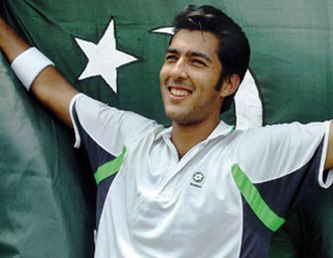
The India/Pakistan pairing of Rohan Bopanna and Aisam-ul-Haq Qureshi made waves at the Monte Carlo Masters with a quarterfinal upset over No. 2 seeds Daniel Nestor of Canada and Max Mirnyi of Belarus. With a 6-1, 7-5 victory on Friday, the sixth-seeded duo advanced to Saturday’s semifinals, where the pair will play Argentina’s Juan Ignacio Chela and Brazil’s Bruno Soares.

Bopanna and Qureshi took command in the first set, breaking Nestor’s serve and holding steady on their own serve to take a 4-1 lead. The “Indo-Pak Express,” as the pair has been dubbed, remained in control for the rest of the set, breaking Mirnyi to give Qureshi the opportunity to serve for the set. Bopanna and Qureshi won the game to wrap up the first set handily, in only 21 minutes.

Nestor and Mirnyi displayed a stronger performance in the second set, after suffering an early break to fall behind 1-2. They rallied back to break Bopanna and Qureshi in the next game, and both pairs held serve for the next four games, until Nestor and Mirnyi were broken once again.

At 5-4, Bopanna and Qureshi had their first chance to serve for the match, but Nestor and Mirnyi battled back to even the score with a break. Bopanna and Qureshi retaliated in the next game with another break to take a 6-5 lead.

Serving for the match for the second time, with victory nearly in sight, Bopanna and Qureshi dropped the first two points of the game but recovered to close out the match. Bopanna and Qureshi broke their opponents a total of five times during the match and lost their serve twice.

Friday’s win was the second victory of the tournament for Bopanna and Qureshi. After receiving a bye in the first round, Bopanna and Qureshi notched a 7-6 (4), 6-3 win over the American/Netherlands Antilles duo of Eric Butorac and Jean-Julien Rojer to reach the quarterfinals.

Chela and Soares have recorded three wins in the tournament thus far. The duo took a straight-set win in the quarterfinals, defeating Ukranian Sergiy Stakhovsky and Russian Mikhail Youzhny, 6-4, 6-3. In the previous round, the pair upset No. 8 seeds Robert Lindstedt of Sweden and Horia Tecau of Russia by a score of 6-2, 6-4. Earlier, Chela and Soares had prevailed in a three-set first-round match, outlasting Michal Mertinak of Slovakia and Dick Norman of Belgium, 6-2, 3-6, 10-7.

Monte Carlo is the first clay-court Masters tournament for the Indo-Pak Express, and the duo has high hopes for the French Open. Bopanna and Qureshi’s strong showings this year and efforts toward peace between their countries have earned them an enthusiastic and steadily growing following.

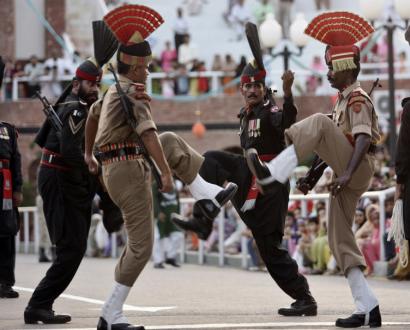
Bopanna and Qureshi have made recent headlines for their request to play an exhibition match on the India-Pakistan border in an attempt to foster reconciliation efforts between the two nations. As part of a “Stop War, Start Tennis” campaign, the duo plans to string a net across the Wagah border crossing and switch sides during the match.

Religious Harmony: Thousands of Indian Sikhs Arrive for Baisakhi

As Reported By The Express Tribune

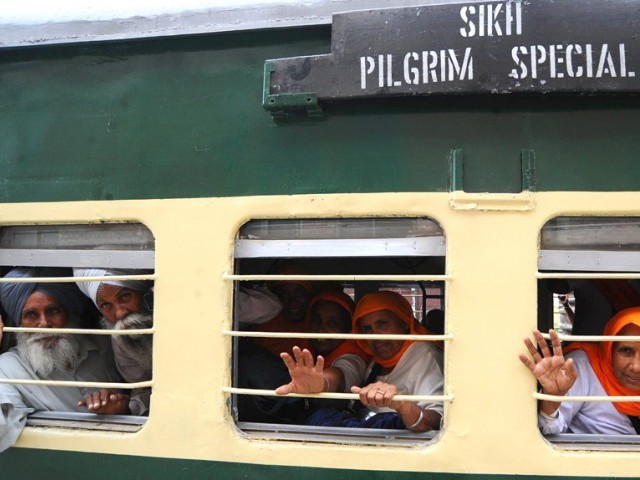
Over 2,000 Sikh yatrees from India arrived at the Wagah railway station on Monday to attend the 312th Baisakhi festival.
The pilgrims, who arrived via special trains, will be taken to the recently-renovated

gurudwara at Punja Sahib in Hassan Abdal where the festival begins today (Tuesday). As many as 13,000 Sikh men and women, from Pakistan and India, are expected to participate in the festival, which marks the commencement of the Sikh new year.

On April 14, the pilgrims will go to Nankana Sahib, the birthplace of Guru Nanak, and return to Dera Sahib, Lahore, on April 17. They will also visit Dera Rohri Sahib, Aimanabad, and Kartarpur in Narowal, before they return to India on April 20.

The Evacuee Trust Property Board (ETPB) has made special arrangements to provide free transport, accommodation and food to the pilgrims during their 10-day stay. Stalls of immigration, customs and a medical camp have been set up at the railway station.

India Continues to Dominate Pakistan’s Strategic Thinking: US

As Reoported By The Times of India

Pakistan’s efforts to launch a comprehensive fight against terrorism are greatly hampered by its perceived threat perception against India, US President Barack Obama has said in a new report to Congress.

“As India continues to dominate their strategic threat perception, large elements of Pakistan’s military remain committed to maintaining a ratio of Pakistani to Indian forces along the eastern border,” Obama said in the third-quarterly report to the Congress on Afghanistan and Pakistan sent yesterday.

“This deprives the Pakistani COIN (counter-insurgency) fight of sufficient forces to achieve its ‘clear’ objectives and support the ‘hold’ efforts and causing available Army forces to be bogged down with ‘hold’ activities because there are insufficient trained civilian law enforcement personnel to assume that responsibility,” Obama said in his 38-page unclassified (rpt) unclassified version of the report.

Due to flood in Pakistan last year the offensive military operations Pakistan had envisioned for KP (Khaibar Pakhtoonwah) and the Federally Administered Tribal Areas (FATA) in the second half of 2010 were overtaken by events, he said.

“Militants were impacted by the floods as well, so we did not observe significant offensive actions on their side, but as Pakistani forces ceased offensive operations, extremists extended their control to areas without sufficient Pakistani central government-provided security and governance,” he wrote.

Between October 1 and December 31, 2010, Obama said Pakistani security forces remained largely static, generally focusing on maintaining the security of previously cleared areas in the FATA and KP and continuing to support flood relief operations.

There were small but notable security operations in November and December in Orakzai Agency and Dir District, but no major operations.

National attention during the reporting period focused on the need for continued flood relief and the start of early recovery efforts, he said.

“The military served as a force of stability during the monsoons, ensuring that Pakistani and international emergency resources were available for rescue and relief operations. The Pakistan Army, Air Force, and Navy committed large numbers of personnel and resources to the flood relief operations throughout October and November,” he said.

The civilian government’s response suffered from a lack of coordination and reflected broader shortcomings in the government’s ability to execute the civilian “hold” and “build” phases of COIN.

The last quarter of 2010 saw no progress on effectively executing the COIN cycle in KP and the FATA.

India’s World Cup Cricket Victory: The Measure of a Nation

By Gethin Chamberlain for The Guardian

It is 3pm in a small British bar in the tourist state of Goa about 550km south of Bombay – where the country’s cricketers are harrying Sri Lanka’s batsmen in the early overs of the World Cup final.

It is 28 years since India last won this most cherished of titles in a nation so crazy about the game. There are fewer than nine hours to go until it does so again. But we don’t know that yet.

Mohinder Amarnath, the man of the match in the 1983 World Cup, is certain, however, that the moment has arrived to repeat his team’s success. Every Indian can realise their dreams through the 11 men on the field today, he says.

He need not have worried. Corrin, the eponymous owner of the Goan bar, is reaching for a brush, and dipping it into the pot of orange acrylic paint on the table in front of her. She holds the arm of the little Indian girl in front of her, draws the first rectangle of the national flag, hands the brush to Sonny, the barman, and watches him draw the white and green stripes. The girl, the daughter of the beautician who runs the shop upstairs, beams, delighted, and skips away to show off her affirmation of support for the home team.

In the street outside, a truck thunders by, horn blaring, Indian flags fluttering in from the cab. The picture is repeated across the country; millions are glued to their televisions or radios, donning their replica shirts, daubing themselves in the national colours. India is partying; each successful delivery from its bowlers greeted by a round of beating drums. The country that has made cricket its national game is certain that this year, finally, it will capture the ultimate prize, the World Cup.

India is certain that this is no more than it is due. It has already celebrated what many in the country regard as the real final, victory over its most reviled opponent, the notoriously unpredictable – unless you happen to be a friendly bookmaker – Pakistan team, which on Wednesday managed to throw away a magnificent bowling performance to lose ignominiously.

And India was desperate for this victory; the humiliation of the Commonwealth Games corruption scandal was still fresh; the country’s recent diplomatic successes – not least towards a permanent seat on the UN Security Council – has been overshadowed by fresh concerns about its aspiration to be regarded as a first world nation.

This is a nation demanding international approval: buoyed by the news that projections now show it will overtake China as the world’s most populous nation by 2030, there is a sense that its time has come.

As Saturday dawned, prayers were said, puja [offerings to the gods] were made, anything to give the Indian team an edge. Across the country, people painted themselves in the blue of the national team strip or in the orange, white and green of the flag, and prepared to party.

Bars and hotels hiked prices and charged admission to the more rarefied environments. In many places, TV screens were set up and even when the big screen was not an option, the nation gathered anywhere that a television was on, peering over each other’s shoulders to catch a glimpse of the match.

In Corrins’, even Sonny was applauding as Sri Lanka upped the ante in their final overs, smashing the ball hither and thither. Then a nation of – according to the new census figures – 1.2 billion fell silent as top batsman Sehwag fell to the second ball of the Indian innings.

Yet important as the game was, some felt that there was a sense of anticlimax after the Pakistan game. “The excitement among people is lacking,” Manoj Kumar, a hotel manager, told the Times of India.

Not so among the Sri Lankans, who had sidled into the final without the fireworks of the Indian progress. Captain Kumar Sangakkara pulled no punches when he explained what it meant to a country even more desperate for international approval after the end of three decades of bloody civil war: “It means everything. We have come through a very tough period. A lot of people have laid down lives for our country. In this new future, hopefully we can take home the World Cup, and that will be even more occasion for celebration.”

Gautam Gambhir, the Indian batsman who stabilised the nation’s innings after the loss of influential opener Sehwag, was no less compelling when he told a news channel that India had to win to honour the dead of the 2008 terrorist attacks in Mumbai: “For me it will be dedicated to the people who lost their lives in the 26/11 massacre.”

For India, the desire to be taken seriously by other nations in sport is perhaps more important than diplomatic point-scoring. Like its neighbour China, it has been unable to translate a mass of bodies into international sporting success. In terms of international trade, it has come on in leaps and bounds, yet still it is unable to project that power into other fields.

Such desperation for success was reflected in the way many in the country fell back on superstition in their desire to ensure success. One fan, Ritangshu Bhattacharya, from Delhi, assured journalists that he would be attempting to tip the odds in India’s favour by defying nature: “I won’t pee in the entire match… I feel whenever I go to the loo, a wicket falls or India drops a catch.”

Even his stoicism was outdone by one politician from the state of Madhya Pradesh, who stood from 10am to 10pm during the India-Pakistan match.

In Corrins’, there is no doubt about who should have won: “You have to support the team, don’t you?,” she said. “We live here, we have to support the local team, however it goes.”

It is 10.45pm, and MS Dhoni, the Indian captain, is hammering the ball to the boundary again. Six to win, two overs. There are fireworks going off everywhere, drowning out the commentary. India knows it has won. It is the Pakistan game all over again: victory from defeat, India defiant.

Six runs, and he smacks it over the boundary. The fireworks explode. In the cities, there is madness; in the villages, too, people are hugging and screaming. The firecrackers are exploding, the night a blur of colour. India wins.

India, Pakistan back to bickering after Mohali bonhomie

As Reported by IBN Live

India and Pakistan had a brief bout of acrimony with both complaining that a staffer each posted at their diplomatic missions in Islamabad and New Delhi respectively were detained by the host country and later let off.

While Pakistan today claimed that a driver of its mission in New Delhi was “arrested” for unspecified reasons on Wednesday, the Ministry of External Affairs took up the matter of a ‘missing’ Indian High Commission official in Islamabad. “A driver from the High Commission was arrested. (He) has been released. We have protested,” Pakistan Foreign Office spokesperson Tehmina Janjua told PTI in Islamabad, without giving details.

However, sources in New Delhi said that on Wednesday evening a Pakistani High Commission driver was seen near the Chandigarh cantonment area and when confronted, he tried to escape. “In the process, he sustained some bruises/injury on his knee and back. He was questioned and thereafter released.Before being released, a medical check-up was conducted which showed him in good health,” sources told PTI.

Just hours after the incident, an official in Indian High Commission went ‘missing’ in Islamabad, sources said, adding there was no immediate official confirmation on his whereabouts from the Pakistan side. However, the media reported detention of the Indian official, prompting Foreign Secretary Nirupama Rao to take up the matter with her Pakistani counterpart Salman Bashir. “Apart from Indian High Commission raising the issue with Pakistan Foreign Ministry in Islamabad, the Ministry of External Affairs in New Delhi took up the issue with Pakistan High Commission seeking the safety, security and well-being of the Indian official,” sources said.

The official was later handed over to the Indian High Commission in Islamabad, sources said. Though the sources did not divulge the name of the Indian official, some reports identified him as Anand Sharma, working in the consular section of the High Commission.

The incident involving the Pakistani driver occurred at a time when the Prime Ministers of India and Pakistan were in Mohali, holding “extremely positive” conversation on the sidelines of the pulsating cricket World Cup semi-final between the two countries. The incident of the Indian official was being seen as a tit-for-tat to the Chandigarh incident.

Tendulkar leads India past Pakistan, to World Cup final

As Reported by The Japan Times

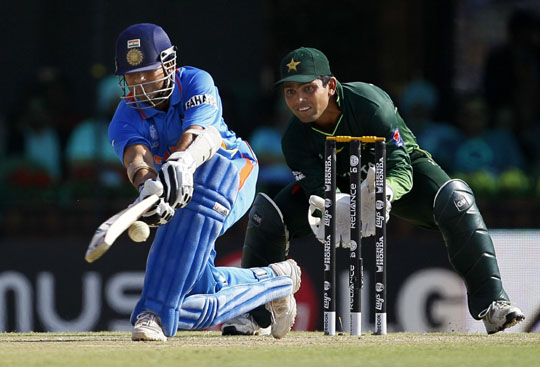
A lucky 85 from Sachin Tendulkar was followed by a disciplined bowling effort as India beat Pakistan by 29 runs in a high-stakes semifinal Wednesday to progress to the World Cup final against Sri Lanka.

Pakistan was dismissed for 231 in the last over chasing 261, sparking wild celebrations among the 28,000 people inside the Punjab Cricket Association Stadium and across the nation of more than 1 billion people.

Pakistan had done well earlier to peg India back to 260-9 after Virender Sehwag’s flying start, with left-arm pace bowler Wahab Riaz taking a career-best 5-46.

The victory continued a streak for India, which has beaten Pakistan in all five World Cup head-to-heads dating back to 1992.

The game was touted as a duel between India’s batting lineup and Pakistan’s bowling attack, but Pakistan’s shoddy fielding was eventually the difference between the two sides.

Tendulkar was let off four times, giving him the opportunity to knit together a challenging total for India and the bowlers then ensured a third World Cup final appearance for the 1983 champion.

“Going back to Mumbai, especially for this event, is a wonderful occasion,” Tendulkar said of playing a World Cup final on his home ground. “All I want to say is, we want to be calm, focus on our job and get the job done.”

India piled the pressure on a Pakistan batting lineup which failed to produce a single century in the tournament.

Pakistan’s early promise was slowed down in the middle overs as Yuvraj made early inroads and the bowlers slowly took control, marshaled well by captain Mahendra Singh Dhoni. All five Indian bowlers finished with two wickets each.

The only time Pakistan looked capable of the chase was when openers Kamran Akmal and Mohammad Hafeez were at the crease.

Kamran Akmal slashed a ball from Zaheer Khan straight to Yuvraj at point after making 19, while Hafeez went for an unnecessary scoop off Munaf Patel and was caught behind for 43.

Yuvraj then dismissed Asad Shafiq and Younis Khan and Pakistan was reduced to 106-4 by the 26th over.

Umar Akmal added some interest with a 24-ball 29 and Misbah-ul-Haq made a late charge of 56, but with the ball not coming on to the bat too well later in the day, it was always going to be difficult for them.

“I want to say sorry to my nation. We tried our level best,” Pakistan skipper Shahid Afridi said. “I want to congratulate the Indian cricket and all of the Indian nation for this great victory. We wish them well in the final.”

In the first innings, Riaz exposed India’s traditional weakness against left-arm seamers, striking at crucial junctures. He accounted for a dangerous looking Sehwag (38) and an in-form Yuvraj for a first-ball duck, as the famed Indian batting struggled against his swing.

Pakistan also made Tendulkar wait for his 100th international century despite dropping the world’s best batsman four times. Tendulkar also had an lbw decision overturned on referral and survived a close stumping appeal in what has to be one of his luckiest innings ever.

Tendulkar faced 115 balls and hit 11 fours even as Riaz pegged back the Indian middle order with the dismissals of Virat Kohli (nine) and Yuvraj off successive deliveries.

Time For World, ICC To Realise Significance of Pak-India Cricket

By Ramiz Raja for Dawn

The stakes are massive, the pressure unbearable and Mohali is burning with Pak-India fever. As if the contest needed more spice, we now have the small matter of two prime ministers catching up with each other at the ground, looking to de freeze the bilateral dialogue over cricket diplomacy.

The world is seeing the power of India-Pakistan cricket. All those people in positions, who were cold and indifferent towards it, are now queueing up to use the occasion to cash in. The governments, the media and the ICC have been given enough evidence in the past also of the unfathomable strength of Indo-Pak match-up, to know that uncoupling the two can mean a turbulent world and a colorless cricket calendar. Yet, all of them allowed the most passionate cricket duel to get stuck by petty politics.

The game at Mohali can have significant repercussions for the players. A loss will be remembered like a tsunami aftermath. On the other hand, a win can, like a wedding video, linger on the minds for eternity. A performance against India is never forgotten and that’s such a strong point to motivate the players and deflect pressure. This game is all about nerves and who jangles them first. The greater the wait the higher the anxiety and it’s been a long break for both teams.

Listening to cricket pundits on channels, calling home to impress the folks that all is under control and filling the fans with high hopes must be taking a toll on the system. The players would be desperate to go out in the middle to settle the racket in the mind and settle the issue on the field.

People fear the Indian crowd and how their pressure will play up on the players. From playing in India I know that the one sided pro India crowd can in fact give you a high because you are fighting them against the odds, and draw from experience the moments when you have beaten them.

It’s such a great feeling when you box them into dead silence, stroke after stroke! I am sure most of our players have sampled that experience and will be motivated to repeat it for their fans.

Captains, at times, worry in normal situations about lack of effort and skill from the team. Afridi will not have any such issues at Mohali. The game gets raised by the players who tend to play above themselves against India. The captain has to remain cool and, in any eventuality, remain dignified. At the end of the day it’s only a game of cricket.

We may or may not win this but our team has certainly won the hearts of the people. Whether they go to Mumbai or Karachi, we need to give them a heroes welcome for they have bonded us together as one!

— The writer is a former Pakistan captain.

How Can India Beat Pakistan?

By Will Davies for The Wall Street Journal

It’s the million dollar question that a billion people are asking: How can India beat Pakistan? Setting aside the obvious answers such as score more runs and get more wickets, there are some key areas where India can gain an advantage over its fiercest rival.

Indian and Pakistani cricket fans with a replica of the Cricket World Cup trophy. Unsettle Shahid Afridi – Pakistan’s captain has been an inspirational presence at this World Cup. He is the tournament’s leading wicket taker, with 21 scalps already to his name, comfortably ahead of the second-top bowler, India’s Zaheer Khan on 17. Afridi oozes charisma but he is prone to tantrums – it’s not uncommon seeing him shouting at teammates when things go wrong in the field, as is all too often the case with Pakistan – so India should try to frustrate him. Afridi is the nerve center of the Pakistan team, and if he is exasperated then negativity will spread to the other players.

Nullify Umar Gul – Afridi may have taken the most wickets, but Gul has been Pakistan’s most lethal pace bowler and looks on top of his game with 14 wickets (joint fifth with South Africa’s Imran Tahir in the tournament rankings). Gul has been so important to Pakistan’s campaign, particularly bearing in mind the team was stripped of two key bowling assets – Mohammad Asif and Mohammad Amir – ahead of the World Cup. The track at Mohali should favor pace bowlers over spin (will this mean we’ll see the Rawalpindi Express Shoaib Akhtar?), so the Pakistanis will be heavily reliant on another good showing from Gul, who has been effective with both the new and the old ball. If India’s excellent batsmen can nullify the ever aggressive Gul, Pakistan’s armory will be significantly weakened.

Silence Younis Khan – The big-hitting middle-order batsman has had a relatively quiet World Cup by his standards, scoring 172 runs in six innings, though that includes a 72 against a very fine Sri Lanka. He often saves his best for India so the co-hosts should be on guard if or when he comes to the crease. Out of his six career centuries, three have been made against India, including one at Mohali, the venue for Wednesday’s semifinal. India will do well to keep him contained.

Bat to Potential – India has a wonderful batting lineup but there’s a nagging feeling we haven’t seen the best of it at this World Cup. Sachin Tendulkar, Virender Sehwag and Yuvraj Singh are among the tournament’s top 10 run scorers, but India’s other batsmen haven’t consistently backed up the trio’s good work. Captain Mahendra Singh Dhoni hasn’t done much at all with the bat – his top score so far is 34 – though he has often come to the crease when his only option was to have a bit of a slog. All the batsmen in this star-studded lineup will need to play at least one great innings if India is to beat Pakistan and go on to win the World Cup final in Mumbai on April 2.

Support Zaheer Khan – India’s bowling was seen as a weakness at the start of this World Cup and it remains a concern. Zaheer Khan has been a revelation but the other pace bowlers need to give him better support. Munaf Patel was targeted by the Australians, particularly Brad Haddin, and it will be interesting to see if India’s coach Gary Kirsten selects him for the semifinal. Shanthakumaran Sreesanth and Ashish Nehra could get a call-up, but both have had their problems this tournament. Left-armer Nehra was hurt in the match against South Africa when he failed to defend 13 runs in the final over, while Sreesanth hasn’t featured since the opening match against Bangladesh when he returned disappointing figures of 0 for 53 from just five overs.

Kamran Akmal – It’s harsh to single out the Pakistani wicket-keeper, but he is prone to lapses that make him look like he has smeared his gloves in butter. Akmal put in a much improved performance in the quarterfinal against the West Indies, but India will be hoping he has another bad day at the office and gives the hosts a few reprieves.

Ignore the hype – Ok, that’s like telling a skydiver to relax and enjoy the view after his parachute has failed, but India must try to focus on the task at hand and not get carried away by the enormity of this match and the weight of expectation from a billion or so fans.

And how can Pakistan beat India?

Hide Sachin Tendulkar’s bat.

Also, Pakistan needs to silence the home crowd. The stadium in Mohali is small, with capacity for only 27,500 spectators, but they’ll be so loud it’ll seem like there are 10 times that many people. If Pakistan gets some early wickets or an early batting partnership, the home crowd will become restless and that will put India under pressure. Pakistan has the quality and talent to beat the best in the world, but it’s the kind of side that needs momentum and confidence. That will come if the team unsettles India early in the match.

Still, hiding Tendulkar’s bat wouldn’t be a bad tactic. And while they’re at it, they should probably take Sehwag’s and Yuvraj’s too.

India vs Pakistan – much more than just a game

By Anand Philar for Sify

With one stroke, India banished the ghosts of the 2003 final and the fantastic win at Motera virtually ended an era of Aussie dominance. Earlier this year, Ponting’s men lost the Ashes and now the World Cup, but like all great players, Punter left an indelible mark on the tournament with a century in what probably was his last CWC game.

While we rejoice the Indian win, let us show some grace and salute the Aussies for their achievements on the field that, sadly, has been sullied by the behaviour of some of the players. The sheer outpouring of emotions by Yuvraj and Raina after the winning boundary hit was indicative of the value the Indian team attaches to any win against the Aussies. Yes, it is always special to beat a top side even if it is on its way down.

India vs Australia: Turning point and Top performers

If anybody thought Australia are the favourites to win the Cup, then such presumption was based on the team’s track record of three consecutive triumphs, two of them under Ponting’s captaincy. As it turned out, pace, hitherto Australia’s biggest weapon, was unable to deliver and the absence of a quality spinner, much less a pair of them, eventually hurt them far more than their opponents.

On a Motera pitch that was on the slower side and assisting spin, the Aussies went at the Indians with a bevy of fast bowlers hoping to exploit the well-known weakness against the rising delivery. It was a ploy that boomeranged on the Aussies whose lone specialist spinner Krejza was just about club standard.

The fact that the three Aussie slow bowlers Krejza, Clarke and Hussey, sent down only 17 overs as against 33 by their Indian counterparts accurately reflects the difference in approach of the two teams. I feel that proved to be the decisive factor.

I am sure, Ponting would have given his arm to have a Shane Warne bowling during the Yuvraj-Raina partnership that eventually turned the game around for India or for that matter a Hayden or Gilchrist to light up their fragile batting.

India end Australia`s 12-year reign to reach semis

So, having lost to the two top sub-continental sides, Pakistan (in the league phase) and India, the Aussies return home well and truly beaten, leaving the two neighbours in a face-off at Mohali next week.

Although the Pakistanis also have beaten the Aussies, the Indian win came under far greater pressure and in a knock-out situation that offered no safety net. As such, I would rate the Motera win much higher than the one in Colombo where the Aussies fell for 176 to Pakistani spinners.

Of course, all that is history now that India and Pakistan clash at Mohali in a game that can be equated to a Brazil vs Argentina football game in terms of interest, rivalry and of course, the immense pressure on the teams to deliver.

For all that, I will still back India who I feel are better equipped than Pakistan, be it in batting or bowling with the teams being on par at fielding. The spin quotient virtually gets negated since it is a staple diet for the rival batsmen while it is not as if the two teams have a Lee or a Tait or a Johnson in their ranks to trouble anyone with searing pace. It is India’s superior batting line-up that could well tilt the scales.

Further, it will also boil down to the collective character and resilience to withstand the pressure of expectations. I have covered more than my share of Indo-Pak sporting encounters in some of the major sports to say that the levels of passion and emotions among the rival players defy words. You have to be in it to know it.

Since the rivalry between the two neighbours transcends sports and given the historical political enmity (never mind the diplomatic mumbo-jumbo to the contrary), even a sporting victory or defeat that is a mere pinhead in the big picture of life, triggers mass euphoria as if it were a Kargil.

The players themselves might not admit it in public, but the irrefutable fact is the adrenaline rush is greater and the emotions are on the boil among the contestants. It will never be ”just another game” regardless of at what stage the two teams meet and it being a World Cup semi-final, one can imagine the pressure on the players.

World Cup 2011

Under the circumstances, the saying that cricket is played more in the mind than on the field cannot be any truer in an Indo-Pak contest. We have said this before, but needs to be reiterated that ultimately, the team that blinks first will lose. The cricketing aspects such as team combination, technique, strategy and what have you, are secondary.

In effect, the stakes, like it or not, admit it or not, are much more than cricketing gains or losses. So, tighten your seatbelts and on to Mohali!

Pakistan Destroys the West Indies

By Will Davies for The Wall Street Journal

So much for close contests in the World Cup quarterfinals. In the first knock-out match Wednesday, Pakistan thrashed the West Indies by 10 wickets thanks to an inspirational bowling performance spearheaded by Mohammad Hafeez (2 for 16) and captain Shahid Afridi (4 for 30).

The West Indies batsmen were simply unable to cope with Pakistani spin, slumping to 111 all out – the team’s third-worst batting performance in World Cup history.

In one dramatic spell, the West Indies went from an already troubling 69 for 4 to an utterly disastrous 71 for 8 as Afridi & Co. showed no mercy (much like the dreaded advertisements on television after every wicket).

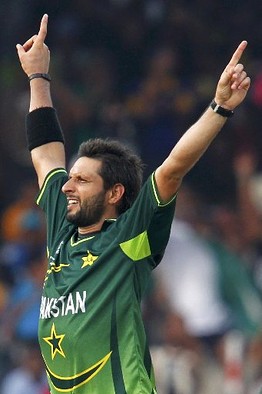
Afridi’s bowling at this tournament has been phenomenal. He is easily the top bowler with a handsome tally of 21 wickets, and his trademark celebration – arms outstretched with his two index fingers pointing to the heavens – could very well be the lasting image of the 2011 World Cup.

The West Indies team looked out of the game as soon as danger man Chris Gayle was caught by Afridi for eight. Shivnarine Chanderpaul, recalled to the team for the quarterfinal, was the only player to offer any real resistance, but he still couldn’t score fast enough and was left stranded on 44 not out at the end of the innings.

It took Pakistan just under 21 overs to reach the West Indies’ meek total, without the loss of a single wicket. Fresh from his great bowling performance, Hafeez clubbed 61 runs, while much improved wicket-keeper Kamran Akmal notched up 47. The two simply poured buckets of salt in weeping West Indian wounds.

It was humiliating for the West Indies. Not only did it mark the end of the team’s World Cup campaign, the abject performance could also have tragically hammered yet another nail into the coffin of Caribbean cricket. Despite its gloriously rich history, the sport there has been in rapid decline for more than a decade and the team’s latest efforts won’t have helped a bit.

But credit must go to Pakistan. If the team continues to play like this, Pakistan will win the World Cup. These players have to contend with so much more than other sportsmen – from the security situation back home to the involvement of former teammates in betting scandals. So while Wednesday’s match was depressing for the West Indies, for Pakistan, it was truly inspirational. And what better a day for it than March 23 – Pakistan’s Republic Day – which commemorates the signing of the Lahore Resolution back in 1940.

One more thing: If Australia loses tomorrow, we can look forward to the mother of all World Cup semifinals – India vs. Pakistan in Mohali on March 30.

Whisper it, but it’s surely destined to be.

Pakistan Snaps Australia’s 34-Match Unbeaten Run

By Shihar Aneez for The Los Angeles Times

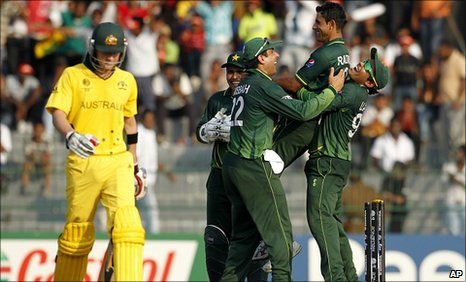
Australia’s 34-match unbeaten run in the Cricket World Cup dating back to 1999 was finally broken by Pakistan on Saturday when Ricky Ponting’s team were beaten by four wickets.

Australia, who have won the last three World Cups during the run and were unbeaten in five matches in Group A in this tournament, were skittled out for 176.

Pace bowler Brett Lee raised hopes of an Australian fightback when he got rid of opener Mohammad Hafeez in the third over but his haul of four for 28 could not prevent Pakistan from cruising to victory with 54 balls to spare.

“We certainly had a tough game today. We didn’t do ourselves any favours. I thought our batting effort was particularly ordinary,” said Ponting, who suffered his first World Cup defeat as captain.

“We stuck at it really well with the ball. I thought the guys bowled really well and gave ourselves a bit of a sniff when we got them six down but not enough runs on the board.”

Saturday’s result threw the tournament wide open as there is no undefeated team left in the competition heading into next week’s knockout stages.

Australia had already qualified for the quarter-finals but will now finish third in the group rather than top, a place now occupied by Pakistan.

“It’s a different sort of enjoyment playing against Australia. They may be World Champions but there was no pressure on us so we pulled it off today,” Umar Akmal said after finishing unbeaten on 44.

Ponting’s men struggled for momentum through out their innings after opting to bat first.

Pakistan’s pace and spin attack, backed up by sharp fielding, never allowed the Australian batting to settle down.

A 63-run second wicket stand between Brad Haddin (42) and Ponting (19), who failed once again with the bat, was the only notable partnership in the Australian innings.

Michael Clarke (34) and Steve Smith (25) were the only other batsmen to make any worthwhile contributions on a difficult surface that offered spin and some uneven bounce which the Australian batsmen failed to cope with.

Paceman Umar Gul (3-30) bowled superbly with both the new and the old ball for the 1992 champions, who were the last team to defeat Australia in a World Cup match in 1999.

Gul made the first breakthrough by bowling Shane Watson for nine and returned to clean up the tail by taking the wickets of Jason Krezja and Lee.

Life in India on International Women’s Day

Amruta Mehta for The Guardian

A child of the late 80s and 90s, I was a young girl when satellite television was introduced in India.

It brought along an overdose of Bollywood, soaps and reality TV, which I feel has been brutal on India’s girls. In response to youth culture prompted by these changes, the moral police has been raising its head, targeting young girls.

Perhaps it is due to the ubiquity of information and dramatisation of the news media, but I feel that violence against women in India has increased greatly during my lifetime. While it has become increasingly easier for urban Indian women to work even after marriage, the expectations on them remain cripplingly unrealistic.

As I sought out strong Indian female role models while growing up, I found that phenomenally powerful women abound. India’s first female police officer, Kiran Bedi, has influenced tens of thousands through radical prison reforms, daring to question the practices of generations of men before her. She is bringing India’s women centre-stage in the fight against corruption. Women are CEOs of large companies, philanthropists, and icons of style and grace.

We’re a country of over a billion people, with a large young population, deep socioeconomic disparities, and an ancient democratic tradition. It should come as no surprise that youth movements working for equality are everywhere. The promise that India’s girls hold can be felt in the electrifying energy around young female doctors and IT workers, and girls who ferociously compete for the best grades with their male classmates.

I was the first girl in my extended family to travel abroad alone for study. For this, my mother faced much character assassination. I have been lucky to have had parents who responded by trusting me unconditionally.

These are the people we must celebrate on International Women’s Day: apparently ordinary men and women who blaze trails at the risk of violence and ostracism. Development progresses due to them, inch by inch, from one generation to another.

I do believe that our time has come. I believe in my generation – and I hope you will too.

–Amruta Mehta, a respected group member of Pakistanis for Peace, is from Mumbai, India, and lives in the Netherlands, where she works in scientific media.

Dialogue Key to Peace with Pakistan, Says India

By Anjana Pasricha for The Voice of America

As India and Pakistan get ready to restart peace talks after more than two years, Prime Minister Manmohan Singh says dialogue is the only way to resolve their differences.  The embattled Indian leader is also vowing to tackle inflation and punish those guilty of corruption — two issues which have put his government on the ropes at home.

Speaking to parliament Thursday, Prime Minister Singh said South Asia will not realize its potential unless India-Pakistan relations are normalized. India is willing to discuss all outstanding issues with Pakistan, he said.

But, striking a cautious note, he expressed hope that Islamabad will give up allowing its territory to be used for terrorist activity directed at India.

“I sincerely hope and believe that the new ruling classes of Pakistan would grasp the hands of our friendship and recognize that whatever our differences, terror as an instrument of state policy, is something no civilized society ought to be using,” he said. “I am not saying that we have today an atmosphere in which negotiations can go forward, but there are hopeful signs.”

Earlier this month, both countries decided to restart a peace process, which New Delhi had put on hold after blaming Pakistan-based Islamic militants for mounting the 2008 terror attacks in Mumbai. The foreign secretaries of the two countries will meet in the Indian capital in March. Their foreign ministers are to meet by July.

Singh’s comments on the peace talks with Pakistan came during an address to parliament, in which he outlined the priorities facing his government.

He pledged to lower inflation from 10 percent to seven percent by the end of the year. Food inflation is even higher and has emerged as a major worry in a country with millions of poor people.

Singh has promised to bring a new food security bill in parliament to ensure that poor people are protected from rising food prices.

Inflation has to be tackled in a manner that it does not hurt the economy, which the prime minister says is growing well.

“If we had a ham-handed [heavy] approach, we could have killed the growth process which is the only source of providing jobs for our youth. So, this delicate balance has to be preserved between control of inflation and protection of employment,” he said.

The Indian leader also vowed to crack down on those guilty of corruption in connection with sale of telecom spectrum, in 2008, and the organization of the Commonwealth Games in New Delhi, last year. Allegations that officials siphoned off billions of dollars have put the spotlight on corrupt practices in government contracts.

With the two corruption scandals dominating headlines in recent months, Singh expressed fears that the wrong impression may be going out.

“The message should not go out that India is adrift, that India has lost its way, that the enthusiasm for getting this country moving forward is something that is no longer in evidence,” he said.

The Congress-led government was voted back to power in 2009, but is facing a rising wave of discontent both becauseof high food prices and the high-profile graft scandals.