Archive for the ‘ India ’ Category

Perfect Pitch

By Sonal Srivastava for The Times of India
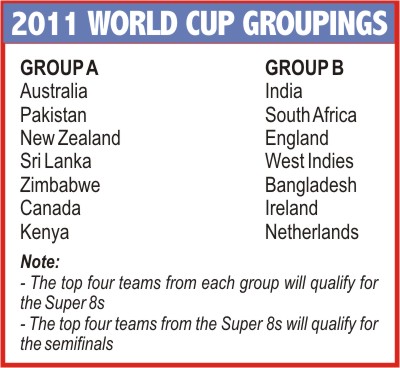
Tickets to most India matches have been sold out,” Priyanka Saxena informed her colleagues. Her co-workers were huddled at her work station, eyes fixed on the monitor, hoping to get premium tickets for the India Vs Netherlands Cricket World Cup 2011 match in Delhi. “We were disappointed, but then we decided to go for the South Africa Vs West Indies tie, instead. I’m going to cheer for the South Africans as they haven’t won the World Cup yet,” she says. Cricket is an amazing game; it originated in Great Britain, but Commonwealth countries have adopted it as their own. The game has not only transcended international borders, it has also managed to cut across fault lines, transcending race, colour, caste, community, class and faith.

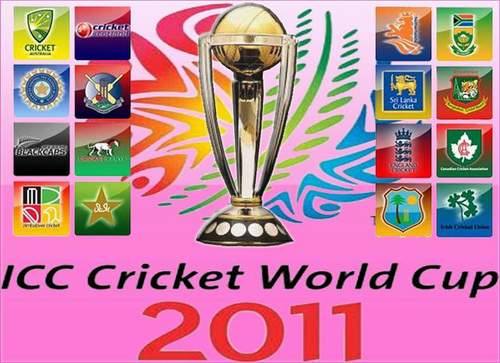
The 2011 Cricket World Cup is being hosted by three South Asian cricketing nations: India, Sri Lanka and Bangladesh. Teams from 14 countries are participating in the 10th edition of the World Cup. The event will be spread over two months and will be played in three different countries, starting off at the Sher-e-Bangla National Stadium in Mirpur, Dhaka, and ending in April at the Wankhede Stadium, Mumbai.

So much good cheer
“Sport brings communities together and helps release a lot of pent-up emotions,” says Ian Botham, former English cricketer. When you cheer for your country or any other favourite team of another country, you forget all your worries. If your team wins, it’s time to celebrate. Every time India or the team that’s being backed wins a crucial match, fans light crackers and distribute sweets; some dance to the beat of dhols. As a cricket-crazy country, we celebrate the success of Zaheer Khan and Yusuf Pathan, Harbhajan Singh and Dhoni, irrespective of their religious leanings. “People like to cheer for something; it’s a feel-good thing. If you are stressed, then watching a cricket match can bring relief; when your team wins, you feel on top of the world,” says former India cricketer Atul Wassan.

World Cup is the time for bonhomie: It’s when you can start a conversation with strangers without inhibition, exchange notes and discuss the outcome of the match. When a batsman hits sixes, you might spontaneously hug a complete stranger standing next to you — your passion for the game takes precedence over age, gender, and community. “You can play cricket even in a remote village with just a bat and a tree stump for wickets. That’s what makes cricket popular,” explains Wassan.

Ties that bind
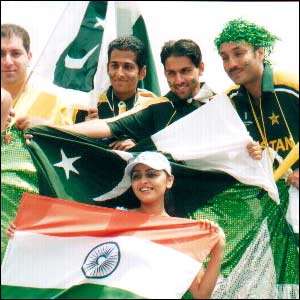
Devoted fans of the game cheer for their favourite cricketers irrespective of the country they represent. Interestingly, even if India is knocked out, people like to see their neighbours — Pakistan and Sri Lanka — do well and bring the World Cup back to the subcontinent. The result? Fans get to see ‘some good cricket.’ During the 1996 World Cup Quarter Final, in Bangalore, Aamir Sohail hit a delivery from bowler Venkatesh Prasad for four runs. He looked at Prasad and pointed his bat towards the boundary where the ball had gone. In the very next delivery, Prasad bowled out Sohail and pointed the finger towards the pavilion. “There is traditional rivalry between India and Pakistan. The armed forces of our respective countries may have to defend borders, but cricket is something that helps people-to-people bonding. During matches, the atmosphere on the field is electric, but after the match, the cricketers hang out together like old buddies,” says former India captain, Ajit Wadekar. And so do fans!

Gentleman’s game
A one-day match is played over six hours and sometimes players do get carried away and tempers run high. But cricket is a gentleman’s game and players have to abide by the umpire’s decisions. Often there is friendly banter on the cricket field and humourous one-liners are exchanged to help lighten the mood. For instance, Inzamam-ul-Haq reportedly told Brett Lee, a fast bowler, to “stop bowling offspinners”. In another instance, when Indian all-rounder Irfan Pathan came to bat, Afridi shouted twice: “O mera shehzada aaya!” — Oh! My prince has come.

Gods of cricket
Fans adore cricketers. Those for whom cricket is religion, Sachin Tendulkar and VVS Laxman, are gods personified. The little master has such charisma and skills that Australian cricketer Matthew Hayden exclaimed: “I have seen God; he bats at no 4 for India in Tests,” referring to Sachin’s position in the Indian batting line up. “When people watch their favourite cricketers do well, it gives them self-belief. They think that if Kapil Dev or Dhoni can make it, they can also do well,” says former spin bowler Maninder Singh. Fans also manage websites dedicated to their favourite cricketers. A site called ‘Sachinism’ runs forum discussions based on Sachin’s knocks, and fans post their views on the master blaster’s innings.

Playing field
A game of cricket is a lot like life. Just like a batsman faces googlies from the bowler, we too have to deal with what life throws at us. The batsman stands alone on the field, faced with 11 opponents; but with training, discipline and good reflexes, he does the best he can. However, in the game of life we are rarely alone. We have family, friends and others willing to lend a hand. Moreover, we have the benefit of access to ancient and modern wisdom that helps us train and discipline ourselves to deal better with life’s challenges and help each other.


India and Pakistan Officials Discuss Bilateral Water Treaty

As reported by Daily India

India and Pakistan officials attended a high-level meeting of the Indus Water Treaty Commission in Jammu to discuss a proposal by India to erect a dam on the river Indus.

A three-member delegation from Pakistan led by Sheraj Jameel, Commissioner, Indus Water Treaty, visited the Nikki Tawi area to examine the site and the design of the proposed artificial lake. The lake is being constructed at a cost of rupees 1.1 billion.

“We are here to inspect the project. We will see whether it is within the limitation of the treaty or not and after the visit we will talk to our counterpart,” said Jameel.
The Indian counterpart S.Ranganathan, Commissioner, Indus Water Treaty, said that the lake project is still in conception.

“In our opinion it does not violate the treaty. When we will get the information from the project authorities, we will analyse it and if it doesn’t violate the provisions, then we will give the go ahead for the project” said Ranganathan.

The team of delegates would be in the region for three days to examine all the records and plans vis-à-vis water distribution for the lake project.

The World Bank had brokered the Indus Water Treaty between India and Pakistan and was signed by the then Indian Prime Minister Jawaharlal Nehru and the then Pakistan President Mohammad Ayub Khan in Karachi in 1960 giving powers to the latter for monitoring the usage of three rivers-Indus, Jehlum and Chenab from Jammu and Kashmir to Pakistan.

India and Pakistan Are United by Language and History, Divided by Commerce

By Karin Brulliard for The Washington Post

In India, where it is made, Fair and Handsome men’s skin lightening cream sells for $1.25 a tube.

But by the time it hits the shelf at Sajid Khan’s shop in this city’s old marketplace, it has traversed 2,000 miles of sea and land, been smuggled over the Hindu Kush and marked up 25 percent.

Pakistan and India share language, culture, history and an 1,800-mile border; they are South Asia’s largest economies. What they barely share is trade – officially at least, because of a quasi-blockade that dates from partition in 1947, and all but chokes off commerce under a dizzying web of rules.

The hurdles have spurred off-the-books trade, much of it shipped through third parties in such places as Dubai, where products are re-labeled as imports from other lands – journeys that result in 40-to-70-percent markups. Only recently did Pakistan make its first export to India by truck: a load of gypsum rock.

But economists, business groups and U.S. officials are pushing to loosen at least the most maddening restrictions, and they are hopeful that the two nations’ decision two weeks ago to resume peace talks might help. Free trade, they say, would benefit both India and Pakistan and might help to ease tensions whose gravity is reflected in rival nuclear arsenals.

“Economics 101 dictates that countries’ major trading partners should be their neighbors,” said Shuja Nawaz, director of the South Asia Center at the Washington-based Atlantic Council. “To change the dialogue from a zero-sum game to a positive, win-win outcome for both India and Pakistan, you need to start with the low-hanging fruit of opening trade and tourism.”

For a Pakistani economy in tatters, experts say, a freer flow of goods from India would allow cheaper access to products and raw materials, and could open up India, with its enormous population, to exports of Pakistan products such as cement.

Some research indicates that bilateral trade – currently at about $2 billion a year, less than 1 percent of each country’s total trade – could swell 20 to 50 times under more liberal policies. Estimates of illicit trade range from $2 billion to $10 billion a year.

But for now, progress creeps. India admits all Pakistani products, but Pakistani firms complain that stringent standards and paperwork make many exports unviable. Pakistan, for its part, allows a slowly expanding list of Indian products that now includes artificial kidneys, camphor, parachutes and 1,931 other items – but not Fair and Handsome cream, which is instead legally exported from Kolkata to landlocked Afghanistan, via the Pakistani port of Karachi, then smuggled back into Pakistan.

Travel restrictions are another barrier. Businessmen in both countries say they wait months for visas that allow travel only within major cities in the other country – preventing visits to rural factories or farms – where they are often tailed by intelligence agents.

Then there is the logistic muddle of land trade at the one border crossing, midway between Lahore and the Indian city of Amritsar. The twice daily cargo train involves an engine switch: A train carrying Pakistani exports, for example, can enter mere miles into India, at which point the Pakistani engine and conductors are replaced by an Indian ones before continuing inland. With so few trains, exporters wait months for cargo space.

Trucks have only eight hours each day to cross, because each afternoon the two-lane road is overtaken by Indian and Pakistani border guards’ theatrical gate-closing ceremony. Even then, trucks must stop just past the frontier, where porters transfer the goods to local trucks. That is an advancement: Before 2007, trucks were barred from crossing at all, and laborers lugged all cargo across the boundary on their heads.

The little existing trade often falls victim to what look like political whims. In December, cargo trains sat idle for three weeks while Indian conductors awaited the visas that allow them to park just inside Pakistan.

That same month, spiraling onion prices prompted India to drop import tariffs and standards for the staple, triggering a surge in Pakistani onion exports. But Pakistan abruptly halted overland sales amid concerns about a domestic shortage.

“I had 400 trucks stuck on the other side,” said Rajdeep Uppal, a trader who is vice president of the Amritsar Exporters Council. “For a week these onions were standing there, and eventually they had to be sold within Pakistan for half the price. Who loses? Both the countries.”

Tensions aside, scenes of goodwill abound along the border. Pakistani and Indian train conductors sip tea and gripe about red tape together. Satanam Singh, a turbaned Indian driver – wearing a regulation yellow vest stamped “Indian Driver” – beamed as laborers unloaded his ginger on the Pakistani side. Coming to Pakistan, he gushed, was delightful compared with Mumbai, where the language is different and people hostile.

“It is a strange feeling, like I am going to a strange land,” said a smiling Mohammed Zafar, a Pakistani whose vibrantly painted truck, brimming with dates, was about to make its virgin voyage across the Indian frontier. “I am very happy.”

Here in Lahore, just 20 miles from the Indian border, Khan’s shop was the pioneer in a winding lane of stores now crammed with Indian silk and cosmetics – all smuggled into Pakistan illegally.

He said he would welcome friendlier business relations, even if they lessened the luxury value of his stock. Even his Afghan smuggler, who stopped by on a recent evening, agreed, on grounds that it would lessen the need to bribe border officials.

Among some merchants, skepticism about trade prospects remains, with Pakistanis fearing that open trade would lead to a glut of cheap Indian imports. S.M. Akhter, a top Indian customs official at the border, said national security concerns must trump market demands.

But despite the tangle of rules, some trade is quietly rising. Tahir Habib Cheema, the top Pakistani customs official at the border, said he realized last year that truck exports from Pakistan were allowed, but that “status quo” and “fear” had prevented them. He decided to change that – without notifying his bosses.

A comedy of errors ensued. By Oct. 7, Cheema had found one willing exporter and one importer. After hiccups on each side, a meeting at the frontline was arranged.

All parties agreed, Cheema said – and then the truck would not start. Someone proposed pushing it into India, an idea that was nixed by border guards who said the pushers would need visas. Finally, another vehicle nudged the truck over the line.

“This was something for the national cause,” Cheema said proudly. Since then, he added, Pakistani trucks have exported $2.5 million worth of products to India. He expects that to escalate this spring, when the two nations open a dedicated truck passage.

Correspondent Rama Lakshmi contributed to this article from New Delhi.


A Reality Check on India, Pakistan

By Ahmad Majidyar & Apoorva Shah for The Diplomat

On February 10, India and Pakistan announced that they would resume peace talks that were suspended after Pakistan-based terrorists attacked multiple sites in Mumbai in November 2008, killing 170 people. Washington welcomed the announcement, no doubt hoping that détente between the two nuclear neighbours might lead them to end their proxy war in Afghanistan, and leave Pakistan better able to fight the Taliban and al-Qaeda on its own soil.

But it’s much too early to get carried away. After all, diplomacy conducted under terrorism’s shadow can backfire, and should there be another attack on Indian soil, Indian policymakers—even those in favour of reconciliation—may well conclude they have no partner in Pakistan, bringing the prospect of conflict closer.

It’s also not at all clear that Pakistan really is sincere in its desire for rapprochement. The country has reportedly doubled its nuclear arsenal over the last four years, and is believed to be building its fourth plutonium reactor. Western nations should be troubled that a country that professes to be committed to fighting Islamic militants at home has decided to focus so much attention on developing its nuclear prowess instead. 

Indians should also be concerned.  On July 15, 2010,India and Pakistan’s foreign ministers met in Islamabad supposedly in order to ‘restore trust.’ But the talks collapsed in acrimony, with the Indian side claiming that Pakistan had failed to move to resolve differences over the prosecution of anti-India terrorist groups operating from its territory. Just ahead of these talks, Indian Home Secretary G. K. Pillai had claimed that Pakistan’s Inter-Services Intelligence (ISI) had played a ‘much more significant’ role in the Mumbai attacks than was initially thought, adding that he believed Pakistan was ‘coordinating it from the beginning till the end.’

Testimony by captured alleged Pakistani-American terrorist David Headley appeared to support Pillai’s claims, with Headley reportedly telling FBI interrogators that the ISI went so far as ‘choosing the weapons to be used in the attack.’

If all this is true, then there can be no serious diplomacy until Pakistan stops seeking to leverage Islamist militancy as a weapon in Kashmir and against India. Lashkar-e-Taiba (LeT) and similar groups continue to operate freely in Pakistan. Last February, for example, LeT’s leader Hafiz Saeed led a 10,000-strong procession in Lahore to mark ‘Kashmir Solidarity Day’ and warned India to ‘liberate’ Kashmir or face jihad. Indeed, he also signalled a possible expansion of conflict, suggesting that the group might broaden its operations to the southern Indian—and largely Muslim—district of Hyderabad.

But it isn’t just militant leaders who are troubling Indian policymakers. Former Pakistani Prime Minister Nawaz Sharif’s political party, currently in control of Pakistan’s Punjab provincial government, appears to be promoting militancy, at least judging by its official budget last year. As the BBC reported at the time, the government allocated $1 million to Jamaat-ud-Dawa, a charity on the UN terrorism watch list and a Lashkar-e-Taiba front group.

The reality is that many Pakistani political leaders don’t seem to want to move forward on talks. Former Foreign Minister Shah Mahmood Qureshi, President Asif Ali Zardari, and Prime Minister Yusuf Raza Gilani have all appeared sincere, but they seem to lack even the limited control that former President and army chief Pervez Musharraf wielded over the military and intelligence apparatus during his tenure. Meanwhile, the man currently in charge of Pakistan’s military—Gen. Ashfaq Kayani—appears to show no interest in détente, conceding in his own words that he has an ‘India-centric’ bias to his military strategy. 

In theory, Indo-Pakistani diplomatic engagement is a must for regional security. In 2007, talks came close to reaching an agreement on the Kashmir dispute before being derailed by terrorism and domestic political unrest in Pakistan. But Indian diplomats shouldn’t succumb to the exuberance of rapid-fire talks so long as a disconnect remains between Pakistani civilian leaders and their military and intelligence establishment.

The same goes for the White House and State Department—hopes should not be placed on regional security talks without proper conditions for lasting progress being in place first. And the most important of these conditions? Ensuring a complete and no-nonsense end to any proxy support for terrorism at all levels of the Pakistani government.

Ahmad Majidyar and Apoorva Shah are researchers in South Asia studies at the American Enterprise Institute.

The Cup That May Brighten Up Pakistan

By Nilankur Das for The Hindustan Times
For others winning this World Cup could be a matter of pride and glory for the country. For Pakistan, which has won a World Cup and hosted a final, a lot more is at stake. A terror attack on the Sri Lanka team bus in Lahore in 2009 had put an end to Pakistan playing international matches at home an

d also taken away its rights to host World Cup ties. The country shredded by blasts and violence is now forced to host its international matches in Dubai.

Play to prove
Winning this World Cup, coach Waqar Younis feels, could change all that and pave the way to bring international cricket back to the country.

“It is unfortunate that we are not hosting. Yes, we are missing World Cup matches at home. But if we play as a unit, which we are at the moment and go on to win, I believe it will definitely help get international matches back to Pakistan,” Waqar said after Pakistan began their campaign with a win in a warm-up match against Bangladesh.

“Everyone back home is disappointed that the World Cup is not happening in Pakistan. But we are looking forward. Violence has taken international cricket away from the country but I am sure our cricket will bring cricket back,” Intikhab Alam, Pakistan’s first one-day captain who is the manager of the team here, told HT.

Ccricket Buzz
Back in Pakistan which is celebrating Id-e- Milad-un-Nabi, the birthday of Prophet Mohammad, cricket, it was learnt, is the buzz now.

“I think the people of Pakistan have already come to terms with the World Cup not happening here. Tuesday’s match was not on TV and so very few people could follow it. But people are keeping track and everywhere I went I heard cricket being discussed,” spokesperson of the Pakistan Cricket Board, Nadeem Sarwar told HT from Lahore.

“What Waqar said is right. But it will not happen overnight. Winning the World Cup will surely have a unifying effect on the country and if that means law and order is restored, the other boards too will not have problems sending their teams to Pakistan.

“We are making progress in this regard. The Afghanistan team was here. And now the Nepal women’s team is playing a T20 and one-day series here,” Sarwar said.

It’s still early days but a motto like this can definitely keep the team together. But sport has its share of such instances. When Spain, with a majority of Catalan players led by a man from Real Madrid, went on to win the football World Cup, a month-long euphoria blurred all differences.

India to Invite Pakistan Home Secretary for March Talks, 26/11 on Agenda

As Reported by The Times of India

With India and Pakistan deciding to resume comprehensive dialogue over various issues, New Delhi will soon extend an invitation to Islamabad for home secretary-level talks on counterterrorism, including progress in the 26/11 Mumbai terror attack trial, here in March.

Home secretary Gopal K Pillai said, “I will call my Pakistani counterpart this week inviting him to New Delhi for talks. I will propose two sets of dates to him for a meeting in the second-half of next month.”

This will be the first structured home secretary-level meeting between India and Pakistan on counterterrorism after November 2008. The last such meeting between home secretaries had, incidentally, concluded in Islamabad on November 26, 2008 — the day Lashkar gunmen attacked Mumbai. India had suspended composite dialogue with Pakistan in the wake of the 26/11 attacks.

Home secretaries of both countries had also met on the sidelines of Saarc interior ministers’ conference in Islamabad in June last year.

On the issues to be taken up during the meeting with Pakistani interior secretary Chaudhry Qamar Zaman, Pillai told a news agency, “We will ask for voice transcripts (of perpetrators of 26/11) even though the trial court has said no. We will ask them why they have not gone and appealed. I am sure the high court or the Supreme Court may have said that the voice transcripts can be given.”

Referring to lack of action on the part of Pakistan, the home secretary said, “So far most of the people they have caught are all chaps who have sold outboard engines or… driven a taxi and not any of the main people whose voice has been identified by Pakistani-American terrorist David Headley.”

He added, “I think by now, if they wanted, they could have arrested the main persons behind it (26/11 attacks). No use catching people on the streets… and not the real controllers and those who are behind it (attacks).”

Asked what prevented Pakistan from taking strong action against those responsible for the attack, Pillai said Headley’s own evidence clearly showed that there was support of certain elements in the Pakistan state. So, to that extent, anything which leads back to them, there is “total deniability”, Pillai said.

He rejected the view that investigations into the Samjhauta Express blast, indicating involvement of right-wing extremism, will put pressure on India while talking to Pakistan on terrorism. “It will not put pressure on us. We are open about it. The investigations are open. Our courts are free. We are investigating the same. We had told them in June that the investigations are on and as something crystalizes, we shall share it with them. And now, we have said that as soon as the chargesheet is filed, we will share full details with them because a very large number of Pakistani citizens were killed,” he said.

Why Noor Inayat Khan, the Indian Princess and Decorated British Spy Who Was Shot By The Nazis, Deserves A Statue

by Gurinder Chadha and Shrabani Basu, Daily Mirror

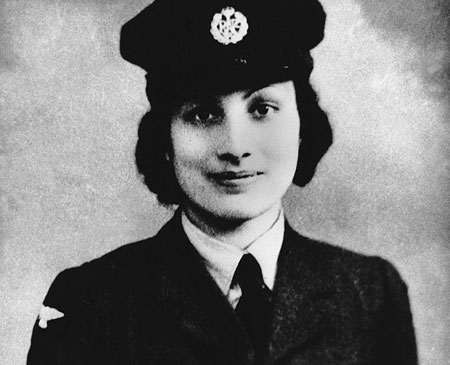
On September 13, 1944, a beautiful Indian princess lay dead on the floor at Dachau concentration camp. She had been brutally tortured by the Nazis then shot in the head. Her name was Noor Inayat Khan. The Germans knew her only as Nora Baker, a British spy.

The first female radio operator to infiltrate occupied Paris, she was posthumously awarded the Croix de Guerre and the George Cross – one of only three women from the Special Operations Executive to receive the latter medal.

But while Odette Hallowes and Violette Szabo have had Hollywood films made of their lives and blue plaques put up in their honour, Noor has been largely overlooked.

The gentle Indian woman who sacrificed her life for Britain, has become a footnote in history. A memorial to her has long been overdue.

And when a bust of Noor goes up in London’s Gordon Square in 2012, it will be the first statue to an Indian woman in Britain – and the first to any Muslim.

Given the contribution of Asian women in this country to arts, music, literature, law, human rights and education, it is a gap that is crying to out be filled.

Noor’s journey from her birthplace in Moscow to London was in many ways part of her exotic upbringing.

A descendant of Tipu Sultan – the famous 18th century ruler of South India, known as the Tiger of Mysore – she was brought up a fierce nationalist by her father, Hazrat Inayat Khan, a Sufi preacher and musician.

Inayat Khan left his hometown of Baroda in western India to take Sufism to the West. Deeply spiritual, he gave concerts and lecture tours in America where he met Noor’s mother, Ora Ray Baker. Soon the two moved to London where they were married, Ora taking the name of Ameena Begum.

In 1914, Inayat Khan was invited to Moscow and it was there that Noor-un-nisa Inayat Khan was born. She had the title of Pirzadi, daughter of the Pir.

Moscow at the time was rife with political discontent and Inayat Khan soon moved back to London. The family spent the next six years in a house on Gordon Square.

But the British government was suspicious of Inayat Khan, who was a friend of Nehru and Gandhi and a strong nationalist, so the family went to France. They began life again on the outskirts of Paris in a house called Fazal Manzil or House of Blessing. It was here Noor spent most of her life.

Educated and genteel, she went to the Sorbonne to study child psychology.

She started writing stories for children and in 1939 her first book, Twenty Jataka Tales, was published. But war clouds were gathering. And as England declared war on Germany, Noor and her brother Vilayat decided it was a crime to stand by and watch, even though as Sufis they believed in non-violence.

They went to London to be a part of the war effort. In November 1940, Noor volunteered for the Women’s Auxiliary Air Force.

Officers of the Special Operations Executive, Churchill’s secret army, were looking for people with language skills. Noor – fluent in French and now a trained wireless operator – fitted the bill. At an interview, she was told she would be sent as an agent to Paris – and shot if she was caught. She took the job.

Over the next few months, the gentle harp-playing Noor was trained as a secret agent, given arms training, taught to shoot and kill, and finally flown to Paris under the code name of Madeleine, carrying only a false passport, a clutch of French francs and a pistol. Despite her spy network collapsing around her, Noor stayed in France for three months, until she was betrayed. What followed in October 1943 was arrest, imprisonment in chains, torture and interrogation.

Noor bore it all. She revealed nothing to her captors, not even her real name. When the end came on September 13, 1944, it was not swift or painless.

All night long an SS officer kicked and tortured Noor. Defiant till the last, she shouted “Liberte” as she went down to a bullet fired at the back of her head. Then Britain gradually forgot about her brave sacrifice. Bringing Noor back to Gordon Square, near the house from where she left on her last mission, will be a worthy gesture by her adopted country.

Gurinder Chadha has directed Bend It Like Beckham, and Bhaji on the Beach. Shrabani Basu, author of Spy Princess, The Life of Noor Inayat Khan, is founder of the Noor Inayat Khan Memorial Trust. Contribute at www.noormemorial.org, or email noor.memorial@gmail.com.

Global Sufi Fest Attracts Thousands

As Reported by the Times of India

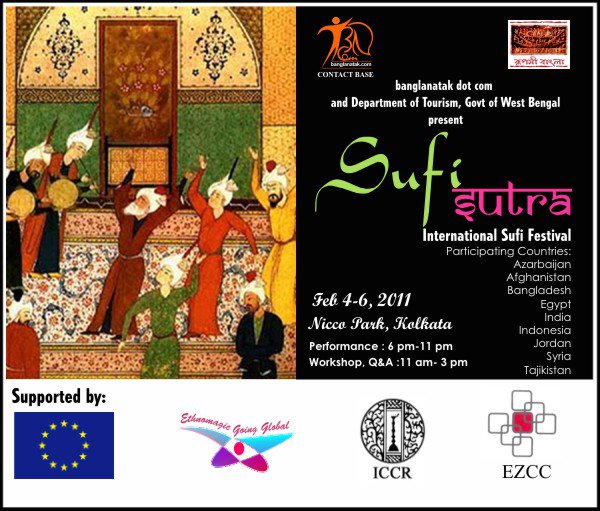
Soulful renderings of Sufi music by wandering minstrels from different parts of the world left the listeners spellbound here at the three-day ‘Sufi Sutra’ which ended on Sunday.

Besides Indians, Sufi singers and musicians from Afghanistan, Bangladesh, Egypt, Iran, Syria and Tajikistan presented mystic Islam through songs, dance and poetry.

Notwithstanding the current political turmoil back home, an eight-member Egyptian Mawlawyiah troupe enthralled the audience by an audio-visual of music and circular dervish dance whirling around singers in a circle.

A Bangladeshi team, led by Anusheh Anadil, sang the household songs of the famous 18th century poet-philosopher Fakir Lalon Shah, on whom based the recent Golden Peacock winning Bengali film ‘Moner Manush’.

The ‘bauls’ and ‘fakirs’ of West Bengal’s Nadia and Murshidabad districts were huge hits by their spontaneous, simple and meaningful lyrics.

Another Bengal team led by Armaan Fakir presented the little-known ‘Bangla Qawwali’. Traditionally performed at the Dargahs, the devotional songs had ‘Dhol’ and ‘Khol’ as percussions replacing Tabla.

The first Sufi ensemble also included the ‘Warsi Brothers’ from Hyderabad, Delhi’s ‘Druv Sangari’ and team, ‘Mirs’ from Bikaner and ‘Haji Md Ahmed Khan Warsi’s team from Uttar Pradesh.

“It is a peace concert in times of violence. We want to bring a convergence of ideas about truth, harmony, self-belief and peace through music. It is a celebration of the quest for the divine through love,” organiser Amitava Bhattacharya said.

Besides musical performances, the festival included workshops and exhibitions to showcase the traditional culture, beliefs and music of the Sufi mystics.

“We had more than 10,000 people at the open-air concert, while more than 700 people, including young students, learnt about Sufism at the pre-concert workshops,” Bhattacharya said.

The event would also help the poor musicians, most of whom were from the rural areas, to earn a livelihood, he said.  The festival was organised by Banglanatak.com in collaboration.

Pakistanis for Peace Editor’s Note– It’s a sad reality that singers from a  country rich in Sufi history and traditions like Pakistan, are  unable to attend this festival due to the 60+ year friction between the two brothers India and Pakistan. They are two halves of one nation.

Cultural exchanges like these, billions in cross border trade, Bollywood and Lollywood collaborations, sports matches, etc are just some of the things the two are missing out on due to their relations. We hope one day peace can finally come to this ancient and holy land that is the subcontinent.

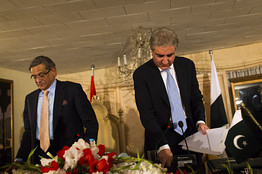
Top Diplomats From India, Pakistan Meet on Sidelines of Regional Conference

By Anjana Pasricha for The Voice of America

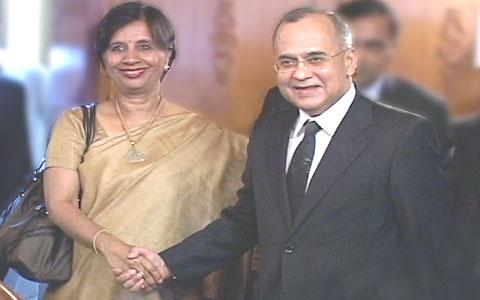
Officials from India and Pakistan have met to discuss the possible resumption of a stalled peace process. The meeting was held Sunday on the sidelines of a regional conference in Bhutan. The discussions are another step in building trust between the two rival nations.

Indian and Pakistani diplomats made no specific announcements, but sounded positive after their late Sunday discussions in the Bhutanese capital, Thimpu.

Indian Foreign Secretary Nirupama Rao expressed optimism on Monday. But she also said government leaders would remain realistic, pointing out that the relationship between the two countries is “complex.”   

“We talked about the process to chart the way forward, what the best modalities would be,” Rao said.

The meeting in Bhutan was held on the sidelines of a South Asian Association for Regional Cooperation conference. It was the first time in six months that officials representing the two countries met to discuss the possibility of resuming peace talks. India suspended peace talks more than two years ago after terror attacks in Mumbai killed more than 160 people. The attacks were blamed on Pakistan-based Islamic militants.

There had been some expectation that the two countries would set a date for resuming full-fledged peace talks, but that did not happen.

Commenting on the meeting, Indian Foreign Minister S.M. Krishna said in New Delhi that the two countries are trying to re-build trust, and build bridges of confidence.

“The very fact that the two foreign secretaries have met, it is certainly an indication of the fact that solid foundations are being laid for getting the two countries on to a sustained engagement,” Krishna said.  

India is under pressure to return to the negotiating table and resolve its many differences with Pakistan.

But New Delhi accuses Islamabad of not doing enough to bring the Pakistan-based perpetrators of the Mumbai terror attacks to justice. It says relations between the two countries cannot improve unless Pakistan cracks down on the Islamic militant group, Laskhar-e-Taiba.

Pakistan says it has put on trial seven of the suspected Mumbai attackers. Meanwhile, Islamabad says it wants New Delhi to take action against those responsible for the 2007 bombing of a train that runs between the two countries.

Pakistan Observes Kashmir Solidarity Day Today

As Reported on Sify News, India

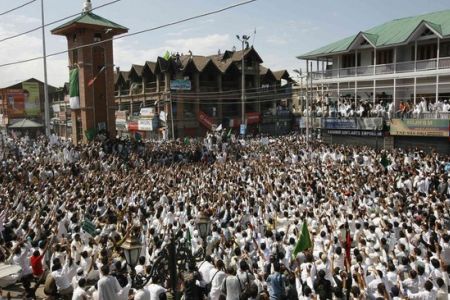
Pakistan is observing the Kashmir Solidarity Day on Saturday (today) to renew its pledge to provide full moral, political and diplomatic support to the Kashmiri people.

“We would not rest unless the people of Kashmir get their right to self-determination and win freedom from the Indian domination. We regard the Quaid-i-Azam’s dictum as our ideal wherein he said, “Kashmir is our jugular vein”. The day is not far when the Kashmiris would determine their own future,” The Nation quoted Prime Minister Syed Yousuf Raza Gilani, as saying in his message on the occasion.

The government and the people of Pakistan join their Kashmiri brothers and sisters in observing the Kashmir Solidarity Day, said Gilani, adding that the whole nation stands united in seeking a just and peaceful solution to the Jammu and Kashmir dispute in accordance with the legitimate aspirations of the Kashmiris as enshrined in relevant UN resolutions.

It will be a public holiday throughout Pakistan today, and special programmes will be broadcasted on television in this regard.

Apart from mass rallies, symposia, conventions meetings and speech declamations, a unique ceremony will be held at all six bridges linking Pakistan and PoK, where Pakistani and Kashmiri people will form a human chain.

It may be mentioned here that the day is observed every year in Pakistan, in continuation of the first call given by the then Prime Minister Zulfiqar Ali Bhutto in 1975.

Indo-Pak Express: Chugging for Peace

Originally posted on Aman Ki Asha

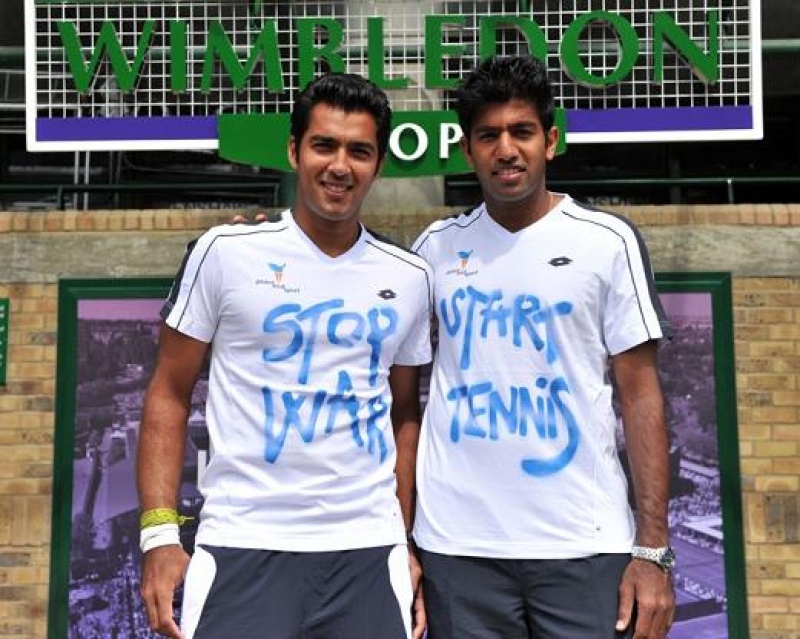
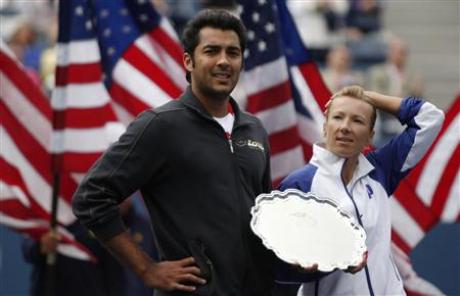
The unique tennis doubles team, Pakistani Aisam-ul-Haq Qureshi and Indian Rohan Bopanna popularly known as ‘Indo-Pak Express’ have urged their governments to allow tennis matches across the border.

There is growing support for their symbolic event – the Stop War Start Tennis campaign. Both players want a match organised between the two countries, but with a twist. They want the match to be held with a net strung across Wagah border. Now that would be a great feat.

The duo are hopeful that their doubles partnership will improve bitter relations between their countries, particularly since the initiative is now backed by the world tennis body and an international peace group.

The International Tennis Federation (ITF) has thrown its support behind the scheme, along with Peace and Sport, a non-governmental organisation run by Prince Albert of Monaco.

“A lot of good things have been achieved, the ITF is now supporting this, Peace and Sport is also supporting this,” Qureshi, who is also Aman ki Asha Ambassador, has said. “The letters have gone to both the prime minister and president of both countries.

“It is a political issue and there are a lot of security concerns, so we are just hoping that the governments will give us the green light so we can play that match on the border.”

Both players, who were finalists at last year’s US Open and gave their opponents, the top-seeded Bryan brothers tough competition, are confident of a positive response from their respective governments.

“Things are going in the right direction,” Qureshi said.
“Last year, at the US Open, both the UN Ambassadors for Pakistan and India came and watched our matches, which was a huge thing and they are supporting the cause as well.
“Things are going in the right direction; we just have to keep playing our matches and get more and more publicity on the bigger occasions. Hopefully it will happen this year.”
– Aman Ki Asha

VJ Syra, Most Wanted and MTV Pakistan

Taking a break away from all the current events, news, and politics to talk briefly about something completely different, my favorite MTV Pakistan VJ/Personality: Vy Syra Khan. The VJ of MTV Pakistan for the last couple years.

Difficult Outlook for India-Pakistan Talks

By Tom Wright for The Wall Street Journal 

The Times of India reported today that India and Pakistan may try to rekindle peace talks in early February.

The paper says Pakistan Foreign Minister Shah Mehmood Qureshi could meet his Indian counterpart, S.M. Krishna, informally after a regional meeting in Bhutan on Feb. 8.

The report suggests that the idea is to set the ground rules for an official visit to India by Mr. Qureshi sometime later this year in a bid to normalize relations that have soured since a major terror attack in Mumbai in 2008.

Given the disastrous outcome of Mr. Krishna’s last formal visit to Pakistan – in July of last year – those ground rules will be important.

At that meeting, Mr. Qureshi became incensed during a press conference over India’s claims that Pakistan’s military intelligence services had orchestrated the Mumbai attacks in November 2008, during which 10 Pakistani gunmen killed more than 160 people over three days.

Mr. Krishna arrived back in India to criticism of being made to look a fool by Mr. Qureshi and a peace talks process begun in 2004 was put on hold amid mutual recriminations. The slow-moving (and now stalled) dialogue is an attempt to normalize relations that have been rocky ever since the two nations were created out of British India in 1947.

India has stuck to its claims of official Pakistan involvement in the Mumbai attacks and says Islamabad is not doing enough to prosecute the perpetrators and rein in India-focused militants in general.

Pakistan retorts that it is committed to fighting terrorism. It also has called on India to broaden the agenda for peace talks to include other topics, such as the disputed Himalayan territory of Kashmir, which both countries claim in its entirety.

It is uncertain whether talks at this stage can produce anything meaningful

India is set against any wider peace talks until Pakistan sentences seven militants that it has charged for involvement in the Mumbai attacks.

But the atmosphere in Pakistan right now means it is unlikely that any politician will want to be seen vigorously cracking down on Islamist groups.

The killing earlier this month of Salmaan Taseer, governor of Pakistan’s Punjab province, by one of his own police guards has uncovered the extent to which hardline religious views have permeated many layers of society.

The police guard admitted he was angered by Mr. Taseer’s defense of a Christian woman sentenced to death by a Pakistani court in November for blasphemy.

In recent days, scores of Pakistanis, including lawyers and clerics, have publicly rallied in support of the police officer.

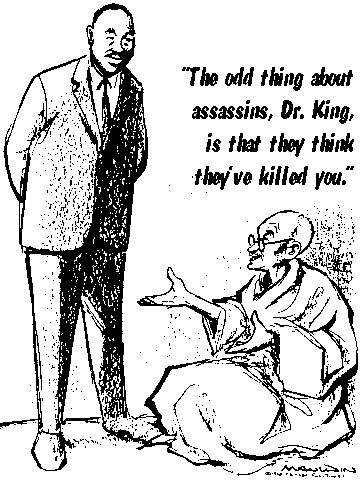
Gandhi and King- Two Martyrs Who Will Never Die

By Manzer Munir for Pakistanis for Peace

Martin Luther King Jr, who would have been 82 years old January 15, was a great believer of Mohandas K Gandhi, the leader of India’s independence movement from Britain. King saw that Gandhi’s peaceful civil disobedience and non-violent methods of protest were very effective in bringing down the British Empire in India and as a result Pakistan after some 300 years of direct and indirect rule. Gandhi had believed that people could resist immoral government action by simply refusing to cooperate. Gandhi adopted many peaceful resistance techniques in developing his concept of Satyagraha, which was a philosophy and practice of passive nonviolent resistance.

Gandhi had earlier used this resistance technique in his struggles for freedom and equality for blacks and Indians in South Africa where both minorities were subjected to second and third class citizenry. His methods and refusal to bow down to the injustices that Indians faced in colonial South Africa inspired Nelson Mandela several years later to start his own peaceful struggle that eventually led to the end of Apartheid in South Africa in 1990.

While at Morehouse College, King learned about Gandhi and became very excited about his ideas. He wanted to further educate himself and read many books on Gandhi and his life and beliefs. In his book, Stride Toward Freedom, King states that “Gandhi was probably the first person in history to lift the love ethic of Jesus above mere interaction between individuals to a powerful and effective social force on a large scale. He further writes in his book that “It was in this Gandhian emphasis on love and nonviolence that I discovered the method for social reform that I had been seeking. I came to feel that this was the only morally and practically sound method open to oppressed people in their struggle for freedom.”

King felt that he had finally found a way to where oppressed people could successfully unlock social protest through Jesus’ teachings of love. In fact Gandhi himself had said “What does Jesus mean to me? To me, he was one of the greatest teachers humanity has ever had.” He also once mentioned Jesus as the “most active resister known perhaps to history. His was non-violence par excellence” Therefore to the Christian minister living in the pre-civil rights era in the South in America, Gandhi appeared to King as a follower of Christ, someone who preached peace and love even at the expense of suffering. Martin Luther King once said of Gandhi “It is ironic yet inescapably true that the greatest Christian of the modern world was a man who never embraced Christianity.”

In 1959, King visited India and became fully convinced that Satyagraha could be effectively applied to the struggle by blacks in the United States for racial integration. He came back to the United States where he continued the struggle for freedom and equality for all Americans. Like Gandhi, King also talked about suffering as a path to self purification and spiritual growth. He not only experienced this suffering by being jailed, beaten and harassed by the authorities of the day, but he eventually ended up paying for this cause for freedom for all with his life.

 Mohandas K Gandhi and Martin Luther King Jr arguably were two of the greatest men of the last century.  Both men believed that “injustice anywhere was a threat to justice everywhere.” They both led their people and millions of others out of slavery and servitude against seemingly insurmountable odds to freedom and salvation. On what would have been his 82nd birthday, let us recognize that despite an assassin’s bullet and in the greatest democracy in the history of the world, the spirit and dream of a King still live on.


Originally published on 1/18/2010 for Pakistanis for Peace

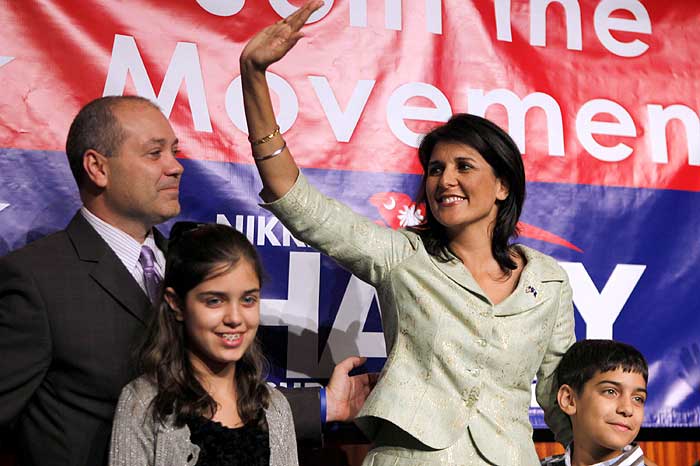
Indian-Americans say Haley’s achievement makes them proud

As Reported by The Times of Inida
Describing the swearing in of Nikki Haley as Governor of South Carolina as a “proud” moment for Indian-Americans, eminent members of the community have expressed hope that she would serve as an inspiration for younger generation to join the political mainstream of the US.

“Governor Nikki Haley of South Carolina made all Indian-Americans proud. She is an inspiration and a role model to all women in the US and India. Governor Haley is the new face and a positive message of the conservative Republican Party,” said Puneet Ahluwalia, who is from Republican Party of Virginia.

It was heartening to read her wonderful speech where she invoked her heritage, her ancestry, her parents and upbringing right from the start that how proud she is to be of Indian heritage, Sampat Shivangi, who is from Mississippi and a past delegate of the Republican National Conventions, said. “Sometimes few of us would hesitate to associate.”

Bindu Kansupada, a cardiologist, travelled all the way from Philadelphia to attend the ceremony, which he termed as a momentous occasion for the Indian-American community.

“It is a great moment not only for South Carolina, but also for entire India. This is a monumental achievement for our diaspora. She talked about India in her inaugural speech – what family values mean, what upbringing means by Indian parents in a conservative State,” Kansupada said.

Besides attending the inauguration yesterday, most of the Indian-Americans, who travelled to South Carolina, took part in the inaugural gala later in the night and an appreciation event hosted by the local community.

Indian-Americans from as far as California, New Jersey, Maryland, New York, Ohio, Texas attended the day-long function, that ended with a gala in the night, said Jody Venkatesan, national treasurer, Republican Indian Committee. “It is a proud moment for every Indian Americans,” he said.

South Carolina’s “first female governor happens to be an Indian-American woman,” noted Bapinidu Kuchipudu, Chairman of the New Jersey Chapter of the Republican Indian Committee, who along with several Indian-Americans travelled from New Jersey to attend the historic occasion.

“We are very proud to be here. This would give inspiration to the second generation Indian-Americans to be more active politically. Nikki Haley’s election gives a lot of message to the Indian-Americans across the country, particularly younger generation born and raised here,” he said.

Shivangi said Indian-Americans have come a long way and “we have two Governors (Haely and Bobby Jindal of Louisiana) both in southern part of US which says lot that Indian- Americans have made tremendous stride in occupying the highest offices…. We still are looking for someone to get elected into US Congress and US senate and I do not see the days are too far.”