Archive for the ‘ Manzer Munir ’ Category

France Pushes Ahead With Controversial Law To Ban The Veil in Public

By Manzer Munir for Pakistanis for Peace
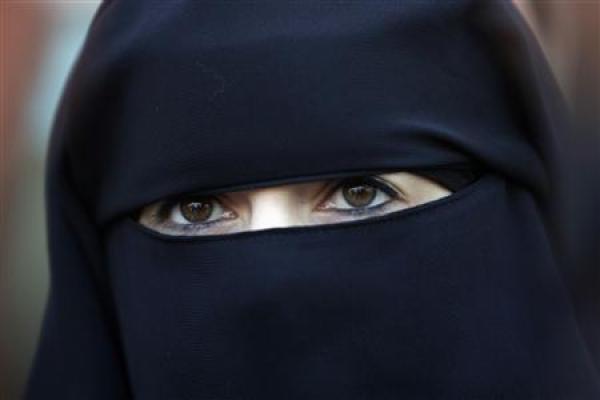
President Nicolas Sarkozy of France has ordered the French government to draw up legislation that will allow for the total ban on the Islamic veil or niqab. This includes not just state or government offices or buildings, but in fact it will make it illegal anywhere in public. The government of Sarkozy is pressing ahead with writing and planning to enact this law despite many legal analysts in France and in Europe stating that it could eventually prove to be unconstitutional.

Despite having Western Europe’s largest Muslim population, France was one of the first to enact laws outlawing the veil in government buildings and schools in 2004. The move comes after a French driver was stopped last week for driving while veiled in the French city of Nantes. She was penalized a 22-Euro or $29 fine as police cited her for posing a “safety risk” while driving.

French government spokesman Luc Chatel said that the proposals for a full ban on the niqab and burqa would be submitted to parliament in the coming months and could theoretically be made into law by this summer.

The plans to ban the veil, he stated, were “in line with the wishes of the head of state”, who has made clear on numerous occasions his opposition to face covering garments prevalent in the Muslim culture. “The ban on the full veil must be total in all public places because women’s dignity cannot be watered down,” said Chatel, as he kept to the official view that a ban would be in keeping with “republican French values of gender equality and secularism.”

He added: “Everything must be done to ensure that no one feels stigmatized because of their faith or religious beliefs. The president and the prime minister have asked all members of the government to commit to this point.” Clearly, these are contradicting actions to many Muslims across France and Europe as they feel signaled out for the differential treatment. There is no attempt to include other religious articles of clothing from being banned such as the turban for Sikhs or the habits for the Catholic nuns.

Sarkozy’s right-wing UMP party and other groups within France have been lobbying for well over a year in support of the ban. The French Council of State, a body made up of legal experts and is a part of the executive branch in charge of giving the government legal advice, has said that the burqa ban may be unconstitutional under French and European law as it violates the protections for religion. In fact, the French Republic is based on the principle of “laicite” or freedom of conscience preserved in the 1789 Declaration of the Rights of Man and of the Citizen. Undeterred, French president Sarkozy is pressing ahead with his attempts to push the law through in the next few weeks.

The Muslim veil has become the symbol of a cultural clash between a secular France concerned with preserving its Christian and Western identity, with the rise of a Muslim population that is estimated at roughly 5 million people, making 1 in 10 Frenchmen, a Muslim. Although the presence of Muslims in France started in the 8th century when Muslims had conquered Spain and pushed into France. But Islam then totally disappeared from France until the 20th century. After World War II, many people emigrated from former colonies in Morocco, Algeria, Tunisia and elsewhere, putting Islam in a distant second place as next most practiced religion after Catholicism which is roughly 85% of the population. Of France’s estimated 5 million Muslims, only as little as perhaps 3,000 women wear the veil, according to French government estimates.

The ban on the veil is not constitutional as it conflicts with the country’s freedom of religion and conscience that are ingrained in the French constitution and indeed psyche. Furthermore, to explicitly single out the Muslim religious articles of clothing, the law is blatantly discriminatory and certainly therefore unconstitutional. There is a big concern in France and indeed across Europe over the Arabization or Talibanization of Europe.

Many people in France see the Muslim religion as being repressive towards women and the veil is the symbol of that oppression. It may even seem commendable that France is standing up for the rights of oppressed Muslim women. However, the banning of the veil will certainly be seen by the Muslims of France as a direct assault on their personal and religious rights of expression. In a country where the majority of Muslim women do not wear the veil and have successfully assimilated into French society, the ban will actually serve to further divide and alienate the Muslim population already feeling stigmatized in France and across Europe since 9-11.
Pakistan and India- The Love-Hate Relationship of Two Brothers

By Manzer Munir for Pakistanis for Peace

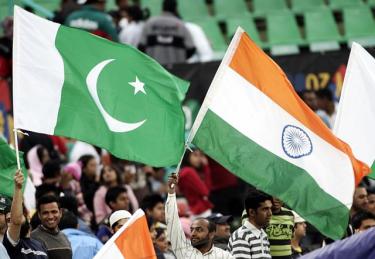
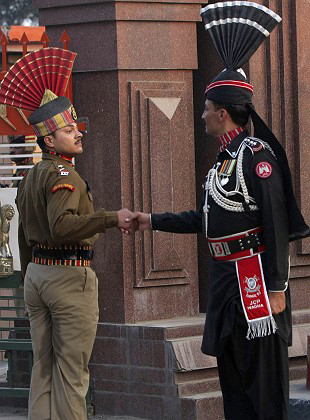
Since the bitter partition that resulted in the creation of Pakistan and India in 1947, and three subsequent wars with each other, not to mention countless near incidents, the two neighbors have not had an easy relationship, to say the least.

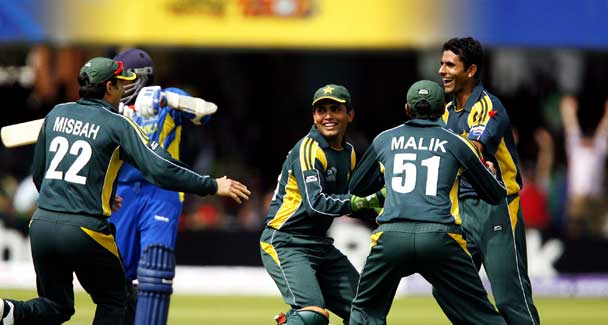
However, mixed in with fear and hatred towards each other is a fascination and affinity to the arch rival on the other side of the Line of Control. In fact, one could say that the two have a love-hate relationship with each other. The recent wedding of Pakistani cricketer Shoaib Malik to Indian tennis sensation Sania Mirza is an indication to the amount of interest and hype given to the couple in media from both sides of the border, making them instantly one of the hottest and most talked about young couples in this Bollywood and glamour obsessed culture.

In Pakistani schools, children are taught very little if anything at all about Pakistan’s pre-Islamic history. Instead the children are told of the glories of the Muslim Caliphate from the time of the prophet Mohammed and then the grand rule of the Moguls of India with the construction of immortal buildings like the Taj Mahal in Agra, or the Badshahi Masjid and the Shalimar Gardens in Lahore, all three built on the Islamic style of architecture. Not very much emphasis is given to the great contributions that the people of present day Pakistan made as Hindus for centuries prior to the arrival of Islam in the subcontinent.

Criticisms abound by Muslims that in India, Muslim contributions to modern India are down played or not explored in the manner they are deserved. However, In Pakistan it is well documented those Pakistani textbooks not only do not teach about Hindu history and achievements, they actually teach hatred against India and Hindus. There is an underlying culture of hate and inequality based on religious grounds that permeates in the society despite Islam teaching respect for all religions and faiths. It’s as if thinking of someone as a polytheist makes them less equal as a human.

The mindset becomes that these non believers are infidels and this somehow makes it easy to dehumanize them or in some way think them to be inferior to you as a human being. Even the current terrorism situation in Pakistan has its roots in this culture of hate and to some level a dehumanization of people of other faiths, especially non-Abrahamic like Hinduism or Buddhism. To not recognize that ancient Indian/Hindu history is also the history of Pakistan does a great injustice to the shared history of one of the most ancient of cultures.

The natural history of this region shows that the origins of the Indian/Pakistani civilization go back to the end of the last Ice Age, more than 10,000 years ago, making this one of the oldest civilizations of the ancient world. This area of the world is a place which gave the world not only Hinduism, but also Buddhism, Sikhism, Jainism, and other religions and has been a source of spiritual inspiration since the earliest of times. But maybe even more important than the contributions in the field of religion are the ancient civilization’s gifts to science and medicine.

Albert Einstein once said “We owe a lot to the Indians, who taught us how to count, without which no worthwhile scientific discovery could have been made.” Indeed, Indian civilization is credited with the creation of the decimal number system, the binary numbering system, negative number, the origins of algebra, and even the all important concept mathematically of zero came from ancient Indian mathematicians.

Archaeologically, India has the most extensive and continuous record of all ancient civilizations, much more than Egypt, Sumeria or Mesopotamia of the same time periods. The ruins in Mohenjo-Daro and Taxila in modern day Pakistan point to the fact that there was a very advanced civilization present here and even the beginnings of one of the early urban settlements of the ancient world as they were remarkably constructed, considering its antiquity. Taxila is also the site of what is believed to be the first university or school of higher learning in the ancient world.

Also the ancient Vedic literature is the largest in the ancient world and contains thousands upon thousands of pages dwarfing what little has been successfully preserved by the rest of the world. This literature contains profound spiritual concepts, skills in mathematics, astronomy and medicine. Sanskrit is the mother of all European languages and Ayurveda is the earliest school of medicine known to man.

Indian culture not only gave the world the game of chess, but was also was a place where some of the earliest innovations in the fields of surgery and advanced dentistry were developed as there is evidence of complex dental procedures being performed in the Indus valley some 8,000 years ago!

The celebrated American author Mark Twain once famously said of India that “India is the cradle of the human race, the birthplace of human speech, the mother of history, the grandmother of legend, and the great grandmother of tradition. Our most valuable and most constructive materials in the history of man are treasured up in India only.” And not so long ago, in a statement made by China’s former ambassador to the US, Hu Shih stated that “India conquered and dominated China culturally for 20 centuries without ever having to send a single soldier across her border.” This is further validated by the fact that the Indian civilization is considered unique in that it never invaded any country in the last 10,000 years of its history!

By denying its centuries old Hindu/Indian ancestry and history, modern day Pakistan is willfully abandoning its participation and hand in some of the greatest contributions made by one civilization to mankind. Not teaching children the importance of the pre-Islamic history and beginnings of what is now Pakistan is actually a disservice to its people. Also, since the ancestors of all Pakistanis were at some point or another Indian Hindus, disrespecting Hinduism and pre-Islamic Indian culture in essence disrespects one’s own ancestors!

Pakistan can learn a great deal from its ancient brother in the fields of democracy, constitutional freedoms, economic empowerment and technological advancements. A culture of hate has only bred more hate that has now begun to consume internally a nation that has for too long wearily looked outside to its larger neighbor as its chief enemy, instead of as a brother.

Hamid Karzai Is Losing All His Marbles and His Credibility

By Manzer Munir for Pakistanis for Peace

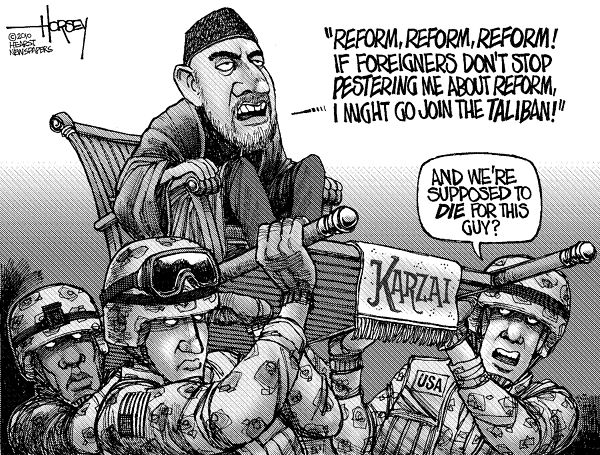
Kabul, Afghanistan- President Hamid Karzai’s troubling remarks this past Saturday that he would join the Taliban if he continues to come under pressure to reform by the United States and other “outsiders” has caused a stir in Washington DC.  Karzai’s comments came a week after President Obama’s surprise visit to Afghanistan at the end of March to pressure Karzai’s government to reform the political system, end corruption, and do a better job of fighting the Taliban.

Instead, what Karza delivered was a threat of the worse kind and quite possibly the most offensive and troubling thing one can say to a country that is risking countless soldiers lives daily to secure the country from the Taliban and other militant warlords in Afghanistan. In 8 short years, Hamid Karzai has gone from being the special guest of honor at George Bush’s State of the Union address to a leader who threatened to join our worst enemy. All because he feels that the US needs to stop badgering him to be a more responsible, fair, and an equitable leader as well as an effective partner in fighting the Taliban.

Karzai apparently made these unusual comments at a closed door meeting of lawmakers on Saturday, just days after accusing “foreigners” presumably the Unites States of being behind the fraud of the disputed elections of 2009. “He said that if I come under foreign pressure, I might join the Taliban”, said Farooq Marenai, a lawmaker from the eastern province of Nangarhar.  Mareni also stated that Karzai appeared nervous and demanded to know why parliament last week rejected legal reforms that would have strengthened Karzai’s authority over the country’s electoral institutions. Several other lawmakers confirmed that Karzai twice threatened to join the insurgency and the Taliban.

Karzai’s comments are troubling on many levels. First and foremost, he gives legitimacy and strength to the Taliban as his comments present the Taliban as an alternative option to American support or view on the situation. Karzai’s statement will no doubt have traveled the length and breadth of Afghanistan as word will spread that there is a weakness in the American-Afghan coalition that has been fighting and hunting the Taliban since October of 2001, post 9-11. The remarks by Karzai also puts every American, NATO, and Pakistani soldier at risk as instead of liberators, the foreign armies would be thought of as invaders, literally overnight. Lastly, Karzai’s remarks prove to the fact that Karzai is no longer an ally nor a credible partner for the US , NATO, and Pakistani army that have been fighting the Taliban with all their might.

There are reports of widespread nepotism, corruption, fraud, looting of the treasuries, and even drug trafficking, as Karzai’s brother, Ahmed Wali Karzai, has been alleged to be a prominent figure in Afghanistan’s world leading illegal heroin production, cultivation and its global distribution. These facts along with his inability to rule effectively and assist the United States in its exit strategy out of Afghanistan by end of 2011 has made the Obama administration weary of dealing with Karzai. Also his typically slow response in instituting political and social freedoms along with a renewed focus in fighting the Taliban, has also been a factor in displeasure from Washington.

The Obama administration has refocused on the Afghan war with 30,000 additional troops to help with the war effort and that initial surge has helped the commanders on the ground in running the Taliban out of certain areas. There have also been great recent victories by the Pakistani army to go after the Taliban militants on its side of the border and in helping cut down the bases of support for the Afghan Taliban from the Pakistani tribal areas sympathetic to their cause. So these comments come at the worst possible time when the Taliban are on the run both in Afghanistan and Pakistan and a strong coalition of US-Afghan-Pakistan resistance against them could help eliminate or destroy the militants for good. But instead, the US and its allies are left wondering what to do with Karzai and how much he could be trusted in this tenuous partnership against the Taliban.

Taliban 201- The Rise of The Pakistani Taliban

By Manzer Munir for Pakistanis for Peace

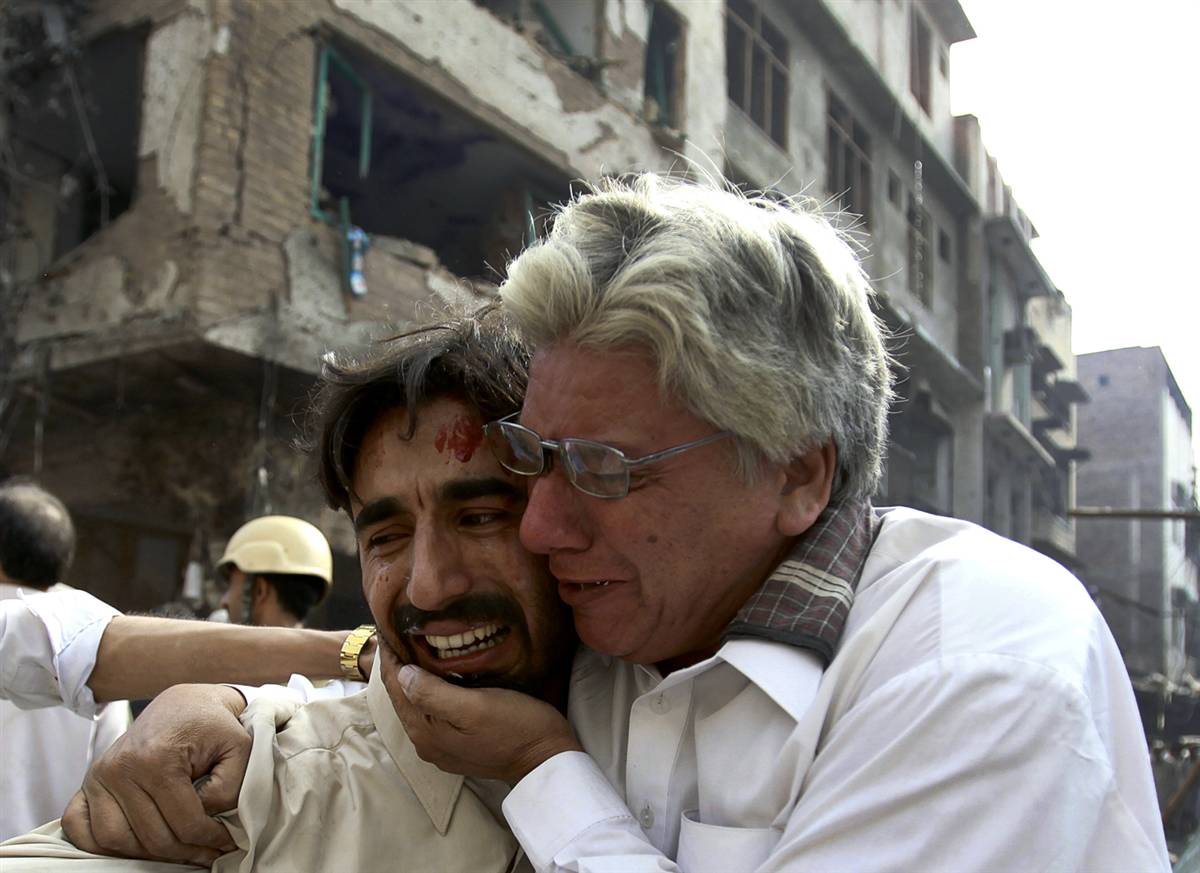
Peshawar, Pakistan- Taliban militants attacked the U.S. consulate in the Pakistani city of Peshawar on Monday, using  powerful bombs and rocket launchers in a sophisticated and daring attack killing 8 people, just hours after a suicide bomber killed 48 people elsewhere in the Swat valley. The attacks came as the United States has increased its airstrikes on targets both inside Afghanistan and Pakistan. The nearly decade long war waged against the Taliban in neighboring Afghanistan since 9-11 has created safe areas inside Pakistan for these militants to regroup and band with Pakistani militants sympathetic to their cause. Often, the militants on the Pakistani side and the Afghani Taliban share the Pashtun tribal and ethnic links among the border areas of both countries.
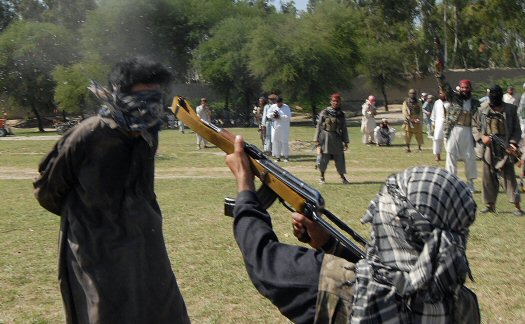
The US bombing of Afghanistan since late 2001 had pushed the Taliban and Al Qaeda militants to the mountains near the border with Pakistan. With help from sympathetic militant tribal warriors from the Pakistani side, the Taliban were able to dig in and have been able to fight the American forces for nearly a decade now. The onslaught by US and NATO forces continues in Afghanistan, but now for most of last year and certainly this year, the war has shifted to the streets and cities of Pakistan.

Now, much like Afghanistan, Pakistan too is a country that finds itself engulfed in the flames of religious extremism at the hands of determined and highly disciplined thugs. It used to be back during the Soviet-Afghan War, the only place perhaps not entirely safe inside Pakistan was Peshawar. Now, not one city or town of Pakistan has been spared from the violence by the Taliban. Back then, Peshawar was a city where attacks would happen frequently and often. During the 1980’s, the city became a haven for both jihadi militants fighting against the godless system of communism, and a base for spies as both the United States and Saudi Arabia funded a mujahedeen guerrilla war to defeat the Soviet troops from Afghanistan. President Reagan and General Zia of Pakistan used the fervor of religion to incite able bodied boys and men of Afghanistan and their distant cousins from the border area in Pakistan, along with thousands of volunteer Muslim fighters from across the Arab and Muslim world, to come and fight the Soviet Red Army. It was seen as a duty to come defend a Muslim land from occupation by a regime that would not allow the worship of Allah as communism discourages religion and encourages a sectarian society.

That strategy by General Zia ul Haq to promote the fight against the Russians as a holy war or jihad was brilliant at first. It mobilized not just every Muslim male in Afghanistan to stand and fight for his faith and their way of life, while also defending the country from invaders, but it also garnered the sympathy and enlistment of thousands upon thousands of Pakistani and Arab Muslim fighters to join the cause of these mujahedeen, as one who engages in jihad is called. The riling up of religious fervor and militant Islam was deemed necessary by both Reagan and Zia at the time as they sought to defeat the communists at all costs from succeeding in Afghanistan. It would not seem likely at the time, that this very same entity would become enemy number one of both the US and Pakistan a decade later.

It was monumental, it was historic,” retired Pakistani general Hamid Gul, who headed the ISI military spy agency from 1987-1989, said of Reagan’s role in defeating the Soviets. “We were receiving arms and logistics from the CIA, we were partners in this struggle,” Gul said, estimating the CIA spent up to $7bn in supplying arms and logistics to Islamic fighters or “jihadis.” “The jihadis he supported. It was their resistance against the forces of occupation and repression – that’s what jihad is – that Reagan identified himself with,” Gul said. “His greatest achievement was that he stood behind the Islamic world when it was arrayed against the Soviet empire.”

Pakistani analyst Hasan Askari Rivzi stated that “Al-Qaeda and the Taliban took shape later on, but they grew from this period of jihadism against the Soviets and with the initial help of Pakistan, Saudi Arabia along with the military and economic assistance from the United States to fight the Soviets during the ‘80’s. Rizvi sees the roots of the militancy that now ravages Pakistan and Afghanistan as having its beginnings from this period of war against the Soviets army.

That war with the Russians lasted almost 10 years. By the time the USSR pulled out all its troops from Afghanistan in 1989, the country had been completely destroyed. What was left of any government or authority of any sort was now held in the hands of a few militias and various warriors who commanded thousands of tribal and other ethnic fighters under them. These militias immediately started warring amongst themselves for more and more control of the country. The already weak, nonexistent central government of Afghanistan, post Soviet pullout was not able to cope and quickly capitulated. During the power vacuum that resulted, Pakistan’s spy agency, the ISI, realized the chance to wield power inside Afghanistan and threw its support behind a religious student movement based out of Kandahar. The ISI had previously assisted the cause to fight the Soviets by helping gather and organize radical Muslims from around the world to come and assist the Afghani mujahedeen in fighting the Soviets and had therefore developed good contacts with various religious groups including the young Taliban students and the fast growing movement.

The Afghani population initially welcomed the Taliban as they represented fairness and a rule of law over the notorious corruption, brutality and constant infighting of the warlord militias. Soon, with popular citizen support, along with Pakistan’s help, the Taliban became the dominant group within the country and soon held the seat of power in Kabul. Its leader Mullah Omar, was a friend of Osama Bin Laden and when the US forces came to Afghanistan in the hunt for Bin Laden, he gave the Al Qaeda leader refuge and in essence, became a fugitive of the US in the process for harboring America’s Most Wanted.

Fast forward to nearly nine years later as the war in Afghanistan continues against the Taliban and remnants of Al Qaeda responsible for the 9-11 attacks. However, the Taliban have grown and laid roots inside Pakistan also now as the nearly decade long war at the border with Afghanistan has ratcheted up sympathy by locals Pakistani Pashtun tribes for their brethren being bombed by both Pakistani and American forces. The Tehrik-i-Taliban Pakistan known as the Pakistani Taliban formed soon after the US invasion of Afghanistan and the Pakistani army’s offensive at the tribal areas near the border to combat the militants. The Pakistani Taliban led by the recently killed Baitullah Mehsud, has been largely responsible for hundreds of attacks in all major cities of Pakistan including Monday’s bombing of the American consulate in Peshawar.

The war in Afghanistan by the US against the Taliban that harbored and sheltered Bin Laden and the 9-11 killers of Al Qaeda is much the same as the war between the Pakistani army and the Pakistani Taliban in the Swat valley and the North West Frontier Province as well as in various cities of the country. This war has been brought home to the citizens of Pakistan. Over the last few months, bomb blasts in Lahore, Karachi, Islamabad and various other cities have now personalized this conflict for the average Pakistani as no longer a battle or skirmish at the border far away in the northwest of Pakistan near its border with Afghanistan.

No, the nearly daily attacks all over the country by the militants on government installations, public institutions like universities, factories and residential areas as well as markets and restaurants has made the country much less safer than at any time in its 63 year history. Many Pakistanis now are beginning to realize that the Taliban, operating with impunity all over Pakistan, pose a much bigger threat to the sovereignty and republic of Pakistan than any threat from anywhere else, including from that eternal archrival to the east, India. It is now well understood by both partners in this fight that only a sustained and vigorous fight taken to the militants inside both countries by the US and Pakistan over a long period of time can hope to defeat this disease known as the Taliban.

For an earlier report titled Taliban 101- Origins and History, Please click on this link:

https://pakistanisforpeace.wordpress.com/2009/05/25/taliban-101-origins-and-history/

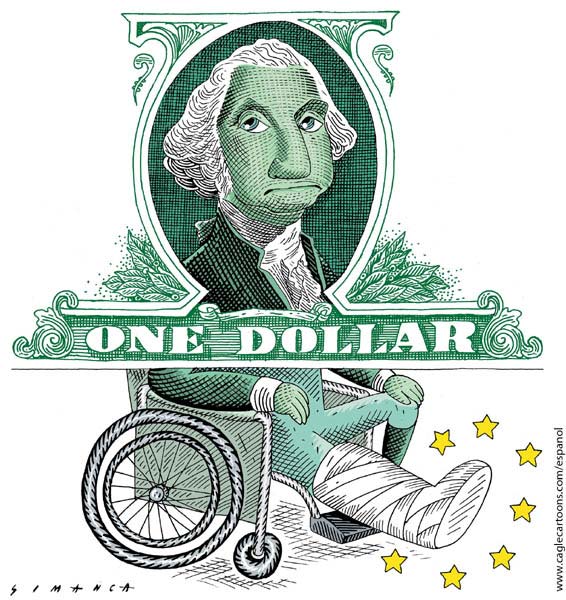
Dollar stumbles as Federal Chairman Ben Bernanke testifies that the US recovery will be slow

By Manzer Munir

Washington DC- Federal Reserve chairman Ben Bernanke was on Capitol Hill Wednesday during his twice yearly monetary policy testimony to give an update to Congress regarding the country’s economic health. He warned Congress that despite various government actions to spur economic growth, the sluggish jobs market is still a huge concern for the markets. The US dollar also came under heavy pressure as a result of the recovery doubts cast by Bernanke earlier to congressional leaders. The fears on Wall Street were also boosted by a report that showed new home sales plunged in January.

“The dollar has fallen across the board in response to Bernanke’s initial statements,” said Kathy Lien, director of currency research at Global Forex Trading. “The fact that Bernanke is not entirely optimistic about U.S. economic recovery and the fact that he did not telegraph additional tightening proves to be disappointing for dollar bulls.” Lien said the dollar has rallied since the middle of February on the chance that the Fed would be more aggressive than other central banks, but Bernanke’s comments suggest that the central bank will not be as aggressive as previously hoped.

A weaker dollar does have some benefits according to analysts. For one, the cost of US produced goods becomes more affordable to consumers in other countries and therefore can help decrease the trade deficit as more American goods are sold. A weak dollar can also be good news for American manufacturers. Their products become less expensive, so they can sell more. That is why companies such as Lockheed and John Deer like a weak dollar. This is also why many economists like it since as the big U.S. manufacturers sell more, the U.S. trade deficit shrinks.

But the negative effects of a weaker dollar can also be bad for the economy as a weaker dollar means that there is a cut in the real spending power of American consumers, which in effect makes for a reduction in real income. Secondly, a weaker dollar also lowers the role of the US currency as the world’s reserve currency of choice. Also, a weaker dollar can make inflation soar as this will increase the costs of Imports. A weaker dollar would encourage foreign investments to go to other countries and not invest their money in American markets. Most economists agree that the value of a currency reflects the perceived value of a country in the global marketplace. Therefore, maintaining and strengthening the dollar would be in the best interests of American consumers, investors, and the economy.

Pakistani Makes History as Nation’s First Winter Olympian

By Manzer Munir

Vancouver, Canada- On Tuesday February 23, 2010, Pakistan will field its very first entry into its very first Winter Olympics. While the nation has won three gold, three silver and four bronze medals in its history at the Olympics since becoming a nation in 1947, this is the first time Pakistan will field an athlete for the Vancouver Olympics in Canada. The sole member of Pakistan’s Winter Olympics team is a 24 year old Pakistani skier by the name of Mohammad Abbas. He was the first Pakistani to qualify for a Winter Olympic event and will participate in the Alpine Skiing in the Giant Slalom category.

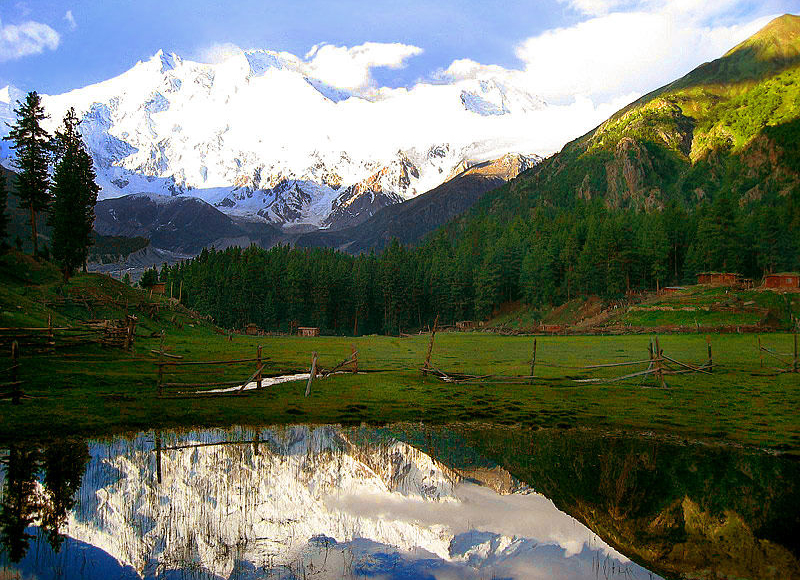
Mohammad Abbas hails from Pakistan’s northern Nalthar valley near Gilgit, Balistan and the now troubled beautiful Swat valley of Pakistan. For years very popular with the British and since with affluent Pakistanis, this picturesque and scenic area of Pakistan is nestled at the foothills of the Himalayas and receives a good amount of snow fall in the winter months. There are not many ski hills in hot weather Pakistan, but there is one in the Nalthar valley where Abbas grew up as one of the local boys. He grew up in a small village near the ski slopes.

When the idea of creating a ski team first developed, all the candidates were local children. Unfortunately out of the original 9 hopefuls, only Abbas qualified for the Vancouver games. “I started skating in 1995 using homemade wooden skates, which is how all the children in our village used to learn. We didn’t have ski boots so we tied our feet to the skis with traditional woolen foot bindings. It was pretty precarious so we had to get our balance right,” he said.

For Abbas, it has been a long and at times arduous 15 year journey since 1995 when he first took interest in skiing at the age of 9 in his village near the ski slopes of Pakistan’s Nalthar valley watching Pakistani and foreign tourists skiing spurned young Abbas and many of his cousins to take up the sport. In a cricket mad country, not very many people pick up skiing. Very few people in Pakistan can afford ski equipment and also only a very small portion of the country gets snow, so it is a surprise that the nation is even fielding an athlete at the Winter Olympics.

Sitting in the Olympics athletes village in Vancouver, Abbas admits that he does not have the camaraderie or the support of Olympic teammates that most other nations participants share, and he was concerned that he may feel a bit lonely representing his country by himself at such a big stage. But the boy from Nalthar valley was greeted with great enthusiasm and support by the rather large Pakistani Canadian community of British Columbia. “The support from my fellow countrymen has really helped me deal with the lack of teammates,” said Abbas.

Abbas said that he “achieved his ambition through hard work” and hopes he has inspired other Pakistani athletes to take up the challenge and aim for future Winter Olympic games. He also realized that his chances of bringing home Pakistan’s first Winter Olympic gold are very small but he said he wants to finish the race in an “honorable manner and make his country proud.”

Although not expected to medal, he is considered the fastest of the first time entrants to compete in the Giant Slalom that is scheduled to take place at Tuesday. It is perhaps an accomplishment to have finally fielded a Winter Olympics team, but for Pakistan it is also a moral victory to have a young man represent the country from the same troubled yet beautiful valley that has been now for months fighting for its life from Taliban insurgents. He represents not just Pakistan’s Olympic hopes, but the spirit of the people of the area to make the best of their situation and rise above the adversity of their daily struggles in a very beautiful part of the world that has also long been known as the “Switzerland of Pakistan.”

Iran Presses Ahead with Nuclear Enrichment Despite Warning from the US and Others

By Manzer Munir

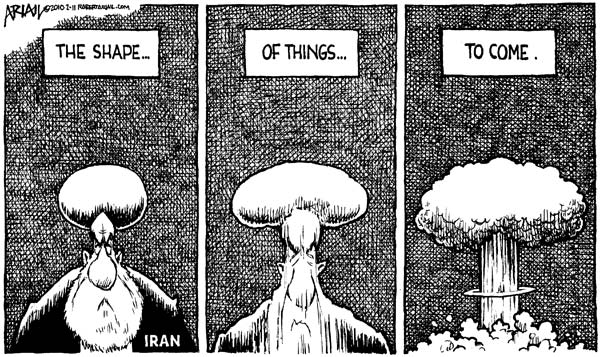
Tehran, Iran- France, Russia and the United States on Tuesday voiced their displeasure with Iran’s escalation of its uranium enrichment and saw this as a great a concern for its neighbors and other countries around the globe. The three countries, nuclear club members themselves, sent a letter to the International Atomic Energy Agency (IAEA) expressing worry about Iran’s actions and demonstrating renewed pressure on the regime of President Ahmadinejad.

This alarm by the US and other countries comes after February 7 when Iran announced it intended to start producing 20 percent enriched uranium for a medical research reactor, defying ultimatums by members of the UN security council that it faces strict UN sanctions unless it halts its nuclear weapons ambitions. The concern is that Iran is enriching uranium not for a medical research reactor but rather for making atomic weapons since enriched uranium in high purity form can be used in the fissile core of a nuclear bomb. “If Iran goes forward with this escalation, it would raise concerns about Iran’s nuclear intentions,” said the joint letter, which was obtained by AFP. “Iran’s enrichment of its LEU (low-enriched uranium) stockpile to higher levels is not only unnecessary, but would serve to further undermine the confidence of the international community in Iran’s actions,” it said.

The US and other powers are trying to convince Iran to accept an IAEA backed deal where Iran is supplied with nuclear fuel for the research reactor in exchange for its low enriched uranium. This is a deal that is not acceptable to the regime in Iran. Iran’s announcement that it would enrich on its own and its “subsequent formal notification to the IAEA are wholly unjustified,” the three countries wrote in the letter to IAEA chief Yukiya Amano. The moves “represent a further step toward a capability to produce highly enriched uranium.” The countries “recognize the need in Iran for medical radioisotopes,” the letter continued. “If Iran does not wish to accept the IAEA offer, we note that these are available on the world market and could be obtained as a responsible, timely and cost effective alternative to the IAEA’s proposal.

The pressure on Iran to not acquire nuclear weapons in the troubled neighborhood of the Middle East is justified. The area has long been very unstable and Iran and Israel have already for several years been fighting a proxy war with each other through Hezbollah in Lebanon and allegedly through arming Hamas in the West Bank and Gaza. But one must also realize that as long as Israel maintains nuclear weapons and there remains no peace in the Middle East, its enemies in the region, namely Syria, Iran, and until recently Iraq would stop at nothing to acquire nuclear weapons technology also. Therefore, the core of this issue as with many other problems involving regional security and even global terrorism have their roots in the situation in the Middle East between Israel, Palestine and its neighbors.

Al-Qaeda itself gives Israel and the United States backing of it as a reason to attack America and its interests. So as long as there is not a resolution to the problem of the Palestinian state, there will be friction and a charged atmosphere in the region. Believe me, it has not calmed down much in the last 62 years. One can continue to expect countries like Iran, Libya, Syria, Egypt, Saudi Arabia and others to continue to desire nuclear weapons in order to feel less threatened by Israel’s arsenal and military supremacy. The real solution to Iran’s nuclear ambitions and other regional security threats to Israel and American interests in the region is the need to get back to the table and return to the difficult task of making peace between the Israelis and its neighbors. Only a lasting and durable peace between the Israelis and the Arabs will encourage nuclear disarmament and make the neighborhood safe from a looming nuclear mushroom cloud.

The Snub of Pakistani Cricketers by the Indian Premier League Should Come As No Surprise

By Manzer Munir

New Delhi, India- Events at an auction held earlier this month by India’s wildly popular Indian Premier League (IPL), consisting of professional cricket teams and franchises, has caused outrage amongst the cricket crazed Pakistani population. Up to seventeen top Pakistani cricketers were anticipated to be selected as top picks in the auction between the teams that saw none of the Pakistani players being selected.

Indian Union Home Minister P. Chidambaram on Monday said that the “decision of the franchisees not to select any of the 17 Pakistani cricketers, who had been given Indian visas for participation in the third edition of the Indian Premier League (IPL), was a disservice to the game of cricket.” Speaking in an interview to a television channel, Chidambaram said that the “IPL issue could have been handled in a better way” and expressed disappointment over the non-selection of the Pakistani cricketers as individuals.

He said these players were 20-20 World Champions and did not deserve to be treated this way. He said that any suggestion that the Indian Government had “nudged” the IPL not to select Pakistani players was not true and had no foundation.

The Pakistani press also had a field day with this turn of events calling for a boycott by the hockey team that is scheduled to visit India next month for Hockey’s World Cup being held in India where Pakistan is scheduled to participate.

Pakistan’s sports minister has demanded the Indian government carry out an inquiry into the snubbing of Pakistan cricketers in the Indian Premier League player auction. “We want the government of India to intervene in this issue and let us know who were responsible in keeping Pakistan cricketers away from the IPL,” Ijaz Jhakrani said Tuesday. “From day one our stance is that the IPL decision was an influenced one.”

The sports ministry has also put on hold its granting its permission for the Pakistan golf team to tour India next month. In addition, Speaker of Pakistan parliament’s lower house, Dr. Fehmida Mirza, stopped a parliamentary delegation’s proposed tour of India in protest. “We have asked both our foreign and interior ministries to let us know about the golf team’s tour to India,” sports ministry spokesman Faik Ali told the Associated Press. “We will decide on golf team’s tour to India after receiving inputs from both ministries”, she said.

Even Bollywood superstar actor Shah Rukh Khan, an owner of one of the IPL teams, the Kolkata Knight Riders, weighed on the issue saying it was “humiliating” to see none of the Pakistani players being picked and that the issue could have been handled better.

The tensions between India and Pakistan are seen as the main reason why the teams stayed away from picking the top Pakistani cricketers. There is a fear amongst the owners of the teams that should the animosities between India and Pakistan escalate, then the teams would suffer as their Pakistani players would be unable to travel or participate in games due to conflict between the two long time enemies. So in a sense it is a business reason that may have precipitated the action by the IPL. There is also a belief by many in Pakistan that perhaps the Indian government influenced the IPL into not accepting Pakistani cricketers as a way to reprimand Pakistan and punish it and its citizens for the Mumbai attacks of 2008, which is still fresh in everyone’s minds. India feels Pakistan has not done enough to rein the terrorist groups blamed for the attacks.

Nonetheless, the upset Pakistani cricket fans should also realize that there is a persistent uneasiness and suspicion on the part of India as Pakistan continues to be seen as the major threat to India’s sovereignty and security. To many in India, allowing Pakistani cricketers to play in India’s IPL would be seen as a way of rewarding a country and its citizens whom you detest and view with deep suspicion and enmity. So in a region of the world where so much tension and conflict already exists between the two neighbors and has simmered for over 60 years, one must not assume everything is peachy and just play ball!

Gandhi and King- Two Martyrs Who Will Never Die

By Manzer Munir

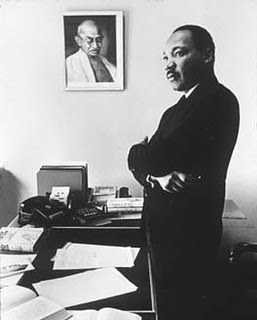
Martin Luther King Jr, who would have been 81 years old January 15, was a great believer of Mohandas K Gandhi, the leader of India’s independence movement from Brittan. King saw that Gandhi’s peaceful civil disobedience and non-violent methods of protest were very effective in bringing down the British Empire in India and as a result Pakistan after some 300 years of direct and indirect rule. Gandhi had believed that people could resist immoral government action by simply refusing to cooperate. Gandhi adopted many peaceful resistance techniques in developing his concept of Satyagraha, which was a philosophy and practice of passive nonviolent resistance.

Gandhi had earlier used this resistance technique in his struggles for freedom and equality for blacks and Indians in South Africa where both minorities were subjected to second and third class citizenry. His methods and refusal to bow down to the injustices that Indians faced in colonial South Africa inspired Nelson Mandela several years later to start his own peaceful struggle that eventually led to the end of Apartheid in South Africa in 1990.

While at Morehouse College, King learned about Gandhi and became very excited about his ideas. He wanted to further educate himself and read many books on Gandhi and his life and beliefs. In his book, Stride Toward Freedom, King states that “Gandhi was probably the first person in history to lift the love ethic of Jesus above mere interaction between individuals to a powerful and effective social force on a large scale. He further writes in his book that “It was in this Gandhian emphasis on love and nonviolence that I discovered the method for social reform that I had been seeking. I came to feel that this was the only morally and practically sound method open to oppressed people in their struggle for freedom.”

King felt that he had finally found a way to where oppressed people could successfully unlock social protest through Jesus’ teachings of love. In fact Gandhi himself had said “What does Jesus mean to me? To me, he was one of the greatest teachers humanity has ever had.” He also once mentioned Jesus as the “most active resister known perhaps to history. His was non-violence par excellence” Therefore to the Christian minister living in the pre-civil rights era in the South in America, Gandhi appeared to King as a follower of Christ, someone who preached peace and love even at the expense of suffering. Martin Luther King once said of Gandhi “It is ironic yet inescapably true that the greatest Christian of the modern world was a man who never embraced Christianity.”

In 1959, King visited India and became fully convinced that Satyagraha could be effectively applied to the struggle by blacks in the United States for racial integration. He came back to the United States where he continued the struggle for freedom and equality for all Americans. Like Gandhi, King also talked about suffering as a path to self purification and spiritual growth. He not only experienced this suffering by being jailed, beaten and harassed by the authorities of the day, but he eventually ended up paying for this cause for freedom for all with his life.

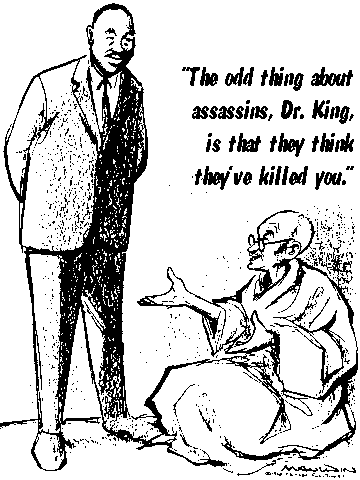
 Mohandas K Gandhi and Martin Luther King Jr arguably were two of the greatest men of the last century.  Both men believed that “injustice anywhere was a threat to justice everywhere.” They both led their people and millions of others out of slavery and servitude against seemingly insurmountable odds to freedom and salvation. On what would have been his 81st birthday, let us recognize that despite an assassin’s bullet and in the greatest democracy in the history of the world, the spirit and dream of a King still live on.

Iranian Protests for Democracy is a Cry for Freedom Across the Muslim World

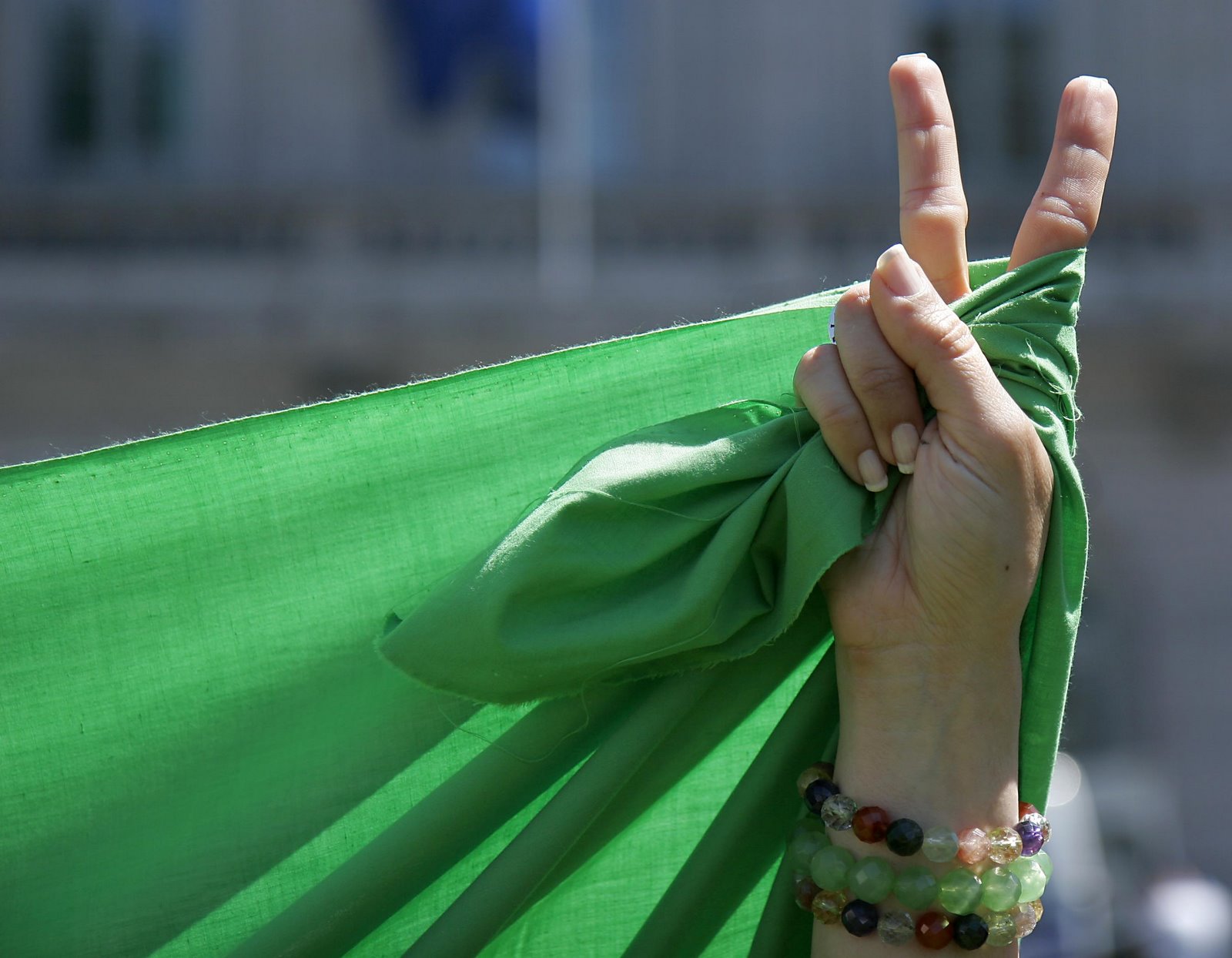
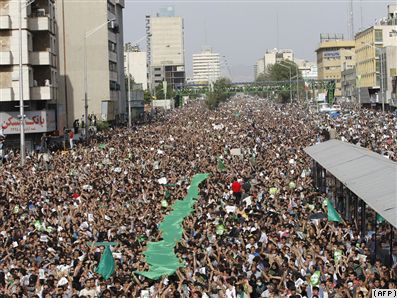
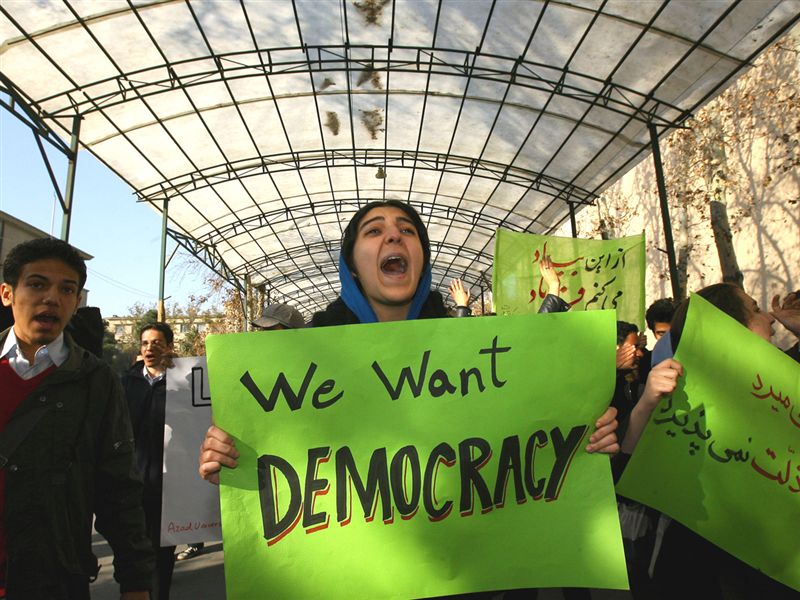
Tehran, Iran- Demonstrations in Iran continue a little over a week after the mass protests the occurred throughout Iran on the Shiite festival of Ashura as protestors defy the government’s crackdown on dissent. It appears that for the first time since the Iranian Revolution of 1979, the regime of Iran is appearing weakened. Despite the brutal violence used by government soldiers and militiamen, the Iranian people are brazenly standing up and are demanding the end of the supreme rule of Ayatollah Ali Khamenei and establishment of a democratic nation where freedom and rights of the Iranian people are respected.

For far too long the current regime has used violence and intimidation to quell revolt. However since the disputed election of last year, the majority of Iranian citizens want an end to theocratic rule. The government must sense the tide turning against them as the popular revolt is gathering steam and gaining strength. Overseas, the Iranian communities around the world are standing in support with their brothers and sisters in Iran and demanding an end to suppression and tyranny also and asking governments around the world for support of this movement by instituting embargos and sanctions on the Iranian government.

The situation is bleak in many Muslim countries around the world when it comes to prudent and competent government. If one takes a look at the Arabian Gulf region we have kingdoms such as Saudi Arabia and Jordan, Bahrain, UAE, etc. There is not a great deal of individual and civil liberties as they are normally afforded in the western world. Freedom of speech, religion and right to protest is simply outlawed in most of these countries. If one takes a look at countries like Egypt, Libya, Syria, and until recently Iraq, are all countries where there are dictatorships akin to monarchies where power is held for generations as is the case with Muammar Al-Gaddafi or it is passed on to a family member as was the case with Bashar Al-Assad of Syria. Pakistan too is a country that of its 62 years of modern history, over half have been ruled by dictatorships robbing the people of a robust democratic system as is one that flourishes in neighboring India.
Far too often, in many Muslim countries around the world, governments and individuals in power are robbing the coffers of their national treasuries for their own greed and simultaneously either brutally cracking down on human rights and dissent or neglecting their responsibilities all together and therefore not providing basic services, infrastructure, and security.

It is not as if democracy is in theory in any ways in conflict with Islam, rather, Islam’s set of norms and ideals that emphasize the equality of people, the accountability of leaders to community, and the respect of diversity and other faiths, is fully compatible with democracy. Yet time after time, Muslim countries are finding themselves under repressive, corrupt and  inept leadership that has no problem using  vote rigging, violence, brutality and intimidation to remain in power.

The Iranian uprising and protests currently underway in Iran should inspire Muslims in other countries to demand better governance, more accountability, and freedoms from their leaders. A country that does not have the participation of all it citizens in all fields of endeavor is not going to advance aggressively as it should. Many citizens of Iran and Iranians around the world are hoping that the repressive regime in Tehran is overthrown by the brave protesters there. One would hope that eventually this starts a chain reaction throughout the Muslim world where repressive, authoritarian and harmful governments are holding back the progress of nations. Thomas Jefferson said it best  when he stated that “A bill of rights is what the people are entitled to against every government on earth, general or particular, and what no just government should refuse, or rest on inferences.”

Reported by Manzer Munir for http://www.PakistanisforPeace.com

Attacks By the Taliban Illustrate their Growing Strength in the Region

Peshawar, Pakistan- A suicide bomber detonated his vehicle packed with explosives on New Year’s Day in a crowd of people watching a volleyball tournament killing at least 75 people, wounding another 60, of which 13 are in critical condition. Police stated that they believed that the attack was directed towards anti-Taliban leaders of local groups made up of ordinary residents of the area who had recently formed armed local militias to help the government fight the Taliban. The blasts demonstrate the capabilities of the Taliban who also were responsible for the killing of seven American CIA employees at an agency base in Khost, Afghanistan the same day.

The targeting and the killing of both the anti-Taliban civilians as well as the CIA employees is an alarming start to a new year in the region as the Taliban have stepped up their efforts against American troops, Pakistani security forces, civilians and anyone else that challenges them.

Analysts believe that the Afghani Taliban has agreed to bury its differences with the Pakistani Taliban and join forces after President Obama announced plans to increase troop levels in Afghanistan and hunker down for the foreseeable future in a protracted conflict with the armed group. The Pakistani Taliban is an offshoot of the Afghani Taliban and is led by veterans of the fighting in Afghanistan who come from the border regions with Pakistan. Although they have always supported the fight against foreign forces in Afghanistan by supplying fighters, training and logistical aid, they have concentrated on battling the Pakistani government. Many believe that the Pakistani Taliban provides an essential rear base to for the Taliban insurgency in Afghanistan.

This new Taliban alliance has raised concerns for the US and NATO forces where generals are forecasting that the conflict will only worsen this year as Friday’s attacks are proving the grave assessment correct. The attack was not far from South Waziristan, where the Pakistan army is waging an offensive against the Pakistan Taliban. Western intelligence agencies believe that time is running out in the fight to eradicate the Taliban from Afghanistan as they are evolving, adapting and getting better organized and resilient as the nearly decade long conflict rages on.

The insurgency is organized, increasingly effective and growing more cohesive, said a senior intelligence officer with NATO’s International Security Assistance Force (ISAF). “The insurgent strength is enabled by the weakness of the Afghan government,” the officer told reporters on condition of anonymity.

The Taliban is funding its operations, which he estimated to cost between 100 million to 200 million dollars a year, through “Al-Qaeda, drugs and taxing the people. “Its goal is to “establish Al-Qaeda as a global entity”, ridding the region of foreign forces and establishing a caliphate, or Islamic state, and the Taliban in Afghanistan and Pakistan work together to those ends stated the officer.

It is apparent that the stepped up offensive on the security forces and civilians by both the Pakistani and the Afghani Taliban on both sides of the border is an illustration of both their strength and resolve in the fighting the government forces. Pakistan, Afghanistan, the US and NATO forces must redouble their efforts and provide increased financial, military and logistical support if this formidable enemy is to be defeated, let alone eradicated from the region.

 Reported by Manzer Munir for www.PakistanisforPeace.com

War on Terror Requires Continued Muslim Support From Friends and Family of Suspects

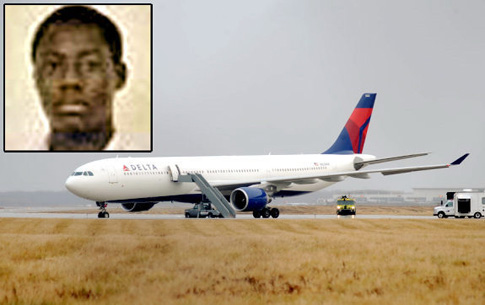
Detroit, USA- The attempted Christmas Day foiled terror attack proved that there are terrorists out there still very much planning and attempting to carry out attacks on the United States and Europe. The alleged terrorist is a 23 year old man from an affluent family in Nigeria. The suspect Umar Farouk Abdulmutallab, boarded a plane from Amsterdam headed to Detroit, Michigan. The young man’s father, who is a prominent banker in Nigeria, had previously notified the American embassy in Lagos, Nigeria that his son may have become radicalized and he was concerned that he may carry out an attack based on his extremist views.

The American authorities had placed Abdulmutallab on a watch list known as Terrorist Identities Datamart Environment (TIDE) list which has roughly 550,000 names. But despite being on this list, being denied a visa for the United Kingdom, and the fact that his father warned authorities a month ago, Abdulmutallab managed to buy a one way ticket purchased with cash, boarded a plane with no luggage, and snuck past security and screening at Amsterdam airport and almost succeeded in creating a Christmas Day massacre somewhere over the Atlantic or the United States.

The suspect has claimed to have received training and instructions from Al-Qaida operatives in Yemen, a country known for an active Al-Qaeda network called Al-Qaeda in the Arabian Peninsula and is also the paternal homeland of Al-Qaeda chief, Osama Bin Laden.

It is simply good fortune that the suspect was incompetent in carrying out the detonation on his device, which authorities say would have brought down the plane. Also helpful was the fact that there were several alert and vigilant passengers who were quick to prevent Abdulmutallab from succeeding in mass murder. Despite all the technological and security advances, the last line of defense always appears to be other passengers and civilians who must heroically act to stop these fundamentalists from carrying out their attacks.

There is a good deal to be learned by American intelligence and airport security agencies to ensure that terrorist incidents like these are prevented by following the clues and connecting the dots much earlier in order to avoid a catastrophe. The various agencies of the United States from the embassies and foreign missions to FBI, TSA, and Homeland Security must work closely to identify individuals who have been placed on strict watch lists. Also needed are very stringent security procedures for international flights coming to the United States, as the majority of the terrorists have attempted to blow up planes inbound to the United States from abroad. Also, authorities must ask themselves how they did not do enough after the young man’s father himself alerted US officials to inform them he was worried his son may have become radicalized and may be planning an attack.

The obvious good news that came out of this incident is that the terrorist attack was foiled and no one was injured. A closer look at the facts should also hearten the American public that for the second straight potential terrorist incident, a Muslim family member willingly and proactively alerted the authorities regarding the suspicious activities of their family member. Just as we saw with the family of the five Washington DC men who are accused of planning attacks on the US and are currently in detention in Pakistan, we should take heart in the fact that Abdulmutallab’s father felt compelled to notify American authorities of his son’s radicalization and possible terrorist planning.

It is sad to see an uptick in the amounts of terrorist incidents in the last few months, but it is also nonetheless heartening to see that Muslim family members are willing to step forward to thwart terrorist attacks and alert the authorities whenever they have suspected them to have become extremist and radicalized in nature and planning attacks. The recent events show that the authorities must continue to rely on Muslim communities to step forward and offer any assistance they can to prevent any future terrorist attacks as authorities tighten their security procedures to continue to protect the public.

Reported by Manzer Munir for http://www.PakistanisforPeace.com

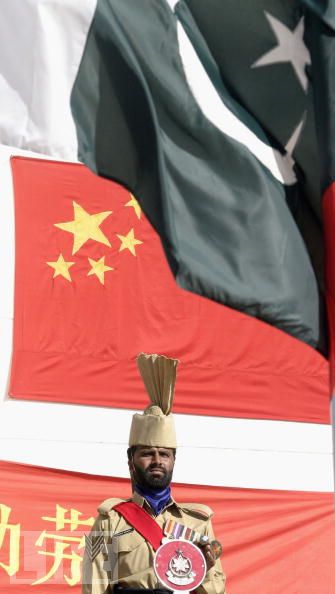
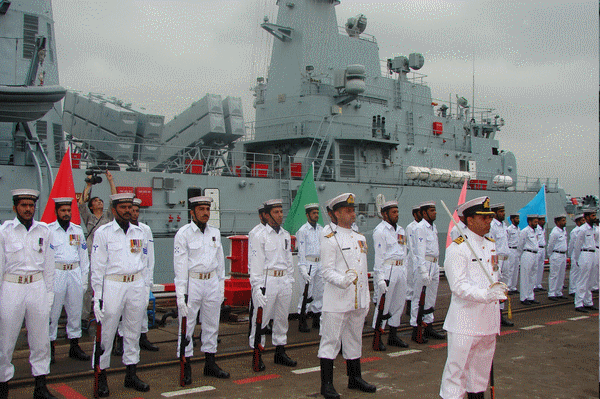
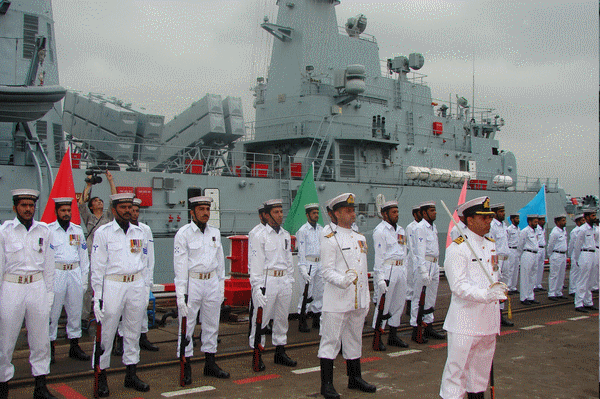
Pakistan and China increase military spending and cooperation as India shows concern

Beijing, China- A senior Chinese defense official has justified Chinese sales of warships and submarines to Pakistan on the grounds that Russia and the United States were selling similar systems to India.

The defense official also indicated that China was aware of the fact that India may not be happy with its deal with Pakistan. “The initiative may invite concerns from its neighboring countries. But the doubts are unnecessary,” Zhai Dequan, deputy director of China Arms Control and Disarmament Association , was quoted as saying by the official media.
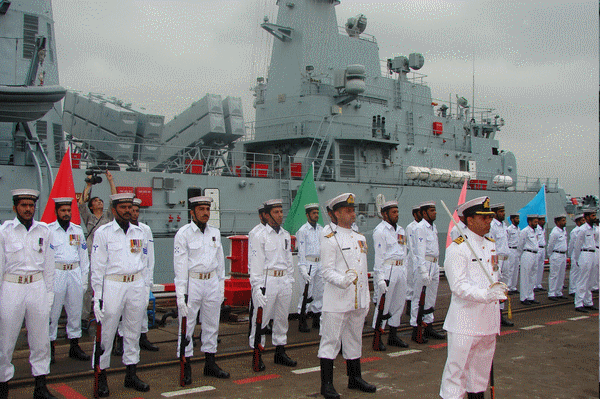
Pakistan’s chief of naval staff, Norman Bashir, also made a push to persuade China to sell higher capacity ships compared to the F22P frigates that China began delivering in June.  Chinese official Zhai said that Pakistan’s   desire for higher capacity ships is normal for an independent nation seeking to bolster its security. “India has also entered into deals for military hardware from the Unites States and Russia. India’s aircraft carrier has already cost it billions of dollars”, said Zhai.

Bashir also met with the Chinese defense minister, Liang Guanglie, and discussed with him Pakistan’s needs in terms of modernizing their armed forces to try and keep up with the torrid pace of rival India’s defense spending. “The Chinese armed forces would like to improve friendly and cooperative relations with the Pakistani armed forces,” defense minister Liang Guangile said, according to China’s state-run Xinhua press agency.” China attached great importance to its traditional friendship with Pakistan, Liang said, adding that the two countries had conducted comprehensive and multi-level military exchanges and cooperation in various areas.”

“The Pakistani armed forces and people cherished their friendship with the Chinese armed forces and people”, Noman Bashir said, noting that “Pakistan would like to work with China to promote the comprehensive and cooperative partnership.” Bashir also stated that Pakistan was keen on buying bigger ships and more JF-17 fighter planes from China in addition to submarines and that Pakistan will be buying more weapons from China, including missiles. 

“These growing military ties between China and Pakistan are a serious concern to India,” stated Defense Minister A K Antony. India worries about China’s rising influence in South Asia and the Indian Ocean region, a neighborhood traditionally considered as its sphere of influence.

India’s relations with Pakistan, never easy after three wars since 1947, went downhill fast after last November’s Mumbai attacks blamed on Pakistani originated militants. Meanwhile, Chinese and Pakistani cooperation on military and economic projects has increased in the last few years. “The increasing nexus between China and Pakistan in military sphere remains an area of serious concern,” Antony said in a speech. “We have to carry out continuous appraisals of Chinese military capabilities and shape our responses accordingly. At the same time, we need to be vigilant at all times.” Tensions between India and China, who fought a brief war in 1962, flared again in recent months, especially with the re-emergence of a long-standing border dispute made worse by a visit by the Dalai Lama, the Tibetan spiritual leader, to Indian territory claimed by Beijing.

India increased defense spending by 24% for this year’s budget to $28.4 billion a year dwarfing Pakistan’s budget of $4.2 billion for the same period. Meanwhile, China and India are together set to make Asia the highest regional spender on defense in the next seven years replacing North America as their economies continue to fund their weapons appetite.

Pakistan cannot compete with the likes of India and China militarily. Just as Taiwan could not compete with China militarily, but went on to become an economic powerhouse and used its influence economically,  so too must Pakistan focus on growing its economy rather than growing militarily. Even though Pakistan possesses the nuclear bomb, and that very well may end up being a strong deterrent against India in the likelihood of a war, it still is loathe to use it, for the consequences from India would be similar and far worse due to their increased warheads and military might.

Also, although Pakistan’s military and previous leadership have articulated the right to a preemptive nuclear strike or a nuclear first use option in the event of hostilities with India, this choice is often seen as a losing option by the military due to the aftermath of a nuclear exchange between the two countries. India’s budget and its technological advancements make it impossible for Pakistan to ever win a conventional war with India. And a nuclear exchange between these two neighbors will leave neither side feeling as the winner.  

Pakistan’s most beneficial strategy must consist of directing its full armed forces against the Taliban and militant groups within its territory and re-engaging India back to the peace table in hopes of resolving the long disputed Kashmir region because war with India will certainly not leave Pakistan the victor. However a peace treaty can open the long border between India and Pakistan for trade, goods, ideas, money and people to move freely across the border and allowing much needed investments and flow of technology to Pakistan that will go a long ways in helping the country and its people catch up with the rest of the world.

Reported by Manzer Munir for www.PakistanisforPeace.com

Pakistani court suspends deportation as another case of homegrown terror troubles US authorities

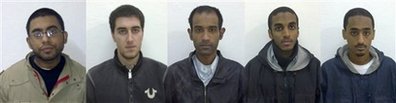
Karachi, Pakistan- Pakistani police on Monday seized a luggage and a cell phone from a hotel where three of the five Americans who were arrested on suspicion of terrorism planning and militant links stayed. A court has ruled that the men cannot be deported to the United States until the judges review their case.  Pakistani police has alleged that the five young Americans intended to join militant and extremist groups in the northwest tribal areas of Pakistan and Afghanistan. This case is troubling as it would appear that Americans and Western raised men are traveling to Pakistan to link up with Al-Qaeda and other militant groups like the Taliban.

Pakistani police had searched their hotel, aptly named Saddam Hotel in the southern city of Karachi.  The detainees have been accused of using the internet and such sites as Facebook and Youtube to reach out and connect to extremist groups and have been said to have been in contacts with a Taliban recruiter also.  The Pakistani court actions are intended to prevent the deportation of the accused to the United States until the courts in Pakistan can ascertain the facts and review the case.

The men, who are from the Washington DC area were picked up last week by Pakistani authorities after their worried families in the US contacted the FBI about their missing sons and enlisted their help in tracking the men down. The authorities were given a farewell video found by one of the family members that showed scenes of war and called for Muslims to be defended. FBI agents, who have had some access to the men, are trying to see if there is enough evidence to charge the men with conspiracy to provide material support to a terrorist group.

A US government official was satisfied with the Pakistani government’s assistance stating that “We’ve had excellent cooperation with the Pakistani authorities, both on the diplomatic side and on the law enforcement side,” said State Department spokesman Ian Kelly, “And the Pakistani authorities granted us access to the individuals within 24 hours of our request, which is a very speedy response.”

The threat posed by homegrown terrorists in the United States and in European countries is a growing concern for the FBI and US agencies. The incidents such as the Fort Hood shooting where Major Nidal Hasan allegedly shot and killed 13 fellow soldiers at the Texas base last month do nothing but further raise those concerns. Then there’s David Headley, an American born Muslim to mixed ancestry who is indicted in the Mumbai blasts of November 2008. And now comes the story of the five Muslim American men arrested in Pakistan who were interested in waging  jihad against the US.

It is too early to call it a growing trend, but the incidents and their frequency does suggest that there is certainly a minority segment of very young Muslim males who somehow are being radicalized not in strict Afghanistan or Pakistan or somewhere in Iran. Rather, in the streets of Virginia, New York, Chicago and other cities, certain young Muslim males are becoming radicalized and becoming extremists. This phenomenon can be best described as a catch 22. You see, these radicalized and misguided men feel that because the United States is waging wars in Muslin countries such as Iraq and Afghanistan, it is being an oppressor. To these men, defending Muslim lands from an outsider and an oppressor is an obligation and a duty and is a call for every Muslim. On the other side, there is the American policy of engagement of the enemy on its turf, as is seen in the Bush doctrine. “Take the war to the terrorists” as President Bush so famously put it in 2001.  These wars that were initiated to be pre-emptive in the case of Iraq and retribution in the case of Afghanistan, have inadvertently become the cause célèbre of these jihadists and young extremists.

In essence, there is a vicious cycle of violence at work here. We have American troops in Afghanistan who are there to defeat the Taliban and Al-Qaeda in Afghanistan so that the US is safe from a terrorist attack hatched overseas. Yet, the next threat may actually be coming from an American born Muslim who is being alienated and radicalized due to the “unjust” war against his “brothers” constant 24 hour cable news coverage, satellite TV and foreign news channels, the internet websites and other sources.

As instances of homegrown Muslim radicalization grow or come into the limelight, it is imperative that the vast majority of peaceful, law abiding and patriotic American Muslims keep vigilant and mindful of the few in their midst who may be becoming radicalized in front of their eyes. It is vital that the Muslim community speak up as the parents of these young men did and alerted the authorities when they became concerned that they may have some sinister designs after discovering their farewell video. It is together with our cooperation with the authorities that we can sniff out these lost individuals before they do any harm to anyone or to an entire religion. The mosques and Islamic centers must do more to ensure that there is no radicalization or fiery sermons. There needs to be a conscientious effort on the part of the American Muslim community of progressives and moderates to speak up and chastise those that are becoming extremists within their midst in order to prevent the next Fort Hood massacare or the next Mumbai.

 Reported by Manzer Munir for www.PakistanisforPeace.com

Neutrality be Damned- Switzerland’s Ban on Minarets Seen as a Violation of Freedom of Religion

Geneva, Switzerland- In a referendum seen across Europe and much of the world as a strong rebuke of the perceived Islamization of the continent, Swiss voters on Sunday passed a bill that bans the construction of new minarets for mosques inside Switzerland. The bill championed by the nationalist leaning Swiss People’s Party was approved by 57 percent of the vote. The conservative leaning Swiss People’s Party had labeled the minarets as symbols of rising Muslim political power that somehow could have transformed the Alpine country into an Islamic nation. This is indeed very peculiar since in a country of 7.5 million people, Muslims only make up roughly 6 percent of the population.

The majority of Muslims in Switzerland are refugees from the Yugoslav wars of the 1990’s and according to governmental figures, only 1 in 10 actively practices Islam.  Nonetheless, anti-immigrant and specifically anti-Muslim sentiments have been growing in Switzerland and in other European countries since after 9-11 and there have been other efforts across the continent to stifle Islamic populations for example with the banning of headscarves in public universities and institutions in France and other similar measures on many ballots in Germany, Belgium, Denmark, Italy, Greece and other countries. But none of these countries went as far as Switzerland which is now restricting the unique architecture of mosques by banning the minarets. This is akin to churches not being allowed to display the cross on their roofs as the minaret is perhaps the most prominent symbol of a mosque and an important part of its architecture designed to signify a house of worship from other buildings in an area.

In ancient times the function of a minaret was for the imam or religious leader to climb to the highest vantage point of the mosque and call out the faithful to pray. This gave the imam a good location to maximize the call to prayer five times a day so as many Muslims nearby as possible could hear the call and come pray. Over time, the minaret became to symbolize mosques in general as the unique tower came to be a symbol of mosques around the world and a part of the distinctive Muslim architecture along with domes and arches. In modern times, the Imams now utilize microphones and speakers to ensure that the maximum number of adherents can hear the call to prayer and this need for the minaret became less about the call to prayer and more about the aesthetic look of mosques that Muslims had come to identify with over the centuries.

Switzerland currently has four mosques with standing minarets, which will not be affected by the ban. These mosques do not broadcast the daily call to prayer outside their own buildings. The sponsors of the referendum had provoked complaints of bias and bigotry by some local officials, human rights organizations and Muslim groups across Europe and around the world. Campaign posters supporting the ban on minarets showed minarets rising like missiles from the Swiss flag next to a veiled Muslim woman with menacing eyes, according to many who see the poster. Backers of the ban have stated that the growing Muslim population was a strain on the country and have implied that Muslims do not just practice religion, a clear reference to more sinister actions on the part of all adherents.

“It’s a sad day for freedom of religion,” said Mohammed Shafiq, the chief executive of the Ramadhan Foundation, a British youth organization. “A constitutional amendment that’s targeted towards one religious community is discriminatory and abhorrent.” He also stated that he was concerned that the vote could have implications in other European countries.  Amnesty International also stated that the ban violated the freedom of religion and may be eventually overturned by the Swiss Supreme Court or the European Court of Human Rights.

It is a sad fact that Muslims today across the world feel very much maligned by the press and media of most Western countries and the religion of Islam as many detractors and opponents who want to make it synonymous with terrorism and violence. Unfortunately the actions of 19 hijackers on September 11 changed forever the way non-Muslims see the religion of Islam. Furthermore, many incidents of violence and barbarianism perpetrated by individuals calling themselves Muslim have soured the non-Muslim world’s view of this great religion. There is indeed a need for dialogue and a better understanding between Islam and other faiths. Some readers may point out to the fact that in Muslim countries such as Saudi Arabia, Afghanistan, Pakistan and others, Christians and other minorities do not have many freedoms and one does not see the construction of new churches or synagogues. This is true, and yet these countries never professed to be bastions of freedom or tolerance and neither did they ever strive to be as have many European countries.

To further elaborate their point though, far too often, Muslims either have not spoke up loudly enough against violence or are afraid to speak up against the militants and extremists in fear of their lives for doing so. Many moderate Muslims feel there is enough blame to go around in the Muslim community for its inaction and muted responses to many horrific stories that come out about women’s rights, female mutilation, treatment of minorities and other stories that paint a very bad image of Islam. Too often one turns on the news to hear about another “Muslim” who blew himself up for one cause or another in some part of the world and it is no wonder that there are many misgivings about this religion of over 1 billion people.  However, there is also a clear bias against the religion of Islam that has persisted for centuries and has simmered and grown since the last Crusade. In an ever shrinking global community where we must all learn to live with each other, banning basic religious freedoms and expressions such as the ban by the government of Switzerland on minarets sends a clear signal to extremists on both sides that the ratcheting up of hatred and misunderstandings is now set to a new level of intolerance.

Reported by Manzer Munir for www.PakistanisforPeace.com