Archive for the ‘ Pakistan ’ Category

Peace Effort Takes Karzai to Pakistan .

By Yaroslav Trofimov, Tom Wright and Adam Entous for The Wall Street Journal
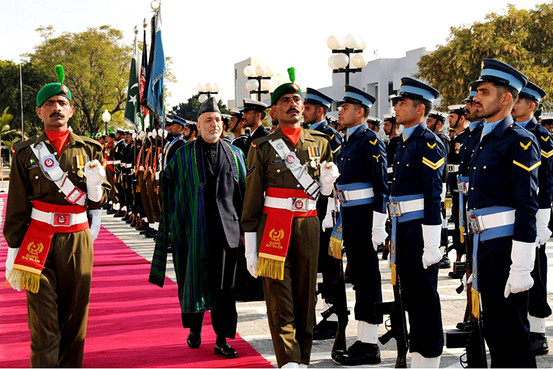
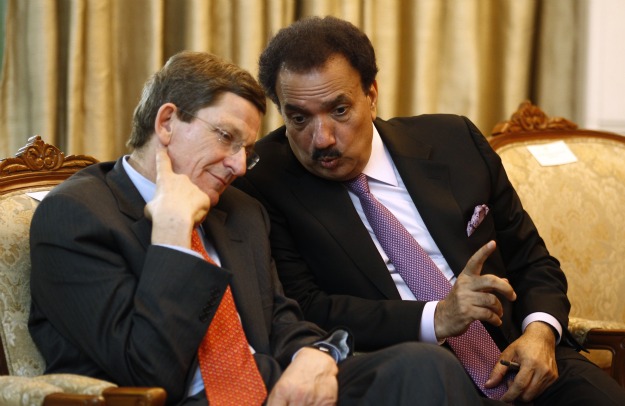
Afghan President Hamid Karzai on Thursday met with Pakistan’s leaders, trying to gain Islamabad’s support for his peace outreach to the Taliban, as U.S. officials worked to keep expectations in check about the strategy’s prospects for yielding direct peace talks with the Islamic militant group.

The Taliban, meanwhile, denied Mr. Karzai’s claim that they have been negotiating with the Afghan government.On the first day of his three-day visit to Pakistan, Mr. Karzai met with Pakistani Prime Minister Yousuf Raza Gilani, who promised Pakistani cooperation in investigating the September assassination of the chief Afghan peace negotiator and voiced support for an Afghan-led peace process. Pakistan’s Army Chief of Staff Gen. Ashfaq Kayani, who wields considerable influence over the country’s foreign policy, also took part in the talks.

In Islamabad, Mr. Karzai reiterated that respect for the Afghan constitution and for women’s rights remain his “crucial conditions” for any future deal with the Taliban.

Defense Secretary Leon Panetta, who has been skeptical of reconciliation efforts in the past, at a Thursday news conference lauded Mr. Karzai’s remarks—made in a Wall Street Journal interview—about Kabul’s willingness to engage with the Taliban.

“What President Karzai’s statement confirmed is that Afghanistan is very much involved in the process of reconciliation and that is extremely helpful and important to determining whether or not we are ultimately going to be able to succeed with reconciliation or not,” Mr. Panetta said. “The news that Afghanistan has joined those reconciliation discussions is important.”

Mr. Panetta said he didn’t know whether additional three-way sessions between the U.S., the Afghan government and the Taliban have been planned.

Another senior Obama administration official remained cautious about whether such confidence-building contacts would translate into direct peace talks, calling the process “complicated and precarious.”

A day after Mr. Karzai told the Journal that Afghan government representatives have had contacts with U.S. and Taliban officials in an attempt to end the 10-year war, the Taliban said they had no intention of negotiating with “the powerless Kabul administration.”

“If someone met the Karzai administration representing the Islamic Emirate, he is an impostor,” said a statement by the Taliban leadership, which calls itself the Islamic Emirate of Afghanistan. The Taliban in the past denied reports of peace talks with the U.S., only to confirm them in recent months.

U.S. officials have confirmed Mr. Karzai’s remarks, saying at least one three-way negotiating session occurred in recent weeks.

Admitting negotiations with Kabul would be fraught will political risks for the insurgent leadership, possibly undermining the morale of Taliban fighters, and weakening the militants’ resolve amid coalition offensives.

The intensity of the conflict already declined dramatically in recent months, Afghan and coalition officials say, though it is unclear whether this drop is due to the spreading news about peace talks, unusually harsh winter weather, or a strategic decision by the Taliban to hold their fire as foreign forces withdraw.

Pakistan, which U.S. officials say provides shelter and support to the Taliban leadership, plays a crucial role in Afghanistan’s peace outreach.

Mr. Karzai’s relations with Pakistan neared a rupture point after the September assassination of former President Burhanuddin Rabbani, the peace negotiator, by purported Taliban peace emissaries. At the time, Afghan officials blamed the killing on Pakistan, something that Pakistani officials denied. Two suspects have since been arrested in Pakistan.

The White House wants to show progress on the reconciliation track before a May summit of North Atlantic Treaty Organization leaders in Chicago. There, NATO leaders are expected to announce plans to shift to a train-and-assist mission in Afghanistan in 2013, giving Mr. Karzai’s security forces the lead role in combat operations before most U.S. and NATO troops pull out at the end of 2014.

Where Pakistan fits into tentative peace talks with the Taliban remains unclear. The U.S. has not kept Islamabad informed about developments in the peace process, Pakistan civilian and military leaders claim.

U.S. and Afghan officials say they are concerned Pakistan might try to undermine peace talks. In January 2010, Pakistan detained a senior Taliban leader, Mullah Abdul Ghani Baradar. Afghan and U.S. officials claim Pakistan arrested him for contacting the U.S. and Mr. Karzai’s government without Pakistan’s knowledge, a claim denied by Pakistan.

Afghanistan has asked for Pakistan to transfer Mr. Baradar to Kabul, but this hasn’t happened so far. Pakistani officials deny they back the Taliban.

Pakistan will stay on the sidelines in the tentative peace process as long as the U.S. remains distrustful of Islamabad, said Imtiaz Gul, director of the Islamabad-based Center for Research and Security Studies.

“We’re not sure to what extent the U.S. wants Pakistan to play a role,” Mr. Gul said. “The Pakistani role at this moment seems very limited.”

Pakistan’s ability to play a meaningful part in talks has further been hampered by a deterioration in relations with U.S. after an American helicopter strike in November mistakenly killed 26 Pakistani soldiers along the Afghan border.

U.S. officials say they are still trying to hammer out an agreement with Taliban representatives on a sequence of confidence-building measures aimed at laying the ground for any future direct negotiations on ending the war.

In addition to the establishment of a political office for the Taliban in Qatar, the U.S. wants the Taliban to issue a statement distancing itself from international terrorism and to agree to stop fighting in certain areas of the country.

The U.S., in turn, would transfer of up to five Taliban militants held at the U.S. military prison in Guantanamo Bay, Cuba, to Qatar. Key U.S. lawmakers have raised objections to the prospective prisoner transfers.

Officials have identified the five Guantanamo detainees who may be transferred to Qatar as Muhammad Fazl, a former senior Taliban defense official; two former local governors, Khairullah Khairkhwa and Noorullah Nori; former Taliban intelligence official Abdul Haq Wasiq; and top Taliban financier Muhammad Nabi.

Messrs. Haq Wasiq, Fazl and Nori were among the first 20 detainees who arrived at Guantanamo Bay 10 years ago, when the prison was opened on Jan. 11, 2002.

The U.S. has received assurances from Qatar that the five militants, if transferred, won’t be released by the government or handed over to the Taliban. But officials said the men could be freed later as part of a future Afghan-Taliban peace deal.

Jeremy Lin: Where’s The Indian Version?

By Palash R Ghosh for International Business Times

I am as excited and thrilled with the sudden meteoric climb of New York Knicks point guard Jeremy Lin as anyone else. I am completely immersed in ‘Linsanity’ and hope he becomes a dominant superstar in the NBA over a nice long career.

Jeremy Lin is the greatest sports story I’ve seen in years, perhaps decades. As an Asian-American, Lin’s brilliant play has special meaning and significance to me.

However, I must admit, since I am neither Chinese nor Taiwanese, my appreciation of Lin is somewhat as an “outsider.” That is, I can’t quite reach the same level of excitement about No. 17 as my Chinese and Taiwanese friends have.

I have waited many years for an Indian boy in the United States to become a professional sports superstar. Thus far, such a thing hasn’t happened, and, sadly, I doubt it will in my lifetime.

The term “Asian-American” is impossibly vague, broad and diverse, encompassing everyone who claims descent from the Philippines to Afghanistan. Indeed, it’s a rather meaningless phrase, but, for the sake of simplicity, it really means Americans whose parents or ancestors immigrated from a handful of major Asian nations.

According to the 2010 U.S. Census, there were 17.3-million Americans of “Asian” descent, representing about 5.6 percent of the total population.

I found a breakdown of that population for 2008, which indicated that the Chinese formed the largest group among Asian-Americans at 3.6 million, followed by Filipinos (3.1 million), East Indians (2.7 million), Vietnamese (1.7 million), Koreans (1.6 million) and Japanese (1.3 million).

In the popular vernacular, Indians are sometimes not even considered “Asian” since they are sometimes more associated with Middle Eastern peoples, especially since 9-11.

No matter, I consider the people of India, Pakistan, Bangladesh, Sri Lanka, Nepal and Afghanistan as “Asians.”

So, with these large numbers, why are there no Indian star athletes in the United States?

To the best of my knowledge, no Indian lad has ever reached the NBA or Major League Baseball.

Sanjay Beach had a brief career as a wide receiver for the San Francisco 49ers and the Green Bay Packers; Brandon Chillar (whose father is Indian) played linebacker for the Green Bay Packers; and Manny Malhotra (an Indo-Canadian), plays for the Vancouver Canucks in NHL.

And that’s it — and none of them are exactly ‘household names’ or superstars.

Part of the problem is that Indian parents pressure their children to succeed in academics and to shun ‘frivolous’ pursuits like sports, arts and music. Hence, the large number of Indian-American doctors, engineers, accountants, mathematicians, scientists, corporate executives, and, uh, underpaid journalists.

Indeed, Indians (like Chinese and Koreans) are among the highest-earning, best-educated people in the U.S. The residue of being a dreaded “model minority.”

This is all fine and dandy… but, frankly, I’m rather tired of Indians in America being pigeonholed into dull, safe careers. I would be much happier if an Indian boy could pitch a 95-mile-an-hour fast-ball, or slam dunk a basketball or throw a football with pinpoint accuracy for 60 yards.

Realistically, an Indian reaching the NBA and NFL is probably beyond the realm of reality. But what about America’s grand old pastime, baseball?

After all, Indians have excelled at cricket – a sport that requires skills similar to baseball.

If Sachin Tendulkar had grown up in California, perhaps he would now be the starting centerfielder for the Los Angeles Dodgers. If Muttiah Muralitharan were raised in New Jersey, maybe he’d be a 20-game winning pitcher for the Philadelphia Phillies. They certainly have the ability to excel in baseball.

What about U.S. football? Indians are pretty good at soccer — surely some NFL club could find place for an Indian placekicker or punter, no? NFL teams have, over the years, employed a number of former European soccer players for such humble (non-violent) duties.

Will we see an Indian-American athletic superstar in my lifetime (I probably have about 30 years left on this earth)? My guess is no.

Most Indian parents compel their children to study subjects in school that will lead to good, solid, stable high-paying jobs. Sports are fine as long as they don’t become an obsession or, worse, a career goal.

Indian parents likely tell their children that becoming a professional athlete is the longest of long shots (even if one has great talent) — and indeed, they are right. Consider that in the NBA there are 30 teams with a roster of 12 players each.

That’s just 360 players.

Thus, for every NBA player, there are about 850,000 people in the United States.

It makes no logical sense to pursue a career in sports – unless your name is Jeremy Lin, of course.

And let me add that if a young Indian man rose to the top of any American sports leagues, he would likely become the number one celebrity on the planet, especially if he is telegenic.

He would not only enjoy the fame and wealth that is bestowed upon those lucky few that reach the zenith of pro sports in the western world, but he would also have about one-billion people on the Indian subcontinent as rabid, devoted followers. He would be like a combination of Michael Jordan, Tom Brady, Joe DiMaggio, Elvis Presley, John Wayne and Salman Khan.

It would be utterly incredible… but highly unlikely.

Pakistani Prime Minister Due in Court For Contempt Hearing

As Reported by CNN

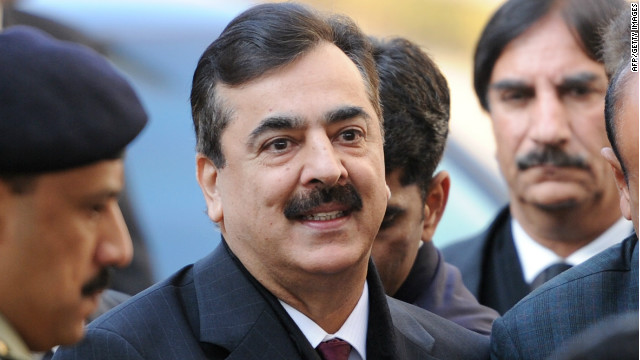
Prime Minister Yousuf Raza Gilani of Pakistan is due to appear Monday before the country’s Supreme Court, which plans to charge him with contempt in relation to a long-running struggle over old corruption cases.

Gilani is locked in a standoff with the Supreme Court justices, who are demanding that he ask the Swiss authorities to revive corruption charges from the previous decade against President Asif Ali Zardari and others.

Gilani has refused the court’s demands and could be jailed for six months if the justices find him in contempt. The court on Friday rejected an appeal by Gilani’s lawyers against the summons to face the contempt charge.

The lawyers have argued that the prime minister has not followed the court’s order because Zardari enjoys immunity in Pakistan and abroad as a president in office.

Gilani said in an interview over the weekend with the satellite news network Al Jazeera that he had an “extremely capable” lawyer and didn’t believe the court would jail him on the contempt charges.

If found guilty of contempt, the prime minister could be forced from office. But his lawyers have said he would keep his position unless electoral officials disqualified him.

Gilani served more than five years in prison between 2001 and 2006 on corruption charges brought by the previous military regime of Gen. Pervez Musharraf — counts he said were also politically motivated.

The corruption cases that the Supreme Court now wants reopened stem from money-laundering charges against Zardari and his late wife, former Prime Minister Benazir Bhutto. A Swiss court convicted them in absentia in 2003 of laundering millions of dollars.

After Musharraf granted a controversial amnesty in 2007 to Zardari, Bhutto, and thousands of other politicians and bureaucrats, Pakistan asked the Swiss authorities to drop the case. In 2009, the Pakistani Supreme Court ruled the amnesty was unconstitutional and called on the government to take steps to have the cases reopened.

The government has not done so, and the court apparently lost patience. Since Gilani is the head of the government, the court justices view him as responsible.

Made in India’ Show in Pakistan as Both Talk to Boost Trade

By Surojit Gupta for The Times of India

Trade ties between India and Pakistan are expected to get a boost as New Delhi reaches out to the business community across the border, starting Monday to assure them about the positive impact of normal trade ties. Commerce minister Anand Sharma will undertake a rare journey to Pakistan, leading a large delegation of senior officials and top businessmen as the two hostile neighbours take baby steps to normalise trade and economic relations.

The private sector led by industry chambers has put up an “India show”, in Lahore and Karachi – the first ever trade exhibitions from India where over 100 exhibitors are participating. Firms representing pharmaceuticals, textile, gems and jewellery, chemicals and petro-chemicals are showcasing products.

The move is a follow up to the efforts to normalise trade ties. The Pakistan government announced granting of Most Favoured Nation (MFN) status to India in November last year. But, criticism from a section of industry in Pakistan has forced Islamabad to take measured steps on the issue. But, officials said they were optimistic that by the end of 2012, the transition to full MFN status would be complete.

Officials said they will launch outreach programme to assure businessmen in Pakistan that Indian goods will not swamp the Pakistan market if trade is normalised. “We will tell them that there are enough trade safeguards measures to ensure that Indian goods do not flood the Pakistani market. Let us first liberalise trade and see the impact,” said a senior government official.

Pakistan allows exports to India but has a positive list of 1,938 items which are officially allowed to be imported from India. Latest data shows that formal trade between India and Pakistan rose to $2.7 billion in 2010-11 from $144 million in 2001, while informal trade including third country trade is estimated at $10 billion, according to a Ficci status paper. “I have no doubt in my mind that bilateral trade, which currently stands at $3 billion, can be raised to $10 billion if trade through third countries (Dubai, Singapore and Central Asian countries) is channelised into direct exchange between the two countries,” said R V Kanoria, president, Ficci.

The government has undertaken a series of measures to increase bilateral trade. There is a move to open a second gate at the Attari-Wagah border, which is expected to increase the number of trucks crossing the border to 500-600 daily from 150-200 at present. Pakistan has agreed to remove restrictions on the number of commodities traded by the land route once the infrastructure in Wagah is ready, while both countries have agreed to avoid arbitrary stoppage of goods at ports. Suggestions have been made for opening up of an additional land route at Monabao-Khokhara Par on the Sindh border for faster movement of goods.

“We are taking significant steps to improve the border infrastructure. India has invested nearly Rs 150 crore to develop infrastructure at the Integrated Check post near Attari,” said a senior government official. He said the visa regime for business travel is also expected to be liberalised soon with multiple entry visas for 10 Indian cities, along with exemptions for police reporting. The formal announcement is expected to be made soon. Talks to expand trade in petroleum products are progressing, while efforts are also on to start negotiations for trade in electricity between the two nuclear-armed neighbours. Both sides have agreed on grid-connectivity between Amritsar and Lahore, which would pave the way for trade of up to 500 MW of power.

Trade experts said they were optimistic about the latest moves and said the effort will go a long way in helping faster regional integration. “The positive spin off for normalisation of trade is enormous. Pakistan has given signals and India now needs to take the initiative. Normalisation of bilateral trade relations will help in putting much of the political bickering on the backburner,” said Biswajit Dhar, director-general at Research and Information System for Developing Countries, an economic and trade thinktank. Experts said there was huge potential for forging joint ventures between Indian and Pakistani companies in sectors such as information technology, fish-processing, drugs and pharmaceuticals, agro chemicals, chemicals, automobile ancillary and light engineering.

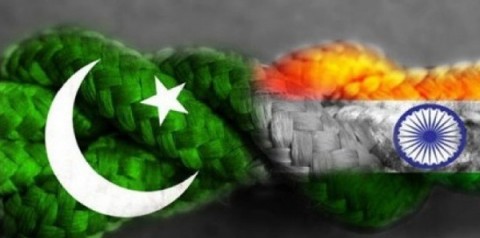
Pakistanis for Peace Editor’s Note– The best chance of peace between India and Pakistan can only be achieved through trade and normalization of ties. The India Show at the Lahore International Expo Centre Feb 11-13 will go a long ways to bridging the gap and move us closer to achieving peace one day, which is the best scenario for both nations long term.

Lamont Peterson, Amir Khan Set Fight

By Dan Rafael for Espn

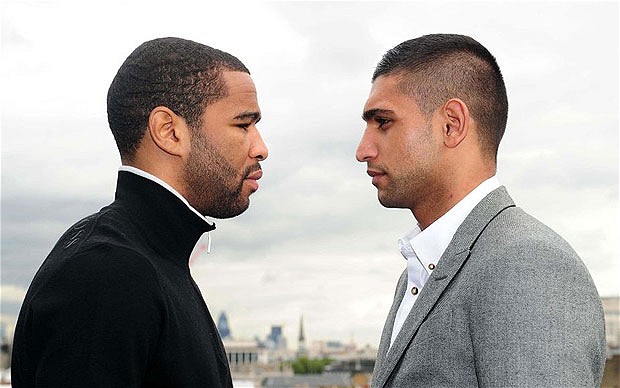
Unified junior welterweight titlist Lamont Peterson and former titleholder Amir Khan will meet in a rematch at Mandalay Bay in Las Vegas on May 19, a little more than five months to the day after their all-action first fight went down as one of the most controversial bouts of 2011.

“Everyone is very pleased that this is Lamont’s next fight,” attorney Jeff Fried, who represents Peterson and Barry Hunter, Peterson’s trainer/manager and father figure, told ESPN.com on Thursday after the deal had been signed. “It was challenging for a variety of reasons, including some of the post-fight antics undertaken by Khan. But at the end of the day, Lamont and Barry had a singular focus on what is in the best interest in Lamont Peterson and his family, and that is what drove this deal getting done.”

England’s Khan (26-2, 18 KOs) came to Peterson’s native Washington, D.C., to defend his belts Dec. 10 and lost a split decision in a fight filled with great action but marred by questionable officiating, issues over the scorecards and an unauthorized figure at ringside.

“Both sides are signed, but this has been one of the most difficult negotiations I have had for any fight I have ever been involved with,” said Golden Boy promoter Richard Schaefer, who has negotiated dozens of major fights. “There was a lot of back and forth, but it all ended good in getting this fight done. I think it’s one of the most anticipated rematches. It’s the right fight for Lamont and the right fight for Amir, and I’m really excited both parties agreed to do this fight.”

Peterson accepted the deal from Golden Boy, which handles Khan, for the rematch even though Top Rank’s Bob Arum had been wooing Peterson, a promotional free agent, for a fight with Juan Manuel Marquez, which he hoped to put on at Cowboys Stadium in Arlington, Texas.

Peterson, who earned $650,000 for the first fight and rejected a $1 million offer for the rematch shortly after the first fight, will make “substantially more than $1 million,” Fried said, although he did not divulge the terms.

Khan, who has a contract with HBO in the United States and Sky in England, brings substantial money to the fight but wanted the rematch so badly that he gave 50 percent of the worldwide revenue that the fight will generate to Peterson.

“We offered 50-50 because that was how much Amir wanted this fight,” Schaefer said. “There were times where it looked like we were close to getting it done, but it was a drawn out process. But in the end it was not a sanctioning organization, a TV network, the media or fans who made this rematch. It’s the fighters who wanted to get the fight done. It was Lamont Peterson saying he didn’t want to fight anybody else except Amir Khan and it was Amir Khan saying he wanted to fight only Lamont Peterson. That is what makes fights.

“The truth is both fighters had other options. But it really came down to what they wanted most. For both guys, other options might have been more lucrative, but it was not really only about the money. They realized the right thing to do was to fight each other again.”

The refereeing was the most controversial aspect of the December fight. Khan had two points deducted for pushing — an almost unheard of foul call — in the seventh and 12th rounds by Washington-area referee Joe Cooper. Without the deductions, Khan would have retained the belts via unanimous decision.

Khan complained that while he was docked points for pushing, Peterson (30-1-1, 15 KOs) was never warned for leading with his head. Golden Boy also raised questions about judge George Hill’s scoring of the seventh round, which appeared to read 10-10 but was crossed out to read 10-8 in Peterson’s favor.

Then there was the much-publicized issue of the so-called ringside “mystery man,” who turned out to be Mustafa Ameen, who is affiliated with the IBF and had a credential arranged as a courtesy from the organization, but was not at the fight in an official capacity. However, he was seen on video at ringside apparently touching the scoring slips, which is against the rules, and distracting a judge. He was later seen in the ring apparently celebrating with the Peterson team after the fight.

It all led to Khan protesting the decision to the sanctioning bodies and harsh words were exchanged between the camps. But now all of that should only add to the interest surrounding the rematch, which will headline HBO’s “World Championship Boxing.”

“May the better man win,” Schaefer said. “It will be one of the most talked-about fights of the year. This is one of those fights people wanted to see and I am happy we can deliver it to the fight fans. I will say this, Jeff Fried deserves a lot of credit for helping us get this done.”

Schaefer said he is close to finalizing the co-featured bout for the card, which would also take place in the 140-pound division: Lucas Matthysse (29-2, 27 KOs), the hard punching contender from Argentina, against former lightweight titleholder Humberto Soto (57-7-2, 34 KOs) of Mexico, who is now fighting as a junior welterweight.

“I am almost done with that fight and HBO is licking their chops on this fight,” Schaefer said. “Those two fights as a doubleheader is probably the best 1-2 punch HBO boxing has delivered in a long time.”

The Stars of Pakistan’s Resurgence

By Jamie Alter for Cricket Next

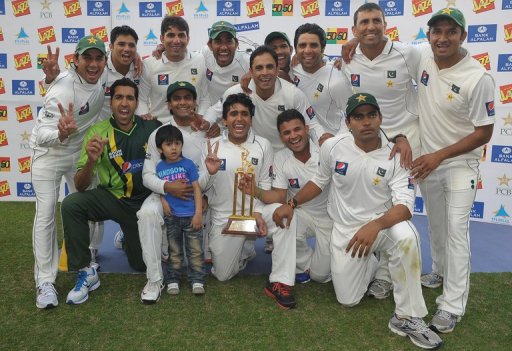
Pakistan’s 3-0 sweep of England, the No. 1 Test team, in the UAE was the most glittering result for a team that has managed to hold its own on the field despite facing a mountain of problems off it. Here’s a look at the key players in Pakistan’s resurgence as a Test team.

Misbah-ul-Haq

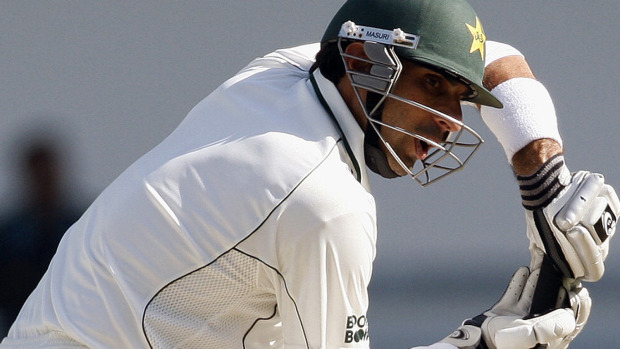
Ten months ago, Misbah-ul-Haq was a condemned man whose time as an international cricketer seemed over after he was made the scapegoat for Pakistan’s defeat to India in the World Cup semi-final in Mohali. Today, he is being heralded as an astute leader of a team bristling with pride and rightful claims to being a top-level Test side. Handed the captaincy ahead of Pakistan’s series against South Africa in the UAE in 2010, the soft-spoken, almost laidback Misbah has been hugely influential in steering Pakistan from a host of troubles and to series wins over New Zealand, Zimbabwe, Sri Lanka, Bangladesh and England – not to forget a draw with South Africa – and just the anomaly of a 1-1 scoreline against West Indies.

He hasn’t always been a proactive captain – his reluctance to push for a win against Sri Lanka in Sharjah last November attracted criticism – but his numbers as leader have been highly impressive: 15 matches, 1165 runs, average 64.72, with one century and 12 fifties. That one century – an unbeaten 102 in the second innings at Basseterre – played a big role in Pakistan leveling the two-Test series in the West Indies in May 2011. Innings of 99 and 70 not out earned him the Man-of-the-Match award in Wellington in January 2011, and those were clutch innings in a draw that gave Pakistan their first series victory outside the subcontinent since a triumph in New Zealand in 2003-04, and their first anywhere since 2006-07. In the first innings of the second Test against England in Abu Dhabi, Misbah top-scored with 84 on day in which the opposition dominated, and what a key innings it proved.

Saeed Ajmal

If there is one player who personifies Pakistan’s new-found aggression and fluency, it is the leader of their immensely proficient spin attack. Ajmal, 34, has been a constant threat to opposing teams with his accurate, nagging and attacking offspin, with his doosra causing batsmen much strife. His role as a strike bowler – he has bowled 696 overs in those 12 Tests, the most for any Pakistan bowler – has taken pressure off Umar Gul and meant he has been relied on to consistently take wickets. His success is staggering.

In 12 Tests under Misbah, Ajmal has reaped 77 wickets an average of 22.63 and strike-rate of 54.20 – significantly lower than career figures of 26.70 and 61.20. Along the way he picked up Man-of-the-Match awards for eight wickets in a nine-wicket win over Sri Lanka and in Dubai and 10 – including a career-best 7 for 55 – in a 10-wicket win over England at the same venue. He was the leading Test wicket-taker in 2011, and so far this year he has grabbed 24 wickets in three Tests against England.

In this recent series, the England batsmen were largely baffled by Ajmal’s variety. In the second Test, he became the fastest Pakistan bowler to 100 Tests, and to make his achievement more remarkable, he has not played a single of his 20 Tests at home.

Abdur Rehman

If Ajmal has been an expected success during Pakistan’s run under Misbah, then the 31-year-old Abdur Rehman has been a surprise package. In 13 Tests, this canny left-arm spinner – enjoying unexpected success in his late-blooming career – has been a constant threat with 64 wickets at an average of 26.57. With an almost immaculate line and length he has attained turn and dip while convincing batsmen to play back when they should have been forward. Nothing summed this up better than the series against England, when he made several reputed batsmen appear hapless against spin, none more so than Eoin Morgan.

However, it was Rehman’s Man-of-the-Match performance against New Zealand at Hamilton in January 2011 that really made him a certainty in the playing XI. His three wickets in each innings and a crucial innings of 28 helped propel Pakistan to victory in the first Test. This year, a career-best 6 for 25 routed England for 72 as Pakistan grabbed the series in Abu Dhabi, and in the final Test his 5 for 40 was decisive in Pakistan reducing England’s lead to 42. His 19 wickets in the series played a huge role in a 3-0 scoreline, and highlighted what a key ingredient Rehman has been for Pakistan.

Like Ajmal, he has bowled a lot of overs – 683.4 – while rarely allowing the batsmen to dominate. Rehman’s batting has been handy too, with an average of 13.s8 and a half-century offering some stability to the lower order.

Umar Gul

The only fast bowler to play consistently under Misbah, Umar Gul has carried himself with discipline all throughout. Ajmal and Rehman have hogged the wickets, but Gul’s 49 victims at 29.79 have been every bit as crucial in the team’s success.
The reliance on spin has eased Gul’s workload – he has bowled 452.5 overs in 13 matches – and this has undoubtedly led to the tall fast bowler not breaking down from injury, as he was prone to do so earlier in his career. His eight-wicket haul at Wellington was a stand-out effort in overseas conditions, and even on tracks in the UAE he has plugged away relentlessly, as 29 wickets from eight matches show.

In the first Test in Abu Dhabi, Gul responded to a flat surface with a hostile spell on the third day – during which he surpassed 150 Test wickets – as his new-ball incursions bagged him four wickets before Ajmal and Rehman wrapped up the rest. In the third Test in Abu Dhabi, Gul’s four wickets on the final day set the course of the match categorically towards Pakistan. The spinners have been the talking point of Pakistan’s success, but Gul’s role cannot he underestimated.

Mohammad Hafeez

At last looking like he belongs at Test-match level, Mohammad Hafeez has flourished in his latest avatar as opener and key ingredient in Pakistan’s spin-heavy bowling attack.

With the bat, he has offered solidity to a top order that has for too long been shaky, scoring 967 runs in 15 Tests at an average of 38.68, including two centuries and four fifties. With Taufeeq Umar – another cricketer enjoying a new lease on his international career – Hafeez has stitched together three century stands and four of 50 or more. For a side that used to regularly chop and change openers during the last decade, Hafeez’s pairing with Taufeeq over 15 Tests has been nothing short of solid.

Relied on heavily with the ball – he has bowled 250 overs – Hafeez has repaid the faith with 51 wickets at 26.36. His brisk offspin has helped Ajmal and Rehman take much-needed breaks in the field, and when tossed the new ball in Guyana he responded with wickets. The highlight of Hafeez’s run over these 15 Tests was a fine all-round performance against Zimbabwe in Bulawayo, where Hafeez followed a quick-fire 119 with four wickets and a brisk 38 in a successful chase.

Taufeeq Umar

Given an extended run as opener after a four-year hiatus, the 30-year-old Taufeeq has scored 1055 runs in 15 Tests under Misbah while averaging 39.07. His batting hasn’t always been attractive, as a strike-rate of 43.18 indicates, but the fact that he has been able to deliver platforms has been immense. Two fifties in New Zealand helped blunt the threat of the home team’s pace bowlers in seam-friendly conditions, and his 135 in the second innings against West Indies at Basseterre helped Pakistan level the series.

A career-best 236 followed against Sri Lanka in Abu Dhabi, as Pakistan drew the first Test. It was a marathon effort that helped grind Sri Lanka patiently through the second day, and Taufeeq was just pipped by Kumar Sangakkara for the Man-of-the-Match award. A seventh Test hundred would come against Bangladesh soon after.

Taufeeq’s form trailed off after a fifty in the first innings of the series against England, but his success in Pakistan’s resurgence merits further persistence.

Younis Khan

The former Pakistan captain has come back excellently from a ban imposed by the PCB after allegations that he had been partially responsible for infighting within the team. His 1138 runs at 66.94, including four centuries and four fifties, have been invaluable to Pakistan.
His presence in the middle order has steadied the team numerous times, not least when he scored centuries against South Africa and Sri Lanka to go with twin fifties against New Zealand at Wellington. But his most responsible innings came in the second innings of the third Test against England, as an out of form Younis took the game away from the opposition with a superbly crafted century. Yet again, he had summoned the resolve to produce a century when his detractors were gunning for him.

Azhar Ali

Of the younger players that have flourished under Misbah, 26-year-old Azhar Ali has been the most successful. His 1220 runs from 15 matches at 50.83 include two centuries and 11 fifties, and he has been a consistent performer at No. 3. Three consecutive half-centuries against South Africa got him going after an indifferent start to his career, and from there he ploughed on with fifties against each of the teams he played. His two centuries – 100 against Sri Lanka and 157 against England – were proof that Azhar has a long career ahead of him.

Punishing Pakistan Is Not The Way To Go

By Nancy Birdall for Foreign Policy

In the January/February 2012 issue of Foreign Affairs, Stanford political scientist Stephen Krasner claims that “current U.S. policy toward Pakistan has failed” and recommends that the United States take a radically different approach: credibly threaten to sever all forms of cooperation, including all U.S. aid – military and civilian – to force Pakistan into cooperating with the United States on security matters. Center for Global Development President Nancy Birdsall responds.

Stephen Krasner (“Talk Tough to Pakistan: How to End Islamabad’s Defiance,” Jan/Feb 2012) wants to change the Pakistani government’s behavior. He argues that its failure to cooperate with the United States on Afghanistan and on terrorism is not due to its weakness as a state. Instead, it is a rational response of Pakistan’s military leadership, whose priority is to defend itself against India – with a nuclear deterrent and support for terrorists and the Afghan Taliban. Therefore, the only way the United States can win cooperation from Pakistan is to threaten “malign neglect”- cut off military and civilian assistance, sever intelligence cooperation, maintain and possibly escalate drone strikes and initiate unilateral cross-border raids. If that isn’t enough, then the U.S. could move on to “active isolation” — declare Pakistan a state sponsor of terrorism, making it a pariah, and impose sanctions.

If only it were this easy. Krasner fails to mention that the U.S. has tried this approach before. In the 1990s it cut off military and civilian assistance to Pakistan and imposed sanctions in an effort to dissuade Pakistan from developing a nuclear capability. We all know how that story ended. But let’s suppose this time the threats or the follow-through worked and brought the military and intelligence establishment to heel in Pakistan. Let’s suppose the United States got what it wanted on the security front – helping assure a timely U.S and NATO withdrawal from Afghanistan. Would that solve the problem Pakistan poses for America’s security in the long run? No.

What Krasner doesn’t say is that the U.S. wants something more than compliance from Pakistan’s military and intelligence communities with its immediate security needs. The U.S. wants a capable and stable civilian government that plays by the rules of the international community. It wants a democratic state that would not abuse and misuse its nuclear capability and that would find its way to peaceful relations with India.

In other words the U.S. has a long-run vision for Pakistan, very much in its own interests, as well as a set of short-term demands. In the 2009 Enhanced Partnership with Pakistan Act (known as Kerry-Lugar Berman, or KLB) Congress recognized the resulting need for a two-track approach. That legislation made U.S. security assistance (not actually authorized in the legislation) conditional on Pakistani cooperation on security matters. But its fundamental purpose, and the money it authorized for civilian aid, was the rebuilding of a serious partnership with the civilian government and the people of Pakistan. With KLB as the framework, since 2009 the Obama Administration has engaged fully with the civilian government and with civil society and private sector leaders in Pakistan on a range of issues — energy, water, agriculture, macroeconomic issues, private investment and trade.

In short, the purpose of U.S. civilian aid to Pakistan is to help build a better state. It is not to bribe or reward the “government” (neither the military nor the civilian leadership). Withholding military aid would likely not punish the military anyway. It would, however, reduce the resources available to the civilian government, since the evidence is that the military can get what it wants from the government’s overall available resources. And withholding civilian aid obviously would not punish the military. It would, however, take away a modest tool of America – investing to educate kids, create jobs, and strengthen civil society and representative institutions and thus give Pakistan a better shot at becoming a stable, prosperous and democratic country in the long term.

There are of course real questions about the effectiveness of U.S engagement with the civilian government – with aid and dialogue – given the prevailing suspicion there of U.S. motives, the inherent difficulties of operating in a complex and insecure environment, and the bureaucratic shortcomings of the U.S. aid system itself. But then those are reasons to put relatively more emphasis on other forms of engagement: trade, investment, and encouraging the normalization of relations with India. They do not warrant bullying the weak civilian government that the U.S. wants to strengthen.

Krasner begins and ends his article by invoking the testimony of former chairman of the Joint Chiefs of Staff Admiral Mike Mullen during his last appearance before the Senate Armed Services Committee. Krasner is right in pointing out that Mullen was critical of Pakistan’s role in supporting extremist organizations and the need to get tough with Pakistan. Yet, Krasner fails to mention the conclusion Mullen reached in his statement. Mullen recognized that the U.S. has a variety of objectives in Pakistan and the region, and that by focusing too intensely on short term interests, the U.S. will end up short-changing itself over the long haul: “We must also move beyond counter-terrorism to address long-term foundations of Pakistan’s success – to help the Pakistanis find realistic and productive ways to achieve their aspirations of prosperity and security.” Mullen concludes, “Isolating the people of Pakistan from the world right now would be counter-productive.”

Nancy Birdsall is the founding president of the Center for Global Development, a Washington, DC based think tank.

Pakistani Surgeon Lands in Guinness Book

By Majid Mirza for The Good News

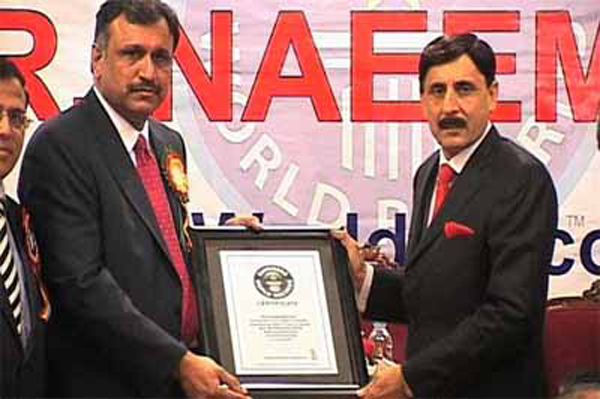
Dr Naeem Taj, a surgeon of the Capital Hospital CDA, has earned fame and prestige for the nation by gaining entry into the Guinness Book of World Record by removing 25.5 cm long gallbladder through 1 cm incision.

Dr Naeem after operating 70-year-old patient Rasheeda Bibi at CDA hospital removed 25.5cm long gallbladder from her body. This is the longest ever gallbladder removed laparoscopically in medical history. Guinness Book of World record has awarded Dr Naeem Taj of CDA with the certificate of “world’s longest gallbladder removed through laparoscopy”.

Executive Director Capital Hospital, Dr Saddique Akbar Satti on the occasion said that he was proud of his surgeon Dr Naeem Taj and expected much more on his credit due to his sheer talent.

Pakistan is Helping Afghan Taliban, Says Nato Report

As Reported by The BBC

The Taliban in Afghanistan are being directly assisted by Pakistani security services, according to a secret Nato report seen by the BBC.
The leaked report, derived from thousands of interrogations, claims the Taliban remain defiant and have wide support among the Afghan people. It alleges that Pakistan knows the locations of senior Taliban leaders.

A BBC correspondent says the report is painful reading for international forces and the Afghan government. Pakistan has strenuously denied any links with the Taliban on previous occasions.

“We have long been concerned about ties between elements of the ISI and some extremist networks,” said US Pentagon spokesman Captain John Kirby, adding that the US Defence Department had not seen the report.

The BBC’s Quentin Sommerville in Kabul says the report – on the state of the Taliban – fully exposes for the first time the relationship between the Pakistani intelligence service (ISI) and the Taliban.

The report is based on material from 27,000 interrogations with more than 4,000 captured Taliban, al-Qaeda and other foreign fighters and civilians.
It notes: “Pakistan’s manipulation of the Taliban senior leadership continues unabatedly”. It says that Pakistan is aware of the locations of senior Taliban leaders.

The report states: “As this document is derived directly from insurgents it should be considered informational and not necessarily analytical.”
Despite Nato’s strategy to secure the country with Afghan forces, the secret document details widespread collaboration between the insurgents and Afghan police and military.

Lt Col Jimmie Cummings, a spokesman for Nato’s International Security Assistance Force (Isaf) in Afghanistan, said the document was “a classified internal document that is not meant to be released to the public”.

“It is a matter of policy that documents that are classified are not discussed under any circumstances,” he said.
The report also depicts the depth of continuing support among the Afghan population for the Taliban, our correspondent says.
It paints a picture of al-Qaeda’s influence diminishing but the Taliban’s influence increasing, he adds.

In a damning conclusion, the document says that in the last year there has been unprecedented interest, even from members of the Afghan government, in joining the Taliban cause. It adds: “Afghan civilians frequently prefer Taliban governance over the Afghan government, usually as a result of government corruption.”

The report has evidence that the Taliban are purposely hastening Nato’s withdrawal by deliberately reducing their attacks in some areas and then initiating a comprehensive hearts-and-minds campaign.

It says that in areas where Isaf has withdrawn, Taliban influence has increased, often with little or no resistance from government security forces. And in many cases, with the active help of the Afghan police and army.

When foreign soldiers leave, Afghan security forces are expected to take control. However according to the report, rifles, pistols and heavy weapons have been sold by Afghan security forces in bazaars in Pakistan.

Pakistani and Indian Chefs Compete on Reality TV

By Sebastian Abbot for The Associated Press

For decades, archenemies Pakistan and India have engaged in a dangerous nuclear arms race. Now they’re also competing in a more cheerful forum. The outcome will be mouthwatering curries and soothing Sufi ballads, not violent conflict.

The fractious neighbors are going head-to-head in a pair of reality TV shows that pit chefs and musicians against each other. Producers hope the contests will help bridge the gulf between two nations that were born from the same womb and have been at each other’s throats ever since.

But so far it hasn’t completely worked out that way. The top Pakistani chef on the cooking show, which is called Foodistan, quit the contest early. He accused the judges of bias toward India and is threatening to sue. The producers denied the allegations.

Pakistan and India were founded in 1947 following the breakup of the British empire. They have fought three major wars, two of them over the disputed territory of Kashmir.

The TV shows do not try to hide or brush over this painful history. They make light of it.

“Now the world’s greatest rivalry is going to get spicier,” said co-host Ira Dubey during one of the early episodes of Foodistan, which first aired in India on Jan. 23 and will be shown in Pakistan starting in mid-February.

Her counterpart, Aly Khan, said the aim of the two teams “would be to grind the opposition into chutney, to make them eat humble pie, to dice them, slice them and fry them on their way to culinary glory.”

Eight chefs from each country were scheduled for individual and team competitions over 26 one-hour episodes, with the winner authoring the first Foodistan cookbook and receiving a trip to three cities of his or her choice anywhere in the world.

There is significant overlap in the cuisines of both countries, as there is in language, music and culture. Pakistanis and Indians both love curry, kebab and biryani – a spiced rice dish. But they often use different ingredients, and dishes can also vary from one region to another within the same country.

Pakistani dishes often include beef, which is not eaten by many people in majority Hindu India for religious reasons. India has more vegetarian dishes, and the food is often cooked with ingredients like coconut milk that are rarely found in Pakistan.

Many Pakistanis and Indians have missed out on enjoying the varied tastes of the other country because mutual enmity has made cross-border travel difficult.

“Even though they are neighbors, Indians don’t know what Pakistani food is like and vice versa,” said Mirza Fahad, a production assistant at India’s NDTV, which developed Foodistan. “It was long overdue to get to know each other’s foods.”

During the first cook-off on the show, filmed in New Delhi, the judges gave four chefs from each side two hours to prepare a biryani, curry, kebab and dessert. Each of the three judges gave the team’s meal a score out of 10.

The judges loved the Iranian-inspired fish biryani cooked by the Pakistanis, their chicken kebab stuffed with figs, olives, bread and mango chutney, and their shahi tukda – a dessert of fried bread soaked in hot milk with spices. They scored 21 out of a possible 30, losing points because a dish of chicken in shalimar curry was a tad chewy.

The Indians ended up winning the first contest by one point with a menu that included chicken tikka with truffle cream, cheese kofta in a tomato and water chestnut curry, lamb biryani and phirni – a sweet rice pudding that they topped with strawberry granita.

The captain of the Pakistani team, Mohammed Naeem, executive chef at the Park Plaza Hotel in Lahore, alleged the judges didn’t have enough knowledge of Pakistani food and were destined from the beginning to pick an Indian to win.

The judges included a British chef, an Indian food critic and a Bollywood actress of Pakistani and French descent.

Another member of the team, Akhtar Rehman, a chef at the Marriott Hotel in Islamabad, said concerns about the judges were fairly widespread on the Pakistani side, but Naeem was the only one to quit.

It remains to be seen whether the music competition – Sur Kshetra, or Musical Battlefield – also will spark ill will.

The contest, which is being filmed in Dubai, is scheduled to air in Pakistan and India starting in mid-February, said Mohammed Zeeshan Khan, a general manager at Pakistan’s Geo TV, which is developing the show.

“Music can unite people across borders and bring them closer together,” said Khan.

The competition will include teams of six musicians from each country between the ages of 18 and 27. The teams will be mentored by two well-known pop singers and actors, Pakistani Atif Aslam and Indian Himesh Reshammiya. They will compete across a range of genres, including jazz, pop, rock and qawwali – traditional Sufi Muslim ballads that are popular in both countries, said Khan.

The grand prize is still being worked out, but Khan said the winner can claim to be “the new musical icon for the subcontinent.”

Husain Haqqani, former Pakistan envoy to US, allowed to travel abroad

By Richard Leiby for The Washington Post

Husain Haqqani, Pakistan’s former ambassador to the United States, was permitted to travel abroad Monday by the nation’s Supreme Court after two months of fending off treason allegations over his purported involvement in a mysterious memo that sought Washington’s help to neuter Pakistan’s powerful military.

The court ruling indicated that authorities seem to have lost interest in continuing to probe Haqqani’s role in the scandal, known here as Memogate, which at one point threatened to bring down the civilian leadership of this coup-prone country.

Haqqani, a confidant of President Asif Ali Zardari, was forced to resign, recalled to Islamabad and ordered not to travel abroad after a Pakistani American tycoon, Mansoor Ijaz, alleged that the diplomat engineered an unsigned missive to the Pentagon hoping to block a coup in the turbulent days after the killing of Osama bin Laden.

Haqqani denied involvement and said Ijaz, a onetime acquaintance, cooked up the memo.

In an e-mail to Agence France-Presse, Haqqani said: “I am glad that the Supreme Court has restored my right to travel, which had been rescinded without any charges being filed against me.” He added that he planned to join his family in the United States.

Memogate prompted a showdown between the army and the civilian leadership, which technically oversees the military, and brought an already shaky government to the verge of collapse. The fissures between the two sides now seem to have been repaired, and the incessant political and media interest in the scandal has waned in recent days.

One reason seemed to be the dwindling credibility of Ijaz, who has yet to appear to testify about his role in the memo, saying he fears for his safety. The bulk of evidence has come from Ijaz, who released logs of what he says are BlackBerry message conversations between him and Haqqani.

Since his return to Islamabad, Haqqani has stayed within the walls of the official government residence, saying he feared for his life.

Earlier this month, U.S. Sens. John McCain (R-Ariz.), Mark Kirk (R-Ill.) and Joseph I. Lieberman (I-Conn.) issued a statement condemning the “harassment” of Haqqani, a former journalist and Boston University professor. They called him a “principled advocate” for Pakistan.

Despite allowing the erstwhile diplomat to travel, the Supreme Court did not drop the matter entirely: It granted a two-month extension to the judicial commission that is probing Memogate. And Haqqani’s lawyer had to guarantee that the former envoy would appear before the court if called, on four days’ notice.

A separate parliamentary investigation is also underway.

Pakistani Doctor Helped U.S. Track Bin Laden, Panetta says

By Saeed Shah for McClatchy Newspapers

A senior American official has for the first time admitted that a Pakistani doctor played a key role in tracking Osama bin Laden to his hideout in northern Pakistan, and called for his release.

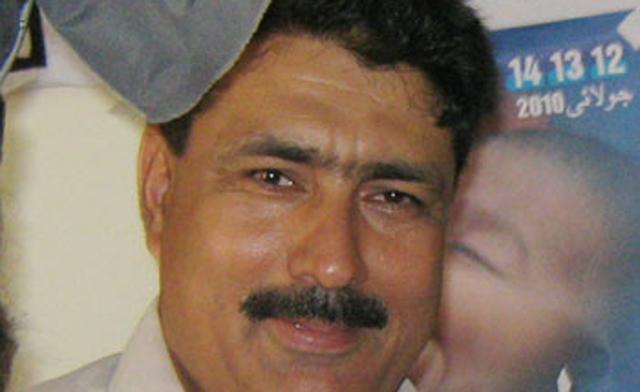
The comments by U.S. Defense Secretary Leon Panetta were the first public confirmation of a part of the bin Laden operation reported by McClatchy Newspapers in July, about how the CIA used Shakil Afridi to try to establish whether the al-Qaida leader was really living in a large house in Abbottabad, northern Pakistan.

This morning in Islamabad, Pakistan’s Inquiry Commission on the Abbottabad Operation issued an order to charge Afridi with treason, local media reported. The timing makes it appear that Pakistan is rebuking Panetta for his public acknowledgement of Afridi’s role. Afridi has been in Pakistani custody since the country’s own spy agency, Inter Services Intelligence (ISI), learned of the secret task performed by the doctor, who set up a fake vaccination program in Abbottabad to get DNA samples from those staying at the compound.

The CIA was never certain that bin Laden was present in the house. Afridi worked for the American intelligence agency in the weeks leading up to the Navy SEALs raid on May 2, setting up an elaborate scheme that was supposedly going house to house to vaccinate residents in Abbottabad.

Panetta told CBS’ “60 Minutes” “I am very concerned about what the Pakistanis did with this individual (Afridi). This was an individual who, in fact, helped provide intelligence that was very helpful with regard to this operation.” Panetta also voiced his belief that elements within Pakistan must have known that bin Laden, or at least someone significant, was present inside the compound. The interview was posted on the “60 Minutes” website. However, it was not included in the segment telecast on Sunday night. The McClatchy investigation discovered that Afridi was arrested by the ISI in late May and was tortured. It is believed that he remains in the custody of the intelligence agency, which is part of the military.

The whereabouts of Afridi’s family, including his American wife of Pakistani origin, is still unknown. The fate of the doctor has become another source of tension between Islamabad and Washington, with American officials pressing Pakistan to free him so he and his family can be resettled in the United States.

The military, which will decide what happens to Afridi, is furious that the CIA recruited Pakistani citizens for clandestine operations inside the country. Privately, officials point out that it is a crime to work for a foreign intelligence agency.
The doctor has turned into a bargaining chip in the failing U.S-Pakistan alliance. It is thought that Pakistan will let him go after public attention on the case wanes and it gets something in return from the U.S. “He was not in any way treasonous towards Pakistan. He was not in any way doing anything that would have undermined Pakistan,” Panetta told “60 Minutes.”

“Pakistan and the U.S. have a common cause here against terrorism,” he said. “And for them to take this kind of action against somebody who was helping to go after terrorism, I just think it is a real mistake on their part.”
Panetta, who was in charge of the CIA at the time of the bin Laden raid, also said that while there was no evidence of Pakistani complicity in keeping the al-Qaida chief, suspicions must have been raised about his hideout. “I personally have always felt that somebody must have had some sense of what was happening at this compound. Don’t forget, this compound had 18-foot walls. … It was the largest compound in the area.

“So you would have thought that somebody would have asked the question, ‘What the hell’s going on there?'” Panetta said.
But asked whether he knew for sure that Pakistan was aware of bin Laden’s presence, he said: “I don’t have any hard evidence, so I can’t say it for a fact.”

England crashes to defeat to Pakistan spinners

By The Sydney Morning Hearld

Left-arm spinner Abdul Rehman took a career best 6-25 to help Pakistan humble England by 72 runs in the second Test in Abu Dhabi, to giving Pakistan unassailable 2-0 lead in the three-match series.
The 31-year-old twice took two wickets in successive overs to dent England’s chase after Andrew Strauss’s side was set a 145-run target on a weary fourth-day Abu Dhabi Stadium pitch.

England was all out for 72 – its lowest total against Pakistan in all Tests.
Rehman’s effort overshadowed Monty Panesar’s 6-62, in his first Test for England in 30 months, which finished Pakistan’s second innings at 214 in the morning.

This is England’s first series defeat after being unbeaten in its previous nine since a loss to the West Indies in early 2009 – a sequence which saw it rise to world No.1 in the Test rankings in August.
Pakistan won the first Test in Dubai by 10 wickets. The third Test will also be played in Dubai, from Friday.

Skipper Misbah-ul Haq said Pakistan wanted to make a match out of it after setting a tricky target.
“We knew that it would be difficult so we wanted to make a match out of it,” said Misbah, who has now won eight Tests with one defeat since taking over the captaincy in October 2010.

“Our bowlers, led by Rehman, responded well and this is a great win.” Strauss showed his disappointment at England’s woeful effort.
“It’s pretty disappointing,” said Strauss, whose side last lost two Tests in a row against South Africa in July 2008. “We must acknowledge how well Pakistan bowled and they thoroughly deserved the series win.”

Rehman was ably assisted by off-spinners Saeed Ajmal (3-22) and Mohammad Hafeez (1-11) in a match in which spinners dominated from the first day.
England lost its top four batsmen in the space of just 37 balls after an extra cautious start on a difficult pitch. Strauss top scored with 32 before he became one of Rehman’s victims during his maiden five-wicket haul.

In the penultimate over before tea, Rehman trapped Kevin Pietersen (one) and two balls later bowled Eoin Morgan (duck) to raise hopes of an unlikely win for Pakistan.

Sensing it could only upset its rival through early wickets, Pakistan opened the bowling with Hafeez, who responded well by catching Alastair Cook (seven) off his own bowling after England had edged cautiously to 21 by the 15th over.
Ian Bell, promoted to No.3 after Jonathan Trott was unwell, was all at sea against master spinner Ajmal and his tentative push went through his legs to hit the stumps. He made only three.

Pietersen, who has been woefully out of form with just 16 runs in the series, managed one before Rehman trapped him and in the same over had the equally out-of-form Morgan bowled to dent England’s hopes of a victory. Rehman then accounted for Trott (one) and Stuart Broad (duck) in the same over to leave England 7-68.

Ajmal dismissed Graeme Swann (duck) and Matt Prior (18) to reach 100 Test wickets in his 19th match, before James Anderson was caught off Rehman to give Pakistan a sensational win.

Earlier, Pakistan lost its last six wickets for 89 runs after resuming at 4-125, with all hopes pinned on Azhar Ali and Asad Shafiq. Panesar took three of those wickets to finish with his eighth five-wicket haul in Tests. Azhar Ali (68) and Asad Shafiq (43) added 88 for the fifth wicket before Panesar struck.

Peace Pipeline Moves Closer To Fruition

By Mohammed Aasim Saleem for Deutsche Welle

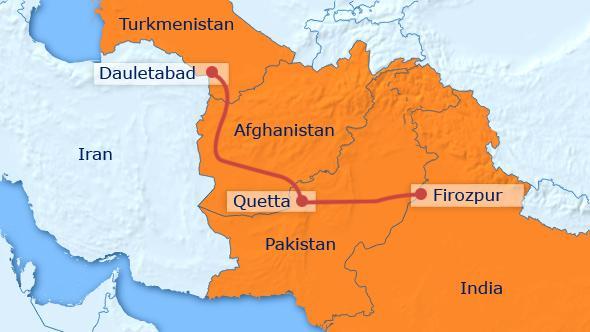
Officials from India and Pakistan have announced they are moving closer to inking a deal to import gas from Turkmenistan via a pipeline through Afghanistan. The 1,700-kilometer “TAPI” duct will transport over 30 billion cubic meters of gas annually from fields in Dauletabad in southeastern Turkmenistan.

In high-level talks in New Delhi this week, Indian Oil Minister S. Jaipal Reddy said “considerable progress” has been made on the project. His Pakistani counterpart, Asim Hussain, added at the meeting that “the issue of transit fees is being discussed with Afghanistan. A joint strategy is also being created between India and Pakistan.”

When the four countries signed a framework agreement back in 2008, the Asian Development Bank estimated the cost of the TAPI pipeline project at around $7.6 billion.

After the talks in New Delhi, the Indian oil minister emphasized that the pipeline would help address the energy needs of the region. Reddy also clarified that security concerns were discussed with Afghan officials, who themselves sought to provide reassurance that necessary measures would be taken to protect the TAPI project.

“We consider it a pipeline of peace,” Reddy said. “Everyone needs gas.”

Improving cooperation between the nuclear armed and traditionally hostile neighbors is seen as a positive development towards establishing long term stability in South Asia.

Pakistan gave India a “Most Favored Nation” trading status when the countries’ commerce secretaries met in New Delhi in November last year to discuss energy and bilateral trade. Indian commerce chief Rahul Khullar expressed his desire to boost bilateral trade to $6 billion within the next three years. Currently, total trade amounts to $2.7 billion.

Reddy said that Pakistan had pledged to also consider a proposal to import Indian petroleum products, highlighting the cost advantages for Pakistan. India, meanwhile, offered electricity to Pakistan through its power plants in Punjab and Gujrat.

The Indian oil minister went on to express disappointment over a failed Iran-Pakistan-India gas pipeline project. With the US leaving no stone unturned in trying to corner Iran over its nuclear ambitions, any possibility of India, Afghanistan or Pakistan going against the Obama administration is somewhat remote. India imports 12 to 14 percent of its oil from Iran, making the Islamic Republic India’s second largest source of oil after Saudi Arabia.

There was significant domestic pressure in India as the analysts and masses called for a stern stand against the US in determining trade relations with Iran. With other regional countries, including China, also refusing to follow US directions, India is still continuing with the import of oil from Iran. In this regard, Reddy said that New Delhi would continue importing oil from Iran and was not bound by new sanctions imposed by the European Union on the Islamic Republic earlier this week.

“We, as a member of the UN, are obliged to follow UN sanctions. Other sanctions imposed by big blocs of countries, we can have some freedom there,” he added further.

Improving relations and cooperation in the energy sector between India and Pakistan will go a long way to establishing harmony and stability in the region. Pakistan is experiencing a severe energy crisis whilst India needs to feed its rapidly developing economy. Mutual dependency and cooperation in this sector with projects such as the TAPI pipeline can also ensure smoother political ties.

Pakistanis for Peace Editor’s Note– A Peace pipe was often used between the Native American tribes when they ended their wars and called a truce. A different sort of peace pipe between Turkmenistan and India via Pakistan can do great wonders for the bilateral relations of the two feuding neighbors and must be encouraged to fruition.

For Many in Pakistan, a Television Show Goes Too Far

By Declan Walsh for The New York Times

One morning last week, television viewers in Pakistan were treated to a darkly comic sight: a posse of middle-class women roaming through a public park in Karachi, on the hunt for dating couples engaged in “immoral” behavior.

Panting breathlessly and trailed by a cameraman, the group of about 15 women chased after — sometimes at jogging pace — girls and boys sitting quietly on benches overlooking the Arabian Sea or strolling under the trees. The women peppered them with questions: What were they doing? Did their parents know? Were they engaged?

Some couples reacted with alarm, and tried to scuttle away. A few gave awkward answers. One couple claimed to be married. The show’s host, Maya Khan, 31, demanded to see proof. “So where is your marriage certificate?” she asked sternly.

This hourlong spectacle, broadcast live on Samaa TV on Jan. 17, set off a furious reaction in parts of Pakistan. Outrage sprang from the Internet and percolated into the national newspapers, where writers slammed Ms. Khan’s tactics as a “witch hunt.”

“Vigil-aunties,” read one headline, referring to the South Asian term “aunty” for older, bossy and often judgmental women.

Now, the protests are headed to court. On Friday, four local nongovernment organizations will file a civil suit against Samaa TV in Pakistan’s Supreme Court, hoping to galvanize the country’s top judges into action.

“Journalists don’t have the right to become moral police,” said Adnan Rehmat of Intermedia, a media development organization that is among the petitioners. “We need to draw a line.”

Images of moral vigilantes prowling the streets have an ominous resonance in Pakistan, where many still recall the dark days of the Islamist dictator Gen. Mohammad Zia ul-Haq in the 1980s, when the police could demand to see a couple’s nikkahnama — wedding papers — under threat of imprisonment.

But the strong reaction is also drawn from a pressing contemporary worry: that the budding television media, seen as a force for democracy and greater social freedom for much of the past decade, have lost their way as part of a cutthroat battle for ratings.

“It really aggravates me that the media is using their power to intrude and invade our privacy, often with no good reason,” said Mehreen Kasana, a 22-year-old American-educated blogger from Lahore, who wrote a widely circulated protest against the Samaa TV show.

The controversy has rekindled a debate about the direction of Pakistan’s TV industry. Since liberalization in 2000, the sector has exploded from one channel — the state-controlled one — to more than 80 today, 37 of which carry national or local current affairs.

The media revolution has transformed social and political boundaries: in 2007, feisty coverage played a central role in pushing Pervez Musharraf toward the exit; in recent weeks it helped guard against a possible military coup.

But television is also a lucrative business controlled by powerful, largely unaccountable tycoons. Last year Pakistan’s television stations had advertising revenues of more than $200 million, according to Aurora, an industry journal — 28 percent more than the previous year.

Amid stiff competition for viewers, channels have relied on populist measures — rowdy political talks shows and, in recent times, vigilante-style “investigative” shows modeled on programs in neighboring India.

Some have a noble objective: holding to account crooked public servants, police officers and even fellow journalists. But others have veered into territory that could be described as Pakistan’s answer to Jerry Springer — voyeuristic, mawkish and intrusive.

In recent months, one reporter screamed at a man accused of child rape as he awaited trial outside a courthouse; another hectored a man said to be a self-confessed necrophile inside a jail cell; and a TV reporter “raided” a gathering of whisky drinkers, even though alcohol flows freely at many media parties.

Abbas Nasir, a former head of Dawn News television, said he was “nauseated” by some coverage.

“Hosts are under pressure to bring in ratings, and there is carte blanche to do the most bizarre things,” he said.

Another critic derided such reporters as “pussycat vigilantes” because they avoided challenging rich or powerful Pakistanis, whose Western-style lifestyles go unexamined.

“They only go after the people they know will not bite back,” said Nadeem Farooq Paracha, a culture writer.

Ms. Khan’s show touched a raw nerve because it combined simmering concern over media ethics with wider fears about society’s conservative tilt. Even General Zia’s son was appalled. In answer to a question on Twitter, Ijaz ul-Haq, a politician from Punjab Province, said he was “still in shock by what I’ve heard about her show.”

In a telephone interview on Tuesday, Ms. Khan rejected her critics, calling them “an elite class that don’t even watch my show,” and said the show merely intended to highlight the dangers that unaccompanied youths face in Karachi.

She also denied that there was anything unusual about asking couples for their wedding certificate — even though she does not carry one. All of “Pakistan knows me and my wedding pictures,” she said. “So I don’t have to.”

But on Wednesday, Samaa TV issued a formal apology for her show, followed by a short clip of Ms. Khan, sitting on a bed, offering an apology of sorts. “I never intended to make you teary-eyed or hurt you,” she said.

The furor has renewed long-standing demands for media regulation. With the state-run Pakistan Media Regulatory Authority seen as ineffective, the organizations approaching the Supreme Court on Friday hope the judiciary can help. “We need to hold the media to account,” Mr. Rehmat said.

But others argue that involving the courts, with their history of heavy-handed interventions, could open the door to state licensing of free speech. “It could backfire,” said Beena Sarwar, a journalist who helped rally protests against Ms. Khan’s show. “The media needs to do this themselves.”

Amid the polemic, there is one bright spot: the use of Twitter and Facebook to stoke debate has shown how, even as social space contracts in a turbulent society, the virtual space is opening up new possibilities.

But so far, the use of social media has been largely confined to the country’s English-speaking minority. It was striking how little attention Ms. Khan’s show received in the Urdu media, which is read or watched by the vast majority of Pakistanis.

“My real worry is that Pakistan is moving rightwards, and this time the face won’t have a beard,” said Mr. Nasir, the former head of Dawn News television. “And before people know it, they won’t know what’s hit them.”

Pakistanis for Peace Editor’s Note- Samaa Tv and host Maya Khan ought to be ashamed of themselves for calling this program journalism. Vulture reporting is more appropriate. Highly intrusive and showing a complete disregard for private citizens who are meeting in a public place is no place for a TV channel.  This certainly strengthens the religious extremists in Pakistan, shoving their brand of austere Wahaabi Islam down the throats of the majority Barelvi/Sufi population of Pakistan.

Meanwhile the Pakistani Telecom Authority is curtailing freedom of speech by mandating mobile phone operators to ban certain ‘dirty’ words, as the Pakistan Electronic Media Regulatory Authority lacks the moral and legal mindset to stop a television channel on trampling citizen’s privacy and freedoms. They should shut this show immediately and get this so called ‘reporter’ off the air.