Archive for the ‘ Pakistan ’ Category

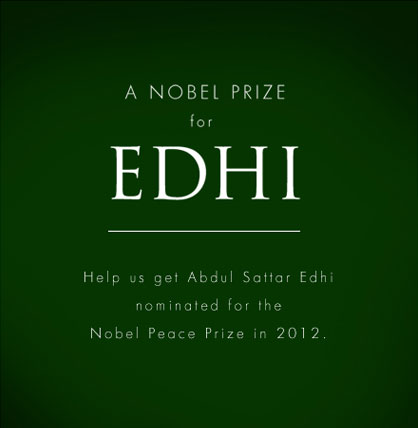
A Nobel Prize for Edhi

Pakistanis for Peace and Manzer Munir cordially and humbly request you to please sign this petition to nominate Abdul Sattar Edhi for the Nobel Peace Prize.

The Nobel Peace prize is an annual prize awarded to individuals who have made formidable contributions to the pursuit of peace and have, through their work, changed the world for the better.

As the founder of Pakistan’s largest welfare organization, the Edhi Foundation and trust, Mr Abdul Sattar Edhi embodies the spirit of this prize, and is a deserving candidate for this honour. He has single-handedly served countless Pakistani’s and has left a lasting impact on his fellow countrymen and the world.

Quite simply, there has never been anyone more deserving of the Nobel Peace prize in its entire history than Mr Abdul Sattar Edhi. Please help us get him his dues by having him finally nominated this year.

Please sign this petition to show your support for the nomination of Mr.Edhi for the 2012 Nobel Peace Prize.


Terrorism Will Not Harm Pakistan Ties: China

As Reported By The Business Recorder

Cross-border terrorism in China’s ethnically divided far western region of Xinjiang will not harm the nation’s diplomatic ties with Pakistan and other neighbouring countries, a regional official said on Wednesday.

Chinese security authorities had found “countless ties between ‘East Turkestan’ terrorists and terrorists from our neighbouring countries,” regional government head Nur Bekri said, quoting the name used by members of the Uighur ethnic minority who seek an independent state in Xinjiang.

“But our neighbouring countries, especially Pakistan, have been declaring officially that in terms of any violent activity aimed at China, they will maintain China’s national security and core interests,” Bekri told reporters on the sidelines of China’s annual parliament.

He said the basic interests of China, Pakistan and other countries bordering Xinjiang were “the same.”
“So just a few terrorists will definitely not harm the China-Pakistan relationship,” Bekri said.

He said the vast region – which borders Pakistan, Afghanistan, Tajikistan, Kyrgyzstan and Kazakhstan – was “generally stable” despite recent ethnic conflict and the threat of terrorism.
The government has reported several terrorist attacks that killed dozens of people in Xinjiang in the past few years.

But Uighur exile groups have accused China of using the global fight against terrorism as an excuse to suppress political and religious activity among Uighurs.
Ethnic violence and a clash with police left about 20 people dead in southern Xinjiang’s Yecheng town last week, according to reports by international rights groups and state media.

Xinjiang’s capital, Urumqi, and other areas of Xinjiang have remained tense since protests by Uighurs escalated into rioting that left about 200 people dead and 1,700 injured in the city in July 2009.

Security Forces in Kashmir Charged With Rights Abuses

By Riyaz Masroor for The BBC

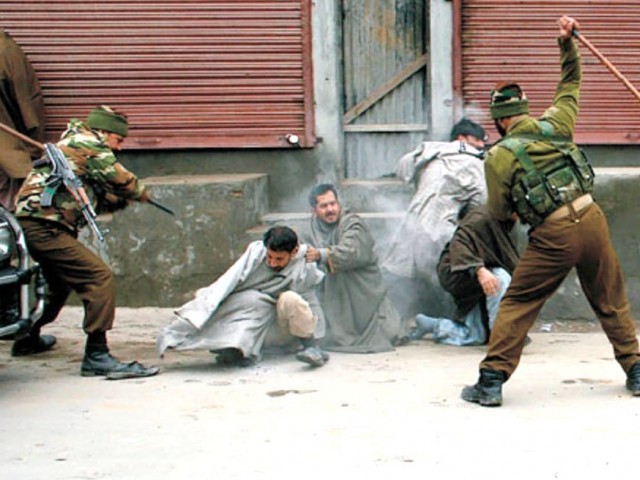
The authorities in Indian-administered Kashmir have launched more than 400 cases of alleged human rights abuses against security forces personnel. The region’s minister for internal security released the figures in the Jammu and Kashmir legislative assembly.

Kashmiri officials want to revoke the Armed Forces Special Powers Act, which prevents prosecution of security staff. There has been a rebellion against Indian rule in divided Kashmir, which is also claimed by Pakistan.

Thousands of people have been killed in the region since the rebellion began in 1989, though violence has dropped off recently. India’s defence ministry has resisted moves to revoke the Armed Forces Special Powers Act (AFSPA).

According to the state government of Indian-administered Kashmir, 444 soldiers, police and security officials have been charged in the past three years.

Nearly 300 cases have been seen in local courts, the government said on Monday in a written response to the Jammu and Kashmir assembly. Human rights activists say the Indian authorities are forcing the Kashmir government to move slowly on these cases.

Kashmiri officials have been pleading with Delhi to scrap the AFSPA so they can proceed with prosecuting security officials against whom cases are pending.

But army officials say it is needed to prevent militant groups based in Pakistan from focusing their resources on Kashmir.

Pakistan’s Hindu Girls Forced into Muslim Marriages

As Reported by IRIN

Sixteen-year-old Ameena Ahmed*, now living in the town of Rahim Yar Khan in Pakistan’s Punjab Province, does not always respond when her mother-in-law calls out to her. 


“Even after a year of `marriage’ I am not used to my new name. I was called Radha before,” she told IRIN on a rare occasion when she was allowed to go to the corner shop on her own to buy vegetables. 


Ameena, or Radha as she still calls herself, was abducted from Karachi about 13 months ago by a group of young men who offered her ice-cream and a ride in their car. Before she knew what was happening, she was dragged into a larger van, and driven to an area she did not know. 


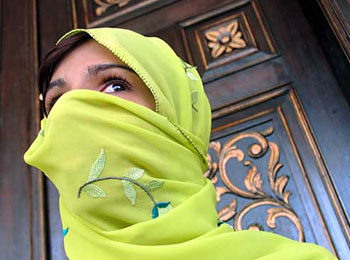
She was then pressured into signing forms which she later found meant she was married to Ahmed Salim, 25; she was converted to a Muslim after being asked to recite some verses in front of a cleric. She was obliged to wear a veil. Seven months ago, Ameena, who has not seen her parents or three siblings since then and “misses them a lot”, moved with her new family to southern Punjab. 


“The abduction and kidnapping of Hindu girls is becoming more and more common,” Amarnath Motumal, a lawyer and leader of Karachi’s Hindu community, told IRIN. “This trend has been growing over the past four or five years, and it is getting worse day by day.

Pakistan is one of several nations across Asia suffering from a shortage of females as sex-selective abortion has played growing role in the deficit. Portable ultrasound machines have made gender selection much easier. A 2005 study quoted by Wiki estimated that more than 90 million females were “missing” from the expected populations in Afghanistan, Bangladesh, China, India, Pakistan, South Korea and Taiwan alone.

He said there were at least 15-20 forced abductions and conversions of young girls from Karachi each month, mainly from the multi-ethnic Lyari area. The fact that more and more people were moving to Karachi from the interior of Sindh Province added to the dangers, as there were now more Hindus in Karachi, he said. 


“They come to search for better schooling, for work and to escape growing extremism,” said Motumal who believes Muslim religious schools are involved in the conversion business. 


“Hindus are non-believers. They believe in many gods, not one, and are heretics. So they should be converted,” said Abdul Mannan, 20, a Muslim student. He said he would be willing to marry a Hindu girl, if asked to by his teachers, “because conversions brought big rewards from Allah [God]. But later I will marry a `real’ Muslim girl as my second wife,” he said. 


According to local law, a Muslim man can take more than one wife, but rights activists argue that the law infringes the rights of women and needs to be altered. 


Motumal says Hindu organizations are concerned only with the “forced conversion” of girls under 18. “Adult women are of course free to choose,” he said. 


“Lured away”

Sunil Sushmt, 40, who lives in a village close to the city of Mirpurkhas in central Sindh Province, said his 14-year-old daughter was “lured away” by an older neighbour and, her parents believe, forcibly converted after marriage to a Muslim. “She was a child. What choice did she have?” her father asked. He said her mother still cries for her “almost daily” a year after the event. 


Sushmat is also concerned about how his daughter is being treated. “We know many converts are treated like slaves, not wives,” he said. 


According to official figures, Hindus based mainly in Sindh make up 2 percent of Pakistan’s total population of 165 million. “We believe this figure could be higher,” Motumal said. 


According to media reports, a growing number of Hindus have been fleeing Pakistan, mainly for neighbouring India. The kidnapping of girls and other forms of persecution is a factor in this, according to those who have decided not to stay in the country any longer. 


“My family has lived in Sindh for generations,” Parvati Devi, 70, told IRIN. “But now I worry for the future of my granddaughters and their children. Maybe we too should leave,” she said. “The entire family is seriously considering this.” 


Pakistanis for Peace Editor’s Note– This is an absolutely despicable practice that the Pakistani government needs to put an end to just like the blasphemy laws of the nation. The religious minorities of Pakistan deserve equal rights, protections and freedoms.

Pakistan Builds Web Wall Out in the Open

By Eric Pfannier for The New York Times

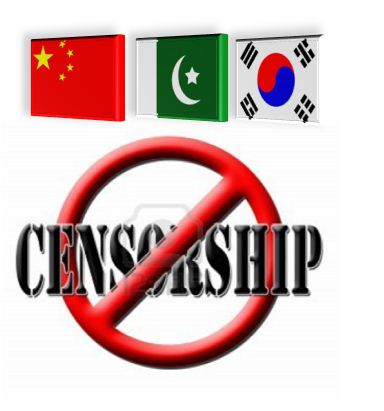
Many countries censor the Internet, but few spell out their intentions as explicitly as Pakistan.

In an effort to tighten its control over the Internet, the government recently published a public tender for the “development, deployment and operation of a national-level URL filtering and blocking system.”

Technology companies, academic institutions and other interested parties have until March 16 to submit proposals for the $10 million project, but anger about it has been growing both inside and outside Pakistan.

Censorship of the Web is nothing new in Pakistan, which, like other countries in the region, says it wants to uphold public morality, protect national security or prevent blasphemy. The government has blocked access to pornographic sites, as well as, from time to time, mainstream services like Facebook and YouTube.

Until now, however, Pakistan has done so in a makeshift way, demanding that Internet service providers cut off access to specific sites upon request. With Internet use growing rapidly, the censors are struggling to keep up, so the government wants to build an automatic blocking and filtering system, like the so-called Great Firewall of China.

While China and other governments that sanitize the Internet generally do so with little public disclosure, Pakistan is being surprisingly forthcoming about its censorship needs. It published its request for proposals on the Web site of the Information and Communications Technology Ministry’s Research and Development Fund and even took out newspaper advertisements to publicize the project.

“The system would have a central database of undesirable URL’s that would be loaded on the distributed hardware boxes at each POP and updated on daily basis,” the request for proposals says, referring to uniform resource locators, the unique addresses for specific Web pages, and points of presence, or access points.

“The database would be regularly updated through subscription to an international reputed company maintaining and updating such databases,” according to the request, which was published last month.

The tender details a number of technical specifications, including the fact that the technology “should be able to handle a block list of up to 50 million URL’s (concurrent unidirectional filtering capacity) with processing delay of not more than 1 milliseconds.”

Following the Arab Spring, which demonstrated the power of the Internet to help spread political and social change, Pakistan’s move to clamp down has set off a storm of protest among free-speech groups in the country and beyond.

Opponents of censorship say they are doubly appalled because they associated this kind of heavy-handed approach more with the previous regime of Gen. Pervez Musharraf than with the current government of President Asif Ali Zardari.

“The authorities here are big fans of China and how it filters the Internet,” said Sana Saleem, chief executive of Bolo Bhi, a group that campaigns against restrictions on the Internet. “They overlook the fact that China is an autocratic regime and we are a democracy.”

“What makes this kind of censorship so insidious is that they always use national security, pornography or blasphemy as an explanation for blocking other kinds of speech,” Ms. Saleem said, adding that her site had been blocked for several months in 2010 when it made reference to a ban on Facebook. Access to the social networking service had been restricted because of a page featuring a competition to draw the prophet Mohammed — something that is considered blasphemous by Muslims.

The Technology Ministry’s Research and Development Fund says in its tender that the Internet filtering and blocking system will be “indigenously developed,” but campaigners like Ms. Saleem say they think it is likely the agency will try to adapt Western technology for the purpose.

To try to prevent this from happening, Ms. Saleem wrote to the chief executives of eight international companies that make Net filtering technology, asking them to make a public commitment not to apply for the Pakistani grant.

On Friday, one of them, Websense, which is based in San Diego, responded, declaring in a statement on its Web site that it would not seek the contract.

“Broad government censorship of citizen access to the Internet is morally wrong,” Websense said. “We further believe that any company whose products are currently being used for government-imposed censorship should remove their technology so that it is not used in this way by oppressive governments.”

Websense had previously withdrawn the use of its technology from Yemen after facing accusations from the OpenNet Initiative, a U.S.-Canadian academic group, and other organizations that it had been used by the government of that country to stifle political expression on the Internet.

Governments around the world buy filtering and blocking technology to root out illegal content like child pornography. Some private companies employ it to restrict access to social networks and other distractions on company computers.

But the use of Western technology to rein in political speech in countries with repressive regimes has come under increasing scrutiny since the Arab Spring. The OpenNet Initiative said in a report last year that at least nine governments in the Middle East or North Africa had used such products, with the Western companies maintaining lists of sites to be blocked, including sites featuring skeptical views of Islam and even dating services.

Even before implementing its new system, Pakistan has been an active censor. The country was 151st, out of 179, on a ranking of media freedom by the Paris-based group Reporters Without Borders in 2011.

“Reporters Without Borders urges you to abandon this project, which would reinforce the arsenal of measures for communications surveillance and Internet censorship that have already been put in place by your government,” the group wrote in a letter Friday to Prime Minister Yousaf Raza Gilani.

To free-speech advocates in Pakistan, the government’s seeming insouciance about censorship is a particular cause for alarm.

“This is a case study,” said Ms. Saleem of Bolo Bhi, which is based in Karachi and whose name means “speak up.” “No government has ever done this so publicly.”

Pakistan’s Move on Trade With India Can Help in Wider Normalization of Ties

As Reported by The Economic Times

The reported move by the Pakistan government to phase out major restrictions on trade with India by switching to the negative list, and doing away with that too by the end of the year, is wholly welcome. Normalising trade relations with India will help establish a template of wider normalization of mutual ties.

An indication of deep-rooted animosities and suspicions which have stymied that goal can be seen in the opposition from quarters within Pakistan to Islamabad’s declared – and logical – aim of granting India the World Trade Organization-compliant Most Favoured Nation status next year.

But the arrangement to separate commerce from thornier issues like Kashmir and Pakistan’s actions against those accused of terror attacks against India can lay a foundation for minimising mutual distrust. For New Delhi, this would be in keeping with the idea of engaging various power centres in Pakistan, given the fractured power structure in that country.

While being perfectly aware that policy on India, like in other areas deemed to be ‘strategic’ by the military, is mostly determined by the latter, the aim should be to defang and isolate hardline elements by positing the real and tangible benefits enhanced mutual trade can offer Pakistan.

And there certainly is ample scope to do that: direct Indo-Pak trade is less than 1% of their global trade; annual mutual trade was around $2.7 billion through March 2011, which, despite being up 50% from the previous year is still measly compared to, say, India’s $60 billion annual trade with China or the potential.

But a beginning has been made with Pakistani industry backing the new move, which, in turn, can help allay fears that Indian goods will swamp Pakistani markets. What will happen is the ending of trade routed through third countries (mostly Dubai).

Legitimate mutual trade can lead to both countries envisaging cooperation in a wider trading entity comprising Afghanistan and Central Asia, with obvious benefits for regional stability. This might sound utopian for now, but mutually-beneficial commerce does have a way of tempering hostilities.

Saving Pakistan’s Face?

By Huma Yusuf for The New York Times

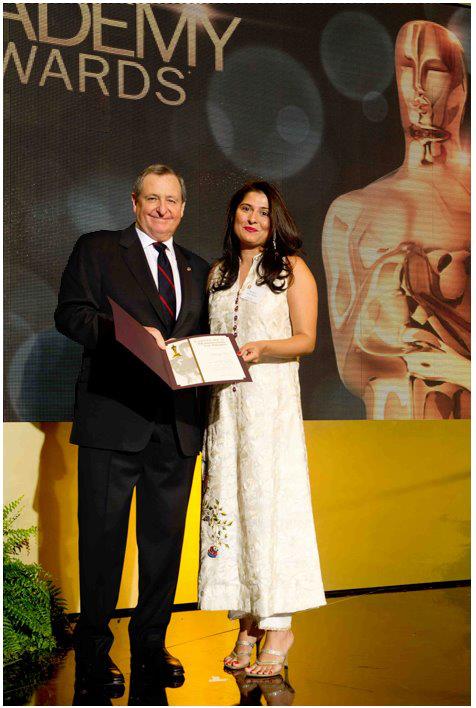
On Monday morning, Pakistanis awoke to news that their country had just won its first Oscar. Sharmeen Obaid-Chinoy and her co-director Daniel Junge received the award for best documentary in the short-subject category for “Saving Face.” The film chronicles the work of the British-Pakistani plastic surgeon Mohammad Jawad, who performs reconstructive surgery on women who were attacked with acid.

The media in Pakistan couldn’t get enough of the story. Television channels repeatedly broadcast footage of Obaid-Chinoy receiving her award. Fans posted on their Facebook pages pictures of the filmmaker on the red carpet. Her acceptance speech was tweeted and retweeted: “To all the women in Pakistan who are working for change, don’t give up on your dreams — this is for you.”

Politicians tried to share the limelight. Altaf Hussain, the head of the Karachi-based M.Q.M. party, congratulated Obaid-Chinoy publicly. Prime Minister Yousaf Raza Gilani announced that she would be given a civilian award for making Pakistan proud and catalyzing social change.

The chain restaurant Nando’s, which specializes in grilled chicken, even designed an advertising campaign riffing on the documentary’s name: “From one hot chick to another: Thanks for Saving our Face.”

But Obaid-Chinoy’s triumph, a rare piece of good news out of Pakistan, also reveals the extent to which Pakistanis have become accustomed to feeling dejected.

For once, Pakistan is making headlines for a positive achievement, not another terrorist attack, political squabble or natural disaster. For Pakistanis who have been struggling to restore their country’s flailing image, it’s a relief to see a talented, young Pakistani woman receiving a coveted international award — and hobnobbing with George Clooney. As the cultural critic Nadeem F. Paracha put it in a tweet, “Viva la @sharmeenochiony! The pride of Pakistan is in their artistes & intellectuals. Not in bombs and bans!”

But what does it say about a country that it would rejoice at attracting global attention for rampant violations of women’s rights?

Pakistan is the world’s third-most dangerous country for women. Over 150 Pakistani women are the victims of acid attacks each year. Activists for women’s rights claim that only 30 percent of acid cases are reported and that this form of violence is extremely widespread because acid is easily available and inexpensive. Last year, the government passed the Acid Control and Acid Crime Prevention Bill, which imposes on attackers prison terms from 14 years to life and fines of up to one million rupees (about $11,000). But the new law has yet to be rigorously implemented, and attitudes toward women’s rights are far from reformed.

Obaid-Chinoy’s film highlights these problems — hardly a point of pride for Pakistanis.

Once the Oscar high subsides, Pakistanis will have to contend with the fact that their nation remains notorious for its challenges, violence against women included. Then the question will be, can the hundreds of thousands of Pakistanis who rooted for Obaid-Chinoy at the Academy Awards muster the same enthusiasm to tackle the problems that her work exposes?

Huma Yusuf is a columnist for the Pakistani newspaper Dawn and was the 2010-11 Pakistan Scholar at the Woodrow Wilson International Center for Scholars in Washington.

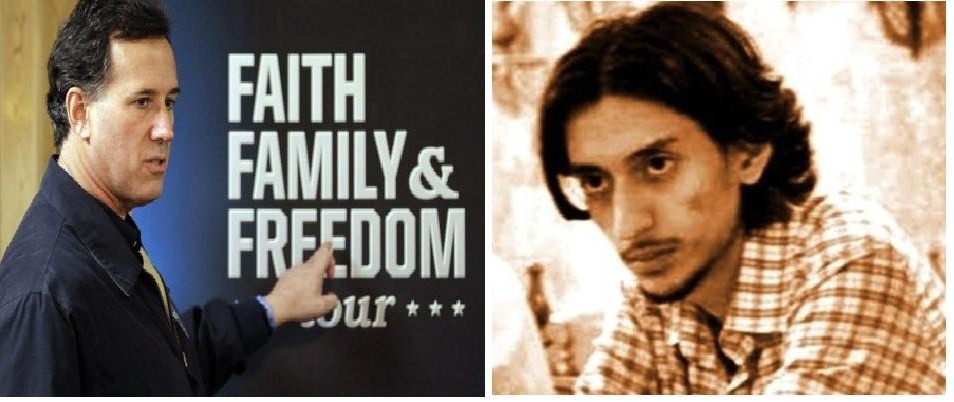
Rick Santorum, Meet Hamza Kashgari

By George Packer for The New Yorker

President Kennedy’s 1960 speech on religious freedom makes Rick Santorum “throw up.” “What kind of country do we live in that says only people of nonfaith can come into the public square and make their case?” Santorum says. It’s a central part of his campaign strategy to distort such things as a Kennedy speech, or an Obama speech, to whip up outrage at the supposed war on religious people in America. Here’s what Kennedy said:

I believe in an America where the separation of church and state is absolute; where no Catholic prelate would tell the President—should he be Catholic—how to act, and no Protestant minister would tell his parishioners for whom to vote; where no church or church school is granted any public funds or political preference, and where no man is denied public office merely because his religion differs from the President who might appoint him, or the people who might elect him… I believe in a President whose religious views are his own private affair.

Kennedy said much more, but this is the strongest passage of that famous campaign speech to a group of ministers in Houston, in which he argued that the election of a Catholic President who believed in the Constitution shouldn’t concern any American who believed in the Constitution—and, Santorum says, “That makes me throw up.” Santorum’s rhetorical eloquence is about equal to his analytical skill. Kennedy had nothing to say against believers entering public life, or believers bringing their religious conscience to bear on public policy. He spoke against any move to make religion official. The Constitution speaks against this, too—Article VI establishes an oath to the Constitution as the basis for public office, and explicitly prohibits a religious test, while the First Amendment forbids the official establishment of religion and protects its free practice. Santorum claims to be a constitutionalist, but that’s just rhetoric and opportunism. Santorum believes in a religious test—that may be all he believes in. (Mitt Romney believes in a religious test of a slimy, halfway, Romneyesque variety: in 2007, he reportedly dismissed the idea of appointing a Muslim to his Cabinet, saying, “Based on the numbers of American Muslims [as a percentage] in our population, I cannot see that a Cabinet position would be justified.” So does Newt Gingrich, who has made atheist-baiting a central part of his political business.)

Kennedy seemed to have someone like Santorum in mind when he warned, “For while this year it may be a Catholic against whom the finger of suspicion is pointed, in other years it has been—and may someday be again—a Jew, or a Quaker, or a Unitarian, or a Baptist. It was Virginia’s harassment of Baptist preachers, for example, that led to Jefferson’s statute of religious freedom. Today, I may be the victim, but tomorrow it may be you—until the whole fabric of our harmonious society is ripped apart at a time of great national peril.” In 1960, it would have been hard to imagine how thoroughly religious sectarianism and intolerance would infect American politics, and especially one major party. The outcry over Obama’s policy on health insurance and contraception has almost nothing to do with that part of the First Amendment about the right to free religious practice, which is under no threat in this country. It is all about a modern conservative Kulturkampf that will not accept the other part of the religion clause, which prohibits any official religion.

Santorum, like most conservatives these days, says he is a constitutionalist. Jefferson wrote, and Madison worked to pass, the Commonwealth of Virginia’s Bill for Establishing Religious Freedom, which held that “all men shall be free to profess, and by argument to maintain, their opinions in matters of religion, and that the same shall in no wise diminish, enlarge, or affect their civil capacities.” Jefferson included an even stronger phrase that was eventually struck out by amendment: “the opinions of men are not the object of civil government, nor under its jurisdiction.” Presumably, all of this originalist nonsense makes Rick Santorum heave, gag, vomit, and puke.

What makes me throw up is the story of Hamza Kashgari. It’s a shame that every American doesn’t know his name. He’s a young, slender, philosophical-minded columnist and blogger from Saudi Arabia who, earlier this month, dared to tweet phrases of an imagined conversation with the Prophet Mohammad: “I have loved things about you and I have hated things about you and there is a lot I don’t understand about you…I loved the rebel in you…I will not pray for you.” Within twenty-four hours, more than thirty thousand furious replies had been posted on Twitter. Within a few days, more than twenty thousand people had signed on to a Facebook page called “Saudi People Want Punishment for Hamza Kashgari.” (So much for Arab liberation by social media.) One commenter wrote, “The only choice is for Kashgari to be killed and crucified in order to be a lesson to other secularists.”

Kashgari backed down, apologized profusely, and continued to be attacked. He went into hiding. Clerics and government officials threatened him with execution for blasphemy. He fled to Malaysia, hoping to continue to fly to New Zealand, where he would ask for asylum. But Malaysian officials, behaving against law and decency, had him detained at the airport and sent back to Saudi Arabia, where he was promptly arrested. Since mid-February there’s been no word of Kashgari. The Saudis have said they will put him on trial. What a pity there’s no First Amendment to protect him.
If only he had more powerful friends—if only Christopher Hitchens were still alive—Hamza Kashgari would be called the Saudi Rushdie. There would be a worldwide campaign to pressure the Saudis into releasing him. The United States would offer him asylum and quietly push our friends the Saudis into letting him go. But we’ve come to expect these things from our friends the Saudis.

We’ve come to expect these things from the Muslim world. We expect Afghans to riot for days and kill Americans and each other because a few NATO soldiers were stupid enough to burn copies of the Koran along with other objects discarded from a prison outside Kabul. Yes, those soldiers were colossally, destructively insensitive. Yes, we should know by now. Yes, the reaction has a lot to do with ten years of war and occupation and civilian deaths and marines urinating on Taliban corpses. Still, can we have a little outrage at the outrage? Can we reaffirm that human lives are more sacred than books? Can we point out that every time something like this happens, there’s a manufactured and whipped-up quality to much of the hysteria, which has its own cold political calculation (not unlike the jihad against secularists by Sean Hannity and other Salafist mouthpieces)?

Saudi Arabia needs an absolute separation of religion and state so that Hamza Kashgari can say things that other people don’t like without having to flee for his life. Afghanistan needs it, too, and so does Pakistan, so that mob violence and political assassination can’t enjoy the encouragement of religious authorities and the tolerance or acquiescence of government officials. And America needs it so that our Presidents’ religious views remain their own private affairs, and Rick Santorum and his party can’t impose dominion of one narrow, sectarian, Bible-based idea of the public good over a vast, pluralist, heterodox, freedom-loving democracy.

Pakistan Wins Its First Oscar

By Manzer Munir for Pakistanis for Peace

Pakistan won its first Oscar Sunday night when director Sharmeen Obaid Chinoy’s film, Saving Face, won at the 84th Academy Awards at the Kodak Theatre in Los Angeles, California.

The film was directed by Daniel Junge and Pakistani born Sharmeen Obaid Chinoy and won in its category for the Best Documentary (Short Subject), making it the first win for Chinoy and for Pakistan. Earlier in the evening, Asghar Farhadi of Iran won that country its first Oscar when his movie, A Separation, won in the Best Foreign Language Film category.

Sharmeen’s film, Saving Face, follows London-based Pakistani plastic surgeon, Dr Muhammad Jawad, on his travels to Pakistan where he performs reconstructive surgery on survivors of acid violence. The short film features two women who were attacked by acid and their struggles for justice as well as healing. It is estimated that over 100 such attacks occur each year in Pakistan and many more are feared unreported as under-reporting of this ‘acid violence‘ due to the many inequalities that women face in Pakistan.

Sharmeen Obaid-Chinoy earlier won an Emmy for her documentary, Pakistan: Children of the Taliban in 2010. “To all the women in Pakistan working for your dreams, this is for you”, Sharmeen said at her acceptance speech Sunday night in front of the packed star studded audience in the Kodak Theatre.

It is hoped by many in Pakistan that this Oscar win will bring more attention to the plight of women in their beleaguered country.

“Saving Face” Pakistan’s first Academy Award Nomination

By Mudassar Ali Khan for The Washington Times

On 26th February 2012, the world will discover three different faces of Pakistan during the 84th Academy Awards, with the nomination of a Pakistani documentary ‘Saving Face’ for the best documentary (short subject).

The first face is the Pakistani filmmaker who is contending for the Oscar, the second is the internationally acclaimed British-Pakistani plastic surgeon who traveled to his motherland to heal victims of acid attacks, and last but not the least is of the heroic survivors of acid attacks who are struggling to deal with the consequences of their disfigurement.

‘Saving Face’ tells the story of a British-Pakistani plastic surgeon, Dr. Muhammad Jawad, who traveled to Pakistan to treat acid attack victims. Jawad has made several trips to Pakistan with surgical teams to work with the victims. He also organized a major medical relief effort to help earthquake survivors in Pakistan in 2005. In 2008, he received widespread public and international media attention when he performed his pioneering treatment on British model and television presenter Katie Piper, whose ex-boyfriend threw acid on her face.

Central characters of this documentary are two women, Zakia and Rukhsana, from southern Punjab who survived acid attacks and have been fighting for justice ever since. Instead of only portraying the misery of the victims, the film focuses on the vigor with which they endure the process of emotional and physical healing.

Sharmeen Obaid-Chinoy is the first Pakistani filmmaker to win an Oscar nomination for co-directing this film with Daniel Junge. Obaid-Chinoy previously won an Emmy award for her film Pakistan’s Taliban Generation. This film was also the recipient of the Alfred Dupont Award and the Association for International Broadcasting Award. Obaid-Chinoy is the first non-American to receive the Livingston Award for best international reporting. In 2007, she received the broadcast journalist of the year award in the UK from One World Media for her work in a series of documentary films. For her work on other films, she also received the Overseas Press Club Award, the American Women in Radio and Television Award, the Cine Golden Eagle Award and the Banff Rockie Award.

Above all, this documentary, along with its accolades, is truly a testimony of the devotion and fervor with which Sharmeen, Dr. Jawad, Zakia and Rukhsana are pursuing their individual goals. Saving Face brings together the hard work and creativity of an ambitious documentarian, the dedication of a passionate doctor, and determination of valiant victims of acid attacks.

The film also emerges as a face-saver for Pakistan, amid growing negative perceptions about the country worldwide.

The Oscar nod for Saving Face recognizes of a Pakistani filmmaker and sends message to all the ambitious Pakistanis and the world that hard work pays off, no matter where you live and your passion to prevail over the crisis can take you places whether you are a filmmaker, a doctor or a survivor.

The Pornification of New India

By Damayanti Datta for India Today

On February 7, three Karnataka ministers were captured on television poring over a phone screen, watching a woman in a petticoat gyrating wildly. They lost their jobs for watching pornography in the sacred precincts of the Legislative Assembly. The incident is a high-profile sample of a definitive reality: porn is pervasive through the Internet across India, easily and freely available, not just to leery politicians but to children and adults in millions of ordinary homes.

It is a sign of the times that the most famous international porn star has Indian roots and was on Indian television. Sunny Leone, 30, appeared on the reality show Big Boss 5 and has now launched a clothes-on Bollywood career. Her fake breasts, that won the 2010 fame Award for Favourite Breasts in Los Angeles, have brought her the honour of being named among the 50 Most Desirable Women by the nation’s biggest daily this month.

The organised $12 billion (Rs.60,000 crore) American adult entertainment industry, to which Leone belongs, has bred explicit images beyond the limits of imagination. And they are free. Fuelled by the Internet and facilitated by high-speed data service, pornography, born in dozens of studio lofts around the world, has entered teenagers’ mobile phones with the force and sweep of a dangerous flood. It threatens to swamp conventional notions of morality, raise tensions in bedrooms, lure children into a world they do not understand, and initiate a culture that threatens the mores of family life as we know it.

The writing is on the wall. Google Trends show the search volume index for the word ‘porn’ has doubled in India between 2010 and 2012. With instant Net connectivity and flexible payment options, online porn is increasingly affordable, accessible and acceptable. Seven Indian cities are among the top 10 in the world on porn search, reports Google Trends, 2011. One out of five mobile users in India wants adult content on his 3G-enabled phone, according to an 2011 IMRB Survey. Over 47 per cent students discuss porn every day, says a public school survey by Max Hospital in Delhi. Porn tops the list of cyber crimes in India, according to the National Crime Records Bureau.

Rape, penetration, oral, anal, lesbian, gay or group porn are yesterday’s news. There is now a hectic crossover of porn subcultures on the World Wide Web. Consider MILF (or Mothers I Like to F***) porn. “Check out the most notorious hot, mature moms going crazy and getting f****d by young studs,” invites one of the 40,600,000 MILF websites. “A hot and sexy bride is getting raped brutally,” says a ‘ravished bride’ porn site. There is ‘pregnant porn’ (“Are you ready to see these moms-to-be in action?). There is ‘incest porn’ that welcomes you to sites with “xxx videos full of mother and son, dad and daughter”. Child porn blends with ‘teen porn’, promising “fascinating porn actions starring our young models”.

New jargon and innovative formats, borrowed from foreign cultures, are trendy on the web. For the uninitiated, chikan (“to grope” in Japanese) porn is all about public molestation in trains. ‘Bukkake’ parties involve repeated ejaculation on a woman by several men. Shemale and futanari porn mean “live action” with transsexuals. Anime and manga refer to Japanese formats of sexually-explicit comics and animation. A new focus is the service sector, with “shy massage girls” seducing clients, doctors and “hot babes in nurse uniforms” getting wild. In ‘corporate porn’ “busty secretaries” go down on their knees to pleasure their boss.

Sunny Leone (or Karen Malhotra) takes credit for the ‘pornification’ of India. “My presence on Bigg Boss has empowered a lot of people to be open about their sexuality,” she tells India Today. One of the richest adult actresses in the industry, with her SunLust Pictures in Los Angeles reporting a top line of over $1 million (Rs.5 crore), she is now getting ready to debut in filmmaker Mahesh Bhatt’s Jism 2, playing a professional body double. The most-searched Google celebrity-powered by India, Bangladesh and Pakistan-she has 1,47,326 Twitter followers.

Leone’s success indicates the greater acceptability of porn in daily life. Internet is the new tool, exploding every embarrassing sexual adventure of public personalities and making every lurid detail an item of private consumption. Coming after the midwife Bhanwri Devi’s sex cds with Rajasthan politician Mahipal Maderna in November 2011, public reaction to the Karnataka fiasco has ranged from indignation to amusement, but not shock: if political parties engaged in a morality-in-politics war, social activist Anna Hazare demanded the ministers be sent to jail and media professional Pritish Nandy summed up Bollywood’s reaction by calling them the “3 idiots”.

“A porn star doesn’t automatically mean prostitute,” says Leone, now seeking respectability. She talks about her parents’ initial shock turning into respect, how they taught her to be a “good person”, years of hard work, restrained personal life, professionalism and lack of regrets. Like the girl-next-door, she tweets how she is learning Hindi, cooking sabzi and massaging hair oil. Her endeavour will not be too difficult. Young adults, who grew up with cable TV, DVD players and the Internet, have been exposed to much more adult material than their parents. As filmmaker Pooja Bhatt points out, “Young people don’t respond negatively to Sunny because they have already logged on to her website.”

She is not wrong. Even school students discuss porn. Dr Samir Parikh, chief psychiatrist, Max Healthcare, calls it “risky indulgences”. In a survey on 1,000 children from top public schools in Delhi in 2010, he found 47 per cent boys and 29 per cent girls visiting porn sites and talking about it in school. “I understand sexual inquisitiveness and peer pressure around sexuality, but pornography on the Internet is fake, unreal, often violent and downright perverted,” he says. “Moreover, a new technology in young hands could lead to irresponsible behaviour and ruin their lives.” He obviously has in mind the stream of MMS scandals that have hit campuses across the country since 2004, when two Class XI students of a school in Delhi created a sensation. In many of these cases, either one partner was not aware of being filmed or did not anticipate the videos would get circulated-as in May 2011 when JNU student Janardan Kumar, 22, made a video of the girl he was intimate with and used it to blackmail her after being rejected.

Campus porn is a thriving subterranean culture. Try talking to students in various campuses of Delhi: “Have you ever heard of MMS videos of students being circulated on the campus?”

Diksha Singh, 20: “Every couple of months there is a fresh case. It’s so common, I don’t even blink.”

Raghav Verma, 19: “All the time. It’s shocking to see a classmate’s intimate details on video camera.”

Mehak Suri, 18: “My ex-boyfriend tried that with me, and when it didn’t work he sent me threatening emails and messages.”

Amaira Kapoor, 20: “You will be surprised to know how many cases go unreported and unaccounted for.”

Sakshi Wakhlu, 21: “A year ago, one girl got high, went with a group of boys and had sex with them. The men came back and talked.”

The arrival of smartphones is changing the country’s porn landscape further. India has the lowest penetration of smartphones, 10 per cent, among the youth globally. But with email, social networking, chatting, messaging and gaming, it is a device every youth craves for. And now there are even porn applications. Imagine a ‘pocket’ girlfriend or boyfriend, who can strip, talk dirty, make sexual noises. “These are some of the ‘apps’ that can be downloaded on smartphones,” says Pranesh Prakash, programme manager with Bangalore-based think-tank Centre for Internet and Society. “App download data shows the popularity of sex-themed apps on smartphones, apart from the adults-only stores,” he says. Age restrictions for applications? Mostly a pop-up asking if one is over 17. With over 50 per cent of all Internet users in the country accessing the web via mobile phones already, as estimated by TRAI, smartphones are the future of anytime-anywhere porn.

The threshold of what can be called ‘pornography’ is shifting. Mainstream and hardcore entertainment are coming closer. The Dirty Picture, biopic of south siren Silk Smitha, raked in Rs.50 crore in its very first week in December 2011, with its noisy orgasms, titillating cleavage and fiery dialogues. It’s also hard to draw the line between porn and art in raunchy item numbers, from Sheila ki Jawani to Munni Badnam Hui. “What heroines do in films today is what vamps did yesterday,” says filmmaker Mahesh Bhatt. Some item numbers are more obscene than nudity, he feels. “People tell me, how can someone who made Saaransh, Arth and Zakhm, make films like Jism and Murder” he adds. “I say, get off the high horse.”

Kolkata certainly is getting off the high horse. A city with the least taste for pornography, going by India Today Sex Surveys, is also one of the top seekers of porn online, reports Google Trends. Leone’s CDs are bestsellers here. Teenage boys creep up and ask, “Sunny Leone ka CD chahiye?” (Want Sunny Leone’s CDs?), at Chandni Chowk market in central Kolkata, the city’s piracy hub. Step inside the dingy alleys between shops selling electronic goods, and piles of pirated blue film come out of hiding-Rs.120 for just a CD and Rs.250 for one with Leone on the cover. Ask too many questions and they show you the door. The police are their friends, although motorcycles stand ready for sudden crackdowns. “Sunny’s CD is selling like hot cakes, 200 a day,” says one. Leone is not pleased. “If you are stealing my movies in Kolkata, that is flipping horrible,” she has tweeted. But who cares? A 33-year-old customer puts away her CD in his plastic bag with quiet satisfaction. “I will have to watch when the wife is not looking,” he grins.

If a married man watches porn,is it considered cheating??

My husband secretly watches porn. Why are men like this? He knows I hate porn.

My husband watches porn alone. He refuses to watch it with me.

My husband watches porn very often. Should I be worried?

I feel insulted whenever my boyfriend watches porn.

There are 2,690,000 such postings on Google, from wives and girlfriends globally, on a range of sites on the web-health, marriage, empowerment, agony.

Watching porn alone is a rising trend among men, thanks to the Internet. Check out India Today Sex Surveys: in 2009, with video as the most popular porn format, just 10 per cent men out of 2,661 watched porn alone. This year, with smarter access and gadgets, it zoomed to 44 per cent. “It is usually a sign of cybersex addiction,” says Dr Vijay Nagaswami, Chennai-based expert on sexual psychotherapy. “Compulsive pornwatchers often become dysfunctional. They stay up late for online porn to get active on instant messengers, webcams, demand more private time, neglect family, work and normal sexual activity.”

Even five years back, it was difficult to get locals to dub foreign porn films in Gujarati. But now, mobile shop owners in Ahmedabad do brisk business in porn, supplying primarily to youngsters. They download content on hard discs and then transfer those to the memory cards of eager youngsters-Rs.100 to Rs.200 for a 30-minute film. “It’s good business. Sometimes I get more than six customers, all boys,” says Rajesh Patel, a porn-provider.

It’s good business in Chennai, too. In a small shop opposite the high court in Burma Bazaar, the hub of pirated movies in Chennai, Ramu is doing his puja. He throws flowers at the gods, and looks at his customer. “English, Tamil also.” His voice goes an octave lower, “Triple.” Who cares for storylines? Many of these films are shot in the city or taken off the Net. Ramu sells at least 100 discs a day, mostly to distributors. The CDs are mostly of Indian couples having sex, sometimes verging on rape. “This business can’t be hit by recession,” Ramu says. “People will always buy porn.”

The buzz is, although the Karnataka ministers claimed they were watching clips of a real-life gang-rape at a rave party, they were either watching Indonesian hardcore ‘abik’ porn or model Poonam Pandey’s YouTube video, Bathroom Secrets. But what do most Indians watch? Google Trends indicates that the average Indian pornwatcher opts for more tame keywords, ‘sex’ and ‘how to kiss’, the most. New research by computational neuroscientists Ogi Ogas and Sai Gaddam from Boston University, US, on a billion porn and erotic web searches across the world, shows that the five most popular porn sites for men are webcam or video sites featuring anonymous graphic sex, with a monthly traffic of 7-16 million visitors. For women, the most popular is the “erotic” site fanfiction.net, which gets over 1.5 million visitors a month and has more than two million stories, 50 per cent being “romance”.

How big is pornography in India? Of the 500 top Indian websites this month ranked by the leading global web information company Alexa, at least 24 are porn sites. Nearly a dozen porn sites are more popular than some leading news sites and that of the Bombay Stock Exchange. Leone, one of the top five global porn stars, says 80 per cent of her web traffic and 60 per cent of her “high six figures” revenue come from India. The content, she says, is “everything and above”. “I can sell anything you want as long as you have a credit card.”

The only other major-league porn actor of Indian origin in the US, Priya Anjali Rai, also says she has a lot of fans in India, but not many paying customers. Adopted from New Delhi by American parents and brought up in Arizona, Rai keeps her Indian name for her work: “That’s what makes me different from everybody else.” Both Leone and Rai insist they only do “vanilla” porn, “boy-girl stuff”. The US, specifically the Los Angeles area, has the biggest porn industry in the world, followed by London and Budapest, estimated between $4 billion (Rs.20,000 crore) and $15 billion (Rs.75,000 crore) annually. Top porn stars easily earn a quarter of a million dollars annually.

Those who think production and distribution of pornography in India are not allowed, think again. “A lot of amateur videos are being produced,” says Namita Malhotra, author of Porn: Law, Video and Technology. “They have been there for long. But now from print they have gone digital. Amateur videos are a new phenomenon,” says a lawyer associated with Alternative Law Forum in Bangalore. “It’s unorganised,” says a Bangalore-based photographer involved with the porn industry. There are a few big houses who run multi-crore businesses. The small players use small video cameras so that they can be seen on mobile phones. “Ever since the mms scandal, we make false scandal videos, called kaand,” the photographer says. “It’s normal sex. Not like those foreign videos where they use horses and 10 men at the same time.” Do they go online? Sometimes they are sold, but always with the permission of the model, “No force,” he insists. “The money is good, so that we don’t tell anyone.” His best moment? When a model asked him to shoot her in different ways, to try to create a scandal and get noticed.

Has the battle against porn been lost? Anti-porn feminists in the US have admitted defeat. India is not quite there. Despite the hyper-sexualised climate, ministers do get thrown out over porn. To cyber law expert and senior associate of SNG & Partners Rahul Sud, India is on the right track. “Personal consumption of porn has never been an offence,” he points out. “Child pornography, publishing and transmitting are.” Press Council of India Chairperson Justice Markandey Katju has rolled out the red carpet for Leone, but not before comparing her to history’s “fallen women”, Amrapali or Mary Magdalene.

Does Leone care? She is busy stretching, bending and sweating. Not in a girl-boy-girl orgy online but on a Bikram Yoga mat in Hollywood. “OMG, I’m so tired,” she tweets. She has the same vital statistics as Marilyn Monroe, 36-24-34, and she is determined to look her best for those semi-nude scenes in Jism 2. “We Indians are proud of you!,” tweets one of her admirers. “Thank you,” she tweets back. She has every reason to be grateful.

– With Indira Kannan, Nishat Bari, Kiran Tare, Gunjeet Sra, Shravya Jain, Avantika Sharma, Lakshmi Kumaraswami, Uday Mahurkar and Tithi Sarkar contributing.

Pakistanis for Peace Editor’s Note– The porn phenomena is not isolated to just India in the subcontinent. Across the border, Pakistan was recently ranked as first in the world in terms of pornographic Google searches. This is a result of two conservative societies where sex is a taboo. One can only hope that these ancient and slow changing cultures can adapt to the new realities regarding sex.
Pakistan is a Nation at Odds With Itself, U.S.

By Stephen Magagnini for The Sacremento Bee

KARACHI, Pakistan — On a moonlit Thursday night in February, a television network executive hosted an elegant affair for journalists and diplomats at his villa above the Arabian Sea.

Karachi’s privileged dined on lamb, shrimp, chicken, mutton and fettuccine in mushroom sauce, and were surprised by a quartet of wandering minstrels, soulful Sufi poets who serenade for their supper, uncorking ballads about love.

On the south side of this city of 18 million, a group of Afghan refugees, who scrape out a living collecting cardboard and other recyclables in a slum straddling a swamp of open sewage, were mopping up gravy with roti – Pakistani bread.

About 900 Afghans live in this fetid slum, down the street from poor Pakistanis and water buffalo. They earn about $60 a month and survive on bottled water, chewing tobacco and roti.

“We’re happy in Pakistan,” said 33-year-old Shaezhad, leader of a cardboard collection station. “We get food and respect.”

At the party across town, talk-show hosts and other Pakistani elites blew cigarette smoke into the faces of U.S. journalists, criticizing U.S. foreign policy and the toll the war in Afghanistan has taken on their country.

Many Pakistanis resent American aggression in the region and want more respect from U.S. policymakers, but they don’t hold individual Americans responsible. Yet everywhere we went, we were held to answer for U.S. wars and Americans’ deep misunderstanding of Pakistan.

“You are arrogant, playing video games with our lives,” Abdul Moiz Jaferii, political analyst for CNBC Pakistan, said over lunch one day in Karachi. He was referring to U.S. drone attacks that have killed Pakistani and Afghan civilians.

“And we hate America because the U.S. has always been the biggest, closest ally of the military dictators. You have done nothing to help democracy.”

The impact of the war in Afghanistan has permeated nearly every pore of this country of 180 million. More than 2 million Afghan refugees have fled to Pakistan, and some have brought a culture of violence. Since 9/11, 35,000 Pakistanis have been killed in terrorist attacks by suicide bombers and other war-related violence, according to Pakistan’s intelligence agency. The victims include 6,000 soldiers and 29,000 civilians.

The unpredictable violence and the kidnapping of foreign workers have created a climate of fear in this country. We weren’t allowed to visit villages outside urban areas, where 40 percent of Pakistanis live. Two shotgun-wielding security guards protected our buses in Islamabad, Lahore and Karachi. We entered our hotels through metal detectors and were rarely allowed to interact with average citizens in public places.

Pakistan – strategically located between Afghanistan, India, China and Iran and influenced by Saudi Arabia – remains an enigma to many Americans, who aren’t sure whether it’s friend or foe, democracy or military dictatorship.

Pakistan has provided critical support to NATO troops in the Afghan war – drones are launched from here, NATO supplies are sent through this country, and Pakistani troops have helped recapture terrorist strongholds along the volatile Afghan border.

But distrust of the United States in the wake of deadly drone attacks and the deaths of 24 Pakistani soldiers in a cross-border battle in November is such that rather than calling for more U.S. aid to build needed power plants, schools and hospitals, a growing number of Pakistanis want nothing to do with the United States. The government of Punjab – Pakistan’s most powerful state with about 90 million people – has decided to reject U.S. aid.

The killing of Osama bin Laden by U.S. Navy SEALs in Abbottabad in the heart of this country embarrassed and angered the Pakistan military and made Americans question why bin Laden was allowed to live in essentially a resort town. Some U.S. politicians have called for an end to the $18 billion in financial aid pledged since 9/11.

An Islamic republic?

Some of the world’s largest, most beautiful mosques are here, and to celebrate the Prophet Muhammad’s birthday on Feb. 4, 10,000 people named Muhammad gathered in prayer in Karachi.

We saw few women wearing hijabs, or head coverings, except those at Islamabad’s Faisal Mosque, which can hold 10,000 people for Juma, or Friday prayer.

Professional women drive cars, dress like their counterparts in U.S. cities and run government ministries, clinics and newsrooms. Women, who constitute 52 percent of the population, are increasingly getting advanced degrees. There’s a Pakistani proverb: “Every girl who goes to university gets a husband.”

Despite Islam’s ban on liquor, at a party in Islamabad guests of both sexes repaired to a speakeasy in the basement to drink wine or Johnny Walker Black and smoke cigars.

Though most marriages are still arranged, as many as 20 percent are “love marriages,” said Samina Parvez, director general of the government’s external publicity agency. “The divorce rate is also increasing – it’s about 10 or 15 percent,” Parvez said. “The majority of us are not practicing Muslims.”

Kamoran Sani, sales and marketing director for the Sheraton Hotel in Karachi, declared, “What you’ve heard about the Islamic Republic of Pakistan’s a big farce. There are orgies, voyeurs’ lounges, raves.”

A diverse nation

Pakistan didn’t become a nation until the British sliced India into Muslim and Hindu majority states in 1947. Pakistan – an Urdu acronym for Punjab, Afghania, Kashmir, Sindh province and Baluchistan (“stan” means nation) – varies wildly from region to region.

“There is no such thing as Pakistan,” Jaferii said. “First comes your family, then your clan, third your region, fourth your province – the nation comes a distant fifth.”

Much of rural Pakistan is a feudal society dating back to the 13th century. Mullahs, or religious leaders, still invoke blasphemy laws exacting punishment against those accused of insulting Islam. Last year, the governor of Punjab was killed by his bodyguard for criticizing the law as he sought a pardon for a Christian woman sentenced to death.

But Pakistan has tremendous religious and ethnic diversity. Muslims include Sunnis, Shiites, Ismaelis, Ahmadis and Sufis – each practicing their own brand of Islam. At Lahore University of Management Sciences, I chatted with Muslims, Hindus and Christians who were all friends.

From the Sufi love poems to Pashtun folk songs about social justice, music plays a key role in Pakistani identity.

In the center of Karachi there’s a Catholic church – St. Patrick’s Cathedral, built by the Jesuits in 1931. There’s a Jewish cemetery. Sikhs worship throughout Pakistan. The ancient city of Taxila was occupied by Alexander the Great and reflects Persian, Moghul, Buddhist and Christian traditions.

Pakistan’s future

Sixty percent of Pakistan’s population is under age 30; half is under age 20. Half the kids haven’t been to school, and fifth-grade students are reading at a second-grade level, said Nadeem ul-Haq, deputy chairman of the government’s planning commission.

“We have 2 million kids a year entering the labor force. What are these kids going to do?” ul-Haq said. There is no building boom to provide jobs, and foreign investments have been scared away by terrorism.

“Entrepreneurship is the key thing we need to focus on,” he said. “Overseas Pakistanis have been very entrepreneurial, sending back $13 billion a year to their poorer relatives.”

From 7-Elevens to Silicon Valley firms and venture capital funds, ex-pat Pakistanis are thriving in the United States. The 500,000 Pakistanis in the United States, including 100,000 in California, send $100 million a year to charities in Pakistan, said Ahson Rabbani, CEO of I-Care, which connects donors with 30 nonprofits.

In Northern California, Pakistanis raised more than $100,000 for Pakistani flood relief efforts spearheaded by cricket star Imran Khan, who may lead the country if his party wins the next election. Khan has gained credibility by building a cancer hospital for the poor in honor of his late mother. His party includes a women’s wing that has direct access to him.

Philanthropy is playing a growing role in Pakistan, financing schools in poor villages and slums. The Citizens Foundation is educating 100,000 students.

“I mentored six girls,” said Karachi journalist Samia Saleem. “One was 13 and said she didn’t want to get married – she wants to be a teacher.”

Ali Shah Haider, 17, wants to be a commercial pilot. “I sleep from 2 p.m. until 4:30 p.m., then go to work at the textile factory from 8 p.m. to 5 a.m. to support my family – there are 12 of us. I do my homework between shifts.”

A nation’s dreams

Though life seems cheap in Pakistan, the people are upbeat survivors who often describe life as bo hat acha, which means “great!” in Urdu, their main language.

Last year 1,575 people were killed in Karachi, where 2 million weapons are in circulation, said Francisco Quinones of Arcis International Security. A doctor was killed in Karachi the day before we landed. Violence has been blamed on the Taliban, rival political gangs, Sunni and Shia militants, rogue security forces, and Afghan refugees.

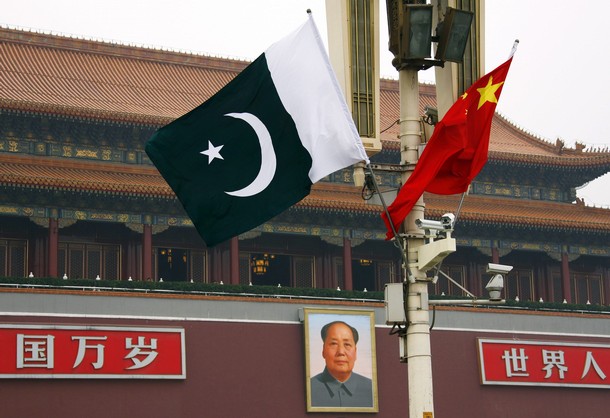
Some refugees have been recruited by the Taliban. Others like Shaezhad, who collects recyclables in the slums of Karachi, are glad to be alive under the green and white crescent flag of this country.

Still, he wants to go home to Afghanistan. “We want our land back, we want to live with respect and we want employment.”

Azhar Abbas, the managing director of Geo TV news who hosted the party in Karachi, said that “democracy is taking hold” in his Pakistan despite the violence many here believe followed the U.S. war on terror.

The business editor of daily newspaper the News, Amir Zia, said the United States can still play a positive role in Pakistan. “If Americans pull out without getting the job done, the Islamic extremists will say it’s a victory and will become much more organized.”

But at the National Defense University, business and technology expert Bilal Munshi called Pakistan “a psychologically scarred nation suffering from a mass form of PTSD (post-traumatic stress disorder).”

If the 4 million young people entering the workforce each year get jobs, “we will be a power … but if they don’t see a future they’re going to pick up the gun, and you’re going to be in real trouble.”

The U.S. can help develop Pakistani schools, Bilal said, “but don’t interfere in our internal affairs – let us do things our way.”

Pakistan Vows to Arrest Musharraf for Bhutto Assassination

By Reza Sayah for CNN

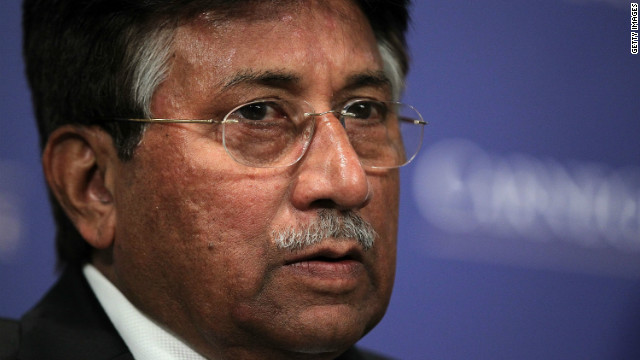
Pakistani authorities vowed Tuesday to use the international police agency Interpol to arrest former Pakistani President Pervez Musharraf in connection with the assassination of former Prime Minister Benazir Bhutto.

“The government is moving for his (Musharraf’s) red notice,” Interior Minister Rehman Malik said, referring to the Interpol’s international arrest warrant.

“We will get him through Interpol to Pakistan.”

Malik made the announcement as part of a progress report of the four-year-long assassination probe that was presented to provincial lawmakers Tuesday in Bhutto’s home province of Sindh. The briefing lasted several hours and was broadcast live on Pakistani TV.

Bhutto was assassinated in a gun-suicide attack in December 2007, shortly after she came back to Pakistan from self imposed exile to take part in the 2008 general elections.

Malik and the head of the investigation team said former Pakistani Taliban leader Baitullah Mehsud plotted the assassination and paid the equivalent of about $4,500 to a network of Islamist militants to carry out the killing.

Using a Power Point presentation, pictures and video to outline the evidence they had gathered, authorities said Mehsud had Bhutto killed because she supported the west’s war against Islamist militants. Investigators said they collected much of their evidence from the accused plotters’ cell phone records before and after the killing.

Last November a Pakistani court charged five alleged Islamist militants with aiding the suicide attacker and two senior police officers for failing to provide adequate security.

Musharraf has also been accused of failing to protect Bhutto. In February 2011 a judge issued an arrest warrant for Musharraf after he didn’t show up to court for questioning.

Musharraf has been in self-imposed exile ever since he left Paksitan in 2008. Last August authorities confiscated his property in Pakistan and froze his bank account. The former military ruler has denied having anything to do with Bhutto’s killing.

In Tuesday’s briefing Malik and investigators said Musharraf rejected Bhutto’s request to use a western private security contractor for protection when she returned to Pakistan. They suggested Musharraf intentionally left Bhutto vulnerable because he felt politically threatened by her return.

“It was the duty of the government to provide the prime minister with protection,” Malik yelled at one point. “Why did you not give security? What was the problem?”

Pakistan’s Sesame Street: Can an Urdu Elmo Aid a Blighted Nation?

By Aryn Baker for Time

For a 3-year-old who has yet to master the use of the personal pronoun, Elmo is a whiz at foreign languages. Already fluent in Chinese, German, Hindi, Spanish and Arabic, among others, the fluffy red icon has just picked up Urdu, the most common language in Pakistan. At a time when the U.S.-Pakistani relationship is at its worst in more than a decade, Sesame Street — the quintessential American children’s television program — has burst onto the Pakistani scene in a flurry of fake fur, feathers and infectious ditties about the letter alef, or A.

With its background of ripening wheat, banyan trees and a center stage that features a village snack shop overflowing with exotic fruits and vegetables, the set of Sim Sim Hamara, as it is called in Pakistan, may seem far removed from the urban street scene familiar to most Americans. But the lovable Muppets, child actors and messages of tolerance are pure Sesame. And they have all been brought to life in Pakistan with the help of a $20 million, five-year grant from USAID.

Developed in 1969 by TV producer and early-childhood-education advocate Joan Cooney, Sesame Street was designed to tap the addictive qualities of television to bring early literacy education to American preschoolers. The “quaint” American streetscape, as Cooney then called it, has since grown into the “longest street in the world,” with more than 20 unique programs worldwide, according to Sesame Workshop’s senior vice president of global education Charlotte Frances Cole. Some features dubbed segments lifted from the American version; others, like Sim Sim Hamara, which means Our Sesame, are created in partnership with local production teams to reflect native culture. In Pakistan, Big Bird and Oscar have been replaced by a self-involved crocodile and a donkey with rock-star ambitions. “Children have to be able to recognize their environment and their friends if they are going to learn,” says Faizaan Peerzada, who directs Sim Sim Hamara from a studio just outside the city of Lahore. “So we had to give Elmo Pakistani citizenship.”

On a tour of the workshop where the show’s Muppets are made, Peerzada, a master puppeteer with more than 40 years of experience directing educational puppet shows for Pakistani children for the Rafi Peer Theatre Workshop, slips his hand into a limp, feathered pocket of gray felt. Even without eyes, the unfinished puppet springs to life with the mannerisms of an owl, swiveling its head to listen as Peerzada expounds on Sim Sim’s potential with evangelical zeal. Underfunded and neglected for more than 30 years, Pakistan’s education system is in a parlous state. The recently released Annual Status of Education report in Pakistan reveals that nearly 60% of school-age children can’t read, or even do basic, two-digit subtraction problems. For a country where 35% of the population is under the age of 14, the consequences are enormous.

“As a nation, Pakistan has failed its children,” says Peerzada. If Sesame Street brought the joy of learning to generations of American preschoolers, why can’t it help teach Pakistan’s 66 million children under the age of 14 how to read? he asks. “Our children deserve this. All children deserve this,” he says. Obviously a television program that airs twice a week can’t compensate for missing teachers and limited school access, but it’s a start. “To me, Sim Sim Hamara is a gift to Pakistani children, and a window into homes that might think their children are better employed in the fields than at school,” says Peerzada.

Like the original, Sim Sim Hamara is a half-hour-long program divided into skits, song segments and celebrity appearances designed to appeal to a wide spectrum of Pakistani society. The Muppets caper with live actors on a set that combines features recognizable across the country, a kind of Pakistani Main Street that doesn’t stand out as belonging to any particular region. A dhaba, the ubiquitous snack-and-grocery shop that is the center of any Pakistani community, stands in for Mr. Hooper’s store, and is manned (or womanned) by a heavily made up Muppet auntie who anchors the show with amusing lessons about manners, safety and healthy eating. In an effort to promote tolerance in a country marked by ethnic divisions, the Muppets’ skin colors range from brown to pale orange.

Most striking, however, considering Pakistan’s male-dominated society, is the lead character, Rani, a 6-year-old female Muppet who captains the cricket team and who is passionate about science and reading. In a country where only 22% of Pakistani girls complete primary school, Rani is a model of female empowerment. But it doesn’t stop there. The rest of the show’s characters encourage Rani’s quest for knowledge — “Where does the sun go every evening?” was a recent one — modeling acceptance of women’s progress for a wider society. “You are not just teaching little girls that they can have dreams,” says Sesame Workshop executive vice president Sherrie Westin. “You are also teaching boys that it’s O.K. for girls to have those dreams.”

Of course progressive values in one culture can be interpreted as transgressive in another. Sim Sim Hamara has the added burden of being sponsored by the U.S. in a country where American meddling is viewed with increasing hostility. For that reason, the program’s authors have had to broach sensitive issues with subtle creativity. One recent segment opened with a despondent Baily, the would-be rock-star donkey, who decided he would never sing again because someone told him it would make him grow horns. “This is how we get at the idea of mullahs who are against singing,” explained one of the producers. The skit ended with the appearance of one of Pakistan’s most famous rock stars leading the whole cast in an uplifting song about believing in your self, entitled, fittingly, “Faith.”

Teachers who see it as a way to promote literacy at home have praised Sim Sim Hamara, as do children who have never really had a program to call their own. “I find that those who regularly watch Sim Sim Hamara know more about health and body parts and their functions,” says Islamabad school principal Masart Sadiq. “They get lots of ideas about careers, which they discuss with their teachers too.” Aniqa Khan, a 12-year-old from Rawalpindi, says she now wants to be a pilot, like Munna, Rani’s 5-year-old Muppet co-star. “He is excellent at math, which inspires me to spend more time on math.”

So far, and against fears in a country where the assassination of a governor accused of blasphemy was celebrated in the streets, there has been no negative response to Sim Sim Hamara. “I think my biggest fear was that the program would be misunderstood before it even aired,” says Peerzada. “People might have thought it was some kind of brain-washing project. But at the end of the day, all we are doing is teaching a child to count.”

The same could not be said of reactions to the program in the U.S., where Fox News in October dubbed Sim Sim Hamara a boondoggle for Elmo and conservative commentators quickly took up the cause. But as Sesame Workshop’s Westin points out, $20 million pays for a lot more than Elmo’s Urdu lessons and a plane ticket to Pakistan. It covers a state-of-the-art studio, high-definition digital-video equipment that won’t be obsolete in a few years, and the foundations of an educational institution that, if all goes to plan, will provide Pakistani children with the basic-literacy building blocks that have been the mainstay of early-childhood education in America for more than four decades. Current estimates say that Sim Sim Hamara is reaching more than 3.5 million Pakistani children who have no other access to preschool education. “This is a smart investment,” says Westin. “Early-childhood education is one of the most effective ways to build stability in any country. An investment like this is not only going to benefit Pakistan, but our children as well. If we can help to create a more peaceful world, that is a benefit to all of our children.” And that sounds like something Elmo would love, in any language.

Pakistanis for Peace Editor’s Note– We commend this great project by the United States government and the USAID program. The $20 million grant and this educational program will not only help the children of Pakistan who are not provided an adequate educational system by their own government but a program like this goes a long ways in the betterment of ties between the United States and Pakistan and leaves a lasting legacy for the area’s children for years to come.

Guns And Androids: Pakistan Air Force Making iPads

By Chris Brummitt for The Associated Press

Inside a high-security air force complex that builds jet fighters and weapons systems, Pakistan’s military is working on the latest addition to its sprawling commercial empire: a homegrown version of the iPad.

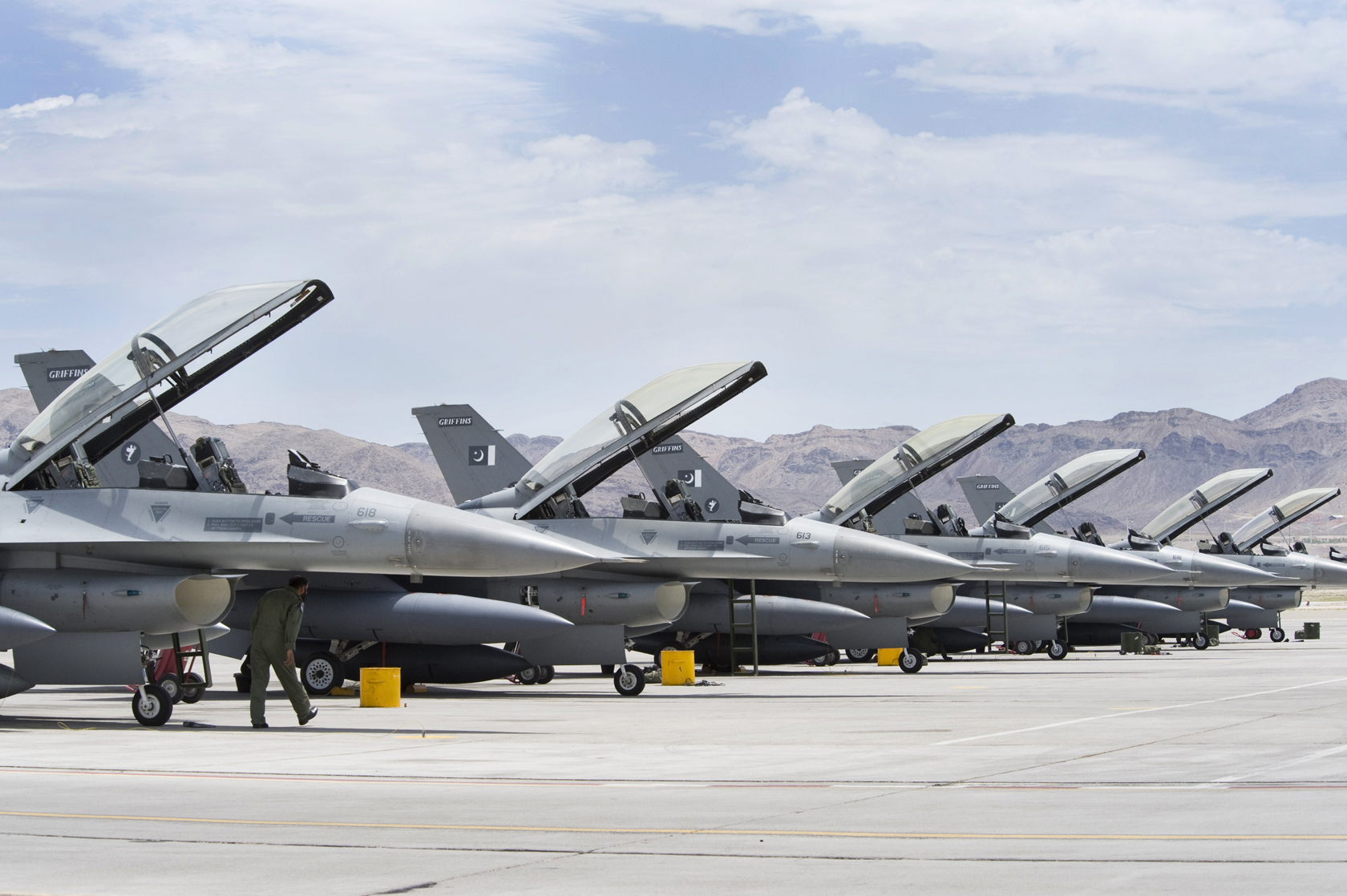
It’s a venture that bundles together Pakistani engineering and Chinese hardware, and shines a light on the military’s controversial foothold in the consumer market. Supporters say it will boost the economy as well as a troubled nation’s self-esteem. It all comes together at an air force base in Kamra in northern Pakistan, where avionics engineers — when they’re not working on defense projects — assemble the PACPAD 1.

“The original is the iPad, the copy is the PACPAD,” said Mohammad Imran, who stocks the product at his small computer and cell phone shop in a mall in Rawalpindi, a city not far from Kamra and the home of the Pakistani army.

The device runs on Android 2.3, an operating system made by Google and given away for free. At around $200, it’s less than half the price of Apple or Samsung devices and cheaper than other low-end Chinese tablets on the market, with the bonus of a local, one-year guarantee.

The PAC in the name stands for the Pakistan Aeronautical Complex, where it is made. The PAC also makes an e-reader and small laptop.
Such endeavors are still at the pilot stage and represent just a sliver of the military’s business portfolio, which encompasses massive land holdings, flour and sugar mills, hotels, travel agents, even a brand of breakfast cereal.

The military is powerful, its businesses are rarely subject to civilian scrutiny, and it has staged three coups since Pakistan became a state in 1947. Many Pakistanis find its economic activities corrupting and say it should focus on entirely on defense.

“I just can’t figure it out,” said Jehan Ara, head of Pakistan’s Software Houses Association, said of the PACPAD. “Even if they could sell a billion units, I can’t see the point. The air force is supposed to be protecting the air space and borders of the country.”

Supporters say the foray into information technology is a boost to national pride for a country vastly overshadowed by archrival India in the high-tech field. Tech websites in the country have shown curiosity or cautious enthusiasm, but say it’s too early to predict how the device will perform. Skeptics claim it’s a vanity project that will never see mass production.

Only a few hundred of each products has been made so far, though a new batch will be completed in the next three months. “The defense industry is trying to justify its presence by doing more than just produce weapons,” said Ayesha Siddiqa, author of Military Inc., a critical study of military businesses. “Some smart aleck must have thought we can make some money here.”

PAC’s website at http://www.cpmc.pk says the goal is “strengthening the national economy through commercialization” and lauds the collaboration with China — something that likely resonates among nationalists.

China is regarded as a firm ally by Pakistan’s security establishment, whereas the U.S., despite pouring billions of dollars in aid into the country, is seen as fickle and increasingly as an enemy.

These perceptions have heightened as the U.S. intensifies drone attacks on militants based in the Pakistani borderlands. But the military is also a target of those militants. In 2007 the base at Kamra, home to 12,000 workers and their families, nine people died when a cyclist blew himself up at the entrance.

PAC officials suggested the program that produces the PACPAD was modeled in part on the Chinese military’s entry into commercial industry, which lasted two decades until it was ordered to cut back lest it become corrupted and lose sight of its core mission.

The tablet and other devices are made in a low-slung facility, daubed in camouflage paint, near, a factory that produces J-17 Thunder fighter jets with Chinese help.

“It’s about using spare capacity. There are 24 hours in a day, do we waste them or use them to make something?” said Sohail Kalim, PAC’s sales director. “The profits go to the welfare of the people here. There are lots of auditors. They don’t let us do any hanky-panky here.”

PAC builds the PACPAD with a company called Innavtek in a Hong Kong-registered partnership that also builds high-tech parts for the warplanes.
But basic questions go unanswered. Maqsood Arshad, a retired air force officer who is one of the directors, couldn’t say how much money had been invested, how many units the venture hoped to sell and what the profit from each sale was likely to be.

The market for low-cost Android tablets is expanding quickly around the world, with factories in China filling most of the demand. Last year, an Indian company produced the “Aakash” tablet, priced at $50, and sold largely to schoolchildren and students.

Arshad said a second-generation PACPAD would be launched in the next three months, able to connect to the Internet via cell phone networks and other improved features. He said the Kamra facility could produce up to 1,000 devices a day.

During a brief test, The tablet with its 7-inch screen appeared to run well and the screen responsiveness was sharp. “It seems good, but operation-wise I have to look into it,” said Mohammad Akmal, who had come to the store in Rawalpindi to check the product out. “Within a month or so, we will know.”