Archive for the ‘ Pakistan ’ Category

Growing Hope for Trade Ties Between India and Pakistan

By Shahzeb Jillani

Business leaders from India and Pakistan say there’s new optimism about the efforts their governments are making to improve trade ties. But critics warn that overcoming decades of mistrust may not be that easy.

For the first time in 35 years, a Pakistani commerce minister led a business delegation to India last week. The entourage included nearly 80 leading industrialists, traders and high-ranking officials.

Peace talks between the two nuclear-armed neighbours broke down in 2008 after the attacks in the Indian city of Mumbai, which India blamed on Pakistan-based militants.

Nearly three years on, as if to emphasise a sense of normalcy, the Pakistani Commerce Minister, Makhdoom Amin Fahim, stayed at the city’s Taj Mahal Hotel – which was one of the main targets of the 2008 attacks.

There, leading Pakistani traders got a chance to mingle with their equally eager-for-business Indian counterparts.

Between them, they spoke not just of the profits their individual businesses could make if their governments removed the long standing hurdles in their way. But also of how much the people of their two countries, and indeed the wider region, stand to benefit from freer movement of goods, money and commodities.

The only way I see realisation of trade potential between our two countries is for India to remove its non-tariff trade barriers and for Pakistan to reciprocate by granting the MFN status to India”

Vijay Kalantri, president of All India Association of Industries, said traders on both sides feel business between India and Pakistan is a win-win situation for everyone.

“Why are Indians and Pakistanis forced to trade unofficially via third countries like Dubai or Sri Lanka?” he tells the BBC from Mumbai.

“All we are asking is, let there be direct business-to-business contact between us.”

After the talks in Delhi, ministers from the two sides announced their agreement to boost their annual bilateral trade from current $2.7bn (£1.7bn) to $6bn by 2015.

They also pledged to ease business travel and promote bilateral trade through the land route.

For Pakistan, a significant announcement was a pledge by India to drop its opposition to the European Union’s plan to grant Pakistan tariff waiver on select commodities to help it recover from the devastation of 2010 floods.

There was hope that Pakistan might reciprocate and grant India the Most Favoured Nation status (India granted Pakistan MFN status way back in the 1990s).

Even though no such announcement came, Pakistan committed itself to a road map to implement preferential trade ties with India, as prescribed under the South Asia Free Trade Agreement (Safta).

Trade barriers
There are a number of explanations why Pakistan has so far withheld the MFN status from India.

At present there are a number of barriers to prevent trade between Indian and Pakistan
First is political. Pakistani leaders have often linked it to the resolution of the core issue of Kashmir.

It’s a stance which has long been propagated for mainly domestic consumption.

But there is a sense in Pakistan that while the country should continue to push for a negotiated settlement of the Kashmir issue, trade and commerce should not be held hostage to resolution of political disputes.

The second is protectionism. For years, domestic industry in Pakistan has feared it would be swamped by imports from India. But even there, the mood appears to have shifted.

Senator Haji Ghulam Ali, president of Federation of Pakistan Chambers of Commerce and Industry, says there’s a consensus that Pakistan should open up to Indian business.

“Everyone now recognises it will be beneficial for both sides. It’s just a matter of time before it’s done,” he tells the BBC from Delhi.

Business leaders say that less trade barriers would benefit firms in both countries, However, the last, and more plausible, obstacle is the issue of non-tariff barriers.

“In my experience, India has one of the most restrictive trade regimes in the region,” asserts Dr Ashfaq Hasan Khan, a former advisor to Pakistan’s Ministry of Finance. His view matters, given has decades of dealings with South Asian governments on trade liberalization.

He explains that despite granting Pakistan the MFN status, India has a variety of non-tariff barriers in place – such as, stringent certification codes, customs rules, security clearances and movement restrictions – which make it virtually impossible for Pakistani traders to do business in India.

“The only way I see realisation of trade potential between our two countries is for India to remove its non-tariff trade barriers and for Pakistan to reciprocate by granting the MFN status to India,” says Mr Khan.

He adds: “Unless there’s political will to do that, everything else is just talk and photo op.”

CIA Contractor Charged in Pakistan Deaths Arrested in Colorado

By Jim Spellman for CNN

Raymond Davis, who was charged with killing two men in Pakistan as a CIA contractor but was later released, was arrested Saturday after a fistfight at a shopping center in Colorado, authorities said.

Davis was charged with misdemeanor assault and disorderly conduct after allegedly getting into a fight over a parking space at a suburban Denver mall, according to Lt. Glenn Peitzmeier of the Douglas County Sheriff’s Office.

The incident at the Highlands Ranch Town Center began as an argument between 37-year-old Davis and 50-year-old Jeff Maes and then turned physical, Peitzmeier said. Davis was released after posting $1,750 bond, Peitzmeier said.

Davis’ wife, Rebecca, declined a CNN request for comment. Davis was charged with killing two men in Lahore, Pakistan, in January. He was released in March after compensation was paid to their families.

U.S. officials originally said Davis was a diplomat and tried to claim diplomatic immunity but then revealed that he was a CIA contractor.
Davis said he killed the two men in self-defense, though Lahore authorities called the case “clear-cut murder.”

Death Sentence in Slaying of Pakistani Governor

By Salman Masood for The New York Times

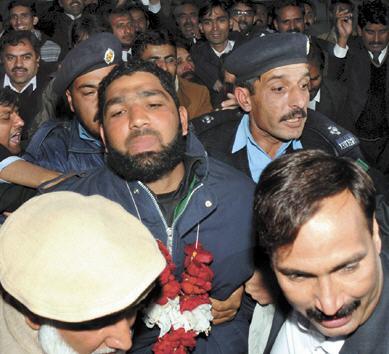
A court on Saturday sentenced to death an elite police guard who assassinated a leading secular politician he had been charged with protecting, a slaying that sent shockwaves throughout Pakistan and was seen as a clear marker of the growing religious intolerance and extremism in the country.

The news made international headlines not just because of the prominence of the politician killed, Salman Taseer, but because the killer was celebrated by many in Pakistan, including lawyers who showered him with rose petals and garlands at a court appearance.

Judge Syed Pervez Ali Shah announced the sentence for the guard, Malik Mumtaz Qadri, in an antiterrorism court at Adiala Jail in Rawalpindi. “Nobody can be given a license to kill on any pretext,” the judge was quoted as saying after the conclusion of the trial, which was held under tight security.

The ruling was unusual in Pakistan; frightened justices in recent years have been cowed into releasing Islamic militants or letting them off with light sentences. The judgment was especially noteworthy in such a high-profile case against a man whose popularity only grew with his confession and defense of the killing on religious grounds.

Mr. Taseer was the governor of Punjab Province and one of the country’s most outspoken opponents of the country’s controversial blasphemy laws, which mandate a death sentence for anyone convicted of insulting Islam.

Liberals and rights activists were encouraged by the verdict, but noted that it could be overturned in appeals that can drag on for years.

“Today’s judgment is a positive development whereby norms of justice have prevailed,” said Raza Rumi, a political analyst and columnist in the eastern city of Lahore. “Pakistan cannot be allowed to become a vigilante society, and the state — its judges and prosecutors — need to uphold the law.”

No matter what happens with the case, however, Mr. Taseer’s death cast a pall over discussions of the blasphemy laws — which had become something of a test case for broader debate of how religion and politics mix in Pakistan. That trend continued Saturday. The usually voluble Pakistani press dutifully covered the story, but news broadcasts were mainly devoid of the normal commentary or debate.

“Local media’s muted coverage of the sentence is reflective of the fear factor and the polarization within the society which includes media personnel,” Mr. Rumi said.

Mr. Qadri, 26, was convicted of murder and committing an act of terrorism, and was handed two life sentences.

No date for the execution has been announced, and Mr. Qadri has a right to appeal within seven days. Raja Shuja-ur-Rahman, a lawyer for Mr. Qadri, told the DAWN television channel that an appeal would be filed.

Mr. Qadri killed Mr. Taseer in a hail of bullets on Jan. 4, shooting at close range as Mr. Taseer was getting into his car.

Mr. Taseer, a businessman and a liberal politician, had emerged as a leader in a fight against the blasphemy law, which rights groups say has been used to persecute minorities, especially Christians.

The law was introduced in the 1980s under the military dictatorship of Gen. Mohammad Zia ul-Haq as part of a policy of promoting Islam to unite Pakistan’s deeply fractious society.

Mr. Qadri was hailed as a hero by Islamist lawyers, several mainstream politicians and religious leaders.

On Saturday, dozens of supporters of Mr. Qadri gathered outside the jail and chanted slogans against the sentence, while the judge slipped out a back door.

“We will free you! We will die for you!” 20-year-old Mohamemd Aslam was quoted as saying by The Associated Press. Others yelled: “Long live Qadri, long live Qadri!”

“By punishing one Mumtaz Qadri, you will produce a thousand Mumtaz Qadris!” shouted another man.

The ruling Pakistan Peoples Party, to which Mr. Taseer belonged, has been accused of distancing itself from the cause of repealing the blasphemy law since the assassination.

Analysis: Pakistan’s Double-Game: Treachery or Strategy?

By John Chalmers for Reuters

Washington has just about had it withPakistan.

“Turns out they are disloyal, deceptive and a danger to the United States,” fumed Republican Representative Ted Poe last week. “We pay them to hate us. Now we pay them to bomb us. Let’s not pay them at all.”

For many in America, Islamabad has been nothing short of perfidious since joining a strategic alliance with Washington 10 years ago: selectively cooperating in the war on extremist violence and taking billions of dollars in aid to do the job, while all the time sheltering and supporting Islamist militant groups that fight NATO troops in Afghanistan.

Pakistan has angrily denied the charges, but if its critics are right, what could the explanation be for such duplicity? What strategic agendas might be hidden behind this puzzling statecraft?

The answer is that Pakistan wants to guarantee for itself a stake in Afghanistan’s political future.

It knows that, as U.S. forces gradually withdraw from Afghanistan, ethnic groups will be competing for ascendancy there and other regional powers – from India to China and Iran – will be jostling for a foot in the door.

Islamabad’s support for the Taliban movement in the 1990s gives it an outsized influence among Afghanistan’s Pashtuns, who make up about 42 percent of the total population and who maintain close ties with their Pakistani fellow tribesmen.

In particular, Pakistan’s powerful military is determined there should be no vacuum in Afghanistan that could be filled by its arch-foe, India.

INDIA FOCUS

Pakistan has fought three wars with its neighbor since the bloody partition of the subcontinent that led to the creation of the country in 1947, and mutual suspicion still hobbles relations between the two nuclear-armed powers today.

“They still think India is their primary policy,” said Talat Masood, a retired Pakistani general and prominent political analyst. “India is always in the back of their minds.”

In an interview with Reuters on Tuesday, Pakistani Prime Minister Yusuf Raza Gilani – unprompted – complained that Washington’s failure to deal even-handedly with New Delhi and Islamabad was a source of regional instability.

Aqil Shah, a South Asia security expert at the Harvard Society of Fellows, said Islamabad’s worst-case scenario would be an Afghanistan controlled or dominated by groups with ties to India, such as the Tajik-dominated Northern Alliance, which it fears would pursue activities hostile to Pakistan.

“Ideally, the military would like Afghanistan to become a relatively stable satellite dominated by Islamist Pashtuns,” Shah wrote in a Foreign Affairs article this week.

Although Pakistan, an Islamic state, officially abandoned support for the predominantly Pashtun Taliban after the 9/11 attacks on the United States in 2001, elements of the military never made the doctrinal shift.

Few doubt that the shadowy intelligence directorate, the Inter-Services Intelligence (ISI), has maintained links to the Taliban that emerged from its support for the Afghan mujahideen during the 1979-1989 Soviet occupation of Afghanistan.

Until recently, there appeared to be a grudging acceptance from Washington that this was the inevitable status quo.

That was until it emerged in May that al Qaeda leader Osama bin Laden – who was killed in a U.S. Navy SEALs raid – had been hiding out in a Pakistani garrison town just two hours up the road from Islamabad, by some accounts for up to five years.

Relations between Pakistan and the United States have been stormy ever since, culminating in a tirade by the outgoing U.S. joint chiefs of staff, Mike Mullen, last week.

Mullen described the Haqqani network, the most feared faction among Taliban militants in Afghanistan, as a “veritable arm” of the ISI and accused Islamabad of providing support for the group’s September 13 attack on the U.S. embassy in Kabul.

The reaction in Islamabad has been one of stunned outrage.

Washington has not gone public with evidence to back its accusation, and Pakistani officials say that contacts with the Haqqani group do not amount to actual support.

However, Imran Khan, a Pakistani cricketer-turned-populist-politician, said this week that it was too much to expect that old friends could have become enemies overnight.

He told Reuters that, instead of demanding that Pakistan attack the Haqqanis in the mountainous border region of North Waziristan, the United States should use Islamabad’s leverage with the group to bring the Afghan Taliban into negotiations.

“Haqqani could be your ticket to getting them on the negotiating table, which at the moment they are refusing,” Khan said. “So I think that is a much saner policy than to ask Pakistan to try to take them on.”

REGIONAL GAME

The big risk for the United States in berating Islamabad is that it will exacerbate anti-American sentiment, which already runs deep in Pakistan, and perhaps embolden it further.

C. Raja Mohan, senior fellow at New Delhi’s Center for Policy Research, said Pakistan was probably gambling that the United States’ economic crisis and upcoming presidential elections would distract Washington.

“The real game is unfolding on the ground with the Americans. The Pakistan army is betting that the United States does not have too many choices and more broadly that the U.S. is on the decline, he said.

It is also becoming clear that as Pakistan’s relations with Washington deteriorate, it can fall back into the arms of its “all-weather friend,” China, the energy-hungry giant that is the biggest investor in Afghanistan’s nascent resources sector.

Pakistani officials heaped praise on Beijing this week as a Chinese minister visited Islamabad. Among them was army chief General Ashfaq Kayani, arguably the country’s most powerful man, who spoke of China’s “unwavering support.”

In addition, Pakistan has extended a cordial hand to Iran, which also shares a border with Afghanistan.

Teheran has been mostly opposed to the Taliban, which is dominated by Sunni Muslims while Iran is predominantly Shi’ite. But Iran’s anti-Americanism is more deep-seated.

“My reading is the Iranians want to see the Americans go,” said Raja Mohan, the Indian analyst. “They have a problem with the Taliban, but any American retreat will suit them. Iran in the short term is looking at the Americans being humiliated.”

ARMY CALLS THE SHOTS

The supremacy of the military in Pakistan means that Washington has little to gain little from wagging its finger about ties with the Taliban at the civilian government, which is regularly lashed for its incompetence and corruption.

“The state has become so soft and powerless it can’t make any difference,” said Masood, the Pakistani retired general. “Any change will have to come from the military.”

Daniel Markey, a senior fellow for South Asia at the U.S. Council on Foreign Relations, said the problem lies with a security establishment that continues to believe that arming and working – actively and passively – with militant groups serves its purposes.

“Until … soul-searching takes place within the Pakistani military and the ISI, you’re not likely to see an end to these U.S. demands, and a real shift in terms of the relationship,” Markey said in an online discussion this week. “This is the most significant shift that has to take place.”

Bacha Khan, Anti-Partition Hero Who Can Help Pakistan Today

By Mauro Vaiani for Pakistanis for Peace

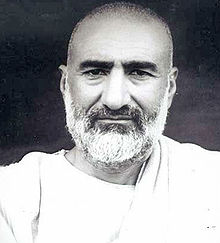
A person once stigmatized as an enemy of Pakistan, has something important to say in the contemporary public discourse in the second Islamic country in the world. His name is Abdul Ghaffar Khan (in the picture), a Pakhtun patriot, social reformer, charismatic leader. He was a lifelong activist in favour of his fellows Pathans living North and South the frontier Durand Line. He became a very close friend of the Mahatma and he himself was called the “Frontier Gandhi”.

Anti-Partition apostle of nonviolence
He was born on 1890 in Utmanzai, a town in Charsadda District, in the North-West Frontier Province, today Khyber Pakhtunkhwa Province in Pakistan. He was an apostle of nonviolence, that he considered a form of spiritual jihad for his time and for the future of his people. He founded a nonviolent movement which arrived to count 100,000 members. As he wrote in his 1969 autobiography, “My life and struggle”, “in 1929 we were able to found the kind of organisation we wanted. We decided to call it the Khudai Khidmatgar movement (Servants of God movement). Our motive for choosing that name was that we wanted to awaken in the Pathans the idea of service and the desire to serve their country and their people in the name of God, an idea and a desire which was sadly lacking among them”. The Khudai Khidmatgars were also known, for the color of their uniforms, “Red Shirts”. The founder was called by his followers, as a mark of esteem, Badshah Khan, also spelled Baacha Khan, or more commonly Bacha Khan, that means “king of our nobles”.

Baacha Khan fostered free education for all, women rights, religious freedom, judicial reform. He also was a pioneer of ecology and sustainable development. He believed in self-government for both the settled and the tribal Pakhtuns. He strongly opposed the Partition of India, proposing autonomous provinces in a unified Indian federal framework. When the Partition became inevitable, he renounce to oppose it with riots or violence. He and his Khidmatgars accepted, reluctantly, Pakistan as their new country and decided to be loyal. They hoped the new regime would have given the Pakhtuns a chance to live united in their territory, free to self-govern their own province. The autonomy of the federal units in Pakistan was instead nipped in the bud and their movement was declared illegal.
For the freedom fighter, a new cycle of imprisonment started. Baacha Khan spent one-third of his life in prison, but, more precisely, he spent more time, about 15 years, in Pakistani prisons than he had spent in the prisons of the British Raj, “only” 12.

He also went in exile in Afghanistan, where he supported local Pashtun cultural, social and economical development, fighting backwardness, clanism, family feuds. He gave in Afghanistan many speeches in favor of “Pakhtunistan”, which were free of every kind of chauvinism, fostering freedom and self-government of his people, within the Pakistani federation, firmly anchored to a commitment for peace in all South Asia, all over the world.
“I am looking forward to the time when free, general elections will be possible again in Pakistan. – he wrote in his 1969’s autobiography – For only then will the world know which way my people are going and whom do they follow. This is the main conflict between me and the rulers of Pakistan.”. This champion of Pakhtun patriotism remained unheeded. He won’t see general and local fair election either under the dictatorship of Ayub Khan, nor under Yahya Khan, nor under the civil but still authoritarian rule of Zulfiqar Ali Bhutto, nor under Zia Ul-Haq.
He couldn’t see the general elections of December 1988, when Benazir Bhutto, daughter of Zulfiqar Ali, became Prime Minister, for he died in Peshawar on January 20.

He had requested to be buried in Jalalabad, Afghanistan. He hoped this way to witness the need of friendship, and mutual understanding, among all Pakhtuns, between Afghanistan and Pakistan. His last wish succeeded in leaving a footprint in the heart of many throughout South Asia. As one can read in Rajmohan Gandhi’s biography of Bacha Khan (New Delhi, 2004) his funeral resulted a mammoth rally: “Though the Afghan struggle was not yet over, the Kabul government and the mujahedin both announced a ceasefire for the event. Tens of thousands of the Frontier’s mourning Pakhtuns accompanied the coffin and crossed the Durand Line. Pakistan’s military ruler, Zia-ul Haq (who would be killed in a plane crash later in the year), and India’s Prime Minister, Rajiv Gandhi (also destined for a violent death), were present for the last rites.” (see Gandhi R., Ghaffar Khan, 2004, p. 263).

Political heritage

After decades of oblivion, his political heritage are now again gaining momentum among Pakhtuns. An important political player in the re-established Pakistani democracy, the Awami National Party (ANP), wrote in its manifesto that it “draws its inspiration from the example and teachings of Khan Abdul Ghaffar Khan, affectionately known to his people as Baacha Khan. He spent his entire life in the struggle for freedom and justice. He and his Khudai Khidmatgars offered great sacrifices in the fight against colonialism, imperialism and all other forms of oppression. In a broader sense, Baacha Khan saw politics as the highest form of public service and often described himself as only a social worker. His objective was to liberate the masses of South Asia and, particularly, his own people, the Pakhtuns, from the shackles of ignorance and poverty, so that they could rise to their full potential.” (cf http://awaminationalparty.org/).
The ANP was led in the past by Bacha Khan’s son, Abdul Wali Khan, and today the most prominent figure is his grandson, Asfandyar Wali Khan. In the 2008 elections, the Awami National Party won the majority in Khyber Pakhtunkhwa and elected its first Chief Minister since the independence, in coalition with the Pakistan People’s Party. ANP is allied with PPP also in other provinces and at the federal level.
The parable of the Taliban regime and the political violence that still sets fire through the area, has been a terrifying experience for everybody but especially for Pakhtuns. Baacha Khan is being rediscovered, as a source of inspiration for a better future. He was a devout Muslim believer, but he refused terror and was also alien from any bigotry. His political action was centered on peace and social reformation. He sacrificed as a satyagrahi in nonviolent campaign of civil disobedience, firstly against the British Raj, but later also against Pakistan authoritarianism and military rule.
His spiritual heritage helped ANP to defeat the Muttahida Majlis-e-Amal, the Islamist coalition, which was in power in Pakhtunkhwa before 2008. It was a highly symbolic victory. In the name of Baacha Khan, the modern ANP defeated the Islamists, as well as the ancient Khudai Khidmatgars had always defeated the Muslim League in both the elections hold in the province, under the British rule, on 1936 and 1946. Many hope that this political change could represent the end of a cycle, dominated by a tangle of Islamist and nationalist ideologies, which have painfully marked the history of the Frontier, of all Pakistan, Afghanistan.

Several notable cultural foundations and charities are working in South Asia to promote peace and human rights through the rediscover of Badshah Khan’s life, thought and action. We must nominate the Baacha Khan Trust (see http://www.baachakhantrust.org/), whose chief aim is propagation of Ghaffar Khan’s philosophy, his vision of renaissance for the oppressed and marginalized Pakhtuns communities, and for peace in Pakistan, Afghanistan, the whole South Asia.
Nowadays efforts to make the public opinion and new generations aware of the figure and the teachings of Baacha Khan would certainly help the stabilization of the so called Afpak area. After 60 years of political authoritarianism and violence in Pakistan and 40 years of civil war in Afghanistan, it’s probably time to know something more about Bacha Khan.

Self-government

His Red Shirts were able to provide “local leadership for education and development, and stood up for the dignity and rights of their community. They balanced affirmations of the rights and dignity of all people with teachings about responsibility and sacrifices needed to serve those same communities.” – Ali Gohar, founder and guide at the Just Peace International center, in Peshawar, recently wrote, adding that the beauty of this kind of nonviolent struggle is again alive in 2011 Arab Spring heroes cf http://www.khyberwatch.com/index.php?mod=article&cat=MediaWatch&article=391).

“You all know that I believe in the principles of non•violence. – he said on August 31, 1966, talking in Afghanistan on the Pakhtunistan Day, as reported in his 1969’s autobiography – I am convinced that there will be no peace in the world till the problem of the Pakhtuns has been solved. I am telling both the Russians and the Americans the same thing: if they really want peace, they should solve the problem of the Pakhtuns. What do we want? We keep on telling Pakistan to consider us their brothers and not to make us their slaves. We were never the slaves of the British and you should not expect us to be your slaves.”. Heared today, these words are somehow prophetic and should encourage a serious reflection.

The Pathans, both in Afghanistan and in Pakistan, still need an accountable local self-government, in order to take on full responsibility of their own territories. They can hardly be governed from Kabul, or from Islamabad. May be they can resolve their own way their problems, included terror-related and security’s ones.

The recent Pakistani devolution can be seen as a historical accomplishment on the way indicated by Baacha Khan. This is what many political leaders, not only ANP’s ones, strongly believe. Federalism was part of the independence struggle and the only way to make the idea of Pakistan into a lasting reality.

Unfortunately, the centralized, bigoted and corrupt, republic chosen by Afghani Pashtun leadership, after the fall of the Taliban regime, is much farer from Baacha Khan’s ideal of decentralized responsible and accountable self-government. The present solution resembles too much like the 1973 republic. It may be not reveal the right solution for the future of such a vast, diverse, and bitterly divided, country.

Don’t let anybody deceive you in the name of Islam

Abdul Ghaffar Khan, along all his existence, advocated for reforms, social justice, change through education, and, last but not least, peaceful coexistence of all communities, without any kind of ethnic, religious, caste, clan, social discrimination.
He strongly demanded his fellow Pakhtuns, to strive against ignorance, bigotry, prejudices, family feud and political violence. His message, which follows the furrow of modern nonviolent revolutions, which have already brought down more than an empire, can drive the Islamist factions and wider Muslim public opinion to a radical rethinking.

His teaching was prescient and it is today more relevant than ever: “And you, misguided Pathans, you do not even stop to think whether this is Islam or not, you just swallow anything you are told… I want you to promise me that you will never let anybody deceive you in the name of Islam.” (from Baacha Khan’s speech in Afghanistan, on Pakhtunistan Day, 31 August 1967, as reported in Baacha Khan’s autobiography, 1969).

-Mauro Vaiani is a Geopolitics PhD Candidate at the University of Pisa in Italy and is a Facebook group member and contributor of Pakistanis for Peace. His page at the university is at http://www.sp.unipi.it/hp/vaiani and he can be reached via email at mauro.vaiani@sp.unipi.it

U.S. Refrains From Declaring Haqqani Terrorist Group on Pakistan Concerns

By John Walcott and Viola Gienger for Bloomberg News

The Obama administration isn’t ready to declare the Haqqani group in Pakistan a “foreign terrorist organization” even after Admiral Mike Mullen, chairman of the Joint Chiefs of Staff, said the group attacked the U.S. embassy and American troops in Afghanistan.

“We are continuing to review whether to designate” the Haqqani organization, State Department spokeswoman Victoria Nuland said yesterday.
Mullen’s declaration in Senate testimony last week that Haqqani operatives acted as a “proxy” for Pakistan’s intelligence service may have further complicated the question.

Taking the first step — adding the Haqqani group to the list of terrorist organizations — would lead to demands that Pakistan be declared a state sponsor of terrorism. That would put at risk Pakistan’s cooperation as the U.S. tries to snuff out al-Qaeda’s core and other militants in the country’s tribal areas.

For now, the U.S. has designated the Haqqani network’s founder and other leaders. It has made clear to Pakistan that clamping down on the group “is job one, that we want to do it together, and that’s the conversation that we’re having now,” Nuland said.
Designating Pakistan a state sponsor of terrorism would put it in the company of only four other countries — Cuba, Iran, Sudan and Syria — and might trigger a nationalist backlash in Pakistan. It would require halting U.S. aid to Pakistan, force the U.S. to oppose World Bank loans to Pakistan, and end cooperation between the two countries in fighting terrorism and trying to stabilize Afghanistan.

Pariah State

Naming Pakistan a sponsor of terrorism “would turn it into a pariah state,” Robert Lamb, a senior fellow at the Center for Strategic and International Studies in Washington, said in a telephone interview. “That would complicate a lot of aspects of the relationship, which is complicated enough already. It’s ugly, but it’s not unsalvageable.”

The administration is under new pressure to designate the Haqqanis a terrorist organization alongside 49 others, including al-Qaeda, Lebanon’s Hezbollah, and Hamas, the Palestinian Islamist group that controls the Gaza Strip.

After Mullen testified to the Senate Armed Services Committee, Senator Dianne Feinstein, a California Democrat and chairman of the Senate Intelligence Committee, wrote Secretary of State Hillary Clinton that the Haqqani group “meets the standards for designation” as a terrorist organization. So far, said congressional officials, Clinton hasn’t responded.

Congressional Pressure

“I think there’s going to be increasing congressional pressure on them to list the Haqqani network as a foreign terrorist organization,” said Lisa Curtis, a former CIA analyst and now a senior research fellow at the Heritage Foundation policy group in Washington.
“If we know that the Haqqani network is behind these major attacks on U.S. interests and we fail to confront them, that is a signal of weakness and it simply invites more attacks,” she said.

Nuland and other administration and military officials signaled a reluctance to sanction Pakistan.
Pentagon Press Secretary George Little said yesterday that the U.S. wants to “maintain a relationship with Pakistan that’s grounded in common interests, to include going after terrorists that threaten both countries.”
“There are differences from time to time,” Little told reporters at the Pentagon. “Those differences have been made public, and we continue to discuss those differences in private. We look forward to working with the Pakistanis to try to resolve them.”

Stretched Thin

Pakistani military officials told reporters in Islamabad on Sept. 25 that they had decided not to take action against the Haqqani group because their forces are stretched too thin.

If tensions escalated, Pakistan might again, as it did in a previous diplomatic confrontation, cut supply lines to U.S., NATO and Afghan forces in Afghanistan from its port city of Karachi. Alternative land or air routes are more costly and difficult.
The Pakistanis, said two U.S. intelligence officials, also might abandon secret agreements that permit unmanned U.S. drones to collect intelligence and attack targets in designated areas of Pakistan.

The U.S. already is restricted from operating over the Haqqanis’ suspected base in North Waziristan or the border city of Quetta, home to the main Afghan Taliban group. They also might expel some or all of the classified number of U.S. intelligence officers and special operations forces who are training Pakistani troops and helping target drone attacks, the officials said.

ISI Role

Designating the Haqqani network a terrorist organization would do little to stop the group, said Curtis of the Heritage Foundation. The Haqqanis, she said, probably still would be able to garner financial support from their allies in the Persian Gulf region and backing from the Pakistan spy agency, the Directorate of Inter-Services Intelligence, known as ISI.
A U.S. designation of the Haqqanis isn’t likely to change Pakistani policy either, said Christine Fair, a Pakistan expert at Georgetown University in Washington.

The ISI and the Pakistani military regard the Haqqani network and other militants as allies in their campaign to maintain Pakistani influence in Afghanistan and prevent arch- rival India from getting a toehold on Pakistan’s western border, said Fair and other specialists.
“They believe that the Haqqanis would protect Pakistan’s interest in any future setup in Afghanistan,” Curtis said.
Rejecting the charges that his government uses the Haqqanis as a proxy, Pakistani Prime Minister Yousuf Raza Gilani said in a Sept. 25 statement that U.S. policy on Afghanistan shows “confusion and policy disarray.”

“We may just let this ride,” said Marvin Weinbaum, a former Afghanistan and Pakistan intelligence analyst at the State Department and director of the Center for Pakistan Studies at the Middle East Institute in Washington. “We know what direction the U.S.-Pakistan relationship is going, and now we have no idea what the bottom looks like.”

Pakistani Commanders Meet After US Criticism

By Sebastian Abbot for The Asssociated Press

Pakistan’s army chief convened a special meeting of senior commanders Sunday following U.S. allegations that the military’s spy agency helped militants attack American targets in Afghanistan, the army said.

The government also summoned home the country’s foreign minister early from a trip to the United States to attend a meeting of all major political parties to discuss the American allegations of support for the militant Haqqani network.

Senior Pakistani officials have lashed out against the allegations, accusing the U.S. of trying to make Pakistan a scapegoat for its troubled war in Afghanistan. The public confrontation has plunged the already troubled U.S.-Pakistan alliance to new lows.

Pakistan’s leaders have shown no indication they plan to act on renewed American demands to attack the Haqqani network in its main base in Pakistan, even at the risk of further conflict with Washington, which has given the country billions in aid.

U.S. officials have implied that American forces could carry out unilateral raids inside Pakistan against the Haqqani network, operations that could have explosive implications in a country where anti-American sentiment is widespread.

Pakistanis were outraged by the covert U.S. commando raid that killed al-Qaida chief Osama bin Laden in a garrison town not far from Islamabad in May. The U.S. did not tell the Pakistani government about the operation beforehand for fear bin Laden would be tipped off.

Pakistani Interior Minister Rehman Malik warned the U.S. on Sunday against sending troops into Pakistan.

“Any aggression will not be tolerated,” Malik told reporters in Islamabad. “The nation is standing united behind the armed forces, which is the front line of Pakistan’s defense.”

The top U.S. military officer, Adm. Mike Mullen, last week accused Pakistan’s Inter-Services Intelligence agency of supporting Haqqani insurgents in planning and executing a 22-hour assault on the U.S. Embassy in Afghanistan on Sept. 13 as well as a truck bomb that wounded 77 American soldiers days earlier.

Pakistan’s army chief, Gen. Ashfaq Pervez Kayani, widely considered the most powerful man in Pakistan, has dismissed the allegations, saying they were baseless and part of a public “blame game” detrimental to peace in Afghanistan.

Pakistan army spokesman Maj. Gen. Athar Abbas said Kayani presided over Sunday’s commanders meeting but would not provide detail on the discussions.

Later in the day, Prime Minister Yousuf Raza Gilani’s office issued a statement saying Foreign Minister Hina Rabbani Khar was summoned back to attend a meeting of all major political parties on “threats emanating from outside the country.”

Gilani slapped down the U.S. allegations in a separate statement issued late Saturday.

“We strongly reject assertions of complicity with the Haqqanis or of proxy war,” Gilani said in a statement. “The allegations betray a confusion and policy disarray within the U.S. establishment on the way forward in Afghanistan.”

Pakistan claimed to have severed its ties with Afghan militants after the 9/11 attacks and supported America’s campaign in Afghanistan, but U.S. officials have long suspected it maintained links. The comments by Mullen, who is chairman of the Joint Chiefs of Staff, were the most serious yet accusing Pakistan of militant ties, although he didn’t cite any specific evidence.

Despite the seriousness of the U.S. claims, which appear to accuse Pakistan of state-sponsored terrorism, Mullen and other U.S. officials have said Washington needs to keep engaging with Islamabad, a reflection of its limited options in dealing with the country. Washington is also concerned about the danger of further instability in the nuclear-armed state.

The head of U.S. Central Command, Gen. James Mattis, called for continued cooperation after a meeting with Kayani in Islamabad. In a statement issued Sunday by the U.S. Embassy, Mattis emphasized “the need for persistent engagement among the militaries of the U.S., Pakistan and other states in the region.”

Mattis also met with the Pakistani military’s chief of staff, Gen. Khalid Wynne, who expressed his concern about “negative statements emanating from the U.S.” and stressed the need to address “the irritants in the relationship,” according to a statement issued by the military.

Around half of the U.S. war supplies to Afghanistan are trucked over Pakistani soil, and even as it accuses Islamabad of complicity with Afghan insurgents, Washington knows that it will likely need Islamabad’s cooperation in bringing them to the negotiating table.

Gilani also called for greater cooperation.

“Let’s avoid mutual recrimination and recommit ourselves to working together for eliminating terrorism and for reconciliation and peace in Afghanistan,” he said.

Pakistan Warns U.S. Against Hot Pursuit On Its Soil

As Reported by The Detroit Free Press

Pakistan’s foreign minister today warned the United States against sending ground troops to her country to fight an Afghan militant group that America alleges is used as a proxy by Pakistan’s top intelligence agency for attacks in neighboring Afghanistan.

The warning came as a top U.S. military commander was in Pakistan for talks with the army chief at a time of intense strain between the two countries. The U.S. Embassy said Gen. James Mattis, head of U.S. Central Command, arrived in Pakistan late Friday, and that he will meet the army chief, Gen Ashfaq Parvez Kayani.

Ties between Islamabad and Washington are in crisis after American officials stepped up accusations that Pakistan’s Inter Services Intelligence was aiding insurgents in neighboring Afghanistan, including those who took part in an attack on the U.S. Embassy last week in Kabul.

Pakistan’s Foreign Minister Hina Rabbani Khar said in an interview today that there are red lines and rules of engagement with America, which should not be broken.

“It opens all kinds of doors and all kinds of options,” she told Pakistan’s private Aaj News TV from New York. The comment was in response to a question about the possibility of U.S. troops coming to Pakistan.

Khar, however, insisted that Pakistan’s policy was to seek a more intensive engagement with the U.S. and that she would like to discourage any blame game.

“If many of your goals are not achieved, you do not make someone a scapegoat,” she said, addressing the U.S.

The U.S. allegations have seen a strong reaction from Pakistan.

Kayani, the Pakistani army chief, said on Friday that the charges were baseless and part of a public “blame game” detrimental to peace in Afghanistan. Other Islamabad officials urged Washington to present evidence for such a serious allegation. Khar warned the United States is risking losing an ally in the war on terror.

The row began when Adm. Mike Mullen, chairman of the Joint Chiefs of Staff, on Thursday accused the ISI agency of supporting Haqqani insurgents in planning and executing last week’s 22-hour assault on the U.S. Embassy and a truck bombing that wounded 77 American soldiers days earlier.

Kayani said the allegations were “very unfortunate and not based on facts.”

The claims were the most serious yet by an American official against nuclear-armed Pakistan, which Washington has given billions in civilian and military aid over the last 10 years to try to secure its cooperation inside Afghanistan and against al-Qaida.

The Haqqani insurgent network is widely believed to be based in Pakistan’s North Waziristan tribal area along the Afghan border. The group has historical ties to Pakistani intelligence, dating back to the war against the Soviets in Afghanistan in the 1980s.

The relationship between the two countries has never been smooth, but it took one of its hardest hits when U.S. commandos slipped into Pakistan on May 2 without informing the Pakistanis of their mission and killed al-Qaida chief Osama bin Laden in a garrison town not far from Islamabad.

Pakistanis for Peace Editorial Note– We hope that the United States and Pakistan can get through this incredibly difficult period in their long and close relationship. The United States should present the concrete evidence that it has that there is collusion on the part of individuals in the Pakistani government with the terrorists and the Pakistanis for their part must do a lot more to end terror networks within their borders, and this certainly includes sending troops into North Waziristan, Quetta and any other city in the country where the terrorists are based. The already unstable and dangerous neighborhood that is South Asia can not afford further deterioration in US-Pakistan relations.

Anna’s Trip to Pakistan: Should He Or Shouldn’t He

By Akshaya Mishra for Firstpost

Should he or shouldn’t he?

The supporters of Anna Hazare are in a bind. Two days after the Gandhian accepted the invitation of a human rights delegation from Pakistan to visit that country, the public opinion in India stands divided.

The Shiv Sena was first off the block opposing Anna’s move. Its argument follows the usual political theme. Islamabad must stop sponsoring terrorist activities in India first. The anti-corruption crusader should have taken cognisance of the sentiments of people before even considering such an invitation, it said.

Others are likely follow the Sena’s line soon. The hard line Hindutva followers, who have been silent so far, may erupt in anger, putting a communal spin to the visit.

Anna might just have put his feet in uncharted territory, and a minefield of potential controversies. Pakistan is not an easy proposition even for seasoned politicians to handle. He could be risking his reputation.

So, should he or should not he? There are no easy answers.

Anna is not just an individual, he is a phenomenon. He is an idea that easily transcends boundaries. The massive support to his anti-corruption movement across the social spectrum was a pointer to the fact.

“I will go to Pakistan. In fact, I will go anywhere for the sake of peace and poor people,” he said while meeting the Pakistani delegation, which included former judge of Supreme Court of Pakistan Nasir Aslam Zahid and founder of Pakistan India Forum for Peace and Democracy Karamat Ali.

Anna might just have put his feet in uncharted territory, and a minefield of potential controversies. PTI
“I believe in the religion of humanity, and humanity should begin with your neighbour. Like Indians, Pakistanis too are suffering due to widespread corruption in their country,” he added.

The statements reflect the man as he is — simple, honest and innocent of concerns that bother others so much. It’s possible he would not have given a serious thought to the troubled India-Pakistan equations. It is possible he would be worried about people and their happiness only, not issues or borders.

Isn’t corruption a big issue in Pakistan too? Don’t people suffer because of that? That would be his line of thinking. He would be oblivious to the fact that any movement there guided by him would amount to challenging the rulers in Islamabad and that any intention to help the country would inflame passions in India.

Sena chief Bal Thackeray has sounded the warning note. “Be it Anna or anyone else, they should first speak to kin of those killed in the Mumbai and Delhi blasts, before anointing themselves Nishan-e-Pakistan (Pakistan’s highest civilian award),” he wrote in the party mouthpiece Saamna today.

“Whether Anna goes to Pakistan or not is another matter, but it would have been better had he given a thought to the country’s sentiments on the issue,” he added.

Earlier, the party’s spokesperson Sanjay Raut had made his disapproval clear. “Anna should have told the visiting delegation to go back to Pakistan and create awareness among the people about the Pak-sponsored terrorism in India. The entire world may have praised the anti-corruption movement in India, but Anna cannot ignore sentiments of the people in his own country vis-a vis Pakistan,” he had said.

Anna is likely to lose most of his following in India if he goes ahead with his Pakistan trip, which for all practical purposes would be a symbolic one. Worse, notwithstanding the nature of his visit he would turn a political entity, without intending to be so.

His biggest achievement so far has been that he has managed to stay apolitical despite the desperate efforts from parties to align with him. He represents the common Indian and the other India, which stays out of the power circle that rules the country.

But the other India hates Pakistan too. This is where Anna is likely to run into a problem. Questions could be raised about his intention — the ordinary follower is not expected to understand and appreciate the nuances of his high thinking. The adulation for him is likely to shrink.

Anna should not let that happen. Pakistan can wait.

Muslims in America: A mosque rehabilitates its image

Conversations / Live Q&A Washington Post

ABOUT THE HOST
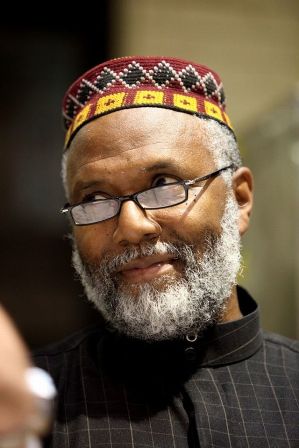
Imam Johari Abdul-Malik
Imam Johari Abdul-Malik serves as the director of Community Outreach for the Dar Al-Hijrah Islamic Center. He was the first Muslim Chaplain installed at Howard University. The imam is the former chair of Government Relations for the Muslim Alliance in North America [MANA founded by Imam Siraj Wahhaj] and is the founding President of the Muslim Society of Washington, DC Inc and Associate Imam of First Hijrah Islamic Center in Washington, DC.

Known nationally for his fundraising efforts for masjids, schools and relief organizations, Imam Johari is a founding member of the Muslim Advocacy Commission of Washington, D.C. and “Muslim Men Against Domestic Violence” [MMADV] and has edited a book on”What Islam Says About Domestic Violence”.
ABOUT THE TOPIC
Dar Al-Hirjah is one of the largest mosques in America, and it can be linked to many terrorism suspects in some way. Imam Johari Abdul-Malik discussed the Dar Al-Hijrah mosque, rehabilitating the mosque’s image after 9-11, how 9-11 has affected Muslim life in America, and more.

Read: Imam serves as public face of an embattled mosque
IMAM JOHARI ABDUL-MALIK :
Salaam-Shalom-OmShanti-Peace,

I would like to thank The Washington Post and especially William Wan and Jahi for their work on this article. I pray that it will inspire more bridge building

– September 19, 2011 11:03 AM Permalink
Q.
CHANGES IN SENSITIVITIES
What are examples of what you have heard from fellow Muslims to any changes in how they have been treated since 2001? How much of a difference has there been? How often do they find themselves in a situation where someone has said or done something offensive or hurtful?
– September 19, 2011 10:43 AM Permalink
A.
IMAM JOHARI ABDUL-MALIK :
The overall experience has actually been positive. However, the negative experiences have been structural (Homeland Security, etc) but I expect that those things will change with time. I am a very positive person and I expect things to continue to only get better

– September 19, 2011 11:06 AM
Q.
AMERICAN MUSLIMS
Salaam alaykum, Imam Johari I am a devout American Muslim woman (and a convert like yourself), but after reading this, I would be terrified to attend your masjid. Instead of honoring your women, you make them go through a separate entrance in the back, for what? To protect men from seeing their wives and daughters? In the time of the Prophet, peace be upon him, men and women prayed in the same space. So my question is this, how can you hope to move from simply defending your community to integrating them into the country at large? This type of isolation and anger only breeds mistrust and silently encourages the behavior of men like Aulaqi. I truly wish you luck and will pray for your community. Please believe that there is another way. My masjid in Brooklyn is nothing like this.
– September 19, 2011 10:57 AM Permalink
A.
IMAM JOHARI ABDUL-MALIK :
I agree with you that the architecture of the mosque is not women friendly. I am working first to change to minds of people who attend the mosque and then we have to work on reconstructing the bricks to be more women and family friendly.

– September 19, 2011 11:09 AM
Q.
SHARIA
Do you agree with sharia?
– September 19, 2011 11:02 AM Permalink
A.
IMAM JOHARI ABDUL-MALIK :
Firstly, “sharia” for me, is similar to keeping kosher for Jews. I don’t believe that my beliefs or practices should be enforced on others. In short, I don’t believe that stoning or cutting off hands are what the Qur’an intended for the 21st century

– September 19, 2011 11:09 AM
Q.
PEDOPHILIA
Do you think its OK for a 53 year old man to marry a 6 year old girl? If so, why?
– September 19, 2011 11:03 AM Permalink
A.
IMAM JOHARI ABDUL-MALIK :
I would advise you not to do!

– September 19, 2011 11:10 AM
Q.
COEXISTENCE
What kind of outreach are you doing to local Christians and Jews?

– September 19, 2011 11:09 AM Permalink
A.
IMAM JOHARI ABDUL-MALIK :
We have been working with several churches and synagogues in the DC metro area for the past decade and have built many strong relationships…

– September 19, 2011 11:13 AM
HALEY CRUM :
What’s the most common question you usually get?

– September 19, 2011 11:15 AM Permalink
IMAM JOHARI ABDUL-MALIK :
The most common question to me is as a convert “how did you become a muslim?”.

– September 19, 2011 11:15 AM
Q.
FGM
Where do you stand on female genital mutilation?
– September 19, 2011 11:05 AM Permalink
A.
IMAM JOHARI ABDUL-MALIK :
FGM: Is not a practice of Islam and although many cultures before Islam practiced it and this unislamic practice continues. I am working with relief organizations and interfaith organizations to end this horrible pracitice.

– September 19, 2011 11:15 AM
IMAM JOHARI ABDUL-MALIK :
I wanted to mention here that it is my hope that terms such as “non-Muslim” and “Muslim World” will cease to be used as I see those terms as divisive. I always make it a point to correct anyone that I hear use these terms. I prefer “people of other faiths/traditions” when speaking of those that do not share my faith

– September 19, 2011 11:21 AM Permalink
Q.
AMERICAN MUSLIMS
But how do we change hearts and minds? Especially in a climate that seems to have grown more hostile to us? It’s difficult to tell other Muslims, especially conservative immigrants that they should embrace change and their new country when we’re being told we can’t build mosques. Park51 (aka the supposed Ground Zero mosque) is the perfect example. We worked so hard and against so much opposition for this place. Yet when I attended services a couple Fridays ago, a community member began berating a young Muslim woman for leading two male journalists in for both being uncovered and talking to a man. It’s humiliating.
– September 19, 2011 11:17 AM Permalink
A.
IMAM JOHARI ABDUL-MALIK :
I have learned so much from the examples of great people and the prophet Muhammad and Jesus (peace be upon them). We have to increase our efforts for the positive, try to understand the other. New immigrants have their baggage as everyone does. Dr. King said, ‘Let us overcome them with our capacity’ to love

– September 19, 2011 11:30 AM
HALEY CRUM :
What has the Muslim community done for America lately – is America a better place because of Muslims? – rickdumbronski

– September 19, 2011 11:30 AM Permalink
IMAM JOHARI ABDUL-MALIK :
First of all, there is single “Muslim community”. There are many different “communities” of Muslims with many diverse ethnic groups and sects. Secondly, there are Muslims in the US Armed Services and working within Homeland Security (including the FBI) that are serving their country with honor. Thirdly, there are many Muslim civilians that are working with law enforcement and are the very key to keeping us safe from terror plots. Without the help of Muslims, it would be much more difficult to fight terror

– September 19, 2011 11:30 AM
Q.
HOW TO COMBAT SHARIA STEREOTYPES?
I’m a humanistic Jew, and while I do not practice traditional Jewish law, I’m well versed in them. I personally don’t see a difference between Sharia and the Talmudic laws that also dictate not just keeping kosher, but divorces, shabbat, how, when, and where to pray, conversions, and all other sorts of elements of daily life. There are orthodox rabbinic courts, Beit Dins, that are sometimes used as alternative dispute resolution mechanisms instead of regular secular courts. The Catholic Church has ecclesiastical courts that gives annulments and hears other similar sorts of cases. How can we better express that Sharia is no different from the rules and institutions of other systems?
– September 19, 2011 11:21 AM Permalink
A.
IMAM JOHARI ABDUL-MALIK :
You are right on brother! We all need to speak this truth from the hill tops. Criminal law needs to stay in the hands of law enforcement.

– September 19, 2011 11:32 AM
Q.
THE ETHICS OF A FAIR FIGHT
Salam dear brother. Islam, as a way of life, prescribes an appropriate way to deal with oppression and systemic injustice. While it was recently reported that Muslims in the U.S. are less likely to justify attacks on civilians (Source – http://www.gallup.com/poll/148763/Muslim-Americans-No-Justification-Violence.aspx) than other groups, there are specific limits on what is acceptable when engaging against an oppressive military, even in self defense. Could you provide an example of a just war, at level of a country, based in what Islam teaches us? Could you provide an example that could apply to daily life at an individual level? Salam!
– September 19, 2011 11:28 AM Permalink
A.
IMAM JOHARI ABDUL-MALIK :
The “just war” theory seems to have only been applied to justify war. As they say, “war is hell”.

– September 19, 2011 11:37 AM
Q.
SHOUDLN’T YOU LEAVE THE COUNTRY?
In view of the past associations like Awlawki and the obvious distrust with which you and your mosque are held, don’t you think it is time you moved to a country like Pakistan or Yemen where you would find a more positive response to your preachings? Face the facts you don’t really fit in here.
– September 19, 2011 11:29 AM Permalink
A.
IMAM JOHARI ABDUL-MALIK :
I take great issue with the hate speech of Anwar Awlawki.

I’m from Brooklyn, NY. I am the decendent of enslaved Africans – I have every right to live in my own country. The first amendment affords me the right and responsibility to practice my faith alone with my fellow Americans.

– September 19, 2011 11:37 AM
Q.
TRUST
Mosques are places of public worship. What is wrong with the FBI monitoring places of interest in these times of distrust and international Islamic terrorism? Muslims in the West must accept a reasonable amount of observation given the facts. Muslims rooting out and identifying the dangerous extremists amongst them is not an unreasonable expectation of the non-Muslim citizenry. Trust has to be built by both sides. – Cretius

– September 19, 2011 11:19 AM Permalink
A.
IMAM JOHARI ABDUL-MALIK :
I agree that trust works both ways. My issue is the engagement with the leadership of the mosque as a partnership. I have worked with law enforcement on many cases but they only come to me after the fact. There have been instances where had they been a partner early on perhaps our security as a nation could be better secured. I like president Obamas new a approach – “Empowering Local Partners to prevent violentextremism in the US” . We are safer when we work together.

– September 19, 2011 11:37 AM
Q.
MUSLIME IN THE WEST
Many Muslims who came in an earlier age, assimilated well — but the new iimmigrnts refuse to assimilate but continue to wear Muslim dress, demand we set aside muslim holidays in our schools etc. don’t you think these muslims would be better off staying in a country which is predominately muslim.?
– September 19, 2011 11:37 AM Permalink
A.
IMAM JOHARI ABDUL-MALIK :
The question remains: Is American the great melting pot or the mulligan stew.

In the melting pot – all of the ingredients get boiled down.

I believe that what makes the great dish are the spices of every culture that adds to the favors of America, while still being able to identify the fruits.

– September 19, 2011 11:42 AM
Q.
ON TO THE NEXT
Do you think people view Muslims as “the enemy” now and will move on to another religion/ culture when the next big attack happens from another group? Is this a vicious cycle?

– September 19, 2011 11:40 AM Permalink
A.
IMAM JOHARI ABDUL-MALIK :
While Islam is the issue of time, we should not be in denial about the violence that is besieging our societies. All ideologies that promote violence as a mechanism for social change are dangerous whether they are so-called Muslims, White Supremist or drug cartels….non-violent resistance for social change must become the new revolution.

– September 19, 2011 11:46 AM
Q.
PART OF THE PROBLEM.
Don’t you think that your and your mosque are part of the problem and not part of the solutions? After all when you see the number of terrorists who have passed through your mosque, how can you not see yourself as part of the problem?
– September 19, 2011 11:45 AM Permalink
A.
IMAM JOHARI ABDUL-MALIK :
knowledge is power! I think the article addresses this issue well. I believe that my work is to counter-radicalization.

– September 19, 2011 11:52 AM
Q.
AMERICAN A MELTING POT FOR WESTERN EUROPE
The American melting pot, a description beloved of so many who know no history, forget that that melting was for people from W. Europe who came from similar backgrounds as Americans. The melting pot image lack veracity when you include non Westeners in the picture – it is they who have created the problem and ripped appart the melting pot immage.

– September 19, 2011 11:48 AM Permalink
A.
IMAM JOHARI ABDUL-MALIK :
With the melting pot only being for W Europeans, you are forgetting that there were slaves that were brought here from Africa 400 years ago. What is to happen to their decendents? We must work together -ALL OF US – and build bridges and not fantasize about an all white country that will never happen

– September 19, 2011 11:55 AM
IMAM JOHARI ABDUL-MALIK :
This has been a wonderful conversation and only increases the need for more dialogue and understanding. I would like to thank the Post for this wonderful medium of exchange – The On-Line Chat. Please share your experience with you friends and family –

‘You have been created into tribes and nations that you might know each other..verily the best among you are those who have faith and good deeds’-Quran

India, Pakistan To Open New Trade Check-Post

By Tom Wright for The Wall Street Journal

While India and Pakistan trade barbs over terrorism, the country’s trade officials are making small but notable steps toward opening up their economies to one another.

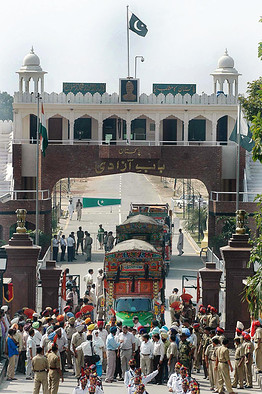
In October, authorities plan to open a second trade check-post at the Wagah border in Punjab state, the only land-crossing between the two hostile neighbors, in an attempt to boost trade volumes. The commerce ministers of both countries are expected to formally announce the new check-post at a meeting in New Delhi later this month.

It might look like a baby step in normalizing frozen trade relations. But with so much else going wrong in India-Pakistan ties, it’s a welcome bit of positive news and one that is energizing Indian businessmen who work close to the border.

Currently, trucks that carry the meager flow of trade between India and Pakistan have to stop unloading at 3 p.m. because that’s when tourists from both sides start arriving at the Wagah border for the evening “Beating Retreat” ceremony – a display of nationalistic bravado that precedes the formal closing of the gates between the countries each evening.

The new terminal will allow trade to continue until 7 p.m. and hopefully increase volumes passing through the check-post.

Some business groups in Amritsar, a city near the Indian side of the border,  are betting on an expansion of trade. Suneet Kochhar, director of a paper company based in Amritsar, is involved with a group of investors who have accumulated land to develop a freight terminal near the second trade check-post.

“Once it’s operational, things will change,” Mr. Kocchar says. Land near the border has doubled in value in the past two years, he adds.

To be sure, Pakistan and India have looked like moving ahead on trade in the past but things have gotten nowhere. Another attack like the one carried out by Pakistani militants on Mumbai in 2008, killing over 160 people, could easily nip the current optimism in the bud.

Two-way India-Pakistan trade was a paltry $1.8 billion in the year ended March 31, 2010, basically unchanged over the past five years, while India’s trade with China has skyrocketed to $60 billion.

Indian Prime Minister Manmohan Singh has said that India won’t be able to fulfill its economic potential unless it normalizes relations with Pakistan, which is a gateway to the Central Asian republics and beyond. For Pakistan, India is a huge potential market of 1.2 billion people. For now, businesses that want to get around restrictions have to ship goods at extra cost via ports like  Dubai.

The new check-post is a good start. Indian officials estimate two-way trade could easily jump to $2.7 billion in the short term. But there won’t be a seismic shift in trade volumes until both countries make serious efforts to expand the list of products that they can trade with one another. The current list encompasses just over 1,000 items.

That has frustrated some business people. Sunil Behal, director at Poplon Chemie, an Amritsar-based company that makes chemicals to treat leather, says some of its key products are not on the list. The company currently exports only $7,000 worth of products to Pakistan each month out of its total global exports of over $180,000 in the same period, he says.

But like many businesspeople in the area, he’s hopeful that politicians really mean to make progress this time. The check-post, he say, “will definitely boost business.”

There are tentative signs of seriousness. Ahead of the commerce ministers’ meeting later this month, officials from both sides met in New Delhi and thrashed out their differences. The minutes of the meeting  are here.

The officials were candid about the challenges. The new check-post, they agreed, will only be effective if both sides take other measures like simplifying customs procedures.

Pakistan officials complained they were not even aware of the customs rules followed by India, and faced a number of non-tariff barriers to trade such as cumbersome testing of products by Indian authorities that can take weeks, according to the minutes.

India lamented that Pakistan continues to put blocks in the way of trade, including proscribing a number of goods that aren’t allowed to enter Pakistan by road but instead have to come by rail. Mr. Kochhar, the paper company director, says he would export newsprint to Pakistan, but it’s uneconomical at the moment to ship via rail.

Both sides complain about the difficulty of getting business visas and have promised to remove bureaucratic obstacles.

The key, though, might be plans that India and Pakistan have to allow trade in most products, only protecting weak and strategic industries. The two countries are currently drawing up a list of these industries – known as a negative list – to submit to the other side.

Don’t expect these issues to be ironed out overnight. Still, there’s movement which both nations are trying to build on.

US Links Militant Group to Pakistan Government

As Reported by ABC News

The United States says there is evidence linking the Pakistani government to the militant group that carried out last week’s attack on the US embassy in Kabul.

The US ambassador to Pakistan, Cameron Munter, claims there are links between the Pakistani government and high-profile terrorist group the Haqqani network.

In blunt comments broadcast by state-run Radio Pakistan, Mr Munter said: “Let me tell you that the attack that took place in Kabul a few days ago that was the work of the Haqqani network,” he said, referring to a deadly miltant attack in on Tuesday.

“There is evidence linking the Haqqani network to the Pakistan government. This is something that must stop.

“We have to make sure that we work together to fight terrorism.”

Asked to provide evidence of the link with the Pakistani government, Mr Munter said only “we believe that to be the case”.

The Haqqani network, which is closely allied to the Taliban, has been blamed for several high-profile attacks against Western, Indian and government targets in Afghanistan.

The group is believed to be based in Pakistan but Islamabad has consistently denied links with militant groups.

The US has long urged Pakistan to take action against the Haqqani network and suspected the group had support within the Islamabad administration.

Strained ties
Acknowledging that the past year had been tough, Mr Munter urged joint action against terrorism and said that the United States and Pakistan were “fundamentally on the same side”.

But the public comments are a mark of strained ties between the fragile anti-terrorism allies, with relations fractious since the US raid on Pakistani soil that killed Al Qaeda leader Osama bin Laden in May.

The Haqqani network is thought to have been behind a number of attacks in Afghanistan, where NATO plans a gradual withdrawal of troops after a gruelling 10-year war.

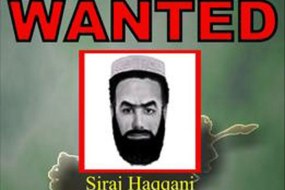
Jalaluddin Haqqani, founder of the network, and his son Sirajuddin, who now runs the group, have both been designated “global terrorists” by Washington.

Mr Munter’s remarks follow a warning by US defence secretary Leon Panetta, who said after the Kabul attack that the US would retaliate against Pakistan-based insurgents.

“Time and again we’ve urged the Pakistanis to exercise their influence over these kinds of attacks from the Haqqanis and we’ve made very little progress in that area,” Mr Panetta said Wednesday, a day after the Kabul siege.

“I’m not going to talk about how we’re going to respond. I’ll just let you know that we’re not going to allow these kinds of attacks to go on,” he said.

Pakistan’s foreign ministry condemned those remarks as “out of line”, saying that “terrorism and militancy is a complex issue”.

Pakistan’s Floods: Deja Vu, All Over Again

By Ishaan Tharoor for Time

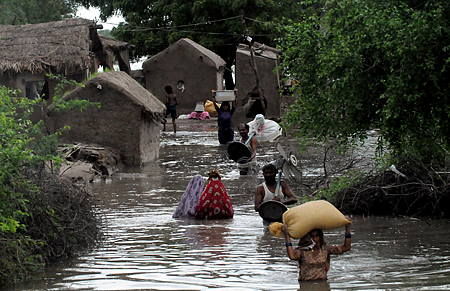
These days when it rains in South Asia, it doesn’t just pour — it floods. A month of monsoon squalls has deluged hundreds of towns and villages in northwest India and Pakistan. The latter has seen the most acute flooding, and, on all evidence, has been the least prepared for it. At least 233 people have already died and 300,000 are now stranded or in makeshift camps — a figure that will surely grow. Officials in Pakistan claim some 5.5 million people so far have been affected by rising waters. That’s still only a fraction of the 20 million hit by last year’s catastrophic rains, but the forecast looks ominous.

Neva Khan, Oxfam’s Pakistan country director, spelled out the dimensions of the crisis on the relief agency’s website:
There is an urgent need to provide immediate and life saving relief to the millions affected. It hasn’t stopped raining in Sindh for the last 10 days. Large swathes of land are underwater and people are desperately awaiting relief. They have lost their crops, homes and livestock for the second time – and been pushed from last year’s disaster to this one.

Sindh, the vast, fertile province abutting the Arabian Sea, appears the worst affected. Across Pakistan, some 900 villages have been wholly submerged and millions of hectares of arable land — some still irrevocably damaged by last year’s floods — are under water.
What’s most depressing about the situation now is how keenly it echoes the 2010 calamity. Omar Waraich, TIME’s Islamabad correspondent, wrote this excellent piece a year ago for the magazine’s international editions. As the waters rise, Pakistan faces a familiar cocktail of maladies from last summer.

Then, the civilian government headed by the unpopular President Asif Zardari was hampered by political infighting and its fundamental subservience to the real power of Pakistan’s influential military. Now, not much has changed (though Zardari is still in his position, a surprise to some). Then, militants and terrorists were exposing the fragility of the Pakistani state with cold-blooded strikes on some of country’s major cities. Now, after a rancorous summer of barb-flinging with the U.S., not much has changed either — not least when suspected al-Qaeda allied militants raided a prominent naval base in Karachi earlier this year. Then, the cash-strapped government pleaded for foreign assistance. Now similar calls are being issued, with similar notes of desperation.

In the weeks to come, inquests will be made into whether enough had been done to shore up riverbanks, provide shelter and food for the hundreds of thousands left destitute for over a year, and prepare for the next season’s rains. Already, there are reports of angry civilians blockading roads — like last year — demanding outside intervention and aid. Cities like Karachi, which this summer has seen a spasm of internecine blood-letting, will be further strained by refugees fleeing the countryside.

On many levels, though, the disaster is not man-made. The floodplain of the great Indus river, home to over 100 million people, birthed one of the world’s first ancient civilizations. But the river likely also swallowed it up. Because of its own particular ecology, the Indus can’t be controlled by similar mechanisms of levees prevalent in the West. And climate change has made weather patterns more unpredictable and volatile. This BBC story from a year ago cites the research of an Indian scientist: Professor Rajiv Sinha, from the Indian Institute of Technology in Kanpur, who has had first hand experience of Asian river floods, takes a more strident position.

“What all the climate models predict is that the distribution of monsoon rains will become more uneven in the future,” he told BBC News.
“Total rainfall stays the same, but it comes in shorter more intense bursts.”

In August 2010, more than half of the normal monsoon rain fell in only one week. Typically it is spread over three months.
Professor Sinha remarked: “Rivers just can’t cope with all that water in such a short time. It was five times, maybe 10 times, more than normal.”
So, if the unusually intense 2010 monsoon is the shape of things to come – and that is uncertain – the future may hold more flood misery for the people of Pakistan.

It’s a closing sentence that has proven sadly prophetic.

Pakistan Struggles to Curb Dengue Fever

As Reported By Reuters

Pakistani authorities, already under pressure to help hundreds of thousands of flood victims, are struggling to contain dengue fever which has killed at least eight people, officials said on Wednesday.

Around 4,400 cases of the mosquito-borne disease have been reported in the central Punjab province over the past two months, forcing the provincial government on Tuesday to close down schools for 10 days.

Most of the cases have been reported in Lahore, the provincial capital, where about 2,950 people tested positive.

“So far, eight people have died of dengue. We are trying our best to control this epidemic,” Jehanzeb Khan, secretary of the provincial health department, told Reuters.

Health experts say the illness is spreading across the Punjab because of poor hygiene conditions, and heavy monsoon rain provides ideal conditions for dengue-carrying mosquitoes to thrive in stagnant waters.

The first case of dengue was reported in Pakistan in 1994.

Those who died included Ataullah Siddiqui, head of the provincial department of minerals and natural resources.

Khan said the government had launched a fumigation drive to kill mosquitoes.

Sri Lanka is sending a team of experts to Pakistan to help fight the disease, the Sri Lankan High Commission said in a statement.

Pakistan’s weak civilian government, struggling to deal with floods that have killed 266 people, has been criticised by the media for dragging its feet on the dengue issue.

“The response to dengue has been adhoc, ex post, and therefore reactionary at best,” The News daily said in its editorial.

The disease is a threat to nearly half of the world’s population. Of the estimated 220 million people infected each year, two million — mostly children in Latin America and Asia — develop a severe form called dengue hemorrhagic fever.

There is currently no cure or vaccine for dengue fever.

Pakistan WSJ Ad Unlikely to Change Narrative

By Tom Wright for The Wall Street Journal

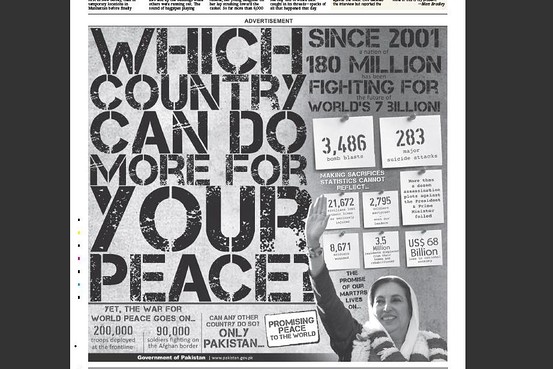
Pakistan has taken out a half-page advertisement in The Wall Street Journal to coincide with the 10th anniversary of the Sept. 11 attacks in an attempt to shift what Islamabad feels is an anti-Pakistan narrative in the American media.

“Which country can do more for your peace?” the ad asks, sitting below a story on page A10 of the U.S. Journal’s Saturday/Sunday edition titled “When the Towers Came Down.”

“Since 2001 a nation of 180 million has been fighting for the future of world’s 7 billion!” it continues.”Can any other country do so? Only Pakistan…Promising peace to the world.”

Pakistani army and civilian officials complain that in the U.S. their country is often portrayed in the media and by members of Congress as a double-dealing ally that takes billions of dollars in U.S. aid but secretly helps the Taliban kill U.S. soldiers.

Pakistan’s leaders have been publicly trying to promote a competing narrative, but with almost no success.

In their telling, Pakistan did foster Islamist militant groups, first to fight Soviet troops in Afghanistan and then Indian soldiers in Kashmir. Pakistan military and civilian officials point out the U.S. was all for the Mujahideen war against Moscow in the 1980s. But in the past decade, Pakistan’s army has severed its links with militants, who have unleashed a bloody war against Pakistan’s army and government, according to Islamabad’s narrative.

Pakistani officials regularly tell this version of events in public speechs and to visiting U.S. officials and journalists. The military has even made a local TV drama featuring real soldiers to publicize its sacrifices in the war against militants.

The advert in the Journal seeks to give the message to a wider audience.

To underline its point, the ad carries a picture of Benazir Bhutto, Pakistan’s former prime minister who was assassinated by Islamist militants in 2007, next to the slogan, “The promise of our martyrs lives on…”

The ad cites a series of statistics. Almost 22,000 Pakistani civilians have died or been seriously injured in the fight against terrorism, the ad said. The army has lost almost 3,000 soldiers. More than 3.5 million people have been displaced by the fighting and the damage to the economy over the past decade is estimated at $68 billion, it added.

People will quibble with these statistics from a country where reporters often find it difficult to get basic data.

It was not clear whether the ad was carried in other U.S. publications. Pakistan’s government also tried to place it in the New York Times. The Times asked for “more clarity in the ad about who was placing it,” according to a spokeswoman for the newspaper. The Times did not hear back from the government and so has not yet run the ad, she said.

The ad as printed in the Journal carries a line at the bottom in small font saying “Government of Pakistan” next to a web address for the government. A spokeswoman for the Journal declined to comment.

Will the advertisement be effective in shifting the narrative? It’s unlikely.

The points raised are all fair enough. Pakistan has been hammered by suicide bombings by Islamist militants against civilian and army targets. It’s perhaps fair to say that many in the U.S. have failed to recognize the changes in Pakistan, especially in the past few years, that have led to its domestic war against militancy.

Still, many in the U.S. and elsewhere are likely to shrug their shoulders. In the U.S. and India, where Pakistani-based militants are viewed as a daily threat to security, many politicians, analysts and ordinary citizens blame Pakistan for failing to stop the export of terrorism and being selective in which Islamist militant groups they go after.

Pakistan has waged a war against homegrown Pakistan Taliban militants for the past three years, suffering large casualties. But U.S. defense officials say publicly they are concerned that the country continues to protect Afghan Taliban fighters that don’t attack inside Pakistan. It’s these fighters who use Pakistan soil as a base from which to launch attacks on U.S. forces in Afghanistan, they say.

Some U.S. officials say they believe Pakistan’s argument that it’s too stretched fighting the Pakistan Taliban to open new fronts in its war against militants. But many members of Congress and U.S. defense officials say Islamabad wants to keep ties strong with the Afghan Taliban so it can influence politics over the border once the U.S. pulls out its troops by 2014.

India blames Pakistan for failing to crack down on Lashkar-e-Taiba, the militant group which carried out the attacks on Mumbai in 2008, killing over 160 people, and has hit Indian targets in Afghanistan. LET has not carried out any attacks against the Pakistan state.