Archive for the ‘ Pakistan ’ Category

Pakistan Yearns For a ‘Hazare’ Too

By Farhan Bokhati for Gulf News
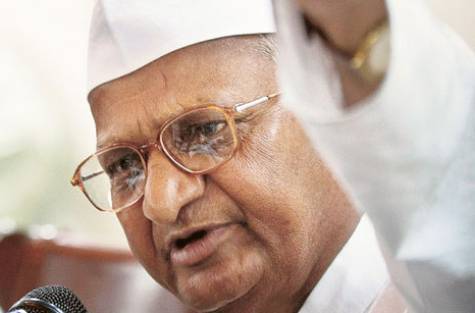
The crisis unleashed by anti-corruption protests targeting India’s graft-tainted government offers many lessons for Pakistan. While public rallies in India have lifted the credentials of the 74-year-old veteran campaigner, Anna Hazare, Pakistanis have watched the situation across the border with much interest.

Pakistan is no stranger to corruption in high places. Scandal after scandal involving senior politicians, high-ranking officials and other prominent individuals have become public, underlining the nature of the beast. While there have been high-profile arrests in the past, Pakistan tragically has a poor history when it comes to successful prosecution and sentencing.

Across the country, however, there is widespread popular lament over graft being more than just a mere fact of life. Calls for a revolution come frequently from ordinary Pakistanis, notably those who consider themselves disempowered and marginalised.
In recent days, TV coverage in Pakistan of the anti-graft campaign in India appears to have vividly illustrated the way that events in Delhi have struck a chord across the border. For long, Pakistanis have waited for a messiah but to no avail. Today, the yearning for such a deliverer from corruption appears to be much stronger than ever before.

To make matters worse for the country, Pakistan’s ruling class appears to show no signs of responding to the challenge posed by corruption in high places. Unlike India where a veteran campaigner in his 70s has become the lightning rod for popular opinion and has inspired the public at large to take the cue from him, there is no similar individual who has become a comparable figure in Pakistan.

But like India, Pakistan’s ruling politicians including members of the country’s parliament have seldom considered corruption an important enough issue to be vigorously discussed and debated in parliament. Ironically, for a country where politicians are keen to note the importance of strengthening the evolving democratic framework, it is important to recognise the equal if not greater significance of aggressively battling corruption.

Politicians in Pakistan appear to give no heed to corruption as an issue of vital significance. But what is even more disturbing is indeed the fact that questions raised on the conduct of politicians in relation to impropriety are quickly shoved under the carpet as if they were an attack on democratic values.

In this background, the time has now come for Pakistan to recognise the overwhelming significance of fighting corruption, not just for the country’s overall well-being but also for its ability to sustain its still young democratic order.

Abject poverty
If Pakistan continues to become an even more tainted country where values related to clean governance remain subservient to so-called discussions on democracy and civilian rule, sustaining the latter may remain an uphill task. While reverting to military rule as has been the case in Pakistan’s history may not be an option, it can be stated with a significant degree of certainty that chaos will increasingly become a fact of life going forward. The popular yearning for an end to corruption coincides with what appear to be difficult economic times for Pakistan. The country’s elite have neglected the poorest of the poor for too long.

At least a third of Pakistan’s population, or by some accounts even a higher proportion, continues to live below the poverty line. This essentially means that a large segment of the country’s population, which on its own may be larger than the entire population of many countries, lives in extreme and abject poverty, facing conditions that can simply not be imagined by the ruling elite.

The missing element for now may indeed be that Pakistan has yet to discover a prominent individual like India’s Hazare who becomes the hope for the country’s downtrodden and those in need. Given the desperation felt by many Pakistanis, it is possible that such an individual may be found sooner or later, who then leads calls for a long-overdue change.

The consequences of such an eventuality may be difficult to comprehend at the moment. But given the popular yearning for an abrupt change, it is more than likely that such a change could be tumultuous and even possibly bloody. The easier option for Pakistan’s complacency-driven ruling elite which they are unlikely to embrace going by past precedent, is simply that of learning a lesson from events across the border. The ‘Hazare factor’ in India’s landscape is a breath of fresh air.

Farhan Bokhari is a Pakistan-based commentator who writes on political and economic matters.

Pakistan Partnership Raches For the Stars

By Syed Fazl-e-Haider for The National

By teaming up with China on a satellite launch, Pakistan has taken a bold step forward with its space programme. And there are mutual benefits to the arrangement, Syed Fazl-e-Haider writes. The recent launch of the advanced communication satellite Paksat-1R was not only a big stride forward for Pakistan’s 2040 space programme, but also Sino-Pakistan space collaboration.

Last week, China launched Paksat-1R with the Long March-3B carrier rocket from Xichang Satellite Launch Centre in south-west Sichuan province. The new satellite will replace Paksat-1, which will complete its useful life this year.

Critics have questioned whether Pakistan can really take the credit for the development of a satellite that was made by China, financed by China and ultimately launched by and from China. But Pakistan is now able to achieve several strategic objectives through Paksat-IR, including serving an expanding client base, which includes the military. With the launch of the satellite, the country has entered into a long-term relationship with its manufacturer towards acquiring the know-how to produce satellites in the future, with the ultimate aim of achieving self-reliance. Now it is also able to establish and maintain ground control stations for operating Paksat-1R from Pakistan.

Pakistan’s space programme owes its existence to China’s cooperation that spans from climate science, clean energy technologies, clean water technologies, cyber security and basic space, to atmospheric, Earth and marine sciences. It was China that launched the country’s first low-orbit satellite Badr-A in July 1990. In 2006, China committed to work with Pakistan to launch three earth resource satellites.

Islamabad sought more than US$200 million (Dh734.5m) financing from China for Paksat-1’s replacement. The two countries signed the procurement contract during the first state visit by Asif Ali Zardari, the president of Pakistan, to Beijing in 2008.

Paksat-1, Pakistan’s first geostationary satellite, was launched in February 1996. It served TV broadcasters, telecommunications companies, data and broadband internet service providers, and government organisations.

With a lifespan of 15 years, Paksat-1R will have great economic implications for the country. The satellite will provide high-power communication and weather monitoring facilities, besides strategic defence applications. The Space and Upper Atmosphere Research Commission will operate it from its ground control stations in Karachi and Lahore. With advance communication antennas, it will cover some regions of Europe, South Asia, the Middle East and eastern Africa. It will facilitate the introduction of new services including broadband internet, digital TV broadcasting, rural telephony, emergency communications, tele-education and tele-medicine.

Pakistan is also making efforts to get space technology from China. It plans to launch the Pakistan Remote Sensing Satellite (PRSS) in the near future with the technical and financial assistance of China. Launching PRSS is now the first priority for Pakistan, because such a satellite can help it in cartographic studies. China has not only achieved the capability of placing its satellites in space, but is also developing rockets. It has created a powerful carrier rocket with military capabilities that can launch multiple satellites into space.

China is conquering new frontiers in space technology. Shenzhou 7, the third manned spaceflight, has established a new threshold for China. It has already planned Shenzhou 8, which will be docked with the Tiangong-1 space module that will place the first portion of China’s planned space laboratory in orbit.

China’s space technology industrial base is rapidly expanding, and its sales overseas have so far focused on its traditional allies including Pakistan. Space and rocket technology from China would help Pakistan achieve its ambitious goals of economic progress and impregnable defence. While China can transfer space technology to Pakistan, in return Pakistan could assist China in space by establishing a station on its soil to track Chinese satellites.

Syed Fazl-e-Haider is a development analyst in Pakistan. He is the author of many books, including The Economic Development of Balochistan, published in May 2004

Kidnapped US National Was Doing Humanitarian Work in Pakistan

By Hussain Kashif

The abducted US expert Warren Weinstein was doing large scale humanitarian work in different public sectors including small and medium industries, agriculture and infrastructure development, which was responsible for bringing significant foreign investment and development in Pakistan.

He was a country director of JE Austin Associates Incorporation, Arlington, Virginia, US, which is a development contractor that works with the aid arm of the US government. Weinstein had also worked on a dairy project in Pakistan and imported dairy chillers to boost the productivity of rural farms in the country, resulting in $63 million in new investment to Pakistan, at least 2,150 new jobs, and a 25 percent boost in producer productivity.

His company is working here on US Agency for International Development (USAID) projects, including one to set up small businesses and create jobs in the restive Tribal Areas in Pakistan. Warren Weinstein was recognised by his company as an expert in international development of industries but they have removed his profile from their website after his kidnapping. The company also worked on helping small businesses in the gem and marble trade in the lower districts of the Federally Administered Tribal Areas (FATA).

According to Daily Times sources, he had worked on a multimillion-dollar USAID project to improve dairy, horticulture and mining in Pakistan, including the terrorist-infiltrated Tribal Areas. Sources said that his projects had finished here in Pakistan and that his contract with his Virginia-based company, JE Austin Associates Incorporation, ended on August 15 and that he was planning to return his home in the US.

A California-based website states, “Warren had been managing an office in Pakistan for over four years, building a strategic reputation in the dairy, furniture, marble and leather sectors, which led to projects for the Pakistani government. He was granted an African Affairs Certificate from Columbia University and he is also a Fulbright Scholar. A former political science associate professor, Weinstein is an expert on international development, experienced in bilateral and multilateral organisations, as well as NGOs. Highly experienced in designing and implementing training programmes, and fluent in seven languages, Dr Warren Weinstein is well known within international banking and finance circles.”

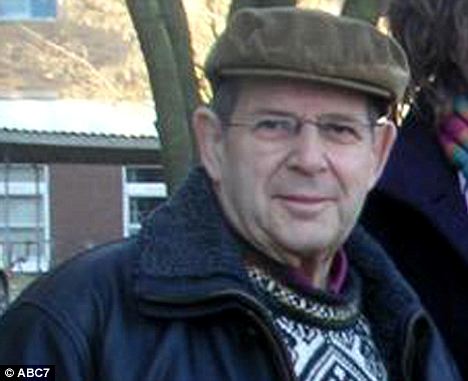
According to media reports, Dr Warren Weinstein celebrated his 70th birthday last month at his US residence in Rockville, Maryland. Weinstein was linked with the global community through the Internet on the social media website ‘LinkedIn’, where a complete profile of him was available, along with some personal and professional data.

According to his profile, he is a Jewish American and his full name is Dr Warren Weinstein, which was confirmed by the US Embassy in Pakistan. A PhD in International Law and Economics and a Masters of International Relations, Warren is also fluent in at least seven languages, including Urdu, and has authored and edited around 13 books on African development since 1966. His wife’s name is Elaine who is living at Weinstein’s home in Rockville with other family members. According to his friends and colleagues, “He’s a short, funny man with a quick wit”. A local journalist who last saw Weinstein about a year ago said he could speak a fair amount of Urdu and was a laid-back guy not too worried about security issues.

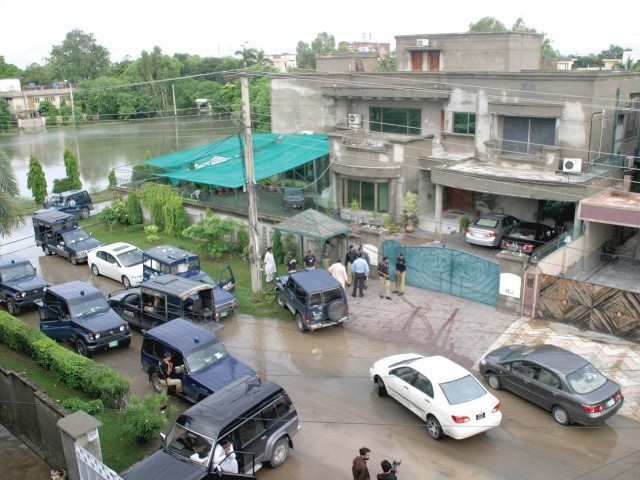
Weinstein has lived in Pakistan for seven years and maintains a principal residence in Islamabad, but also has a home in Lahore where he was living alone. Warren Weinstein was living in a rental residence in Model Town. His double-storey house has two gates and walls that are about 1.8 metres high. The street on which his house is situated contains private security checkpoints, which are usually unmanned during the day. At night, watchmen hired by neighbours are on duty from dusk till dawn. There are around five security cameras installed in his house, but they have been inactive for a year. He was kidnapped by unidentified armed men late on last Saturday. Police have taken his security guards and a driver into custody for questioning, but no clue has been found as to the identity of his captors and the motive behind his kidnapping.

He had eight servants in his Lahore residence, including five guards from a Defence-based security company who were retired commandos of the army’s Special Services Group and a driver, a cook and a housekeeper who was responsible for maintenance of the house and ironing his cloths. One of his security guards named Muhammad Aurangzeb from Sargodha was court-martialled from the army. The second guard, Muhammad Abbas, belonged to Chichawatni, the third, Muhammad Sarwar was from Sheikhupura, while the fourth guard, Fazal Elahi, was from Charsadda and ran away from his military service. Police sources further said that his company had requested local police to provide security to Warren Weinstein, but that he personally refused, saying that he did not want to stand out. About Weinstein’s driver, sources said that his name is Israr and he belonged to Swabi district of Khyber Pukhtunkhwa and had been working with JE Austin Associates for the last four years, while his cook was also from FATA.

The FBI is also investigating the case along with local police investigators. According to sources, investigators were informed by Weinstein’s employees that he never received any threat from any side in Pakistan as far as they knew.

It is worth mentioning that the security guards’ mobile phones, which the kidnappers snatched, remained active for around 45 minutes after the kidnapping and that the last connectivity was detected on the motorway. Kidnappers later switched off the phones. No one has yet claimed responsibility for the kidnapping. The police, with the help of the guards and the driver, have developed sketches of the suspects, who were wearing shirts and trousers and were speaking Urdu. Sources said that a laptop, cellphones and other items found in the victim’s room were being thoroughly examined.

Panetta: ‘No Choice’ in US Relations with Pakistan

By David Gollust for Voice of America

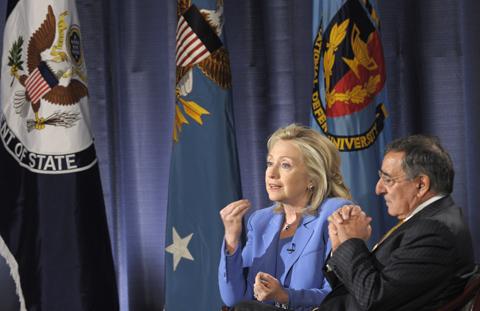
Defense Secretary Leon Panetta said Tuesday that the United States has no choice but to maintain close relations with Pakistan, despite government links with Islamic militants including the Haqqani network. The State Department, meanwhile, put sanctions on another Haqqani network commander.

Panetta, who took over as defense secretary in June after two years of heading the CIA, declined comment on news reports that Pakistan allowed China to inspect the wreckage of an advanced U.S. helicopter lost in the raid that killed Osama bin Laden.

But at a public forum with Secretary of State Hillary Clinton at Washington’s National Defense University, the defense chief was unusually candid about U.S. problem issues with Pakistan.

Panetta said Pakistan has “relationships” with the Haqqani network – militants based in western Pakistan who conduct cross-border attacks on U.S. forces in Afghanistan, and with Lashkar-e-Taiba militants who have attacked India.

Both groups are listed by the United States as terrorist organizations. Despite complaints that Pakistan has withheld visas for U.S. citizens being posted there, Panetta said the relationship remains essential.

“There is no choice but to maintain a relationship with Pakistan,” said Panetta. “Why? Because we are fighting a war there. We are fighting al-Qaida there. And they do give us some cooperation in that effort. Because they do represent an important force in that region. Because they do happen to be a nuclear power that has nuclear weapons, and we have to be concerned about what happens with those nuclear weapons. So for all of those reasons, we’ve got to maintain a relationship with Pakistan.”

Secretary of State Clinton said the Obama administration considers relations with Pakistan to be of “paramount importance.”

She said there have been “challenges” in bilateral ties for decades with valid complaints on both sides, and that she credits the Islamabad government with lately recognizing its shared interest with Washington in confronting terrorism.

“I was very pleased when the Pakistanis moved into [the] Swat [Valley] and cleaned out a lot of what had become a kind of Pakistani Taliban stronghold,” said Clinton. “And then they began to take some troops off their border with India, to put more resources into the fight against the Pakistani Taliban. Now, as Leon [Panetta] says, we have some other targets that we discuss with them – the Haqqanis, for example. And yet it’s been a relatively short period of time, two-and-a-half years, when they have begun to reorient themselves militarily against what is, in our view, an internal threat to them.”

The State Department on Tuesday designated a key Haqqani network commander – Mullah Sangeen Zadran – a terrorist under a 2001 White House executive order, freezing any U.S. assets he has and barring Americans from business dealings with him.

At the same time, Sangeen was designated a terrorist by the U.N. sanctions committee, which will subject him to a global travel ban, an asset freeze and an arms embargo.

A State Department statement said Sangeen, is a “shadow governor” of Afghanistan’s southeast Paktika province and a senior lieutenant of network leader Sirajuddin Haqqani. It said Sangeen has coordinated the movement of hundreds of foreign fighters into that country and that he is linked to numerous bomb attacks and kidnappings.

Memorial for Noor Inayat Khan, SOE Agent and Daughter of Sufi teacher Hazrat Inayat Khan

As Reported by The Sufi Times

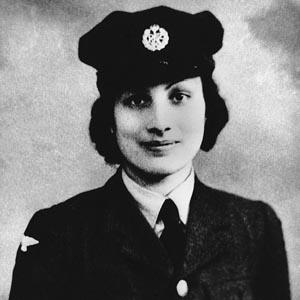
This past New Years Day would have marked the 96th birthday of Noor-un-Nisa Inayat Khan, an Indian muslim woman who was shot dead in a Nazi concentration camp in September 1944, after being the first female radio operator to infiltrate occupied France.

Her courage and self-sacrifice during World War II are to be honoured by a memorial which has been proposed to be raised in London’s Bloomsbury area next year. It will be the first war memorial in Britain either for a Muslim or an Asian woman.

The project has the support of 34 Members of Parliament and a number of prominent British Asians, including human rights activist Shami Chakrabarti and film director Gurinder Chadha, OBE. Permission has been granted by London University and the local authority to build a sculpture in Gordon Square. A sculptor has already been commissioned and the organisers now need to raise £60,000 to complete the project, of which about £25,000 has already been raised.

Noor Inayat Khan was the daughter of acclaimed Sufi teacher and musician, Hazrat Inayat Khan (1882 – 1927), who was one of the first people to bring Sufi teachings to the modern Western world. He established the “Sufi Order in the West”, which survives in various forms to this day and has followers around the world.

Hazrat Inayat Khan’s great-grandfather was Tipu Sultan, a king of Mysore who ruled during the time of the East India compay and who had died in battle against the Duke of Wellington in 1799. Hazrat Inayat Khan had been initiated into the Suhrawardiyya, Qadiriyya and Naqshbandi tariqas, but his primary initiation was from Shaykh Muhammed Abu Hashim Madani into the Nizamiya branch of the Chishti order (named after Shaykh Nizamuddin Auliya, died 1325).

Being an accomplished musician, Hazrat Inayat Khan went to America to tour with a group of musicians, playing mainly traditional court music on his veena and singing. During this time, he attracted a number of students to Sufism and met his wife, Ora Meena Ray Baker, an American from New Mexico who was of English-Irish-Scottish descent. They had their first child, Noor, in Moscow (1914), where Inayat Khan had gone to perform. Three more children were to follow: Vilayat (1916), Hidayat (1917) and Khair-un-Nisa (1919).

When Noor was four years old the family moved to Paris. Noor grew up in an environment steeped in Sufi teachings. Her father established a Sufi centre and regularly held Sufi meditation meetings with a growing number of students, lectured widely and authored a number of books.

Noor went on to study at the Sorbonne, and in her mid-20’s became an author of children’s stories. At the outbreak of war Noor’s family returned to her motherland and they moved into rooms in Bloomsbury Square in London. The site of the memorial which is to built in her name is, therefore, very appropriate.

Both Noor and her brother Vilayat decided they would do something to help the Allied Forces in their efforts against the Nazi threat. Vilayat joined the RAF (Royal Air Force) and trained as a pilot, whilst Noor joined the WAAF (Women’s Auxiliary Air Force). Because of her fluent French, she was given a position in the new Special Operations Executive (SOE) of the British Secret Service. The SOE was desperately looking for radio operators who could be positioned in enemy territory to send back intelligence by wireless.

Her recruiters were not at first convinced of her suitability for the role. One of them noted, “Not overburdened with brains but has worked hard and shown keenness, apart from some dislike of [the] security side of the course. She has an unstable and temperamental personality and it is very doubtful whether she is really suited to work in the field.”

But in June 1943, she became the first female SOE agent to be parachuted into enemy occupied territory in France. According to Sir Colin Gubbins, head of the SOE, she had “occupied the principal and most dangerous post in France”. As a radio operator she was on the front line of intelligence operations, a dangerous role not for the faint-hearted. She was once stopped by the Gestapo whilst cycling with her radio equipment, but managed to convince them that it was a cinema projector.

However, it eventually transpired that the French resistance group she had been sent to help had already been infiltrated by Nazi agents and within weeks of her arrival hundreds of operatives had been arrested and shot.

Noor turned down the opportunity to return to Britain, choosing to remain behind as the SOE’s only radio contact in or near Paris. She was given a life-expectancy of three weeks, but survived for three months.

But then she was betrayed by Renée Garry, the sister of one of her French Resistance colleagues. The reason for this betrayal is not clear. Some reports say Garry was jealous of Noor’s role as an SOE agent, others say she was jealous of her beauty. In any case, she was seized by the German Gestapo and taken to a concentration camp in Pflozheim. Here she was routinely tortured for weeks, but refused to give up any information to her interrogators.

On 11 September 1944, Noor, together with three other female SOE colleagues, were taken by cars to the concentration camp in Dachau, arriving in the dark. During the night, they were tortured again. Early on the morning of September 12, they were marched out to the dog kennels, forced to kneel two by two and each was shot in the back of the head. Their bodies were incinerated in Dachau’s infamous ovens. Her last words before she died were ‘liberte’.

Shrabani Basu is Noor Inayat Khan’s biographer and founder of the Noor Inayat Khan Memorial Trust. She spent eight years researching Noor’s life from war archives and family records, and has more recently been involved in the planning of the new memorial. Basu remarked, “I feel it is very important that what she did should not be allowed to fade from memory, particularly living in the times that we do. Here was a young Muslim woman who gave her life for this country and for the fight against those who wanted to destroy the Jewish race. She was an icon for the bond that exists between Britain and India but also between people who fought for what they believed to be right.”

Of the SOE’s 55 female agents, 13 died in action or at the hands of the Nazis. One of those killed (Violette Szabo) and one who survived (Odette Hallowes) have had popular movies made about their lives.

The initial unfavourable assessment made by Noor’s recruiters was in stark contrast to the note that her commander and head the SOE’s French section, Maurice Buckmaster, later made of her: “A most brave and touchingly keen girl. She was determined to do her bit to hit the Germans and, poor girl, she has.”

In France, Noor is already widely recognized as a war hero. There are two memorials for her, and a ceremony is held each year.

In 1975, a commemoration plaque was installed at the Dachau Concentration Camp Memorial Site, by the State of Massachusetts. It displays Noor’s name and the names of the three others who were executed with her on September 12th 1944.

To this day, nothing has been built in Britain to commemorate the life of this Indian Sufi Muslim woman who courageously sacrificed her life for freedom and the British contribution to the war against Fascism. It is hoped that the proposed memorial will be built to redress this oversight.

We Are Not All CIA Agents

By Michael Kugelman for The Express Tribune

Wondering about America’s latest reason for being unhappy with Pakistan? Look no further than the case of aid worker Warren Weinstein, the US citizen recently abducted from his residence in Lahore. I am not suggesting that Americans resent the fact that Pakistanis kidnapped Weinstein. Many of us (though by no means all of us) understand that abductions of Americans in Pakistan are very rare and realise that those Pakistanis who relish the thought of kidnapping Americans constitute a small percentage of the population.

What I am suggesting is that Americans are upset with what Pakistanis are saying about Weinstein. It is striking how quickly some Pakistanis have proclaimed that Weinstein is a CIA agent (and to be fair, a number of Americans are making the same assumption). An American in Pakistan doing aid work in the tribal areas? Wearing the native dress? And spending so much time in the country? Clearly the hallmark traits of a spy, they conclude. Never mind his advanced age (how many near-septuagenarian spooks are prowling around Pakistan?), or the fact that he was living quite conspicuously in a large home in an affluent area of Lahore. Also striking is who is making these accusations. One expects such views from the likes of Shireen Mazari, who famously had an altercation with a western-looking man in a restaurant when he inadvertently bumped into her chair, referring to him as a “bloody CIA agent”. Or from those impressionable masses who fall prey to the anti-American narratives propagated by school textbooks, mullahs and the media.

However, it is quite another matter to see readers of this newspaper — who, by virtue of their English-language aptitude and willingness to read The Express Tribune, are not narrow-minded ideologues — posting good-riddance comments about Weinstein and his presumed CIA bonafides.
Yes, Americans in Pakistan have been and are connected to security contractor firms and intelligence agencies. Yes, many of the alleged conspiracy theories about CIA agents crawling around the country have been proven true; Washington has sometimes emerged with egg on its face after prevaricating about the intelligence affiliations of its citizens stationed in Pakistan.

And, yes, ‘development work’ can be code for spy craft. Nonetheless, to reflexively assume that any American in the country is tied to the CIA is not only unfair, but also insulting — because it sweepingly dismisses the highly beneficial work done by many Americans in the country, such as, presumably, Weinstein himself. Just as there are Pakistanis who admire America (albeit not necessarily its foreign policies), there are Americans — with and without government affiliations — who hold Pakistan in high esteem and who dedicate their lives to making positive contributions there. Some may single out school-building superstar Greg Mortenson; I would cite the likes of the somewhat lesser-known (and therefore more typical) case of Todd Shea — a musician by training who, moved by televised images of suffering in Kashmir after the 2005 earthquake, travelled to Pakistan to provide relief aid. Shea has been there ever since; he now runs a hospital in a remote part of Kashmir.

There are other Todd Sheas in Pakistan. They may not want their stories publicised, but they are there, serving as healthcare trainers, conducting research on drone strikes’ impacts on civilians and helping promote women’s rights. Some work for NGOs, others represent non-intelligence agencies of the US government and others still — perhaps the most honourable of them all — act as volunteers and represent only themselves.

Pakistanis often lament, and rightly so, how so many of their most humanitarian and peace-loving citizens — from Abdul Sattar Edhi to Shehzad Roy — are relative unknowns in the US. Americans are equally justified for being indignant about the lack of recognition accorded to the selfless work of their countrymen in Pakistan — work that has little to do with cloaks and daggers and much more to do with benevolence and social upliftment.

U.S. Says Pakistan Let China See Copter

By Mark Mazzetti for The Seattle Times

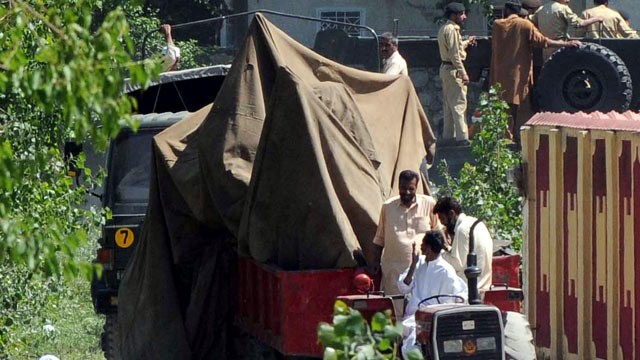
In the days after the raid that killed Osama bin Laden, Pakistan’s intelligence service probably allowed Chinese military engineers to examine the wreckage of a stealth American helicopter that crashed during the May operation, according to U.S. officials and others familiar with the classified assessments.

Such cooperation with China would be provocative, providing further evidence of the depths of Pakistan’s anger over the bin Laden raid, which was carried out without Pakistan’s approval.

U.S. spy agencies have concluded it is likely that Chinese engineers took detailed photographs of the severed tail of the Black Hawk helicopter equipped with classified technology designed to elude radar, the officials said.

The members of the Navy SEALs team who conducted the raid had tried to destroy the helicopter after it crashed at bin Laden’s compound in Abbottabad, but the tail section remained largely intact.

U.S. officials cautioned they did not yet have definitive proof the Chinese were allowed to visit Abbottabad. They said Pakistani officials had denied they showed the technology to other foreign governments.

One person with knowledge of the intelligence assessments said the U.S. case was based mostly on intercepted conversations in which Pakistani officials discussed inviting the Chinese to the crash site.

He characterized intelligence officials as being “certain” that Chinese engineers were able to photograph the helicopter and even walk away with samples of the wreckage. The tail has been shipped back to the U.S., according to American officials.

The U.S. assessments were disclosed Sunday by The Financial Times. The newspaper cited Pakistani officials who denied the accusations.

Google Celebrates Pakistan’s Independence Day

By Sanain for Allvoices

For the very first time in the history of Google, a Google Doodle has been especially designed for Pakistan, on their 64th Independence Day. Google has put a green-colored doodle representing the color of Pakistan’s national flag on the Pakistani Google homepage.

The doodle is an absolute eye-catcher. The “l” of Google is replaced by “Minar-e-Pakistan”, which is the National Tower of Pakistan in Lahore. The upper half of the “g” is replaced by “A Crescent and a Star”, which represents an important part of Pakistan’s national flag. There can also be seen small-colored stars around the logo.

Pakistan’s Independence Day is observed every year on August 14, the day Pakistan was made an independent country based on borderlines created by the British towards the end of their rule of India. On this special day, Pakistan, in 1947, became an independent country and also the largest Muslim country of Asia.

The day is a national holiday in Pakistan. Main events of the day include flag raising ceremonies, tributes to national heroes, fireworks taking place in Islamabad, the capital of the country, changing of the guards at the mausoleum of Mohammed Ali Jinnah (Mazar-e-Quaid), Wagah Border ceremonies, patriotic fashion shows and musical concerts.

On its Independence Day, Pakistan also releases some prisoners who were arrested for illegally crossing into Pakistan from the neighboring and archrival country, India.

The main celebrations take place in Islamabad, where the president and prime minister raise the national flag at the presidential and parliament buildings and deliver speeches to the people of Pakistan. These speeches basically highlight the achievements of the government, goals set for the future and in the words of the father of the nation, Quaid-e-Azam Muhammad Ali Jinnah, bring “Unity, Faith and Discipline” to its people.
The credit for Pakistan’s independence goes to their famous leader, Muhammad Ali Jinnah, also known as the Quaid-e-Azam. His unparallel struggle and endeavors made it possible for Muslims of the Indian subcontinent to get a country for themselves.

The struggle for Pakistan’s independence has a background behind it. Pakistan was achieved to establish a Muslim country, which would prove as an example of piety, fair play and unity for the rest of the Muslim brotherhood.

It should be noted that last year, Pakistani government did not celebrate the Independence Day to show solidarity and moral support with the people affected by floods in 2010.

Pakistan May Be Standing in Way of Polio’s Eradication

By Uri Friedman for The Atlantic Wire

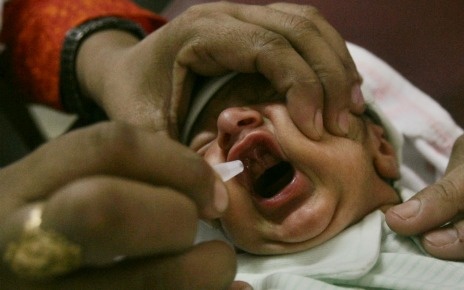
Several Pakistani news outlets today are dissecting a troubling finding from the U.N. Children’s Fund: the 63 cases of polio diagnosed in the country so far this year are nearly double the 36 detected during the same period last year. The highly contagious viral disease, which attacks the nervous system and can cause paralysis or even death, is most evident in the province of Balochistan and has now spread to other areas that haven’t been infected for the past five years. The U.N., which is trying to eradicate the disease by delivering oral vaccines to children, says that these findings suggest Pakistan could be the “last polio reservoir worldwide”–the country standing in the way of eliminating only the second global epidemic disease after smallpox.

This isn’t the first time Unicef has made the claim. In a 2003 report, for example, the organization called Pakistan “polio’s last frontier.” But what’s particularly troubling now is that while the number of cases is dropping in India, Nigeria, and Afghanistan–which, along with Pakistan account for over 90 percent of cases–the disease is spreading in Pakistan (in fact Pakistani President Asif Ali Zardari has declared polio a national emergency). Pakistan’s Express-Tribune cites administrative blunders, resistance of local populations, security challenges for vaccination teams, and Pakistan’s proximity to polio-infected Afghanistan as reasons why the country appears to be losing a battle against polio that “we can simply not afford to lose.” Other reports say anti-vaccine messages from radical clerics and the absence of a national ministry of health are also to blame. The recent revelation that the CIA set up a fake vaccination program in Pakistan to collect DNA from Osama bin Laden’s family members, Reuters notes, may only make immunization drives more difficult.

All that being said, Pakistan isn’t the only obstacle preventing the international community from finally eradicating polio. In an April report, the Global Polio Eradication Initiative announced that the project, which was launched by Unicef and other organizations, didn’t have the funding necessary to reach its goal of stamping out the last remnants of the disease by 2012. The report also noted that polio had reappeared in four disease-free countries–Chad, Angola, Democratic Republic of Congo and South Sudan–and called the state of Kano in northern Nigeria, where rumors were circulating that the polio vaccine would sterilize children, “a smouldering risk that could yet undermine the whole eradication effort.”

Poetry Soothes the Pain in Pakistan

By Nahal Toosi for The Associated Press

The outrage was swift after Pakistani security forces shot dead an unarmed young man in the southern city of Karachi, an incident caught on videotape and broadcast widely. Editorial writers demanded justice. Television talking heads decried the brutality of the men in uniform.

And then, a few poets got to work.

“No regard of life! No fear of Allah! Animals in jungle are better than you,” one English-language poem posted on YouTube rails at the culprits in the June incident. Another, in Urdu and circulated on Facebook, mourned victim Sarfraz Shah, who had “told his mom he will return home early.”

Pakistan is a country that reveres poetry, gently weaving it into daily life, and the last decade has provided no shortage of material. The rise and fall of a military ruler, the demands of a foreign superpower, the devastation of Taliban bombs — these themes and more have crept into Pakistani poems.

Some of the resulting verses carry overt messages about specific events. Often, though, the approach is more subtle, and occasionally, it’s tinged with humor.

“Of course, everything which is happening around a poet, it has an effect,” said Shahzad Nayyar, a published poet based in the eastern city of Lahore. “Such … events, which are causing destruction, which are causing loss to man, material and property, they are affecting poets a lot.”

Although Pakistan is just 64 years old, its people’s poetic tradition is centuries old and is intertwined with that of the rest of South Asia, while also influenced by the Persians. Urdu is the most widely used language, but even regional languages, such as Pashto and Sindhi, have notable poetic histories.

Today in Pakistan, one can find poetic verses on the back windows of taxis, on the sides of delivery trucks and atop gravestones. Newspapers regularly publish poetry, while Pakistani politicians, such as the country’s ambassador to the U.S., post verses on their Twitter feeds or use them in speeches.

Poetry recitals — known as “mushairas” — can draw thousands of spectators and last deep into the night, with audiences shouting encouragement to the men and women onstage. Sometimes, mushairas are part of larger gatherings, such as weddings or trade conferences; others are intimate affairs.

The country even has a national holiday dedicated to a poet-philosopher, Allama Muhammad Iqbal. Iqbal’s writings were seen as an inspirational force toward the creation of Pakistan as a Muslim homeland in 1947, though he died in 1938.

Of the 1,000 books published each year in Pakistan, there are some 50 books of poetry, said Saleem Malik, vice chairman of the Pakistan Publishers and Booksellers Association. While a handful of poets may earn enough to live on writing alone, at least for a while, most are engaged in other professions.

Many of the poetry books are self-published and distributed for free among friends. Still, that doesn’t account for the poetry that appears in other forums, such as magazines or websites such as Facebook, a popular setting for younger poets who can’t afford to publish their own books.

Perhaps the most popular form of poetry in Pakistan is the ghazal, which is made up of five or more units of two lines each and often sung.

Some of the most well-known Pakistani poets say that despite the material provided by the turmoil of recent years, they are careful about how they word their poems and often prefer to use indirect language and symbolism. This is in part to avoid being labeled a “propagandist.”

“It loses your emotional power when you are direct — it becomes like a slogan,” said Farhat Abbas Shah, a poet especially popular with younger Pakistanis.

Iftikhar Arif — a poet so famed in Pakistan that one section of his many, teeming bookshelves is devoted just to academic tracts written about him — said poets should aspire to write in a universal manner that can be appreciated beyond national borders and withstand the test of time.

There are poems written from other periods of turmoil in Pakistani history that are still relevant today because of this approach. “There is a history, perhaps more honest, more correct, more sincere, written by poets,” Arif said.

The line between direct and indirect is a fine one, however, and over the decades, some of Pakistan’s most popular poets have gone back and forth.

The late Habib Jalib, often described as a “revolutionary” or “the People’s Poet” raged against political tyranny, and even referred specifically to former U.S. president Jimmy Carter in his famed collection called “Ten Poems.”

Kishwar Naheed, a spry 71-year-old who is considered one of Pakistan’s pre-eminent feminist poets, is among those who occasionally embraces the direct approaches. In “A Mourning Poem for Bajaur,” Naheed decries the violence gripping Pakistan’s northwest regions bordering Afghanistan:

“Coffins have become so numerous, That the city is shrinking,” the poem begins.

A later verse: “We have the same court-yards, the same threshers. But bullets jump through them, Riddle holes in my fields, and in the bodies of my children.”

Naheed, who has published more than a dozen books of poetry, says every couple of months she receives threats because of her poems.

“They may say, ‘If you continue like this, you may have an accident in your car,'” she said, with a grin. “But I don’t mind having such reaction. If you don’t have a reaction, that means you have no appeal.”

Pakistani poets insist that their community is largely a peace-loving, liberal bunch — though many point out that they may feel just as much ire for U.S. actions toward Pakistan as they do for religious extremists.

Still, militant movements and their sympathizers also use poetry as a tool. After the U.S. killed Osama bin Laden in a nighttime raid in May, a group at Punjab University in Lahore advertised a poem and essay contest dedicated to glorifying the al-Qaida chief.

Taliban operating on both sides of the Pakistan-Afghan border, where the Pashtun ethnic group dominates, often use poems and chants, shared by way of CDs and cell phone recordings, to reach out to a largely illiterate population and persuade ordinary citizens to resist foreign troops.

Much of the poetry of Pakistan is not high art, but rather street-level verses exchanged by text messages, often with anonymous authors. Much of it is laced with the bitter, resigned humor of a people beset by poverty and downtrodden by corrupt elitists.

One popular Punjabi-language poem chastised former military ruler Pervez Musharraf, who was eventually ousted in 2008.

“You rush to Washington all the time, and please Bush again and again,” it says. “Beg at his feet all the time, and threaten the oppressed. Why don’t you confront the oppressors?”

Pakistan to Hand Back Bali Bombing Suspect to Indonesia

Xinua News Agency

Pakistani authorities will hand back the alleged mastermind of Bali bombing Umar Patek to Indonesia later on Wednesday, reported local Urdu TV channel Geo.

Patek, 41, is suspected as the field coordinator and planner of the suicide bombings in two nightclubs in Bali in 2002 that killed 202 people, most of whom are Australian holiday makers.

He was arrested in January 2011 at the city of Abbottabad where the U.S. army killed Osama bin Laden on May 2. There is no official confirmation about the extradition of Omar Patek yet.

Indonesian authorities had reportedly sought extradition of the suspect to uncover Patek’s network in the country. Pakistan had reportedly invited Indonesian investigators to identify and question the suspect days after his arrest was confirmed.

Patek, alias Abu Syeikh or Umar Arab, escaped from Indonesia in 2003. The U.S. government had put one million U.S. dollars bounty on his head. He has also been included in the United Nations’ consolidated list.

He was captured by the Pakistani security authorities after a decade of escape. Since his arrest the Indonesian police had reportedly been negotiating with the government of Pakistan for bringing back one of the most wanted militants in Southeast Asia.

Indonesian officials said that they had been involved in discussions with Pakistani authorities for extradition of Patek over the past few months. Patek is a suspected member of al-Qaida-linked Southeast Asian network Jemaah Islamiyah (JI).

JI has been accused of carrying out a series of major terrorist strikes in Indonesia that killed over 250 people from 2000 to 2009.

Rights Violations: Pakistan Maintains Discreet Silence Over Syria Protest

By Saba Imtiaz for The Express Tribune

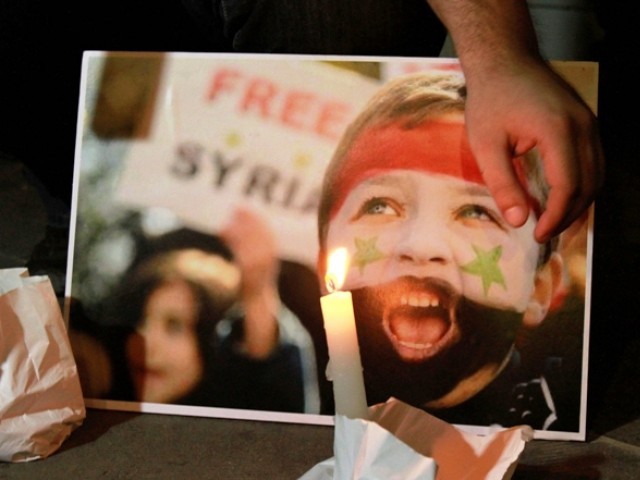
As the chorus against the Syrian government grows louder, Pakistan remains silent on the issue of human rights abuses in Syria. According to Amnesty International, over 1,500 people have been killed since March in the protests against Syrian President Bashar alAssad’s regime. Pressure against Syria appeared to grow over the weekend from Arab states, as the Gulf Cooperation Council asked for an immediate end to bloodshed.

On Monday, Saudi Arabia’s King Abdullah issued a written statement on the situation. “What is happening in Syria is not acceptable for Saudi Arabia. Syria should think wisely before it is too late and issue and enact reforms that are not merely promises but actual reforms. Either it chooses wisdom on its own or it will be pulled down into the depths of turmoil and loss.” Soon enough, Saudi Arabia, Kuwait and Bahrain had recalled their ambassadors from Damascus for ‘consultations’.

In April, Pakistan joined China and Russia in voting against a resolution by the UN Human Rights Council condemning the violence in Syria. Pakistan’s ambassador to the UN Zamir Akram was quoted as saying, “My country has always believed that ‘naming and shaming’ is an approach which is counterproductive.”

Three months and over a thousand dead bodies later, no public statement has yet to be made on the situation in Syria. The Foreign Office spokesperson did not respond to a query till the filing of this report.
According to former foreign minister Khurshid Mahmud Kasuri, Pakistan’s silence is a product of “historical links between the Bhutto and alAssad families”.

President Bashar’s father, the late president Hafez alAssad, was believed to be a close ally of former prime minister Zulfikar Ali Bhutto. Murtaza and Shahnawaz Bhutto travelled to Syria in 1979 to seek support for their campaign to save Bhutto and were offered asylum by the elder alAssad. Murtaza spent several years in Syria before returning to Pakistan in 1993. In 1981, a Pakistan International Airlines flight was hijacked and forced to land in Kabul, and then Damascus. The hijacking is widely believed to be the work of the Al Zulfikar Organisation.
Kasuri said that given the high death toll, “the government of Pakistan needs to make its position clear [and say] that it stands with the people of Syria.”

Pakistan’s silence, according to former foreign secretary Shamshad Ahmad, shows lack of a foreign policy. “Foreign policy is a reflection of a country’s internal state of affairs. If the state is in disorder, it has no foreign policy. Forget Syria or any other Arab country – Pakistan has enough problems at home and has no time to focus on international issues. No one is going to pay any attention to what Pakistan says because it has no credibility. No country is looking to Pakistan for support.”

Pakistanis for Peace Editor’s Note– The writer makes some valid points about Pakistan’s foreign policy or lack thereof. Being complicit also in the suppression of the civilians in Bahrain by providing troops as illustrated in this article shows that the country is often found on the wrong side of terrorism, women and religious minorities rights, and democratic and human rights. Not a good equation and no excuse for any of it any way one looks at it.

Pakistan Attractive as Growth Outweighs Violence, Atlas Says

By Naween A Mangi for Bloomberg

Atlas Asset Management Ltd., manager of Pakistan’s best-performing equity fund, said Asia’s cheapest stock market offers “attractive returns” as the economy grows even with mounting terrorist attacks and political violence.

“I really don’t spend any time worrying about law and order,” said Muhammad Abdul Samad, 40, who oversees $77 million in Pakistani stocks and bonds as chief investment officer at Atlas Asset in Karachi. “If you want to make returns, you have to look at the positives: we have a huge market of 180 million people and the economy is still growing.”

Gains in National Refinery Ltd. (NRL), the second-biggest oil processor, and Attock Petroleum Ltd. (APL), a fuel retailer, boosted Atlas’s top fund in the year ended June, Samad said. For the fiscal year starting July, it’s seeking investments in banks, oil and gas, and fertilizer industries, he said.

Pakistan’s benchmark stock index, which trades at 6.4 times estimated earnings, the lowest in Asia, has fallen 9 percent since the end of June as escalating violence hurt business confidence. Prime Minister Yousuf Raza Gilani’s government aims to boost economic growth to 4.2 percent in the year to June 30, 2012, from 2.4 percent in the previous 12 months.

Turmoil on global stock markets may prompt the fund to change its asset allocation, increasing cash holdings or preferring defensive stocks with higher dividend yields, Samad said on Aug. 5, when the MSCI Asia Pacific Index tumbled more than 4 percent to cap its worst week since October 2008.

“Selling from foreign portfolio investors is affecting the local market,” Samad said.
Last year, global funds bought $344 million worth of Pakistani stocks compared with net sales of $65 million, according to central bank data. More than 35,000 Pakistanis have been killed in terrorist attacks since 2006 as Taliban militants retaliate against military offensives in the northwest, according to the government.

Samad’s 650 million rupee ($7.5 million) Atlas Stock Market Fund outperformed all Pakistan’s 30 equity funds, according to Invest Capital Markets Ltd. The fund returned 40 percent in the 12 months ended June 30 and beat the 29 percent return of the benchmark Karachi Stock Exchange 100 Index.
His top five holdings as of June 30 were Nishat Mills Ltd., MCB Bank Ltd., Pakistan Oilfields Ltd., United Bank Ltd. and Allied Bank Ltd.

“Banks are going to post attractive earnings because if interest rates come down, they will lend more to the private sector and if they don’t, they will invest in high-yielding government securities,” said Samad, adding that the three banks are among his top picks this fiscal year. “Banks are in a comfortable position either way.” Pakistan’s central bank unexpectedly cut the benchmark interest rate to 13.5 percent on July 30, after holding it at 14 percent, one of the world’s highest, for four straight reviews.

In the oil and gas sector, Samad likes Pakistan Oilfields, Pakistan Petroleum Ltd., and Attock Petroleum. Pakistan, which imports 80 percent of its fuel needs, is increasing production to reduce reliance on shipments from overseas. He also favors Fauji Fertilizer Ltd., the biggest urea maker, and Fauji Fertilizer Bin Qasim Ltd. (FFBL), a fertilizer producer.

Samad said investors who “select carefully” can make a return of as much as 30 percent this year because Pakistani stocks are “heavily undervalued.” Samad said he keeps about 4 percent of his fund “active” and may sell if a stock rises by 10 percent to 15 percent.
“We don’t go for speculation or price momentum and we don’t churn the mix too much,” said Samad, who has an MBA from Southeastern University in London and has been at the fund management firm since 2005. “If the company is fundamentally strong, it will definitely outperform the market.”

There are 137 funds in Pakistan overseeing 250 billion rupees as of June 30, up 25 percent from a year ago, according to Invest Capital, equivalent to 4 percent of the 5.9 trillion rupees sitting in the nation’s bank deposits.
“Active fund management, timely investment and divestment, as well as the performance of some stocks like Attock Petroleum were main reasons for Atlas’s outperformance,” said Mazhar Sabir, an analyst at Invest Capital Markets in Karachi.
Samad said Atlas may introduce a government bond fund this year targeting investments of three to five years and is considering a dividend-yield equity fund and a sector-specific stock fund next year.
“In the short run, law and order problems definitely hurt investors,” Samad said. “But in the long run, there’s no impact. And we’re here for the long run.”

Karachi Attack: Pakistan Officers Face Court-Martial

As reported by the BBC

Three Pakistani naval officers are to face a court martial on charges of negligence after a militant attack on a naval air base in Karachi in May.

Ten soldiers died and 15 were wounded in the attack which took place at the Mehran naval aviation base on 22 May. It took the security forces some 17 hours to secure the base.

A naval official said the three officers were facing trial because they held positions of responsibility, not because of a connection to the attack.

The accused are Cmdr Raja Tahir, base commander at the time of the attack, and two officials beneath him, at the rank of captain and commander, according to naval sources quoted by several news agencies.

Daring attack

Cmdr Tahir was replaced two days after the attack during which several foreigners were taken hostage before being rescued.

“They face charges of negligence during the attack on PNS Mehran in May,” an unnamed official told Agence France Presse.

No date was given for the start of the court martial.

“They are being tried because they were at a responsible position, and were responsible for the security and other affairs of the base,” an unnamed official was quoted as telling Reuters.

The Pakistan Taliban said the raid was to avenge Osama Bin Laden’s killing by US special forces in the Pakistani town of Abbottabad on 2 May.

The attack at the heart of Karachi, the country’s economic hub and Pakistan’s largest city, underlined the military’s vulnerability.

Two attackers were killed and a third blew himself up during the attack when militants disguised as naval officials stormed three hangars housing aircraft at the naval base.

During the daring raid, they used rocket-propelled grenades to damage and destroy several warplanes, including two multi-million dollar anti-submarine and marine surveillance aircraft – the US-made P-3C Orion.

The planes were believed to be crucial for Pakistan’s maritime surveillance capabilities. A former Pakistani navy commando, Kamran Ahmed, has been detained along with his brother in connection with the attack.

India and Pakistan, Talking

As reported by The New York Times

With a relationship as combustible as that between India and Pakistan, it’s progress just to get the two sides in a room. Last week’s meeting was better. Their foreign ministers announced modest, but very welcome, agreements concerning the bitterly disputed region of Kashmir.

They promised to double the number of days when cross-border trade between the two parts of Kashmir — one controlled by India, the other by Pakistan — is allowed and to expand and expedite travel permits for Kashmiris who want to cross the border for family visits, tourism and religious purposes. India and Pakistan have fought three wars since 1947, two over Kashmir. Even these small steps could help chip away at their visceral mistrust.

Three weeks ago, some doubted the meeting would even happen after three explosions ripped through Mumbai, killing 24 people. The Mumbai attacks in 2008 that killed 160 people were blamed on Pakistani terrorists and sent relations with India into the deep freeze. So far, suspicion for the recent attacks has fallen on Indian terrorists.

Prime Minister Manmohan Singh of India deserves huge credit for staying engaged despite Pakistan’s failure to prosecute those responsible for the 2008 horrors. And he deserves credit for not shooting first and asking questions later after the recent attacks.

We wish we could say the same of Pakistan’s leaders. Before there can be a true reconciliation, and stability in the region, Pakistan’s Army must realize that using militants to try to counter Indian influence in Kashmir and Afghanistan is self-destructive — and that homegrown extremism, not India, is the real threat to Pakistan’s survival.

India and Pakistan have more to talk about, including cooperation on water, expanded trade and their joint stake in a stable Afghanistan. President Obama’s drawdown of American troops will go easier if India and Pakistan are part of the solution, not fighting over the spoils. New Delhi insists that it will accept no outside mediation. Washington needs to keep pressing the two to work together.

The United States and its allies are planning a conference in Bonn in December and hope to rally international support for a broad regional strategy that includes a peace deal for Afghanistan, trade agreements and ambitious energy projects. India and Pakistan need to be full participants. The payoff could be huge if their leaders muster the courage to resolve their differences.